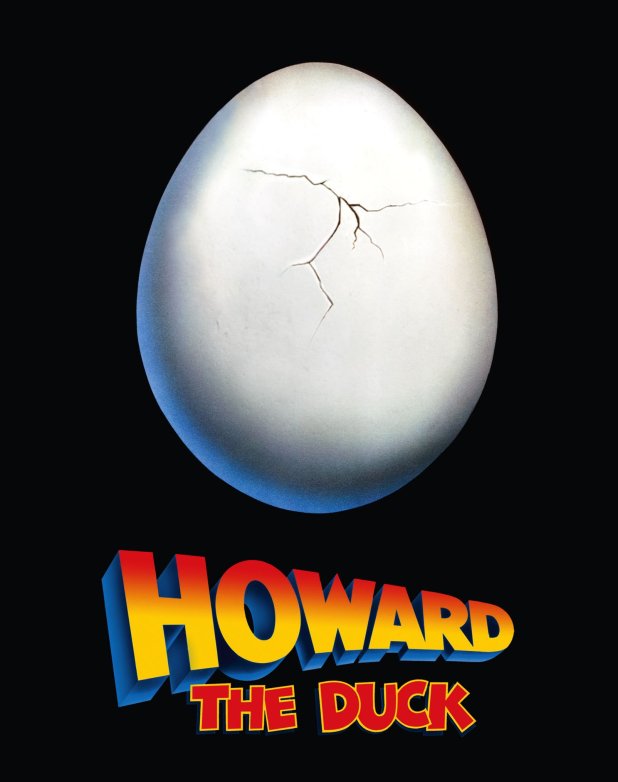
Howard the Duck (1986)

George Lucas went to USC with Willard Huyck and Gloria Katz, who later co-wrote American Graffiti with the Star Wars director. Readers of this site will recognize the two more for Messiah of Evil, a classic of 1970’s horror that is sadly underappreciated.

After finishing American Grafitti, Lucas told Huyck and Katz about Steve Gerber’s Howard the Duck comic book. It took until 1984 to start the process rolling, however.

The film was optioned by Universal Studios after a partnership with Marvel Comics. Universal was excited, as they’d passed on previous Lucas projects and lost out on some major profits. Huyck and Katz felt that the film should be animated, but because Universal needed a summer blockbuster, Lucas suggested that ILM could create a live action movie.

The hard part of the whole movie is that in the comics, Howard is abrasive and rude. That’s not the way a main character should be in a Hollywood movie. The storyline is also straightforward while every adventure of Howard had a major streak of surrealism. After all, he was “trapped in a world he never made.”

Gerber often referred to his writing of the comic book as an existential joke: “This is no joke! There it is. The cosmic giggle. The funniest gag in the universe. That life’s most serious moments and most incredibly dumb moments are often distinguishable only by a momentary point of view. Anyone who doesn’t believe this probably cannot enjoy reading Howard the Duck.”

That said, he helped with the script, was there on the shoot and felt that the movie was true to the spirit of Howard and Beverly.

Howard the Duck — played by Ed Gale, but also voiced by Chip Zien and acted by numerous puppeteers — is pulled from Duckworld to Cleveland, Ohio, where he meets Beverly (Lea Thompson), who will become his one true love.

Soon, the duck comes into conflict with the Dark Overlord of the Universe, a villain beyond the wall of sleep that possesses Dr. Walter Jenning (Jeffrey Jones) and menaces all reality. There’s also a subplot about Beverly’s band Cherry Bomb, which features Katey Sagal’s twin sister Liz, Dominique Davalos from the band Dominatrix and Holly Robinson from 21 Jump Street.

Paula Abdul, Kim Basinger, Belinda Carlisle, Jodi Benson, Tori Amos, Sarah Jessica Parker and Lori Singer all tried out for the role of Beverly, but Thompson does a great job. She even sang all of the songs in the film.

The film was considered a box-office bomb, as it made only a million more than its overall production budget. Universal production heads Frank Price and Sidney Sheinberg supposedly got in a fistfight over the results, with Price eventually leaving the studio. Seriously, movies have flopped much harder than this, so I’ve never understood the stink that is on this movie. Perhaps — before the prequels — people expected more out of Lucas.

Huyck never directed again — he had also made the Eddie Murphy movie Best Defense — but he did write Radioland Murders with Lucas and Katz.

I loved that Howard showed up at the end of Guardians of the Galaxy. It felt like Marvel’s first theatrical star finally got his moment, after being considered a failure for so long.

A postscript: Lucas had just built Skywalker Ranch complex and was counting on Howard the Duck to pay it off. He had to sell off assets to stay in business. Steve Jobs offered to help by buying Lucasfilm’s newly-launched CGI animation division for a better than market price. It turns out that he got a great deal, because that division is what we now know as Pixar.

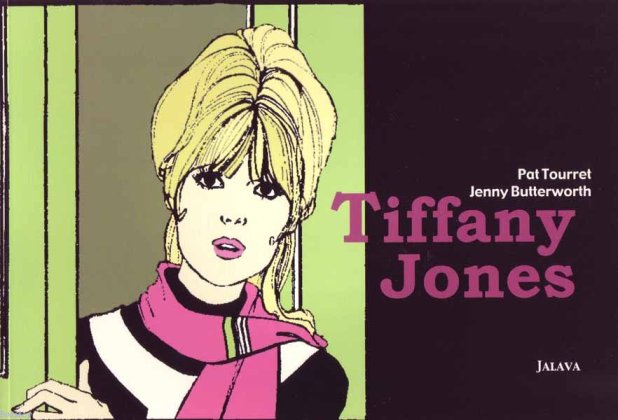
Tiffany Jones (1973)

Pete Walker (Die Screaming, MarianneFrightmareHouse of the Long Shadows) directed this movie, which is based on the comic strip by Pat Tourret and Jenny Butterworth. It fits nicely into both the comic book and spy genres.

Anouska Hempel was one of the Angels of Death in On Her Majesty’s Secret Service, plus she had roles in Scars of Dracula and Black Snake before becoming an interior designer and a member of British society.

Here, she plays Tiffany Jones, a model by day and secret agent by night. This movie lives up to the tagline, “Presidents want her, Revolutionaries seek her, And that’s why she’s always taking off!”

Perhaps that’s why Hempel bought the UK rights to the film, preventing any future DVD releases or TV showings. I’m sure she’s very unhappy that it’s on Amazon Prime now.

It’s not great, but it is a time capsule of London in 1973 in a way that the Austin Powers films can only hope to create.

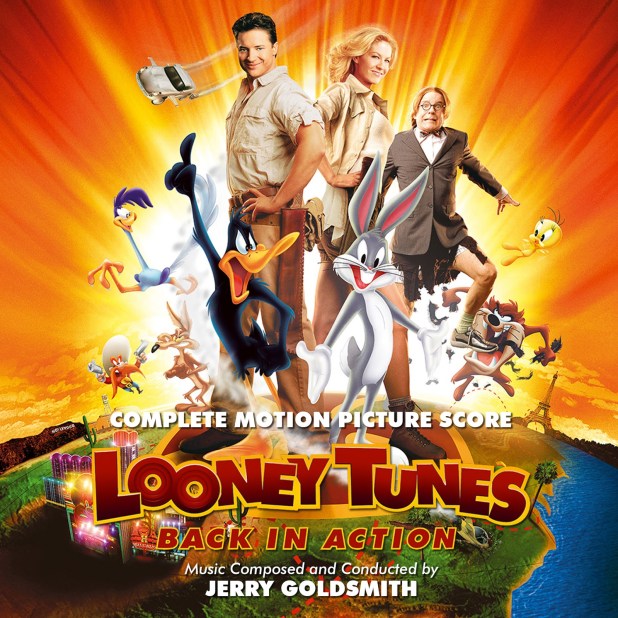
Looney Tunes: Back in Action (2003)

The final film to be scored by Jerry Goldsmith, this film sadly bombed at the box office. It’s a fun little picture, all about Daffy Duck and Bugs Bunny helping Damian “D.J.” Drake, Jr. (Brendan Fraser) and Warner Bros. executive Kate Houghton (Jenna Elfman) to find the “blue monkey” diamond. If they don’t, Acme’s Mr. Chairman (Steve Martin) will turn mankind into monkeys to make his products. And oh yeah — they also have to save D.J.’s father Damian Drake (Timothy Dalton) who is an action movie star but is actually a spy.

This movie started as a follow-up to Space Jam, which would have featured a new villain named Berserk-O, who was to be created by Bob Camp. Michael Jordan didn’t want to come back, so two movies were planned — Spy Jam with Jackie Chan and Race Jam with Jeff Gordon. Both projects were canceled and Warner Brothers brought in Joe Dante to direct this movie, which he agreed to do as a tribute to Chuck Jones.

Warner Brothers wanted a reinvention of their characters like Space Jam, while Dante and screenwriter Larry Doyle reportedly wanted the film to the “Anti-Space Jam” as Dante hated how that film represented the characters. He referred to this movie as, “a pretty grim experience all around” and “the longest year and a half of my life.”

This being a Dante film, there are some great cameos from Peter Graves, Roger Corman, Marc Lawrence, Ron Perlman and Robert Picardo — things that amuse me, if not big audiences. Plus, Kevin McCarthy plays Dr. Miles Bennell, the same character he played in Invasion of the Body Snatchers.

The Area 52 scene is packed with monsters from so many movies, like the flying brains from Fiend Without a Face, the Metaluna mutant from This Island Earth, the Triffids, Robby the Robot, Daleks — which were the reason Steve Martin agreed to do the movie, Robot Monster, Marvin the Martian and The Man from Planet X.

I also adore the scene where Porky Pig and Speedy Gonzales talk about how political correctness has ruined their careers. There’s also a great chase scene through some famous paintings: Seurat’s “A Sunday on La Grande Jatte,” Dali’s “The Persistence of Memory” and Munch’s “The Scream.”

Oh yeah — if you love wrestling, Bill Goldberg is in this.

It’s a fun film. I’m a major Joe Dante and cartoon fan, however, so you may feel differently.


Modesty Blaise (1966)

Joseph Losey was blacklisted, which is no surprise, as he directed The Boy with the Green Hair. He took his career to Europe, where he made movies like Boom! and Don Giovanni.

This film is based on the popular comic strip Modesty Blaise by Peter O’Donnell, who co-wrote the original story. There was a major battle between Losey and O’Donnell on this film, with the director wanting to create a pop art Eurospy spoof while the comic is serious. The avant garde-inspired editing and production design, musical numbers and deliberate continuity errors drove O’Donnell insane. He hated that Willie and Modesty had any romance at all.

Losey also had problems with leading lady Monica Vitti, as she would be joined on the set by director Michelangelo Antonioni, who would whisper suggestions to her, and she would take direction from him rather than the actual director of the film.

Ever notice how many spy movies start with another spy getting killed to set the events in motion? This is no different, with British Secret Service chief Sir Gerald Tarrant recruiting former criminal mastermind Modesty Blaise to protect a shipment of diamonds after their agent is offed.

Terence Stamp is in this as Willie Garvin, Modesty’s loyal sidekick and Dirk Bogarde is Gabriel, the criminal mastermind who is, for some reason, sensitive to violence.

Originally, Barbara Steele was going to play Modesty with Michael Caine as Willie. In a strange twist, Caine would ultimately star in Alfie, a role intended for his friend and former roommate Stamp.

I bought this for $3 at a Dollar General this year after wanting a copy for a long time. Inside it, there was a coupon for buying three Eurospy films — Fathom or the two Flint movies — and getting one free. I was really excited until I realized that the offer ended 17 years ago. That’s what you get for still buying DVDs.

DRIVE-IN FRIDAY: Eddie Harrison

ABOUT THE AUTHOR: Eddie Harrison has been a critic in print for The List magazine since 2003, and as a broadcaster for the BBC for the same period. He writes his own personal blog at film-authority.com. Here are his picks for a four-movie drive-in night of cinematic excess.

MOVIE 1: Highway Racer

Italian movies of the 70’s are coming of a staging post for cinema lovers; more than just imitations of American products, the best of them have a life of their own and style to burn. As kids, we get Hitchcock, and then graduate to Bava and Argento, Italy had something of a political upheaval in the 1970’s, and when they came to get inspiration from Dirty Harry and the Godfather, they came up with the Poliziotteschi, or Euro-crime genre with hard cops, sleazy villains and so much action that they shame the very films they copy.

Maurizio Merli was a giant of the genre, and his Inspector Betti trilogy (Violent Rome, Violent Naples, A Special Cop in Action) are the jewels of the crown of 70’s action cinema. Merli was an indomitable man, hirsute, virile, a perfect centre for an action movie. Here he teams up with director Marino Giolami for a take-no-prisoners cops and robbers movie that makes a virtue of their access-all-areas to Rome to enable some thrilling car chases.

Marli plays Marco Palma, a cop with a drive for nailing the bad guys. They’ve got souped-up motors, so Palma harasses his boss until he gets the same, a Ferrari 250 GTE specially modified to level the playing field. Palma makes Vin Diesel in the Fast and Furious movies looks like a novice; he lives, breathes and loves cars, but only as a method of bringing down his enemy. Indeed, the climax of the film makes it clear that there’s a code of conduct between the hunter and the pursued, and the whole film is a chess match between the two.

The stunts here have no CGI to soften the edges; taking inspiration from real police pursuits, Giolami uses the same locations and even cars to replicate the action, and isn’t averse to grandstanding; flinging cars on their roofs as they tumble down Rome’s Spanish Steps tourist attraction, there’s plenty of bang for your buck here.  Highway Racer has been a hard movie to track down and only has a couple of English language reviews to date; if you get a chance, see it; this really is one special cop, and the action is highly impressive.
MOVIE 2: Magic

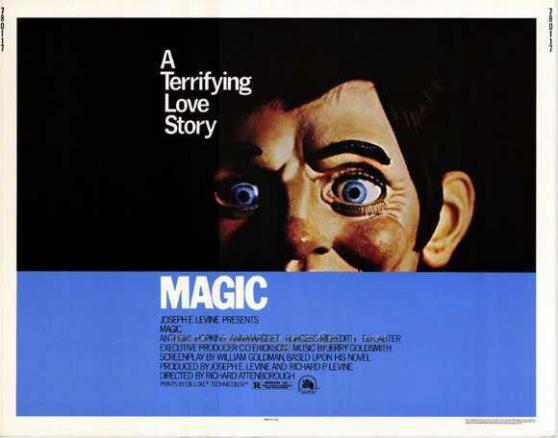
Magic is an odd bird indeed; Sir Richard Attenborough directs, but as a gun for hire, an unusual position for a man for whom most film ventures were long gestated and fit firmly under the heading ‘passion project’. This was a horror film, adapted by scribe William Goldman from his own book, and allowing Attenborough to make some coin in between A Bridge Too Far and Gandhi.  Genre pieces, modern day settings, Hitchcock-ian tension; these are all things untypical of the director’s work, but what’s remarkable about Magic is that he does them all pretty well.

Part of the appeal was undoubtedly the chance to work again with Anthony Hopkins, something of a muse for Attenborough. Hopkins plays Corky, a ventriloquist who has re-invented himself with a new, blue repertoire of gags which bring him to a new audience. Corky is hot, and his agent (a peerless Burgess Meredith, riding high post-Rocky) is keen to get him into some big-time gigs. But Corky is more interested in his old sweetheart Peggy (Ann Margaret) and heads off to her back-woods guest-house where she ekes out an abusive relationship with her partner Duke (Ed Lauter). Peggy is wowed by Corky, but he’s got a secret; his dummy, Fats, wants to call the shots, and when work and personal relationships turn sour, the doll seems to be able to manipulate events to sinister ends.

Magic did well, finding an audience and getting Hopkins a BAFTA nomination, but wasn’t a horror game-changer in the way that the same year’s Halloween was. Nevertheless, there’s lots to enjoy here, even if large chunks of Goldman’s prose fell by the wayside, notably the novel’s long and beautifully imagined history of Corky’s relationship with his mentor, only seen in one scene here. But there are still some terrific scenes, notably when Meredith unexpectedly drops by Corky’s house and challenges him to sit for five minutes without Corky taking over. Some critics found that Hopkins lacked the vulgarity to play a vaudevillian, but in this scene, the Welsh actor nails the split in Corky’s personality, a bitterness and cruelty instilled by the business sitting uneasily with a desire to be loved and respected.

Magic might have been little more that a prestige time-passer for all concerned, but as a movie, there’s a haunting strength. Magic deals with the deals we make with ourselves, rather than the devil per se, and perhaps the lack of a supernatural dénouement alienated genre fans. But not all horror comes from outside, and Magic is one of the few showbiz film that explore the darkness inside a performers head; a pumped-up B movie perhaps, but one that reaches a level of intelligence and intensity that few prestige pictures can reach.
MOVIE 3: Zoltan Hound of Dracula

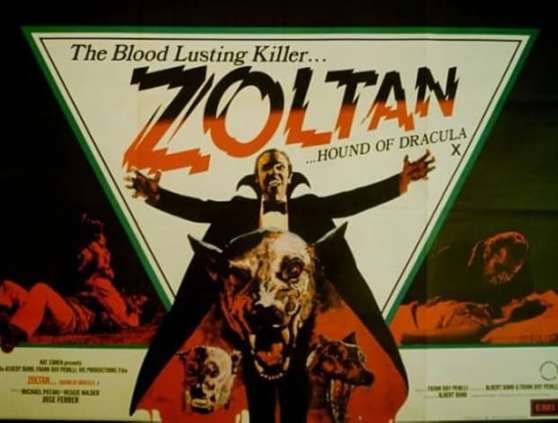
Also known as Dracula’s Dog, Zoltan Hound of Dracula has a title that’s easy to love; sure, you’re the ultimate incarnation of evil, but why shouldn’t you want a pet too? There was a well-documented wave of interest in Dracula in the late 1970’s, from disco Dracula in Love at First Bite to John Badham’s prestige revamp with Frank Langella. But at the shallow end of the pull, we find Albert Band directing Oscar-winner Jose Ferrer, Michael Pataki and the brilliantly named B-movie specialist Roger Pancake. What’s not to like here?

The boring bit of any review is sometimes the plot-summary, but writer Frank Ray Perilli makes sure that the synopsis is a riot by the sheer veracity of his research into foreign-sounding names. Jose Ferrer plays Inspector Vaclav Banco, a Van Helsing in a polo-neck, and he’s on the trail of Count Dracula, played by Tarantino fave Michael Pataki. But to set all this in motion, we first have to see the Romanian army accidentally exhume Dracula’s dog Zoltan, who in-turn exhumes his master, not Dracula himself, but crypt-keeper, innkeeper and dog-keeper Veidt Smit, played by Salem’s Lot’s Reggie Nalder. Everyone seems to agree that this is quite enough of that storyline for a bit, and we reverse back 300 years to see how the original Dracula (Michael Pataki) bit a unwary dog who had eaten his dinner; for the petulant act, Zoltan becomes a loyal servant of the vampire. This back-story dispensed with, we shift back to 1978 and the modern Dracula family, with modern-day descendant (also Pataki), wife, two kids and puppies crammed into a Winnebago and enjoying a National Lampoon-style vacation. Zoltan and Smit mail themselves to the U.S and emerge to track down their relatives without even considering a subscription to a genealogy website.

U.S. cineastes often imagine the BBC as some kind of august institution, but the Beeb were never above broadcasting such outré fare as Zoltan Hound of Dracula to bemused customers such as myself. ‘There’s more to this legend than meets…the throat!’ was the desperate sounding tagline, but there’s little gore or even action here, Band seems to have a full time job explaining how Dracula has a dog, why Dracula’s not with his dog, why Dracula’s dog is chasing down his family tree and a number of other contrivances, but ultimately this all goes in a reassuringly familiar direction; the imdb lists the Winnebago as the single most expensive element in the film, which in retrospect, feels just about right.
MOVIE 4: New Seekers: Live at the Royal Albert Hall

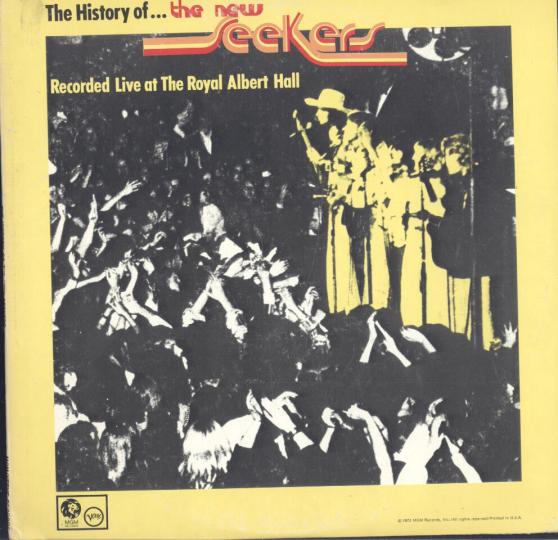
In music-hall times, it was understood that the final act should be a bad one, to make sure that the hall was emptied and could be cleaned before the next round of performances began. I’m not sure exactly what kind of audience would be left after a triple-header of Highway Racer, Magic and Zoltan Hound of Dracula, but I’d imagine some tenacious characters indeed, so what better way to clear the desks than British songbirds and blokes The New Seekers and their fabled concert at the Royal Albert Hall.

The New Seekers are something to behold. Dressed in curtains, wide of lapel and enormous of bell-bottom, they’re a wholesome alternative to glam rock and glitter, warbling such head-in-the-sand old-time sentiments as I’d Like To Teach the World to Sing, Good Old Fashioned Music, and the aptly titled Never Ending Song of Love. With astonishing laboured patter, they diversify into arch comedy songs (I’m a Nut, When I Was Small) that boggle the mind; the tracking on my VHS copy also adds a discordant, David Lynchian twang which renders any attempt at musicianship hopeless.

I’ve used this film to clear people out of flats at parties; whatever one thinks of the New Seekers, and I kind of dig their bubble-gum sentiments in a Bobby Sherman kind of way, this is a record of truly bizarre musicianship, sentiment and clothes that should be compulsory viewing for anyone who despairs of the music or fashions of today. Things have been worse, much worse, and the new Seekers live performance arguably marks the zenith or nadir of popular culture as we know and understand it today.
Spectre (2015)

In this Sam Mendes-directed Bond film, our hero finally goes up against Blofeld for the first time since 1971’s Diamonds Are Forever, with the global criminal organization Spectre returning and Christoph Waltz taking over the villainous role.

The film’s usage of the Spectre organization and its characters was the end of long-standing litigation between Eon Productions and producer Kevin McClory, who sued James Bond creator Ian Fleming in 1961 due to the author taking parts of his work for the book and film Thunderball.

McClory died in 2006, and in November 2013 MGM and the McClory estate formally settled the issues, giving the filmmakers full copyright film rights to the concept of Spectre and all of the characters associated with the evil organization.

With the 00 group disbanded and M murdered from the last film, Bond is nearly a man without a country as he investigates the octopus-like Spectre. What a rough job Bond has, having to seduce Monica Belluci (who was the oldest Bond girl to date, doing the movie at the age of fifty. That said, Belucci is ageless).

He learns why all this horror has been happening. After being orphaned, the younger Bond was adopted by Hannes Oberhauser. His son Franz believed that Bond had supplanted him as his father’s son, so he killed the man, took the name Ernesto Stavro Blofeld and created Spectre with the sole goal of ruining Bond’s existence.

This film also gave pro wrestler Dave Bautista the chance to shine as bodyguard Mr. Hix. He’s the fourth Bond villain to come from the sport, along with Harold Sakata, Peter Maivia and Pat Roach.

While this film didn’t win over fans, it certainly sets up Craig for one more run as Bond.

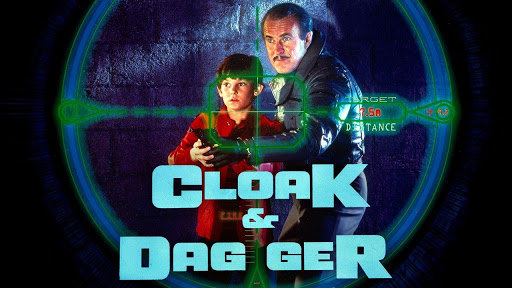
Cloak and Dagger (1984)

Originally released as a double feature with The Last Starfighter, I first saw this movie as a VHS rental.

It was directed by Australian Richard Franklin, who also made FantasmPatrick, Roadgames and Psycho 2. The writer of the last film was Tom Holland (Fright Night), who wrote this film as well.

This is a remake of The Window, which was based on the Cornell Woolrich story The Boy Who Cried Murder. Another of Woolrich’s stories, It Had to Be Murder, became the Hitchock film Rear Window, which inspired Roadgames. This same story was also made as The Boy Cried Murder and Eyewitness.

Davey Osborne (Henry Thomas, E.T.) wants to be Jack Flack, a daring man of spy derring-do. The only problem is that Jack doesn’t exist in the real world, but his father (Dabney Coleman played both roles) does.

This all changes when his friend Morris (William Forsythe) sends him on an errand to get him a candy bar. Davey and his friend Kim witness a murder and are given a Cloak and Dagger video game by the dying man. Yep — the Jack Flack video game itself, now part of a real world spying mission.

This is pretty much a forgotten movie today, but I really have always loved how the real world and fantastical spy world meet in the middle, with real life death having a dramatic impact on our hero. I don’t want to spoil the twists and turns, but the first time I saw it, there were at least two moments that totally shocked me.

You should find this one, watch it and let me know what you think. I got a copy from a beaten up old Pizza Hut pawnshop for a dollar, which is way more than it is worth.

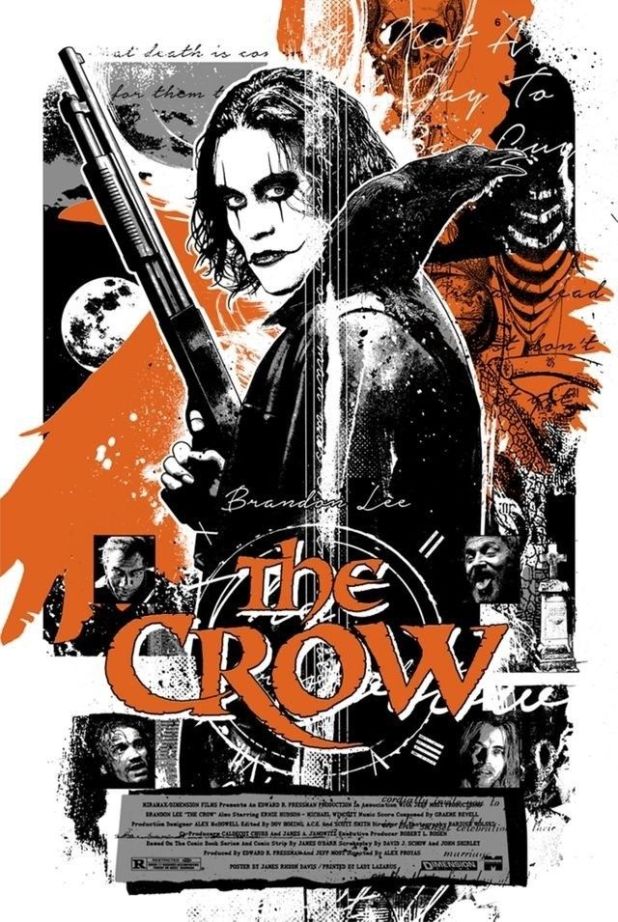
The Crow (1994)

James O’Barr created The Crow as a way to deal with the death of his fiancee at the hands of a drunk driver. Today, we may know it more for the death of its lead actor Brandon Lee. Take it from someone who was 22 when the original film came out and had already been a fan of the comic — it was the perfect movie for its time, a capsule ready made to be looked back on as I am now old and have so many memories around this time.

Eric Draven (Lee) has been killed after trying to save the life of his fiancee Shelley. One year later, a crow brings him back to life as he unleashes terror on the gang of Top Dollar (Michael Wincott, Strange Days).

It’s an incredibly simple tale of revenge, but the gothic look and soundtrack that reflects the time of its creation drive this movie beyond its simple origins. I remember being beyond excited when My Life With the Thrill Kill Kult was actually in the film, playing at Top Dollar’s club before his gang heads out to set Detroit ablaze on Devil’s Night.

Of course, there has long been discussion of the film being cursed. In addition to the accident where Michael Massee shot a live round — unbeknownst to the actor — a carpenter suffered serious burns, another worker was stabbed in the hand by a screwdriver, an equipment truck blew up, a stuntman broke his ribs, a rigger was electrocuted, a set sculptor flipped out and drove his car through the prop room and finally, a hurricane destroyed much of the set.

Another reason for so much of this — beyond fate — was that there was plenty of cost and corner cutting, with a crew member remarking that they were “trying to make a $30 million movie for $18 million.” As the movie was being shot in North Carolina, which is a right-to-work state, the unionized conditions of Hollywood did not exist. They switched schedules from night to day without the industry standard 24-hour break.  Rumors of rampant cocaine use on set also exist.

Due to Lee dying, many of the scenes had to be reshot with a double and CGI. All of the scenes with Michael Berryman’s Skull Cowboy character had to be cut, too.

Despite the tragic nature of its creation, The Crow remains a movie that reminds me of a different time in my life. Its influence on culture remains.

Kingsmen: The Golden Circle (2017)

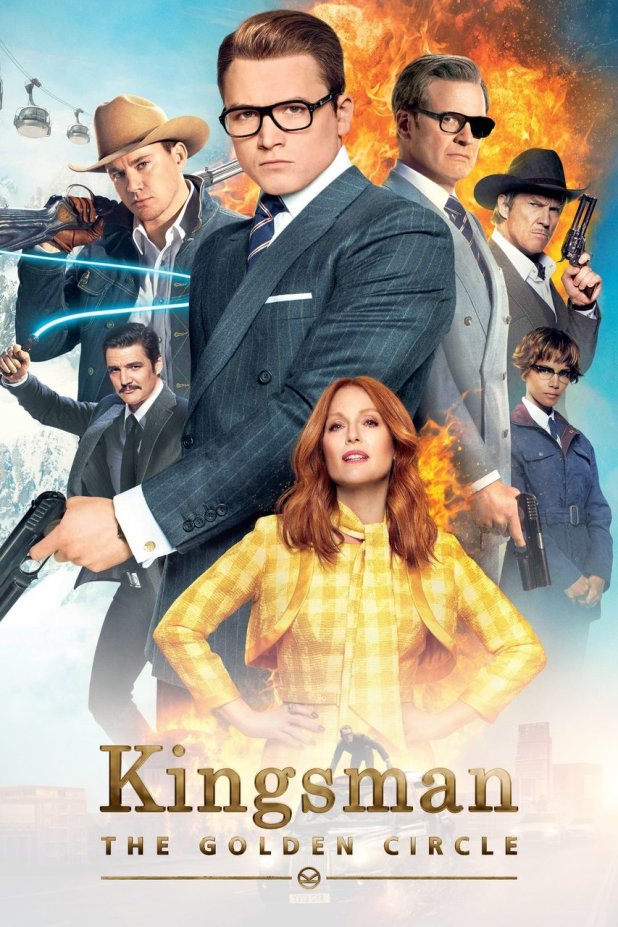
A year after defeating Valentine in the first film, Gary “Eggsy” Unwin (Taron Egerton) has officially joined the Kingsman, having taken his late mentor Harry Hart’s title of Galahad and is dating Tilde, Crown Princess of Sweden (Hanna Alstrom). He’s soon attacked by Charlie, the rejected Kingsman who turned on the world in the wake of Valentine’s plot. During their battle, he hacks into the Kingsman’s database, allowing Poppy Adams (Julianna Moore) and her drug cartel the Golden Circle to murder every single Kingsman agent save Eggsy and handler Merlin (Mark Strong).

How can Eggsy save the world from a deadly virus spread by doing recreational drugs? Simple. Head to America and meet the Statesmen, the American side of the secret spy world.

While the Kingsman are based around fine clothes, the Statesman are based around hard alcohol. They’re led by Champagne (Jeff Bridges) and have Ginger Ale (Halle Berry), Whiskey (Pedro Pascal) and Tequila (Channing Tatum) in their organization. And oh yeah — they’ve saved Harry’s life, but he remembers nothing of being a spy.

This movie is completely ridiculous, taking the farce of the first movie even further to the point that Elton John battles a robotic guard dog.

I love the scene in the Italian Alps, as it feel as if it were taken directly from On Her Majesty’s Secret Service. Again, despite how outlandish this gets, it’s so much better than the recent spate of Bond films.

At the wedding scene at the end of this movie, Harry claims that one of their founding agents once said. “This is not the end. It is not even the beginning of the end. But it is, perhaps, the end of the beginning.” That person would be British Prime Minister Sir Winston Churchill.

I’m excited to see where the Kingsmen go next, both in a proposed third film and a prequel that has been moved to September of this year.