ANOTHER TAKE ON: Cruel Jaws (1995)

Theater of the Sea is one of the oldest marine mammal facilities in the world and has been operated by the McKenney family since its inception in 1946. Thousands have thrilled to its daily aquatic shows, yet somehow, it became the host for an Italian made for TV and then direct to video opus known as Cruel Jaws or The Beast and best of all, Jaws 5.

Yes, just imagine if the excitement of a film crew coming to your local otter park, shooting a movie in your neighborhood, and then the man you were told was William Snyder ends up being Bruno Mattei – the very same madman behind The Other Hell, Shocking Dark and Rats: Night of Terror.

An excitable Miami Herald article from December 4, 1994 proclaimed the big news that the town of El Portal was now Hampton Bay, which is perhaps Amity Island’s sister city. If they only knew what mania lay in wait. For Bruno Mattei was about to craft not just a shark movie, but a remix of all of his favorites. Yes, much like Girltalk or similar DJs mix together multiple songs to create a new patchwork narrative, Mattei was about to throw copyright laws and common sense to the wind to create an entirely new shark movie.

It all starts with a ship evading the Coast Guard to pilfer the remains of a sunken ship called the Cleveland because possibly Mattei had no idea what the Edmund Fitzgerald was. Within seconds, the scuba scavengers are beset not by pilfered footage from Enzo G. Castellari’s Great White. Yes, a movie that was sued into oblivion for ripping off Jaws has now suffered the very same unkind cut! That’s when the credits roll and promise us “Original Shark Design And Special Effects Created By Larry Mannini.” I’m here to inform you, dear reader, that none of these effects are original. Even more to the point, I refuse to believe that Larry Mannini is a real person. Much like Lewis Coates, David Hills and Raf Donato, I think it’s an alter ego to cover up that Mattei just simply spliced sharks from a variety of movies into this opus.

Soon, we meet Billy Morrison, who is not like Matt Hooper in any way, as he drives with his girlfriend Vanessa as she chides him for leaving her last summer to chase killer whales. This year, he promises her sailing, tennis and disco until dawn. If only, Billy. He’s on the way to meet his pal Dag Snerensen, a Hulk Hogan lookalike with two kids — Bobby and the wheelchair-bound Susy — who also owns a bottom tier Sea World.

Susy lost the use of her legs in the accident that also took Dag’s wife out of this world. And now it’s time to meet Sheriff Berger, who serves the Hulkster’s brother with an eviction notice. Turns out that he’s three months behind on his rent to the evil land baron Samuel Lewis and only has 30 days to pay up. 

But where are the sharks, you ask? Fear not. A bunch of kids running along the beach trip over the remains of one of the scuba guys from before and unlike an American movie that would just show their frightened faces, this film lingers over the gory latex aftermath. One autopsy later and Brody and Hopper – whoops, I mean Berger and Morrison — want to close the beach during the busiest weekend of the season.

After several party scenes and moments of cavorting on the beach, Mattei grows bored with presenting human beings that act like no real people you’ve ever met before and decides to start the killing anew, as a girl runs smack dab into the Chrissie Watkins scene from Jaws. Again, I’m not saying it’s a similar shot. It’s the exact same footage grafted into this film.

It turns out that the antagonist in this movie is a tiger shark engineered by the Navy to be a superweapon. Now, it’s killing people all over Hampton Island, so this film is also stealing the plot of Piranha, another movie directly inspired by Jaws. Along the way, the Mafia subplot from the novel Jaws was based on, the windsurfing race from The Last Shark and a Regatta stolen from Jaws 2 all happen. It’s like K-Tel’s Greatest Shark Attacks of the 1980’s with all your favorite great white super hits! 

If none of this convinces you that you need to see this film — made by an Italian crew shooting a largely amateur group of Americans — then let me add that Mattei included some of John Williams’ music from Star Wars on his soundtrack, where it sits alongside screaming synth music and generic disco. Truly, this movie has something for everyone.

“You’re a piece of shit! You’re vomit! You’re nobody!” one character yells at another at one point. It’s dialogue like this that keeps me coming back to Italian bootleg cinema. In fact, the word shit is thrown around here like a racist epithet in a Tarantino film; allusions to feces fill nearly every story beat of this epic. Yet the greatest line is when the sheriff yells, “We’re going to need a bigger helicopter.” You really can’t write dialogue that great, It just has to happen.

Scream Factory, a subsidiary of Shout! Factory, once planned to release this movie on blu ray as a double feature along with Exterminators of the Year 3000. However, once they realized how much footage this movie cribbed from the Jaws trilogy and other Italian shark epics, they canceled the release.

That’s cowardice. Was Bruno Mattei worried about stealing directly from Spielberg even after years of lawsuits against any film that came close to Jaws? Nope. He didn’t just take from the original, but its two sequels as well. It was if he was daring the American judicial system to come after him. 

Please keep in mind that this is no Sharknado or sub-Troma effort. Mattei was really trying to make a great shark movie. And that’s why I love this movie, particularly the big shark attack sequence about an hour into the film where everyone devolves into screaming morons. There were no second takes in this movie, no ADR re-recorded audio, no one in wardrobe to tell one of the girls that her white leotard outfit is ridiculous, no focus group to warn the filmmakers that this movie is borderline incomprehensible. 

Yet with every viewing, my romance with Cruel Jaws grows more passionate. How can you not love a movie that ends ninety minutes of body munching gore and profanity-laden dialogue with a Scooby Doo-laugh filled close where a seal launches the newly redeemed bad guy into the ocean?

This article originally appeared in Drive-In Asylum Special Issue #4, which you can buy here.
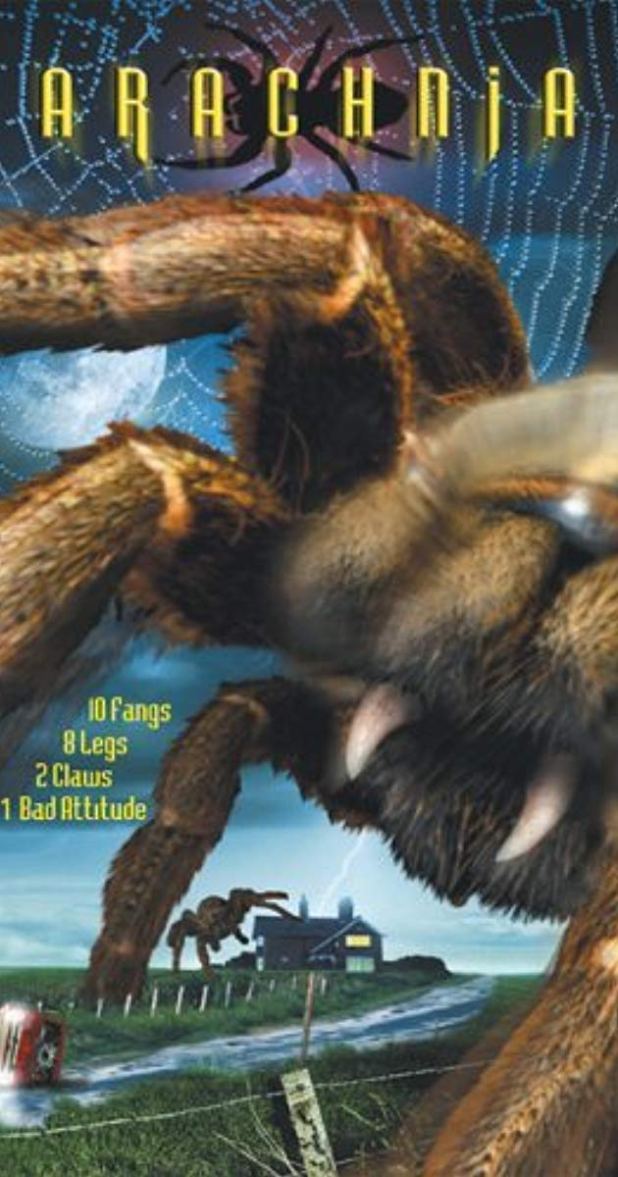
Arachnia (2003)

Brett Piper (Mysterious Planet, 1982) has written, directed or provided special effects for some pretty entertainingly named movies: Raiders of the Living DeadA Nymphoid Barbarian in Dinosaur HellDrainiac!Muckman and ZillaFoot. This is filmed in Vermont on video, but if Piper had been around for the regional era of exploitation, he would totally be making drive-in or direct to video films.

When a small research plane — filled with science students and their professor — makes an emergency landing in the middle of nowhere, the survivors head to a nearby farmhouse to look for help. Instead, they find some mutant spiders.

With a budget of a day of catering on the last movie that you saw in the theatrer, these guys tried. An ex-military man with a past and the robotic lead girl must survives so that someday, I’m forced to watch Arachnia 2. Which doesn’t exist. But it probably should.

You can watch this on Tubi along with Rifftrax commentary.

And don’t forget: We dedicated one of our “Drive-In Friday” featurettes to Brett Piper and screened four of his films, including Queen Crab and Muckman, and Outpost Earth.

Pickaxe (2019)

This movie was originally filmed five years ago as The Pick-Axe Murders Part III: The Final Chapter, but it’s finally been released. It starts with two teenagers aardvarking inside a mine, before the girl starts speaking Latin and bathes herself in the dude’s blood. So there’s that.

Adrienne (Tiffany Shepis, Victor Crowley) has just been released from the asylum and is still unable to deal with the murders that Alex Black committed. Neither is Sheriff Mathews (A. Michael Baldwin, Phantasm), who is looking for the teens we saw in the beginning. Throw in another entire group of teenagers just begging to get killed and you have a slasher!

Shawn Hernandez, who used to be in TNA, is in this as a criminal, as does Sal Governale from the Howard Stern Show. There’s also plenty of nudity and gore. Trust me, every single person in this movie is horned up.

Pickaxe is available on demand and on DVD from Wild Eye Releasing.

DISCLAIMER: We were sent this movie by its PR company.

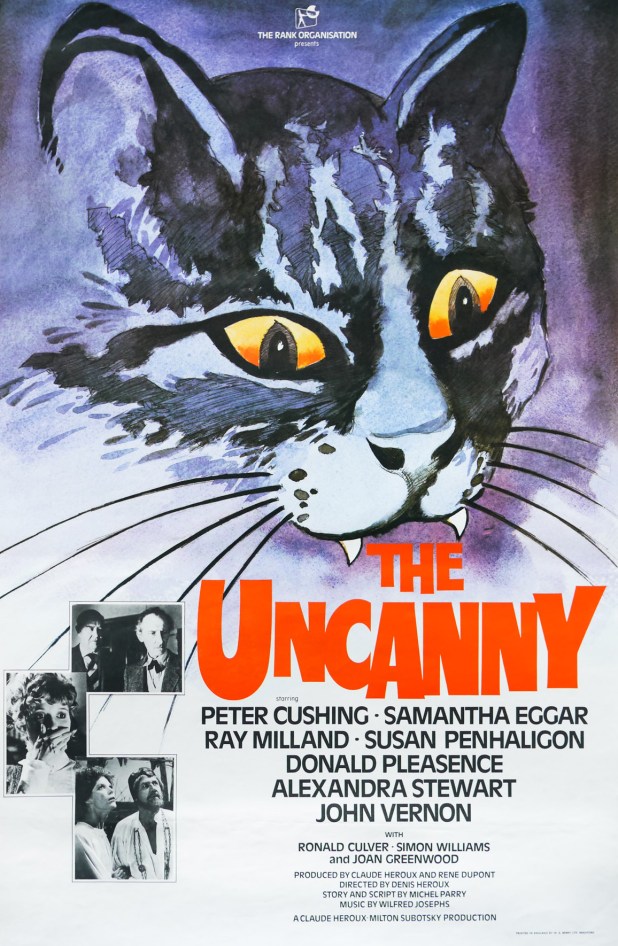
The Uncanny (1977)

In 1977, legendary Amicus co-founder Milton Subotsky joined with  Canadian producer Claude Héroux (Scanners, Videodrome) to create a portmanteau movie in the grand Amicus style. The uniting story for this concerns a paranoid writer played by Peter Cushing who is trying to convince a publisher (Ray Milland) that cats are evil and that his book is the only way to save the human race.

Directed by Denis Héroux (Naked MassacreValerie) from a screenplay by Michel Parry (Xtro), this is a film that I’ve neglected over the past few years and can happily say lived up to my hopes for a fun anthology film.

The film begins the Montreal of 1977, as writer Wilbur Gray (Cushing) visits publisher Frank Richards(Milland) to discuss his new book. The writer is convinced that cats are actually Satanic creatures here to destroy humanity. He tells three stories to explain:

r believes that felines are supernatural creatures, and that they are the devil in disguise. Wilbur tells three tales to illustrate his thoughts:

London 1912: Miss Malkin rewrtes her will, leaving everything to her cats instead of her ne’er do well nephew Michael. The maid Janet, who is in love with Michael, tries to steal the will, but Miss Malkin catches her. Janet kills her, but the cats avenge her death.

Quebec 1975: Lucy (Katrina Holden Bronson, the adopted daughter of Charles Bronson and Jill Ireland) is an orphan who now lives with her aunt Mrs. Blake (Alexandra Stewart, who is also in Because of the Cats, which is appropriate). Her parents have died in a plane crash so she is allowed to keep her cat Wellington, who is an awesome fat black cat. However, her cousin covets the cat and any attention she can get. She’s played by Chloe Franks, who was the go to young girl in horror for this era, with appearances in Trog, The House That Dripped Blood (she’s Christoper Lee’s daughter), Whoever Slew Auntie Roo? and Tales from the Crypt (she’s Joan Crawford’s daughter). This section combines two of my horror loves — evil kids and Satanic hijinks.

Hollywood 1936: Actor Valentine De’ath (Donald Pleasence) replaces the blade of a fake pendulum to kill his actress wife, which gives him the opening he needs to give his young mistress a chance at acting. He didn’t count on her cat avenging her. This chapter features Samantha Eggar (DemonoidWelcome to Blood City), Sean McCann (Starship Invasions) and the always awesome John Vernon (CurtainsNational Lampoon’s Animal House).

This story has one of my favorite movie tropes, as when Cushing discusses Pleasence’s character, he holds up a photo that is in truth a publicity still of the actor as Blofeld and his cat Tiddes from You Only Live Twice.

For all the cat love in this, cinematographer Harry Waxman (The Wicker ManThe Beast In the Cellar) threatened to leave the film when he felt that the production was abusing cats.

That said — this is pretty much everything you want from an anthology. Modern filmmakers littering on demand services with their short films all assembled into one movie should take a moment and watch this to see how it’s done.

You can get this from Severin or watch it on Amazon Prime.

Birdemic: Shock and Terror (2010)

Written, directed, and produced by James Nguyen, this is a tale of romance and, well, software development as birds descend on humanity. He’d also direct the films Julie and JackReplice and Birdemic 2: The Resurrection. There were plans to make the third film in the series, Birdemic 3: Sea Eagle, but it only raised one percent of its goal on Indiegogo and Kickstarter.

This film cost $10,000. Before you see it, you may wonder how that was possible. After you watch it, you’ll wonder where the money went.

Rod, a Silicon Valley software salesman, and Nathalie, an aspiring fashion model, are living a charmed life. His bonus allows him to start his own business, she’s become a Victoria’s Secret model and they both are in love with each other. However, the signs of the end of the world are all around them, with unexplained wildfires and dead birds washing up on beaches.

After a night of passion, Rod and Nathalie wake up to find that their town is under attack from acid-spitting and constantly exploding eagles and vultures. Joining up with an ex-Marine named Ramsey, his girlfriend Becky and two orphans named Susan and Tony, they go from town to town battling birds.

Finally, Rod and Nathalie make their way to a small beach, where our hero battles the birds one more time until doves show up to drive them off. It turns out that the birds want to have peace and decide to give humanity a second chance to fix the environment.

It’d help if the birds weren’t all the same bird, just endlessly and lifelessly rotating in space, oblivious to reality. Then again, no moment of this film feels rooted in the world that we live in.

During filming, Nguyen instructed Whitney Moore (Nathalie) not to socialize with her costar Alan Bagh (Rod) after filming. He also shot without permits and the crew was often kicked out of locations while in the middle of scenes. Nguyen would often flip out at people while filming, which led to Moore telling him not to yell and him refusing to talk to her or direct her for three weeks.

To promote the finished movie, Nguyen took the movie to Sundance, handing out flyers from a van that was covered with stuffed birds and a paper sign that read BIDEMIC.COM (yes, he spelled the name of his own movie incorrectly) and WHY DID THE EAGLES AND VULTURES ATTACKED before premiering the movie at a bar. This caught the eye of Severin Films, who distributed the film. You can grab a copy at their site, while you’re at it.

Tippi Hedren — from the original version of The Birds — appears in the film, but only on a TV via footage from Nguyen’s Julie and Jack.

This is an absolutely ridiculous film and as such, I love it. It’s pretty amazing that one man’s vision — of birds attacking the world as inspired by Hitchcock and Al Gore — went this far.

If you want to watch this, its on Tubi and Amazon Prime. It helps to watch it with Rifftrax help, though. You can also find that streaming for free on Tubi and Amazon Prime.

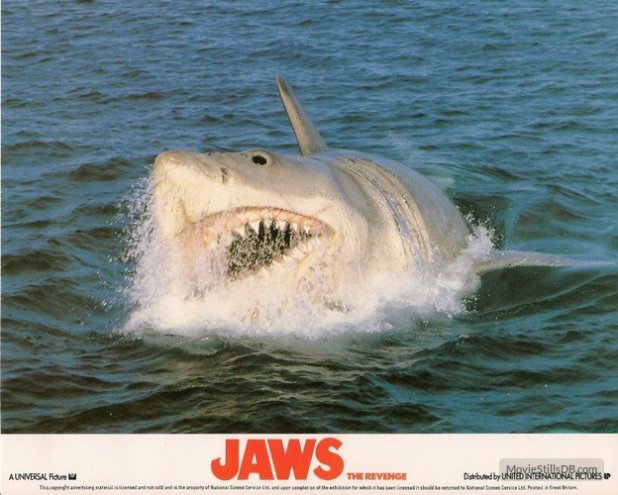
Jaws: The Revenge (1987)

So many people use Jaws: The Revenge as an instantly recognizable reference point for bad movies. If you watch any of those top ten worst films lists on YouTube, inevitably it’s right there on the top of every one of them. But can it really be that bad of a movie? 

It’s certainly made by people with talent. Producer/director Joseph Sargent won four Emmys throughout his storied career, as well as helming such well-thought of movies like The Taking of Pelham One Two Three, The Night That Panicked America, Nightmares, MacArthur and Colossus: The Forbin Project. He even won his the Directors Guild of America Award for The Marcus-Nelson Murders, the TV movie pilot for Kojak. In fact, he still leads all DGA members for most nominations for the TV movie category.

Sir Michael Caine is certainly a talented actor. He’s been nominated for an Academy Award in every decade from the 1960s to 2000s, winning two for Hannah and Her Sisters and The Cider House Rules, with his performance in Educating Rita earning him the BAFTA and Golden Globe Award for Best Actor. 

So what happened? How can a movie — that one assumes was made with good intentions — turn out to be the touchstone for what constitutes a bomb?

In interviews before the film was even released, Sargent referred to it as “a ticking bomb waiting to go off” and noting that MCA Inc. President — and husband of star Lorraine Gary — Sid Sheinberg “expects a miracle.” There was no script when Sargent was asked to direct. Years later, he’d say that the movie was made out of desperation and that he tried a mystical take in an attempt to give audiences “something interesting enough to sit through.”

Even though this film was to center on Gray’s Ellen Brody character, Roy Scheider was offered a cameo where his Martin Brody character, rather than Sean Brody, would have been killed by the shark in the beginning. This was a wise choice to avoid this opening — murdering the center of the first two films would have put such a bad taste in audiences’ mouths that they may have hated this movie even more than they already did. To his credit, Scheider said, “”Satan himself could not get me to do Jaws Part 4.

Lee Fierro also returned as Mrs. Kintner, the mother of Alex in Jaws, along with Amity Town Council member Mrs. Taft, who is again played by Fritzi Jane Courtney. Amity Selectman Mr. Posner (Cyprian R. Dube) is now the mayor, probably because the actor who played Larry Vaughan (Murray Hamilton) is dead.

Otherwise, forget all you knew about Jaws and the previous sequels. Mike no longer works for SeaWorld and he’s no longer played by Dennis Quaid. Instead, Halloween 2 hunk Lance Guest fills in. Following the heart attack death of her husband and great white murder of her son Sean — to the strains of holiday carols no less — Ellen Brody forgets all that she knew as well and leaves for the Bahamas. 

There, she falls for Hoagie (Caine), who is a degenerate gambler by night and a pilot by day, but we all know that he runs cocaine. It’s just never said, but we can read between the lines that he’s done some shady things. In fact, scenes involving him being a smuggler were shot, then deleted during post-production, because it took away from the shark scenes.

Right now, Hoagie is having a September September romance with Ellen, trying to get her to forget the past — keep in my her husband died a few months ago and her son a few days hence — with some airplane riding, slow dancing and carnival attending.

Some moments of the film definitely make me understand why people dislike it so — the sepia toned callbacks to the first film, Mario Van Peebles’ forced accent, a shark that is somehow able to swim from an island in New York to the Bahamas in three days, which means he’d had to swim at nearly its full speed of 25 mph non-stop to make it. I mean, sharks never sleep, but that’s ridiculous. 

Also, when you watch the ending, you may notice that the shark roars. Underwater, no less. The sound effects guy thought that this was so stupid that he used a sound effect from a Tom and Jerry cartoon. 

Speaking of the ending, the one that gets aired on TV and home video isn’t the original. When the film was first released, it ended with JJakebeing devoured, Ellen ramming the shark with Mike’s boat and the shark’s death throes nearly killing everyone. Audiences hated that, so the ending with her stabbing the shark with the bow of the ship was added. Because they didn’t have much budget left, the film ends with the footage of the dying shark from the original.

These reshoots kept Caine from accepting his Oscar. Imagine that.

It could have been much worse. Or better, if you’re someone like me that loves movies packed with inanity and insanity in equal measure. 

That’s because in the novelization of the film by Hank Searls, Hoagie is a government agent transporting laundered money. Jake is killed by the shark. And the reason for all this mayhem is because a voodoo witch doctor has a score to settle with the Brody family — which also explains, I guess, why Ellen and the shark have a psychic connection. 

While the movie ignores the third film, the book combines all the movies with the Peter Benchley novel, making a reference to Ellen’s affair with Matt Hooper that is eliminated from the Spielberg-directed original film. 

In truth, I like this movie. It’s an interesting take on how years of dealing with shark-related mayhem takes its toll on the various characters’ lives. And I really enjoyed how Michael and Carla’s marriage is depicted; she initiates lovemaking as much as him and it just seems honest and real. 

Let’s face it. I’ve seen plenty of worse movies than this one. If there’s any tragedy to this movie, it’s that the actress who played Thea — Judith Barsi — died not long after it was released, as she and her mother were the victims of a murder/suicide at the hands of her father. Lance Guest served as a pallbearer at her funeral.

Perhaps the best review of the film comes from Sir Michael Caine himself, who said, “I have never seen it, but by all accounts it is terrible. However, I have seen the house that it built, and it is terrific. Won an Oscar, built a house, and had a great holiday. Not bad for a flop movie.”

This article originally appeared in Drive-In Asylum Special Issue #4, which you can buy here.

Ape Week Ends: Disney’s Planet of the Apes (202?)

It all began with the Pierre Boulle’s 1963 French novel La Planète des singes being acquired by Arthur P. Jacobs, a press agent turned film producer, for his APJAC Productions. Upon the success of his film adaptation of the novel as 1968’s Planet of the Apes, a quick succession of four sequels followed the original film from 1970 to 1973: Beneath the Planet of the Apes, Escape from the Planet of the Apes, Conquest of the Planet of the Apes and Battle for the Planet of the Apes. Then there were two television series: the 1974 live action CBS-TV Planet of the Apes and NBC-TV’s 1975 animated Return to the Planet of the Apes.

Then, in the wake of Star Wars’ success, 20th Century Fox released a series of five telefilms in 1981, which also played as foreign theatricals, produced and cut from the CBS series: Back to the Planet of the Apes, Forgotten City of the Planet of the Apes, Treachery and Greed on the Planet of the Apes, Life, Liberty and Pursuit on the Planet of the Apes, and Farewell to the Planet of the Apes.

After wallowing in ten years of development hell, the Apes rose again with a 2001 reimaging. Unfortunately, plans to continue the film series were stymied by the lukewarm critical and box-office reception to Tim Burton’s vision. A second reboot film series commenced with 2011’s Rise of the Planet of the Apes (directed by Rupert Wyatt), which was followed by Dawn of the Planet of the Apes in 2014 and War for the Planet of the Apes in 2017 (both directed by Matt Reeves).

Shortly before the July 2017 release of War for the Planet of the Apes, 20th Century Fox issued a press release that stated director Matt Reeves was interested in continuing the storyline. Then, in April 2019, after The Walt Disney Company acquired 20th Century Fox Studios, the Fox shingle announced that they officially began development on future Apes films. Those plans were confirmed on December 3, 2019, with director Wes Ball (The Maze Runner trilogy film series) being hired to direct an untitled fourth film in the reboot series.

It is unknown if Wes Ball’s vision will serve as a follow up to Matt Reeves’s War for the Planet of the Apes or if it will serve as the first film in a third series reboot.

Stay tuned . . .

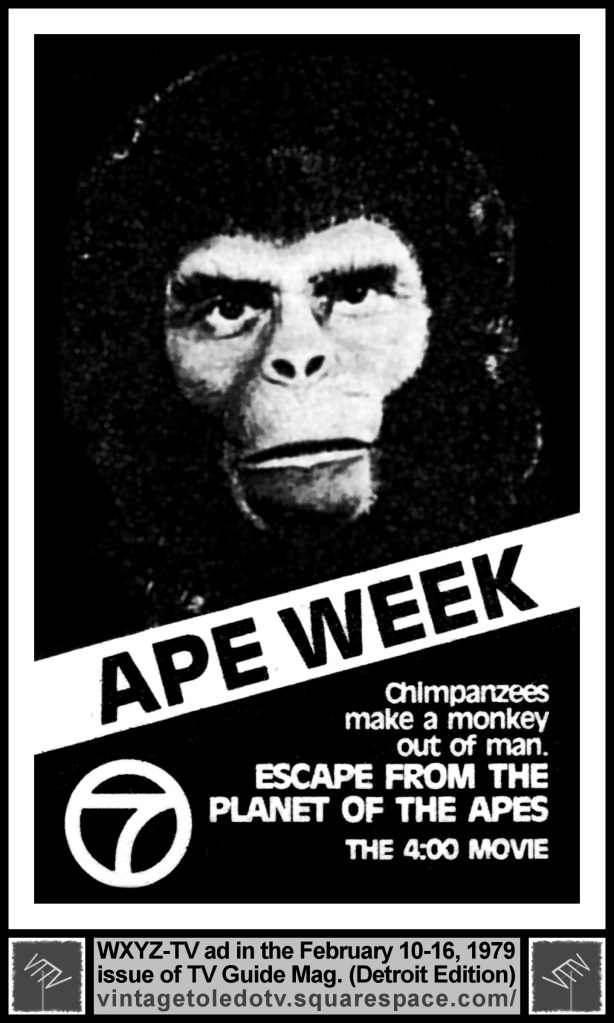
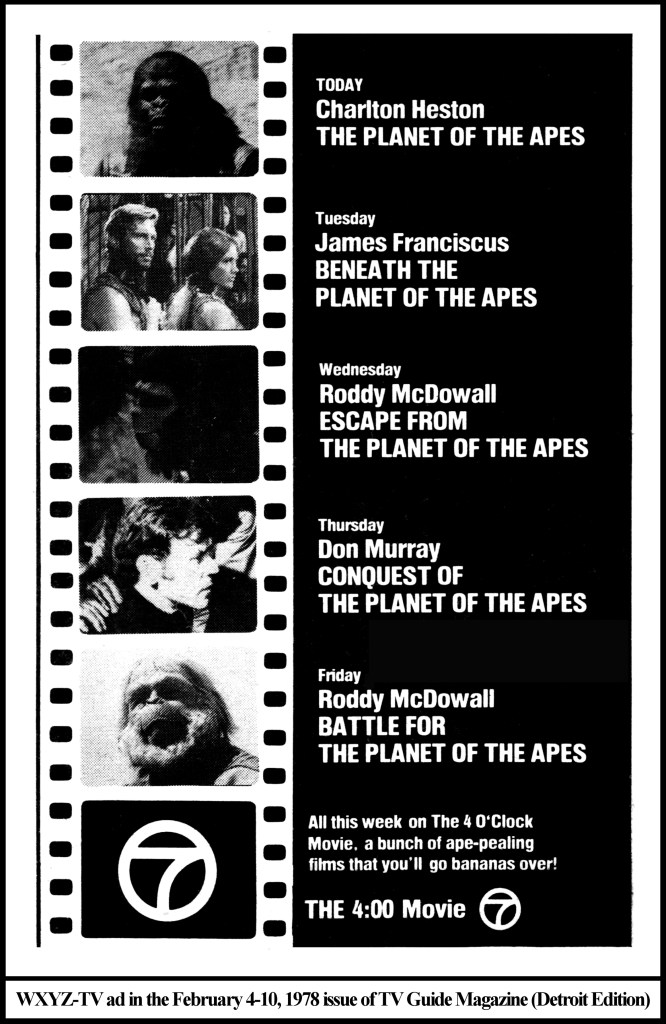
TV adverts courtesy of Vintage Toledo TV, which features even more, classic Apes TV ads from yesteryear to enjoy.
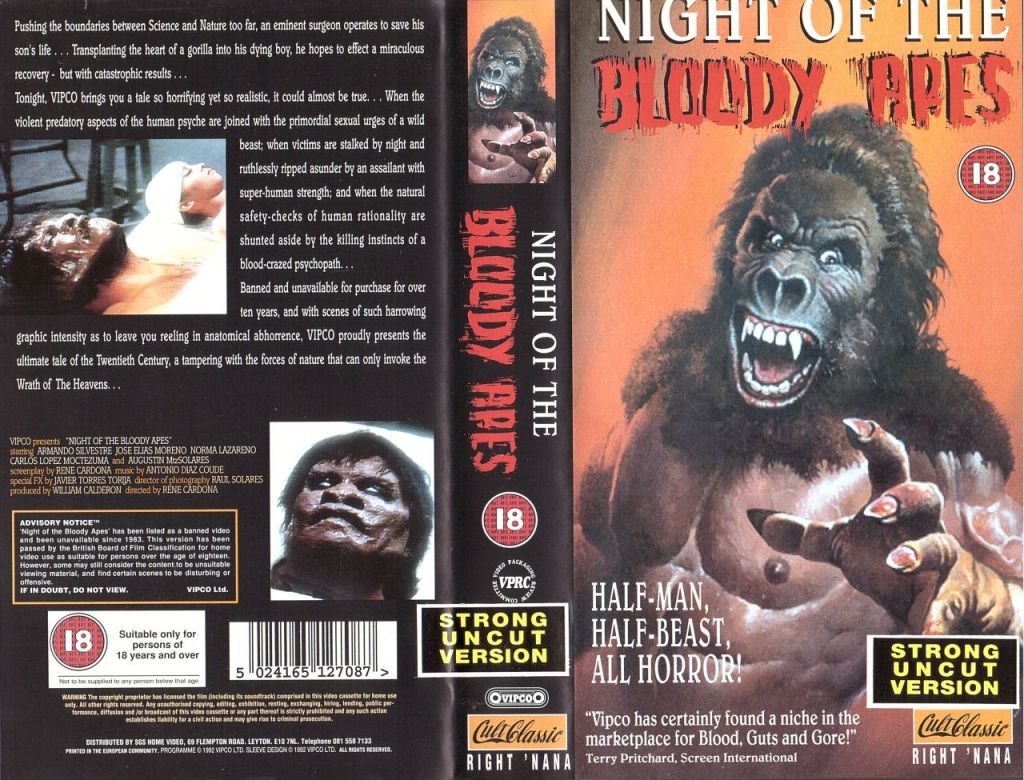
Ah, the ‘ol drive-in ’70s and ’80s home video days when forgotten drek, such as René Cardona’s 1969 epic, La Horripilante Bestia Humana, aka The Horrible Man-Beast, was redressed as an ersatz Apes sequel.

And speaking of Disney’s rebooting of the Star Wars franchise, be sure to visit with us as we explore the films that inspired Star Wars and the films that Star Wars inspired, as B&S Movies continues its Exploring series with “Exploring: Before Star Wars” and “Exploring: After Star Wars.”

Here’s our full list of Ape films reviewed this week:

The Originals

Planet of the Apes (1968)
Beneath the Planet of the Apes (1970)
Escape from the Planet of the Apes (1971)
Conquest of the Planet of the Apes (1972)
Battle for the Planet of the Apes (1973)
Planet of the Apes: The Five Telefilms from the 1974 Series (1981) *

The Reboots

Planet of the Apes (2001)
Rise of the Planet of the Apes (2011)
Dawn of the Planet of the Apes (2014)
War for the Planet of the Apes (2017)

The Ripoffs

Empire of the Apes (2013)
Eva, The Savage Venus: Italy’s Planet of the Apes (1968) *
Godzilla vs. Mechagodzilla (1974) *
Night of Bloody Apes: Mexico’s Planet of the Apes (1972)
O Trapalhoa no Planalto dos Macacos: The Brazilian Planet of the Apes (1976)
Planet of Dinosaurs (1978) *
Revenge from Planet Ape: The Spanish Planet of the Apes (1978) *
Revolt of the Empire of the Apes (2017)
Saru no Gundan: Japan’s Planet of the Apes (1974) *
Sex on Planet Ape: The Lost Erotic Ape Movies (1979 – 2002) *
Terror of Mechagodzilla (1975) *

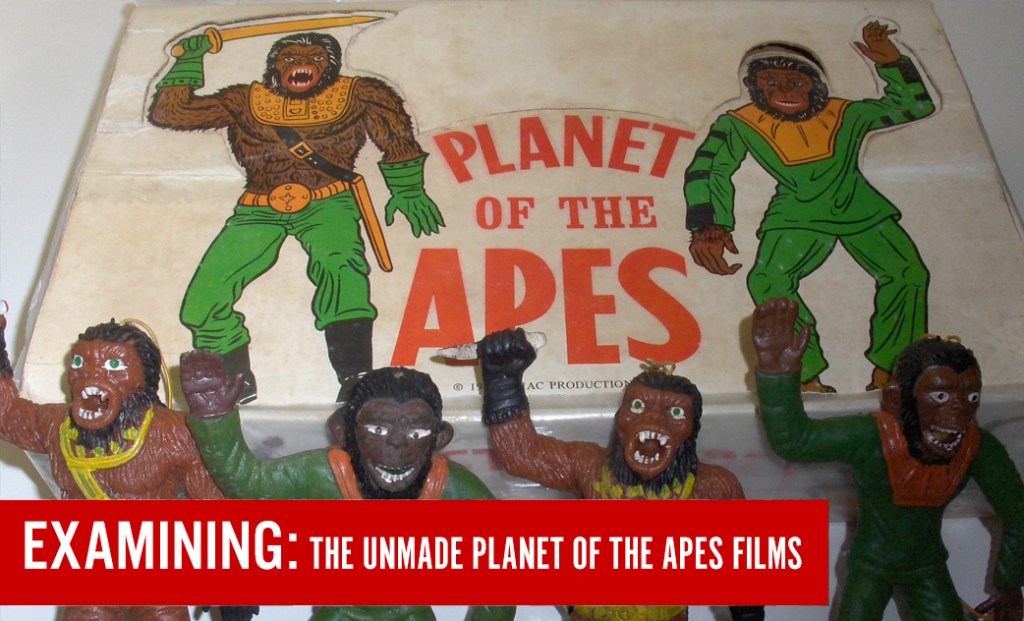
Article Banner: Planet of the Apes and Disney logos are the property of 20th Century Fox and The Walt Disney Corporation and are both widely available on the web. Graphic overlay courtesy of PineTools.com by R.D Francis.

* Reviews by R.D Francis


About the Author: You can read the music and film reviews of R.D Francis on Medium and learn more about his work on Facebook. He also writes for B&S Movies.

Ape Week: Saru no Gundan (1974): Japan’s “Planet of the Apes”

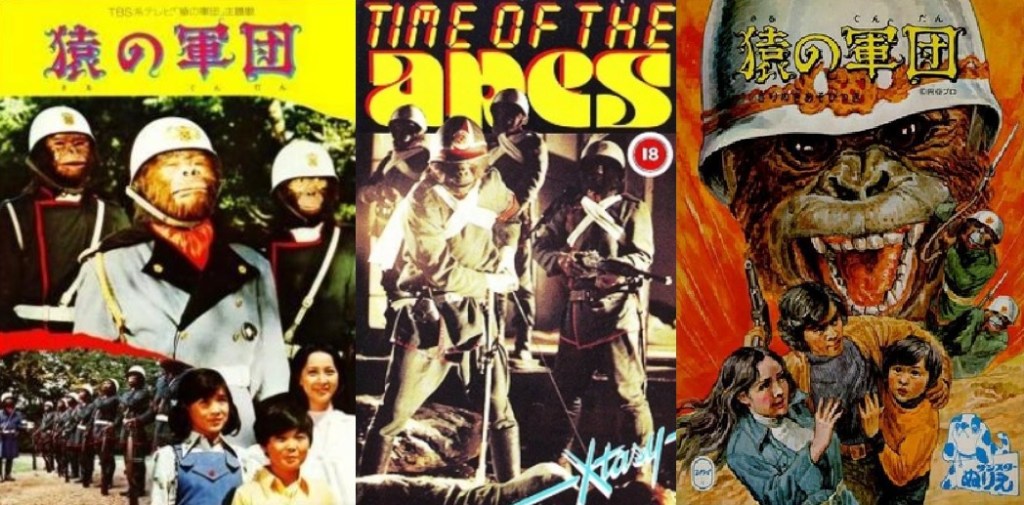
There’s nothing in the unhinged plotting of the POTA rip offs reviewed during Ape Week that compares to the 16mm-shot, LSD-induced insanity of this 1974 Japanese TV series, Saru no Gundan (Army of the Apes), produced as result of the massive success of the Apes franchise in the Lands of the Rising Sun. And if it all looks Ultraman familiar, that’s because both series were produced by Tsuburaya Productions—and there’s lots of prop and costume recycling afoot.

Retaining the plotting of the 20th Century Fox films, Army of the Apes follows the adventures of a female scientist with two annoying kids who end up cryogenically frozen (Genesis II, anyone?) and awake in a future where apes rule and they spend the rest of the one season, 26-episode run trying to return home. The only difference from the Fox films is that these apes drive jeeps and wear modern-day military-styled uniforms.

It wasn’t until 1987 that English-speaking audiences got to experience Japan’s POTA contribution—mostly through a 1991-Season 3 spoofing on Mystery Science Theater 3000. That 1987 print came courtesy of prolific U.S television producer Sandy Frank (Lassie, The Lone Ranger, the Japanese anime series Battle of the Planets) who edited the series into a 94-minute feature film known as Time of the Apes, which ran on broadcast and cable outlets (TNT’s Monster Vision shingle) in 1987 and as a VHS issue in 1988.

You can watch it on You Tube.

About the Author: You can read the music and film reviews of R.D Francis on Medium and learn more about his work on Facebook. He also writes for B&S Movies.

Ape Week: Eva, the Savage Venus (1968): Italy’s “Planet of the Apes”

Hey, wait a minute . . . Jess Franco didn’t make this, R.D. Roberto Mauri made it!

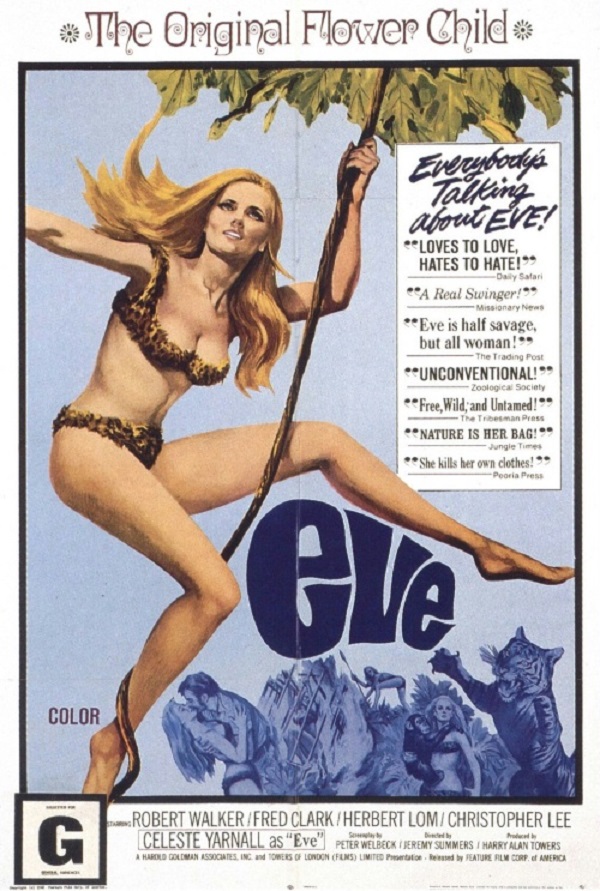
Yeah, yeah . . . slow down ye streamer. Hold off on the emails and comments, we got this. Yes, the above poster is, in fact, a Franco joint: one that aka’d in the drive-in and home video realms as Eve, Eva en la Selva (Eve in the Jungle; that English title was also used), The Face of Eve, and Diana, Daughter of the Wilderness. Need to know more? We’ve since reviewed it as part of our February 2024 “Jess Franco Month” blow out.

“No thanks. Not another Franco patch job. I’m burnt out this month,” you say. Ah, but what about when the chick with that damn apple is played by Celeste Yarnall, she The Velvet Vampire? Uh, huh. Set the rocket in the pocket for launch!

Anyway, back to the actual movie of this review. . . .

Obviously made to rip-off Planet of the Apes, this Italian-Spanish jungle adventure film with science-fiction overtones was directed by Roberto Mauri. Widely known for his knockoffs of proven genres, you’ve seen Mauri’s work on public-domain DVD sets, such as 1962’s Slaughter of the Vampire and 1964’s Curse of the Blood Ghouls (Hammer horrors), 1964’s Three Swords for Rome (Ben-Hur and Spartacus), and Vengeance Is My Forgiveness (Clint Eastwood-spaghetti westerns). Sadly, by 1980, as did most of the older Euro-directors, Mauri’s career degraded into X-rated tripe (and ended his career) with the adult-hardcore action romp, 1980’s The Porno Killers.

Watch the trailer.

Be sure not to confuse this POTA rip off with the Quentin Tarantino-touted The Mighty Peking Man from 1977 (released as part of  his Rolling Thunder Pictures shingle) that, in turn, should not be confused with 1987’s Time of the Apes (a film edit of the 1974 Japanese POTA rip off TV series, Saru no Gundan, aka Army of the Apes), none of which have any connection to Pierre Boulle’s Planet of the Apes or Radio Pictures’ King Kong . . .  or Edgar Rice Burroughs’s Tarzan.

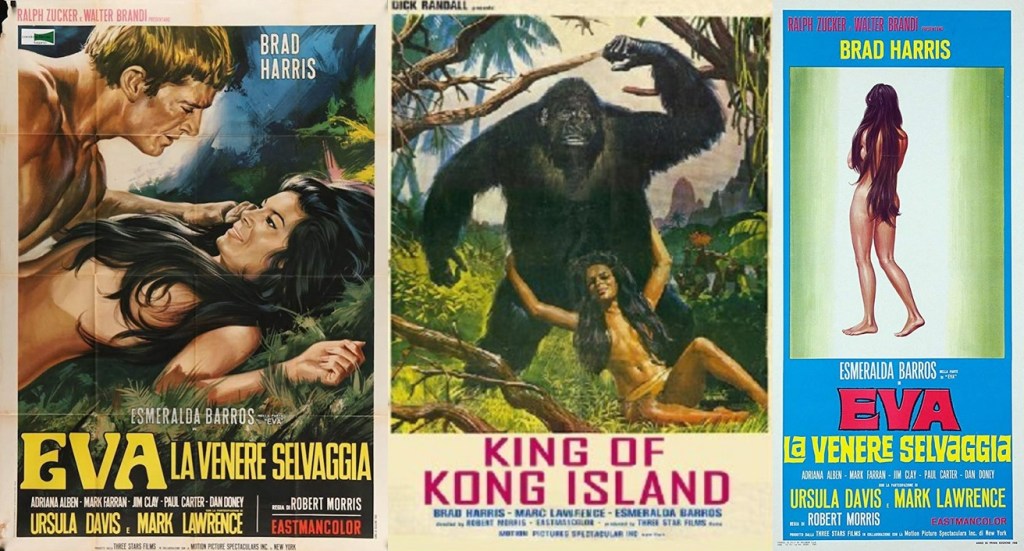
Known as Eva, the Wild Woman and Kong Island in other English-speaking parts of the world during its initial release, then as King of Kong Island in 1977 to cash in on the 1976 King Kong remake (and lost 8-minutes of “racier” scenes along the way), there’s no “island” and there’s no “Kong.” There’s not even a planet, a spaceship, or an ancient landmark to berate in frustration.

Instead of galactic time travel, we get an Island of Dr. Moreau-styled mad scientist in Kenya experimenting with radio transmitter brain implants to control a tribe of island-dwelling gorillas, so as to turn them into a take-over-the-world army. As with The Mighty Peking Man—which lends to the plot confusion—the “Eva” of the title helping in the adventure is a loin-clothed, Tarzan-like jungle girl with a pet chimpanzee who can talk with the animals. Of course, all mad scientists are horny, so those dreams of world conquest unravel when he instructs the radio-controlled apes to kidnap his dream girl, the daughter of the owner of a local Nairobi gin-joint (yes, the classic Casablanca is pinched as well). And with that, Rick Blaine, I mean, Burt Dawson (American expatriate actor Brad Harris), an Indian Jones-styled adventurer, comes to the rescue.

The Idaho-born Harris, who worked as a leading man and stunt man in over 110 European films, gained his first taste of American recognition as result of his recurring roles in the ‘80s TV series Dallas and Falcon Crest. War movie aficionados will remember his work alongside Max von Sydow and John Cassavetes in the fondly remembered Brass Target (1978).

You can have your own copy — under the Eve “original flower child” repack — as part of Mill Creek’s Sci-Fi Classics 50-film pack.

About the Author: You can read the music and film reviews of R.D Francis on Medium and learn more about his work on Facebook. He also writes for B&S Movies.

Ape Week: War for the Planet of the Apes (2017)

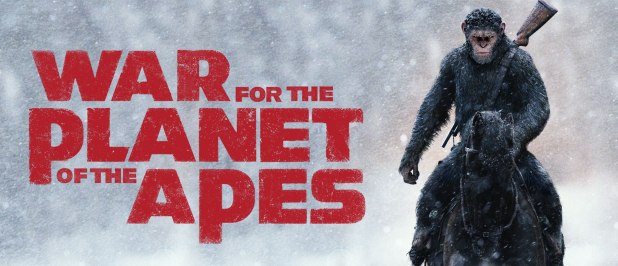
Mark Bomback and Matt Reeves wrote this installment, with Reeves returning to direct. Two years after the human-hating Koba attacked humans — Dawn of the Planet of the Apes — Caesar and his tribe of intelligent apes have been forced to fight against Alpha-Omega, a military faction led by The Colonel (Woody Harrelson), who uses the apes loyal to Koba as his soldiers, calling them donkeys and Caesar’s troops kongs.

After Disney bought Fox this year, it was thought that this would be the last film in this universe. However, Wes Ball (The Maze Runner) is directing another sequel that is supposedly taking place in the same continuity.

This film has way less humans in it — save the Alpha-Omega and army troops that fight one another and the mute Nova, who befriends Maurice. Steve Zahn also shows up as Bad Ape, a chimpanzee who lived in a zoo before the flu outbreak led to the apes moving up the evolutionary ladder.

All the apes want to do is find a place in the desert that will be an oasis for them, so that Caesar can raise his sons Blue Eyes and Cornelius in peace. However, getting there will mean going through hell and confronting the past, where Koba had to die. It will cost him a son, a wife and nearly his own life to find the heaven on Earth that the apes deserve. If the goal was for Caesar to become the Moses of the apes, this movie certainly achieves that.

After all, Maurice, an orangutan, makes the promise to tell Caesar’s story to his son. In the original films, the Lawgiver is responsible for carrying on these traditions, so much so that their statue becomes revered long after Caesar has been forgotten.