2019 Scarecrow Psychotronic Challenge Day 11 Option 2: I Was a Teenage Werewolf (1957)

DAY 11. THE OLD WAY. Watch a classic from 1959 or before.

Herman Cohen started his climb up the show business ladder from the lowest rung, working as a gofer and usher at Detroit’s Dexter Theater at the tender age of 12. By 18, he’d be the manager. His career would take him from being the sales manager for Columbia’s Detroit region to their Hollywood publicity department and finally making his own films.

His greatest success came in the 1950’s with this film — which he wrote and produced for American International — which earned $2 million dollars on a $100,000 budget (approximately $18 million on a $900,000 budget when adjusted for today’s inflation). He was also behind the films CrazeTrog and Berserk!

Back in 1957, when this film was made, the idea of a teenager becoming a monster was shocking to audiences. Producer Samuel Z. Arkoff claimed that he received plenty of guff for exploiting this idea. In fact, this is the first of many I Was a Teenage movies, but it certainly wouldn’t be the last.

It’s also the first role for Michael Landon, who would go on to enjoy a long and fruitful Hollywood career with three landmark series on his resume: BonanzaLittle House on the Prarie and Highway to Heaven. When I was a kid, I was often afraid of the photo of the werewolf in this movie and my mother would say, “It’s just Michael Landon. You shouldn’t be afraid.” Also, as a youngster, if I ever went to another kid’s home and they were fans of Little House on the Prarie’s adventures of the Ingalls family, I’d instantly judge them as boring and want to go home.

Here he plays Tony Rivers, a troubled teenager to say the least. Unlike most 1950’s fare that portrays its protagonist as noble, we’re shown that Tony is a rough character right from the beginning. He doesn’t just rail against authority, he hates everyone. And he’s not all that forthright about it. In a fistfight with another classmate, he goes so far as to throw dirt in the man’s face and try to kill him with a shovel instead of just using his fists. His love of violence and hatred for his fellow man stands in dramatic contrast to his pretty boy looks.

Barney Phillips, who was also Sergeant Ed Jacobs on Dragnet, plays Detective Donovan, a cop who feels bad for Tony and tries to intervene on his behalf several times. After all, Tony grew up without a mom and his dad’s probably a drunk.

Yvonne Lime, who would move on from acting to becoming a noted philanthropist with her husband, plays his girlfriend Arlene. While her parents don’t seem to enjoy the cut of Tony’d jib, she’s in pure love with him, believing in him no matter what.

That said, the real horror starts at a haunted house party. After an extended dance sequence where Vic and his girl sing along to a record — amazingly, this is announced as a big deal and I can’t imagine attending a party where the highlight is some guy playing bongos and lipsynching to a 45 — Tony flips out and nearly kills the man for surprising him from behind. I mean, everyone was pranking one another to an inordinate degree and only Tony tried to outright murder Vic. Look — I hated Vic after a minute, so I get it, Tony. I can’t even imagine what it would be like to have to spend time with him on an extended basis.

Don’t believe me? Just watch these antics and tell me you don’t wish you could go full lycanthrope and strike them all down.

However, Tony’s rage ends up knocking down his girlfriend, so he volunteers to meet with hypnotist Dr. Alfred Brandon. He’s played by Whit Bissell, who would play a psychologist in not only this film, but in its follow-up, I Was a Teenage Frankenstein. He also had the same occupation in Invasion of the Body Snatchers.

This being the 50’s, the doctor has to be a quack. He’s really only interested in experimenting on Tony, regressing him to his most primal state.

After another party at the haunted house — this is made a major point yet we never see a single ghost — Tony drives Arlene home and Frank, one of their friends, is mauled and killed. As the cops debate the autopsy, Pepi the janitor (Vladimir Sokoloff, a Russian actor playing a Carpathian, so this isn’t whitewashing as much as its Hollywood not really even knowing at this point what ethnicity is. In fact, Sokoloff would play 35 different nationalities in his career, including people from Greece, China, Spain, Mexico and so many more) tells them all the truth: these are the marks of a werewolf!

Tony feels like there’s something wrong with himself, but the principal is so happy with his progress that she’s recommending him to State College. One would assume that the marks on his permanent record have been removed.

As he leaves her office, he notices Theresa practicing her gymnastics. This drives his teenage hormones into overdrive and he responds by going full werewolf and killing her, which is about the best translation for toxic masculinity that 1957 can muster. Just seeing the comely form of Dawn Richard (Playboy Playmate of the Month for May 1957) as she stretches out is all it takes. That said — her sexuality had to be somewhat shocking for the puritanical Baby Boom era. Therefore, she had to be destroyed.

Tony’s recognized by his jacket and goes on the run. He calls Arlene for help and she can only listen, unable to reply. And a visit to Dr. Brandon only leads to the man using our protagonist and filming his transformation, at which point Tony kills everyone. The cops are forced to gun him down — silver bullets are unnecessary when you have good old fashioned American steel — and that’s all she wrote.

One of those cops — they opine that man shouldn’t mess in the affairs of God — is Guy Williams, who would soon be swashbuckling in Zorro and sailing through the galaxy in Lost In Space.

Less than four months after the release of this film, AIP would release two movies that are pretty much the same story: I Was a Teenage Frankenstein and Blood of Dracula, which is even more of a remake, just with a female lead and doctor. It’s such a paint by numbers recreation that there’s even another dance number thrown in, references to Carpathia, dialogue lifted nearly line by line and an observer who knows that it’s a vampire when no one else will believe them.

I watched this movie on the very same day I rewatched An American Werewolf In London and it’s stunning to see the different ways that they interpret not only being a werewolf, but the transformation itself. Instead of the pain that 1981’s Rick Baker effects depict, all we see here is a slow dissolve of Tony getting a furry face. But it works — for so often, this was how American audiences saw werewolves.

2019 Scarecrow Psychotronic Challenge Day 11: A Bucket of Blood (1959)

DAY 11. THE OLD WAY. Watch a classic from 1959 or before.

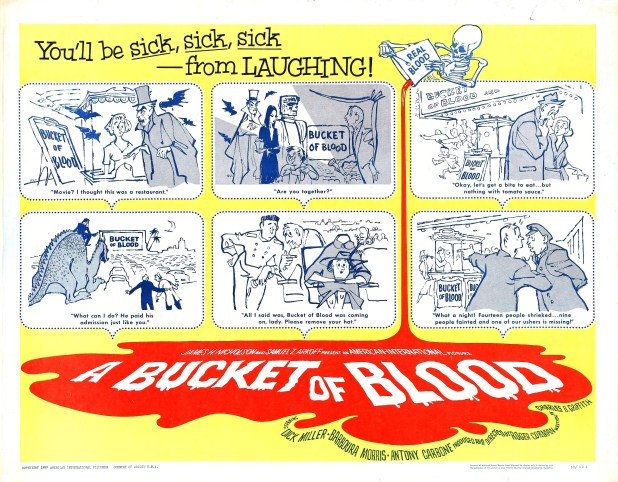
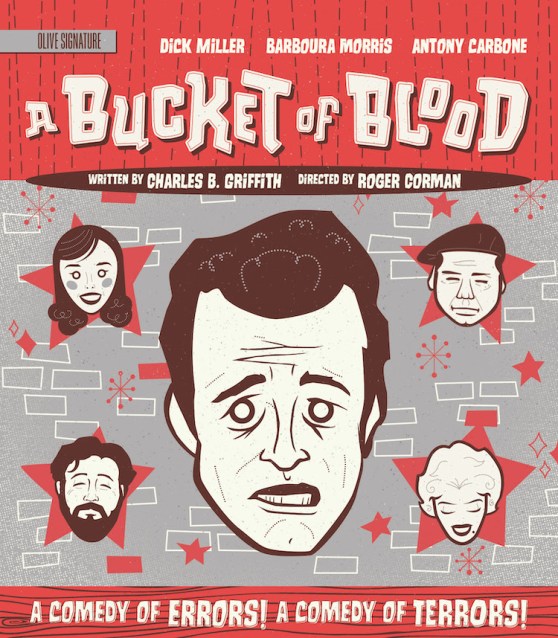
A Bucket of Blood aspires to art as much as it does junk. Written by Charles B. Griffith, whose name you can associate with films as disparate as Smokey Bites the DustBarbarella and Death Race 2000, it’s a tale of trying to figure out how to create art when all you can do is repeat words and images. Maybe that’s what art really is.

Roger Corman himself directed this one, shot in five days for $50,000. But hey — AIP wanted a horror film and had sets left over from Diary of a High School Bride. The same set would also be used for The Little Shop of Horrors.

We start by hearing the beat poetry of Maxwell H. Brock (Julian Burton, The Masque of the Red Death) at The Yellow Door cafe. People only know when to clap when they’re told, as the people he decries as sheep really live up to it. But it’s art, baby.

Busboy Walter Paisley (Dick Miller) yearns to be part of this hip crowd and wants to win the heart of Carla (Barboura Morris, The Trip), a friendly hostess at the club. As he fails to make her a sculpture, his landlady’s cat Frankie (Myrtle Vail plays the snooping older woman; she’s actually Griffith’s grandmother) gets stuck in the wall. He tries to cut it out of the wall, but ends up killing the cat. So he does what any of us would: he covers it in clay, sticks a knife in it and calls it art.

The next morning, Walter’s boss Leonard (Antony Carbone, Creature from the Haunted Sea) makes fun of the morbid art, but Carla loves it. So up it goes, on display, where the beatniks all fall in love with it. One of those crazy cats named Naolia gives him some heroin to remember her by, but Walter has no idea what it is. 

As he’s followed home by undercover cop and total fink Lou Raby (Bert Convy!), he’s told he’s going to be arrested for possession. He panics and hits Lou with a frying pan, giving him another piece of art called “Murdered Man” for everyone to fall in love with. But the secret’s soon to get out, as Leonard sees fur sticking out of his “Dead Cat” piece.

Walter is now the king of the artistic set, except for Alice (Judy Bamber, Dragstrip Girl), a model who is pretty much disliked by everyone. Walter asks her to be in his model and she agrees, only to be strangled and turned into his next art object. The results so impress Brock that he throws a party for Walter, who drunkenly beheads someone directly after and shows the results to his boss.

This has to end like all wax-related films. Walter finally feels enough self-worth to propose to Carla, who rejects him and soon learns that the sculptures are really human bodies covered in wax. Everyone chases him home, where he makes his last piece of art from himself — the “Hanged Man.”

Dick Miller said of the film — in the book Roger Corman: Blood-Sucking Vampires, Flesh-Eating Cockroaches, and Driller Killers — “The story was good; the acting was good; the humor in it was good; the timing was right; everything about it was right. But they didn’t have any money for production values … and it suffered.”

Miller would go on to play a character named Walter Paisley in the films Hollywood Boulevard, The Howling, Twilight Zone: The Movie, Chopping Mall, Night of the Creeps, Shake, Rattle and Rock!, Rebel Highway, The Adventures of Biffle and Shoosterror and Schmo Boat.

The movie was remade in 1995 as part of the Roger Corman Presents series on Showtime. While never available on DVD, it was released as The Death Artist on VHS. It adds perhaps the one thing missing from the original: Paul Bartel. He and Mink Stole play a rich couple looking for new artists. Walter is played by Anthony Michael Hall, Carla by Justine Bateman, Shadoe Stevens is Maxwell and Sam Lloyd is Leonard. Taking place in a cappuccino bar, it also features Will Ferrell and David Cross in some of their first roles.

If you want to see this, I recommend the Olive Films Signature Edition, made to commemorate the film’s 60th anniversary. It comes complete with a new 4K scan of the film, short docs on Corman and Dick Miller, commentary by Elijah Drenner, director of the documentary That Guy Dick Miller as well as an interview with Griffith, a rare prologue from the German release and even a digest version of the film that was released on Super 8!

Much like their release of Invasion of the Body Snatchers that came out earlier this year, this is another great release from Olive.

EXPLORING: Slasher Remakes

If there’s one thing Hollywood can’t get enough of, it’s mining the past to try and one-up what has come before. With the resurgence of the slasher after 1996’s Scream as well as a world where teenagers riled the box office, all manner of once-dormant properties now had a new lease on life. The only difference is that now, most of the grisly carnage would be achieved via computer-aided effects.

It’s a rough assignment remaking a movie that is beloved by a fanbase. No matter what you do, someone isn’t going to be happy. If you’re too slavishly devoted to the source material, why even remake it? If you go too far from it, why would you even call it a remake? That’s when the reimagining word started getting used, as modern directors had their own spin on how to retell the mythos that we’d grow to know and love, whether it was in the theater, the drive-in or via video.

The Texas Chainsaw Massacre (1974) remade as The Texas Chainsaw Massacre (2003)

This was the first film produced by Platinum Dunes, who would go on to produce remakes of several other 20th-century horror films. Most of them are on the list that follows. For this remake, they brought Marcus Naspiel, a music video director, on board. Original plans would have had the story told in flashback from original actress Marilyn Burns reprising her role as Sally Hardesty and that Tobe Hooper and Kim Henkel would be writing the script. None of this happened.

To his credit, Nispel was against the idea of remaking the film, saying that it was blasphemy to director of photography Daniel Pearl, who was the original cameraman for the 1974 classic and this movie. Pearl encouraged Nispel to join the project, however, as his goal was to bookend his career with the remake. The result? A glossy, gory and louder version of the first film, which does more with mood and menace than with shoving any blood into your face. A prequel,  The Texas Chainsaw Massacre: The Beginning, would follow in 2006.

Friday the 13th (1980) remade as Friday the 13th (2009)

Naspiel directed this reimagining — there’s that word — of the first four films in the franchise. Jason would go from a hulking beast of a killer to a trap and weapon using mastermind out to wipe out a cabin full of rich kids, set to MTV tunes and quick cuts. Your mileage may vary on this one, but the fact is that it’s the second most profitable film in the entire franchise. Then again, that may be less of a sign of quality and more that people really missed seeing Jason on the silver screen.

Prom Night (1980) remade as Prom Night (2008)

This Nelson McCormick film — he also directed the 2009 remake of The Stepfather — is another reimagining of the source material. This one is all about Donna Keppel, a high school student who is pursued by the teacher who killed her entire family to get closer to her. When he’s released three years later, the horror begins all over again. Surprisingly — actually, I shouldn’t say that because slashers always end up shocking people by making good money — it debuted at #1 at the U.S. box office.

My Bloody Valentine (1981) remade as My Bloody Valentine 3D (2009)

Patrick Lussier edited nearly every one of director Wes Craven’s later films, including Wes Craven’s New Nightmare, Vampire in Brooklyn and the Scream series. He started directing with The Prophecy 3: The Ascent before co-writing and directing Dracula 2000. He also took over the Halloween series from Rob Zombie and when the third film was canceled, then moved on to direct Drive Angry. This remake was shot all around the Pittsburgh area, in towns like Kittanning, Ford City, Bethel, Tarentum, Oakmont and Ross Township. Speaking of Pittsburgh, one of our favorite sons, Tom Atkins, shows up in this, one of the few remakes that’s compared somewhat favorably to the source material.

When A Stranger Calls (1979) remade as When A Stranger Calls (2006)

The first twenty minutes of the original — based on the urban legend of “The Babysitter and the Man Upstairs” and cribbed from Black Christmas — was so influential that Scream completely ripped it off. The remake is pretty much that twenty minutes stretched out over the film’s entire running time. It was directed by Simon West, who directed Con Air and the remake of The Mechanic.

A Nightmare On Elm Street (1984) remade as Nightmare on Elm Street (2010)

When people discuss remakes that they hate, this one always comes up on the list. It does start with an intriguing premise: Perhaps Freddy Krueger wasn’t the Springwood Slasher and the parents killed the wrong man. That storyline is instantly proven false and the film soon falls into a by the numbers remake of the original films that makes you wistful for Robert Englund. That’s the danger of remaking a movie with a character — and actor — that people love so much. After this movie caused such a backlash, Platinum Dunes never attempted another remake.

April Fool’s Day (1986) remade as April Fool’s Day (2008)

The Butcher Brothers were behind the film The Hamiltons and were given the opportunity to create this direct to video remake of this Canuxploitation slasher. That said, the original isn’t well-known to the general public and slasher fans mostly hated this reimagining — that word again — so I have no idea who this movie is really for.
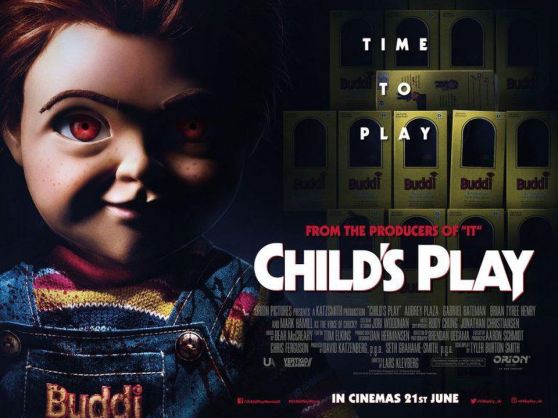
Child’s Play (1988) remade as Child’s Play (2019)

Perhaps seven movies of continuity weren’t enough for Chucky’s fans, who pretty much turned away from the attempted remake in droves. Then again, negative kudos to the studios for releasing it at the same time as another killer doll film, 2019’s Annabelle Comes Home. Original creator Don Mancini has a TV series remake under development while a fan film entitled Charles is also due for release. As for me, I didn’t mind the remake, but I had no real ties to the source material.

Halloween (1978) remade as Halloween (2007)

Boy, talk about divisive. There is a camp that adores everything that Rob Zombie has ever made and feels that his take on The Shape and Haddonfield is perfectly awesome. Then there are those that were perfectly fine with the first two John Carpenter films and see any attempt at remaking them as blasphemy. It’s kind of like never discussing politics or religion, because whenever someone gushes about these films, I pretty much instantly think less of them. Except for that wacky part with the dream horse that felt like it ran straight out of The NeverEnding Story. That was kind of hilarious.

Black Christmas (1974) remade as Black X-mas (2006) and then about to be remade as Black Christmas (2019)

A wise man once sang, “Only love can break your heart.” Well, if you’re a fan of this proto-slasher piece of Canadian holiday insanity, you may disagree. The 2006 remake is the kind of glossy mid 00’s film that people say, “It’s not that bad” about. Sure, fine. But when you’re trying to remake what is perhaps one of the most note perfect slashers, you expect more. I’m refraining from commenting on this year’s upcoming remake — honestly, I desperately want to shit all over it, but I’m giving it a chance — until I see it.
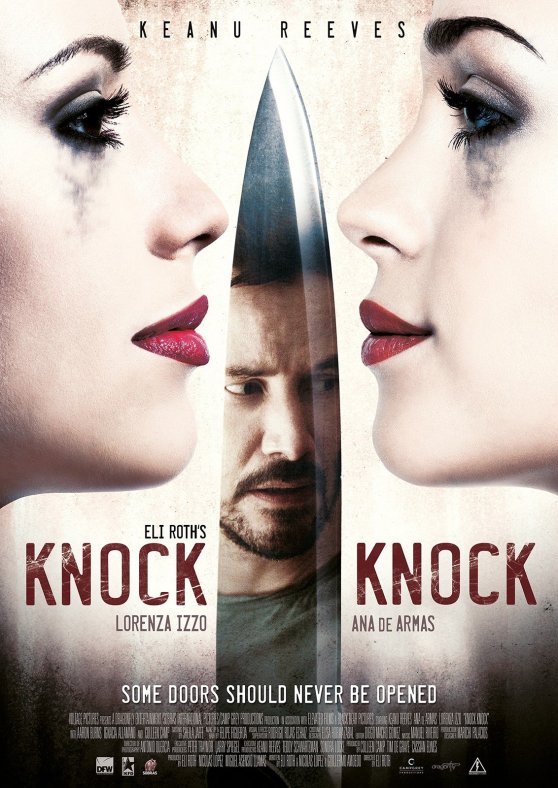
Death Game (also known as The Seducers, made in 1977) was remade as Vicious and Nude (1980) and Knock Knock (2015)

Much of the principal cast and crew of the original film all participated in the remake, with Peter S. Traynor, Larry Spiegel, Sondra Locke and Colleen Camp (who also shows up in a cameo) are all credited as executive producers. Plus, director Eli Roth credited Anthony Overman and Michael Ronald Ross for their story.

As for the earlier Spanish remake, as you’d expect with a title like that, the sex scenes are a lot more explicit, as is the violence. PS — this is yet another film “based on true events” and if you’d like to argue if it’s a slasher or a home invasion story, you should probably save that for the next entry on our list.
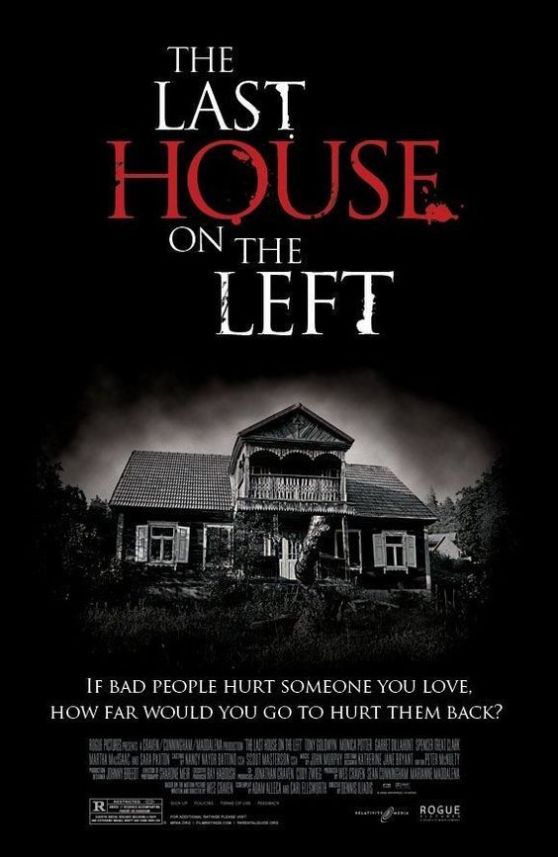
The Last House On the Left (1972) was remade as The Last House On the Left (1972)

Pretty much the ultimate home invasion movie is Wes Craven’s debut. Well, he produced this one, which interested him as he wanted to see if a larger budget would lead to a better film. The original script was rejected because it had some supernatural elements and director Dennis Iliadis (HardcoreDelirium) sought to avoid turning this into torture porn. It basically does what every remake does — make it louder, have sexier actors and make it gorier, if not better. Garret Dillahunt (he plays John Dorie from Fear the Walking Dead) had the hapless task of taking over the role of Krug from Davis Hess, who pretty much replayed that role in Ruggero Deodato’s The House On the Edge of the Park. Ah, the whole thing is kinda sorta a remake of The Virgin Spring anyway, right?

Maniac (1980) remade as Maniac (2012)

Elijah Wood is a big fan of grindhouse movies, so maybe we should cut him some slack. After all, the 2012 retelling was a critical darling, told from the killer’s POV nearly the entire film, putting the audience into the actual eyes of the titular maniac, Frank Zito. On the other hand, why not just make a new film inspired by the Bill Lustig movie? Why try when Joe Spinell and Tom Savini united to craft utter perfection? Oh, I get it. Alexandre Aja — the reimagining king — wrote this.

Mother’s Day (1980) remade as Mother’s Day (2010)

Call it a reimagining. Call it a loose remake. Call it a movie I haven’t watched yet because I love the original so much. Directed by Darren Lynn Bousman — who created the Saw movies and Repo! The Genetic Opera — this film stars Rebecca De Mornay as Natalie “Mother” Koffin, who has three children that she manipulates and coerces to help her get what she wants. There’s no Queenie waiting in the woods and this is more of a home invasion film.

See No Evil (1971, also known as Blind Terror) remade as See No Evil (2006)

The original may be a take on Wait Until Dark with Mia Farrow as the blind lead, but the remake — the first major film produced by WWE Films — is a straight-up slasher. It was directed by Gregory Dark, who was one half of the infamous adult video moviemaking team The Dark Brothers. Instead of frail Mia, its star is WWE wrestler Kane, who has gone on to become the mayor of Knox County, Tennessee. It was written by Dan Madigan, the man who pitched this idea to WWE owner Vince McMahon: Jon Heidenreich would be the perfect person to play a cryogenically frozen Nazi stormtrooper named Baron Von Bava. He’d be unfrozen by Paul Heyman, a manager who in real life is Jewish and whose mother survived the Holocaust. McMahon was so stunned by the idea that he walked out of his board room and didn’t return. Madigan left WWE later that year.

Long Weekend (1978) remade as Nature’s Grave (2008)

Oh Australia — the only place that could make two movies where nature itself becomes the slasher and wipes out an unhappy couple. Bonus points for the sequel getting Robert Taylor and Roger Ward in the movie, as they were both in Turkey Shoot (Taylor was Ramrod in the remake, Ward was Ritter in the original).
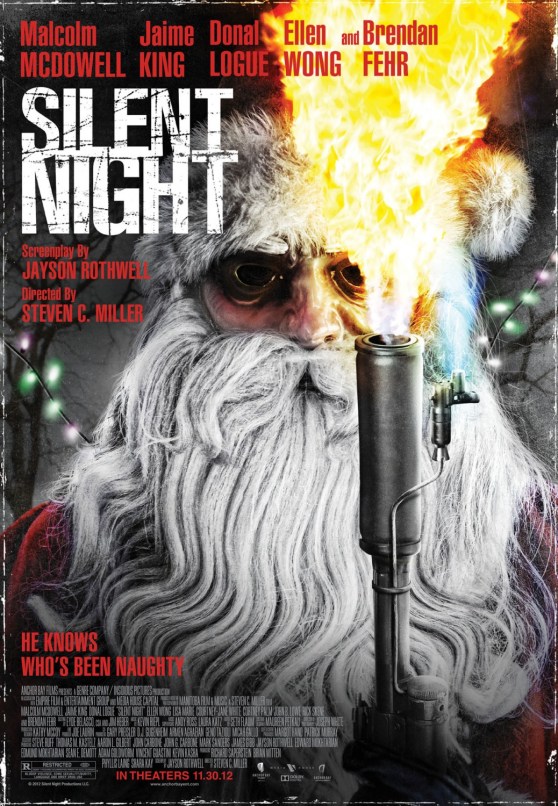
Silent Night, Deadly Night (1984) remade as Silent Night (2012)

At least the sequel had a decent cast — Malcolm McDowell (who not only took over Donald Pleasence’s role in the Halloween remakes but seemingly inherited his inability to say no to any role), Jaime King, Donal Logue, Ellen Wing (Knives Chau!), Courtney Palm (Sushi Girl) and Lisa Marie. It’s actually received pretty decent reviews but the original is so stuck in my memory, I’m not too excited to try a brand new take.

Silent Night, Bloody Night (1972) remade as Silent Night, Bloody Night: The Homecoming (2013)

Adrienne King — Alice Hardy from the first two Friday the 13th movies — plays a mysterious voice in the remake of this strange movie. These same people also took another public domain movie — it’s called Night of the Living Dead, you may have heard of it — and shat all over it, releasing Night of the Living Dead: Resurrection. Starburst said of the film, ” remember that once you’ve watched the film itself you will never get back the seventy-eight minutes of your life you wasted on it.”

The House on Sorority Row (1983) remade as Sorority Row (2009)

This reimagining was shot about two miles from my house in Munhall, one block from the Carnegie Library of Homestead. The graduation scene was shot outside of Soldiers & Sailors Memorial Hall in Pittsburgh’s Oakland neighborhood, where the cage scenes in Silence of the Lambs was also filmed. Instead of the girls being responsible for the death of their house mother, in this one they’re being stalked due to the death of one of their fellow sisters.
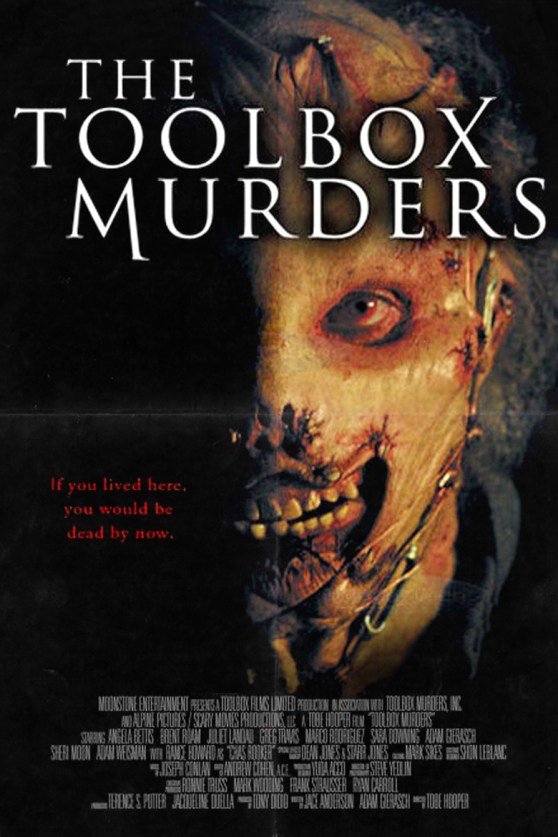
Toolbox Murders (1978) remade as The Toolbox Murders (2004)

This may be the only slasher remake that has a more well-regarded director helming the second film that the first. The sequel adds a supernatural element, as well as a killer named Coffin Baby. Again, this whole thing is weird, because the 1978 movie went all out to rip off Hooper’s Chainsaw. Here’s a little slasher trivia at least: Eugene, the character in Behind the Mask: The Rise of Leslie Vernon who mentors the killer, is responsible for the murders in the first film and Black Christmas.

The Town That Dreaded Sundown (1976) remade as The Town That Dreaded Sundown (2014)

If there’s one movie on this list that can compete with its inspiration — if not improve it in some measures — this would be it. Perhaps it’s because I can’t get enough of the Phantom Killer. Or perhaps it’s just because the second one is a meta-fueled exercise in brutality. Either way, it’s my pick for the best remake on this list.

The Wizard of Gore (1970) remade as The Wizard of Gore (2007)

This Herschell Gordon Lewis gutbuster was remade with Suicide Girls, Crispin Glover and Jeffrey Combs and I still haven’t seen it. Such is my allegiance to the American Godfather of Gore.
Two Thousand Maniacs! (1963) remade as 2001 Maniacs (2005)

No. Just no. Even someone with taste as bad as mine — my collection of Claudio Fragrasso films is in the double digits — won’t watch this movie. Eli Roth was involved, as well as Robert Englund and Lin Shaye. None of these things make me want to watch a single moment of this, nor its sequel 2001 Maniacs: Field of Screams (even if Bill Bill Moseley and Ogre from Skinny Puppy are in it).
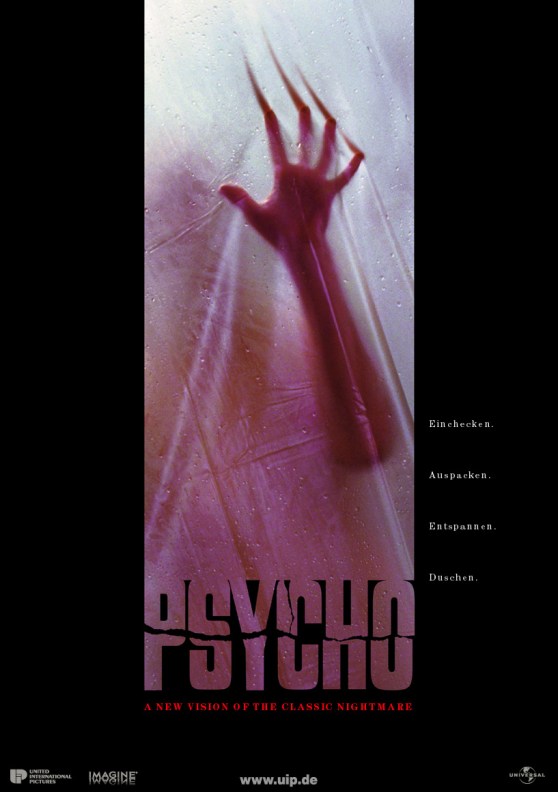
Psycho (1960) refilmed shot by shot as Psycho (1998)

Psycho may not be a true slasher, but it gave inspiration to so many of the films within that genre. Gus Van Sant made waves when he decided to remake the film by aping every single shot that Hitchcock had already filmed. Then again, they added in some gore and dream sequences along the way. This movie won Worst Remake and Worst Director in that year’s Golden Raspberry Awards. That said, Quentin Tarantino — and my wife — have gone on record with their love for this movie.

There’s also Psychos, which is a mashup of Alfred Hitchcock and Gus Van Sant’s films — both in black and white — that was posted on director Steven Soderbergh’s Extension 765 website.

Anthropophagous (1980) remade as Anthropophagous 2000 (1999)

I haven’t seen the remake of this film, but reviewers said that director Andreas Schnaas lacked the directorial skill of Joe D’Amato. So…you kind of see where this is going, right? At least this movie amps up the blood and gore, I guess.

Terror Train (1980) was NOT remade as Train (2008)

While this Hostel-inspired, Thora Birch-starring film was originally a remake of the Jamie Lee Curtis slasher classic, it eventually changed into its own movie about an organ harvesting train. The only thing they have in common is that there’s a train in movie.

While not a slasher, House of Wax (1953) was remade into one — House of Wax (2005)

The creators of this remake took the Vincent Price-starring classic and created a vehicle for what everyone in the nascent world of social media wanted to see most: Paris Hilton horribly murdered. There are also tons of dead animals and a decent ending as the house melts down, but it’s pretty much a skippable affair.

Did we miss any? What’s your favorite slasher remake? Do nearly all of these remakes suck or is that just me being negative? No matter what, remakes aren’t going away, with the long rumored Alice, Sweet Alice remake still being talked about, as well as a recreated Wrong Turn, a reboot of Madman, a LeBron James-led Friday the 13th reboot, the HBO Maniac Cop series that was just announced, a Chris Rock-helmed Saw and Jordan Peele’s take on Candyman. Share your thoughts in the comments.

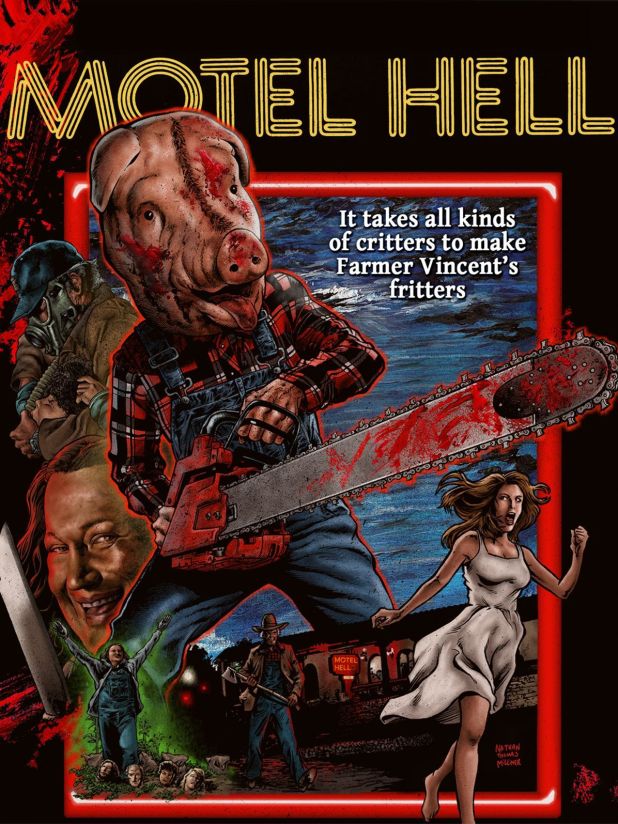
Motel Hell (1980)

Kevin Connor directed the Amicus-produced From Beyond the Grave, as well as several fantasy films for that studio and others in the 1970’s that included The Land That Time Forgot, At the Earth’s Core, The People That Time Forgot, Warlords of Atlantis and Arabian Adventure. It was almost made by Tobe Hooper, which seems like the kind of urban legend that follows so many late 70’s and early 80’s horror movies.

That brings us to Motel Hell, which arrived as the slasher boom was about two and a half years in. While this was intended as a serious film at one point, it certainly ended up anything but.

It was shot at the Sable Ranch in Santa Clarita, California, the same location where The Devil’s RejectsThe Lords of SalemHatchet and many more films were lensed.

Farmer Vincent Smith (cowboy actor Rory Calhoun) and his sister Ida (Nancy Parsons, Beulah Ballbricker from the Porky’s series) own a farm with the Motel Hello on the grounds. Their smoked meats are famous everywhere, because as the tagline says, “It takes all kinds of critters to make Farmer Vincent’s fritters.”

That’s because — no spoiler really — they’re human flesh. The farmer sets traps, catches drivers on the roads nearby, cuts their throats and then buries their bodies in his secret garden until they’re ready for harvest.

One of those victims is a motorcyclist named Bo, who is buried deep while his girlfriend Terry (Nina Axelrod, Roller Boogie) is taken to the motel. After being told her man is dead, she settles in and is unsuccessfully wooed by Sheriff Bruce (Paule Link, TV’s CHiPs and Grand Theft Auto). Much to Bruce’s chagrin, she seems attracted to his brother, Farmer Vincent.

Meanwhile, our protagonist — I guess Farmer Vincent is the kinda sorta lead of this — is luring in more victims via wooden cows that cause accidents and ads in swingers magazines. Soon, he decides to teach Terry how to smoke meat, which causes Ida to go bonkers and attempt to drown the young girl. Vincent saves her, she falls head over heels and instead of having sex — as she hoped — he asks her to marry him. She agrees.

Bruce tries to protest, saying that his brother is simple and has syphilis of the brain, but Vincent chases him off with a shotgun. That causes him to start to investigate all of the disappearances.

After a champagne toast, Terry passes out due to her spiked drink and our brother and sister tea, start prepping the wedding feast. As they head to the slaughterhouse, Bo gets loose and frees the other people planted in the garden. And as Vincent tells Terry his secret recipe, she freaks out.

What follows is slasher movie history, as Farmer Vincent dons a pig’s head and duels his brother with chainsaws before dying, gasping out that he was a hypocrite for using preservatives. As the survivors leave the farm, the sign finally malfunctions, leaving behind the words Motel Hell.

There are plenty of great secondary players in this, from radio DJ turned entertainment personality Wolfman Jack as a TV evangelist named Reverend Billy to Elaine Joyce (Ragman’s mother in the slasher par excellence Trick or Treat), Monique St. Pierre (November 1978 Playboy Playmate of the Month and 1979 Playmate of the Year who is also Cerce in post-nuke treat Stryker), Rosanne Katon (September 1978 Playmate of the Month, also in Bachelor Party and the Swinging Cheerleaders before leaving acting behind to do stand-up comedy, raise her autistic son to be an expert cellist and working with her husband to do good around the world with Operation USA, which supplies relief to areas impacted by natural disasters and poverty) and a rock band that has John Ratzenberger (yes, from Cheers but also from House II) in it.

You can get this on blu ray from Shout! Factory or watch it for free on Tubi, Vudu and Amazon Prime.

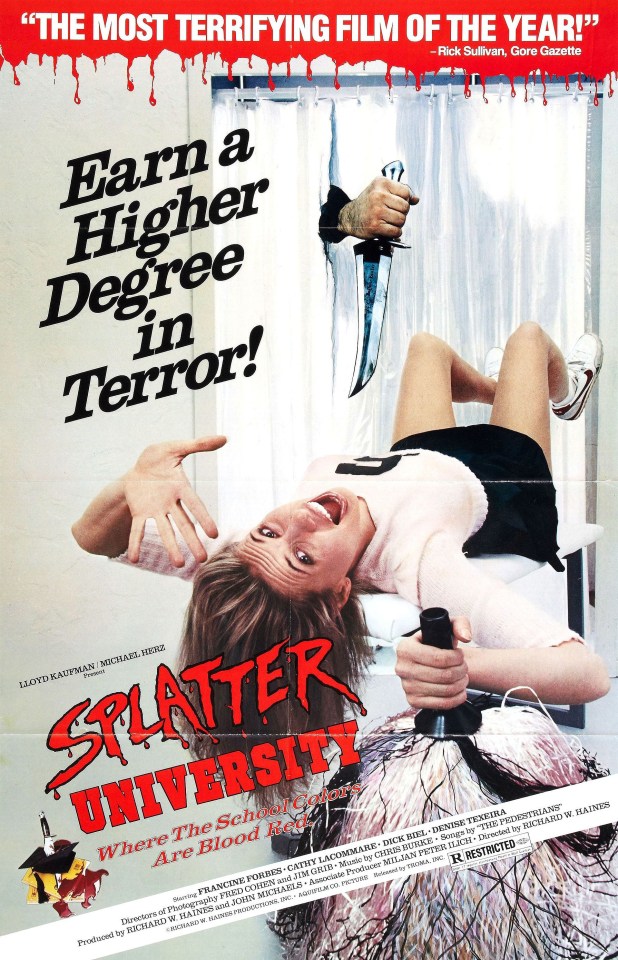
Splatter University (1984)

Richard W. Haines edited Stuck On You! and The Toxic Avenger and directed Class of Nuke ‘Em HighHead Games and this slasher film, which features actress Elizabeth Kaitan (Robin from Friday the 13th Part VII: The New Blood and Candy from the Vice Academy series) on the poster when she’s not even in the movie!

Years ago, a killer named William Graham escaped from a mental hospital and killed numerous students at Saint Trinian’s College. Years later, new sociology teacher Julie Parker has just started at the college but she can already tell that something just isn’t right. Much like a giallo, this foreigner must become the detective as bodies pile up around her and she becomes the killer’s next potential victim.

This movie was made for around $25,000 and originally called Thou Shall Not Kill. It came at the end of the slasher boom and is a pretty standard stalk and slash, save for a few cool scenes like when Parker discovers her best friend’s body, which has been festering in a locker for several days. It feels all over the place as several of the kills were added after the original running time only came in at 65 minutes, so the padding is evident.

For all of the faults you can find in this movie — the effects aren’t that great, the kills aren’t very spectacular, the characters are pretty much universally annoying — the ending makes up for all of it, transforming what has been a pretty campy affair into pure nihilistic bleakness.

Known as Campus Killings in the UK, this film played double bills with An American Werewolf In London. If you want to see it for yourself, you can grab the blu ray reissue from Vinegar Syndrome or watch it on Amazon Prime.

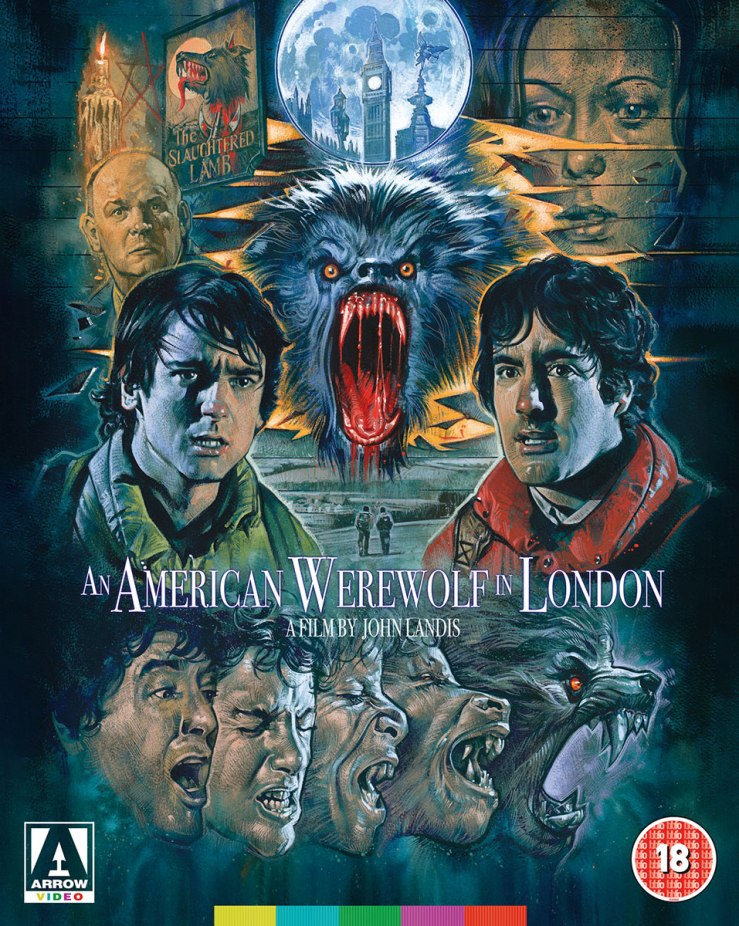
2019 Scarecrow Psychotronic Challenge Day 10: An American Werewolf In London (1981)

DAY 10: ANALOGUE MANIPULATORS: Practical effects are the truth. No CGI will be tolerated.

There must have been something in the waters of the Los Angeles River in 1981, as The HowlingWolfenFull Moon High and this film all came out in those same twelve months. While all three are interesting films for different reasons, An American Werewolf In London astounded audiences with its special effects.

Rick Baker’s vision was to have the main transformation — set to Sam Cookie’s “Blue Moon” — happen in real-time, with no cutaways or dissolves. Director John Landis compounded the difficulty of this sequence by insisting that it be shot in bright light. This all led to six ten-hour days of prosthetic make-up, but the results were an Oscar — the first of its kind — for special effects make-up and Baker became a household name. Well, in the house of kids who subscribed to Fangoria.

While he was a production assistant in Yugoslavia on the film Kelly’s Heroes, he witnessed an elaborate gypsy funeral where a criminal was wrapped in garlic and buried feet first in the middle of a crossroads so that he would never rise again. This moment of real-life horror stayed with him for over a decade as he built his career in Hollywood.

The money people thought that this movie was too funny to be scary and too frightening to be hilarious. Time has proven them wrong.

David Kessler and Jack Goodman (David Naughton from March Madness and Griffin Dunne from After Hours) are backpacking through Europe. As they make their way across the moors, they stop at a local club called the Slaughtered Lamb. In the midst of all the fun they’re having, they innocently inquire about the star on the wall and are asked to leave. Seriously — the bar just shuts down and forces them into the night, knowing that they’ll die out there.

Look for Rik Mayall in this scene, playing chess with former pro wrestler Brian Glover. Adrian Edmonson had been invited to be at the shoot but blew it off.

As they walk into the night, the pub owners can only say, “Keep to the road, stay clear of the moors and beware of the full moon.” Of course, that means that our heroes wander off the path and are surrounded by a creature that howls at the full moon. Jack is milled and David barely survives when the pub’s patrons come out to save him. As he passes out, he sees that it wasn’t an animal that attacked, but a nude man.

Three weeks later, David wakes up in a hospital where Inspector Villiers tells him that he and his friend were attacked by a lunatic, while our hero insists that it was a wolf. That’s when things get even weirder — Jack appears, even though he’s dead, and demands that David kill himself before the next full moon. As long as the bloodline of the werewolf continues, Jack will be undead, forced to haunt the world.

As David heals up, he moves in with Alex Price (Jenny Agutter, Logan’s Run), a nurse who helped him get back on his feet. Instead of being able to celebrate young love, Jack’s warnings — and decay — grow more insistent as we get closer to that epic transformation scene.

The rest of the film is a rollercoaster of werewolf attacks and David trying to reason with Jack, who is joined by all of David’s victims inside an adult movie theater. Finally, the police — and Alex — close in.

Today, Landis regrets some of his choices as he made the film, such as cutting certain sequences to earn an R rating. For example, the sex scene when Alex and David finally consummate their relationship was a lot more explicit and there was an action sequence where David as a werewolf would wipe out the homeless along the Thames.  The director also felt that he spent too much time on the transformation scene sequence because he was so fascinated by Baker’s effects.

That said, Landis and Baker were never on the same terms after this film. It took eight years to make the movie and Baker decided to use all of the work he’d created so far for The Howling. Right around the same time, Landis finally got the movie greenlit and called Baker, who had to tell him he was already lining up a werewolf project. After getting screamed at over the phone, Baker left the project in the hands of his assistant Rob Bottin and only consulted on that film.

Special effects would never be the same after this film. Today, the entire transformation would be computer rendered, with those amazing monsters only truly existing on the screen. This film’s effects were so upsetting to even the actors that it caused depression when they first saw how damaged their faces were.

Arrow Video’s release of this film — which you can order from Diabolik DVD — is packed with everything you’ve come to expect from this label. There’s a new 2018 4K restoration from the original camera negative supervised by Landis, as well as two commentaries — one from filmmaker Paul Davis and another with actors David Naughton and Griffin Dunne. There’s also Mark of The Beast: The Legacy of the Universal Werewolf, a newly produced and feature-length documentary by filmmaker Daniel Griffith, Beware the Moon (Paul Davis’s feature-length exploration of the film complete with extensive cast and crew interviews), a new interview with Landis entitled An American Filmmaker in London, and a video essay by Jon Spira (who made Elstree 1976, a movie about ten extras who were in Star Wars) called I Think He’s a Jew: The Werewolf’s Secret. There are also discussions on how the movie impacted today’s filmmakers, special effects artists and archival making-of features. If it sounds like Arrow went above and beyond, well — they do this on just about every movie they release.

PS — Please, by all means, avoid An American Werewolf In Paris (starring Tom Everett Scott of Tom Hank’s That Thing You Do!), a movie made by none of these people that has extreme bungie jumping in it. That’s probably the only reason to watch it, actually.

DISCLAIMER: We were sent this movie by Arrow Video, but we’ve alreayd bought it several times and were planning on purchasing this new version anyway. This has no bearing on our review.

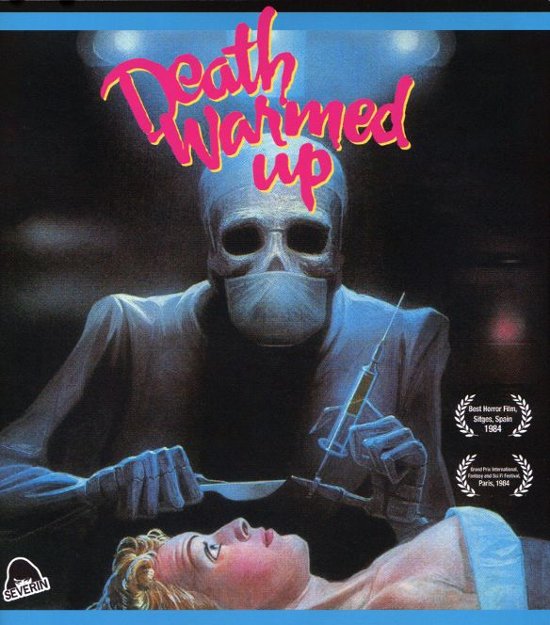
Death Warmed Up (1984)

New Zealand was ready to represent when it came to the slasher boom, thanks to this bonkers entry into the canon. It’s so violent that it was banned in Australia, a country that was originally made up of convicts.

Director David Blyth’s film predates Peter Jackson’s Bad Taste, seem as perhaps the first homegrown Kiwi horror film. Blyth has been called “New Zealand’s master of transgression” by Fangoria and “one of the great mavericks of New Zealand film” by NZ Listener. He also created the movies Angel MineWoundTransfigured Nights and Moonrise, which is also known as Grampire and stars “Grandpa” Al Lewis.

Years ago, Dr. Howell — a mad scientist trying to prolong human life past death — dealt with his harshest critic by mind-controlling that man’s son into shotgun blasting his parents.

Now, Michael Tucker (Michael Hurst, Iolaus from Hercules: The Legendary Journeys) has emerged from seven years in a mental ward. He somehow has acquired a loving girlfriend named Sandy and has taken her on a holiday along with their friends Jeannie and Lucas. However, that sojourn is really a front to get him to the remote island where Dr. Howell’s clinic is located and gain bloody revenge.

What follows is a descent into the caves of the island, where the doctor’s horrible creations live. That’s when the film turns into a strange mix of The Hills Have Eyes and Mad Max packed with an equal mix of nihilism and gore.

I really have no category that easily fits this film. It’s kind of a slasher. It’s somewhat a punk rock biker post-apocalyptic film. And it’s also science fiction. It’s a glorious mess, all over the place and unafraid to have its hero completely fall apart by the end.

If you want to check this out, Severin has recently re-released it in the best quality ever available for home video. It’s packed with trailers, commentaries with Blyth and writer Michael Heath, and an interview with David Letch.

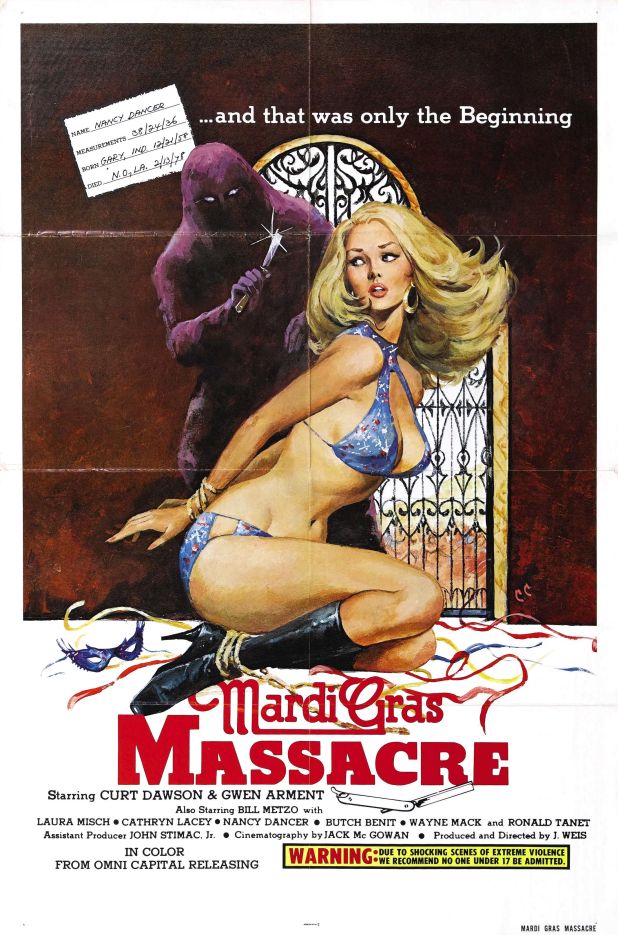
Mardi Gras Massacre (1978)

The fact that the creator of Mardi Gras Massacre, Jack Weis, went on to direct a Melissa Etheridge special makes me happy to no end. Because it’s as far away as possible from this scuzzy, scummy and downright nasty addition to the world of the slasher.

While most slashers spend so much time naming their killer exciting names like the Phantom Killer, Madman Mars or Frank Zito, the killer here is just named John.

That said, he may as well have been named Fuad Ramses, because if Mardi Gras Massacre was any more like Blood Feast, it would have to film a TV playing that film.

John is searching the bars and strip clubs of New Orleans to find the most evil women possible so that he can take them home, tie them up on his Aztec altar, but on his metal mask, give them a massage and then rip out their hearts in a ritual to the goddess Coati. If the shot of the heart being sliced out looks the exact same every single time this happens, so much the better.

Sergeant Frank Abraham gets assigned to the case after the first girl, Shirley, is found on the train tracks with her organs missing. Along the way, he starts sleeping with one of the local girls, Sherry. Their romance is, well, it’s not really a romance as much as a bad cop sleeping with a bad girl with a heart of gold. Honestly, no one in this movie is all that morally sound, as we should see Frank as the hero and then there’s a scene where he slaps Sherry around. When they reunite at the end, it’s not really something that’s a call for celebration.

What does make this movie worth shouting about are the extended disco scenes that seem to go on forever. There’s an amazing one where several girls get into a dance floor skirmish that I watched several times in a row, shouting at the screen in pure joy. There’s also a montage where he cops are questioning suspects intercut with dancing, particularly a dancing street performer who answers all of the cops’ questions with some fancy steps.

Mardi Gras Massacre has everything a movie needed to make it in the slasher boom: an amazing poster, a great tag, lots of gore and nudity, an interesting title and a willingness to be reprehensible trash (that’s a compliment, I swear).

It’s no accident that it ended up as one of the original video nasties, a title that I’m certain it wore with no small amount of pride.

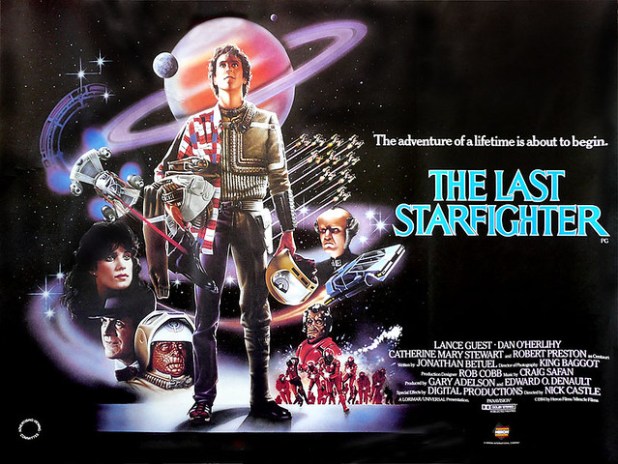
2019 Scarecrow Psychotronic Challenge Day 9: The Last Starfighter (1984)

DAY 9. DIGITAL S(T)IMULATIONS: A pre-2000 movie using computer generated “special” effects.

As much as we decry practical effects over CGI — in the same way we demand physical media over streaming — there are times when it doesn’t have to be all that bad. I decided that instead of finding a poor example of computer generated animation, I’d share something that I love.

While the first CGI in mainstream film was probably 1976’s Futureworld (several modern techniques were innovated in this film, from an animated CGI  hand that was taken from Edwin Catmull’s 1972 experimental short subject A Computer Animated Hand and an animated face from Fred Parke’s 1974 experimental short subject Faces & Body Parts to an early example of digital compositing to place live actors over a previously filmed background), the two movies that I can really remember to use extensive computer-generated imagery were Tron and The Last Starfighter.

In place of physical spaceships, 3D rendered models were used to depict this film’s Gunstar and spacecraft. Their designs came from artist Ron Cobb, who also worked on Dark StarAlienStar WarsConan the Barbarian and wrote the initial script for Dark Skies, which Steven Spielberg rewrote into the mich friendlier E.T. He’s also listed in the credits for Back to the Future as DeLorean Time Travel Consultant.

There are over 27 minutes of effects in this film, which was a tremendous amount of computer animation for its time. However, this animation required half the time of the traditional miniature special effects, allowed the film to be made for just $14 million dollars.

That said — there are still plenty of practical effects, like the creature and Beta Unit special makeup, as well as the Centauri’s Starcar, which was a real vehicle created by Gene Winfield, who also created the spinners for Blade Runner and the 6000 SUX for RoboCop. His car design for The Reactor was used in a variety of TV shows, including Catwoman’s Catmobile on the Batman TV show, the Jupiter 6 car in the “Bread and Circuses” episode of Star Trek, Bewitched and Mission: Impossible, where it was part of a scheme to make a bank robber believe that they’d been asleep for 14 years.

The idea that video games were recruiting players for some high end military service started as an urban legend that games like Missile Command were saving information on its players so that they’d be ready to defend America from the inevitable Russian ICBM strike that was coming in the 1980’s. There was also the There’s also the weird tale of Polybius, a video game that never existed — or did it? — that was an MK Ultra style experiment unleashed on Portland, Oregon arcades that led to addiction, hallucinations and visits by the Men in Black. Obviously, those legends led to this film or this is all an elaborate piece of disinformation to hide the truth in plain site. I leave your version of reality up to you, dear reader.

Alex Rogan (Lance Guest, Halloween 2) is going nowhere, stuck in a trailer park taking care of everyone else. His scholarship has been rejected and he has to keep fixing things and watching his little brother instead of getting to spend time with Maggie (Catherine Marie Stewart, The Apple).

The only fun he has is playing the Starfighter arcade game in the trailer park, which allows him to pretend that he’s defending the Frontier from Xur and his Ko-Dan Armada.

After Alex becomes the game’s highest-scoring player, the game’s inventor Centauri visits, offering him a ride in his fancy car as a prize. He’s played by Robert Preston, who is really just reprising his role as Harold Hill from The Music Man, which is an ingenious gambit.

The car is really a spaceship and Alex is taken to meet the Rylan Star League while a Beta Unit is used to replace him on Earth. That’s when he learns that the game is actually a training unit meant to find starfighters ready to battle very real Ko-Dan Empire.

Alex is expected to be the gunner for the Gunstar along with the reptilian navigator Grig (Dan O’Herlihy, who pretty much owned the 1980’s between this movie, playing Conal Cochran in Halloween 3: Season of the Witch and the Old Man in RoboCop). However, all our hero wants to do is go home.

It takes alien assassins attacking the trailer park and the death of all of the other starfighters and Centauri — who takes a laser blast meant for our hero — for Alex to join the cause. While he fights the Armada in space, Beta and Maggie battle the Zando-Zan killers back down on good old Mother Earth.

Of course, Alex has the gift that all great starfighters need and saves the day. He lands his ship on the trailer park and takes Maggie into space with him, while his brother starts playing the game in the hopes of joining his brother.

This is a film with real heart, beyond its aspirations of being a blockbuster. It’s directed by Nick Castle, who you probably already know played Michael Myers in the original Halloween. What you may not know is that he wrote the movie Skatetown U.S.A. or directed Tag: The Assassination Game, The Boy Who Could Fly and Dennis the Menace. Plus, he, John Carpenter and Tommy Lee Wallace all formed The Coup De Villes and played much of the music for Big Trouble In Little China.

Despite the film being based on the idea of an arcade game, there never really was one despite the promise in the closing credits of an Atari created edition. The game was actually started and would have been Atari’s first 3D polygonal arcade game to use a Motorola 68000 as the CPU. It would have used the Star Wars arcade controls and been much like the game Lance Guest plays in the film, but it was cancelled once Atari representatives saw the film in post-production and decided it was not going to be a financial success.That said there were Atari home versions in development and they were eventually released as Star Raiders II and Solaris.

There is an NES game — it’s a reskin of the computer game Uridium — and Rogue Synapse created a freeware PC game in 2007 that’s very close to the game in the film.

The themes of The Last Starfighter have been repeated in plenty of other stories, like Orson Scott Card’s Ender’s Game and Ernest Cline’s Armada, which is pretty much a note for note reboot of the same story. Of course, Cline wrote Ready: Player One and works in a reference to the original film, but he wears his influences on his sleeve. Interestingly enough, Wil Wheaton read the audio version of this book — which will be a movie soon enough that’ll cost a hundred times what The Last Starfighter did and have a sliver of the soul — and he appears in this film.

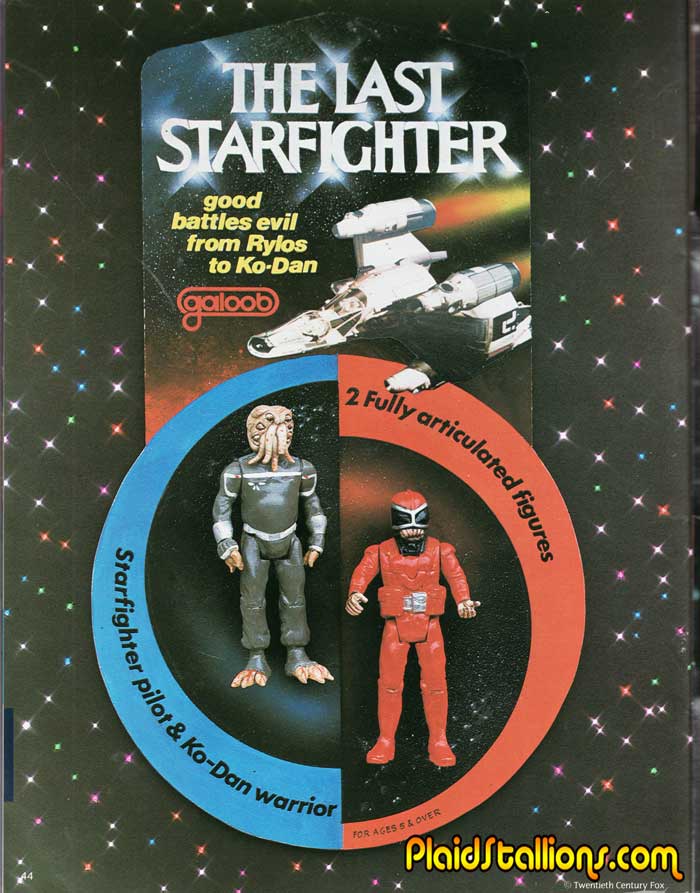
Galoob planned to create a toyline for this movie that sadly never came to be. You can see images of it and learn more about it at Plaid Stallions.

If you’re looking for a great slice of 1984, you can’t go wrong with this movie. I love that it has a lizard best friend, fun spaceship designs, the Music Man conning people for money in the midst of a galactic war and even the promise of a sequel which never came. It’s the kind of movie that would always be a rental that everyone could agree on or the perfect film to veg out whenever HBO showed it for the two hundredth time.

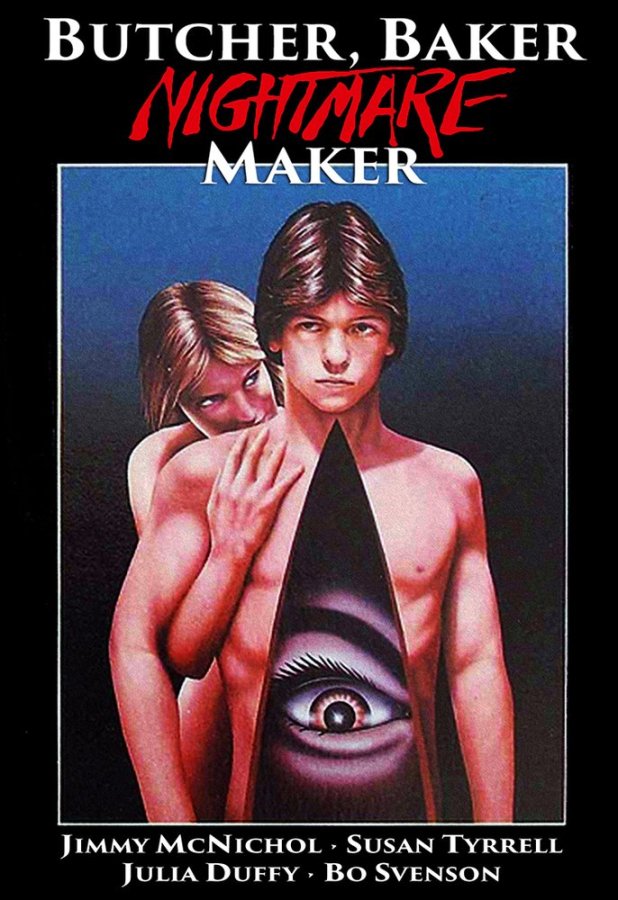
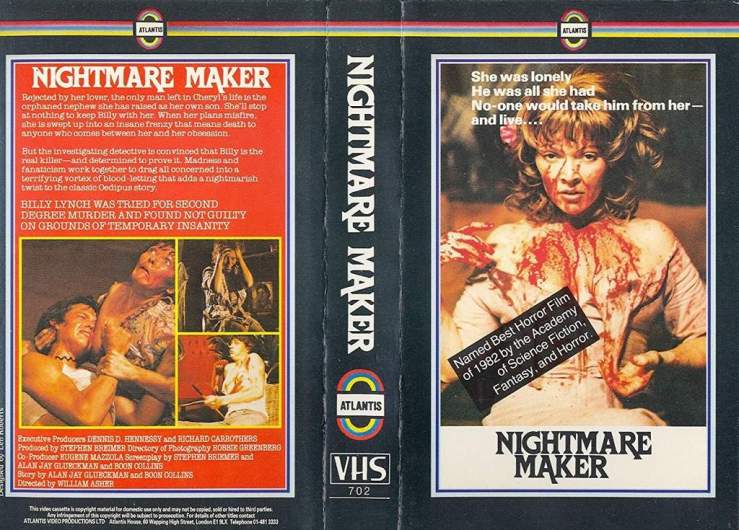
Butcher, Baker, Nightmare Maker (1981)

William Asher was credited by many as inventing the TV sitcom. He brought Our Miss Brooks from radio to TV, directed 100 out of 179 episodes of I Love Lucy, produced and directed Bewitched (which starred his second wife Elizabeth Montgomery) and also had episodes of Make Room for Daddy, The Twilight Zone, The Patty Duke Show, Gidget, The Dukes of Hazzard and Alice on his resume. He even planned JFK’s inauguration ceremony along with Frank Sinatra.

He was also one of the leading beach party directors, with Beach PartyMuscle Beach, How to Stuff a Wild Bikini, Beach Blanket Bingo and Bikini Beach to his credit. Of this time in his life he would say, “The scripts of the Beach Party films were sheer nonsense, but they were fun and positive. When kids see the films now, they can get some idea of what the ’60s were like. The whole thing was a dream, of course. But it was a nice dream.”

I tell you all this to set you up for one of the strangest films I’ve ever seen — imagine what that entails — and one that has stuck with me for years:: Butcher, Baker, Nightmare Maker.

Originally, Michael Miller (Jackson County Jail, Silent Rage) was set to direct this film, but he was replaced by Asher (he had also recently lost the job on The Eyes of Laura Mars to Irvin Kershner). He did direct the opening, however.

And what an opening it is!

Years ago, Billy (Jimmy McNichol, brother of Kristy, who is shirtless pretty much for the entire film) was sent to stay with his aunt Cheryl (Susan Tyrell, owning this movie like no one has ever owned a movie before). However, not only did their brakes give out, but a giant log beheads Billy’s dad and the car goes off a cliff, where we see a photo of young Billy float out into the water as the car explodes. Yes, all of that, in the very first scene of the movie!

Now, Billy is a high school senior living with his aunt. He has a dream of playing basketball on a scholarship at the University of Denver, but Cheryl is having none of it. His school life isn’t much better, as his teammate Eddie (Bill Paxton!) is jealous of his closeness to their coach Tom Landers (Steve Eastin, Field of Dreams). But there’s a bright silver lining in that the school’s newspaper photographer, Julia (Julia Duffy from TV’s Newhart) is into him.

On Billy’s seventeenth birthday, his aunt changes her mind about the scholarship just in time for her to put the moves on TV repairman Phil Brody (William Caskey Swaim, Friday the 13th: A New Beginning), who rebuffs her, only to then pull down his pants and tell her to “work it.” She flips out and attacks him, so he shoves her down. She retaliates with a kitchen knife as Billy watches from outside the window as blood sprays all over his birthday balloons.

Cheryl hysterically tells the police that Phil tried to rape her. But his blood is all over Billy and so are the kid’s prints on the knife. That brings in Joe Carlson (a brutal Bo Svenson), whose homophobic mindset deduces that Billy’s coach Tom was his love and that Billy killed Phil — who was Tom’s lover — as part of a love triangle gone wrong. He thinks Cheryl is just covering up for her nephew when the truth is anything but that.

What follows is Cheryl going bonkers, doing all manner of things like drugging Billy’s milk so that his basketball tryout goes wrong and shearing her hair into an unmanageable chunk of a hairstyle. Oh yeah — she also treats her nephew way too lovingly, to the point that it’s uncomfortable. And then she goes completely insane when she catches Billy in bed with his new girlfriend.

Of course, by the end of the film she’s nearly murdered that girlfriend twice, stabbed a noisy neighbor, killed a cop and we discover that she’s really Billy’s mom and his birth father’s body is mummified in the basement while his head floats in a jar of formaldehyde.

Even after their final confrontation, Billy must deal with Joe the cop and his bigoted ways. To say that this movie builds to a fever pitch is an understatement. And I really don’t want to give all that much more away. Yes — even with those spoilers above, there’s so much more to explore here.

Nearly all of the major creative forces of this film came from places of personal pain. Asher lived through the Depression, losing his father before he was even a teenager. His mother (stage actress Lillian Bonner) became an alcoholic so he escaped by way of the Army Signal Corps at the age of 15.

Screenwriter Alan Jay Glueckman (his script Russkies was made into a film directed by Halloween II and Halloween: Resurrection director Rick Rosenthal, plus he wrote two home invasion made for TV movies, The Fear Inside and Face of Fear. Plus, his short film Pickup was the first film appearance of Glenn Close) continually wondered about who his birth parents were and had a tumultuous relationship with his adoptive ones due to their refusal to accept his homosexuality.

And Susan Tyrell, the heart of this film, was born into show business. Her father was a top agent at the William Morris Agency, representing Loretta Young and Carole Lombard. Yet she always described her proper upbringing as miserable, due to her demanding British mother, a socialite and member of the diplomatic corps in China and the Philippines during the 1930s and 1940s.

By her teenage years, Tyrell had cut off contact with her mother, of whom she would say, “The last thing my mother said to me was, “SuSu, your life is a celebration of everything that is cheap and tawdry.” I’ve always liked that, and I’ve always tried to live up to it.”

She stayed in contact with her father, who was able to use his connections to get her a bit part in a touring play with Art Carney, as well as have Look magazine follow the show. He’d die a few months later from a bee sting.

Even her Playbill obituary says that she specialized in roles like “whores, lushes and sexpots.” Perhaps her most famous role was in John Huston’s Fat City, which earned her an Academy Award nomination. She also was part of the Warhol Factory scene and appeared in plenty of films that are part of my collection, such as being the Queen of the Sixth Dimension in Forbidden Zone, Solly in Angel and Avenging Angel, the miniature Midge Montana, wife to Kris Kristofferson’s ringmaster in Big Top Pee-Wee and Ramona Rickettes, the grandmother to Johnny Depp in Cry-Baby.

What I’m saying is, this is a movie made by people who actually lived.

This movie has it all — malignant motherhood, a modern day retelling of Oedipus, an inversion of the final girl trope where Billy becomes the victim and Julia the helpful savior and — strangely enough for a film made in 1981 — the homosexual characters are the positive characters in the story and not the monsters. In fact, Billy may be homosexual himself, if you chose to read the movie that way.

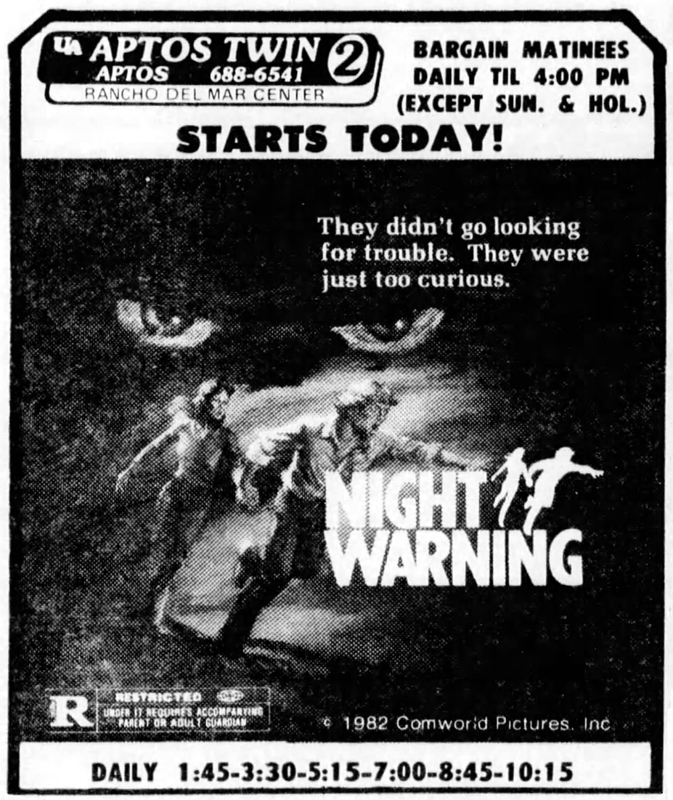
Of course, this movie was pretty much dead on arrival, thanks to a disastrous test screening and a new title, Night Warning, that says nothing about what the audience is about to see. It’s also a movie so strange that it seems to occupy its own universe, unlike any other film before or since. I can see why the general public wouldn’t enjoy it. In England, it made the infamous category 2 video nasty list.

Basically, what I’m saying is rush out, find this and watch it. Now.

This sold out the last time Ronin Flix offered it, so I’d head over to their site ASAP to grab one. It’s such a weird slice of cinema that demands to be in your collection.