Yor’s World (1983) PART ONE

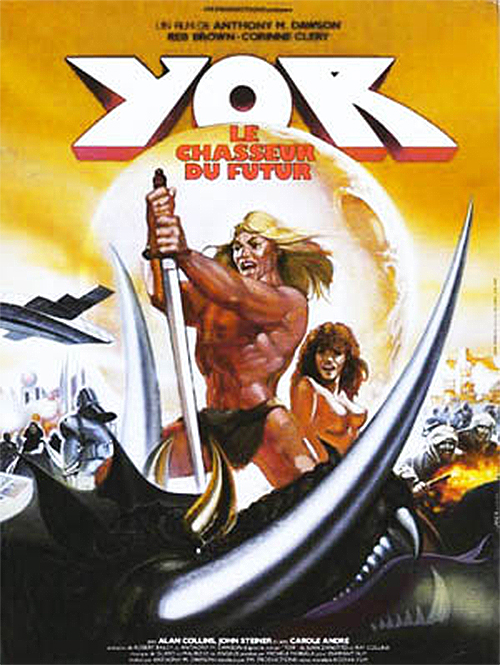
I can hear you now — “Sam, you’ve already reviewed Yor Hunter from the Future.” Or said something like, “Sam, you’ve cornered me at a party and talked to me for an hour about this stupid Italian-Turkish co-production about a barbarian in the future with the 70’s Captain America in it and I just can’t take any more.” To this I say, “Too bad.”

That’s because I’ve achieved one of my Holy Grails — I hold in my sweaty hands the uncut 4 hour Italian TV version of Yor’s World. It’s impossible to find. Well, nit that impossible. I found it. But it has taken me years. Now, I will pass the magic off to you.

The transfer on this DVD is blobby and washed out and nothing pleases me more. The first strain of Oliver Onions’ “Yor’s World” theme starts to play and I catch the goofy grin of Yor as he just runs like a goof down a mountain and all of the stress of the week just melts away, like Calgon soap water draining from my tub.

Then, Yor’s World becomes a demented mondo travelogue, telling us of the indigenous people of the past. Or the future. Or whenever the fuck this is:

“In the time in which our story begins, nature, with her laws, dominates the earth in opposition. Nomad tribes run from one continent to another searching for food or to escape the numerous dangers that threaten their survival. They live, essentially hunting and fishing, nourishing themselves with berries and roots. When they reach hospitable areas, in close proximity to rivers, where the forest offers better opportunities to find food. They are, however, more predisposed to attacks from ferocious predators. And, following their victims, they multiply in the same places. So they try to organize their settlements with the possibility of defending themselves from those dangerous incursions. They build homes that are more comfortable than caves and less precarious than the first huts. They learn to light fire and preserve it with large coals. New horizons open for some of these tribes. The sense of precariousness that was at the foundations of their existence, slowly, almost miraculously. But it’s only the beginning…And thanks to the marvelous gifts of intelligence, they will become masters of the world. They still have too many enemies who will always threaten their existence, ignoring the teachings of history.”

While this long intro is read, we see the cave people cooking, cleaning, eating and reminding us that this is an Italian movie, so a real animal must be cleaned for our viewing displeasure. The same sequence of the children being held to the sky from Yor Hunter from the Future happens, followed by Kala and Pag hunting in the jungle.

As they play around with a small dinosaur, a larger one attacks. Yor comes to their rescue, flashing a knowing smile at Kala before going into battle. The fight seems to last a lot longer — and we see more of Yor’s ass — than I remember.

Yor’s fighting style can best be described as, “Yeah, I can jump and tumble over that.” Think Captain Kirk with a loin cloth. Finally, with a mighty yell and a slice of his axe, Yor is sipping blood out of the dino’s head. The dialogue here is word for word the same as the original movie — I had always imagined that they were saying much deeper things than the English translation.

What’s missing? My favorite line in all of Yor! “Help me cut the choice meats.” My sadness is palpable.

We head to the village of the cave people — look, I know I reviewed this movie before, but I’m reveling in the joy of getting more Yor, so you have to deal with my mania. Yor yells “HA!” so many times at the dancing girls that Kala gets upset and twerks just for him. They bring him a drink that keeps sadness away that has honey in it, which seems pretty cool of them. It causes our hero to burp, which everyone seems to get a huge kick out of.

Up in the hills, a lone sentry is attacked by a hairier caveman, who demands, “Kill them all.” They make their way to the encampment, choking out everyone who gets in their way while watching the women dance. Yor also reveals that his elders once told him. “You’re the son of fire that’s fallen from the sky.”

NOTE: I always thought that the heroine’s name was Kala, but the translation on this DVD calls her Ka-Laa.

The blue skin cavemen attack and Yor valiantly fights, even using fire to help himself, while also jumping all over the place like some kind of maniac. The leader of the blue skins wants him alive and demands that his men follow Yor and his friends.  Thanks to some subterfuge — and tearing off some of Kala’s clothes — our heroes make their escape as the blue cavemen are caught in quicksand.

Escaping into the cave where Yor spent most of his childhood, he and Kala discuss how he has no idea who he is — a god or mortal. Meanwhile, Pag heads off to the village, where he sees the elder die, but not before he tells him that he had a vision of Yor on an island. The blue cavemen start to hunt Pag down before he hides in a volcano. The scene is a nice mix of Bava-esque lighting and B-roll volcano footage with some decent set design, feeling a lot more expansive than the small budget would suggest.

In a scene that is not in the U.S. version, Yor and Kala are then attacked by a swamp monster that has one giant eye and plenty of tentacles. Yor’s axe comes in handy here, as he chops off every one of them with terrific sprays of good old fashioned Italian horrorshow blood. After the defeat of the creature, Yor and Kala embrace and kiss — also missing from the film!

Pag hides in the hills as Ukan, the leader of the blue cavemen screams at his men for allowing an old man, a woman and one man to defeat them. Pag sees Yor and Kala returning to find him, just as they are attacked by the blue skins. This helps fix an issue I’ve always had with Yor Hunter from the Future. Yor seems to lose almost every fight he’s in. It seems to be whomever edited the film I know cut out all of the wins and just showed the times he’s screwed up. I mean, he still screws up a lot, but the percentages are different now. I mean, Yor is still going to get tossed off a cliff. But he’s going to get some enhancement talent wins against swamp monsters along the way.

Ukan’s men toss Yor off that cliff — see, I told you it was coming — as the leader takes his medallion and Kala. Pag tries to save him but fails as our hero gets tossed down the hillside. Now, it’s time to climb back up and reunite with Pag.

Pag tells him that the law states that Kala belongs to Ukan. Yor exclaims that he doesn’t recognize the law and roll credits! We have our first episode of Yor’s World in the books!

I cannot tell you how excited I am by this film. I may have already yelled a ton of lines at the screen and have been reading all the subtitles aloud! YOR IS THE MAN ALL OVER AGAIN!
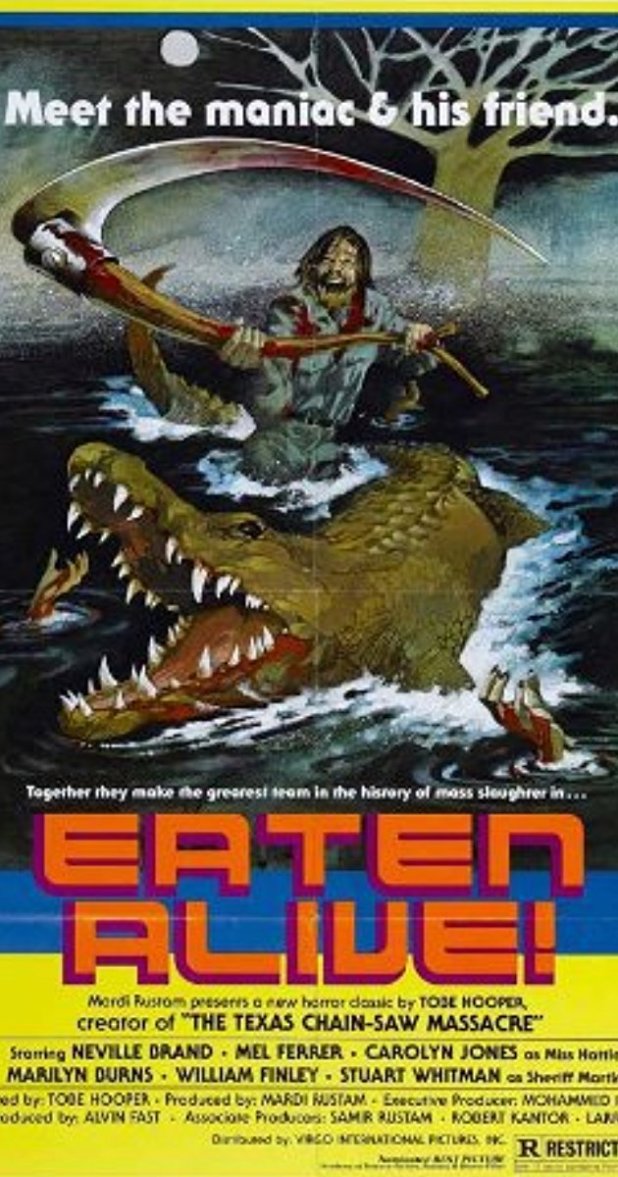
TOBE HOOPER WEEK: Eaten Alive (1977)

Tobe Hooper followed up The Texas Chainsaw Massacre with another film that examined the horror and depravity that existed with South Texas.

The Texas Chainsaw Massacre co-writer Kim Henkel was inspired by Joe Ball, the Alligator Man, who owned a live alligator attraction in the 1930s. Despite being suspected of several murders, legend had it that Ball would feed the dead women to his alligators. Ball started as a bootlegger before opening his Sociable Inn in Elmendorf, Texas, which was surrounded by a pond where he’d charge people to watch him feed them live cats and dogs. After former girlfriends, barmaids and even his wife went missing, two policemen tried to question him. He pulled a gun and shot himself — either in the head or the heart. That said — there are many that believe the stories about Joe Ball to be simply Texas folklore. He did exist, though.

Working under the title Death Trap (the film is also known as Horror Hotel and Starlight Slaughter), this entire film was made on a soundstage, using the Raleigh Studios pool as a swamp. This enabled Hooper to create what he called a “surrealistic, twilight world.” True to form, issues with the producers took him away from the film before the shooting ended, but he had a decent relationship with the actors. Cinematographer Robert Caramico finished the direction of the film once Hooper left.

This movie starts grimy and stays that way. Buck (Robert Englund in an early role) demands kinky sex from Clara Wood (Robert Collins, Matilda the Hun from Death Race 2000!), who refuses. This scene contains the line, “I’m Buck and I’m here to fuck,” line that Quentin Tarantino used in Kill Bill.

No one says no in Miss Hattie’s (Carolyn Jones, who is better known as Morticia Addams!) house of women, so Clara is kicked out. One of the girls takes pity and gives her money to stay at the Starlight Hotel, a rundown motel in the swamp. There, she meets the owner, Judd (Neville Brand, famous for playing Al Capone in The Untouchables TV series and The George Raft Story), who we soon learn is a demented sex maniac. He attacks her, chasing her into the swamp where a Nile crocodile eats her. Yep — don’t get too attached to anyone here. This is very Psycho territory, where bad people meet even worse ends.

A couple soon arrives — Faye (Marilyn Burns, The Texas Chainsaw Massacre) and Roy (William Finley, Winslow Leach from The Phantom of the Paradise), along with their daughter Angie (Kyle Richards, Lindsey Wallace from Halloween!) and dog Snoopy. Don’t get attached to Snoopy, who isn’t long for this world. As Angie finds a dead monkey and screams, the dog runs into the swamp where he is eaten. Roy goes to kill the gator, but is stabbed by Judd’s scythe. Then, the insane motel owner ties Faye to the bed and tries to grab Angie, who hides under the porch of the building.

Harvey Wood (Mel Ferrer, The Visitor, The Antichrist and first husband of Audrey Hepburn) arrives with his daughter Libby looking for Clara. Sherrif Martin (Stuart Whitman, Guyana: Crime of the Century, The Monster Club, Ruby) helps them as they search for Harvey’s runaway daughter. Libby goes out with the sheriff while Harvey stays back at the hotel. As he finds Faye tied to the bed, he’s also killed by Judd and his scythe.

The sheriff kicks Buck out of the bar — remember him? — and he goes to the Starlight with his underage girlfriend. While they’re having sex, they hear a scream. Buck discovers Faye, but is pushed into the swamp where he is devoured.

Finally, Libby comes back and saves her sister and Angie. Judd goes insane and chases them into the swamp where he’s eaten by his own gator. Or crocodile — the movie is never sure.

I’ve always joked that Rob Zombie is continually trying to remake The Texas Chainsaw Massacre 2. After watching this, I get the feeling that this is the movie he wants to make. It’s covered in a layer of filth from beginning to end, with characters coming and going, people getting killed horrifically and style triumphing over coherent plot. Even better, there’s a mix of actors that you instantly recognize playing some great roles, particularly Neville Brand, whose muttering insanity is total perfection. There’s also a great electronic score that really sets the mood — even ending in a crash after the final credits.

True to his promise, Hooper delivers a film that feels like a nightmare throughout. Its dream logic makes for an occasionally funny, often grotesque movie that is never boring.

UPDATE

Thanks to the well-informed Blake Lynch, here are the film’s many alternate titles:

“Bloodlust” in West Germany
Brutes and Savages
“Creepy Obsession” in Colombia
“Crocodile” in Turkey
“The Crocodile of Death” in France
“Dead Trap” in Spain
Deathtrap
“The Devil’s Swamp” in Japan
“Eat Live” in Romania
Horror Hotel
Horror Hotel Massacre
“The Inn of Horror” of Greece
“The Jaws of the Crocodile” in Greece
“That Hotel Near the Swamp” in Italy
Legend of the Bayou
Murder on the Bayou
Slaughter Hotel
Starlight Slaughter

YOR WEEK IS NEXT WEEK!

If you’ve spent any time with me, you’ve no doubt heard me bring up this film. In fact, it was one of the first articles on this site. At one point, I thought that I had seen everything there was to Yor. But I was wrong.

The Holy Grail of bad movies is in my grasp. Yes, Yor’s World, the 4 episode Italian mini-series that was truncated into the near ninety minute film Yor, Hunter from the Future. 

Will Yor be as big of an idiot? Will he still enjoy the choice meats? Are there more dinosaurs? Will the theme song play over and over again?

Show up on Monday and I’ll answer all of these questions and more!

TOBE HOOPER WEEK: The Mangler (1995)

What happens when you put together three of horror’s biggest stars — Robert Englund, Stephen King and Tobe Hooper? That’s the question posed by this film, based on a King/Harry Allan Towers short story that first appeared in the men’s magazine Cavalier before appearing in King’s 1978 collection Night Shift, which also spawned the movies Children of the CornCat’s EyeMaximum OverdriveGraveyard ShiftThe Lawnmower ManSometimes They Come BackTrucks (yes, I know it’s the same story as Maximum Overdrive) and Battleground.

Bill Gartley (Robert England) owns the Blue Ribbon Laundry service, which is based around a laundry press that everyone calls The Mangler. His niece, Sherry cuts herself and gets blood all over the machine, which leads to the machine coming to life. It starts to eat anyone who gets too close to it, like Mrs. Frawley, by folding them just like a sheet.

Drunken police detective John Hunton (Ted Levine, Buffalo Bill from The Silence of the Lambs) and his ex brother-in-law Mark — who just happens to study demonology — investigate the many deaths that follow. It turns out the Tha Mangler is how Gartley runs the town — when their virgin daughters turn 16, the town’s most powerful men and women sacrifice them to the machine. Sherry is next.

Sherry is next, but she helps the two men take out the demon — even if it kills Gartley, his lover Lin Sue and Stanner, the foreman. They throw holy water on it and the machine nearly beats them, but they succeed in taking it out. That is — until John talks about the antacids he’d been taking, which once belonged to the now dead Mrs. Frawley. One of the ingredients is deadly nightshade, also called “The Hand of Glory.”

Here’s where the movie descends into bullshittery. It only follows some of King’s story — which was a novella, so we can cut them some slack. It takes passages from Sir James George Frazier’s The Golden Bough: A Study in Magic and Religion. But the “Hand of Glory” is usually the hand of a murderer who has been put to death or part of the root of the mandrake plant. That said — the ending of the book and movie are totally different, so I shouldn’t expect anyone to do actual research or make the occult make sense within their film.

The Mangler comes back to life, killing Mark and chasing John and Sherry. She tries to give herself to it to save him, but he stops her. They fall through a manhole cover and escape, with him taking her to the hospital, as he’s fallen in love.

Oh yeah — Mark is friends with an old photographer named J.J.J. Pictureman, who tells him the hidden history of the town before he dies. As John waits for news on Sherry’s condition, he gets a letter from the dead man. He warns him not to trust anyone in town with a missing body part, as they may have sacrificed it to the Mangler.

When John goes to see Sherry, flowers in hand, the machine is back in place and she has replaced her uncle, looking like a female version of him. She waves to him and he notices that her finger is missing. Throwing away the flowers, he leaves.

I worry that my description of this movie makes it sound better than it really is and that people will watch it. Hooper may not have even finished the film, as some say he was replaced by the producer, Anant Singh. It actually played in around 800 theaters, but was considered a failure. Hooper would go back to directing for TV after this.

Honestly, no hint of his directorial skill is evident here. It’s painful to watch and while there’s some nice lighting and mood in a few scenes, there are other times that I fought to even keep the DVD in the player. Again — I don’t want to bury Hooper, but it’s a real shame that this came from his hand.

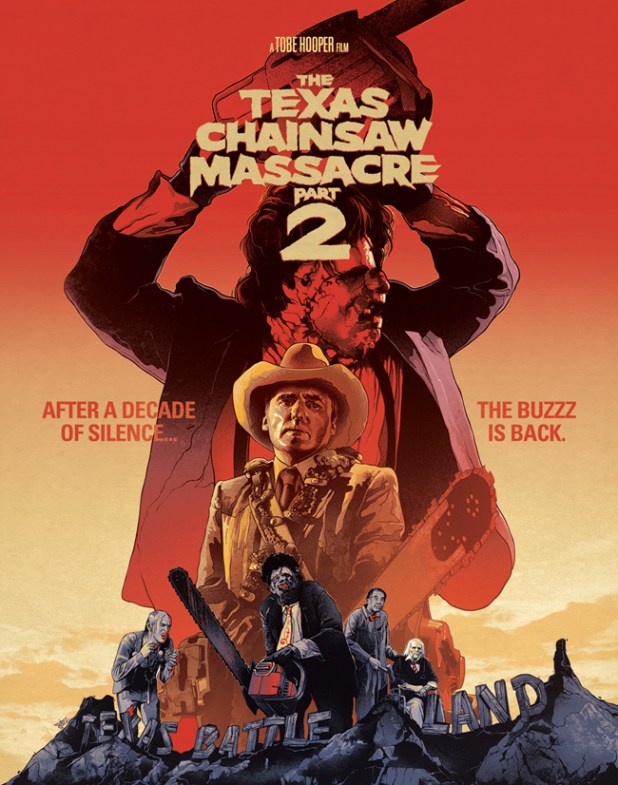
TOBE HOOPER WEEK: The Texas Chainsaw Massacre 2 (1986)

In my Fangoria reading youth, there were two constants: The Texas Chainsaw Massacre was the scariest movie ever and Tom Savini was the master of gore. If you put that chocolate into that bloody peanut butter, what would you get? And in a world where Freddy, Jason and soon, Michael Meyers would all get sequel after sequel, why not Leatherface?

Two failed films into his Cannon Pictures deal, one would assume that Tobe Hooper felt the same way. And even though Chainsaw 2 would double its slim $4 million dollar budget, it wasn’t considered a success by audiences and critics for years — similar to how Halloween fans just could not see Halloween 3 as a great film until the last few years.

Whereas Chainsaw seems to be a nuanced film based on dread, mood and cinema vérité, the sequel is in your face, replete with tons of gore, overwhelming screams and saw noises and near-slapstick moments. Maybe it’s because Tobe Hooper, unlike nearly every other human being on the face of the Earth, saw the first film as a black comedy and this was just the next logical progression. For me, I saw Chainsaw 2 as a middle finger, a fuck you to the expectation that the film needed to be just more of the same. Ironically, Rob Zombie seems to have fallen in love with this film so much that he’s filmed variations of it several times and even used some of the cast.

Tobe Hooper wasn’t the only person in need of some redemption here.

Dennis Hopper’s Hollywood career –actually, his entire life — had gone off the rails. That said, Hopper’s career should have ended numerous times. After appearing in two films with James Dean, Rebel Without a Cause and Giant, Dean’s passing impacted Hopper so greatly that he had a blowup on the set of From Hell to Texas where he forced director Henry Hathaway to do over eighty takes, leading to Hathaway claiming that Hopper would never work again. After leaving for New York to study with Lee Strasberg at the Actor’s Studio, he would star in Night Tide (alongside Marjorie Cameron, the Whore of Babylon as prophesied in the Book of Revelations, no shit).

Yet for years, Hopper could find no work in Hollywood. Because he was the son-in-law of Margaret Sullivan, John Wayne gave him a break and talked director Hathaway into using him in 1965’s The Sons of Katie Elder. He also appears alongside Wayne in 1969’s True Grit — a film on which the two actors became friends. In both of these films, he dies and says his final words to the venerable screen icon.

Within months, Hopper was in two blockbusters in a summer (and had appeared in Cool Hand Luke the year before) — the aforementioned True Grit and Easy Rider, the film that made his name to so many. Stepping into the director’s chair, Hopper won kudos for his improv style and innovative editing (the truth is, he nearly had to be physically removed from the editing bay), but the film arose out of chaos — Fonda and Hopper had creative differences, Hopper was in the midst of a divorce and drugs, drugs and more drugs. Hopper even pulled a knife on actor Rip Torn during casting, a story that he told on The Tonight Show but placed the knife in Torn’s hands — a storyline switch that cost him nearly a million dollars.

The problems of Easy Rider would continue — minus the success — on his infamous next effort, The Last Movie. Hopper would say — when speaking of Easy Rider— that “the cocaine problem in the United States in really because of me.” With a $1 million budget ($6.4 million in today’s money) and free reign, Hopper went to Peru to make a movie that had been his pet project since the early 60’s — a meditation on fact versus fiction and how cinema struggles to be real. It’s also a batshit crazy film, not helped by the aforementioned drug usage (Hopper had film cans full of coke and women at the ready while editing), a little longer than a week marriage to co-star Michelle Phillips and a year plus of editing inside Hopper’s home studio in New Mexico. This entire process was documented in The American Dreamer, a documentary by Lawrence Schiller and L.M. Kit Carson (who perhaps not so coincidentally wrote Texas Chainsaw Massacre 2, the movie that we should really start talking about soon). Hopper finally created a straightforward cut of the film that was much more conventional before showing it to Alejandro Jodorowsky, who told him it was a piece of shit and urged him to break new ground. Hopper destroyed that edit and the resulting film made him persona non grata in Hollywood for another decade.

Hopper went to Europe, where his drug intake increased, but he appeared in roles in films like Mad Dog Morgan before 1979’s Apocalypse Now brought him back to the mainstream. He also stepped in to direct and act in 1980’s acclaimed Out of the Blue, but his old habits came back hard. His behavior on the set of Human Highway delayed the film and Hopper was up to 3 grams of coke a day, plus 30 beers, weed and assorted other substances.

So what did he do next? He staged a suicide attempt by blowing himself up in a coffin with 17 sticks of dynamite at an art happening, then later disappearing into the Mexican desert. Oh yeah — he also went to rehab in 1983.

But the successful mainstream comeback — and this time, he would stay — that happened after David Lynch’s Blue Velvet (Hopper begged for the role, telling Lynch that he was Frank Booth) was far away when Dennis Hopper would step into the cowboy boots of Chainsaw 2‘s Lieutenant Boude “Lefty” Enright. The uncle of Chainsaw’s Sally and Franklin Hardesty, he’s spent the last 13 years searching for the Sawyer clan, hoping to bring them to justice.

There’s finally a lead — thanks to two dumb jocks on the way to the OU vs. Texas Cotton Bowl game. They call DJ Vanita “Stretch” Brock’s (Caroline Williams, who Rob Zombie would later cast in his remake of Halloween 2radio show and won’t hang up. She keeps them on the air long enough to hear them get attacked by a passing pickup truck. Leatherface appears, the old side of Texas coming roaring back to decimate the new Texas, cutting off part of the driver’s head in a horrific spray of gore and crashing their car, killing both of the boys.

However, Stretch made a tape of the attack and Lefty asks her to play it. He’s old Texas, too. A lawman who has been on a quest for over a decade, one that’s cost him so much (originally, Lefty was intended to be Stretch’s absent father).

This leads to Leatherface and his family attacking the radio station, with Chop Top (Bill Moseley, who Hooper found in a satire of his film called The Texas Chainsaw Manicure. Hooper’s son William would also feature this character in his unreleased film All-American Massacre. You can also see Moseley as the Deadite Captain in Army of Darkness, the 1988 remake of The Blob and in every Rob Zombie movie, just about) leading the charge. A Vietnam vet (which explains his absence from the first film), Chop Top got his massive head wound from a machete, leaving him with a metal plate in his head. He also tends to heat up a wire hanger and burn the skin at the edge of the plate to eat. He’s used his government disability checks to purchase Texas Battle Land, a decrepit theme park that his family now lives in.

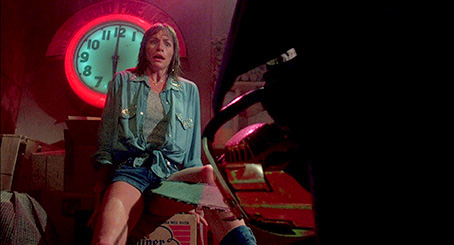
Leatherface corners Stretch and slides his chainsaw between her thighs, sawing his way closer to her as her screams become moans in a really discomforting scene. Unable to take the sexual tension, Leatherface runs, telling the rest of the clan that he killed her. They take her co-worker L.G. back to their amusement park home, which has been decorated with skulls, bones and dead bodies — it’s a stunning achievement in art direction for the budget.

Lefty soon arrives and gets himself ready for battle with his own chainsaws. He goes shithouse on the place until finding Franklin’s dead body.

Stretch is discovered by the besotted Leatherface, who gives her her own mask — that of L.G.’s face. He ties her up and leaves, but miraculously, L.G. has enough life in him to help her escape…until she’s found by Drayton Sawyer (who played the same role in the original), the cook. Seems that Drayton has set up a big business, winning chili cookoffs with his special recipe. The family brings her to dinner — Chop Top treats Leatherface as one would bully a little brother — before Lefty saves her. A huge battle ensues, chainsaw versus chainsaw, before a grenade that was pinned to the corpse of Chop Top’s Hitchhiker twin brother goes off, probably (but hey, I was ready for a sequel) killing everyone.

Chop Top and Stretch survive, battling up a rock tower. I mentioned this scene a few weeks ago in my tribute to Hooper. It’s amazing — both a reference and a reversal of the ending of the first film.

Chop Top and Stretch survive, battling up a rock tower. I mentioned this scene a few weeks ago in my tribute to Hooper. It’s amazing — both a reference and a reversal of the ending of the first film.

Hooper didn’t even want to direct this film. He originally intended to produce it. Then, there was the idea that the movie (to be written with original writer Kim Henkel) would be about an entire town of cannibals — playing off Motel Hell, itself a satire of Chainsaw — with the crazy title of Beyond the Valley of the Texas Chainsaw Massacre. Cannon hired new writers for the massive changes they envisioned and with the budget hacked (sawed?) down, Hooper got back in the director’s chair.

Dennis Hopper would go on to achieve more mainstream fame after this film than the counterculture fame that got him there, appearing in films such as SpeedWaterworld and Super Mario Brothers. He said at the time that Chainsaw 2 was the worst film he’d ever been in, but one would have to assume that he said that before those films.

If you’re thinking — hey, this is a comedy — be prepared. The film never was released in England, was banned in West Germany and Australia, and was rated X before being released unrated in the U.S. Tom Savini was at the top of his game here (and there are even more gory scenes that didn’t make the…err…cut (there it is again), like the clan decimating football fans).

This is a film filled with excess that comments on excess. It’s filled with ridiculousness to combat the banal nature of 80’s ridiculousness. It’s also a popcorn film that could make most folks puke up said popcorn.

It’s a shame that this is the last Hooper movie to see a true cinematic release. When this played at the Drive-In Monster Rama earlier this year, I was struck by how well it holds up, as well as the supreme level of onscreen gore. It’s a film that does that rare trick — it’s humorous while being horrific, never descending into banal parody like Scream or a Troma movie. It’s the closest movie have come — other than Creepshow — to getting the aesthetics of E.C. Comics on to the silver screen.

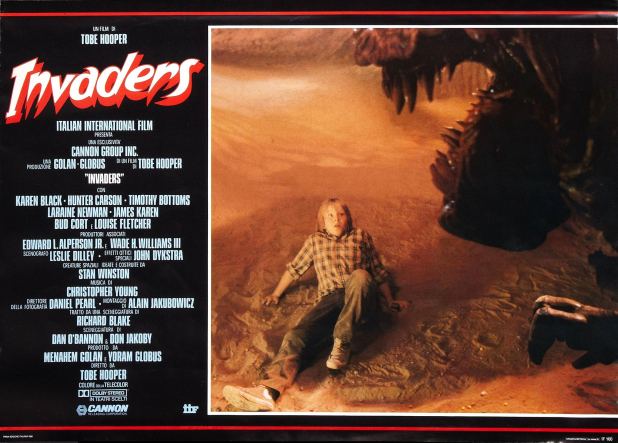
TOBE HOOPER WEEK: Invaders from Mars (1986)

Following the failure of Lifeforce (at least commercially, I’m on the side of it being an interesting affair), Tobe Hooper turned to a remake of 1953’s Invaders from Mars. After several writers took a shot at the script, Dan O’Bannon (the USC film student who famously created Dark Star with John Carpenter, left for Europe in the hopes of making Dune with Alejandro Jodorowsky, then came back to the U.S. to write AlienDead and Buried and Total Recall, write and direct Return of the Living Dead and then die way too young from Crohn’s Disease) and Don Jakoby.

Instead of the adult oriented gore and sex that Lifeforce presented (which shows up here as a movie within a movie, main character David is watching the film and man, he’s super young for that movie), Invaders is a return to the themes of 1950’s science fiction. That said — whereas the originally intended directed Steven Spielberg would have focused on the sweetness with a slight edge, Hooper delivers plenty of edge. In fact, this entire film feels like a nightmare that the main character, David Garden (Hunter Carson, the son of The Texas Chainsaw Massacre 2 writer LM Kit Carson and Karen Black, who we’ll get to in a minute) can’t wake up from. It’s unnerving the sheer torture that this kid goes through!

After watching a meteor shower, David sees a spaceship land behind his house. Throughout the film, the entire town gets taken over by aliens, including his parents (Timothy Bottoms and SNL’s Laraine Newman). It’s true terror — what child doesn’t have the fear that his parents will no longer love him? It’s even worse when they coldly plot your doom.

They’re not the only ones — every teacher is against him, none more than the meanest teacher in school, Mrs. McKeltch. She’s gone from that to something much, much worse — the human face of the alien invasion.

The only person who believes David is the school nurse, Linda Magnuson (Karen Black, The Pyx, Burnt Offerings, Killer Fish and so much more). Together, they rally the Marines, learn how the alien guns work, defeat the Supreme Intelligence and blow up the UFO.

Or do they? Much like its 1953 inspiration, David wakes up and the entire movie is revealed to be a dream. However, this isn’t a William Cameron Menzies film (the director of the original, whose name is given to the elementary school in this film); this is Tobe Hooper, who ends the film just like it began. David sees the UFO land again, runs to his parent’s bedroom and screams as an alien noise is heard. There is no resolution — just the return of abject terror.

This part is particularly interesting to me, as I’ve had the same dream of a UFO showing up outside my window since I was a child. I always wake up screaming, knowing that I’m looking at an object made from pure evil.

Invasion is an odd duck. Horror buffs wanted to see Hooper make another The Texas Chainsaw Massacre (they’d get their wish, but probably not in the way they’d want it within a few weeks). Moviegoers didn’t know who Hooper was enough to be a mainstream draw (Poltergeist was made three years before Hooper got his three picture Cannon deal). And fans of the original probably wouldn’t be pleased with the darker bent of this remake (despite original star Jimmy Hunt making an appearance as the police chief and the original Supreme Intelligence showing up on a warehouse shelf).

That’s not to say it’s a bad film. It’s packed with elaborate practical effects from Stan Winston (who was working on Aliens at the same time) and John Dykstra, including the amazing alien drones. The drones are literally two actors walking independently under a suit, so their movements feel more feel than today’s computerized creatures. The Supreme Intelligence doesn’t look silly; instead it’s a mix of menace and cartoony evil, like a Mars Attacks! trading card brought to life. And the film is replete with references to other films — it takes place in Santa Mira, home to Invasion of the Body Snatchers (and Halloween 3: Season of the Witch) and the house that the Gardners live in was built for 1948’s Mr. Blandings Builds His Dream House.

This movie lost a lot of money — it made $4.8 million on a $12 million dollar budget. You know who did make money on this? Science fiction fan and sometimes writer/producer/director Wade Williams, who bought the original film in 1978. Airing the original film via television, cable and video releases made plenty of money. Add in the rights to this — Williams got a producer credit — and he may have made up to fifty times what he paid for the film. This isn’t the only film in the Wade Williams collection. He also owns the distribution rights to the films of Ed Wood, Robot MonsterThe Killer Shrews, Bava’s Hercules in the Haunted World and a near infinite amount of other films.

Maybe that’s why Menahem Golan and Yoram Globus, those insane masters of moviemaking that made up Cannon, hated the film. They claimed it was nothing like what they were promised. That said — Hooper often spoke favorable of his time with Cannon, comparing it to the old studio system days.

With two films down and his back to the wall, Hooper had to turn back to some old friends and his old neighborhood. Within a few weeks (he made the film in June and it was released in August), he’d make the film everyone wanted to see anyway — The Texas Chainsaw Massacre 2. But that’s a story for another time.

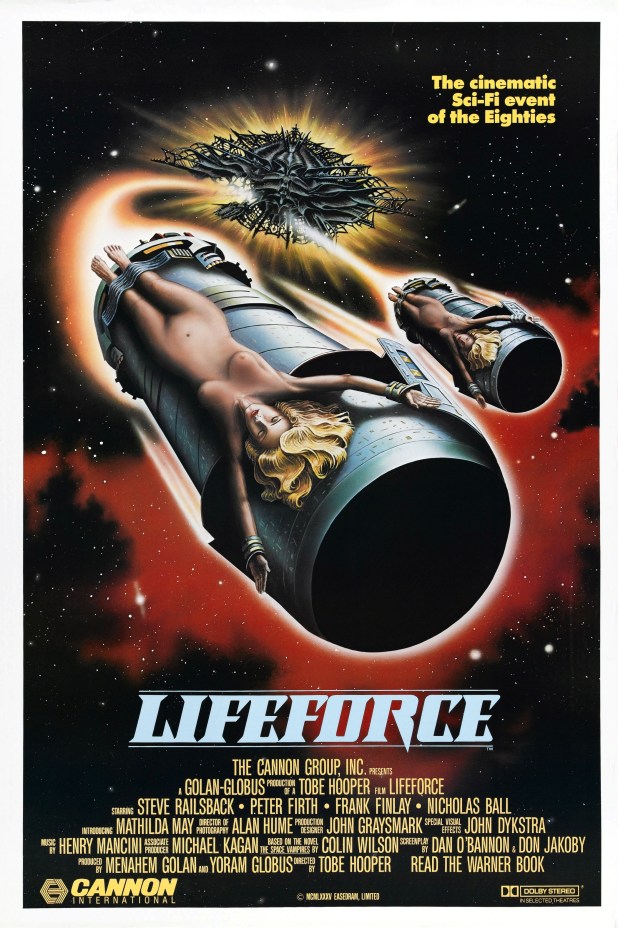
TOBE HOOPER WEEK: Lifeforce (1985)

We’re here to praise Tobe Hooper, not bury him. But to get there, we have to go through some rough periods.

By 1985, Hooper’s career was in limbo. Sure, he’d tasted box office success with 1982’s Poltergeist, but he’d also be dogged with rumors — or truths — that he’d not really directed the film. Toss in a bad experience on 1981’s Venom, a film that he was replaced on ten days into shooting (Klaus Kinski claimed that the cast and crew ganged up on Hooper in an effort to have him replaced), as well as being replaced as the director of The Dark and a rumored nervous breakdown.

A three-picture deal with Cannon Films and the promise of no interference would be the panacea that would soothe Hooper’s pain. Or so he thought.

The first film in the three picture deal was Lifeforce. Based on Colin Wilson’s 1976 novel The Space Vampires and scripted by Dan O’Bannon (AlienReturn of the Living Dead) and Don Jakoby,  the film was originally going to use the original title. After spending $25 million to make it, Cannon decided that they wanted a blockbuster instead of their normal exploitation films, hence the change to Lifeforce.

Once Hooper had his money and freedom, he was beyond excited, seeing the film as his chance to remake Quatermass and the Pit. In fact, he said, “I thought I’d go back to my roots and make a 70 mm Hammer film.”

Hopper turned in an initial film that was 128 minutes long, starting with 12 minutes of near silence in space aboard a space shuttle.  This is 12 minutes longer than the final version which had several scenes cut, most of them taking place on the space shuttle Churchill. Three actors —  John Woodnutt, John Forbes-Robertson and Russell Sommers — ended up completely cut from the final film, as was some of Henry Mancini’s score.

Even worse — the film went way over schedule and cost so much that the film was shut down when the studio ran out of money, leaving some of the most important scenes unshot.

Look — it could have been worse. Michael Winner was the original choice to direct.

So what’s it all about? Good question.

The crew of the Churchill discovers a massive spaceship — nearly 150 miles long and shaped like an artichoke (no, really) — inside Halley’s Comey. Hundreds of dead bat creatures surround the ship and inside, two perfect males and one perfect female sleep in suspended animation. They take the aliens and come back to Earth, because there are no protocols or rules about that kind of thing. I mean, I can’t even fly back from Japan with fruit and these dudes take aliens directly to London.

Tragedy strikes — a fire consumes the ship, destroying everything and everyone except for the aliens. The aliens turn out to be vampires that can shapeshift and suck out the life force of everyone they meet.

In Texas, a survivor is found — Colonel Tom Carlsen (Steve Railsback, Manson from Helter Skelter!). He explains how the crew’s life force was taken and why he set the shuttle on fire. He also has a psychic link to the female alien (the constantly naked Mathilda May). Patrick Stewart also shows up as Dr. Armstrong here — who has the female vampire inside him. They take her/him back to London, but the plan backfires when she/he escapes.

London is now filled with zombies, as the two male vampires have turned the entire population and everyone feeds on one another. All of these life forces are sent by the males to the female and then to their spaceship. The lighting looks like Poltergeist by way of Mario Bava. Still with me?

Turns out that leaded iron can kill the vampires. And oh yeah, Carlsen is in love with the female vampire. She keeps calling to him. “CARLSEN. CARLSEN. CARLSEN.”

She’s naked on the altar of St. Paul’s, sending energy to the ship, as she reveals that they are bonded through their psychic link. Carlsen responds by killing the other male (one of the two is Mick Jagger’s brother Chris) and then impaling himself and the female at the same time.

The damage to Carlsen is mortal, but the female is unfazed. She creates a column of energy to her ship and rides it back, taking Carlsen with her. This looks completely sexual, which has to be no accident, as the connected bodies look coital.

The end? The end.

Does this mean that Earth is now a planet of vampires? Did she save him to make a new group of vampires? When did this become a zombie movie?

I don’t have the answers. And now that Tobe is gone, I can’t ask him.

Plain and simple, Lifeforce is a mess. It seems inconceivable that this film and Chainsaw came from the same director. It seems more of a British film. There’s some inventive gore, such as when the female vampire (her name is only listed as Space Girl) comes out of Patrick Stewart’s body as blood.

It has moments of gorgeous shots, like the scene where we flashback to when Space Girl reaches out to Carlsen. And the battle of London is a huge effects piece. But the story is — I don’t even know where to begin. It feels more like Meteor than what you expect from Hooper. Which is, I guess, the point of so much of his Cannon films. They are all unique, all strange and all end up being completely different from the movie you expect them to be.

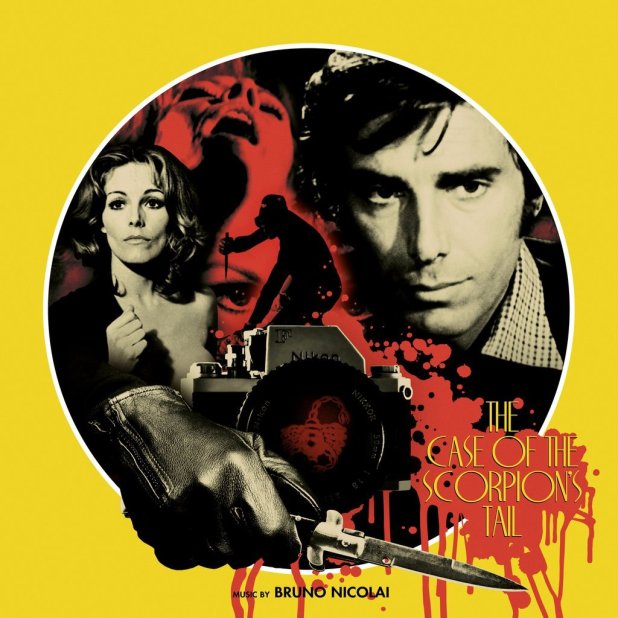
The Case of the Scorpion’s Tail (1971)

I promised to get to another Sergio Martino movie this week and I hope that I have not betrayed your trust, dear reader.

While she makes love to someone else, Lisa’s husband dies in a jet crash. She stands to inherit all of his money, despite them being basically separated. An ex-lover has a confrontation with her, threatening her with blackmail. She pays up — some money now, then some when she gets the letter where she wished that her husband was dead. But a gloved hand finds the letter and kills the ex-lover!

Lisa has to go to Athens to collect the money, but runs into one of her husband’s ex-lovers, Lara Florakis (Janine Reynaud, Succubus) and a knife wielding maniac. Peter Lynch (George Hilton from All the Colors of the Dark) saves her and takes her to the hotel. She asks for all of the money in cash, despite warnings to how dangerous that is.

That same maniac tries to kill Peter, then comes back to kill Lisa, sharp jazz wails staccato punctuating each stab of the knife, each rip across her body. Jump cuts and flashes and the room is covered by the police, who question him.

An INTERPOL agent, Inspector Stavros (Luigi Pistilli, The Good, the Bad and The Ugly, Your Vice is a Locked Door and Only I Have the Key), offers to help Peter with the case and the moment he goes to talk to Lara, he’s attacked by the gloved man.

That brings in Cléo Dupont(Anita Strindberg, Who Saw Her Die?), a journalist who pretty much instantly falls in love with our hero. They go up to his room, but it’s been turned over by the police, with even the bed sliced open looking for the million dollars that went missing when Lisa was killed.

Turns out the gloved man wasn’t on Lara’s side — he or she slits her throat, then runs up a spiral staircase as a guard gives chase. This reveals a room full of one eyed baby dolls and a strange oil painting. Between the woman’s face against the glass with blood spraying everywhere and these reveals, this film is really tipping its hat toward Argento.

The bodyguard chases after the killer, but is knocked off the roof. One slash across the fingers and we have another dead body. It’s 45 minutes in…and most of the IMDB cast is already dead!

That said — there’s a stewardess that gets the gift of scorpion earrings from an unseen lover. So there’s that.

Meanwhile, Peter and Cléo make love on an orange shag couch while a peeping tom watches from the window. You know how Bruce Banner always has on purple slacks and you wonder, “Who wears purple slacks?” Peter does.

The peeping tom wants him to move his car, which is blocking the garage. That said — he’s awfully creepy about it. Peter moves the car and then gets back to business time. PS — if you’re into late 60’s/early 70’s patterns and fashions, you may fall in love with this movie.

While George was out, the killer snuck in. Good thing he forgot his keys! He stumbles in at the last second, but Cléo has already been sliced up. The cops suspect Peter — but they also find a scorpion cufflink that looks just like the earrings we saw earlier.

Oh yeah — about that stewartress’s boyfriend? Yeah fights the killer, only to get his eye hacked out. Somewhere, Fulci was smiling.

Cléo is out swimming off Peter’s yacht and finds the money buried in a cave. Like a Republic serial villain, he reveals his entire plot. He worked for years to make money and saw rich people just throw it away. He put everyone against one another and even had a partner who would do the killings while he was in the room. It’s all rather simple as the police find and kill him before he can hurt her.

I’m rather glad this wasn’t the first of Martino’s giallo movies that I watched. It’s very by the numbers where his other fims seemed to try new stylistic touches. It’s not a waste of your time, but in a world where we get so little of it, you may be better off watching something else.

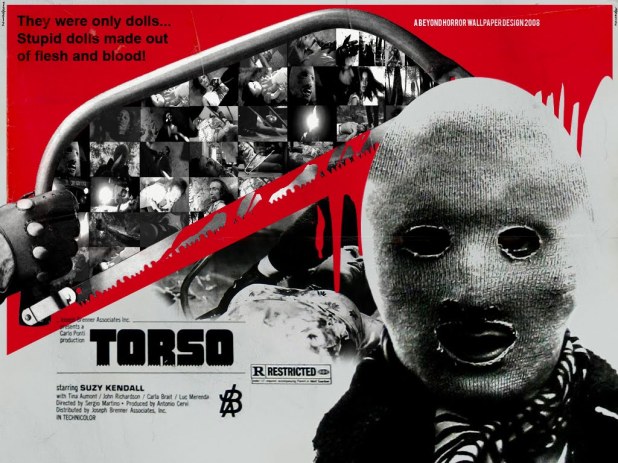
Torso (1973)

Torso is such a simple title. I’d rather call this film by its Italian name: I Corpi Presentano Tracce di Violenza Carnale, or The Bodies Bear Traces of Carnal Violence. Either way, it was directed by Sergio Martino and features none of the cast that he had come to use in his past films like George Hilton, Ivan Rassimov or Edwige Fenech.

It does, however, star Brtish actress Suzy Kendall, who played the lead role of Julia in Dario Argento’s seminal The Bird with the Crystal Plumage. She’s so associated with giallo that she appeared as the main character’s mother in 2012’s ode to the genre, Berberian Sound Studio.

This is a film that wastes no time being strange. Or salacious. A photographer is shooting a soft focus lovemaking session between three women amongst creepy, eyeless baby dolls. By the time we register what is happening, we’re now in a classroom, where swooping pans and zooms refer us to the main cast of the film as we overhear a lecture and later a discussion about Pietro Perugino’s painting of Saint Sebastian. Did he believe in God? Or was he just trying to sell sentimentality? Could an atheist find himself able to translate religion to those with faith?

We cut to a couple making out in a car as a figure stalks them through the eye of the camera, making us complicit in the act of the killer. Quick cuts reveal the white masked face of this maniac. The man runs after him while the girl doesn’t even care that they had a voyeur watching. As she waits for him to return to the car, but grows impatient. The headlights of the car cast her shadow large across the columns of a bridge. And their light is quickly extinguished by black gloved hands. The camerawork here is really striking, keeping us watching for the killer, as we’re no longer behind his eyes. His attack is swift and ruthless, juxtaposed against the images of fingers penetrating the eyes of a doll.

The art professor (John Richardson, Black Sunday, The Church) and Jane (Kendall) meet by chance at a church where she challenges him to change his views on Perugino. As she returns from their somewhat romantic afternoon, she spies her friend Carol arguing in the car with a married man.

Meanwhile, ladies of the evening walk the street, ending up with Stefano, a student who has been stalking Julie. He has trouble performing and the prostitute he’s with tells him that all the hang ups come her way. That said — even if he’s queer, he better pay the money. He flips out and attacks her, but she makes her escape.

We’re then taken to a hippy party that looks like it’s taking place inside Edward Lionheart’s Theater of Blood. There’s weed, there are acoustic guitars, there are bongos, there are dudes with neckerchiefs, there are motorcycles. Truly, there’s something for everyone. But after leading on two men, Carol just walks out into the mud. They try and chase her, but she makes her escape into the foggy night. We hear her footsteps through the swamp as she walks, exhausted and covered in mud. What better time for our white masked killer to return? We see glimpses of him through the fog and then he is gone. Whereas in past films Martino ignored the murder scenes instead of story, here the violence is extended, placing the killer and his actions in full view. After killing the girl, he rubs mud all over her body before stabbing her eyes — again intercut with the baby doll imagery. Her blood leaks into the mud as the score dies down.

A police detective is in front of the art class, showing images not of art, but of the crime scene. A piece of cloth has been found under the fingernails of one of the murdered students, Flo. And that same scarf was found on Carol’s body. It’s their duty to report seeing anyone who wore this scarf to the police, who want to cooperate with the students who normally riot and throw rocks at them.

Two of the men in the class — Peter and George — were the last two people to be seen with Carol, the ones who she turned down at the party. Meanwhile, Stefano continues to stalk Jane. The music in this film is so forward leaning — tones play when the killer shows or during moments of tension.

A man calls Daniela and tells her that if she ever tells where she saw the red and black scarf, she’s dead. Fearing for her life, she tells her uncle, who lends his country home to her and her friends so that they can get away from the city while the killer is at large.

Oh yeah — I forgot the pervy scarf salesman, who the police are leaning on. Right after talking to the police inspector, he calls someone and asks for money to buy his silence. Whoever it is, they bought the scarf from him and wouldn’t want anyone else to know. They’ll also get out of town and head to the country. Coincidence? I think not!

Stefano is all over Dani, telling her that he needs her. She wants nothing to do with him. When she stares at him, she remembers seeing him wear the red scarf. She escapes — slamming the door in his face. She tells Jane that she remembers seeing him wear the scarf — and never again — the day Flo died. The whole time, creepy uncle is watching the two girls. Jane offers to speak to Stefano, then meet the girls at the vacation home.

The street vendor is flush with cash, creeping along in the dark. A car starts to follow him. We see the black gloved hands again as the car hits its victim again and again, bright red gore pouring all over the screen.

Jane goes to speak to Stefano, finding only strange baby dolls and letters to Dani asking her to love him and remember the promise that she made as a little girl. Jane is surprised by Stefano’s grandmother, who tells her that he left town.

The other girls are asleep on the train as someone watches them. A strange man enters their train car and sits down.

The camerawork in this movie feels as predatory as the perverts and killers that exist within it. Speaking of pervs, when the girls arrive in the countryside, the local men pretty much lose their minds, particularly over Ursula (Carla Brait, the man wrestling dancer from The Case of the Bloody Iris). She and Katia make out as a peeping tom watches, only for the killer to show up and off the leering man. There’s an amazing scene of the killer dumping the pervert into a well, shot underwater and staring upward as the body falls toward the lens.

Man, every man in this movie is scum. They’re either frightened boys or perverts wanting one chance to knock up a woman or scarred from past sexual encounters. None of them are positive, as even the uncle who gives Dani the villa seems way too interested in her. Every man is a predator at worst and a leering pervert at best.

Jane hurts her ankle when she gets overly excited about breakfast. A doctor arrives — the mysterious man from the train — and he gives her a pill, which knocks her out.

The girls go sunbathing while Jane recovers. Dani thinks she sees Stefano — complete with the red scarf — watching them. They return home and drink champagne, which Jane uses to wash down her sleeping pills.

A few minutes later, the door rings. It’s Stefano — the girls all scream — but he’s dead — the girls scream again — and the killer is behind him, holding the red scarf — now scream even louder! Instead of showing us the murders, Martino switches form, cutting to a ringing bell and Stefano being buried.

Jane wakes up, asking where her breakfast is. She’s obviously slept late as a result of the pills. She walks around the apartment, looking for Dani, Ursula and Katia, only to find a mess. Tossed chairs, bottles of beer and every single one of her friends murdered. Suzy Kendall is amazing in this scene, caught between fear and nausea. Unlike so many wooden giallo performances, she’s actually believable.

She hides as the killer comes back, forced to stay quiet and watch as he saws her friends into pieces. Even the ordinary world routine of the milkman arriving cannot stop the butchering of her friends, with her trapped just feet away.

This final act is completely unexpected, as up until now, the film had played by the rules of the giallo, the large number of victims versus the large number of red herrings.

In fact, this film is so packed with red herrings, even the cast had no idea who the killer was. Martino wouldn’t tell them who it was, so each of the actresses had her own theory as to who the killer was. And in the original script, the killer survived.

Now, instead of that traditional giallo structure as I mentioned above, it is the last survivor — a near prototype for the final girl — against a killer. Throw in that Julie can’t move well due to her leg and Martino has set up quite the suspenseful coda.

Trapped in the house, Julie tries to signal with a mirror, using Morse code. But it totally misses the heroic doctor’s sight. He places a call, but it doesn’t seem like it’s to Julie. She looks out the window and sees the killer coming back.

It turns out that the killer was the professor, who saw a childhood friend die trying to reach for a doll. He compares the other kills to dolls, with only Julie as a flesh and blood person. Everyone else was a bitch or played games with him or blackmailed him. He hacked Ursula and Katia to pieces like dolls as a result. Dani saw him. Carol may have seen him. And he killed Stefano when he saw him in the village. Death, he says, is the best keeper of secrets and then he sees Julie as a doll and tries to hang her. She’s saved at the last second by the doctor.

They battle into a farmhouse, across the yard and to a similar rock where we saw the younger professor watch his friend die. We hear a screen and have no idea who has been killed — but luckily for Jane, the doctor survives.  He discusses that whether fate or providence had kept him in town, where he could save her. Perhaps it was written in the stars. Julie replies that Franz, the professor, would have been a realist and called it necessity. Franz is dead and the dreamers live on.

Torso is decent, but pales in comparison to the rest of Martino’s giallo films. Suzy Kendall is great, but you can’t help but miss the rest of his established players. It’s way closer to a slasher than a giallo, with the dolls and the killer’s reasons not feeling natural and merely tacked on. The killings are more important than who the killer is, in true inverse to the other films on the site this week.

Also — the American trailer is abysmal. It makes me hate the film and I can see why no one wanted to see it. It focuses on the hacksaw, which is a very incidental piece of this film. You’d do well to totally skip that.

You can watch this on Amazon Prime.

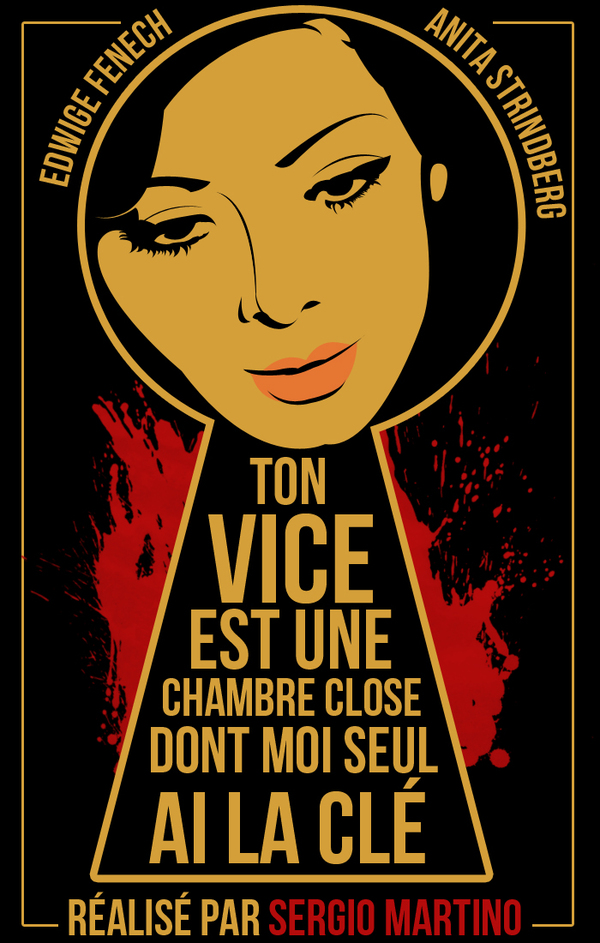
Your Vice Is a Locked Room and Only I Have the Key (1972)

Has a movie ever had a better title? Nope. Sergio Martino’s fourth entry into the giallo genre, following The Strange Vice of Mrs. Wardh, The Case of the Scorpion’s Tail and the previously reviewed All the Colors of the Dark, it refers to the note that the killer leaves to Edwige Fenech’s character in Mrs. Wardh. And the title is way better than the alternate ones this film has — Gently Before She Dies, Eye of the Black Cat and Excite Me!

Martino wastes no time at all getting into the crazy in this one — Oliviero Rouvigny (Luigi Pistilli from A Bay of Blood, Iguana with the Tongue of Fire, Death Rides a Horse) is a dark, sinister man, a failed writer and alcoholic who lives in a mansion that’s falling apart (If this all feels like a modernized version of a Poe story like The Fall of the House of Usher, it’s no accident. There’s even an acknowledgment that the film is inspired by The Black Cat in the opening credits.). His wife, Irina (Anita Strindberg from A Lizard in a Woman’s Skin and Who Saw Her Die?), suffers his abuses, but never more so than when he gathers hippies together for confrontational parties. He makes everyone pour all of their wine into a bowl and forces her to drink it, then humiliates their black servant Brenda until one of the party goers starts singing and everyone joins in, then gets naked. This scene is beyond strange and must be experienced. Luckily, I found the link for you, but trust me — it’s NSFW.

The only person that Oliviero seems to love is Satan, the cat that belonged to his dead mother. A black cat that talks throughout every scene he’s in, his constant meows led to my cats communicating with the TV. God only knows what a 1970’s giallo cat said, but it seems like his words spoke directly to their hearts.

One of Oliviero’s mistresses is found dead near the house, but he hides her body. The police suspect him, as does his wife. Adding to the tension is the fact that Irina hates Satan, who only seems to care about messing with her beloved birds.

Remember that servant? Well, she’s dead now, but not before she walks around half naked in Oliviero’s mother’s dress while he watches from the other room. She barely makes it to Irina’s room before she collapses, covered in blood. Blood that Satan the cat has no problem walking through! He refuses to call the police, as he doesn’t want any more suspicion. He asks his wife to help him get rid of the body.

Oliviero’s niece Floriana (Edwige Fenech, pretty much the queen of the giallo) is in town for a visit, learning how Oliviero hasn’t been able to write one sentence over and over again for three years, stuck in writer’s block (and predating The Shining by 5 years in book form and 8 years away from Kubrick’s film). Unlike everyone else who tolerates Oliviero’s behavior or ignores it, Floriana sees right through the bullshit. The writer is used to seducing every woman he meets and she initially rebuffs him, even asking if it’s true that Oliviero used to sleep with his mother. He angrily asks if it’s true that she’s a two-bit whore. “Those would be two bits worth spending,” is her caustic reply.

Irina confides all of her pain to Floriana as the two become lovers. And another girl gets murdered — perhaps by Oliviero. Then, a dirt bike racer comes to drop off milk and hit on Floriana. Whew — I was wondering when this film would get hard to follow and start piling on the red herrings!

After being questioned by the police, Oliviero comes home to choke his wife. He stops at the last second…then we’re off to the races! The motor bike races! The milk man loses when his bike breaks down, but he’s the real winner — taking Floriana back to the abandoned house that he lives in. And oh look — there’s creepy Oliviero watching the action.

Meanwhile, Satan has gotten into the coop and chowed down on several of the birds. Irina catches him and they have quite the battle. He scratches her numerous times before she stabs him in the eye with a pair of scissors. An old woman watches and is chased away by Irina’s yelling.

She’s afraid that her husband will kill her once he learns that she killed Satan. And Oliviero keeps wondering where the cat is, especially after he buys the cat his favorite meal from the store — sheep eyes. That said — Satan might not be so dead, as we can hear his screaming and see him with a missing eye.

Floriana puts on Oliviero’s mother’s dress, asking if this is what the maid looked like before she died. Whether it’s the dress or the forbidden family love or just her beauty, he rips off her dress — at her urging, mind you — and begins making love to his niece. We cut to Idrina, caressing her pet birds, when Oliviero confronts her with scissors and questions about Satan. He almost stabs her before he ends up raping her inside the coop, while Floriana looks on. She playing them off the other, even telling Idrina that she’s slept with her husband. She also tells her that Oliviero wants to kill her, so she should kill him first.

Idrina wakes up to the sound of Satan, but can’t find him anywhere. What she does find is her husband in bed with Floriana, who is belittling him. With every sinister meow, there’s a zoom of the cat’s damaged eye. Finally, Oliviero attacks her for spying on him, slapping her around before he leaves to write. She walks the grounds of the mansion, seeing the motorcycle rider make a date with Floriana and catching sight of Satan, who runs from her. In the basement, she finds scissors and the hidden bodies of her husband’s lover and the murdered maid. In a moment of clarity — or madness — she stabs her husband while he sleeps. The sequence is breathtaking — a giallo POV shot of the murder weapon intercut with the same sentence being typed over and over interspersed with all of the abuses that Oliviero had wrought upon her. She stabs again and again before Floriana interrupts, asking her if it was easy. The sentence that the author had written again and again was him claiming that he would kill her and there was a space in the wall for her, so obviously, she had to kill him.

As for Floriana, all she wanted was the family jewels, which were hidden in the house. They seal Oliviero’s corpse within the wall while Walter watches from afar. He’s played by Ivan Rassimov, who does creeping staring dudes better than anyone else — witness his work in All the Colors of the Dark. And it turns out that he’s the real killer! He’s been typing “vendetta” over and over again. Floriana asks if Idrina was planning to kill her before she runs off into the night, then Walter appears to kiss Idrina. Turns out they were working together all along — she tells him where to find Floriana the next morning. Holy shit — Idrina reveals her whole plot, revealing how she drove her husband crazy, making him believe that he could have been a murderer! She wishes that there was an afterlife so Oliviero’s mother — who she killed! — could tell him how great her revenge was. She ends by wishing that her husband was still alive so that he could suffer for eternity.

Walter sets up an accident that takes out Floriana and her boyfriend, as their motorcycle crashes, sending blood across the white heart of a billboard and out of her lips. He tosses a match on the gasoline soaked highway, burning both of their corpses. He collects the jewelry and gives it to Idrina, who responds by shoving him off a cliff!

When she returns to the mansion, the police are there, as there were alerted to her stabbing Satan by the old woman. They come inside the house to write a statement, but hear the sound of Satan’s meows. Following the sound, they find him inside a wall — with the corpse of her husband!

Your Vice is a Locked Room and Only I Have the Key is superb. An intriguing story — only a few derailing giallo moments (like the killing of the girl in the room with the dolls and the B roll motocross scenes) — with great acting, eye-catching camerawork and some genuine surprises, it’s well worth seeking out and savoring.