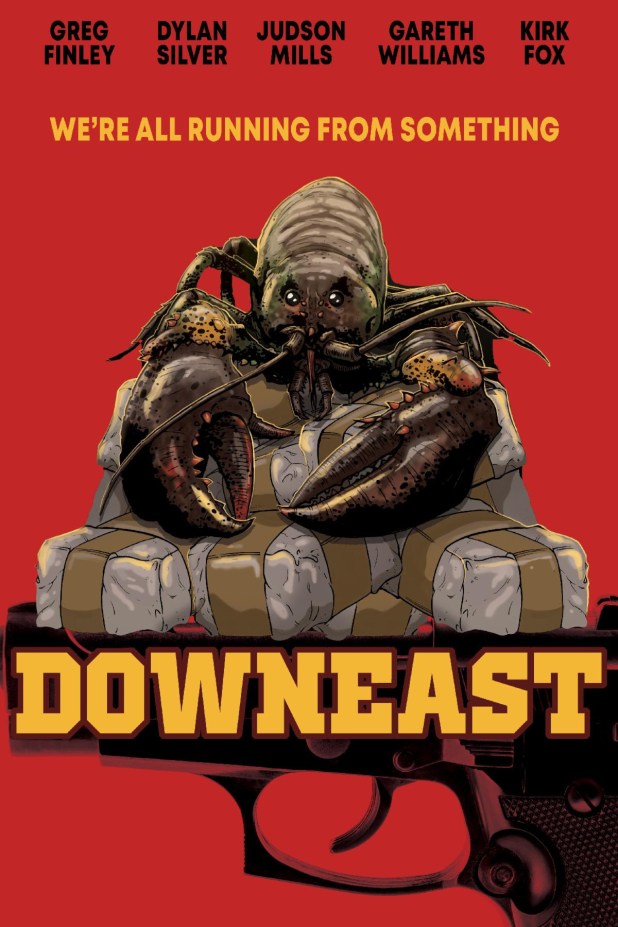
Emma Maddox as returns to her Maine hometown, haunted by the mysterious death of her brother Mikey years ago. As she reconnects with his best friend Tommy, the two rekindle their romance just as she begins to uncover the web of lies within her birthplace. Downeast is a story of crime, revenge, and the hope for a new life.
Directed by Joe Raffa (who also directed the Maine-centric Dark Harbor and co-wrote the script with Greg Finley, who stars as Tommy), this film realizes that small town America is a place of lies, debts and darkness. Tommy is just keeping his head down and trying to just live out his life. Now, he’s back in the world of the mob that he just wanted to forget. Maybe he could have been a boxer once, but now, who knows what will happen?
Downeast is now availble on demand from Gravitas Ventures and APS Films.
“Lunch’s defiantly unfashionable sort of feminism is the main point of interest in this documentary. Viewers will . . . marvel at a woman who, at 60, seems just as fierce as she was 40 years ago.” — John Defore, The Hollywood Reporter
Filmmaker Beth B and multi-media artist Lydia Lunch have been friends since the late ’70s, when both integrated themselves into New York’s “No Wave” movement: Beth B* excelled in film; Lunch drifted towards music. Taking her cues from Patti Smith, Lunch burst onto the scene with Teenage Jesus and the Jerks, which reached a national audience when Brian Eno (David Bowie, Taking Heads) included the band on his 1978 No New York compilation.
After her work as a singer and guitarist in Teenage Jesus and the Jerks, she fronted the band 8-Eyed Spy, then broke out on her own as a solo artist with the albums Queen of Siam (1980) and 13:13 (1981). During this period, she transitioned into acting, working with the experimental, “No Wave” filmmakers Vivenne Dick, James Nares, and Beth B, for whom she worked with an early James Russo (Beverly Hills Cop, Donnie Brasco, The Postman) and Ann Magnuson (Making Mr. Right with Malkovich) in the noir-homage, Vortex (1982). Lunch also worked with low-budget undergrounders Nick Zedd and Richard Kern (each known for Geek Maggot Bingo, 1983, and Sonic Youth’s “Death Valley 69,” respectively**). Lunch also worked with director Amos Poe (later of the more mainstream-distributed Alphabet City (1985) with with Vincent Spano of Over the Edge; Rocket Gibraltar (1988) with Burt Lancaster) on his early feature, Subway Riders (1981).
First collaborating with Sonic Youth on their album Bad Moon Rising (1985), for that album’s college radio single, “Death Valley 69,” she came to collaborate with that band’s bassist, Kim Gordon, as the guitarist and lead vocalist in Harry Crews. The band released the lone album, Naked in Garden Hills (1987), in honor of the Deep South, dark-noirist author of the same name (his books The Gospel Singer (1969) and The Knock Out Artist (1988) were adapted as songs on the album).
For this first documentary on Lunch’s career, Beth B secured the insights of fellow New York scenesters, and artists inspired by her, such as Thurston Moore of Sonic Youth, Donita Sparks from L7, and Henry Rollins. Lydia Lunch: The War Is Never Over became available in select theaters and national streaming on June 30, 2021, by Kino Lorber. You can also learn more about the film’s virtual screenings at KinoMarquee.
* As part of our “John Doe Week” of film reviews, courtesy of the film starring his ex-wife and X bandmate Exene Cervenka, we reviewed Salvation! (1987), Beth B’s parody on organized religion and the mass communication medium of television. We also reviewed Lydia Lunch’s appearance in Mondo New York(1988), as well as taking a look at The Blank Generation (1976) — a 16-mm black & white DIY documentary co-directed by Lydia Lunch and Patti Smith Group guitarist Ivan Kral with director Amos Poe — in the context of our review for Ulli Lommel’s Richard Hell-starring Blank Generation (1980).
** Richard Kern’s other MTV 120 Minutes-era alternative rock videos include King Missile’s “Detachable Penis” and “Marilyn Manson’s “Lunchbox.”
Other female punk/new wave musicians who transitioned into film that we’ve reviewed are the late Christina Amphlett of the Divinyls in Monkey Grip (1982), Nena in Hangin’ Out (1983), and Nina Hagen in Cha Cha (1979). While we haven’t reviewed them, Debbie Harry of Blondie fame, and later of David Cronenberg’s Videodrome (1983), appeared in Amos Poe’s Unmade Beds (1976) and The Foreigner (1978).
There more rock ‘n’ roll on film — including many punk and new wave-inspired films — with our “Rock ‘n’ Roll Week” blowouts (Part 1 and Part 2). Is there a “Part 3” on the way? Oh, you bet! Join us during the last week of August through the first week of September for thirty more films concerned with rock and radio. Oh, speaking of radio . . . be sure to visit our round up of “Exploring: Radio Stations on Film” . . . and we get into Gen X/Grunge films with our “Exploring: 50 Gen-X Grunge Films of the Alt-Rock ‘90s” featurettes.
About the Author: You can learn more about the writings of R.D Francis on Facebook. He also writes for B&S About Movies.
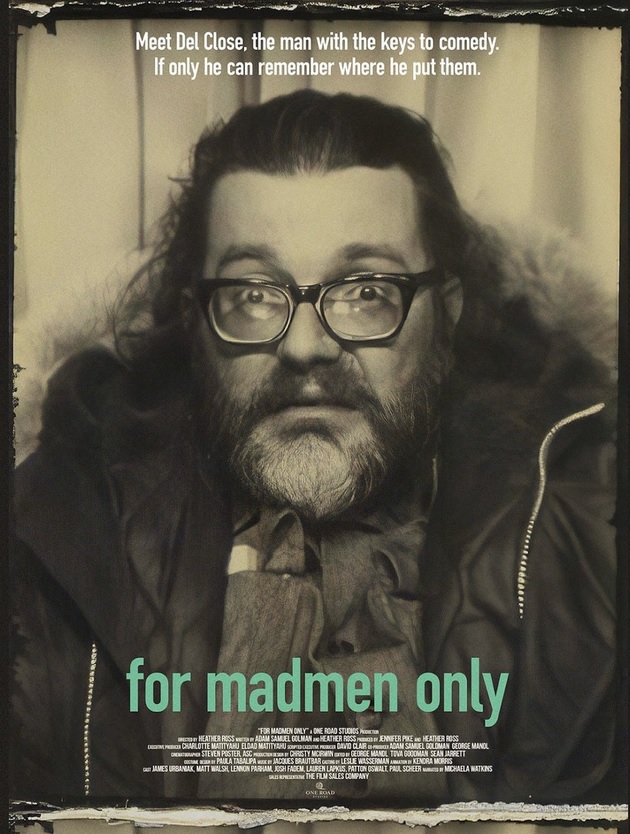
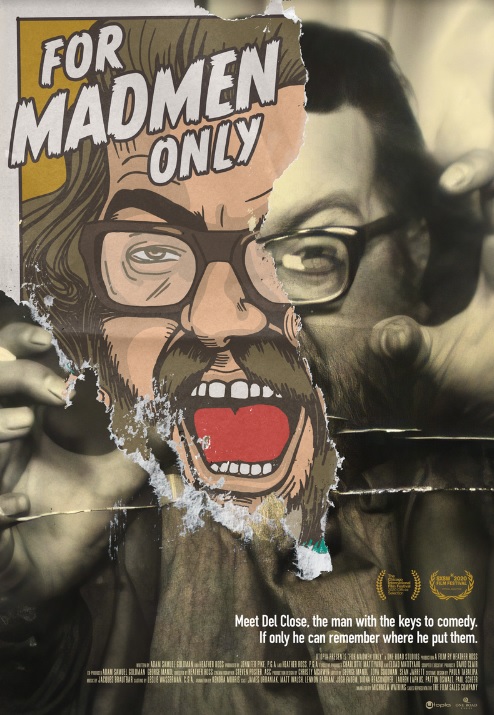
“We knew that to make the definitive movie about this icon/unknown, we would need to take the same kind of creative risks that he was famous for. As someone known for breaking down genres and experimenting with form — not to mention playing fast and loose with the truth — we decided to apply the same ideas to our film and try to break new ground with the documentary genre. This resulted in constructing a set of scenes imagining the creative process behind Wasteland, Del’s comic book autobiography.” — writer and director, Heather Ross
When the fans of Saturday Night Live think of that groundbreaking series, they remember Bill Murray and John Belushi . . . then they’ll remember the influential Animal House and Caddyshack*, in short order.
That is, until, you watch this multimedia documentary.
After watching, you’ll come to know that all roads to that iconic, late night NBC-TV comedy series began with Del Close: the actor and writer, comedy teacher and improv maestro who directed at Chicago’s Second City — where he mentored that series’ Bill Murray, John Candy, and Tina Fey — and San Francisco’s The Committee — where Howard Hesseman, later of WKRP in Cincinnati and Head of the Class, got his start.
Of course, comic and graphic novel fans know Del Close, best, for his semi-autobiographical DC Comics anthology Wasteland — a work which serves as the source material for this documentary, with reenactments starring his past pupils, such as Patton Oswalt (Failure to Launch) and Lauren Lapkus (The Wrong Missy). Actors and filmmakers who knew him best, such as Bob Odenkirk (The Solomon Brothers), Tim Meadows (The Ladies Man), and Adam McKay (The Other Guys), also appear with their insights and memories of Del’s work.
If you’ve laughed at any of those above films, or something on television since Saturday Night Live went on the air in 1975, or any of the films connected to the cast of that iconic series — you have the “Where’s Waldo” of comedy, Del Close, to thank for those laughs. And this multimedia piece — that goes beyond the usual “talking heads” trope of most documentaries, inserting a clip here, and a photo there — is a one-of-kind, passionate testament to a man that was everywhere, and nowhere: a true dark man of comedy.
Watch it. And learn where from where the laughter comes.
For Madmen Only: The Stories of Del Close was acquired for international distribution by Utopia Media, which also brought the British rock document on Suzi Quatro, Suzi Q, as well as the recent WITCH: We Intend to Cause Havoc, about the Zamibian ’70s progressive-rock band, to the international marketplace. Another of Utopia’s award-winning documents is Martha: A Picture Story, concerned with Martha Cooper, a New York-based, trailblazing female graffiti artist and street photographer.
Utopia is headed by Robert Schwartzman — of the band, Rooney, and a writer and director in his own right — who made his feature film directing debut with the really fine comedy, The Argument, released last September. You can learn more about the launch of Utopia Media with this February 19, 2019, article at Deadline.com.
About the Author: You can read the music and film reviews of R.D Francis on Medium and learn more about his work on Facebook. He also writes for B&S Movies.
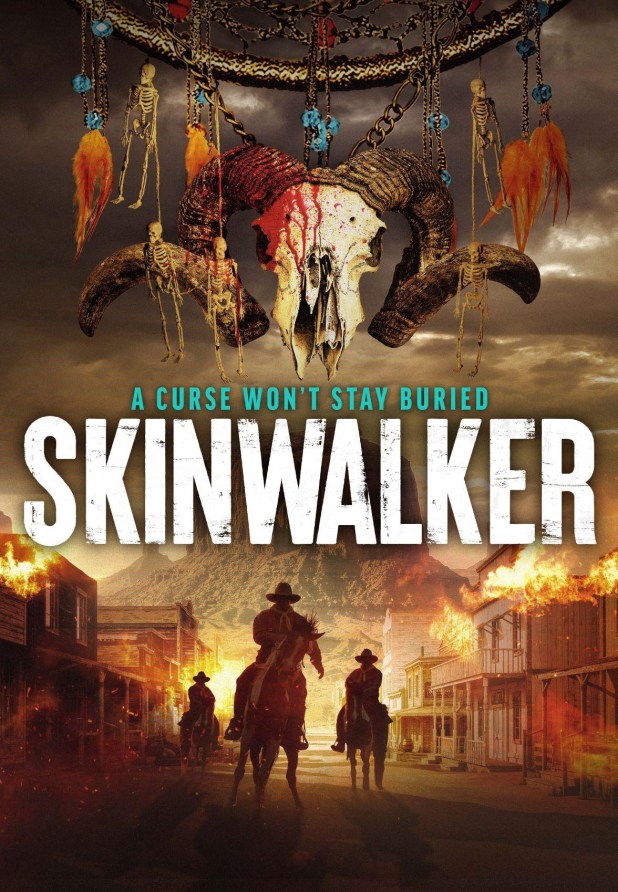
You know what happens when you steal from a Native American burial site? You set loose the Skinwalker, a shape-shifting ancient demon that won’t stop until it gets revenge. Trust me, I live in Mounds Park, a place that has Native American bones directly from my house.
Writer/director Robert Conway also made Eminence Hill, a Western that we reviewed last year. Here, he’s telling the story of the curse that breaks out in 1883 Arizona. In fact, he’s the first to get possessed, as Conway also plays a man named Hugo who gets bit by a snake. The Skinwalker goes from body to body throughout the film, killing everyone from lawmen to criminals alike.
It’s a pretty interesting idea to match demonic possession with the Wild West. While this doesn’t have much of a budget and relies a bit heavily on CGI gore, there’s still plenty to enjoy in this movie.
Skinwalker is available on demand and on DVD from Uncork’d Entertainment.
“WITCH is like the Beatles of Zambia.” — from the film
In the ’70s, Anglo-American-bred heavy-psychedelic progressive rock flourished, not only in the U.S., the U.K, and on the European mainland — but all over the world. The bands were everywhere: even in Japan (Food Brain) and Israel (Atmosphera), to name a few. Even in the landlocked country of the Republic of Zambia in Southeastern Africa. And the nation’s most famous band was the Rolling Stones-influenced, psych-rock flavored (recalling the band’s 1968 to 1974 Beggars Banquet to It’s Only Rock ‘n Roll era), WITCH, the first Zambian band to record and release a commercial album.
Jagari, WITCH’s founding and sole original member, sets out on the road to rediscovery/Utopia Media.
As with Malik Bendjelloul — a Stockholm, Sweden, documentary filmmaker who, upon hearing the music from the two-album career of forgotten Detroit musician Sixto “Sugar Man” Rodriguez for the first time in a Cape Town, South Africa, record shop, became obsessed with discovering what became of the mysterious “Bob Dylan of Detroit” to create the film Searching for Sugar Man — Gio Arlotta — a Milan, Italy-based journalist who, upon hearing WITCH for the first time in 2012, became obsessed with discovering what became of the country’s original-influential “Zamrock” band. So Gio Arlotta, along with fellow fan, Jacco Gardner, a Dutch musician, they set out to Zambia to find their idols.
Their search led to finding the band’s sole surviving member, vocalist Emanyeo “Jagari” Chanda (an Africanisation of Mick Jaggar) (the filmmakers also find the band’s original engineer at the still-in-existence studio where they recorded/pressed their albums). As with the Sugar Man before him, Jagari experienced a career resurgence with his first-ever European tour — by a revived WITCH featuring an international cast of fan-musicians (the Netherlands, Germany, and Switzerland). The keyboardist in the band is Patrick Mwondela, who joined in 1980 — long after Jagari’s departure — and remained with the band until their 1984 demise (he appears on their final two albums; 1980’s Movin’ On and and 1984’s Kuomboka).
The golden-era of the band, in my opinion, are the Jagari years from 1973 to 1976, as the later parts of the band’s catalog transformed from ’70s-styled progressive rock — inspired by the Rolling Stones, Jimi Hendrix, and U.S. funk, James Brown, in particular (and, I feel, to critical disagreements: a pinch of Miles Davis and a soupçon of Santana) — into disco and more traditional Zambian material; bass-oriented Kalindula music, in particular. (You can learn more about the traditional African instruments incorporated by the band at the Atlas of Plucked Instruments.)
In addition to his noted work as a journalist, Gio Arlotta is also a video artist. To that end: Arlotta effectively frames his shots and works as a fluid editor; the film’s animations are equally intriguing with a stellar opening credits sequence (assisted by his co-producer and writer, and cinematographer, Tim Spreng; Spreng made his feature film debut with the Czech Republic romantic-drama, 2013’s All the Lost Souls). Arlotta — as with documentarian Liam Firmager in his earlier celluloid tribute to Suzi Quatro — provides WITCH: We Intend to Cause Havoc with a not just a run-of-the-mill rock documentary or artist preservation quality: it’s a tale about dreams; a tale of how hard work and never giving up hope, eventually, will return bountiful spoils. And that the gift of music is an eternal one.
As with the absolutely stellar The Changin’ Times of Ike White from last year reigniting a rediscovery of the genius of ’70s soul-fusion musician Ike White, this is another time when you drop your hesitations on watching a documentary for your evening’s entertainment — and watch it, as you learn how political upheavals can affect one’s pursuit of music. You also learn that, regardless of borders, musicians experience the same unrealized careers — and are reduced to giving up music for day jobs to support their family; in Jagari’s case: spending long days digging the African wilds for precious stones.
My only reservations with the film is that the African-accent English (remembering Zambia was once a British territory) is difficult to understand. Hopefully, the theatrical and streaming version — unlike the promotional screener I watched — will provide viewers with captioning; captions which will obviously be available on the film’s eventual hard media release. I also feel the film would have benefited from a tighter edit, even at 80 minutes, the proceedings dragged slightly against the hard-to-follow Zambian English. Those personal opinions, of course, vary from viewer to viewer and in no way detract from the power of witnessing a once lost artist rediscovering his past — and experience his forgotten, creative past becoming commercially accepted by the world stage for the first time.
You can enjoy WITCH: We Intend to Cause Havoc on July 13, 2021, available as a world premiere, pre-order rent-to-own at Altavod. After its premiere on that platform, as well as Apple TV, the film will be available on other streaming platforms and hard media.
The film was acquired for international distribution by Utopia Media, which also brought the British rock document on Suzi Quatro, Suzi Q, to the international marketplace. Another of Utopia’s award-winning documents is Martha: A Picture Story, concerned with Martha Cooper, a New York-based, trailblazing female graffiti artist and street photographer.
Utopia is headed by Robert Schwartzman — of the band, Rooney, and a writer and director in his own right — who made his feature film directing debut with the really fine comedy, The Argument, released last September. You can learn more about the launch of Utopia Media with this February 19, 2019, article at Deadline.com.
An essential part of a prog-rock collection/Utopia Media.
You can find the full WITCH discography on You Tube:
* Released as a two-fer CD in 2014 on Now-Again Records. The label — as well as reissuing the remainder of the WITCH catalog in 2011 and 2012 in digital and vinyl formats — also released the 2012 career-spanning compilation We Intend to Cause Havoc.
You can learn more about Emanyeo “Jagari” Chanda and WITCH with “We’re a Zambian Band,” a highly-recommended expose written by Chris A. Smith for the Austin, Texas, publication, The Appendix.
WITCH – Live in London, September 2017
About the Author: You can learn more about the writings of R.D Francis on Facebook.He also writes film reviews for B&S About Moviesand publishes music journalism pieces and short stories based on his screenplays, on Medium.
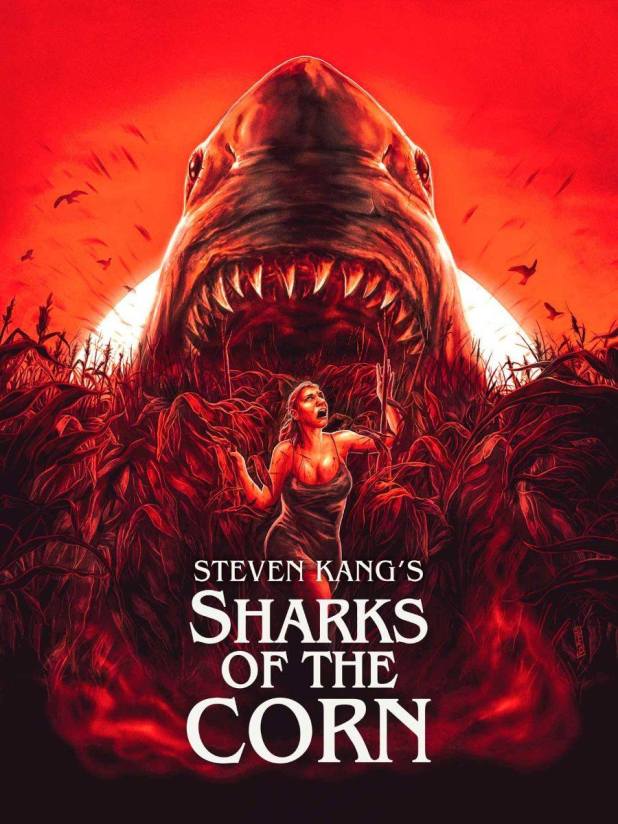
How can sharks get into a cornfield? Who would name their town Druid Hills? Why would you let a serial killer sit in the back of your police car? How did Stonehenge get to Kentucky?
Tim Ritter (Hi-Death is his last movie we reviewed, but his career goes all the way back to Day of the Reaper which was shot for $1,000 in 1984) wrote and directed this one and man, that poster really speaks to me. There’s also a great scene where a computer shows the sharks swimming through the rows of corn and it looks a lot like Frogger. And man, how many lines from Jaws can you get into a movie?
There’s a serial killer named Teddy Bo Lucas, an FBI agent with his own agenda, shark cults, Bigfoot and a scene that has so much surface noise that it sounds like they put more noise over the top of it to hide it, which means that every word was a complete jumble. Also, lots of driving. Also — a child gets killed and sprays blood all over his dinosaur frisbee while his parents hold one another and cry. Also, still more driving around.
I mean, the main character’s name is Sheriff Scheider. If that makes you laugh, then this is completely the movie for you.
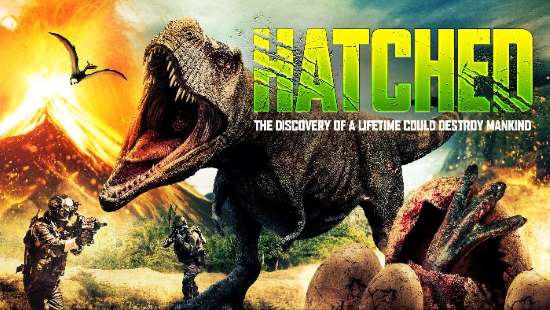
You know, if you’re going to bring dinosaurs back to life, make sure they don’t eat you and your wife. That’s the lesson that I learned from Hatched, which begins with Simon David (Thomas Loone, Clownface) hatching some giant retro beasts just in time for them to turn him and his partner Christine (Amanda-Jade Tyler) into a quick snack.
However, before all that dino dining, Simon also learned how to bring his son back from the dead. Again, I think we all know by now just how bad of an idea playing God is.
Scott Jeffrey wrote The Candy Witch and also directed HellKat, ClownDoll, Bad Nun: Deadly Vows and plenty more lower-budget horror films. He made this with Rebecca Matthews, who he also made Cam Girls and Cannibal Troll with; she directed The Candy Witch, Pet Graveyard and Witches of Amityville. Jeffrey also produced Dinosaur Hotel, another low budget dinosaur movie about an underground game show that has dinosaurs hunt people for the pleasure of the elite.
It takes a lot of guts to make a dinosaur movie with limited funds. Luckily, this movie has some exciting scenes and plenty of soldiers battling scaly beasts, which is really what I’m usually looking for.
Hatched is available on demand and on DVD from Uncork’d Entertainment.
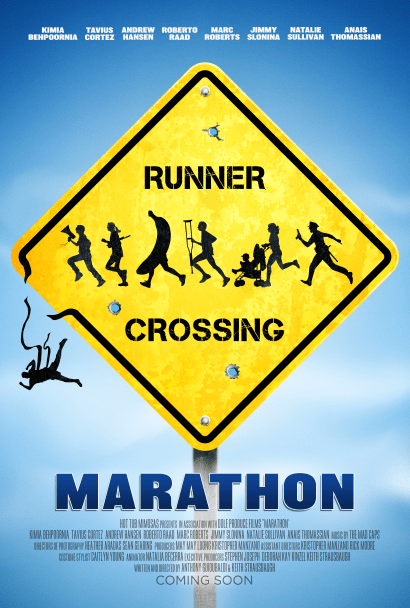
Marathon is the story of the Devil’s Canyon Marathon, an underfunded local race organized by shoe store owner Ed Clap.
Starting three months before the actual event, we meet the runners, see how they train and learn so much about their lives in mockumentary style. There’s Ryan O’Brien, who missed last year’s Boston Marathon by nine seconds. Jenna Kowalski, a woman who wants to set the world record for fastest marathon time dressed as a fruit. New mother Abby Dozier, bullied black man Shareef Washington and Emilou Paunch, whose life gets better when she quits thirty seconds into getting ready for a marathon.
Now, it’s time for everyone to get running. Except Emilou. She’s doing just great staying home.
Directors Anthony Guidubaldi and Keith Strausbaugh have a great crew of actors to tell their story, featuring Las Vegas-based comedians from shows at Cirque du Soleil, Absinthe, Second City and Blue Man Group and Los Angeles improv actors from Upright CItizen’s Brigade.
I do love films in this genre and this is a fine example. If you need a laugh, check it out. I mean, how many movies will you see with bananas running through the desert?
Marathon is available on demand July 6 from Gravitas Ventures.
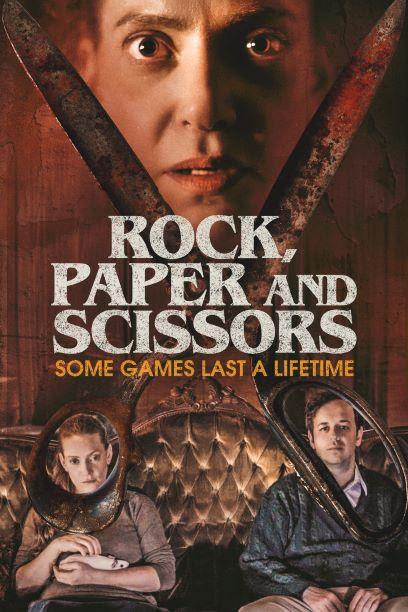
Known as Piedra, papel y tijera in its home country of Argentina, this is the story of Jesus and Maria José, who live together in the home of their father, who has recently died. Their world is not ours — filled with unending games and no small amount of malice toward one another. Now, their sister Magdalena has arrived to sell their home and get her share of the inheritance. The siblings don’t want their game to stop, so they bring her into the hopes that they never have to leave.
Maria doesn’t just love The Wizard of Oz. She has become Dorothy Gale and everyone else is trapped within her universe. And when Magdalena is hurt and trapped in the house with her family, things only get stranger. Also — Jesus is making a horror movie the entire time with Maria as his star and that reality also starts to intrude into the lives of our characters.
Pablo Sigal and Agustina Cerviño played the roles of Jesus and Magdalena when this story was set as a stage play written by the film’s co-director Macarena Garcia Lenzi. The film was adapted with the help of co-director Martin Blouson.
With just three people — as well as a hamster named Toto and various containers with dead humans in various states — this movie gets really claustrophobic and isn’t one for people who get stressed when they head home for the holidays. For the rest of us, it’s an interesting watch.
Rock, Paper and Scissors is available on demand from Dark Star Pictures.
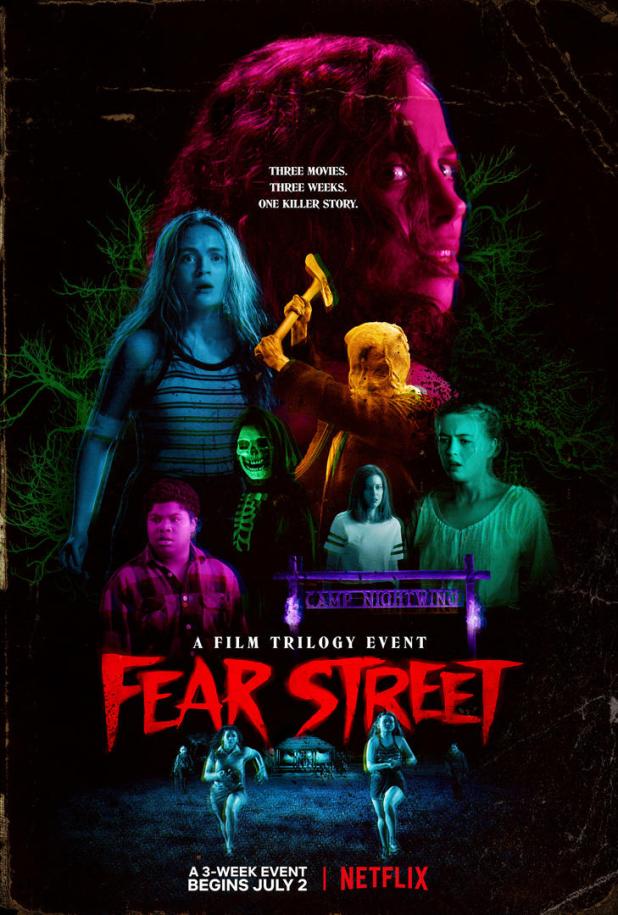
I was born a bit too late for R.L. Stein, sadly. His Goosebumps books were a big deal with my wife, as are the Fear Street books. Written for older teens, these take place in the city of Shadyside, a place cursed by the Fier family. Unlike Goosebumps, these books were packed with more scares and plenty of violence.
There was an attempt to make a series out of the stories way back in 1997 with Ghosts of Fear Street, which aired on ABC Television on July 31 of 1998. Several years later and the books have finally become a series of movies.
Spoiler mode on if you haven’t seen this yet…
The film takes a page out of Scream by starting off with the death of its most well-known actor, Maya Hawke, who plays Heather, a B. Dalton’s employee who is killed by her Spencer’s employee friend Ryan with no warning as they close the mall. I really enjoyed this open, particularly the fact that every single one of the chains in it were dead stores. This isn’t a mall for the sake of a mall; this truly captures what it was like to close a store when the rest of the world is living a life outside your retail life.
Her death is just another massacre for Shadyside, Ohio, the murder capital of the United States. And yet, right across the tracks lies Sunnyvale, one of the richest and safest cities in the country. Nearly every teen in Shadyside has grown up believing that Sarah Fier placed a curse on their town before being executed for witchcraft in the incredibly foreboding year of 1666.
Our heroine is Deena Johnson (Kiana Madeira) and her life is in shambles. She’s pretty much raising a brother named Josh (Benjamin Flores Jr.) who lives in chat rooms. Her two best friends Simon (Fred Hechinger) and Kate (Julia Rehwald) make a living selling drugs and her closeted girlfriend Sam (Olivia Scott Welch) has left her behind in the move to Sunnydale.
At a vigil for the latest massacre, Deena and Sam reconnect just in time for a riot to cause an accident that sends her car into the grave of Sarah Fier, touching her bones and bringing the witch and every killer she has inspired after her, demanding to taste her blood.
Director Leigh Janiak made Honeymoon and some episodes of the series Outcast, Panic and Scream: The TV Series, but this film points to her as being a director to watch. She also worked on the script along with Kyle Killen (The Beaver) and Phil Graziadei (who wrote Honeymoon).
I was pretty impressed with the intensity of this film, which I did not expect, much less its casual attitude toward drugs and how matter of fact the love story not being straight is. In short, this whole movie was a pleasant surprise for me, particularly how much you care for its characters, which makes the outright massacre of several of them to actually be quite shocking. If you liked Intruder, well, it seems like the makers of this movie did as well.
Fear Street Part Two: 1978 and Fear Street Part Three: 1666 will follow this month and I’ll be there for both of them.





 B&S About Movies
You must be logged in to post a comment.