Thanks again to Paul Andolina for sharing a second musical with us. If you like his stuff, check out his site Wrestling with Film.
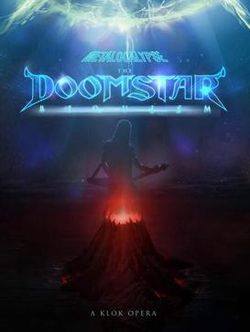
Metalocalypse was a cartoon about the fictional band Dethklok that aired on Adult Swim. It premiered in 2006 and saw its incomplete conclusion in 2013 with an hr long rock opera titled Doomstar Requiem: A Klok Opera.
Metalocalypse was a huge thing to me, I remember patiently awaiting its premiere on Adult Swim, its second season beginning my first year of college, the Dethalbums, and even going to their concert when they toured with Mastodon. I made friendships because of this show and my love for metal deepened with every episode.
It would be hard to recap all the seasons before the Klok opera so I’m not going to attempt that. Instead I’ll just review it as it is, a rock opera like television had never seen before and possibly never will again.
Doomstar Requiem picks up where season four left off with Magnus Hammersmith kidnapping Toki and Abigail. The rest of Dethklok, Nathan Explosion, Pickles, Skwisgar Skwigelf, and William Murderface are pretending to not miss Toki and have been spending the time since his disappearance getting totally shitfaced and partying around the world. Meanwhile, Dethklok’s manager Charles Offdensen is attempting to find Toki by using Dethklok’s enormous capital and their army of Klokateers. Their results are less than stellar.
The Church of the Black Klok is assisting Offdensen and eventually the band grows a pair and sets out to rescue Toki from the grasp of Magnus and the Man with the Silver Face. They encounter old friends, disenchanted musicians, and a bunch of druggies along the way.
This hour-long special has a bit of everything, it has Metalocalypse‘s usual humor peppered with heavy parody of metal culture, awesome animation, and amazing music. If someone told me that this is how Metalocalypse would go out, I wouldn’t have been surprised at all as it is an emotional journey filled with slick beats and sick riffs.
The music in Doomstar Requiem runs a gamut of styles, from pop, lullabies, orchestral music, and blistering metal. There is even an extended fantasy sequence where Toki remembers his audition to join the band that includes a lengthy duel guitar solo. From beginning to end it absolutely captivated me with it’s visual and audial presence.
The special was never released on home video in the United States but did receive a DVD release in Australia albeit the cursing is censored. It doesn’t hurt it much because they don’t say the F word nearly as much as they did in previous seasons. I did manage to track it down and I’m very happy to have a complete collection of Metalocalypse, finally. It was released as an album as well worldwide and it is definitely worth picking up.
Unfortunately, the creator of Metalocalypse only got to do this one special which ends on a cliffhanger. Adult Swim refused to allow him to complete his vision with one more special but Small released a sequel to his Galaktikon album that many believe to hold the key to fate of Dethklok albeit in a cryptic manner since Adult Swim held all the rights to Metalocalypse and Dethklok. I like to believe that in some alternate reality somewhere Metalocalypse saw a complete conclusion but I am satisfied with what we do have.
The songs in the special are all amazing but some of my favorites are “The Birth,” “Abigail’s Lullaby,” “How Can I Be A Hero” and “Do It All for My Brother.” If you are a fan of the show you have probably already watched this but if you are not a fan I suggest giving it a watch. Perhaps it’ll inspire you to track down the seasons and fall in love with the show.
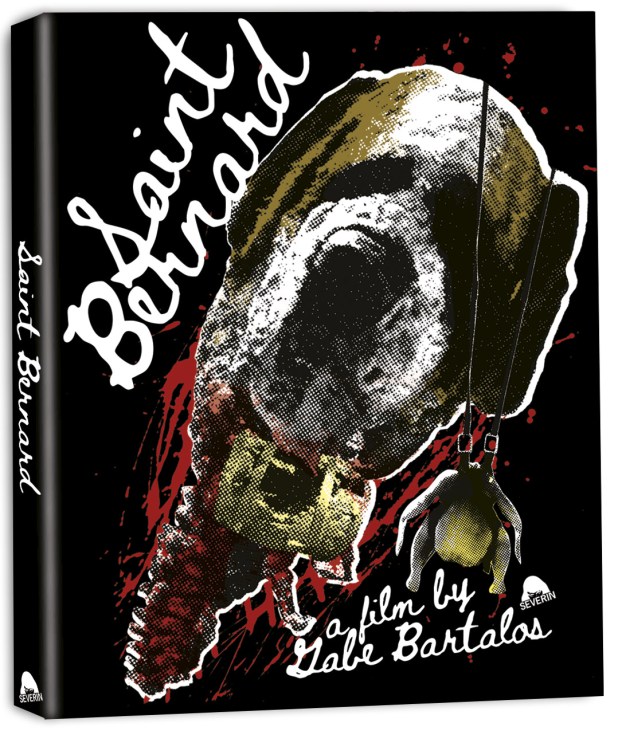
Now, he finally is bringing his long-in-production film Saint Bernard to video thanks to Severin Films. Prepare your eyes and brain, if you can!
An orchestra conductor named Bernard spends the film descending further and further into chaos, insanity and surrealistic imagery, aided and abetted by Bartalos’ FX talent. Also: Bernard finds a Saint Bernard head on the side of the road that he puts in a bag and takes with him everywhere.
If you’re one of those people that demand a film that makes sense, you may want to look elsewhere. For those of us willing to descend down this portal, we’ll be rewarded with a phantasmagorical odyssey into the heart of, well, something pretty fucked up.
Warwick Davis — yes, from Willow — shows up, as does Andy Kaufman co-conspirator Bob Zmuda and the Damned. Bartalos created the Leprechaun and Tony Clifton makeup, so it makes sense that he was able to get those talents in here, if anything makes sense in this movie.
Basically, all I can tell you is that Bernard is a conducted attuned to the universe who has a bad performance due to his suit being filled with drugs and then he descends into a journey that introduces him from everything to a money-obsessed priest to the charms of Miss Roadkill.
The funny thing is, as disgusting as some of these set pieces get, they’re all gorgeous. It’s one thing to create these art installation-like sets. It’s quite another to frame and shoot them in a way that pushes them even further up the ladder of art.
Again — this isn’t for everyone. I’d compare it to an absolute movie in the style of Jodorowsky and that’s no small praise.
How did Mary Harron go from movies like I Shot Andy Warhol, American Psycho and The Notorious Bettie Page to find herself making this movie? She’s currently making an adaption of Legs McNeil’s Please Kill Me, but seriously, how the hell did this happen?
My friend Jim asked me the other day, “Why do you waste time watching such horrible movies when there are so many great movies out there?” I figure that there’s gold in all that crap. But I wasn’t finding it here.
Throughout this movie, Anna sees her past and future selves as she lives her crazy life. And this thing is packed with stars! I mean, in my world Martin Landau was a pretty big name and here he’s playing Anna’s ancient daddy figure, J. Howard Marshall. Adam Goldberg has been in a ton of things and here, he’s in a borderline comedy playing Howard K. Stern. And is that Cary Elwes as E. Pierce Marshall? Yep. It is. Virginia Madsen is in this too.
That said, this is never sure if it wants to descend into parody. And it always portrays Anna in the best possible light no matter how bad the decisions she makes. The real story of Anna Nicole feels like the zeitgeist embracing and discarding a living and breathing human being who wanted so badly to feel that spotlight and would do anything to claw her way back. Watching her E! show now feels harrowing, not funny or fun.
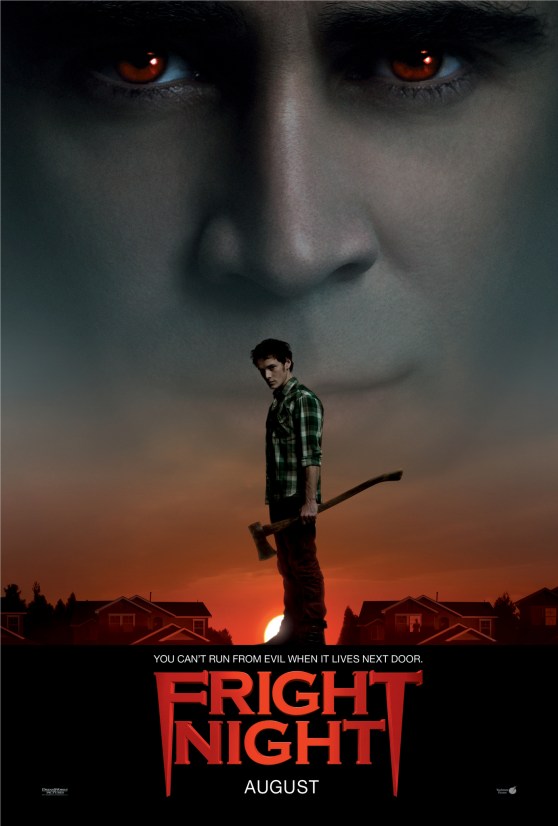
Fright Night was the first modern horror film I ever watched. I remember painting in my parent’s kitchen and my father telling me not to be afraid and just watch it with him. It’s a great start — combining the Hammer films that I loved that didn’t scare me with new school special effects and metacommentary.
The very first film in the series, this one really speaks to me as I was part of the last generation to grow up with horror movie hosts on UHF channels. Sure, there’s Svengoolie today and some internet shows, but it’s not the same. Peter Vincent (Roddy McDowall) is one such host, a washed-up actor who was in a few great movies decades ago and now goes from town to town, playing the same old 1960’s Z list horror films, saying the same lines.
The defining moment for him is that Charley Brewster (William Ragsdale, Mannequin 2: Mannequin on the Move) believes in all his bull. And when Jerry Dandrige (the untrustable Chris Sarandon) moves in next door and shows all the signs of being a vampire, Charley finds he needs Peter Vincent more than ever before.
Plus, you get a pre-Married with Children Amanda Bearse as Charley’s love interest and a pre-gay pornography/976-EVIL Stephen Geoffreys as Charley’s best friend/worst nemesis Evil Ed. And I just love Billy Cole (Jonathan Stark, House II) as Jerry’s thrall.
This is a movie made for those who love horror movies. After all, Peter Vincent is named after horror icons Peter Cushing and Vincent Price. Creator Tom Holland wrote the part for Price, but the acting great had stopped appearing in horror movies at this time in his career. As they made the film — and the sequel together — Holland and McDowall became life-long friends, with McDowall introducing the young director to Price, who was flattered that the part was written to honor him and thought that Fright Night “was wonderful and he thought Roddy did a wonderful job.”
He’s right — this is a movie that taps into the mind and heart of horror fans, as so many of us have wondered, “What if the monster — and the monster hunter — was real?” The lighthearted yet dangerous tone of the film is letter perfect. That scene in the nightclub, where Jerry takes on the security guard? As good as it gets.
Want to watch it now? You can catch it streaming on Hulu.
Also of note: I’m glad the original ending wasn’t used. It was to close with Charley and Amy making out with Peter Vincent coming on the TV to host Fright Night, saying “Tonight’s creepy crawler is Dracula Strikes Again. Obviously about vampires. You know what vampires look like, don’t you? They look like this!” Then, he would transform, look into the camera and say, “Hello, Charley.”
After the unexpected critical and financial success of this film, a sequel was inevitable. Holland and Sarandon were both making the first Child’s Play, so they couldn’t commit to the film, although the actor did visit the set. Stephen Geoffrey’s didn’t like the script, opting to star in 976-EVIL. Ultimately only Ragsdale and McDowall would return.
Three years and plenty of therapy later, Charley Brewster now believes that Jerry Dandrige was a serial killer and that vampires don’t exist. Now a college student with a new girlfriend, Alex Young (Traci Lind, who dated Dodi Fayed before Princess Diana), Charley sadly discovers that Peter Vincent is back to hosting Fright Night. As they leave Peter’s apartment, a new nemesis, Regine steals Charley’s attention. There’s even a new version of Evil Ed, a vampire named Louie (Jon Gries, who is great in everything he’s done from Joysticks and Real Geniusto The Monster Squad and TerrorVision) who is making Charley and Alex’s lives hell.
It turns out that she’s Jerry Dandrige’s brother and here for revenge. Now, the tables are turned and Peter Vincent is the one who has to convince Charley that vampires are real. Even worse, she’s turning Charley into a vampire and has stolen the Fright Night hosting job away from Peter! There’s also a transgender rollerskating vampire, putting this movie years ahead of others in presenting LGBT roles (even if Belle is evil).
One small trivia note: the vampire form that Regine transforms into at the end was modeled after 45 Grave lead singer Dinah Cancer. If you don’t know her band, they sang the song “Partytime” from TThe Return of the Living Dead.
There’s no way that this movie could live up to the original, but it tries. It hasn’t really been seen much, as LIVE Entertainment barely released it on home video. Artisan Entertainment released it on DVD in 2003, but it’s been out of print for a long time and commands big bucks. You can often find a bootleg of the high definition TV edition of the film at conventions (that’s where we got it!).
Written by Holland and directed by Tommy Lee Wallace (Halloween III: Season of the Witchand the original It, as well as the writer of Amityville II: The Possession, a movie I never cease trying to get people to watch), this movie suffered at the hands of a very real tragedy.
McDowall loved playing Peter Vincent and was eager to bring Holland back to make a third film, so he set up a meeting with the two of them and Carolco Pictures chairman Jose Menendez. Legend has it that the meeting did not go well. Later that night, Menendez and his wife were infamously murdered by their sons, Lyle and Erik. When McDowall learned of the news, he called Wallace and said “Well, I didn’t do it. Did you?”
As a result of the murders, Fright Night Part 2 lost its nationwide release schedule and only played in two theaters before being released directly to video. All of the planned advertising and public relations were canceled as well, which meant that most folks didn’t even know it was released until it showed up on video!
If you thought Hollywood was done with Fright Night, you’re wrong.
Colin Farrell plays Jerry here as “the shark from Jaws.” Christopher Mintz-Plasse plays Evil Ed as a geeky kid who was once best friends with Charley, who is now one of the popular high schools (remind me to tell you about the child vampire that used to chase me through my grandparent’s backyard someday). And former Dr. Who David Tennant is more Criss Angel than Zacherley.
This is a film that I really tried to get past and enjoy, but I just couldn’t be entertained by it. I’m not the only one. Tom Holland said, “Kudos to them on every level for their professionalism, but they forgot the humor and the heart. They should have called it something other than Fright Night, because it had no more than a passing resemblance to the original. What they did to Jerry Dandrige and Peter Vincent was criminal. Outside of that, it was wonderful.”
That said, there is a nice moment where Chris Sarandon makes a cameo as a victim of the new Jerry. Otherwise, this one is mean-spirited where it should have heart. No part of it feels fun. I was shocked to learn that it was directed by the same person who made I, Tonya and Lars and the Real Girl, Craig Gillespie.
And if you think that one is bad…
This direct-to-video sequel completely ignores the first remake, instead being a simultaneous remake of the first two films. The Gerri Dandridge in this one is a Romanian history and culture professor who teaches Charley, Evil Ed and Amy when they take a class trip to Romania. And this Peter Vincent hosts a reality show where he hunts vampires.
For some reason, Fox greenlit the movie and rushed it into being at a record pace. The first draft was written in a week and it was finished in 23 days. If only it didn’t feel like it went on for 24. This movie is a complete waste of time and the name of this franchise. It was like they heard someone say, “Nobody can make a worse remake than the last Fright Night.” And replied, “Hold my cup of blood and apple.”
Here are some other spinoffs:
NOW Comics released 27 total issues of a Fright Night comic that adapted both movies, as well as starting new stories where Peter and Charley battled a spider boy, squid people, aliens, a minotaur and the Legion of the Endless Night, which eventually brings back Jerry Dandrige to begin a new army of the undead peopled by French prostitutes!
Terror Time put out a new Fright Night comic book this year, Fright Night: The Peter Vincent Chronicles, which explains what happened to Peter between the first two original films. You can grab it — and the Fright Night coloring book and the screenplay too — right here.
In 1988, an Amiga video game was released. Strangely enough, you play as Jerry, trying to make it through your home and transform people into vampires. Everyone from the original Fright Night appears in the game as enemies and potential victims except Billy Cole.
And in 1989, the Indian film Kalpana House was released. It’s a loose remake, with Peter Vincent’s character being a priest and plenty of musical numbers. Yep. Really.
Finally, there’s the exhaustive 3 hour and 37-minute documentary You’re So Cool, Brewster! The Story of Fright Night. In addition to pretty much everything you’d ever want to know about the original two films, the filmmakers also created a series of trailers for the fictional movies The Resurrection of Dracula, Psychedelic Death, I Rip Your Jugular and Werewolf of Moldavia, which starred Peter Vincent (Simon Bamford, Ohnaka from Nightbreed and the Butterball Cenobite from the first two Hellraiser films) and Christopher Cushing (Nicholas Vince, Kinski from Nightbreedand the Chattering Cenobite from the first two Hellraiser films).
Sadly, these trailers are on the hard to find physical release of the documentary. You can watch it on Shudder right here, though!
Last year, Tom Holland announced that he’s writing Fright Night 2 as a book, with the goal of obtaining the rights to the series by 2019 and making a new movie. In the past, he’s talked about continuing the series by having single-father Charley Brewster inherit his mother’s home with his two teenage children learning that something evil is in the house next door — Evil Ed, who is trying to bring Dandrige back.
Whew! Here’s hoping you enjoyed our look at the past, present and hopefully future of a horror classic. And if you haven’t seen the original sequel, hunt it down! It’s pretty good!
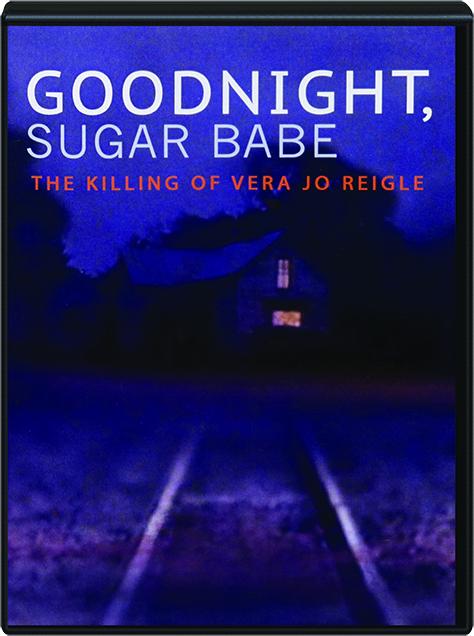
Just a warning. Of all the documentaries I watched this week, including Mondo Cane, this is the one that upset me the most. It starts with the police discovering the mutilated body of a mentally challenged young mother. And ends with a family so monstrous that it defies description and believability.
Director J. David Miles (Dead Silence) went to the heart of darkness, which ends up being Findlay, Ohio — which is also the home of Steelers quarterback Ben Roethlisberger. There, Cheri Brooks is the matriarch of a family that seems to be the stuff of Rob Zombie movies. She’s as horrible a person as it gets — her children Scottie, Michael, Maria, Joshua, and little Cheri were all taken away from her and all molested by her except for the youngest, who was taken immediately after her birth.
Meanwhile, Vera Jo’s life was one of pure terror. At the tender age of eleven, she was raped by her own father, Willard Reigle. It was suspected that she had ADHD and had an IQ in the mentally retarded range, which made learning difficult. She did, however, graduate high school but then began dating 13-year-old Zachary Brooks. This was a relationship that his mother Cheri actually encouraged because it allowed her to collect Vera Jo’s disability checks as well as get another child in the house, as she not only desired them, but wanted the perfect male child.
Vera Jo was basically a servant and scapegoat for the family and despite police calls and numerous people knowing that she was being abused (and this is all from a family that had a pig that lived in the house and was allowed to defecate anywhere it wished), when she was murdered people reacted with a mixture of surprise and we saw that coming. Yet no one did anything. At all.
The depths that Cheri pushed on Vera are heartbreaking, like forcing castor oil on her to induce labor, telling everyone that Vera’s child Willadean was hers, refusing to allow the new mother to hold her child, encouraging her own children and their insignificant others to abuse Vera and blaming her for the accidental death of her son Punky, which may have led to her death.
There’s also the matter of the family — backwoods as they may be — being part of the Crips. Yep. The same ones as South Central L.A.
This isn’t an easy movie to watch, based on the subject matter. The way it’s filmed is also completely all over the place. They had full access to so many people, so the subject matter is certainly compelling. But between the bad camera work, horrible font choices and rough editing, this could have been such a better film. Yet you can’t look away and I’ve recommended it to many true crime buffs.
I’d compare this to The Wild and Wonderful Whites of West Virginia if that family was only concerned with abuse and torture instead of drugs and dancing. You can find it on Amazon Prime.
I knew that day three’s challenge was going to be rough.
MATHS AND NUMEROLOGY: The plot must revolve around numbers in some way. Count on this theme to be a tough one.
It seemed like so many people would choose Pi or The Number 23, so I wanted to avoid those ones. And I’d already reviewed Suicide Cult, a blast of strangeness that combines astrology and biorhythms to determine the new Christ and Satan for the next century sometime in the 1970’s. That’s when I discovered 2013’s Banshee Chapter.
How does this fit the ask? Well, a big part of the movie, which touches on a number of conspiracy theories, deals with numbers stations. These shortwave radio stations broadcast formatted numbers, which some believe are coded messages to intelligence officers operating in foreign countries. The majority of these stations use speech synthesis to vocalize numbers, although audio tricks like phase-shift keying and frequency-shift keying, as well as Morse code transmissions, are not uncommon. These stations may or may not have set schedules and channels — there are a lot of variables.
I first learned about numbers stations thanks to the incredibly influential bookBig Secrets by William Poundstone. From the initiation rituals of lodges and secret clubs to backmasking, subliminal messages, fast food recipes and, yes, numbers stations, this book took me from an inquisitive 15-year-old to an absolute maniac desperately searching for hidden knowledge — kind of like the characters in this film.
Another place that people first discovered numbers stations was on Wilco’s album “Yankee Hotel Foxtrot,” which uses samples of various stations.
Banshee Chapter is the directorial and writing debut of Blair Erickson, who based this movie off the H. P. Lovecraft short story From Beyond, which in turn inspired 1986’s From Beyond. In addition to numbers stations, it also has threads taken from MK Ultra, a series of hallucinogenic drug experiments performed by the United States Government, and the gonzo adventures of Dr. Hunter S. Thompson.
Starting with stock footage of President Clinton and others talking about MK Ultra, we meet James Hirsch, a young man whose research has led to him taking the drug used in the experiments, dimethyltryptamine-19 (DMT-19). Soon, he becomes able to hear strange music, voices and numbers from a nearby radio before he anxiously says that something is coming to wear him as a large shadowy figure causes the footage to stop.
That’s when we meet the real protagonist — Anne (Katia Winter, Dexter) — a friend of James who wants to discover where he has disappeared to. She soon learns that the broadcast that James heard is a phantom numbers station that can only be heard in the desert at a very specific time of night. She tries to find it, only to see a monstrous form that she runs from.
A reference in James’ notes to “Friends in Colorado” is all about Thomas Blackburn (character actor extraordinaire Ted Levine), a Hunter S. Thompson analog. He tricks her into taking DMT-19 and begins to bring her along on his adventures. One of James’ friends, Callie, is part of his orbit and she slowly becomes controlled by the shadow creature. They soon learn that DMT-19 allows otherworldly creatures to broadcast signals directly into human bodies and take them over after a certain amount of time. Even worse, MK Ultra was actually created by these entities, aided and abetted by pineal tissue from a reanimated dead woman.
Being so close to the number channel generator — the dead woman who is the primary source — makes James vomit blood, as he’d been an MK Ultra test subject in college. He shoots himself rather than allow the entities to take him over. Anne finds James’ clothing, suggesting that something was wearing his skin, before setting the test facility on fire.
Taken into police custody, Anne relates the movie’s events to a friend. Although she learned that Thomas never gave her the drug, it turns out that the ability to hear the numbers station comes through human touch. Anne passes this along to a co-worker who comes to visit as she begins to hear the station again.
Banshee Chapter was a surprising find and a great watch. That’s been my goal with the Scarecrow Video Psychotronic Challenge, to discover some new films that I would otherwise never watch and share them with you!
Based on the novel Sworn to Silence by Linda Castillo, this movie was a backdoor pilot for further movies that was never picked up by the Lifetime Channel. And oh yeah — that leads me to the newest streaming service that we subscribe to: the Lifetime Movie Club. And you know my opinion on Lifetime: it’s all giallo without the boobs and neon blood. This one even has a black gloved killer scene!
Originally airing January 6, 2013, this movie is all about Painters Mill, Ohio — not a real Ohio town as they often discuss things happening in Cincinnati, Youngstown and Dayton, all areas of the state that are far apart at the very least — where there’s always been a divide between the townspeople and the Amish.
Katie Burkholder (Neve Campbell) knows all about it. Sixteen years ago, she survived the Slaughterhouse Murders that tore her town apart. As a result, she left her people and became a cop. Now, she’s back in town as the chief of police, just in time for a copycat series of murders to begin. Yet Katie has secrets of her own that could destroy both her life and her lost family.
I watched this entire movie with recognizing Pony Boy himself, C. Thomas Howell. What a bad 80’s kid I have grown up to be. Noam Jenkins from the Saw movies is in this as a big city cop, too. So is Linda Kash from Waiting for Guffman and Best in Show.
You won’t see many — if any — Amish giallo. The end of this is pretty solid, with some real tension once the real killer is revealed. Check it out for yourself on Lifetime or on Amazon Prime.
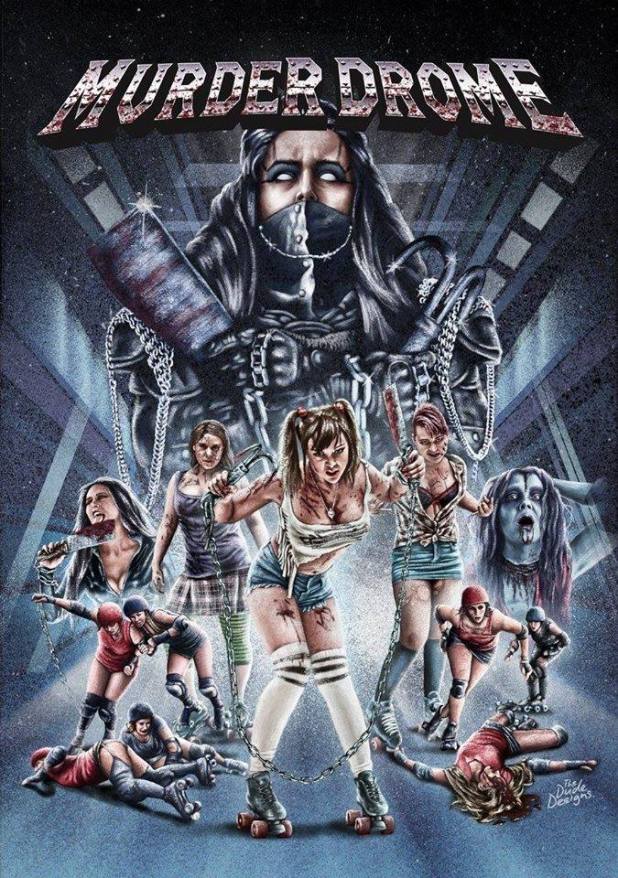
What happens when roller derby girls go up against the supernatural? Well, you get this Australian movie, that’s what happens.
Cherry Skye loves roller derby. And now, she’s falling in love with Brad. But that draws the anger of his ex-girlfriend Hell Grazer, who is the meanest and dirtiest skater on the track.
Soon, the supernatural rears its ugly head — you know how these things happen — and the roller derby track has become the MurderDrome! Now, everyone that Cherry cares about is marked for death, thanks to a leather-wearing derby demon and her combination hook and cleaver.
This movie has an ultra low budget, several actors who have never acted before and surprisingly good gore. It’s the perfect film for when you’re up in the middle of the night and wonder if Australian horror movies can still be as wonderfully demented as they were in the 1980’s. This is a fun, fast ride that entertained me — well beyond my expectations. It’s cheesy, it’s ridiculous and I watched it at 4 AM.
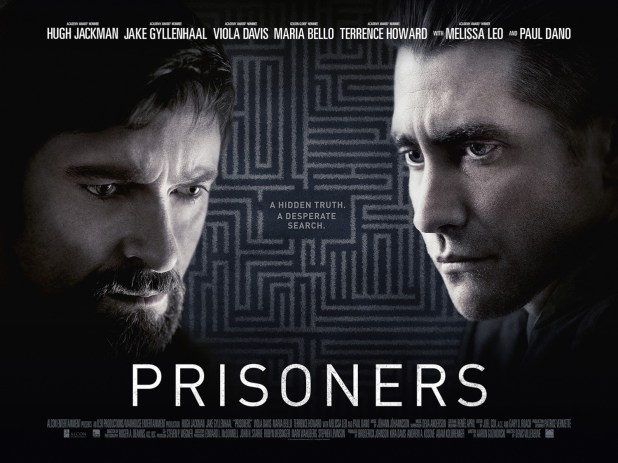
When Becca and I saw the trailer for Prisoners, I knew that it would be a film that I’d be hunting down for her. When it ended, she said, “Why can’t every movie be that perfect?” I asked what she meant. “Nothing dumb happened.”
Kelly Dover (Hugh Jackman, forever Wolverine to me) and his wife Grace (Mario Bello, A History of Violence) are celebrating Thanksgiving with their friends Franklin Birch (Terrence Howard, Hustle & Flow) and his wife Nancy (Viola Davis, about whom I love the fact that she was in both Fences and Suicide Squad). The kids are at play — older kids Ralph (Dylan Minnette, Let Me In) and Eliza (Zoe Soul, The Purge: Anarchy) downstairs watching TV, younger children Anna and Joy outside.
Earlier, the girls had been playing on an RV and the older kids had gotten them away from it. But now, the younger children are nowhere to be found. Soon, a massive police manhunt is underway.
Detective Loki (Jake Gyllenhaal, forever Spider-Man to me) finds the RV outside a gas station and chases its occupant: Alex Jones (Paul Dano, Little Miss Sunshine). The man has the IQ of a child and his RV is clean, but Kelly wants him kept in jail. The police, however, can’t do that.
Loki explores every lead he has, including looking up sex offenders in the area, such as Father Dunn, a priest who killed a man and buried him in his basement. That man informed him that he was at war with God and had already killed 16 children.
Alex is released as TV cameras roll and Kelly attacks him, right after the man says, “They didn’t cry until I left them.” No one but Kelly hears this. He follows the suspect on his own, without the police, and when he hears the man sing the song his daughter sang the day she was taken, he snaps.
Using the building his father willed him that has gone dormant, Alex is beaten and tortured for what he knows. Jackman is excellent in these scenes and was encouraged to push his rage as far as it could go. It shows.
Loki is still on the case but his attention is divided between keeping track of Kelly and searching for a mysterious man who attended the candlelight vigil for the girls. That suspect, Bob Jones, lives in a house covered by mazes, with giant plastic storage bins filled with snakes and articles of children’s’ clothing covered by pig blood. Frustrated that he can’t solve the case — he’s never lost one before — Loki attacks Jones in the interrogation room. In the confusion, Jones grabs a gun and kills himself. The police figure that he never killed the girls or took them — he just wanted to be part of this. Loki thinks there’s something more.
Kelly continues torturing Alex, who also nearly escapes his interrogation in a scene that mirrors the one where Jones grabbed the gun. He finally confesses that the girls are lost in the maze, which is intercut with Loki matching the maze drawings that Bob Jones did with the necklace of the man he found in the basement of Father Dunn.
When Joy is found alive, she says to Kelly, “You were there.” What does this mean? Well, I don’t want to spoil any more of the story. It’s too good.
Jackman, Gyllenhaal, Paul Dano and Melissa Leo (who appears in heavy makeup as Alex Jones’ aunt) are all astounding in this. In particular, Gyllenhaal and Dano make some really interesting choices for their takes on their characters. However, some advice: Dano speaks incredibly low. Watch his scenes with closed captioning on or you will miss some integral parts of the plot.
Denis Villeneuve director is assured, with a slow-building suspense throughout the film, including some long pauses on static shots in the open. He’s since directed Sicario, Arrival and Blade Runner 2049.
Writer Aaron Guzikowski started writing this film back in 2007, where it ended up on The Black List, which contains the most popular unproduced screenplays in Hollywood. Afterward, he wrote the script for the remake of Soviet film Reykjavík-Rotterdam called Contraband (which has nothing to do with Fulci’s movie, despite me getting the wrong DVD several times when I tried to order that film) and he is currently working on a reboot of The Wolf Man.
This is streaming on most of the places where you can purchase films online. I found my used DVD for $6, so it’s affordable and worth adding to your collection.
So much of what I try to accomplish in exploring movies is to find the hidden, the moments that lie beneath the surface. To take what people have often labeled as trash, like genre films, and divine treasure. It’s my own alchemical way of trying to make life more than what it appears to be. To discover some meaning behind chaos and to celebrate art — the only thing we can leave behind. The disappearing moments that happen from the darkest of the dark to the first glimpses of dawn is when I generally watch films, with no other living person nearby. I find these moments of pure solitude nearly spiritual and these words you’re reading are pitiful attempts to transmute the pure joy I feel and share them with you as you read these electronic missives.
To me, magic comes in places you would not expect. And I live by one motto when people ask me about why I love the movies that I love. It comes from Frank Capra, the most populist of directors, whose simple stories helped Americans face the greatest issues that had ever come against our country. An immigrant to our shores who became one of its most celebrated storytellers, Capra was able to reach large groups of people, people with whom he could share his fables. He often used his art to explain how to find the strength to survive as a decent man in a corrupt world. And he’s part of a long tradition of story — and truth — tellers. I’ve always believed that the people that were considered mystics by our forebearers simply could remember and tell stories around the campfire (which — trust me — is a big part of The Otherworld, which we’ll get to in a minute). In reading a biography of Capra, I was struck by this: Capra “created mythical America of simple archetypes that with its humor, created powerful films that appealed to the elemental emotions of the audience. The immigrant who had struggled and been humiliated but perseveres due to his inner resolution harnessed the mythopoetic power of the movie to create proletarian passion plays that appealed to the psyche of the New Deal movie-goer.”
That quote that I live my life upon? “There are no rules in filmmaking. Only sins. And the cardinal sin is dullness.” I came to it by John Waters, but it’s true no matter what movie you apply it to. There is as much artwork in a film that you love, no matter who made it, than a film that has been awarded honors. Magic and art come from anywhere at any time and you need to take it when you find it, because life can often be marked by that sin of dullness.
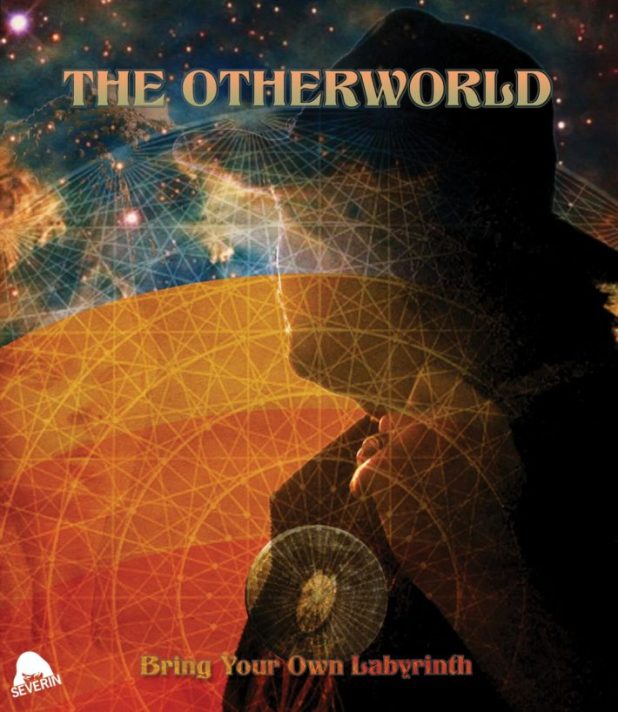
Now that we’ve emerged from that introduction, we can get to discussing Richard Stanley’s The Otherworld — a film that is the exact opposite of dullness. Its concerns are magical and attempting to translate the struggles of the director’s life to the screen.
Stanley, a South African director and screenwriter, first came to my attention thanks to the controversy of 1996’s The Island of Dr. Moreau (which was well documented in 2014’s Lost Soul: The Doomed Journey of Richard Stanley’s Island of Dr. Moreau). Long story short (and I recommend that you watch the film and read more about this, as it is amazing), Stanley spent four years developing the film only to have New Line continually fight his vision at every turn. I look at Stanley as a true artist, someone who was unwilling to deal with the mainstream Hollywood of today of meetings and focus groups and numbers versus casting flickering images of truthsaying onto modern cave walls. Most amazingly, after being released from the film that he had brought to life, Stanley would sneak onto the set of the troubled production dressed as one of the dog-human hybrids that Moreau had created. He had become fiction so that he could witness a real-life disaster first hand. Much like how the magician dreams of lead becoming gold, the true story became just as unreal as the tale that they were filming.
The Otherworld is an attempt by Stanley to explain the place where he lives — the French Pyrenees — and a moment in his life that even his art has not allowed him to fully translate to reality. This area is known as “The Zone,” a place of occult lore, thanks to ley lines, UFO sightings and Rennes-le-Château, a church rebuilt by 19th-century priest Father Bérenger Saunière. The strange tales of his wealth and secrets — some of them celebrated in a 1948 article and others used by a local merchant to build tourist interest in the area — led to 1982’s book The Holy Blood and the Holy Grail, which postulated that Saunière had the true Holy Grail — proof that Jesus Christ had survived the Crucifixion, married Mary Magdalene and had children — and used that to build his wealth. Other claims were that he had the actual body of Christ’s wife or a gateway to another dimension. Again — I could spend an entire website explaining more about Rennes-le-Château, particularly the insanity that the authors of The Holy Blood and the Holy Grail lost their plagiarism suit against Dan Brown, whose book The Da Vinci Code popularized these legends.
This area was also home to the Cathars, who the film postulates frightened the Christians that came here, as they placed women in positions of power, and the Knights Templar, mystical Christian knights that were burned at the stake for blasphemy (or political and economic regions). Any genre fan will tell you that the Knights inspired The Blind Dead films. Again, I urge you to study more and learn of their complicated history.
Stanley meets magicians, sorcerers, tour guides and normal folks who have all been impacted by the place he calls home, never commenting on just how good of a grasp on reality his subjects have. At the heart of the film are two incidents where Stanley himself met a female presence, told through his actual words (and those of his wife). The recounting of their second meeting are incredibly interesting, as Stanley almost breaks down in tears describing what happened.
Two themes throughout this review are reflected within the film — the need for further research and the fact that reality is subjective. I get the feeling that Stanley could make hours of film about these subjects and never truly explain what has happened to him or his feelings. The Otherworld is an attempt, just as his other documentaries that appear on the second disk in Severin’s limited edition blu ray set (available here), were parts of him learning what would lead to this film. I’m intrigued to see what he does next, to be perfectly frank.
The camerawork is gorgeous, courtesy of cinematographer Karim Hussain, who added flair to 2015’s way better than I thought it would be We Are Still Here. There are some mind-melting images of night skies against the castle ruins which make me believe so many of the stories within this film. If they look like this on my TV screen, I cannot imagine seeing these vistas in real life.
There’s also a moment of pure synchronicity in the film, where Stanley discovers that a sorcerer in the area is using Lucio Fulci boxcovers to inform villagers that they are standing above one of the seven gates of Hell. I’ve always believed that there was more to Fulci’s films than simple gore. And for me, they’ve provided a gateway to other moviemakers, so seeing them show up here was a nice sign that my journey is on the right path.
Often, I joke about who movies are truly made for, as so many of the films that we watch seem to have been created for an audience that was indifferent or may not have existed. I get the feeling that The Otherworld was made for Stanley himself, to explain (not exorcise) so many of the experiences that he has had. And it’s definitely for me, as it will be a film that I watch and meditate on more than several times. I can think of no higher praise than that.








 B&S About Movies
You must be logged in to post a comment.