Joan Parker (Giorgia Emerald, who only appeared in this film) works in a Chinese library and she turns down every man brave enough to try and pick her up until she finds the Chinese Kamasutra on the shelves and the black and white illustrations get her all excited like The Joy of Sex‘s hairy bodies did for your parents in the mid 70s and she discovers liberation. Also, a sex cult is spying on her because she’s a character in a Chang Lee Sun film.
Yes, that’s Joe D’Amato.
Anyways, this sex cult lives right next to Joan and they’ve been after her forever, even in a past life, and they have a dildo altar because, again, this is a Joe D’Amato movie.
Also, the Kama Sutra is a Hindu Indian book and not Chinese.
I have no idea why Giorgia Emerald only made this one movie. Sure, her performance isn’t the best ever, but she’s incredibly attractive and seemingly perfect for the D’Amato softcore world. As it is, you can tell that he’s not invested at all in this movie and simply making films at this stage to make money. Some moments of strangeness still emerge and for those of us who are completists, this is one more to check off our lists.
It’s rare for Becca to get as upset about a movie as Plankton, but I’ve heard about this movie repeatedly since she watched it with me and with good reason. It’s the kind of movie so bad that it circles the sun like Christopher Reeve Superman and comes back twice as horrible as it was before.
In short, this is the kind of movie I get on here and write a thousand words about.
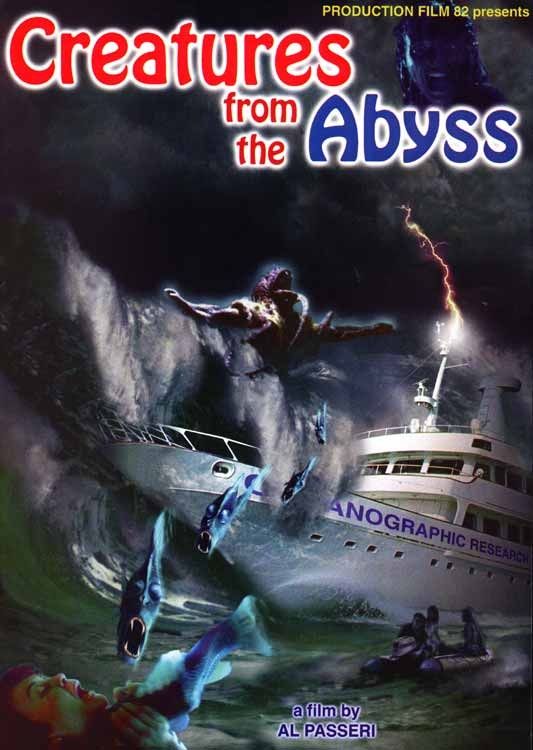
Alvaro Passeri made The Mummy Theme Park and for that he gets a lifetime pass to make movies this horrifically rough. The editing gets so frenetic at one point that I was waiting for Çetin İnanç to fly over from Turkey and tell him to settle down.
Also known as Creatures from the Abyss, this film has the absolute nadir of special effects within it, as radioactive fish mutate and then take over humans and you ant everyone to die, particularly Bobby, who makes some of the worst jokes in the history of jokes. In fact, this movie is pushing me to look up new synonyms for worst, awful, bad and poor.
But how can I hate a movie that has a cyclopean mermaid clock that talks to everyone and says cute things and comments on the film? Why is there an anthropomorphic clock in an aquatic slasher film? There’s an extra long vomit scene and an even more intense fish stomping scene and I nearly had a seizure several times in this movie from laughing and the strobing editing. And then some woman started growing crab claws out of her head that were basically crab claws tied to her head, perhaps via the magic of sweat band. And I nearly forgot that the shower has an artificial intelligence that just wants to see people have sex with each other or themselves while it watches.
I owe my wife an apology and you one as well, because as always, I’ve probably made this sound way better than it is. I’ll probably watch it at least ten more times and fall in love with it even more, because it is obviously made by someone who has no idea that it is approaching John Waters levels of upsetting moments when all he wanted to do was make a silly little horror movie.
DAY 23 — DEPT. OF INDUSTRY & LABOR: A story based on doing a job. Speaking of jobs, your psycho-gig ain’t finished yet, there’s still 8 days to go!
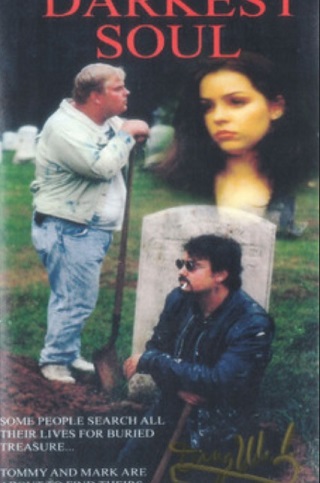
How obscure and hard-to-find is this second SOV entry on the joint resume of Doug Ulrich and Al Darago: this is the only image of the original VHS we could find — our thanks to the Letterboxd user who uploaded and preserved it.
Yes. The uploaded image we found is cut n’ cropped as seen — and we are grateful to have it.
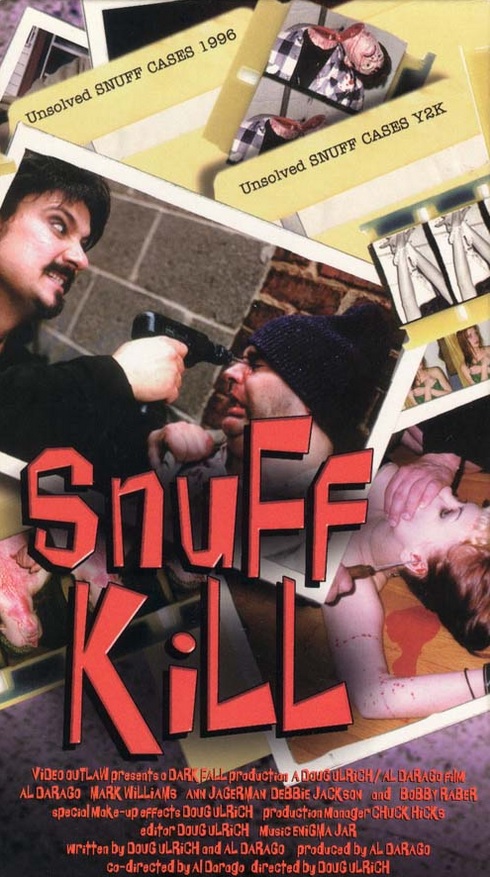
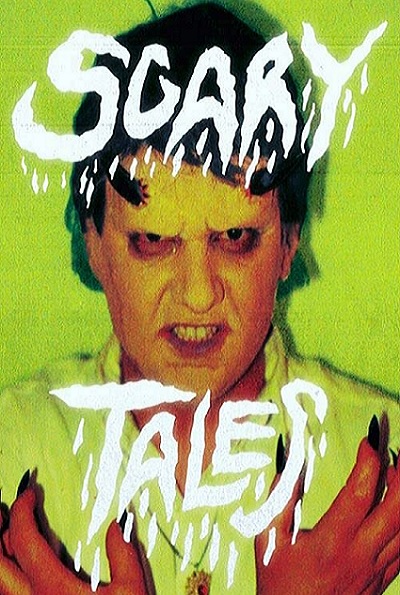
Sigh . . the memories are flooding back . . . hitting the ol’ mom-and-pop video store (one of many that I member-haunted) sandwiched between a quickie market and Punjabi eatery with a gym on the corner bay next door to an insurance agency; a dinky-cheesy outlet stocked (an SOV honeyhole!) with way too many titles under the Shock-O-Rama banner, as the owner was stocking the shelves more for himself — god bless him — than his clientele, obviously. That store also carried Doug Ulrich and Al Darago’s first SOV entry, Scary Tales (1993), Snuff Kill (1997), and this, their second effort, Darkest Souls.
If you haven’t guessed from the cover: we’re dealing with grave robbing. Tommy and Mark are your typical slacker-losers who want the riches without the work. So they’re fired from gigs and job-hoping a lot, to finally bottom-out — literally — as grave diggers. As they come to realize they’re digging holes for rich people dripping in jewels, they resort to grave robbing. And like the tagline says: they find their “treasure.”
So, if I had to rate them: Snuff Kill is the best of the trio; as I said in my review of that film: it has the best acting and the film’s lead, Mark Williams, is effective. Then Scary Tales. Then Darkest Soul, which isn’t as O.T.T as Snuff Kill — and what film is — but it’s a well-written film that’s only undone by the script playing against-a-budget and has a nice Coscarelli-Morningside vibe. Then, again: I’m a guy who does tombstone rubbings and road tripped graveyards in my carefree days, so I dig stories about grave diggers. I enjoy the progression of the Doug Ulrich and Al Darago trilogy, as you watch them grow as filmmakers. Thus, Snuff Kill became their tour de force as result of all the things they learned from Scary Tales and Darkest Soul: Snuff Kill has the gooey gore of Scary Tales and the fleshed out story of Darkest Soul.
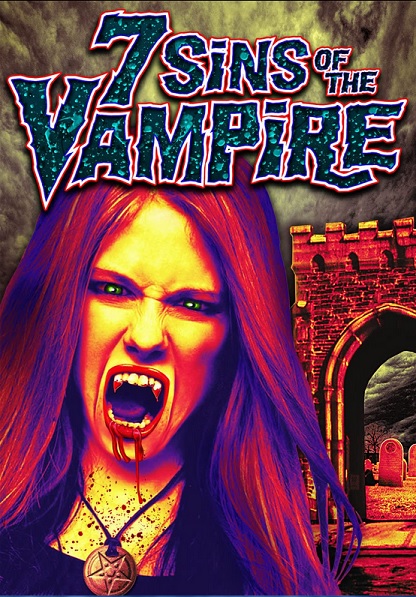
I have to admit that I lost touch with my inner SOV as I aged-out of the ’90s and home video outlets became gift shops and insurance offices — and even 501c3 bible-bangin’ outlets. Thus, I wasn’t aware that Doug and Al made a comeback of sorts with 7 Sins of the Vampire (2013), a film I discovered as I gathered my thoughts for my last October review of Snuff Kill.
The AGFA – American Genre Film Archive has released Darkest Soul on Blu-ray in 2020 as part of their Blu-ray release of Scary Tales. I’m a purest: I’ll always go for the VHS before a DVD or Blu. But it’s near impossible to find VHS copies — outside of grey or retro-repacks — of the original tapes. I still have Snuff Kill, lost Scary Tales to the blue screen of death, and only rented-and-watched Darkest Soul a few times — and never came across an errant cut-out-bin copy. So, thanks to the AFGA, you can get, not only Darkest Soul, but also Scary Tales, on one convenient disc. And it’s great to go home again — even if it’s a digital cheat, so for that AFGA and Vinegar Syndrome, we bow before your pseudo-VCR altars in eternal thanks.
Now, how about a Doug Ulrich and Al Darago four-pack? And — reissue-shingle executives — can I write the liner notes? Hey, I always go the shameless groveling route.
About the Author: You can learn more about the writings of R.D Francis on Facebook.He also writes for B&S About Movies.
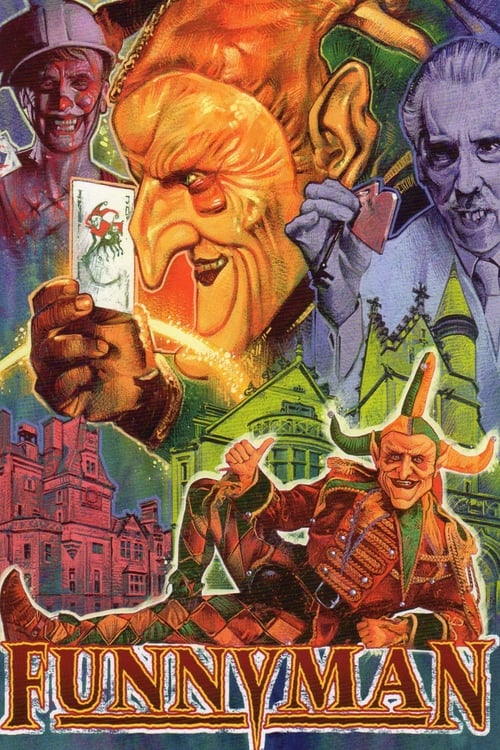
Max Taylor wins the ancestral home of Callum Chance (Christopher Lee!) in a game of poker, the multiple games of chance are just beginning. Chance — yes, I realize the punny here — tells him not to move into the home, so of course he ignores it and spins a wheel that unlocks the Funny Man, a demon that somehow can break the fourth wall and address us, the audience, which may be something out of British theater but is definitely something out of the book of Freddy.
That said — this movie looks and feels wild. It’s like director and writer Simon Sprackling (who has directed documentaries on Linda Hayden, Judy Geeson and The Blood On Satan’s Claw) somehow wanted to answer the question, “What if David Lynch directed a slasher?”
I mean, this movie is just wild. The Funny Man can show up at any moment, break the actual reality of the movie, do a music number and then kill a child by offering them a Game Boy before hooking her head up to jumper cables. Also, one character is obviously dressed as Velma from Scooby -Doo and to hammer that point home is also named Velma.
Supposedly, this movie was made under the influence and gradually became improvised. It shows, but that shouldn’t make you avoid it. I really haven’t seen a movie just go for it in awhile like this one. Hunt it down and be surprised.
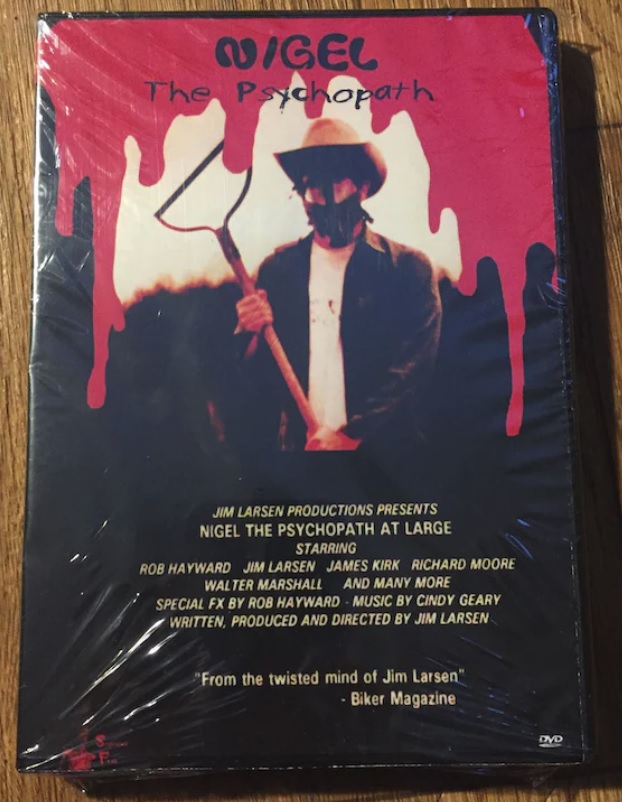
Oy, this movie . . . this friggin’ movie! Just like a Wim Vink joint, such as Half Past Midnight, a Jim Larsen joint takes its punches for being repetitive and plotless, with its “awfulness” compounded by its scant-to-no dialog and added-in-post victim screams that come replete with bad acting and well, bad everything that a film should not be.
Frackin’ balderdash: Nigel the Psychopath is a thing that should be.
For as our cherished (well, my) Doug Ulrich and Al Darago Karo Consortium for Better Film product line foretold in Snuff Kill: a Larsen bowel movement is a burst of pure offal ridiculousness squeezed out by an-off-the-Ritalin energy. Yeah, that’s right: move it on over, Mr. Dennis Divine, for there’s a new, pulpy monster mag back pages SOV-auteur in the john, er, town.
Yeah, just plop it right over ‘ere, Jimbo: our VCRs have been trained on a steady diet of the fibrous intestinal cleaners of Jean Rollin, Jess Franco, and Bruno Mattei for a very long time. We can handle the raison d’etre Sean S. Cunningham stank for the one hour serving you’re dishing . . . or is that squatting? Hey, if we can clench our cheeks on Joel Reed’s Gamma 693, we can pass this tape worm without the vasoline assist, no problemo.
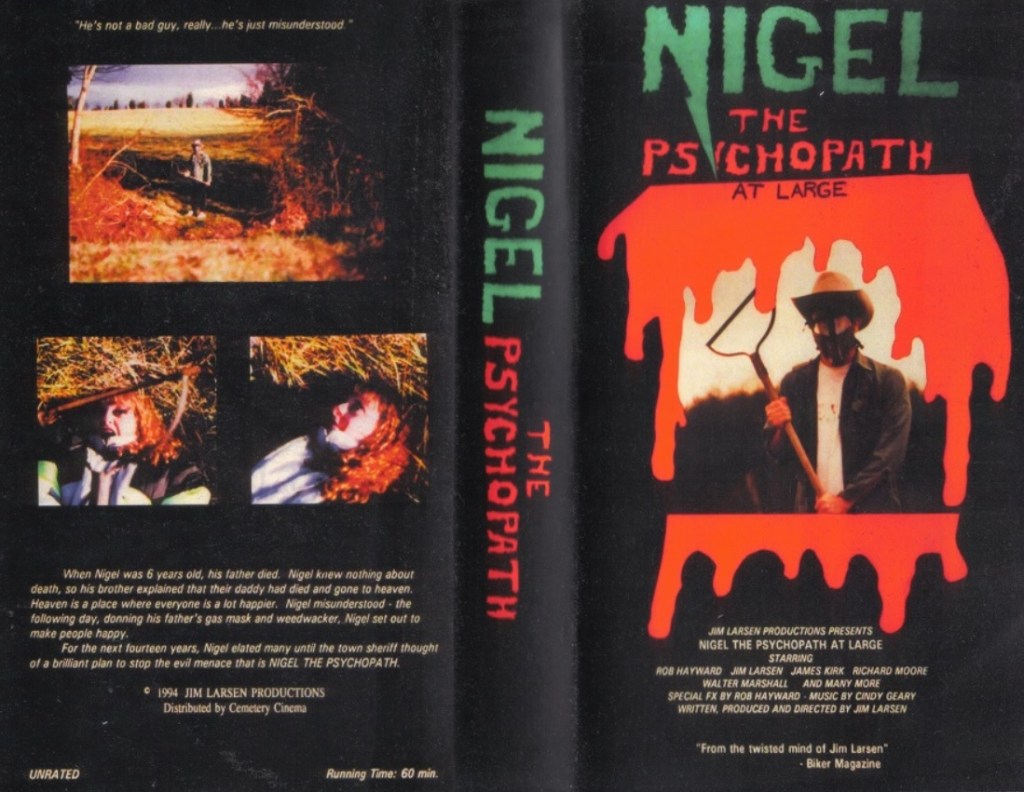
Okay, so . . . the pesky plot, or lack there of: Our misunderstood ‘lil devil on this 9th day in the month of our Scarecrow is Nigel: a gas mask-adorned psycho who frolics among the SOV backyards of America as he lives by the edict: heaven is a place where everyone is a lot happier. But not just anyone, mind you: get the adults the frack out of here, for Nigel stalks the local playground and kills children death-porn style — with a weedwacker (well, a sickle/rake thingy) — along with the occasion broomstick impaling and staple gun dispatching. Heads are split open, neck are garroted-by-tree, faces are stomped, and arms and legs are loped off in quick succession in between fight scenes that make ol’ Dolemite himself, Rudy Ray Moore, look like Bruce Lee.
Oh, hell yes, and jumpin’ Jehoshaphats, Nigel the Psychopath is a film that breaks all the rules, not just the crafts of filmmaking and thespin’, but of good taste and common sense that jangles the five sense. Ye must embrace the inept editing and the muddy-to-blaring music that goes from acoustic guitars to reggae to rock. Accept and suspend all logic as Larsen’s gang of shemps* out-Raimi a Sam Raimi production with a commitment to the shot-on-video cause. Pair ‘er up with Cards of Death and Lazarus the Legend and analog yourself into a snowy-screened stupor.
In the end, for me: Nigel the Psychopath isn’t so much a fluid narrative, but a documentary — a documentary chronicling Jim Larsen and his friends having the best ’80s summers, ever, as they lived the dream of making their own slasher movie. So, yeah, uh, okay . . . Nigel the Psychopath may not be the best movie (for me, it is), but it’s full of the heart that lacks in wannabe, SOV-masquerading junk like the Canadian slop that is Blue Murder. And the Larsen love comes in spurts!
Thanks to writer and director Jim Larsen interacting with his fans via the wonders of the web, we’ve come to know that, while we toss his slasher opus on our SOV woodpiles, it was actually shot on Super 8 mm film and VHS video between the years of 1986 to 1989. There are also three versions on YouTube to chose from: the original super 8 film short, the VHS-version, Nigel the Psychopath At Large, and Nigel the Psychopath: 33rd Anniversary Director’s Cut (that runs a wee-longer, at 70-minutes). Pick one or pick ’em all and watch the insanity for yourself, courtesy of Jim’s very active You Tube portal.
What’s that? You want to know more about the man, the myth, the “real” warped mind of Jim Larsen? Well, he’s on the web at themindofjimlarsen.com via WordPress. He tells his version of events concerning Nigel the Psychopath with his own page dedicated to the film. Read it!
* Dude, if we have to explain “shempin'” to you, we know ye not. Turn in your B&S About Movies membership card.
About the Author: You can learn more about the writings of R.D Francis on Facebook.He also writes for B&S About Movies.
Editor’s Note: We’re also discussing the writer and director’s earlier works Pandora (1984) and Dance Macabre (1986) within this review.
The original VHSs/courtesy of mattressparty/picuki.
Thanks to the digital realms, with horror fans willing to rip VHS tapes into DVD-rs for their retro-retail portals and video-sharing sites, the once-lost, extremely-hard-to-find resume of Wim Vink — which has all of the earmarks of the ’80s SOVs we adore at B&S About Movies (thus our joint “SOV” and upcoming “Video Nasties” tribute-review weeks) — is easier to discover.
Well, unless you live in the Netherlands, where these films were shot-on-film stocks and distributed exclusively on VHS tapes, independently, by Wim Vink.
Vink’s was an oeuvre you didn’t hear about during the height of the video ’80s in the U.S. You may have picked up on the films in some of the more, offbeat, pulpy underground mags n’ ragzines of the day; possibly you back-page ordered (Spine and Blood Cult) or back-page tape-traded a grey copy. However, we, the many, had their first exposures via the Internet, as horror aficionados began praising the work on blogs, genre message boards, and websites. Maybe, as I did with Pandora — my first exposure to and the only film of Vink’s I’ve seen pre-Internet — many years ago, you picked up a grey copy (along with the U.S. made but Japan-distributed Cards of Death) at your local comic book store.
Vink’s works are intelligent films rife in scene details, but with very little dialog. They’re films that wear a Romero and Argento influence on their bloody sleeves, only with more of an art house film vibe. Some say the films are “boring and repetitive” — and more so with the only full-length film in the Vink catalog, Heaven is Only in Hell. However, that is the whole point of a Vink joint: the devil, if you will, is in the details: the mundane details. For the mundane is, in fact, our reality. Sure, a “good” or “professional” filmmaker knows how to edit out those moments for “narrative flow,” etc. and so on. Well, you know what: when I want that in my film, I’ll load up an A24 or Blumhouse “shock-scare” set piece.
Me, I’m the guy who watched Don Coscarelli’s Phantasm at the local duplex in 1979 and was jaw-dropped. Sam Raimi’s The Evil Dead dislocated my mandibles as a “Midnight Movie.” (And, along the muddy water banks of the Waal, bordering the south-central city of Tiel, it seems Vink lost his own, lower jawbone.) And I’ve rewatched the ‘Cos’s and ‘Ram’s debuts more than I’ve watched Star Wars — and I’ve watched them every Halloween, since. Look, I’m a Dennis Devine SOV-type of guy; the one who has watched Fatal Images and Dead Girls more than the average VHS purist. I can go on and on . . . and on — and I have during this “SOV Week” — about the films of Doug Ulrich and Al Darago (Snuff Kill). I adore the heart and inventiveness of each and every one of these filmmakers.
My only beef: Wim Vink is, unlike Coscarelli, Raimi, and Devine, an utter mystery — at least here, in the U.S. (Well, not so much, anymore, as we’ll discuss, later.) Even the Ulrich-Darago collective under the shadow of Vink, is easier to uncover in our Google world. Vink’s career is a series of fan-blogged and message board bits n’ pieces — and we’re doing our best to pull it all together, for a one-stop, Wim Vink shopping experience, right here, at B&S About Movies, in little ‘ol Pittsburgh, U.S.A. (along the muddy river waters of the Allegheny).
In fact, while many believe Vink’s resume of pro-super-8 and 16mm films consists of only four films — it’s actually a resume of eight films. The others — it seems, are forever elusive in the U.S. — are ZombieHorror (1981), Surrealism (1982), Porror (1988), and the Star Wars homage Luke Skywalker Meets the Horror of Darth Vader (1989).
Yes, Wim Vink’s career demands a box set — complete with a color booklet, commentary tracks, and other various vignettes. Make it happen, Severin. Yeah, we know about the music cues “borrowed,” and it’s a music copyright licensing nightmare. However, Wim Vink’s films must be digitally preserved: he is a Dutch filmmaker of historical importance and deserves to have his oeuvre contained in a luxurious box set. So make it happen, ahem, Arrow Films.
Alas . . . until then, and every now and then, we’ll just have to keep plugging “Wim Vink” into search engines and video hosting sites — with the hope that the remainder of Wim Vink’s resume surfaces, somewhere. . . . I want to set up a theater in Pittsburgh, fly in Vink, and have an all-day retrospective — complete with a question and answer event, then have fans line up to buy DVDs and posters for a signing session. Hell, we’ll invite Quentin Tarantino and Nicolas Winding Refn.
Calm down, R.D. Settle. . . .
The reality is: Wim Vink’s films are, in fact — regardless of the “depth of field” issues that appear from time to time (but that’s more of a VHS tape wear n’ tear issue) — “good” and “professional,” properly-edited films. Vink’s films are not just some U.S., 16mm-blown-to-35mm “backyarder” from the Drive-In ’70s (say, like the pretty fine works of Maryland master Don Dohler), nor an ’80s SOV’er start-n-stop-start shot over months of weekends on the non-thespian “friends and family plan,” on-the-sly, sans permits. Vink’s works consistently hit all of the engaging, cinematography touchstones of well-framed singles and doubles, wides, reverses, cutaways, and even “POV” and “God Shots” in the frames.
The films are also — especially Heaven is Only in Hell — packed with background actors, aka extras: and they’re real, trained actors (some say they’re friends and acquaintances; if so, they so a stellar job). And we know this because of the natural approach of the acting exhibited. No one in Vink’s films are deer-in-the-headlights-I’m-in-a-movie! acting for the cameras. And while Vink’s films are practically void of dialog, the leads are effective — in conjunction with Vink “professionally” setting a scene — in “selling the drama” at hand through staging and body language.
There’s a great scene — sans dialog (as with all of the films; the only audio present is soundtrack music) — in Half Past Midnight where one of the bullies leans over the nurse’s desk-station to speak with her mother: a character whom we’ve already met, earlier, in the film. So, we know they’re “conspiring” to hide the daughter’s behavior that put our tortured protagonist in the hospital, in the first place. In the next scene: mom’s injecting poison — with the purpose of murder.
Vink’s work with that hospital scene takes me back to Francis Ford Coppola’s work in The Godfather, which I rewatched in the same week as Vink’s slight resume. (Settle, hear me out.)
Al Pacino’s Michael Corleone goes to the hospital to visit his father, Don Corleone, to discover the police officers assigned to protect his father — as well as hospital workers — are missing. Then, footsteps. The assassin is coming . . . revealed to be a bouquet-bearing Enzo, the neighborhood baker, only wanting to pay his respects. Michael — without dialog, his mind working — sees Enzo in his fedora and overcoat: he looks like one of pop’s men. So Michael asks Enzo for a favor: stand outside, in front of the hospital. The “presence” will stave off the assassin until the “family members” arrive to protect the Don. No dialog: just staging and actor body-language.
Then there’s the Corleone wedding scene: Today, that extensive scene would be studio-cut to shreds. But it’s a scene with all these, wonderful, engaging little details and events — moments that add nothing to the narrative at hand (the grandfather sings a dirty song in Italian, for example) — but it’s details that need to be there.
Vink’s work is filled with those same, non-dialog and, what seems, superfluous details. Yes, even though Vink is working in the SOV-horror realms, those works, while admittedly rough in spots, are competently produced works (unlike, say, 1985’s abysmal Blue Murder) and probably the best-produced works in the annals of ’80s SOV-to-retail and ’70s 16-to-35mm-to-Drive-In distribution (something like 1967’s abysmal Night Fright comes to mind as the worst-produced 16-to-35mm romp).
While there may be music-cheats (but really “homage”) afoot in a Vink joint, in terms of staging, there’s no “cheat” in a Vink film: we get a staging, prop, and set design competence not prevalent in most other, SOV or 8 and 16mm horrors.
During Vink’s lone feature-length production, Heaven is Only in Hell, that’s a real fire truck and real ambulance in the scene — a scene packed with voyeur extras (voyeurism is one of the film’s subtexts) — and real first responder personnel amid a well-stocked, engaging crowd. We’re inside a real hospital, not some errant room with a bogus, unconvincing dressing. And a real school campus, both interior and exterior. A character is a car mechanic: we’re inside a real garage, and a real hair salon, a real record store, and so on. So, yeah, a Vink production is not your typical SOV or single-digit-mm joint: somehow, all of the locations — regardless of the budget — are booked, and up the overall production values.
Vink’s earliest was Pandora (1984), a shot-on-8mm tale-to-video of Romero-styled zombies, shot-in-Dutch (the only one), concerned with an Evil Dead-styled box with the power to raise the dead. Eh, who needs the English language when you can listen to zombies (loudly) munching. Then there’s Dance Macabre (1986), with more Romero-undead mayhem by a cult that raises a female’s skeletal remains who then attacks people and starts a zombie plague (more munching) in an apartment complex. Both are short in content, but, oh, so long — as all of Vink’s films are — on style: a Lucio Fulci fever dream, if you will.
Pandora and Dance Macabre are extremely hard to find on VHS (again, at least in the U.S.). Today, we’ll review the two easiest-to-find films: the main subjects of this two-fer review, and then we’ll ease into those first two films.
Half Past Midnight(1988)
Courtesy of the IMDb.
Dutch writer-director-make up artist Wim Vink’s next SOV’er concerns a shy, sweet girl bullied at school by her fellow classmates: your typical, ’80s big-haired and mascara-type bitches, and boyfriends. Debbie loves computers and electronics and solders circuit boards (which comes in handy for the later mayhem). She loves photography. She has great relationship with her mom. She rides a bike, everywhere.
Why do her classmates hate her so?
They’re bullies. There is no reason.
Since Vink is a director of details, one of surrealistic-slanted cinematography, there’s little to no dialog to tell us why: for Vink is about the actors selling the story — which they do, both lead and background. Sure, the “story” all seems mundane, at first watch (you can’t watch it just once), but that’s only to heighten the shock of when Debbie gets her revenge by killing her tormentors one by one, in extremely gruesome, bloody ways — and OTE gory and bloody, in the best of ways.
Half Past Midnight is a great example of ultra-low-budget horror. It’s absurd. It’s raw. It’s awesome. And it was shot in Tiel, Gelderland, Vink’s hometown. So it is truly homegrown, which makes us love it, even more.
Half Past Midnight is also, only half an hour long (and in English) — the prefect length, due to its brutality — with its tale of Debbie (Angelique Viesee), an attractive-awkward student, relentlessly bullied by her dickish classmates. One is a voyeur always taking pictures of Debbie’s misfortunes. Her teacher (Ad Kleingeld) takes pity, but with an ulterior motive: he rapes her.
While it’s not established if we are in a high school or college, everyone looks to be beyond their teen years. And that office building looks more “college campus” than “high school” to these eyes. So, that takes the creep-factor off the fact Debbie’s, obviously older, teacher asks her on a date. Now, mind you, without dialog, Vink’s made a statement on how easy it is for a sexual predator to chose and manipulate an insecure victim; the simplest act of kindness to a put upon person can open the door to a graphic event. Again, it’s about the “reality” in a Vink production.
As we mentioned: voyeurism is part of the — non-verbal — subtext. Everyone stands by and watches Debbie being assaulted, brutally, and does nothing. And when one does, such as her lecherous teacher (helps her pick up dumped books and papers; has her collect the student’s papers after class), it’s only as a backdoor for his own assault. Then, the bully who photographs Debbie’s assaults — in an eerie foreshadow of today’s smartphone-viral media sickness — develops the film in a dark room, with a glean in her eye.
So . . . the bullies are back: with a teacher now in their corner. The students ambush-spray an aerosol can in Debbie’s face and blind her. She stumbles into traffic and is hit by a car. She survives, barely. But a nurse at the hospital — the mother of one of the bullies — injects poison into Debbie’s eye.
Debbie dies. (We think.)
Debbie returns from the dead — whatever was injected in her eye, reanimates her (we think) — so she lays waste to the lot of them, going “Ash” on their asses, if you will. Using her electronics skills, Debbie solders herself a belted-power pack, complete with knife sheath, to run an electric chainsaw. And said chainsaw POVs into chests, as butcher knifes go through-and-through necks, as well as sawed off arms, and torso dismemberment, and intestinal flow, ensues, in one of the bloodiest, seven minutes ever committed to film. The only thing missing is a penis detachment by hedge clippers.
So, you thought Deadbeat at Dawn was the ultra-low-budget throwdown. Eh, piffle. Jim Van Bebber is a pussy compared to Wim Vink. Debbie ain’t no Carrie (a definite influence, here, alongside The Evil Dead) that’s for damn sure, for no ESP is required. Just a chainsaw, please. Oh, and lots of loud, screamin’ guitars by Rob Orlemans!
Half Past Midnight is simply fucking amazing. Period. Exclamation point.
The joy of a Wim Vink film is, not only recognizing the musical-homage cues, but the plot and visual cues. In the case of Vink’s only feature-length film, fans cite Michele Soavi’s classic The Church (1989). And if you’re familiar with that film — of course you are — the film unbalances you with its “what the hell is going on” plotting. Soavi’s works (the early ’90s pieces of StageFright, The Sect, and Cemetery Man) are less about fixed, narrative flow and more about image collages; loosely connected nightmares. And as with Vink’s other works: the characters are connected, somehow, then they’re not. The Vink modus operandi: ambiguity.
Here, we meet Mike and Sharon; he works as a garage mechanic, while Sharon works as a bookkeeper at stereo store. (Were they once related; now reincarnated in a future, apart, now searching for one another?) A local house for sale — where someone previously died (when, who knows/or is Mike seeing his future) — begins to haunt his mind, to the point his work suffers. Sharon, likewise, is disturbed by the same visions: the result of her psychic abilities.
Of course, as with the characters in each of Wim Wink’s films: the characters don’t live fast, they slowly exist in boring, mundane lives: going to work, then home, work, home. And it’s the drudgery that make them susceptible to the supernatural, in this case: the ghostly chants urging them to open a well’s portal.
Their dreams/visions concern a centuries old pagan coven, led by a witch and her young daughter (?), and a cursed, ancient well that, as result of progress, is now in the basement of the empty home Mike purchases. Meanwhile, Sharon’s visions overwhelm her to the point that she breaks into the house to find the “Hell Well” in its cellar — set in the middle of a finished, wooden floor, covered by an iron pentagram. And Sharon brings a “sacrifice” from her aerobics class; with fresh blood, she can now descent into the well. Mike? He hesitates and rejects his mistress: he’s strung up “Evil Dead” style by ghostly ropes from the home’s attic’s rafters — and slaughtered.
This time, the soundtrack’s all-original, composed by Angelique Vink (who also plays Sharon), as well as synth-numbers by Sander Brokke and Vincent Hooyer. And, again: sparse dialog, with only the repetitive looping of the film’s opening chant-narration for an unsettling, moody work of horror impressionism (think F.W. Murnau’s Nosferatu from 1922, better yet: Carl Theodor Dreyer’s stellar, Vampyr, from 1932). Again, detractors may say the film is overly repetitive and padded; that maybe so. However, I see it as a purposeful, artistic-narrative choice: Mike and Sharon’s lives are so, utterly empty, their aural and mental visions consume their lives to the point of an obsessive-compulsive disorder.
So, with that, as mysteriously (well, at least outside of the Netherlands) as Wim Vink drifted into the VCR-driven snows of the SOV ’80s . . . he dissipated into the developing, nickle-collated, laser-spinning ethers. For Wim Vink’s visions were not meant for a digital world, only the analog tapes of the past. . . .
Image courtesy Letterboxd. Both are available as a two-fer PAL-VHS in overseas markets.
Pandora (1984)
Oh, Hail Satan and the hell with this being in Dutch with no subtitles. All I know is I’m nostalgia waxing an Amando de Ossorio-meets-Paul Naschy Spanish zombie joint, à la Tombs of the Blind Dead and The People Who Own the Dark. (Hey, did you see the 2020 homage-sequel, Curse of the Blind Dead, yet? Do it!)
Now, when you see the word “Pandora,” you think “box,” but what we have here is a book . . . well, there’s a box, too . . . as well as music cues lifted from Suspiria, The Exorcist, and even some Tangerine Dream*. Of course, the music is gone . . . so we can hear the zombie munching n’ licking n’ slurpin’.
What’s great about Vink’s work is that it’s a body of work that understands film is an art form based in “showing” and not “telling”; for film is 90% visual and 10% dialog (and the stage is the reverse). A film’s images tell the story though props, an actor’s body language and, most importantly: that your actors are not skilled in the craft of acting—but “being.” This was a fatal mistake made by James Glickenhaus (The Exterminator, producer of Maniac Cop) with his debut film, The Astrologer (1975, aka Suicide Cult): he didn’t have a complete grasp of — as does Wim Vink — of cinematography; so his otherwise intriguing film, bogs down with 60 minutes of ponderous dialog against its 79-minute running time. This is a “mistake” not experienced in a Vink film.
So, regardless of language, we have a young woman who requests information on a book; the librarian directs her. Why would a book that can open a doorway for the dead to rise be in the library? Why was the woman looking for the book?
I don’t care.
All I know is, she — we think — has been “possessed” by the book, and having visions of a white-robed witch. And a leaf-covered sarcophagus slides open and four, Bob Clark/Alan Ormsby,’60s era Children Shouldn’t Play with Dead Things zoms are now the white-cloaked witch’s army of the dead. And they need to retrieve a box — from a businessman who possessed the box.
Fog starts pouring out of the box. One witch stabbing later: lunchtime for zombies — and it’s better than anything dished in Bruno Mattei’s Hell of the Living Dead.
Then, the woman who checked out the book, buys that errant “Pandora” box from an antiques shop . . . and the witch and her zombie quartet are back, for the box. And we get a little bit of time displacement, a sudden transport into a cavernous crypt, and an even larger zombie army. . . .
Dutch language, be damned, this film rocks my rocks offs.
Dance Macabre (1986)
In 1978, Sam Raimi, Bruce Campbell, Rob Talpert and Scott Spiegel released their their proof-of-concept short Into the Woods: a tale about a group of friends who desecrate an Indian burial ground while staying at a cabin. Around that same time, Don Coscarelli began filming Phantasm: his tale about two brothers running afoul of a cryptic mortician. Romero released Dawn of the Dead that same year. Dance Macabre is a homage to those films, right down to a music-pinch from Phantasm’s funeral scene, as well as synth-cues from Romero’s, as well as Argento’s and Fulci’s zom-romps (you’ll know ’em when you hear them). And I love the hat tip to Coscarelli, courtesy of a reenactment of Jody first meeting The Tallman, right down to the bone chilling, “Sir.”
Oh, my beautiful Vink surrealism. My only complaint is that the film isn’t longer than 22 minutes. My greatest love: there’s never one moment of silence. Outside of a character’s ritual chant, no one speaks, but the ripped music cues never stop, throbbing, trapping us in a black-metal disco on the cusp of a Dante circle. Well, except for the flesh munching. . . .
We first meet a trio of necromancers digging up a coffin of skeletal remains.
Why? Who cares.
Then we’re traveling down a modern-day road in a 19th Century-styled, horse drawn carriage. In the back: a kidnapped girl, then carried up to the attic of an apartment building. One throat slit and blood flow later: we have a white-eyed, big-haired blonde demon reanimated and on-the-loose (with a knife-licking fetish), impaling knifes into foreheads and ripping across throats of the building’s tenants.
Of course, the dead rise as a plague breaks out in the building. A SWAT team is called in for a little Pittsburgh-inspired cops vs. zombies battle. . . .
Who were the necromancers? Were they in the past? Who’s the blonde? Sure, she’s a witch, but from when and whom?
I don’t care. . . .
I just watched a film with more fun packed into 22 minutes than any 90 minute VHS slopfest I’ve watched in my analog lifetime. Dance Macabre is everything I want in an SOV horror — even though this was shot on 16mm. And it only gets better with Half Past Midnight, and even better-better with the full-length opus, Heaven is Only inHell.
Why didn’t Argento, Fulci, or Romero see the magic in Wim Vink and bankroll a 35mm feature proper? What a fucking tragic, missed opportunity.
The VHS reissues/courtesy of onorato73/picuki.
Were to Watch
You can watch Heaven is Only In Hell on You Tube courtesy of BurialGround5 — what would we do on Saturday nights without BG5?
Someone by the name of Jurgen Telkamp saved Half Past Midnight for the digital realms — god bless you, brother — on You Tube. Devilman666 comes with the back-up assist on another You Tube copy, as well.
You can watch Dance Macabre on You Tube, thanks to Hipster Pobre.
You can watch Pandora on You Tube courtesy of altohippiegabber. Just wow. The memories. Thank you!
Vim Wink’s Complete Resume (Thanks, Alto!)
1981 — ZombieHorror (30 mins) 1982 — Surrealism (25 mins) 1984 — Pandora (30 mins) 1986 — Dance Macabre (22 mins) 1988 — Porror (6 mins) 1988 — Half Past Midnight (32 mins) 1989 — Luke Skywalker Meets the Horror of Darth Vader (5 mins) 1994 — Heaven is Only in Hell (86 mins)
Did you know Anthony Michael Hall is also an accomplished musician?
It’s true.
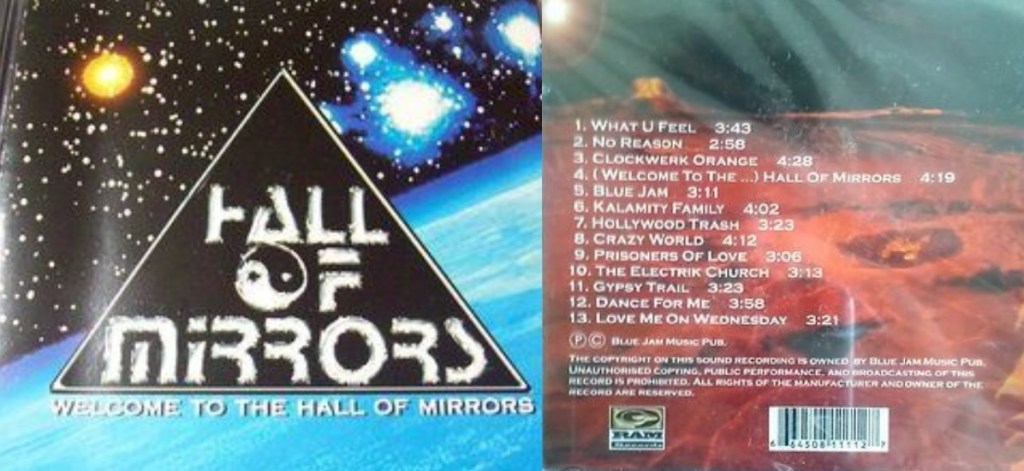
His “band,” Hall of Mirrors, issued a lone album through Hall’s own vanity impress, RAM Recordings. Welcome to the Hall of Mirrors, a 1999 studio project, features thirteen tracks that Hall wrote, sang, and produced — and played all the guitars, bass, and drums. Guest assisting him in the studio was former Guns N’ Roses guitarist Gilby Clarke (who put out a pretty cool glam-pop album with Candy, Whatever Happened to Fun; sound like sloppy-polished the Replacements, then there’s the harder-edged Kills For Thrills) and Prince’s former keyboardist, Tommy Barbarell.
What’s it sound like? Well, if “fuzzy funk-jazz” is a thing, that’s sums it up.
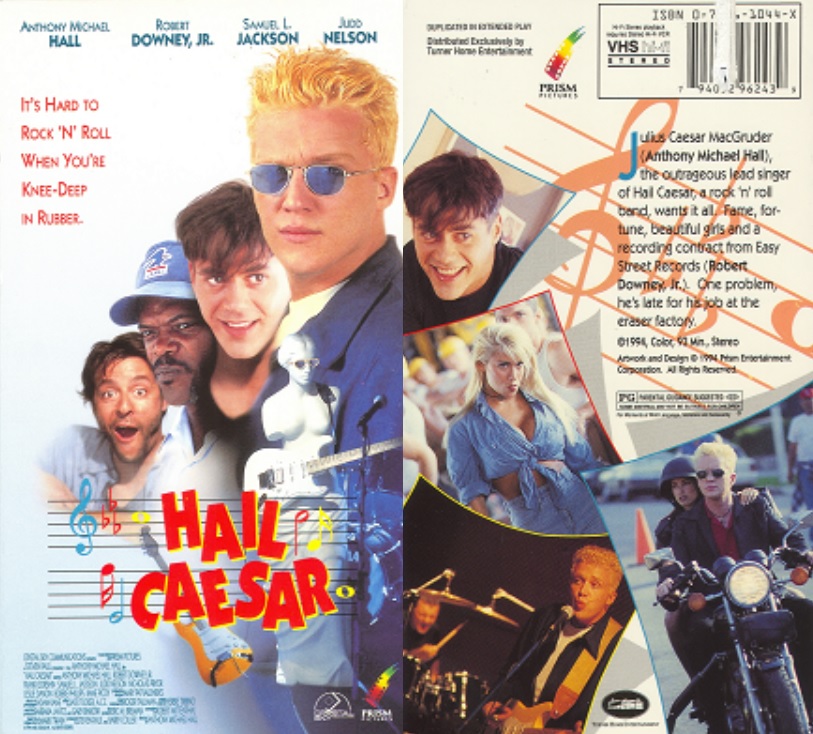
In an online podcast with (defunct) “Hollywood Spotlight” at Real Hollywood, at the time of the time of the CD’s release, Hall stated he was “a fan of everything from Rage Against the Machine, to Green Day, to Puffy Daddy, and has ‘diverse tastes,’ with a love of classic rock, R&B, and funk from the ‘70s.” Hall’s work on the album was long-gestating, since the early ’90s, as four of the songs from the album appeared in Hall’s directorial effort, Hail Caesar, which doubled as the music for the film’s Julius Caesar MacGruder’s band, Hail Caesar.
The plot — devised by family television showrunner and writer Bob Mittenthal (Double Dare, Rugrats, Robotboy, and It’s Pony) — Hail Caesar tells the story of the trials and tribulations of Julius MacGruder trying to score a recording contract (from Robert Downey, Jr.’s record executive). To make ends meet, Julius works in a . . . pencil eraser factory . . . managed by . . . Frank “The Joker” Gorshin. While there, Julius meets Buffer Bidwell (Bobbie Phillips of the abysmal Showgirls from 1995 and the 1998 remake of Carnival of Souls), the boss’s daughter . . . and romance blooms . . . to the chagrin of the factory’s owner, Mr. Bidwell (Nicholas Prior of The Gumball Rally fame). Wanting rid of Julius from his daughter’s life, Bidwell makes a bet with the ne’er-do-well rocker that he knows the slick-slacker will never honor: make $100,000 in six months; if he does, he can marry Buffer, if not, he’s banished.
Since Hall was firmly established at this point and made a lot a friends in the business, he was able to call in favors and secure the services of his past co-stars in Robert Downey, Jr. (the 1988 sports comedy Johnny Be Good) and Judd Nelson (1985’s The Breakfast Club), and, in a very early, pre-stardom role as a postman, Samuel L. Jackson. (The caveat: each are not around for long.)
In proof that everyone in Hollywood has to start somewhere: The cinematographer here is Adam Kane, who would go on to lens The Boondock Saints and TV’s Grey’s Anatomy. The editor, Jack Turner, also worked on A Nightmare on Elm Street 4, but his work dates back to the blaxploitation classic, Petey Wheatstraw. And, yes, the producer here, Steven Paul, is the same Steven Paul who made bank with the Ghost Rider, Baby Genius, and Stallone’s The Expendables franchises.
So, enough with the film trivia. What do I think about the film?
Well, I didn’t think I’d ever find another rock ‘n’ roll flick more deserving of the blue screen of death as Corey Feldman’s Rock ‘n’ Roll High School Forever (1994) — yes, there’s a sequel to Rock ‘n’ Roll High School (!) — and I did just that. Yeah, Hail Caesar is another one of those coveted rock ‘n roll obscurities that was poorly distributed; so, in lieu of seeing it on cable (it was made exclusively for Showtime) or as a Blockbuster rental, my first exposure was picking up a cutout bin copy. So much much for that $2.00; I could have had a McNuggets sixer and a small Dr. Pepper. Hey, I love indie-quirky, as Ed and His Dead Mother and Trees Lounge are two of my favorite, oddball VHSers, but not this time. Sorry.
While I really dig Hall’s quirky compositional style, which has an off-kiltered Crispin Glover vibe (see Glover’s “Dance Etiquette” by his studio project The Uncalled Four, which appeared in the 1994 comedy Twister), for a “rock ‘n’ roll movie,” the music really isn’t all that “rock,” and there’s just not enough of it (to hold my rock ‘n’ radio interests). In fact, even with all of the familiar, established actors in the cast (who’ve done far better work), the proceedings are all snooze-enducing boring and a wee-bit too hammy (especially by Downey; Gorshin is just sad as can be), with a lot of flat-as-a-worn out-eraser humor. Maybe if this was a Pauly Shore joint . . . or Adam Sandler did the ol’ immature adult routine with that annoying baby-talk voice he does . . . maybe if it was done as an animated feature . . . or cast with tween actors for Bob Mittenthal’s old Nickelodeon home base. . . .
Let’s put it this way: This is the second time I’ve watched Hail Ceasar since finding that VHS cutout all those years ago. And I dozed off on it back then (and it took a month to finish it) . . . and I fast-forwarded though it today, so as to refresh my memory to pull together this review. And if not for this being another “Rock ‘n’ Roll Week,” you wouldn’t be reading this final sentence. . . .
Courtesy of You Tuber Jok3r Girl, you can listen to four of Hall’s songs that appear in the film: “What U Feel,” “Dance for Me,” “Crazy World,” and “Blue Jam.” Another song in the film, that’s not on the later CD, is “Love Is.” You can watch Hail Caesar as a free-with-ads stream on Tubi.
About the Author: You can read the music and film reviews of R.D Francis on Medium and learn more about his work on Facebook.
ABOUT THE AUTHOR: Jennifer Upton is an American (non-werewolf) writer/editor in London. A member of the Society of Authors, she currently works as a ghostwriter of personal memoirs for Story Terrace London and writes for several blogs on topics as diverse as film history, punk rock, women’s issues, and international politics.
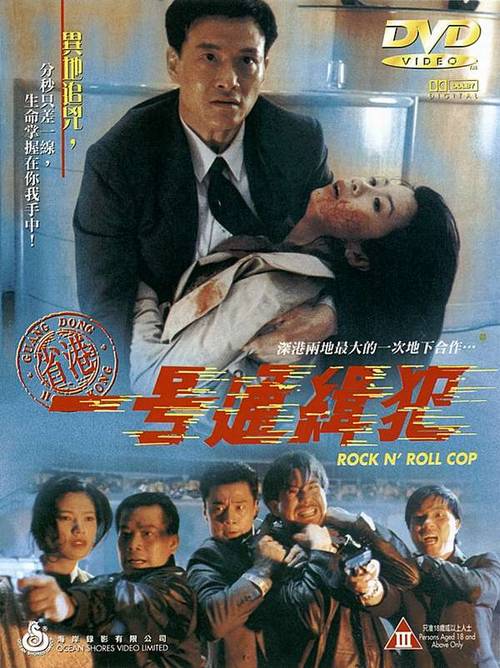
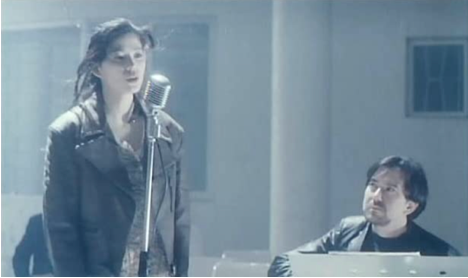
Hong Kong’s movie industry churned out films in the 1990s at a breathtaking pace. Anthony Wong worked twice with director Che-Kirk Wong in 1994. First in Organized Crime and Triad Bureauand next in the lighter Rock ‘N Roll Cop. Don’t let the title fool you. This movie has very little to do with rock ‘n roll other than that Anthony Wong plays the guitar in a couple of scenes. He made a punk album called Underdog Rock in 1996 worthy of a listen, proving he really does have musical ability.
Here, Wong plays Hong Kong cop Inspector Hung who must work with the Mainland China police to catch a criminal (Yu Rong-Guang) who has committed crimes on both sides of the border. Hung has trouble fitting in with the straight-laced uniform-clad Mainland officers. He dresses like Bono from U2 in black jeans and a black leather jacket, and gets drunk on his first night in town. He spends a great deal of time talking about the superiority of the Hong Kong police force, which inevitably creates difficulties in the working relationship between Hung and Mainland officer Captain Wong Jun (Wu Hsing-kuo.) Many films from the pre-handover period featured representations of the anxiety felt by the HK entertainment industry at that time.
As the plot progresses, Wong and the Mainland cops come to an understanding that they’re not so different and that working together benefits both sides. The two leads wind up helping one other in a climactic chase/bloody shootout filled with plenty of Kirk Wong’s signature kinetic editing and glossy cinematography. There’s a nice romantic subplot between Wong and singer Jennifer Chen, giving Wong a chance to play a guy without a dark side for a change (don’t worry, he slaps her once.) While enjoyable, the film is neither as complex in terms of character development nor as good overall as Organized Crime and Triad Bureau, placing it firmly in the “good enough to recommend if you’ve got the time” category. Sadly, watching it in 2021 against the background of Hong Kong’s recent riots and the subsequent crackdown by the Chinese government makes its message of teamwork a bit optimistic to say the least. Sadly, it’s highly unlikely Hong Kong cinema will ever see another golden era like this one.
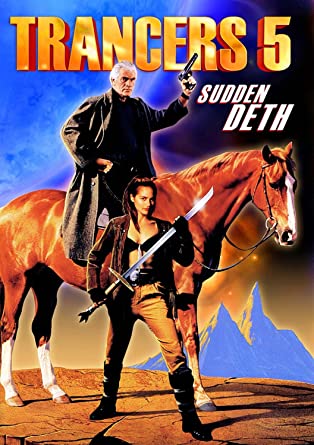
Except for a cameo in the excoriable Evil Bong, this would be the last time that Tim Thomerson would play Jack Deth. Yes, there’s a sixth movie and we’ll get to that soon enough, but this is his swan song.
Jack is trying to find his way home from the other-dimensional world of Orpheus, which is kind of like the European era of knights and swords, except that Trancers run things and living in a Castle of Unrelenting Terror, led by Caliban.
According to the IMDB, Charles Band paid Tim Thomerson for the last two films in these series with off-shore dollars which had U.S. currency value, but could only be spent in Romania. I would assume that the man who is Jack Deth (and Brick Bardo) owns an entire town over there.
There’s a recap of part 4, because you know, if there’s one thing you can expect in a Full Moon movie, it’s an eight-minute piece of other films inserted into the one that you’re watching so that the running time gets padded like a pre-pubescent bra.
That said, I would watch Jack Deth go to the grocery store. It would probably be better than this.
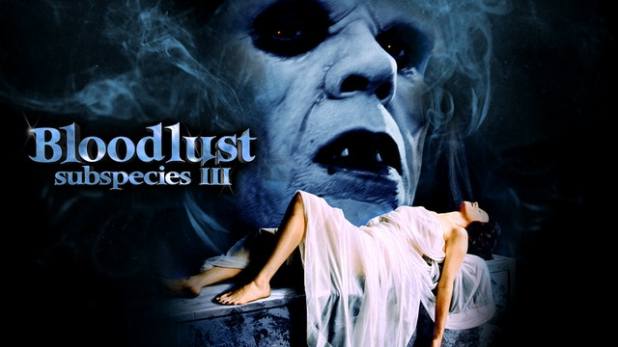
Michelle (Denice Duff) — who we last saw in Bloodstone: Subspecies 2 being grabbed by the mummified mother of Radu Vladislas (Anders Hove) and pulled deep into the catacombs beneath the Full Moon castle.
Now, Radu is brought back to life with Michelle’s blood and the dagger that killed him, with our heroine promising to follow Radu if he teaches her how to be a vampire and takes her on the hunt. Soon enough, Radu realizes that if he’s going to be with her forever, he’s going to have to kill his mother. That certainly fixes some issues on the holidays, I guess.
Radu gets killed in every movie and this time, he’s tossed off the roof of the castle and impaled on a tree and then burns in the sunlight. But if we know anything about our friend Count Vladislas, he’ll be back trying to win over Michelle before too long.
This was shot back to back with the last film, which means that yes, you will be seeing a flashback to fill out the running time. Such is the Full Moon experience.







 B&S About Movies
You must be logged in to post a comment.