Omega Cop (1990) and Karate Cop (1991)

The bolo tie-wearing Prescott (Adam West) runs a “Special Police” force in the year 1999 from a one-room set (that he never leaves) via a couple of Commodore 64s and some 60s-era blinking props to protect the post-apocalyptic wastelands of Southern California. Keeping Adam West company in the washed-up actor’s camp are Troy Donahue (the metal epic Shock ‘em Dead) and Stewart Whitman (Guyana: Cult of the Damned, Demonoid, and Bermuda Triangle). Helping out on the stunts and working as one of the “wasteland scavengers” is the always reliable and entertaining Sean P. Donahue (of the awesome Ground Rules).

And how did we get here, you ask? Well you’ll have to listen to West’s voice over narration (that he wrote himself!) at the beginning of the film as he educates you on the ozone layer, the greenhouse effect, the rain forests, and the solar flares that plagued the world (“. . . half the world just didn’t give a shit. . . .”).

Anyway, when West catches wind of an illegal slave auction of women run by some “bad-ass” named Wraith (clad in a predictable Nazi SS uniform), he sends in the resident “Mad Max”: John Travis (Ron Marchini of the 1976 kung-fu classic and popular video rental, Death Machines). During the course of breaking up the slave ring — with his high-tech, multi-barrel shotgun — his team is killed: Travis is the last police officer on the force! So, with his high-tech ‘80s-era jeep, Travis takes the two surviving slave women to a utopia of clean air and water in Montana . . . and kicks some ass along the way. (Travis may have been double-crossed by Adam West, who really ran the slave ring . . . does it really matter?)

If you’re a post-apocalypse completest — or an Adam West fan that needs to slide a copy of Omega Cop next to Zombie Nightmare (with Jon-Mikl Thor!) and One Dark Night on your shelf — then this film is for you.

Say what you will about its production quality and shortcomings in catching some Mad Max-inspired post-apoc love, but Omega Cop isn’t boring and was popular enough on the video store circuit that Ron Marchini and writer Denny Grayson returned with a 1991 sequel: Karate Cop — costarring David Carradine (Future Force, Death Race 2000) in place of Adam West — which has something to do with people forced into gladiator-arenas by street-terrorist gangs. But get this: the director is sexploitation purveyor Alan Roberts of Young Lady Chatterley (1977) and The Happy Hooker Goes to Hollywood (1980). But don’t let his soft-porn presence deter your watch: as with any Marchini flick, Karate Cop is a fun watch.

Director Paul Kyriazi, who made his debut with the aforementioned Death Machines and vanished from the film world after Omega Cop, which served as his fifth and final film, has returned to the writing and director’s chair with the 2018 sci-fi movie, Forbidden Power. You can learn more about Kyriazi’s return and his new film courtesy of a favorable review at HorrorGeekLife.

You can watch the VHS rips of Omega Cop and Karate Cop on You Tube.

About the Author: You can read the music and film reviews of R.D Francis on Medium and learn more about his work on Facebook. He also writes for B&S Movies.
Aftershock (1990)

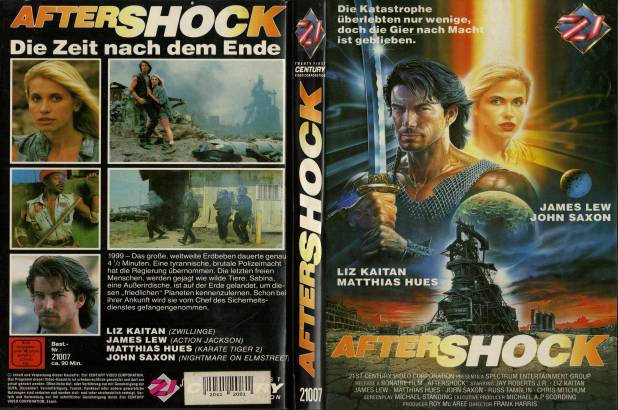
Anti-intellectual paramilitary forces rule the post-World War 3 landscape, which is directed by Frank Harris, who was behind Killpoint and The Patriot (not the Mel Gibson movie) and Lockdown (not the Sylvester Stallone movie).

Into this world arrives an alien named Sabine, played by Elizabeth Kaitan. Oh Elizabeth, you’ve been in so many movies that I’ve savored. You watched Lance Henriksen battle bikers in Savage Dawn. You dated Ricky Caldwell in Silent Night, Deadly Night Part 2. You were Candy in four Vice Academy movies and showed up in Beretta’s Island, an attempt to transform Arnold Schwarzenegger’s friend, the recently deceased Franco Columbu, into an action star. I mean, Ken Kercheval even showed up. But the rest of the world — well, the part that watches slashers — knows you as Robin in Friday the 13th Part VII: The New Blood. You know her — the one who calls Tina Marilyn Munster before heading upstairs to get killed.

Sabine upsets the balance of power and the forces that have worked so hard to consolidate said power now need to keep her controlled. Such is the world of Aftershock.

The rebels want to protect Sabine and get her back to the portal that will bring her home. And the baddies, well, they want to dissect her.

This is the kind of movie where the supporting cast is the entire reason to watch the film. I mean, there’s a black rebel played by Chuck Jeffreys that 100% is doing an Eddie Murphy impression for the entire movie. Then there’s Deanna Oliver, who was the voice of The Brave Little Toaster, one of the most frightening and strange movies I’ve ever encountered despite its outer trappings as a kid-friendly movie. Russ Tamblyn and Chris Mitchum are here! And Matthias Hues, Talek from Dark Angel (what’s up with this post-Mandela Effect world where I only knew this movie as I Come In Peace?), is a gang member along with everyone’s go-to mutant, Michael Berryman.

The main reason I liked this movie — let’s be honest and say the only reason — is that John Saxon and Richard Lynch play the leaders of the bad guys. To be fair, Lynch is barely in the movie in his role as Commander Eastern. He shows up in one major scene, where he orders around Saxon, holds a small dog and has a missing eye. Trust me, this scene alone boosted this movie up at least 40%.

This was written by Michael Standing, who memorably blew a van to smithereens in The Italian Job. He also plays Gruber in the film. It’s not the best end of the world movie, but with a cast like this, there was no way that I could miss it.

You can watch this for free on Amazon Prime and Tubi.

Future Zone (1990)

I hoped against hope that David Carradine wouldn’t have to be in another David Prior movie, but you know how it goes. You have to do the movies that are paying for you. Actually, I don’t know. No one is asking me to be in horrible movies all that often.

Remember John Tucker? Yeah, that guy Carradine played in Future Force. Well, he’s back. And this time, his son Billy has traveled through time to help him. Billy’s played by David Prior’s brother Ted, so there’s that. He’s named for the wheelchair-bound friend of John from the first movie, in case you remember that movie. I hope you don’t.

I guess I should try and say something nice. Well, Charles Napier and Jackson Bostwick, the original Captain Marvel on the Shazam! TV series, show up.

You can watch this on Amazon Prime with and without help from Rifftrax. Just like the first movie in the series, you’re gonna need all manner of aid to get through this. Trust me, more help than you’ll find at the liquor store.

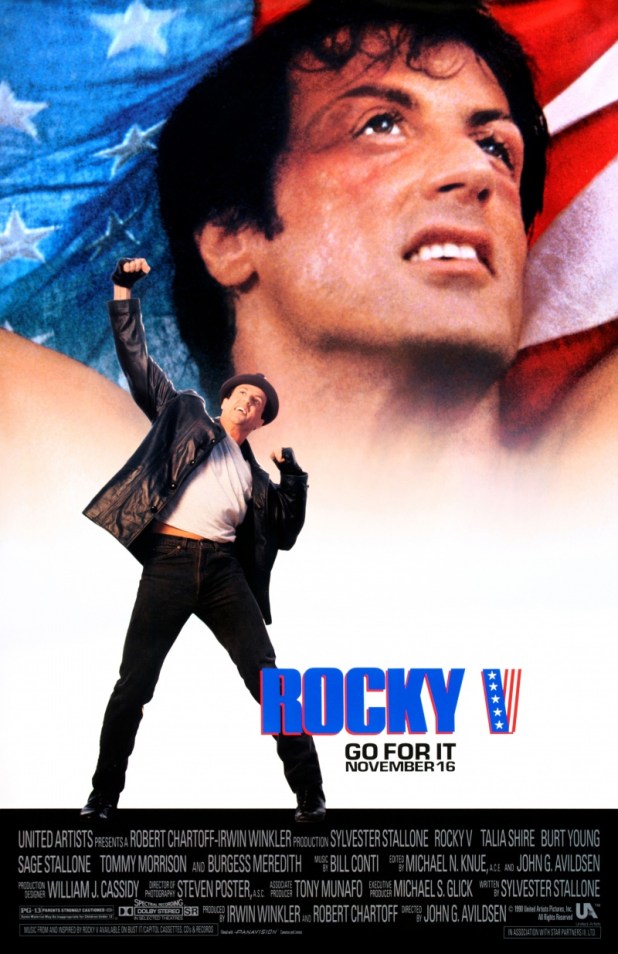
Rocky V (1990)

I’ve avoided this movie for some time, due to its bad reputation and just the general feeling that I had no interest in seeing Rocky slide back into the sad life that he escaped. This week of Stallone movies has given me the opportunity to watch this one, however, and while it’s not my favorite of the films, it’s not as bad as I feared.

Director John G. Avildsen — who directed the original — returns to direct this one, which finds our hero go right back to the same streets that he once trained on. Avildsen clashed with cinematographer Steven Poster during the making of the film, feeling that the realism of the movie was threatened by over-lighting instead of using a single spotlight to create a mood. Poster told Avildsen that the original film “looked like a cheap documentary,” to which the Oscar-winning director replied, “Exactly.”

A week after Rocky defeats Ivan Drago in Rocky IV, he returns to the United States. However, he’s not whole — the fight pretty much has finished him off, leaving him feeling broken inside. As he conducts a press conference, promoter George Washington Duke (Richard Gant), who is pretty much Don King, tries to get Rocky to fight his man Union Cane (pro boxer Mike Williams).

The pain isn’t over for Rocky — not by a long shot. It turns out that thanks to bad advice from Paulie (Burt Young), the boxer gave power of attorney to his accountant, who pulled a Bernie Madoff on him, leaving him with a foreclosed second mortgage and six years of unpaid taxes.

It gets worse, too. Rocky has a brain injury that was further compounded by the blows he endured defeating Drago. Now, he can never fight again, so he must sell his home and all his belongings, moving back to the streets he thought he escaped.

After a night of drinking, Rocky enters his old gym and sees a vision of Mickey (Burgess Meredith) appear to him, telling him a speech much like the one that Cus D’Amato told Mike Tyson after his first fight. This leads to rocky reopening the gym and eventually becoming the manager for Tommy Gunn (boxer Tommy Morrison), a young man from Oklahoma who becomes Rocky’s surrogate son.

But doesn’t Rocky already have a son? He sure does and his kid Robert (Stallone’s real life son Sage, who would one day help form Grindhouse Releasing) must adjust from private school to the tough inner city school, getting his ass kicked every step of the way. Even worse, he has a dad who only wants to get in the ring and train his fighter.

Of course Tommy Gunn is going to give in to the dark side, falling under the sway of Duke. It’s brutal when Rocky watches on TV and Gunn extols the angel on his shoulder that the promoter has become, language specifically used to try and bring the retired champion into the ring. Instead, the two brawl in a brutal street fight that ends with Rocky victorious.

That fight, however, is awesome. That’s probably because pro wrestling legend Terry Funk choreographed it, which explains the German suplex spot. Amazingly, the fight was originally going to end with Rocky dying in Adrian’s arms. Eventually, Stallone decided to rewrite the ending, as he believes that Rocky is all about perseverance and redemption. A death in a street fight? That isn’t how a hero goes out, right?

Michael Williams and Tommy Morrison were scheduled to have an actual boxing match about a month after this was released, hyped as “The Real Cane vs. Gunn Match,” but Williams was injured and could not compete.

Speaking of Morrison, he had a pretty interesting life. His nickname, “The Duke”, comes from a claim that he was either the grand nephew or grandson of John Wayne, which may or may not have been true. He started doing tough man contests at the age of 13 before going into boxing, where he amassed a 202-20 record and won the Gold Medal at the Seoul Olympics. His pro career included wins over George Foreman for the WBO title and a 48-3-1 record.

At one point, Morrison was married to two women at the same time and had two children by the age of 19. Those sons, Trey Lippe Morrison and James McKenzie Morrison, have grown up to be pro boxers themselves.

His life took a sad turn in 1996 when he failed a blood test before a fight. He had HIV, which he said came from his permissive, fast and reckless lifestyle, saying “Wilt Chamberlain had nothing on me. Infidelity was one of my biggest battles in life. I couldn’t overcome it.”

Morrison tested negative for HIV in 2007 and began boxing again, even though some of those fights were supposedly staged. He also dealt with probation issues from past arrests that led to him serving nearly two years in jail.

In August of 2013, Morrison’s mother claimed he had full-blown AIDS, even if the boxer’s mother didn’t agree. Morrison died a month later from cardiac arrest, resulting from multiorgan failure due to septic shock caused by an infection.

In the years following the film’s release, Stallone acknowledged that the brain injury angle was inaccurate. Instead, it’s a mild form of brain damage, such as CTE, and it wouldn’t have prevented Rocky from gaining a license to box or put his life in danger.

When asked to rate all of the Rocky films by British host Johnathan Ross, Stallone gave this one a zero. I kind of love that he also has stated that Tommy Gunn left boxing and become a “third rate pro wrestler” afterward. I’d love to see that movie.

This is the only boxing movie I can think of with MC Hammer and Elton John on the soundtrack. It wasn’t as bad as I feared, but wasn’t as good as I wanted it to be. But man, that last fight is great.

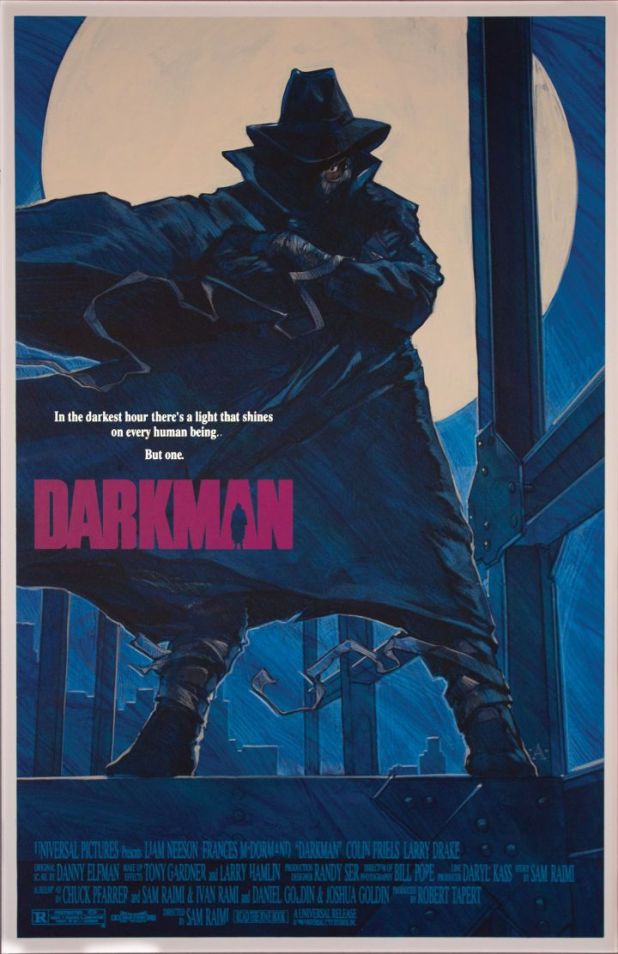
Darkman (1990)

Before he had the chance to make Spider-Man, Sam Raimi had wanted to make a comic book movie. Having failed to get the rights to The Shadow and Batman, he just decided to create his own hero. Drawing inspiration from Universal Monsters like The Phantom of the Opera as well as The Elephant Man, he created The Darkman, the tale of a once noble man driven to savagery as well as a tragic love story.

Raimi submitted the treatment to Universal Pictures, which was greenlit for a budget of $8-12 million dollars. Over twelve or more drafts — working alongside writers like Chuck Pfarrer, brothers Daniel and Joshua Goldin, and Raimi’s brother Ivan (a doctor who ensured that the medical and scientific aspects were authentic) — Raimi and his producer Robert Tapert pushed the character and movie further and further until they ended up with a three-part character arc: It starts with a sympathetic hero being destroyed, then him becoming filled with hatred before finally hating who he has become as he fades away from humanity.

Despite the movie performing worse than probably any Universal movie ever in test screenings, a great ad campaign — the Who Is Darkman? posters are amazing — and decent reviews allowed this film to make $49 million on a $16 million dollar budget.

Dr. Peyton Westlake (Liam Neeson) is working on a new type of synthetic skin that will help burn victims. However, every time the skin is exposed to light for more than 99 minutes, it disintegrates.

Meanwhile, his attorney girlfriend, Julie Hastings (Frances McDormand) has discovered information that proves that developer Louis Strack Jr. has been bribing zoning commission members to build a brand new city. When she confronts him, he confesses that it was necessary to create new jobs while warning her of Robert Durant (Larry Drake, who is incredible in this), a mobster who also wants the evidence to use against him.

At Westlake’s lab, our hero and his assistant Yakatito continue to test the skin when Durant and his men — including Ted Raimi as Nicky, Nicholas Worth (The GloveDon’t Answer the Phone) as Pauly, Dan Hicks (Evil Dead II) as Skip and Dan Bell (who you’ll remember from Wayne’s World) as Smiley — break in to take the documents that Julie has found. Yakatito is killed and Westlake is torn to shreds — his hands are burned, his face is dipped in acid and an explosion throws him through the building as Julie watches from the street.

Westlake is found and brought to a hospital that experiments on him with a treatment that severs the nerves of the spinothalamic tract. Now, he no longer feels physical pain and the lack of sensory input overloads his adrenaline, giving him enhanced strength. However, he’s now susceptible to frequent bouts of alienation and madness. Look for Jenny Agutter (Logan’s Run, An American Werewolf In London) in a cameo here as the doctor who treats Westlake.

The rest of the world thinks he’s dead, so Westlake starts creating a mask of his original face to cover his burns. Seriously, the makeup by Tony Gardner are great. As he works away in his skid row lab — an homage to the Tesla coil filled lairs of Universal movies — he also works on wiping out Durant’s henchmen one at a time.

Darkman balances horror and superheroics in equal measure, along with romance and pathos. The end of the film, as Westlake fully disappears into his new identity as The Darkman and escapes from Julie into a crowd, is the best comic book ending I’ve ever seen in a film. Raimi gets it, even ending the film with dialogue where the hero finally accepts his name: “I am everyone and no one. Everywhere. Nowhere. Call me … Darkman.”

I love that Raimi took a somewhat Hollywood budget and turned in a movie that’s pretty much a modern take on Dr. Phibes, while keeping the spirit of Universal Monsters, filtered through the hyper colors of Bava and the kinetic zooms of Fulci. It’s also a movie that presents a hero that has completely and utterly lost his mind, yet we still are with him every step of the way.

Darkman would return in two direct to video sequels without Neeson playing the lead role, Darkman 2: The Return of Durant and Darkman 3: Die, Darkman, Die. There was also a thirty-minute pilot for a TV series made in 1992 that never aired.

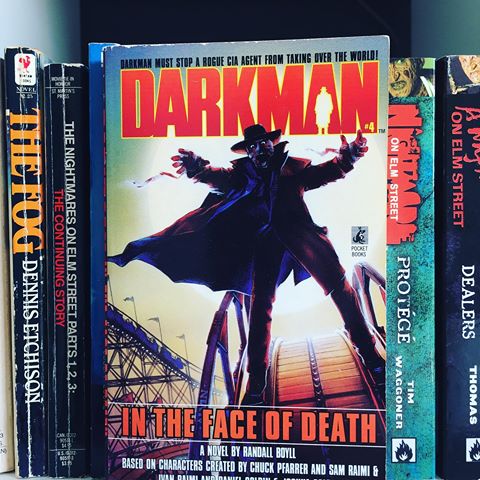
Marvel Comics also published an adaptation of the movie and a sequel mini-series. Darkman would return to comics in 2006 in a crossover with the Evil Dead and Ash Williams (Bruce Campbell was the original choice for the lead and shows up at the end). There were also four Darkman paperbacks — The Hangman, The Price of Fear, The Gods of Hell, and In the Face of Death — published in 1994.

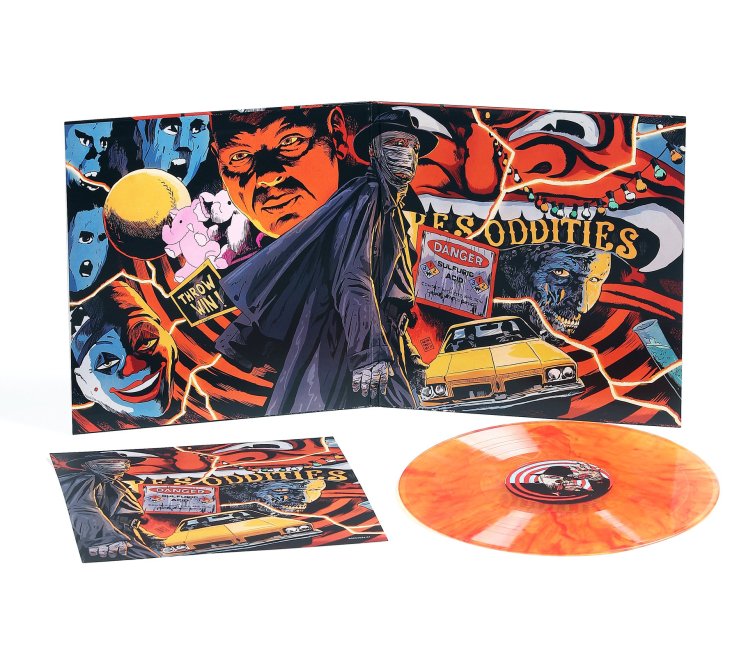
The cover art for this article comes from the vinyl release of Danny Elfman’s soundtrack. Like everything Waxwork Records releases, it’s incredible, boasting two gatefolds of Francesco Francavilla’s breathtaking artwork.

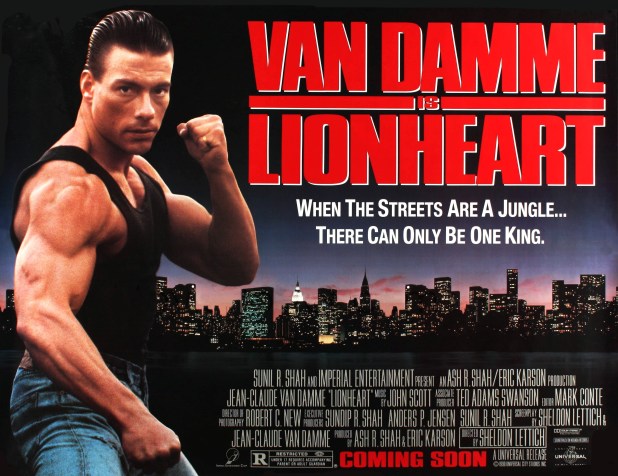
Lionheart (1990)

Lionheart follows the basic plot of all Van Damme films. Our hero loses a family member in some horrible way, he must go AWOL or leave behind some responsibility and then must fight — even though he doesn’t want to — before a big battle that redeems everything. My wife — having suffered through the makings of JCVD week where I’ve watched double-digit Van Damme films over several weeks of prep — remarked, “These are all the same movie. Everyone wants him to fight. He doesn’t want to fight. We want to see him fight. He still doesn’t want to fight. Then he fights and kicks everyone’s ass. He should just fight.” She gets it.

You have to love a movie that starts with the main character’s brother screwing up a cocaine deal and getting set ablaze. Then, we meet French Foreign Legionnaire Lyon Gaultier (Van Damme, but really, who else could that be?), who has gone AWOL when he learns that they’ve been keeping letters from home from him.

For some reason, instead of just going to Los Angeles, Lyon starts in New York City, where he becomes a street fighter working with a man named Joshua (Harrison Page, who was Sledge Hammer’s boss on that TV show).

Soon, they meet “The Lady.” Her real name is Cynthia (Deborah Rennard, Sylvia Lovegren from TV’s Dallas) and she’s the person running fistfights inside parking garages for the one percent rich. At this point, I started laughing as loudly as possible, because this movie has grown beyond ridiculous. That just means that I knew I had picked the right movie for a Saturday afternoon.

As Lyon fights his way to Los Angeles, he learns that his brother is dead and his wife won’t accept any help. She blames him for deserting the family and her husband turning to drugs. That just means that Joshua has to act as a life insurance agent and give her the money Lyon owns from fighting in the no holds barred fight circuit. This ends up upsetting Cynthia for some reason. Also, the French Foreign Legion catches up to our hero and breaks one of his ribs.

Our hero must finally fight a dude named Attila, who kills all his opponents. Cynthia also meets with the French Foreign Legion and sells out our hero. Things get sad, when Joshua says that he bet against Lyon in the hopes that he could make some money for his family. But no worries — Van Damme kicks ass, gets court-martialed but still ends up staying in Los Angeles.

This movie is all fights. And it also has Tae Bo® expert Billy Blanks battling JCVD. Also, for those of you who love pro wrestlers in movies — I’m speaking directly to my friend Paul Andolina here — Tony Halme, who was once Ludvig Borga and a member of Finnish Parliment, makes an appearance.

Much like a 1970’s grindhouse movies, it has plenty of titles: Full Contact, A.W.O.L Absent Without Leave, Wrong Bet and Leon.

It’s also the first appearance of Van Damme’s naked booty on film. In an interview with Asian Movie Pulse, director Sheldon Lettich said, While we were filming the scene in Lionheart where he takes a shower in Cynthia’s apartment, he (Van Damme) asked me if he might casually “drop his towel” and show off his butt for a brief moment. My reply was “Sure, if you’re willing, why not? We can always use a different take later if we decide it’s not a good idea.” So we did one take where he casually lets the towel drop away, and then we later decided to go ahead and put that shot in the movie. Well, that became a very memorable moment for the ladies in the audience, and for the gay guys as well. Showing off his butt (clothed or unclothed) almost became a signature trademark of his after that.”

And now you know the rest of the story.

You can watch Lionheart for free on Tubi.

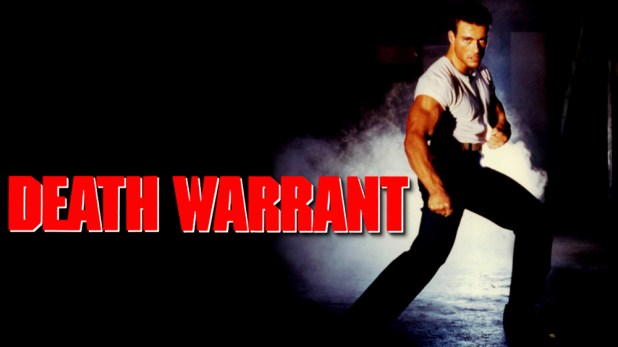
Death Warrant (1990)

Death Warrant is the first movie sold by David S. Goyer, way before he wrote Kickboxer 2, Demonic ToysPet Sematary 2Dark City, the three Blade films (he directed Blade: Trinity), Ghost Rider, the Christopher Nolan Batman films, Man of SteelBatman vs. Superman and the upcoming Terminator: Dark Fate. It’s directed by Deran Sarafian, who directed To Die For, a 1989 vampire rental favorite, as well as episodes of House and Lost. He also directed another rental favorite, Claudio Fragasso’s (Monster Dog, Shocking Dark, Rats: Night of Terror) apoc-romp Interzone that stars Bruce Abbott (Re-Animator).

Detective Louis Burke (Jean-Claude Van Damme) of the Quebec Royal Canadian Mounted Police has come to Los Angeles to confront the man who killed his partner — Christian “The Sandman ” Naylor. After finding bodies hanging from the ceiling, he’s able to defeat his enemy, shooting him multiple times in the chest.

More than a year later, Burke joins a task force to solve a series of murders inside California’s Harrison State Prison. Burke will pose as an inmate while attorney Amanda Beckett (Cynthia Gibb, Jack’s Back) acts as his wife in the undercover sting.

Burke soon becomes friends with his cellmate Konefke (George Jenesky, who played Francis “Psycho” Soyer in Stripes before changing his name to Conrad Dunne) and an older clerk named Hawkins (Robert Guillaume!). Despite saving the two men multiple times, they refuse to speak about the murders. In fact, no one wants to talk.

Luckily, with the help of a teenage hacker (Joshua John Miller, who would later write The Final Girls), they discover that human organs are being sent out of the prison. That’s when Burke learns that the Sandman is still alive inside the prison.

While Beckett attends a party hosted by the state attorney general Tom Vogler (George Dickerson, Blue Velvet), she plans on telling him that her boss is behind everything. At the last minute, she finds out that he’s behind it all — his wife needed a liver transplant and even all his money and power couldn’t get her one. So he used the prison as a way to murder healthy prisoners and harvest their organs and kept making money from it after she got better.

Sandman has been sent to the prison to kill Burke and shut it all down. During a riot, Hawkins is injured but saved by Priest, but seconds later, Sandman kills the younger man. Finally, we get a big battle in a boiler room between Burke and Sandman that has all manner of craziness — burning against the metal door, kicking the bad guy in the flames and having him walk out and keep fighting and finally a bolt going through the Sandman’s head to kill him.

There’s also some conjugal romance between our hero cops, if you’re coming here for some tender moments. I think not. I think you’re coming for Van Damme kicking a serial killer into a furnace.

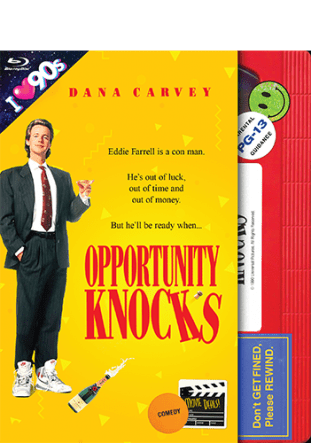
Opportunity Knocks (1990)

Donald Petrie has directed plenty of movies you may know, even if you don’t know him. Mystic PizzaGrumpy Old MenRichie Rich, My Favorite MartianMiss CongenialityHow to Lose a Guy in 10 Days…he’s made some memorable films. This effort is from the time when Dana Carvey was a star on Saturday Night Live, but before Wayne’s World made him a bigger star.

Carvey plays con man Eddie Farrell, who is working a scam with his friend Lou Pesquino. They sneak into an empty house and discover that the owner is out of the country and the house sitter can’t make it. After a gang of thugs get sent by mobster Sal Nichols (Detective Hugh Lubic from Masters of the Universe and Strickland from Back to the Future), the two split up and Eddie takes on the identity of the home’s real owner, Jonathan Albertson.

Soon, Eddie is growing close to businessman Milt Malkin (Robert Loggia) and his wife Mona, as well as their daughter Annie (Julia Campbell, the mean girl from Romy and Michele’s High School Reunion). It all starts as a con, but soon Eddie is falling for her.

This is a movie packed with actors that you rush to IMDB to look up, like Milo O’Shea as Eddie’s uncle Max (he was Durand-Durand in Barbarella), the first acting role of jazz musician John M. Watson Sr. (he’s the bartender in Groundhog Day) and Del Close, who was one of the most influential people in the history of American improv. He’s also Reverend Meeker in the vastly underrated 1988 remake of The Blob.

I really need to get to a Robert Loggia week on this site, even if nobody but me wants to talk about how great he is in movies like the Independence Day movies (actually, he’s the only good part of the sequel other than the fact that it mercifully ended), Lost HighwayBig (one could argue that he’s playing the same exact role from that film in Opportunity Knocks) and The Believers.

You may be surprised — certainly, many people watching this and reviewing it on Letterboxd are — that in 1990, we didn’t have the cultural sensitivities toward stereotypical accents. Just keep that in mind and understand that this is a goofy comedy that just wants to entertain you.

You can get the new blu ray of this movie from Mill Creek, who have been releasing plenty of 1990’s movies in great packaging that makes it look like you rented that movie from a video store like Blockbuster.

Even better, if you want a copy, they were cool enough to send us an extra copy as a giveaway! Just share this post on Facebook or Twitter, then send us a link or screenshot to bandsaboutmovies@gmail.com. We’ll pick one random entrant to win their very own Mill Creek blu ray of Opportunity Knocks!

DISCLAIMER: Mill Creek sent us this for review, but that has no impact on what we thought of the film.

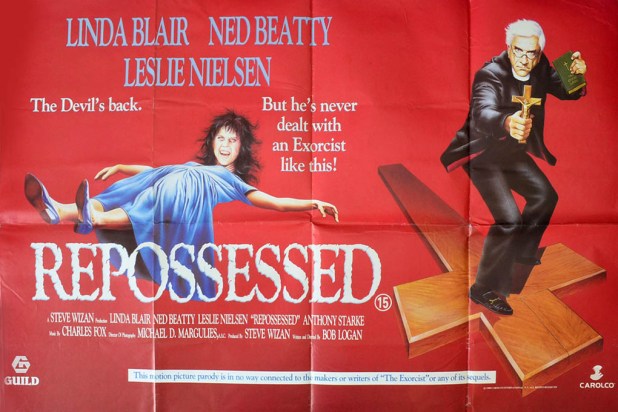
Repossessed (1990)

Before he worked in films — supposedly — Bob Logan wrote material for comedians Joan Rivers, Sam Kinison, Garry Shandling, Rodney Dangerfield and Arsenio Hall. This is but one of three different projects that Logan worked on with Linda Blair, including Up Your Alley (her second project with “The Unknown Comic” Murray Langston) and the completely unhinged VHS tape How to Get Revenge. He also directed Meatballs 4, which teams Corey Feldman with Jack Nance. Yes, Jack Nance from Eraserhead.

Logan brought together Leslie Nielsen and Blair for this comedic retelling of The Exorcist that was a rental store staple. Seriously, when I announced Linda Blair week, people immediately asked if I was covering this.

Father Jebediah Mayii (Nielsen) — if you don’t think this movie is going to continually replay that pun, you have no idea what you’re in for — casted out the devil from Nancy Aglet (Blair) back in 1973. But now, after watching The Ernest and Fanny Miracle Hour (Ned Beatty and Lana Schwab), she’s got that demon inside her all over again, spraying her family with split pea soup.

Young priest Father Luke Brophy begs Mayii to help, but the elder priest won’t. The last exorcism nearly killed him, so instead the Supreme Council for Exorcism Granting decides that the rite will be given on live TV along with Ernest and Fanny.

Thus the hijinks ensue, including Mayii training with “Body By Jake” Jake Steinfeld as well as a little song, a little dance and a little bit of jokes about what’s in your pants, Mayii comes back to have a final battle with Satan, commented on by “Mean” Gene Okerlund and Jesse “The Body” Ventura. Look for Wally George, Jack LaLanne and even Variety columnist Army Archerd in cameos.

Will you like it? Here’s the level of comedy here: Blair plays Nancy in this movie and Reagan in the original. Nancy Reagan. Get it? It’s a fun reminder to me of being young and renting movies, particularly ones that never really played in theaters. If you’re of the same age as me, you’ll probably look at it more favorably than the younger generation.

Zapped Again! (1990)

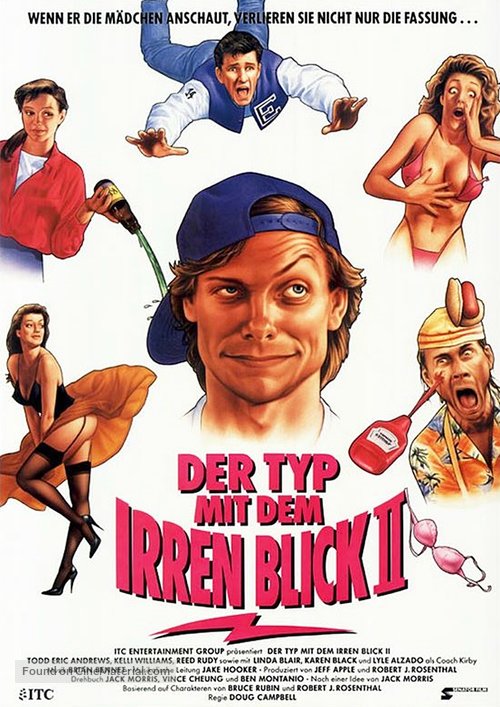
Remember when Scott Baio got telekinetic powers and instead of joining the X-Men and saving the world, he decided to just look at Heather Thomas’ breasts while goofy around with Willie Aames? Well, those guys grew up to be a Trump supporter and Bibleman. Heather Thomas? She retired because she had so many stalkers before becoming a political activist, serving on several advisory boards and supporting mostly Democratic candidates.

But I digress. We’re here today to discuss Zapped Again!

This movie doesn’t avoid the original at all, continually referencing it as Kevin Matthews tries to fit in at Ralph Waldo Emerson High School. He’s rejected by the cool kids in the Key Club, so he joins the Science Club. In their clubhouse, he finds vials of the liquid that gave Barney Springboro (Baio from the original, not even coming back for even the briefest of a cameo) his powers.

Kevin then uses his powers to cause chaos for everyone, including lifting his teacher Miss Mitchell’s (Linda Blair, literally the only reason I watched this movie) skirt. She tells him after class that she knew he did it and remembered when Barney did the same to the entire school.

Our protagonist only has eyes for Amanda, the rich mean girl, while the real right woman for him is fellow Science Club geek Lucy. Lyle Azado shows up in a quick role as the school’s coach who falls in love with Miss Burnhart (returning from the original film, played again by Sue Ane Langdon).

Also, when Blair’s character can’t make it to class, Karen Black fills in. No complaints there, even if it makes no sense.

Back in 1990, made for cable comedies could be made about teenagers using their mental powers to see women naked. Today, I doubt such a thing could occur. Whether or not that’s a good or bad thing — to be honest, I suffered through this boring film buoyed only by the hope that Blair and Black would return — is up to you, dear reader.