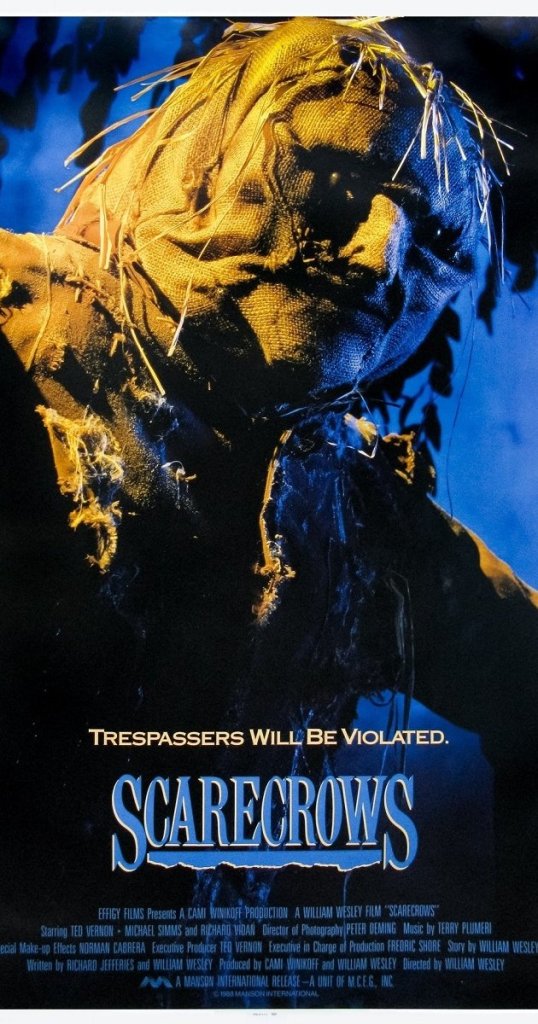
The Excellent Eighties: Scarecrows (1988)

When Shout! Factory restored this popular cable-played and home video renter to disc and offered it as an Amazon stream, we had to review it — back on December 18, 2018. And here it is for its first bow on a Mill Creek set, in this case, their Excellent Eighties 50-film pack that we’re unpacking all this month. If you’ve never seen Scarecrows, this Mill Creek bow is a great way to enjoy it and decide if you want to buy the superior Shout! Factory reissue.

As for moi: I enjoyed this movie (somewhat), which I ended up renting as result of its write-ups in all of the various monster and horror rags of the day. And the video stores I frequented had the promotional posters up; a couple of stores had the film in the wall racks as their “Pick of the Week.”

Sam, in his review, feels Scarecrows is “never boring.” I, on the other hand, was bored by the film back then; this is only the second time I’ve watched it since those VHS rental days of yore. And I still find it to be a “muh, eh” flick. However, I agree with Sam: the splatter is good. But I feel it’s ultimately undone by a rickety script (across four screenwriters, including director William Wesley), “meh” acting, and its low-budget.
As I re-watch this all these years later, I can’t help but think Quintin Tarantino and Robert Rodriquez watched this back in the day — and it bled through into their formulating From Dusk Till Dawn, which flips-its-script from being an action caper into a vampire flick.

Here, we have another unfolding “crime caper,” as five paramilitary types ripped off $3 million dollars from Camp Pendelton — and have taken a pilot and his daughter as hostages. Before their stolen cargo plane can make it out of the country, one of the soldiers — in a move that reminds of Sly Stallone’s robbery-plane caper Cliffhanger — greedily parachutes out of the plane with the loot. Think of D.B Cooper, instead of landing in the wilds of the Pacific Northwest, he lands in a foggy cornfield. And instead of zombies showing up, you get, well, you know.

Welcome to Scarecrows.

At that point, we head off into Romero land, with the soldiers and their hostages banning together in an abandoned farmhouse to ward off the demonic scarecrows in the fields around the home — who intend to add our ne’er-do-wells to their sackcloth and flannel ranks. And, as with Romero’s farmhouse classic: this has its own, downbeat ending.

Scarecrows was a vanity production by South Florida wrestler and amateur boxer Ted “Wolfman” Vernon. (To that end: Scarecrows was filmed in his hometown of Davie, Florida.) He later moved into the world of reality TV with the Discovery Channel and Velocity show South Beach Classics (2017), which spotlighted his classic car business. That reality show unraveled in a whirlwind of his domestic abuse allegations (New Times Miami article). Another of Vernon’s projects was working as one of the executive producer’s on John Carpenter’s nobody-asked-for-it-remake of Village of the Damned (1995). Did anyone see Vernon’s feature film acting debut as the title character in the wrestling drama Hammerhead Jones (1987)? No, us either. And neither has anyone on the IMDb: critic or user.

Scarecrows was the feature film debut of William Wesley, a U.S. Army vet who parlayed his work here into contributing to the syndicated horror anthology Monsters (1991). He followed up with his second — and final feature film — Route 666 (2001), an even low-budgeted and not-as-good-as zombie romp starring the on-their-way-down Lou Diamond Phillips and Lori “Tank Girl” Petty (who’s great in Prey for Rock & Roll). One watch and you’ll wonder if Wesley seen John Hayes’s zombie romp, Garden of the Dead (1972), with its formaldehyde-sniffing prisoners returning from the grave. (Hayes gave us Crash! and the utterly-whacked End of the World.)

While Ted Vernon and William Wesley vanished, cinematographer Peter Deming went onto bigger and better films with Hellraiser and Evil Dead 2.

Now, for the behind the scenes drama:

Although it was shot in South Florida, Ted Vernon, who raised-bankrolled the $300,000 for the film, was the only local actor; the rest were L.A.-based. Vernon and Wesley also came to reportedly hated each other, with Vernon seeing the first-time writer and director as an incompetent that not only squandered the budget halfway through shooting, but wanted more funding. So Vernon ended up physically choking-out Wesley; the father of Wesley’s then girlfriend fronted the rest of the money.

The planned theatrical release of the film fell part when the distributor, Manson International Pictures, went bankrupt; however, the film returned $3 million on the home video market under the well-known Orion Pictures banner. Manson is a name you know, as the studio also gave us Terror at Red Wolf Inn (1972), Star Knight (1985), Brain Damage (1988), and Slaughterhouse Rock (1988), just to name a few of the 80-odd films in their catalog. All of those films — only to go under upon the release of Scarecrows.

As is the case with ultra-low/low-budget SAG-shot films (see the box office failures that are Zyzzyx Road (2006) and Christian Slater’s Playback (2012), as examples), Scarecrows had a one-week theatrical engagement on a single screen in a Des Moines, Iowa theater to contractually satisfy SAG, investors, and video distributors.

A valiant attempt at a case of “what might have been,” indeed.

You can watch Scarecrows on Amazon Prime or buy it from Shout! Factory. There’s also now out-of-print DVDs in the online marketplace issued by MGM and 20th Century Fox. In addition to the embedded trailer above, we found a nine-minute clip to enjoy on You Tube

And how many “scarecrow” movies are there: more than I realized, courtesy of Tubi.

About the Author: You can read the music and film reviews of R.D Francis on Medium and learn more about his work on Facebook.
THE EXCELLENT EIGHTIES: Christabel (1988)

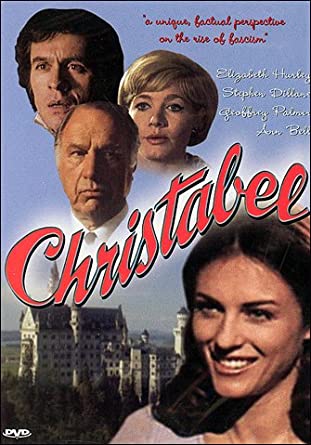
Originally a four-part miniseries adaption of the memoirs of Christabel Bielenberg, a woman who was married to a German lawyer during World War II, the version of this film on the Mill Creek The Excellent Eighties box set is two hours and twenty-seven minutes long, versus the four hour and twenty-minute original running time.

This is yet another example of a film on this set that has an early role for someone who would later become a major star. Christabel is played by Elizabeth Hurley, who had only appeared in the movie Aria and an episode of Inspector Morse before this.

This was written by Dennis Potter, who wrote Gorky Park and Pennies from Heaven. This movie really stood out to me because it showed just how quickly Hitler went from a joke that everyone ignored to something that they had to deal with someday soon to finally, a force that could jail them and destroy their lives. It felt — non-surprisingly — like the last four years of our lives.

THE EXCELLENT EIGHTIES: We Think the World of You (1988)

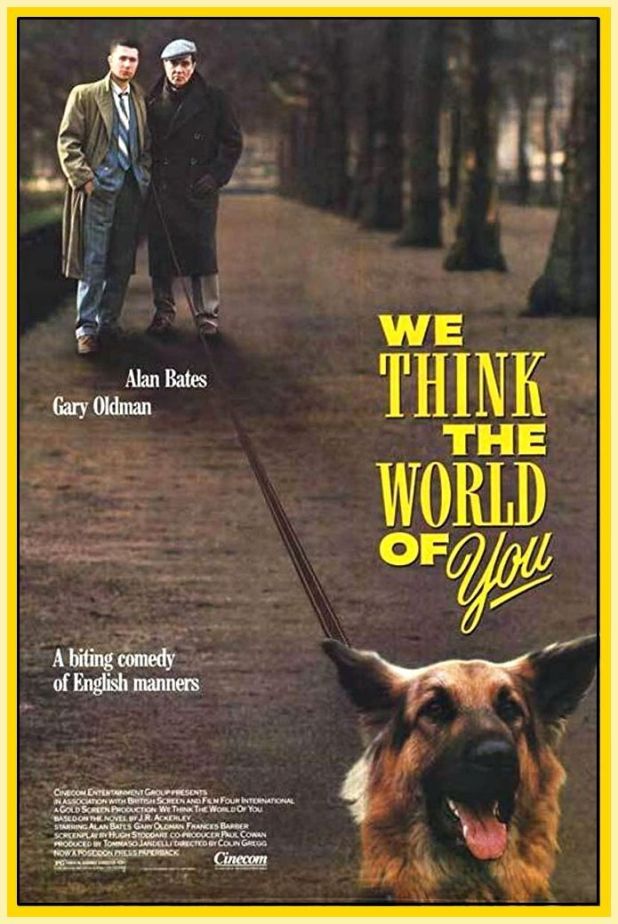
As London recovers from World War II, an aimless young man — who is bisexual and already married — named Johnny (Gary Oldman) is sent to prison. He gives his dog Evie to his parents, Tom and Millie, who are conniving at best and abusive at worst. The man who really falls in love with the dog is Johnny’s older ex-lover and best friend Frank (Alan Bates).

Based on the 1960 J.R. Ackerley novel, this film was directed by Colin Gregg, who also directed the Liam Neeson-starring Lamb, which you guessed it, is also on this Mill Creek box set.

If you ever wonder how much our world has changed, when the trailer for this movie played in the U.S., it was sold as a light-hearted comedy about a dog and nothing was said about the romance between two of its leads.

You can watch this on Tubi.

The Excellent Eighties: Night of the Sharks (1988)

Editor’s Note: We jammed on this sharkster back in 2018 for our “Bastard Pups of Jaws” week. Well, when Mill Creek boxes ’em up, you watch it again, for another take. Hey, Treat Williams stars and makes everything watchable, twice.

How is it that Mill Creek hasn’t done an all-shark disc set of every Jaws ripoff out there? Well, no worries. We love our Jaws ripoffs at B&S About Movies and included this obscurity as part of our “Bastard Pups of Jaws Week” on December 19, 2018. And we love our shark flicks so much, we rolled out a “Bastard Sons of Jaws Week.” Like we said: we love our shark flicks. And to the Italian, Spaniard, and Mexican filmmakers that make them: we thank you. And while we’d rather Micheal Sopkiw as our “Brody,” we get the very cool and always game Treat Williams in the bargain.

And a great poster. And the better the poster, the badder the film. And when we say bad, we mean “bad,” as in awful, and not “so bad it’s good.”

Treat, Treat, Treat. I get it, work is work. But when you have a contract slide over to your chair on a conference table at your agent’s office and it clearly shows the project is a joint Italian-Spanish-Mexican production . . . maybe just eat Campbell’s Tomato Soup and Cheese Sandwiches for a just a bit longer until a network TV guest spot pops up (you were great as ex-football star Jake Stanton on “Spiraling Down” for Law and Order: SVU, by the way). But there’s mortgages to pay and taxes to cover. Plus . . . you get a really nice vacation on a producer’s dime in the Dominican Republic (that’s doubling for Miami, Florida, and Cancun, Mexico, here).

Sure, other actors have done a lot worse than Night of the Sharks for just those reasons: but political intrigue, diamond theft, and man-eating pet sharks?

So we meet David Ziegler (Treat Williams; we’ve reviewed several of his films; we love ’em ‘ere at B&S), a ne’er-do-well beach bum who makes his way as a shark hunter with his buddy and business partner, Paco (Holy Crap! Antonio “Huggy Bear” Fargas from Starsky and Hutch!). Oh, and they have a “Cyclops” — their pet man-eating shark.

Then we meet David’s film-flaming brother James (Italian actor Carlo Mucari as the Americanized Charles Mucary); he’s got a corrupt businessman (John Steiner, aka Overlord, from Yor, Hunter from the Future) — with connections to the President of the United States — on the hook, so he decided to extort $2 million in diamonds. And James runs to David for help and upsets his peaceful, beach bum existence. And along comes the assassins. And David’s ex-wife (Janet Agren from City of the Living Dead, Eaten Alive!, and Hands of Steel), of course, gets involved to screw David for the diamonds that he took from James’s dead hand.

Or something like that. Yawn. When does the action start? When do get to the “We need a bigger boat” part?

Anyway, David decides to kick ass like a gunless-MacGyver — using only his martial arts skills, an array of blades — and his shark buddy. And along the way, Christopher Connelly from Atlantis Interceptors shows up as a priest because, well, it’s an Italian film and all Neapolitan ripoffs must have a priest in them, regardless of genre.

The twist of this mess is that it’s not even a shark movie: it’s a political intrigue-cum-diamond heist-cum mobster movie that figured a nice big shark on the theatrical one-sheet would sucker people to see the movie. And it worked. And don’t let it work on you. But it’s the always likeable Treat Williams — who always reminds me of Kurt Russell and vise-verse and how they never played brothers in a movie is beyond me.

Sure, you can stream Night of the Sharks on Amazon Prime with a subscription, but why? We found a freebie stream on You Tube.

About the Author: You can learn more about the writings of R.D Francis on Facebook. He also writes for B&S About Movies.

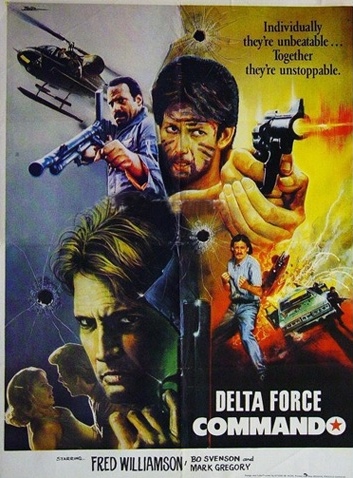
THE EXCELLENT EIGHTIES: Delta Force Commando (1988)

ABOUT THE AUTHOR: Robert Freese contributes to many different magazines, zines and websites such as Videoscope, Rue Morgue, Drive-in Asylum, Grindhouse Purgatory, Horror and Sons and Lunchmeat VHS. (His most recent piece, about the 80’s video distributor Super Video, can be found here). He also co-hosts the Two Librarians Walk into a Shelf podcast so he has an excuse to expose library patrons to ninja and slasher films. 

An unnamed terrorist leads a team of mercenaries onto a United States military base in Puerto Rico to steal a nuclear weapon. Commando Lt. Tony Turner witnesses the gang’s getaway. His pregnant wife is killed in the crossfire.

Vowing vengeance for his murdered wife and unborn child, Turner immediately commandeers Delta Force pilot Capt. Samuel Beck’s Mercedes and directs him at gun point to follow the goons. From this moment forward, Turner and Beck follow the rebels to Nicaragua and senselessly blow up so much property there is little left for Col. Keitel and the Delta Force calvary to sift through when they finally catch up with the rogue commandos.

For me, Delta Force Commando is perfect Saturday afternoon entertainment. It is an excellent example of the kind of movies I would rent with my brothers on VHS and devour over the weekend. All the thrills we craved to burn through a lazy afternoon are delivered here by the truckload: non-stop action, the obligatory scene where the hero packs his duffle bag with weapons, torture with some wires and a Diehard car battery, multiple shootouts, hand to hand smack-downs, a scar-faced villain, throwing knife mayhem, sling-shot mayhem, crossbow mayhem, macho one-liners, bodies destroyed in meaty bullet hits and copious, glorious explosions. They blow up everything in this movie: cars, buses, jet fighters, helicopters, trucks, bodies, bridges, buildings… I lost count after forty-three explosions, and every last one of them was old school gunpowder and gasoline pyrotechnics, no doubt pulled off by a pyro-effects wizard, probably missing a finger or two.

Fred “The Hammer” Williamson (Black Caesar) as Beck and Bo Svenson (Walking Tall Part 2) as Keitel have their names above the title, but Brett Clark as Turner, is the real star of the film. Like Michael Sopkiw before him, and Richard Anthony Crenna after him, Clark was given the chance of headlining an Italian production made for the international film market in the hopes of becoming a superstar like Clint Eastwood. Clark will be instantly recognizable to you, but you might not know him by name. We’ve been watching him since he first played one of the Camp Mohawk basketball players in Meatballs. He made all kinds of daytime soap and movie appearances. He’s maybe best known for his role of Nick “The Dick” in the Tom Hanks comedy Bachelor Party. (And if you aren’t familiar with “Mr. Dick,” you just need to watch Bachelor Party.)

Mark Gregory essays the role of the unnamed bad guy. Gregory is probably best known for his portrayal of post-apocalyptic hero Trash in 1990: The Bronx Warriors and the sequel, Escape from the Bronx. Here he sports some scabby facial make-up, short hair and a never wavering maniacal smile. Of all his performances I’ve seen, this is the first time Gregory appears to really be having fun with his character.

Director Frank Valenti (a nod to former president of the MPAA Jack Valenti, perhaps?) is really Pierluigi Ciriaci. Long time Italian movie scholars don’t need me to tell them writer David Parker Jr. is really Dardano Sacchetti.

To understand my appreciation for this flick, you really have to understand the era in which it was made. The 80’s were an amazing time of every kind of movie getting made, many receiving a theatrical release and almost all of them eventually showing up on home video or cable. One hit would begat dozens of similar follow-ups, from all over the world. Delta Force Commando was one of the many films that came into creation thanks to the always in demand action movie market and the success of films like Rambo: First Blood Part II, Commando and Missing in Action.

These films would get made, usually on low budgets, have a few recognizable stars, lots of action and sell tens of thousands, sometimes hundreds of thousands, of videotapes to the vid stores across the country. When Vista released this film on VHS, it was in every neighborhood video shoppe, in the new release section, right there next to 1988’s Rambo III.

For me, Delta Force Commando is way more entertaining than Rambo III. Of the two, Rambo III has some stunning action sequences, yes, but the characters talk too much, there’s too much plot and story and worst yet, the movie has a “message.” On the other hand, Delta Force Commando doesn’t have a “message” to bog down the action, and we can just munch popcorn and cheer on Lt. Turner as he turns the men responsible for his pregnant wife’s death inside out.

I had the opportunity to ask Dardano Sacchetti about his involvement with this film, as it is a film in which not a lot seems to be known about it. He had this to say, “The Ciriaci brothers had a supermarket and an oven that made bread in a small town near Rome. The oldest was very rich and the youngest wanted to be a director. My agent told me they would pay well for my script. I talked to them and they ended up making films from three of my scripts, but they did not come up roses. I only did it for the money, which turned out not to be very much, in a cloud of cigarette smoke and lots of Vodka.”

As far as the similarity of this title with a Cannon release around the same time, Sacchetti offers, “I believe my Delta Force was written a few months before the American one with Chuck Norris.”

When you’re in the mood for just watching a couple old-school guys blow up a lot of stuff in the name of vengeance, Delta Force Commando is a perfect pick.

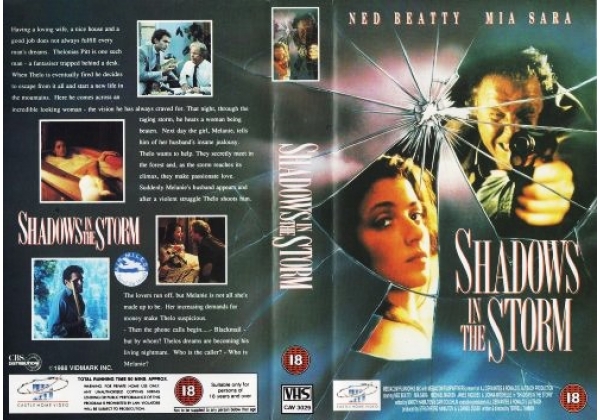
THE EXCELLENT EIGHTIES: Shadows in the Storm (1988)

This is a movie that posits that Ned Beatty could win over Mia Sara and killer her husband for that love. Of course, seeing that she looks exactly like the girl in his dreams could mean that this is all in his head, right?

I’m really obsessed by how a Mill Creek box set comes together, because this was directed by Terrell Tannen, who also made A Minor Miracle, which is on the same The Excellent Eighties set. Did he just sell his rights to them and they decided to toss them in on this? Was it part of an even bigger package deal? These are the things I keep myself up at nights wondering.

Also: Beatty’s character is named Thelonius Pitt, a name that could only exist in a movie.

This strange little noir film also has Michael Madsen in it and Troy Davis, who was Illinois State Police Trooper Charlie Bloch in Halloween 5 and the principal on Twin Peaks.

Now I’m in suspense over what madness awaits in the rest of this box set. Show me your wonders, Mill Creek!

Gorehouse Greats: Prime Evil (1988)

Mill Creek is a green company: they love to recycle, even if the film is celluloid compost. For Prime Evil is a film that we love and the “B” in B&S, Becca, calls it like she see it: shit. We reviewed this on February 1, 2020, for the first time on the first day of our Mill Creek month-long blowout as part of its inclusion on their B-Movie Blast 50-film pack. And here it is again, with a deserving slot on the more appropriate Gorehouse Greats 12-film set, which we are also unpacking this month. Viva (junk) Italian horror cinema!, we say, much to boss Becca’s dismay. Yeah, yeah, we know it’s not “Italian” and it’s shot in New York by Robert Finlay of Blood Sisters fame — but wow, it confuses like an Italian horror romp should.

Two reviews. One Movie. Thank you, Mill Creek. Shame on B&S About Movies.

Becca calls it as she see it, and accurately: For this really is a nonsensical piece o’ shit.

And we love ludicrous Italian horror movies (even when it’s not a ludicrous Italian horror movie, so there!). Even when the Italians shoot in the U.S. and try to be “American” and fail at it. It’s like all of those Philippine Namsploitation flicks that take place in Cambodia, but shoot in the Philippines, and place pictures of Ronald Reagan all over the set to make it look “American.” And it’s all ripping off The Exorcist and The Amityville Horror. So, yeah, when the Italians go Satanic with heaping helpings of the occult, regardless of the confusion, we say, “GO TEAM NEAPOLITAN!”

But Roberta Findlay, she of the many o’ softcore sex flicks, such as Honeysuckle Rose — no, not the 1980 one with Willie Nelson; the 1979 one with John Holmes — made this. Yes, the same one who made the “adult comedy” Liquid A$$ets with Samantha Fox and Veronica Hart. And Roberts hits all of Italian junk cinema plot points we know and love, here:

You want a black mass in a church? Check.

You want a priest — a centuries old one at that — who not only lords over a group of chanting robed monks, he also sidelines as a drug dealer? Check.

You want a crazy, pseudo-implied pedophile who lords over his granddaughter to keep her as a virgin for a Satanic sacrifice? Check.

A boyfriend who is useless in the damsel-in-distress department. Check.

A nun who pretends to hate God so she can infiltrate the cult. Check.

Remember in Rocktober Blood, all of the out-of-place aerobics? Check.

Remember the Satan puppets in the “No False Metal” classic that is Rock ‘n’ Roll Nightmare? Check.

And to Crown International Pictures for distributing this mess in the U.S., we thank you. You can watch this on YouTube, but learn what you’re getting into with this clip from the film. You can get the restore-disc from Vinegar Syndrome.

About the Author: You can learn more about the writings of R.D Francis on Facebook. He also writes for B&S About Movies.

B-MOVIE BLAST: Prime Evil (1988)

Mid-way through watching Prime Evil, Becca asked me, “Why do you like this piece of shit so much?”

I answered, “This is like an Italian movie that makes no sense, yet made somewhere in the United States and it just keeps getting more and more ludicrous. Of course I love it. I might love it more with each passing second.”

She asked me to put back on her true crime show.

The real answer why I loved this so much is that it’s a late model Roberta Findlay movie and as we all know, Roberta knows how to make a scuzzy movie. She knows her audience and in this one, we want Satanic shenanigans, occult meanderings that make little to no sense and way too many characters to keep track of.

This is the kind of movie where a church lent their building for the shoot, even allowing the crew to sleep there and stay warm, and they still went and shot a Black Mass there. That takes the kind of balls that makes complete junk, the kind of cinematic smack that I inject directly into my eyeballs.

Father Thomas Seaton is a centuries old priest who has an entire cult of robed maniacs just waiting to get together and chant stuff, but he’s also a multi-tasker, because he has a handyman who is pushing a new kind of street drug on prostitutes and then there’s this dude named George who is keeping his granddaughter a virgin so he can sacrifice her to his sweet Satan but her boyfriend Bill keeps trying to get up in her ladybusiness, even when she tells him on a romantic ride through Central Park that she’s been abused, which is not a good look.

There’s also a nun named Sister Angela who pretends that she hates God and infiltrates the cult. In between all of this wrestling between Heaven, Hell and a puppet Satan, there is plenty of aerobics.

Obviously, I loved this, but my love of crap is probably in a plane much lower than yours. To anyone else, approach with caution. To those who see the Crown International Pictures logo and get a little wistful, you’re my kind of people.

You can watch this on YouTube. Also, this movie was made for Vinegar Syndrome, who released it on a double disc with Lurkers.

ANOTHER TAKE ON: El Violador Infernal (1988)

ABOUT THE AUTHOR: Herbert P. Caine is the pseudonym of a frustrated academic and genre movie fan in Pennsylvania. You can read his blog at https://imaginaryuniverseshpc.blogspot.com.

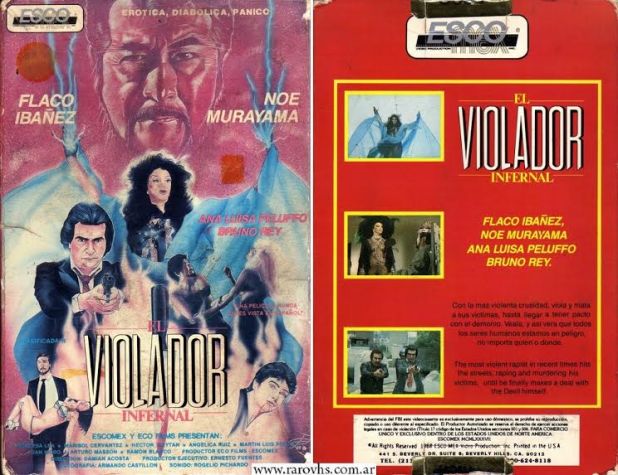
This film’s title translates to “The Infernal Rapist.” Yep, you read that right, “The Infernal Rapist.” Why did they think this was a good title? Were “The Obviously Evil Rapist” and “The Man with Consent Issues” taken? Were the producers afraid that we’d confuse this film with some obscure franchise called “The Gentle Rapist”? We know that rapists are evil!

I watched this film largely based on curiosity rooted in its garish title. Unfortunately, I could not find a subtitled or dubbed version of it. (I don’t think it has ever received an official release here.) Consequently, I was left with a Spanish language only version on YouTube. Fortunately, the plot is not difficult to follow.

El Violador Infernal follows the adventures of Carlos “El Gato,” a serial killer and rapist who is about to die in the electric chair. After being unconvincingly electrocuted, Carlos receives a vision of the devil, who bears an odd resemblance to Cher. SatanCher offers Carlos a deal: in exchange for renouncing his religion and carrying out regular human sacrifices, Carlos will be given a new lease on life as a wealthy drug dealer. Carlos jumps at the chance, as a rapist isn’t all that faithful a Christian anyway.

If nothing else, the film realizes that its mission is to shock, as it immediately moves on to our protagonist sexually assaulting another man. Although this probably constitutes the most “transgressive” scene in the movie – keep in mind that homosexuality was far less accepted in the 1980s – it is probably the least graphic rape scene in the film, with a fully-clothed Carlos humping the also-clothed victim. Never mind Deliverance, this scene won’t even make you forget the scene from Kingpin where Woody Harrelson fantasizes about pimping out Randy Quaid. Subsequent scenes are far more explicit.

There’s no getting around the fact that the rape scenes in El Violador Infernal are disturbing to watch. Although the acting in this film is not great, the women involved make a convincing show of being terrified and disgusted by what is happening to them. The film rather sleazily draws out these sequences, making them all the more disgusting and uncomfortable. The director failed to comprehend that a rape scene does not need to be drawn out to be shocking. Consider, for example, the rape in Abel Ferrara’s Ms. .45, which lasts for a minute at most but takes the viewer completely off guard.

The film also suffers from terrible special effects. Although there are not many effects scenes in the film, the few included are laughably bad. As part of his deal with SatanCher, Carlos gains the ability to shoot lasers out of his eyes. The “lasers” are obviously just red lines drawn on to the film. In some scenes, they don’t even connect to his eyes. In another scene where Carlos levitates one of his victims, you can just make out the harness holding her in the air.

Given the sleaziness and low budget of the film, you would assume it was populated with unknowns, but that is not the case. Carlos is portrayed by Noé Murayama, a Japanese-Mexican actor who appeared in over 150 films and numerous television shows. Princesa Lea, who plays one of the objects of Carlos’s affections, was a popular vedette, or cabaret entertainer.

In the end, this film is not worth the time it takes to watch, let alone without subtitles. If you’re determined to see it, it is available on YouTube without subtitles.

Cinema Paradiso (1988)

Every once in a while, I finally have a movie on the site that I can share with my mom.

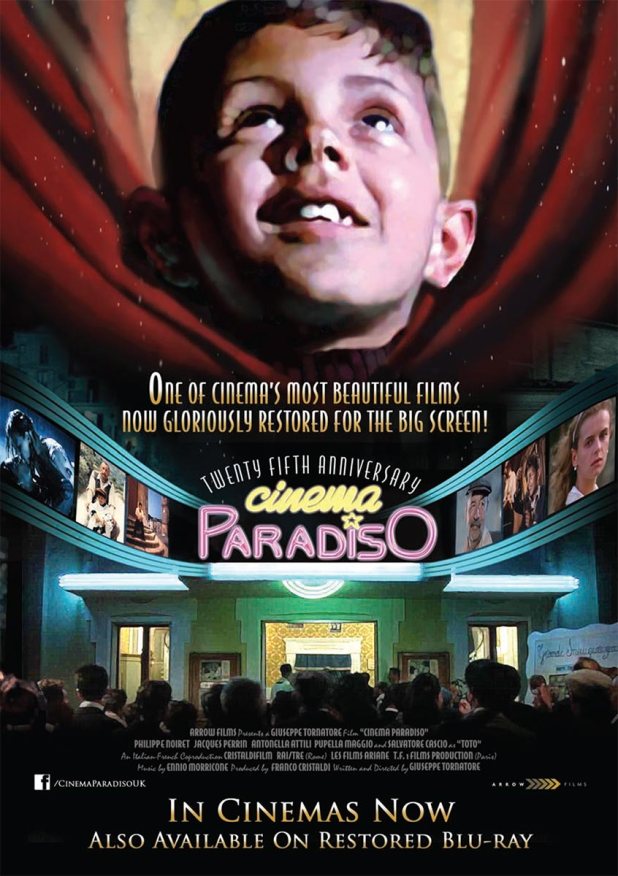
New Paradise Cinema was written and directed by Giuseppe Tornatore and was well-known in the U.S. when it came out in 1988, winning the Best Foreign Film Academy Award.

One morning in Rome, a famous film director named Salvatore Di Vita — played by a real-life famous filmmaker, Jacques Perrin — wakes up to his girlfriend telling him that Alfredo has died. She has no idea who that is, as Salvatore is a closed book, a man who will not commit and who has not returned home for three decades. This is but the beginning of the story.

Eight years after World War II, Salvatore was Toto, the son of a widow who spends every second that he can at Cinema Paradiso, the movie house where he becomes friends with Alfredo (Philippe Noiret, Topaz), a middle-aged man who allows him to sit in the projection booth and watch the films. As Rome is such a religious town, the local priests have demanded that any moment of romance must be deleted from the films, at which point the audience shots in anger.

Toto soon learns to run the projector, but one night, as he steals the projector to watch The Firemen of Viggiù on a wall of a house, the cinema catches on fire. Toto saves his friend, but a film canister explodes, destroying the man’s sight. When the theater is rebuilt, Toto becomes the projectionist and Alfredo assists him.

After growing up, Salvatore falls for the young Elena Mendola, an experience that teaches him love but breaks his heart when she must move away and is forbidden to even write him. He has also started to make films of his own. Alfredo tells the young man that he must leave his hometown behind and devote himself to being an artist. He must never visit. He must never give in to nostalgia.

Now, thirty years later, Cinema Paradiso is being torn down to make a parking lot and the people of the town carry Alfredo’s coffin through the streets. The projectionist’s widow has something that the old man left for the filmmaker, though. All of the scenes of kissing, of lust, of love — all the moments that the clergy demanded destroyed — all survived to make one reel of romantic longing that Alfredo had kept for Salvatore for all these years. Watching this movie allows the now old Toto to make peace with where he came from.

The director’s cut of the film shows what happens when an older Salvator and Elena meet and the note that she had sent him decades ago, one that Alfredo had kept hidden inside Cinema Paradiso, all so that his friend could become a success.

Made in Bagheria, Sicily, Tornatore’s hometown, this film was inspired by the director’s childhood. He originally wanted it to be an obituary for traditional movie theatres and the movie industry.

The Arrow Video release of this film — on DVD, blu ray or UHD — is exactly as special as you’d hope that it would be. Beyond two high definition versions of the film (the 124-minute theatrical version and the 174-minute Director€’s Cut), there’s also commentary from Tornatore and Italian cinema expert critic Millicent Marcus, a 52-minute documentary on the director’s life, a making-of and even a feature about the kissing sequence where Tornatore discusses each clip and where it comes from.

If you love film, I don’t need to tell you that you must own this movie. You can get it from MVD.