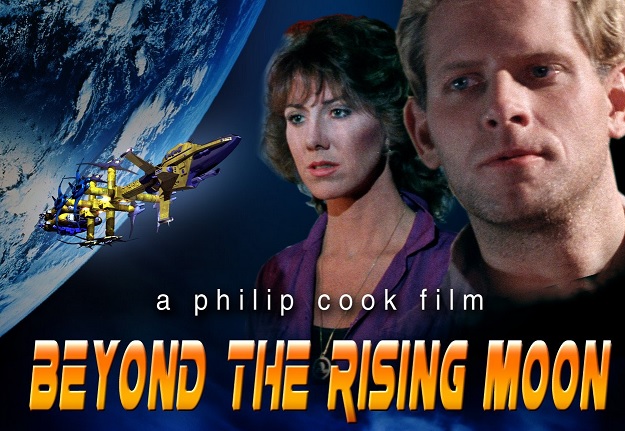
Beyond the Rising Moon (1987)

It all began in the mid-’80s when independent Virginia filmmaker Philip Cook produced his first feature film — for a reported $8,000. Known as Pentan, after the film’s title character, his low-budgeted effort saw a limited, regional theatrical distribution as Beyond the Rising Moon in 1987. By the mid-’90s, before the Sci-Fi Channel added the double-Ys, the film played under the cable title — with a little CGI revamping — as Star Quest: Beyond the Rising Moon in 1995. Then, with the advent of the DVD age and digital streaming, Cook, who was never satisfied with the end product, re-edited the film — with a second batch of then, more-current CGI effects — and reissued the film as Outerworld in 2007 for Amazon Prime and Netflix streaming (and Cook changed out the soundtrack of the original cut). The subsequent DVD-release includes the 1995 cut of Star Quest: Beyond the Rising Moon, along with a 15-minute “making of” featurette, a 10-minute deleted scenes reel, and art galleries tracing the film’s production.

If you read our recent reviews for Ares 11, Space Trucker Bruce, and Monty Light’s recent offering, Space, you know we love our inventive, up-against-the-budget “in space” flicks. And, as with those films, considering Cook completed the first version on a limited budget, the models and miniatures he designed, and the costumes and the “worlds” he created are a lot of fun to watch. The acting, while everyone is certainly giving the best to their abilities (they’re “underplaying” too much), is not a lot of fun to watch. It’s not awful, but we’re not exactly getting Sigourney Weaver and Harrison Ford with our leads.
Watch the trailer.

In a world where Aliens meets Star Wars — with pinches of Blade Runner (and foretells Roland Emmerich’s later Moon 44), we meet Pentan (Tracy Davis, in her acting debut; vanished from the biz shortly after), an Earth-made, genetically-engineered female cyborg used by a Weyland-styled corporation to clean up their galactic messes. Designed without emotions, she finally comes to develop a conscious and wants out. The “out” comes in form of her newest assignment: track down the location of a crashed alien ship. Since the technology is worth millions, Pentan decides to double cross her employer and sell the technology on the open market. So, in order for our faux-Replicant Ripley to pull off this space caper, she needs a “Han Solo” as a partner: he comes in the form of Brickman (Hans Bachmann, in his acting debut, vanished from the biz shortly after), a desperate space rogue with a price on his head and a ship-for-hire.

The mid-90s VHS. Thanks, Paul!

In the end: The practical effects, matte paintings, blue screens and plate shots (there were no large sets; actors were “processed” into miniatures), and spaceship miniatures produced in 1987 as Beyond the Rising Moon, is the best version of the film. While more money was spent — just over $120,000 — on the subsequent 1995 and 2007 reissues, the CGI didn’t make the galactic proceedings any better. And while the CGI is weak, it doesn’t mesh well with the practical effects and makes those ’80s-era effects look ever more dated than they are. This was the same problem many of us has with George Lucas’s constant re-tweaking of his initial Star Wars trilogy, in his attempt to have his first trilogy meshed with the new trilogy. The once acceptable, late ’80s miniatures from the Gerry Anderson Space: 1999-verse of Cook’s vision simply do not mesh with 21st century CGI. So, in our opinion, it’s ’87 theatrical over the ’95 Sci-Fi Channel version — and both of those version over the 2007 streaming version.

If you’ve exposed yourself to a lot of ’80s VHS-era sci-fi movies (such as moi), the production levels of Beyond the Rising Moon may evoke memories of New World Pictures’ better-known, 1986 direct-to-video feature, Star Crystal*. While that weak Alien-cum-E.T hybrid may have had the touch-of-Corman to its credit (but a still-strained cast of first-time-and-soon-gone actors), it makes Philip Cook’s efforts even more impressive. A little bit more money and more-established actors at his disposal, Cook’s debut could have risen to the level of William Malone’s Creature, which goes down as one of the best Alien-clones.

Yeah, I dig this movie. As an actor myself, I’d would have enjoyed working on this film.

While you can watch the later versions on streaming platforms, stick with this superior 1987 version — and be impressed by its creativity and ingenuity — that we found on You Tube. You can learn more about the film’s production and check out stills on Philip Cook’s official website for Eagle Films. While there, you can learn more about his other sci-fi films, Invader (1992) and Despiser (2003).

* We’ve never gotten around to giving Star Crystal a full review proper, but we do discuss it in passing as part of our “A Whole Bunch of Alien Rip-Offs” and “Ten Movies that Ripped-Off Alien” featurettes. Also don’t forget our “Movies in Outer Space” tribute of more films to enjoy. . . . Never say never . . . when a film gets stuck in your head! We finally gave Star Crystal a review proper, it’s coming up at 6 PM this evening.
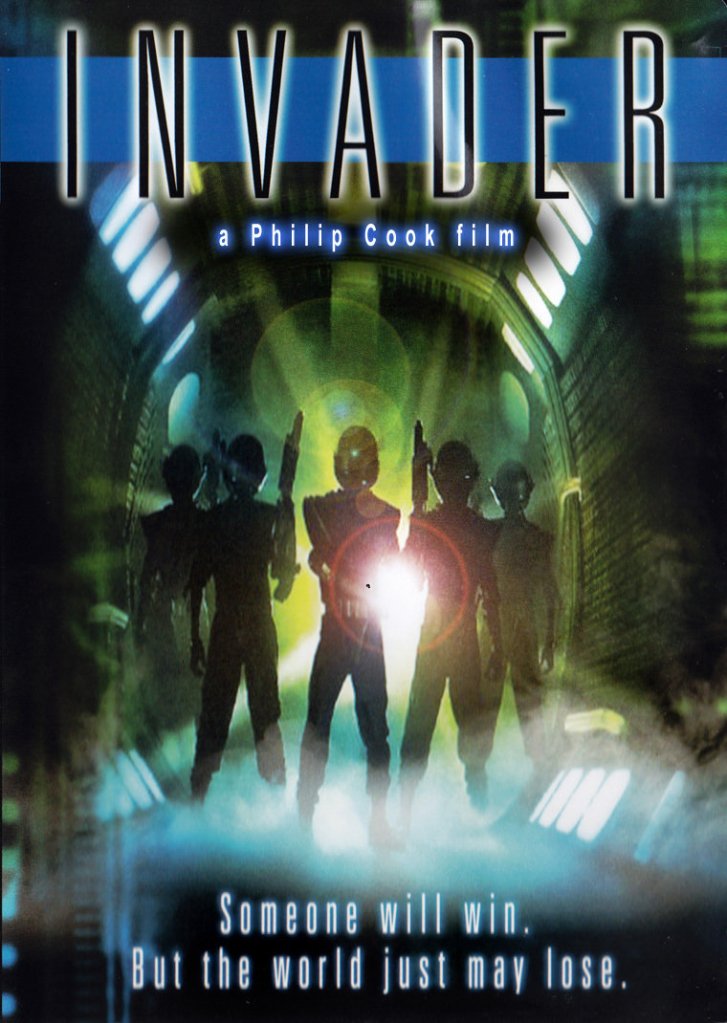
You can now watch the Outerworld cut of Beyond the Rising Moon, as well as Cook’s follow up, Invader, on Tubi — which we finally reviewed proper as part of our “Cannon Month” tribute of reviews. The same goes for Despiser on Tubi — which we reviewed as part of our January 2023, two-week “SOV Week” tribute.

About the Author: You can learn more about the writings of R.D Francis on Facebook. He also writes for B&S About Movies.
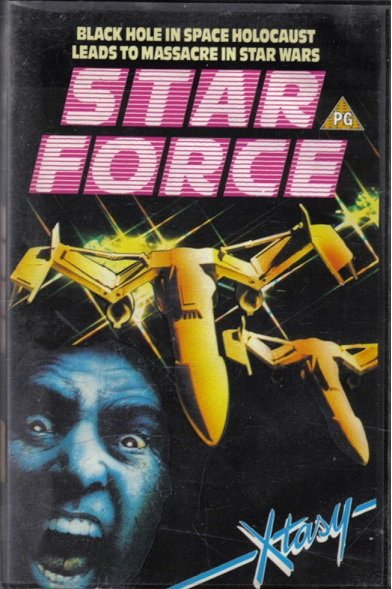
Star Force: Fugitive Alien II (1987)

Ken Shinsei the Star Wolf and the crew of the Bacchus 3 — drunken Captain Joe, angry Rocky, lovestruck Tammy, Dan and Billy — as they battle Ken’s old planet Valna Star and the forces of the evil emperor who looks nothing like Darth Vader, not at all.

As we mentioned in our review of the original Fugitive Alien, these stories were originally written by Edmond Hamilton, who grew up in the next town over from my childhood home between Youngstown, OH and New Castle, PA. He started his career writing for pulps like Weird Tales, spent 14 years writing for DC Comics and then published several novels. A year before his death, Toei Animation produced an anime of his Captain Future novels that became popular not only in Japan, but also in France, Italy and Germany. The very same year, Tsuburaya Productions adapted Star Wolf into a tokusatsu series and that’s where we get Fugitive Alien.

Sure, you could write this off as a Star Wars ripoff, but in truth, it could even be the other way around, as the first Star Wolf book was published in 1967.

You can watch this on YouTube.

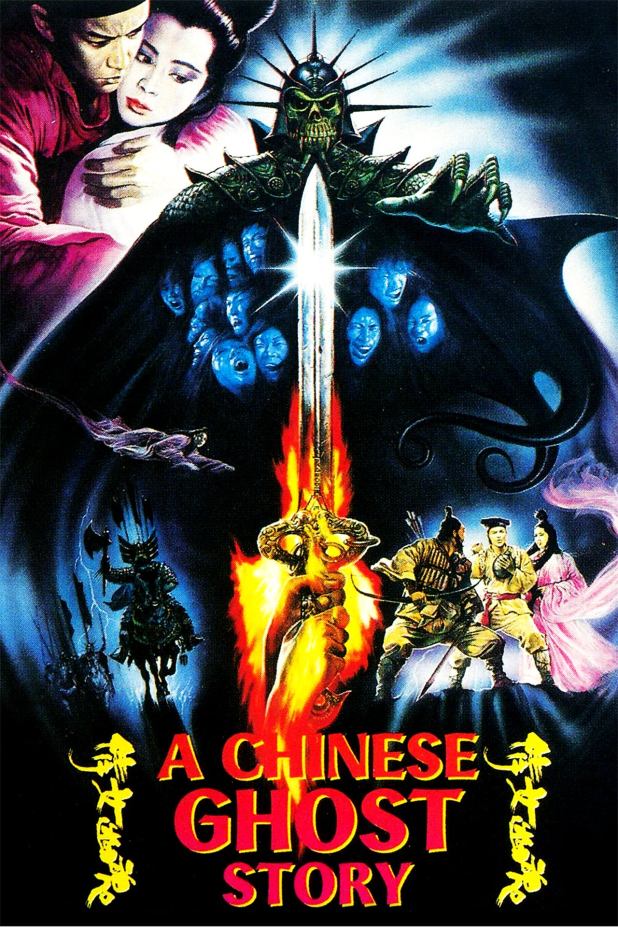
WATCH THE SERIES: A Chinese Ghost Story

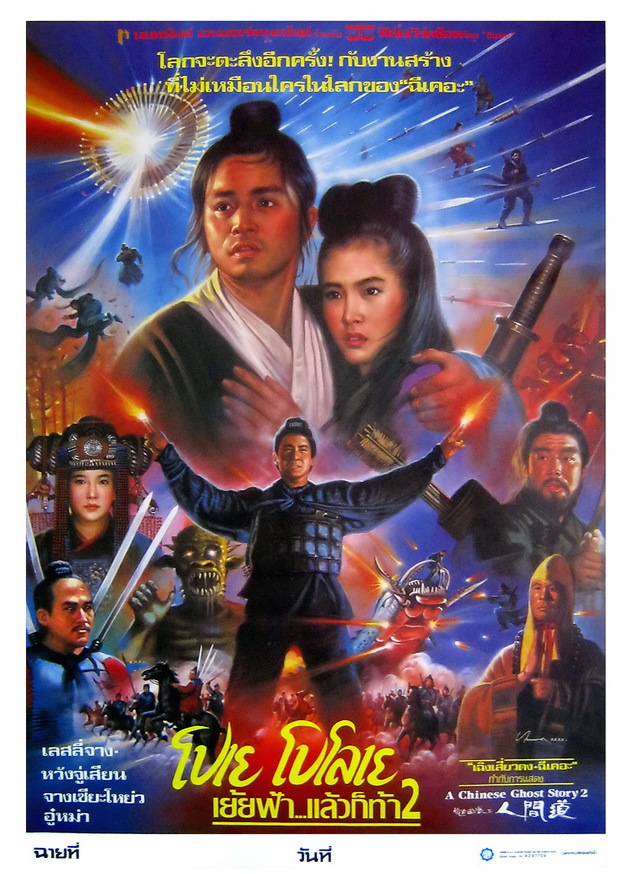
Based on a short story about Nie Xiaoqian from Qing dynasty writer Pu Songling’s Strange Stories from a Chinese Studio and inspired by the 1960 Shaw Brothers movie The Enchanting ShadowA Chinee Ghost Story inspired more than just two sequels, an animated film, a television series and a 2011 remake. It also created an entire genre of folklore ghost stories.

Its director, Ching Siu-tung, studied in the Eastern Drama Academy and trained in Northern Style Kung Fu for seven years. His father, Ching Gong, was a Shaw Brothers director. While producer Tsui Hark got most of the credit for these films, Siu-tung has done well for himself, also directing The Swordsman series of movies and choreographing House of Flying Daggers and Shaolin Soccer.

In the first film, tax collector Ning Choi-san (Leslie Cheung) fails at his job and must sleep in a deserted temple. There, he falls in love with Nip Siu-sin (Joey Wong), yet discovers in the morning that she is a ghost forever enslaved to a tree demoness. When Ning tries to save her and fails, her soul goes to the underworld.

This film is a gorgeous meditation on unrequited love. Even with the help of Taoist priest Yin Chik-ha (Wu Ma), the best our hero can do is secure a better afterlife for his one true love.

1990’s A Chinese Ghost Story II starts with Ning and Yin parting ways, with Ning heading back to his hometown that has been overrun with cannibals. After being jailed and condemned to die, an ancient scholar reveals that he has dug an escape tunnel. He gives Ning a book and a pendant, then shows him the way to freedom.

In this film, Ning joins with Autumn (Jacky Cheung) and the rebel sisters Windy (Joy Wong) and Moon (Michelle Reis) to battle a demon that has taken over a mansion. And by demon, a mean a gigantic centipede that requires fighters to separate the souls from their bodies to defeat it.

Recently, Apple pulled the theme song of this movie from the Apple Music Store, as it features a reference to the masscre at Tiananmen Square Massacre:

“The youth are angry, and heaven and earth are shedding tears,

How did the rivers and mountains become a sea of blood?

How did the road to home become the road to ruin?”

Why would Apple pull a song that rightfully condemns China for their role in killing protesters? Well, you know how money works.

1991’s A Chinese Ghost Story III brings back the tree demon from the first film, a creature that is destined to return in a hundred years. This film is also about Monk Shi Fang (Tony Leung Chiu-Wai) and Swordsman Yin (Jacky Cheung), named after the original Taoist. The tree demon also has a ghost in its thrall, Lotus (Joey Wong).

This is the kind of movie where towers rise to block out all the sun on Earth and Shi Fang’s body is coated in his own golden blood, which allows him to channel the power of the Buddha to bring the sun back. Basically, things get nuts.

If you fall in love with these movies, remember that there was a cartoon and a 2011 remake to keep you watching.

The Lawnmower Man: A Suburban Nightmare (1987)

Another Stephen King Dollar Baby short film — so-called because low-budget filmmakers could make one of his scripts for a $1 —  The Lawnmower Man: A Suburban Nightmare was written by future screenwriter and New Line Cinema production executive Michael De Luca, who also wrote  Freddy’s Dead: The Final Nightmare, In the Mouth of Madness and Judge Dredd.

The film was made while Gonis was a junior at New York University and only cost $5,000. It played the first Dollar Baby festival and a screening of King films at the Stanley Hotel that inspired The Shining.

If you’re wondering, “Why is this nothing like the Hollywood version?” Well, that version was so different from King’s — and played Japan under the name Virtual Wars — that King sued and got his name removed.

You can watch this on YouTube.

Terminal Entry (1987)

The computer . . . some people think it’s a high tech toy. But this is no toy!
— copywriting department gobbledygook

You’re David Mickey Evans: A budding screenwriter that wants to break into the business with two, deeply personal screenplays—Radio Flyer (1990) and The Sandlot (1993)—that enrapture the innocence of your childhood and lifelong love of baseball.

Access denied, kid!

You’re trying to “make your break” during the slasher ‘80s. And this is the movie business—the operative word being business—and La-La Land stands at the foot of Mount Lee to make money, kid. And they’re not here to give people the warm fuzzies about their lost childhood.

So you come to the realization you’ll have to write “for the marketplace,” so you come up with a slasher script for your screenwriting debut, Multiple Listings, that’s bastardized into 1987’s Open House. Then you’re employed as a writer-for-hire on a WarGames (1983) knock-off. . . .

“Give me Risky Business with a computer, kid.”
— Fat cat studio executive

Just take those old computer from the shelf / I am hacking them here all by myself / I just want some old time hacking codes

“Kids and computers, kid. Kids and computers. Smart-ass teen hackers and kiddie tech nerds sell tickets,” stogie-belches the studio fat cat as he perches his wing-tipped spats on his ostentatious oak desk. “But give me a My Science Project (1985) or The Manhattan Project (1986), kid; not a shit-storm Prime Risk (1985). And we want it quick, there’s some movie Defense Play (1988) in production and we need to beat ’em to the theaters. And none of that personal childhood crap. You want to relive your baseball dreams, go play a pick-up game in Griffith Park and gander at The Hollywood Sign from afar. And I want action with those smart-ass remarks and no introspective statements about man losing his humanity to technology, either. Now get out of here, kid. I have a ‘nooner’ coming in, I mean, I’m casting a part.”

And the executive cheeses that script with a “design” for the poster of what becomes Terminal Entry (1987): Black-clad terrorist dudes superimposed-running across and attacking an IBM PC, complete with a Tom Cruise Risky Business-inspired smart ass wearing a chef’s hat in the background.

But Terminal Entry worked out reasonably well on cable and home video, so you’re hired to complete uncredited re-writes on a sci-fi clunker, Class of 1999 (1990; sequel to the superior Class of 1984). Again, the end product wasn’t so great, but it did reasonably from a financial, if not critical, standpoint. So now the wing-tipped fat cats are willing to take a look at those two “personal” screenplays—Radio Flyer (1990) and The Sandlot (1993). And you’ve become the toast of Hollywood as one of the highest paid screenwriters of the ‘90s, with sales of over $1 million for each script.

But let’s back to the “Ancient Future” frolic that couldn’t get Tom Cruise as their lead, since he was already off into the wild, blue younger with Top Gun and, luckily, he avoided all the computer crap. And the producers couldn’t come up with a script, so they simply lifted the plot of WarGames hook, line, and CRT monitor.

You remember the plot of WarGames? David Lightman wanted to be the first to play Protovision’s new line of video games, so he attempted to hack into their mainframe . . . and instead hacked into NORAD’s defense computer.

Then you’re up to speed on the (non) story in Terminal Entry.

The gool ol’ U.S.A is under a cyber attack by overseas (Middle Eastern, natch) terrorists trying to access a military satellite. Meanwhile, a group of high school computer nerds want to play a new video game. And they inadvertently hack the terrorist’s stolen password and—instead of the WOPR—they gain access to the defense network satellite. And the kids think they’re “playing the game,” but actually issuing mission directives to the the terrorists to assassinate officials and blow up buildings across the U.S.

What can we tell ya, R2. Times were for tough for Yaphet Kotto (Alien) and Edward Albert (Galaxy of Terror) who must had some laughs at the honeywagon over that career common denominator. Oh, and this makes two Tracy Brooks Swope movies we’ve reviewed at this site: she’s part of our upcoming “Lee Majors Week” with her work in Keaton’s Cop. And speaking of Tracy and our need to see actors in multiple movies: Patrick Labyorteaux from Heathers is in here. Oh, and if you ever wondered what happened to Rob Stone, the eldest son Kevin from the ’80s TV sitcom Mr. Belvedere, he’s here as one of the computer nerds.

And one Patrick and one Rob does not a Tom Cruise make. For this is Terminal Crap, indeed.

You can watch the full movie on You Tube—a full VHS rip complete with opening trailers! Check out the trailer, here.

Be sure to look for my “80s Computer Week” review tributes to Prime Risk and Defense Play, this week. And, we did a whole week of reviews in honor of Lee Majors and his films, so we’re rolling Keaton’s Cop, as well, in the coming weeks.

About the Author: You can read the music and film reviews of R.D Francis on Medium and learn more about his work on Facebook. He also writes for B&S Movies.

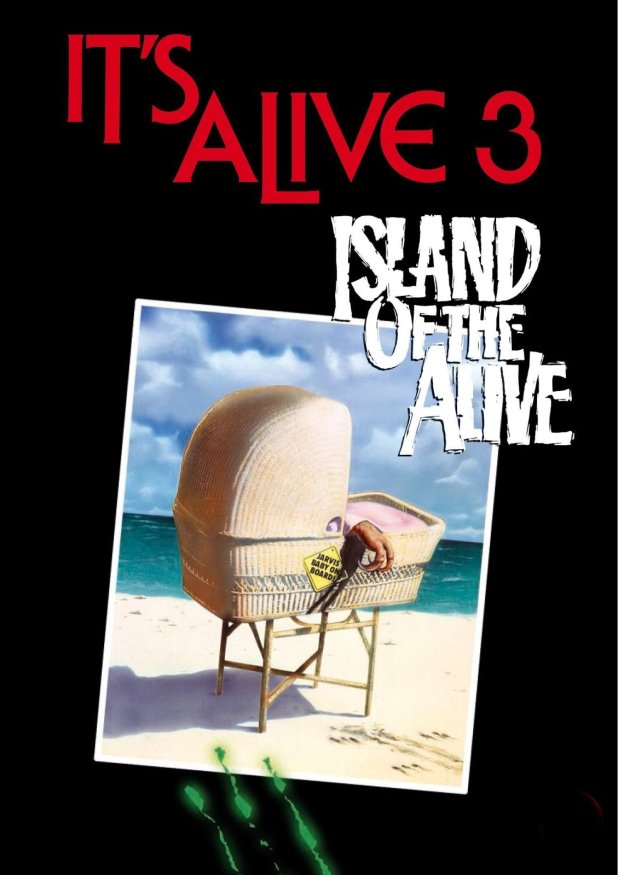
It’s Alive III: Island of the Alive (1987)

This movie has an all-star cast and by that I mean an all-star cast for me. Michael Moriarty? Gerrit Graham? Laurene Landon? Karen Black?

Stephen Jarvis (Moriarty) and Ellen Jarvis (Black) had a mutant child that she wants to forget and society wants to exile on an island, where the drug company who caused all this sends soldiers to kill the children. Of course, the kids kill and eat everyone, because these babies are nature’s most amazing predators.

Somehow, another journey to the island ends exactly the same way, with Jarvis surviving because one of the mutants is his son and also because they have a supply of human bodies to eat and need him alive. He ends up in Cuba, where he’s treated way better than he is in the United States, and when he gets back to Florida, the children have sought out Ellen to raise one of their children.

Also, a giant baby wipes out cop after cop after cop.

Larry Cohen’s third movie in the series, this came about after Warner Brothers wanted him to remake House of Wax. Instead, he made this film and A Return to Salem’s Lot.

If the beginning of this movie seems familiar, it was also used in the Dirty Harry movie The Dead Pool. But hey, Larry Cohen was all about recycling. He used footage from The Old Man and the Sea for the sharks and ocean shots from The Sea Chase.

You know, people have made fun of this movie when they tell me about it and they were wrong. Sure, the effects are somewhat dated, but so what? You have Michael Moriarty being as insane as he always is, going off in every single scene, and mutant children with mental powers eating human beings. That’s the kind of movie that I choose to watch over almost anything else.

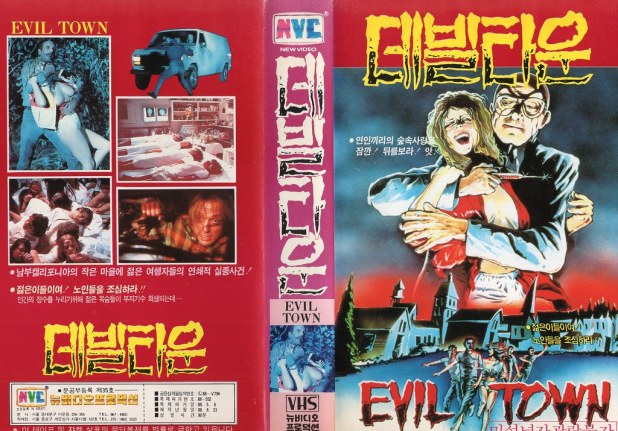
Evil Town (1987)

This movie is a mess and I love it. A glorious four director thrown together junkfest that started filming in 1984, as well as containing footage coming from an unfinished Dean Jagger movie made a decade before, God Bless Dr. Shagetz. Then, to spice things up, Gary Graver’s wife — and Fonzie’s girlfriend Lorraine — Jillian Kesner-Graver and Playboy Playmate of the Month for June 1982, Lynda Wiesmeier, show up for the “foreign sales.”

A group of four friends end up in a small town where young people just happen to disappear, all because there are some old folks using young folks to become young folks again.

One of the directors of this movie, Mardi Rustam, liked the idea so much that he made his own take on it and that would be Evils of the Night, which may be the better movie and definitely came out two years before this one finally got completed. That said, how many movies have an evil Hope Summers from The Andy Griffith Show?

You can get this from Vinegar Syndrome.

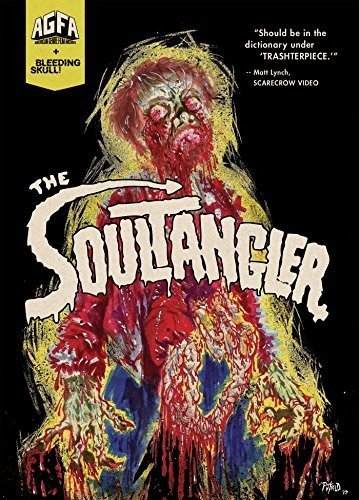
The Soultangler (1987)

Dr. Anton Lupesky has developed a drug named Anphorium, which allows the soul to leave the body and enters any corpse with eyes. Of course, the drawback is that sometimes, the fatal hallucinations that result make the drug’s users into raving lunatics. Shot for $8,000 in seven days in Long Island, starring friends and relatives of director Pat Bishow, this is a regional delight.

The original version of this movie was 62 minutes and that’s really all it needs to be. It does not need any of the filler that was added, because we’re here to see people get killed and have cerebellum destroying drug trips.

There’s going to be a whole Shot on Video (SOV) week coming up on our site and this is a good first course. It’s filled with everything the best films in this genre — media? — have: acting so strange that it feels like aliens are in the cast, synth music that is shockingly awesome, monstrous levels of gore, dream sequences that are actually frightening and the feeling that you just might be watching a cursed videotape.

This is the kind of movie that normal people rented at the video store and talked about for years, saying stuff like, “What was the name of that weird horror movie that we rented back in 1988 that we hated so much?” Screw those people. This movie always finds its audience. It may find you. I hope so.

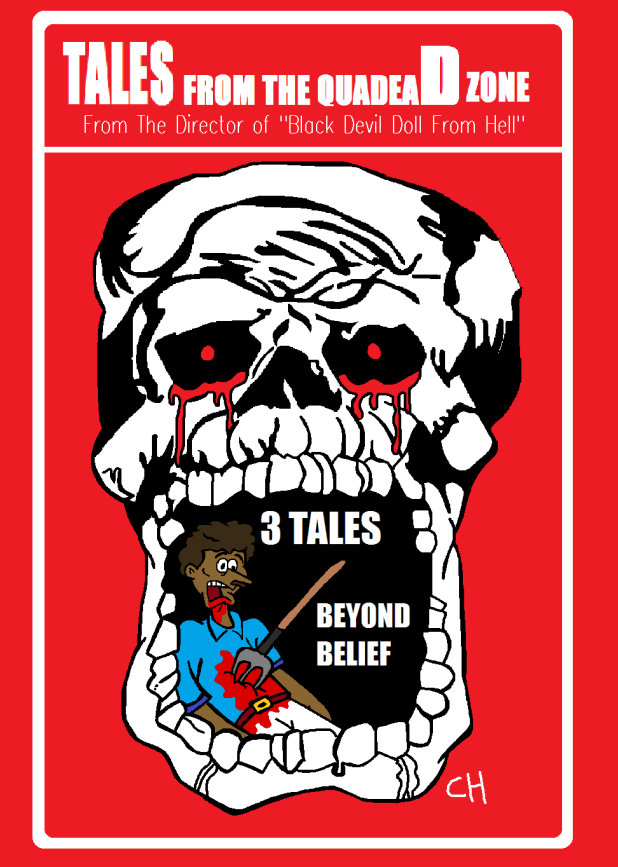
Tales from the QuadeaD Zone (1987)

Shirley Latanya Jones (Black Devil Doll from Hell) is the star of this Shot On Video (SOV) anthology — can two stories be an anthology? — as she reads to her dead son from a book called Tales from the QuadeaD Zone.

The first one, “Food for ?” is all about a redneck family getting killed because they can’t afford enough food for everyone. Then, “The Brothers” has an evil zombie clown from Hell, so it has that going for it. You know, if you hate a sibling and then they die, maybe don’t paint them up like a clown.

Then, Shirley kills her boyfriend.

Hand drawn titles, barely competent cinematography and tons of gore. What’s not to enjoy?

Director Chester Novell Turner worked in home remodeling and wrote horror stories on the side before making this movie and Black Devil Doll From Hell. He was unhappy with how Hollywood Home Video sold his first movie, so he distributed this one himself. There were about a hundred copies of this movie sold in Chicago and that was it. After all, there was a rumor that Turner had died in a 1996 car accident. Happily, Louis Justin of Massacre Video found him in order to get the rights to release this movie on DVD.

This isn’t a good movie. But you have to give it to Turner. He had a dream and he took his shot.

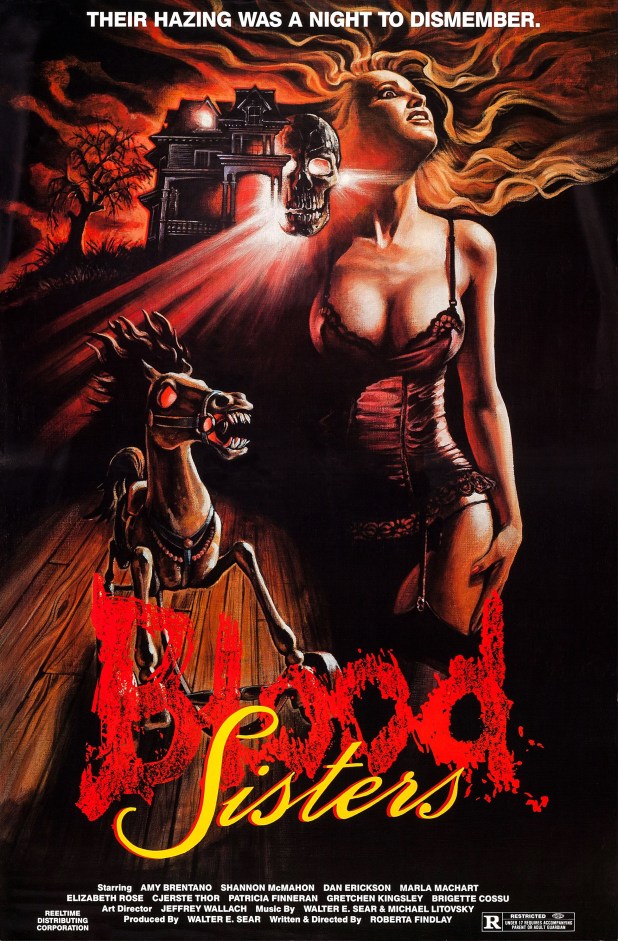
Blood Sisters (1987)

You know, I find myself loving the films of Roberta Findlay more and more. They never have a great budget. They rarely have anything even approaching bad acting. And yet every time, I stick with them because she knows how to make a cheap exploitation movie. Isn’t that what it should all be about?

This movie has a Pieces style opening, as a young boy is called a pervert because he doesn’t have a dad. What he does have is a prostitute for a mother who lives in a big mansion with plenty of other ladies of ill repute. Moments after we process that, our friend the little boy walks in on his mom making money-assisted love to one of her johns before they both get shotgun blasted and we fast-forward ten years and change.

I’m in. You did it again, Roberta.

Now, that very same house is supposedly haunted and the girls of an Edmonson College sorority must enter it as part of a scavenger hunt. This is when, you guessed it, people start dying.

Before that, it takes a long time to get there, but Findlay pulls off that rare trick of making us learn and believe in these characters instead of rushing them into the gaping maw of death, you know? Pretty neat for a movie she made just to pay her taxes.

Amy Brentano, who plays one of the girls named Linda, also shows up in Findlay’s even better Prime Evil. Shannon McMahon*, who is Alice, is also in Screwballs and Pledge Night. McMahon would go on to direct her own film, 2016’s Waking the Wild Colonial, which had Brentano in the cast.

Speaking of filmmakers, Larry is played by John Fasano, the man that made two of the most metal movies ever, Black Roses and Rock ‘n’ Roll Nightmare.

Of all the lessons that Findlay can teach us of how to make a great small time horror film. perhaps the best is that she certainly knows how to hire the right poster artist.