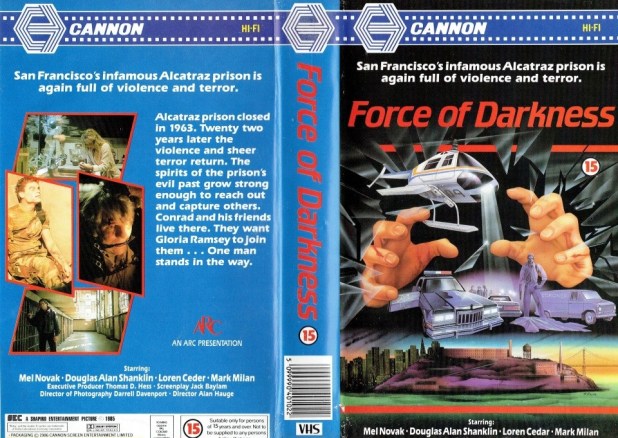
EDITOR’S NOTE: Force of Darkness was not produced by Cannon but was released on video by Cannon Screen Entertainment Limited in the UK.
Conrad (Mel Novak, who still appears in direct to streaming movies to this day) is a serial killer that has split personalities, or so the medical field would like us to believe, but the truth is that he’s possessed by a demon. Gloria Ramsey (Loren Cedar, who also shows up in Down On Us) watched him kill her lover, Dr. Rogers (Gordon Rigsby), but the prints on the murder weapon are heres and she has no alibi. Detective Ben Johnson (Doug Shanklin) believes her, but soon he finds himself up against the, well, force of darkness that lives within the walls of Alcatraz.
Directed by Alan Hauge doesn’t have many other credits other than appearing as himself in Search for Haunted Hollywood. Writer Jack Baylam has even less credits, much like so much of the cast in this movie.
This may be the most Christian Exorcist clone I’ve seen. Cast member Eddie Hailey, who played Murry, was a born again Christian who was one of the stars of the Christian Broadcast Network’s Another Life, a religious soap opera. He’d lead the cast in a half hour prayer service each morning. Mel Novak is an ordained Christian pastor who performed the funerals for Chuck Connors’ son Jeffrey Alan Connors and Tim Burton’s father Bill Burton. Want even more evidence? The soundtrack came from Jim Stipech, who also did the music for the anti-abortion movies The Silent Scream and Eclipse of Reason. No, not that Silent Scream.
There’s literally nothing else out there on this movie. It’s as if it barely exists.
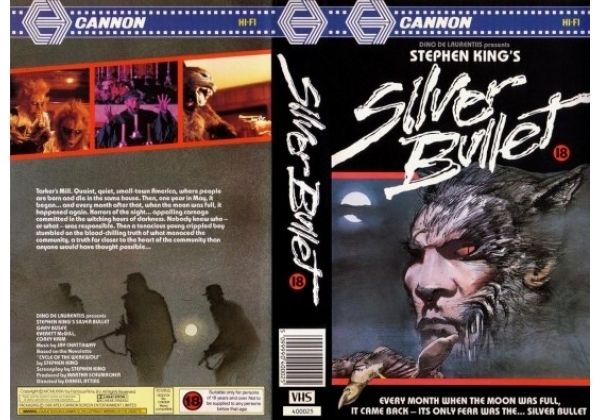
EDITOR’S NOTE: This originally ran on October 6, 2017. Silver Bullet was not produced by Cannon but was released on video in the UK by Cannon Screen Entertainment.
Silver Bullet may be based on King’s Cycle of the Werewolf, but there are so many deviations and changes from the story, one could say that they’re both stories about a werewolf in a small town and get away with it. It’s probably best to experience both of them, as they cover some of the same story but differ in so many ways. Perhaps you can pretend that it’s the werewolf version of Rashomon.
Tarker’s Mill, Maine. 1976. The Coslaw family is a mess, to be perfectly honest. Jane wants to get away. Marty (Corey Ham, The Lost Boys) fights with her and is dealing with being a paraplegic. And the parents, Nan and Bob, are always at odds.
Things change once murder tears apart their town, starting with a railroad worker (James Gammon, the coach from Major League). Then, a depressed pregnant woman and Milt Sturmfuller are both killed and people start to worry. Once Billy Kinkaid is killed flying his kite (PS never fly a kite in a Stephen King story, witness Pet Semetary), the townspeople lose their minds.
Despite Sheriff Joe Haller (Terry O’Quinn, The Stepfather!) and Reverend Lester Lowe (Big Ed Hurley from Twin Peaks) trying to calm everyone down, a mob goes into the woods to stop the killer. That said — the tables get turned and many of them die, including Owen the bartender (Laurence Tierney, a noted real-life maniac who was in Reservoir Dogs and Film Threat’s filmed version of the Tube Bar Red tapes).
That Reverend isn’t on the level though, as he dreams of a mass funeral where everyone turns into a wolf. He wakes up and begs God to stop the pain.
The town may cancel the fireworks, but when Uncle Red (also another real-life manic, Gary Busey) visits, he gives Marty a wheelchair/motorcycle he calls the “Silver Bullet” that can shoot rockets. The werewolf almost kills him later that evening, but he blasts it in the left eye. He soon realizes that the werewolf and the Reverend are the same person, so he begins mailing him anonymous notes saying that he should kill himself.
The priest learns that Marty wrote the letters and he repeatedly tries to kill the kid. Even after convincing Sheriff Haller, the cop gets killed by Lowe.
Out of options, Red helps Marty make a silver bullet to kill the werewolf with (we all need a completely crazy uncle in our lives, right?) and sends the parents away on a trip. Of course, the werewolf attacks them, tossing Red like a ragdoll and nearly killing Jane before Marty blows it away, revealing the form of the Reverend.
The film didn’t even have a werewolf suit before shooting began, which led to plenty of battles between King and producer Dino De Laurentiis, who had already caused original director Don Coscarelli (Phantasm) to quit. The replacement, Daniel Attias, has gone on to direct much of today’s top television — The Sopranos, The Wire, Six Feet Under and Homeland.
Busey did his own stunts — you can see him get launched really hard in one scene. He also ad libbed most of his own dialogue, which makes me stand by my belief that people just tell him that he isn’t in a movie and that everything around him is real. That’s how you capture pure Busey. To wit — he claims that “his reaction to the werewolf breaking through the wall was genuine as there was no rehearsal of that scene and it was completed in a single take.”
You can do worse than Silver Bullet. I mean, you can do better, too. But when it comes to Stephen King films, it’s a pulpy, gory film that’s fun pretty much the whole way through. The scene with the churchgoers turning into werewolves has seventy werewolves it it, so it’s pretty awesome.
BONUS! You can hear the podcast we did about this movie, too!
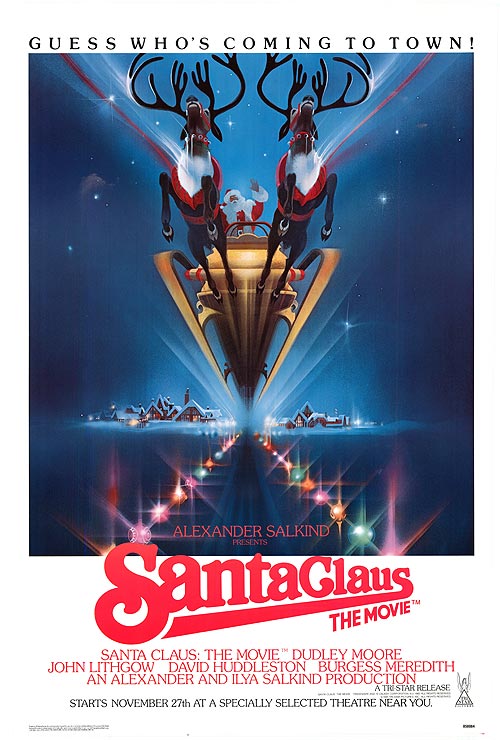
EDITOR’S NOTE: Santa Claus the Movie was not produced by Cannon but was theatrically distributed in the UK by Cannon Screen Entertainment Limited.
After the father-and-son production team of Alexander and Ilya Salkind finished up with Superman III and Supergirl, what else was left but to explain the mysteries of Santa Claus to children all over the world?
Who should direct should an endeavor? How about John Carpenter? No, really. However, the auteur wanted to have a hand in the writing, musical score and final cut of the movie. Plus, he wanted to cast Brian Dennehy as Santa.
Other directors included multiple James Bond series director Lewis Gilbert, The Sound of Music director Robert Wise and again, another James Bond series director (and the man in the chair for Remo Williams: The Adventure Begins), Guy Hamilton.
Finally, Supergirl director Jeannot Szwarc was selected. He’d also directed Jaws 2and Somewhere in Time. He had a great relationship with the Salkinds and TriStar Pictures.
The result? A movie that got horrible reviews and made half of its budget back.
But hey — sometimes bombs are great. So let’s get into it.
Back in the past, Santa (David Huddleston, The Big Lewbowski himself) is a woodcarver who takes his wife Anya (Judy Cornwell, Whoever Slew Auntie Roo?) and reindeer, Donner and Blitzen, into the snow to deliver gifts to children. One night, though, the snow is too much and they all die. The end.
The movie would be pretty depressing if this is where it all ended. Instead, they are transported to the ice mountains at the top of the world, some Shangri-La type place where Dr. Strange and Iron Fist got his powers. They meet a whole bunch of elves, including Dooley (John Barrard, one of the blind men in 1972’s Tales from the Crypt), the inventor elf Patch (Dudley Moore, Arthur) and Puffy (Anthony O’Donnell). Our hero learns that his destiny is to deliver gifts every Christmas Eve, along with an entire team of reindeer. Finally, as the holiday approaches, the Ancient One (Burgess Meredith, The Devil’s Rain!) — I told you this was Dr. Strange — renames our hero as Santa Claus.
Fast forward to modern times and Santa is exhausted. His wife suggests he get an assistant and a competition between Patch and Puffy ends with Patch winning, but his modern machine makes work that isn’t up to Santa’s standards.
Santa meets some kids — a New York City orphan named Joe and a rich girl named Cornelia — and Patch quits his job and starts working for B.Z. (John Lithgow, The Adventures of Buckaroo Banzai Across the Eighth Dimension), an unsafe toymaker that Congress is trying to shut down. Patch takes reindeer feed and makes lollipops that allow children to fly, allowing B.Z. to create a new holiday on March 25 — Christmas 2. This all makes Santa pretty sad, as Patch is becoming the new face of Christmas. Or Christmas 2. Look, I don’t know.
The newest toy for Christmas 2 will be candy canes that allow kids to fly (why a different product shape is needed is never really discussed), but when they are exposed to heat, they explode. B.Z. and Towzer (Jeffrey Kramer, Graham from Halloween II), his head of R&D, decide to let Patch take the fall. Joe and Cornelia get involved, Patch tells them he never wanted to take over for Santa and they all take the Patchmobile to the North Pole.
The reindeer — despite Comet and Cupid having the flu and who knows why this is even a plot point — help save Patch and everyone has a dance party because of Return of the Jedi. Santa and Mrs. Claus adopt Joe and Cordelia, keeping them away from the rest of the world and certainly adding the kids to some kind of Code Adam list, Meanwhile, B.Z. has eaten too many candy canes and flies into space, where one assumes he dies in the cold vacuum of space. Santa does not care, laughing heartily as he has crushed Patch’s spirit for good and kidnapped two human children to do his bidding. Or maybe it’s a happy ending.
For a movie that’s all about the magic and meaning of Christmas, the product placement for McDonald’s, Coke and Pabst Blue Ribbon — this is a kid-centric film — is problematic.
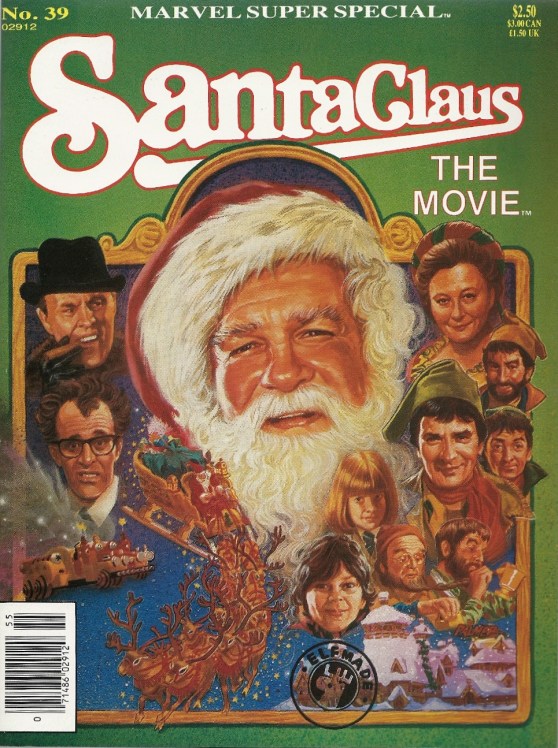
Marvel even did a tie-in comic, which at least has Frank Springer art.
These are the kind of movies I hated as a kid — message films that told me how to feel, act and behave. This is why Godzilla and King Kongare my idea of holiday films — beasts condemned by the world who only want to destroy the works of man! Feliz navidad!
EDITOR’S NOTE: Hollywood Harry was produced by Orion Pictures but was sold on videotape by HBO/Cannon Video.
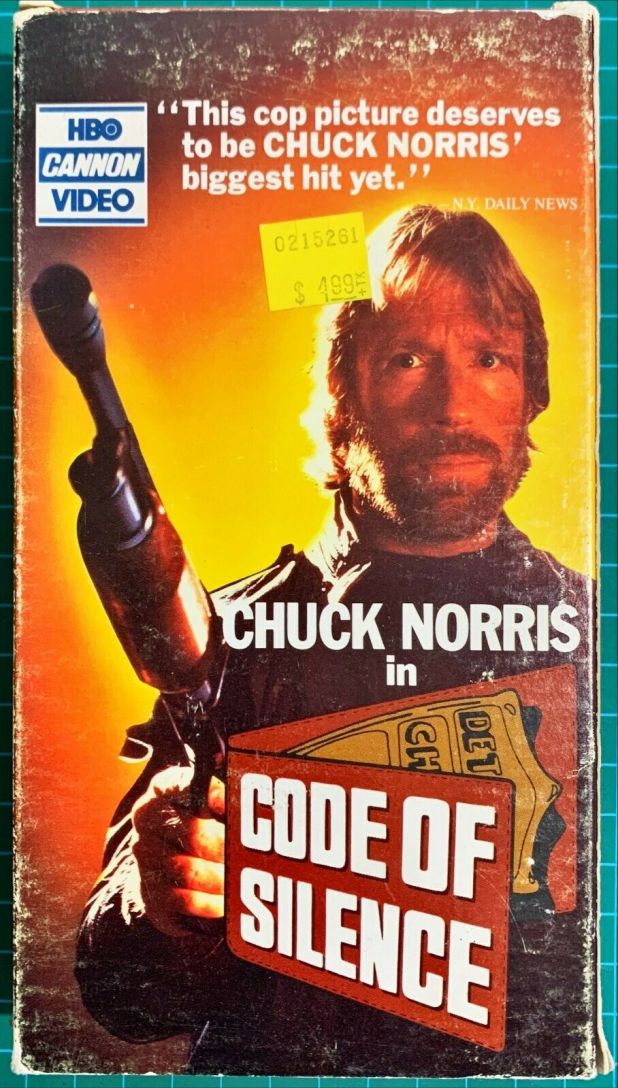
Screenwriters Michael Butler and Dennis Shryack originally wrote this movie as Dirty Harry IV: Code of Silence. After a few years of it being in development, it ended up getting bought by Orion, Kris Kristofferson being attached and then Chuck Norris coming on.
Sergeant Eddie Cusack (Chuck Norris) and his team of Chicago Police detectives — including Dennis Farina as his partner Dorato; Farina was an actual Chicago cop at the time and was moonlighting — had the perfect sting set up on cocaine supplier Victor Comacho (Ron Henriquez). Then, a rival gang mafia drug lord Tony Luna (Mike Genovese) reveals themselves and kills nearly everyone. Even worse, a drunk cop named Cragie (Ralph Foody) accidentally kills a bystander and plants a weapon on him; Lieutenant Kobas (Joseph Kosala) catches him.
With the ruined op and refusing to support Cragie, Cusack isn’t every cop’s favorite officer right now. Somehow, things get worse as Luis Comacho (Henry Silva), Victor’s older brother, initiates a bloody gang war that rips the city to shreds. Tony Luna tries to leave town as his entire family is gunned down and Comacho has targeted his daughter Diana Luna (Molly Hagan) as next to be killed.
By the end of the movie, Chuck is shooting everything in sight and is backed up by the Prowler, a three-axle robot. I mean, how incredible is that? Chuck Norris and a robot killing gang members? I also love that John Mahoney is the guy selling the Prowler to the police.
Andrew Davis directed The Final Terror before this and would go on to be known as an action director, making movies like Above the Law, Under Siege, The Fugitive and Collateral Damage.
EDITOR’S NOTE: This was originally on the site on August 21, 2019. Howling II: Your Sister Is a Werewolf was not produced by Cannon but was released on video by HBO/Cannon Video.
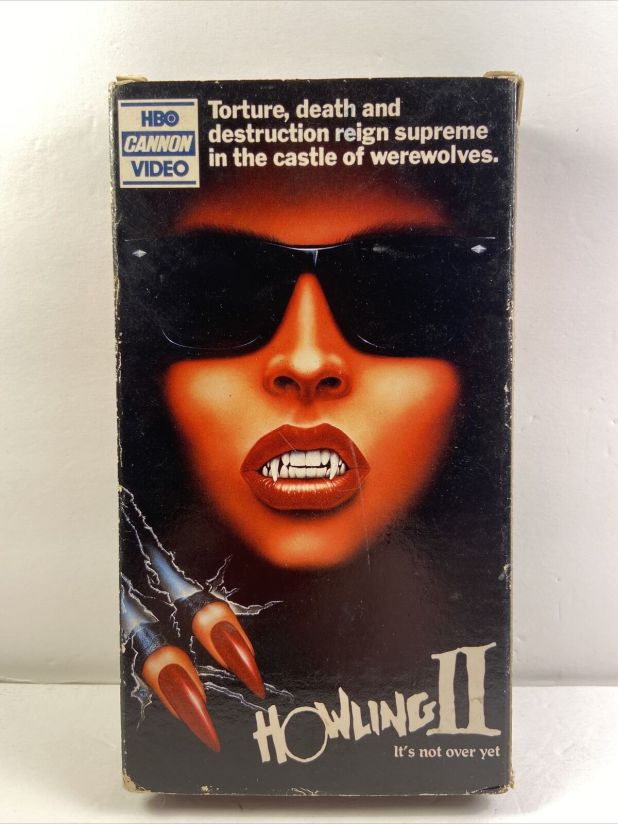
Even though Gary Brandner, author of The Howling novels, co-wrote the screenplay to this movie, it has nothing to do with his 1979 novel The Howling II,much less the original The Howling. It tries, but this movie is just too weird to fully close the loop.
There’s never been another werewolf movie like this one. Whether that is positive or negative all depends on how much you like werewolves having sex.
Ben White (Reb Brown, who is in a little movie called Yor Hunter from the Future that I could tell you about for many days) is dealing with the death of his sister Karen White, who just so happens to be the heroine of the first of these movies. He joins up with Jenny (Annie McEnroe, who was in Snowbeast and Battletruck) and the mysterious Stefan Crosscoe (Christopher Lee, who apologized to Joe Dante for making this movie) to battle werewolves.
This brings them on a journey to Transylvania and a battle against Stirba (Sybil Danning!), the queen of the werewolves, who is joined by Mariana (Marsha Hunt, who the song “Brown Sugar” is about) and Erle (Ferdy Mayne, who is in another film I can discuss for days and days, Night Train to Terror).
What follows is complete lunacy: werewolf witchcraft, lycan orgies, Sybil Danning repeatedly ripping off her top (the same shot repeated again and again to no complaint), dwarves, priests being killed and punk rock from the band Babel.
Director Philippe Mora actually made some pretty good films, like Mad Dog Morgan, The Beast Within and The Return of Captain Invincible. I’m insane and love this movie, so I will include it in my list of his good ones.
Finally, let’s talk about another subject I can hold court on: Christopher Lee. Mora didn’t know that Sir Lee was a war hero in Czechoslovakia, where this was filmed. Actually, no one did, because he wasn’t allowed to talk about his intelligence work during World War II. When he showed up for filming, he was greeted with a hero’s welcome, as he had killed a top Nazi official named Reinhard Heydrich. In fact, before he became an actor, Lee remained a Nazi hunter for several years.
I also love that this movie was sent the wrong costumes by 20th Century Fox. Instead of wolf suits, they were sent the monkey suits from Planet of the Apes. Lee tried to help fix this by ad-libbing, “The process of evolution is reversed.”
Want to know more about The Howling movies? Check out this article.
EDITOR’S NOTE: This was originally on the site on August 21, 2019. Rambo: First Blood Part II was not produced by Cannon but was released on video by HBO/Cannon Video.
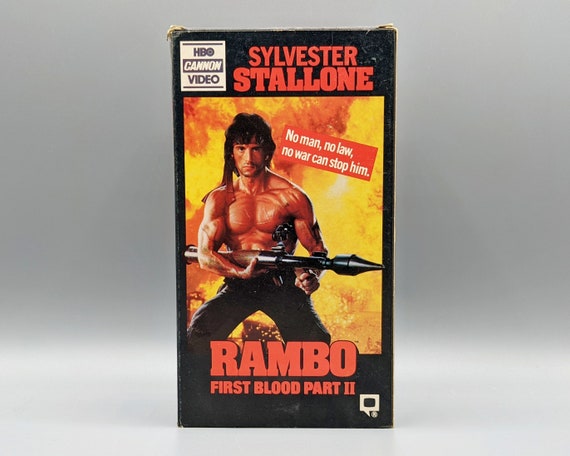
When it came time to do a sequel to First Blood, there was a thought that Rambo needed a partner.
Producers wanted John Travolta, but Stallone vetoed the idea. Lee Marvin (who almost played Colonel Trautman in the first film) was offered the role of Marshall Murdock, but declined.
In fact, that sidekick character is in the first draft James Cameron wrote for this film. Stallone said of what he wrote, “In his original draft it took nearly 30-40 pages to have any action initiated and Rambo was partnered with a tech-y sidekick.”
What ended up on screen was very different.
“Rambo, John J., born 7/6/47 Bowie, Arizona of Indian-German descent. Joined army 8/6/64. Accepted, Special Forces specialization, light weapons, cross-trained as medic. Helicopter and language qualified, 59 confirmed kills, two Silver Stars, four Bronze, four Purple Hearts, Distinguished Service Cross, Medal of Honor.”
Yep — that’s our hero. Given that he kills 74 people in just two days in this film, he’s somehow more successful in Vietnam the second time. But we’ll get to that.
For now, it’s been three years and Rambo is paying for his actions in the original movie when he’s visited by Colonel Sam Trautman. Even though the Vietnam War is over, people remain convinced that POWs have been left behind. The government has authorized a solo mission to confirm if any are alive and Rambo is one of only three men suited for such a mission (who the other two are, I leave up to you, dear viewer, but if one of them isn’t Thunder, I don’t want to know about it).
Marshall Murdock (Charles Napier) is the suit in charge that tells Rambo that all he has to do is take photos, not rescue anyone or engage the enemy. As Rambo drops into enemy territory, his parachute becomes tangled, leaving him with only a knife and a bow. He doesn’t need all those guns, trust me.
A young intelligence agent named Co-Bao (Julia Nickson) and some pirates take Rambo up river, where he saves an American POW who has been crucified and left to die. The Vietnamese troops attack and the pirates betray Rambo, so he kills everyone. Rambo’s extraction is canceled, as Murdock says that Rambo has violated his orders and tells Trautman that he never intended for there to be any rescue — it would be too expensive and no one wants another war.
Rambo is turned over to the Soviet troops who are training the Vietnamese, Lieutenant Colonel Podovsky and Sergeant Yushin. They demand that he read the US government a message to stay away from future missions. Instead, he warns Murdock that he’s coming for him. He escapes thanks to Co and they kiss, only for her to die seconds later.
Rambo then becomes a slasher villain that we cheer for as he wipes out every single enemy one by one. He even steals a helicopter and uses it to destroy Murdock’s office before demanding that the rest of the POWs get rescued.
Trautman then confronts Rambo and tries to convince him to return home, but our protagonist angrily replies that he only wants his country to love its soldiers as much as its soldiers love it.
James Cameron claims that he only wrote the first draft of the script and that Sylvester Stallone made many changes to it. He claims that the star didn’t like that the sidekick got all the cool dialogue and scrapped most of the POWs backstories.
When the film was released, the political content of the movie was controversial, with many critics not ready to see any heroism in the Vietnam War. For his part, Cameron commented that he wrote the action and Stallone the politics.
That said — at the time of the making of this film, there were 2,500 soldiers missing in action, so you can see where the sentiments were coming from. There were even reports that Delta Force operatives were in training to try and find those prisoners.
Stallone explained the ending of the film quite passionately: “I think that James Cameron is a brilliant talent, but I thought the politics were important, such as a right-wing stance coming from Trautman and his nemesis, Murdock, contrasted by Rambo’s obvious neutrality, which I believe is explained in Rambo’s final speech. I realize his speech at the end may have caused millions of viewers to burst veins in their eyeballs by rolling them excessively, but the sentiment stated was conveyed to me by many veterans.”
This film was beloved by audiences worldwide just as much as it was savaged by critics. It won Worst Picture, Worst Actor, Worst Screenplay and Worst Song (“Peace In Our Time” by Frank Stallone) in the Razzie Awards. It doesn’t matter — it started an entire genre of military revenge pictures.
Director George P. Cosmatos would go on to work with Stallone again on Cobra, as well as direct the films Leviathan and Tombstone. He was recommended for the film by Stallone’s son Sage, who liked his movie Of Unknown Origin. Of course, Cosmatos’ son Panos would grow up to be the director of Mandy and Beyond the Black Rainbow.
This movie marks a true change from the way American audiences would view Vietnam and its veterans. It could have only been made in 1985, to be honest, and exists within that time to remind us of a completely different era.
EDITOR’S NOTE: When Father Was Away On Business was not produced by Cannon but was theatrically distributed by Cannon Releasing Corporation.
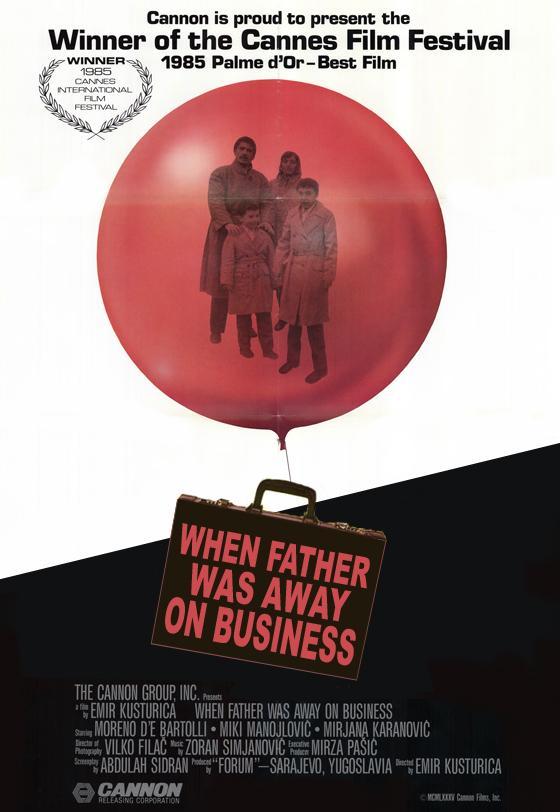
A Yugoslav film by Serbian director Emir Kusturica, this Cold War film won the Palme d’Or at the 1985 Cannes Film Festival and was nominated for the Academy Awards for Best Foreign Language Film.
It begins with neighborhood drunk Čika Franjo singing Mexican songs to field workers and avoiding the tunes of the U.S. and U.S.S.R., as Yogoslavia is in a strange time as the country is quite paranoid after the Tito–Stalin Split.
The story is told from the POV of Malik, whose father Meša was sent to a labor camp but his mother Sena tells him that — true to the title — that his father is away on business, not sent to basically prison by his wife’s brother Ziho after Meša’s mistress tells him about a remark that her lover made about a political cartoon.
After working in a mine for several years and his family struggling, they are reunited but must all go to be socially reconditioned. There, Malik falls in love with Maša, the daughter of a Russian doctor, yet she dies quite young and he watches as she is taken away in an ambulance.
At the same time, his father hasn’t stopped having affairs, including one with a woman pilot who tries to hang herself from a toilet cord. All during this, Malik begins to sleepwalk and get into strange misadventures.
This is about a time that I never knew of when Tito refuted Stalinism and wanted a different path for Yugoslavia without becoming too much like the West. And while it became the most liberal Communist country of Europe, Tito suppressed internal opposition and both executed and jailed many of his enemies.
I love when film shows us places we could never go and people we would never meet.
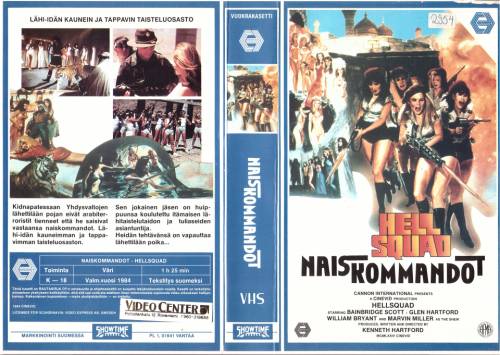
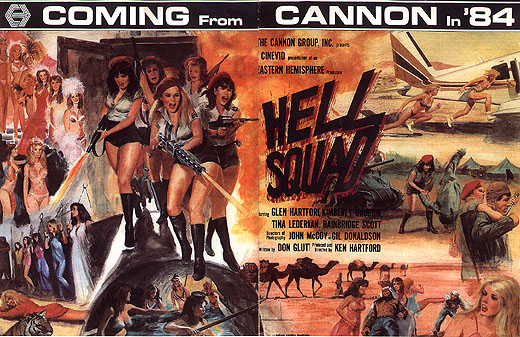
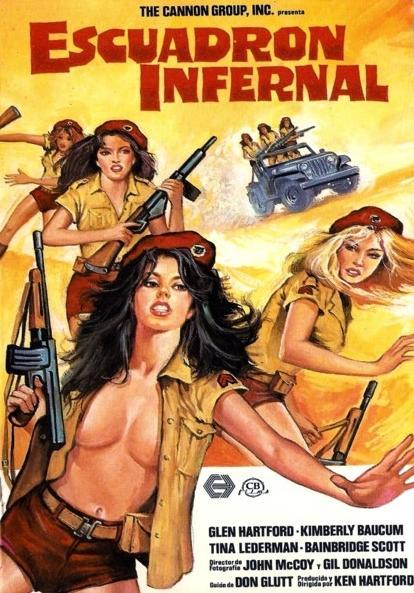
EDITOR’S NOTE: Hell Squad was not produced by Cannon but was sold on videotape by Cannon / MGM/UA Home Video.
Whether you call this Hell Squad, Commando Squad and Commando Girls, this film presents you with a very realistic military mission: a group of Las Vegas showgirls train to rescue Jack (Glen Hartford), the son of a diplomat who has discovered the existence of an ultra neutron bomb that wipes out people and animals but not buildings.
Jim (Walter Cox) is the man who will train Jan (Bainbridge Scott, who is also in the similar Mankillers) and her girls and get this, they get paid $500 a week and $25,000 when they bring back Jack. That’s nowhere near the money they should be making!
Hell Squad was directed and written by Kenneth Hartford (The Lucifer Complex, Monstroid), a notorious carny type who started as a film distributor as Herts-Lion International Corp. One of the movies he had was Carnival of Souls and if you guessed that Herk Harvey never saw any money because of Hartford, well, hooray for Hollywood.
You may also say, “Isn’t this movie just The Doll Squad?” Well, yes. That’s also Ted Milkas’ castle that the girls attack at one point.
It’s amazing because the plot of this movie is very much this: girls get mission, girls kill terrorists, girls go back to the hotel and take a bubble bath together while Jack gets abused, repeat.
The funniest part of the whole thing is the Scooby-Doo ending where the evil leader gets his mask ripped off and we learn that it was really Jack’s secretary all along. Jack just sighs and says, “I’m shocked. It just goes to show you can work with a person and never really get to know them.”
Video Junkie even reports that comic book writer Don Glut was the actual writer and got screwed over. Are you surprised? How about the fact that Glut wouldn’t give the ending away until he got paid, which is why the last thirty minutes get so weird?
As for the Hell Squad, they are played by Tina Lederman, Maureen Kelly (who was in some episodic TV), Penny Prior, Lisa Nottingham, Loren Chamberlain, Kathy Jinnett, Kimberly Baucum (who is also in the Sylvia Kristel movie The Arrogant) and Madeline Parquette (who did a few small parts in movies like Casino and a Disney TV movie You Ruined My Life; she played a card dealer in both).
So if you love female soldiers being forged out of showgirls, bubble baths or like me need to see every movie Cannon had something to do with, Hell Squad has what you need.
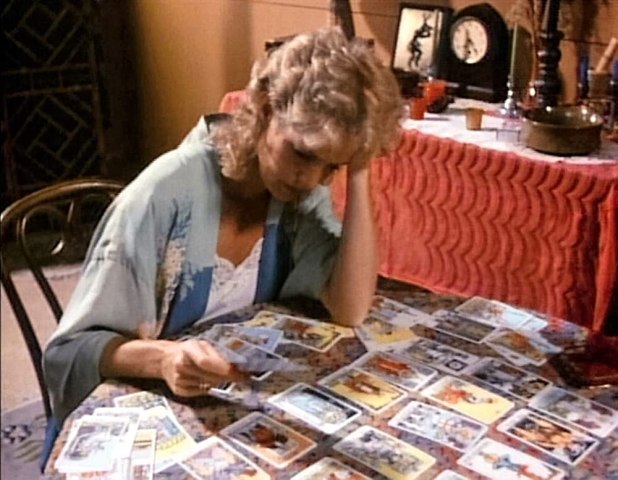
Carolina (Dorothy Lyman, Naomi from Mama’s Family) does Tarot card readings and is popular with her customers, as she always brings them the best of news. Once her competitor — Madame Marlena (Carmen Matthews) — switches out her deck, the fortune change to be filled with death. The cards can’t be destroyed, but can Carolina change her fortune?
The one good thing I can say is that this episode sticks to being horror and doesn’t veer into the silly side of the darkside. I’m such a grump, I realize, but the more jokey these episodes get, the cringier they become.
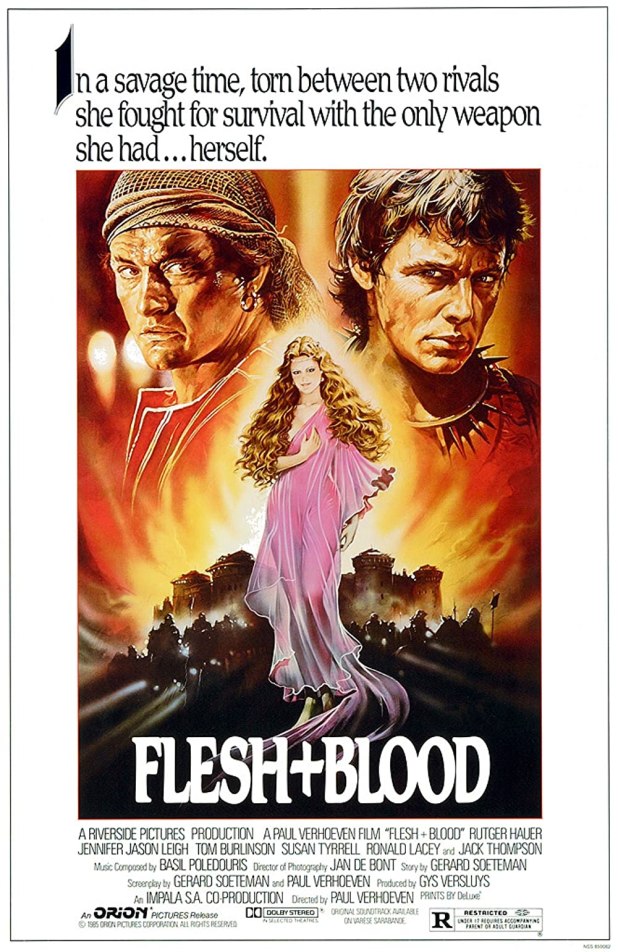
EDITOR’S NOTE: Flesh+Blood was not produced by Cannon but was theatrically distributed by Cannon Tuschinski Film Distribution.
Directed by Paul Verhoeven and written by his frequent collaborator Gerard Soeteman, Flesh+Blood started as ideas that Verhoeven, Soeteman and Hauer didn’t get to do on the TV show Floris. It was filmed as God’s Own Butchersand would be released in the U.S. as The Rose and the Sword.
Verhoeven had previously had his movies paid for by the Dutch government. To escape all of that stress, he got money from Orion Pictures to make this; they soon started asking for changes, like adding a love story. Verhoeven would later say, “The triangular relationship of Martin–Agnes–Steven is now the main story line, but in retrospect I think we should have stuck with Hawkwood and Martin. The failure of Flesh+Blood was a lesson for me: never again compromise on the main storyline of a script.”
Shot in an improvisational style, Hauer went against Verhoeven’s wishes of making the character morally ambiguous. After all of the fighting between the two — the crew demanded they fight in English so they could understand what was happening — they would never work together again. When Hauer died in 2019, Verhoeven revealed that they had made amends.
When his city is lost due to a coup, Arnolfini (Fernando Hilbeck) promises an army of mercenaries an entire day to go wild inside the city walls if they succeed in retaking it. They do; they do. In fact, they go so out of control on that day that Arnolfini wants them gone. He pays Hawkwood (Jack Thompson) to turn on his former soldiers and lead a charge against Martin (Rutger Hauer) and his followers, who soon see their madness as divine mandate when Martin’s son is stillborn and interred under a statue of Saint Martin of Tours, the patron saint of both )winemakers and reformed alcoholics.
Arnolfini’s son Steven (Tom Burlinson) is to marry Agnes (Jennifer Jason Leigh), an arranged marriage that is moved forward by a magical ceremony where they eat mandrake together. At that point, the entire wedding party is attacked by Martin’s men. Arnolfini is badly wounded, the dowry is taken, the lady in waiting is stabbed and murdered (it’s Nancy Cartwright, yes, the voice of Bart Simpson) and Agnes is nearly gang raped before Martin does that all by himself. She gives up on her past life and joins with him in ruling the mercenaries. At the same time, Steven has gone mad wanting revenge and forces Hawkwood to leave his now quiet life and destroy his former friends. Thanks to gunpowder, Martin has the upper hand and Steven is taken; Hawkwood cures himself from the plague and decides to use that illness to destroy his enemy, launching a dead dog into the castle.
At the end, nearly everyone must die and everything must be destroyed; Steven and Martin find themselves needing to help one another before battling to what could be the death. Agnes remains aloof and on no side other than her own. Hawkwood yearns to escape all this fighting and return to the nun he’d saved from Martin.
Oh man — Susan Tyrrell shows up in this and so does Bruno Kirby. I did not expect either of them to appear in a medieval war movie!
The financial failure of Flesh+Blood is why Verhoeven moved to America, all to better understand its culture. The central theme of this movie — how horrible the Middle Ages were — didn’t resonate with audiences that wanted fantasy.
Nevertheless, this is a strong film, one filled with big ideas, gorgeous visuals — Jan De Bont was the director of photography — and the ambiguous morality its creator sought.


 B&S About Movies
You must be logged in to post a comment.