Mill Creek has been putting out some truly astounding Ultraman collections as of late and man, they look incredible on the shelf. Their latest set is Ultraman 80, the ninth show in the series and the last Ultraman show for 16 years.
After the 1979-80 animated series The Ultraman, Ultraman 80 returns to the Showa continuity, taking place after 5 years after Ultraman Leo. Takeshi Yamato, the new science teacher, is living a double life as a member of the elite UGM (Utility Government Members), an earth defense organization. He’s also the 50 meter tall Ultraman 80.
Well, at least for the first 13 episodes, when he joins the UGM full-time. Over the fifty episodes, the team fights kaiju including Crescent, Gikogilar, Zandrias, Alien Bam, Devilon, Robo-Fo, Delusion Ultraseven and so many more.
While not as well-known as other Ultraman shows, there are some interesting ideas here, such as the previously mentioned Delusion Ultraseven, which is created when a young child is attacked by a biker gang and uses his Ultraseven toy and plenty of rage to create an evil form of the hero that Ultraman 80 must fight.
There’s even a great ending when the UGM forces our hero and the alien princess who joins the team to stay out of the final battle, just to prove that humanity can defend its own planet. And while the gimmick of a kid creating or finding a new monster every show may get a little repetitive, you’re really coming here to see Ultraman 80 beat up all manner of kaiju, right?
Mil Creek has really put together a great looking set, complete with an episode guide that helps you learn who each monster is. I’m always amazed that I can now own full series of Ultraman, as I was so hungry for new episodes as a kid. The world really is an amazing place and this set is pretty great, too.
1. RE-ANIMATED: Businesses are opening back up (we did!) and things are getting back to “normal” so to kick things off you get to watch a movie where something gets brought back to life. We’re baaaaaack!
I work in my basement from when I wake up until when I go to bed, writing all sorts of words for people, from health care to highed education, parent-teacher groups and all manner of businesses large and small. There are times when all that writing and the way the world has been acting for the last 18 months which feel like 18 years when it just seems hopeless. Why am I doing this? Who am I doing it for? Why do I feel compelled to keep on writing and then in my spare time write some more about movies?
Because of movies like this.
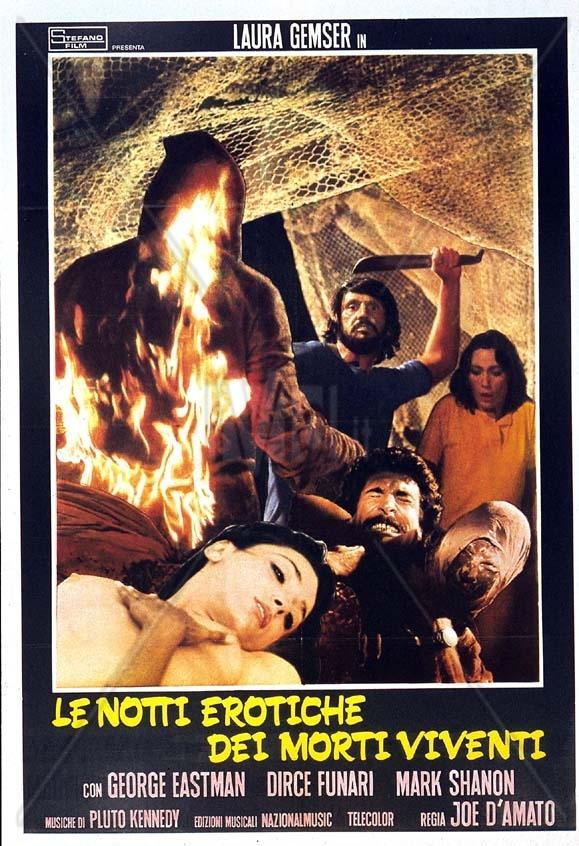
Make no mistake, Le notti erotiche dei morti viventiis absolutely the sleaziest kind of movie there is, a film that combines all of the oatmealed faced zombies and gore of Italian cinema with the sexual congress of, well, Italian cinema. It’s as if someone said, “What if we saw people screw before we kill them horribly?” And that man, friends, was Joe D’Amato.
Now, the man himself said that this was an utter failure, telling Spaghetti Nightmares that the movie was”…a total fiasco. I had endeavored to mingle my two favorite genres, tending more toward the erotic side in this case, but the film was rejected by the public.”
Made at the same time as Porno Holocaust — another movie with the same cast, the same plot and the same mix of sex and death — just thinking of the plot of this movie makes me laugh like some kind of maniac.
It stars Mark Shannon, whose main career was working as a travel agency correspondent, but would take breaks to make adult films. He plays John Wilson, who has come to the Dominican Republic to build a hotel on Cat Island, a place with a voodoo curse so dangerous that it causes one of the two prostitutes who’ve recently serviced him to run in fear. Don’t worry. He was smart enough to finish their bedsheet gymnastics first.
As he chases her down the hall, he meets Fiona (Dirce Funari, who was one of the women in the infamous snuff sequence in D’Amato’s Emanuelle in America), who has just left an elderly lover at sea. After doing an oral inspection of Georgia O’Keefe’s inspiration, they become a couple of sorts for the rest of the film. I think we can all appreciate a meet cute in an Italian pornographic zombie film, right?
Meanwhile, Larry O’Hara (George Eastman, who wrote this) is either a sea captain or in an insane asylum. He starts the film off having wild frolicking sex with a nurse and ends it with the same woman in the same style as the film makes a Jacob’s Ladder cycle back to the mental ward, complete with another patient slack jawed and enjoying their coupling with a one-handed ovation.
There’s an absolutely mindbending scene where Eastman sits inside a darkened club that makes it appear that he’s smoking and drinking and bored and trapped in the infinite regions of space when Liz (Lucía Ramírez, Sex and Black Magic) appears to dance for him. Eastman makes no attempt to engage with her at all, even when she brings a champagne bottle on stage to, well, yeah. You know what happens. What you may not know is that she opens the bottle for him and does not use his hands and man, Joe D’Amato, you know how to rescue a man from abject depression.
Meanwhile, Laura Gemser shows up as a woman who bleeds green blood and can transform into a cat and has a blind grandfather who follows her and then she has sex with Eastman on the beach through his buttoned jeans.
Finally, everyone drinks J&B and we come — pun unintended — back to the start of the film as orderlies drag Eastman to his cell.
My favorite part of this movie was watching the absurd — D’Amato pun not intended — lengths to which some of the bigger star’s lovemaking scenes were created in very Cinemax After Dark style, which Shannon just went balls out. Literally.
I’m so pleased that I could begin the 2021 Scarecrow Challenge in such a high class way. It only gets better from here.
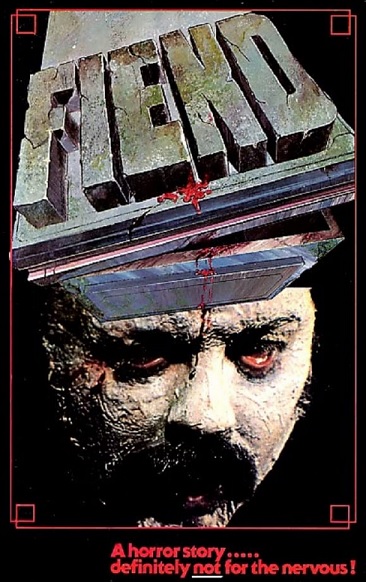
Unlike most SOVs (frack, I know it’s shot in 16mm), this second feature film by Don Dohler — his follow up to The Alien Factor (1978) — foregoes gore or excessive, lingering nudity to give us old school, drive-in creepy atmosphere of the Amicus and Hammer variety. Since Fiend was shot on 16 mm and blown up to 35 mm, it’s actually better classified as a “regional horror,”* as it received a limited drive-in theatrical run in the Northeastern U.S. in and around Baltimore, Maryland — before the rest of us discovered Fiend as a VHS release. But truth be told: If there was a letter after the 26th letter of the alphabet, this would be ___ – grade horror. It’s also a movie — as are all of Dohler’s work — with a lot of heart.
As is the case when shooting in film stock, in this case 16mm, no-budget guys are shooting on short ends and, with the cost of said film stock, are one-take charlies: so no retakes, reverses or coverage. It’s all very Ed Woodian, but not as wooden as an Ed Wood film. To that end: Is the acting painful in places. Yes. Are the effects chuckle-enduing. Do you want to jump into the film with a flashlight to see what the frack is going on. Yep. Is it one of Dohler’s best? Yes. The story is great and it’s only held back by its no-budget.
So, did you know that evil spirits “see” in a red optical effect? Okay, it’s a misty, red cloud. But did you know a “fiend” is more than just a Funk & Wagnalls dictionary entry: it’s a supernatural entity — again, a red misty thing (that looks like a bloated red worm or fat and fucked up two-tentacled octopus) — that absorbs evil during its timeless travels. So, our red-filtered lens effect drifts into a graveyard and reanimates the corpse of (violin; if you care) music teacher Eric Longfellow (Don Leifert; of Dohler’s The Galaxy Invader and Nightbeast).
Well, the Fiend needs to absorb the life of the living to continue its existence and needs a human vessel to harvest the life force of others. And also, so the vessel it possesses doesn’t rot away. Don’t ask where our spooky red cloud came from. Don’t ask why it picked poor Longfellow (perhaps he was the freshest corpse in the cemetery).
So, Longfellow digs himself out, well, there’s no “digging”; the Fiend just sort of “drifts-rises” out of the grave — since Longfellow is just a fleshy, transportation device for the Fiend. And taking its cues from George Romero’s Night of the Living Dead, we have a young couple in the cemetery (“They’re coming to get you, Barbara!”) for our zombie-fiend thing to feed on (and the queasy-sickly music here takes from Bach’s famed “Toccata and Fugue in D Minor BWV 565,” so cool).
And, with that, our Fiend moves to Kingsfield, Baltimore, where every day is a pleasant valley Sunday with kids on bikes and playing ball as dad mows the lawn . . . until the Fiend (now a bloated-set guy in a Walrus-mustache) comes to town and the dark storm cloud roll in. But life is pretty sunny for Longfellow: his house is fully furnished, he enjoys nice bottles of wine — and he even has Dorien, a cat. Yeah, you heard me right: the Fiend hates women, but love cats.
Like any vampire, or any vamp-chick jazzed-up on wasp juice (see your ’50s horror schlock), Fiend-Longfellow starts to rot, so he needs to suck up some spiritual juice to reverse the process. Of course, of the female persuasion. Of course, the snoopy neighbor (who rocks the mutton chops and plaid sports coats) who don’t take too kindly to da-dem dere newcumers (yep, the old “outsiders” trope of many horror films of old) — and hates Longfellow’s now seven-months of violin screeching — becomes obsessed with the strangulation murders plaguing rural Baltimore and thinks the quiet-weird violin guy, aka Longfellow, is the killer. Seriously, as stiff-as-cardboard liner-reader wife-Kender points out, in a roundabout way: Mr. Kender’s kind of a dick that itches to pick fights. The dude needs — deserves — to have his soul homo-sucked dry. And cool it with the faux-detective third degree on little kids. And berating your wife. If anything, ol’ man Kender is the real “fiend” of Baltimore. Someone red-optical effect his punk ass.
So, I am going over the razor’s edge of quality to say Fiend is the best of Don Dohler’s ’80s efforts?
As with Constantine S. Gochis’s (fantastic) The Redeemer, Fiend is so close: it’s almost there, to a John Carpenter Halloween-level, but misses the mark to be the next Bob Clark’s Deathdream (which Fiend reminds with its dead, rotting antagonist) or Alan Ormsby’s Deranged. Or Don Coscarelli’s so-awesome Phantasm. Why Dohler ditched the Hammer-Amicus creeps direction of Fiend to, essentially, remake The Alien Factor to a lesser-and-lesser effect with Nightbeast and The Galaxy Invader — then retire-vanish for a decade until bringing us Blood Massacre (1991), is an opportunity missed. Why? Because of Star Wars and Close Encounters of the Third Kind making aliens and sci-fi en vogue?
While it has its weakness — Don Leifert is actually very effective as the emotionless Fiend-Longfellow (but that cheesy ’70s mustache; yikes, only in the ’70s), and the decomposing face reanimation is equally effective on-the-cheap — all SOVs should be as well-written and shot as Fiend. (Unlike SOVs, Fiend received a drive-in and theatrical release.) Yes, I rank Fiend alongside Deathdream, Deranged, Halloween, Phantasm, and The Redeemer as one of those special, self-made nostalgic creep fests. As result of the Dohler lineage, Fiend is easily purchased on digital and hard media platforms in the online marketplace — and you can watch a free VHS rip of Fiend on You Tube.
* Sam discussed Fiend during our “Regional Horror” tribute week back in March. Look for it!
About the Author: You can learn more about the writings of R.D Francis on Facebook.He also writes for B&S About Movies.
Zombies get frozen and unfrozen — in a fever dream of bizarre ADR-dubbing, hypodermic needles to eyeballs, and laughable gore effects — before they kill people in this not-so-well known zom-effort. And what notoriety this zom-romp received came courtesy of the puritanical purveyors of England placing Frozen Scream on the U.K.’s “Video Nasties” Section 2 list.
Nothing like a stuffy Brit inspiring you to watch a movie. You know how it is: tell me it’s taboo — I only want it more. Heck, shoot it on film in a start-stop-start production, screw it all up, have no one see in the the drive-ins, then make it “look” like we’re getting a piece of the SOV ’80s (click through to our SOV category for more films) by sticking it on hungry-for-product home video store shelves alongside “real” camcordered SOVs — I only want it more.
Two scientists, Lil Stanhope (producer Renee Harmon) and Sven Johnson (Lee James, a makeup artist who worked on Al Adamson’s late ’60s ditties Blood of Ghastly Horror and Brain of Blood; let that serve as a quality caveat, here) are, as all scientists of the VHS variety, on a maniacal quest to unlock the secrets of immorality. To that end, the “secret” is that the subjects are kidnap and murder victims (medical students who get too nosy for their own good) revived by the way of electronic neurosurgery. (Uh-oh, Ulli Lommel’s BrainWaves!)
Only the neck-installed device (looks like a radio audio connector, and probably is; the wonders of spirit gum and a vial of rigid collodion) has a side effect: it turns subjects into homicidal zombies that must be stored in freezers. When Tom Girard, one of the project’s scientists (Wolf Muser in his debut; still in the business with a resume rife with U.S. TV credits, he recently portrayed Adolf Hitler in the stellar streaming series The Man in the High Castle), refuses to be part of the experiments any longer, he’s murdered by a gang of zombie-hooded monks (all sporting bushy, ’70s porn-style staches). Now his wife Ann (Lynne Kocol, later of the production-connected Nomad Riders), who witnessed the murder, is under Stanhope’s care — and brainwashing Ann into believing it was all a hallucination.
As with George Romero’s Night of the Living Dead (1968) and Ken Wiederhorn’s superior Shock Waves (1977): Ann, along with Stanhope and her ex-hubby detective (Thomas McGowan; 20-some films, none notable; he serves as the voice-over thread for the film) are on the case — and face a zombie siege at a house during a (cliché) Halloween Party — complete with screaming kids, natch — and a final mad scientist showdown in Stanhope’s lab of terror.
Since this film is an across-the-years start-stop production on a shoestring budget, the zero-production values hamper the somewhat decent plot (that sort of reminds of Stuart Gordon’s later-amazing Re-Animator), and the hampering goes deeper with the strained voice-overs to thread the film’s vignettes into a coherent plot. The non-cinematography, the audio (the voice-overs are placed over the actor’s dialogs; in fact, the entire film was ADR’d in post) is beyond muddy, and the painful thespin’ throughout — especially from star Renee Harmon in a bad German accent, probably to give us a Nazi subtext (but it’s never explored beyond the accents from her and Lee James) — and makes Don Dohler’s efforts look like award winners. Only Frozen Scream has none of that rooting-for-the-underdog-filmmaker charm of a Dohler effort. Perhaps if Dohler made this, I’d dig it as much as I do Fiend (1980), which is an admittedly weak cup of tea, but . . . I don’t know why, I just love that Dohler film.
All in all, Frozen Scream is a great idea, but one woefully in need of a) a budget, b) a consistent, fluent shooting schedule that doesn’t leave it looking like an Al Adamson chop-shop joint, c) a guy like Ken Wiederhorn to pull it off, and d) a pacing and logic that doesn’t leave a renter (well, today, a streamer) needing to take five attempts to make it through the entire film with their sanity intact (yes, it took me a week to even start to write this review, as result).
Overall, it’s a hard watch of poorly-framed shots where you want to jump through the screen to operate the camera: the static wide shots that offer no mediums or close-ups, the over-the-shoulder shots with no reverse angles, and lighting so dark and muddy, that you want to break out a couple of flashlights are frustrating as hell. But when you’re shooting on 35 mm short ends, that’s par for the course. And it still looks like a shot-on-video delight via post-U-Matic camera. And I care way too much about this film than it deserves.
Frozen Scream is a film that traveled a long, strange road . . . a (production) trip that began in 1975 and took five years to complete. By the time the film was finished, the drive-ins for which it was intended, were defunct — and no distributor wanted the film, anyway. Luckily, the VHS home video boom was in full effect, and Frozen Scream finally made its debut on VHS in 1983, and then was reissued on the format in 1985 — amid the flurry of shot-on-video and direct-to-video films inspired by the success of Blood Cult and Spine (thus my SOV-critical lumping). As is the case with low-budget productions always looking to maximize their dollar, Renee Harmon did the Roger Corman-sensible thing and recycled footage from Frozen Scream into the films Night of Terror (1986) and Run Coyote Run (1987), both produced, written by, and starring Renee Harmon. (The former concerns a sadistic doctor and his family kidnapping subjects for brain experiments; the latter is a crime thriller about a psychic searching for her dead sister’s killers.)
Harmon’s director, Frank Roach, made his second and final film — both as a writer and director — with Nomad Riders (1987), a Stallone-esque cop-out-for-revenge thriller regarding a rogue who, after the brutal murder of his wife and daughter by a gang of vicious bikers, exacts revenge on the bikers and the mobsters behind the bikers. (No, that’s Nomads (1985) you’re thinking of that stars Pierce Brosnan and Lesley Ann Warren under the eye of John “Die Hard” McTiernan.)
Of Frozen Scream‘s co-writing team, Doug Ferrin, never wrote another film.
The same can’t be said for writer Michael Sonye. He later wrote Star Slammer (1986) and Commando Squad (1987) for Fred Olen Ray, the Brad David and Sharon Stone thriller Cold Steel (1987), and the always-welcomed Robert Ginty-starrer Out on Bail (1989). But Sonye’s best known film to video fringe horror fans is the hugely popular horror-comedy VHS-renter, Blood Diner (1987). Across his 28 acting credits, you’ve seen Sonye appear in Star Slammer (as Krago), and the U.S. by way of Japan SOV’er Cards of Death (1986), as well as the ’80s USA Network’ers Surf Nazis Must Die, Sorority Babes in the Slimeball Bowl-O-Rama, and Hollywood Chainsaw Hookers.
If the soundtrack — to you fellow junk video hounds — sounds a wee-bit familiar to the ears, that’s because composer H. Kingsley Thurber recycled his work on Frozen Scream on another inept backyard’er, Don’t Go Into the Woods (1981) (and that film is really bad. Really bad).
You’ve also seen actress Rene Harmon in the vansploitation romp Van Nuys Blvd. (1979), the women-in-jepaordy-seeks-revenge thriller in a ghost town, Hell Riders (1984), and the aforementioned horror flick, Night of Terror (1986), across her scant 11 acting credits — eight of which she wrote. Her final film before her 2008 death was Revenge of Lady Street Fighter (1990), while her final film overall, Jungle Trap (2016) was completed posthumously. In between her acting and writer gigs, she taught screenwriting at the College of the Sequoias Community College in Visalia, California. (Heads up, Adam West fans, for he stars in Hell Riders alongside Tina “Ginger of Gilligan’s Island” Louise; hell, yeah, that’s on our watch list.)
You can purchase the DVD of the original 1986 VHS two-fer with The Executioner 2 from Vinegar Syndrome, both of which starred Rene Harmon. There are also grey-market looking DVDs that pair Frozen Scream with Tobe Hooper’s mad alligator romp, Eaten Alive. Then there’s a double-sided, uncut Region 2 DVD that features the German version (Blautrausch Der Zombies) of Leon Klimovsky and Paul Naschy’s Vengeance of the Zombies (1973) on the other side. Yet another version is a single-disc grey impress. So, outside of the Vin Syn version, shop smart.
Renee Harmon, amid a flurry of a dozen or so self-published educational books on acting, filmmaking and screenwriting (see ThriftBooks and Good Reads), adapted Frozen Scream into a novel — issued under the title Evil Covenant (2001) — and used copies can be found on Amazon and eBay. Her other educational work, Hollywood Mysteries (2001), complies two of her studies, “The Hunting Party” and “Let the Dice Roll,” subtitled as “Book One,” as an insight on creating suspense-genre films. The book is of particular interest as it features the complete script from Frozen Scream, including production notes that she later used to complete the whole of Hollywood Mysteries. Sadly, Harmon passed away in 2008 before writing additional volumes to the series.
Say what you will about her films, but Renee Harmon was, as Doris Wishman, a true renaissance woman who should have her name spoken more often in the realms of indie film, alongside the fandom of Al Adamson, Larry Buchanan, Don Dohler, and countless other up-against-the-budget underbelly dreamers and schemers of the celluloid side streets and back alleys of Tinseltown. Most of her books — based on reviews — seem to be rife with typographical and layout errors. However, I read her non-self published book How to Audition for Movies and TV (1992) via a public library copy (issued by a larger publisher, natch, with a quality assurance queue to minimize errors) and found it to be a well-written, insightful book that I utilized in my own adventures “in the room” as an actor. Renee knew her stuff and then some, so she did me a solid.
About the Author: You can read the music and film reviews of R.D Francis on Medium and learn more about his work on Facebook.
David Weisman lived the kind of life that they make movies about. Directly after seeing La Dolce Vita, he quit Syracuse University’s School of Fine Arts, headed off to Rome and managed to not only meet Fellini, but design the poster for 8 1/2 and work for Pasolini. He followed that by working as Otto Preminger’s assistant and designing the opening of Hurry Sundown.
He also found himself part of Andy Warhol’s Factory and made the experimental film, Ciao! Manhattan before producing The Killing of Americaand convincing Manuel Puig to allow him to adapt his novel Kiss of the Spider Woman for film*.
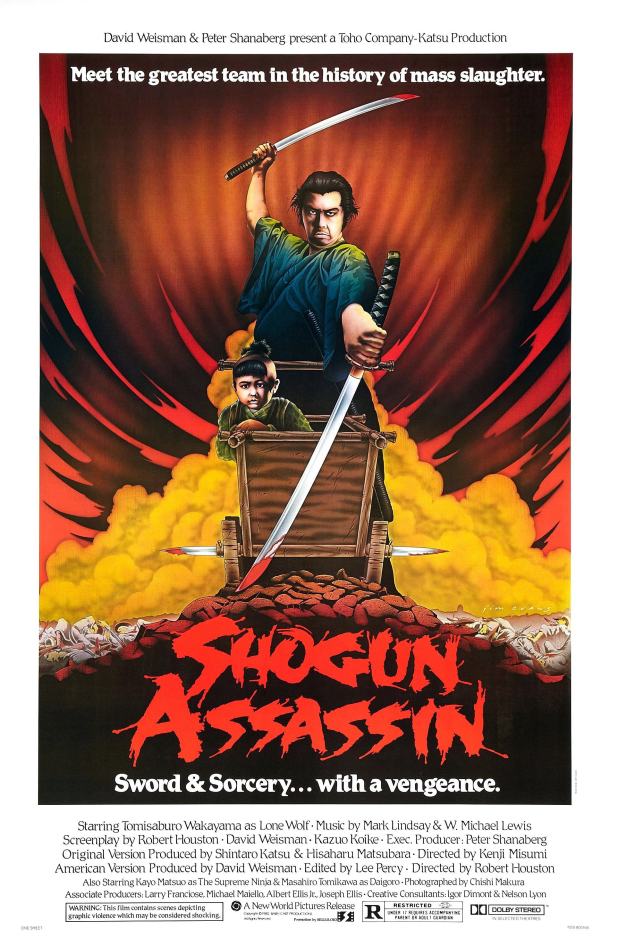
Working with Robert Houston (Bobby from The Hills Have Eyes), he created a piece of pop culture remixing that we know as Shogun Assassin. But really it’s twelve minutes of Lone Wolf and Cub: Sword of Vengeance and the majority of the second film in the six-film series, Lone Wolf and Cub: Baby Cart at the River Styx.
These Kozure Ōkami films were based on the Japanese manga Lone Wolf and Cub, which was created by the writer Kazuo Koike and the artist Goseki Kojima. If the story of a killer redeeming himself while walking alongside a weapon-laden baby cart seems familiar, someone with a much greater budget in a galaxy far, far away would be very, very inspired by it.
Weisman had obtained the rights for $50,000 from the American office of Toho Studios and got a deal with Roger Corman’s New World Pictures to get it out to the grindhouses and drive-ins, while MCA/Universal Home Video released the videotape that got into rental stores.
This piece of pop culture has become culture in and out of itself, informing not only the aforementioned science fiction series, as well as being the movie that the Bride watched with her daughter at the end of Kill Bill Volume 2 and the dialogue that’s sampled throughout Wu-Tang member GZA’s album Liquid Swords, including the narration that begins this film’s bloodshed,
“When I was little, my father was famous. He was the greatest Samurai in the empire, and he was the Shogun’s decapitator. He cut off the heads of 131 lords for the Shogun. It was a bad time for the empire. The Shogun just stayed inside his castle and he never came out. People said his brain was infected by devils, and that he was rotting with evil. The Shogun said the people were not loyal. He said he had a lot of enemies, but he killed more people than that. It was a bad time. Everybody living in fear, but still we were happy. My father would come home to mother, and when he had seen her, he would forget about the killings. He wasn’t scared of the Shogun, but the Shogun was scared of him. Maybe that was the problem. At night, mother would sing for us, while father would go into his temple and pray for peace. He’d pray for things to get better. Then, one night the Shogun sent his ninja spies to our house. They were supposed to kill my father, but they didn’t. That was the night everything changed, forever. That was when my father left his samurai life and became a demon. He became an assassin who walks the road of vengeance. And he took me with him. I don’t remember most of this myself. I only remember the Shogun’s ninja hunting us wherever we go. And the bodies falling. And the blood.”
So yes, the original films were directed by Kenji Misumi, who also gave us several movies in the sagas of Zaitochi and Sleepy Eyes of Death. But by translating them into an incredibly bloody Americanized version that played scummy venues that had no pretensions of art, the world of Lone Wolf and Cub was introduced to audiences that otherwise would have never had their minds taken back to feudal Japan.
Ogami Itto was the shogun’s decapitator whose wife was killed by that very same shogun and has now gone on the ending path into vengeance. When his son Daigoro was just an infant, he gave him the choice between vengeance and death: either crawl toward the sword and join him on the road to Hell or the ball, so that he would be killed by his father’s hand and join his mother in heaven.
Daigoro chose the sword.
So while this film concentrates more on the bloody battles and less on the why that gets us there, it’s still pretty powerful with some blackly humorous dialogue from Daigoro, who says at the end, as he looks back on the bloody path of rage his father has cut, “I guess I wish it was different…but a wish is only a wish.
When Shogun Assassin was released by Vipco in the UK, it became a section 3 video nasty due to its heavy levels of violence.
*His brother Sam’s career has not been as highbrow, as his resume includes D2: The Mighty Ducks, George of the Jungle, What’s the Worst That Could Happen? and Dickie Roberts: Former Child Star.
Oh, call it what you will, you ol’ ’80s “Midnight Movie” and VHS-renting road dogs: Mondo Cannibale, CannibalWorld, Cannibals, White Cannibal Queen, A Woman for the Cannibals, or Barbarian Goddess. All we known is that, once again, Jess Franco, casts himself as the patron saint of the video nasty, as he sticks his hands into the boiling native vats and fucks up a genre. While shooting, this soon-to-be U.K.-banned ditty was titled Rio Salvaje, aka Wild River, probably as an ersatz sequel to Umberto Lenzi’s 1972 progenitor, Man from Deep River. As if we’d be duped by a Franco joint.
White Cannibal Queen
Ah, the VHS clamshell sleeve I remember. Heaven.
On the plus side: Franco gives us the always welcomed Al Cliver (The Beyond) and Sabrina Siani (Conquest and The Throne of Fire). According to Franco, he did this movie and fellow cannibal romp Devil Hunter (1980) for the money and had no idea why anyone would enjoy these films. (Is it just me, or does Franco have a lot of those type of films in his career? He said the same thing about his NaziZom rip, Zombie Lake.) Franco also went on record that Sabrina Siani was the worst actress he ever worked with and that her only good quality was her “delectable derrière.”
Whatever, Jess. Pedophilic Pig.
However, to Franco’s credit, he does change it up a bit: Instead of looking for the usual lost tribes or oil, or whatever vegetable or mineral MacGuffin we need to steal from a peaceful native tribe to make a better life for the white man, our civilized man — with one arm, who lost it during the first expedition — returns to the jungle where he lost his family to rescue his now teenage daughter — who’s become the blonde white cannibal queen of the tribe.
Cannibal Terror
It’s another Jess Franco joint: it’s different, but the same.
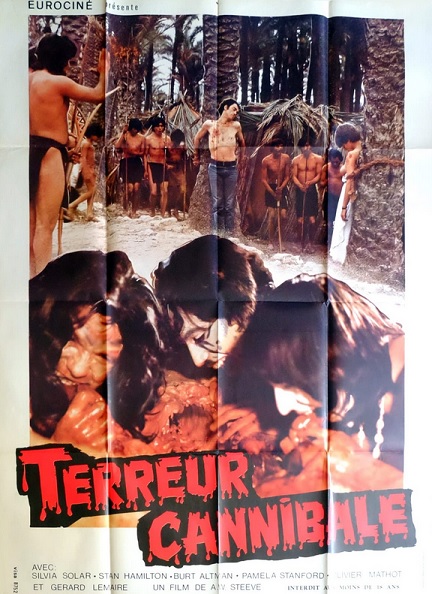
Now, don’t let Jess Franco bamboozle you with Cannibal Terror, aka Terreur Cannibale (1981). While Franco penned the script, it’s actually a way-too-late French entry into the genre directed by Alaine Deruelle, and not a repack of White Cannibal Queen, aka Mondo Cannibale. But it does raid that Franco film for stock footage. As result, we see Sabrina Siani, the White Cannibal Queen, while not starring in the film, appearing in a bar scene (oops); several shots of the dancing cannibals from Franco’s film are redux, here; a background actor (said to have a distinctive, Mick Jagger-type face) appears in three roles, here: as two cannibals, a border guard, and a third cannibal eating Al Cliver’s wife; the guitar player at the bar, here, found Al Cliver after he had his arm cut off in White Cannibal Queen (oops).
White Cannibal Queen and Cannibal Terror also share actors Olivier Mathot and Antonio Mayans, both whom have starring roles, as well as porn actress Pamela Stanford, who has a major role in Cannibal Terror, but a support role in White Cannibal Queen by way of stock pillaging. The leading woman change up is Silvia Solar from Umberto Lenzi’s Eyeball(1975).
As far as the “plot” goes in the French remake/ripoff: Two criminals take their kidnapping victim to their partner’s jungle hideaway. The local cannibal tribe hunts them down one by one.
Devil Hunter
Where I have I seen you before? Oy! Another Jess Franco cannibal joint!
And don’t let Jess Franco hornswoggle you with Devil Hunter (1980), aka, Sexo Canibal, The Man Hunter, and Mandingo Manhunter, for he is director Clifford Brown and writer Julius Valery, incognito; his second wife, Lina Romay, co-directed, while his first wife, Nicole Guettard, edited.
And since Devil Hunter was shot back-to-back with White Cannibal Queen, Al Cliver returns in the leading hero role. And Antonio Mayans, from it’s-not-Franco’s-film-but-it-is Cannibal Terror, returns as Cliver’s co-star. The change up, here, is that Ursula Buchfellner, a German model who became Playboy magazine’s “Playmate of the Month” in October 1979, stars as our resident damsel-in-distress. Did you see the Euro-adult comedies Popcorn and Icecream (1979), Cola, Candy, Chololate (1979), and Hot Dogs in Ibiza (1979), and Jess Franco’s women-in-prison romp Hellhole Women, aka Sadomania (1981)? Well, now you know four more Ursula Buchfellner’s films than most (normal) people. Do you feel blessed by B&S?
As far as the “plot” goes, well, it’s pretty much a retread of Cannibal Terror: After the kidnapping by white bandits of a top model/actress (Buchfellner) on a jungle shoot/location scouting trip, an ex-Vietnam vet (Cliver) and his mercenary pal (Mayans) head into the deep jungle of the island nation to rescue her, not only from the kidnappers, but from cannibals who worship a “Devil God.” And (snickering) the “God” is a tall African dude with ping-pong eyes falling out of his head.
And get this: Jess Franco claims the makers of Predator stole their idea from this movie.
Whatever, Mr. Franco. Ye who commits celluloid theft, himself.
Needless to say: All of the stock footage padding from White Cannibal Queen and Cannibal Terror, along with the expected Franco-sleaze, and awful dubbing, is back — to lesser . . . and lesser effect. Wow, Jess, thanks for making White Cannibal Queen look even better than it’s allowed to be. But it does “splatter” nicely to make the U.K.’s “Video Nasties” list, which is the whole reason we’re reviewing this film this week for our “Video Nasties Week.”
So, there you go. Now you’re an educated Euro-cannibal flick consumer in-the-know that Cannibal Terror and Devil Hunter aren’t alternate titles to White Cannibal Queen, but three distinct — as distinct as a Franco joint can be — separate films . . . that are different, but the same. Sorta. Kinda. Oh, Franco!
But you know Franco: He’s a magnificent, maniacal bastard and we love him for it. What would our youth have been without Franco flicks and Venom tunes?
We did a whole week of cannibal films with our “Mangiati Vivi Week” tribute back in February 2018. You can also learn more about the genre with our review of the documentary Me Me Lai Bites Back (2021). And there’s more “nasties” to be found with our “Section 1,” “Section 2,” and “Section 3” explorations.
You can purchase White Cannibal Queen from Blue Underground or watch it as a free-with-ads-stream on Tubi.
You can purchase Cannibal Terror from 88 Films or watch it as a VOD on Amazon Prime.
You can purchase Devil Hunter from Severin Films or watch it as as free-with-ads-stream on Daily Motion.
Update: In January 2023 we rolled out our Jean Rollin-uary month of reviews. If you’re not familiar with Rollin’s works, click through and check them out. Oh, yes! If you do a month of Jean Rollin, you must do a month of Jess Franco! February 2023 was our “Jess Franco Month.”
About the Author: You can read the music and film reviews of R.D Francis on Medium and learn more about his work on Facebook.
“This is a true adventure. Filmed on location in the jungle where the events portrayed actually took place. The production thanks the Indonesian Government for allowing this story to be brought to the screen.” — Opening title card with a claim we’ve heard many times before
So, are you in the mood for a bizarre mix of repugnant gore wrapped in a blatant lack of common sense?
Well, then, wee video pup, you’re in the mood for an Indonesian cannibal movie: Strap ye not the popcorn bucket on thou chin, get the puke bucket. And ditch the Dr. Pepper for the Pepto-Bismol.
We’re not kidding.
The VHS clamshell slipcover we remember that was part of the U.K.’s “Section 3 Video Nasties” list.
Yes, India did, in fact, jump on the Italian-made cannibal zombie sub-genre puke wagon . . . and upped the genre’s already stomach content-inducing cruelty and brain-burning weirdness. Well, what could we possibly expect from director Sisworo Gautama Putra?
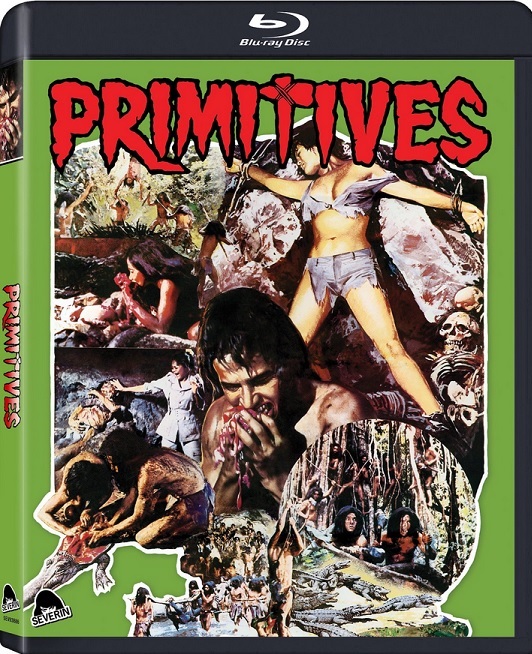
You know Putra as the Indonesia horror purveyor who later gave us the whacked-o-rama (lifted from Phantasm) that was Satan’s Slave (1982). Primitives, aka Savage Terror in its home video shelf life, which served as Putra’s big screen debut, was inspired by his fandom of the successful Italian cannibal movies Sacrifice! (1972), Jungle Holocaust (1977), and Slave of the Cannibal God (1978). Putra’s — and his longtime screenwriting and producing partners Imam Tantowi’s and Gope T. Samtani’s — famdom were so great, that they lifted — okay, it’s a “homage” — scenes wholesale from those films. If you’re a fan of Cannibal Ferox and Cannibal Holocaust, you’ll see the homages (severed) afoot.
As with all films from the copyright-lawless tundras of India and Turkey . . . if ripping off Ruggero Deodato isn’t enough, and if the animal-on-animal wildlife stock footage violence isn’t enough, you’ll also hear “(We Are) The Robots” by Kraftwork, John Williams’s main theme from Star Wars, and James Last’s “The Lonely Shepherd” on its soundtrack.
Yeah, we’ve been here before: When three anthropology students, along with their guides, go in search of a lost primitive tribe — and have a rafting accident — they spiral into a nightmare of bloody rituals, torture . . . and the consumption of their own flesh, as they’re hunted down one-by-one by the very tribe they came to explore.
Martial Arts fans will find additional interest in the film as it stars Humbertus Knoch, aka Barry Prima for English-speaking audiences, in his feature film debut. Prima’s best known for his work in The Warrior (1981), The Warrior and the Blind Swordsman (1983), The Devil’s Sword (1984), and The Warrior and the Ninja (1985). He’s currently in production on his 75th project, Garuda 7.
You can get this Italian-styled cannibal slopper from Cult Action under its alternate title of Primitif, while the fine folks at Severin have it out under the Primitives title on Blu-ray and DVD. Severin’s reissue includes the extra-purchase incentives of bonus interview vignettes with writer Imam Tantowi and producer Gope T. Samtaini; it also includes an alternate opening title sequence, while the film is scanned in high-definition from the Jakarta Studio’s vault negative.
However, we found you a free-with-ads stream to watch on Tubi — and you can triple feature it with Eaten Alive! and Mountain of the Cannibal God via Tubi. You can also learn more about the Italian cannibal sub-genre of zombie films with our recent review of Naomi Holwill’s documentary Me Me Lai Bites Back (2020), as well as her producing partner Calum Waddel’s Eaten Alive! The Rise and Fall of the Italian Cannibal Film (2015).
Screenwriter Imam Tantowi and producer Gope T. Samtani also gave us their take on Indiana Jones with The Devil’s Sword (1984) and John Rambo with Daredevil Commandos (1986). But before those less-graphic ripoffs, they followed Primitives with Blazing Battle (1983). That film is an Italian cannibal-styled rip reset during the Japanese occupation of Indonesia during WW II. More than worthy of a U.K. “video nasty” albatross — if it only made it to the U.K. shores — the faux martial arts-marketed flick features equal, sloppy helpings of over-the-top depictions of rape, along with torture scenes of impaling, eye gouging, and so on. Regardless of its marketing on the video fringe as a (comical) martial arts movie, Blazing Battle is anything but. Your caveat has been served.
Warning: No joke. Primitives is graphic to the extreme — more so than its Italian inspirations — and the blatant animal cruelty may disturb you.
Ugh. Another trailer/clip bites the dust. You’re on your . . . perilto find one.
Be sure to surf over to our three part “Video Nasties” exploration that lists all of the films on the U.K.’s Section 1, Section 2, and Section 3 lists, as well as our “Mangiati Vivi Week” tribute to Italian cannibal films.
About the Author: You can read the music and film reviews of R.D Francis on Medium and learn more about his work on Facebook.
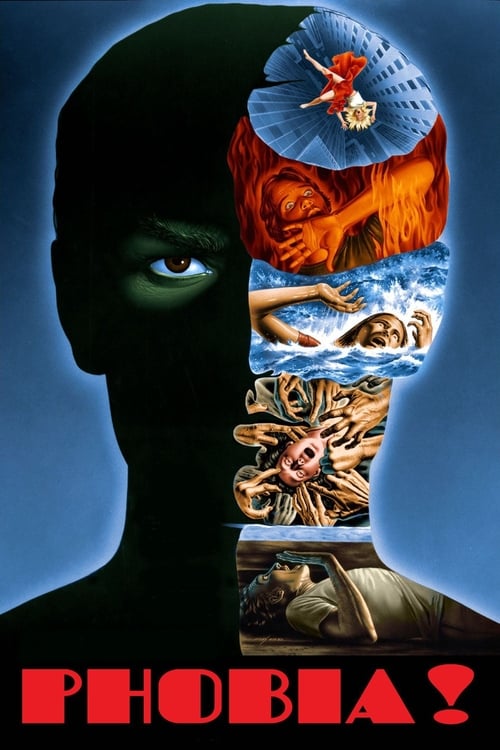
Psychiatrist Dr. Peter Ross (Paul Michael Glaser ) is using radical techniques — maybe even abusive — techniques on his patients to cure them of their fears. But then, they start getting killed off one after the other.
The script for this film comes from a story by Dead and Buried team Ronald Shusett* and Gary Sherman that was scripted by Peter Bellwood, Lew Lehman and Hammer veteran Jimmy Sangster.
It also has John Huston, a director of some pedigree, making it. But this feels less like the John Huston who directed The Maltese Falcon, The Treasure of the Sierra Madre, The Asphalt Jungle, The African Queen, The Misfits and Prizzi’s Honor and more like the John Huston who acted in Myra Breckinridge, The Bermuda Triangleand The Visitor.
If this sounds like Schizo without Kinski, well…you’re not wrong.
The best thing about this movie is that Marian Waldman, Mrs. Mac from Black Christmas, plays Glaser’s housekeeper.
Seriously, John Huston directed this. And it’s dull. So dull. Nobody seems to care and the premise of making criminals atone for their crimes by taking part in an experimental video therapy and being killed is a good one. This movie does not succeed in telling that story.
*According to Dan O’Bannon, Ronald Shusett was the first to option the script from the original screenwriter. Shusett was in talks to sell the rights further, provided he could fix it, which meant that he restructured it with O’Bannon.
Man, Richard Fleischer. Your career was all over the place. There are highs such as Soylent Green, Fantastic Voyage, See No Evil and 20,000 Leagues Under the Sea as well as lows like Amityville 3-D, Doctor Dolittle and Che! as well as movies that can be described as interesting like Mr. Majestyk, Conan the Destroyer, Red Sonja, Mandingo and his last film, Million Dollar Mystery, which was a promotional tie-in with Glad-Lock garbage bags that had a million dollar prize for anyone that could guess where the money was.
The idea for this remake of the 1952 movie — which was a remake of the 1927 movie — came from producer Jerry Leider, who believed that star Neil Diamond could be the same kind of star as Elvis. Or at least Barbara Streisand.
Metro-Goldwyn-Mayer started making this movie but dropped the project when they felt that it was too Jewish, in case you think you know who runs the media. Sometime after, Diamond had back surgery and invoked a clause in his contract that allowed him to finish the original music before filming began, which kept the producers from changing the lead role to Barry Mannilow.
Most importantly at this time, Sir Laurence Olivier was cast as Diamond’s character’s father Cantor Rabinovitch, for a $1 million, ten-week contract. Sidney J. Furie was set to direct — yes, the Iron Eagle director — but he had creative differences and that meant scriptwriting duties shifted from Stephen H. Foreman to Herbert Baker, who rewrote the film and then, well, Furie was fired while the movie was being filmed and Fleisher finished the movie.
Combined with the fact that Neil Diamond could command the stage and reach huge audiences but struggled with acting and you have a movie that was a ticking bomb.
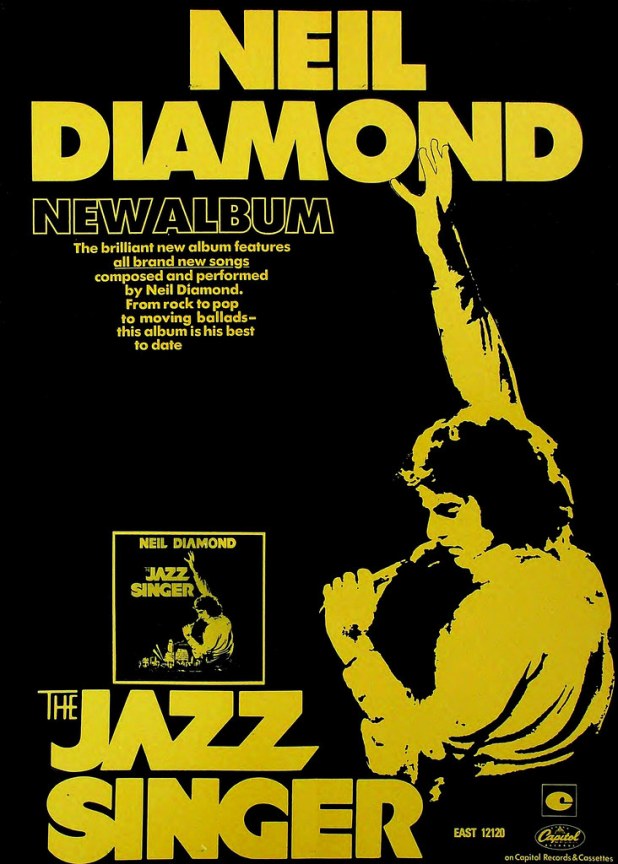
Actually, for everyone who believes that this movie failed, it actually didn’t. It made over $27 million on a budget of $13 million, mostly thanks to being presold to television. The soundtrack, however, was beyond a massive big deal, becoming Neil Diamond’s biggest selling album in the United States by selling more than 5 million copies and reaching #3 on the pop albums chart. The singles “Love on the Rocks,” “Hello Again” and “America” reached #2, #6 and #8 on the charts.
This is not the first time a Neil Diamond soundtrack was a hit and the film failed. The other would be Jonathan Livingston Seagull.
But what of the movie?
Yussel Rabinovitch is a young — Diamond was 39 when this came out — fifth-generation Jewish cantor performing at the synagogue of his father. His life is a mix of trying to sing rock and roll and being tied to the teaching of his faith, as well as his marriage to his childhood friend Rivka (Catlin Adams, who took Nathan Johnson’s innocence in The Jerk). Don’t get attached to her, because once Yussel heads to Hollywood, she’s old news.
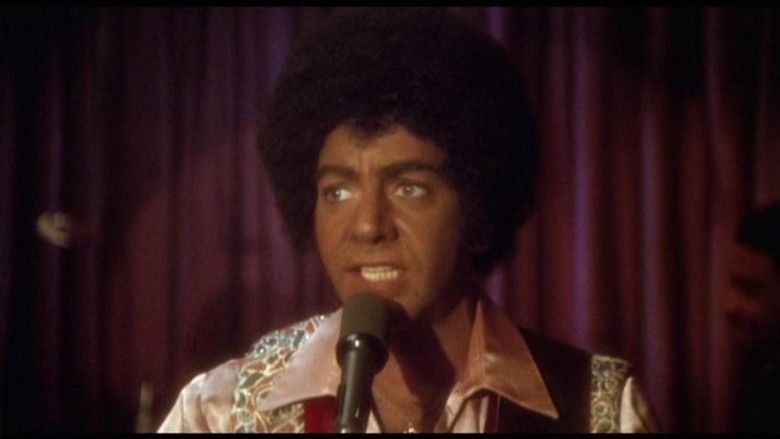
Somehow, maybe to tie this into the Al Jolson story that the original was all about, Diamond performs with his friend Bubba (Franklyn Ajaye) and his band the Four Brothers, showing up in blackface which trust me was still wrong in 1980. Someone notices that he has white hands, a brawl happens and Yussel’s father has to bail him out and learns that he’s changed his name to Jess Robin. Father and son have a screaming match and trust me, you would be shocked that this is Sir Laurence Olivier, who should be elevating Diamond and instead is trapped within the black hole that is Neil’s acting.
After the movie was finished, Sir Laurence Olivier was overheard at a dinner telling his friends, when asked about this movie, “This piss is shit.” A reporter was nearby and the news was all over the place, leading to the actor writing a ten-page letter to Fleischer, not only apologizing but also admitting that he was in movies — and so many of them — for the money now. The lawsuits that were being written up were torn up.
Despite disagreements with the singer he’s been hired to write songs for, Yussel wins over his future manager — and wife — Molly Bell (Lucia Arnez, literally the one bright shining light in this entire movie).
Man, this entire movie. I’ve always read how bad it is and I was not prepared for how truly awful it is, which means that I loved every single moment of it. Beyond the shouting matches over Jewish tradition, there’s also the fact that our hero is basically a jerk and that he takes it out on everyone around him but we’re supposed to love him not because of who he is in the movie but more because he’s Neil Diamond.
Roger Ebert summed up why this movie makes no sense so well: “The 1925 play spoke to the generation of immigrant children who wanted to break away from the tradition of their parents. But 55 years later, when America’s ethnic groups are rediscovering their traditions, we don’t accept Jess’ career move as easily. Frankly, we see his religious tradition as having much more value than the plastic Hollywood pop music world he yearns to inhabit.”
Diamond was nominated for both a Golden Globe Award for Best Actor and a Golden Raspberry Award for Worst Actor for this movie. There’s only two other people who’ve done that. That would be James Coco and Pia Zadroa, who won both awards too.
You know how ridiculous it is when Neil breaks into the Pledge of Allegiance during “America,” but you’re like, man that song is so goofy that you have to love it? That’s this whole movie.
“His story will make you cry. His music will make you sing. His triumph will make you cheer.” I mean, unless you’re everyone else who has to deal with him.
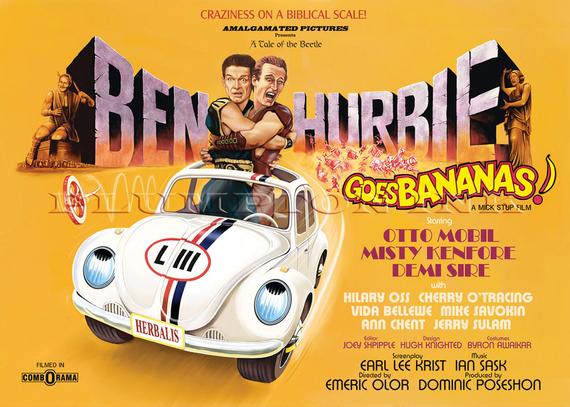
You know, I kinda hate Jim Douglas. After Herbie Goes to Monte Carlo, he just gives up on the Love Bug and gives him to his nephew Pete Stancheck, who has to head to Mexico with his buddy D.J. to get the car. On the way to get the car, they get their pockets picked up the loveable — well, that’s debatable — ruffian Paco who also steals from some Incan-ruin robbers, which is a bad idea. Somehow, Paco gets the map to the gold they’ve stashed and also sneaks on to a cruise ship along with our protagonists and Herbie for even more wacky hijinks in Rio de Janeiro, including the Brazil Grand Prêmio race before Captain Blythe (Harvey Korman), the boss of the ship, kicks everyone off and drops Herbie into the ocean where he drives along the ocean floor and survives*.
I mean, how powerful is Herbie? What is he? A demon? A hyperintelligent car? The soul of a child who died inhabiting an indestructible VW bug? Why do I have so many questions?
Look, John Vernon is in this and I give that guy a pass. People have to work. Yet somehow I have made it through four Herbie movies which are the very definition of diminishing returns. I mean, I love every movie in the Police Academy and Vice Academy series and obviously have little to no taste and this movie broke me. It left me crying in the corner.
*The real VW Bug used for this stunt did not. They just left it there. 25 more VW Bugs paid for this film with their lives. Blood for the Love Bug!









 B&S About Movies
You must be logged in to post a comment.