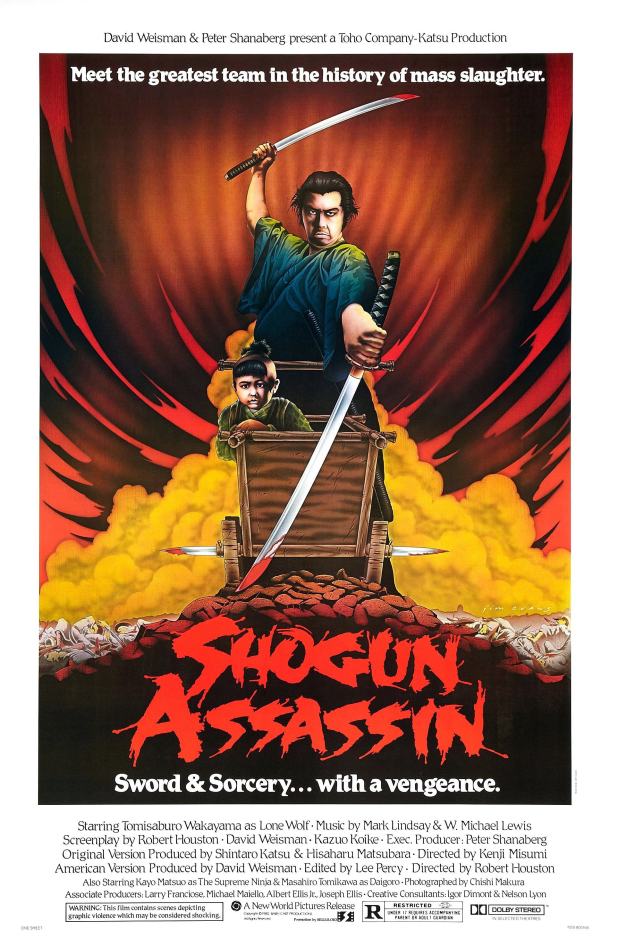
Shogun Assassin (1980)

David Weisman lived the kind of life that they make movies about. Directly after seeing La Dolce Vita, he quit Syracuse University’s School of Fine Arts, headed off to Rome and managed to not only meet Fellini, but design the poster for 8 1/2 and work for Pasolini. He followed that by working as Otto Preminger’s assistant and designing the opening of Hurry Sundown.

He also found himself part of Andy Warhol’s Factory and made the experimental film, Ciao! Manhattan before producing The Killing of America and convincing Manuel Puig to allow him to adapt his novel Kiss of the Spider Woman for film*.

Working with Robert Houston (Bobby from The Hills Have Eyes), he created a piece of pop culture remixing that we know as Shogun Assassin. But really it’s twelve minutes of Lone Wolf and Cub: Sword of Vengeance and the majority of the second film in the six-film series, Lone Wolf and Cub: Baby Cart at the River Styx.

These Kozure Ōkami films were based on the Japanese manga Lone Wolf and Cub, which was created by the writer Kazuo Koike and the artist Goseki Kojima. If the story of a killer redeeming himself while walking alongside a weapon-laden baby cart seems familiar, someone with a much greater budget in a galaxy far, far away would be very, very inspired by it.

Weisman had obtained the rights for $50,000 from the American office of Toho Studios and got a deal with Roger Corman’s New World Pictures to get it out to the grindhouses and drive-ins, while MCA/Universal Home Video released the videotape that got into rental stores.

This piece of pop culture has become culture in and out of itself, informing not only the aforementioned science fiction series, as well as being the movie that the Bride watched with her daughter at the end of Kill Bill Volume 2 and the dialogue that’s sampled throughout Wu-Tang member GZA’s album Liquid Swords, including the narration that begins this film’s bloodshed,

“When I was little, my father was famous. He was the greatest Samurai in the empire, and he was the Shogun’s decapitator. He cut off the heads of 131 lords for the Shogun. It was a bad time for the empire. The Shogun just stayed inside his castle and he never came out. People said his brain was infected by devils, and that he was rotting with evil. The Shogun said the people were not loyal. He said he had a lot of enemies, but he killed more people than that. It was a bad time. Everybody living in fear, but still we were happy. My father would come home to mother, and when he had seen her, he would forget about the killings. He wasn’t scared of the Shogun, but the Shogun was scared of him. Maybe that was the problem. At night, mother would sing for us, while father would go into his temple and pray for peace. He’d pray for things to get better. Then, one night the Shogun sent his ninja spies to our house. They were supposed to kill my father, but they didn’t. That was the night everything changed, forever. That was when my father left his samurai life and became a demon. He became an assassin who walks the road of vengeance. And he took me with him. I don’t remember most of this myself. I only remember the Shogun’s ninja hunting us wherever we go. And the bodies falling. And the blood.”

So yes, the original films were directed by Kenji Misumi, who also gave us several movies in the sagas of Zaitochi and Sleepy Eyes of Death. But by translating them into an incredibly bloody Americanized version that played scummy venues that had no pretensions of art, the world of Lone Wolf and Cub was introduced to audiences that otherwise would have never had their minds taken back to feudal Japan.

Ogami Itto was the shogun’s decapitator whose wife was killed by that very same shogun and has now gone on the ending path into vengeance. When his son Daigoro was just an infant, he gave him the choice between vengeance and death: either crawl toward the sword and join him on the road to Hell or the ball, so that he would be killed by his father’s hand and join his mother in heaven.

Daigoro chose the sword.

So while this film concentrates more on the bloody battles and less on the why that gets us there, it’s still pretty powerful with some blackly humorous dialogue from Daigoro, who says at the end, as he looks back on the bloody path of rage his father has cut, “I guess I wish it was different…but a wish is only a wish.

When Shogun Assassin was released by Vipco in the UK, it became a section 3 video nasty due to its heavy levels of violence.

*His brother Sam’s career has not been as highbrow, as his resume includes D2: The Mighty Ducks, George of the Jungle, What’s the Worst That Could Happen? and Dickie Roberts: Former Child Star.

White Cannibal Queen (1980), Cannibal Terror (1981), Devil Hunter (1980)

Oh, call it what you will, you ol’ ’80s “Midnight Movie” and VHS-renting road dogs: Mondo CannibaleCannibal World, Cannibals, White Cannibal Queen, A Woman for the Cannibals, or Barbarian Goddess. All we known is that, once again, Jess Franco, casts himself as the patron saint of the video nasty, as he sticks his hands into the boiling native vats and fucks up a genre. While shooting, this soon-to-be U.K.-banned ditty was titled Rio Salvaje, aka Wild River, probably as an ersatz sequel to Umberto Lenzi’s 1972 progenitor, Man from Deep River. As if we’d be duped by a Franco joint.

White Cannibal Queen

Ah, the VHS clamshell sleeve I remember. Heaven.

On the plus side: Franco gives us the always welcomed Al Cliver (The Beyond) and Sabrina Siani (Conquest and The Throne of Fire). According to Franco, he did this movie and fellow cannibal romp Devil Hunter (1980) for the money and had no idea why anyone would enjoy these films. (Is it just me, or does Franco have a lot of those type of films in his career? He said the same thing about his NaziZom rip, Zombie Lake.) Franco also went on record that Sabrina Siani was the worst actress he ever worked with and that her only good quality was her “delectable derrière.”

Whatever, Jess. Pedophilic Pig.

However, to Franco’s credit, he does change it up a bit: Instead of looking for the usual lost tribes or oil, or whatever vegetable or mineral MacGuffin we need to steal from a peaceful native tribe to make a better life for the white man, our civilized man — with one arm, who lost it during the first expedition — returns to the jungle where he lost his family to rescue his now teenage daughter — who’s become the blonde white cannibal queen of the tribe.

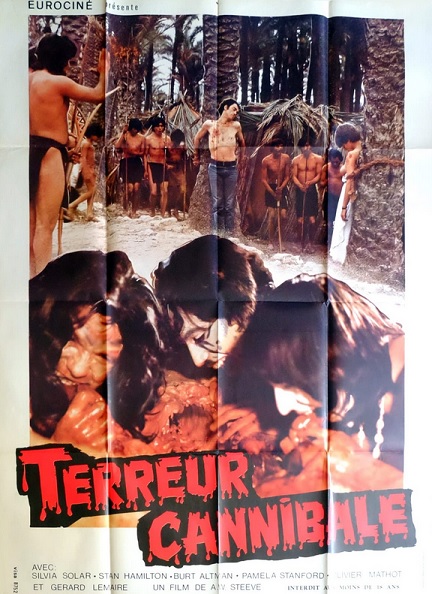
Cannibal Terror

It’s another Jess Franco joint: it’s different, but the same.

Now, don’t let Jess Franco bamboozle you with Cannibal Terror, aka Terreur Cannibale (1981). While Franco penned the script, it’s actually a way-too-late French entry into the genre directed by Alaine Deruelle, and not a repack of White Cannibal Queen, aka Mondo Cannibale. But it does raid that Franco film for stock footage. As result, we see Sabrina Siani, the White Cannibal Queen, while not starring in the film, appearing in a bar scene (oops); several shots of the dancing cannibals from Franco’s film are redux, here; a background actor (said to have a distinctive, Mick Jagger-type face) appears in three roles, here: as two cannibals, a border guard, and a third cannibal eating Al Cliver’s wife; the guitar player at the bar, here, found Al Cliver after he had his arm cut off in White Cannibal Queen (oops).

White Cannibal Queen and Cannibal Terror also share actors Olivier Mathot and Antonio Mayans, both whom have starring roles, as well as porn actress Pamela Stanford, who has a major role in Cannibal Terror, but a support role in White Cannibal Queen by way of stock pillaging. The leading woman change up is Silvia Solar from Umberto Lenzi’s Eyeball (1975).

As far as the “plot” goes in the French remake/ripoff: Two criminals take their kidnapping victim to their partner’s jungle hideaway. The local cannibal tribe hunts them down one by one.

Devil Hunter

Where I have I seen you before? Oy! Another Jess Franco cannibal joint!

And don’t let Jess Franco hornswoggle you with Devil Hunter (1980), aka, Sexo Canibal, The Man Hunter, and Mandingo Manhunter, for he is director Clifford Brown and writer Julius Valery, incognito; his second wife, Lina Romay, co-directed, while his first wife, Nicole Guettard, edited.

And since Devil Hunter was shot back-to-back with White Cannibal Queen, Al Cliver returns in the leading hero role. And Antonio Mayans, from it’s-not-Franco’s-film-but-it-is Cannibal Terror, returns as Cliver’s co-star. The change up, here, is that Ursula Buchfellner, a German model who became Playboy magazine’s “Playmate of the Month” in October 1979, stars as our resident damsel-in-distress. Did you see the Euro-adult comedies Popcorn and Icecream (1979), Cola, Candy, Chololate (1979), and Hot Dogs in Ibiza (1979), and Jess Franco’s women-in-prison romp Hellhole Women, aka Sadomania (1981)? Well, now you know four more Ursula Buchfellner’s films than most (normal) people. Do you feel blessed by B&S?

As far as the “plot” goes, well, it’s pretty much a retread of Cannibal Terror: After the kidnapping by white bandits of a top model/actress (Buchfellner) on a jungle shoot/location scouting trip, an ex-Vietnam vet (Cliver) and his mercenary pal (Mayans) head into the deep jungle of the island nation to rescue her, not only from the kidnappers, but from cannibals who worship a “Devil God.” And (snickering) the “God” is a tall African dude with ping-pong eyes falling out of his head.

And get this: Jess Franco claims the makers of Predator stole their idea from this movie.

Whatever, Mr. Franco. Ye who commits celluloid theft, himself.

Needless to say: All of the stock footage padding from White Cannibal Queen and Cannibal Terror, along with the expected Franco-sleaze, and awful dubbing, is back — to lesser . . . and lesser effect. Wow, Jess, thanks for making White Cannibal Queen look even better than it’s allowed to be. But it does “splatter” nicely to make the U.K.’s “Video Nasties” list, which is the whole reason we’re reviewing this film this week for our “Video Nasties Week.”

So, there you go. Now you’re an educated Euro-cannibal flick consumer in-the-know that Cannibal Terror and Devil Hunter aren’t alternate titles to White Cannibal Queen, but three distinct — as distinct as a Franco joint can be — separate films . . . that are different, but the same. Sorta. Kinda. Oh, Franco!

But you know Franco: He’s a magnificent, maniacal bastard and we love him for it. What would our youth have been without Franco flicks and Venom tunes?

We did a whole week of cannibal films with our “Mangiati Vivi Week” tribute back in February 2018. You can also learn more about the genre with our review of the documentary Me Me Lai Bites Back (2021). And there’s more “nasties” to be found with our “Section 1,” “Section 2,” and “Section 3” explorations.

You can purchase White Cannibal Queen from Blue Underground or watch it as a free-with-ads-stream on Tubi.

You can purchase Cannibal Terror from 88 Films or watch it as a VOD on Amazon Prime.

You can purchase Devil Hunter from Severin Films or watch it as as free-with-ads-stream on Daily Motion.

Update: In January 2023 we rolled out our Jean Rollin-uary month of reviews. If you’re not familiar with Rollin’s works, click through and check them out. Oh, yes! If you do a month of Jean Rollin, you must do a month of Jess Franco! February 2023 was our “Jess Franco Month.”

About the Author: You can read the music and film reviews of R.D Francis on Medium and learn more about his work on Facebook.

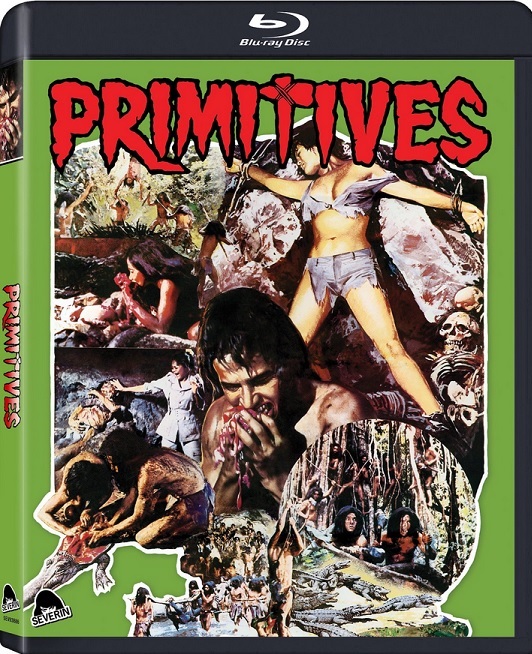
Primitives, aka Savage Terror (1980)

This is a true adventure. Filmed on location in the jungle where the events portrayed actually took place. The production thanks the Indonesian Government for allowing this story to be brought to the screen.”
— Opening title card with a claim we’ve heard many times before

So, are you in the mood for a bizarre mix of repugnant gore wrapped in a blatant lack of common sense?

Well, then, wee video pup, you’re in the mood for an Indonesian cannibal movie: Strap ye not the popcorn bucket on thou chin, get the puke bucket. And ditch the Dr. Pepper for the Pepto-Bismol.

We’re not kidding.

The VHS clamshell slipcover we remember that was part of the U.K.’s “Section 3 Video Nasties” list.

Yes, India did, in fact, jump on the Italian-made cannibal zombie sub-genre puke wagon . . . and upped the genre’s already stomach content-inducing cruelty and brain-burning weirdness. Well, what could we possibly expect from director Sisworo Gautama Putra?

You know Putra as the Indonesia horror purveyor who later gave us the whacked-o-rama (lifted from Phantasm) that was Satan’s Slave (1982). Primitives, aka Savage Terror in its home video shelf life, which served as Putra’s big screen debut, was inspired by his fandom of the successful Italian cannibal movies Sacrifice! (1972), Jungle Holocaust (1977), and Slave of the Cannibal God (1978). Putra’s — and his longtime screenwriting and producing partners Imam Tantowi’s and Gope T. Samtani’s — famdom were so great, that they lifted — okay, it’s a “homage” — scenes wholesale from those films. If you’re a fan of Cannibal Ferox and Cannibal Holocaust, you’ll see the homages (severed) afoot.

As with all films from the copyright-lawless tundras of India and Turkey . . . if ripping off Ruggero Deodato isn’t enough, and if the animal-on-animal wildlife stock footage violence isn’t enough, you’ll also hear “(We Are) The Robots” by Kraftwork, John Williams’s main theme from Star Wars, and James Last’s “The Lonely Shepherd” on its soundtrack.

Yeah, we’ve been here before: When three anthropology students, along with their guides, go in search of a lost primitive tribe — and have a rafting accident — they spiral into a nightmare of bloody rituals, torture . . . and the consumption of their own flesh, as they’re hunted down one-by-one by the very tribe they came to explore.

Martial Arts fans will find additional interest in the film as it stars Humbertus Knoch, aka Barry Prima for English-speaking audiences, in his feature film debut. Prima’s best known for his work in The Warrior (1981), The Warrior and the Blind Swordsman (1983), The Devil’s Sword (1984), and The Warrior and the Ninja (1985). He’s currently in production on his 75th project, Garuda 7.

You can get this Italian-styled cannibal slopper from Cult Action under its alternate title of Primitif, while the fine folks at Severin have it out under the Primitives title on Blu-ray and DVD. Severin’s reissue includes the extra-purchase incentives of bonus interview vignettes with writer Imam Tantowi and producer Gope T. Samtaini; it also includes an alternate opening title sequence, while the film is scanned in high-definition from the Jakarta Studio’s vault negative.

However, we found you a free-with-ads stream to watch on Tubi — and you can triple feature it with Eaten Alive! and Mountain of the Cannibal God via Tubi. You can also learn more about the Italian cannibal sub-genre of zombie films with our recent review of Naomi Holwill’s documentary Me Me Lai Bites Back (2020), as well as her producing partner Calum Waddel’s Eaten Alive! The Rise and Fall of the Italian Cannibal Film (2015).

Screenwriter Imam Tantowi and producer Gope T. Samtani also gave us their take on Indiana Jones with The Devil’s Sword (1984) and John Rambo with Daredevil Commandos (1986). But before those less-graphic ripoffs, they followed Primitives with Blazing Battle (1983). That film is an Italian cannibal-styled rip reset during the Japanese occupation of Indonesia during WW II. More than worthy of a U.K. “video nasty” albatross — if it only made it to the U.K. shores — the faux martial arts-marketed flick features equal, sloppy helpings of over-the-top depictions of rape, along with torture scenes of impaling, eye gouging, and so on. Regardless of its marketing on the video fringe as a (comical) martial arts movie, Blazing Battle is anything but. Your caveat has been served.

Warning: No joke. Primitives is graphic to the extreme — more so than its Italian inspirations — and the blatant animal cruelty may disturb you.

Ugh. Another trailer/clip bites the dust.
You’re on your . . . peril to find one.

Be sure to surf over to our three part “Video Nasties” exploration that lists all of the films on the U.K.’s Section 1, Section 2, and Section 3 lists, as well as our “Mangiati Vivi Week” tribute to Italian cannibal films.

About the Author: You can read the music and film reviews of R.D Francis on Medium and learn more about his work on Facebook.

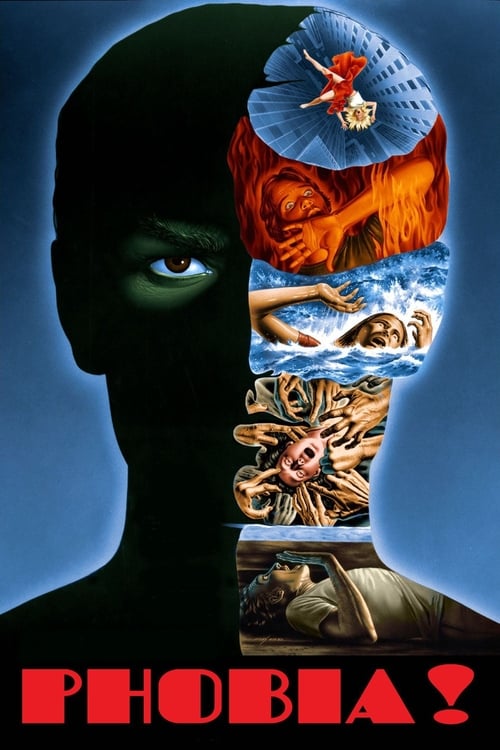
Phobia (1980)

Psychiatrist Dr. Peter Ross (Paul Michael Glaser ) is using radical techniques — maybe even abusive — techniques on his patients to cure them of their fears. But then, they start getting killed off one after the other.

The script for this film comes from a story by Dead and Buried team Ronald Shusett* and Gary Sherman that was scripted by Peter Bellwood, Lew Lehman and Hammer veteran Jimmy Sangster.

It also has John Huston, a director of some pedigree, making it. But this feels less like the John Huston who directed The Maltese Falcon, The Treasure of the Sierra Madre, The Asphalt Jungle, The African Queen, The Misfits and Prizzi’s Honor and more like the John Huston who acted in Myra BreckinridgeThe Bermuda Triangle and The Visitor.

But hey — Susan Hogan from The Brood and Lisa Langlois (Class of 1999Happy Birthday to MeDeady Eyes) are in this.

If this sounds like Schizo without Kinski, well…you’re not wrong.

The best thing about this movie is that Marian Waldman, Mrs. Mac from Black Christmas, plays Glaser’s housekeeper.

Seriously, John Huston directed this. And it’s dull. So dull. Nobody seems to care and the premise of making criminals atone for their crimes by taking part in an experimental video therapy and being killed is a good one. This movie does not succeed in telling that story.

*According to Dan O’Bannon, Ronald Shusett was the first to option the script from the original screenwriter. Shusett was in talks to sell the rights further, provided he could fix it, which meant that he restructured it with O’Bannon.

The Jazz Singer (1980)

Man, Richard Fleischer. Your career was all over the place. There are highs such as Soylent GreenFantastic Voyage, See No Evil and 20,000 Leagues Under the Sea as well as lows like Amityville 3-DDoctor Dolittle and Che! as well as movies that can be described as interesting like Mr. MajestykConan the Destroyer, Red SonjaMandingo and his last film, Million Dollar Mystery, which was a promotional tie-in with Glad-Lock garbage bags that had a million dollar prize for anyone that could guess where the money was.

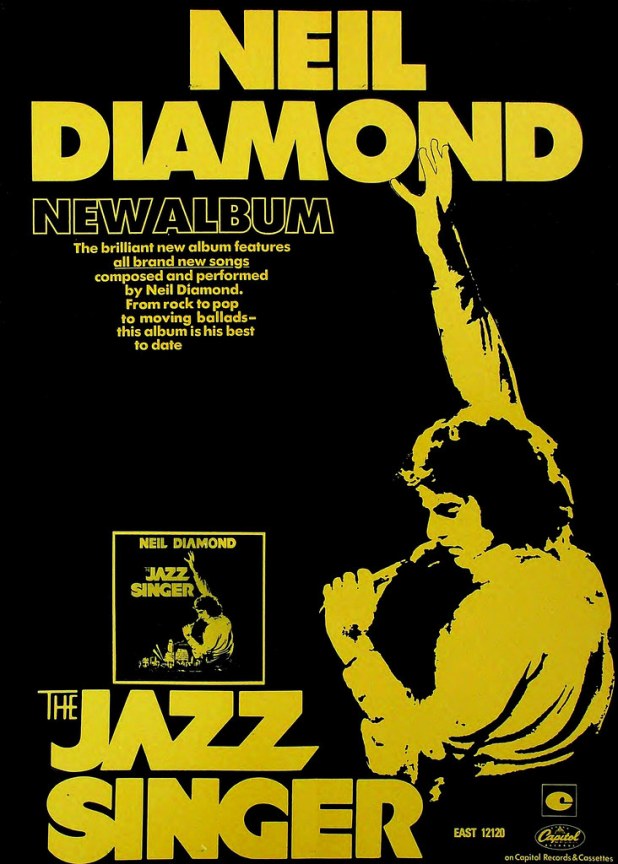
The idea for this remake of the 1952 movie — which was a remake of the 1927 movie — came from producer Jerry Leider, who believed that star Neil Diamond could be the same kind of star as Elvis. Or at least Barbara Streisand.

Metro-Goldwyn-Mayer started making this movie but dropped the project when they felt that it was too Jewish, in case you think you know who runs the media. Sometime after, Diamond had back surgery and invoked a clause in his contract that allowed him to finish the original music before filming began, which kept the producers from changing the lead role to Barry Mannilow.

Most importantly at this time, Sir Laurence Olivier was cast as Diamond’s character’s father Cantor Rabinovitch, for a $1 million, ten-week contract. Sidney J. Furie was set to direct — yes, the Iron Eagle director — but he had creative differences and that meant scriptwriting duties shifted from Stephen H. Foreman to Herbert Baker, who rewrote the film and then, well, Furie was fired while the movie was being filmed and Fleisher finished the movie.

Combined with the fact that Neil Diamond could command the stage and reach huge audiences but struggled with acting and you have a movie that was a ticking bomb.

Actually, for everyone who believes that this movie failed, it actually didn’t. It made over $27 million on a budget of $13 million, mostly thanks to being presold to television. The soundtrack, however, was beyond a massive big deal, becoming Neil Diamond’s biggest selling album in the United States by selling more than 5 million copies and reaching #3 on the pop albums chart. The singles “Love on the Rocks,” “Hello Again” and “America” reached #2, #6 and #8 on the charts.

This is not the first time a Neil Diamond soundtrack was a hit and the film failed. The other would be Jonathan Livingston Seagull.

But what of the movie?

Yussel Rabinovitch is a young — Diamond was 39 when this came out — fifth-generation Jewish cantor performing at the synagogue of his father. His life is a mix of trying to sing rock and roll and being tied to the teaching of his faith, as well as his marriage to his childhood friend Rivka (Catlin Adams, who took Nathan Johnson’s innocence in The Jerk). Don’t get attached to her, because once Yussel heads to Hollywood, she’s old news.

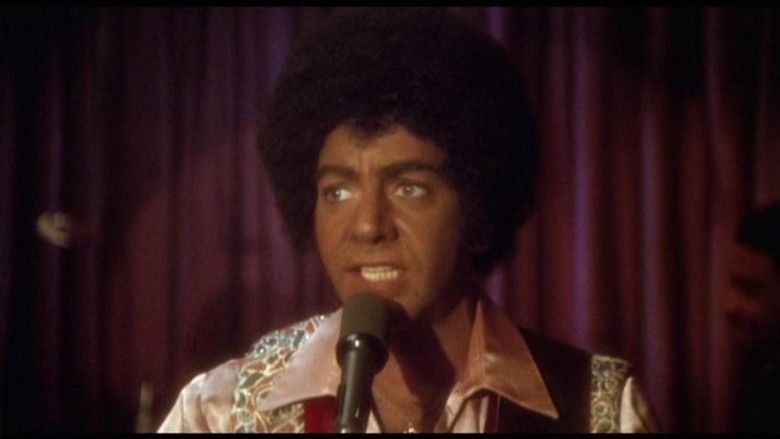
Somehow, maybe to tie this into the Al Jolson story that the original was all about, Diamond performs with his friend Bubba (Franklyn Ajaye) and his band the Four Brothers, showing up in blackface which trust me was still wrong in 1980. Someone notices that he has white hands, a brawl happens and Yussel’s father has to bail him out and learns that he’s changed his name to Jess Robin. Father and son have a screaming match and trust me, you would be shocked that this is Sir Laurence Olivier, who should be elevating Diamond and instead is trapped within the black hole that is Neil’s acting.

After the movie was finished, Sir Laurence Olivier was overheard at a dinner telling his friends, when asked about this movie, “This piss is shit.” A reporter was nearby and the news was all over the place, leading to the actor writing a ten-page letter  to Fleischer, not only apologizing but also admitting that he was in movies — and so many of them — for the money now. The lawsuits that were being written up were torn up.

Despite disagreements with the singer he’s been hired to write songs for, Yussel wins over his future manager — and wife — Molly Bell (Lucia Arnez, literally the one bright shining light in this entire movie).

Man, this entire movie. I’ve always read how bad it is and I was not prepared for how truly awful it is, which means that I loved every single moment of it. Beyond the shouting matches over Jewish tradition, there’s also the fact that our hero is basically a jerk and that he takes it out on everyone around him but we’re supposed to love him not because of who he is in the movie but more because he’s Neil Diamond.

Roger Ebert summed up why this movie makes no sense so well: “The 1925 play spoke to the generation of immigrant children who wanted to break away from the tradition of their parents. But 55 years later, when America’s ethnic groups are rediscovering their traditions, we don’t accept Jess’ career move as easily. Frankly, we see his religious tradition as having much more value than the plastic Hollywood pop music world he yearns to inhabit.”

Diamond was nominated for both a Golden Globe Award for Best Actor and a Golden Raspberry Award for Worst Actor for this movie. There’s only two other people who’ve done that. That would be James Coco and Pia Zadroa, who won both awards too.

You know how ridiculous it is when Neil breaks into the Pledge of Allegiance during “America,” but you’re like, man that song is so goofy that you have to love it? That’s this whole movie.

Herbie Goes Bananas (1980)

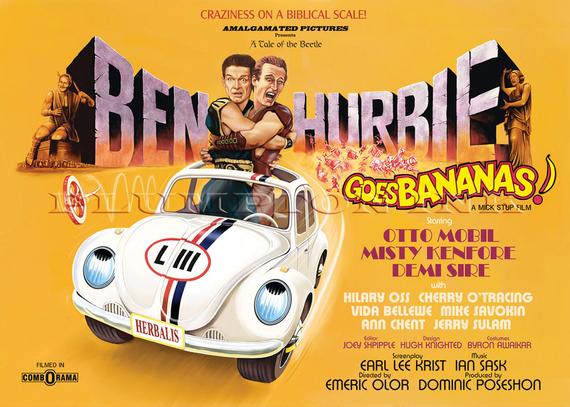
You know, I kinda hate Jim Douglas. After Herbie Goes to Monte Carlo, he just gives up on the Love Bug and gives him to his nephew Pete Stancheck, who has to head to Mexico with his buddy D.J. to get the car. On the way to get the car, they get their pockets picked up the loveable — well, that’s debatable — ruffian Paco who also steals from some Incan-ruin robbers, which is a bad idea. Somehow, Paco gets the map to the gold they’ve stashed and also sneaks on to a cruise ship along with our protagonists and Herbie for even more wacky hijinks in Rio de Janeiro, including the Brazil Grand Prêmio race before Captain Blythe (Harvey Korman), the boss of the ship, kicks everyone off and drops Herbie into the ocean where he drives along the ocean floor and survives*.

I mean, how powerful is Herbie? What is he? A demon? A hyperintelligent car? The soul of a child who died inhabiting an indestructible VW bug? Why do I have so many questions?

Look, John Vernon is in this and I give that guy a pass. People have to work. Yet somehow I have made it through four Herbie movies which are the very definition of diminishing returns. I mean, I love every movie in the Police Academy and Vice Academy series and obviously have little to no taste and this movie broke me. It left me crying in the corner.

*The real VW Bug used for this stunt did not. They just left it there. 25 more VW Bugs paid for this film with their lives. Blood for the Love Bug!

The Watcher in the Woods (1980)

ABOUT THE AUTHOR: Sean Collier is a writer and movie critic. Listen to his podcast, The Number One Movie in America, on all major podcast apps. Follow him on Twitter for more reviews: @seancollierpgh

Let’s plan an absurdly specific double feature.

I want a double feature where both films were released in 1980, and take place in a remote, possibly haunted location. Both films must feature a child who receives psychic messages — and that child must write important information backward on or near a reflective surface. When an adult character sees the backwards writing, they must make a shocked face before a crash zoom revealing the true message.

So, yes: The first half of this double feature is The Shining.

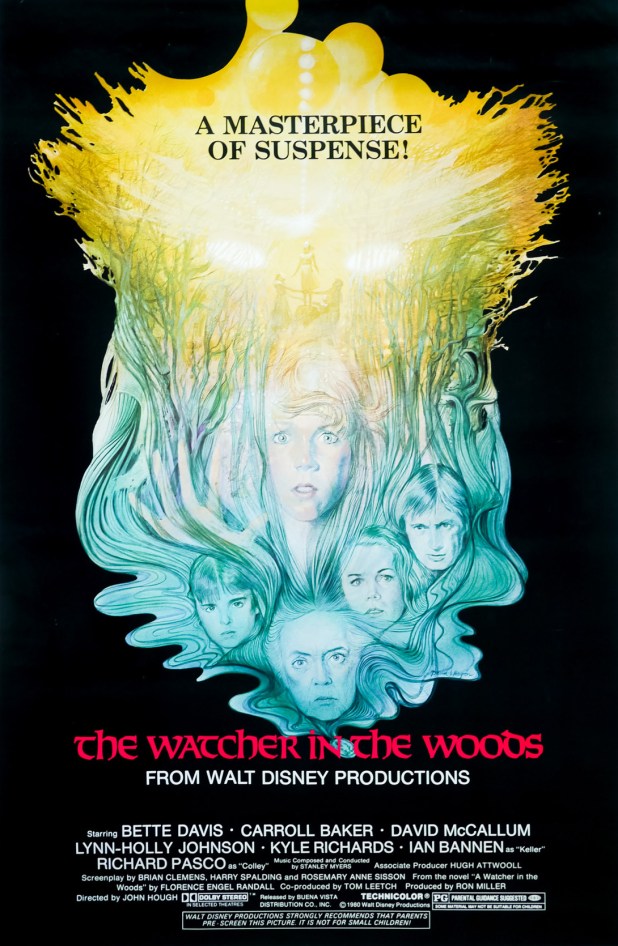
The second half, surprisingly, is The Watcher in the Woods a teen-focused but truly unsettling haunting tale distributed by Disney. To be clear, I’m not suggesting any untoward influence between The Shining and The Watcher in the Woods. They’re contemporaries, almost certainly in production at the same time. (A few miles apart, in fact.) It’s a remarkable coincidence, though, and — what with The Shiningstanding as my favorite movie — one that primed me to enjoy the largely forgotten Disney thriller.

Lynn-Holly Johnson, a one-time Bond girl (For Your Eyes Only), stars as Jan, the teen daughter of a family that has moved into a sprawling, creaking British manse. She keeps seeing strange things in the forest that borders the property; meanwhile, her younger sister Ellie — Halloween tyke Kyle Richards — keeps unknowingly delivering psychic messages. (When the family questions why the massive house is so affordable, Ellie opines, “Maybe there’s a ghost,” instantly making her the smartest person in the movie.)

Turns out that the building’s caretaker, Mrs. Aylwood (Bette Davis, who is as fantastic as you’d expect), has a long-lost daughter who disappeared after a lightning strike at a nearby chapel. Jan starts seeing a blindfolded vision of the lost girl in mirrors and ponds; if you can guess where the mystery is headed, congratulations, you’ve heard a British ghost story before.

Fortunately, “The Watcher in the Woods” keeps things lively with a series of unexpected action sequences. I did not expect a kinetically shot dirtbike sequence in this film, but it’s there, complete with a near-fatal accident. Director John Hough had a background in horror (Twins of Evil, The Legend of Hell House) before taking Disney gigs like this and Escape to Witch Mountain, so he knew how to make a memorable set piece. The gem of the bunch is a terrifying house-of-mirrors setup that likely traumatized thousands of late-Boomer teens.

The Watcher in the Woods was pulled from release almost immediately, as critics and audiences rejected a truly wild conclusion. Thanks to a fan edit you can find on YouTube, you can watch a reasonably convincing cut of the original version — that’s the one I saw — and judge for yourself if it was too out there for early-’80s teens. After a more streamlined (and less stunning) ending was re-shot, the new version was released in 1981 to mild success; it last received a DVD release in 2004 and is not yet on the Disney+ lineup.

While it lacks some drive — the middle stretch can get a bit sleepy — it’s a good time, and an interesting companion piece for Shining fans. If you have a friend who likes a mild thrill but doesn’t have the stomach for gore, this is a good choice.

They’ll have nightmares about screaming, blindfolded mirror ghosts, but that’s kind of the point.

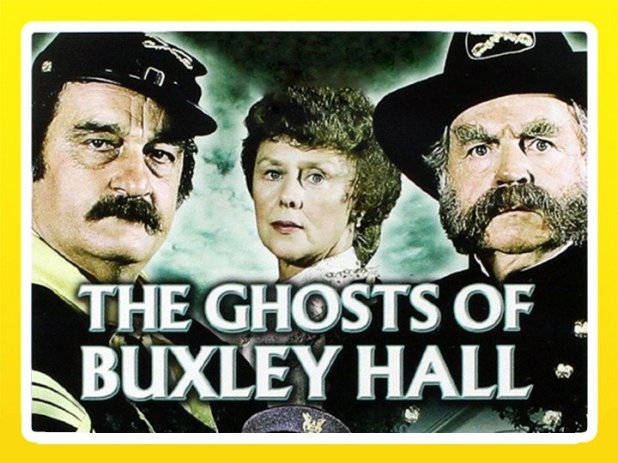
The Ghosts of Buxley Hall (1980)

Bruce Bilson also directed the Disney movie The North Avenue Irregulars, which I certainly saw at some point at the drive-in, possibly with The Love Bug or The Apple Dumpling Gang.

When the century old Buxley Military Academy falls on hard times, it has to merge with a school for girls, which angers the ghosts who haunte the academy, General Eulace C. Buxley (Dick O’Neill), Bettina Buxley (Louise Latham) and Sergeant Major Chester B. Sweet (Victor French). As the boys learn to live with the girls, the ghosts declare war on everyone — but in a totally fun and non-frightening way.

I kind of love Posie, who shows up in female empowerment t-shirts and tells the adults how dumb they are for most of the movie. The ghosts come around — even if seeing a black cadet blows their minds — and all ends well. It’s a non-threatening, not all that interesting Disney for kids ghost movie, but if thats your thing, well — here it is.

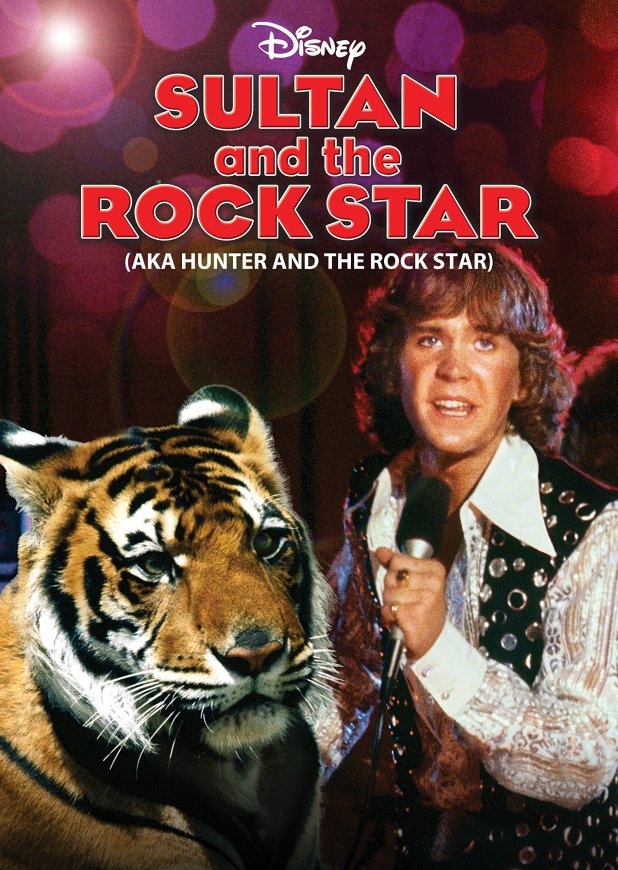
Sultan and the Rock Star (1980)

Based on the novel Sandy and the Rock Star, this episode of Disney’s Wonderful World aired on April 20, 1980 and treated us all to the tale of Paul Winters (Timothy Hutton), a teen idol who escapes from the cruel world of being famous on Sportsman’s Island, becoming friends with a bengal tiger named Sultan who also was once in the business of show.

The only problem is that the owner of the island is planning on killing the tiger in a hunt. So Paul has to somehow save his friend. Crispin Glover’s dad Bruce is also involved.

This was written by Steve Hayes, who also wrote Time After Time, and directed by Ed Abroms, who was the man behind plenty of episodic TV shows as well as the editor of Street Fighter and Cherry 2000.

Sometimes when you watch a Disney live action movie, they change your life. Other times, you watch a tiger make friends with Timothy Hutton, who would win an Oscar for his very next role in Ordinary People.


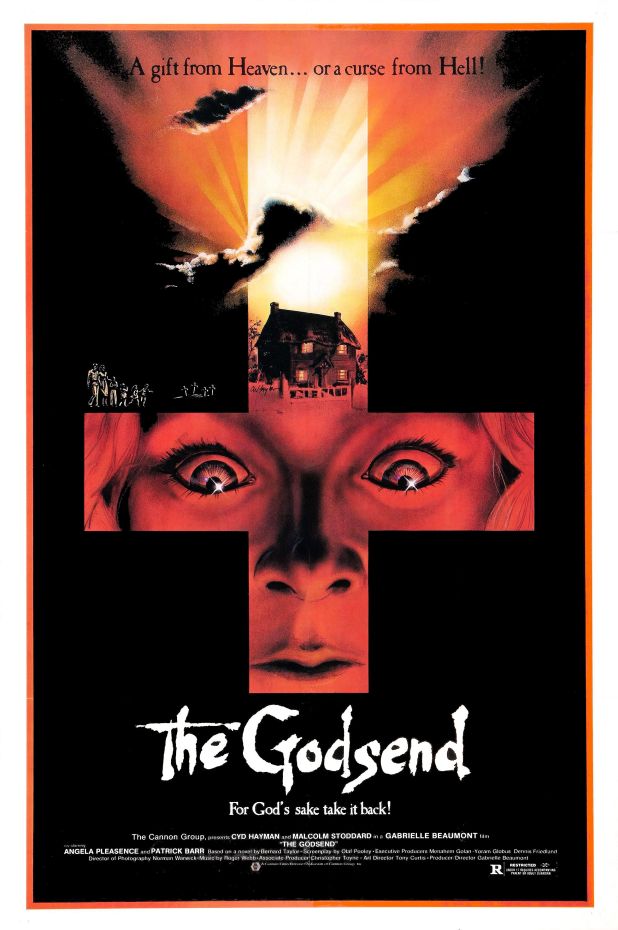
The Godsend (1980)

Based on the 1976 novel of the same name by Bernard Taylor, this film pulls no punches if you’re thinking that children are safe in a movie.

Alan and Kate Marlowe are walking with their four children — Davy, Lucy, Sam and Matthew — when a pregnant stranger (Angela Pleasence  — yes, Donald’s daughter) follows them home, staring oddly and doing strange things like cutting their telephone line before giving birth in their home. The next day she disappears — I guess hospitals weren;t around in 1980 England — and keep her child, who they name Bonnie. I also figure that the adoption system wasn’t a thing either.

Within days, Matthew is dead while lying in the same playpen as the mysterious baby. The Davy drowns in a creek, supposedly saving Bonnie’s life, which makes sense, until then Sam dies in a barn and Bonnie’s ribbon is nearby. Suddenly people are calling the Marlowes child killers. Then, Bonnie gets the mumps and kisses him, giving him the illness as well as a dream where he realizes she has killed all of his children other than Lucy.

By the end of the film, Bonnie has claimed the Marlowes’ unborn child when she trips Kate, broken up their marriage and used mind control — wow, where did that come from? — to make Lucy walk out a window. This ending is nothing like the book, so I’ve heard. I do like the close where Alan sees the woman in the park who started all this insanity, but nobody will listen to his prophecy of doom.

This was directed by Gabrielle Beaumont, working from a script by her husband Olaf Pooley. She was the first woman to direct an episode of Star Trek and also made Death of a CenterfoldHe’s My Girl and Beastmaster III: The Eye of Braxus.