Mill Creek Drive-In Classics: Prime Time (1977), aka American Raspberry (1979)

NBC’s Saturday Night Live, initially known as NBC’s Saturday Night, premiered with its debut host, George Carlin, on October 11, 1975. The show’s taboo, National Lampoon-inspired comedy sketches that parodied contemporary culture and politics, was a late-night ratings blockbuster. So it was inevitable it would inspire a series of low-budget, “sketch anthology” drive-in knock offs.

The best known — and box office successful — of the faux-Not Ready for Prime Time Players ensembles was the The Kentucky Fried Movie (1977) directed by John Landis and written by the ZAZ team of David Zucker, Jim Abrahams and Jerry Zucker (later of Airplane! and The Naked Gun). Prior to SNL making it to air was the equally successful, X-rated The Groove Tube (1974). The writing and directing debut by Ken Shapiro, he would later do the same for the early, Chevy Chase comedy bomb, Modern Problems. You may also remember the better, late-to-the-game Amazon Women on the Moon (1987) featuring segments directed by Joe Dante.

Lost in between the success of those comedic omnibuses are Herschell Gordon Lewis’s trailblazer Miss Nymphet’s Zap-In (1970), The Boob Tube (1975), American Tickler (1978), Coming Attractions, aka Loose Shoes (1978; starring experienced improv-comics Bill Murray and Howard Hesseman), and National Lampoon’s hour-long cable special Disco Beaver from Outer Space (1979).

Join B&S guest writer Robert Freese — also of Videoscope Magazine and Drive-in Asylum — for his “Exploring ’80s Comedies” blowout.

Then there’s this forgotten knockoff directed by Bradley R. Swirnoff and written by the BFS team of John Baskin, Stephen Feinberg, and Roger Shulman. Another similar, forgotten project from the comedic think tank was Tunnel Vision (1976).

As with their previous Tunnel Vision, Prime Time also deals with the nation’s first uncensored television network. This time — instead of the new network being part of a legitimate business venture in the future year of 1985 — all world television transmissions have been interrupted by an “unknown source” broadcasting a lineup of tasteless programs and commercials. Warner Bros. — who got involved hoping to appeal to the “hep” National Lampoon-reading college crowd weened on SNL — bankrolled the film for a mere $30,000 and intended to release it. When they saw the end product and deemed it “unreleasable,” they sold it to Cannon Films, which released it as American Raspberry in 1979. In fact, MGM was also burned (to the tune of $3 million) by Not Ready for Prime Time Players-connected material: the studio pulled SNL’s short film auteur Tom Schiller’s science fiction comedy (also working as a pseudo-anthology comedy), Nothing Last Forever (1984), from release and never screened it, anywhere (it’s now in the copyright vaults of Warners and part of the TCM library; Warners owns the pre-1986 MGM library).

Okay, back to the movie. . . .

As the President of the United States tries to get to bottom of who is responsible the tasteless transmissions, we’re subjected to a series of programs and commercials, aka skits, for 75-minutes of politically incorrect spoofs that would give today’s hashtag warriors a brain aneurysms as set they off on a quest to cancel-culture everyone connected to the project from existence.

There’s abortions and gynecologists. Catholic and midgets. Tampons and (fat) Charlie’s Angels (the series “Manny’s Nymphs”). There’s commercials calling out the tobacco industry and non-profit organizations like Save the Children. There’s spoofs on the then popular, yet annoying, commercials for car batteries (for an Execution organization promoting their “Die Tough Batteries”) and credit cards (“American Excess”). The capper is a commercial — that plays during the sitcom The Shitheads — for Trans Puerto Rico Airlines: its plane filled with goats and chickens as flies buzz around a pot of chili. Oh, wait: that’s topped by “sports coverage” of the Charles Whitman Invitational — as hunters sniper people and animals from a tower perch. And it goes on with a telethon raising funds for transvestites. Adolf Hitler pitching audio cassettes. Erection prevention sprays. Dog food commercials spoofing that funny topic of cannibalism.

And none of it is funny. None.

Well, at least not to me. Eh, the road to Judd Apatow had to start, somewhere. But why here? Oy, this was a chore to sit though. And to think my kid and teen self coveted these “adult comedies” back in the day. Yeah, sure . . . The Kentucky Fried Movie and The Groove Tube are okay, but this is, well, Plfffffffft!

Learn how National Lampoon got its start — in the frames of A Futile and Stupid Gesture.

The B&S About Movies crowd will notice the familiar character actors of Harris Yulin and Royce D. Applegate, along with Harry Shearer (This Is Spinal Tap), Warren Oates (Two-Lane Blacktop), Stephen Furst (Animal House), and an early Joanne Cassidy. And yes, that is Twink Caplan (Bloodspell), who became a successful producer in her own right with the ’90s comedies Curly Sue and Clueless. So, if you’re curious in seeing where those actors of VHS yore got their start, there’s something here to see. All others: hit that button and skip to the next Mill Creek selection.

It’s hard to believe the brains behind it all moved onto bigger and bigger things. But they did.

While Swirnoff and Freinberg left film and returned to the stage work from the improv lands which they came, we were unknowingly entertained by John Baskin and Stephen Feinberg into the late ’80s. The duo became a sought-after writing team for television, with multiple episodes of the hit series Love, American Style, All in the Family, Good Times, The Jeffersons, and Three’s Company, as well as developing the Jack Warden-starring series Crazy Like a Fox.

You can watch the trailer and full film on You Tube . . . or just watch the those “banned” commercials.

Vampires! Comedies! Rutger Hauer action! Shannon Tweed’s breasts!

We’ve since given this film a second look, as part of our two-month “Cannon Month” blow out reviewing and re-reviewing all of the films carrying that iconic logo of ’80s VHS yore.

Oh, and speaking of National Lampoon . . . we’ve been chipping away at those reviews, as well:

National Lampoon’s Animal House (1978)
National Lampoon’s Class Reunion (1982)
National Lampoon’s Movie Madness (1982)
National Lampoon’s Vacation (1983)
National Lampoon’s Joy of Sex (1984) (It’s on the list; we’re getting to it!)
National Lampoon’s European Vacation (1985)
National Lampoon’s Christmas Vacation (1989)
Vegas Vacation (1997) (Yes, it not an “official” NL flick.)

Of course, there is oh, so many more! Duh! Why doubt there’d be a Wikipage listing all of the NL films?

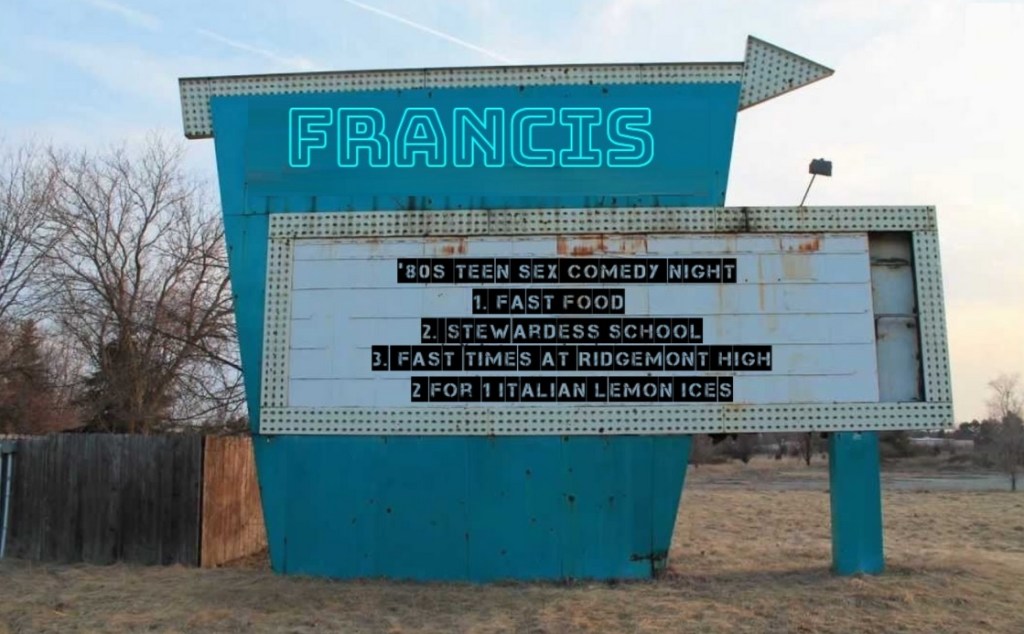
More futile and stupid comedy? You bet, with our “Teen Sex Comedy” and “Slobs vs. Snobs” Drive-In Friday features.
About the Author: You can learn more about the writings of R.D Francis on Facebook. He also writes for B&S About Movies.
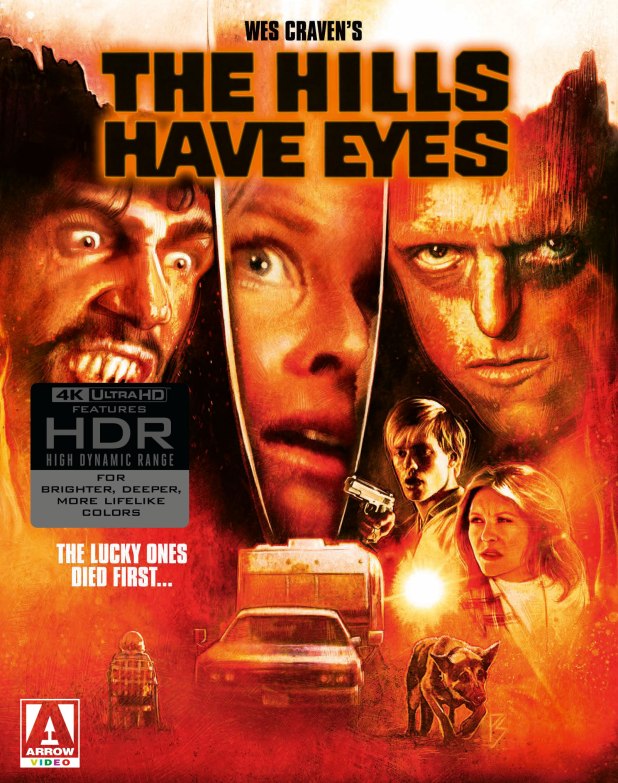

ARROW UHD RELEASE: The Hills Have Eyes (1977)

EDITOR’S NOTE: We first wrote about this movie on November 24, 2018, but as Arrow is releasing a UHD of this film, we thought it’d be a great time to remind you about it and let you know that you can now add a near-perfect version of this film to your collection.

Wes Craven’s second full-length film — if we don’t include the porn film The Fireworks Woman that he directed as Abe Snake — is a trip through the Nevada desert that he wrote, produced and directed. You can see it as straight-forward narrative or you can choose to see it as a parable on how man will always be inhuman to other men.

The Carter family really gets it in this one. After being targeted by a family of cannibal savages in the Nevada desert, the family’s leader Big Bob is crucified to a tree, the daughter Brenda is raped, numerous members are shot and stabbed and also killed, one of the family dogs is killed and even the baby is threatened with being a meal.

But they retaliate with just as much inhumanity as they battle back against the desert clan of Papa Jupiter, Pluto (Michael Berryman!) and Jupiter. Even the second family dog joins in and takes out his rage on the mutant clan.

The idea of an irradiated gang in the desert is intriguing and was inspired by the Sawney Bean clan in 1600’s Scotland, which claimed the lives of nearly 1,000 people.

Additionally, Craven was inspired by The Texas Chainsaw Massacre and ended up making a film that — in my opinion — lives in its shadow. Interestingly enough, the films share product design from Robert Burns, as well as some of the exact same animal parts that decorate the homes of each film’s cannibal lairs.

There’s a sequel, a remake and a sequel to that as well. In the late 1980’s, Craven even debated a third movie that was to be set in space, while his 1995 film produced for HBO, Mind Ripper, was originally intended as the third film in the series.

The Arrow UHD release of this movie offers a brand new 4K restoration of the film, viewable with both original and alternate endings. It also comes with six postcards, a reversible fold-out poster and a limited edition 40-page booklet featuring writing on the film by critic Brad Stevens and a consideration of the Hills franchise by Arrow producer Ewan Cant, illustrated with original archive stills and posters. Plus, there’s three different audio commentary tracks: actors Michael Berryman, Janus Blythe, Susan Lanier and Martin Speer; academic Mikel J. Koven; and Wes Craven and Peter Locke. Plus, there are interviews, a making-of documentary, outtakes, trailers, TV spots, the original script and so much more, all inside beautiful packaging featuring both the original and newly commissioned artwork by Paul Shipper.

You can get The Hills Have Eyes UHD from MVD and Diabolik DVD.

MILL CREEK DRIVE-IN MOVIE CLASSICS: Beast with a Gun (1977)

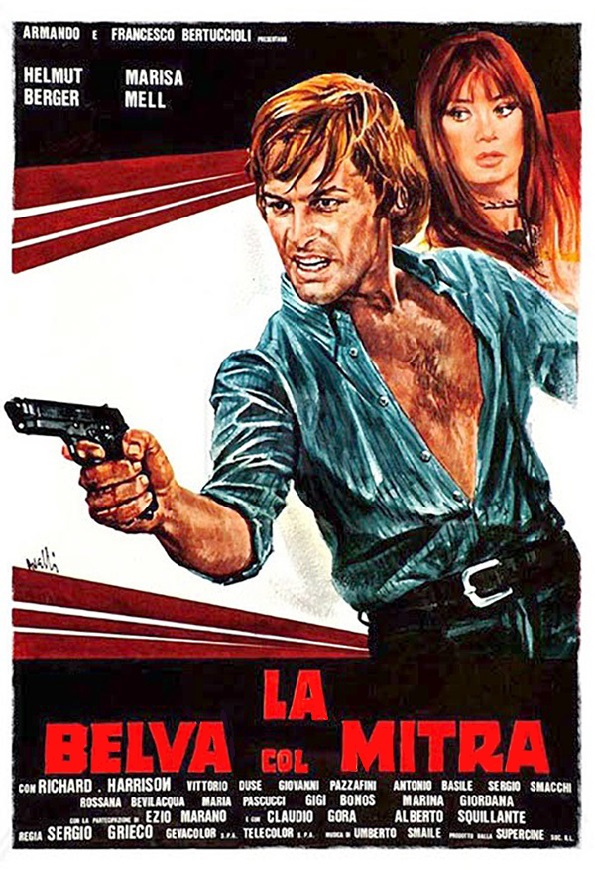
Released in the U.S. as Beast with a Gun, The Human Beast and Mad Dog Killer, this movie probably had more people see it when it was the film that Louis Gara (Robert De Niro) and Melanie (Bridget Fonda) watch in Jackie Brown.

Nanni Vitali is a maniac. Played by Helmut Berger (The DamnedSalon Kitty), he’s set his sights on horrifying revenge, escaping jail and killing the man who set him up,  raping his woman Giuliana (Marisa Mell, who pretty much will do anything in any poliziotteschi movie, as well as being the female patron saint of these Mill Creek sets) and then going after everyone and anyone.

Richard Harrison is the only man that can stop him, as he tries to kill Giuliana, as well as Harrison’s father and aunt. Man, you’d really have to convince me that Mell wasn’t shot for real, because her dedication in these movies is near-death match wrestler in its intensity.

Somehow, of all the Italian police movies filled with mayhem, this is the only one that made it to the video nasty list. It’s listed as Street Killers on the Section 3 chapter of that infamous list.

You can watch this on Tubi.

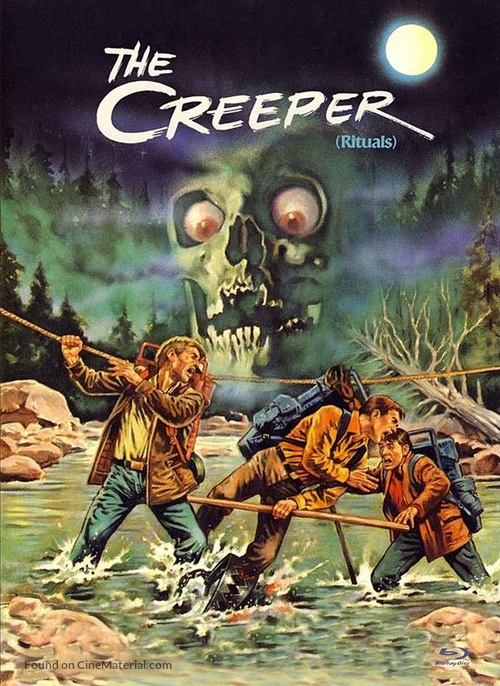
MILL CREEK DRIVE-IN MOVIE CLASSICS: Rituals (1977)

EDITOR’S NOTE: We originally had this movie on the site on October 26, 2019. As we review the Mill Creek set, this was part of it. Its very worthy of your time, so read up and get it yourself. Then maybe you’d like to share your feelings on this one!

After seeing Joe Bob Briggs “How Rednecks Saved Hollywood,” the entire B&S About Movies team mobilize and celebrated these films, from a Letterboxd list to making our own picks for top 70’s good ol’ boys movies. But to be honest, we watched so many of these movies, where would we find something new to answer the Scarecrow Challenge for one more day?

Canada, with your tax shelters and movies that are far north of odd, remains our constant bastion and perhaps place to run to after next November.

Director Peter Carter also made a movie called High-Ballin’ and it wasn’t a porno, instead a trucking film, so we need to respect the artist coming in.

Five doctors go on vacation deep in the Northern Ontario wilderness. Every year, one of them gets to pick where they go and this time, it’s D.J. who gets to be travel agent. He takes the guys to the Cauldron of the Moon, which was a practical location that had been created by a fire a few years earlier.

According to the natives, this is where the earth collided with the moon and it hsould be a place of magic, but it’s really just a place for the doctors to get drunk and argue about their lives, their ethics and, well, just argue.

As our guys wake up for another day of cutting up, they end up getting cut up in a much different way. That’s because everyone’s boots have been stolen. I guess these guys never listened to Iron Maiden or cowboy lore.

D.J. had said, time and again, being a backup pair of boots, and he ended up being the only one that did so. That means he has to go back alone through he dangerous woods and bring back four pairs of boots. As the guys wait for their friend, they’re soon confronted by the carcass of a dead deer before they also discover a severed head. That’s a real dead deer, by the way, in case you think the Italians are the only ones willing to sicken you with autentic snuffed out animals on celluloid.

Harry (Hal Holbrook) takes charge, but it seems as if the past — and all the mistakes with it — have come back to haunt the rest of the group.

While this movie was obviously inspired by Deliverance, it’s also a proto-slasher, with a killer setting traps in the woods that predates the work of Cropsey, Madman Marz and Pamela Vorhees’ little man.

You have a lot of options if you want to see this movie. You can watch this on the Internet Archive for free. Or you can allow our friends at Mill Creek to help with either their Drive-In Movie Classics: 50 Movie Pack or Horror Classics: 100 Movie Pack. However, the best version is available from Ronin Flix, who have the Scorpion Releasing blu ray re-release of this.

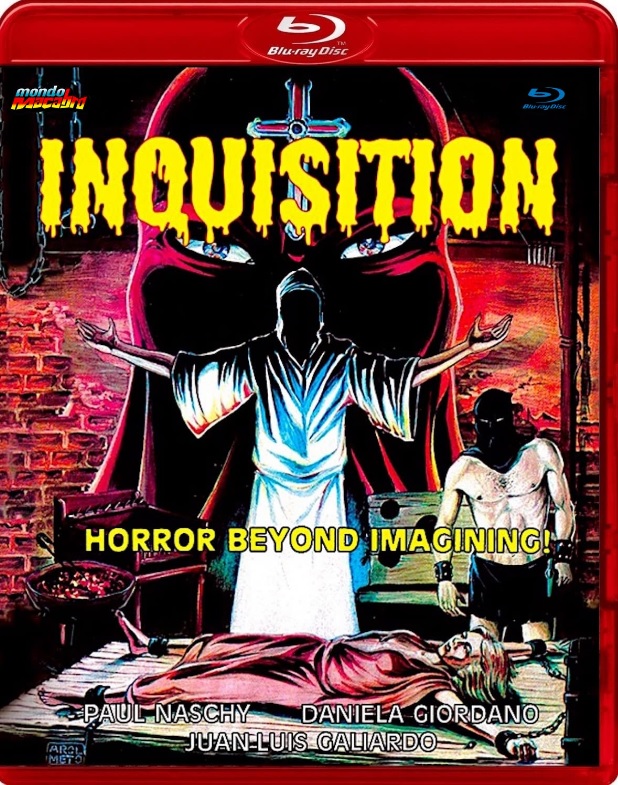
2021 Scarecrow Psychotronic Challenge Day 10: The Inquisition, aka Inquisición (1977)

DAY 10 — RITUALS: It’s good to have a routine, even if it’s evil.

It’s an “Antichrist” movie because I say so!

The 1970s were a time of “witchhunting,” with such film as Michael Reeves’s The Conqueror Worm (1968), Michael Armstrong’s Mark of the Devil (1970), Ken Russell’s The Devils (1971), and Otakar Vavra’s Witchhammer (1970). So Paul Naschy answered call — to the exploitative extreme — with his Spanish-Italian produced directorial debut (very loosely) based on Spain’s Grand Inquisitor Toma de Torquemada — who advocated burning the guilty at the stake. Naschy — again, in his debut behind the camera — does a solid job in scripting the serious-classic side of the subject matter from the British-made Witchfinder General (aka The Conqueror Worm) with the sleazy-trash side of the German-made Mark of the Devil — without delving into the Ken Russell arty or Vavra exactness — with a nudity and gore-filled romp rife with solid, period-correct set design.

As plague and pestilence ravages 16th century France, Paul Naschy’s sexually depraved and spiritually corrupt Bernard de Fossey (who can teach a lesson or two in the depraved shenanigans department to Vincent Price, Herbert Lom, and Oliver Reed in their respective films) leads a trio of witch hunters who strike fear in the countryside as they judge, torture and condemn those they suspect of witchery. While staying at the home of the local magistrate, de Fossey falls in love with his host’s daughter, Catherine, who, in turn, is in love with another. When her lover is murdered by thieves (paid for by de Fossey), she makes a pact with The Devil (Paul Naschy, in a dual role, as our resurrected faux-Antichrist; he appears in a third role as The Grim Reaper) to extract revenge.

What’s great about Naschy’s scripting, here, is the ambiguity.

Sure, de Fossey is a sadist out to satiate his fleshly desires, but he believes what he does is truly called on by the Lord. (Remember: Adolf Hitler, while inherently evil, neither saw himself as such, but a just man in a cause for the common good of Germany’s citizens.) Then there’s Catherine, who, so as to deal with her depression and nightmares over her lover’s death, allows herself to be doped up by Mabille, the local witch-alchemist — who may or may not be a witch (with lesbian tendencies) — using Catherine as a vessel to kill de Fossey. So, is Catherine really possessed by The Devil and did she really conjure-resurrect Him, or is she simply psychotic? Then there is Renover, the local town (one-eyed) rapist. His rejection-fueled misogyny, which rather see those he lusts after burn at the stake than to be with anyone else, fills up the dungeons with plenty of (fully) naked women — their bare breasts ready for (nasty) torture, as well as rack stretchings and charcoal burnings.

Naschy’s scripting, albeit more graphically than it should be (be prepared to close your eyes for the rotating gear/breast-clipping device), balances the perverted dichotomy practiced in the name of Catholic Church (again, back to the sick bastard that was Torquemada) with the ongoing quest of female liberation — who still need to sell their souls to men (or The Devil, in this case), to be “liberated.”

To say I love the pseudo-Hammer and Amicus Brit-vibes of Inquisition is an understatement. It’s a well-researched, well-made, historically accurate and intelligent film that ranks alongside Naschy’s interpretations of the atrocities of Gilles de Rais in two of my personal, Naschy favorites: Horror Rises from the Tomb (1973) and Panic Beats (1983) — with an honorable mention to his zombie-apoc’er, The People Who Own the Dark (1975). Otakar Vavra’s previously mentioned Witchhammer chronicles the real life exploits of serial killer, uh, Witchfinder Inquisitor Boblig von Edelstat, who cut a horrific swatch across 1600’s Czechoslovakia.

The trailers are age-restricted, so you can watch them as account log-ins on You Tube HERE and HERE.


The Mondo Macabro Blu-ray on Inquisition— as is the case with all of their Naschy reissues — is excellent, with its features of an introduction by Paul Naschy, an interview with star Daniela Giordano (as Catherine), an audio commentary by Rod Barnett and Troy Guinn from The Naschycast, and the inclusion of Blood and Sand, a mini-documentary on Spanish horror films.

For the true Paul Naschy fan in you — oh, it’s in each and every B&S About Movies reader, admit to it — pick up the two-box Shout Factory! The Paul Naschy Collection. (One day, we’ll crack these open and review them, in full.)

The five discs of set one features:

VENGEANCE OF THE ZOMBIES
HORROR RISES FROM THE TOMB
BLUE EYES OF THE BROKEN DOLL
NIGHT OF THE WEREWOLF
HUMAN BEASTS

The five discs of set two features:

HUNCHBACK OF THE MORGUE
THE DEVIL’S POSSESSED
THE WEREWOLF AND THE YETI
EXORCISM
A DRAGONFLY FOR EACH CORPSE

In addition to an upload of Blood and Sand on You Tube, there’s also an upload of the feature-length documentary on Paul Naschy’s career, The Man Who Saw Frankenstein Cry, which we reviewed, HERE. Also be sure to check out our “Exploring: Paul Naschy and El Hombre Lobo” chronicle on Naschy’s love of portraying The Wolfman.

About the Author: You can learn more about the writings of R.D Francis on Facebook. He also writes for B&S About Movies.
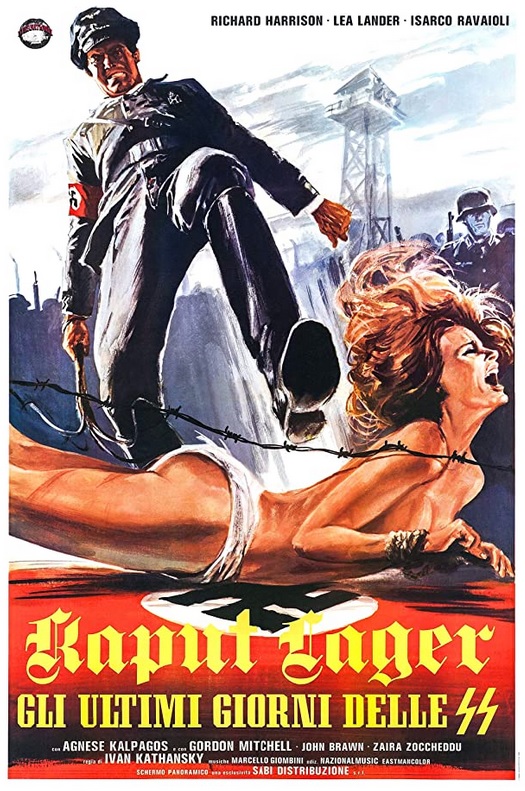
Achtung! The Desert Tigers (1977)

Okay, we are cheating with this review.

This Nazisploitation entry isn’t — officially — on the U.K.’s “Video Nasties” list that we’ve been reviewing all this week, but after showing the B&S love for expatriate American actors Richard Harrison and Gordon Mitchell in our review of Three Men on Fire (1986) — along with this theme week’s “official nasties” reviews of Lee Frost’s Love Camp 7 (1969), Sergio Garrone’s SS Experiment Camp (1976; whose artwork this film pinches in its VHS reissues), and Cesare Canevari’s Gestapo’s Last Orgy (1977) — you can’t overlook this Luigi Batzella warm up for his notable nazisploitation’er The Beast in Heat, aka SS Hell Camp, aka S.S. Experiment Camp 2 (1977).

Batzella’s resume is a slight one: Out of the 15 films he wrote, he directed 10 — sometimes under the celluloid de plume of Yvan, aka Ivan, Kathansky. Of those — most of which are stock footage mash-ups — we care about two: the Gothic horror Nude for Satan (1974) (that, for my money, screams “Bill Van Ryn must review this for the site!”) and the aforementioned The Beast in Heat. (Okay, three: The Devil’s Wedding Night, his 1973 Gothic take on the Lady Dracula legend.) And as for Richard Harrison: I’m just happy to see him in a film without “Ninja” in the title (he did 19 of them, thanks to the Philippines film industry, if you’re counting).

The movie isn’t as shocking as the theatrical one-sheet

So, if you’re a fan of The Beast in Heat — and expecting your rocket to leave the pocket, stow that flesh torpedo, my friend. For the caveat emptor, here, is that Batzella pulls back the reins on this Nazi warm-up, loosening ever so slightly to see just how far he can push the bad taste. (Then, if you know his next Nazi ditty, he lets the reins go for full-on sleaze.) So, this time, don’t be duped by the “shocking” theatrical one-sheet or the “Nazisplotation” genre description, for this is just another World War II flick, one that’s heavily influenced by John Sturges’s The Great Escape (1963) — via about 20 minutes of (well-shot, well, sort of) stock footage (from who knows where) of a North Africa war campaign on a German Tank division and the sabotage of a desert fuel depot.

Then the proceedings take a hard left turn into the “women in prison” genre, because well, by this cinematic point: when we see Nazis, we’re home video-conditioned to expect sexploitation — with heaping helpings of gratuitous nudity (breasts and triangles of death), brutal whippings, and yes, as always, at least one castration (after the fact) and the old urine-is-whiskey gag.

While you wouldn’t know it from the stock footage, Richard Harrison’s U.S. Major Lexman was in charge of that desert raid of blazing flame throwers. Now Lexman’s thrust into the middle of a coed POW camp run by Gordon Mitchell’s Kommandant von Stolzen. Of course, any good camp commandant must have a lesbian sidekick with a medical degree . . . and Dr. Lessing, of course (Lea Lander, of Mario Bava’s Blood and Black Lace and Rabid Dogs, the Italian Exorcist rip The Tempter), loves her leather strips to whip out the pain upon Jewish and Arab women with sadistic equality. Oh, and Lesser enjoys a bit of the ol’ whip across her own flesh from time to time by way of her sexy, Jewish nurse. Oh, and we can’t forget about Lessing’s obsessions with the “hygiene” of her charges via a nice, hard scrubbing on what is best described as a “shower stockade,” or something. And yada, yada, yada . . . Major Lexman teams up with the camp’s Brits to take Lessing as their hostage and make their “Great Escape,” with the German’s hot on their trail.

Oh, do we care about the romantic subplot of Lessing’s nurse cheating on her with an American G.I. (expatriate American actor Mike Monty of my beloved Philippines junk flicks!) in on the escape . . . that gets Lessing hot and bothered in a tongue-wagging and breast fondling delight?

Nope. I’m bored.

So, amid the 80-minutes stock and dubbing and mismatched scenes, we get about 20 minutes of the sleazy Nazizploitation we came for vs. the 60 minutes of World War II war beeboppin’ and scattin’ that we didn’t come for — perhaps if it was original footage shot for the film and not by stock footage . . . nah, this is a Luigi Batzella production and he is Italy’s “Godfrey Ho” in my cinematic eyeball; he’d never pull off any original war footage.

And the music . . . well, I’ll be 12-barred déjà vu’d . . . this movie is now truly complete, as that’s Marcello Giombini’s soundtrack from my ol’ Uncle Alfonzo Brescia’s Star Odyssey!

One of the most infamous Nazi baddies!

So, you need to complete your Richard Harrison and Gordon Mitchell two-fer fix? In addition to Three Men on Fire and Achtung! The Desert Tigers, look for the Turkish-made (back by Italian money) Four for All (1974), the German-made Natascha: Death Greetings from Moscow (1977), and again with Luigi Batzella in Strategy for the Death Mission, aka Black Gold (1979). And for you Fred Olen Ray fans — and aren’t we all — the duo cameos in Evil Spawn (1987). Yes, Olen Ray with Harrison and Gordon. And the brain whirling dervishes in a junk cinema delight.

You can watch Achtung! The Desert Tigers as an age-restricted freebie on You Tube (whateva . . . it’s not that “nasty,” kiddies). Don’t forget that there’s more Nazisploitation to be had with the genre documentary Fascism on a Thread: The Strange Story of Nazisploitation Cinema (2020).

About the Author: You can learn more about the writings of R.D Francis on Facebook. He also writes for B&S About Movies.
Jungle Holocaust, aka Cannibal (1977)

As Sam the Bossman pointed out in his review of Cannibal Holocaust: Jungle Holocaust is where Ruggero Deodato cut his teeth on the human flesh eating film — bringing along Me Me Lai (her second of three cannibal flicks; the first was Umberto Lenzi’s Sacrifice!; the final was Lenzi’s Eaten Alive!), Ivan Rassimov (also of Eaten Alive! and The Humanoid) and Massimo Foschi, (the Italian voice of Darth Vader, 1977’s Nine Guests for a Crime) — and pretty much cemented the genre with that film’s 1980 release.

Jungle Holocaust was originally slated to be directed by Umberto Lenzi as a follow up to his cannibal flick progenitor, Man from Deep River (1972). Depending on how you consumed Jungle Holocaust, as an ’80s “Midnight Movie” or home video rental, it’s also known as Ultimo mondo cannibale, aka Last Cannibal World, Cannibal, and The Last Survivor.

Nice deal, Code Red.

So, what can we possibly say — as with our reviews of Night of the Living Dead and Dawn of the Dead — about this film that hasn’t already been said by others, ad nauseam? However, for site prosperity — in our quest to catalog all things “video nasty” (this made it to the U.K.’s “Section 3” list) and “cannibal,” and with this being our “Video Nasties Week” tribute — let’s rip it open.

As in the 1976 King Kong remake (ugh), the greedy search for black gold sets off our horrific chain of events. When two oil prospectors and their team travel to a company outpost on the island of Mindanao in the Philippines, their plane sustains damage from a rough landing. Then they discover the camp abandoned — with rotted human remains.

Then the “ensues” that we expect from cannibal flicks, begins: A team member goes missing. Booby traps — such as a large mace — are tripped. A raft built to escape down river, falls apart. People are separated. People are eaten. “Death Cap” Amanitas are foolishly consumed. People puke. There’s leech-sucking body bathing. There’s civilized human-on-native rape. People are captured, stripped, and forced to eat rotten, raw animal entrails and internal organs. There’s more cooking and consuming of humans. Cobra-venom laced spears fly. Civilized humans take to eating livers. Two men survive. One man dies.

Ah, the ratty cardboard sleeve VHS I remember. Heaven.

While shocking in my “Midnight Movie” days and 5-5-5 VHS-binging weekends with my fellow ne’er-do-well brothers reading all things Circus and Fangoria, revisiting Jungle Holocaust all these years later — and applying my now hipster-critical eye — once you take away the shock value, this really isn’t a very good movie.

Sure, it’s nasty as hell and fucking savage: but that’s all it is. There no real story or characters to latch onto. There’s barely any dialog and what dialog there is, the dub stinks. So it’s just a whole lot of running around in the jungle. There’s no deeper meaning, no takeaway from the film concerning the state of modern man invading lands — as in Werner Herzog’s superior Aguirre, the Wrath of God — that he shouldn’t; the modern vs. native juxtaposition isn’t explored.

But, being the critical hipster hypocrite that I am, I still love it; for it is the sweet smell youth.

Man, being old sucks the offal.

Ronin Flix reissued Jungle Holocaust and it’s sold out, but copies are still available in the online marketplace via other retailers. You can learn more about the Blu-ray’s technical aspects at Blu-ray.com. Sorry, no freebie streams to share. Yeah, there’s some overseas streams, but when it looks sketchy, don’t hyper that link, my friend.

We did a whole week of cannibal films with our “Mangiati Vivi Week” tribute back in February 2018. You can also learn more about the genre with our review of the documentary Me Me Lai Bites Back (2021). And there’s more “nasties” to be found with our “Section 1,” “Section 2,” and “Section 3” explorations.

About the Author: You can read the music and film reviews of R.D Francis on Medium and learn more about his work on Facebook.

The Gestapo’s Last Orgy (1977)

Can you get anymore “grindhouse” in the alternative titles department as Caligula Reincarnated as Hitler?

Nope.

Was this re-released in the U.K. after it’s initial “Section 1” banning?

Nope.

Italian writer and director Cesare Canevari gave us a mere nine films across 20 years, beginning in 1969. It was his final three films that received the widest distribution outside of his homeland and Europe: a piece of erotic-drama, The Nude Princess (1976), the psuedo-giallo-cum porn Killing of the Flesh (1983), and this Nazisploitation entry.


A Jewish WWII survivor revisits the ruins of a hellish concentration camp, and the memories are still vivid. How did she escape the humiliation, the tortures, and the destruction of human flesh? How did she flee from the Gestapo’s last orgy? are the questions asked in this film’s promotional materials.

That survivor, Lise Cohen, was an inmate at a special prisoner-of-war camp for female Jews, a camp run as a bordello to entertain the German officers and troops going in to battle. Commandant Conrad von Starker (Adriano Micantoni, credited here as “Marc Loud,” also of the notable 1962 Italian space slop Planets Around Us and the 1963 Goth-horror Tomb of Torture), as do all Commandants, runs the camp with iron fist — through the assistance of Alma (one of Maristella Greco’s six films; the other notable renter is the similar, 1980 Italian-Spanish women-in-prison flick Hotel Paradise). Starker’s game is instilling fear in his charges — but Lise proves to be tougher than any before her, so Straker devises even crueler experiments to make Lise yield to his desires, while Alma’s jealousy serves to increase Lise’s pain. Lise instead turns the tables and plays along with Straker’s twisted, insane atrocities, which results in her earning privileges others prisoners do not, to the chagrin of Alma, once Straker’s favorite.

While Gestapo’s Last Orgy well earns its “X” rating, it’s also a very well-made film (of the squeamish-intellectually quality of Pier Paolo Pasolini’s Salo, or the 120 Days of Sodom) and the flashback framing device of the now reformed and society-integrated Straker and Lise reuniting at the camp (the same seaside fortress seen in the 1970 Giallo In the Folds of the Flesh) to unfold the past as they explore the ruins, gives it a quality (and reminds of Billy Wilder’s Sunset Boulevard) — and deeper meaning — that rises it above most films in the genre. Yeah, and Spain’s Eloy de la Iglesia claimed a “deeper meaning” into the terror rout by President Richard M. Nixon’s buddy, Spanish dictator Francisco Franco, in the frames of The Cannibal Man (1972; itself a “U.K. Video Nasty”) . . . so your opinions on Cesare Canevari’s social commentary and subtext via his Nazisploitation narrative delivery device, may vary.

Due to the content, the trailer is only available upon account sign in to Severin Films’ You Tube page. You can purchase copies at Severin Films. You can learn more about The Gestapo’s Last Orgy as part of the genre documentary Fascism on a Thread: The Strange Story of Nazisploitation Cinema (2020).

Complete and uncut in a new, 2K Restoration from the Negative.

As of November 2021, Gestapo’s Last Orgy has been re-issued to Blu-ray by 88 Films. Sam gives you a run down with his review. Another Naziploitation entry on the U.K.’s “Video Nasties” list with a Blu restore is The Beast in Heat.

About the Author: You can read the music and film reviews of R.D Francis on Medium and learn more about his work on Facebook.

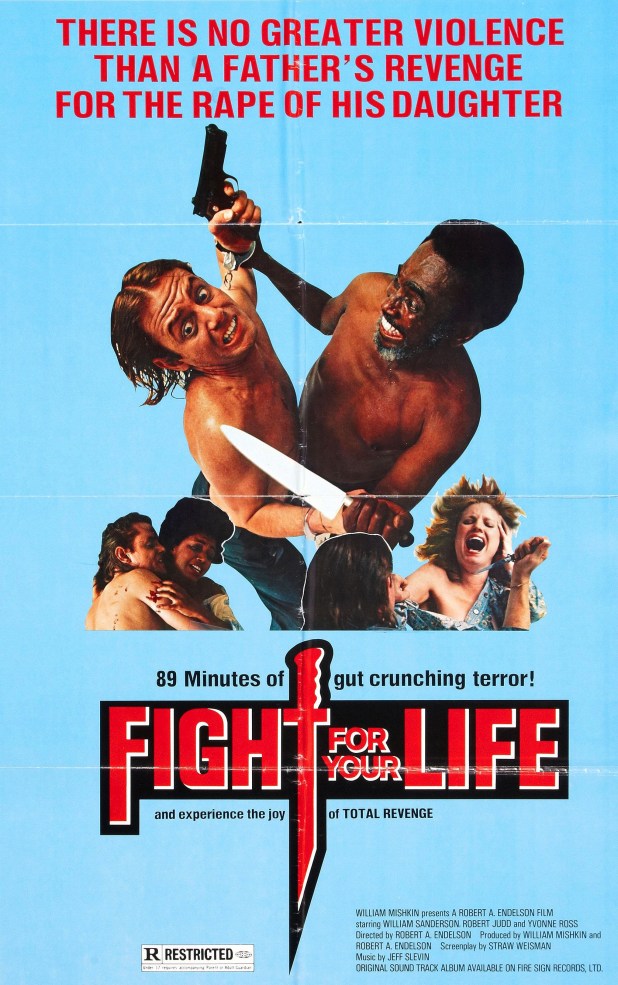
Fight for Your Life (1977)

The racist language used by William Sanderson — yes the guy from TV’s Newhart — as he attacks a black family is probably why this movie ended up as a section 1 video nasty. I first discovered this movie thanks to Cinema Sewer, which is where I learned of many a disreputable film.

Sanderson plays Kane, a hate-fuelled racist who somehow has found it in his heart to break out with an Asian man and a Mexican fellow, so there’s that. They break into the home of kindly Ted Turner (Robert Judd, who was Scratch in the non-Britney Crossroads) and proceed to use every racist term in the book when they aren’t beating down the black family.

Director Robert A. Edelson refused to do a commentary track when this was re-released by Blue Underground but he was kind enough (I guess) to an interview in Steven Thrower’s Nightmare USA in which he re-watched the film with his maid Dorothy. So…yeah. He only made one other movie, The Filthiest Show in Town.

Much like how the old Mom and Dad theatrical showings used to divide up audiences, the marketing of this film had black and white versions, including the title Staying Alive that was just for black audiences and unique trailers for each race. There’s also a trailer that’s just a still photo with no sound at all for thirty seconds, then the title and rating. Wild.

Many of the video nasties seem quaint today, as you ask yourself, “Why did they ban this?” This is the kind of virulent piece of hate that wouldn’t even get near a screen these days. Sure, it ends up with the catharsis of seeing the criminals pay for all of the verbal and physical terror that they unleash, but man…getting there is none of the fun.

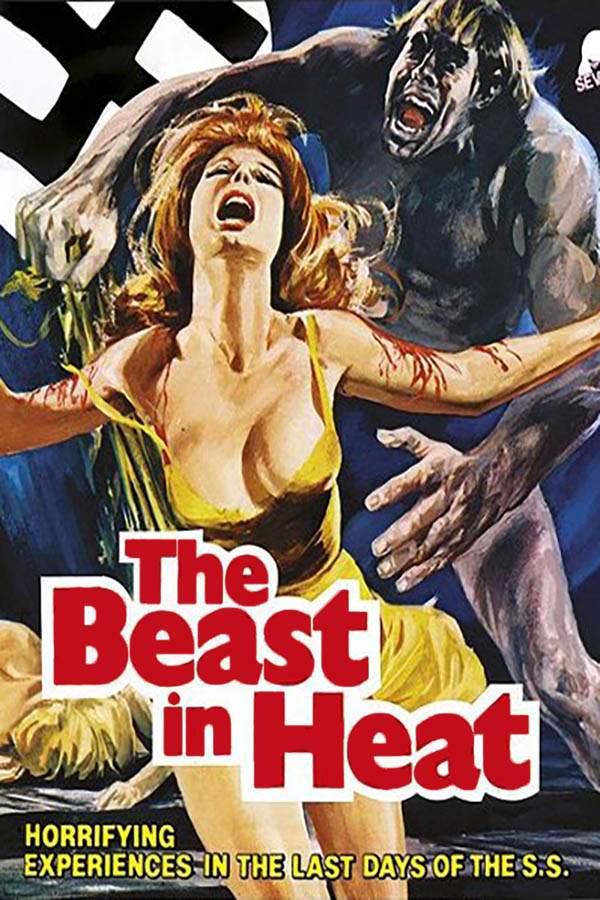
The Beast In Heat (1977)

I have no idea who this section 1 video nasty was made for. It presents a world in which all of Europe feels stretched across ten city blocks, where German soldiers have Southern redneck accents and Dr. Ellen Kratsch (Macha Magall, Private House of the SSThe Daughter of Emanuelle) believes that her creation — the titular beast (Salvatore Baccaro, who used the amazing stage name of Boris Lugosi in Frankenstein’s Castle of Freaks; his IMDB acting roles are often things like “Neanderthal Man” and “Neanderthal Prisoner” and “Lupo cattivo” which means “Bad Wolf”) — can help her move upward in the German army hierarchy by assaulting female prisoners one at a time and being dosed on large quantities of Germanic Spanish Fly.

I’m not saying it’s a good plan. It’s a plan. It’s just…I have no idea how it’s scaled for success.

beast-in-heat-the-300l

Also known as SS Hell Camp, SS Experiment Part 2 and Horrifying Experiments of SS Last Days, this is a movie that knows that it doesn’t have much to offer the world in terms of art, so it piles on the mayhem, like people’s fingernails being ripped clean off and a monster that seems to subsist on a diet of pubic hair.

Director Luigi Batzella started his career directing The Devil’s Wedding Night alongside one of our site’s patron saints, Joe D’Amato. He also made Nude for SatanKaput Lager – Gli ultimi giorni delle SS (Achtung! The Desert Tigers) and Strategia per una missione di morte. He directed this movie under the name Ivan Kathansky, which suggests the menace of Russia telling us of the doings of the last war, I guess.

Using war scenes cut from Batzella’s 1970 film Quando suona la campana (When the Bell Tolls), the lone American on hand is Brad Harris as the priest who everyone wants to either make love to or kill, but he’s too busy trying to ask God what to do. I mean, your enemies do stuff like throw babies in the air and machine-gun them as well as place rats on a woman’s stomach and then have a metal chamber heated so the rats eat through their victim. But by all means, ask God what the right thing is to do.

Unlike most of the video nasties that concentrate on sadistic sex, this one didn’t upset me because it’s just so patently ridiculous, so clumsily made and, well, so driven to entertain you by any means possible and necessary.

Beast in Heat Fascism

You can get a copy of The Beast in Heat from Severin and it comes complete with the great documentary Fascism On A Thread – The Strange Story of Nazisploitation Cinema, along with an interview about the genre with Stephen Thrower, who is always beyond insightful. Another Nazisploitation effort also now out on Blu-ray for November 2021 is Gestapo’s Last Orgy.