In preparation for my review contribution to B&S Movies’ tribute to Mill Creek’s Pure Terror 50-film box set, which features Paul Naschy’s debut appearance as the devil worshiping knight Alaric de Marnac in Horror Rises from the Tomb, I wrote a June 2019 review of de Marnac’s second film appearance in 1983’s Panic Beats. In that review I pointed out that contemporary horror fans proclaimed: “Naschy is boring.” (You can learn more about Naschy’s oeuvre with his 1975 post-apocalyptic romp, The People Who Own the Dark, which I reviewed for B&S Movies’ September 2019 Apoc Tribute Month. See our “Atomic Dustbins” Part 1 and Part 2 for the complete list of reviewed films.)
(And yes: This “review” is also a Naschy dissertation that goes 18k words off the rails, so pull up a popcorn bag.)

Throughout his catalog, Naschy crafted films with admirable nods to Alfred Hitchcock, but Naschy didn’t craft scenes with a Hitchcockian eye. At the height of his Spain-based cinematic weirdness in the early 1970s, Naschy (and Italy’s Dario Argento) need not be concerned with the ultraconservative American standards and practices that shaped Hitchcock’s visions. Naschy let the tits fly and the colors run red—misogynistic outcries be damned.
Naschy doesn’t do bloodless cut-away murders shadowed on walls. Naschy doesn’t go “Nicolas Roeg” with artsy love-making (read: fucking) jump edits. If Naschy directed Paramount’s mainstream giallo move, Don’t Look Now (based on a Daphne du Maurier story; her story, Rebecca, inspired Naschy’s Panic Beats) . . . oh, what might have been, Julie Christie.
The charm of Naschy’s films, for us lovers of Spanish and Italian Euro-horror, is that logic and reality goes out the window—more so when they’re edited for “offensive content.” So with Horror Rises from the Tomb (aka, El Espanto Surge de la Tumba) it’s more of Naschy’s patented, cursed kitchen-sink mayhem with a vertigo-mixture of fortune tellers, séances, supernatural shenanigans, medieval warlocks, witch finder generals and executions, demon possessions, Satanism, vampires and bisexual vampiras, talismans (in place of crosses), a pinch of lesbianism and a dash a necrophilia, giallo-styled kills, disembodied heads, coffin-based revivals, and errant zombie attacks.
Also in classic Naschy style: exquisite women—the kind that makes Garth Algar feel like he climbed the rope in gym class—are at the forefront. In Euro-trash horror women are ubiquitously attired in graveyard-sensible mini-skirts, dresses, and hot pants. Here, in the snow-swept mountains of this Naschy bizzaro-universe, women sashay through the chilly halls of the estate’s unheated mansion-chalet in the sheerest of negligees.
Horror Rises from the Tomb served as the first of four collaborations between director Carlos Aured and Naschy: the screenwriter and star. Next was their Hammer/Universal tribute, Curse of the Devil (El retorno de Walpurgis; 1973), then their giallo entry, Blue Eyes of the Broken Doll (Los ojos azules de la muñeca rota; 1974), and their Spanish updating of Universal Studios’ The Mummy (1932): The Mummy’s Revenge (La venganza de la momia; 1975). The film also marks the first time Aured took on full directing duties, after serving as an assistant to Leòn Klimovksy, who also directed Naschy penned-and-starring horror romps. It’s always a family affair with Naschy’s company of Grand Guignol players.
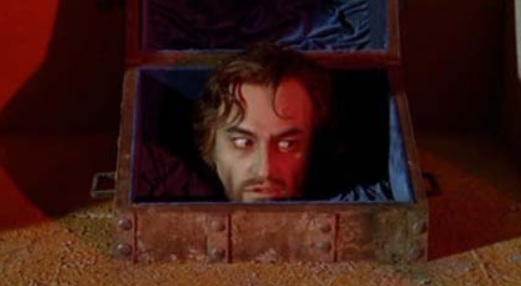
Naschy’s cinematic inspiration behind Horror Rises from the Tomb was Universal Pictures’ The Thing that Couldn’t Die, which played on a drive-in double bill with Hammer Studios’ Horror of Dracula during its initial release. In Thing, the resident damsel-in-distress discovers an ancient chest; opening the box with a belief it contained treasures, she unleashes the wrath-head of a 400-year old sorcerer. Seeing the double-bill in his youth, the film had such a profound effect on Naschy that he played a “disembodied head” a second time—instead transferred to a different body—in Crimson: The Color of Blood (1973). Naschy connoisseurs, however, debate whether The Thing that Couldn’t Die inspired Naschy at all: Naschy stated in interviews that the film was in homage to Luis Buruel’s Exterminating Angel (1962)—a tale about a group of narcissists “trapped” while attending an upper class dinner party at a remote chateau (which also fueled the plotting of 1975’s previously mentioned, The People Who Own the Dark).
As for Naschy’s historical Gilles de Rais inspirations: Not only did the serial killer knight appear in Panic Beats, Naschy utilized Rais to create an all-new lead character in his 1974 film, The Devil’s Possessed (El Mariscal del Infierno; full movie/You Tube), and the Rais-influence appears in Naschy’s giallo entry, Blues Eyes of the Broken Doll (1974; trailer/You Tube). (The infamy of de Rais also inspired Thomas Gabriel Fischer, AKA Tom G. Warrior, to write the extreme metal classic, “Into the Crypt of Rays.” Naschy movies and Celtic Frost? I’m in!)
Horror Rises from the Tomb appears in at least three-distributed versions: One is the “clothed version” that ran in its native Spain—but the gore is intact; and the shorter American-version—with both the gore and nudity cut (which appears in the Mill Creek box set), and the uncut international version (which appears as part of Anchor Bay’s “Spanish Horror Collection” series). So while the U.S version loses 8 minutes of sex and gore—to run at 1 hour 20 minutes—the Spanish version runs uncut at 1 hour 28 minutes. There’s also a rumored “unseen” fourth version at 1 hour 45 minutes floating around in the analog-cum-digital ether.
However, if this is your first time with the oeuvre of Paul Naschy, especially if you’re on a tight entertainment budget, then there is no better primer into his world—and the world of Spanish and Italian horror—courtesy of your copy of Mill Creek’s Pure Terror 50-film box set.
Well, okay kiddies. It’s time to grab your microwave popcorn bags and beware of the 7th moonrise—the head of Alaric de Marnac is coming for you!
Warning: The following film review contains multiple cut-through throats, torn out guts, heart rippings, lesbian sex, and decapitations. Well, maybe. . . .
Paul Naschy—who wrote the screenplay under his real nom de plume, Jacinto Molina—stars as a 15th century medieval warlock-knight accused of witchcraft: the aforementioned Alaric de Marnac—based on the real life sexual-deviant French night, Gilles de Rais. In the film’s atmospheric execution-prefix shot in the dead of winter at Naschy’s country estate in the Lozoya Valley outside of Madrid, we meet Lord de Marnac. As is the case with any sociopath in any century or decade: Alaric is innocent. So he curses his witch hunting identical twin brother, Armand, (Naschy) and his executioner-sidekick, Andre Roland (Vic Winner), right before his beheading (edited; damn it). Alaric’s Elizabeth Bathory-inspired squeeze, Mabille de Lancré, (Helga Liné) is also executed—abattoir-style in a tree-by-feet hanging-dissection and burning (edited; double-dog damn it).
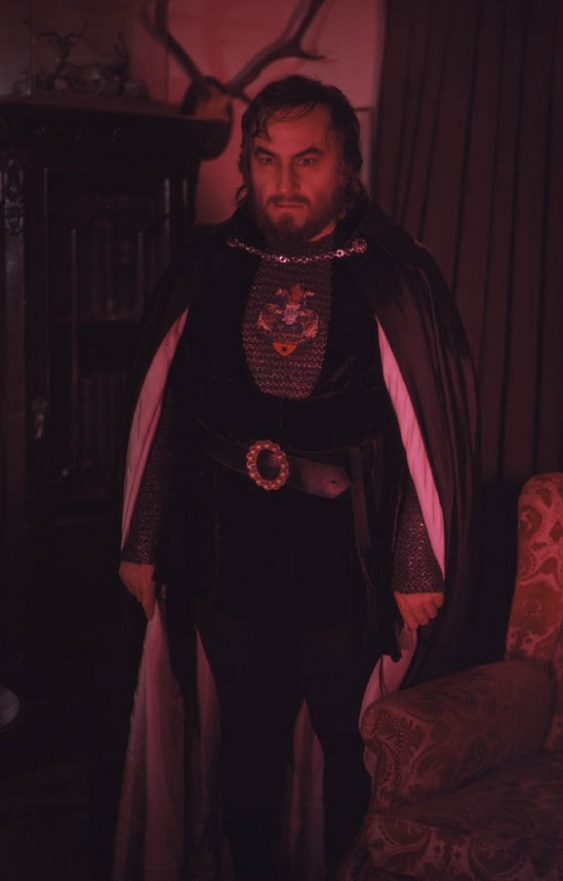
So, denied of our cherished tits and gore within the first five minutes, we fast forward to present day France: Naschy is now a skeptical-to-a-fault de Marnac descent, Hugo. Inspired by two swinging (red herring), new-age mysticism friends bragging about their visit to a fortune teller, Hugo decides to have a séance so Alaric’s “head” can tell him the location of the family’s legendary treasure. And the séance works: The cackling ghost-head of Alaric gives Maurice Roland, Armand’s descendant, an “artistic breakthrough” to finish his latest painting of some black-caped Dracula dude that’s been “haunting his mind.” So he paints the decapitated head of his buddy, Hugo, into the picture—and there’s de Marnac’s disembodied head looking down from the ceiling, dripping blood onto the picture.
So, do you cancel the trip to Marnac country? Nope. You pack your Scooby-snacks and load in the Mystery Machine. Going along for the ride is Maurice’s back-in-town-fuck toy, Paula (Christina Suriani), and (one of) Hugo’s squeezes, Silvia (Betsabé Ruiz). On the way to the remote Marnac chalet-estate, a couple of red herring road bandits attack and wreck the car; then a red herring posse of creepy townspeople serves up some on-the-spot vigilante justice with a gool ‘ol fashion tree hanging. Oh, and to show there’s no hard feelings: the creepy-posse sells Hugo a beat up shit-wagon to finish their trip.
Now, at this point: You’re attacked, you wrecked the car, witnessed backwoods vigilante justice by shotgun and rope—and you still got victimized via the posse-car deal for twenty times the vehicle’s Kelly Blue Book value. You’d say: “That’s it, let’s get the fuck out of here.”
Nope. Onward, brave Ulysses.
So the estate’s longtime, creepy red herring of a groundskeeper—complete with two requisite, stunning daughters designer-dressed for crypt-exploring action, Elvira and Chantal (Emma Cohen and Marie Jose Cantudo)—recruits two toothless wonders from town to dig for Marnac’s head-box for clues to the family jewels. And—big surprise—the groundskeeper and the toothless wonders are in cahoots to steal the Marnac head-jack-in-the-box. Dumbass groundskeeper: the dental-illiterates just double crossed you. When they break open the box; Marnac’s head possesses the sullen-skinny Frank Zappa lookalike of the duo, who subsequently performs a bloodless shadow-on-the-wall kill by pruning sickle (damn editing). Finally—we have our first two kills. No, wait. That’s four: the two roadside bandits by the creepy-posse. But Marnac wasn’t responsible. Kill tally: back to two.
Now what in the hell is this red hearing-cupcake in the requisite mini-dress and chunky Giorgio Brutini designer-loafers screaming about in the dead of winter? Oh, that’s Elvira—she found the two bodies. Oh, did you know that she and Hugo had a “thing” in their youth growing up together at the estate? (Jealous lover red herring. Check.) Was there a Hugo, Elvira, and little sis Chantal threesome? (Red herring ménage. Check.)
Now, at this point, you’ve dug up the box, there’s no family fortune, two guys were cut from asshole to elbows with a sickle, and Frank Zappa vanished like a fart in the wind with the jack-in-the-box. What do you do? Jump into the overpriced posse-jalopy and get the hell out of Marnac Country. . . .
“We need to bury the bodies in the swamp,” Hugo convinces Maurice. And cue the film’s repetitive-annoying rearrangement of Johann Sebastian Bach’s “Toccata and Fugue in D Minor,” so as evoke a little of Paramount’s Dr. Jekyll and Mr. Hyde (1931) and Universal’s The Black Cat (1934) into the proceedings.
So, you just covered up two murders and made yourself an accessory-after-the-fact. What do you do? Get in the car and get the fuck out of Marnac Country. . . .
Oh, Marnac, prince of darkness. Please kill these two dumb-fucks and the shitty organist already.
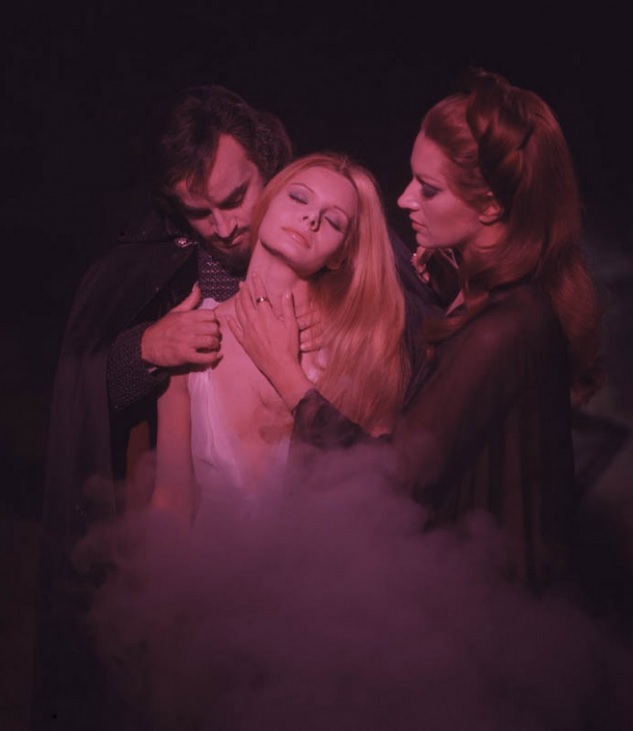
So Frank Zappa de Marnac the mortal-zombie shows up and gives Chantal a (edited; triple dog damn it) sickle-neck chop in the kitchen. Meanwhile, dopey Paula stumbles around in the unheated manor in the dead of winter in a sheer negligee clutching a candle. Hey, Paula, come on down. You’re kill number four on the Marnac Is Right!
Oops, and there goes big-sis Elvira for a header-by-trip wire down the stairs—kill number five denied; she survives. Did Silvia try to get Elvira out of the way? Or did Chantal-zombie do it? Or did Zappa de Marnac take a swing and miss and cause the fall? Can’t tell you; those crappy edits are back.
So, four people are dead (or six, if you’re still weeping for the road bandits), two of which you buried in the swamp, and there’s been one attempted murder. What do you do? Run?
Nope. You bitch about it.
So Freddie and the Mystery Machine gang assess (read: “ass” ess) the situation and Maurice is pissed that, somewhere along the line, the car—that’s been sitting there unused—ran out of gas (?), some off-camera storm knocked down the phone lines (?), and he’s pissed the townspeople won’t come into Marnac country to help them or investigate the murders.
Now, wait a minute Maurice? You walked into town (off camera) and now you’re bitching to Hugo about how “the town mayor wouldn’t even listen to you” and the “kids threw rocks at me.”? Why the fuck didn’t you get a can of gas or get another car? Why didn’t you hire a delivery truck driver to transport the Mystery Machine gang out of there? And why are you bitching about only having enough food for four days? You were in town, why didn’t you pick up some groceries?
So, while Silvia’s in the kitchen doing the dishes in the middle of a murder spree, and the just-fell-down-the-stairs Elvira is recuperating in bed, Hugo’s decided anytime is the right time for some off-camera, puritanical-edited nookie with Elvira. Yep. People are dying and daddy needs a chug-n-clug. What daddy really needs is a sickle-neck chop for being a dickhead. And you have to hand it to Elvira: she rolled down two flights of stairs unscathed and she’s sweet as a peach and fresh as daisy—and ready for a Hugo-deflowering.
“Shit,” says Naschy. “I ran out of bodies and red herrings and I can’t afford to hire another actor. Uh, Emma, can you come back to set? . . . No, you’re not a zombie. . . . No, the fall didn’t kill you.”
“Paula, Paula,” says whiny-bitchy Maurice as he goes off into the swamp to brood over Paula’s disappearance. Then, suddenly, the misty, come-hither voice of Paula beacons.
Okay. So, you’re in Marnac country. There’s a killer on the loose and now Paula’s in the middle of the fucking swamp—in a still Downy-soft negligee—without a scratch on her after missing for two days—and you’re going to have sex with her Marnac-possessed body?
“Damn straight,” brags Maurice. “I’m in the middle of a Paul Naschy movie.”
Pocket the rocket, Morey. Thanks to good ‘ol American editing, you and Paula pose for a Hallmark greeting card moment: with a sun-kissed silhouette embrace.
Well, the off-camera, possessed-ghost sex must have blown Maurice’s mind; now he’s a possessed zombie-mortal and does a punch out-kidnap of Silvia in the kitchen. . . . Again: murder and mayhem is afoot and your friends disappear. Shouldn’t you be cramping on the toilet and IBS-ing your brains out of your ass in fear? Who the fuck makes tea and crumpets and does dishes with a Gilles de Rais-inspired knight on the loose?
So Maurice and negligee-clad-in-the-dead-of-winter Paula deliver Silvia’s mini-dressed “warm body” to the family crypt where, with the help of Zappa de Marnac the zombie-mortal, busts open the tombs and Marnac regurgitates some mystical-babble about the “seventh full moon and propitious heavens.” Then the puritanical editing goes off the rails as the revived Marnac takes a sickle to Silvia and does an off-camera heart ripping and cape flip and, well, it seems he stuffed her heart into Mabille’s boney-coffin remains and she’s back. Kill number five: done.
Well, sorry Mr. Zappa, we don’t need you anymore; Maurice sickles him for kill number six. Now it’s time for Alaric and Mabille to have a night on the town and feast on some Marnac descendants—and for Alaric to flip his cape and spin around in dry ice, you know, to evoke Dracula, even though Mardick’s a warlock and not a vampire. And we get two—one male and one female—townsfolk-edited kills: number seven and eight, done. And we’re moving on. I guess the townspeople freaked out over it. Don’t know: bad editing strikes again.
So while the de Marnac’s are having a feast of off-screen kills at the Golden Corral all-you-can-eat buffet, Elriva suddenly remembers . . . “Hey, Hugo, there’s a talisman—“Thor’s Hammers” (some crossed hammer-coin amulet-trinket)—hidden in the bottom the estate’s deus ex machina well.”
What? You lived on the estate your entire life; know the grounds and legend like the back of your hand—and you’re just now remembering—six kills in—there’s a vampire-killing amulet? Give me an axe; I’ll save Marnac the trouble.
Shit! Too little too late: Naschy cued an out-of-left field zombie siege!

Now we’re in George Romero’s Night of the Living Dead as the groundskeeper and the schlemiel dumped in the swamp—along with Chantal and Frank Zappa—lay siege to the estate as a Plan 9 from Outer Space fighting force. And when daddy calls out to his sweet Elvira, what does she do?
“Hi, Daddy. May I take your coat?”
So, one makeshift table-leg torch and back door furniture bonfire later: zombies defeated. All that’s missing is the Kelly Blue Book crap wagon making a failed run for the gas pumps.
And we cut back to the crypts: Mabille is in full PMS-lesbian vampire bitch mode; she’s “ravenous” and wants Paula’s heart. No, not yet. The seventh moon hasn’t appeared yet, so declares de Marnac. What the fuck ever, Mardick.
Now, Maurice shows up out of the blue—and he’s not possessed anymore? And what’s Hugo’s bright idea? Hand Maurice a shotgun and an axe, and trek to the swamp to dredge the zombies and burn them before they reanimate for a second attack. Oh, shit! Maurice is still possessed—and he blows Hugo away. You’re a real prick, Alaric the Mardick. And I thought the demons in The Evil Dead were assholes to Ash.
And why the fuck is Elvira trusting Maurice all of the sudden? Oh, yeah, she burnt him with the Thor amulet and excised Alaric once and for all . . . or something. Now that Maurice is a dezombied mortal, he discovers a deus ex machina operator’s manual to kill Mr. and Mrs. de Marnac—if they are ever revived.
Elvira. Again, you lived here all your life. Shouldn’t you have studied and memorized the “How to Kill de Marnac” manifesto cover-to-cover? Shouldn’t you be the resident Xena, the Marnac Warrior Princess by now?
“Oh, by the way, Elvira. We have to go back to the swamp (again) and burn those zombie-bodies,” declares Maurice. “You know the ones that I didn’t burn the last time because I gave my best friend a double-dose of buck shot.”
Uh, Maurice, excuse me, but some serious vampire-zombie shit’s been going down for four fucking days. Maybe if you weren’t so bitchy-whiny and wimpy-brooding in the fucking swamp, you would have found the book sooner—like on day one.

Finally, it’s time for the big show down and the D-grade Bach organ-festival is almost over.
So, Mabille finally has her lesbo-heart ripping moment with Paula. Is there a heart ripping? Is there a lesbo-vampire make out session? Yes. Do we see it? Nope. Cut to: Maurice battles de Marnac to the death in the woodshed and dies by an (edited) axe-to-the-chest—but not before “Thor’s Hammers” serious fucks up de Marnac. Cut to: Elvira, using some magic silver needle voodoo, kills Mabille the vamp-bitch. Cut to: Elvira gives de Marnac the Dick a second dose of “Thor’s Hammers”—and his head falls off. Then he bursts into some Christopher Lee-styled flames and his ashes blow away in the wind.
And sweet Elvira, in her still-perfect makeup and untarnished fashion wares, walks off into the snow drizzle along the estate’s lake and . . . tosses the legendary vampire-fighting weapon into the water. Didn’t you just say—upon the death of your dad and sister—that you have nothing and no one? Sell the one-of-kind ancient amulet; you need the cash to rebuild your life.
And that’s it? That’s the end? No! It’s Elvira’s fault that everyone is dead! Zombies should burst out of the cold lake waters and pull her into the depths of hell for a grand finale! What happened to those two red-herring townspeople the de Marnac’s feasted on? Oh, and while floating around the estate, the de Marnac’s performed an (edited) disembowelment on two more crooks hiding in the bushes conspiring to rob the estate. That’s four potential swamp-lake zombies, right there, to take down Elvira. Did those Marnac-infected victims release a zombie plague in the city? Won’t the townspeople need the amulet?
Great job, Xena of the land of Marnac. If you weren’t so friggin’ hot, I’d “Marnac” you myself.
Oh, shit. A drop of blood just fell on my keyboard from the ceiling. . . . It’s the 7th moonrise already? Where my “Thor’s Hammer”? Marnac!!!
You can also see Emma Cohen (Elvira) in Jess Franco’s Count Dracula (1970) and The Other Side of the Mirror (1973), Eloy de la Iglesia’s The Cannibal Man (1972), Leòn Klimovsky’s Night of the Walking Dead, and John Gilling’s Cross of the Devil (both 1975).
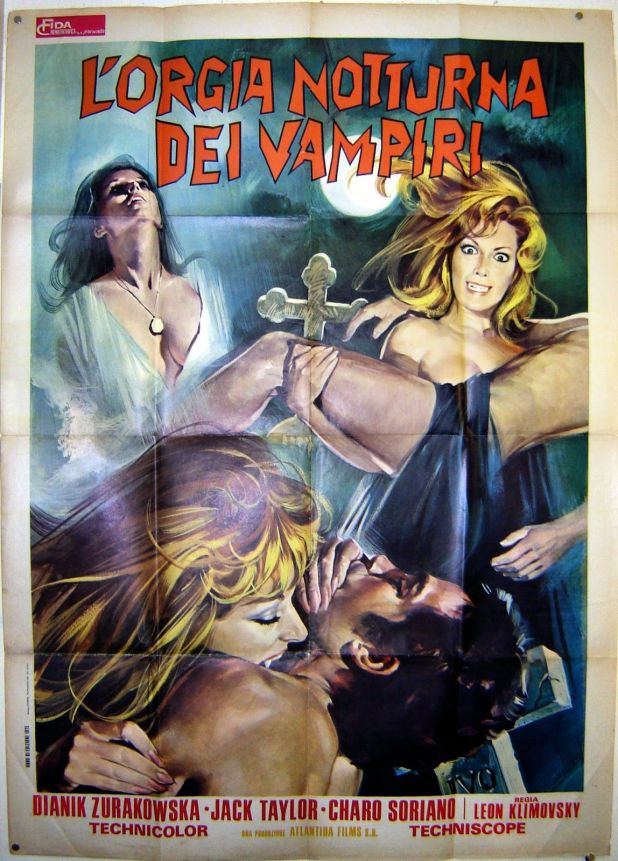
In addition to appearing alongside Barbara Steele in Nightmare Castle (1965), Helga Liné (Mabille) worked with Christopher Lee and Peter Cushing in Horror Express (1972), Leòn Klimovsky’s The Vampire’s Night Orgy (1973), and again with Naschy and Aured in The Mummy’s Revenge (1975).
A loyal member of Naschy’s Grand Guignol company of players, Victor Barrera/Vic Winner (Maurice) appeared in Javier Aguirre’s Hunchback of the Morgue and Dracula’s Great Love, and Leòn Klimovsky’s Vengeance of the Zombies—all penned by Naschy—in 1973. He also appears in Eugenio Martin’s It Happened at Nightmare Inn released that same year.
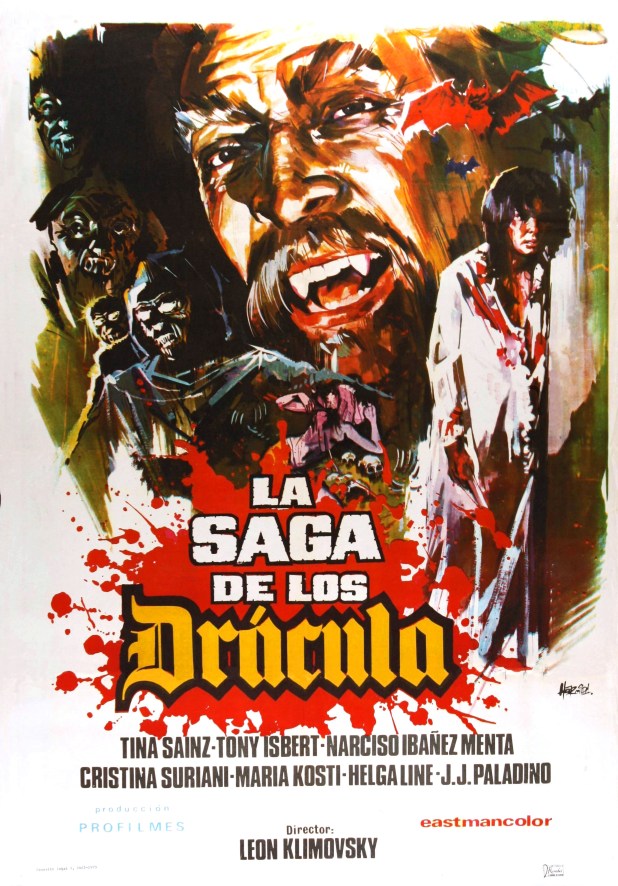
Armando de Ossorio cast Betsabé Ruiz (Silvia) in his Blind Dead sequel, Attack of the Blind Dead (1973). Maria Jose Cantudo (Chantal) made her debut alongside Ruiz in Juan Logar’s Autopsia (1973), and Christina Suraini (Paula), Helga Liné and Betsabé Ruiz worked together again in Leòn Klimovsky’s The Dracula Saga (1973).
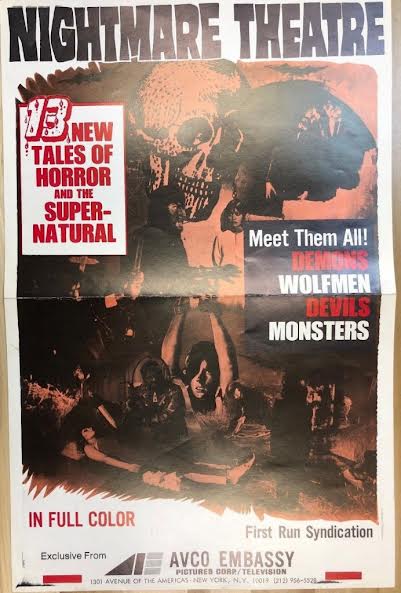
Update: July 2022: During the glory days of local UHF-TV channels, AVCO Embassy distributed Horror Rises from the Tomb as part of their Nightmare Theater television syndication package. Sam Panico, our Editor-in-Chief, explores the history behind the package and breaks down all of the films with his mighty fine “Exploring: Nightmare Theater” feature-homage to those lost UHF-TV days of snowy-analog yore.
Do you need even MORE Paul Naschy? Still? Yikes! Then check out these B&S Reviews to get you started down a Naschy rabbit hole. These reviews, of course, feature links to even more Naschy films.
Frankenstein’s Bloody Terror (1968)
Fury of the Wolfman (1973)
Haunts (1976)
La Noche de Walpurgis (1971)
Seven Murders for Scotland Yard (1971)
The Craving (1980)
The Werewolf and the Yeti (1975)

About the Author: You can learn more about the work of R.D Francis on Facebook. He also writes for B&S About Movies.




 B&S About Movies
You must be logged in to post a comment.