UNSUNG HORRORS HORROR GIVES BACK 2023: Unman, Wittering and Zigo (1971)

Each October, the Unsung Horrors podcast does a month of themed movies. This year they will once again be setting up a fundraiser to benefit Best Friends, which is working to save the lives of cats and dogs all across America, giving pets second chances and happy homes.

Today’s theme: Physical media

John Ebony (David Hemmings, who also produced this) is an idealistic young teacher who arrives at Chantrey School for Boys to fill the shoes of the recently fallen-off a-cliff Pellham. Yet this somewhat of a dream job is anything but, as he lives on the school’s grounds with his wife Sylvia (Carolyn Seymour), who feels trapped. She struggles to fit in with the older wives who have been there for decades, just as John is challenged by the juvenile delinquents he must somehow teach.

Directed by John Mackenzie and written by Simon Raven and based on a radio play by Giles Cooper, this movie gets dark when the boys in his class tell John that they killed the last teacher and they’ll do the same if he doesn’t do exactly what they say. No one believes him, not even his wife.

She makes the mistake of thinking that she can connect with the boys much more than she can with the much older teachers and their wives, even sharing a cigarette with her. Yet she’s defiant in the face of them threatening her with gang rape, which luckily is stopped at the last moment.

I’d never seen this movie, but it really gets across the way that British schools can lead to a legacy of brutal men who do the same thing in real life that they did in class. Seymour is also incredible in this. I’d never seen her in a movie before and now I’m seeking out other roles that she performed in.

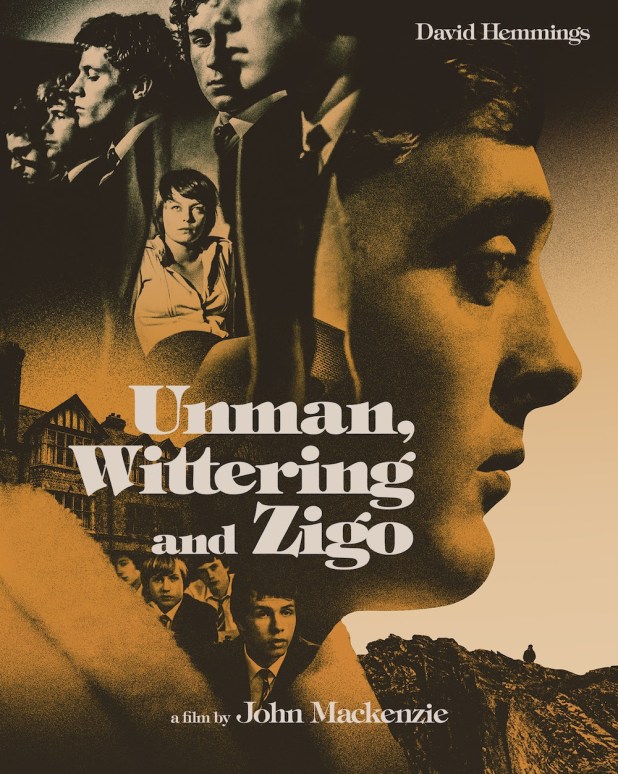
The Arrow blu ray release of Unman, Wittering and Zigo contains a new audio commentary by Sean Hogan and Kim Newman; an appreciation by Matthew Sweet; a featurette with several of the cast members looking back at the movie; an original 1958 recording of Giles Cooper’s radio play; a trailer; an image gallery; a double sided fold-out poster featuring original and newly commissioned artwork by Eric Adrian Lee, which also appears as a reversible sleeve and book with writing by Kevin Lyons and Oliver Wake. You can get it from MVD.
TUBI ORIGINAL: The Murdaugh Murders (2023)

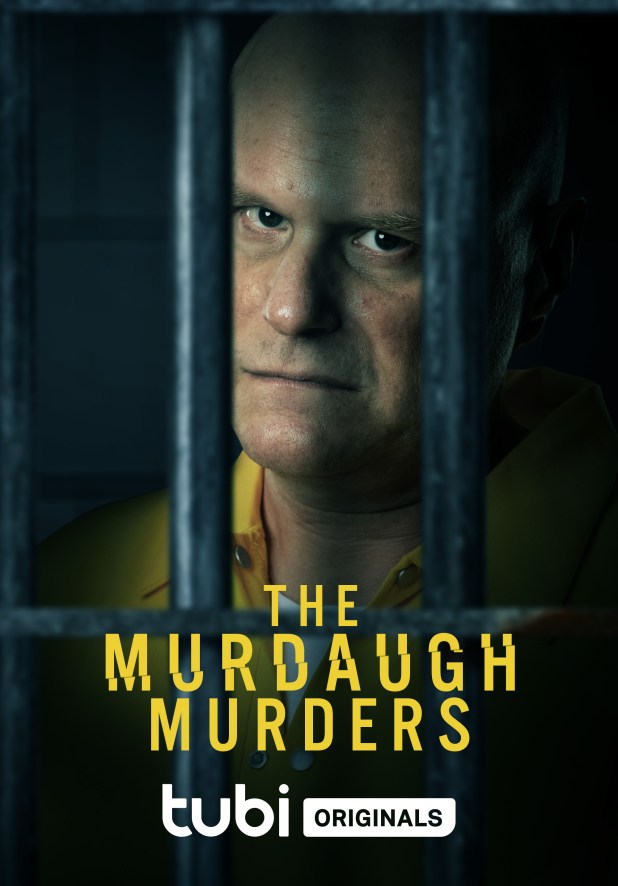
Alicia Seaborne (Nichelle Hines) has come to South Carolina to interview Alex Murdaugh (Chris McGarry) as he’s in jail awaiting trial for the deaths of his wife Maggie (Amy Parrish) and son Paul (Joshua Whichard) in this new Tubi original. I’m happy that this exists because one of the things that I miss from the 70s and 80s made-for-TV movies are ripped from the headlines stories that are actual movies and not just episodes of Dateline or 20/20.

A lot of true crime gets watched in our home, so I know the Murdaugh case quite well. Maggie and Paul were found dead at the family’s home on June 7, 2021. Alex Murdaugh was from a legendary South Carolina family of attorneys who ran the town. Three generations served consecutively as circuit solicitors for South Carolina’s 14th judicial district between 1920 and 2006. This led to the five-county district to be renamed Murdaugh Country by frustrated citizens.

The last generation has been charged with murder, wrongful death, corruption, fraud, witness intimidation, theft, and drug and alcohol-related charges, including Paul being party to a fatal boat accident that he was never punished for and the murders. Alex was also accused of embezzlement from his law firm, taking millions from locals and blaming it all on a drug addiction. There’s also the murder of nursing student Stephen Smith, who may have been killed by Alex’s son Buster, and the death of housekeeper Gloria Satterfield, who slipped, fell and died with no coroner investigation, no death certificate and a lack of a death certificate.

Alex’s cousin Curtis Edward Smith also conspired with him to shoot him on a country road so that Buster would get the insurance money.

Jason Winn, who directed this, also was behind the Tubi original Deadly Secrets of a Cam Girl. If you know the story — if you have watched any true crime stories at all you are beyond in deep — this has everything that you expect with the characters actually being in a story and not just a re-enactment. It also adds Charlie Boggs (Aaron Gillespie), a prisoner whose family was taken advantage of by Alex and who is trying to murder him while they are in the same prison. As far as I know, he’s not an actual person and someone the movie has made to be everyone that got screwed over by Peters Murdaugh Parker Eltzroth & Detrick, the family law group.

Who am I fooling with? If you know about the Murdaughs, you already watched this movie.

You can watch this on Tubi.

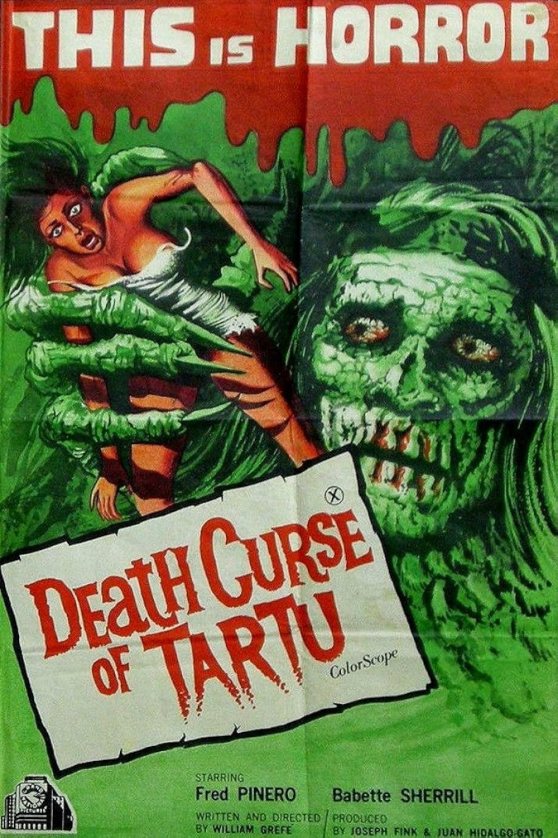
CHILLER THEATER MONTH: Death Curse of Tartu (1966)

EDITOR’S NOTE: Death Curse of Tartu was first on Chiller Theater on Saturday, July 2, 1977 at 11:30 p.m. It also aired on March 11, 1978.

If you didn’t have enough of teenagers in the Everglades screwing with forces they didn’t quite comprehend in Grefe’s Sting of Death — which was the other part of a double bill with this film — then good news! Four students on an archaeology assignment decide that it would be a great idea to have a shindig on the grave of Tartu, an ancient Native American medicine man.

Frank Weed, who played Sam in this, owned all of the animals that Tartu comes back from beyond within. He did not own the stock footage that was also used for some of these animals, nor his own voice, as he was dubbed for this movie.

Somehow, Tartu has the power set of your average mummy villain, except you know, he turns into animals. One of those animals is a “lake shark,” which I had to look up, and learned that true freshwater sharks can be found in fresh water in Asia and Australia, as well as bull sharks, which can swim in both salt and fresh water and are mostly found in tropical rivers. Actually, bull sharks have been found as far north as Illinois. Yet another reason why the Everglades are totally terrifying.

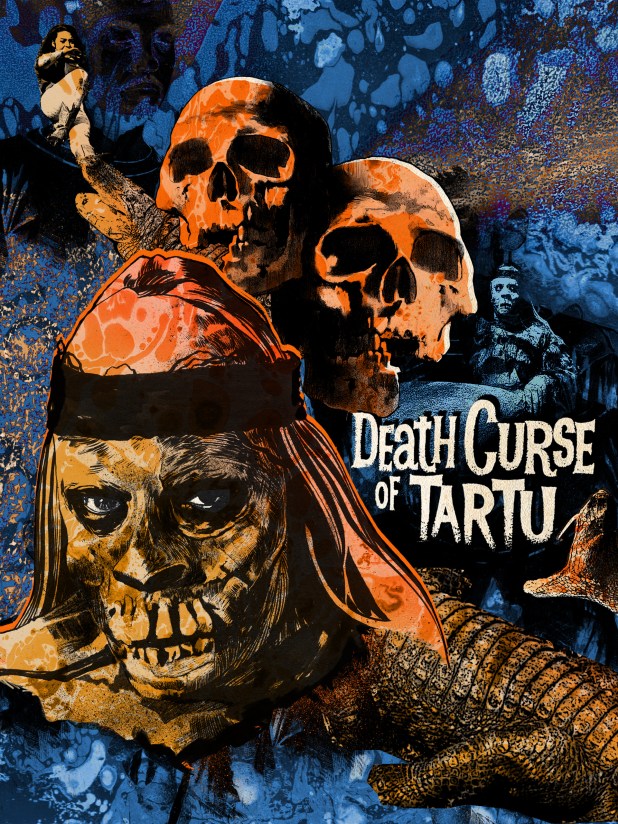
Why Tartu’s weakness is mud — when he makes his home in the Florida swamps — is beyond me. Man, who knows? This is kind of a nature film, you know, except for all the killing of teens after they dance. It’s got a great name, an awesome poster and really, isn’t that all it needs?

You can watch this on Tubi.

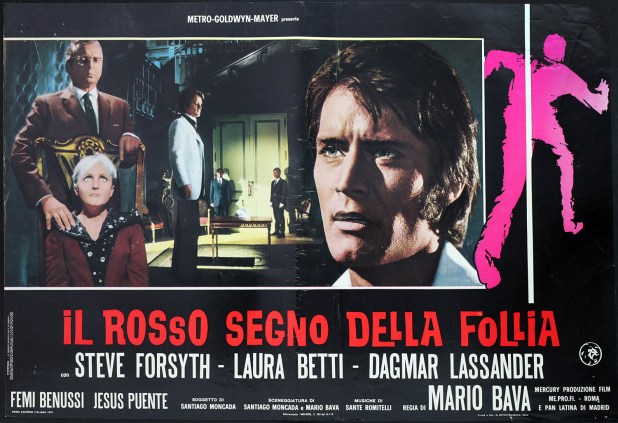
CHILLER THEATER MONTH: Hatchet for the Honeymoon (1970)

EDITOR’S NOTE: Hatchet for the Honeymoon was first on Chiller Theater on Saturday, April 30, 1977 at 11:30 p.m. It also aired on March 8, 1980 and August 8, 1981.

Do you need to love, trust and care about the hero of the movie? Mario Bava is here with Hatchet for the Honeymoon in an attempt to craft a story where the hero is the absolute worst person in the entire film.

Meet John Harrington. He’s 30, runs a bridal dress factory, lives in a gorgeous villa near Paris and kills young women to overcome his impotence and Oedipus complex. His wife, Mildred, refuses to divorce him. And he’s instantly smitten with Helen (Dagmar Lassander, Forbidden Photos of a Lady Above Suspicion, The House by the Cemetery), a young model who has come to replace a missing girl.

Why is she missing? She was one of the models at the salon who John took a liking to, giving her one of his dresses for her wedding. The moment she tried it on, he hacked her up with a meat cleaver, burned her corpse and used it to fertilize the plants in his greenhouse.

Inspector Russell knows that something isn’t quite right. After all, how can six models disappear from the same dress company? If only there was some evidence…

John, however, is falling in love with Helen. And he finally decides to do something about his wife. That something entails him putting on a wedding dress and killing her. But there’s one problem. Here’s where Bava twists the film from giallo into supernatural territory: she won’t stay dead.

While John can’t see or hear his wife, everyone else can. Even after burning her remains and placing them in a handbag, she keeps coming back. He takes the handbag with him to a club, where an attempt to bring another woman home fails when she sees his wife. Beaten by a bouncer and ejected, he cannot even use his charms to win over women. He throws his wife’s ashes into the night, but she remains with him

If John can’t be happy, at least he can murder Helen. He convinces her to wear a wedding dress and tells her that he never wanted to hurt her. She avoids the final blow of his cleaver, which unlocks a flashback where we learned the truth: John loved his mother and that love grew as he became the man of the house after his father’s death. But when she remarried — and started having sex again — he couldn’t take it and murdered her and her new husband. His mind erased the evidence until now.

Helen was an undercover cop all along, leading Inspector Russell and his men back to arrest John. While being transported to prison, he’s happy knowing that his many trials are over. Then, to his horror, he sees the handbag and notices his wife sitting next to him. Now, he’s the only person who can see her. She promised to be with him forever, even in Hell. He goes insane before accepting his fate.

Hatchet for the Honeymoon predates the slasher, yet many of its conventions can be found here and in other early Bava works. This film is a masterwork of both style and substance, with gorgeous fashion, sets and camerawork creating a gorgeous tableau. I love the scene where John uses Bava’s Black Sunday, playing on the TV, as an excuse for the screams that come from his apartment. And as his wife’s blood drips down onto the ground floor, it’s almost as if Bava dares you to empathize with a hero who is completely contemptible. What a predicament to be in!

This is part of the Nightmare Theater TV package, which also included Damiano Damiani’s The Witch, José Antonio Nieves Conde’s Marta, John Farris’ Dear Dead Delilah, Raúl Artigot’s The Witches Mountain, José María Zabalza’s The Fury of the Wolfman, Peter Sadsy’s Doomwatch, Francisco Lara Polop’s Murder Mansion, Carlos Aured’s Horror Rises from the Tomb and The Mummy’s Revenge, Joe D’Amato’s Death Smiles on a Murderer, Claudio Guerí’s The Bell from Hell and Amando de Ossorio’s The Night of the Sorcerers. Chiller Theater showed every single one of them.

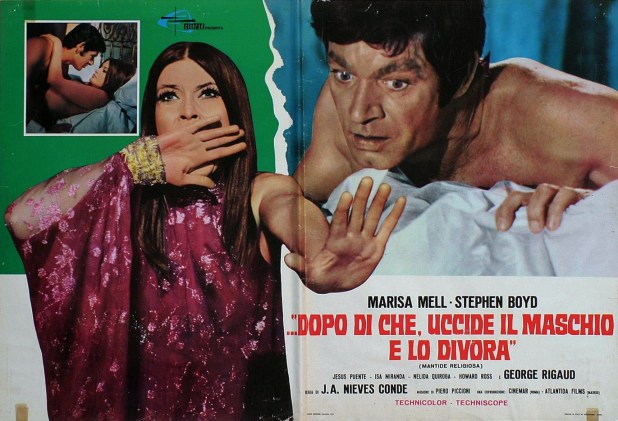
CHILLER THEATER MONTH: Marta (1971)

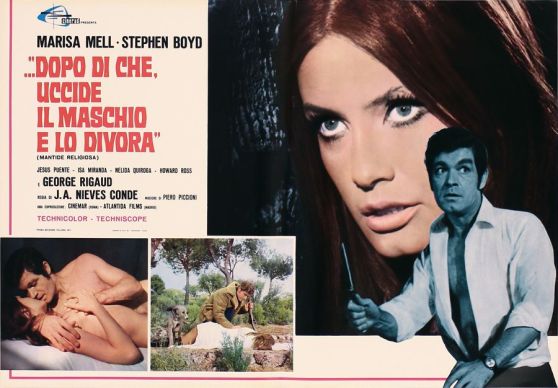
EDITOR’S NOTE: Marta was first on Chiller Theater on Saturday, May 14, 1977 at 11:30 p.m. It also aired on March 22, 1989 and August 1, 1981. I can’t even imagine what people thought when it was on, as this is one of the strangest movies and one that I absolutely love.

Marisa Mell is the female George Eastman. No, she doesn’t act like a wide-eyed gigantic maniac in every movie. It’s just that no matter what movie she appears in, just her name being in the credits guarantees that I will watch the film.

Also known as …dopo di che, uccide il maschio e lo divora (…After That, It Kills the Male and Devours It), which is one of the best titles ever.

A wealthy landowner named Don Miguel (Stephen Boyd, who was in Ben-Hur) is haunted by his dead mother and missing wife — who may have been murdered — when he meets a gorgeous runaway named Marta (Mell), who may have killed the man who she was running from.

I haven’t seen any of José Antonio Nieves Conde’s films before, but this movie makes me want to watch every single one of them.

The strange thing is that this movie pretty much became true in a way, as Boyd and Mell fell in love, as they made this and The Great Swindle one on top of the other*. Despite Boyd not wanting anything to do with Mell at first — was the man made of stone? — he eventually fell for her and they married in a gypsy ceremony near Madrid, cutting their wrists and sealing their blood. The couple was so possessed by the mystical and sexual desire they felt for one another that they even went to have it exorcized in another ritual.

Boyd had to run from her, as the relationship physically and mentally exhausted him. As for Mell, she’d tell the Akron Beacon Journal that “We both believe in reincarnation, and we realized we’ve already been lovers in three different lifetimes, and in each one I made him suffer terribly.”

In the same year that all this happened, Mell was also dating Pier Luigi Torri, an aristocratic nightclub owner who fled the country after a cocaine scandal. Arrested in London after it was discovered he had a $300 million dollar gold mine and had also scammed a bank, he somehow escaped his jail cell and ran from the police across rooftops, escaping to America for 18 months. Evidently, Mell dated Diabolik in art and in life.

So let’s talk about the Mell relationship in the film instead of reality. She has come to live with Miguel, who collects insects and has two servants who keep things tidy. She enters his life by claiming that she is on the run for a self-defense murder. Miguel decides to protect her from the police because she looks like his wife Pilar (also played by Mell) who has left him or was killed. He’s also tormented by the death of his sainted mother while she may not be who she says that she is.

Oh yeah — and now Marta is acting as Pillar to throw the police off the scent of the man whom she either wants to marry or destroy.

Marta is a gothic-style giallo but is also dreamlike throughout. There’s a continual obsession with placing Mell in front of mirrors. And for someone who was rarely used outside of her sex appeal in films, she absolutely haunting here. Somehow, Spain put this movie forward for Oscar consideration and if I ran those popcorn fart boring awards, I would have given this every single award.

Sure, this movie rips off Hitchcock, but it also wallows in sin, which is what I demand from the giallo that I come to adore. Somehow, someway, this aired on broadcast TV as part of Avco Embassy’s Nightmare Theater package, along with A Bell from Hell, Death Smiles on a Murderer, Maniac MansionNight of the SorcerersFury of the Wolfman, Hatchet for the HoneymoonHorror Rises from the TombDear Dead DelilahDoomwatchWitches MountainThe Mummy’s Revenge and The Witch. Man, how did any of those air on regular TV?

*Credit to the Stephen Boyd Fan Page and Marisa Mell: Her Life and Her Work for this information.

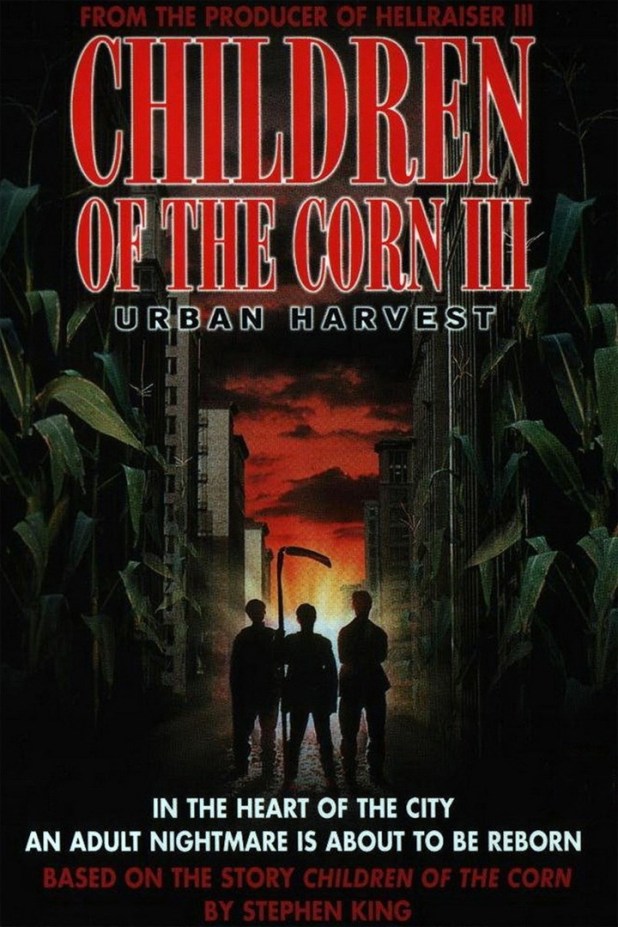
THE IMPORTANT CINEMA CLUB’S SUPER SCARY MOVIE CHALLENGE DAY 13: Children of the Corn III: Urban Harvest (1995)

October 13: A DTV Horror Sequel released by Dimension Films

After the death of their father, Eli (Daniel Cerny) and Joshua (Ron Melendez) are adopted by William (Jim Metzler) and Amanda Porter (Nancy Lee Grahn, Julia Wainwright Capwell on Santa Barbara from 1985 – 1993 and Alexis Davis on General Hospital since 1996), moving from a farm to Chicago. Eli seems like he’s going to have a harder time than Joshua fitting in, as he reads a prayer at dinner that goes like so: “Let us give thanks to He Who Walks Behind the Rows, who protects our crops and keeps the infidel and unbeliever in the torments of hellfire eternal. Amen.”

I laughed like a maniac.

Eli also has a suitcase filled with corn that he plants in an abandoned lot in the middle of urban Chicago, where the boys also have to go to Catholic school, which goes about as well as you think. T-Loc (Garvin Funches) gives the young Amish-like kid a hard time while his brother goes off and plays some b-ball and becomes friends with neighbors Malcolm (Jon Clair) and Maria (Mario Morrow, Oneisha from Family Matters).

The secret is that Eli is from Gatlin, Nebraska and hasn’t aged since 1964. By this point in the movie, he’s fed his corn with the head of a homeless man, murdered his adopted mom by knocking her down and having a pipe go through her head and set a social worker on fire. Luckily, his new dad just wants to make money on his corn, which can grow anywhere and never rots.

Eli takes over most of the students when he feeds them his corn and then goes about killing adults with bugs and by crucifying Father Frank Nolan (Michael Ensign). Joshua learns that his brother has a secret bible — it’s a hardcover of U of M grad Steve King’s Night Shift — that keeps him alive and oh yeah, we get to see the kaiju that is He Who Walks Behind the Rows.  If you look closely, you may see Ivana Miličević and Charlize Theron in the thrall of Eli and that cornshucking beast.

Children of the Corn III: Urban Harvest was the first film in the series made under Dimension Films and Miramax Films, who also made Children of the Corn IV: The GatheringChildren of the Corn V: Fields of TerrorChildren of the Corn 666: Isaac’s ReturnChildren of the Corn: Revelation and Children of the Corn: Genesis.

Director James D.R. Hickox was the editor of WaxworkWaxwork IIMasters of the UniverseBeastmaster 2 and Greystoke before he made Children of the Corn III. He hadn’t seen either of the first two movies. He’s the brother of director Anthony Hickox.

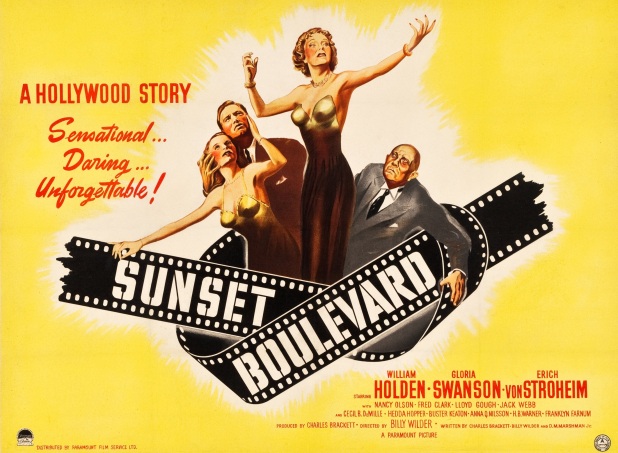
2022 Scarecrow Psychotronic Challenge Day 13: Sunset Boulevard (1950)

13. RELIVOMAX: Do your enigmas need resolving? Don’t wait, talk to an expert to see if Relivomax is right for you. Taking Relivomax may result in flashbacks.

At a mansion on Sunset Boulevard, police officers and gossip photographers find Joe Gillis (William Holden) drowned face down in the swimming pool of Norma Desmond (Gloria Swanson). Joe is kind enough to start telling us how he got here. How he died, too.

It was just a few months ago that Joe couldn’t sell anything. He was dodging repossession men when he ran into the mansion of Desmond, who was once something. Somebody. She learns he can write and has him work on her script about Salome. You know, the one who wanted men so much she cut their heads off.

Norma is in her own plane of reality, one where she’s in love with Joe. The person who really loves her is Max von Mayerling (one of the greatest directors of all time, Erich von Stroheim), the butler who writes all of her fan mail. He even convinces Joe that she’s about to kill herself to finally get him into her bed.

She’ll only talk to Cecil B. Demille (playing Cecil B. Demille) all while undergoing beauty treatments to prepare for her comeback. At the same time Joe is working with Betty (Nancy Olson), a script reader, as he makes his own story. Max knows this and reveals that at one time, he was a director who discovered Norma, guided her to becoming famous and was destroyed by her after their marriage and divorce. Now, he’s her slave.

Norma tries to destroy Joe and Betty’s working relationship, but he’s had enough. He plans on going back to Ohio and forgetting Hollywood and tells her to stop the threats of killing herself. Instead, she shoots him and he falls into the pool where we first began.

As for Norma, Max and the police are directing her as her arrest has become her break with reality and she is finally back in the news. Except in her mind, this is the red carpet.

When director Billy Wilder was growing up in Germany, he dreamed of Hollywood. When he finally got there, all the mansions remained, all with shut-in stars that would never act again. Wilder wondered that now that the world had forgotten them how they lived.

Norma is a mix of so many actresses of that time. Mary Pickford, Pola Negri, Mae Murray, Valeska Surratt, Audrey Munson, Clara Bow and Norma Talmadge. All actresses who were at the top of stardom and then were alone in their huge homes, never to be thought of other than by a few fans who held them in their hearts and stayed awake late to watch them on TV.

Writer Charles Brackett said that the plan was always to have Swanson as Norma. Wilder wanted Mae West, who was offended. She would never be forgotten. She would always be a sex symbol until the day she faded out of our plane of existence.

What is Sunset Boulevard? A dark comedy? A film not? Something unlike nearly every other movie made before or since? It’s astounding that so many people — Buster Keaton, Hedda Hopper, Anna Q. Nilsson — play unflattering versions of themselves. It’s almost the first time Hollywood would recall itself and not in a camp or fun meta way. Everyone knew from the scandal papers — since the 20s — how dangerous and decadent Los Angeles was. But even after that fame fades, it can still kill.

UNSUNG HORRORS HORROR GIVES BACK 2023: The Hyena of London (1964)

Each October, the Unsung Horrors podcast does a month of themed movies. This year they will once again be setting up a fundraiser to benefit Best Friends, which is working to save the lives of cats and dogs all across America, giving pets second chances and happy homes.

Today’s theme: 1960s

Director and writer Gino Mangini claimed that he wrote hundreds of movies, but IMDB lists 21. There’s a lot of peplum on that list, as well as a very late in the day mondo, Mondo cane 2000 – L’incredibile, which was made in 1988 and directed by Gabriele Crisanti, the producer of Giallo In VeniceBurial Ground and Patrick Still Lives, three of the grimiest movies ever allowed to escape the camera. Oh yeah, he also produced Gesichter des Todes V. That’s right. The bootleg German Faces of Death 5.

1883 London: Martin “The Hyena” Bauer has been strangling people for three years before Scotland Yard finally brings him to the gallows. Except that his body disappears from the morgue and the killings start all over again.

Dr. Edward Dalton (Giotto Tempestini) believes that the killer is back from the grave, but he’s also dealing with his daughter Muriel (Patrizia Del Frae) dating a man not right for her named Henry Quinn (Luciano Stella who you know better as Tony Kendall). No problem, because Dalton’s assistant Dr. Anthony Finney (Angelo Dessy) frames Henry for the killings. But ahh…what if Dalton had been putting pieces of Bauer’s brain into his own and transferred the need to kill to himself?

I thought this was going to be an early giallo and it’s quite nearly a soap opera. But hey — the ending! What kind of bullshit science is that? Oh, Italian exploitation bullshit science.

The Francesco De Masi score for this movie was taken from Riccardo Freda’s The Ghost and would return again for Joe D’Amato’s Beyond the Darkness. And hey! There’s Luciano Pigozzi in the cast!

Tales from the Crypt S1 E2: And All Through the House (1989)

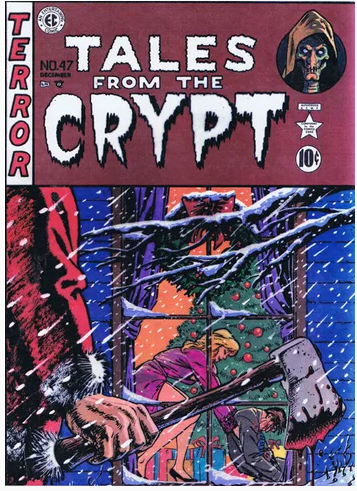
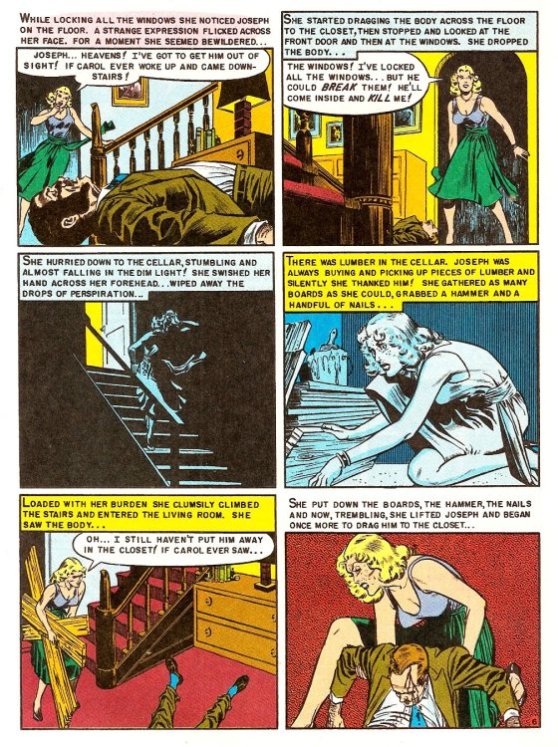
It’s hard for me to be objective about this episode as this story — which originally appeared in Vault of Horror #35 — is also my favorite part of Amicus’ Tales from the Crypt movie. No matter how good this is, I mean, I wrote a song once called “What Are Those Purple Bruises On the Throat of Joan Collins”?

“Ho, ho, ho, kiddies! Just your old pal the Crypt Keeper having a little holiday fun. Why else would I be in this getup…unless there was a Claus in my contract? In fact, I’ve got some Christmas goose for you…goose bumps, that is. Yes, indeedy. A little terror tale, chock-full of holiday fear…I mean cheer, of course. So get a gander of a Yuletide yelp-yarn that goes a little something like this ‘Twas the night before Christmas and all through the house.”

Elizabeth Cayman — not named Joanne Clayton from the original movie version, while the comic story’s protagonist is unnamed — is played by Mary Ellen Trainor, the mom from The Goonies and the kidnapped woman who sets Romancing the Stone in action) has just killed her husband (Marshall Bell) and is keeping it from her daughter (Lindsey Whitney Barry). What she doesn’t know is that a killer (Larry Drake) has escaped the mental home and is considered extremely dangerous. She’s pretty rough herself, much more capable than the other two versions of the character even if they share the same fate.

Directed by Robert Zemeckis and written by Fred Dekker and Steven Dodd, this episode is actually closer to the comic — Elizabeth is blonde — than Amicus was. There’s even a reference to EC publisher Willam Gaines — it takes place in Gaines County — and the cop’s name is Feldstein, which is for Al Feldstein, the reason for so many EC Comics stories.

Perhaps the best part of this episode is the Crypt Keeper dressed as Santa, which is something that has gotten me through so many holidays.

If you’re wondering why it looks so good, just look to who did the cinematography. Dean Cundey.

CHILLER THEATER MONTH: The Undead (1957)

EDITOR’S NOTE: The Undead was first on Chiller Theater on Saturday, October 10, 1964 at 1 a.m. It also aired on February 3, 1968; October 14, 1973; March 30, 1974; May 10, 1975; May 28, 1977 and October 23, 1982.

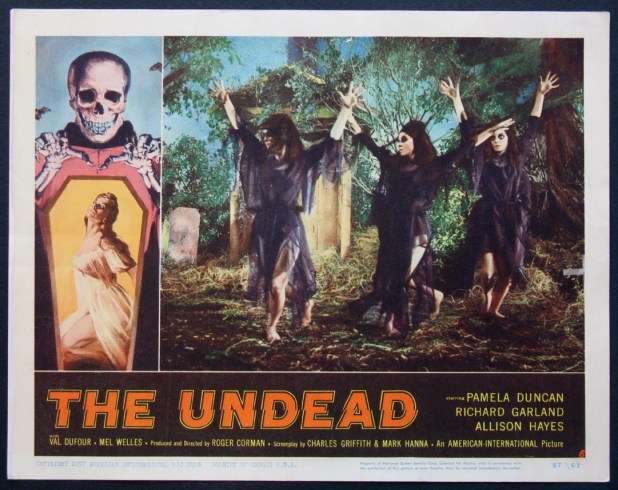
In the mid-1950s, reincarnation was in and The Search for Bridey Murphy was being made, so Roger Corman asked Charles Griffith to write a script, which was originally called The Trance of Diana Love, which is a great title, and was to be in all iambic pentameter.

Griffith said, “I separated all the different things with sequences with the devil, which were really elaborate, and the dialogue in the past was all in iambic pentameter. Roger got very excited by that. He handed the script around for everybody to read, but nobody understood the dialogue, so he told me to translate it into English. The script was ruined.”

I can’t even add up how many wasted hours that was.

Mel Welles, who played Smolkin, told Interviews with B Science Fiction and Horror Movie Makers: Writers, Producers, Directors, Actors, Moguls and Makeup, “It was a wonderful script and it probably would have been the cult film rather than Little Shop of Horrors had it been shot that way. But either Roger or someone at American-International Pictures didn’t think it was commercially viable to do it that way and at the last minute a decision was made to rewrite the script without that.”

Quintus Ratcliff (Val DuFour) is a psychic researcher who has spent years in Tibet to learn how to mentally regress someone back into their past life. He wants to prove to an old professor that he can do this, so he hires Diana Love (Pamela Duncan) for $500 to place her into a trance for two days.

She’s soon back in the Middle Ages, trapped in the mind of her ancestor Helene, accused of witchcraft. Diana is able to inform her past self of how to escape, so she heads into the night and meets up with the real witch Livia (Allison Hayes) and even Satan himself (Richard Devon).

Using the link between Diana and Helene, Quintus comes back in time, hoping to convince Helene to avoid her death and change history.

With Billy Barty as an imp and Dick Miller as a leper, this Corman film may have been a cheap one — and one that caused him stress with the bad smelling fog and budget issues — but it’s a fun idea well told. You can’t even tell that it was shot inside a supermarket.

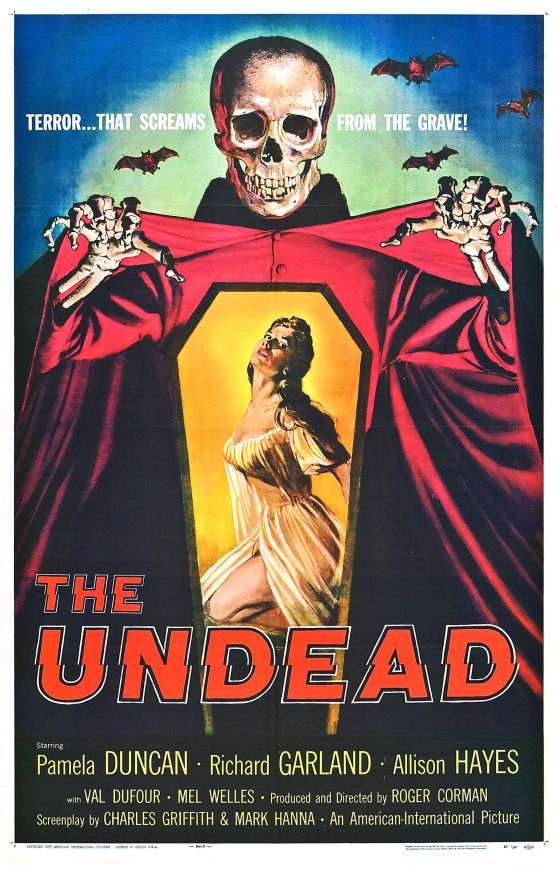
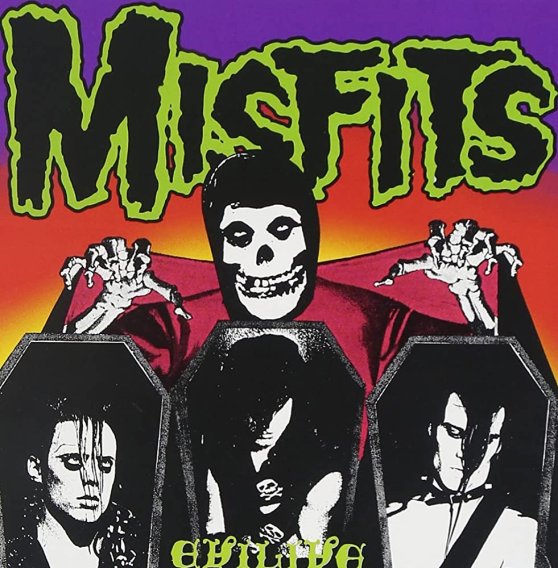
This movie is where The Misfits got the artwork for their album Evilive. You can learn more about the horror film influences of The Misfits here.

You can watch this on Tubi.