2023 Scarecrow Psychotronic Challenge Day 31: Death Race 4: Beyond Anarchy (2018)

31. “THE FINAL CHAPTER”: Last in a series… Get it?

Death Race: Beyond Anarchy is the most 2000s movie I have ever seen and I am astounded that it was made in 2018. It has people with rivet faces, distressed fonts everywhere, costumes that feel like they came from the back room of a Hot Topic in a forgotten box filled with JNCO jeans and Mudvayne shirts, a DMX song on the soundtrack right alongside nu metal, a vague anti-authority anti-jail plot that is never really explored, smoky eyeshadow for everyone, Danny Trejo double Dannying it up with Danny Glover (still too old for this shit 31 years after being too old for this shit in Lethal Weapon), Paul W.S. Anderson still writing movies (honestly, if you were married to Mila Jovovich would you be writing direct to video Death Race movies?), stuttery action with pauses before people attack, a strip club bar at the end of the world and yes, a sequel to the 2008 Death Race when there were already two other ones. You know that I bought the box set at WalMart.

Weyland International runs the Sprawl, a massive prison where Death Race — despite being illegal — is the most important thing in the world, a way of life that enables Frankenstein (Velislav Pavlov, voiced by Nolan North) to run the entire prison with his army of Slipknot fans. Even an army of cops can’t stop Frankenstein, who has his men chainsaw off a cop’s head and yells into the camera on the dead man’s helmet, telling the government and big business to send whoever they want.

A whole new bunch of prisoners are sent to the Sprawl and given silver dollars. That money is taken by Johnny Law (Nicholas Aaron) and his gang, who kill everyone but two ciphers: Connor Gibson (Zach McGowan) and Gipsy Rose (Yennis Cheung). She disappears, he is taken by a gang of women to meet Frankenstein and Buffalo Bob (Glover), who supplies the gasoline to the cars in Death Race. He also meets Jane (Christine Marzano), who will be the romance part of this movie.

Gipsy Rose qualifies for Death Race, as does Connor. Frankenstein reveals that he is Sergeant Connor Gibson, a special operative sent inside to kill him, and that puts everyone inside The Sprawl on him. Yet he will be in the Death Race alongside his navigator Bexie (Cassie Clare) while Frankenstein takes Jane with him for insurance.

They race against a field that includes Thin Lizzy (Neli Angelova), Matilda the Hun (Jasette Amos) — at least someone remembers the actual inspiration for this — Nazi Boy (Velizar Peev) and even a guy who is racing in what looks like a go kart. Johnny Law has a monster police truck and gets shot in the head and his vehicle blows up real good. Everyone does, leaving Frankenstein and Connor, but there are still a few turns before the end.

I know that Danny Trejo plays Goldberg, the same character he was in the last two movies. I have no idea what his deal is other than showing up in a bar, gambling and being around attractive women.

The character Lists (Fred Koehler) also returns.

Director Don Michael Paul is the sequel guy who made Jarhead 2: Field of FireSniper: Legacy, Kindergarten Cop 2, Tremors 5: BloodlinesSniper: Ghost ShooterTremors: A Cold Day in Hell, The Scorpion King: Book of SoulsJarhead: Law of ReturnBulletproof 2 and Tremors: Shrieker Island. Before he made movies, he was in LovelinesDangerously CloseDown Twisted and Rolling Vengeance.

That’s right, the guy who starred in a monster truck movie made one.

CHILLER THEATER MONTH: Whatever Happened to Baby Jane? (1962)

EDITOR’S NOTE: Whatever Happened to Baby Jane? was on Chiller Theater on January 12, 1974 and September 4, 1976 at 11:30 p.m. 

After a viewing of this movie at a very young age, I decided that I’d never have chaffing dishes in my house. That may never come true just because I doubt I’ll ever have the money to spend on such luxurious accouterments, but also because the moment where Baby Jane Hudson (Bette Davis) serves her sister Blanche (Joan Crawford) her parakeet — and later a rat — on a silver platter, I was put off on silver serviceware for the rest of my days. This is not a meal fit for Ms. Crawford!

Robert Aldrich had the idea of bringing together two of America’s most enduring screen icons in one film where they’d bring their long-rumored rivalry to the story of two sisters who had been used up by show business.

Baby Jane was once a vaudeville star who held her family under her thumb, using her stardom to get whatever she wanted. That all changed once movies took over and she couldn’t adapt, so by 1935, her sister Blanche is the toast of Tinseltown while she’s a shell of her former self, her movies seen as failures. One night at a party, an accident leaves Blanche paralyzed from the waist down and it’s all blamed on a drunken Jane.

Flash to three decades later, as residuals from Blanche’s films are enough to keep the sisters in house and home, as the two former stars live in the shadows of their past glories. Jane has become a raging alcoholic, trapping her wheelchair-bound sister within their home, denying her even basic sustenance — hence the pet and vermin meal scenes described above.

Although Jane has gone far into middle age, she still wears the pancake make-up and outfits of her Baby past. She’s hired Edwin Flagg (Victor Buono) to play piano for her, preparing an entirely new show to take on the road. And to get there, she’s using her sister’s money.

Only madness and murder can follow, as well as the revelation that Blanche isn’t the innocent victim that she aspires to be. Both sisters have been forced into roles that they’ve played way beyond typecasting. As both sisters find themselves on a beach, with Blanche dehydrated and near-death, Jane’s plaintively sad question “You mean all this time we could have been friends?” cuts through this film, which ends before giving any resolution to the fate of either character.

Whatever Happened to Baby Jane? was a cultural force, changing Hollywood so that older actresses didn’t have to fade into the role of the matron. It’d be followed by other so-called psycho-biddy films like Aldrich’s follow-up Hush…Hush, Sweet Charlotte, as well as movies that also asked questions like What Ever Happened to Aunt Alice?What’s the Matter with Helen? and Whoever Slew Auntie Roo?

The feud between the two actresses — which began years before this movie and would extend to their deaths — is so legendary that books and even an entire FX series was created to document it. From allegations that Crawford backed out of a publicity tour because she didn’t want to share the stage with Davis to Crawford accepting Anne Bancroft’s Best Actress statue for The Miracle Worker in a successful attempt to overshadow her enemy, this war was just like the movie — only 100% reality.

I mean — this is the movie where Bette Davis installed a free Coca-Cola machine on the set for the cast and crew for the sole reason of drawing the ire of Crawford, who was on the board of Pepsi.

There are also plenty of personal touches by both actresses. Davis did all of her own makeup, saying “What I had in mind no professional makeup man would have dared to put on me. I felt Jane never washed her face, just added another layer of makeup each day.” And Crawford, who was an avid collector of Margaret Keane’s “sad eyes” paintings, made sure that the paintings appeared in next door neighbor Mrs. Bates’ house, including the famous Big Eyes piece.

While Ingrid Bergman, Susan Hayward, Rita Hayworth, Katharine Hepburn, Jennifer Jones and Ginger Rogers were all rumored for Baby Jane and Tallulah Bankhead, Claudette Colbert, Olivia de Havilland and Marlene Dietrich were all in the running to play Blanche, only Davis and Crawford’s maniac energy — and downright hatred of one another — could make this film work as well as it does.

I truly believe that is Ms. Davis could have served Ms. Crawford a rat on a fancy tray, she would have done so. This is a film I’ve returned to time and time again, even if I’ve made sure to never eat a meal that has a silver cover on it.

CHILLER THEATER MONTH: The Blancheville Monster (1963)

EDITOR’S NOTE: The Blancheville Monster was first on Chiller Theater on Saturday, May 1, 1965 at 1:00 a.m. It also aired on September 9, 1967; June 15, 1968 and September 27, 1969.

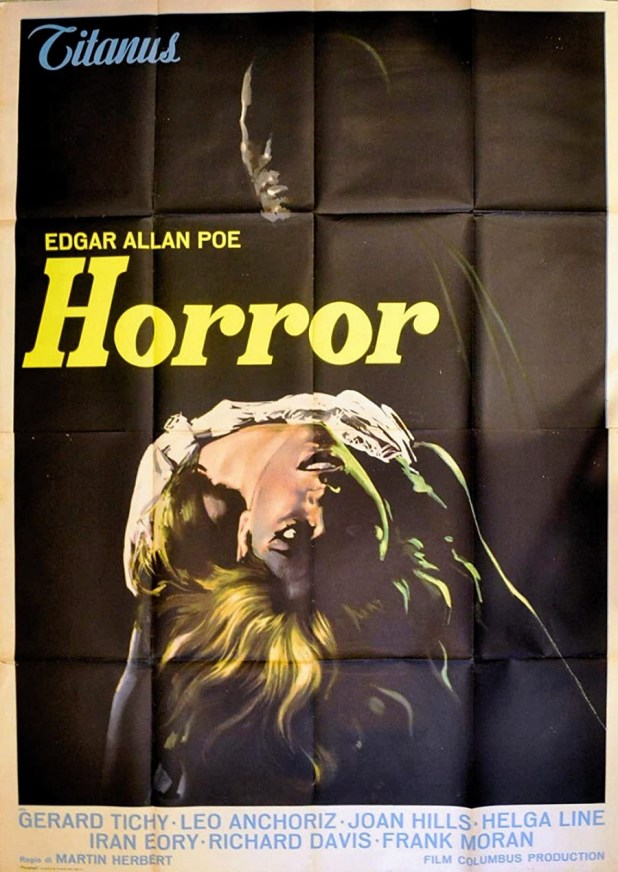
Released in Italy as Horror, this film’s script by Gianni Grimaldi and Bruno Corbucci was said to be based on the works of Edgar Allan Poe. Sure, there are some parts of The Fall of the House of Usher, A Tale of the Ragged Mountains and Some Words with a Mummy, but it’s as much a true Poe as the films of Roger Corman.

It was directed by Alberto De Martino who I celebrate for so many of his remake remix rip-off movies like OK Connery, The Antichrist and Holocaust 2000. Outside of those movies, he also made the wild giallo cop movie hybrid Strange Shadows In an Empty Room. It won’t sell you on this movie if I told you that he said that it was “a little film of no importance.”

Emilie De Blancheville (Ombretta Colli, who would one day become the President of Milan) has returned to her family’s ancestral home only to learn that everything has changed. Her father, Count Blancheville, has become disfigured, gone mad and has locked himself in a tower. Her brother Rodéric (Gérard Tichy) has taken over the home and rules over his servants with an iron fist after, well, all the old help has been killed. And now, the Count is loose and sure that if his daughter is killed before his 21st birthday, the curse on the Blancheville family will end. And oh yes — there’s also a cold and evil housekeeper known as Miss Eleonore played by Helga Liné.

What follows are soap opera romances, thunder and lighting, drama and the kind of murder that goes on in Italian gothic horror movies that are frequently air on my television screen.

AIP sold this to American TV, so if you watched horror shows from the 60s to the 80s, there’s a good chance you’ve seen this. Do you think that Edgar Allen Poe ever was like. “Why are they using my name again?”

Unsung Horrors Horror Gives Back 2023 recap

Each October, the Unsung Horrors podcast does a month of themed movies. This year, this event benefits Best Friends, which is working to save the lives of cats and dogs all across America, giving pets second chances and happy homes.

If you enjoyed reading anything I posted, please consider donating and letting me know.

Here are the movies that I watched. You can also check out the Letterboxd list.

October 1: Boris Karloff: Bikini Beach

October 2: Sequel: Children of the Corn II: The Final Sacrifice

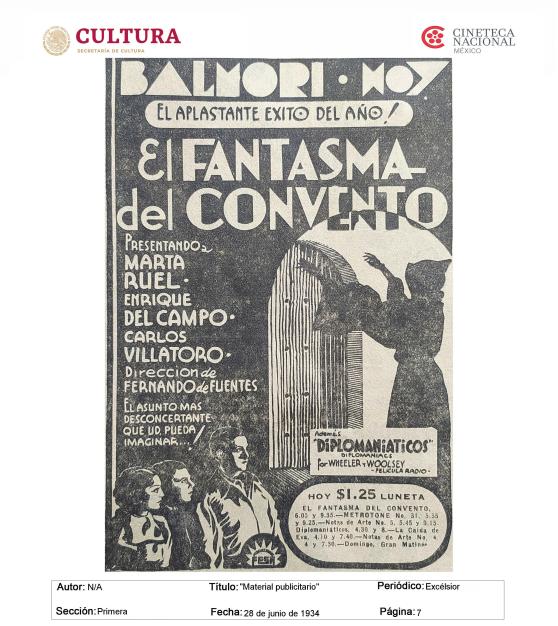
October 3: Mexico: El Fantasma del Convernto

October 4: Series episode: Friday the 13th the Series Season 1 Episode 5: Hellowe’en

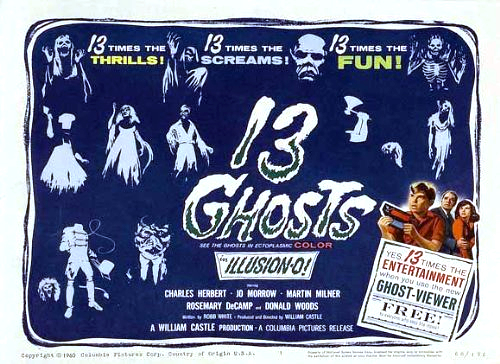
October 5: Castle, William or actual: 13 Ghosts

October 6: Witches: Witching and Bitching

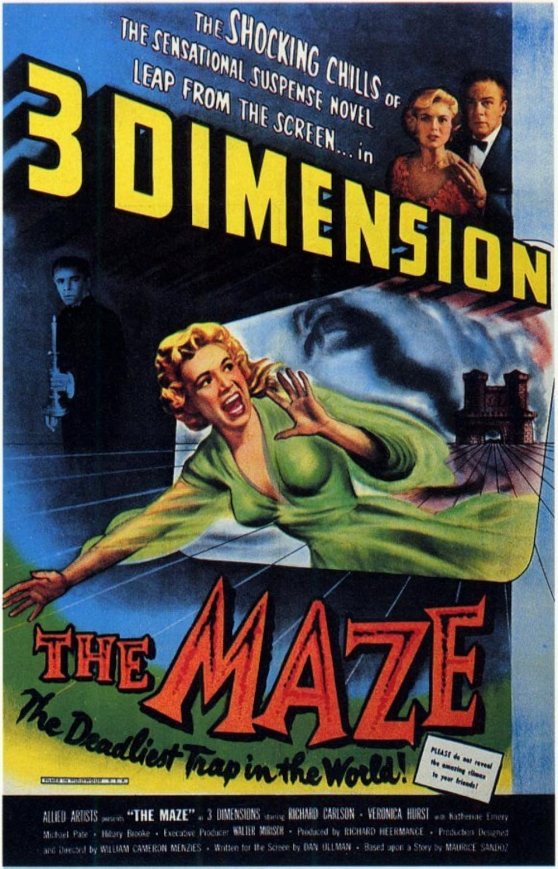
October 7: 1950s: The Maze

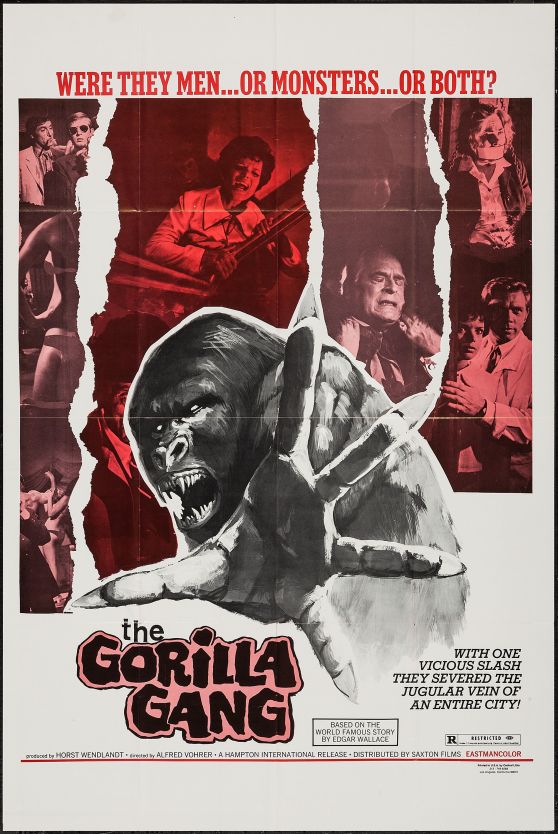
October 8: Germany: The Gorilla Gang

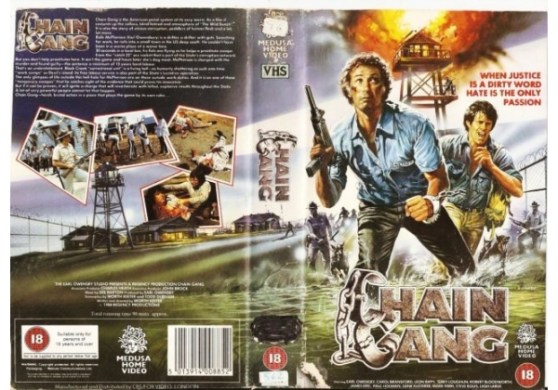
October 9: Unsung Horrors rule (movies under 1000 views on Letterboxd): Chain Gang

October 10: Carla Mancini: Mondo Candido

October 11: Ghosts: But You Were Dead

October 12: Japan: Maniac Driver

October 13: 1960s: The Hyena of London

October 14; Physical media: Unman, Wittering and Zigo

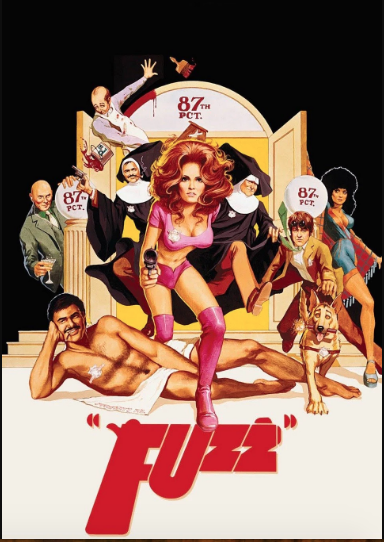
October 15: In Memoriam: Fuzz

October 16: The undead: Rome Against Rome

October 17: Creepy twins: Chained for Life

October 18: A movie covered by Bleeding SkullOzone: The Attack of the Redneck Mutants

October 19: George “Buck” Flower: Lady Cocoa

October 20: 1980s: Vampire In Venice

October 21: Made for TV: Deadly Game

October 22: A movie with a Goblin soundtrack: The Gang That Sold America

October 23: Hail Satan: Castle of Blood

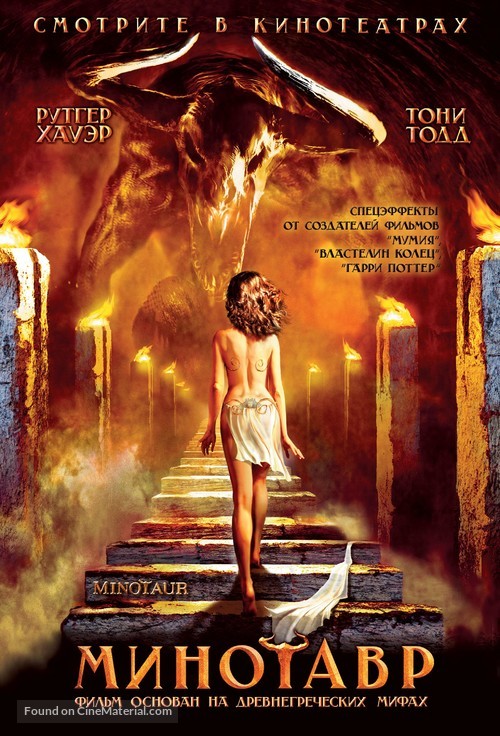
October 24: Tony Todd: Minotaur

October 25: Werewolf: A Werewolf In the Amazon

October 26: 1970s: Nude for Satan

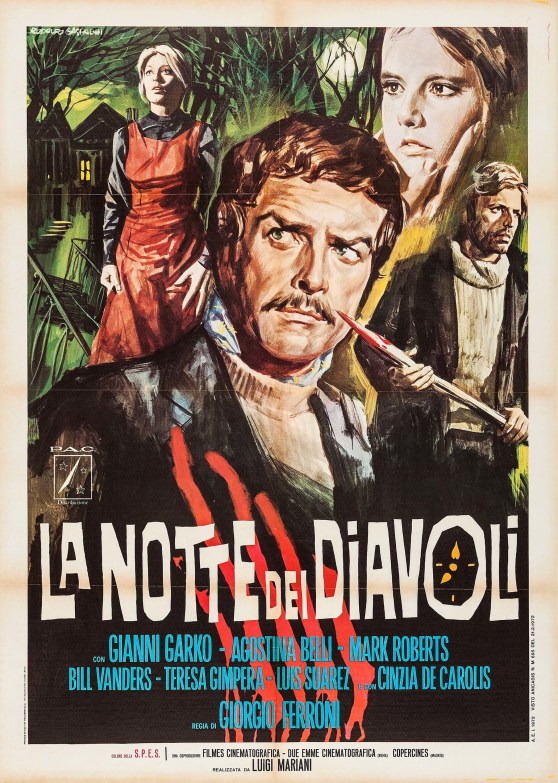
October 27: Folk horror: The Night of the Devils

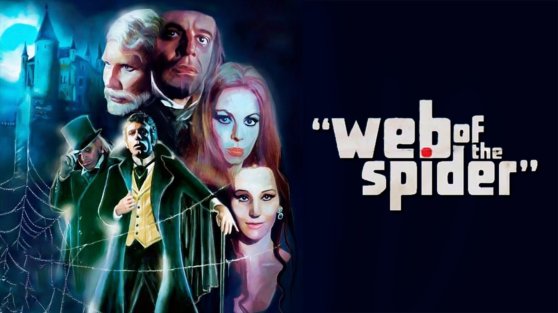
October 28: Haunted house: Web of the Spider

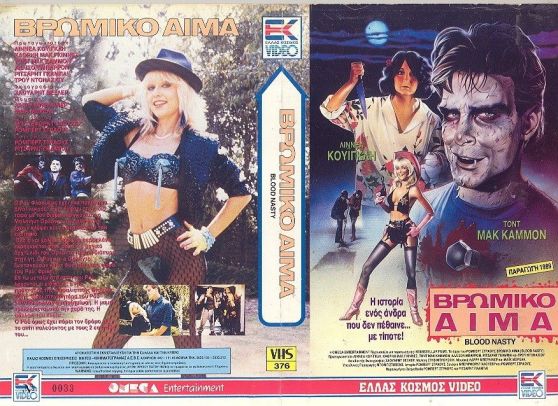
October 29: Slashers: Blood Nasty

October 30: Hammer time: Vampire Circus

October 31: Viewer’s choice: Secrets of a Woman

CHILLER THEATER MONTH: A Bell from Hell (1973)

EDITOR’S NOTE: A Bell From Hell was on Chiller Theater on Saturday, July 14, 1979 and August 29, 1981.

What happens when a young man is released from an insane asylum and returns home? Well, he goes for revenge on his aunt and her three daughters, the ones who stole his insurance when they claimed he had gone crazy.

This is another part of the Avco Embassy’s Nightmare Theater package syndicated for television in 1975. The others are MartaDeath Smiles on a Murderer, Maniac MansionNight of the SorcerersFury of the Wolfman, Hatchet for the HoneymoonHorror Rises from the TombDear Dead DelilahDoomwatchWitches Mountain, The Mummy’s Revenge and The Witch).

Bell from Hell isn’t an easy watch. It’s dreamy at times, brutally realistic at others, particularly the slaughterhouse scene. Juan wants revenge against Marta (Viveca Lindfors, Creepshow) and her three daughters (as well as anyone connected with them), but there are times when he could easily kill them and he lets them escape. A good chunk of this movie feels thrown together. But there’s a reason.

Director Claudio Guerín fell — or jumped — from the tower housing the title bell on the last day of shooting and was killed. The film was completed by Juan Antonio Bardem. One assumes that Bardem did the best job he could to combine all the many parts that Guerín into some whole. Throw in the fact that this movie is translated from Spanish to English and you get a swirling dervish of confusion.

UNSUNG HORRORS HORROR GIVES BACK 2023: Segreti di donna (2005)

Each October, the Unsung Horrors podcast does a month of themed movies. This year they will once again be setting up a fundraiser to benefit Best Friends, which is working to save the lives of cats and dogs all across America, giving pets second chances and happy homes.

Today’s theme: Viewer’s choice

He doesn’t need it, but I find myself very protective of Bruno Mattei.

Sure, his movies are objectively not good, but he’s always entertained me. I find myself just so amused by the fact that he would blatantly steal not just concepts but whole movies and even footage that I can’t dislike his movies. In fact, I find myself getting angry at anyone who doesn’t find him just as funny as me. How can people have no sense of joy?

Anyways, I don’t have many of his films left as first-time watches — the ones that remain are La provinciale a lezione di sesso and Orient Escape, which are not on Letterboxd and Armida, il dramma di una sposaSesso Perverso, Mondo ViolentoUno storico pasticcio and the sequel to this movie. All of those movies have been seen by under a hundred people on Letterboxd combined, so needlessly to say I’ve been on the hunt for all of them.

This film — Secrets of a Woman — is an aberration in that its a softcore sex movie made in 2005, an era where actual pornography is available without needing to look for it. Yet here’s Bruno Mattei, 74 years old and making shot on video adult cinema for someone, anyone who wants it.

American sexologist Nicole Wilson (Kathy Novak, who is in exactly this one movie and nothing else) has traveled to the Far East with her assistant and translator Jane Dimao (Yvette Yzon, who stars in most of Mattei’s movies from the mid 2000s video era, including Island of the Living Dead, Zombies: The Beginning and The Jail: The Women’s Hell). She’s been invited by Professor George Woo (Robert Davis) to study the sexual fantasies of Asian women.

Writer Antonio Tentori worked with plenty of Italian genre masters in the twilight — literally, the guy wrote Dracula 3D — of their careers. He wrote Cat In the Brain and Demonia for Fulci, Frankenstein 2000 for D’Amato and most of the Philippines-shot Mattei movies before writing movies like CatacombaNightmare SymphonyFlesh Contagium and Come una crisalide.

The investigation of these fantasies allows for Mattei to seemingly take scenes directly from other movies. I apologize — I forgot to use his name for this film — Pierre Le Blanc directed this. Or remixed it, really. I have no idea where these scenes come from but they’re often different quality and even film stocks, which for the non-one handed watchers in the audience can be very disconcerting. Also, since this is a mid 2000s movie, some of the music seemingly is straight up ballad pop punk stuff instead of being what you’d expect. Well, I’d say library music, but I’ve also seen films where Mattei goes Godfrey Ho and just starts grabbing music from other films as if to dare lawyers to send him a cease and desist. Sadly, he never plays progressive rock deep cuts and early synth artists like Godfrey.

So yeah, this is not a good movie at all. It’ll remind you of Cinemax After Dark stuff you watched if you grew up in the 80s and 90s before the era of easily obtainable nudity. But you know, I’ll also defend it like I would that kid who has big thick taped up glasses and is on the spectrum. Such is the way I feel of Bruno. Or Vincent Dawn. Or David Hunt.

I could — and will — go on.

CHILLER THEATER MONTH: The Nostradamus films (1961, 1962)

EDITOR’S NOTE: How amazing is it that the Mexican Nostradamus vampire movies were on Chiller Theater? The Monster Demolisher was on the show on December 9, 1967 and August 23, 1969. Genie of Darkness was on the show on August 5, 1967. Blood of Nostradamus was on July 15, 1967 at 11:20 p.m. and December 11, 1971. Oddly, Chiller Theater never showed the first movie, The Curse of Nostradamus.

Nostradamus is not the fortune-telling mystic that scared you so badly in 1981’s The Man Who Saw Tomorrow. No, he’s an aristocratic vampire played by German Robles, who also played Count Karol de Lavud in the two El Vampiro films.

This was originally a 12 part serial that has been broken down into 4 films by American producer K. Gordon Murray: this one, known as Curse Of Nostradamus in English, plus The Monsters Demolisher, The Genie Of Darkness and Blood Of Nostradamus.

In the first movie, a professor has been re-elected to lead a society dedicated to the destruction of superstition, all so he can prove that werewolves and vampires aren’t real. However, he’s soon visited by a 400-year-old vampire, the son of Nostradamus the Alchemist. That leads us into the first film that was shown on Chiller Theater.

The Monsters Demolisher: After the first film, the professor finds that he must admit that the undead walk the Earth. He joins with a vampire hunter to stop Nostradamus, who is the son of one of the most powerful bloodsuckers of all time.

Nostradamus takes his evil even further by basically explaining to both of them how if they don’t stop him, he’ll make the world an even worse place. To prove his heart is in the wrong place, he also kidnaps several children and repeatedly places them in danger.

The vampire hunter Igor is played by Jack Taylor, whose career may have started in American television, but would take him all over the world. Of course, most of his roles have been in the kind of movies that only I would care about, like Mexican vampire movies, Jess Franco sleaze (EugenieSuccubusCount Dracula), Spanish horror (Dr. Jekyll vs. The WerewolfThe Killer Is One of 13The Ghost GalleonThe Vampires Night Orgy) and appearances as a priest in Conan the Barbarian, as Professor Arthur Brown in Pieces and as book collector Victor Fargas in The Ninth Gate.

Perhaps most famously in the United States, this movie ran out of sequence as an April Fool’s Selection on the USA Network’s Commander USA’s Groovie Movies. Seeing as how that episode aired on April 4th, I find it even more amusing.

You can watch this on YouTube.

Genie of DarknessThe real trouble with the villagers and professor who are supposed to be the heroes of the Nostradamus film series is that they’re boring as all get out. The only interesting one, Igor the vampire hunter, is unceremoniously dispatched early in this film. The rest just sit around and yammer away at what they should do instead of doing anything.

Meanwhile, the nattily dressed Nostradamus and his hunchback pal Leo are living it up. Well, maybe not so much Leo, whose witch mother Rebeca dares to question the villainous vampiro and gets set on fire for her troubles.

Director Federico Curiel would go on to work with Santo several times, as well as write one of the most out there of all early Mexican horror films — and trust me, that’s saying something — El Baron del Terror.

You can watch this on YouTube.

The Blood of Nostradamus: After three films — The Curse of Nostradamus, The Monsters Demolisher and The Genie of Darkness — we have arrived at the end of our tale, where the society to eliminate superstition must rise up against what we’re to assume is the son of the seer Nostradamus (although this is disputed in this series, depending on where you come in).

The good guys are about as intelligent and effective as a bunch of cops in a giallo film, as they think that by removing the ashes of Nostradamus’ ancestors from his coffin that he will die at sunrise. He just laughs and tells them that are the ashes of someone else he killed. Yes, he sleeps surrounded by the sooty remains of those he has killed before. You go, Nostradamus. You go.

Somehow, the good morons manage to kill off the hunchback and get their hands on a sonic weapon, which does some damage to the vampire before the sword cane of Igor — remember that dude who died and it was kind of a shock? — poetically is used to stake Nostradamus while in bat form.

I don’t know if you should watch all four of these movies in one day, but then again, I’ve also watched around fifty Mexican horror movies in the last few weeks, so I may be muy macho when it comes to watching peliculas de terror.

You can watch this on YouTube.

CHILLER THEATER MONTH: Dracula Has Risen From His Grave (1968)

EDITOR’S NOTE: Dracula Has Risen from His Grave was on Chiller Theater on Saturday, October 29, 1977 at 9 p.m. on a prime time special. It was also on the show on July 21, 1979 and November 14, 1981.

This was the fourth Hammer Dracula movie and the third to star Christopher Lee (he doesn’t appear in The Brides of Dracula). It was directed by Freddie Francis, who stepped in to replace Terence Fisher, who injured his leg in a car accident. It has an extraordinary and wonderful effect when Dracula appears in the film, as the edges of the frame take on the colors of crimson, amber and yellow.

There’s a fantastic beginning where a young altar boy (Norman Bacon) finds a dead woman hidden inside a church bell, just one more of Dracula’s victims. But a year after — and the events of Dracula: Prince of Darkness — finds the greatest of all the undead quite dead.

Monsignor Ernst Mueller (Rupert Davies) visits the village from the opening and learns that the altar boy can no longer speak and the town’s holy man (Ewan Hooper) has lost his faith. Because Dracula’s castle has a shadow that extends over their church, they refuse to even come near it. The Monsignor decides to exorcise the castle, which leads to the kind of strange occurrences that always bring Dracula back: lightning strikes, the older priest slips, he hits his head on a rock, and the drips of his blood through the cracks in the ground make their way to the deceased vampire.

As Mueller returns home, Dracula quite literally rises from his grave and takes on the frightened priest as his familiar. Now unable to enter his castle, he flips out and demands revenge, heading off to Keinenberg, where he plans on making Mueller’s niece Maria (Veronica Carlson, Frankenstein Must Be DestroyedThe Horror of Frankenstein) into one of his lovers.

Luckily, her boyfriend Paul (Barry Andrews) is ready to protect her, even if he has to defeat the advances of a barmaid Zena (Barbara Ewing, who has since become a well-reviewed author) who has been hypnotized by Dracula. There’s a wild moment when Dracula orders the priest to kill Zena, so he burns her body in a bakery oven while Dracula leaps across the rooftops to find and bite Maria.

This has some fascinating ideas as Paul has to go it alone after the Monsignor dies. As an atheist, he and the lost faith priest are unable to properly stake and destroy Dracula. As always, Dracula is stopped, and faith is restored. This is the most challenging time for achieving that end goal.

As a kid, the Hammer movies were quite literally the end-all, be-all of my existence. I thought about them all day and would discuss them with anyone who wanted to hear about them—often, many who didn’t.

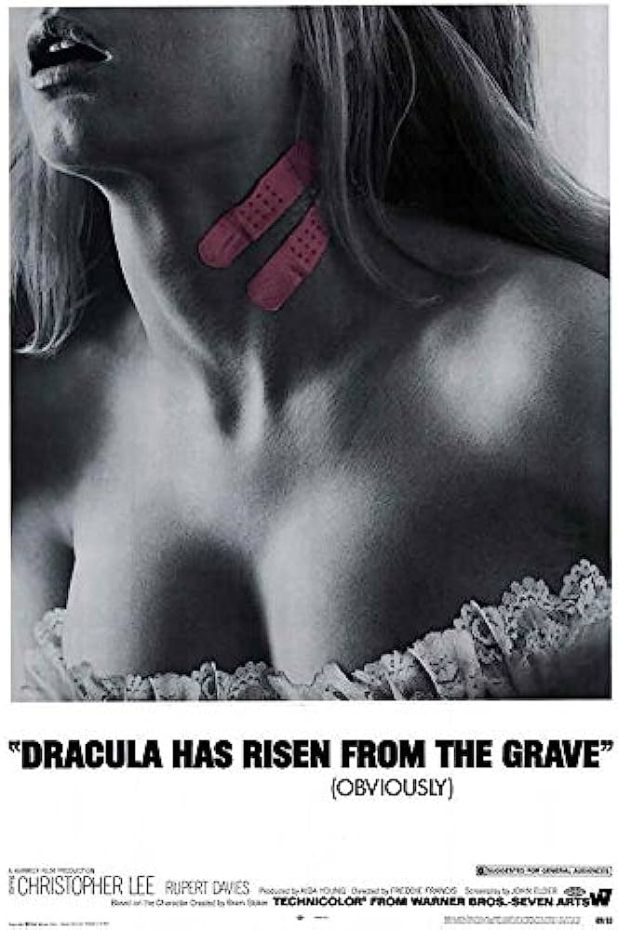
As an old man, I’m struck by how often the film in the movie is sped up, which doesn’t work, while the color effects and rooftop scenes have lost none of their infernal power. Plus, this has one of the best posters I’ve seen, just the throat of a bosom woman with band-aids where Dracula’s teeth have penetrated her.

CHILLER THEATER MONTH: Run. Psycho, Run (1968)

EDITOR’S NOTE: Run,. Psycho, Run was on Chiller Theater on Saturday, March 28, 1970 at 11:30 p.m. It also appeared on June 26, 1971.

Director Brunello Rondi directed Il Demonio, a movie that didn’t do well. He was interviewed by Dario Argento and said that this movie was made with “no intention of making a mystery, or a horror film, or even a suspense yarn, Hitchcock-style. What really interests me is to grasp with a film set in 1912 the origins of today’s disease within the bourgeoisie, and to portray its degeneration with extreme violence. I read very few crime novels in my life. And I must say that I do not even like them very much. In my film there is indeed a crime, and an investigation. But it’s only a pretext, in a story full of hatred set in the last years of the “Belle Époque,” when some kind of false euphoria was decomposing, while one could glimpse the first signs of the impending war, the signs of hatred and the strengthening of class struggle.”

Rondi wrote La Dolce Vita and 8 1/2, so he was an intellectual. Then again, he directed Riot In a Woman’s Prison and Black Emanuelle, White Emanuelle. Therefore, I respect him.

It was called Più tardi, Claire… più tardi (Later, Claire…Later) in Italy but when AIP bought it to show on American TV, it was called Run, Psycho, Run. It’s never been released on home video.

Judge George Dennison (Gary Merrill),  his wife Claire (Elga Andersen) and their son Robert arrive at a Villa in Mount Argentario for the summer. Shortly after a party, Claire and Robert are both murdered.

A year later, Judge Dennison returns to the villa with his new fiancée Ann (also Andersen) and her son. Because Ann looks like Claire, Dennison hopes to use her to solve the mystery of who killed his wife and son.

It’s not a giallo but, as the director told Argento more of a class struggle on film. There’s a lot of talking instead of showing and Dennison doesn’t even show up until half an hour into the film. What a strange movie and yet another film that somehow played Chiller Theater.

CHILLER THEATER MONTH: Murder Mansion (1972)

EDITOR’S NOTE: Murder Mansion was on Chiller Theater on Saturday, February 2, 1980 at 1 a.m. It also aired on July 31, 1982.

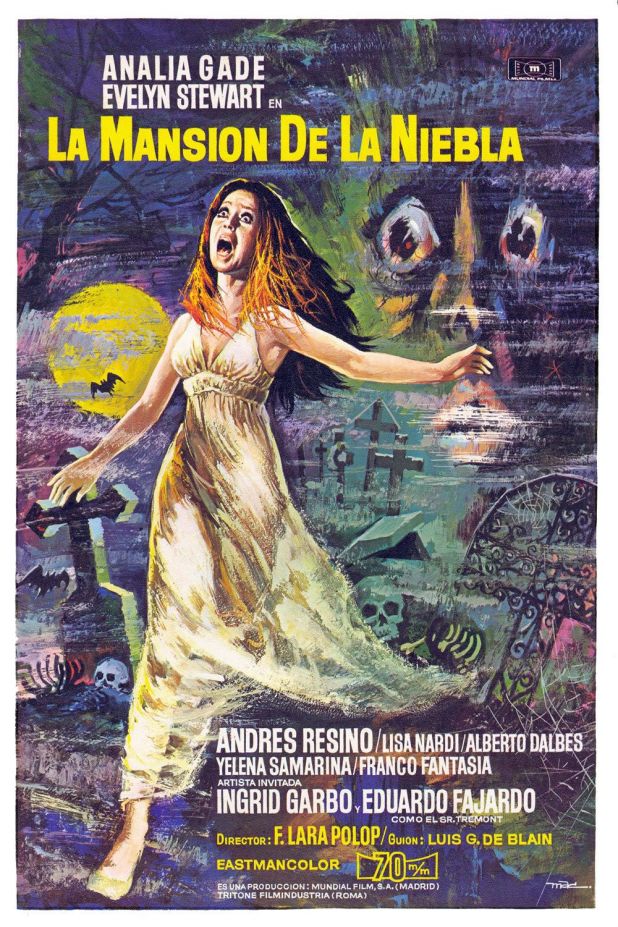
Originally released as La Mansion de la Niebla (The Mansion in the Fog) and also known as Murder Mansion, this Spanish/Italian film fuses old school haunted house horror with the then new school form of the giallo.

The plot concerns a variety of people drawn to a house in the fog, so the original title was pretty much correct. There are plenty of European stars to enjoy, like Ida Galli, who also uses the name Evelyn Stewart and appeared in Fulci’s The Psychic as well as The Sweet Body of Deborah. And hey, there’s Analía Gadé from The Fox with the Velvet Tail. Hello, George Rigaud, from All the Colors of the Dark and The Case of the Bloody Iris! They’re all here in a movie that seems to make little or no sense and then gets even more bonkers as time goes on.

This was one of the 13 titles included in Avco Embassy’s Nightmare Theater package syndicated in 1975 (the others were MartaDeath Smiles on a MurdererNight of the SorcerersFury of the Wolfman, Hatchet for the HoneymoonHorror Rises from the TombDear Dead DelilahDoomwatchBell from HellWitches Mountain, The Mummy’s Revenge and The Witch). How did these movies play on regular TV?

There’s a history of vampires in the house, the previous owner was a witch and hey — this is starting to feel like an adult version of Scooby Doo with better-looking ladies. That’s not a bad thing. But if you’ve never watched a badly dubbed giallo-esque film before, don’t expect any of this to make a lick of sense.