Sesso Perverso, Mondo Violento (1980)

Bruno Mattei. Claudio Fragrasso. This was the sequel to Libidomania, or as the Italians called it, Sesso perverso. This was to be directed by Joe D’Amato and edited by Bruno, but he demanded that if he was forced to work on a mondo — so they say — he had to direct it. I imagine Joe just laughed and nodded, then went off and made ten movies in three days.

This time, the movie explores the world of adult films, but as you’d expect with a mondo, it’s all fake. Fake couples telling fake stories about their fake lives, then women eat ice cream in dirty ways, and the movie spends too much time exploring the deviant practice of homosexuality, which, come on, this is 1980, guys. It’s not even remotely deviant. Does it sell pictures any longer?

Speaking of mondo and fake, the end has reporters saving one of their own, a half-nude woman, from a woman who has already had a meal of her husband, who is now a rotten corpse covered by maggots because look, if we Italians love anything more than sex, violence and fake foreign footage, it’s either real animal violence or maggots. I’d rather have maggots, and then another native is castrated while the once captive reporter does a striptease.

Italian adult star Guia Lauri Filzi (who was uncredited and yet played a very memorable role in Emanuelle In America as the actress in the snuff film) and Maurizio Tanfani (Sex of the Witch, Mattei’s AD on The Other Hell) appear, and if you find the right version—look, 20 people or so have even cared about this on Letterboxd, so probably not—there are inserts.

Segreti di donna 2 (2005)

The Dark Side of a Woman was directed by Pierre Le Blanc, but by now, we all know that this is Bruno Mattei. When the rest of his Italian exploitation brothers were either dead, retired or relegated to making TV movies or pornography, Bruno was still out there. Here, he’s 74 years old and still making the kind of movies he directed throughout his entire career.

Jane Dimao (Yvette Yzon, who is seemingly the 2000s version of Laura Gemser for Mattei, appearing in Island of the Living Dead, Zombies: The Beginning (yes, the sequel is the beginning), The Jail: The Women’s Hell and the first film in this series, Segreti di donna) is back from America, working as a women’s sexual pathology psychologist, continuing the work that she studied with her mentor, American sexologist Nicole Wilson. Did you not see the first movie? Good news. Bruno is not above reusing footage.

Jane wants to experience these sexual pathologies for herself, and I have no idea why Bruno didn’t just call this Black Emanuelle 2005. This means that she goes to a swingers club, has sex in a spa and even makes love in front of others. However, when she tries to be a lady of the night, she’s assaulted because Italians love that in their movies. No, I don’t get it either and I’m Italian.

That said, Yzon always gives her all to these movies, and I love that Bruno was heading over to the Phillipines as an old man, shooting dirty—but not really all that filthy—movies on his digital camera and making movies that are nearly quaint when compared to the unleashed carnal depravity anyone can find on the internet.

Ambrogio: The First Vampire (2025)

ABOUT THE AUTHOR: Exploitation-film historian A.C. Nicholas, who has a sketchy background and hails from parts unknown in Western Pennsylvania, was once a drive-in theater projectionist and disk jockey. In addition to being a writer, editor, podcaster, and voiceover artist, he’s a regular guest co-host on the streaming Drive-In Asylum Double Feature and has been a guest on the Making Tarantino podcast. He also contributes to the Drive-In Asylum fanzine. His essay, “Of Punks and Stains and Student Films: A Tribute to Night Flight, the 80s Late-Night Cult Sensation,” appeared in Drive-In Asylum #26.

Ambrogio: The First Vampire is a microbudget horror film produced, executive produced (dude, you shouldn’t credit yourself as both), written, directed, and starring Alex Javo, a young Georgia filmmaker. The short 74-minute feature is, from its press summary, about “Ambrogio, a millennium-old vampire and the first of his kind, [who] encounters a woman who resembles his long-lost love. He calls upon the gods to shield her from rivals hellbent on revenge.” It’s ambitious, perhaps too ambitious, for its own good and tiny budget. Instead of writing a straight review, I’m going to give the filmmaker some notes. There’s some raw talent on display here, and I’d like to see another—and better—film from Javo soon. 

Now you’re asking yourself, what qualifies me to give notes to a filmmaker? Well, I’ve studied and written about film all my life (over 5,000 movies in my Letterboxd list). I have a huge collection of books on filmmaking. I’ve also been involved as an actor in corporate training films. And I’m a trained voiceover artist, with a supporting role in an animated feature on the way, and audio engineer. With that background out of the way, let’s analyze this film.

The basic concept of the film about an origin vampire or “vampire zero,” mixing traditional vampire lore and Ancient Greek and Roman mythology, is creative, and the attractive leads, Javo and Angelina Buzzelli, have nice screen presences. Javo gives it his all as the star—he’s not a bad actor and effects a decent pigeon Italian accent. Buzzelli, on the other hand, doesn’t get much to do; her part is woefully underwritten. The attempt to give her character a backstory as a battered woman doesn’t amount to much in the scheme of things. But the biggest issue I have with the film is that it’s a collection of scenes stuck together without transitions. Instead of a smooth, natural progression of a cohesive narrative, we get a bunch of scenes, sometimes like little sketches, separated by blackouts and whiteouts. You could take most of the scenes and reedit them in whatever order you wanted because they don’t hang together. This is not an uncommon problem, even for a huge-budget studio film, like the James Bond film, Spectre.

With this scene-drop approach, the film is a scattershot affair of origin story, doomed love story between human and vampire (an overused trope if ever there was one), and revenge-o-matic with Ambrogio, Dracula, and King Hades. I would’ve dumped the bad cosplay origin and boring love stories and focused on a single plotline with the three oddball supernatural characters. And while on the topic of oddball characters, I found Roland, Ambrogio’s loyal familiar/servant, to be the most interesting. He’s written to have a kind of droll, nonchalant presence in contrast to his master’s over-the-top emotionality. But while Zane Pappas tries his hardest to make something of the part, it’s beyond his grasp. The character, the film’s comic relief, needs funnier lines that hit harder.

As for the other supporting players, I admire their sincerity and dedication. But even compared to other microbudget films, the acting here generally ranges from not good to barely adequate. I enjoy seeing the now-familiar folks who pop up in these Texas-Georgia-South Carolina regional films. Caylin Sams, so good in David Axe’s excellent Left One Alive, is underutilized in a small part. One scene, featuring three characters with their accents really made my head hurt. (What type of accent does Niko’a Salas’s Dracula have? Pigeon Italian? Pigeon Italian-Czech? Todd Slaughter hammy?)

Moving on to the film’s technical credits, I applaud everyone for making, completing, and releasing a microbudget film. While we didn’t call them “microbudget” films back in the 1970s, we had them, and the foremost proponent was filmmaker Andy Milligan. Like Javo, Milligan was a one-man band who did just about everything, including sewing the costumes. He attempted ambitious period pieces set in England but which were filmed on Staten Island. And his films, while beloved by the craziest and most jaded of cult cinephiles (like me), always featured horrendous acting, modern light switches in “Victorian” mansions, out-of-focus shots or shots that cut off the tops of the actors’ heads, and screaming, lots of screaming. Ambrogio: The First Vampire is so much better made than that, but technically, it still has issues. 

As previously mentioned, the editing mostly just strings together black-out sketches. The cinematography, while competent, makes the film an overly bright affair, with no atmosphere, giving it the look of a telenovela. It’s also statically shot almost entirely in medium and medium-long shots, making for a tiresome watch: Everything’s too tight. (It’s okay to show actors’ legs and feet.) The film needs color timing to even out the way the shots look from scene-to-scene. In Milligan’s day, that was an expensive lab process, way beyond Milligan’s budget. Today, you can cheaply and easily do it using software.

A documentarian friend of mine once told me that while viewers will forgive a few flaws with video, like lens flares (hell, that’s director J.J. Abrams’s stock-in-trade style), audio mistakes are inexcusable. Unlike a lot of microbudget horror films I’ve seen, the audio here is clear. But in a couple of scenes—one with voiceover narration—the actors literally whistle some of their lines. This is what is known as sibilance, the harsh hissing or whistling sound you get when some people pronounce the letter “S.” (I saw a corporate training film once that had so much annoying sibilance that I had to leave the room; it was like needles in my eardrums.) Milligan would’ve had to rely on expensive hardware filters to remove the sibilance — and he had no money for that. Today, you can use a cheap computer plug-in called a de-esser (get it?) for a cleaner sound. As for the score, it seemed unmemorable to me, but then again, it was lost in the sound mix. That’s another thing that’s easily fixable.

Production design, using found locations, is what it is and is fine. The same with costumes and make-up, not bad at all. The few special effects on display are of the “not good, but I’m okay with it” variety. 

Finally, my overarching note. I can only imagine how much work Javo put into his labor of love: drumming up the production money, writing the screenplay, casting, directing, learning an accent, playing the lead, and otherwise hustling on behalf of his film. That unfortunately spread him thin, often a problem with multi-hyphenate filmmakers. (For example, as fantastic as Ed Norton is, he should have limited himself to acting and found someone else to direct Motherless Brooklyn.) For his next project, I would like to see Javo either direct or act, but not do both.

While that may seem like a lot of notes, with more negatives than positives, I like the folks involved with Ambrogio: The First Vampire, and I hope they take my suggestions to heart with their next film. Thanks to Alex Javo for sending me a copy of the film for this review.
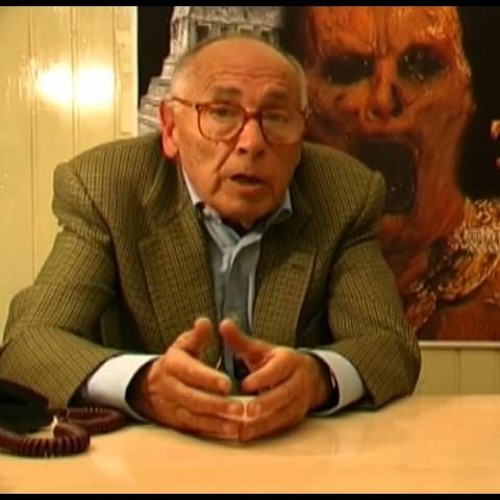

The Forest Through the Trees (2025)

ABOUT THE AUTHOR: Exploitation-film historian A.C. Nicholas, who has a sketchy background and hails from parts unknown in Western Pennsylvania, was once a drive-in theater projectionist and disk jockey. In addition to being a writer, editor, podcaster, voice-over artist, and stand-up comedian, he’s a regular guest co-host on the streaming Drive-In Asylum Double Feature and has been a guest on Making Tarantino: The Podcast. He also contributes to the Drive-In Asylum fanzine and the Horror and Sons website. His most recent essay, “Of Punks and Stains and Student Films: A Tribute to Night Flight, the 80s Late-Night Cult Sensation,” appeared in Drive-In Asylum #26.

I enjoy regional horror films. Indeed, the modern age of horror films was kicked off in 1968 with the release of George Romero’s Night of the Living Dead, which was filmed in Pittsburgh. I’ve been watching a lot of Dixieland microbudget films lately. They often share cast and crew members, and while some are better than others, the biggest thing that they have in common is moxie. Their filmmakers each had a dream of making a film and not only hustled up the money (usually under $100,000), but also finished their films and secured distribution. To that, they have my sincerest congratulations on completing these Herculean tasks. Today, we look at the first film of Arkansas writer/producer/director Jason Pitts, The Forest Through the Trees.

Pitts has fashioned a satanic cult film where a young woman (Annie Sullivan), along with her lover (Alivea Disney) and her stepfather (James Stokes), runs afoul of a demon cult in that forest through the trees. Daughter and stepfather have not been on good terms, especially since the disappearance of the daughter’s mother (Anna Hardwick), who suddenly returned to the cult that controlled her as a young woman. Evincing some larger notes, the film progresses as an existential story of personal sacrifice for each of the main characters, with gory make-up effects and plot twists along the way.

At the screening I attended at the promising new Columbia, South Carolina venue The Babylon Kino, Pitts cited films like Hereditary, Poltergeist II: The Other Side, and Rosemary’s Baby and the TV show Lucifer as influences. While I get those references—particularly the homage to Julian Kane, the creepy preacher with the hat from Poltergeist II—I noticed touches reminding me of Enter the Devil (1972), a regional horror film about a satanic cult in the desert; Ti West’s much-loved 70s throwback film, The House of the Devil (2009); and The Prophecy (1995), with Christopher Walken as the Angel Gabriel on Earth.

Overall, this is an above-average film from a filmmaker whose previous effort was the well-received fan film Vorhees Night of the Beast (2021), where Friday the 13th’s Jason (Stokes) fought Bigfoot (professional wrestler Jacob Southwick). Low budget doesn’t necessarily mean low quality, and Pitts gets strong performances from Stokes, Disney, and Scott Doss, who, with hat, bolo tie, and malevolent cackle, does a grand job channeling the late actor Julian Beck from Poltergeist II. Pitts is a natural with casting and directing actors, and his dialogue generally sounds authentic. 

That said, my biggest issues with the film are pacing and consistency of style. The film runs 107 minutes, which is about 25 minutes too long. (Apart from saving money on shipping film canisters, Roger Corman knew that 82-minute films didn’t usually outstay their welcome.) Now, understandably, a microbudget doesn’t lend itself to big set pieces, and while Pitts does well with his violence and gore, some of which is unsettling, the film is a lot of talk before its neat hellzapoppin’ third act. Doss is so good doing his “we are here for the final sacrifice in three parts” (almost underscoring the padding), but he would have been even more effective with less speechifying.

The film’s technical credits are generally pro throughout—a shout-out to Italian composer Simone Cilio’s effective score—but I wish the film, especially some of the nighttime shots, looked a little more balanced. Though not a hindrance to enjoying it, skin tones, for example, shouldn’t look good in some scenes and like the actors had jaundice in others.

At the end of the day, Jason Pitts and his cast and crew should be proud of what they accomplished for so little money. I wish them well and look forward to their future film projects. 

The Forest Through the Trees from BayView Entertainment, the New Jersey distributor friendly to microbudget filmmakers, will soon be available on streaming services. Support regional filmmaking and check it out. 

SHOCK-A-GO-GO RETURNS!

Shock A Go Go Film Festival – Two Days of Cinematic Insanity!

June 7th & 8th – Be There Or BeWare!

Lumiere Cinema At The Music Hall at 9036 Wilshire Blvd, Beverly Hills, CA 90211

This event will raise funds for the www.altadenacommunityfund.org, who provide critical support for victims of wildfires.

Saturday, June 7 – 3pm ’til Late

Film Line-Up & Guests:

  • 3pm – Hellraiser 2 (dir. Tony Randel & writer Peter Atkins, Composer Chris Young in person)
  • 5:15pm – Piranha (dir. Joe Dante & Belinda Balaski in person)
  • 7:30pm – The Howling (Joe Dante & Belinda Balaski in person)
  • 9:45pm – Return of the Living Dead 3 (dir. Brian Yuzna, writer John Penny, star Dana Lee in person)
  • 11:55pm – Society (dir. Brian Yuzna & stars Ben Russell Meyerson, Evan Richards in person)
  • (Pre-Show Burlesque Performance by Anastasia Elfman)

Sunday, June 8th – Indie Film Showcase

  • Noon – Scream A Little Dream in 3-D (dir. Todd Moore in person)
  • 2:00pm – Let Love In (dir. Ramzi Abed in person)
  • 4:00pm – Short Stack – Indie Short Film Showcase
  • 6pm: Mondo Hollywoodland (dir. Janek Ambros in person)
  • 8:00pm: Dinner With Leatherface (dir. Michael Kallio in person)
  • 10:00pm: Bare Skin (dir. Mico Montes in person)

Each Sunday screening is $15 presale, $20 at the door, day of show. For more info, visit the official site.

Deathpit (2023)

Retired pro-wrestler and MMA veteran Jack “Horsepower” Silver (director, writer and star Greg Burridge, who is also a pro wrestler) has been taken to Deathpit, an underground fighting tournament featuring some of the world’s worst criminals and fighters, like Hammerstone (Bryan Larkin) and Kasparnov (Thomas Dawkins). Horsepower has no idea if what’s happening is happening to him at times, as he’s been hit in the head so many times that his ex-wife once threw in the towel in his last match when he was punched once.

I don’t know Progress Wrestling or the UK indy scene all that well, but I do know that the man playing Kasparov is Cara Noir. A lot of the stuntwork is done by wrestlers, so the fights are the main draw here, and they’re wild, including X-ray moments like a video game. Sure, I may have watched tons of underground fighting movies lately, but this stood out because of its high-energy style and willingness to go insane in its matches.

You can watch this on Tubi.

EFC (2024)

Cassady Jones (Karlee Rose) and Alexa Star (Kathryn Aboya) are about to battle for the Excelsis Fighting Championship title. Still, this fight is about more than just who the better woman is. It may be about the future of women’s MMA. As the women try to prove their fighting ability, Donna (Stephanie Jones), the president of the company, is dealing with corporate battles with shareholder  Frank (Richard Zeppieri) and PR man John (Alex Cruz). No matter who wins the fight, Scarlett (Avaah Blackwell) is waiting to take on the survivor.

The real star is the fight scenes, choreographed by Wayne Wells and Hubert Boorder. Working with director and co-writer Jaze Bordeaux, they elevate a low-budget fight movie. Sure, it’s a somewhat expected story, but when these fights feel like you’re getting grounded and pounded, you’ll forget that and just savor this movie’s gritty look and feel. I was really surprised by how much I enjoyed it!

You can watch this on Tubi.

Tales from the Crypt S7 E7: The Kidnapper (1996)

Daniel (Steve Coogan) comes to the rescue of Teresa (Julia Sawalha), a homeless pregnant woman with whom he soon falls in love. However, when her baby (Alexander Arcay) is born, he begins to resent the child and contemplates how to dispose of the infant. He even considers selling her to child traffickers. When the baby goes missing, he attempts to acquire another one, seemingly believing that a mother wouldn’t be able to recognize her own child.

“What? Are you blind?! That ball was on the line, pal! Oh, hello, kiddies. I was just warming up for the Wimbletomb Tennis Tournament. Normally I love a bit of stiff competition, but this guy is driving me nuts! Still, the match isn’t over yet. We’re playing beast two out of three. Which brings to mind the man in tonight’s tale. He’s about to play a little die-breaker of his own in a sickening hacks-hibition I call “Kidnapper.””

Directed by James H. Spencer (who spent most of his career as a production designer but was the 2nd unit director on Gremlins 2) and Robin Bextor from a script by John Harrison and Scott Nimerfro, this is the worst-rated episode of the show on IMDB.

Daniel steals another baby, and it ends up being Teresa’s child. His heart was in the wrong place, even if he’s dead now.

This story is based on “The Kidnapper” from *Shock SuspenStories* #12. The original synopsis states: “A man’s baby is kidnapped, and when his wife’s mental health deteriorates, he desperately attempts to steal another baby. He is beaten to death by a crowd of onlookers for trying to kidnap… his own son.” This tale was written by Al Feldstein and William Gaines, with illustrations by Reed Crandall.

Champions (1997)

I am a very simple man and Champions — AKA Karate Tiger: The Champions* — is the movie I am looking for. Yes, it’s every underground fighting movie ever — but it has Nikos from the My Big Fat Greek Wedding movies (Louis Mandylor) as William Rockman, the one-time Terminal Combat champion of the world, who quit the sport — it’s UFC — when he killed someone in training. Yes, it’s every underground fight movie you’ve ever rented, but somehow dialed up beyond what it should be.

After Terminal Combat has been outlawed, Max Brito (Danny Trejo, having the best time ever) gathers the champions, like The King (Ken Shamrock) and either takes their wives or kills their brothers, like Rockman’s sibling Ray (Jeff Wolfe), which brings everyone into a tournament to the death that has some wild characters in it, like a Japanese master (Rich Rabago) who doesn’t want to fight a female competitor and then kills her to the silence of everyone watching. Awkward.

There’s a microchip in the head of The King, which Max Brito uses to make him kill! A microchip in the World’s Most Dangerous Man’s head! That’s the only way I can believe that anyone in this can beat him.

Then, this movie doubles down with roles for George “Buck” Flower, Lee Reherman (Hawk from American Gladiators who plays the Jesus-living fighter Steele Manheim), Bobbie Blackford (Sgt. Kimberly Pepatone, who is here to bust the fight ring like Stryker from the Mortal Kombat games), Larry B. Scott (from Revenge of the Nerds), Harrison Young (Senator Able, who has his own prison fighter, Vedder, who is played Cristos, who was in Desperado), Lelagi Togisala (who is Jackal, a trickster who –s poiler — gets stabbed by Vedder), Fabian Carrillo (the Latin Dragon), David Rowe (Mage) and HOLY SHIT Kool Keith playing himself? Dr. Octagon, Dr. Dooom, Black Elvis, Reverand Tom, Mr. Nogatco, Poppa Large, Keith Korg, Rhythm X, Mr. Gerbik, Big Willie Smith, Tashan Dorrsett, Dr. Ultra Crazy…Kool Keith is in this underground MMA movie!?!

Directed by Peter Gathings Bunche and written by George Francisco, Peter McAlevey and Thomas S. McNamara, this is the kind of movie that gives Ken Shamrock a bazooka and has him blow people up real good. If that doesn’t make you feel something good, you’re lost.

You can watch this on Tubi.

* I have to straight up quote Matty from The Schlock Pit — and bow before his knoweldge — who has blown my mind with this: “Champions was released in Germany as the penultimate film in the Karate Tiger franchise: an eleven-strong series of generally unrelated biff-‘em-ups that, a la Italy’s sprawling La Casa horror saga, were retitled and slapped together for marketing purposes. To wit: Karate Tiger = No Retreat, No Surrender (1985); Karate Tiger II = No Retreat, No Surrender II (1987); Der Kickboxer: Karate Tiger 3 = Kickboxer; Karate Tiger IV = Best of the Best (1989); Karate Tiger 5 = The King of the Kickboxers (1990); Karate Tiger 6 = Kickboxer 3: The Art of War(1992); Karate Tiger 7 = To Be the Best (1993); Karate Tiger 8 = Fists of Iron (1995); Karate Tiger 9 = Superfights (1997); Karate Tiger: The Champions = Champions; and American Karate Tiger = Showdown (1993). To further confuse matters, The King of the Kickboxers is also known as Karate Tiger 4 in Hungary; Best of the Best II (1993) is known as the ridiculous sounding Karate Tiger 6: Best of the Best 2 in the Czech Republic and, sometimes, Germany; and Fighting Spirit (1992) is known as Karate Tiger 6 in several European countries.”