WEIRD WEDNESDAY: Boardinghouse (1982)

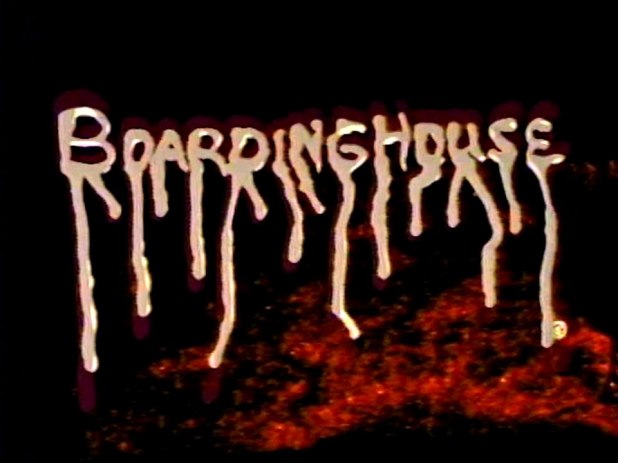
The first horror film in history to be shot on video, Boardinghouse is… well, there really isn’t anything else like it. Somehow, this movie seems at once ten minutes and ten hours long, taking you on a journey into — man, I’ve no idea how we got here or where we’ve been, but we really went somewhere.

Back in 1972, Dr. Hoffman and his wife — who one assumes were doctors of the occult — died in their Mulholland Drive home on the night of their anniversary, committing double suicide in front of their daughter Debbie, who had a nervous breakdown. Everyone who has lived in the house since has died. And now, a decade later, the nephew of the last owner of the home, James Royce, puts out an ad looking for single women — beautiful women with no ties — to move in with him — he plans on you know, studying the occult while they’re there — so Sandy, Suzie, Cindy, Gloria, Pam, Terri and — you know it — Debbie all move in.

To say this movie has a disjointed narrative is like saying that you’re reading this on a website.

James is also trying to get with Victoria, a singer, and shows her how she can use her own latent telekinetic powers. After a dream in which she is dragged to the grave of Dr. Hoffman, she begins to grow jealous of the women of the boardinghouse who are all potentially sleeping with the occult master that she has come to love.

Oh man, before you know it, people are throwing cake at one another, women are clawing their eyes out, Debbie revealing herself as the psychic monster who killed both her parents after sleeping with her father, Jim shows up with less clothes in every scene and the end credits look like they came from a Apple 2E.

Directed by, written and starring John Wintergate, this is the kind of movie that defies description, despite my writing so many words about it already. It has a lead actress with one name — Kalassu. And she’s the wife of Wintergate and their children show up. And then there are monsters, hallucinations and bloody showers. And the cut I watched has a running time of 2 hours and 38 minutes.

This movie was also shot in Horror-Vision, which is a swirl of color and a glove, and it’s supposed to warn you when something scary happens, but nothing like that seems to happen, and man, they blew this up on film and played it in theaters, and Wintergate must have quite the thong collection.

You can watch this on Tubi.

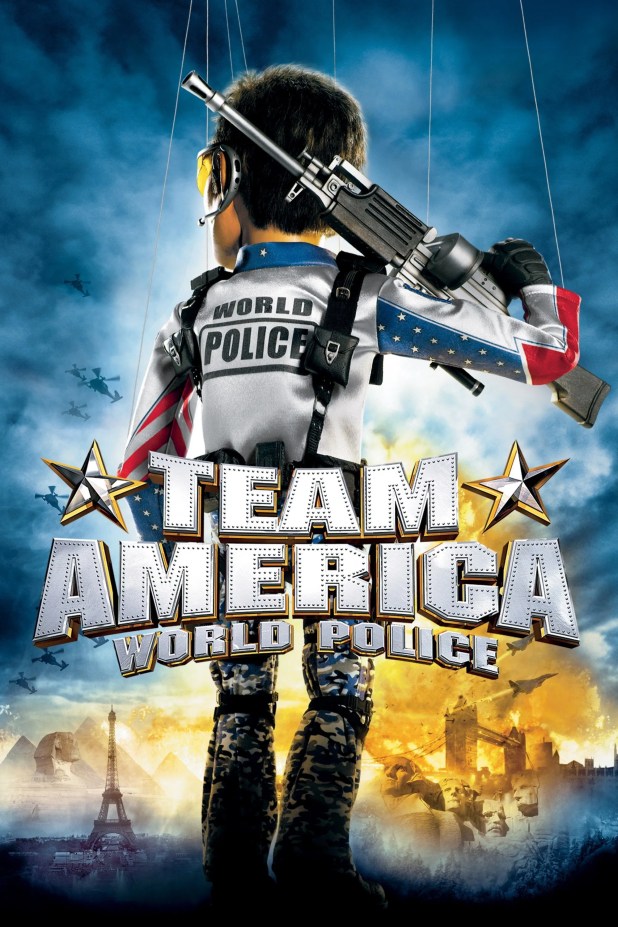
Sizzlin’ Summer of Side-Splitters 2025: Team America: World Police (2004)

June 30- July 6 Puke Week!: Throwing up isn’t very funny, but making your internet friends watch a puke movie is!

I always say the one line — well, many of the lines, but this one line — when Gary Johnston throws up non-stop after he hits rock bottom. Someone yells, “You threw away your life!” and for some reason, it’s the way it’s said — more yelled — that always makes me laugh.

Directed by Trey Parker, who wrote it with Matt Stone and Pam Brady, this takes the creator of South Park into the world of Supermarionation. After watching Thunderbirds, they wondered if an adult movie could be made of it. There was one getting made, which surprised them, and they were even more weirded out that it was live action. There was a rumor that they wanted to make the script from The Day After Tomorrow, got turned down and ended up making this.

This movie took 270 puppets, which were made by the Chiodo Brothers, the same guys we all know and love from Killer Klowns from Outer Space and Critters. Stone would call this time — working with more than thirty marionette operators at a time — as the “worst time of my life” and Parker agreed, saying it was “the hardest thing they’d ever done.”

Team America polices the world. Made up of psychologist Lisa, Carson, the psychic Sarah, Joe and martial artist actor hater Chris, they are led by Spottswoode. After a mission gone wrong costs Carson — Lisa’s fiancee — his life, they have to add a new member, Broadway actor Gary. As they work to defeat Kim Jong Il and his army of terrorists, they are also opposed by Alec Baldwin and the Film Actors Guild.

Sure, that’s a basic description. There’s so much in this movie, like George Clooney being the enemy when he was the man who helped get South Park on the air. A puppet sex scene so intense that it got the movie an NC-17 (Parker said of dealing with the MPAA, “They said it can’t be as many positions, so we cut out a couple of them. We love the golden shower, but I guess they said no to that. But I just love that they have to watch it. Seriously, can you imagine getting a videotape with just a close-up of a puppet asshole, and you have to watch it?”). Celebrities being abused — Sean Penn wrote a letter signed “a sincere fuck you, Sean Penn.” — and murdered. 37 uses of the word fuck. Bill Pope shooting this with anthromorphic lenses. A Michael Moore puppet stuffed with ham and blown up. A cockroach in the body of a dictator. Man, just writing about it makes me want to watch it all over again.

Also: That major puke scene.

WEIRD WEDNESDAY: BMX Bandits (1983)

Pig-masked bank robbers in Australia go up against BMX experts P. J. (Angelo D’Angelo),  Goose (James Lugton) and Judy (Nicole Kidman). Yes, Nicole Kidman in her second movie.

Perhaps even more amazing is that this was directed by Brian Trenchard-Smith, who you may not pick to make a kid movie, but here we are. As they go up against The Boss (Bryan Marshall), Whitey (David Argue) and Mustache (John Ley), the kids use their BMX skills to stay ahead of the bad guys and get them arrested. The cops even build them a BMX track —  not Helltrack — as a thank you.

Kidman hurt her leg doing a stunt in this — jumping into an open grave! — and her stand-in ended up being a guy in a wig. As for me, I love that this was financed by The Rank Organisation, along with that old opening of the muscular guy ringing the gong. They also financed Twins of Evil, the Carry On movies, The Uncanny and so many more movies.

You have to love this in the credits: WARNING: The Stunts in this film were performed by professional stunt riders. For your own safety, PLEASE DO NOT IMITATE.

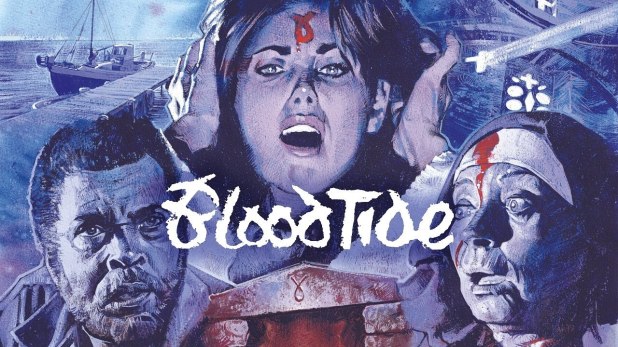
WEIRD WEDNESDAY: Bloodtide (1982)

When you see the names Brian Trenchard-Smith and Nico Mastorakis listed as producers, you know that you’re probably getting into something good. Also known as Demon Island, this film was directed by Richard Jefferies, who is perhaps better known for the films he wrote, such as Scarecrows and Cold Creek Manor. He has directed only one other film, the 2008 TV movie Living Hell.

It’s funny, when I discussed this movie earlier today with Bill from Groovy Doom, he referred to it as “the monster movie with no monster.” That’s an apt description.

It’s also about a treasure hunter named Frye (James Earl Jones) whose underwater scavenging brings back an ancient sea monster that demands virgin blood.

Meanwhile, Neil and Sherry (Martin Kove and Mary Louise Weller, who appeared in Q The Winged Serpent the same year as this movie) have come to the island looking for his missing sister Madeline (Deborah Shelton, who also sings the song over the end credits with her then-husband Shuki Levy). Plus, Lydia Cornell stops hanging out with Cosmic Cow on Too Close for Comfort and shows up as Jones’ girlfriend.

Inexplicably, Lila Kedrova from Zorba the Greek and Jose Farrar — well, he’s less of a surprise as Jose may have been the first actor to win the National Medal of Arts, but he’s also in spectacular junk like The SentinelBloody Birthday and The Being — both appear.

Arrow’s write-up promised “blood, nudity and beachside aerobics.” This delivered, as well as some great dream sequences and moments where beachfront rituals seem to go on forever. That said, I had a blast with this movie, as any film that features Martin Kove skipping around the waves, showcasing a miniature engine, while the ladies go wild, and James Earl Jones is involved, will hold my attention.

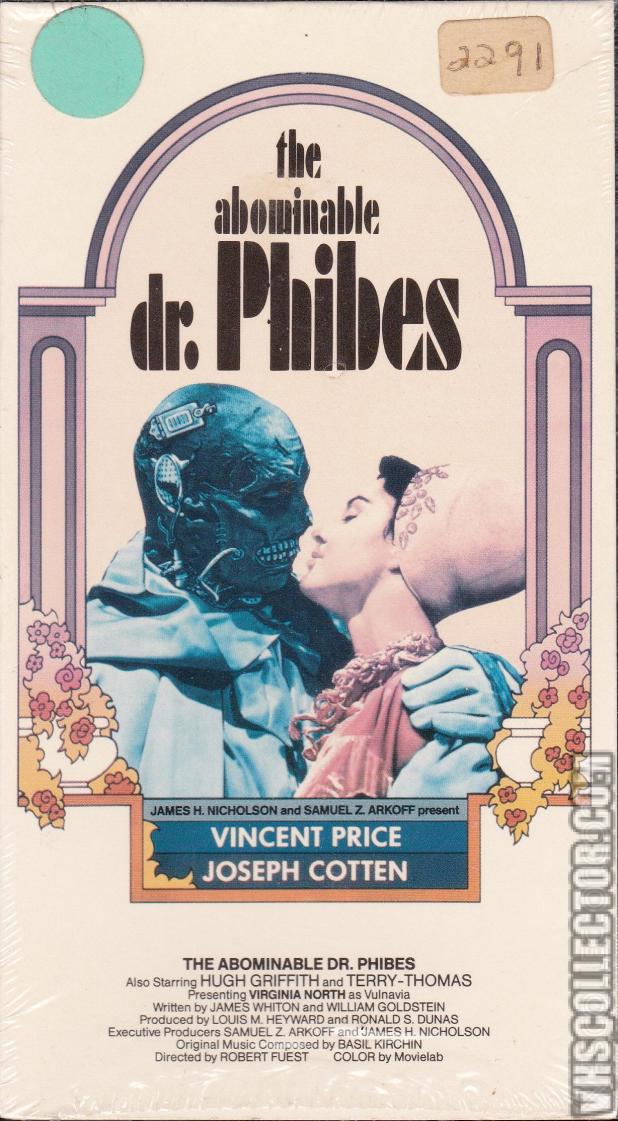
CBS LATE MOVIE: The Abominable Dr. Phibes (1971)

EDITOR’S NOTE: The Abominable Dr. Phibes was on the CBS Late Movie on February 22, 1974 and December 30, 1975.

Church of Satan founder Anton Szandor LaVey claimed that the main character in this Vincent Price film was based on him. Well, his name is Dr. Anton Phibes and he’s an organist, researcher, medical doctor, biblical scholar and ex-vaudevillian who has created a clockwork band of robot musicians to play old standards at his whim. Seeing as how nearly all of these things match up with LaVey, I can kind of see his point.

Director Robert Fuest started by designing sets. While working on the TV show The Avengers, he got excited about directing and ended up working on seven episodes of the original series and two of The New Avengers. Soon, he’d be working in film more and more, starting with 1967’s Just Like a Woman. Between the two Phibes films, And Soon the Darkness, The Final Programme and The Devil’s Rain!, he became known for dark-humored fantasy and inventive sets, several of which he designed himself.

This movie is one I can’t be quiet about. It’s one of the strangest and most delightful films I’ve ever seen.

Dr. Anton Phibes died in Switzerland, racing back home upon hearing the news that his beloved bridge Victoria (an uncredited Caroline Munro) had died during surgery. The truth is that Phibes has survived, scarred beyond belief and unable to speak, but alive. He uses all of the skills that he’s mastered to rebuild his face and approximate a human voice. Also, he may or may not be insane.

Phibes believes that the doctors who operated on his wife were incompetent and, therefore, must pay for their insolence. So he does what anyone else would do: visit the Biblical ten plagues of Egypt on every single one of them.

Phibes is, of course, played by Vincent Price. No one else could handle this role. Or this movie. There’s hardly any dialogue for the first ten minutes of the movie. Instead, there are long musical numbers of Phibes and his clockwork band playing old standards. In fact, Phibes doesn’t speak for the first 32 minutes of the movie. Anyone who asks questions like “Why?” and says things like “This movie makes no sense” will be dealt with accordingly.

After the first few murders, Inspector Trout gets on the case. He becomes Phibes’ main antagonist for this and the following film, trying to prove that all of these murders — the doctors and nurse who had been on the team of Dr. Vesalius (Joseph Cotten!) — are connected. Phibes then stays one step ahead of the police, murdering everyone with bees, snow, a unicorn statue, locusts and rats, sometimes even right next to where the cops have staked him out.

Dr. Phibes is assisted by the lovely Vulnavia. We’re never informed that she’s a robot, but in my opinion, she totally is. Both she and the doctor are the most fashion-forward of all revenge killers I’ve seen outside of Meiko Kaji and Christina Lindberg.

Writer William Goldstein wrote Vulnavia as another clockwork robot with a wind-up key in her neck. Fuest thought that Phibes demanded a more mobile assistant, so he made her human, yet one with a blank face and mechanical body movements. I still like to think that she’s a machine, particularly because she returns in the next film after her demise here. Also, Fuest rewrote nearly the entire script.

After killing off everyone else — sorry Terry-Thomas! — Phibes kidnaps Dr. Vesalius’ son and implants a key inside his heart that will unlock the boy. However, if the doctor doesn’t finish the surgery on his son in six minutes — the same amount of time he had spent trying to save Phibes’ wife — acid will rain down and kill both he and his boy.

Against all odds, Vesalius is successful. Vulnavia, in the middle of destroying Phibes’ clockwork orchestra, is sprayed by the acid and killed while the doctor himself replaces his blood with a special fluid and lies down to eternal sleep with his wife, happy that he has had his revenge.

If you’re interested, the ten plagues Phibes unleashes are:

1. Blood: He drains all of Dr. Longstreet’s blood

2. Frogs: He uses a mechanical frog mask to kill Dr. Hargreaves at a costume party

3. Bats: A more cinematic plague than lice from the Biblical plagues, Phibes uses these airborne rodents to kill Dr. Dunwoody

4. Rats: Again, better than flies, rats overwhelm Dr. Kitaj and cause his plane to crash

5. Pestilence: This one is a leap, but the unicorn head that kills Dr. Whitcombe qualifies

6: Boils: Professor Thornton is stung to death by bees

7. Hail: Dr. Hedgepath is frozen by an ice machine

8. Locusts: The nurse is devoured by them thanks to an ingenious trap

9. Darkness: Phibes joins his wife in eternal rest during a solar eclipse

10. Death of the firstborn: Phibes kidnaps the son of Dr. Vesalius

I love that this movie appears lost in time. While set in the 1920s, many of the songs weren’t released until the 1940s. Also, despite the era the film is set in, Phibes has working robots and high technology.

There’s nothing quite like this movie. I encourage you to take the rest of the day off and savor it.

How does Phibes live up to being a Satanic film? In my opinion, Phibes embodies one of the nine Satanic statements to its utmost: Satan represents vengeance instead of turning the other cheek. The men and woman whose negligence led to the loss of Phibes’ wife were never punished. Phibes had to become their judge, jury and yes, destroyer.

On the other hand — or hoof, as it were — Phibes is the exact antithesis of the ninth Satanic sin, Lack of Aesthetics, which states that “an eye for beauty, for balance, is an essential Satanic tool and must be applied for greatest magical effectiveness. It’s not what’s supposed to be pleasing—it’s what is. Aesthetics is a personal thing, reflective of one’s own nature, but there are universally pleasing and harmonious configurations that should not be denied.” So much of what makes this film is that Phibes’ musical art is just as essential as his demented nature and abilities. Music is the core of his soul, not just revenge.

Another point of view comes from Draconis Blackthorne of the Sinister Screen: “This is an aesthetically-beauteous film, replete with Satanic architecture as well as ideology. Those who know will recognize these subtle and sometimes rather blatant displays. Obviously, to those familiar with the life of our founder, there are several parallels between Dr. Anton Phibes’s character and that of Dr. Anton LaVey – they even share the same first name and certain propensities.”
CBS LATE MOVIE: Last Resort (1986)

EDITOR’S NOTE: Last Resort was on the CBS Late Movie on December 29, 1988.

Zane Busby started her career as an editor for Jodorowsky’s The Holy Mountain and acted in Up In Smoke before directing this movie for Julie Corman. This is one of those movies that has a surprising cast, beyond Charles Grodin in the lead (also in King Kong ’76, So I Married an Axe Murderer, and Axe Murderer). There’s Megan Mullaly (TV’s Will and Grace), Gerrit Graham (Phantom of the Paradise), Jon Lovitz (Almost Sharkproof), Phil Hartman (Cheech and Chongs Next Movie) and Mario Van Peebles (A Clear Shot) all making appearances.

George Lollar (Grodin) takes his family on vacation to Club Sand, where everyone else is having sex while he has his kids in tow. There’s also a revolution happening, a staff that could care less about hospitality, and Charles couldn’t be more like Charles Grodin.

It’s also the only woke movie I’ve seen in these 80s comedies, where the other f-word gets someone in trouble. About time — I knew things were intolerant back then, but it’s nice to see that some people were also willing to tell people to back off.

Man, not to pile on the Grodin downers, but this movie is the kind of film that posits the question, “Can Charles Grodin be the Chevy Chase that people love or the Chevy Chase that people hate?” Remember that Casio keyboard that Chevy would randomly play on his abortive talk show? I’m shocked Grodin wasn’t lugging it around. There’s your answer.

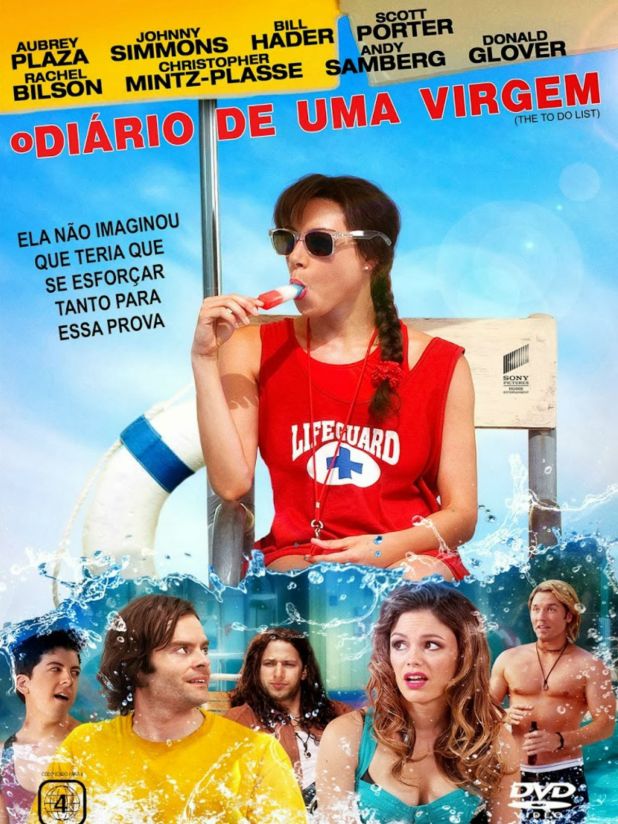
Sizzlin’ Summer of Side-Splitters 2025: The To Do List (2013)

June 30- July 6 Puke Week!: Throwing up isn’t very funny, but making your internet friends watch a puke movie is!

Brandy Klark (Aubrey Plaza) is the valedictorian of her class but everyone knows she’s a virgin. Someone yells it out during her commencement speech. Her friends Wendy (Sarah Steele) and Fiona (Alia Shawkat) take her to a party where she meets and falls for college boy Rusty Waters (Scott Porter), even though her friend Cameron Mitchell (Johnny Simmons) has been in love with her for years. She almost sleeps with Rusty by accident and he leaves, which she attributes to the fact that she’s a virgin. As she usually makes lists, she makes one of all the sexual things that she wants to do to prepare to give her virginity to Rusty.

Brandy is nothing like her sister Amber (Richard Bilson) or mother Jean (Connie Britton). Instead, she’s continually correcting people on grammar. What follows is — point to the sign — a hijinks ensue movie, one where Brandy awkwardly learns how to have sex, making out with Cameron, Duffy (Christopher Mintz-Plasse) and Derrick (Donald Glover), all before she has awkward sex with Rusty which, you guessed it, isn’t that great. And her parents are in the car next door at the very same makeout point.

Director and writer Maggie Carey was married to Bill Hader, who plays the lifeguard manager in this. She’s also directed episodes of Brooklyn Nine-NineA.P. BioBarryThe Last Man on Earth and plenty more. She based a lot of the areas in this movie on her real hometown of Boise, Idaho, including the pool and Big Bun.

I love that Andy Samberg shows up in this as a rock star, plus Adam Pally, Laura Lapkus and Jack McBrayer have fun cameos.

As for the puking, well, it’s bright green alcohol tossed up the next day. My wife and her best friend did that once with one of those alcohols that has glitter in it, Hypnotiq. The toilet bowl was shining.

Anyways, this is way sweeter than you’d expect for a movie that ends with a father walking in on anal sex, the one position that makes his daughter finally orgasm.

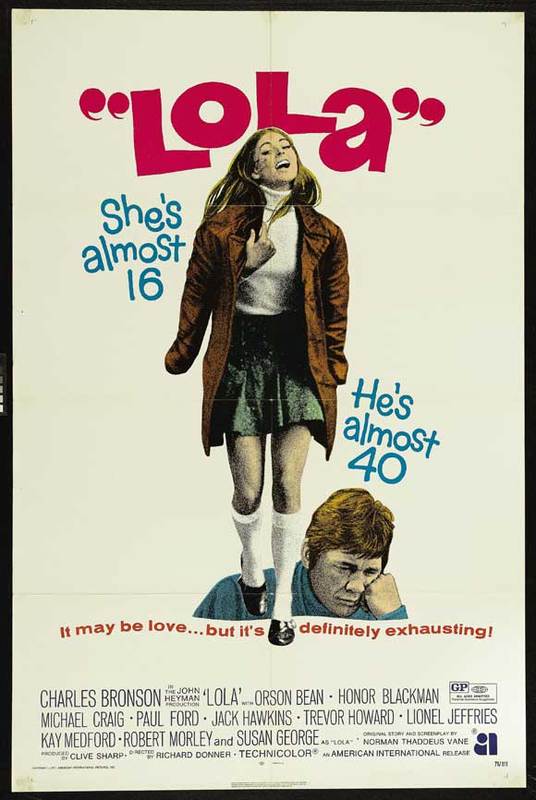
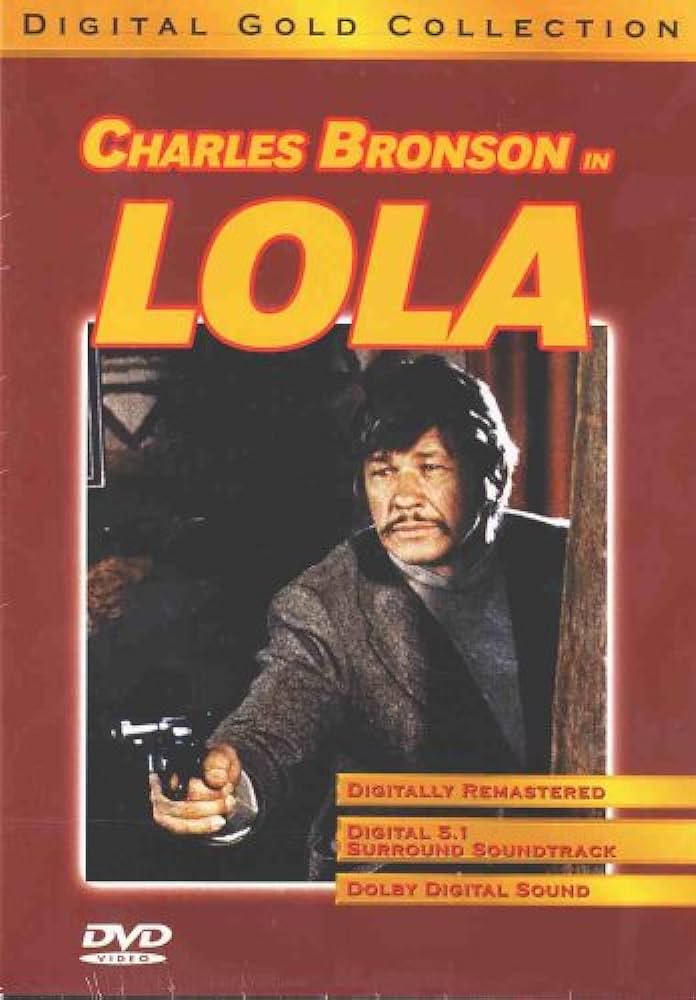
CBS LATE MOVIE: Lola (1970)

EDITOR’S NOTE: Lola was on the CBS Late Movie on December 13, 1972 and August 9, 1973.

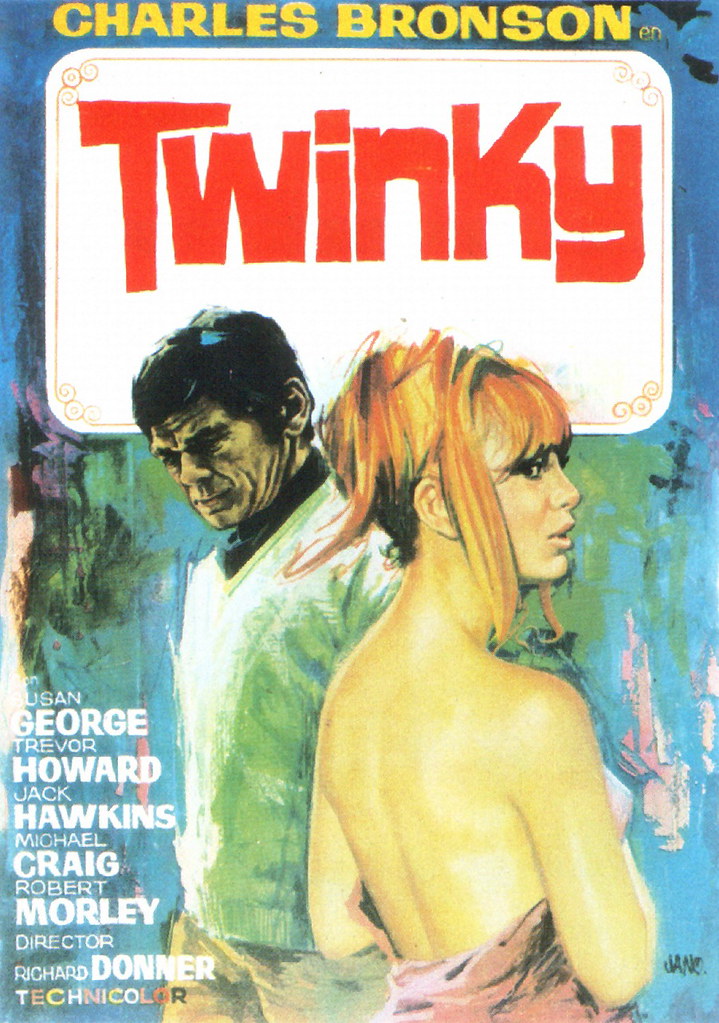
Also released as Twinky and London AffairLola has the kind of story that only a movie made in 1970 could have.

Scott Wardman (Charles Bronson) falls in love — or something — with Sybil Londonderry (Susan George), who also goes by Twinky and Lola. The problem is that he’s 38 and she’s 16. He seemingly knows the age of consent and any guy that can instantly tell you that is a creep.

Then Scott gets busted for being married to a child and forced to leave England. He says, “I make one uncool move with a nutty 16-year-old kid, and suddenly my whole world is turned upside down.” Now this pornographic author has to go back to the United States.

If you think this couldn’t happen, well…

Norman Thaddeus Vane wrote this, and it’s based on his own marriage to 16-year-old model Sarah Caldwell, whom he married when he was also 38. In an interview with the astounding Hidden Films, the writer — and later director — would claim, “There was a reason I wound up marrying Sarah Caldwell (who was 16 at the time and later cast in Mrs. Brown, You’ve Got a Lovely Daughter which Vane scripted; Vane later based the script for Lola on this scandalous marriage). I was a good-looking kid on King’s Road in Chelsea. I had a sports car, I had money, and I had a beautiful flat.”

Vane also pretty much explains the plot of this film in that interview: “I met her at a party. She was stunningly beautiful. I had a small flat on King’s Road in Chelsea, and she used to come over secretly on the way back from school, and we used to fuck. And she told her parents that she was seeing me — I was probably about 38 or something—and they were angry. Her father was head of the East India Trading Company. The only way we could see each other was if we got married, and in Scotland, you could get married at 16. So we eloped there. I had been sleeping with a Scottish girl from Glasgow. You had to spend three days in residence in Scotland before you got married, so I asked her if we could use her family’s address, and she said yes. Sarah called her parents and said, “I’m very sorry to tell you this, but I got married today!” The newspapers wrote columns about her; it was like a front-page story for months afterwards. They called me “The Cad of the Year.”

This entire interview is wild and I urge you to read it, as he claims that director Richard Donner immediately slept with Susan George, that the movie was financed by an Italian baron and Bronson superfan who later committed suicide over Britt Ekland, that Bronson’s wife Jill Ireland wanted to play the teenage girl and that Bronson couldn’t be controlled by Donner and he ruined the movie.

Lola is fascinating because why would Scott and Lola ever get together — well, sex — or stay together? There’s nothing that suggests that they have a single thing in common other than her schoolgirl crush on him, and well, yeah, she’s Susan George in 1970, I get that. Yet Bronson comes off as, well, Charles Bronson, a man who speaks little and is quick to violence. Maybe that’s how I see him, as I’ve watched so many of his action movies, but when you visit the posters and VHS covers for this, you’ll know that I wasn’t the only one who saw Bronson just as a force of violent nature.

Lola ends up getting an apartment for the couple while Scott is in jail over a misunderstanding, then she doesn’t realize that he has a job as a writer and needs to be left alone while he’s working. As a jerk of a writer myself, I get it. She also acts like a kid because she is one. Finally, after running away and coming back, she goes back to England for good.

This is not the last movie that Vane would make that references his life. The Black Room is about how he cheated on his wife in his own black room with Penthouse centerfolds that he met while working at that publication. It remains to be discovered if any of those women were vampires. Vane also made the absolutely baffling Club Life, a movie that I want everyone to watch.

I wonder if Susan George met with her agent and said, “Can I do something not so scuzzy for my next movie, like sleep with a guy twice my age?” And the agent said, “Susa,n baby, have I got a movie for you. It’s classy. It’s called Straw Dogs.”

You can watch this on Tubi.

JUNESPLOITATION 2025 RECAP

I’m always so sad when this month ends. I will try to remember what we had and not what we are losing. Here’s this year’s films:

June 1 – Italian Crime: Almost Human
June 2 – Zombies: Devil’s Kiss
June 3 – David Carradine: Circle of Iron
June 4 – Blaxploitation: Sugar Hill
June 5 – Magic: Fantaghiro
June 6 – Giallo: The Nosy One
June 7 – Kung Fu: Thrilling Bloody Sword
June 8 – Heists: The Doberman Gang
June 9 – Free Space: The Girl From Starship Venus
June 10 – Jess Franco: Girl with the Red Lips
June 11 – ‘90s Action: One Man’s Justice
June 12 – Cartoons: Battle Royale High School
June 13 – Friday the 13th:
June 15 – Revenge: Woman Revenger
June 16 – ‘80s Comedy: Up the Academy
June 17 – Fulci: The Jukebox Kids
June 18 – Rock and Roll: Turbulence 3
June 19 – Free Space: Hammerhead Jones
June 20 – Exploitation Auteurs: Pandora Peaks
June 21 – Westerns: Rita of the West
June 22 – Teenagers: The Cheerleaders
June 23 – New World Pictures: Knights of the City
June 24 – Hong Kong Action: Visa to Hell
June 25 – Wings Hauser Tribute: L.A. Bounty
June 26 – Eurosploitation: Crime Busters
June 27 – Free Space: Jacaranda Joe
June 28 – Cannon: Trunk to Cairo
June 29 – ‘80s Action: Double Edge
June 30 – Italian Horror: The Torturer

Here’s the Letterboxd list.

To see the 2021 recap, click here.

To see the 2022 recap, click here.

To see the 2023 recap, click here.

To see the 2024 recap, click here.

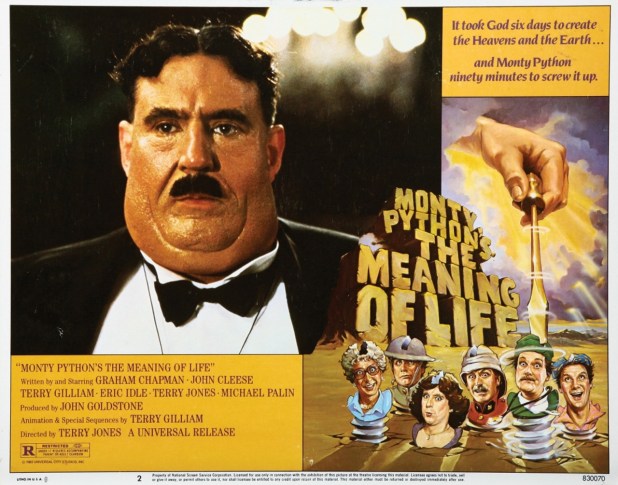
Sizzlin’ Summer of Side-Splitters 2025: Monty Python’s The Meaning of Life (1983)

June 30- July 6 Puke Week!: Throwing up isn’t very funny, but making your internet friends watch a puke movie is!

The Meaning of Life was the last feature film to star all six Python members before the death of Graham Chapman in 1989 and it’s pretty perfect because it has no interest in a story to connect anything. It’s just life, from the miracle of birth to a Catholic man reminding you that “Every Sperm Is Sacred” in a song that I quote from often, including most of this speech that follows it:

Harry Blackitt: That’s what being a Protestant’s all about. That’s why it’s the church for me. That’s why it’s the church for anyone who respects the individual and the individual’s right to decide for him or herself. When Martin Luther nailed his protest up to the church door in fifteen-seventeen, he may not have realised the full significance of what he was doing, but four hundred years later, thanks to him, my dear, I can wear whatever I want on my John Thomas. And Protestantism doesn’t stop at the simple condom. Oh, no. I can wear French Ticklers if I want.

Mrs. Blackitt: You what?

Harry Blackitt: French Ticklers. Black Mambos. Crocodile Ribs. Sheaths that are designed not only to protect, but also to enhance the stimulation of sexual congress.

Mrs. Blackitt: Have you got one?

Harry Blackitt: Have I got one? Uh, well, no, but I can go down the road any time I want and walk into Harry’s and hold my head up high and say in a loud, steady voice, “Harry, I want you to sell me a condom. In fact, today, I think I’ll have a French Tickler, for I am a Protestant.”

Mrs. Blackitt: Well, why don’t you?

Harry Blackitt: But they – Well, they cannot, ’cause their church never made the great leap out of the Middle Ages and the domination of alien Episcopal supremacy.

School, war, finding an elusive fish, live organ surgery, man’s place in the galaxy — “The universe itself keeps on expanding and expanding In all of the directions it can whizz As fast as it can go, at the speed of light, you know Twelve million miles a minute, and that’s the fastest speed there is So remember, when you’re feeling very small and insecure How amazingly unlikely is your birth And pray that there’s intelligent life somewhere up in space ‘Cause there’s buggerall down here on Earth!” — Christmas in Heaven, The Crimson Permanent Assurance, choosing how you wish to die and, of course, Mr. Creosote.

This sketch was filmed at Porchester Hall in Queensway, where hundreds of pounds of fake vomit had to be cleaned due to a wedding being scheduled hours later. There’s so much puke and it’s beyond gross — ribs sticking out of an exploded man — starting with this order:

Maitre d’: Would monsieur care for an apéritif, or would he prefer to order straight away? Today we have, uh, for appetizers: Excuse me. Mhmm. Uh, moules marinières, pâté de foie gras, beluga caviar, eggs Benedictine, tart de poireaux– that’s leek tart,– frogs’ legs amandine, or oeufs de caille Richard Shepherd– c’est à dire, little quails’ eggs on a bed of puréed mushroom. It’s very delicate. Very subtle.

Mr. Creosote: I’ll have the lot.

After all of this death and destruction and, well, puke, Maria arrives to clean up the dead body and again, all the puke. She reveals to us the meaning of life: “I used to work in the Académie Française, but it didn’t do me any good at all. And I once worked in the library in the Prado in Madrid but it didn’t teach me nothing I recall. And the Library of Congress, you would have thought, would hold some key, but it didn’t, and neither did the Bodleian Library. At the British Museum, I hoped to find a clue. I worked there from nine till six, read every volume through, but it didn’t teach me nothing about life’s mystery. I just kept getting older, and it got more difficult to see. Till eventually my eyes went, and my arthritis got bad. So now I’m cleaning up in here, but I can’t really be sad. You see, I feel that life’s a game. You sometimes win or lose, and though I may be down right now, at least I don’t work for Jews.”

I grew up obsessed with Monty Python in a non-Internet time when you never knew when you would get the chance to watch it again. I love that this won the Grand Prix at the 1983 Cannes Film Festival, which suggests that even though this movie is ridiculous, it still has something to say through all the death and vomit.

It all ends with this: “The Producers would like to thank all the fish who have taken part in this film. We hope that other fish will follow the example of those who have participated, so that, in future, fish all over the world will live together in harmony and understanding, and put aside their petty differences, cease pursuing and eating each other and live for a brighter, better future for all fish, and those who love them.”