25 DAYS OF CHRISTMAS CHALLENGE: The 12 Disasters of Christmas (2012)

Not only is this a holiday movie, it’s a Mayan calendar movie. Yes, in the moments before Jacey’s (Magda Apanowicz) grandmother is killed by a gigantic icicle, she gives her a mystical ring and tells her that she’s the chosen one who will stop the end of the world on December 21, 2012.

Before you laugh at that, let me tell you this: Jacey was born right on Christmas in a town named Calvary, her parents are named Joseph (Ed Quinn) and Mary (Holly Elissa) and the song “The 12 Days of Christmas” isn’t just annoying, it explains each of the different disasters about to befall the human race. It was also written by the Mayans!

Directed by Steven R. Monroe — yes, the same guy who made the remake of I Spit On Your Grave — and written by Sydney Roper (Independence Daysaster, End of the World) and Rudy Thauberger (Snowmageddon), this is like The Dome plus The Mist plus every SyFy armageddon movie you’ve ever seen, plus a magic ring and special effects that include shaking the camera to make it seem like there’s an explosion.

Christmas lights come to life, birds unlife themselves, a mist freeze and kills people and only five golden rings can save everyone. There’s also a geomantic Mayan compass that everyone has to use to make their way to find them. There are also super religious people who want to sacrifice Jacey to save the world but she ends up figuring it all out.

You can watch this on Tubi.

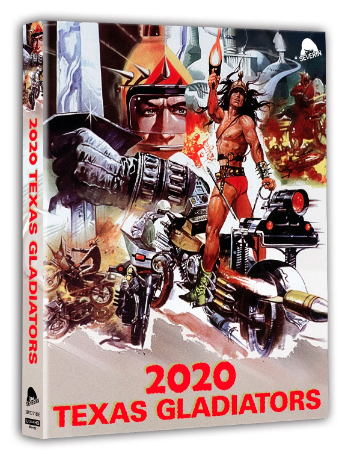
SEVERIN 4K UHD RELEASE: 2020 Texas Gladiators (1982)

Severin is releasing this to retail on November 26, 2024. Until now, it has only been available on their site.

The most elusive, requested and unapologetically unhinged Penne Post-Apocalypse epic of all is finally available, uncut and uncensored on disc for the first time ever from Severin. Directed by Joe D’Amato, written by George Eastman and assistant directed by Michele Soavi, this stars Al Cliver, Peter Hooten, Sabrina Siani, Geretta Geretta and Donald O’Brien in an all-star — in my world — end of teh world bit of insanity.

It’s scanned in 4K from the original negative with new and archival special features, including interviews with D’Amato, Soavi, Eastman, Cliver and Geretta; a trailer and the soundtrack by Carlo Maria Cordio.

You can get it from Severin.

A film with many AKAs — Anno 2020: I Gladiatori del Futuro (Year 2020 Gladiators of the Future), Futoro, 2020: The Rangers of Texas, 2020: Freedom Fighters and Sudden Death — the film we’re going to call 2020 Texas Gladiators starts with a long battle after the end of the world, bringing you in before there’s even any story. Who even cares if there’s a story? People are getting killed left and right!

Also: Smarter people than me would call that in media res. I just call it in the middle of stuff.

We have five heroes here and they are Nisus (Al Cliver, EndgameWarriors of the Year 2072), Catch Dog (Daniel Stephen, War Bus which is a totally different movie than War Bus Commando)Jab (Harrison Mueller, She), Red Wolfe (Hal Yamanouchi, Rat Eater King from 2019: After the Fall of New York) and Halakron (Peter Hooten, the original Dr. Strange and the man who said, “I got molested in the little boys room.”).

They have to save a monastery, but they just sit and watch as more people get attacked, like a priest who gets crucified and a nun gets so upset over everything that she grabs a piece of glass to slice her own throat What are they waiting for? Are they just going to watch everyone die?

Then, to make them look like they care even less — or are less inept — Catch Dog tries to rape one of the survivors! You guys are the heroes? Well, at least they kick him out after that. And that unfortunate woman is Maida (Sabrina Siani, Oncron from Conquest!), who hooks up with Nisus. Years later, they’re all settled down, the rest of the guys have gone their own way and Catch Dog has started an evil gang. Just like your friends from college or those high school people from Facebook who have the back the blue flag as their icon. Except that Catch Dog hasn’t forgotten anything.

His gang attacks the town where Nisus lives with his family. Surprisingly, they fight back the invaders, but then a vaguely Nazi army attacks and defeats our hero, shooting him across the forehead. Then the army kills and rapes everyone and everything, taking the town apart.

The leader of this army, Black One (Donald O’Brien, Dr. Butcher M.D. himself!) tells everyone that he’s in charge. They then take Nisus and force him to watch his wife get raped. This movie has more violent sex than — oh, Joe D’Amato and George Eastman directed it? Yeah. It figures. Never mind.

In one of my go-to reference guides to Italian exploitation, Spaghetti Nightmares, D’Amato says that Eastman “didn’t feel confident enough in the action scenes and so I dealt with those, leaving him to the direction of the actors. But in this case, the name recorded at the Ministry (director’s credit) was mine.”

Later in that book, Eastman pretty much makes anyone who likes these movies feel bad about their choices: “These (post-atomic) films, which were made in the wake of the various Mad Max movies, were decidedly crummy. The set designs were poor….and the genre met a swift and well-deserved death. I only wrote these awful movies for financial reasons….no attempt at originality was made at all.”

So what happens with our hero? He attacks one of the guys and gets shot a hundred times and dies. Is that the end of the movie? Nope. Instead, his old friends Halakron and Jab find Maida, who has been sold to a gambler, and Halakron wins her in a game of Russian Roulette. They all get busted for a bar fight, where they get tortured in salt mines. Luckily, Red Wolfe comes to save them.

Catch Dog’s gang attacks, but our heroes fake their deaths. They also meet up with a gang of Native Americans. Jab has to defeat one of them in battle to get them to join with our heroes. Of course, he wins. He’s Jab, bro.

Maida gets to kill Catch Dog, but Jab doesn’t make it. He dies in his friend’s arms because this is an Italian movie and even the heroes can die. Luckily, Halakron gets to kill Black One with a hatchet. So there’s that.

Halkron, Red Wolfe and the Native Americans win the day, save everyone and then ride off into the sunset, because post-apocalyptic Italian movies are just spaghetti westerns with shoulder pads. Italy is Texas. Texas is Italy. Even the end of the world is never the end.

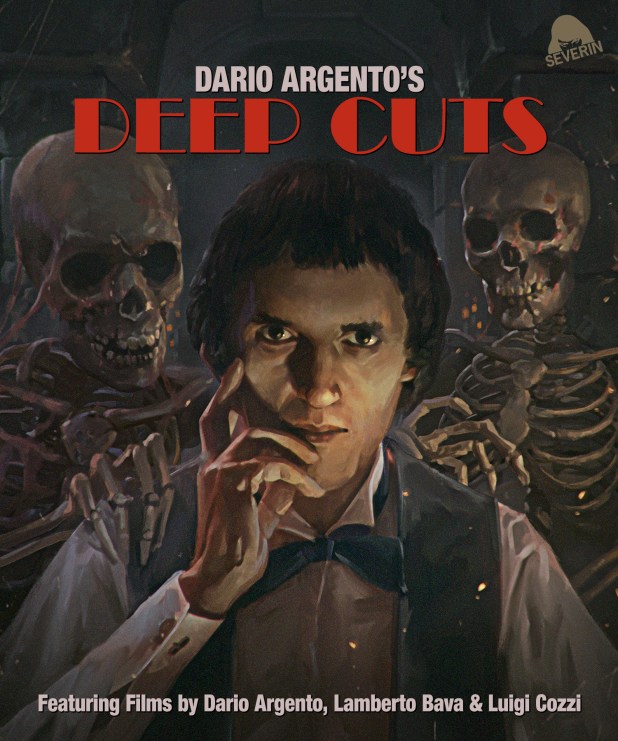
SEVERIN BLU RAY RELEASE: Dario Argento’s Deep Cuts (1973, 1987)

Severin is releasing this to retail on November 26, 2024. Until now, it has only been available on their site.

At the peak of his cinematic triumphs, horror legend Dario Argento created projects for RAI TV that broadcast his singular vision of terror into millions of Italian homes: Door Into Darkness was the top-rated 1973 anthology series produced and hosted by Argento. This set has three of the four episodes sourced for the first time from the original 16mm negatives. Argento’s popular 1987 variety/talk show Giallo has stories directed by Argento, Luigi Cozzi and Lamberto Bava, as well as behind-the-scenes tours from Tenebrae, Phenomena and Opera, and guests that include Anthony Perkins, David Gilmour, Nick Mason, and Fiore Argento newly digitized from broadcast masters.

This Severin set also has over 8 hours of new and archival special features, including commentary by Nathaniel Thompson and Troy Howarth, Dario Argento: My CinemaDario Argento: Master of Horror and interviews with Argento, Cozzi, Bava, Dardano Sacchetti and Antonella Vitale. 

You can order this from Severin.

Here’s an overview of what you’ll find:

In 1973, Dario Argento was invited to RAI television and delivered Door Into Darkness, a show that he would host and even guide some of the episodes. Argento says, at the start of one of the episodes (translated into English) “As for Door Into Darkness, which is the title of the series, you will wonder what it means. Well, it means many things: opening a door to the unknown, to what we don’t know and which therefore disturbs us, scares us. But for me it also means other things. It can happen, and it has happened once, even just once in a person’s life, to close a door behind them and find themselves in a dark room… looking for the light switch and not finding it… trying to open the door and not being able to Do. And having to stay there, in the dark… alone… forever. Well, some of the protagonists of our stories have closed this fatal door behind them.”

The first episode, Il vicino de casa (The Neighbor) was the second directing job for Luigi Cozzi, who had debuted with Il tunnel sotto il mondo (The Tunnel Under the World). It’s the tale of a young couple by the names of Luca (Aldo Reggiani) and Stefania (Laura Belli). They arrive at their new home late at night with their infant child and barely meet anyone, other than knowing they have a neighbor (Mimmo Palmara) but otherwise, they live in a very isolated neighborhood.

On one of the first evenings they are there, as they watch Abbott and Costello Meet Frankenstein, they start to see a stain in the corner of the ceiling that starts to leak from upstairs. What is it? And should they tell the neighbor they have never met? When they go up there, no one is home. However, they soon find the dead body of their neighbor’s wife just in time for him to come back and tie them up.

This story was also written by Cozzi and it has plenty of tension, such as the couple hiding in the dark and then realizing that the husband has dropped his lighter in the killer’s room. It also has a dark non-ending that doesn’t give you much hope, as well as an Argento cameo as a hitchhiker.
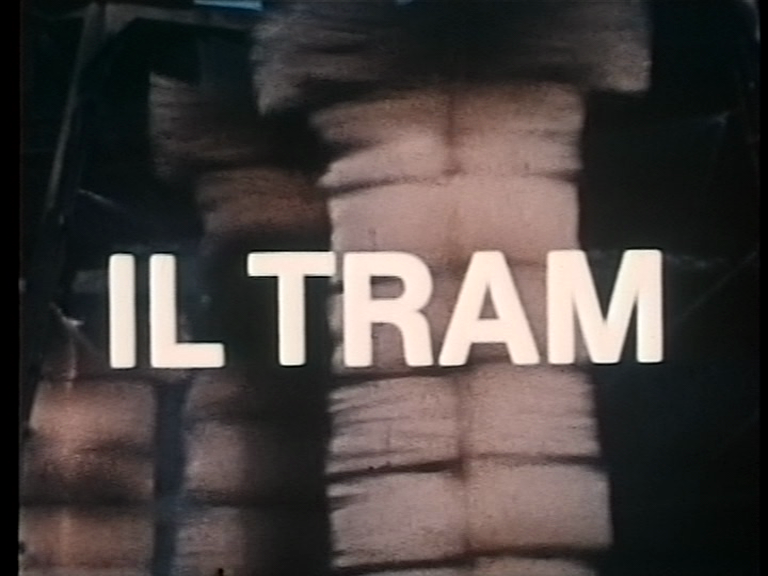
For the second episode of Doorway to Darkness, Dario Argento himself would direct and write. Il Tram (The Train) under the name Sirio Bernadotte (thanks to the incredible Italo Cinema).

A young woman is murdered on a train in the seconds that the lights go out and before they return. The murder baffles everyone except for Commisario Giordani (Enzo Cerusico) who seeks to solve it. He thinks that it has to be ticket taker Roberto Magli (Pierluigi Aprà), except that he’s never satisfied. It seems too simple. That’s when he brings his girlfriend Giulia (Paola Tedesco) to ride the train and try to lure out the true murderer.

A very Hitchcock-influenced story, this moment was originally going to be part of The Bird With the Crystal Plumage but it took away from the story. Argento would return to the dark mystery of a train and how frightening it can be in probably the best sequence of his post-Opera films in Sleepless. This may not have the insane energy and madness of his usual style, but the story is well-told and I loved how the hero must overcome his own shortcomings — he’s too cocky, which may be because of his youth — if he wants to save his lover and solve the mystery.

There’s also a striking scene where the killer chases Giulia through the train and into a station and down an immense hallway, all POV, all with her staring back at us. It’s incredible.
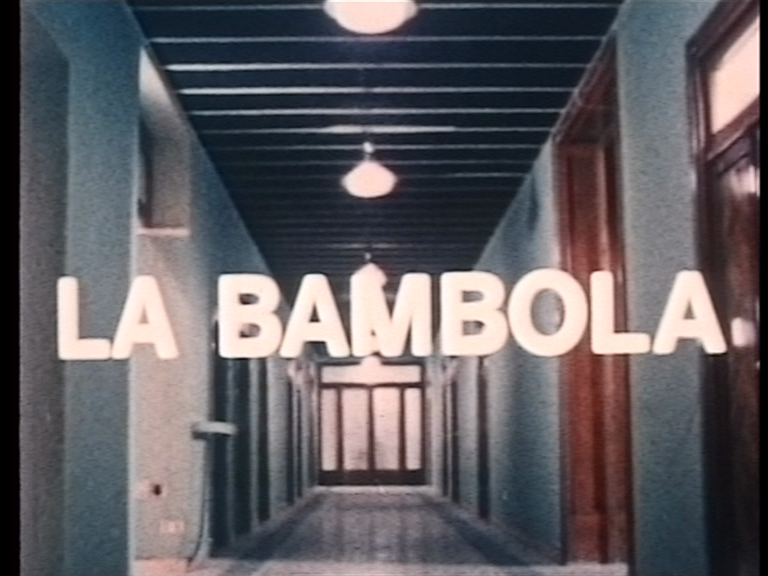
The third episode of Doorway to Darkness was directed by Mario Foglietti (who wrote the original story for Four Flies On Grey Velvet) and Luigi Cozzi and was written by Foglietti and Marcella Elsberger.

Argento informs us, in his introduction, that someone has escaped from a sanitarium, saying “…a sick mind wandering a small town, apparently normal, in matter of fact incandescent… Its aim: to kill.” That sick mind may be Robert Hoffman, who has checked into a hotel with an attache case before wandering the streets. One redhead is already killed when he meets Daniela Moreschi (Mara Venier) and follows her back home.

This feels like ten minutes of story shoved into an hour and sadly doesn’t work. But hey — Erika Blanc is in it and if the worst thing you do is watch a giallo with her in it, your day isn’t all that bad. Foglietti gets the look of Argento but doesn’t have the same ability to make art out of a flawed script.

Directed by Roberto Pariante (who was the assistant director for Argento on The Bird With the Crystal PlumageThe Cat o’Nine Tails and Four Flies On Grey Velvet) and Dario Argento, who wrote the script with Luigi Cozzi, Testimone oculare is my favor episode of Doorway to Darkness. It’s so simple and yet succeeds as an example of giallo.

Roberta Leoni (Marilù Tolo, Las trompetas del apocalipsis) is driving on a dark and rainy night when she sees a woman dive in front of her. She doesn’t hit her, but does find her dead body. She’s been shot in the back. That’s when she sees the glint of a gun and runs through the storm to a diner where she breaks down. The police, led by Inspector Rocchi (Glauco Onorato), take her back to the crime scene but there’s no body and no blood.

Everyone treats Roberta like a hysterical woman, including her husband Guido (Riccardo Salvino), even after someone breaks into their house while they’re out for their anniversary and the next day when someone tries to shove his wife into traffic. Then the phone calls start and never seem to stop.

One night, while all alone, the killer calls and says that they will finally kill Roberta. Guido comes home just in time and says that instead of leaving — the killer cut the phone line — they are going to wait for them and he will shoot whoever is after her. As you can imagine, this isn’t the way things end up happening.

Sometimes, a simply told mystery is exactly what you need. That’s what this episode gave me. Supposedly Argento disliked the work that Pariante did and went back and filmed a lot of this himself — the tracking of the killer by footsteps is definitely him — and then not putting his name on it.

Gli incubi di Dario Argento (Dario Argento’s Nightmares) was a TV series created and directed by Dario Argento that was part of the RAI TV show Giallo by Enzo Tortora. He’s probably most famous for the show Portabello that had viewers call in to buy or sell things, present ideas or try and look for love. And if they could get the parrot who was the show’s namesake to say his name, they would win a prize. He was also arrested in 1983 and jailed for 7 months as it was thought he was a member of an organized crime family, the Nuova Camorra Organizzata. It was a case of mistaken identity and he got out of ten years in jail thanks to the Radical Party. They offered him a candidacy to the European Parliament, which he won in a landslide. He was cleared of all charges the year this show ran and brought this show — on which he discussed unsolved murder cases — and Portabella to RAI.

The main draw of these episodes are nine new mini-movies made by Argento. They’re three-minute shorts shot on 35mm that show off some wild effects but one of them, Nostalgia Punk, so upset viewers that it has rarely been shown since. The stories are:

La finestra sul cortile (The Window on the Court): This is Argento’s tribute to Alfred Hitchcock and Rear Window. After watching the film, a man named Massimo watches his neighbors fight. He runs down with a knife to stop them, but falls on his own weapon and is blamed by the police for killing the woman. If you recognize the music, it’s part of the Simon Boswell score from Phenomena.

Riti notturni (Night Rituals): This is also missing from some online versions of the film, but has a maid conspire with a voodoo coven to murder and devour the couple that she works for.

Il Verme (The Worm): A woman who goes by the name of Bettina is reading Dylan Dog (the comic book that Cemetery Man comes from) when she overhears a story about parasites that go from cats to humans. As she explores her nearly nude body in a mirror, she notices a worm has grown out of her eye, which she stabs out.

Amare e morire (Loving and Dying): Set to Michael Jackson’s “Bad,” this story has Gloria assaulted and left for dead. As she recovers, she believes that the man who raped her is one of three neighbors. She sleeps with each in an attempt to learn who it is and get her bloody revenge.

Nostalgia punk: The most controversial segment, this has a woman’s water become poisoned. She begins to vomit multicolored liquids and then parts of her body before she finally tears her own body to pieces and her organs rain out of her destroyed carcass. It got so many complaints that Argento was told to settle down in future segments.

La Strega (The witch): Using Morricone’s score from The Bird With the Crystal Plumage, this has Cinzia’s party guests playing a game called “The Witch” that ends with children screaming and holding a bloody head.

Addormentarsi (Falling asleep): A man is possessed by a demon just before he falls asleep and then devours his dog. This uses “Anarchy in the UK” by the Sex Pistols.

Sammy: Sammy is a young girl who is frightened when Santa enters her room. Then Santa removes his face and reveals a monster. It’s simple but it really works.

L’incubo di chi voleva interpretare l’incubo di Dario Argento (The Nightmare of the One Who Wished to Explain Dario Argento’s Nightmare): A young man comes to REI to be part of this series and when he stays at a hotel, he soon learns he’s in a room with foreigners who steal everything he has and then threaten to kill him. It turns out that it’s all a set-up by Argento.

At the beginning of every episode, Argento appears, often with Coralina Cataldi-Tassoni (Demons 2Il Bosco 1Opera) all gothed out and acting as his starry-eyed assistant.

Argento also created another segment for GialloTurno di notte (Night Shift), which was about what happens to cab drivers at night. Episodes were also directed by Lamberto Bava and Luigi Cozzi. He also shared how he filmed several big moments in his most famous movies, such as the Loma camera sequence in Tenebrae; the bird attack in Opera, the transformation scenes in Demons 2 and how he directed Goblin to create the score for Suspiria. These scenes are worth watching and also appear in the Luigi Cozzi-directed Dario Argento: Master of Horror.

While this is by no means necessary watching for those with a passing interest in Italian horror, for devotees of the form and Argento, it is required viewing. It’s the chance to basically get nine new stories even if they are very short.

25 DAYS OF CHRISTMAS CHALLENGE: Elfette Saves Christmas (2019)

Directed by Christian Cashmir, who co-wrote the story with star Brielle Carter (who also was on second assistant camera), Elfette Saves Christmas is about an elf — yes, named Elfette — who heads to Florida on a vacation in the busiest time of the year.

If that wasn’t bad enough, Santa Claus (Quinton Aaron) has been kidnapped by an organized crime boss named Little Georgie (George Vricos), who wants Santa to stop cutting into his profits, as he now owns a company that makes pencil phones for $900. There’s also an elf hunter named Ernest Killingsworth III (Zachary Vazquez) who wants to make an elf dinner, so he starts hunting her and her best friend Sparkle (Aléa Figueroa).

I have no idea who the audience for this movie is, as the mob shoots the elves with freeze guns, which is scary enough, but then you have Santa getting tied to a chair and threatened by a crazed killer, as well as a man who loves to eat elves. Who can say. Elfette’s outfit, however, is a little something for daddy, as they say.

Who knew that elves were placed in castes with the wrapping paper elves at the lowest tier? Not me. I mean, I knew one elf who wanted to be a dentist and everyone treated him like garbage. What’s really amazing is that this movie got to Red One‘s plot five years before it did with about 5% of the budget. Then again, Santa got kidnapped is an easy story to tell, just look at Santa Claus Conquers the Martians.

One plot point I want to break down and discuss: Why is Elfette the one saving the day when Sparkle is the destined one? What is she supposed to do, bring balance to the naughty and nice? Why do I base so much of my life on dumb allusions to the Star Wars prequels?

You can watch this on Tubi.

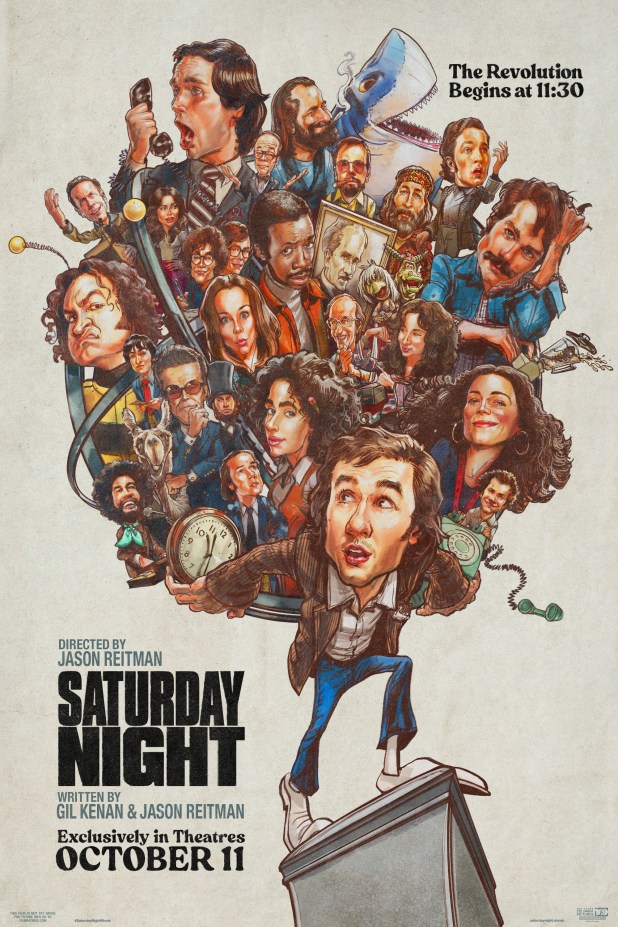
Saturday Night (2024)

SNL has been a part of my life since I could remember. My parents were the right against for it, as it debuted when my father was 36 and my mother was 26. They’d get us home from shopping just in time to watch it and I remember being so excited to be allowed to stay up, like some child adult and get to watch something no one else in school was allowed to.

As soon as the early 80s, when Newsday columnist Marvin Kittman said that the post-original Not Ready for Prime Time Players was Saturday Night Dead On Arrival, the show has been said to be worse than it was when it started. I’m not sure about that, although the quality has ebbed and flowed with today’s cast being as abysmal as it gets.

I’ve spent most of my life being obsessed with the show, how Lorne Michaels puts together episodes and its history, devouring almost every book published on the subject. I was excited when this movie was announced, but it has the danger of being too worshipful, too fawning over its subjects and probably trying to jam so much in to a short time.

And sure, that happens. It’s also a game of spot the writer or important person.

But for someone who has gone over the most small of details when it comes to this show, it’s also pretty great.

On October 11, 1975, Lorne Michaels (Gabriel LaBelle, who already pretty much played Steven Spielberg in The Fablemans) has no time left to get the first episode of the show on the air. His boss Dick Ebersol (Cooper Hoffman, Licorice Pizza) tells him that David Tebet (Willem Defoe), a high ranking NBC boss, is here to watch and will possibly just play a repeat of The Tonight Show Starring Johnny Carson instead of allowing the show to play on NBC.

As for Carson, voiced by Jeff Witzke, he calls and lets Michaels know that late night is his place and that he’s fighting with NBC. As soon as he gets what he wants, the show will be off the air.

Despite all the pressures that Michaels is dealing with, he still has to get his cast on the air. Belushi (Matt Wood) is fighting with everyone and refuses to sign a contract; Chevy Chase (Cory Michael Smith) is the brunt of his anger when he isn’t trying to keep Milton Berle (an incredible J.K. Simmons) away from his fiancee Jacqueline (Kaia Gerber). His writers are battling a censor (Catherine Curtin) while his host, George Carlin (Matthew Rhys) has no interest in even being there.

I don’t really believe that the show was saved at the last minute by Andy Kaufman (Nicholas Braun, who does great work here as Andy and Jim Henson) and the newly hired Alan Zweibel (Josh Brener), nor do I think anyone rallied around Garrett Morris (played by Lamorne Morris, no relation), despite the fact that they should have. It’s great to see him get such a part of this story, even if he was barely used on the show.

The nerd in me loved seeing how Rosie Shuster (Rachel Sennott), Anne Beats (Leander Suleiman), Al Franken (Taylor Gray), Tom Davis (Mcabe Gregg), Dave Wilson (Robert Wuhl), Paul Shaffer (Paul Rust), Herb Sargent (Tracy Letts) and even Leo Yoshimura (Abraham Hsu) show up in this, but the best lines are saved for Michael O’Donoghue (Tommy Dewey). You know, they should be. My biggest comedy nerdom is saved for genuflecting before his anger and caustic tone.

Gilda (Ella Hunt), Danny (Dylan O’Brien), Laraine (Emily Fairn) and Jane (Kim Matula) all appear as well, even if their stories are barely fleshed out. Just like the show, this doesn’t have the time to get into them, although it does have Billy Crystal (Nicholas Podany) trying to get on the first show and failing.

Naomi McPherson shows up as Janis Ian, Jon Batiste — who also did the soundtrack — as Billy Preston and Brian Welch as Don Pardo, another major part of the feel of SNL to me. It feels like at times it’s just trying to pack things in, as I get the feeling that Jason Reitman, who directed and wrote the script with Gil Kenan, is as much of a super fan as me. That’s why Finn Wolfhard may play an unnamed NBC page, but we don’t see this through his eyes. Instead, we are with Lorne all the way until the end, when the words “Live from New York, it’s Saturday Night!” end the movie and cue the credits, inverting their typical placement.

That said, if you are a big SNL nerd, you know that Belushi didn’t wait 39 seconds on live TV to show up in the first sketch or that Milton Berle didn’t host the show until Season 4. And there was no official host of the first episode. There wasn’t a host until episode 2 when Paul Simon appeared on the show. That’s also kind of like all the discussion if Rosie Shuster will use her husband Lorne’s last name in the credits and she picks her own. In truth, her name was Rosie Michaels on the show’s end titles.

These are all things that only nerds will understand. At best, SNL is something that works 40% of the time, at best, and even the greatest moments of the show are seen through the lens of what era you grew up in. As for the rest of, well, everyone, they’re probably watching this and wondering where Bill Murray was.

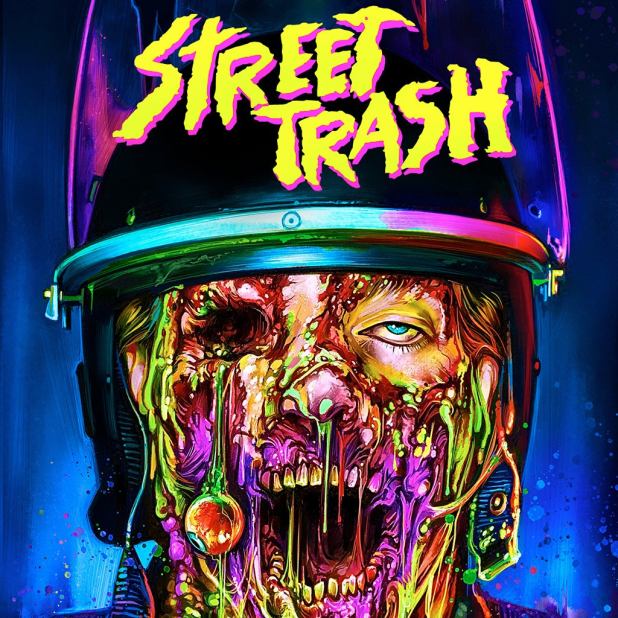
Street Trash (2024)

Ryan Kruger made Fried Barry and if you like that movie, well, good news. His reimagining of Street Trash, based on the 1987 movie, will probably delight you. Gary Green, who played Fried Barry, plays just about the same role in this.

Produced by Vinegar Syndrome and shot on 35mm, this has the Tenafly Viper booze being replaced by drones that give unhoused people in South Africa a case of the melts. There’s also Sockle, a little gremlin that shows up for some reason, which I have no idea why, as this Cape Town-set future of 2050 is about Ronald (Sean Cameron Michael) and his gang of weirdos — Chef (Joe Vaz), Pap (Shuraigh Meyer), Wors (Lloyd Martinez Newkirk) and 2-Bit (Green) — helping Alex (Donna Cormack-Thomson) adjust to life on the streets.

It’s Street Trash for people who were upset by the first movie and the fact that it didn’t just pretend to be transgressive but was wildly and violently odd. Or, as the review on Comic Book Resources wrote, “While Muro’s original film is notoriously cruel and ugly, Kruger wanted to create likable characters who the audience could root for.”

Or this line: “The original film’s jarring juxtaposition of slapstick comedy and severe misogynistic violence has proven to be too much even for seasoned gorehounds.”

I don’t know, I’m getting sick of the stripmining of my past, as I’m sure all old people get to be at some point. It got to the point that at the end, when they use Buckaroo Banzai’s line “Wherever you go, there you are” I reacted with an exasperated groan.

Anyways, this movie.

Mayor Mostert (Warrick Grier) has learned how to take the body melting results of the New York incident to get rid of undesirable people. He sends his cops into the streets to make it happen, all while people excessively swear at one another and make jokes like, “If two vegetarians get into a fight, is it still called a beef?”

The end of this goes full action movie and at least has some action and the practical effects are fun, even if the rest of the technical parts of the movie — the ADR is rough and it seems like the sound is low in others — lack. You could just watch this to see people melt in different colors and be told the sledgehammer plot and get past it. Or, you know, you could wonder why this movie spends so much time dissecting the pedophilic qualities of other stories instead of applying a critical lens to itself and, you know, actually being a halfway decent movie.

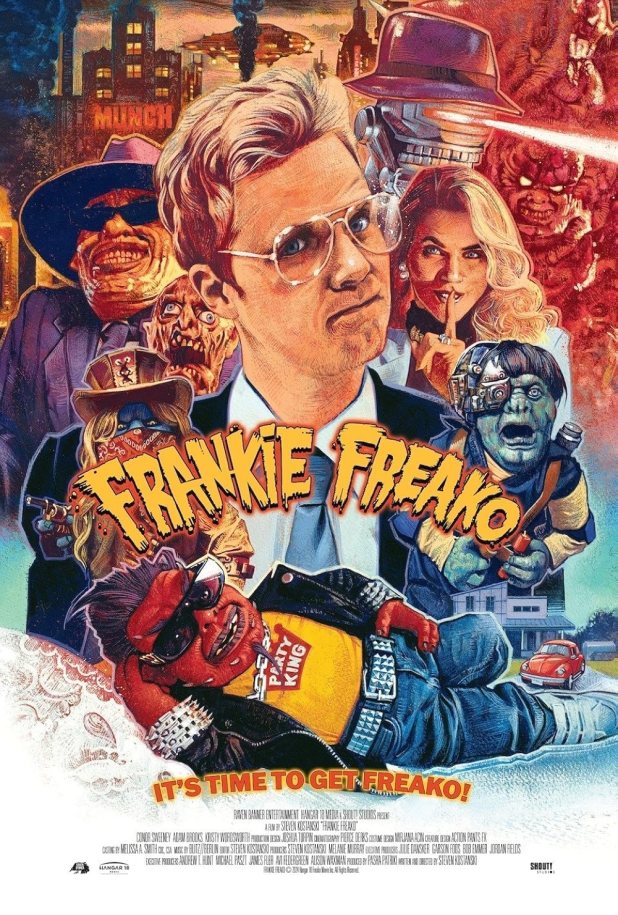
Frankie Freako (2024)

Steven Kostanski and the movies that he’s made with Astron-6 have always entertained me. Whether satirizing giallo with The Editor, making a perfect John Carpenter movie with The Void or creating 80s rental movies out of time like Psycho Goreman and Manborg, the movies that result are always great.

Inspired by the movies that ripped off Gremlins like GhouliesThe Gate and CrittersFranky Freako takes place at some time in the 1980s, a time in which Conor (Conor Sweeney) is accused by his wife Kristina (Kristy Wordsworth) and boss Mr. Buechler (Adam Brooks) of being boring and way too uptight. As she goes away on a business trip, he decides to call the 1-900 number of Franky Freako (Matthew Kennedy) and gets pulled into the insane party world of the mini monster and his crew of oddballs.

Along with his friends Dottie Dunko and Boink Bardo, Franky brings the party into Conor’s life and by that, I mean he destroys his house and somehow drags him to his world, a place run by Freaklord President Munch that feels a lot like the future where Biff became President in Back to the Future Part II.

I wonder if 1-900-555-FREAKO is a real number. Every movie — well, every horror movie made in the 80s, it seemed — had numbers like that. This is a movie made for people that get the joke that Conor’s boss is named for John Carl Buechler, that wished that they’d make more of the Hobgoblins movies and that hoped for Ghoulies V: Ghoulies Get Jobs. I made that up, but wouldn’t that have been a good one?

For the rest of the world, you may wonder why this spent so much on practical little people partying and not get it. Your life is infinitely boring compared to the rest of us.

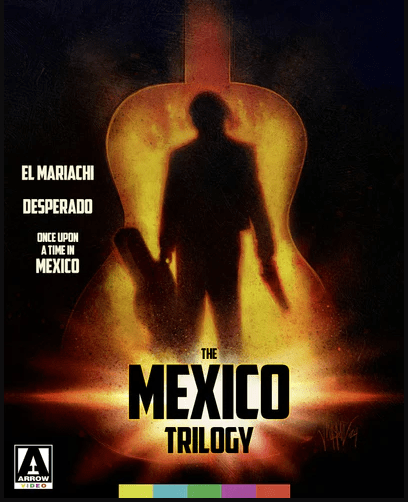
ARROW 4K UHD AND BLU RAY RELEASE: The Mexico Trilogy: El Mariachi, Desperado & Once Upon A Time In Mexico (1992, 1995, 2003)

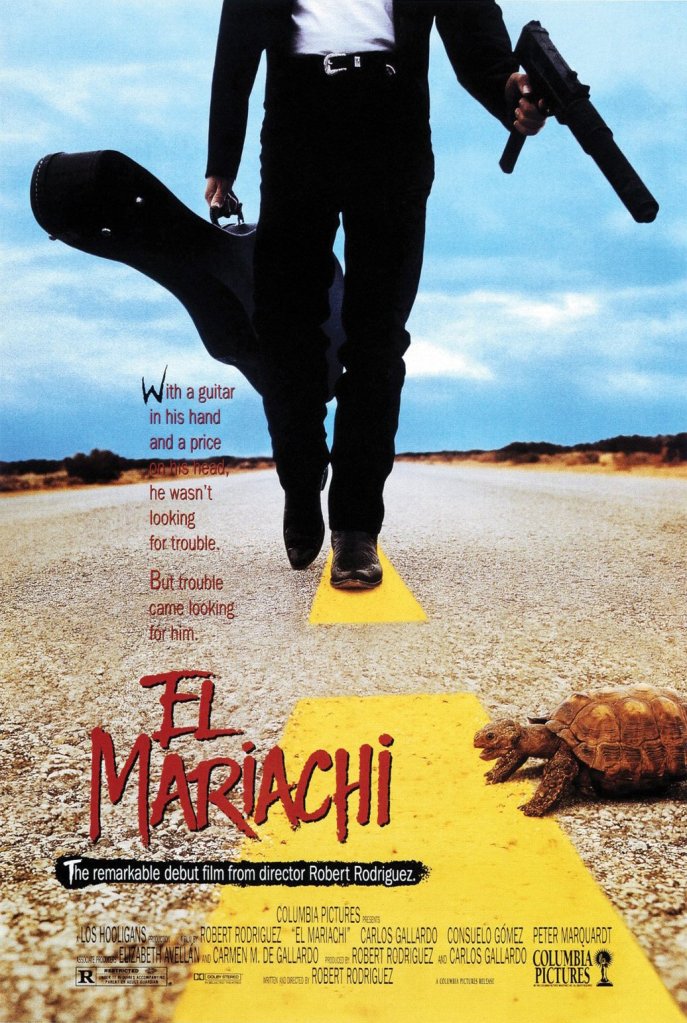
Robert Rodriguez’s 1993 debut El Mariachi was filmed for only $7,000 and has a naive young musician being caught in a deadly case of mistaken identity. It made the director’s career and allowed him to expand the universe in two sequels, which are featured on this Arrow Video box set.

El Mariachi (1992): Made for $7,225,  the original goal for this movie was a Mexico home video release. Columbia Pictures liked the film and bought the American distribution rights, putting $200,000 into the budget to transfer the print to film, remix the sound, and market the film.

El Mariachi (Carlos Gallardo) has come to a border town to be a performer like his father. His guitar case holds, well, a guitar. The problem is that it gets confused with the guitar case full of gun carried by Azul (Reinol Martínez), who is coming to kill a drug lord named Moco (Peter Marquardt).

The guitar player has fallen for the gorgeous Dominó (Consuelo Gómez), a bartender and lover of Moco, who herself is in love with Azul. The multiple twists and identity issues will bring all of them together, ending in blood and bullets.

El Mariachi has been deemed “culturally, historically, or aesthetically significant” by the United States Library of Congress and selected for preservation in the National Film Registry, who said that it “helped usher in the independent movie boom of the early 1990s.” I love how they describe the way that Rodriguez was able to combine genres to create his movie, saying that it merged “the narcotraficante film, a Mexican police genre, and the transnational warrior-action film, itself rooted in Hollywood Westerns.”

It was only the start of the creator’s career.

Desperado (1995): Steve Buscemi tells the story of El Mariachi in a bar, about how a musician with a guitar case filled with guns was out for revenge before waking up the person he’s been telling everyone about. He has a target for revenge, Bucho (Joaquim de Almeida), who he blames for killing his lover.

Helped by a bookstore owner named Carolina (Salma Hayek), but is nearly killed by Navajas (Danny Trejos), a hitman sent by the Columbians who is soon accidentally killed by Bucho’s men. El Mariachi, in love with Carolina and wanting to protect her, calls in his friends Campa (original El Mariachi Carlos Gallardo) and Quino (Albert Michel Jr.), who kill most of Bucho’s henchmen before discovering that the drug dealer and El Mariachi are brothers.

He gives the dark hero a choice: he can live, if he allows the bad guy to kill his lover. Of course that’s not going to happen.

With small roles for Quentin Tarantino and Cheech Marin, this movie had critic Janet Maslin writing, “Overdependence on violence also marginalizes Desperado as a gun-slinging novelty item, instead of the broader effort toward which this talented young director might have aspired.” A lot of people were upset about the violence and thought it was keeping Rodriguez from being the success that he could be.

As for fans of action movies, they had found the perfect union of modern movies and Italian Western sensibilities in Rodriguez. He still did it on a budget — a thousand times what he spent the first time, but less than Hollywood usually spends — which led Banderas to say, “It was crazy. We did a movie with practically no money. We did a movie with $3 million. For an action movie, that’s practically nothing. There was a guy in the movie, a stunt guy, that I kill, like, nine times. I killed the guy with beard, without a beard, with a mustache, with blond hair, with glasses, without glasses. I mean, I think the guy who made the most money in the movie, was the stunt guy.”

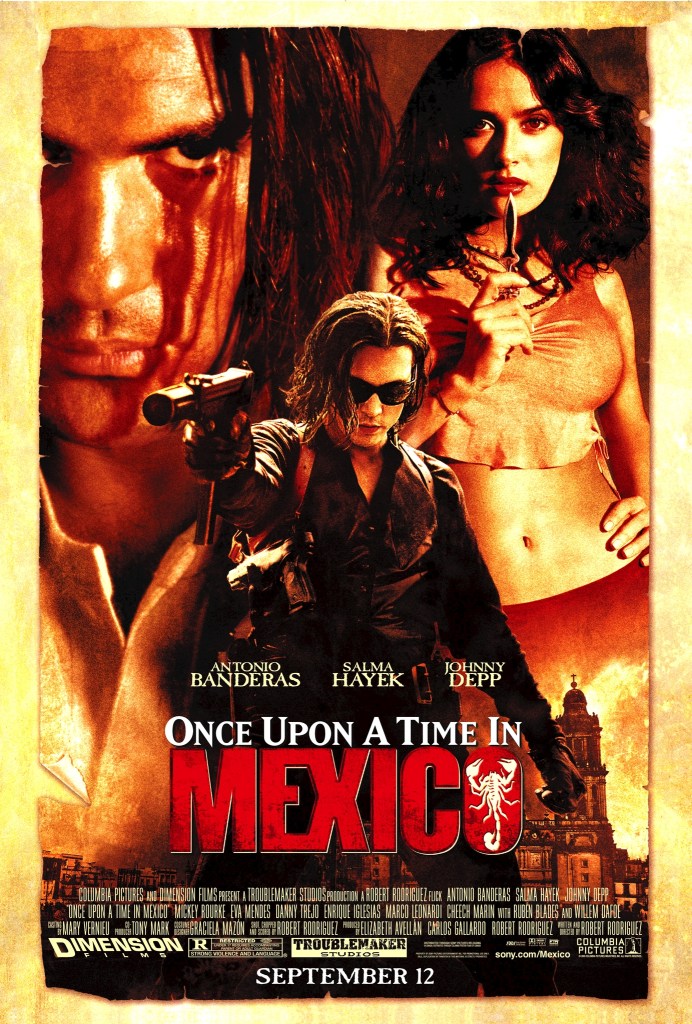
Once Upon a Time In Mexico (2003): A lot has happened since the last movie. El Mariachi (Antonio Banderas) and his wife Carolina (Salma Hayek) had a battle against General Emiliano Marquez (Gerardo Vigil) that ended up with him eventually killing her and their daughter. Now, Marquez is working for drug boss Armando Barillo (Willem Dafoe) to kill the President of Mexico.

CIA officer Sheldon Jeffrey Sands (Johnny Depp) gets El Mariachi and FBI agent Jorge Ramirez (Rubén Blades), whose partner Archuleta was killed by Barillo, along with AFN operative Ajedrez (Eva Mendez) to stop the drug kingpin.

There’s also a plan to use Billy Chambers’ (Mickey Rourke) chihuahua to record Barillo, Danny Trejo as another henchman in a Rodriguez movie, El Mariachi’s friends Lorenzo (Enrique Iglesias) and Fideo (Marco Leonardi) coming to help, Sands having his eyes drilled out but still being a killing machine and Rodriguez making his version of The Good, The Bad and The Ugly, which upset some as El Mariachi becomes a minor character in a movie most figured would make him the star.

Roger Ebert understood, as he said, “Like Leone’s movie, the Rodriguez epic is more interested in the moment, in great shots, in surprises and ironic reversals and closeups of sweaty faces, than in a coherent story.”

It’s a big mess, but I mean that in the greatest of ways. It’s also the first of many movies that Rodriguez shot digitally, which allowed him to do things on budget despite the challenges of trying to get so many FX shots and even not having real guns for the first two weeks of shooting.

The Arrow Video set includes high definition blu ray presentations of all three films and a 4K UHD version of Desperado. It has an illustrated collector’s booklet featuring new writing by Carlos Aguilar and Nicholas Clement, reversible sleeves featuring original and newly commissioned artwork by Paul Shipper, double sided posters featuring original and newly commissioned artwork by Paul Shipper and a collectible poster featuring Robert Rodriguez’s original poster concept for El Mariachi.

El Mariachi has commentary and a new interview with Rodriguez; an interview with Carlos Gallardo; The Music of El Mariachi, a newly produced featurette on the music in the film, featuring interviews with composers Eric Guthrie, Chris Knudson, Alvaro Rodriguez and Marc Trujillo; Ten Minute Film School; Bedhead, a short from the director; the trailer and a TV commercials.

Desperado has commentary and a new interview with Rodriguez; Rodriguez; interviews with producer Bill Borden, stunt coordinator Steve Davison and special effects coordinator Bob Shelley; Game Changer, a newly filmed appreciation by filmmaker Gareth Evans (The Raid: Redemption); Ten More Minutes: Anatomy of a Shootout, an archive featurette narrated by Rodriguez; a textless opening and trailers.

Once Upon a Time In Mexico has commentary and a new interview with Rodriguez, an interview with visual effects editor Ethan Maniquis; deleted scenes; Ten Minute Flick School, Inside Troublemaker Studios, Ten Minute Cooking School, Film is Dead: An Evening with Robert Rodriguez, a presentation by the director given in 2003; features on the Mariachi’s arc and KNB FX and trailers.

You can get this from MVD.

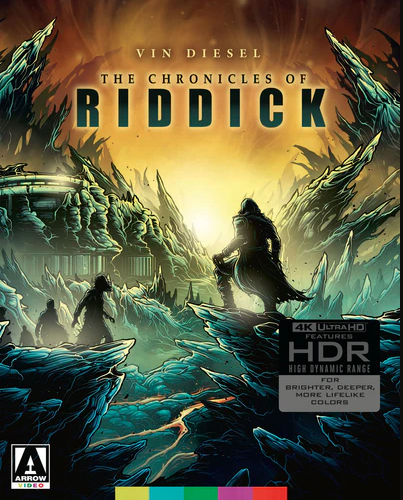
ARROW 4K UHD RELEASE: The Chronicles of Riddick (2004)

The character of Riddick first showed up in Pitch Black, a movie that became a surprise success, leading to not just this sequel, but the 2013 sequel Riddick, all directed and written by David Twohy, based on characters created by Ken and Jim Wheat.

Richard B. Riddick (Vin Diesel) is one of the last surviving Furyans, a race that excels at combat and can see in the dark. After the events of the anime Dark Fury, Riddick has been hiding on the frozen planet U.V.

Bounty hunters under the command of Toombs (Nick Chinlund) are hunting Riddick, who easily kills most of them and demands to know how they found him. There was a communication from New Mecca on planet Helion Prime, where Imam (Keith David), a survivor from the first movie, lives. Imam wanted Riddick to know that the Necromongers are looking for him, led by Aereon’s (Judi Dench) prediction that he is the last of the Furyans and must be killed. Her prophecy is that the leader of their faith, Lord Marshal (Colm Feore), will be murdered by this warrior. Commander Vaako (Keith Urban) is sent on a mission to stop Riddick.

Riddick is caught and sent to a prison planet called Crematoria, where he meets Jack, who is actually Kyra (Alexa Davalos), the girl that he saved in the first movie. She resents him for stranding her all alone. Meanwhile, Dame Vaako (Thandie Newton), Commander Vaako’s wife, has a conspiracy to have her husband replace Lord Marshal.

I kind of love this movie because it feels like Twohy was given the keys to the money vault and backed up a truck, ready to make his science fiction visions — and Diesel’s love of Dungeons and Dragons — an actual motion picture. It’s so dense with backstory that it feels like you’re several movies deep in a franchise instead of a sequel starring a character who was the secret hero of the first film that was a sleeper success.

Here’s how geeky this movie is. When Universal decided that they wanted to make a sequel, Twohy wrote the screenplays for not one, but three sequels, to which he and Diesel put into separate leather binders and presented them along with the key for the first binder.

Vin Diesel wanted Dame Judi Dench to play Aereon as he was a long-time fan. As she was acting in a play, he had her dressing room filled with so many bouquets of flowers that she couldn’t get into it. He told her that they couldn’t cast this movie until she agreed to accept the role. In her autobiography And Furthermore, she says that she never really understood what was going on, but enjoyed the experience of making the movie and loved the sets, which were the third-largest user of electricity in Canada.

The Arrow Video 4K UHD of The Chronicles of Riddick is packed with so much! It starts with brand new 4K restorations by Arrow Films of the theatrical and director’s cuts of the film, approved by David Twohy. Then, you get a reversible sleeve featuring newly commissioned artwork by Dan Mumford and an illustrated collectors’ booklet featuring new writing on the film by Walter Chaw, original production notes and the Chronicles Compendium, an overview of the characters and planets featured in the film.

Extras on the discs include Ambition on Another Scale: Chronicling a Blockbuster Sequel, a brand-new feature-length documentary on the film, featuring interviews with writer-director David Twohy, actors Keith David and Linus Roache, storyboard artist Brian Murray and many others; interviews with Twohy, Murray and David; trailers; two audio commentaries, one by David Twohy and Vin Diesel and the other by Twohy and co-stars Karl Urban and Alexa Davelos; an introduction by Twohy; archive features on the worlds of the movie and its characters; a production calendar and behind the scenes features; three deleted scenes; animated segments that describe the many worlds in this movie; Toombs’ Chase Log, a short film narrated by Nick Chinlund in character; a guided tour of the set by Vin Diesel, along with 360-degree panoramic views of eight sets from the film; on-set interviews with Twohy, Diesel, Dench, Urban, Colm Feore, Alexa Davelos, Thandiwe Newton and producer Scott Kroopf; promotional interviews with Twohy, Diesel, Newton, Urban, Davelos and Feore; Escape from Butcher Bay, a compilation of cutscenes from the acclaimed tie-in video game and The Lowdown, a television special produced to promote the film’s original release.

You can get this movie on 4K UHD or blu ray from MVD.

RETURN OF KAIJU DAY: Konga (1961)

Dr. Charles Decker (Michael Gough) has been presumed dead, but he’s really been hiding out in Africa, learning how to grow plants and animals to a huge size. Like the baby chimp Konga, which he turns into a monstrous ape and then, well, he goes bonkers. I mean, he was before too, but even more after. He sends Konga to London to kill all of the scientists who made fun of him like Professor Tagore (George Pastell) and Dean Foster (Austin Trevor).

No one knows that and he keeps on teaching, getting obsessed with one of his students named Sandra (Claire Gordon), which angers his assistant and lover — and wife? — Margaret (Margo Johns). When she turns him down, Decker assaults her, at which point Margaret injects Konga with so much of the serum that he grows gigantic and kills her before going wild on London, starting with grabbing Decker and tossing him. As for Sandra, she’s attacked by a man-eating plant and the movie never gets back to her!

The cops kill Konga — no comments, I’m trying to be non-political — and he turns back into a chimp.

Directed by John Lemont, this was written and produced by Herman Cohen, who also produced Bela Lugosi Meets a Brooklyn Gorilla. His co-writer was Aben Kandel, who was also Cohen’s co-writer for TrogCraze and I Was a Teenage Werewolf.

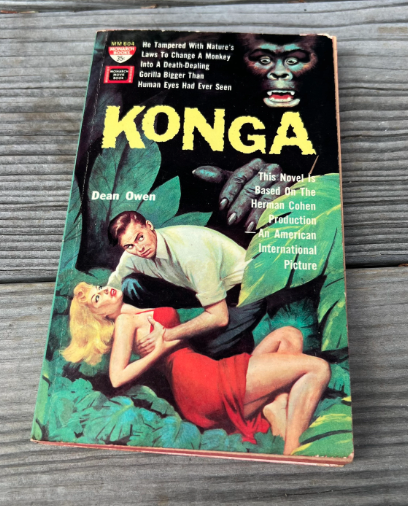
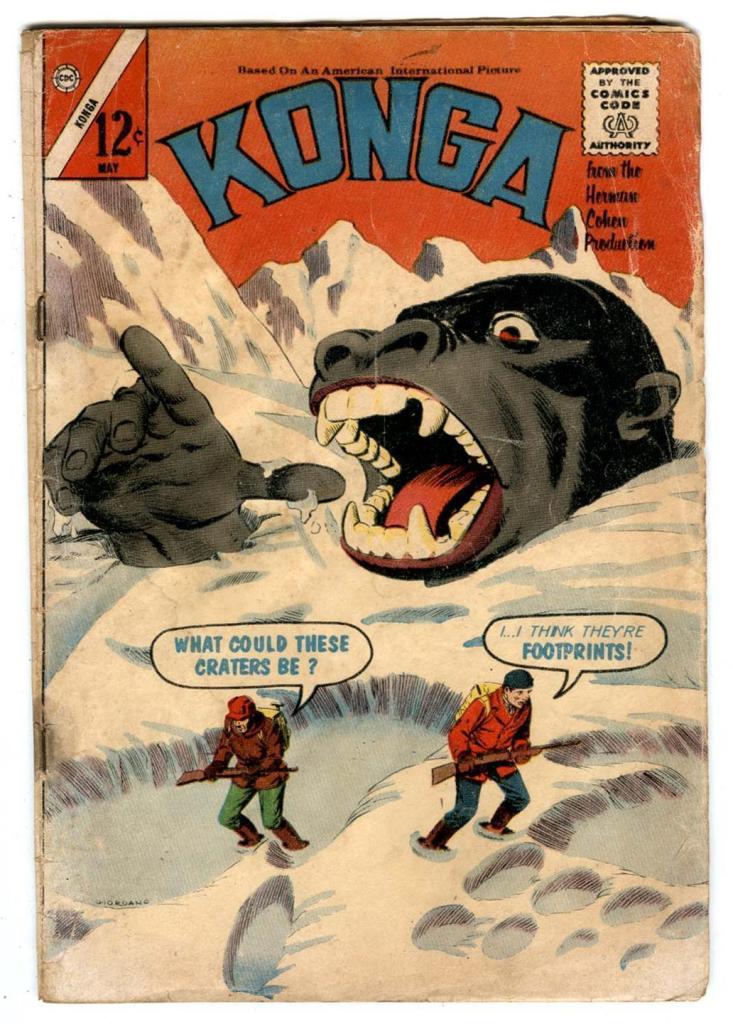
Dudley Dean McGaughy wrote the novelization as Dean Owen. It has a ton more sex — the movie has nothing like it — than the film, as does McGaughy’s Reptilicus paperback. Charlton Comics — who published two issues of a Reptilicus comic book — had also done a Gorgo comic book with Joe Gill and Steve Ditko. Of that work, said, “I read the screenplay of Gorgo. From the first reading to this day, I marvel at how well Joe adapted the character to comic books.”

Gill and Ditko brought the big ape back from the dead for a few stories in which he fought mole men and undersea monsters. It’s wild that Ditko was drawing this book at about the same time that he was on the Marvel monster books and starting on Spider-Man.

You can watch this on Tubi.