Flash Gordon: The Greatest Adventure of All (1981)

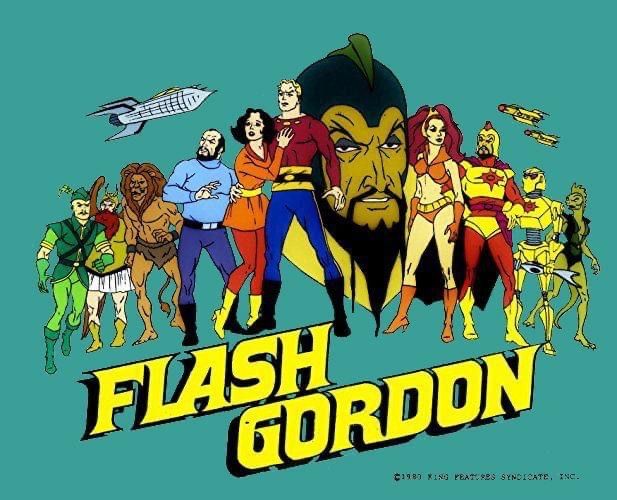
Directed by Gwen Wentzler, written by Samuel A. Peeples and animated by Filmation, this was inspired by the success of Star Wars and intended to be a TV movie. When NBC saw the finished film, they turned it into the 1979 Saturday-morning animated TV-series Flash Gordon. The TV movie version is, obviously, a lot more adult and even has a moment where Ming shows that he has been giving weapons to Hitler.

Robert Ridgely plays Flash, Diane Pershing is Dale and David Opatoshu is Zarkov. This is closer to the newspaper strip, as Flash works alongside lionman King Thun (Ted Cassidy) while Ming’s (Bob Holt) daughter Princess Aura (Melendy Britt) attempts to possess Flash. They’re soon joined by Prince Barin and King Vultan of the Hawkmen to attempt to stop Ming from marrying Dale and destroying Earth.

The animation looks so much better than Filmation’s Saturday morning work, as it is rotoscoped. This is a process of animating over live action to ensure that movements appear like real people.

Mattel would make Flash, Ming, Thun, a Lizard Woman, Zarkov, a Beast Man, King Vultan, Captain Arak and a rocket ship for Flash and Ming’s shuttle. Flash’s ship was inflatable and looked like a zeppelin; it’s one of my favorite toys I ever got to play with.

This finally aired three years after the cartoon and NBC definitely aired it on the NBC Late Movie, playing on September 5 and 26, 1982. I was ten and totally watched it the whole way through both times it aired on a black and white TV on my parent’s inside porch.

You can watch this on YouTube.

Popeye Meets the Man Who Hated Laughter (1972)

The ABC Saturday Superstar Movie was a series of made-for-television films, often cartoons, that were broadcast on Saturday mornings from September 9, 1972 to November 17, 1973. Considered the ABC Movie of the Week for kids, this series was produced by several production companies like Hanna-Barbera, Filmation and Rankin/Bass and featured hour-long movies with Yogi Bear, The Brady Bunch and Lost in Space, among other popular shows. Some of these episodes were also pilots.

Over two seasons, episode aired like The Brady Kids on Mysterious Island (The Brady Kids pilot), Yogi’s Ark Lark (the pilot for Yogi’s Gang), Mad, Mad, Mad Monsters (a spiritual sequel Mad Monster Party), an animated Nanny and the ProfessorWillie Mays and the Say-Hey KidOliver and the Artful Dodger, The Adventures of Robin HoodnikLassie and the Spirit of Thunder Mountain (the pilot for Lassie’s Rescue Rangers), Gidget Makes the Wrong ConnectionThe Banana Splits in Hocus Pocus Park, an unsold Bewitched cartoon pilot called Tabitha and Adam and the Clown FamilyThe Red BaronDaffy Duck and Porky Pig Meet the Groovie GooliesLuvast U.S.A. (a child version of Love, American Style), an animated That Girl movie by the title of That Girl in Wonderland, an unsold Lost In Space pilot, The Mini-Munsters and Nanny and the Professor and the Phantom of the Circus.

This cartoon is the first time that Steve Canyon, The Phantom, Tim Tyler and Flash Gordon would be animated. Professor Morbid Grimsby (Bob McFadden, who did nearly every voice other than the Popeye and female voices) is getting rid of the comics pages in the newspaper, working with Popeye’s enemy Brutus. The President of the U.S. gets everyone — Barney Google, Snuffy Smith, Blondie Dagwood, Beetle Bailey and characters from that strip, people from Bringing Up Father, Flash Gordon, Henry, Hi and Lois, The Katzenjammer Kids, Little Iodine, The Little King, Mandrake the Magician, Lothar, The Phantom, Popeye, Prince Valiant, Quincy, Steve Canyon, Tiger and Tim Tyler — must all work to get the professor to laugh for the first time.

Directed by Lou Silverton and written by Hal Seeger and Jack Zander, this was animated by Filmation, who would go on to make the early 80s Flash Gordon adaption. It’s quick and most of the characters barely get a part, but for someone who grew up with the Sunday comics, it’s awesome to see them all appear in one movie.

You can watch this on YouTube.
Batman: Hush (2019)

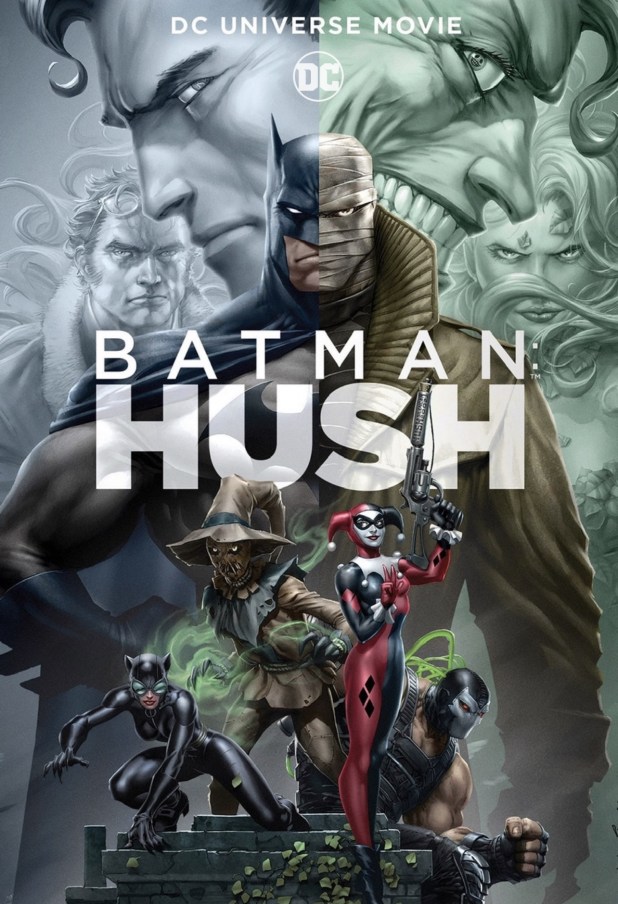
Based on the Hush storyline that ran in Batman #608–619 — written by Jeph Loeb, penciled by Jim Lee, inked by Scott Williams and colored by Alex Sinclair — this starts with Batman (Jason O’Mara) battling the man who broke his back, Bane (Adam Gifford). After assisting Lady Shiva (Sachie Alessio) from securing a Lazarus Pit — the life saving devices that have kept his enemy Ra’s al Ghul alive forever — Batman’s grappling hook is shot down, leading him to crack his skull on the pavement and nearly be killed by common hoods before he’s saved by Catwoman (Jennifer Morrison), who is soon chased off by Batgirl (Peyton R. List).

Alfred (James Garrett) and Nightwing (Sean Maher) cover for Batman as he heals from brain surgery from his childhood best friend Thomas Elliot (Maury Sterling).  At the same time, a mummy-masked man has been pulling the strings from behind the scenes, controlling Catwoman and using Poison Ivy (Peyton List) to take Superman (Jerry O’Connell) off the table.

Hush uses the Joker (Jason Spisak) and Harley Quinn (Hynden Walch) to kill Elliot, while Scarecrow (Chris Cox) takes out Nightwing and kidnaps Catwoman, to whom Batman has revealed his identity of Bruce Wayne. And he starts to figure out that Hush knows the secret, too, as he puts everyone he loves in teh crosshairs, including his son Damian (Stuart Allan).

The truth? Hush is The Riddler (Geoffrey Arend), who used the Lazarus Pit to heal a brain tumor and has figure out from the memories inside it of others who have been healed that Batman and Bruce are the same. He’s kidnapped the Catwoman, who has no problem shoving him to his death, a fact that keeps her and Batman from going off to be in love.

Directed by Justin Copeland and written by Ernie Altbacker, this is a lot cleaner at the ending than the comic, which goes on to show that Hush really is Thomas Elliot.

You can watch this on Tubi.

Superman vs. The Elite (2012)

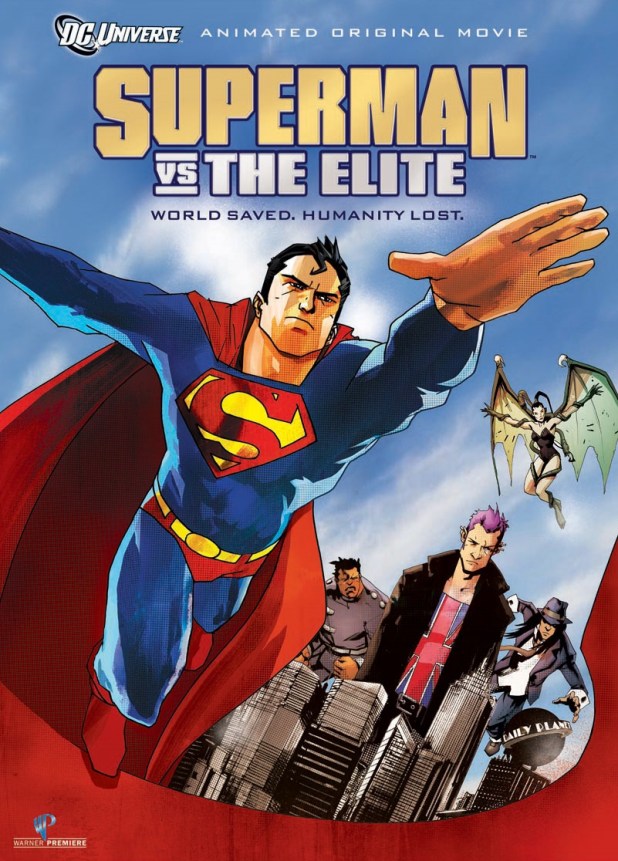
Based on “What’s So Funny About Truth, Justice & the American Way?” from Action Comics #775, this cartoon was written by Joe Kelly, who also wrote the original comic, which was pencilled by Doug Mahnke and Lee Bermejo, and inked by Tom Nguyen, Dexter Vines, Jim Royal, Jose Marzan, Wade Von Grawbadger and Wayne Faucher.

When the Atomic Skull (Dee Bradley Baker) destroys much of Metropolis and kills several people, Superman (George Newbern) is asked why he doesn’t kill his enemies to protect humanity. A new group of heroes, The Elite — British psychic Manchester Black (Robin Atkin Downes), electricity controlling Coldcast (Catero Colbert), the demonic Menagerie (Melissa Disney) and the magician The Hat (Andrew Kishino) — responds by killing the Atomic Skull and winning over people, saying that they are willing to do what Superman won’t.

Kelly said, “The story tackles themes that go way beyond a typical superhero story…politics, the price of power and America’s place as a force in the world are all viewed through the lens of the DC Universe. Even if fans aren’t paying close attention to these issues, they’re all over the media. You can’t escape them. So with the state of affairs being what it is, I can’t think of a better time to see Superman confront these themes…I’m a big fan of taking real world issues and working them out through our “superhero” stories—but this one goes beyond strict allegory. Like the original comic story, the film is thought provoking without being preachy and really delivers a punch.”

By the end of this, Superman proves while he is still needed, even if he has to trick The Elite into believing. that he’s as ruthless as them.

The Elite are the same as The Authority, superheroes that became popular for their debauchery and willingness to end problems with violence and murder. They would show up again with new members, including cyborg Vera Black, a second Menagerie and Bunny. This team would eventually form the Justice League Elite, led by Black as Sister Superior and team members Coldcast, Menagerie II, Manitou Raven, his wife Dawn, Green Arrow, Flash, Kasumi (Batgirl in disguise), Major Disaster and Naif al-Sheikh.

In the fourth season of Supergirl, The Elite appeared with members Manchester Black, Menagerie, the Hat and a Morae responding to Agent Liberty and the Children of Liberty’s bigotry toward aliens, as well as the Department of Extranormal Operations’ ineffectiveness against people who kill aliens.

You can watch this on Tubi.

The Mad Magazine TV Special (1974)

As a kid in the 1970s media desert that had just four channels to watch, Mad Magazine delivered the culture and R-rated movies I wouldn’t see for year, filtered through its creators, “The Usual Gang of Idiots” who created the black and white magazine. The last survivor of EC Comics, Mad was the introduction for so many people my age to cynicism and questioning everything, while also teaching us to fold the back covers of every issue, ruining their resale value.

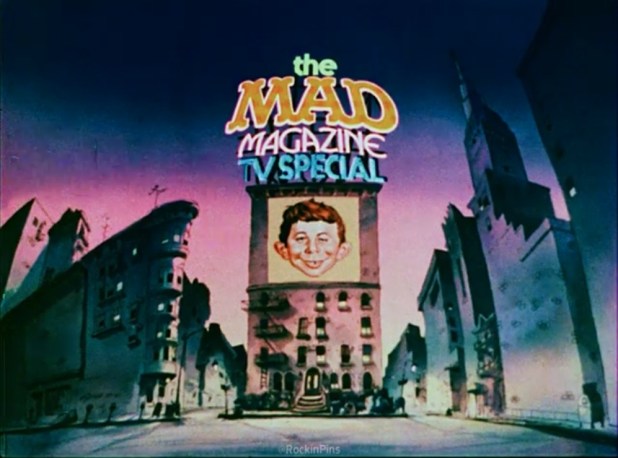
For people younger than me, they would know that MADtv and Cartoon Network’s Mad show — as well as a never-faired Hanna-Barbera attempt — took the magazine to the cable airwaves. While the Fox TV show did have its moments, it always felt like a sub-In Living Color versus the strange, well, madness of the magazine. But in 1973, ABC was ready to pay for The Mad Magazine TV Special but there ended up a problem: no advertisers would be part of it.

That was never a problem for the magazine, which unlike National Lampoon never had advertising, but broadcast TV is another tale.

The animation style is closer to an animatic, the way an ad agency would add minor moves to still drawings for pitches. To those who are blessed not to work in the field, think the 60s Marvel comic book cartoons.

Starting with a Jack Davis-drawn takedown of the auto industry — in case you wondered why advertisers weren’t part of this — this is dominated by an adaption of The Oddfather, which was written by Larry Siegel and drawn by Mort Drucker, originally appearing in Mad #155. The joy of these parodies was that it would take you forever to read them, as they were so dense with jokes both in words and buried in the visuals. Having them come to life makes it feel like you’re flying past these jokes at a few hundred miles an hour, yet just seeing Drucker’s work move is a joy.

There’s also “A Mad Peek Behind the Scenes at a Hospital,” which came from Mad #131 by Siegel and artist Al Jaffe, as well as Spy vs. Spy. But at a scant twenty-some minutes, it feels scant compared to the hours I’d spend with each issue.

Directed by animation vets Gordon Bellamy, Chris K. Ishii (who worked on the animation in Annie Hall) and Jimmy T. Murakami (who would go on to direct “Soft Landing” in Heavy MetalBattle Beyond the Stars and When the Wind Blows, as well as animating the titles for What’s Up, Tiger Lily?), this is the kind of lost media that obsesses me.

Mad had issues when it tried to escape the printed page. Just look at Up the Academy, a movie that they promoted in every issue until it came out, bombed and then they destroyed themselves within the pages of the magazine.

You can watch this on YouTube.

The Killing Game (1967)

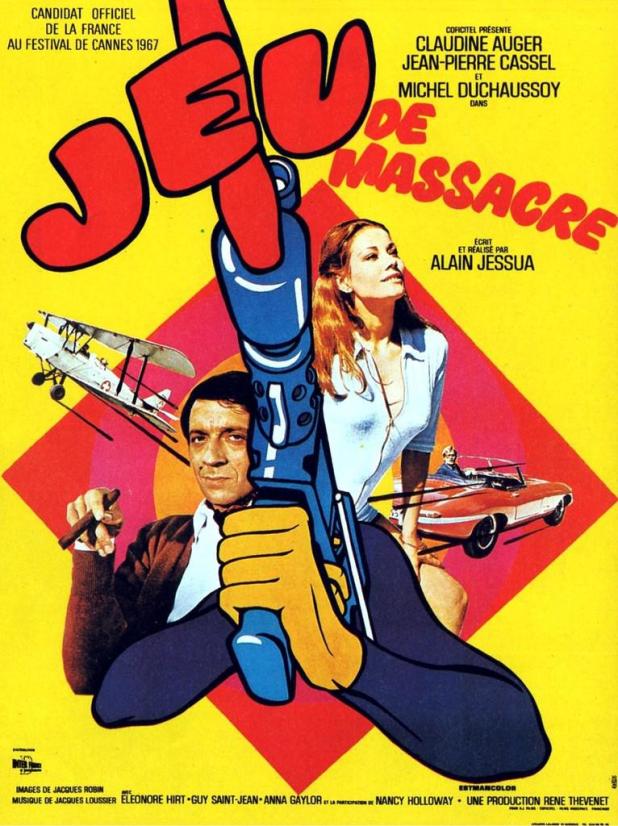
Directed and written by Alain Jessua, The Killing Game is a story about fantasy, the world of comic books, intersecting with our boring reality. Pierre (Jean-Pierre Cassel) and his wife Jacqueline (Claudine Auger) are collaborators on a series of popular comic books — they are drawn by a team of artists led by Guy Peellaert, who painted the cover for Bowie’s Diamond Dogs and whose painting, Frank Sinatra, which featured the headline “Frankie Goes Hollywood” which inspired the band’s name — and have been hired by a wealthy patron named Bob Neuman (Michel Duchaussoy). He wants them to transform him into a Diabolik type gentleman thief, which is quite different from his real life, where he’s controlled by his mother Genevieve (Eleonare Hirt).

Yet when we first meet Pierra and Jacqueline, they’re destitute, unable to make their bills and superfan Bob comes along at the right time, giving them an escape from the poorhouse. Bob is able to tell some wild stories about his life, yet he seems like a manchild who has barely left the house. He flies the couple to his Swiss estate and they go about recreating him in comic book form as The Killer of Neuchatel.

Auger is best known for playing Domino in Thunderball, but in my head, she’s a giallo queen of sorts, appearing in Bava’s nascent slasher A Bay of Blood and in one of the meanest of the yellow films, Black Belly of the Tarantula. Jacqueline is a woman trapped in her marriage, her writer husband believing he has control of her, whether its through his concepts and words or by just being a traditional male role as the husband. Yet her artwork is what makes his ideas so appealing and she’s a gorgeous and intelligent woman who begins to expand her agency through flirtation with Bob, despite how potentially dangerous he is.

I loved the look and feel of this movie, arriving as a Euroart film with hints of the aforementioned giallo and some Eurospy as well. While it didn’t intend to, it reminds me of the constant battle of who created things when it comes to the Marvel method, where Stan Lee has claimed creation of everything while artists like Jack Kirby and Steve Ditko were given at the most a sentence to go by and returned with fully formed stories and pictures that Lee would put the words to. It’s difficult to say who was the voice of making the damn thing, though my visual side has always been with the artists.

This hasn’t been released in the U.S., surprisingly, and is a great find for cinephiles.

Batman Ninja (2018)

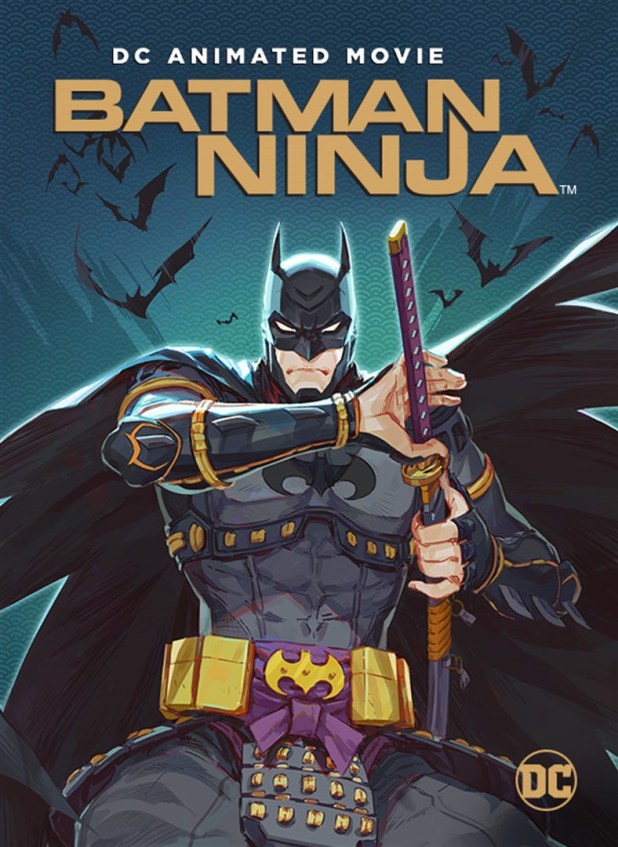
Directed by Junpei Mizusaki and with character designs by Takashi Okazaki, Batman Ninja starts with the Bat Family and all of the rogues being taken by Gorilla Grodd’s (Fred Tatasciore) Quake Engine and placed into the past, somewhere in a Japan where modern technology still exists. Batman (Roger Craig Smith) may have the Eian (Matthew Yang King) of the Bat Clan of Hida on his side, but everyone else has become a feudal lord in the two years that have passed since he was lost in time.

This places Catwoman (Grey Griffin), Nightwing (Adam Croasdell), Red Hood (Yuri Lowenthal), Robin (Yuri Lowenthal), Red Robin (Will Friedle) and Alfred (Adam Croasdell) on the side of good, along with Batman, against the Joker (Tony Hale), Harley Quinn (Tara Strong), Bane (Kenta Miyake), Two-Face (Eric Bauze), Deathstroke (Fred Tatasciore), Poison Ivy (Tara Strong) and the Penguin (Tom Kenney).

American writers Leo Chu and Eric Garcia rewrote the film from the original Japanese script that was written by Kazuki Nakashima, ultimately making two very different versions of the same film with different voice casts.

The animation is pretty crazy, giant robots and monkeys battle and this gets pretty far from the world of Gotham City, but I enjoyed it. It definitely takes chances.

This will have a sequel next year, Batman Ninja vs. Yakuza League.

You can watch this on Tubi.

25 DAYS OF CHRISTMAS CHALLENGE: Santa Isn’t Real (2023)

Directed and written by Zac Locke, this starts with Nikki (Kaya Coleman) almost falling asleep when Santa comes down the chimney and nearly murders her. She’s in a coma for almost a year and all of her friends believe that she’s actually tried to kill herself. Now, as the seasons come close to the holidays, everything upsets her, every image of Santa, every carol, every day of Christmas.

Nikki has some horrible friends, a bad boyfriend in Nathan (Trey Anderson) and a worry that when she was drinking and taking sleeping pills that someone was trying to kill her that is close to her. This doesn’t stop her from going to a cabin with Jess (Scarlett Sperduto) and MJ (Cissy Ly), a place that Santa finds quite easily.

Nothing unexpected happens. Of course her boyfriend is having sex with one of her friends. Certainly, the kills start happening. But I wanted to like this because the premise was so good, giving so much to it and not really getting much back. It’s not the worst holiday horror I’ve seen but that speaks more to how bad these movies can be.

You can watch this on Tubi.

25 DAYS OF CHRISTMAS CHALLENGE: Santa Baby (2006)

I just want holiday movies to be an escape because I’ll be frank, I’m head in the sand about the next few years and I’m trying to use the power of film to hide in my own world until I feel like this one is safe again. Then again, it never was safe and you should avoid any echo chamber, but yeah. I don’t need to put on a Christmas movie and remember how Jenny McCarthy normalized stopping vaccines and look where we are, as polio shots are being on the list of things stopped and people are going to remember what the measles were like again.

But anyways.

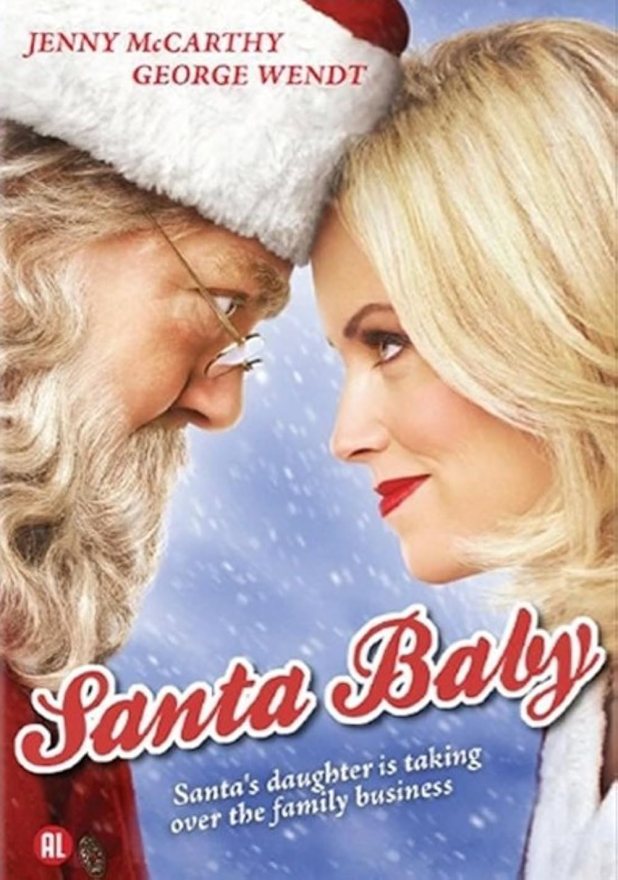
She’s Mary Class in this, daughter of Santa, who is played by George Wendt. Why did Santa and Mrs. Claus (Lynne Griffin!) wait so long to have kids? And why did she go into marketing? Why would this bring the real world in to have Santa have a heart attack and why is this a Hallmark movie where Mary has a lost love named Luke (Ivan Sergei) at home in the North Pole?

Somehow, this has Michael Moriarty in it and I wonder, did I cast this movie?

The sequel has Dean McDermott as Luke and Paul Sorvino as Santa. Lynn Griffith was back and that’s really all I care about.

Director Ron Underwood made Tremors. Yes, he also made City Slickers and Hearts and Souls, but The Adventures of Pluto Nash is the reason why he made ABC Family Christmas movies, including Holiday In Handcuffs, Deck the Halls and this movie and its sequel.

You can watch this on Tubi.

Batman Returns (1992)

Tim Burton didn’t want to make a sequel, but he agreed to return in exchange for creative control, which meant he got to change up the script by Sam Hamm and Daniel Waters, with Wesley Strick rewriting things to establish what the Penguin’s plan was. While this was a big success, it wasn’t at the level of Batman and that may be because of how dark, sexual and violent is became, which is one of the reasons why I like it so much.

It’s also totally a Christmas movie.

Unlike Bruce Wayne (Michael Keaton), whose rich parents loved him, the Penguin is born to Tucker (Paul Reubens) and Esther Cobblepot (Diane Salinger), who despite giving him the name Oliver (Danny DeVito) treat him like more an animal than a child. They dump him into the sewer, where he is raised by penguins. Yes, this really happens.

His Red Triangle gang kidnap rich man Max Shreck (Christopher Walken) and force him to work alongside his plan to take over Gotham City. It starts by kidnapping the mayor’s son and rescuing him, making the Penguin a hero. As for Schreck, he’s been planning to steal all of Gotham’s electricity, a plan that his secretary Selena Kyle (Michelle Pfeiffer) learns about and is shoved out a window to her death. Well, it would have been her death, but she’s brought back from the dead by alley cats. Yes, again, really.

Bruce Wayne, being Batman, ends up fighting Penguin, Catwoman and Schreck, all while as Bruce he falls for Selena. This all sounds too ordinary for what the movie has happen, because this has so many wild ideas and actors in it, like the Red Triangle gang being made up of Organ Grinder (Vincent Schiavelli), the Poodle Lady (Anna Katarina), the Tattooed Strongman (Rick Zumwalt, Bull Hurley!), the Sword Swallower (John Strong), the Fat Clown (Travis Mckenna), the Thin Clown (Doug Jones), the Knifethrower Dame (Erika Andersch), the Acrobatic Thug (Gregory Scott Cummins) and the Terrifying Clown (Branscombe Richmond). There were even plans for a black Robin, to be played by Marlon Wayans, to the point that even toys were designed.

Everyone in this is a shadow of Bruce Wayne: Selena may be “the same, split right down the center” but she wants vengeance instead of justice; Penguin was born rich as a freak but Bruce became one; Schreck is the rich villain that Bruce could have been. Catwoman embraces her sexuality by covering herself in leather and embracing a BDSM-coded whip; even at the end, she chooses solitude instead of love with Bruce, as he’d be just another man dominating her. She’s content to see his Batsignal in the night and know that he’s close.

This is also a Christmas movie that hates the holiday; a cash-in sequel that hates that fact as well as merchandising, despite having a toyline out in stores in time for its release. It feels like a movie that took chances, back when superhero movies had no rules or template. Compared to the next few Batman movies after, it felt so right, so perfect and still feels that way today.