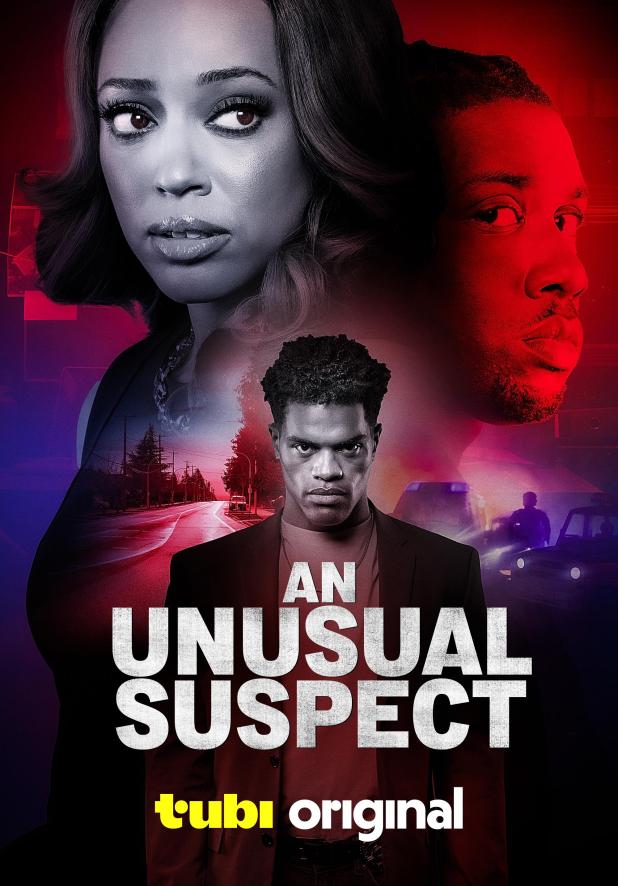
Directed and written by Booker T. Mattison (Twisted Marriage Therapist), this is the tale of the impossibly named Viola January (Christie Leverette). Just out of law school and in a new job, she’s also working a case pro bono to free Will (Derrick J. Smith), a man she believes was wrongly accused of kidnapping a young woman. But the truth is more complicated, and now, the real criminal is after her.
I should have gone to law school, I think, after seeing this. Viola has no idea who the killer is, but somehow gets in the middle of this mess, dragging the police into things and screaming so much — so many screams — until we have numerous people drawing guns, cops in shadowed rooms with guns out and somehow, Viola gets to follow the cops in there.
If I saw this as a kid, the end scene of the dude hiding in the house’s air ducts would have given me nightmares. Also, a shower scene without nudity is bad directing. Also also: That headshot at the end was great.
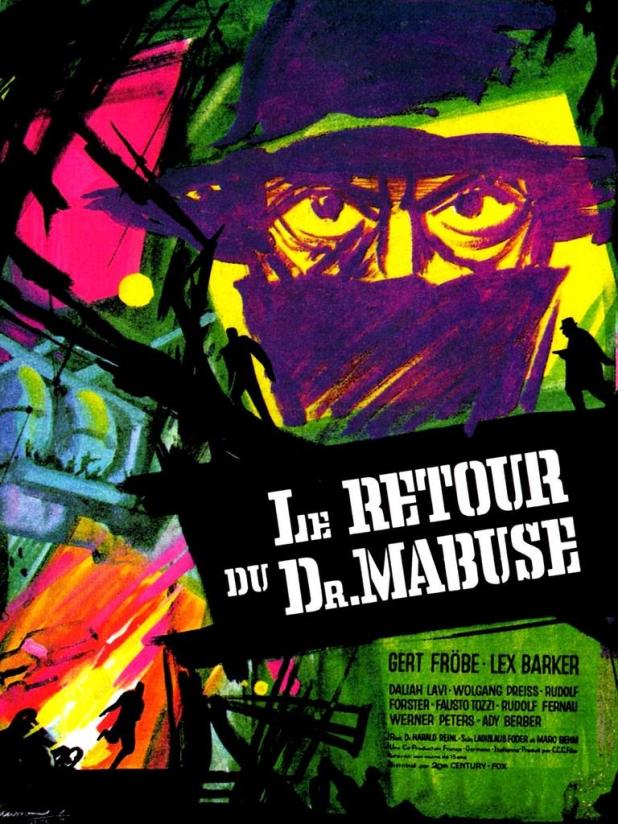
The second of the 1960s CCC Films Dr. Mabuse film series, this movie follows up Fritz Lang’s The Thousand Eyes of Dr. Mabuse. Gert Fröbe, who plays Inspector Lohmann, was the selling point in the U.S., as he had become known as Goldfinger.
The lawman is called away from his vacation to investigate a series of murders, including an Interpol agent with proof that American organized crime is working with a European crime syndicate, as well as the wife of one of that group’s members, who is killed by a flamethrower in a scene that’s pretty intense seeing as how this was made in 1961.
That woman was carrying Lohmann’s book, The Devil’s Anatomy, which was written by a Reverend Briefenstein of St. Thomas Church. That book has a theory: Satan is a spirit that can take the form of a werewolf, vampire or Dr. Mabuse. Yet, isn’t Dr. Mabuse dead? A priest informs Lohmann that even though the body can die, a soul can infest the bodies of other men. At that very point, Dr. Mabuse’s voice crackles from the church’s speaker system, demanding that the investigation stop now.
Mabuse (Wolfgang Preiss) now has an army of zombie criminals that he will use to take anything he wants, including giving these zombies orders to every prisoner in a jail and then sending them to destroy a nuclear power plant.
This movie would be followed by three more: The Testament of Dr. Mabuse, Scotland Yard Hunts Dr. Mabuse and The Secret of Dr. Mabuse. In 1990, Claude Chabrol would bring the character back for his movie Dr. M.
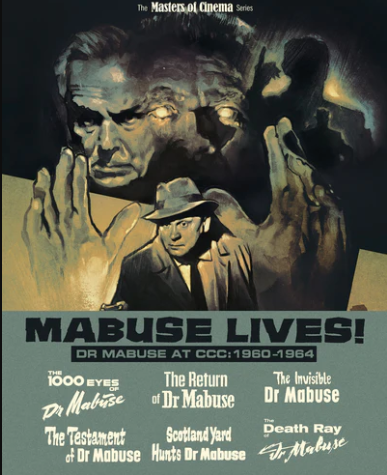
The Eureka box set Mabuse Lives! has this movie, along with an introduction by genre film expert and Video Watchdog founder Tim Lucas, a new 1080p presentation from a 2K restoration of the original film elements undertaken by CCC and a commentary track by film historian and author David Kalat. You can get it from MVD.
A CCC Filmkunst (West Germany), C.E.I. Incom (Italy) and Critérion Film (France) co-production — a UN of a movie — this is the last film ever directed by Fritz Lang, bringing back his villain of all villains, Dr. Mabuse. Lang had made the first two movies about this character, Dr. Mabuse the Gambler and The Testament of Dr. Mabuse, in 1922 and 1933.
It’s based on Mr. Tot Buys A Thousand Eyes by Jan Fethke, which was written in Esperanto. I love this Wikipedia description, which said it was a modern take on Dr. Mabuse that combined “German Edgar Wallace film series, spy fiction and Big Brother surveillance with the nihilism of the Mabuse world.”
Dr. Mabuse is dead. But they always say that. And if he is, who kills reporters and anyone who gets close to the truth? Who was in the vision of the murder that blind telepath Peter Cornelius (Wolfgang Preiss) saw? Is the doctor inside the Luxor Hotel, a place wired by the Third Reich to spy on its guests? What’s the deal with clubfoot wifebeater Roberto Menil (Reinhard Kolldehoff), who has abused his wife Marion (Dawn Addams) to a suicide jump and into the arms of American Henry Travers (Peter van Eyck)? What’s the story with Hieronymus B. Mistelzweig (Werner Peters)? Is that Jess Franco’s — Jess would later make The Vengeance of Doctor Mabuse — favorite bad guy, Howard Vernon? How about how in America, the posters claimed that this starred Gert Frobe, Mr. Goldfinger?
Despite Mabuse being surrounded by technology, it’s suggested that his power is near-supernatural. I’m all for that. I also kind of love that Mabuse’s plan is never explained. Why has he brought all of these people together? What’s he trying to do? It doesn’t matter. He’s just evil. Sometimes, that’s all a villain requires.
The Eureka box set Mabuse Lives! has this movie, along with an introduction by genre film expert and Video Watchdog founder Tim Lucas, a new 1080p presentation from a 2K restoration of the original film elements undertaken by CCC, a commentary track by film historian and author David Kalat, and an alternate ending. You can get it from MVD.
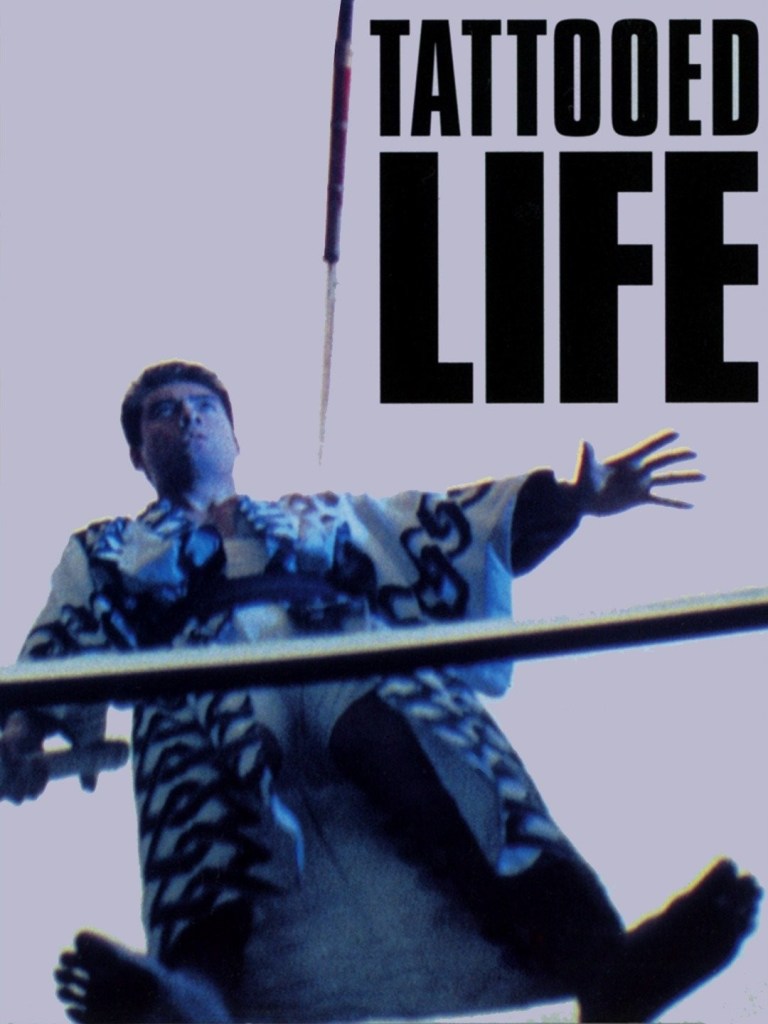
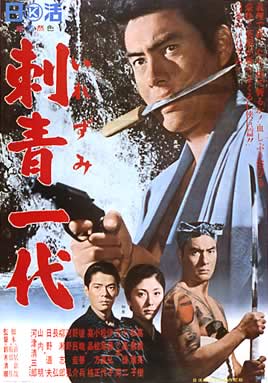
Official synopsis: Tetsuo, a low-level yakuza, is double-crossed by his boss and attacked. His younger brother Kenji, an aspiring artist with no connections to crime, comes to his aid and kills Tetsuo’s assailant. Fearing repercussions from the yakuza, they flee to Manchuria where they risk coming under suspicion of rival gangs. Seijun Suzuki remains loyal to the conventions of the yakuza film, yet Tattooed Life contains flashes of his later creative genius, including a final act of explosive visual excess that has become one of the director’s all-time classic scenes.
Seijun Suzuki directs the yakuza drama Tattooed Life with flair, and although the majority of the film involves brotherly drama and romances that cannot be, the climax provides a fine payoff. Hideki Takahashi gives a standout performance as older brother and yakuza member Tetsuo, who does his best to hide the identities of himself and his younger brother Kenji (Kotobuki Hananomoto, also solid as a tortured artist consumed by love with their boss’s wife), as both are on the run after a yakuza murder.
Lighthearted moments prevent the film from becoming overly heavy, as camaraderie, cautiousness, suspicion, and semi-unrequited love are all at play. Lighter on violence than later films in the subgenre, there are still flashes of ferocity and danger. The members of the sizable cast all give fine performances, and just wait until you get a load of the beautifully choreographed swordplay. Tattooed Life comes strongly recommended from me for aficionados of Suzuki’s work, yakuza films, and Japanese cinema in general.
Tattooed Lifescreens on OVID in May 2025. For more information, visit https://www.ovid.tv/.
It’s also available from Third Window Films and has extras such as audio commentary by William Carroll, author of Seijun Suzuki and Postwar Cinema, a newly edited archival interview with Seijun Suzuki, a newly edited archival interview with art director Takeo Kimura, a trailer, a reversible sleeve featuring original and newly commissioned artwork by Time Tomorrow, a limited edition booklet featuring new writing by Tom Vick and a newly translated archival review of the film, all in a limited edition of 3000 copies, presented in full-height Scanavo packaging with removable OBI strip leaving packaging free of certificates and markings. This is the first time this movie has been available in the West and you can get it from MVD.
Once called Vampz, this Steve Lustgarten (American Taboo, Power Slide)- directed and written movie is about Lillith (Sierra Tawan), Delilah (Tawanna Browne), and Cleo (Chantal Lashon), who are vampires who find that going out for their blood has become too dangerous. But what if they started a high-end call girl service, along with their familiar Dennis (Rick Irvin), and began using DoorDash to obtain the plasma they need so badly?
One night while they feed, a cop named Keith (Lamik Blake) sees them, which creates a psychic link that gets passed to his abused wife Eve (Emayatzy Corinealdi), who eventually becomes a vampire herself.
This looks a lot like a music video and reminds me of a time when between Blade and Queen of the Damned, it seemed like black vampires were about to have a moment. There are also two Blacula movies, as well as Vamp, Vampire in Brooklyn, and Ganja & Hess.
The best part of this? So much gore. These vampires don’t just drink blood; they devour people. There are some great ideas in it as well, so ignore the budget — you know that already — and just sit back.
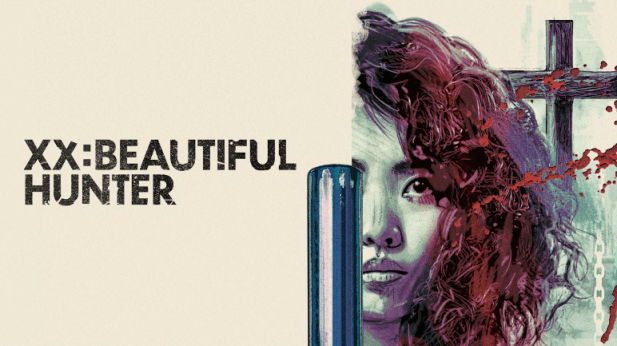
Shion (Makiko Kuno) is the most perfect killer in the Magnificat crime religion. Raised from birth to kill without passion or emotion by Father Kano (Koji Shimizu), she sees a photo of herself taken by a reporter named Ito (Johnny Ôkura). It shocks her into feeling something, as does his begging for his life on his knees, which soon turns into him going down on her, showing her that there is pleasure beyond being a mindless death giver.
Imagine a Hong Kong girl with guns movie, but add more sex- lots more- and base it on a manga, Shion by Mangetsu Hanamura, and you get a slight bit of what this is all about. It’s also better than you can imagine.
From BDSM electrical marital aid torture from fellow killer Mitsuko (Maiko Kazama) to having to choose between killing her new lover or giving up everything she has learned, this is a quick, down-and-dirty bit of V-cinema perfection.
Director Masaru Konuma made plenty of Roman Porno for Nikkatsu and the Woman In the Box movies. Star Makiko Kuno was a model—a Pocari Sweat girl, no less—and is a sommelier today. This is the second in the XX series, following XX: Beautiful Weapon, with XX: Beautiful Beast, XX: Beautiful Target, XX: Beautiful Prey, and XX: Beautiful KillingMachine also in the series.
If you ever said, “I wish La Femme Nikita felt like a rougie,” good news. This is it.
The Hitman: Blood Smells Like Roses is just one of the movies in the Arrow Video V-Cinema Essentials: Bullets & Betrayal set. The set includes a newly filmed introduction by Japanese film critic Masak Tanioka, an interview with screenwriter Hiroshi Takahashi, a video essay by critic and Japanese cinema expert Patrick Macias and a trailer. You can get this from MVD.
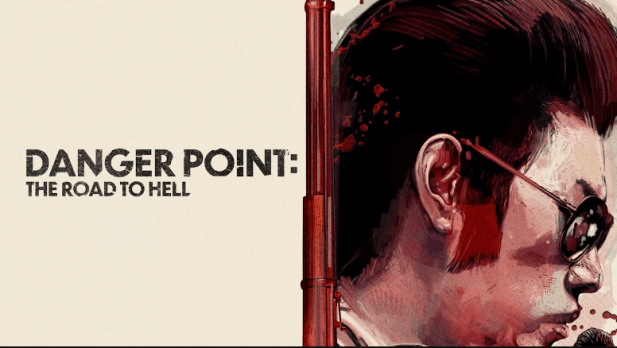
With a non-linear narrative and older and younger hired killers paired together years before Pulp Fiction, this tells the story of two men who will kill anyone in their way before one of them is obsessed with a photo found in the hands of one of his victims. This leads to one of those noir “don’t ask what you don’t want to know” narratives, as everyone they meet is untrustworthy at best and murderous at worst. Crime doesn’t pay, except here, it ends up that way, even if it’s not for everyone.
The Hitman: Blood Smells Like Roses is just one of the movies in the Arrow Video V-Cinema Essentials: Bullets & Betrayal set. The set includes a newly filmed introduction by Japanese film critic Masak Tanioka and a video essay by critic and Japanese cinema expert James Balmont. You can get this from MVD.
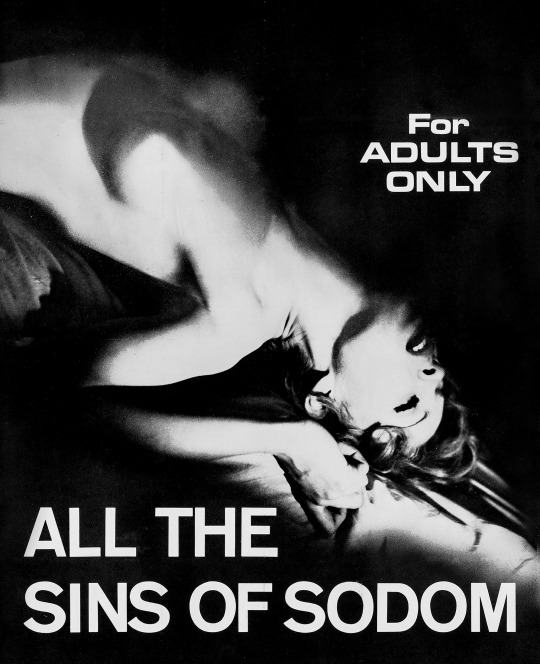
The title of this movie is awesome, but then I found out that it’s also called All The Evils Of Satan, and I don’t know if I could be more enthusiastic about a film.
New York City shutterbug Henning (Dan Machuen) is supposed to shoot some nudes for his agent Paula (Peggy Sarno), but is obsessed with shooting the evil that lives inside all women. To capture this, he takes images of Leslie (Maria Lease, who would go on to be a director of adult films, and Dolly Dearestand the script supervisor on Better Off Dead) as she hangs from the ceiling of his studio. After they make love, and while Henning usually never sees another of his conquests again, she feels different. She’s also mindblowingly gorgeous, which helps.
He also meets another model named Joyce (Marianne Prevost), for whom he feels sorry. She’s homeless and needs a hand up. He invites her to stay in his studio and assist him, but when he grows angry that he can’t capture with his camera what he sees with his eyes, he learns that she’s the perfect muse for his images of base morality. Paula even tells him she sent Joyce his way, claiming, “I sent her to you because she is what you’re looking for. If I ever I saw it, she’s the daughter of Satan.”
That means that things aren’t going to end well for anyone. Again, this is in stark black and white and while the lovemaking scenes are quite erotic, they’re mostly clothed. Then again, when they were made by Sarno, this burned the celluloid.
The first five and a half minutes of 1972’s All the Colors of the Dark (also known as Day of the Maniac and They’re Coming to Get You!) subvert what I call Giallo’s “graphic beauty” in intriguing ways.
An outdoor scene of a stream slowly darkens, replaced by an old crone with blackened teeth, dressed as a child and a dead pregnant woman are both made up to be anything but the gorgeous creatures we’ve come to expect from these films; even star Edwige Fenech (The Strange Vice of Mrs. Wardh, Five Dolls for an August Moon and so many more that I could go on and on about) isn’t presented in her usual role of a sex symbol. She’s covered in gore, eyes open and lifeless. As the camera zooms around the room and begins to spin, we see a road superimposed and hear a car crash. Even when Edwige’s character in this film, Jane Harrison, wakes up to shower, we’re not presented with the voyeuristic spoils that one expects from Giallo’s potent stew of the fantastique and the deadly. She stands fully clothed, the water more a caustic break with the dream world than an attempt at seducing the viewer or cleaning herself.
Again — in a genre where words possess little to no meaning — we are forced to wait five and a half minutes until the first dialogue. Richard (George Hilton, Blade of the Ripper), her husband, bemoans that he must leave but feels that he can’t. His therapy is a glass of blue pills and lovemaking that we watch from above; his penetration of her is intercut with violent imagery of a knife entering flesh. Instead of the thrill we expect from this coupling, we only sense her distance from the proceedings.
As Richard leaves her behind, we get the idea of the madness within their apartment: a woman makes out on the sidewalk with a young hippy man who asks when he’ll ever see her again. Mary (Marina Malfatti, The Night Evelyn Came Out of Her Grave, The Red Queen Kills Seven Times), a mysterious blonde, glares down at him, somewhat knowingly. His wife looks lost and trapped. Without dialogue, we’ve already sensed that some Satanic conspiracy is afoot. Echoes of Rosemary’s Baby? Sure, but you could say that about every occult-themed 1970s film — the influence is too potent, a tannis root that has infected all of its progeny.
Last year, a car crash took the life of Jane’s unborn child. Her sister Barbara (Nieves Navarro, Death Walks at Midnight, Emanuelle and the Last Cannibals) has advised therapy, which Richard laughs at. As Jane waits to see the doctor, she sees a man with the bluest eyes (Ivan Rassimov from Planet of the Vampires and Django in Don’t Wait, Django…Shoot!) — eyes we’ve seen before, eyes that hint at blood and murder and madness.
Even when surrounded by people, such as on the subway, Jane is lost in her thoughts and in another world, one of inky blackness and isolation punctuated only by the cool blue eyes of the sinister man who tracks her everywhere she goes. Even the teeming masses of the city make her feel more lost; only the light of the above-ground world erases the nightmare of her stalker. That is — until he finds her in the park, where she screams for him to stop following her. The camera is detached, following her from high above, watching her run away, needing the refuge of her home. Even then, the man is still there, banging on the door, demanding to be part of her reality.
The thing is — Richard has no faith in his wife’s sanity. And even when he’s telling her sister, Barbara, how he doesn’t trust psychiatry, he’s also watching her undress in a mirror. This scene really hints that they’ve had sex in the past (perhaps the past was just five minutes ago).
Jane finally finds a kindred soul—her neighbor, Mary, whom we saw earlier in the windows. Mary tells Jane of the Sabbath, the black mass and how it helped her. She sees Jane as a lost soul who needs to be saved and agrees to take her to her church.
The blue-eyed man returns, chasing Jane past a spiraling staircase, ax in hand. The camera spins, making us dizzy as it cuts from the building to the man and from Jane’s car to the man. Jane demands to be allowed to go to the Sabbath as she fears the madness that seems ready to overtake her.
As we approach the old mansion where the rite will occur, we feel more of a sense of belonging, a warmer color palette instead of the washed-out nature of the urban sprawl we’ve experienced until now. Everything is lit by a candle. Mary appears to have achieved a glow, and Jane stands in stark contrast to the beatific zombies of the assembled congregation. A taloned priest murders a dog in front of Jane’s eyes as Mary caresses her (trust me, this isn’t a Fulci realistic dog murder, although I hid my mutt Angelo’s eyes for this scene). The priest tells her that if she drinks the blood, she will be free. Hands and lips and bodies overtake her as an orgy breaks out, a bacchanal that she seems to want none of. This sex is presented as horror, as anything but pleasure, yet Jane seems ill-equipped to resist.
Immediately, we see her enjoying her husband, no longer frigid and everything back to normal, as he says. However, Jane tells her that she doesn’t feel real anymore. She walks to the bathroom, seeing multiple reflections of herself that harken back to the kaleidoscope effect we saw as the priest took her to the altar.
No matter what peace, love, and sex happen, Jane can’t escape the blue-eyed man. Even on a romantic lunch date with her husband, he’s outside waiting for her. A taxi drives her back to her home, the only sanctuary against the invasion that the man presents. As she goes through her husband’s effects, she finds a book of the supernatural emblazoned with a pentagram. He claims it’s just a second-hand book and accuses her of hiding things from him.
Jane returns to the Satanic church, this time willing to give herself over and actually seeming to enjoy lovemaking for the first time in this film. Mary intones, “Now you’ll be free.” Again, the long-fingernail priest takes her while the blue-eyed man watches her, his hands covered in blood. The members of the church dance around her as Mary calls to her. The priest tells her that Mary no longer exists. She is free to go, as she brought Jane to the church. The final act is for Jane to murder her, to send her away. Jane screams that she can’t do it, but Mary tells her that they must part, that this act will free her, as she lowers herself onto the dagger that Jane clutches.
Jane awakens, fully clothed, in a field. The blue-eyed man is there, telling her, “Now you are one of us, Jane. It’s impossible to renounce us.” He offers his hand, telling her to follow him. She’s expected. He takes her to an altar that is the same design as the pendant we just saw her wear during the orgy. She demands to know where Mary is, but the only answer she gets is that she belongs to the cult and will now be protected. Mary is gone, and Jane’s sacrifice allows her to be free. They show her Mary’s body, covered in black lace, as she runs screaming.
Perhaps in retaliation for the ritual, dogs chase her through the woods, tearing at her, stopped only by the blue-eyed man who knocks her out. She awakens, clad in virginal white, surrounded by white sheets. Her husband leaves a note in lipstick on her mirror. She looks, and the symbol is on her arm, which is covered in blood. When she goes to Mary’s apartment, an old woman lives there instead.
Jane is totally lost — the ritual has brought her nothing but more madness and the blue-eyed man even closer. Her husband is away on business, her sister is on vacation, and her therapist is dismissive. Even her apartment walls, which offer security, have become a maze of fear. The colors shift to Bava-esque hues of blackness and reds as we see the blue-eyed man attack her over and over again, with constant repetition of the frame as she screams — and then there’s no one there, just the room filled with red and a broken piece of pottery embedded in her hand.
After examining Jane, the doctor leaves her with an elderly couple. Her husband can’t find her and asks Barbara to help.
Jane awakens in a white room — of course, the blue-eyed man is waiting outside the house in the gauzy early morning hours. Yet there is an ominousness about the proceedings — no one is there. A tea kettle is boiling on the stove while the old man and woman sit there, in still repose, dead at the breakfast table. She’s trapped in the room with them as she frantically calls for help. She tells her doctor that the man is there and has killed everyone. He calmly tells Richard and Barbara that he has another patient to deal with, as he doesn’t trust Richard and wants to keep him in the dark. However, he does reveal the truth to Barbara. That lack of trust goes both ways as Richard follows the doctor.
Meanwhile, the blue-eyed man finds Jane, telling her she cannot renounce them. He tells her that the knife that he holds killed her mother when she tried to deny them. And it’s the same knife that killed the married man. He tells her she is beyond reality and will never find it again.
Following the sound of a hound, she finds the doctor’s car in the driveway — and, of course, he’s dead, too. The blue-eyed man gives chase and finally tries to kill her, but he’s stopped at the last minute by Richard, who stabs him with a rake. He repeatedly stomps on the man’s hand, revealing the tattoo symbol he stares at.
Meanwhile, Mary arrives home to a green-hued apartment, where Richard is smoking and accusing her of being part of black magic. He sees the symbol when he watches her undress, and she tells him that she wants him, that she can make him forget her sister. She promises him untold power and that he can become anyone he wants. As she leans in for a kiss, he shoots her, tossing the envelope of a letter that he received that explains it all.
Cut to a hazy white room where Jane has been given a sedative. An inspector — the priest from the cult! — demands to see her. Richard arrives and embraces her, telling her he will take her out the main door. They speed away in a car and return to their apartment. But all is not well — Richard is killed by an unseen person, and Jane is left holding the dagger. The police who arrest her all have the symbol on their wrists and are led by the leader. The camerawork becomes tighter and claustrophobic as we see the cult descending on her.
Wait — it’s all a Wizard of Oz dream, with the police and her husband at her bedside, explaining the film’s entire plot, which ends up even more ridiculous than everything that we’ve seen up until now (which is really saying something). Turns out there was no real magic. The cult was just a drug ring. Mary was real and just a heroin addict. Her sister was behind it all because she wanted all of the money from the will of their mother’s murderer, who wanted to give 600,000 pounds to both of them.
Jane rejects this reality, saying this cannot be true after all that she’s seen. The cop replies that he kept trying to call her, and she never answered, so he wrote it all in a letter — the letter that Richard showed Barbara after he shot her. It’s worth noting that the American version of the film ends with Jane being killed by the cult and all of the ending — nearly six minutes worth of important story and denouement — exorcised.
We return to where we were, with Richard going upstairs — just like we’ve seen before. Jane screams that she knows what will happen. The cult leader attacks him, blaming her for Barbara’s death. Richard follows him to the roof, where they fight, and the priest is thrown from the roof. Jane tells Richard that she knew the man was there; she knew that her husband had killed her sister, that it wasn’t a suicide, and that some strange force was guiding her. She asks for help, and the credits roll.
With this film, director Sergio Martino (Torso, 2019: After the Fall of New York) crafted an intriguing blend of the supernatural and the Giallo. Even the procedural elements come only after the film has descended into surrealism, as if a cold glass of water has been splashed in the face of a viewer who needs an explanation. Magic is madness, and we can’t even trust our heroine at the end when she begs to escape the power inside her.
This film is terrific, with Edwige Fenech turning in a strong performance. You really feel the isolation and madness that surround her and empathize with her. The strong visuals and the break from the genre conventions of masked killers, gloved hands and inept police make watching this film an absolute joy. From beginning to end, it makes you question not only the reality that it presents but also the objective trustworthiness of our heroine. And while it betrays an obvious inspiration to the aforementioned Rosemary’s Baby, it is not slavish in its devotion, making a powerful statement on its own merit.
Here’s a cocktail recipe.
They’re Coming to Get You
1.5 oz. J&B
.5 oz. lemon juice
.5 oz. simple syrup
1 egg white
3 dashes Angostura bitters
Shake all ingredients in a cocktail shaker filled with ice.
Alley Cat has three directors. I have no idea why, but Victor M. Ordonez (who is in Nine Deaths of the Ninja and Hellhole), Ed Palmos and Al Valetta (who is in Sole Survivor, Runaway Nightmare and Hollywood’s New Blood) all had their hand in this movie, leaving Robert Waters, who also wrote Fighting Mad, to write the actual story.
Billie (Karin Mani, who was also in Avenging Angel) is our heroine Billie. She starts the movie by stopping some scumbags from stealing her car. They go to their boss Scarface (Michael Wayne), who decides that he’s going to turn this tiger into an alley cat, a plan that starts by putting her grandmother in the hospital and beating her grandfather something fierce. The one good thing that happens is that she falls for a cop named Johnny (Robert Torti), who ends up having to arrest her with his partner Boyle (Jon Greene) when she defends some joggers from the very same criminals and has a gun without a permit.
When Billie goes to court, she pays twice the fine of the rapists, whose victims are intimidated by Scarface and never show. Billie reacts like a maniac, gets charged with contempt of court, and turns her movie into a WIP film for a little, complete with requisite shower moment.
This is the only women’s revenge movie — yes, Billie gets out and gets said payback — in which the lead character eats at an Arby’s. The old Arby’s had that giant beef hat on the sign before they had the meats and all. And oh yeah — while she’s in jail, her grandmother dies and Billie is robbed of those last moments, so even though her boyfriend wants to legally deal with Scarface, you will be hoping that she shoots him right in the dick.







 B&S About Movies
You must be logged in to post a comment.