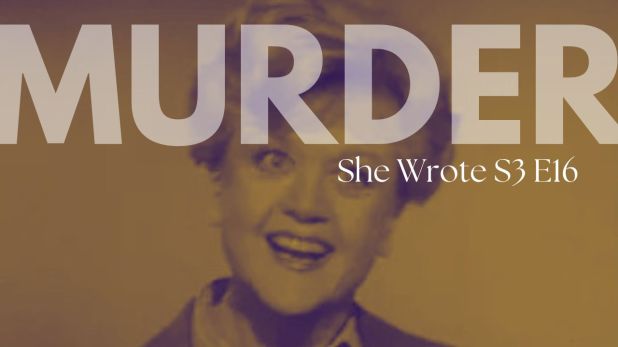
Murder, She Wrote S3 E10: Stage Struck (1986)

The murder of the leading lady’s understudy disrupts a play starring two previously married actors.

Season 3, Episode 10: Stage Struck (December 14, 1986)

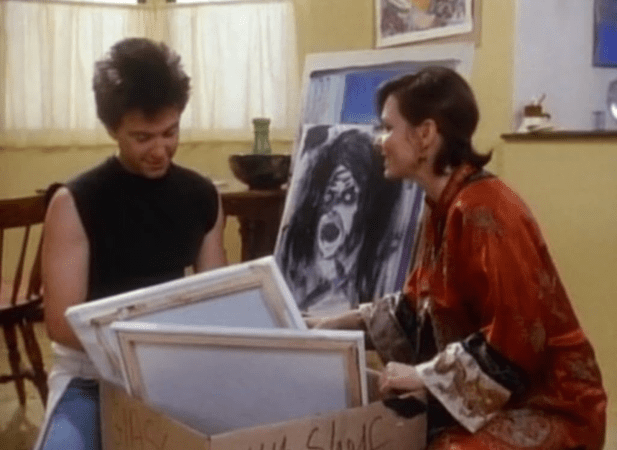
Two of Jessica’s old friends bring her back to her old job at a theater. One of them faints on stage, and then her understudy dies.

Who’s in it, outside of Angela Lansbury?

Shea Farrell is Larry Matthews.

Bob Hastings (Commissioner Gordon’s voice in the Batman cartoons) plays Eddie Bender.

Donald Most — come on, Donnie! — is T.J. Holt

Edward Mulhare may have been Rex Harrison’s understudy in My Fair Lady on Broadway. But we all know him from Knight Rider. Here, he plays Julian Lord.

Christopher Norris (Eat My Dust) as Pru Mattson.

Dan O’Herlihy (Conal Cochran and The Old Man!) is Alexander Preston.

Eleanor Parker plays Maggie Tarrow.

John Pleshette is Nicky Saperstein.

John Schuck from McMillan and Wife is Chief Merton P. Drock.

Ann Turkel (Humanoids from the Deep) as Barbara Bennington.

Smaller roles include Richard Hoyt-Miller, Annie Gagen, and Jeffrey Lippa as reporters; Weldon Bleiler as a doctor; and Fritz Ford as an onlooker.

What happens?

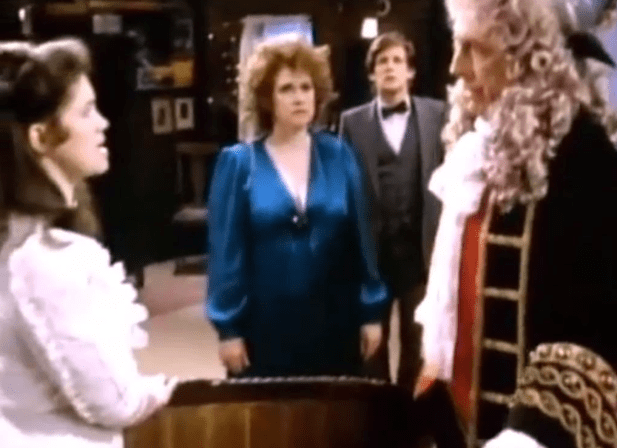
Julian Lord and Maggie Tarrow are essentially the Lunt and Fontanne of Jessica’s past, a legendary acting duo who were once married and still share a spark, though it’s heavily smothered by egos and secrets. They invite Jessica to the Applewood Playhouse for a revival of The Night of the Phoenix, but the production is cursed from the jump.

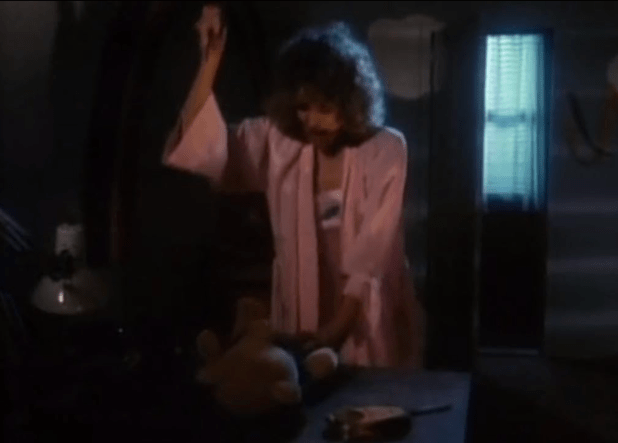
Maggie’s health is failing, and her understudy, Barbara Bennington, isn’t just waiting in the wings. She’s actively sharpening her claws. But when Maggie faints and Barbara gets her big break, she doesn’t just break a leg. She drops dead mid-scene after drinking from a prop decanter.

In the middle of all this, the cop in charge — Chief Drock — tries to sound like Hercule Poirot.

While he’s being a weirdo, Jessica realizes that the poison in the prop wine was meant for the leading lady, but the real target was always the person holding the secret.

Who did it?

When JB confronts Julian backstage, she learns that the blackmail was over the fact that he and Maggie had conceived a child and given it up for adoption. Julian admits to Jessica that he poisoned the wine specifically to kill Barbara and keep their secret buried. To make the accident look like it was meant for Maggie and deflect suspicion from himself, he had previously played with Maggie’s vitamins to make her faint, ensuring Barbara would be the one on stage to drink the lethal dose.

Who made it?

This was directed by John Astin, who was Harry Pierce in other episodes, and written by Philip Gerson.

Does Jessica dress up and act stupid? Does she get some?

No! Ugh.

Was it any good?

It’s a decent one.

Any trivia?

This episode reveals how Jessica met her husband Frank. Their romance blossomed in the theatre community, proving that Jessica has always had a flair for the dramatic, even if she prefers the technical side of the stage.

Edward Mulhare and Ann Turkel were also on Knight Rider

Give me a reasonable quote:

Jessica Fletcher: Oh, certainly not. No, but I was Applewood’s second-best set painter. And in case you haven’t guessed, there were only two.

What’s next?

Jessica comes to the aid of Dorian Beecher, a shy poet who is the prime suspect when his bully is found dead.

Tales from the Darkside S2 E7: The Devil’s Advocate (1985)

Three Pittsburgh-centric episodes in a row, starting with Tom Savini directing, then John Harrison and now Michael Gornick behind the camera. The director of Creepshow 2, as well as episodes of this show and Monsters, also has the pedigree of being written by George Romero.

Luther Mandrake (Jerrt Stiller) is the kind of burned-out shock jock that horror movies are made about. He starts off mid-rant, late for his show, The Devil’s Advocate, and angry that the cops dared to question him after someone was found dead in his car. Mandrake has the midnight to 4 AM shift, the Art Bell time, the middle of the darkness when only crazy people are listening and even weirder people are calling in. 

Mandrake hasn’t had it easy: his mother died in a plane crash, his father died in a picket line, his wife is in a coma, and his son just died, the victim of a drunk driver. One of his callers — from Pittsburgh — reacts by calling him the devil, all as Mandrake begins to turn into a wolf. Before too long, callers from across time appear, complaining about President Wilson and World War II. That’s because — shudder — he’s become the devil’s advocate for real, broadcasting from hell, as he’d already killed himself in his car, and that’s the body the police found.

Still’s son, Ben, did his own version of this on his Fox show, presenting “Low Budget Tales of Horror.” Jerry would dress as a wolf again in the Monsters episode “One Wolf’s Family.” That brings the Pittsburgh connection full circle, because that one was directed by Jon Thomas, who worked as a sound mixer on many Romero projects.

Murder, She Wrote S3 E9: Obituary for a Dead Anchor (1986)

When an obnoxious out-of-town TV personality is murdered, it’s up to Jessica to figure out the killer.

Season 3, Episode 9: Obituary for a Dead Anchor (December 7, 1986)

Jessica agrees to a television interview for an old friend but is surprised when a different reporter arrives after a boat explosion kills her old buddy. Or does it?

Who’s in it, outside of Angela Lansbury?

Sheriff Amos Tupper is Tom Bosley, but you knew that.

Abby Dalton. Mother Speed in Roller Blade Warriors: Taken By Force is Judith. Her husband, Kevin, is played by Chad Everett from The Intruder Within.

Robert Hogan is Dr. Wylie Graham.

Robert Lipton plays Richard Abbott.

Paula Roman is actress Kathleen Lloyd (The Car).

Mayor Sam Booth is Richard Paul.

Robert Pine, Sgt. Joseph Getraer from CHiPs is Doug Helman.

Rex Robbins is George Fish.

Mark Stevens is Nick Brody.

Smaller roles include James Lemp as Gerald Foster (AKA Erik Stern; he was in The Love Butcher), Frank Annese as Ronald Ross, Patti Karr as Clara Polsby and Paul Ryan as a commentator.

What happens?

Jessica expects to do an interview with TV reporter Paula Roman, but ends up with a much rougher interviewer, Kevin Keats. Soon after the segment, his boat blows up, and reporters come to Cabbot Cove, all looking for a killer.

As you’d expect from an episode of this show, everyone hated Keats. For example, he cheated on his wife, and she wished that he lived long enough for her to divorce him. And Jessica is dealing with a lot of gruff from the mayor, who is concerned that she’s making the town look bad by doing the interview, which he wanted her to do in the first place.

Sheriff Tupper almost solves the case, and when he asks Jessica if he’s right, she agrees. He’s kind of shocked.

Who did it?

Nick Brody, a laid-off newsman, is angry about the way TV is changing for the worse.

Who made it?

This was directed by Walter Grauman and written by Robert Van Scoyk, the show’s story editor, from a story by Bob Shayne.

Does Jessica dress up and act stupid? Does she get some?

I mean, she did make Tupper feel pretty good when he was right about the case. Maybe.

Was it any good?

A decent episode. After the Magnum episode, we needed a little calm down.

Any trivia?

Richard Paul’s first appearance as Cabot Cove’s do-nothing mayor, Sam Booth.

In this episode, we learn that the B in J.B. Fletcher is for Beatrice. Her full name is Jessica Beatrice MacGill Fletcher

When Jessica first meets Nick Brody, a painting of a ship like the movie Mutiny is behind him. That movie starred Angela Lansbury and Mark Stevens, who are playing the characters on this show.

Give me a reasonable quote:

Jessica Fletcher: But what did killing Mr. Helman solve for you? He was only following the network’s orders.

Nick Brody: Without Helman, I had a better-than-even chance of staying with the show. I had more experience than any of them. To hell with the audience research. So I wasn’t young, vicious or even pretty, but I was the one who could talk sense to them. I’m a newsman. I’m not a performer. I tried to tell Doug that. But whatever he started out believing, in the end, he bought the idea that the wrapping paper, the wrapping paper, was more important than the package. If you don’t mind, I’d like to finish this rewrite while we’re waiting for the sheriff. Just dial nine for an outside line.

What’s next?

The murder of the leading lady’s understudy disrupts a play starring two previously married actors. John Astin directs this one.

Tales from the Darkside S2 E6: The Satanic Piano (1985)

Directed and written by John Harrison (First Assistant Director on Creepshow and Day of the Dead — not to mention his stunning turn as the villain of Effects), this episode is all about composer Pete Bancroft (Michael Warren, Hill Street Blues), who is burned out on playing the piano, out of ideas and seemingly discourages his daughter Justine (Lisa Bonet) from following in his footsteps. But then Wilson Farber (Philip Roth) offers him an electric piano out of the blue. It’s powered by thought, not by playing, and seems to turn his ideas into hit songs. But you know what they say: if an offer is too good to be true, well…the keyboard acts as a psychic parasite, feeding on Justine’s youthful vibrance. And this is after Pete ignored her talent! Now, he wonders how he can escape this Faustian deal.

At its core, the story explores the commodification of art. Pete Bancroft isn’t just a tired musician; he’s a man experiencing the soul-crushing weight of professional expectation. When Wilson Farber presents the thought-powered keyboard, it represents the ultimate shortcut of output without the labor of practice or the pain of composition. Keep in mind, this was made decades before AI.

Speaking of music, Harrison also composed the score, with cues very similar to those in Day of the Dead.

Paper Man (1971)

This made-for-TV movie aired on CBS’s Friday Night Movies and later had a short theatrical run. Director Walter Grauman may have only made six theatrical films, but he was a master of the TV movie, working on films like Daughter of the MindCrowhaven FarmThe Old Man Who Cried WolfThe Memory of Eva Ryker and, most essentially, Are You In the House Alone? This movie was written by James D. Buchanan and Ronald Austin from a story by Anthony Wilson.

In 1971, we didn’t know about identity fraud involving credit cards. This was all new. So when four college students — Karen (Stefanie Powers), Jerry (James Stacy), Lisa (Tina Chen) and Joel Fisher (Elliott Street) — get a credit card belonging to someone they don’t know, Henry Norman, they create an identity on their university’s giant computers. When it seems they’re about to get caught, they turn to the most intelligent computer guy in the school, Avery (Dean Stockwell), as Jerry uses Karen to sweet-talk him into committing this crime with them.

The problem is that there really is a Henry Norman and that he’s closer to them than they could ever know, turning them against one another and then killing them one by one, using incorrect medication, computer-controlled elevators and even a medical school dummy. It’s at once a giallo, a TV movie, a computer killer thriller and, yes, a mannequin movie.

I really loved the sparseness of this, as it feels like the middle of the night for most of the movie. No one seems to trust one another, and even as Karen and Avery start to warm up to one another, she worries that he could be the killer. He’s concerned that he should never have let anyone in, instead of being a shy computer geek. As for catching the killer, well, dummy drops are always lovely.

You can watch this on Tubi.

Doug Henning’s World of Magic (1978)

The fourth in a series of seven annual prime-time television specials that aired between 1975 and 1982, starring famous magician Doug Henning; this time, Brooke Shields appears, and Tom Bosley, for some reason, plays heel.

Oh, Doug Henning. The 70s, really. Starting as The Astounding Hendoo in Winnipeg, he won a government grant with the idea that his work wasmagic plus theatre equals art.The live theatrical show that would result, Spellbound, was written by David Cronenberg, directed by Henning’s college friend Ivan Reitman and had music by Howard Shore. His career went beyond magic, as he created looks for the Jacksons Victory Tour, had his own line of stuffed animals called Wonder Whims, co-wrote a b0ok about Harry Houdini, married relationship consultant Barbara De Angelis (who was married five times and one time to Men Are from Mars, Women Are from Venus author John Gray), moved to India in order to devote his time to Transcendental Meditation, almost started a TM theme park named Maharishi Veda Land in Florida, was the senior vice president of the Natural Law Party of Canada and a Natural Law Party candidate in the United Kingdom’s general election. Sadly, he died of liver cancer at the age of 52. Nothed crumudgeon James Randi said that Henningabandoned regular medical treatment for liver cancer, continued to pursue his diet of nuts and berries, and died of the disease.”

In his act, he always said the same thing:Anything the mind can conceive is possible. Nothing is impossible. All you have to do is look within, and you can realize your fondest dreams. I would like to wish each one of you all of life’s wonders and a joyful age of enlightenment.”

He was everywhere in the 70s. It’s hard to overstate how much Doug Henning’s psychedelic,rainbow-and-denimaesthetic defined the 1970s. He managed to pivot magic away from the stuffy, tuxedo-clad Victorian era and into the age of Aquarius.

Director Walter C. Miller was the man when it came to making award shows and specials. Buz Kohan, who wrote this, worked on similar stuff. 

You can watch this on YouTube.

The Booth at the End (2010-2012)

ABOUT THE AUTHOR: Exploitation-film historian A.C. Nicholas, who has a sketchy background and hails from parts unknown in Western Pennsylvania, was once a drive-in theater projectionist and disk jockey. In addition to being a writer, editor, podcaster, voice-over artist, and sometime actor and stand-up comedian, he’s a regular guest co-host on the streaming Drive-In Asylum Double Feature and panelist on the Deep Images podcast and has made multiple appearances on Making Tarantino: The Podcast. He also contributes to the Drive-In Asylum fanzine, the B & S About Movies Podcast, and the Horror and Sons website. He currently programs a monthly film series, A.C. Nicholas’s Hidden Gems, at The Babylon Kino in Columbia, South Carolina.

“Show. Don’t tell.” This adage is as old as film itself. Looking at the first quarter of the twenty-first century, perhaps screenwriters have taken that statement too much to heart. Apart from the few films written by folks who can write memorable dialogue, like Quentin Tarantino and David Mamet, the typical film or TV show today is an empty spectacle, or as my father used to say, “parada,” Polish for “show” or “exhibition.” Fathers of my generation would tell kids, “You’d better stop your crying, or I’ll knock you into next Wednesday,” but my dad always used parada when sternly presaging an ass-whipping: “Don’t make a big parada out of it.” And that describes your typical $200 million Hollywood blockbuster—empty, soulless, and cynical, just a series of huge action set pieces strung together by the most perfunctory narrative, a big parada. (Quick, how many films in the past 25 years deal with a fight over “magic junk” or advanced technology, something that if it falls into the hands of the wrong people will cause mass destruction? There’s a Letterboxd list for you, Sam.) Let’s just say the era of dialogue-driven films–“all tell, no show”–such as My Dinner with Andre, Swimming to Cambodia, and Before Sunrise, is but a distant memory 

Which brings us to a weird little item called The Room at the End, which had its genesis as a web series of 62 two-minute episodes. They were later strung together and shown on Canadian and British television before floating around streaming services in this country. How I discovered it years ago, I cannot remember. But it’s something I’ll never forget. It’s one of the best things I’ve ever seen, from anywhere, from any era, in any medium. And, apart from a handful of reviews and posts online, it remains largely unknown. But not for long, I hope.

In the end booth of an old-school diner, sits a rumpled guy with a pen and a book. He’s never referred to by name. He’s just “The Man,” and he’s played by long-time character actor Xander Berkeley. As each vignette begins, he’s sitting there, perhaps reading the newspaper or having coffee, when he’s approached by someone who has heard that he can help them with a problem. A man has a terminally ill child. A young woman wants to be prettier. A nun has lost her faith. Each of them tells their story to The Man, who says that what they want can happen, but first, they must complete a task and return to report the details of carrying out that task. He then opens his book, jots a note or two, and tells them what they must do to receive their desire. For the man, his kid will get better if… he kills someone else’s child. For the young woman, she’ll be prettier if… she steals $101,043 from some banks. (The randomness of that number is like the randomness of the universe.) And the nun will hear God again if… she gets pregnant. The Man also tells each of them that they can walk away from his offer. In follow-up vignettes, we hear the decision each made and what happened.

The compiled vignettes form two seasons with a total of 10 approximately 23-minute episodes. (You can, as I did, binge the entire series in an afternoon. And once you get started, I’m betting you will.) Each episode follows the same format: Here is the diner, here is The Man in the booth at the end, and here are the clients entering one after another to either make a deal or give The Man updates. The only other character is a waitress named Doris, who takes on a greater significance in the second season when The Man sets up shop in the booth at the end of a different diner.

Who is The Man? Does he have supernatural powers? What is the significance of the book? How will the clients respond to their assigned tasks? Some of those tasks even intertwine. For example, the guy who must kill a child is unknowingly pitted against a guy whose task is to protect a child. In the end, how do these stories resolve? I think the true nature of the show is subtly found in its title: The Booth at the End. Yes, it’s the “end” booth in the diner, but “end” could also refer to the existential end of a person’s hope.

This is all the brainchild of writer/creator Christopher Kubasik, who got his start working on video games and writing tie-in novels. It’s easy to see that, in writing cut scenes for video games, he had the perfect training to write short-form internet content. Based on The Booth at the End, I wish he’d do more stuff. I was surprised to discover that there was a 2017 Italian movie adaptation of the show called The Place, which was nominated for a whole bunch of Donatello awards, the Italian Oscars. I must seek it out. 

Now before you cry “rip-off of Needful Things by Steve King from the University of Maine,” let me remind you that this plot about getting what you wished for–and then regretting it–has been around for ages and not just in the various adaptions of the short story The Monkey’s Paw. Folklore about wish fulfilment and its consequences goes back to the tales of the Arabian Nights. The Booth at the End is built upon a sturdy and reliable trope. And what makes it so special is how it subverts our expectations of that “genie and three wishes” plot. It does so entirely with dialogue. That’s right. Nothing is shown. Everything is discussed. In each vignette, a client sits in that booth and has a conversation with The Man. And these conversations are riveting, philosophical, and often horrifying. For, you see, life is like that, and Kubasik has stripped everything away, the action, the violence, the special effects, “the showing,” if you will, to concentrate on the thoughtful “telling”–and not a big parada.

On paper, this minimalistic approach would appear either boring or, at best, “twee,” as a cinephile friend likes to say. But watch a two-minute chunk, and you’ll see that it’s breathtakingly brilliant. The stories grab your attention with their complex dilemmas. Forgive me for using that overworked expression that you could do a semester college class in philosophy–or screenwriting–about the show, but it’s spot-on here. (The movie Groundhog Day similarly fits the description.) You, as the viewer, are drawn into this small, bell-jar universe of right and wrong, morality and immorality, and good and evil. It’s impossible not to ponder how you would react if faced with the same decisions The Man’s clients must make. The stories are like modern parables. 

And Kubasik tells these stories like the caveman who told his friends around the campfire how Ook fell into the pile of mammoth dung on their hunting trip, unadorned with CGI or VFX. It’s the oldest, yet most powerful, narrative device: simple storytelling. Too many filmmakers today forget the power of the spoken word. 

But an equally important reason this show succeeds, in addition to the weighty ideas and impressive writing, is the brilliant central performance by Xander Bekeley as The Man. All the actors here are good to great, but this is Berkeley’s day in the sun. While you might not recall his name, you’ll recognize him as a character actor who’s been kicking around for decades, quietly doing solid work in TV shows such as 24, Nikita, and The Walking Dead and the movies Candyman, Air Force One, and Heat, among many others. Lucy Mangan of The Guardian said Berkeley’s performance should be “used as an acting masterclass.” That’s 100% accurate. When the nun, played by Berkeley’s real-life wife, Sarah Clarke, asks him how she can be sure he’s not the devil, Berkeley’s delivery of “you can’t” is chilling. He’s so compelling that he could read a diner menu and be mesmerizing. But he’s equally compelling in his reactions to the details that his clients give him. He may be in a minimalistic show, but his acting is anything but minimal. He’s fantastic, demonstrating that sometimes the greatest acting is not always done by the big star in the big parada.

Over the years, I’ve recommended The Booth at the End to friends with discerning taste—this is not something you recommend to someone like that person who many years ago posted on a CompuServe board I moderated that Grease was the greatest movie ever made–yet no one has ever listened to me and watched it. I guess that description of “all tell, no show” was a buzzkill. Anyway, you’re an exceptional discerning person: Go watch The Booth at the End, which is streaming on Tubi. And then give me the details. I’ll be waiting for you at the booth at the end… of the drive-in snack bar.

Murder, She Wrote S3 E8: Magnum on Ice (1986)

Jessica comes to the assistance of Magnum when he’s framed for two murders that occurred during her vacation in Hawaii in “Novel Connection.”

Season 3, Episode 8: Magnum on Ice (November 23, 1985)

Jessica has come to Hawaii to help a friend, Pamela, but along the way, she’s met Thomas Magnum and Jonathan Higgins. But then, Magnum gets blamed for a murder he didn’t commit, and she must save him.

Who’s in it, outside of Angela Lansbury (and Tom Selleck)?

Capt. Frank Browning is played by Ramon Bieri.

Amy Salyer is played by Stephanie Faracy.

Pamela Bates, who was in the Magnum, P.I. episode, is played by Dorothy Loudon.

Jason Bryan is played by John McMartin.

Andrew Prine is Victor Salyer! Wow, this also has Jessica Walter as Joan Fulton.

John Hillerman is Jonathan Higgins, Kwan Hi Lim is Lieutenant Tanaka, Rhonda Aldrich is a maid, Keahi Farden is a bellboy, Harry Endo is a desk clerk, Byron Ono is a house boy, Winston Char is another house boy, Pe’a is a police officer, and Conrad Hurtt is a policeman.

What happens?

Magnum got in a gun fight with a hitman at the end of his episode, but the police thought he shot a man in the back. Jessica and Higgins — all boned out for our writer friend, and wow, isn’t Higgins Robin Masters? Shouldn’t he use that to get into Jessica’s capris? — have to solve the case while Magnum is in jail.

Once Magnum gets out on bail, Arthur Houston is killed, and his Tigers baseball hat is found near the body.

Then, Higgins saves Jessica from Andrew Prine by karate chopping him. J.B. patches him up, and Higgins is fully randy and ready to unleash his John Thomas. I’m kidding, Higgins is a gentleman. He even drives Jessica to the airport by the end of the episode.

But after that fight, she figures out who did it and almost gets herself and Magnum killed.

Who did it?

Joan, who killed the hitman and Arthur, is revealed as the mastermind behind the crimes. She posted Magnum’s bail to keep framing him, adding a surprising twist to the episode’s plot.

Who made it?

This was directed by Peter Crane and written by Robert E. Swanson.

Does Jessica dress up and act stupid? Does she get some?

She doesn’t dress up, but take a look at this.

And this.

Was it any good?

It’s decent. I wish Jessica did more crossovers.

Any trivia?

Jessica Walter and Andrew Prine both appeared on the show four times, playing four different characters.

Give me a reasonable quote:

Thomas Magnum: So, Jessica, what do you say we make a deal? If you don’t take out a private investigator’s license…

Jessica Fletcher: Yes?

Thomas Magnum: …I won’t buy a typewriter.

Jessica Fletcher: Deal.

What’s next?

When an obnoxious out-of-town TV personality is murdered, it’s up to Jessica to figure out the killer. Plus, we get to find out what the B in J.B. Fletcher stands for.

Obsessive Love (1984)

Directed by Steven Hilliard Stern (Rolling VengeanceThe Park Is Mine) and written by Iris Friedman, Petru Popescu and its star, Yvette Mimieux, this is about Linda Foster. She isn’t just a viewer of TV; she’s a resident of her favorite soap opera Savage Hills in her own mind. While the rest of the world sees flickering pixels, Linda sees a soulmate in Glen Stevens (Simon MacCorkindale). Her apartment isn’t a home; it’s a temple dedicated to a man who doesn’t exist.

So she does what any of us would: she gets a movie makeover, goes to Hollywood and does more than meet Glen. She carefully constructs a persona that mirrors his TV love interests to secure a one-night stand.

Of course, she doesn’t see him as a himan being. He’s Michael to her.

She can do just about anything. She systematically dismantles his marriage, positioning herself as the only person who truly understands him. Meta alert: She then works their true story into the actual show that she loves and makes everyone fall in love with her.

Who cares if she’s crazy?

Well, Glen, maybe.

The tension peaks when the real world and the soap world collide. When Glen realizes he isn’t being loved, but consumed, he uses the only weapon an actor has: the script. By demanding his character be killed off, he attempts to kill Linda’s reality.

Well, Glen does. He discovers the truth, then gets his character killed off. This upsets Linda so much that she goes back to the insane asylum. She falls in love with another character and that’s that.

You’ll want more violence and sex, as well as Linda to actually, you know, be mental. But she isn’t. She’s just in love. And this is a TV movie.

But it’s still fun and you can laugh at how much the shopping montage in Pretty Woman steals from this movie.

You can watch this on Tubi.

Tales from the Darkside S2 E5: Halloween Candy (1985)

Directed by Sex Machine himself, Tom Savini, and written by Michael McDowell (ThinnerBeetlejuice), “Halloween Candy” centers on Mr. Killup, played with skin-crawling bitterness by Roy Poole. Killup is the ultimate holiday bad guy, a mean man who doesn’t just dislike Halloween, but actively has disdain for the joy of children. His constant bickering with his weary son, Michael (Tim Choate), establishes a claustrophobic, mean-spirited atmosphere that feels ripped straight from the cynical pages of an old EC Comic. After a night spent tormenting trick-or-treaters with “treats” like spoiled food and hardware, Killup’s karma arrives in the form of a relentless, silent goblin (John Edward Allen).

The goblin isn’t just a monster; it’s a lingering, supernatural pest that slowly erodes Killup’s sanity. The finale where the creature uses its dark magic to accelerate time features gruesome, high-tier makeup effects that make Killup appear as though he has been rotting in neglect for weeks.

Even better, Fluffy from inside “The Crate” in Creepshow is in this.

This feels like one of the best shows of the series. Savini brings a cinematic eye to a low-budget TV format with relenteless pacing, His focus on the visceral details of the monster makes the segment feel more like a short film than a TV episode. With its heavy shadows, autumnal setting, and themes of greed and consequence, it is the quintessential Halloween watch. It captures that specific October vibes better than even some movies.