Unsung Horrors Horror Gives Back 2025 recap

Each October, the Unsung Horrors podcast does a month of themed movies. This year, this event benefits Best Friends, which is working to save the lives of cats and dogs all across America, giving pets second chances and happy homes.

If you enjoyed reading anything I posted, please consider donating and letting me know.

Here are the movies that I watched. You can also check out the Letterboxd list.

Thanks to Adam Hursey, Parker Simpson and John Connelly for being part of this!

1. Lon Chaney (Jr. or Sr.): Spider Baby, The Mummy’s Ghost
2. Sequel: Mirror Mirror II: Raven DanceSon of Dracula
3. Bleeding Skull!Fatal ImagesThe Soultangler and Invocación Satánica
4. Lina RomayFaceless, Apocalipsis sexual
5. 21st Century Horror: Good Boy, Weapons
6. Slasher: Scalps, Girls Nite Out, Night of the Dribbler, Blood Orgy of the Leather Girls
7. Stelvio CiprianiRing of Darkness, Deported Women of the SS Special Section
8. Physical Media: Weird Visions Society, Blue Sunshine
9. Made for TV Movie: When a Stranger Calls Back, Face of Evil
10. The Sweetest TabooCute Devil, Basket Case 3: The Progeny
11. 1970s: The Last House on the LeftThe Body Beneath
12. Animal Attack: Prophecy, Bugged
13. South Korea: Yongary, I Saw the Devil, Moebius
14. Unsung Horrors Rule (under 1,000 views on Letterboxd): The President Must Die, Dracula’s WidowLady Beware
15. J&B: Carnal CircuitCrimson the Color of Blood
16. 1990s: Arbor Day, Children of the Night, Battle Girl: The Living Dead In Tokyo Bay
17. Birth Year: Lord ShangoThe Adult Version of Jekyll & Hyde
18. Hail Satan: The Great Satan at LargeMind, Body & Soul
19. KNBDoppleganger, Doppleganger, Night Angel
20. Tobe HooperTobe Hooper’s Night Terrors, Spontaneous Combustion
21. 1960s: Mars Needs Women
22. South America: History of the Occult
23. Series Episode: Guardian of the AbyssCHiPS
24. Ingrid PittChimes at Midnight
25. Haunted HouseThir13en GhostsSweet Home
26. MexicoThe Incredible Professor Zovek
27. Witches or Warlocks: Midnight Offerings, Queen of Black Magic
28. In Memoriam: Siegfried and Roy: Masters of the Impossible
29. Hammer or BritishFear In the Night
30. 1980s: Society, The Seventh SignThe Beast In Space
31. Viewer’s Choice: I, Madman, Black Eyed Susan

UNSUNG HORRORS HORROR GIVES BACK 2025: Black Eyed Susan (2024)

Each October, the Unsung Horrors podcast does a month of themed movies. This year, they will once again be setting up a fundraiser to benefit Best Friends, which works to save the lives of cats and dogs across America, giving pets second chances and providing them with happy homes.

Today’s theme: Viewer’s Choice

I love Scooter McCrae’s films (Sixteen TonguesShatter Dead, Saint Frankenstein), so like any band I adore — or director/writer in this case — I’m always worried when a new creation comes out from them. Definitely, if I’m a true believer of that artist, which I am with McCrae’s work. I mean, I own the script books and the Blu-rays; I’ve watched everything else he’s done multiple times. 

So while Black Eyed Susan is my least favorite of his films, that’s not a bad review. It’s still better and more thought-provoking than anything else I’ve seen this year.

Derek (Damian Maffei) is going through a rough divorce and barely getting by as an Uber driver. Then, he gets a strange offer from Gil (Marc Romeo), a childhood friend. He’s been creating an AI sex bot, one that can take the abuse that he believes men want to deliver to women. He thinks Derek, thanks to his bad marriage, alcoholism and violent nature, will be the perfect one to put the robot (Yvonne Emilie Thälker), called Black Eyed Susan by its tech team, through its paces.

We’ve already seen the robot be abused by another man — who later killed himself — earlier in the film. She is the utter definition of a lack of agency. She can’t walk; her dreams are only of her owner. All she wants to do is fuck. Even when she asks for things, it’s what she thinks her owner wants. In short, she’s the male gaze given form, but one that can’t walk and whose every moment is devoted to male pleasure, especially if that involves assault, as she’s ready to bleed from several areas, not just simulate female arousal.

What I disliked about this movie is that it thinks that BDSM sex is the same as abuse. Degradation, when consensual, is a part of the two partners’ contract and may be something they both enjoy. This suggests that all men, even those who try to be moral, only have the capacity to inflict pain. 

What I did enjoy was the 16mm filming, the Fabio Frizzi soundtrack, and so much of the idea. I wanted more; I wanted to learn what an actual relationship between Derek and Susan could be like. By the time the movie gets going, it feels like it’s already over. Thälker is also incredible in this, and I like how, for being the perfect male sex object, she has so many things that many men would be turned off by: body hair, an androgynous look, and an edge. She feels like an alien. I also enjoyed how Amanda (Kate Kiddo), one of the creators, wants to know how their sessions go. Derek seemingly is courting Susan, who keeps mentioning sex at every opportunity; it’s as if she makes him chaste by comparison.

For all the big questions this film raises, it feels like — again — it ends too quickly and too cleanly. Of course, the people who make the robots have further, darker plans. But is that any reason for Derek to give in to his rage? It feels like we’ve fast-forwarded and lost the plot a bit. That said, I’m not the filmmaker. I’d be interested to see why McCrae went in this direction.

In Anton LaVey’s Pentagonal Revisionism: A Five-Point Program, he said that Satanists should be part of significant change, including the development and production of artificial human companions. He wrote, “The forbidden industry. An economic “godsend” which will allow everyone “power” over someone else. Polite, sophisticated, technologically feasible slavery. And the most profitable industry since TV and the computer.”

In the Rolling Stone article “Symphony for the Devil,” this appears:

“On the way, LaVey talked about androids, his favorite hobbyhorse. He has spent years working on his own android prototypes—his mannequins—preparing for the day when the science of robotics will enable industry to begin producing artificial human companions. ”The forbidden industry,” he called it. “Polite, sophisticated, technologically feasible slavery.” Most of his dolls are store mannequins with their faces sawn off, replaced by latex impressions of his friends’ faces.

“I sculpted one entirely out of polyurethane foam,” LaVey said as we edged across the bridge through the fog. “I inhaled all those fumes trying to create a realistic woman with actual sexual parts. I put so much of my personal fetishistic desire into it that I became like Pygmalion. I kept expecting her to show up on my doorstep.”

“Do you have sex with your dolls?” I asked.

Pause.

“I tried to,” he said. “It was going to be my great test run. Just as I was entering her, the damn room started shaking. An earthquake hit. I figured it was God’s way of telling me something. So I ceased”—he laughed—“my activities of the moment.”

LaVey turned suddenly solemn. “When I say ‘God’, you know, it’s just a figure of speech.””

This feels like it only scratches the surface of what could be, but as I said, with a creator this talented, that may be enough.

You can get this from Vinegar Syndrome.
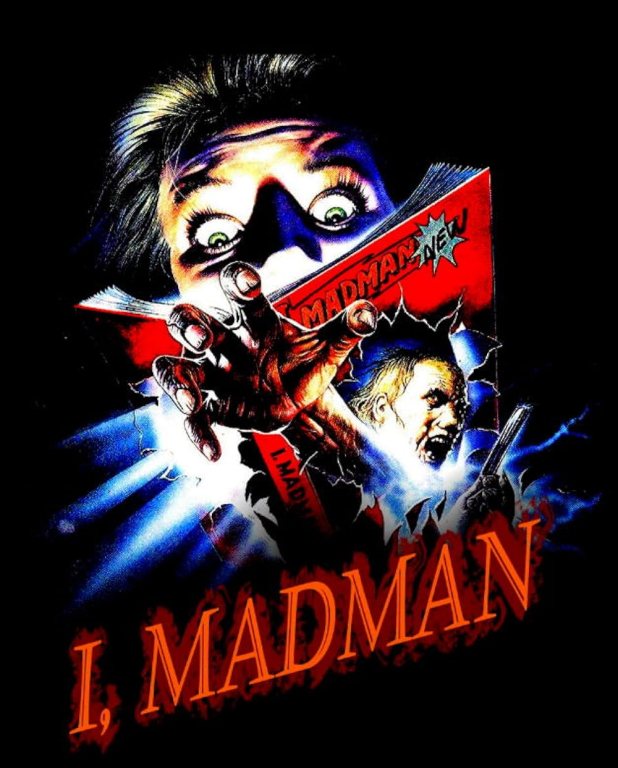
UNSUNG HORRORS HORROR GIVES BACK 2025: I,Madman (1989)

Each October, the Unsung Horrors podcast does a month of themed movies. This year, they will once again be setting up a fundraiser to benefit Best Friends, which works to save the lives of cats and dogs across America, giving pets second chances and providing them with happy homes.

Today’s theme: Viewer’s Choice

ABOUT THE AUTHOR: Adam Hursey is a pharmacist specializing in health informatics by day, but his true passion is cinema. His current favorite films are Back to the Future, Stop Making Sense, and In the Mood for Love. He has written articles for Film East and The Physical Media Advocate, primarily examining older films through the lens of contemporary perspectives. He is usually found on Letterboxd, where he mainly writes about horror and exploitation films. You can follow him on Letterboxd or Instagram at ashursey.

We’ve come to the final page in the last chapter of Horror Gives Back. Before I close the book on another successful journey through horror films I’ve watched for the first time, I’ve saved one of the best for last—Tibor Takács’ I, Madman.

By 1989, horror had pretty much run its course at the box office. Jason may have been taking Manhattan, but he grossed less than 15 million. Freddy didn’t fare much better with The Dream Child, garnering about 22 million dollars. The top grossing horror film of 1989? Pet Sematary with 57 million, slightly less than that Al Pacino film Sea of Love. Audiences were much more interested in spending money on action and family-oriented movies than horror. Perhaps the true horror was yet to come in the next decade.

As far as I, Madman’s box office, it is non-existent. After a regional release, the film was dumped on home video, as so many films were in those days. Eventually, it has taken on a bit of a cult following it seems. With one eye looking in the past and one eye looking forward, I, Madman combines the 1950s nostalgia so many films hoped to capture and pulled it into the turn of the decade.

The film follows Virginia (Jenny Wright), an aspiring actress who works at a local bookstore. She has come across an old book entitled Much of Madness, More of Sin, written by someone named Malcolm Brand. The main character of this novel forms an obsession around an actress named Anna. She does not care for his face, so he decides to just cut off all of his features. His nose. His ears. His lips. His scalp. You know, as one does when one is rejected by a woman.

Unable to find Brand’s follow up novel, I, Madman, Virginia is dejected, but, amazingly, she finds the book at the doorstep to her apartment. In this novel, the character is back, harvesting those body parts he had removed from unsuspecting victims in order to graft them onto his own body. But suddenly, fiction becomes reality, as Virginia begins witnessing murders and is haunted by the man from the novel. Could the events have truly leapt from the page? Or is Virginia experiencing some sort of psychotic break? The fantastical ending perhaps poses more questions than answers.

I, Madman does a fantastic job of combining two worlds: the seediness of a 50s pulp novel, complete with a film noir feel, and a bit of a neo-noir, as Virginia’s boyfriend, Richard (Clayton Rohner), is a detective on the case, torn between solving the crime and believing his girlfriend. Surprisingly, he does not totally dismiss Virginia’s claims. Add a touch of Rear Window, stop motion effects that you never see anymore, and some of the best production design of any film in the late 80s, and a cult classic is born.

I find myself guilty of saying clichés like “they just don’t make films like this anymore”. Truth is, they never made films like I, Madman. It’s almost singular in its originality. Filmmakers are not allowed to take these chances anymore unfortunately. Thus, I do not find modern horror to be that interesting. Like Virginia, I find myself scouring the past for content that lights up my imagination. Luckily, I’m not sure that I will ever hit bottom, as I keep finding fantastic films year after year. 

I can probably start making my Horror Gives Back list for next year. Note to self: add The Gate to films to try to squeeze into a category. I suddenly need more Tibor Takács in my life.

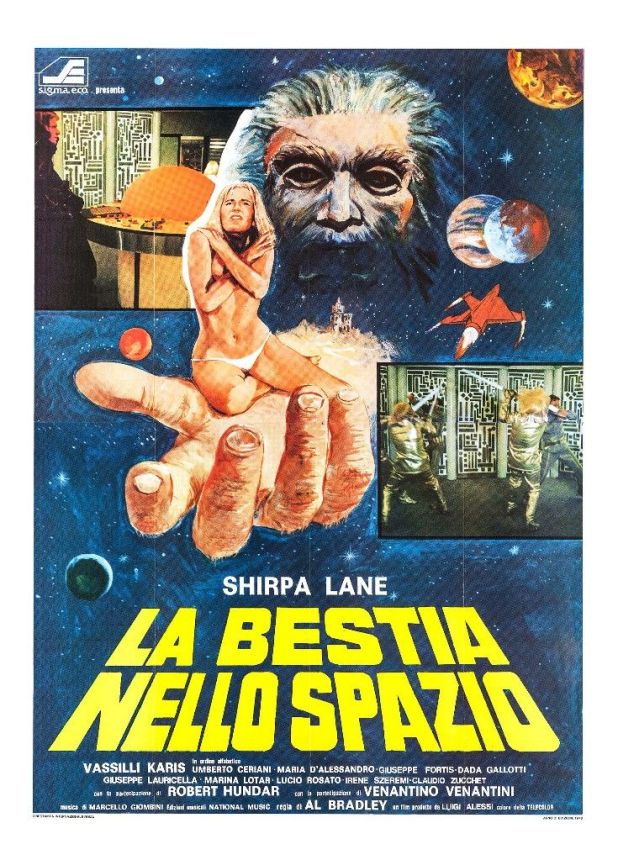
UNSUNG HORRORS HORROR GIVES BACK 2025: The Beast In Space (1980)

Each October, the Unsung Horrors podcast does a month of themed movies. This year, they will once again be setting up a fundraiser to benefit Best Friends, which works to save the lives of cats and dogs across America, giving pets second chances and providing them with happy homes.

Today’s theme: 1980s

Italy, you’re my favorite.

La Bestia nello Spazio earns its The Beast In Space title because it features Sirpa Lane, a star of The Beast (and Immoral Tales, the movie that it was initially part of), in a story reminiscent of Beauty and the Beast. Roger Vadim saw Lane as the next Bardot, a vision that led her to  Papaya: Love Goddess of the Cannibals. Tragically, she passed away from AIDS in 1999.

Captain Larry (Vassili Karis) may live in the future, but there are still bars and still women to pick up in bars, like Sondra (Lane). He steals her from another man, just as a vial he also took ends up containing Antalium, a very important McGuffin that can be used to make bombs. Larry gets a crew and heads off to Lorigon, which is where this element is from, to get as much of it as he can.

The man that Larry fought at the bar, Juan Cardoso (Venantino Venantini), is on his way to this planet and sends a giant robot — the one that has been in Sondra’s dreams — after them. And the planet is run by a computer, Zocor, which makes everyone have sex because this is an Italian movie.

There are light sabers, space horses having space horse sex, dudes in gold body paint, a space satyr penis and all of the costumes and effects from Alfonso Brescia’s other space films, Cosmos: War of the Planets, Battle of the Stars, War of the Planets and Star Odyssey. But this is more The Black Hole than Star Wars. I’m not just saying that because it has an XXX cut.

Brescia also went by the name Al Bradley, the name he used to make the wild Ator remix film Iron Warrior, the Richard Roundtree-starring Miami Cops, the David Hess-starring giallo Omicidio a luci blu, Killer Caliber .32If One Is Born a SwineNaked Girl Murdered In the ParkSuper Stooges vs. the Wonder Woman, and so many more. I’m just shocked that he somehow went from Lucas rip-offs to suddenly making a porny science fiction movie. But you know Italy. Whatever sells.

I watched this with inserts, but you can watch an edited version on YouTube.

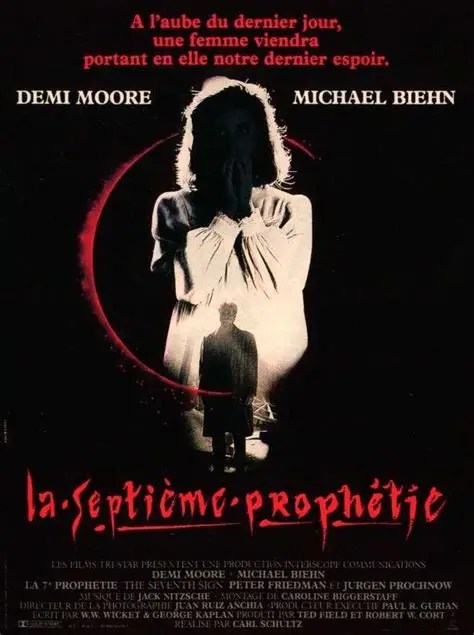
UNSUNG HORRORS HORROR GIVES BACK 2025: The Seventh Sign (1988)

Each October, the Unsung Horrors podcast does a month of themed movies. This year, they will once again be setting up a fundraiser to benefit Best Friends, which works to save the lives of cats and dogs across America, giving pets second chances and providing them with happy homes.

Today’s theme: 1980s

ABOUT THE AUTHOR: Adam Hursey is a pharmacist specializing in health informatics by day, but his true passion is cinema. His current favorite films are Back to the Future, Stop Making Sense, and In the Mood for Love. He has written articles for Film East and The Physical Media Advocate, primarily examining older films through the lens of contemporary perspectives. He is usually found on Letterboxd, where he mainly writes about horror and exploitation films. You can follow him on Letterboxd or Instagram at ashursey.

The characters of The Bible have been a fount of inspiration for horror movies since the days of silent film. Many of these films focus on the exploits of demons and the Devil, supernatural beings out to possess, corrupt, and destroy. The Seventh Sign takes a different approach, turning to the back of the Book to see how God’s judgment might be poured out onto the Earth.

If the title had not already been taken by Ingmar Bergman, perhaps The Seventh Seal might have been a more appropriate title. A mysterious man named David (Jurgen Prochnow) is globetrotting, breaking the seal on various parchments. With each break, another disaster occurs, from the fish in the ocean in Haiti dying to the discovery of a frozen desert in the Middle East. Eventually, David finds his way to Abby (Demi Moore), a pregnant woman who is due to give birth on Leap Day. Abby’s lawyer husband Russell (Michael Biehn) is busy trying to get a young man with Down’s Syndrome clemency from the gas chamber for killing his parents (who were also brother and sister), a strange B story that eventually does become more important in the final act.

David rents a room above the garage and tells the couple a story over dinner involving sparrows and their song. According to David, all souls are stored in a place called the Guf. As a soul comes to inhabit the body of a newborn baby, the sparrow sings its song. While the story sounds charming on the surface, Abby soon finds herself face-to-face with the realization that David is actually the second coming of Jesus Christ. And the Guf is all out of souls, starting with her baby. God is ready to judge the world, and only Abby can stop it.

The Seventh Sign takes an interesting approach to its storytelling by melding Jewish folklore with the New Testament. The Guf is not mentioned in the Bible, but it is mentioned in the Jewish text, the Talmud, which is sort of an interpretation by rabbis of the Torah, the oral history of the Jewish people that also incorporates the first five books of the Bible (confused yet?). If nothing else, it was a bold move by the makers of The Seventh Sign to take Jewish folklore and apply it to the apocalypse. In comparison to horror films that tap into Christianity for inspiration, there have not been too many films inspired by Jewish folklore.

Perhaps the most famous being from Jewish folklore featured in films is the Golem, a protector made from clay who comes to life to save and serve the Jewish people. Another figure in Jewish folklore is the dybbuk, a spirit who clings to its host, possessing that person, causing mental anguish. One recent film that explores a dybbuk is Demon (2015), a Polish film featured in the All the Haunts Be Ours: Volume 2 set from Severin Films. Also featuring a dybbuk was The Unborn, a film from 2009 starring Gary Oldman as a rabbi who is consulted to get rid of the spirit. Oh how I love all of the different forms of folk horror! I learn so much about different cultures from these stories, even if I do not care for the film itself sometimes.

But fortunately, I really enjoyed The Seventh Sign, more than others it seems (currently only a 2.7 star rating on Letterboxd). It is a film that I never got around to watching for whatever reason (perhaps due to the lack of champions for the film). But I found it to be very thought-provoking. Demi Moore in the lead role helps for sure. And although the film seems too scared to go for an unhinged ending it could have, there is some comfort in thinking that the prayers and actions of one woman could change God’s mind, a consistent thread throughout the Bible.

I watched this one as God intended—on a VHS cassette tape I bought from Goodwill years ago but before now never cracked the seal so to speak.

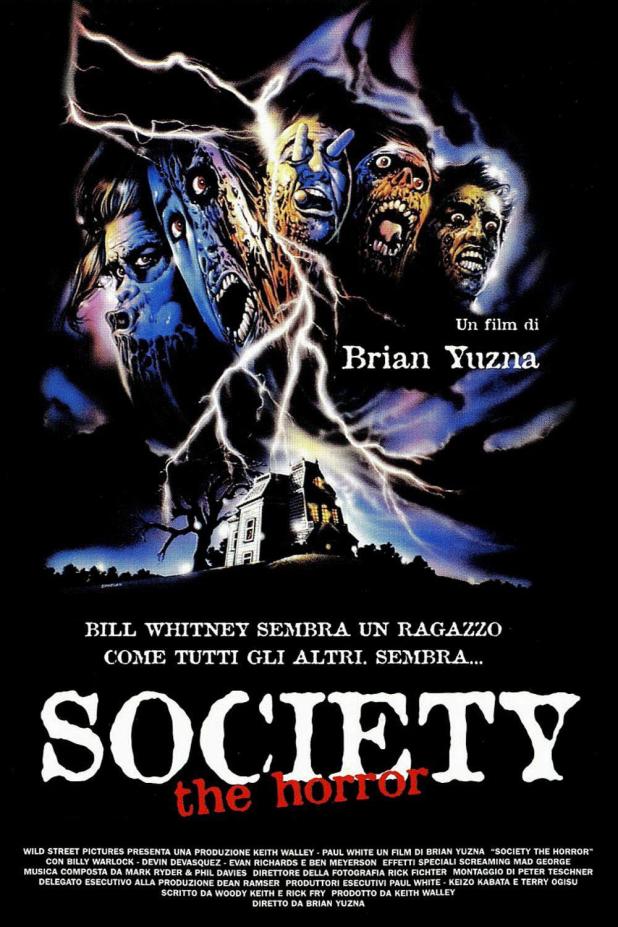
UNSUNG HORRORS HORROR GIVES BACK 2025: Society (1992)

Each October, the Unsung Horrors podcast does a month of themed movies. This year, they will once again be setting up a fundraiser to benefit Best Friends, which works to save the lives of cats and dogs across America, giving pets second chances and providing them with happy homes.

Today’s theme: 80s!

About the Author: Parker Simpson is a writer and podcaster focusing on cult films and their social impacts. They currently cohost Where Is My Mind, a podcast focusing on underappreciated films from a variety of genres and countries. They have also held panels, chartered local organizations, and written articles to their blog. When not writing or studying, they like to spend time with their pets and go outside. Check out the podcast Linktree and blog.

Note: I wrote this in early September. This has been edited accordingly to make it seem like I watched it recently.

It’s not every day you see a mass walk out of a film over one scene. Or seeing those who stay have their jaws permanently agape. Or those same people become increasingly sweaty and anxiety ridden as time passes. It’s rather funny, really. I would highly recommend the experience.

This is an accurate summary of my local drive-in’s screening of Society, which they decided to double-bill with Killer Klowns from Outer Space. I don’t know how they keep getting copies of cult horror films to show in small town America, but I respect it and will keep forking over my money to them (you should, too). Seriously, last weekend they screened Lamberto Bava’s Demons with Return of the Living Dead, and next week is a two-night event including Girls Nite Out, Madman, Re-Animator, Spider Baby, and Children Shouldn’t Play With Dead Things. What is in the water here?

Society is a film known more for its ending (I will try to not spoil too much) than what precedes it. Its timely imagery of the rich literally eating the poor has aged just as well as the special effects Brian Yuzna got the plot from. Despite the continual citing of his and collaborator Stuart Gordon’s influence in recent efforts (see: The Substance), his directorial career is rather bumpy, ranging from extremely amusing (Faust: Love of the Damned) to awful (Beyond Re-Animator). This is his high point: if you ask me, he hit it out of the park with Society and should have done more with social commentaries instead of basing his career on getting ideas from Screaming Mad George. Then again, I shouldn’t curse the man who holds the rights to my favorite franchise.

What makes this stand out from the rest of Yuzna’s filmography is not the melding of naked bodies and human beings turned inside out – it’s the elaborate pacing and making the most of its surroundings. By the time the late 80s rolled around, the popular landscape was more interested in making money than engaging the general public. Culture had shifted away from the organic roots of the 60s and 70s, being redirected to malls and television. It may have been a sign of economic prosperity, but it signaled a cultural downfall we are still feeling the effects of. Setting Society in the wealthy area of Beverly Hills only amplifies this bubble we often see in films of the time – gone are the seedy streets of the inner city, in come the gentrified suburbs. 

However, in the spirit of Blue Velvet, there must be something lying underneath the glimmery surface. Enter the Whitney family, composed of parents Nan and Jim, daughter Jenny, and son Bill. Bill is the black sheep – there is clearly a rift between him and the rest of the family. He knows something is wrong, but he can’t put his finger on it. It’s only when his friend (and sister’s ex) bug the family’s car that he finds out about Jenny’s “coming out” party – something his parents also did, and which features a murderous orgy. Not the sort of thing you want to hear anyone participating in, let alone your immediate family. Only from there does the rift continue to grow, culminating in the now infamous shunting sequence. What could be taken as cheesy teenage angst turns into a genuine feeling of paranoia; while Bill is never really part of his family (he suspects he was adopted), he’s never really able to escape them. He finds their influence extends to the furthest corners of Beverly Hills, as seemingly everyone within a 50-mile radius plots against him. It all culminates in a feast of bodies merging into one another as liquor (and honey?) pours over a sickly orange lighting, a visual you will never really forget. Films primarily based on special effects don’t always work, and while they don’t get to shine until the final 20 minutes, Society may be the one exception.

I could write on and on about this, truly. But it is something you must witness with your own two eyes, an experience you will never forget no matter how or where you watch it. I cannot give this a higher possible recommendation. Just make yourself a nice cup of tea and see it.

(this is my last piece for the month. Thank you to Sam for letting me write for the site and to anyone who has been reading both my pieces and any of the other contributors’ pieces!)

UNSUNG HORRORS HORROR GIVES BACK 2025: Fear In the Night (1972)

Each October, the Unsung Horrors podcast does a month of themed movies. This year, they will once again be setting up a fundraiser to benefit Best Friends, which works to save the lives of cats and dogs across America, giving pets second chances and providing them with happy homes.

Today’s theme: Hammer or British

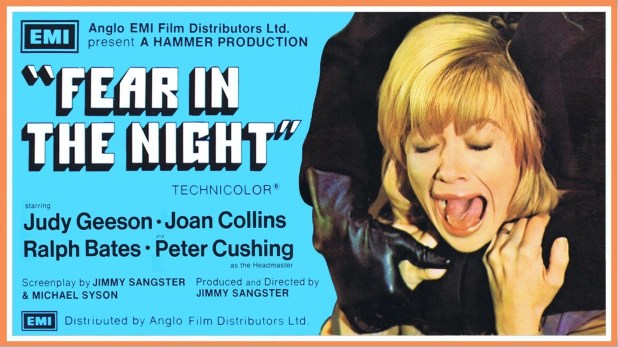
Playing with Straight On Till Morning in the UK and Demons of the Mind in the U.S., this Hammer film finds Peggy (Judy Geeson) moving with her husband Robert (Ralph Bates) to work at a school in the countryside. The night before they leave, she’s attacked by a man with a fake arm, which sends her into hysterics. 

Robert’s new boss is Michael Carmichael (Peter Cushing), who is married to Molly (Joan Collins). After their first meeting, Peggy is again attacked by the one-armed man. The next night, she notices that Robert only has one arm; she shoots at him with a shotgun, but it doesn’t stop him. She faints, only for her husband to reveal that there’s no job at the school. He’s treating Robert, who plays recordings of the old students to try to remember what it was like before a fire destroyed the school.

The twists start here, as Robert and Molly have been having an affair, and he only married Peggy to drive her insane and make her kill Michael. Michael, however, is a step ahead, using the intercom of the school to taunt his enemies, even tying up his wife and coaxing Robert into shooting her, thinking that it’s him. Peggy survives, thanks to the one-armed man she believed was her enemy; her husband’s body hangs from a noose as choir music plays from the empty school.

Directed by Jimmy Sangster, who co-wrote the script with Michael Syson, this is the kind of cold, dreary British murder mystery I love. It’s not as stylish as the Giallo, but it comes from the same fione. 

You can watch this on Tubi.

UNSUNG HORRORS HORROR GIVES BACK 2025: Siegfried and Roy: Masters of the Impossible (1996)

Each October, the Unsung Horrors podcast does a month of themed movies. This year, they will once again be setting up a fundraiser to benefit Best Friends, which works to save the lives of cats and dogs across America, giving pets second chances and providing them with happy homes.

Today’s theme: In Memoriam

I think I’ve written about every Samantha Eggar movie and perhaps a director, and I had conspired to kidnap her and Susan George to make our dream double sequel to Demonoid and Tintorera. I hope she won’t mind that I remember her by watching this cartoon, devoted to magicians Siegfried and Roy.

I’m sorry, Samatha.

There are four episodes of Siegfried & Roy: Masters of the Impossible, and I wish there were four thousand.

“This animated series is a wonderful chance to bring children our important message about discovering the world of magic all around them,” Roy once told the Las Vegas Sun. “We also want them to discover the magic deep inside all of us.”

Man, I have been in hysterics since watching this, and all the PR from the 90s is starting my giggles all over again. Like this…

Director-producer Ron Myrick says they turned to sources as varied as Norse mythology, sword-and-sorcery games and, of course, Siegfried & Roy’s nightly spectacle at The Mirage.

“We’ve opened the door, allowing us to borrow from other periods and places,” he says. “There are no bounds to this world of Sarmoti. Each character and place has a unique, creative look that’s found nowhere else in its kind. There are no limits on what we can create and do.”

Sadly, that article has one lie.

And after the four-episode miniseries airs, will there be more?

“This is only the beginning,” Siegfried says.

It wasn’t.

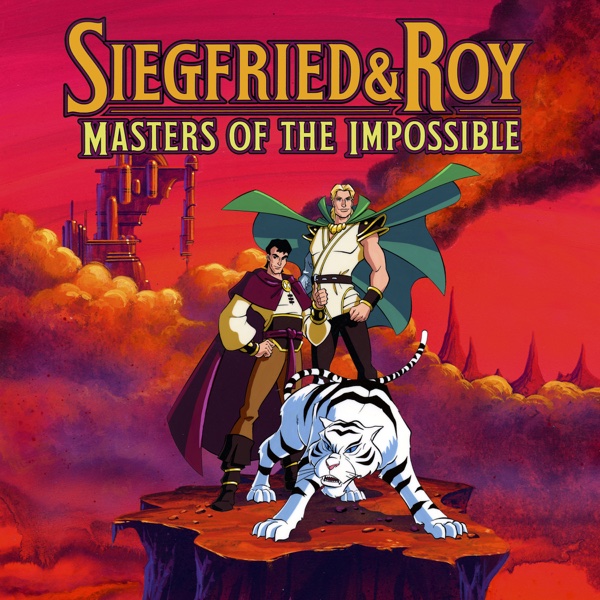
Airing on Fox Kids from February 19 to 22, 1996, this finds Siegfried as an illusionist and Roy as an animal tamer traveling with a white tiger named Mantacore. Sarmoti has four demons released, three of which are the personifications of sins, while the fourth is part of Mantacore. Roy wishes to make Mantacore whole and works with Siegfried, and the duo must learn to get along and save the kingdom.

Another lie. Siegfried and Roy didn’t do their own voices.

Siegfried is Andrew Hawkes, and Roy is Jeff Bennett.

Plus, Charlie Adler, the voice of Starscream, is Loki; Jim Cummings and Brad Garrett show up (Garrett knows how to do the cartoon voice of a real person, as he was Hulk Hogan on his cartoon); Rumpelstiltskin plays their sidekick, and oh yes, there’s Samantha Eggar.

The dup keeps yelling, “The magic is back!” and Rumpelstiltskin keeps asking when they’ll find some women. This may have been the reason I was laughing more than a few times.

Maybe that demon part of Mantacore was real. At the Mirage on October 3, 2003, the cat knocked down Roy and dragged him off stage as he had a stroke either before or after the attack. The animal trainer claimed that the cat was trying to help him. It helped him to a severed spine, blood loss and paralysis on the left side of his body. After performing one more time on 20/20, they retired on April 23, 2010. Mantacore died four years later.

I learned a few things researching this:

While Siegfried and Roy were a couple, they were also devout Catholics and had a chapel in their home.  Also, the name of the planet, Sarmoti, means “Siegfried And Roy, Masters Of The Impossible.”

Despite Roy being injured, they had a computer-animated TV show, Father of the Pride, about one of the lions.

In a magical world, there would have been action figures of this show. It’s kind of like He-Man, but way less gay. OK, I’m sorry, I tried really hard not to make any jokes in this entire article, so please give me some grace for that one.

You can watch this on YouTube.

UNSUNG HORRORS HORROR GIVES BACK 2025: Queen of Black Magic (1981)

Each October, the Unsung Horrors podcast does a month of themed movies. This year, they will once again be setting up a fundraiser to benefit Best Friends, which works to save the lives of cats and dogs across America, giving pets second chances and providing them with happy homes.

Today’s theme: Witches or Warlocks

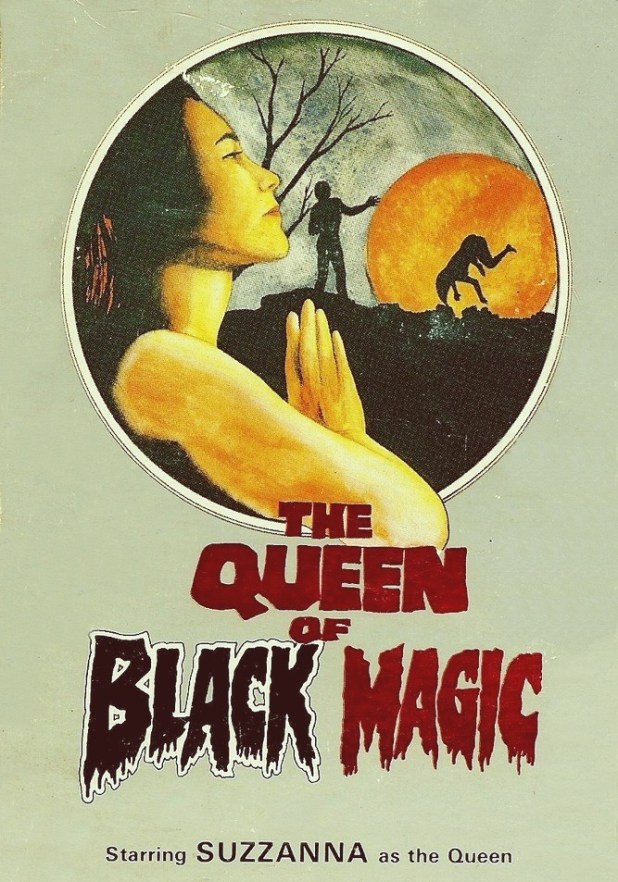
Kohar (Teddy Purba) accuses Murni (Suzzanna) — who he dated with before his marriage and claims that she ruined the ceremony by creating a storm and convincing his bride Baedah (Siska Widowati) that her husband has become a skeleton — of the crime of witchcraft. The village rises up, burns her house down and tosses her off a cliff, only for her to be saved by an old man (W.D. Mochtar) and taught to become the queen of black magic.

Imagine the surprise of the villagers when she walks among them again, alive despite all they have done. Soon, she’s sending swarms of bees after them, commanding worms to eat their faces and stealing babies from their cribs. If that isn’t enough, she enchants someone into clawing off their own head, which then flies around the room biting people.

How do you become the queen of black magic? You get naked and do backflips under the full moon.

Also: Murni seems way too into her brother.

This is everything I wanted it to be and proves why Suzzanna was such a force in Indonesian horror. I’ve seen some people complain about the cheap effects. Get off your high horse. There are horrible people who need to have acid eggs thrown in their faces in this and maybe they don’t have all the big bucks that you do.

You can watch this on Shudder.

UNSUNG HORRORS HORROR GIVES BACK 2025: Midnight Offerings (1981)

Each October, the Unsung Horrors podcast does a month of themed movies. This year, they will once again be setting up a fundraiser to benefit Best Friends, which works to save the lives of cats and dogs across America, giving pets second chances and providing them with happy homes.

Today’s theme: Witches or Warlocks

ABOUT THE AUTHOR: Adam Hursey is a pharmacist specializing in health informatics by day, but his true passion is cinema. His current favorite films are Back to the Future, Stop Making Sense, and In the Mood for Love. He has written articles for Film East and The Physical Media Advocate, primarily examining older films through the lens of contemporary perspectives. He is usually found on Letterboxd, where he mainly writes about horror and exploitation films. You can follow him on Letterboxd or Instagram at ashursey.

For some reason, people keep talking to me lately about Little House on the Prairie. I’m not sure why exactly. I am familiar with the show. It was not must see TV for me growing up. Thanks to my mother, I was much more into prime time soap operas like Dallas and Dynasty. The trials and tribulations of the Ingalls family surely could not compare to comings and goings of the Ewings or the Carringtons. 

But I have watched more LHOTP in the last year or so. And boy howdy does that show get unhinged in those later years! Albert Ingalls gets addicted to morphine. He also starts a fire that results in the death of a baby. In the infamous Sylvia episode, a teenager gets raped by a guy in a clown mask. The citizens even blow up Walnut Grove rather than let the land fall into some venture capitalist’s hands. Whenever anyone talks about LHOTP and how “they don’t make shows like they used to”, I cannot disagree. But they are talking about wholesomeness, an aspect that did not exactly run through that show.

In contrast, I’ve never seen an episode of The Waltons. I would be willing to watch it though. It seems like maybe this show is the one people should reference when talking about a show you could watch with the entire family. I’ll have to check it out and report back.

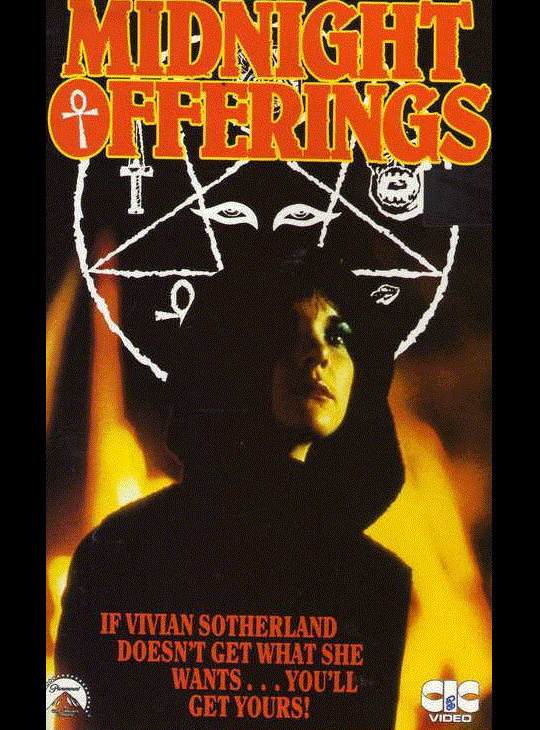
Now if there was a competition between the two shows, perhaps it reached full throat in 1981 when the made for television movie Midnight Offerings debuted on ABC (neutral ground I guess). In this movie, we are treated to Melissa Sue Anderson (Mary Ingalls) versus Mary Beth McDonough (Erin Walton) in a supernatural battle over…the high school quarterback? This film is not going to pass the Bechdel test, that’s for sure.

Anderson plays Vivian Sotherland, the most popular girl in school. She also happens to be a witch (the old seventh daughter of a seventh daughter trope) who is not afraid to kill in order for those around her to succeed. Nobody knows her secret, although the aforementioned quarterback/boyfriend David (Patrick Cassidy) is beginning to have his suspicions. When new girl in town Robin Prentiss (McDonough) shows up, Vivian is ready to quickly dispose of her. But Robin is also the seventh daughter of a seventh daughter, and she has powers she could not explain. Can Mrs. Cunningham, I mean, Emily Moore (Marion Ross) help Robin harness the magic inside of her before Vivian reaches the height of her witchcraft?

There is definitely a lot to like about Midnight Offerings. Melissa Sue Anderson is having a ball playing against type. And I love a magic battle. This one has an unexpected ending that would make any Hammer film proud (if you know you know). Made for TV movies has been a bit of a running theme through my picks this year. I just cannot get enough. Talk about they don’t make things like they used to.