Dark Sister is the (very welcomed) U.S. reboot of Sororal, an Australian neo-giallo that weaves the psychosexual tale of the ratty loft shut-in Cassie (well played by Amanda Woodhams in her leading lady debut; ironically looking like Dakota Johnson’s sister). An artist traumatized by the murder of her mother, Cassie comes to realize the nightmares and daytime hallucinations of brutal slayings she commits to canvas (The Paints of Laura Mars, if you will) are the chronicles of a real life serial killer crisscrossing the continent down under. The “dark sister” of the title (the better title of “soraral” means “of or like a sister or sisters”) is a hooded, rainslicker-esque lookalike who totes around a creepy, deteriorating doll that’s connected to a Satanic cult who needs Cassie to give birth to the Anti-Christ.
The reviews on this mixture of giallo and the supernatural haven’t been kind, with critical insight that state this third film—from what I feel is an impressive, developing resume—by writer-director Sam Bennett is merely “style over substance” and his work is “amateurish” and “unrealistic.”
Huh?
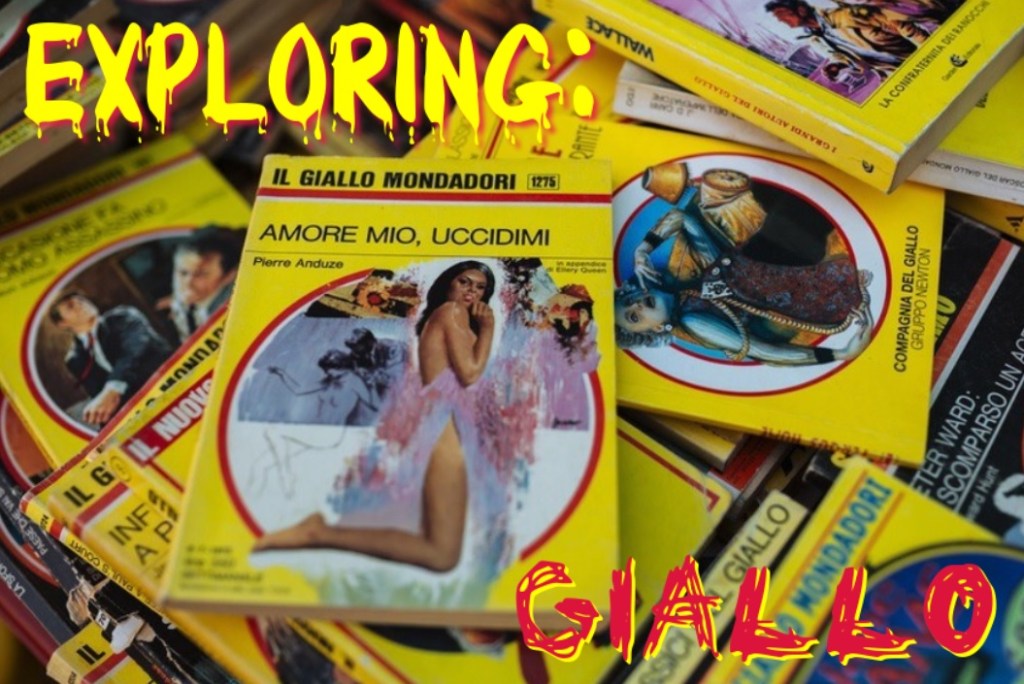
Since when did an Italian Giallo—or any of its Spanish knockoffs—of the ‘70s ever put “realism” or “substance” over what were always the main priorities of the giallo genre: art and surrealism rooted in Impressionism and Renaissance art.
The giallo resume of Dario Argento, the leader of the genre, is the cinematic equivalent of Salvador Dali’s melting clocks and M.C Esher’s impossible objects and staircases to nowhere. Giallo is all about the utilization of oozing color palates and oddball light sources, nonsensical supernatural red-herrings to nowhere, psychic links to killers hidden in POV, whispered poetic passages, hyper-sexual oddball red-herring characters, rape and murdered moms, junk science (about sunspots, Y chromosomes, eye-memories, love-chemicals), pedophile fathers, doctors and detectives riddled with kinks and ulterior motives, and a general, overall incoherence set to a soundtrack of jazz-rock noodling and chanting choirs.
And if that makes me a giallo snob, then dip me in yellow paint, feather me in crystal plumage, and dump me in the town square and let me enjoy my Stendhal syndrome episode so I can shed my tears for my mother.
The more giallo, overseas theatrical one-sheet.
Yes, I’ve watched Paolo Cavara’s Black Belly of the Tarantula and Sergio Martino’s The Case of the Scorpion’s Tale—and every bloody tale concerned with insects and animals—more times than any one person should. I accept Dario Argento’s what-the-fuck plot twists of an intelligent chimp wielding a straight razor and cute girls with psychic links to insects with glee. And regardless of how much I enjoy the films of Riccardo Freda, Umberto Lenzi, and Ruggero Deodato: I’m burnt out on them. But I love the era and adore the genre and I want more . . . but my yellow has turned to brown. And while I know they’re box office hits, I pine for the giallo era over the endless cycle of The Conjuring sequels and the Blumhouse universe’s jump scares.
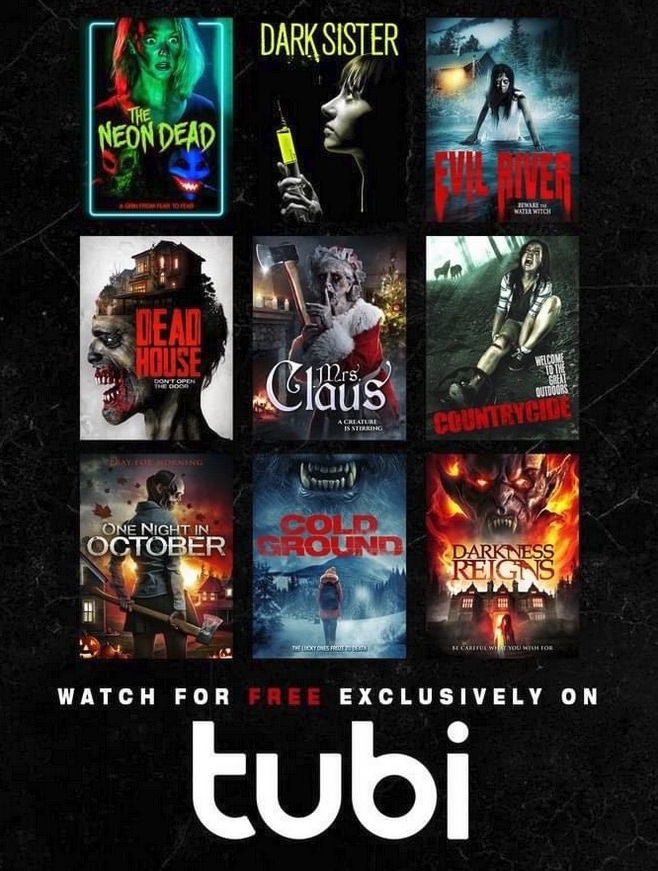
And that’s how films like The Editor and Dark Sister become part of my beloved giallo library. Bravo, Mr. Bennett. It feels like home to me. (I suggest you pair the Italian-made Evil River with Dark Sister for your double feature this evening.)
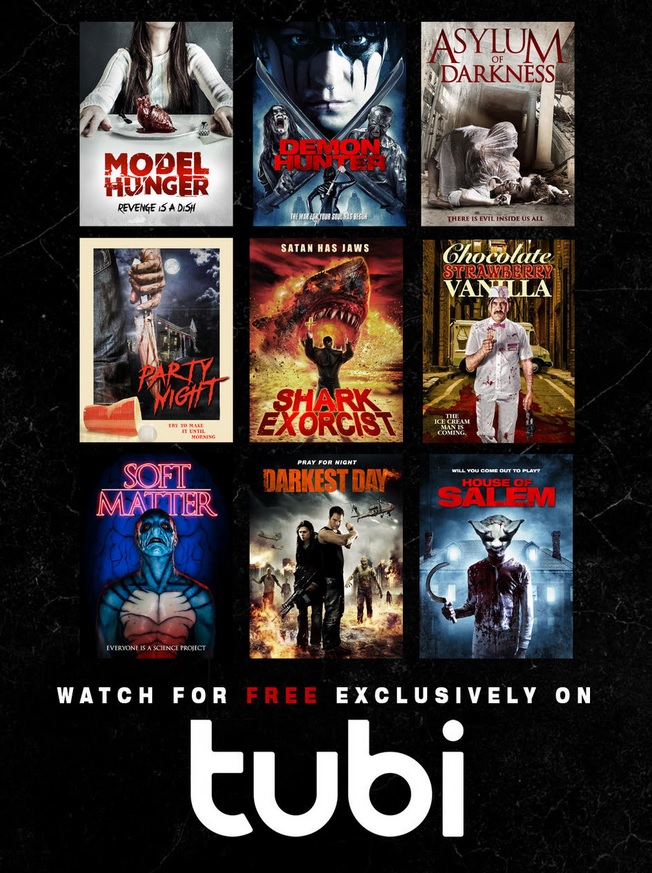
Theatrically released in its homeland in 2014, Wild Eye Releasing acquired Sororal—giving it a new title and artwork—for a U.S. streaming and DVD release in 2018. They’re now offering it in 2020 as a free-with-ads stream on TubiTV along with several other films from their catalog.
And here we are, in 2022, with this review still receivinga lot of hits, as horror fans continue to discover this great flick by way of it currently appearing on various Smart TV streaming platforms. Seriously, we love this movie!
Disclaimer: This movie was sent to us by its PR department. As always: you know that has nothing to do with our feelings on the movie.
About the Author: You can read the music and film reviews of R.D Francis on Medium and learn more about his work on Facebook.He also writes for B&S About Movies.
“It’s not going to work, you know. We’re almost dead.” — Grandma Mona
When Marcy (Fayelyn Bilodeau) loses her job as a flautist with the Chicago Philharmonic, her girlfriend, and apartment in one fell swoop, she does what most of us have done in the midst of our twenty-something failures: we return to our childhood home.
In Marcy’s case, she’s not only lying low to figure out her next move, but to help her grandfather Archie (Richard Riehle) take care of Mona (Helen Slayton-Hughes), her dementia-suffering grandmother. When Marcy begins to experience the same visions and voices as her grandmother, she realizes a spirit attached to a box of antique tchotchkes has invaded the suburban clapboard home. Helping Marcy in the supernatural battle is Coco, the neighborhood’s Barbie Doll-cum-Tangina Barrons-wannabe (Kiersten Warren), a mysterious phone psychic, and an ice cream truck-based weed dealer with a penchant for the supernatural and horror films.
Now, while that synopsis sounds conventional—like Blumhouse “shock scares” conventional—there’s nothing in the recent haunted house, possession, and supernatural forces-at-play CGI universes of the Paranormal Activity, Insidious, or The Conjuring franchises (or American J-Horror reboots) that will prepare you for phantasmagoric feast that is The Invisible Mother. For you are entering the The Twilight Zone on acid: A world where M.C Escher and Salvador Dali are your overlords: a surrealistic world where you run up a set of ouroboros stairs from a melting world to nowhere. This is a film where you will experience the same excitement the first time you watched the out-of-left field insanity of Don Coscarelli’s Phantasm and Sam Raimi’s The Evil Dead. It will become the new “classic” that horror aficionados will slide onto their shelf next to those films for perpetual, over-the-years viewings. It’s a film, like David Robert Mitchell’s amazing Under the Silver Lake that, after your first viewing, you immediately hit the start button to suck on mother’s teat a second time to drink in all the details you missed the first time. Toss the recent pseudo-yellow oozers of Omar Jacobo’s Blood Freaks and David Fowler’s Welcome to the Circle on that list.
Those who’ve had an opportunity to see The Invisible Mother on the festival circuit call it a “modern day giallo.” And there’s certainly a giallo influence in the swirling cameras, odd cinematography angles, and vibrant color schemes of the Maestros Mario Bava and Dario Argento—along with Paul Naschy’s penchant for out-of-left-field Spanish red herrings and plot twists, and Spain’s giallo purveyors Claudio Guerin’s and Bigas Luna’s corkscrews for the bizarre.
But there’s also a taste of giallo’s black-and-white noir roots: Is Glorianna (Debra Wilson) a faux-witch with an agenda? Is Coco giving the ol’ Henry James turn-of-the-screw on the old folks? Is Archie gaslighting Mona and did he call Marcy home to twist her into his plan? Are Archie and Coco in consort? Do Glorianna and Coco need Marcy for a sinister, Argentoesque purpose? Is the house on a hellish portal and Marcy is the key? Is Mona really suffering from Alzheimer’s? Is Wyatt’s (Kale Clauson) weed, in fact, laced and causing Marcy’s oneiric state? What is going on in this Dashiell Hammett and James M. Cain-inspired world where even Sigmund Freud would question his own sanity?
But then there are the elements of David Lynch’s taste for the oneiric experimental (The Elephant Man, Lost Highway), Andy Warhol’s palate for the perverse avant-garde (Flesh for Frankenstein), the celluloid hyperbole of John Waters (Pink Flamingos, Polyester), and Todd Solondz’s oeuvre of offbeat plots and kinked characters (Happiness and Welcome to the Dollhouse).
And while the VHS centers of my celluloid cortex loaded up copies of the bloody, Neapolitan delights of Dario Argento, Mario Bava, Paolo Cavara, Ruggero Deodato, Riccardo Freda, Lucio Fulci, Umberto Lenzi, and Sergio Martino, I also got my analog buzz on with the J-Horror static of Takashi Miike (Gozu, Visitor Q), Takashi Shimizu (Ju-On, Reincarnation), and Lee Soo-yeon (Uninvited). And while impressionist Alejandro Jodoroswky (El Topo, Holy Mountain, and Santa Sangre) is justifiably named dropped when reviewing The Invisible Mother, I shall trek one step deeper into the underworld: I got some serious supernatural phantasmagoria vibes of the José Mojica Marins variety with his Coffin Joe romps At Midnight I’ll Take Your Soul and This Night I’ll Possess Your Corpse.
“For years you were like a snail. Happy, hiding. Happy, hiding.” —Wyatt, the Ice Cream Man
And even after all of that critically rambling, I still haven’t spoiled The Invisible Mother; for this feature film debut by co-writers and directors Matthew Diebler and Jacob Gillman may be difficult to explain, but it’s impossible to spoil. And while I may have led you to believe this film is incoherent, these two neo-giallo enthusiasts, who cut their teeth in the reality television (Matthew Diebler; Catfish, Ice Love Coco) and special effects fields (Jacob Gillman; Sucker Punch), weave a cohesive narrative.
And that’s the intrinsic beauty of The Invisible Mother. It defies convention. It’s an ambiguity open to your interpretation. It’s a film noir riddle falling down an out-of-control Alice in Wonderland “rabbit hole” puzzle wrapped in an Italian murder enigma. Diebler and Gillman crawled inside our bodies to wear us like a Jame Gumb skin suit: they made a film for us, the cinematically nostalgic orphans enamored with ‘70s films reissued on the ‘80s VHS video fringe.
The Invisible Mother is a giallo—yet it’s bloodless. It’s Argentoesque—without the blunt force trauma. It’s fear and dread—with a soupçon of Naschy’s taste for the humorous dark. It’s a psychedelic whirling dervish of primary colors; a realm rife with intricately detailed sets, practical in-camera effects, and stop-motion and reverse photography (by co-writer/co-director Gillman). It’s a film that never shocks or startles. It’s a film where your eyes blaze wide-open at an endless series of unsettling “WTF” moments set to a pseudo-progressive jazz soundtrack (like a Dario Argento film co-scored by Bauhaus and The Normal) that induces nausea. It’s a film rife with all these little moments (of copper fishes, kitschy salt n’ pepper shakers, licorice cookies, pin cushions, 1940s Royal Victorian phones, 1970s oil lamps, and 1980s VHS-era video art from the beyond). It’s a masterpiece of “giallo impressionism” that I want to expose in-a-catch-all-schizophrenic-run-on-sentence-of-hysterical-amazement.
In case you haven’t figured it out: I bow at this movie’s yellow-soaked altar.
The most heartwarming highlight of The Invisible Mother is seeing the long-in-the-business “I don’t know their names, but I know their faces” of Richard Riehle (I just saw him on a re-run of TV’s Roseanne) and Helen Slayton-Hughes (who I just watched in a binge of HBO’s True Blood) given the opportunity to carry a feature film—and both are award-winning fantastic. Reihle’s 400-plus resume since the late ‘80s features his work on Fox-TV’s Grounded for Life and CBS-TV’s NCIS, along with the films Bridesmaids, Bruce Bigalow: Male Gigolo, Casino, and Office Space. Slayton-Hughes was Ethel Beavers on NBC-TV’s Parks and Recreation and appeared in the Metallica romp, Hesher.
You know Fayelyn Bilodeau from her recent appearances on Showtime’s hit series Shameless and TV Land’s American Woman. You’ve seen Keirsten Warren in a wide variety of film and TV appearances since the early ‘90s, such as her feature film debut in Independence Day (Tiffany the Stripper who greeted the aliens on the building roof that got zapped), and her recurring roles in Desperate Housewives and Saved by the Bell: The College Years. And it’s nice to see animated voice artist Debra Wilson, a cast member of my beloved FOX-TV’s Mad TV and Reno 911!, on the big screen. Kale Clauson most recently appeared on TV’s S.W.A.T and Good Girls.
“I am not sure what you’re trying to convey. I simply sell frozen confections. Perhaps I can interest you in some Necco Wafers?” —Wyatt, the Ice Cream Man
We’re also digging on “Dracula,” the film’s theme song by Geneva Jacuzzi and Bubonic Plague. You can learn more about Geneva’s music at her official website. Then there’s the ambient music of Matt Hill & Umberto serving as the soundtrack. You can listen to all four albums by Umberto on their You Tube page. The embedded playlist, below, will get you to those songs, and more, from The Invisible Mother.
Recently completing a successful, multi-award winning film festival run, Freestyle Digital Mediaacquired the North American VOD rights. You’ll be able to rent and own copies of The Invisible Mother on digital HD internet, cable, and satellite platforms starting on October 12, 2021. Other films we’ve reviewed through Freestyle Digital Media include The Capture, The Control, Dead Air, Goodbye Honey, Hawk & Rev: Vampire Slayers, and Shedding.
Disclaimer: We discovered this movie via social media, were intrigued by the trailer, and reached out to the filmmakers to provide us with a screener copy.
About the Author: You can read the music and film reviews of R.D Francis on Medium and learn more about his work on Facebook.He also writes forB&S About Movies.
No way are you going to click on this review. No way. So I’ll have to force your hand: this movie is connected to the cheesy ’80s heavy metal horror flick Rock ‘n’ Roll Nightmare. Now if that doesn’t make you want to read this film review . . . well, I’ll just have to hang up my laptop and open a Esty store and sell handcrafted bracelets and flower baskets, for I have failed as a writer.
Nick Pearson (Tom Everett Scott, That Thing You Do!, An American Werewolf in Paris, Boiler Room) is a snarky author of the New York Times best seller I Hate Kids—a book that denounces parenthood. Before he finalizes his marriage to Sydney (Rachel Boston, TV’s American Dreams, In Plain Sight), a dream girl who shares his “no kids” philosophy, guess who shows up? It’s boy, Nick! Meet Mason: the now teenaged son you never knew you had.
And how did Mason find him?
Well, a flamboyant radio psychic, The Amazing Fabular (yep, it’s Tituss Burgess, the Unstoppables Laundry Freshener pitchman who was in Dolemite Is My Name with Eddie Murphy), tipped off Mason. And, with that, the lothario, the geek, and the shrill psychic hit the road for a weekend road trip to visit all of Nick’s ex-girlfriends and discover which one is Mason’s mother. Helping along in this effective, Judd Aptow-ish bawdy comedy are the familiar TV faces of Rhea Seehorn from AMC’s hit series Better Call Saul and Julie Ann Emery, also of Better Call Saul, as well as Preacher.
And this is where the heavy metal horror cheese oozes in.
Frank Dietz, the star of the ’80s heavy metal horror flick trifecta of Rock ‘n’ Roll Nightmare, Zombie Nightmare, and Black Roses wrote this. Yep, after his well-liked but all too brief acting career, Dietz forged a career behind the camera as an animator (Jack Black’s Kung Fu Panda is one his many credits) and as a screenwriter.
This, his second feature film writing credit, Dietz made his screenwriting debut with 1996’s Naked Souls—starring Pamela Anderson and David Warner. Now wrap your head around that for a second: esteemed British actor David Warner—Chancellor Gorkon from Star Trek: The Undiscovered Country—in a film with Motley Crue’s Tommy Lee’s ex-wife. But Warner’s been in everything, From Beyond the Grave to Ice Cream Man to Planet of the Apes 2001, so anything is possible in the B&S About Movies universe of stars.
Director John Asher is an actor and director who’s also done everything as well, from directing a post-stoke Kirk Douglas (Saturn 3) in Diamonds (1999), comedy specials for comedians Margaret Cho and Frankie May, videos for the Canadian pop-punk band Sum 41, and acting in episodes of TV’s Blue Bloods, CSI: Crime Scene Investigations, NCIS, and The Rookie.
So what do you have to lose? Come on, now! Frank Dietz from Zombie Nightmare wrote this! That rocks me to my celluloid core. I’m all in.
I Hate Kids recently made its free 2020 streaming bow—with limited commercials—on TubiTv.
About the Author: You can read the music and film reviews of R.D Francis on Medium and learn more about his work on Facebook. He also writes for B&S About Movies.
Disclaimer: This movie wasn’t sent to us by its production company or PR department. We discovered it all on our own—courtesy of its Frank Dietz connection—and we genuinely enjoyed the film.
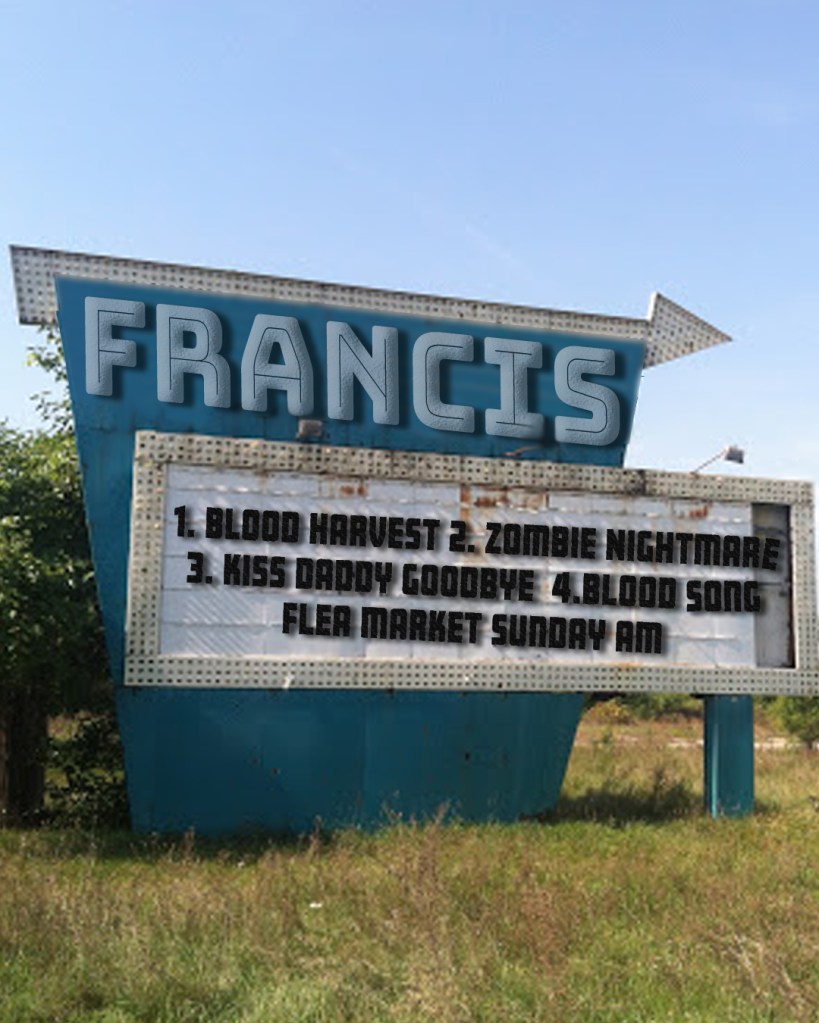
We, the celluloid thoughtful folks at B&S About Movies, with our vast end-of-the-world apoc-movie knowledge (as seen in our Atomic Dustbin roundup) know this recent Coronavirus lockdown is a trying time for all of us movie lovers. So we’ve decided to open up the B&S About Movies Drive-In where, each Friday afternoon at 11 AM (the Grand Opening was on March 13 . . . Friday the 13th!) we’ll feature four movies to get you through the viral outbreak—but rot your brain cells on bad films in the process.
See you under tent, Sunday. I’m selling comics, old movie posters, and VHS tapes at the Flea Market. Okay, let me go bush-hog the lot.
This week, we’ll enjoy the acting horrors of ‘60s teen idols Fabian Forte and Frankie Avalon, ‘60s traditional music archivist Tiny Tim, and ‘80s Canadian god of thunder, Jon Mikl Thor—as they each eek out a living in the slasher ‘80s.
And as always: Make sure to drive with your parking lights on and clean up after yourself. And don’t forget to try our snack bar, which will remain open until the last feature starts.
What’s it all about? A girl arrives home from college and runs afoul of a clown-suited Tiny Tim as the mentally-distributed clown “The Magnificent Mervo” killing by hook or by crook. You can watch Blood Harvest for free on TubiTV.
We reviewed Jon Mikl Thor in his big screen debut with Rock ‘n’ Roll Nightmare as part of our “No False Metal” movies week (well, actually, he made his debut with an in-joke support role in the Canadian Police Academy knockoff, 1986’s Recruits). And we also reviewed the thespin’ of Batman’s Adam West in One Dark Night and Omega Cop, so it’s inevitable, in the B&S About Movies universe, that they’d do a movie together.
So while you may have come for the Thor as the voodoo witch-revived zombie of these proceedings, you’ll end up staying for the metal of the film’s far superior soundtrack featuring Girlschool (“Future Flash” and “C’mon Let Go”), Motörhead (“Ace of Spades”), and Virgin Steele (“We Rule the Night”). Thor, of course, with his Thorkestra, composed the movie’s score. Someone recreated the soundtrack track-by-track on You Tube.
Oh, almost forgot! And who’s the dickhead punk who set this zombie revenge mess in motion? Friggin’ Shawn Levy, the producer behind 2016’s Arrival, which earned him an Academy Award nomination for Best Picture. He most recently produced the hit Netflix original series Stranger Things.
Shawn’s bitchy girlfriend: Tia Carrere—yes, Cassandra Wong, the smokin’ hot bassist-frontwoman of Crucial Taunt from Wayne’s World—in her film debut. And what’s Adam West do? He chops on a cigar from behind a desk and barks orders at Detective Frank Sorrell, aka Frank Dietz, from Rock ‘n’ Roll Nightmare, Black Roses, and The Jitters (those three films, along with Zombie Nightmare, were written by John Fasano). Oh, and did you know that Frank Dietz is a screenwriter these days? We just reviewed his latest film, the rom-com (rom-com?) I Hate Kids.
How is it that we have not given Zombie Nightmare a full review proper, Sam? Honestly, what we’ve said here is more than enough. Sorry, only the MST3K riffed-version is available. You can watch it for free on TubiTV.
But wait . . . there is more to be said about Zombie Nightmare! The Master Cylinder blog not only reviewed Zombie Nightmare proper, but also offers production insights from director-writer John Fasano and star Jon Mikl Thor.
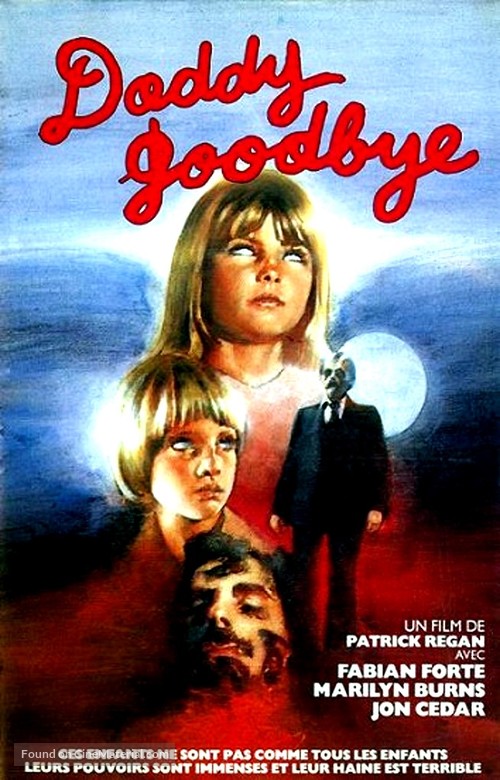
Did you ever wonder what the ‘80s comedy Weekend At Bernie’s would be like if it was made as a horror film? Well, wonder no more. Two kids—check that, psychic kids—keep their murdered dad “alive” so that the authorities (Marilyn Chambers) don’t put them in an orphanage. Is Fabian the killer dad? Nope, he’s the sheriff on the case. You can watch a free VHS rip on You Tube.
So you’re a noted television director and producer—responsible for everything from the ‘60s skit comedy show Rowan & Martin’s Laugh-In, the ‘70s series Columbo and The Six Million Dollar Man, and bought us Jan Michael Vincent in Airwolf—and now you’re facing the onslaught of the slasher ‘80s. What do you do?
Well, if you’re Alan J. Levi, you work those television contacts and hire the uber-hot Diane Alder from NBC-TV’s Hello, Larry, aka Donna Wilkes (1978’s Jaws 2, 1980’s Schizoid, 1988’s Grotesque) to play a crippled young woman stalked by a hatchet-wielding psychopath from whom she once received a blood transfusion. And, get this: Niels Rasmussen who, if we believe the IMDb, was not only the editor on Blood Song, but he also directed the American-recycled Asian slopfest, The Serpent Warriors (aka Calamity of Snakes).
And who’s the Peter Pan whistling his “Blood Song” on his flute and wants his blood back? Frankie Avalon! You can watch the full movie for free on You Tube. What? Frankie made a Euro-spy romp, too? Yep, he did: Dr. Goldfoot and the Bikini Machine*.
Anybody out there know a good Bush-hog repair man? Looks like I burnt another flux-capacitor and the warp-inversion coils need a good back flush. That grass is gettin’ pretty high.
* April was “James Bond Month,” were we reviewed all manner of ’60s and ’70s spy flicks—including Eurospy films.
About the Author: You can read the music and film reviews of R.D Francis on Medium and learn more about his work on Facebook.
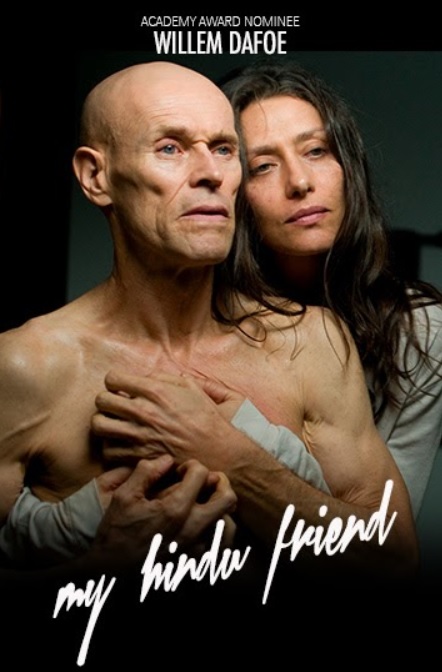
You had us at Willem Dafoe. You know the roles: Raven Shaddock in the rock ‘ n’ roll noir Streets of Fire and lost rocker Johnny Harte in one of my personal favorites, Roadhouse 66. Then there’s the diabolical forger Eric “Rick” Masters in To Live and Die in L.A. and Sergeant Elias Gordon in Platoon. We can go on and on . . . yes, ye film youngins, you know him as The Green Goblin in Sam Raimi’s Spider-Man franchise.
The always amazing and never disappointing Argentinian director Hector Babenco — who you know through his multiple award-winning works with Tom Berenger and John Lithgow in At Play in the Fields of the Lord (1991), Kiss of the Spiderwoman (1985) with William Hurt, and Ironweed (1987) with Jack Nicholson and Meryl Streep — returns, sadly, with his final film: an autobiographical examination about life and death through a film director’s bout with cancer.
Willem Dafoe is Diego Fairman, a talented, but acidic, filmmaker who is as adept at social alienation as he is with film — and his decade-long bout with cancer only amplifies his curmudgeonly outlook on life. With his new wife, Livia (award-winning Brazilian actress Maria Fernada Candido), he leaves Brazil for a new round of treatments in Seattle. And the only man who can save him, via a bone marrow transplant, is his brother, Antonio, who haven’t spoken to each other in ten years. While in treatment, Diego comes to find solace in the friendship of a young Hindu boy also dealing with cancer.
The philosophical question asked in this, the final masterpiece of the then dying Babenco (he passed in July 2016), asks: Does someone, who went out of their way to make the lives of others miserable and never took responsibility for said actions, deserve a free pass because they’re dying? Or do they deserve to die alone — with their soul in agony as much as their body? Will others forgive . . . to release the sinner from their guilt?
And when Death arrives to take him, Diego asks from his death bed, for one more chance to make one more film. And he makes that film within his soul — with the help of his Hindu friend. And the fact that My Hindu Friend is the film that Death granted Hector Babenco to make — makes this film all the more powerful.
Yeah, I cried. I’m man enough to admit that.
In an overseas rollout since 2015, My Hindu Friend is finally available in the U.S on May 1 through Rock Salt Releasing on DVD, Blu-Ray and all digital streaming platforms (Amazon, AT&T, DirectTV, FANDANGO, FlixFling, Google Play, Hoopla, inDemand, iTunes, inDemand, DirecTV, Vudu, Google Play, FANDANGO, Sling/Dish, Sony, Vimeo on Demand, You Tube Movies, and Xbox).
Disclaimer: We were provided a screener by the film’s P.R firm. That has no bearing on our review. Besides, with Dafoe, and the fact that it’s Babenco’s final film, we would have bought our own copy.
About the Author: You can learn more about the writings of R.D Francis on Facebook.He also writes for B&S About Moviesand publishes on Medium.
Documentaries are always a hit and miss that depends on the subject matter’s appeal to the viewer. For example, last night I watched The Kids Stays in the Picture — a second time. Why? Because I’m a film dork and the life of film producer Robert Evans (Love Story, The Godfather, Popeye) fascinates me (I read the book several times, as well). I also recently watched and reviewed It All Begins with a Song. Now, unless your a songwriter and enamored with all things Nashville, that “talking head” documentary is most likely a hard pass.
So, with title and theatrical one-sheet in hand, you pretty much know the subject matter with this documentary, which is all about the girls in the wake of bondage model Betty Page and Burlesque artist Gypsy Rose Lee. If you dig the style of Danielle Colby-Cushman from The History Channel’s American Pickers and Kat Von D from TLC’s L.A. Ink, this is your movie (they’re not in the movie). If you’re facinated by Maxim pin-up model and Marilyn Manson’s ex-wife Dita Von Tesse (who is in the movie ), then this feature-length chronicle on today’s Pinup Girls — as they compete in The Miss Viva Las Vegas Pinup Contest held at the Viva Las Vegas Rockabilly Weekend festival — is your movie. In fact, if you’re into classic ’50s cars and retro 1940’s fashions, the art of tattooing, rockabilly tunes, and all things Las Vegas, then this is your movie.
Ah, but this isn’t about the objectification of women. This is about the celebration of a woman’s power. Bombshells and Dollies is noted music video director Daniel Halperin’s (Styx Dennis DeYoung’s “Desert Moon“; back in the days when videos were expertly crafted as short films that told an actual story) homage that celebrates a woman’s right to accept their bodies, to be self-confident, and to be gorgeous. Even if this is a world you’re not interested in and a world you’re unfamilar with, Halperin’s flick in an affable introduction.
Bombshells and Dollies is available on May 1 through Rock Salt Releasing on DVD, Blu-Ray and all digital streaming platforms (Amazon, AT&T, DirectTV, FANDANGO, FlixFling, Google Play, Hoopla, inDemand, iTunes, inDemand, DirecTV, Vudu, Google Play, FANDANGO, Sling/Dish, Sony, Vimeo on Demand, You Tube Movies, and Xbox).
This feature film debut by writer-director Peter Andrew Lee is an intimate love story from the streets of New York with the same heart and soul that we experience with Spike Lee’s and Matty Rich’s respective feature film debuts of She’s Gotta Have It (1986) and Straight Out of Brooklyn (1991). Think of Angelfish as a grittier version of the love-on-the-wrong-side-of-the-tracks tales of John Hughes with Pretty in Pink (1986) and Some Kind of Wonderful (1987), as made by Spike or Rich, and you’re in the 1993 Bronx neighborhood where Angelfish takes place.
Eva is a Puerto Rican girl from a proud, hardworking family who aspires to study acting, but is pressured by her family to take up accounting so the family can better provide for her special needs brother. Brendan is white and from a broken home where he’s the breadwinner who takes care of his alcoholic, racist mother and his always-in-trouble teen brother.
They meet when Eva enters the Bronx deli where Brendan works and he saves her from overly amorous suitor. A romance soon blossoms against the insecurities of racism and jealousy of others, along with the pressures of family loyalty and responsibilities. This is a kind, gentle film that weaves an authentic tale of frowned upon interracial and interclass love that, sadly, still exists in society.
The leads of Jimi Stanton (from the Netflix web series The Punisher) and American rap artist Princess Nokia (in her acting debut) both shine in their mutual debuts as lead actors. Great things are on the way for both of them.
If you were a spy aficionado in the early ‘70s that couldn’t get enough James Bond in your pulp-and-celluloid diet, and grew up reading Don Pendleton’s Mack Bolan: The Executioner, Warren Murphy and Richard Sapir’s Remo Williams: The Destroyer (adapted as Remo Williams: The Adventure Begins), and Jerry Ahern’s John Rourke: The Survivalist paperbacks (pseudo-adapted as the The Survivalist), then you most-likely read the exploits of Ashaf Marwan, an Egyptian billionaire who worked for Mossad, the State of Israel’s intelligence agency. Was Marwan, credited as the world’s first true “super spy,” an Egyptian hero or an Israeli sympathizer during the 1973 Yom Kippur War/Arab-Israeli War?
As with any spy story: there must be a nemesis. And Marwan’s was Ahron Bregman, a British journalist of Israeli origin who specialized in the Arab-Israeli conflict—and exposed the Egyptian millionaire’s double life. Unlike James Bond or the pulp spies of old, Marwan’s still-disputed life as a “double agent” caught up with him, as result of—what many believe—Bregman’s doing: Marwan’s body was discovered in the rose garden of his London flat—the 2007 case was never solved. Was Marwan’s death an accident; did he fall after a heart attack? Or was it an assassination by the Arabs or the Israelis?
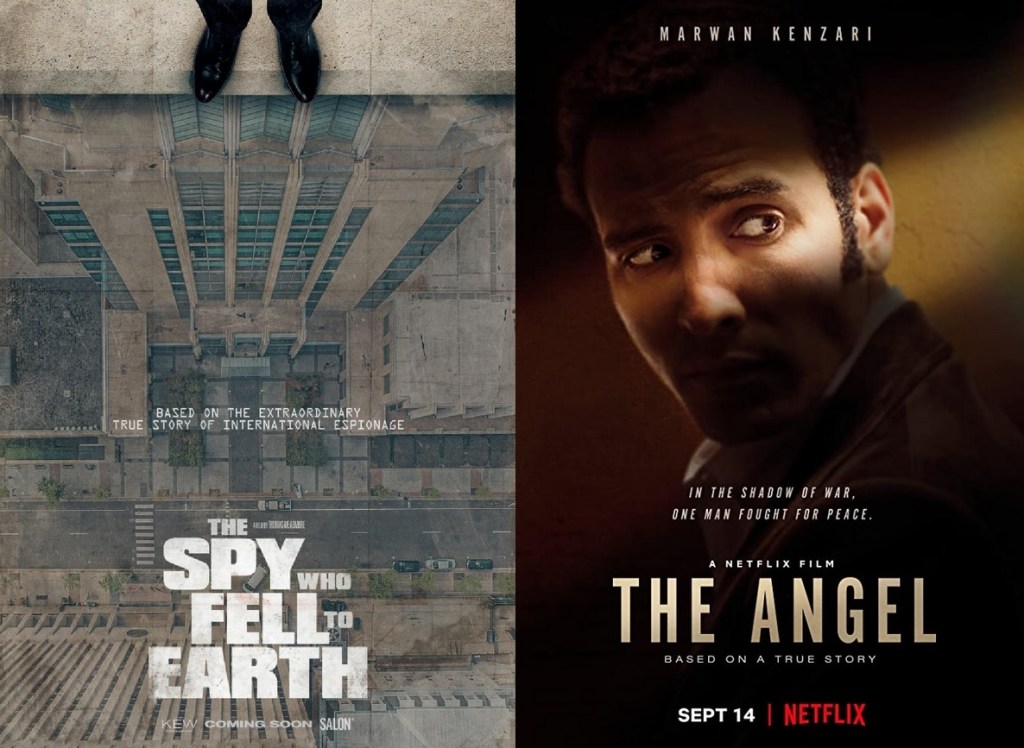
Uri Bar-Joseph’s best-selling non-fiction novel, The Angel: The Egyptian Spy Who Saved Israel (2016), served as the basis for the American-Israeli dramatic-thriller The Angel, which stars Toby Kebbell (Victor von Doom of Fantastic Four and Dawn of the Planet of the Apes) and Marwan Kenzari (Tom Cruise’s version of The Mummy). Ahron Bregman’s book on his personal relationship with Marwan, The Spy Who Fell to Earth (2016), was adapted into the documentary of the same name.
Which film do you watch—if either at all?
Obviously, The Spy Who Fell to Earth, as a documentary, is 100% real and dissects Marwan’s life at a deeper level. However, the book on which the film is based also examines the life of its author and his relationship with Marwan. So, it’s a documentary about their relationship as well.
The Angel is a dramatic-thriller based on a book about Marwan’s life (and his death is a title-carded post-script)—so there’s an obvious narrative compression of the source materials in its transfer as a screenplay. IMDb users rated it a 6.5 (out of 10 reviews).
If you’re someone who puts credence into review aggregators for your movie selections: the IMDb rates The Angel at 6.6 while Rotten Tomatoes rates it on their Tomatometer at 75 percent. And if a director’s past work is a determining factor: Ariel Vromen also directed the Chris Evans and James Franco vehicle The Iceman (2012) and the Kevin Costner and Ryan Reynolds vehicle Criminal (2016).
While fascinating, the documentary—as most can be—is a little dry. Its subjects are well-versed, but they offer no expansions or any bombshell revelation beyond the book’s pages. Vromen is a solid director and moves a camera though its action paces with aplomb. And it’s nice to see Marwan Kenzari, a Middle Eastern Tunisian actor in a lead role of a Hollywood studio film—and a well deserved leading role: he’s excellent.
You can watch The Spy Who Fell to Earth on Netflix and follow up with The Angel, also on Netflix.
About the Author:You can read the music and film reviews of R.D Francis on Medium and learn more about his work on Facebook.
Disclaimer: While these are two new releases on Netflix, we did not receive screeners from the production company or their PA firm. These reviews were written as a contribution to “James Bond Month” here at B&S About Movies—and we watched both films long prior to the planning of our Bond blowout. We genuinely enjoyed both films.
“The alternative/independent rock scene that exploded in the late ’80s/early ’90s was a period we hold dear to our hearts. The music created during that stretch still has great influence today, as the descendants of Nirvana, The Pixies, Sonic Youth, The Replacements, Radiohead and their compatriots are everywhere on rock radio.”
I’ve couldn’t have said it better myself, ye press bard for Loaded Barrel Studios.
April 5th marked the 26th anniversary of the death of Kurt Cobain and he’s still as much alive in our hearts today as he was in the MTV 120 Minutes days of our lives on The Cutting Edge. I am forever grateful for the opportunity afforded me to be on the air as a DJ during the ‘90s alt-rock explosion. If you’ve read my “Exploring: 50 Gen-X Grunge Films of the Alt-Rock ‘90s” and “Exploring: Radio Stations on Film” featurettes, along with my nostalgic waxing over the era-films A Matter of Degrees, duBeat-e-o, S.F.W., and Trees Lounge, you know of my melancholy and infinite sadness at the grunge-era’s passing. It is a time—like the Beatlemania-British Invasion, the late ‘60s San Francisco-seeded progressive rock era, and the ‘80s hair metal nation teased in Los Angeles (chronicled in the frames of Incident at Channel Q)—that can never be duplicated; only remembered, as the refrains of “Freak Scene,” “The Second I Wake,” and “Teenage Riot” from Dinosaur Jr., the Screaming Trees, and Sonic Youth poke digital reminders on our vinyl-reminiscing eardrums via our iPods.
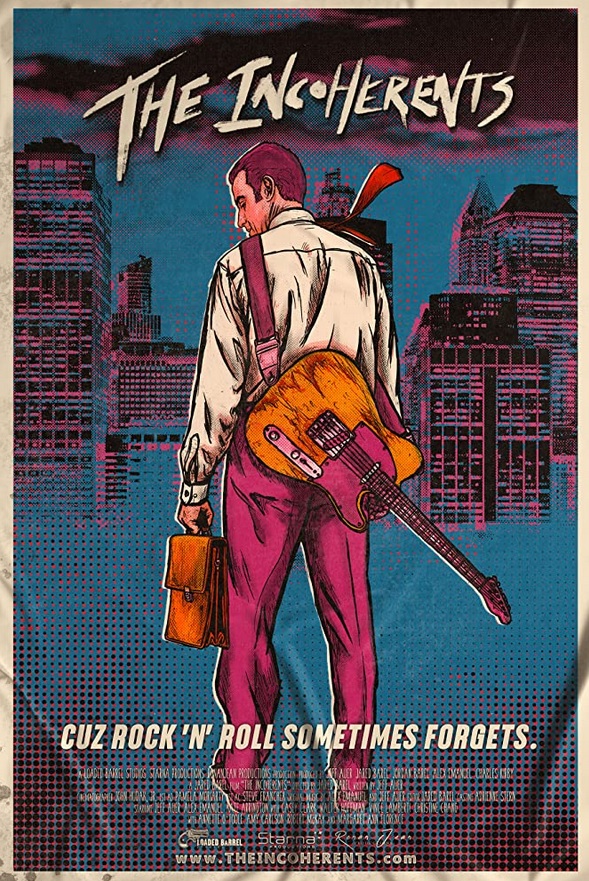
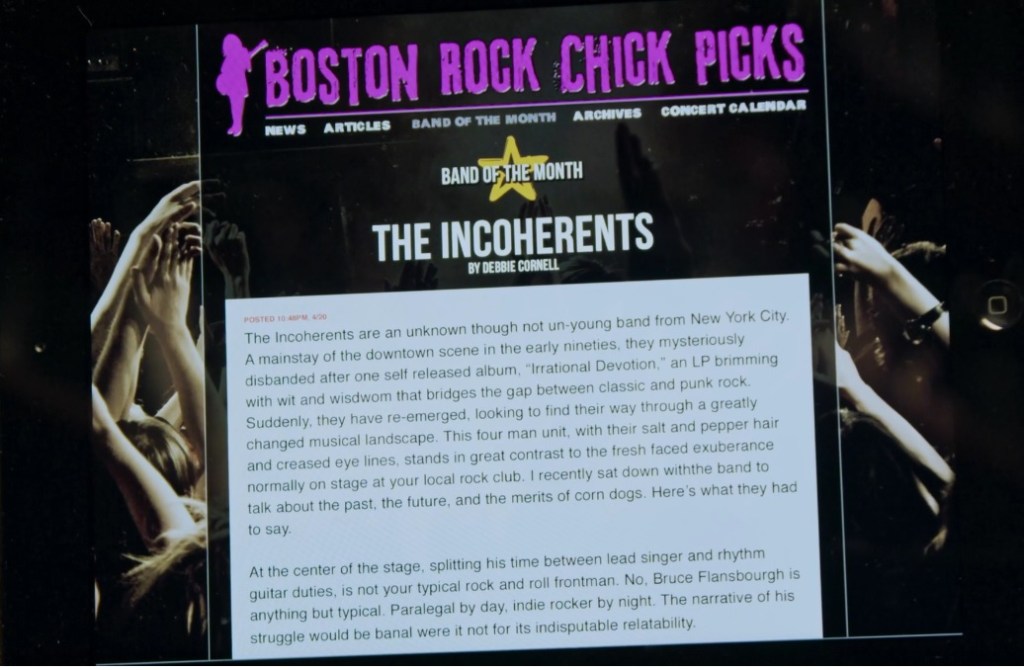
The vinyl-pumping heart within the kindred spirits of writer-star Jeff Auer and director Jared Barel has created a film for us: we the drowning survivors of Seattle’s grungy backwaters. They know these musicians as well as I know these flannel troubadours: the once local, college-campus band rescued from indie label-dom, catapulted to mainstream acceptance on a national label (e.g., the Offspring, Rust, Shudder to Think, the Toadies, etc.), only to land with a marketing thud as a one hit wonder (Collective Soul, Marcy’s Playground, Possum Dixon, Semisonic, 7 Mary 3, Tonic, Tripping Daisy, and Vertical Horizon) as rap music became, as Gene Simmons pointed out, the new de rigueur “heavy metal” of 21st century. As if J. Mascis, Mark Lanegan, and Thurston Moore would receive an Elvis-embrace by more than 1% of America’s 300 million-plus consumers. . . .
Almost Famous, Cameron Crowe’s rock ‘n’ roll love letter to his days as a ‘70s rock journalist, is reflected upon in the press kit for The Incoherents. And while Auer-Barel’s mellifluous billet-doux to ‘90s alt-rock certainly lives up to Martin Scorcese’s critique as a “needle drop” film, the analog VHS centers of my brain loaded in a copy of the lesser-known 1998 British rock flick, Still Crazy. While Almost Famous was the tale of the on-the-top-of-the-world Stillwater (aka Humble Pie) falling apart, the Brian Gibson directed (of the punk-rock version of Almost Famous: 1980’s Breaking Glass) Still Crazy chronicled the reformation of the once-great Strange Fruit (aka The Animals) for a second shag n’ bite of Eve and that damned apple.
“Welcome to the music business,” cackles Clotho, Lachesis, Atropos, the three weaving witches of the looms of fate.
And the threadbare soul of Bruce Flansburgh (Jeff Auer), a 40-something New York paralegal, is desperate enough to give the Moirai one more spool of thread. If the Pixies and Soundgarden can tempt those Greek bitches, then why not The Incoherents?
Tracking down his fellow stagnated grunge stallions, Bruce quickly opens old wounds with Jimmy (Alex Emanuel), the band’s guitarist and co-songwriter, who served as the Keith Richards to Bruce’s Mick Jagger, aka the Joe Perry to his Steven Tyler. But the glimmer’s long since gone and the toxic resentments of the “Simmer Twins” still simmers bitter. And the reunion deepens the already festering wounds of his stalemated-homemaker wife Liz (Kate Arrington) who wants more than Bruce’s paralegal job can give. Will The Incoherents rule the charts once again in the young man’s game of rock ‘n’ roll?
What sells the film—like the soundtracks of Still Crazy and the Gina Gershon-starring Prey for Rock & Roll (2003)—is the ’90s college-rock retro original music that breathes life into the faux-proceedings. Actors Alex Emanuel and Jeff Auer—both accomplished musicians in their own right—wrote and perform the band’s songs; their backing band features ‘90s alt-rockers Sean Eden from Luna and drummer Kevin March of Guided by Voices. A great song—or songs—can sell a film: the ’60s retro-romp That Thing You Do! and 1999’s likeminded The Suburbans (a low-budget tale about a Knack-cum-The Romantics-esque reformed one hit wonder) come to mind. And The Incoherents brings the tunes to the turntable.
The marquee names on this indie-gem are the instantly recognizable Annette O’Toole (stealing the show as the salty-mouth rehearsal studio owner Mrs. Graham) from her too many-to-mention films and TV series. Fans of Showtime’s Billions and CBS-TV’s The Good Wife will recognize Kate Arrington, while others will remember Amy Carlson (as a dream-stealing industry mover n’ shaker) as Mark Wahlberg’s wife on CBS-TV’s Blue Bloods. And you’ve seen leading man Jeff Auer in his guest-starring roles on TV’s The Blacklist, Blue Bloods, and Luke Cage. Adding a realistic-retro vibe to the plight of The Incoherents are the acting cameos by (an insult hurling) guitarist Richard Barone of The Bongos and Lou Reed, along with Chris Barron—who’s all too familiar with cruel realties of the alt-rock ‘90s rollercoaster ride with his band, The Spin Doctors (aka the ’90s alt-rock inversion of the ’80s Men at Work).
Director Jared Barel has six shorts under his belt—one was the 2013 short-film version of The Incoherents. Coming off a successful festival run, the feature-length version won “Best Feature” and “Best Home Grown Feature” at the 2019 New York Coney Island Film Festival and New Jersey’s Garden State Film Festival, while Barel walked away with double awards for “Best Director” and “Best Feature Film” at the Studio City Film Festival. It also garnered nominations for “Best Feature Comedy” and “Feature Film” at the Queens World Film Festival, along with multiple nods at the SoHo International Film Festival. So that tells you The Incoherents is worth hitting the big red streaming button.
That tells you I really dig this film. Deeply.
The Incoherents is high on my rock ‘n’ roll VHS charts alongside American Satan, Bandwagon, Breaking Glass, Prey for Rock & Roll, Rock Star, and Still Crazy as a gold record-standard for accuracy in the lives of the men and women who suffer for their art. And the ones who lugged their equipment: like me.
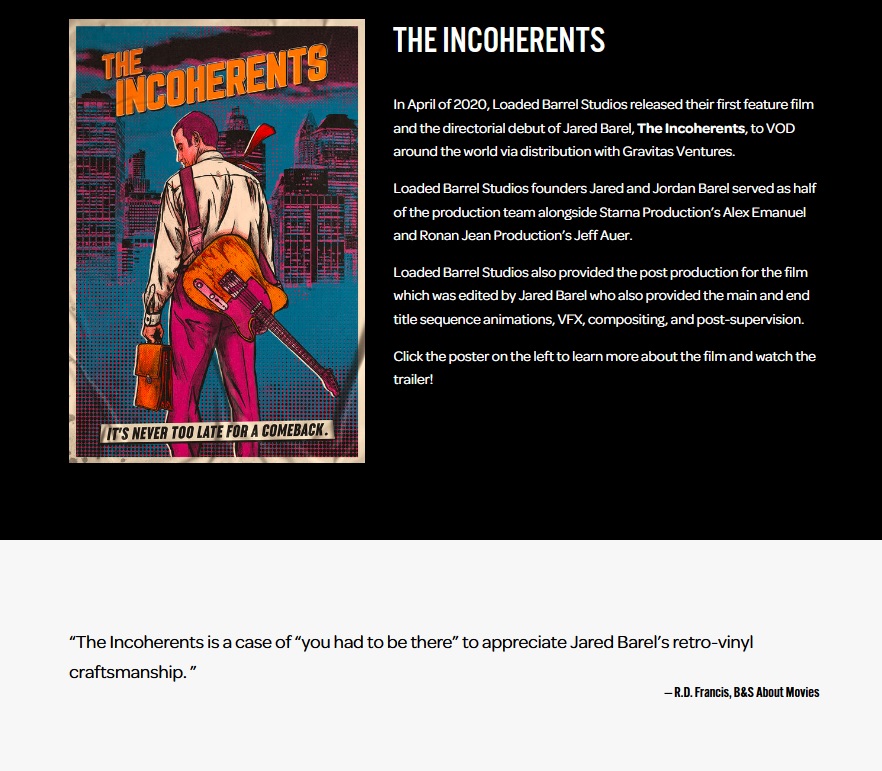
The caveat is that one must consider this reviewer’s radio and roadie background: you may want to take my raves as an incoherent grain of salt—as I can’t not rave about a film that namedrops the Archers of Loaf, Generation X, Guided by Voices, Pavement, and Sebodah (especially Archers of Loaf?! Sebodah?! What the hell, Auer?). The Incoherents is a case of “you had to be there” to appreciate Jared Barel’s retro-vinyl craftsmanship. This isn’t a pretty n’ pat, major studio Jamie Foxx or Joaquin Phoenix music-bio crafted to entertain the mainstream masses via an actor’s Oscar-hopeful mimicry. This film is, first and foremost, about the music. It’s a film for guys like me: the ones who perpetually swim against the aqua firma and mount the musical and film driftwoods of salvation in those drowning, mainstream waters.
And, with that, I’m pulling out the forgotten cardboard tchotchke that is the Screaming Trees’ Invisible Lantern, and following with vinyl chasers from the Buck Pets, the Divine Horsemen, the Doughboys, and Mary My Hope . . . and remembering when my life was a bit more incoherent. And freakin’ beautiful.
Thanks for plugging B&S About Movies!
The Incoherents is available on iTunes and all VOD platforms on April 28. You can learn more at the film’s official website and Facebook.
Disclaimer: This movie was sent to us by its PR company and, as you know, that has no bearing on our review. But, as you can tell by this review, we would have bought it anyway.
About the Author: You can read the music and film reviews of R.D Francis on Medium and learn more about his work on Facebook.He also writes forB&S About Movies.
If you loved the music of the Clash and the Sex Pistols, you loved the movies of Alex Cox. Alex Cox was punk. Alex Cox’s movies were college de rigueur in the ‘80s. No self-respecting lover of punk music and underground film would have a music or movie collection without copies of the VHS and LP soundtracks to Repo Man, Sid and Nancy, and Straight to Hell.
Then Cox went mainstream—as “mainstream” as Cox could be—with Walker, a film about an 1800s American mercenary becoming the president of Nicaragua. But it didn’t have the kitsch-value starring of Joe Strummer of the Clash or Courtney Love, like his punk rock western, Straight to Hell, and we ignored it. And while Alex Cox kept making movies, we, the college-rock crowd grew up, went through marriages and mortgages, births and divorce—and forgot about the films of Alex Cox. (And our Clash and Sex Pistols albums became dust-collecting cardboard tchotchkes).
Cox is the Nicolas Cage and Eric Roberts of directors: he’s either a master of his craft or he’s past-his-prime awful in the eyes of the viewer. Either way, you’re leaving entertained—certainly in the case of Cox’s most recent, previous film: Repo Chick (2009) (yes, it’s a loose sequel-remake of his classic debut). So Cox’s still got it, it’s just that no one sees it. (I wish Cox could have afforded Cage and Roberts to star as Wyatt Earp and Doc Holliday; not that unknown actors Adam Newberry as Earp and Eric Schumacher as Holliday aren’t good in their roles, because both are great in their roles—it’s just my cinematic wanderlust wanting to see a film with Cage and Roberts on the marquee.)
If you know anything at all about the famed gunfight at the O.K. Corral (at least through the back-to-back Kurt Russell and Kevin Costner films Tombstone and Wyatt Earp), and have a passing knowledge of Akira Kurosawa’s oft-pinched Rashomon, then you’re up to speed with Cox’s vision: a reimaging of the Gunfight at the O.K Corral within the multiple-accounts narrative of Kurosawa’s classic.
Oh, right. This is an Alex Cox film. This is Kurosawa: time warped.
Yep, this is a time-traveling sci-fi western mockumentary that, if you know your six degrees of Alex Cox: In addition to producing Cox’s Repo Man, former Monkee Michael Nesmith produced Timerider: The Adventure of Lyle Swann, which concerned a futuristic motocross racer who races through a time-travel device and ends up in the mid-1800s old west. And if you know your time travel comedies: Another ‘70s musical teen idol, David Cassidy, starred as a time traveler intending to speak with America’s founding fathers of 1776—and ended up in the era of disco in Sprit of ’76.
So what we have here is This is Tombstone—sans Nigel Tuffnel and David St. Hubbins—filmed by a group of time-traveling filmmakers who arrive in Tombstone, Arizona, on October 28, 1881, to film the actual gunfight (the Tombstone part). But—damn space-time continuum glitches—they show up a day late. So, to save the project, they decide to stick around and interview the survivors and witnesses (the Rashomon part) to create the definitive document as to what happened. Why didn’t the filmmakers just jump back into their flux capacitor contraption and trip back one more day?
Did I mention this is an Alex Cox film? If they did that, the movie would just be called “Tombstone.” And do we really need another Tombstone movie? No. Do we need an Alex Cox Tombstone movie? Yes.
But why?
What other filmmaker do you know with chutzpah to finish a film with Doc Holliday jumping into an SUV as casually as mounting a horse? Is he a time traveler?
Dude. How many times do I have to say “Did I mention this is an Alex Cox film?” Did you forget he’s the guy who places glowing bright green McGuffins in car trunks and transforms ‘60s Chevy Malibus into flying saucers?
In recent roadhouse showings, Cox appropriately double-billed Tombstone Rashomon with Repo Man. In another showing, he paired his sci-fi western with Dennis Hopper’s surrealist, metafictional western, 1971’s The Last Movie.
Cox’s Walker and Hopper’s The Last Movie are rife with anachronisms. And both filmmakers were criticized as cut-rate Sam Peckinpah imitators. (In Peckinpah’s 1969 western The Wild Bunch, a band of aging outlaws deal with the traditions of the American West disappearing by way of the advancements brought on by the First Industrial Revolution). Hollywood ostracized Hopper after the failure of The Last Movie. Cox was blacklisted by Hollywood after the failure of Walker; so disliked, Cox’s subsequent films struggled to receive distribution in the United States (which is why he we ended up forgetting him).
In Walker, although an 1800s period piece, the characters of the Nicaraguan-set western use automatic rifles, reusable Zippo lighters, and drink from coke bottles; there’s modern cars on the streets and helicopters overhead. (I always felt Cox crafted a homage to the The Firesign Theatre and George Englund’s “electric western,” 1971’s Zachariah—which everyone seems to hate, except me. And that takes us back to Cox’s Straight to Hell.)
In The Last Movie, Hopper plays a stunt coordinator and horse wrangler on a western filmed in a Peruvian village. After the production wraps, he discovers the villagers are “filming” their own movie with “cameras” made of sticks and killing each other by “acting out” the western violence, as they don’t understand the fantasy of moviemaking.
If Kurosawa has access to Doc Brown’s DeLorean, is Tombstone Rashomon a celluloid anachronism he would have made: an amalgamation of 8th century Japan in an American western puzzle, wrapped in a sci-fi enigma?
Toshiro Mifune, Burt Lancaster, Kirk Douglas, Nicolas Cage, and Eric Roberts—and what the hell, Mickey Roarke—starring in a sci-fi version of the Gunfight at the O.K Corral—where fiction and reality are flux capacitor’d? Maybe Akira Kurosawa could double bill that film with his documentary on Alex Cox: Alex Cox: The Last Filmmaker? Why not? Cox made a biographical documentary on the Japanese filmmaker: 1999’s Kurosawa: The Last Emperor.
Cry cinematic ‘havoc!’, and let flux the capacitors of time!
TriCoast Entertainment will release Tombstone Rashomon onto DVD in-store and online April 21 via Best Buy, CC Video, Deep Discount DVD, DVD Planet, Walmart, and Target. You can also pre-order on Amazon. TriCoast will also release the film onto VOD platforms in July 2020. You can learn more about the film on its official Facebook page.












 B&S About Movies
You must be logged in to post a comment.