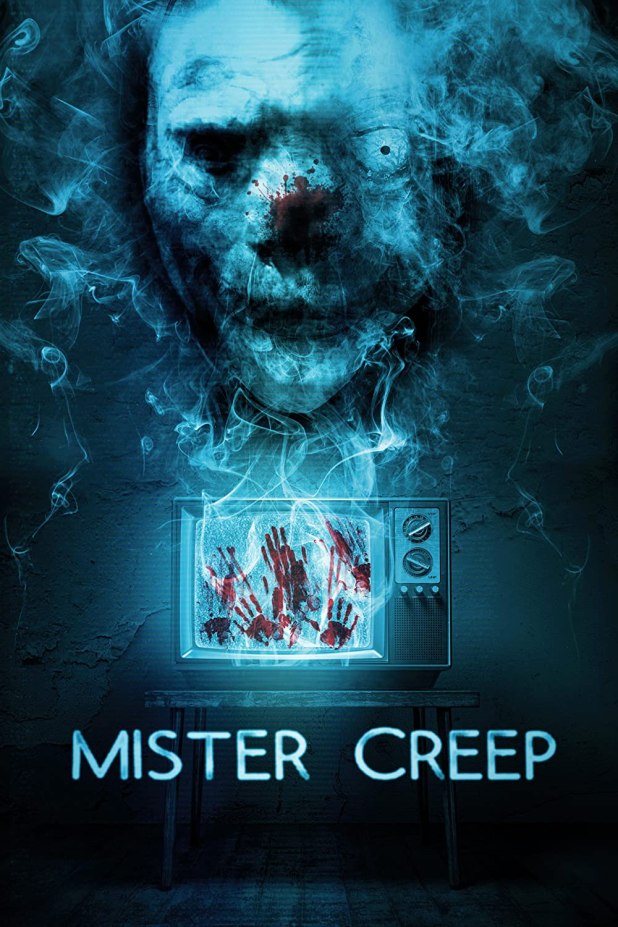
Mister Creep (2022)

Director and writer Isaac Rodriguez had Last Radio Call on the site a few months ago and it was an interesting idea in spite of its found focus look. That same need to show found footage is in this movie, which tells the story of masked serial killer Mister Creep (Brian D. Anderson) and how his twenty years of murders are being investigated by students John (Ali Alkhafaji), Beth (Amber Lee Solis), Val (Shaela Payne) and Dave (Thomas Burke).

For years now, Mister Creep has killed and killed and killed — two hundred victims at least — and broadcasted each kill, which has obsessed Val. Now, she and her friends have followed that need to know about Mister Creep into what we all know is a trap, but as always, would we have a movie otherwise?

There’s also the story of Mr. Creep’s childhood, as told by his biographer and friend Mary (Judy McMillan), who goes mad while telling the story. And then, well…why not go to the abandoned transmission tower that Mr. Creep used to send his signal from?

I said exactly the same thing when I watched Rodriguez’s other film: He’s talented and knows how to make a scary movie. A reliance on found footage is actually a detriment to his cause, as it takes away and limits what he can do with the film. I hope he keeps on making more movies but also expands how they’re made.
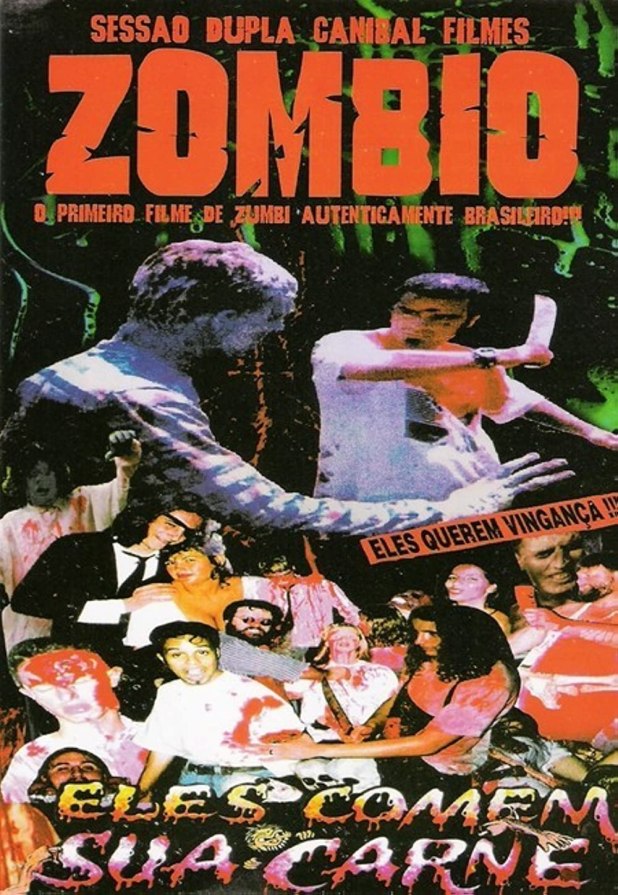
Zombio (1999)

SOV filmmaker is the same as Lucio Fulci fans — this movie is dedicated to the Italian director — and this movie feels like Zombi in Brazil because, well, that’s exactly what it’s supposed to be, even recreating the scenes of the dead coming back to life covered in moss and dirt.

There’s a couple — wealthy ecologists — stranded on an island — Matul, it has to be — when a cross-dressing serial killer — as an old lady and bringing along a potential victim — also makes his way there and a priestess commands the undead as they stumble through the jungle. Also these guys probably told the kitchen to keep the guts and put them in a doggy bag when they ordered their feijoada because those organs look suspiciously true to life.

I haven’t seen a Brazilian zombie movie yet, so now I feel there’s one more culture’s walking dead example that I can check off my passport.

Director and writer Petter Baiestorf is still making movies. He was also the creator of the 2013 sequel Zombio 2: Chimarrão Zombies.

You can get this from the Internet Archive.

It’s Only a Movie (1989)

Joe Zaso also made the two Screambook movies and Guilty Pleasures and is known as the Horror Himbo. An avid bodybuilder, he made appearances as The Hulk, Spider-Man, the New Jersey Devil and Captain America. And if you care about such things, because of his 15 EEE shoe size, he wears his own shoes for every film he appears in.

Directing this film and co-writing it with this movie’s cinematographer V.C. Siegfried, Zaso also stars in it along with Brian Dixon, who plays two roles, Bosco and Madman Malone. The story is all about a film crew shooting a horror movie in a haunted house and, as you can imagine, the cast and crew soon start showing up dead. You’ve seen it all before, but have you seen it shot on video? Have you seen an older starlet engaging in pillow talk while in the tub to a man she doesn’t know is a zombie? Are you prepared for horrific accidents? The camera accidentally catching people yawning? A close that finds an entire gospel church on stage with lyrics about sweeping your floor?

Honestly, usually a gospel choir can save any movie or song. This is the one time I’ve seen this not happen, as the choir is barely competent and that made me enjoy this movie even more. I also enjoyed the video effects and chromakey taking the places of stock footage lightning.

Zaso himself referred to this as a “less-than-stellar musical.”

Who are we to deny him?

I joke, though, because this movie really fascinates me because how many people pushed this hard and decided to not just make a shot on video, but a shot on video musical? Zeso learned a lot from his earlier films, the horror anthologies Screambook and Screambook 2, and this really shows a ton of promise. His films are entertaining, which is more than I can say for so many other movies.

You can watch this on YouTube.

Youjo Melon (1987)

The Legend of the Woman’s Mystery Youkai Melon may start with very solemn readings of scrolls in the forest, but this SOV Japanese short is ready to give you so much more. A punk rock band has found a grimy new place to practice in and when that hets boring, one of their members finds some wooden boxes filled with — you guessed it — melons. Yet he should have paid attention to that opening narrations — we all should have — because it causes everyone in his band to get killed in increasingly gory ways, the kind that only happen in 1980s SOV Japanese short videos with mermaids, manholes and flowers of blood.

The joy of it all is that the witch that comes from the boxes and kills everyone can be reasoned with and is totally fine with resurrecting the band and being on stage with them when they play a secret show in the bowels of some urban bombed out section of Neo Tokyo in the year 19XX and everyone rocks out and maybe some people are more machine than man and demons and normal people can all get along and we can erase all that goopy head exploding like water under the bridge. Just don’t jump in the water off one of those bridges, because they’re super polluted.

Thanks to Garbage Gibbage, you can download this on the Internet Archive.

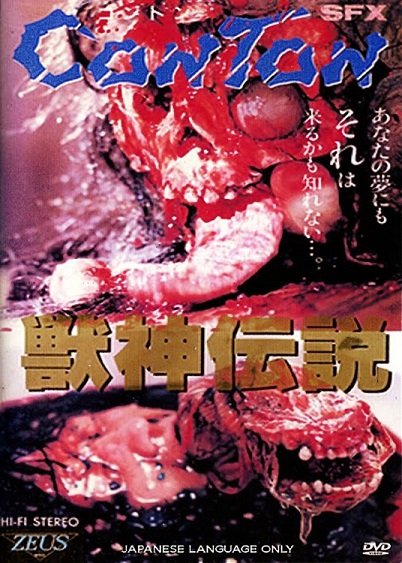
Conton (1987)

Also known as Jushin Densetsu (Beast God Legend), this 46-minute blast of Japanese SOV insanity was directed and written by Takuro Fukuda who went on to write for several Kamen Rider series.  It’s the story of  orphaned college student Goh (Tasashi Kato) who is dealing with several issues all at once, foremost that that he owes the Yakuza not just the money he’s paid but now more money for interest. When he tries to sleep, he dreams of being followed by demonic creatures that he tries to recreate in sculpture form in his waking hours. And his girlfriend Emi (Kyoko Katayama) keeps trying to help him but all he does is push her away.

Those dreams keep getting worse, like a mouth in the sink and a decapitated zombie head that attacks him. If only his job at a movie studio paid more, yet that seems just an excuse — actually, a good one — for some flamboyant 80s dance.

This is a movie that wears its influences proudly, like a title card that is 100% stolen from Demons and a fanatic devotion to 80s transformation effects.  I mean, when Goh finally transforms and takes out those organized crime toughs, it’s shot for shot taken from An American Werewolf In London. And hey — there’s the soundtrack from Phenomena blasting through a scene!

If I saw this in my teens, I’d be drawing all the monsters over and over again. Who am I kidding? I’m doing the same thing in my old age. Behold the power of goopy gore, long may it drizzle and bubble.

You can download this from the Internet Archive or watch it on YouTube.

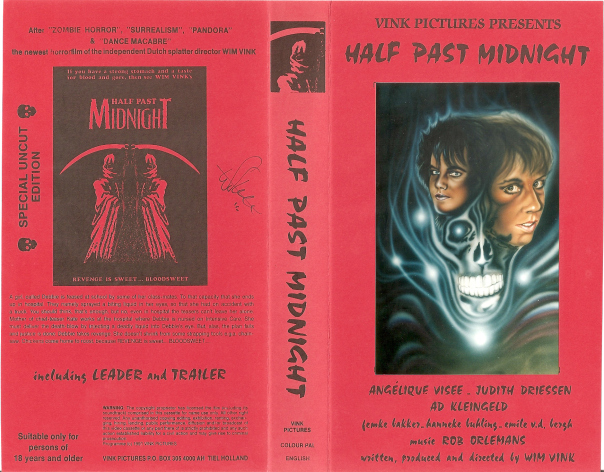
Half Past Midnight (1988)

EDITOR’S NOTE: For another article on this, click here. There’s also an interview with director Wim Venk on the site.

Wim Vink only made six movies — including PandoraDanse MacabreHeaven Is Only In Hell and this one — but man, this movie is something else. It starts in a very ordinary way, as Debbie (Angelique Viesee) is relentlessly treated like utter garbage by the other girls and even a teacher (Ad Kleingeld) that seems sympathetic just wants to roughly take her on her teenage twin bed.

Is it any wonder that the girls all conspire to spray Debbie in the face with hairspray and then laugh as she’s hit by a truck? Well, that’s taking it far. And taking it too far would be gyrating atop her and taking photographs of the grisly carnage. Want it to get even worse? While she struggles in the ICU, a nurse who just ends up being the mother of one of the popular girls injects her in the eye with poison like a SOV Dead and Buried.

Debi arises and goes on a campaign of terror like a telekinetic-less Carrie, using a chainsaw and the pounding beats of composer Rob Orlemans to take twenty-five minutes of torment and finally have it up to here and then unleash pure traumatic hatred on everyone who has ever done her wrong. It’s also in Dutch and everyone speaks stilted English which only serves to make it all that much more foreign.

I love seeing this through decades of tape erosion and tracking between each piece of action as the synth beats my help into pulp. It’s not magic, but it’s quite close.

You can download this from the Internet Archive and watch it on YouTube. There’s even a making of on altohippiegabber’s page.

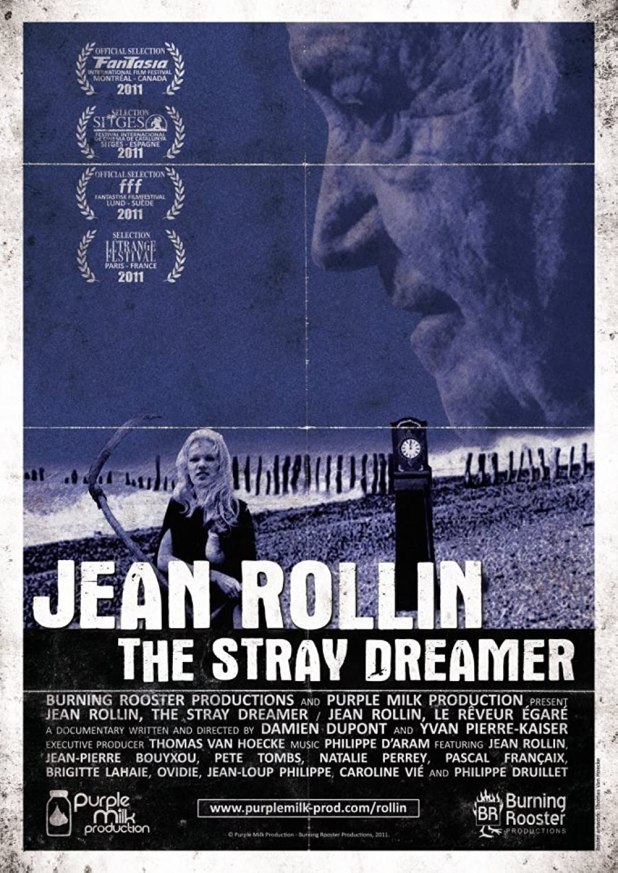
JEAN ROLLIN-UARY: Jean Rollin, le rêveur égaré (2011)

The Stray Dreamer, directed and written by Damien Aimé Dupont and Yvan Pierre-Kaiser, is an attempt to tell the story of Jean Rollin and to create “the portrait of a real artist, the last surrealist, a poet who created his very own dreamworld.” The best part of this is that so much of the story of Rollin is told by the artist himself, even revealing that at times, he would shoot all night and have an ambulance called to take him to the hospital for kidney dialysis in the morning. He also says what makes the most sense about his films, which often makes viewers struggle to make sense of them: “My vision, either good or bad, is personal.”

As many talking heads speak about what makes Rollin essential, it is Rollin who proves it, discussing the struggle to find his voice and tell his stories. Over the last week, I’ve written of each of his films and the themes they explore and I still feel that even with as many watches as I’ve watched, I am only at the surface level of his work and my understanding of it.

I did love getting to hear from Pete Tombs, whose book Immoral Tales: European Sex & Horror Movies, 1956-1984 introduced me to Rollin. I don’t know if I was ready for him in the late 90s and early 00s, as most of the movies I loved were fast movie Hong Kong gun fights or gore-soaked effects-driven blasts of wildness. I did not yet understand the way that movie drugs worked, that you didn’t need cocaine highs all the time and could find a much better high through long droning passages of vampire women wandering ship-strewn beaches and iron-gated cemeteries.

Rickshaw Girl (2021)

Based on the novel by Mitali Perkins, the Rickshaw Girl of the title is Naima (Novera Rahman), who may not have been much of a student yet is an incredible artist. Her father (Naresh Bhuiyan) encourages her to develop her talent by allowing her to paint his rickshaw, but seeing as how they live in a poor area of town and her father only pulls other and more successful men in his rickshaw, the chances of her escaping to become a fine artist are quite limited.

That goal moves even further away when her father gets ill and a loan shark (Nasir Uddin Khan) takes back the rickshaw. As her father needs medicine to live, she eventually finds her way to working in the very same business, hiding her sex under restrictive clothing so that her boss (Ashok Bepari) believes that she’s a boy. A boy with a brightly painted rickshaw that gets her noticed by movie star Siam Ahmen — playing himself — and a role in his next movie. Yet when her secret is revealed, perhaps things won’t work out.

Director Amitabh Reza Chowdhury’s film moves quickly and tells a story that is relatable to anyone, no matter where you are from in the world. It’s issues of class, debt and gender make sense anywhere.

JEAN ROLLIN-UARY: The Mask of Madusa (2006)

It was thought that Jean Rollin’s 2007 film House of Clocks was his final film of his career, but then he made this one-hour short which was screened at the Cinémathèque de Toulouse. Then, he added twenty minutes of additional scenes and cut the film into two distinct parts just like The Rape of the Vampire.

Instead of vampires, this is the story of three sisters, Medusa, Stheno, and Eurydice. Rollin’s wife Simone plays Madusa as she stalks the stages of the Grand Guignol after her sister Euryale (Sabine Lenoël) and she have had a psychic battle that left one mindless and the other blind. A girl (Gabrielle Rollin, Jean’s granddaughter) plays for the reptiles and is turned to stone and then we hear a long conversation between a janitor (Jean-Pierre Bouyxou) and the figure of myth surrounded by posters advertising past bloody performances.

After a shocking battle between Stheno and Meduda, the second part really feels like the past films.  Stheno(Marlène Delcambre) wanders a cemetery holding the head of her sister, meets Cornelius (Delphine Montoban) and says things like “The two orphan vampires danced on the graves in Père Lachaise. We’ll dance under them,” before the two dance to a song from Fascination.

There are several moments near the end of his career where Rollin made movies that tried to unite his past works and say something about getting close to the curtain. This is one more and yes, as lovers of his films seem to always say, this may not be the best one to start with. But do start. Get obsessed.

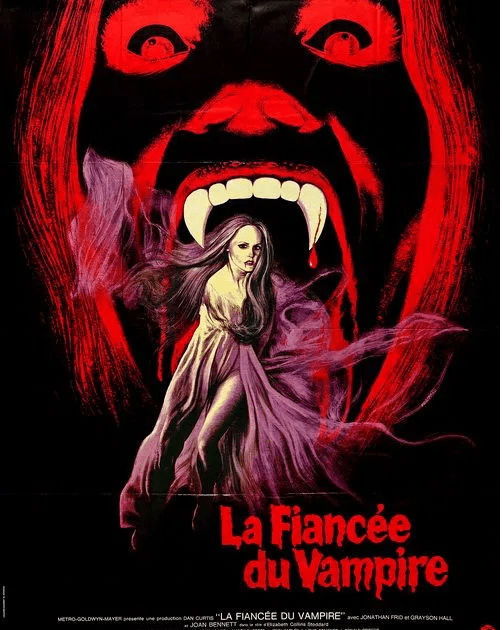
JEAN ROLLIN-UARY: Dracula’s Fiancee (2002)

Jacques Regis stars as a vampire hunter who is dragged along his apprentice (Denis Tallaron) on the hunt for the many descendants of Dracula (Thomas Desfossé), which leads him to The Order of the White Virgins and monsters that include a dwarf (Thomas Smith), smoking nuns who also — of course — kiss, a vampire woman (Sandrine Thoquet), an ogress (Magalie Aguado), a wolf-woman (Brigitte Lahaie) and Isabelle, a young woman destined to be the latest bride of Dracula (Cyrille Iste).

Dracula lives inside a clock, which alows us to know that this is the work of Jean Rollin, as that image was such a part of The Shiver of the Vampires. The other major clue is that this ends on a beach, where a sacrifice and a wedding and doom are due along the shore. And hey — one of the nuns is half of the Castel twins, Cathy, making an appearance after Rollin was critically re-evaluated and had a comeback big enough to get to make this.

There’s also a heart ripped clean out of a chest and a baby being eaten, making this one of the bloodier Rollin films. It’s also odd that Dracula himself appears instead of just being hinted at, but in a world that by 2002 had seen everything there was to see about fanged blood drinkers, leave it to Rollin to show us more by going back to what has always worked. Druggy, slow, doomy wanderings through musty castles and overcast coastlines.

I love that so many reviews start with “This shouldn’t be your first Jean Rollin movie.” There are more of those than where to start!

You can watch this on Kino Cult.