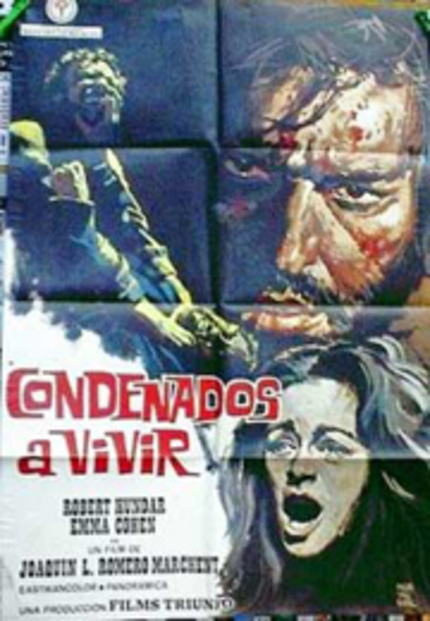
Cut-Throats Nine arrives at a time when Italian westerns were struggling to stand out. This film does so by being as mean as it gets and filled with shocking levels of blood and gore. There was even a William Castle-style promo item, a Terror Mask, made so audiences could hide their eyes during the bloodshed and mayhem.
A remake of the original posted on The Daily Grindhouse.
Sergeant Brown (Robert Hundar) and his daughter Sarah (Emma Cohen) are taking a chain gang of seven convicts to the other side of a mountain range and the prison of Fort Green. Bandits attacks, looking for gold, not realizing that the chains that hold the men are made from it. Then, things get worse. Much worse.
A throat is slashed, the daughter is assaulted, a man is stabbed so many times that his entrails are visible, someone is shot through the eye and a man is burned alive. Brown is also convinced that one of the men killed his wife, so perhaps he doesn’t see the need to get them to their destination alive. But who knows if anyone will get there.
Director Joaquín Luis Romero Marchent made movies until 1995 but the main films of his career were made in the early 70s and the western cycle. It’s also bleak beyond hope, as even the one character that cares for Sarah beyond her father, Dean, may be the absolute worst of all of the convicts who are being used simply to transport wealth, their lives meaningless.
In the first part of this conversation with The Cannon Film GuideVolume Iand The Cannon Film GuideVolume IIauthor Austin Trunick, we discussed how he first found Cannon and why he decided to write his books. Read on to get deep into Cannon love in this free-ranging discussion.
B&S About Movies: I vividly remember being in elementary school and people actively losing their minds over Sho Kosugi. They’d seen Pray for Death and it became so hyperbolic, them getting excited about a movie that was better than the actual movie the way they were telling it.
Austin Trunick: Oh, not at all. I mean, that’s impossible. No description can live up to just the beginning, those first ten minutes of the movie.
B&S: Cannon was ahead of the ninja trend, right?
Austin: Absolutely. I mean, you had some ninjas showing up here and there, usually as bad guys. The biggest appearance, at least in the West, before Cannon’s movies, was The Octagon, which had Chuck Norris fighting ninjas in there.
But Cannon were the first ones to really put ninjas front and center. In The Cannon Film GuideVolume II talked about how Sho Kosugi created so many of the things that we associate with ninjas in pop culture. Most of it came from a big bag of weapons that he brought with him to the set of Enter the Ninja.
There are many times when Cannon followed a trend, but this is one time when you can argue that they were ahead of it, as they really kicked off the ninja craze that was everywhere in the 1980s.
B&S: G.I. Joe is my other passion in life next to movies. The entire Snake Eyes and Storm Shadow relationship — foreigner learns ninjutsu and the native son hates that an outsider has moved above him — that’s Enter the Ninja.
B&S: It’s not far from Franco Nero to Snakes Eyes.
The most important moment of Sam’s childhood.
Austin: Have you ever been to Keith Raineville’s Vintage Ninja site?
He has a section for you called Kosugi Kicks, which finds all these different examples of comic book artwork, toy artwork and video game artwork where it’s just basically artists copying the same four or five famous Sho Kosugi poses.
Suddenly, Sho Kosugi was everywhere. He was the most prominent ninja in those early years.
B&S: I love how in Grady Hendrix and Chris Poggiali’s These Fists Break Bricks, the book begins with how Hollywood used Asian actors and ends with Sho Kosugi as the biggest action star of the time and him eventually walking away from Hollywood.
Austin: Sho Kosugi was definitely one of my favorites, especially as a very young person. One of the first video stores I remember was Brookfield Video and I can still remember the layout of that store. I can’t remember details of my daily life but I remember everything about that store when I was five years old. In the Action section, Stallone and Chuck were up high on the shelves but at eye level for a very short kid was martial arts movies. Not just Sho Kosugi but lots of Godfrey Ho. Those movies need a big book written about them.
B&S: They’re less movies as they are hallucinogenics. Stephen Thrower said in Nightmare U.S.A. that he originally watched so many of those movies under the influence and can get the same high watching them. For me, it’s true. That’s why I call them movie drugs. You can get the same zoned-out high and bliss from murderdrone movies or Godfrey Ho’s re-edited ninjas.
My hometown video store was Prime Time Video and there was a definite hierarchy to the Action section. I can see the hand-drawn sign for that section and there was Arnold, Stallone and Chuck at the top, followed by probably Bronson but in the middle, it’s all Cannon.
Austin: Action — Bronson and Norris making action — was their bread and butter. They had appeal abroad, so Cannon had the formula: pre-sell a movie for $10 million, then make it for $5 million. They would come out ahead and if they had just stuck with that, they would have been in business for a long time.
B&S: I’m obsessed by that. They could have just kept on doing that. In that mindset, couldn’t they have lasted longer?
Austin: Oh, absolutely. The big movies were a problem.
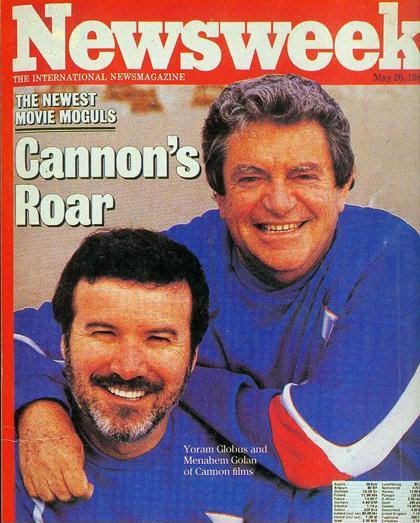
The most frustrating part thing for me, when I think of where Cannon went wrong, was at the beginning of 1986. You have all these articles about how these two Israelis came in and took Hollywood by storm. People laughed them off at first but now, you have legitimate actors signing deals with them. You have the Stallone deal. They had Dustin Hoffman, Al Pacino and John Travolta, all these big names. I mean, theoretically, they had them (laughs).
You have directors who are starting to line up for work with them. And they have box office success. Coming off of Runaway Train they’re even getting Oscar nominations.
Early 1986 is the peak period. They had $300 million in a line of credit, which is impossible to think of, and investors had confidence in them. They could have spent some of that $300 million to make Superman IV for the full $24 million. They could have put more into their big movies like Masters of the Universeand Over the Top.
How many $5 million dollar movies could Cannon have made with that money?
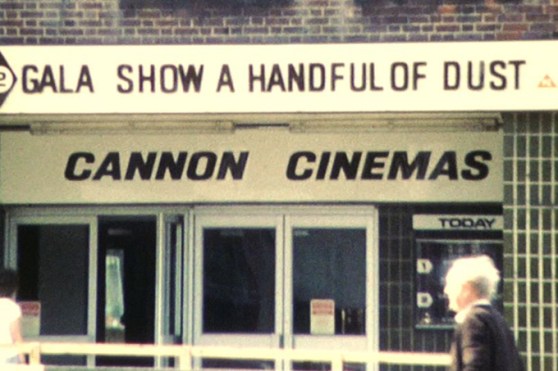
Instead, they went and bought Thorn EMI, which was an English company with a huge catalog of films but they also had a theater chain and Elstree Studios over in London. That cost $270 million of the $300 million that they had.
So the money they were supposed to put into movies, they spent on real estate and facilities that they didn’t need. It’s unfortunate because they make that deal and suddenly everything suddenly starts to fall apart. That’s the moment where everything begins to unravel. It’s sad because at that point, they also start getting investigated by the SEC. All of their productions that they were supposed to make that summer, they had to move or they were yanking budgets. They just didn’t have the money anymore.
They went from being $300 million in the green to $100 million dollars in the red over the course of three or four months.
B&S: When they got to the second act of the Hero’s Journey, they didn’t come back. They took the fall and couldn’t get it back. Did they start believing their own press?
Austin: Probably. I mean their motto became that they were the seventh major studio. Suddenly, they have stars and directors working for them. Famous names like Norman Mailer, writing scripts with a lot of prestige.
I think it’s probably easy to believe that suddenly you’re there, that you had made that step up even though there’s probably half the stairway in front of you at that point to climb.
B&S: It reminds me of how exploitation films suffered for a bit when blockbusters like Jaws took their formula but did it on a bigger budget. Did Hollywood catch on to the Cannon formula?
Austin: I think it’s more that Cannon got away from what was successful for them.
If you’re spending $20 million or more on a movie, you needed to make more than $500,000 at the box office. That’s the model they had for years. It didn’t matter how a Cannon movie did in the theaters. It didn’t matter if it was a flop or it wasn’t a critical success because they already made a profit on cable, foreign sales and video.
But when you’re spending a lot more on the movie, they couldn’t do that anymore. Some of these films needed to be hits and none of their big movies were.
B&S: Pirates was already a flop by those standards even before it was made.
Austin:Pirates is a very Cannon pickup because that’s a movie that several studios had already sunk money into. And then they abandoned it because they saw it was a sinking ship. They washed their hands and took the loss then instead of a bigger loss later. It looked like the movie wasn’t going to get released or even finished.
Cannon swoops into the rescue. I think they thought they could do it. Did they think that Walter Matthau or Roman Polanski’s names could make it a big hit?
I think they had other things they wanted out of the deal. They wanted to shoot a swashbuckling TV series called Sea Hawk and their thought was, “We’ll get a pirate ship out of this deal.”
That made the budget of the TV show lower. Part of the budget they were sinking into Pirates was also going to get them that ship. They made sure that the ship was included in the deal.
And it ends up parked near Cannes for years.
There’s a picture of Placido Domingo posing in front of it with Golan and Globus.
But that wasn’t their whole plan.
They thought that they could get their money back and Polanski promised them more films. They were really hoping to get to make The Two Jakes, the sequel to Chinatown, but there was no way that Jack Nicholson was going to make a movie at Cannon.
There’s a great reel on YouTube that has a bunch of unmade Cannon stuff. Their campaign books do that too. There’s an ad for a movie listed as “A Roman Polanski film.” No plot, no synopsis or anything. Just a picture of Roman Polanski and the Cannon logo! (laughs)
B&S: They did that all the time. There were ads for Spider-Man forever. Captain America too.
Austin: That’s probably the most famous unmade Cannon movie. Everyone that worked at Cannon or directed one of their movies was attached at one time or another. Tobe Hooper, Joe Zito…
Captain America had David Engelbach attached. Michael Winner too! I can only imagine what Michael Winner’s Captain America would look like. John Stockwell who did Dangerously Closeat Cannon and some surf movies later on, his name was on it. Alberty Pyun finally got to do it (at 21st Century). And he was supposed to make Spider-Man too.
B&S: Cannon nearly made a DC and Marvel move in the same year.
Austin: Cannon paid $250,000 for those Marvel rights. That’s unbelievable.
In our next part, Austin discusses Tobe Hooper’s movies for Cannon.
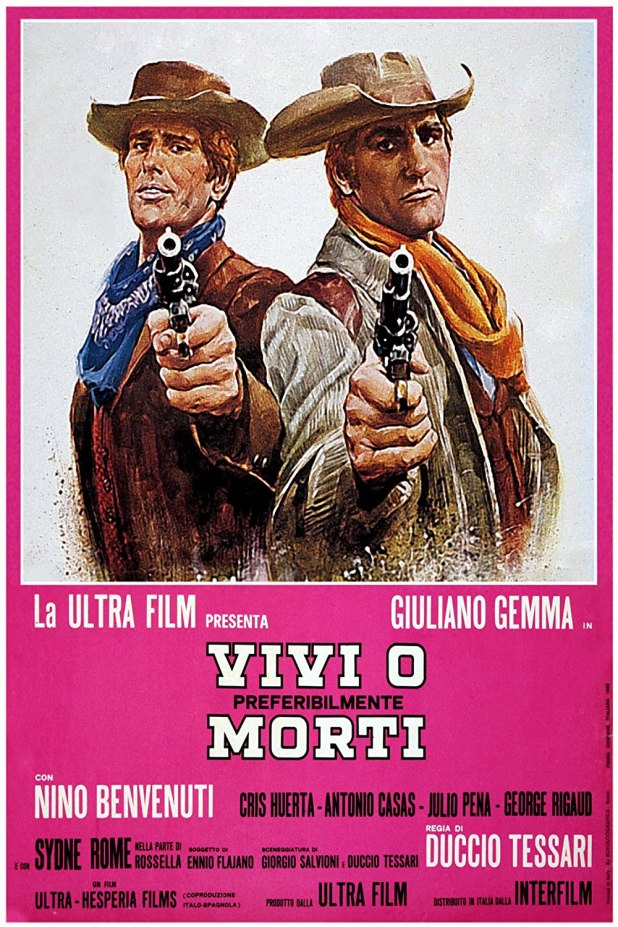
Alive or Preferably Dead is also known as Sundance and the Kid and Sundance Cassidy and Butch the Kid, an attempt to win the audience of Butch Cassidy and the Sundance Kid. It was directed by Duccio Tessari, who wrote A Fistful of Dollars and would go on to direct A Pistol for Ringo. Its story comes from Ennio Flaiano, who wrote ten movies with Fellini, and has a screenplay by Tessari and Giorgio Salvioni (The Tenth Victim).
In the U.S. version, everyone gets an American name: Giuliano Gemma is John Wade; Nino Benvenuti becomes Robert Neuman; Sydne Rome is Karen Blake and director Tessari is called Arthur Pitt.
Country mouse Ted Mulligan (Nino Benvenuti, a former boxer) and city mouse Monty (Giuliano Gemma) inherit $300,000 if they can live together for six months.As soon as Ted arrives, he insults local tough “Bad Jim” Williams (Robert Huerta) who responds by burning down his brother’s house. Soon, the two of them are doing odd jobs, including robbing banks and kidnapping Rossella (Sydne Rome, What?, Some Girls Do) who they both fall for.
It’s all rather goofy and really a predecessor of the sillier Italian westerns that were soon to come riding into town.
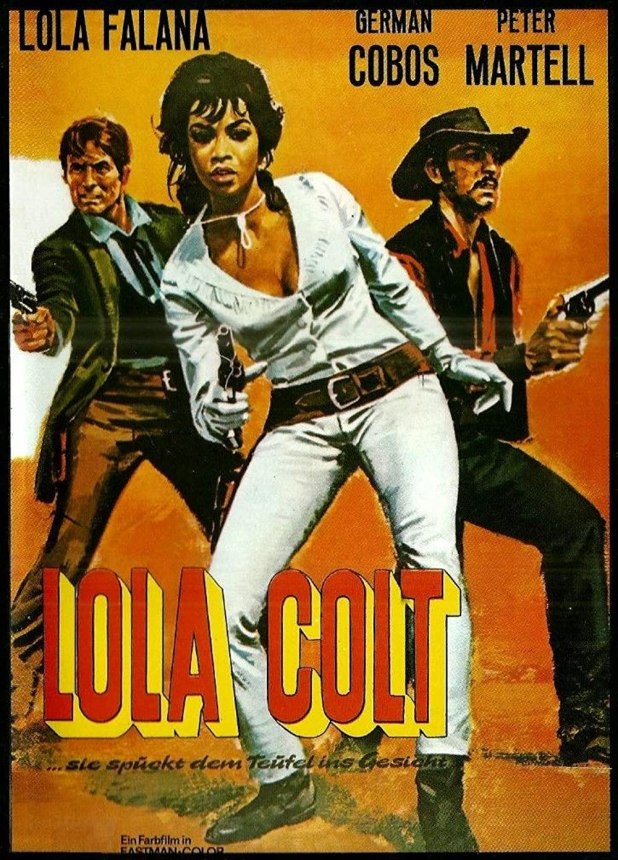
AKA Lola Colt, Lola Baby and Mean and Black, this Italian western — directed by Siro Marcellini, who also wrote the script with Luigi Angelo (The Pumaman) and Lamberto Antonelli (who directed the mondo Vietnam, guerra e pace) — has Lola Falana as Lola, a saloon dancer who came to Santa Ana to dance and ends up saving it from the outlaw El Diablo.
In addition to being one of the few — actually only — movies in which a black woman is a hero in the west, Lola gets to sing “Why Did You Go?,” “You’re the One I Love” and “Swing Low, Sweet Chariot” in musical numbers that seem to be from 1967 and the time when the movie is supposed to be taking place. It also has a white medical student named Rod (Peter Martell, The French Sex Murders) fall in love with Lola and not a single mention is made of her blackness. In 1967. Yes, I’m as surprised as you.
It’s more a curiosity than a movie you need to seek out, but yes. Lola Falana in an Italian western.
June 14: Junesploitation’s topic of the day — as suggested by F This Movie— is blacksploitation! We’re excited to tackle a different genre every day, so check back and see what’s next.
Much like the Italian western, after so many years and so many movies, the blacksploitation film needed to not simply be comedy or crime. Horror — witness Blacula, Sugar Hill and Abby, as well as Ganja and Hess, Scream Blacula Scream and Dr. Black and Mr. White — could also be made for black audiences.
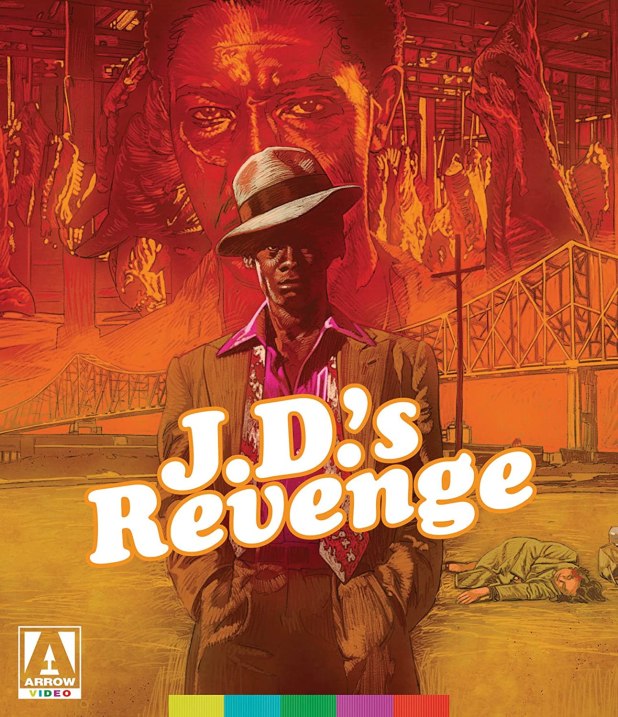
Isaac “Ike” Hendrix (Glynn Turman, who is absolutely incredible in this movie) is a hard-working taxi driver and law student in New Orleans who takes a break studying for the bar and heads out with his girlfriend Joan Pringle (Christella Morgan) for an evening. He’s hypnotized at a show and immediately after, everything is different. That’s because he’s become the host for the spirit of murdered hustler J.D. Walker, changing completely from a quiet man struggling to change his life to a love machine ready to slay on the dance floor, in the bedroom and on the killing floor. The transformation is astounding as is the back story, as J.D. was once tied in with Elijah Bliss (Louis Gossett Jr.), who is now a preacher, his older brother Theotis (Fred Pinkard) and the woman they all loved.
There’s a powerful scene at the end as brother battles brother and J.D. — fully owning Ike — dances and laughs like a demon who has taken this proud holy man and city leader back to their roots as simple criminals, a microcosm of the black experience of attempting to climb out of the horrors of poverty reduced to falling back down the chasm of violence. It’s really something else.
Director Arthur Marks also made Detroit 9000, Friday Foster, Bonnie’s Kids and Bucktown. The script is by Jaison Starks, who also wrote The Fish Who Saved Pittsburgh. It also has a doctor who tells his patient that he’d probably get better if he smoked some weed, which is quite forward thinking for 1976.
There’s also the absolutely wild scene where J.D. picks up a woman at a bar — this is after he’s dominated Joan, who Ike had such a sweet and mutually giving relationship, having rough sex with her, saying “Daddy’s doing you good baby” and then beating her just to show who is in charge — and gives her “the best fucking she ever had” before her boyfriend gets home. She’s in a panic. J.D. simply says, “You better go talk to him then” before grabbing a straight razor and slashing the man’s throat with no effort at all.
Everything wraps up way too neat and clean, but who cares? Getting there has some great performances and an interesting story that had to have been an influence on later black horror like Bones.
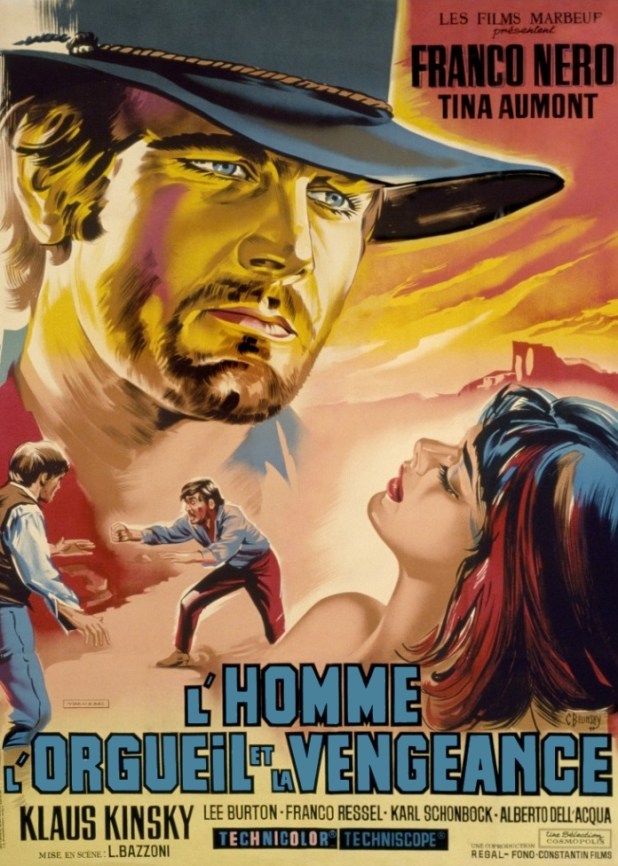
An Italian western based on an actual work of classic literature, Carmen, Man, Pride and Vengeance (which was sold as Mit Django kam der Tod (With Django Came Death) in Germany due to Franco Nero being the star) is actually set in Europe instead of the American west.
Don José (Nero) is bewitched by Carmen (Tina Aumont, Arcana), even allowing her to escape an arrest which finds him demoted. He soon learns that she’s also slept with Lt. Pepe (Franco Ressel, Blood and Black Lace) which makes him insane, so he kills the man and runs from the city. He’s injured and barely makes it before being rescued by Carmen’s family, which surprisingly has her husband Garcia (Klaus Kinski!) amongst them.
He wants to run to America with her. She says they need gold, gold that can only come from robbing a stagecoach with Garcia’s gang. Of course, everyone — including the woman that got him to this ebb — is out to destroy Don José. But if you know Carmen, you already knew that.
One should expect such a strange western to come from a creative force like Luigi Bazzoni, who also made two of the best giallo — The Possessed and The Fifth Cord — as well as one of the strangest, Footprints on the Moon.
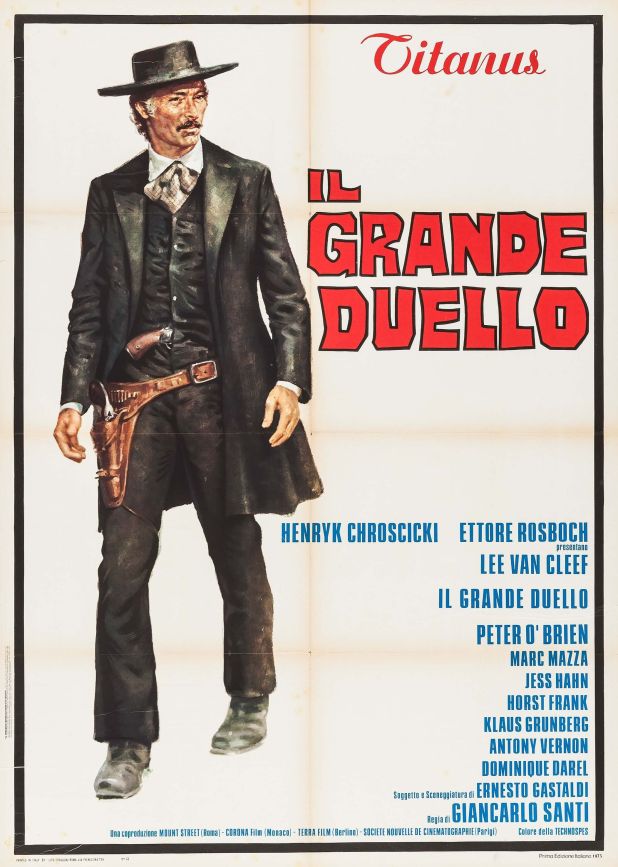
The Grand Duel was directed by Giancarlo Santi, who was Sergio Leone’s second unit director. He only directed two other movies on his own, Quando c’era lui… caro lei! and Con la voce del cuore, although he assistant directed on films like Death Rides a Horse and both of Luigi Cozzi’s Hercules movies. It was written by the man behind so many giallo films, Ernesto Gastaldi.
Philip Wermeer (Alberto Dentice) has been convicted of killing Ebenezer Saxon, the patriarch of Saxon City and also the man who killed his father. He escapes from prison and heads off to Gila Bend, a small town where he’s soon trapped by several bounty hunters all after the reward posted by Saxon’s sons. Sheriff Clayton (Lee Van Cleef) comes to town to take him back to jail, which means battling everyone after the price on Wermeer’s head.
Even after Wermeer’s innocence is shown and the Saxons are shown to be horrible people — massacring an entire silver mine worth of people, including their own men — they still want revenge. They even strip Clayton of his star and disgrace him.
By the end, Clayton must duel all three Saxon brothers and as a gentleman, he refuses to draw first. Like the best of Italian western heroes, he’s putting his life on the line to keep true to his beliefs.
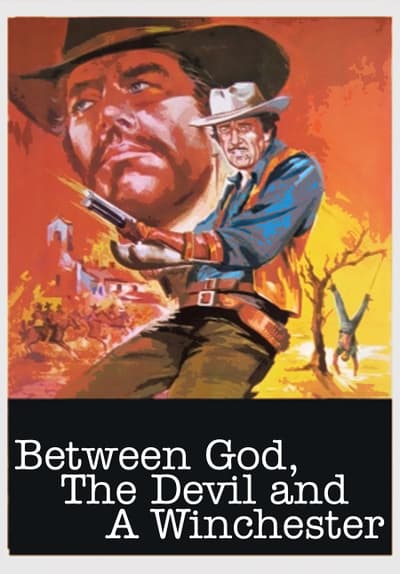
Between Between God, the Devil and a Winchester and the Italian title of this movie, Anche nel west c’era una volta Dio (God Was In the West, Too, At One Time), I think that it has my favorite Italian western title. And despite a tagline promising “A orgy of bloodletting that very few will survive,” it’s actually an adaption of Treasure Island but with horses and cowboys.
Directed by Marino Girolami (Zombie Holocaust) and written by Tito Carpi (Marta, Tentacles), Manuel Martínez Remís and Amedeo Sollazzo (Primitive Love, Two MafiosI Against Goldginger), this movie works, with the desert sands being the seas and outlaws taking over for pirates. Treasure remains treasure.
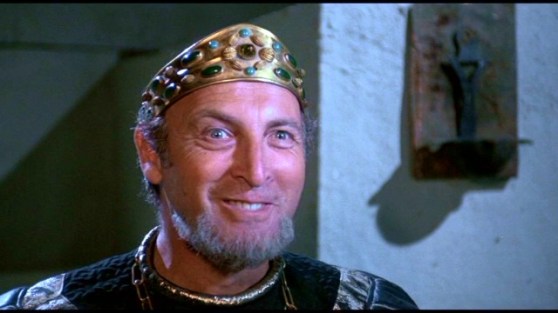
Future Godfrey Ho victim Richard Harrison plays Father Pat Jordan, who recognizes that the stolen gold belongs to a mission and makes the mission his. Gilbert Roland plays the Long John Silver — he has an iron arm instead of a wooden leg — as Juan Chasquisdo. There are even eyepatches and hooks for hands out here in the west.
Sadly, the movie doesn’t ever really get exciting despite the two titles that it has. It’s a boy’s adventure when you need Italian westerns to be filled with blood.
The Cannon Film Guide is a series of books by Austin Trunick and the first time that the movies of that vulnerable studio have been given the deep dive treatment that they so richly deserve. The Cannon Film Guide Volume Icovered 1981 to 1984 while the new — and absolutely titanic in size and scope — The Cannon Film GuideVolume II is all about 1985 to 1987 and has sixty Cannon movies, more than forty new interviews and 300 images across 1,000 pages.
You can — and should — get both books from Bear Manor Media by clicking the links. You can also find Austin on Twitterfor daily blasts of Cannon facts.
I had the tremendous opportunity to talk with Austin about all things Cannon. Instead of coming up with a big list of questions, I thought it would be more entertaining — and a better read — to share the stream of consciousness fun when two people obsessed with Menahem Golan, Yoram Globus and their studio.
B&S About Movies: When you talk to people serious about serious movies, they often scoff at Cannon. Yet they made Runaway Train, Barfly, Love Streams…
Austin Trunick: Oh, absolutely. A lot of those influential, big-name guys wanted to work with them again. John Cassavetes briefly explored doing another movie with them, a follow-up to Love Streams. Even Robert Altman, he was developing Ready to Wear for Cannon for a while in late 1985. Those guys must have liked working with them.
B&S: Outside of the scandals we learned about later, people used to always talk about what a great studio Miramax was. But as Dimension, they were horrific to work with for so many genre filmmakers.
Austin: I mean, you’ll also find people who didn’t enjoy their time with Cannon and had a different experience.
B&S: How did you get started writing The Cannon Film Guide?
Austin: I did a lot of movie stuff for magazines. The main place was Under the Radar magazine. Right around the time my daughter was born — she’s going to be seven — I wanted a project that I could work on by myself, on my own, with my own guidance. That was really where this project started. It was something I could do on the side. Eventually, it ate up more and more of my time. A little bit here, a little bit there, and it became what I’m working on most of the time.
It was really born out of wanting my own project and Cannon was something that I loved and grew up with. You know as well as I do that the stories behind their movies are often as crazy as what was actually on screen. I wanted to get into those stories and find out everything that I could.
B&S: I think you picked the right time because there’s a danger of so many of these people being gone soon.
Austin: We’re at a crucial time. Especially when you’re looking at the early 80s, many of these actors and filmmakers are getting old. Many of these films, b-movies in particular, still aren’t getting the historical or critical looks that they deserve. And if someone doesn’t start doing those interviews, we run the risk of losing a lot of the people who have information and stories that we’ll want to hear.
One of the people I was most excited to talk to for the second book was James Karen – sadly, he passed away a few months after we did the interview. He’s someone who I was really thankful I got to talk to, and that I got to hear his stories.
We’re talking about movies that were made more than 40 years ago. Some of these people are in their 80s or older, and unfortunately could go at any time. It’s good to get their stories where we can. There are people that I sadly just missed out on, where I exchanged emails back and forth and it just didn’t work out. One in particular that was heartbreaking was Yehuda Efroni. He was in so many Cannon movies, a character actor that just pops up everywhere. I had finally found a way to contact him and I’d emailed. Then I heard back that he had passed away. It wasn’t even on IMDb or anything like that yet, it wasn’t really public. They’re just like oh, he passed away a while ago.
Cannon’s utility player Yehuda Efroni.
B&S: He’s so important to Cannon. He’s like the secret word, when he shows up, you go nuts.
Austin: I’m pretty sure he’s in more Cannon productions than any other actor by a huge margin.
B&S: He’d worked with Goram and Globus all the way back to Escape to the Sun,Operation Thunderbolt and The Uranium Conspiracy.
Austin: I think he was just someone that was close to Menahem, and they always brought him back.
B&S: What starts your love of Cannon? When was the first time you remember the logo before a movie? I’m not sure with Cannon, but I can remember the Orion Pictures opening or Vestron Video and I thought to myself, “This is going to be good because I like other movies with this logo.”
Austin: I definitely saw so many Cannon movies before I realized that they were all linked by one company. My first exposure to some of these movies was going to the video store with my father, when I was probably too young to be watching Chuck Norris movies. As I got a little older, I started renting lots of ninja movies with my friends after school. Then I realized when I would see the Cannon logo, “Oh, they make the Sho Kosugi movies. They’re the same people. They made American Ninja.”
Cannon was very good about putting their logo really prominently on their video boxes. Also, they had that large logo at the beginning of their later movies, and that spectacular music you hear when the film starts up. You could clearly see their logo on the spines or the fronts of the tapes, especially if it was Cannon Video or one of the big MGM boxes.
I think I really started to notice Cannon when I got a bit older and started to rent movies on my own. I would seek out Cannon movies when I started buying and collecting tapes at the end of the 90s — everyone was clearing them out to make way for DVDs – and that’s when I started to say, “Let’s collect these labels. They look cool on a shelf. Thematically, they tie together.” But it was a few years of watching Cannon movies before I started to realize that they all came from the same place.
In the next part of this interview, Austin gets into how Cannon influenced everything we know about ninjas, as well as what Charles Bronson meant to Cannon and exactly why the studio failed when they had a can’t lose plan.
I just read this artice “What Hollywood Needs to Learn from the Creative Disappointment of Jurassic World: Dominion” and this sentence makes me laugh: “While the film earned nearly $150 million at the domestic box office this weekend, reviews weren’t kind and the film currently sits at a dismal 30 percent on Rotten Tomatoes (the lowest of any film in this trilogy or the previous one).”
It’s an article that bemoans that Crimes of the Future discusses “difficult questions about what happens when humankind exploits technology to change the natural course of evolution” while this Jurassic Parksequel — the sixth — ” is a mess of ridiculous plot twists and cheeky fan service with an overabundance of monster movie CGI.”
I don’t want to be one of those people that says, “What did you expect?” but the original Jurassic Parkwas a soulless piece of moviemaking livened up with great effects and it really has been all downhill from there, other than, you know, that time a dinosaur was on an airplane.
That article also says, “Dominion frustrates because it arrives at a moment when the global film industry needs every type of movie that contributes to the broader ecosystem to thrive,” and I have no idea what they’re going on about. Of course this movie doesn’t have the themes and nuances that you expect from a movie. It’s a rollercoaster summer blockbuster, not Chauncer.
These are the same critics that demanded the same level of character development and — again — nuance in Doctor Strange in the Multiverse of Madness as Everything Everywhere All at Once and therefore wrote reviews that were hamfisted with the same thesis statement repeated again and again until they hit the word limit that their corporate masters and SEO overlords demand with none of the nuance — use it three times and an angel gets its wings — they pay lip service to.
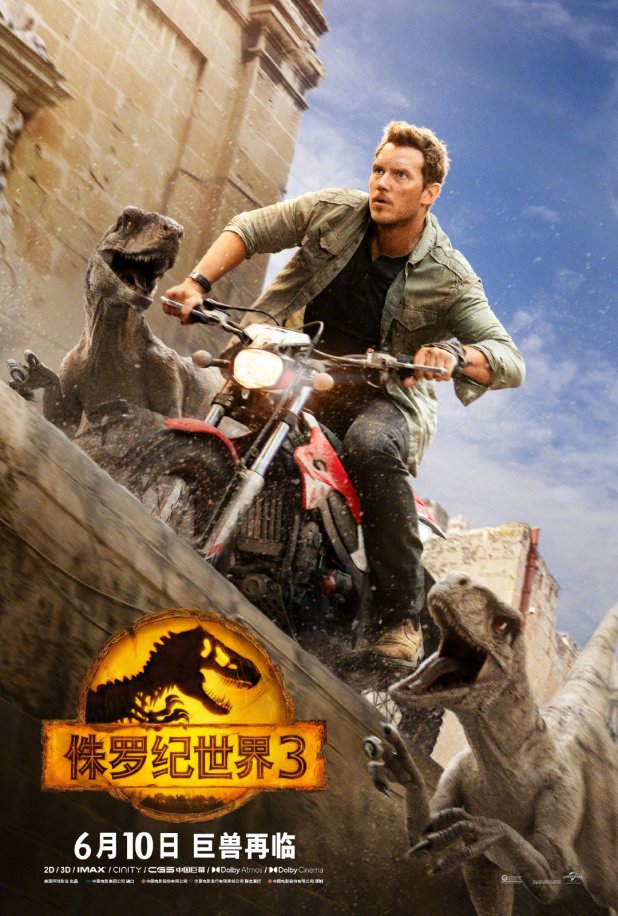
So yes, the sixth movie does everything it can to bring together everyone from the past: Ellie Sattler (Laura Dern), Alan Grant (Sam Neill) and Ian Malcolm (Jeff Goldblum) with everyone from now: Owen Grady (Chris Pratt), Claire Dearing (Bryce Dallas Howard) and their adopted daughter Maisie Lockwood (Isabella Sermon). It even has the Barbasol can that Dennis Nedry used to sneak out dinosaur embryos way back all those years ago. It also has BD Wong in it and nothing his character Dr. Henry Wu touches ever works out.
So while the last movie — Jurassic World: Fallen Kingdom— ended promising us a Dinosaurs Attack! world of humans trying to co-exist in a world where dinosaurs are suddenly everywhere, now horses and dinos live in perfect symbiosis and happiness within the space of a few years. The real problem? BioSyn leader Lewis Dodgson (Campbell Scott) wants the world to only eat his crops, so he’s made gigantic locusts that get out of control. I mean, Locust World is not a title that will get summer audiences, so maybe this is a backdoor pilot for a locust TV series.
There are also two new characters, whistleblower Ramsay Cole (Mamoudou Athie) and rogue pilot who gets redeemed Kayla Watts (DeWanda Wise). They both have just about the same journey to make as those on the side of wrong that find their way to helping our heroes.
Honestly, just like how as a kid I was only into kaiju movies for the kaiju, I’m only here for the dinosaurs. It takes two hours — TWO HOURS! — until to get to the island and unleash dinosaurs on humans. That’s also my other problem: why would they build another island? Every single time they build an island of dinosaurs — and BD Wong is involved — it goes bad. Fool me once, fool me four times…
Actually, I want a whole movie about that Mos EIsey dinosaur flea market. People have baby triceratops in cardboard boxes like puppies at Trader Jacks and other dudes are just eating dinosaur meat on a stick like we didn’t have a whole wet markets thing that destroyed the world. And where did Soyona Santos (Dichen Lachman) disappear to at the end of that scene? She’s set up to be a major villain and then…nothing.
Look, if anything, filmmakers should learn from the adult video industry and forego the story and just give audiences what they want: non-stop dinosaurs spitting in people’s faces, smashing them into liquid and eating them while they try to ride on Segways. Give us a Jackass style blast of non-stop human decimation if you’re not going to put together a great story. No story — the anti-story — will save us!
This is the third of the series that Colin Trevorrow has co-written (this time with Emily Carmichael, who also wrote Pacific Rim: Uprising). That article I mentioned up above bemoaned the fact that he hasn’t made another movie like Safety Not Guaranteed and has been swallowed by the big film machine. Well, yeah. Some people like to make money instead of good movies. Well, after his Star Wars experience, he came back to direct this one and it’s fine. There are some good moments of fright in the tunnels that connect the new and old casts and everyone gets a laughable line and Sam Neil does that silly train a raptor pose and I thought, “Man, you were in Possession, Sam Neil! How does one get from a movie where you’re cucked by a demonic alien baby to the biggest movie of the summer? Again?!?”
If you don’t have air conditioning, this movie will get you out of the heat for 2 hours and 33 minutes. Put my review on the poster, Hollywood!




 B&S About Movies
You must be logged in to post a comment.