Mill Creek Through the Decades: 1970s Collection: The Last Detail (1973)

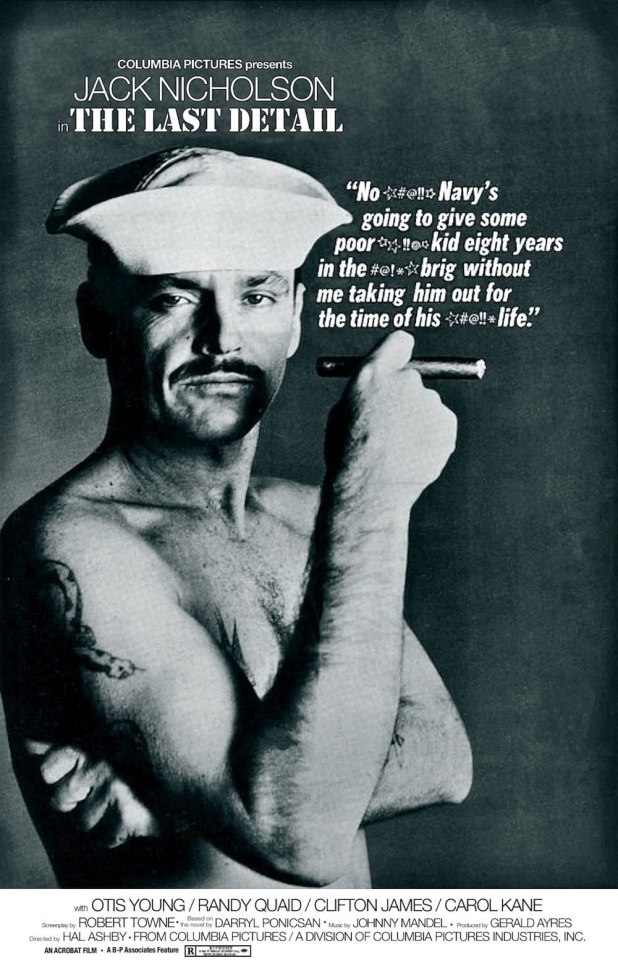
Navy lifers Signalman First Class Billy “Badass” Buddusky (Jack Nicholson) and Gunner’s Mate First Class Richard “Mule” Mulhall (Otis Young) have been given orders they’re not happy with: escorting Seaman Larry Meadows (Randy Quaid) to Portsmouth Naval Prison so he can serve eight years in the brig for stealing $40 from a charity fund.

They have a week to get him from Virginia to Maine and if they fail, they will be kicked out of the Navy, losing all of their benefits, pay and pension.

A funny thing happens. They end up liking the kid and decide to show him a good time before giving him over to serve his sentence. What follows are several episodes in their journey, like Meadows trying to see his mother one last time, ice skating, a bar brawl, an encounter with Buddhists at a party, paying (twice) for Meadows first sexual experience and finally taking him in.

With a cast that includes Nancy Allen, Gilda Radner, Luana Anders, Clifton James (Cool Hand Luke and Sheriff J.W. Pepper in Live and Let Die and The Man with the Golden Gun), Carol Kane and Michael Moriarty, I’m left wondering, did I cast this movie?

When Robert Towne wrote the script, he ended up facing a Hollywood that didn’t understand all of the profanity. Then again, there were 342 f words in the first five minutes. Once Jack Nicholson became a star, it became easier to get made, and the actor brought director Hal Ashby on board. The production stalled for a year and a half while the star made The King of Marvin Gardens, with Columbia Pictures’ Peter Guber wanting the team to move on and make it with Burt Reynolds, Jim Brown and David Cassidy. Luckily, everyone — including producer Gerry Ayres — stuck together, even when Ashby had a marijuana bust in Canada. Sadly, the script had been written for Nicholson and Rupert Crosse, who died from cancer before the movie could be made.

Still, Columbia was unhappy with how long the movie took to edit and how much profanity remained in the final cut. They wanted 26 lines to be cut and at the end, there were 65 uses of the f word, breaking records for swearing. Ashby talked Columbia into previewing the movie for a real audience to see how they would react and they loved it. And then when Nicholson won Best Actor at the Cannes Film Festival, they finally did a limited release of the film.

The actor said, “I like the idea of winning at Cannes with The Last Detail, but not getting our own Academy Award hurt real bad. I did it in that movie, that was my best role.”

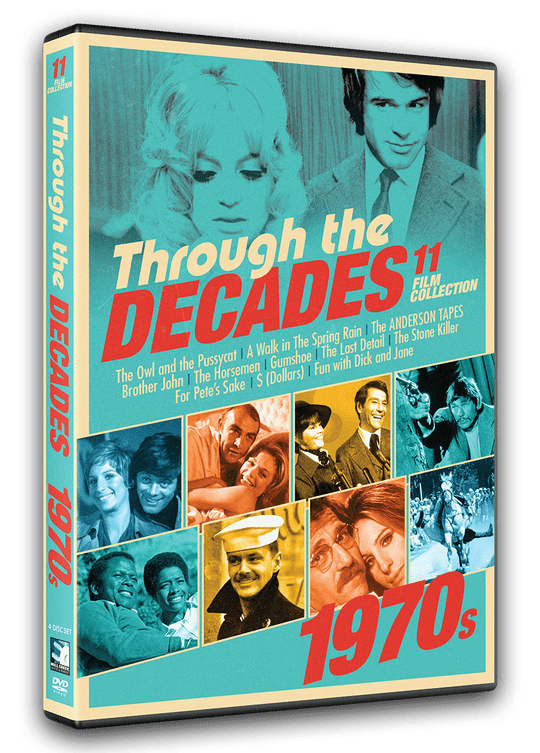
Through the Decades: 1970s Collection is new from Mill Creek. It also has A Walk In the Spring Rain, DollarsFun With Dick and JaneThe Owl and PussycatFor Pete’s Sake, The Anderson TapesThe HorsemenThe Stone KillerBrother John and Gumshoe. You can learn more on their site and order it from Deep Discount.

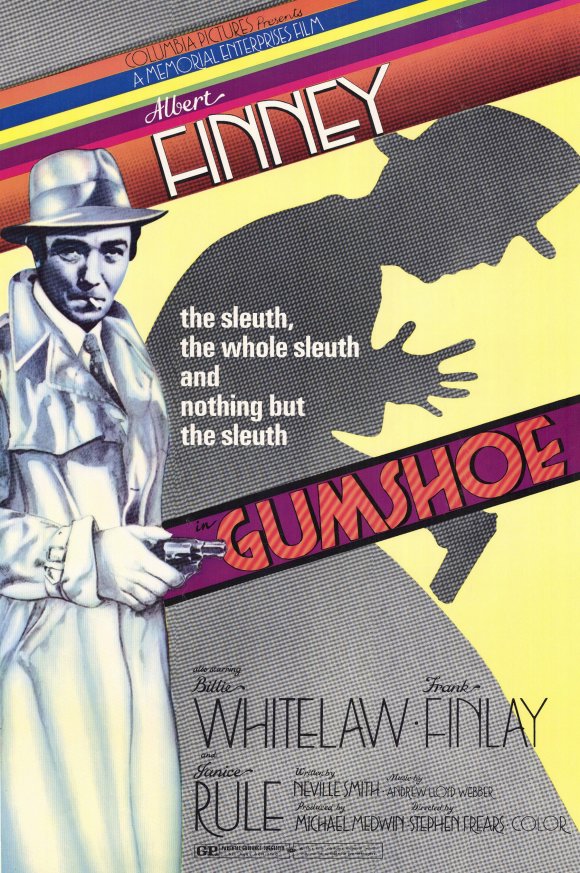
Mill Creek Through the Decades: 1970s Collection: Gumshoe (1971)

The Atlantis Bookshop is an esoteric bookshop that’s been the center of London’s occult scene since it opened in 1921. It’s where the “Father of Wicca” Gerald Gardner attended meetings of The Order of the Hidden Masters and the shop even published his first book. It continues to be a nexus point for magic users and is featured prominently in Gumshoe, a movie that has some magic of its own as Eddie Ginley (Albert Finney) dreams of escaping his bingo hall reality and becoming a detective like in the books he reads. When he places an ad for his detective services as a birthday joke, he discovers himself in the middle of an actual case that may involve his family.

Featuring the first music score for a film by Andrew Lloyd Webber, Gumshoe‘s drug scenes kept it from being released on video until 2009. It was the debut film of director Stephen Frears (The GriftersDangerous LiaisonsHigh Fidelity) and was written by Neville Smith, who also plays Arthur in this movie.

There was a big revival of hard boiled detective films and film noir at the start of the 70s and this film does a great job of showing how one man can become lost in the dream of what it would be like to live in their world.

Through the Decades: 1970s Collection is new from Mill Creek. It also has A Walk In the Spring Rain, DollarsFun With Dick and JaneThe Owl and PussycatFor Pete’s Sake, The Anderson TapesThe HorsemenThe Stone KillerBrother John and The Last Detail. You can learn more on their site and order it from Deep Discount.

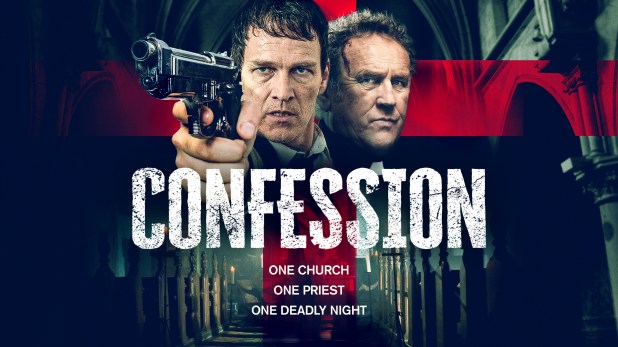
Confession (2021)

Victor Strong is a wounded man (Stephen Moyer) who has taken Father Peter (Colm Meany, Star Trek: Deep Space Nine) hostage with the hopes of confessing to his sins before he dies.

Director and writer David Beton (who also directed The Hatton Garden JobTower Block and I Am Soldier under the name Ronnie Thompson) has that great idea line at the top and then ratchets up the tension throughout, continually leaving the viewer guessing as to whether Strong is the hero or villain.

But does keep it up the whole way through?

Is Willow (Clare-Hope Ashitey, Children of Men) a good cop, here to arrest him? Or has she brought her gun and badge into the church with mad intentions? And is Strong telling the truth when he says that all he wants is for his daughter to know the truth about why her mother died? And even more to the point, does the priest have secrets of his own?

The three leads are all solid, but after the set-up, it gets quite talky. And when you’d hope to see the point of view of each character given their own narrative shift, the story plays out in real time.

This feels like a stage play — it isn’t — with its solitary location and three leads. It works, but it feels like there was an opportunity to do more, to show more, but as it is, it’s not the worst thing that you can find in the world of streaming.

Confession is playing in select theaters and on demand from Uncork’d Entertainment.

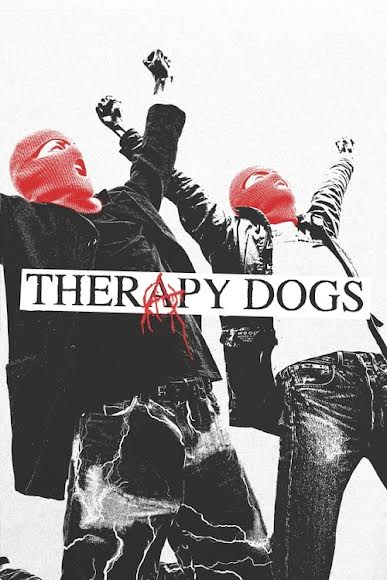
SLAMDANCE: Therapy Dogs (2022)

ABOUT THE AUTHOR: G.G. Graham is a cult film cryptid, horror hag, and exploitation film explorer of the dusty and disreputable corners of cinema history. The street preacher of Z-grade cinema can be found at Midnight Movie Monster, as well as writing for various genre sites and print publications, or on Twitter and Instagram @msmidnightmovie. Visit her Blog at www.midnightmoviemonster.com and Twitter @msmidnightmovie.

Most coming of age rituals are more arbitrary than not. The end of your school years or your 18th birthday are important milestones, sure, but it isn’t like either one magically confers any deeper insight about what the rest of your life might look like. There’s no easy path to whatever comes next, but suddenly everyone around you expects you to have more answers than questions, and not everyone has a solid support system to guide them along. If anything, it just adds more stress and uncertainty to an already uncomfortably liminal time, a pile of awkward questions to avoid from every adult in your life.

Therapy Dogs‘ Justin (co-screenwriter Justin Morrice) physically tosses himself of his mother’s car when she starts in on that line of questioning. He’s not ready to give up having fun with his friends, or his long brewing movie project with best friend Ethan (co-writer/director Ethan Eng). In the guise of a yearbook project, they’ve been making a guerrilla film to tell “the truth” about their last year of school at Cawthra Park Secondary school, in the suburbs of Toronto.

Morrice and Eng started the project that became Therapy Dogs in 2017, when they were just 16. Shooting without cooperation from school officials, they assembled the film’s cast out of friends from their 2019 graduating class. The bulk of the film’s footage was shot on the sly using a mix of cell phones, Go Pros and lower grade professional equipment. The resulting movie’s rawness is one of its biggest strengths, documentary style footage and scripted segments woven together in a way that feels more immediate than the traditional narrative structure of a standard documentary ever could.

The film is a freewheeling sprint of free association, snapshots of various bits of teenage life whipstiched together with occasional text inserts and colorful title cards that resemble memes and notebook doodles. The subject swerves are often accompanied by the thump of the excellently curated pop playlist that serves as the soundtrack. Freed from the usual coming of age narrative arcs, what emerges is a messy portrait of how much of the supposed “best years of your life” are a hurry up and wait situation, be it for the end of the school day or for something different to happen. 

Justin, Ethan, and their friends unapologetically act out suburban teenage angst in its most poorly thought through forms. Be it doing donuts in a parking lot with Justin strapped to the hood of the car or our pair of protagonists jumping off a railroad crossing into a lake, Therapy Dogs is an object lesson in how suburban comfort often comes at the cost of emotional resilience, boredom leading to recklessness. In an environment where everything has been built to encourage a certain comfortable cruise control, it seems less ridiculous to fist fight your best friend just to feel something. This culminates in a messy blow up between Ethan and Justin, that is reconciled as quietly as the original conflict was explosive.

While Therapy Dogs has the ring of emotional truth to every frame, its manic energy and lack of structure does sag through the second act, feeling more like an aggregated social media feed than a film. A sequence taking place in a strip club adds some much needed black comedy to a pile of over wrought prom proposals and the three part saga of acquaintance Kevin’s (Kevin Tseng) attempts to find himself by disappearing into drama club theater productions. Right when the film is about to tilt into self indulgence, it makes a play for deeper, less performative emotional territory. The film and its characters handle a worst case scenario with a quiet empathy rarely seen in teen focused cinema. While it happens later in the film that it likely should have, the shift in gears gives Therapy Dogs a surprisingly affecting dose of heart and heft. 

Out of the premiers at this year’s Slamdance film festival, Therapy Dogs was one of the standouts, alongside Avalon Fast’s Honeycomb. Both are microbudget feature debuts from young filmmakers bursting at the seams with potential, and they pair well as opposite reactions to the uncertainty of the passage from childhood to adult. While Honeycomb‘s girl gang finds the refuge of isolation a dangerous illusion that collapses under its own weight, the protagonists of Therapy Dogs find the safe harbor of their insular friend group torn apart by the force of the external pressures. 

While technically and structurally raw edged, both films capture something truthful and immediate about adolescence, the gift of young creatives documenting their experiences in something approximating real time. Hindsight softens the sharp edges of growing up into cozy nostalgia, or crystallizes youthful recklessness into a sharply nihilistic scalpel rather than a clumsy cudgel. As the best bits of Therapy Dogs illustrate, the immediate experience of coming of age lies along a much less linear path. Adulthood isn’t marked in a birthday, or a graduation, or a career path. Growing up’s largest and most difficult to swallow revelation is finding out there are no easy certainties or absolutes. No one has it all figured out, and we’re all largely doing our best to make it up as we go along.
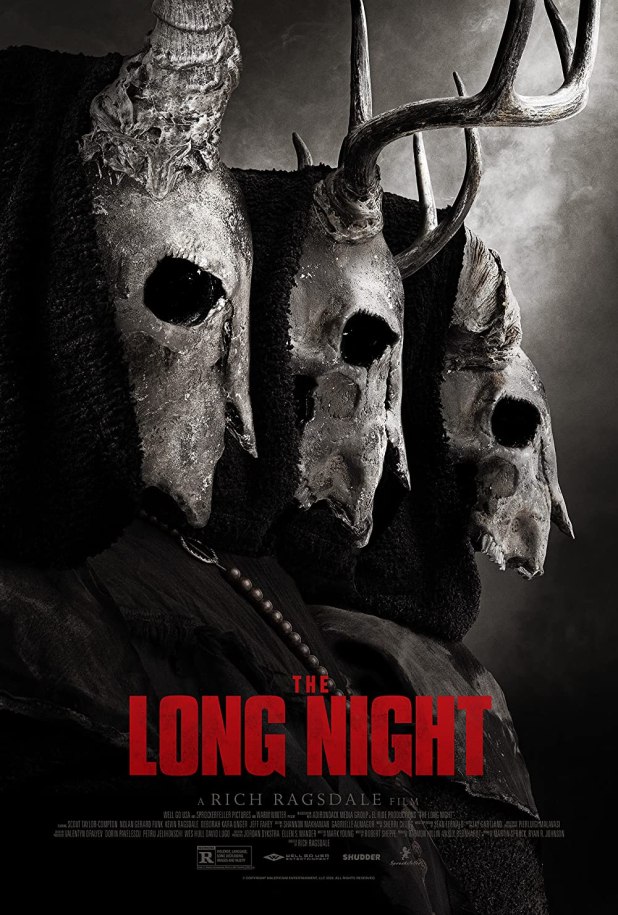
The Long Night (2022)

While searching for the parents she’s never known, Grace (Scout Taylor-Compton, Rob Zombie’s Halloween) has come back home to the south with her boyfriend Jack (Nolan Gerard Funk) to track down a clue as to where her family may have disappeared to.

But you know what I always say about never going home again? Well, when your home has an apocalyptic cult in it, maybe Grace should have stayed in New York.

Originally called The Coven, this story starts with Mr. Caldwell inviting the couple to his home and offering to share his research into where they’ve gone. But when Grace and Jack get there, he’s nowhere to be found. There’s a big snake in the kitchen, as Grace soon painfully discovers.

And then the car won’t start, leaving them stranded.

And then Mr. Caldwell’s brother Wayne (Jeff Fahey) shows up as a surprise.

And then there’s that cult that worships Uktena, who just might be involved quite intimately in Grace’s past, led by The Master (Deborah Kara Unger from the Silent Hill movies).

For a movie that starts out very cabin in the woods come back home to unearth dark secrets, this shifts into cosmic horror before it’s done, which is a nice surprise. Writers Robert Sheppe and Mark Young have created an interesting tale for director Richard Ragsdale, who has directed several music videos (The Sword “Cloak of Feathers,” Chevelle “Door to Door Cannibals”) and has also composed the music for several movies and video games.

The Long Night is available in select theaters and on digital from Well Go USA. You can learn more at the official site.

JESS FRANCO MONTH: Blue Rita (1977)

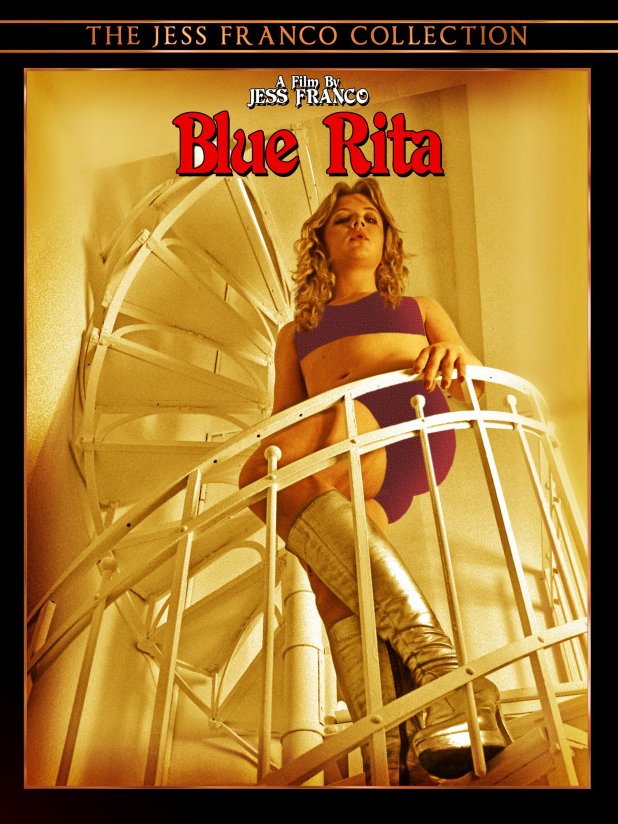
In the Jess Franco Cinematic Universe, which may have not been a thing but let’s believe that it could be, heroines/villains like Rita Blue (Martine Fléty) can be all at once a nightclub owner, an erotic dancer, a spy and a survivor of abuse that uses her abject disdain for men to torture them as a means of not only getting the information governments all over the world crave, but also to gain vast fortunes from rich men only too happy to be menaced by knives and handcuffs and — as Russ Meyer taught us — violence that cloaks itself in a plethora of disguises, with its favorite mantle still remaining sex.

Also known as Das Frauenhaus (The House of Women), this is another Franco riff on a cadre of man-hating women unleashed upon victims willing and unwilling, just like The Girl from Rio. The major difference is that Rita Blue’s female forces have synthesized a Spanish Fly of green ooze that drives men wild with desire — if their bodies didn’t already do the job for them — as they’re denied access to the folds of the flesh they want so much.

Now, set all of this in a world five minutes into the future that we’ll never live in, filled with go go boots, smoke both from machines and cigarettes, furniture not made for sitting on, jazz, nightclubs that define seedy, neon colors and all metallic everywhere.

Pure movie drugs, a film that you should only watch in a basement or somewhere hidden, maybe under the covers, perhaps keeping it to yourself, so that you can drink deep and inhale and live inside this world, a place that could never be but obviously should, a world dangerous to every man dumb enough to fall in lust.

Ghost Story: Episode 5 “The Summer House”

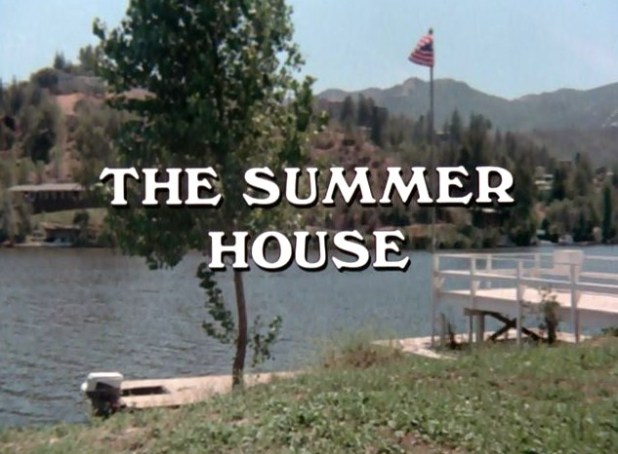
Martha and Andrew Alcott (Carolyn Jones, forever Morticia Adams, and Steve Forrest, Greg from Mommie Dearest) spend their summer in a vacation home that Martha hates, but there are plenty of reasons for that, mostly that there’s an evil force in the basement that wants to destroy them.

This episode of Circle of Fear/Ghost Story was directed by Leo Penn, whose acting and directing career started in 1945 and continued all the way to 1995. Despite him making 27 episodes of Matlock, 6 Hart to Hart shows and The Dark Secret of Harvest Home, he’s probably better known for being the father of Chris, Michael and Sean Penn.

This episode comes from a story by British writer A. M. Burrage and was adapted by Seeleg Lester (a story consultant on The Outer Limits and the writer of the episode “The Inheritors”) and Richard Matheson.

Over and over, Martha has a dream where she finds out that her husband is cheating, so she pushes him down a well, only to wake up and nothing has happened. Again, again and again. Is this a memory, a premonition or just a dream?

Sadly, this is one of the episodes of the show that just kind of drags. But don’t give up, because there are some decent ones coming soon.

However, it looks gorgeous, and that’s probably because Bill Butler was the director of photography. Perhaps you’ve seen his work in JawsDamien: Omen II and Demon Seed.

You can watch this on YouTube.

JESS FRANCO MONTH: Los ojos siniestros del doctor Orloff (1973)

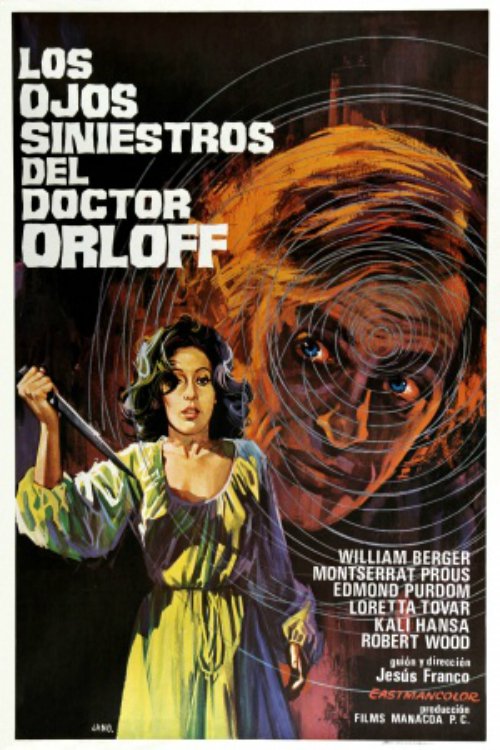
Melissa (Montserrat Prous) is paralyzed and has also been dealing with nightmares of a man (Franco) who may be her father. Is she going insane? Or does she just need a new doctor’s help? Well, seeing as how this movie is called The Sinister Eyes of Dr. Orloff, I’d say that Dr. Orloff (William Berger) is the villain of this piece.

I mean, seeing as how he quickly tells Melissa that her entire family is bonkers and that he was in love with her mother — also named Melissa — and had a daughter — also also named Melissa — and that he knows that original Melissa’s dad was killed by a perfect crime, which seems like strange bedside manner.

And yet at night, Melissa can walk. And kill. And continue losing her sanity.

Franco made this movie so many times that I get confused, but you know, I kind of enjoy being dumbfounded by his movies, like how this revenge plot by Orloff is so needlessly complicated and that he goes all movie serial villain and has two long speeches where he explains what he’s going to do. And you know, that’s the mark of a bad guy who cares.

SHUDDER EXCLUSIVE: Slapface (2021)

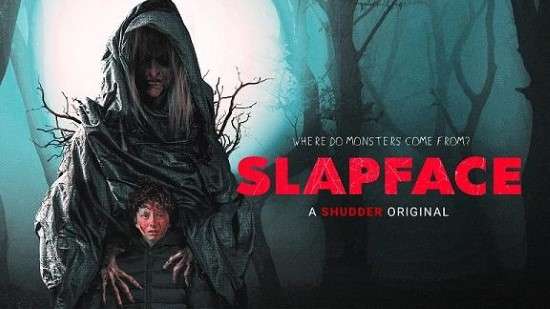
After the death of their mother, Lucas (August Maturo, The Nun and the son of Cory and Topanga on Girl Meets World) and Tom (Mike Manning) are each dealing in their own ways. Lucas begins to hide in the woods with a group of tough girls but mostly isolating himself, while Tom keeps getting in enough trouble that Sheriff Thurston (Dan Heyada, one of the best character actors ever) has to keep bailing him out.

The brothers also have a very abusive game that they play called slapface, which is basically continually slapping one another back and forth, the pain being used to get Tom past the pain he feels for having to discipline his brother when he can’t control himself.

Lucas does meet someone else that means something to him. And no, it’s not Moriah (Mirabelle Lee), one of the bullying young women — Donna and Rose are the others, twins played by Bianca and Chiara D’Ambrosio that are the kind of cruel women that terrified me as a child and fascinate me as an adult — that he has a crush on. There’s a witch in the woods named Virago (Lukas Hassel, Vandyke from Blacklist, wearing some incredible makeup) and she means no harm to him. But to anyone that hurts him? As for Tom, he’s also met a girl named Anna (Lieb Barer) who is falling for him but concerned with just how much he abuses his brother.

Originally a short film, Slapface doesn’t battle the issues that often come with go with an expanded running time. It’s tense, it’s horrific and it doesn’t even need the supernatural element to make that happen.

Director and writer Jeremiah Kipp has really put something astounding together with this movie, a film that’s frightening when it deals with humans and then goes even further by giving Lucas a force that only he can see, one that only wants his happiness, which comes at the cost of anyone who does him a slight.

You can watch this on Shudder.

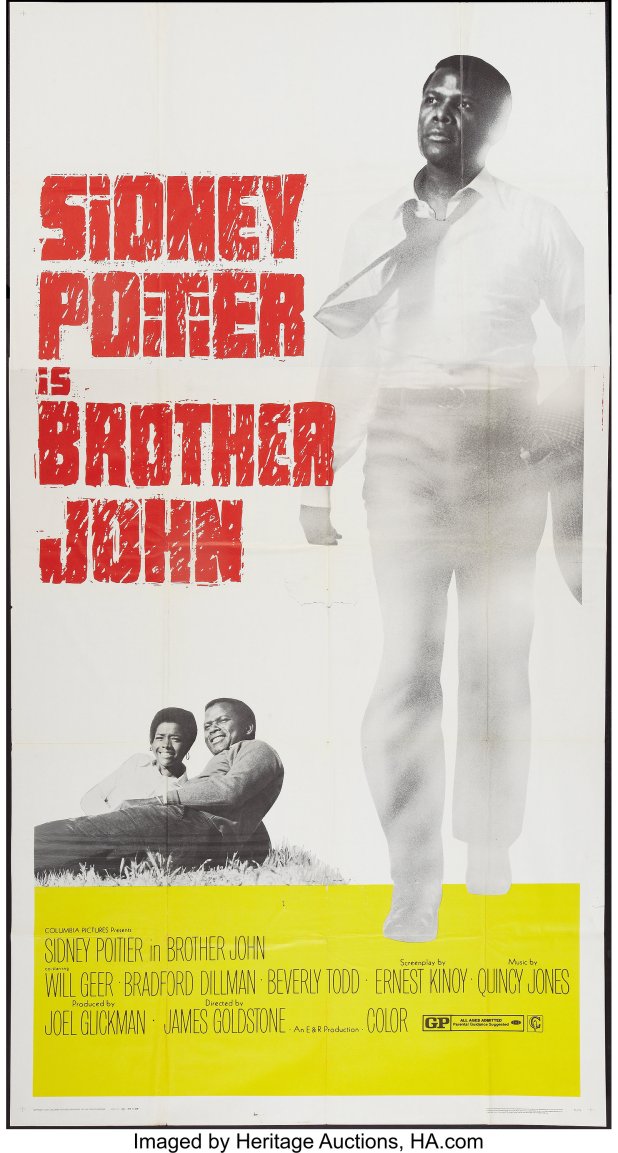
Mill Creek Through the Decades: 1970s Collection: Brother John (1971)

If racist white audiences were upset when Sidney Poitier retaliated and slapped back the plantation owner in In the Heat of the Night, they had to have had a meltdown when this time, a cop challenges him and he proceeds to complete emasculate the man without breaking a sweat.

Seriously, I was not prepared for this movie, a film in which Poitier plays a man of mystery who just may be the literal angel of death returning every time a family member dies in his small southern hometown when he isn’t showing up for moments of death and destruction all over the world.

This movie wasn’t well-considered when it came out and you know, I completely believe those critics were fools. Author Scott Woods wrote an essay, “Brother John: Reclaiming the Blackest Movie Ever,” in which he said, “In 1971 black people were fresh off several assassinations of people who stood firm in their interests and were starting to resign themselves to the reality that desegregation without enforceability was still segregation. Brother John did not beat what audiences it was able to muster over the head with its wisdom, but it was too much for people to transpose themselves into. Poitier perhaps did his job too well. Poitier wanted to do Brother John but America needed him to do Brother John . And then no one went to see it. Brother John has it all, and does all things well: civil rights, racism, classism, toxic masculinity, black love, house parties, homecooked funeral rites. You haven’t celebrated Black History Month properly until you’ve seen this film. Brother John is a perfect black film, both for its time and now, generating even more resonance as we walk every day in a world aflame with hate and neglect.”

It was written by Ernest Kinoy, who was a POW in World War II in the slave labor camp at Berga before making it back to America and becoming a writer for the radio shows Dimension X and X Minus One, eventually making his way to movies and TV, with Roots and the TV series The Defenders being his best-known scripts. Brother John was directed by James Goldstone, who was the director for episodes of Star Trek and The Outer Limits before working on movies like They Only Kill Their Masters, Rollercoaster and Jigsaw.

This movie is worth the entire price of this set.

Through the Decades: 1970s Collection is new from Mill Creek. It also has A Walk In the Spring Rain, DollarsFun With Dick and JaneThe Owl and PussycatFor Pete’s Sake, The Anderson TapesThe HorsemenThe Stone KillerGumshoe and The Last Detail. You can learn more on their site and order it from Deep Discount.