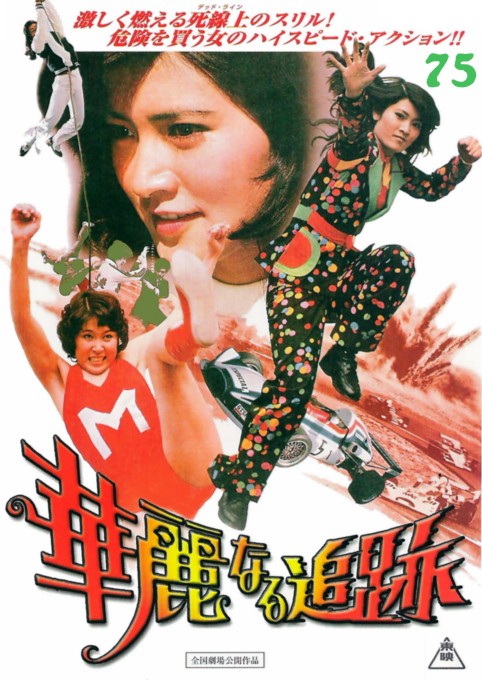
Karei-naru tsuiseki (1975)

The Great Chase is a blast. Etsuko Shihomi — Sister Street Fighter herself — stars in a spy film from Norifumi Suzuki (School of the Holy BeastRoaring Fire, ten Torakku Yarō movies which are caper films in the world of dekotora, highly decorated trucks) that was exactly what I needed on a winter day filled with post-holiday ennui.

She plays Shinobu, an agent charged with stopping drug smugglers who put their heroin into the bodies of dead girls, a gang connected to her father, who was framed for a similar crime five years ago and died in prison. This mission involves battling bad guys who can smash rocks on their heads, one with killer playing cards, another with a whip and singing female wrestler Mach Fumiake, a real Japanese pro wrestler who was also the Kilara leader in Gamera Super Monster.

Shinobu is also super famous as a race car driver and even has her own fan club, plus she seems to be some kind of Buckaroo Banzai-esque polymath, as she’s also a master of disguise and a martial artist. This brings her up against Onozawa, a man who enjoys arrdvarking while dressed in a cat suit as he listens to Mozart under a photo of Hitler and his gang of men dressed as nuns moving drugs though a convent who totally must have been exchanging tips in some kind of drug gang peer group with the baddies in They Call Her Cleopatra Wong.

This movie doesn’t want to be normal. And that’s why I love it. In my dreams Suzuki made a whole bunch more movies as Shinobu.

Make your day great. Watch this on YouTube.
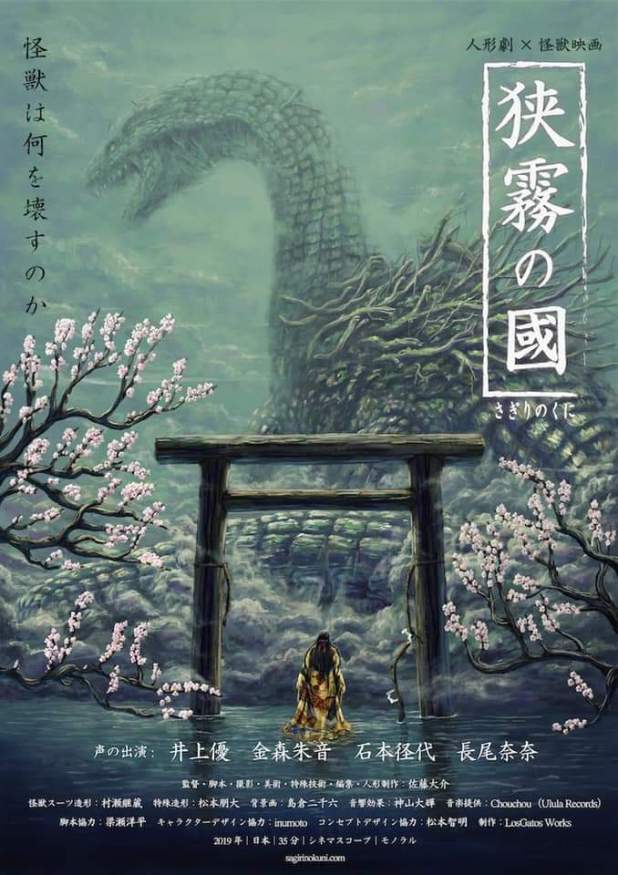
Howl from Beyond the Fog (2019)

Inspired by Ray Bradbury’s “The Fog Horn,” which was also made as The Beast from 20,000 Fathoms, this movie features a creature called Nebula, which was designed by Keizo Murase, who has sculpted everything from VaranMothraMatangoGameraYongary and numerous appearances of Godzilla. He’s still working, getting ready to direct a movie called Brush of the God about a magical brush that can save reality. It’s the first movie he’s ever directed and he’s had the idea ever since he worked on The MIghty Peking Man.

At some point in 1909, a boy named Eiji moves back home with his mother to Kyushu and must unravel the secrets of his family, including his blind cousin, Takiri, who is supposedly dead but appears to him and has the ability to bring Nebula up from the deep.

Meanwhile, some land developers don’t care that the family owns this land and threaten them with violence, even kicking Takiri into the lake. The monster’s rampage destroys most of the town, but opens the doorway to freedom for the young adults.

Howl from Beyond the Fog feels like a spiritual side movie to Yokai Monsters, as Nebula just wants his peaceful life and people to be left alone, as Japanese pushes itself into the modern era, one that wants to explain away the monsters that create the elements.

Here’s to Daisuke Sato, who was the director, director of special effects, writer, producer and cinematographer along with Murase, as well as the editor, art director, recording engineer, lighting technician, compositor and puppet creator.

Yes, every character in this movie is a puppet.

What a gorgeous movie and such an achievement in our era of computer animation. I’ve watched this several times and if it had been made in my youth, as I devoured every Japanese monster movie that made it to UHF TV, I would have yelled during every frame.

You can watch this on Tubi.

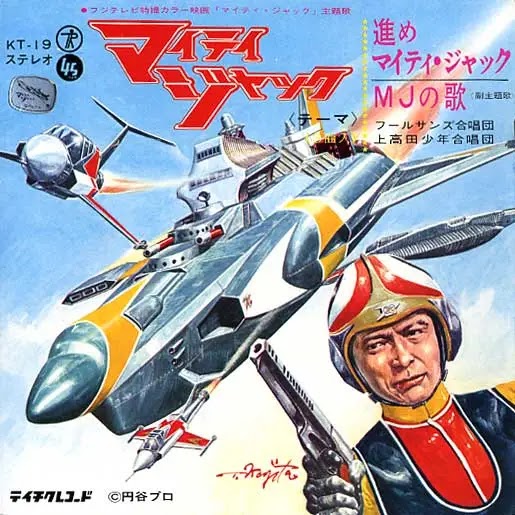
Mighty Jack (1968)

Not only did Eiji Tsuburaya co-create Godzilla, he was the man who brought us Ultraman. His Tsuburaya Productions continues to own the rights to the various Ultra series that have spun off from the original show such as Ultraman Gaia, Ultraman Dyna, Ultraman 80 and The Ultraman.

Tsuburaya considered this series his best work, as it was about people, rather than vehicles and special effects. He was inspired by the word of Gerry Anderson and sadly, the public didn’t watch the show as much until the second show, Fight! Mighty Jack, added aliens and monsters.

How much did Tsuburaya love this show? The Mighty Jack team logo is the same logo for Tsuburaya Productions.

Mighty Jack is a team of special agents that was put together to fight the evil Q — hey, how weird is that? — that is using hot ice to create weapons to take over the world. How can ice that doesn’t melt destroy humanity? Is that any stranger than the real Q — or unreal Q — which has convinced people that long-dead political leaders are ready to come back and stand for values that are the exact opposite of any they held in their real life?

Might Jack is also the name of their incredible flying submarine. But all we’re getting over here is epsiode one and six of the TV show, edited by Sandy Frank Productions, and making no sense. These kinds of movies allowed me to see plenty of cool Japanese series in my youth but as an adult, I realize that I’m only getting a remixed version of something that is much better in its original form. So I can either explore it more or laugh at it and I’d rather choose to always learn more.

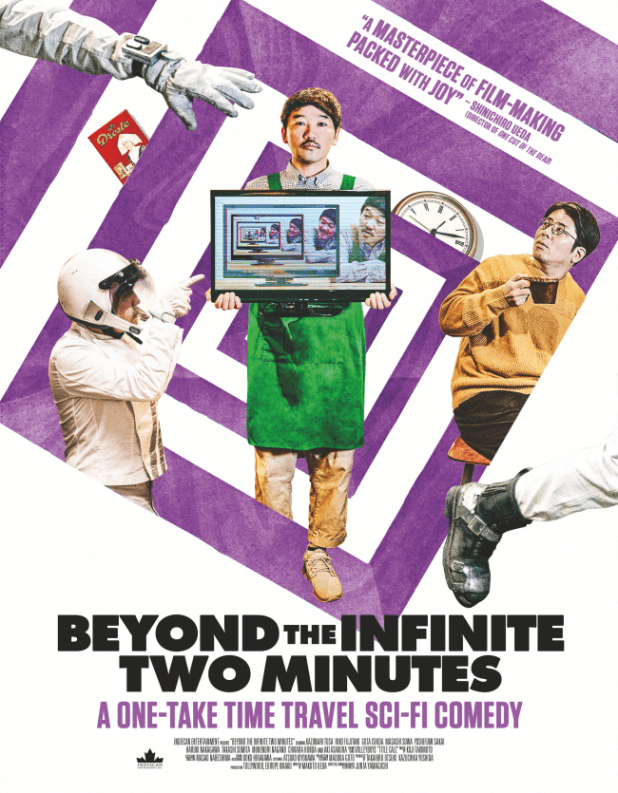
VOD RELEASE: Beyond the Infinite Two Minutes (2021)

EDITOR’S NOTE: We originally watched this wild trip during Fantastic Fest on September 25, 2021. Now that it’s available, we hope that everyone gets a chance to get their mind blown by it!

Kato lives above the shop that he owns in Kyoto, Japan and spends whatever time he has left after working playing in a band and thinking of the Megumi, who works at the shop next door. Somehow, in the midst of the ordinary that is his life, Kato learns that the computer screens within his cafe and apartment allow him to receive messages from himself two minutes into the future. Calling this strange experience Time TV, Kato and his friends begin to explore what they can do with this power.

Years ago at San Francisco MoMA, there was an installation that captured moments of time as you walked through it and redisplayed the time that you appeared and interacted with the art, so that it seemed like you were appearing and disappearing at times that didn’t match up to your short term memory. It was incredibly disconcerting and probably what Kato feels like as he shouts messages to multiple versions of himself minutes apart from one another.

Somehow, this movie was made with an iPhone, some Apple TVs and the amazing directing, editing and cinematography of Junta Yamaguchi. This comes from Third Window Film, who also made One Cut of the Dead, and this continues their one cut style, as the film seems to be one continuous shot, which is astounding when you get to the scenes where mirrors extend the future messages into the near-infinite (or at least ten minutes).

This movie absolutely flies through its near 70 minutes but it never feels too fast, never gets boring and gives plenty of time for its characters to display emotion, heart and the joy of discovering something strange and new — pretty much just like any viewer who tracks this down.

Beyond the Infinite Two Minutes is now available on Digital HD and Cable VOD from Indiecan Entertainment, as well as on iTunes. You can learn more about this movie at the official site.

Kikujiro (1999)

ABOUT THE AUTHOR: Jennifer Upton is an American (non-werewolf) writer/editor in London. She currently works as a freelance ghostwriter of personal memoirs and writes for several blogs on topics as diverse as film history, punk rock, women’s issues, and international politics. For links to her work, please visit https://www.jennuptonwriter.com or send her a Tweet @Jennxld

Kikujiro is a heart-warming comedy with an amazing soundtrack by Miyazaki regular Joe Hisaishi about a foul-mouthed ex-Yakuza asked to accompany a quiet neighborhood boy to visit they boy’s mother who has abandoned him. On their journey, the man and boy meet up with some interesting characters, have a few adventures, and discover that they are not so different after all.  

Masao (Yusuke Sekiguchi) is a lonely little boy who lives with his grandmother and finds himself with nothing to do for summer vacation. Kikujiro (played by Kitano and whose name is only uttered once at the very end of the film) and his wife live in the neighborhood and pretty much just hang out all day. When Masao decides to go visit his mother who has abandoned him, Kikujiro’s wife sends him along to watch over the boy on the long journey (and probably to get rid of him for the summer.) 

In the beginning, Kikujiro takes advantage of the boy and uses him for gambling and to hitch rides. After a series of mishaps, all of which are the fault of Kikujiro, the pair arrives at their destination with unpredicted results. 

It is at this point in the film that things really take off. It turns out that Kikujiro has some maternal issues of his own and soon realizes that he and the boy share a lot in common. The boy is becoming a man and the man is getting in touch with his inner child. The two spend the rest of the film with two kind-hearted bikers and a traveling poet they have met on the road playing children’s games, fishing, stealing crops from nearby farms and camping out in beautifully photographed rural Japan at the height of summer complete with cicadas whirring away in the background. It is largely through the wonderful performances that writer/director Takeshi Kitano has perfectly captured what it is to be a kid. They have no money, very little food, no video games or tech of any kind and still manage to have the best time of their lives playing in the woods. 

Of course, there is also the painful side of childhood and in this film, as in life, it boils down to the fact children are very often at the mercy of adults. One scene even features Kikujiro putting the smack-down on a would-be pedophile with designs on Masao. 

There is a lot of symbolism involving angels in this film, with artwork painted by the director intercut throughout although it was hard to distinguish which character is supposed to be the savior of whom. Both man and boy give each other something they need to make each other’s lives richer. 

This is a wonderful film that is sure to leave the viewer feeling warm and tingly inside. It is a testament to the prolific talent of Takeshi Kitano that he can just as easily make a film of this nature as he can a violent Yakuza story.  

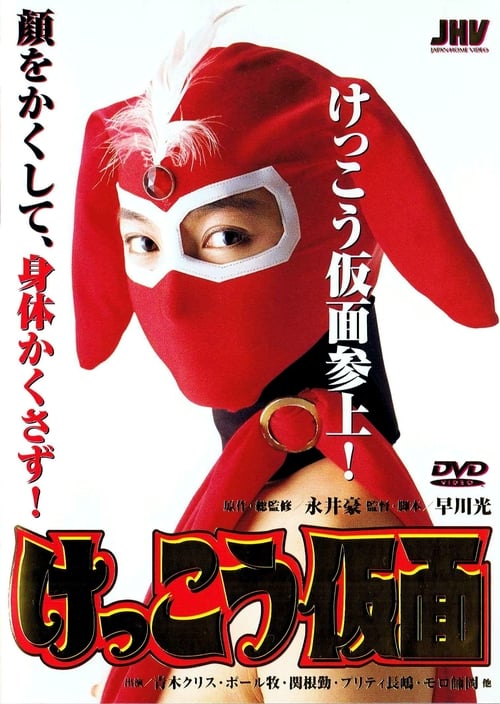
Kekko Kamen (1991)

Mayumi Takahashi attends Sparta Academy, a boarding school run by maniacs led by the masked Toenail of Satan who are looking for ways to torture or humiliate the students. The students’ only protection is from the nude superheroine, Kekko Kamen, who wears no clothes and uses her, well, lady parts to stun men into submission. Well, she does wear some clothes — red boots, gloves, scarf and a mask with long bunny-like ears — and her finishing move that she uses to defeat villains is  Her a flying headscissors takedown which presses her groin into the victim’s face called the Oppiroge Jump.

Look, it was 54 minutes of my time and allows to talk to you about just how strange Shōnen Jump is, a Japanse manga comic that has introduced everything from My Hero AcademiaOne PieceNaruto and Dragon Ball to KinnkumanFist of the North Star and, well, Kekko Kamen, which was introduced in the monthly version of the magazine. It was created by Go Nagai, who created Mazinger ZDevilmanViolence Jack and Cutie Honey. The influence of these comics, created in Japan, made their way all over the world.

So yes, the same man who created a Shogun Warrior also invented a totally nude superheroine who uses her body to stop men from mistreating women by subverting their male gaze while also being part of manga, anime and movies that completely reward the male gaze, yet has a heroine that uses the forbidden in Japan power of the female pubic hair and its mystery to end evil.

Forever stay weird Japan.

Kyonyū doragon: Onsen zonbi vs sutorippaa 5 (2010)

At the unsuccessful gentlemen’s club Paradise Ikagawa Theatre, there’s Ginko, as well a goth girl named Maria who likes slicing herself and reading occult books, as well as Lena (Sola Aoi, one of the most famous AV idols of the 2000), who can tell you fortune and Darna, who just wants to see her family.

The girls get invited to perform at a neighboring spa whose owner recently committed suicide, which makes this immediately sound like a bad idea, as well as the fact that they’re shamed into using the back door. Lena gets drunk and sleeps with the wrong man, which upsets Ginko, and their fight ends up revealing a Well of Spirits where Darna finds money and Maria finds a very Sam Raimi-like Book of the Dead, but none of the spells work. Except that suddenly, all of the sushi starts coming back to life.

Soon, zombies have taken over the streets of Ikagawa and Maria has become their queen through a combination of candy and flashing them her breasts. I mean, say what you will about insane Japanese movies, but this is how every goth girl I’ve ever met got me to do things I wouldn’t do for millions of dollars.

This was based on the manga Kyonyû doragon and is just as ridiculous as it sounds.

And yes, I totally watched a movie called Big Tits Dragon: Hot Spring Zombie Vs. Stripper 5.

Onna batoru koppu (1990)

What if RoboCop was a champion tennis player killed by terrorists?

Then she’d be Lady Battlecop and spend 81 minutes battling Team Phantom and the NASA-made mutant Amadeus, who does wrestling moves but also has psychic abilities because why not?

If RoboCop himself can be based on the look of Japanese shows — along with no small debt to Judge Dredd, let’s be completely honest — then Japan can take back the favor and take us to Neo-Tokyo and made this little movie that has a great theme song about women being made for tennis so they never give up, which is weird and one wonders, if 11th century France, what did women think their value was before that? And isn’t the value of a woman more than just tennis?

Going off on another tangent, why did NASA invent Amadeus? And why did the Vatican invent Mikos Stenopolis in Absurd? What was the point? Did we need a murderous psychic man in space? What did the Catholic Church want with a man who could survive eating his own intestines?

These are the kind of things that dominate my mind on a day filled with snow and sitting inside watching the roads get covered again. That said, Lady Battlecop has a great costume.

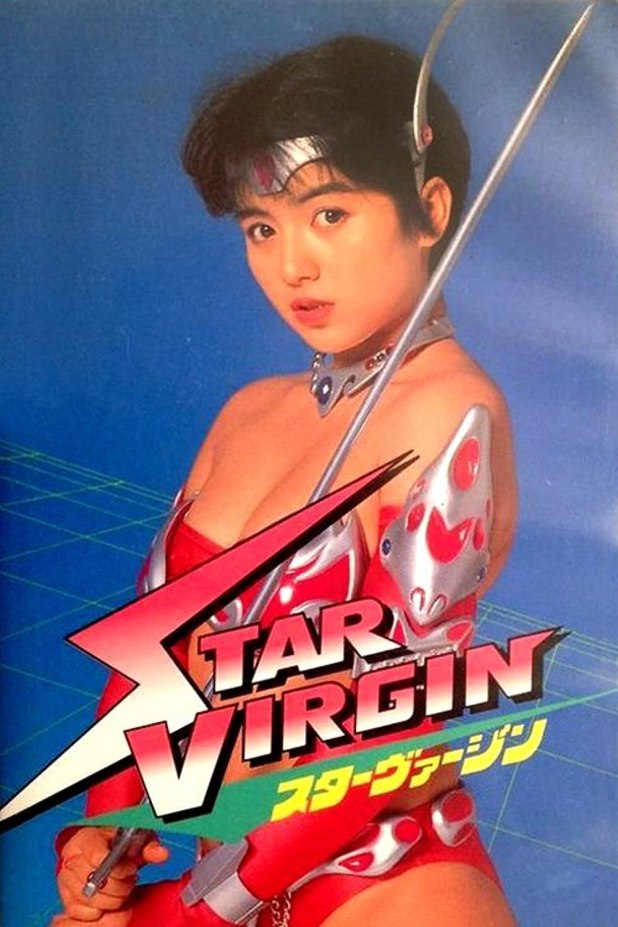
Star Virgin (1988)

Japan is under constant threat from monsters and so is Eiko’s vaunted virginity. So when Tokyo is in danger, she must put her innocence undr threat as well so that her super powers can activate and then things can get simple. I mean, the idea that a woman’s chastity has to be threatened to save a male-dominated country is such a multi-layered thing for my brain to wander around, but then things get simple and Eiko starts beating on frog monsters and taking bubble baths and you’re like, well, I guess I don’t need to use my brain any longer.

Maybe this movie is smarter than it looks, as Star Virgin fights the Statue of Liberty at one point.

This was made by Pony Canyon, who also made video games, and yes, of course there’s a video game tie-in.

You can watch this on YouTube.

Noroi: The Curse (2005)

ABOUT THE AUTHOR: When Frederick Burdsall isn’t at work or watching movies while covered in cats, you can find Fred in the front seat of Knoebels’ Phoenix. 

Noroi: The Curse is a 2005 film from Director Koji Shiraishi (Occult and Carved: The Slit Mouthed Woman) and stars Jin Muraki and Rio Kanno.

The story itself focuses on a documentary filmmaker named Kobayashi, who has recently vanished after his home went up in flames and his wife’s body is found among the rubble. He was working on a film about a demon named Kagutaba and the curse attached.

In a found footage style we see his investigation start with Junko Ishii whose neighbor hears crying babies coming from her house. Ishii moves and the neighbor and her daughter die soon in a car crash. He moves on to Kana, a young girl with incredible psychic ability who appeared on a TV show and has now vanished.

The trail leads him to a crazed psychic named Hori, who points them in the direction of an apartment complex and Osawa, a strange man who drags pigeons into his home for some unknown reason. Osawa soon goes missing.

A trip to a shrine leads him to the discovery of Kagutaba, a demon imprisoned under the village of Shimokage, now underwater.  I don’t want to spoil the surprises that come after all this so I’ll stop myself here but the movie courses along to a finale after the early closing credits, where the last piece of footage is revealed and is, to me, the best part of the movie. Immensely creepy and visual.  I leave it up to you to see it all for yourself and don’t let the iffy beginning ruin you to it…it will really pull you in if you let it.

Rio Kanno, who plays young Kana, got her start a few years earlier in the film Dark Water and is better known as the voice of Madge in Howl’s Moving Castle. This is one of those movies that you either love it or you don’t so watch and enjoy Noroi and as always, I’ll see you at Knoebels.