June 4: Junesploitation’s topic of the day — as suggested by F This Movie — is western.
I always say that Italian westerns bring the world together. Take this one, which is an Italian western by form, but really a co-production of the United Kingdom and Spain.
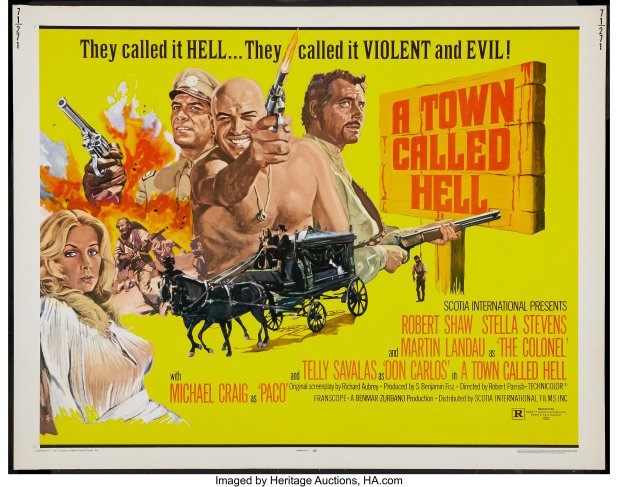
Directed by Robert Parrish — one of the many hidden hands that made Casino Royale — this is an example of one of my favorite subgenres of the cowboy movie and that would be the horror western.
Ten years ago, a group of Mexican revolutionaries led by the revolutionary leader Aguila murdered a priest and his followers. Now, a widow — Stella Sevens — has come back looking for revenge.
Talk about a cast! The town is now ruled by a priest (Robert Shaw!) who may be Aguila. Stevens hires a sadistic Mexican outlaw (Telly Savalas!!) named Don Carlos who promises to help her in exchange for gold. And soon, an army colonel (Martin Landau!!!) arrives in an attempt to find Aguila himself.
The same team made Pancho Villa, another British and Spanish western that Telly Savalas was involved with. They also made Horror Express and hired Savalas, who no doubt used the paycheck to cover his partying and gambling lifestyle. I say that not as an insult. If I could have been one person other than myself, Savalas seems like a great choice.
I’d like someone to explain to me why Stevens sleeps in a coffin — is she a ghost? — and exactly how the filmmakers arrived at setting the dance hall scene to Johnny Horton’s “Battle of New Orleans.” It’s not the best western, Italian influenced or not, I’ve seen, but it’s certainly one of the more interesting, in theory if not in actual filmed practice.
This is also a tremendous spolier, but Savalas’ death scene took me by major surprise and I love how he’s as shocked as I was. He keeps trying to figure out what to do when he’s emasculated by losing his trigger finger and never gets it together. As always, a wonderful performer.
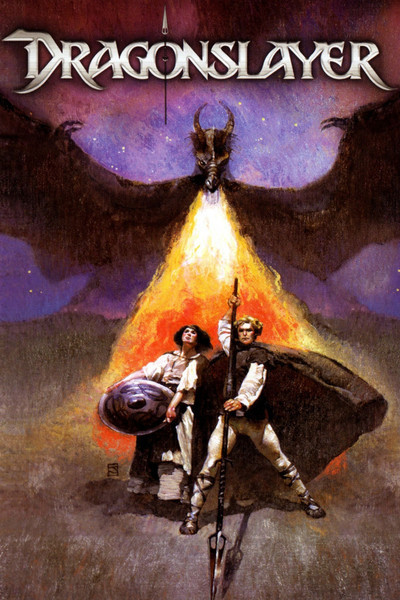
After Popeye, this was the second joint production with Paramount of films that were more mature than the expected Disney offerings. That meant that Drahonslayer’s violence, themes and even brief nudity ended up being controversial, despite only being rated PG.
Set the film after the Roman departure from Britain, prior to the arrival of Christianity, the film shows a world of sorcery unlike many others in the genre. Co-writers Hal Barwood (who also wrote The Sugarland Express, The Bingo Long Traveling All-Stars & Motor Kings, MacArthur and Corvette Summer, as well as writing and directing Warning Sign and creating video games like Indiana Jones and the Fate of Atlantis) and Matthew Robins (who wrote Crimson Peak and wrote and directed Batteries Not Included and I would be remiss not to mention that he also directed The Legend of Billie Jean) were inspired to make something new. Barwood said, “our film has no knights in shining armor, no pennants streaming in the breeze, no delicate ladies with diaphanous veils waving from turreted castles, no courtly love, no holy grail. Instead, we set out to create a very strange world with a lot of weird values and customs, steeped in superstition, where the clothes and manners of the people were rough, their homes and villages primitive and their countryside almost primeval, so that the idea of magic would be a natural part of their existence.”
Vermithrax is also one of the best dragons ever made, even forty years after the film’s release. More than 25% of the movie’s budget went to realizing the dragon. This was the first movie to use go-motion, which had parts of the mechanical dragon be programmed and filmed by computer. The forty-foot tall beast was brought to life by sixteen puppeteers. Its full name — Vermithrax Pejorative — means The Worm of Thrace Which Makes Things Worse.
As for the story, it’s all about Galen Bradwarden (Peter MacNicol, who is embarrassed by this movie, perhaps because you can fully see his ween in it) saving Valerian (Caitlin Clarke) from being a virgin sacrifice to the dragon. She’s no damsel in distress, however, as she’d hid her gender identity to help create the sword that can destroy the beast.
But yeah. It’s worth watching for just the dragon.
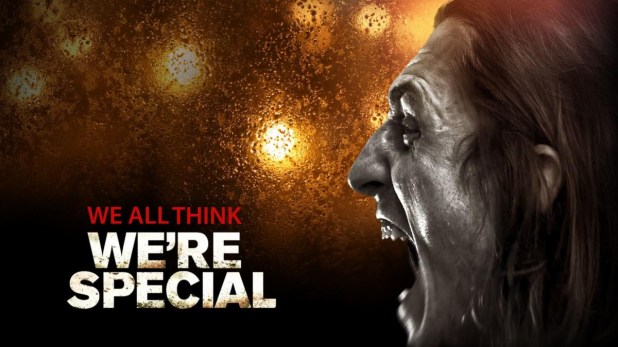
A night of reckless drinking compels Ed, a car mechanic, to forcibly detox his best friend Charlie — no matter what the cost — in this film from Kirby Voss (who directed and co-wrote the movie with Felicia Stallard.
As Charlie sleeps off last night’s drinking, Ed goes through the home and pours out all of his alcohol. The reaction is worse than you’d expect, with Charlie hitting every target on his friend, even taking great pains to make fun of his sexual orientation.
It doesn’t get any better for Ed.
Jarden Bankens (who was Darkness in Words on Bathroom Walls) as Ed and William McGovern as Charlie bring so much to this movie, which they have to, as they are the only characters on screen for most of its running time. You buy that they are friends at the same time you sense the hopelessness of their situation. The film uses its sound and split-screen views to repeatedly slam you in the face with the sheer pain of this intervention.
This is a bleak film and may not be for everyone, but if you want to see an interesting take of addiction and mental health, this is for you.
We All Think We’re Special is available on Amazon Prime.
“The battle for the mind of North America will be fought in the video arena: the Videodrome. The television screen is the retina of the mind’s eye. Therefore, the television screen is part of the physical structure of the brain. Therefore, whatever appears on the television screen emerges as raw experience for those who watch it. Therefore, television is reality, and reality is less than television.”
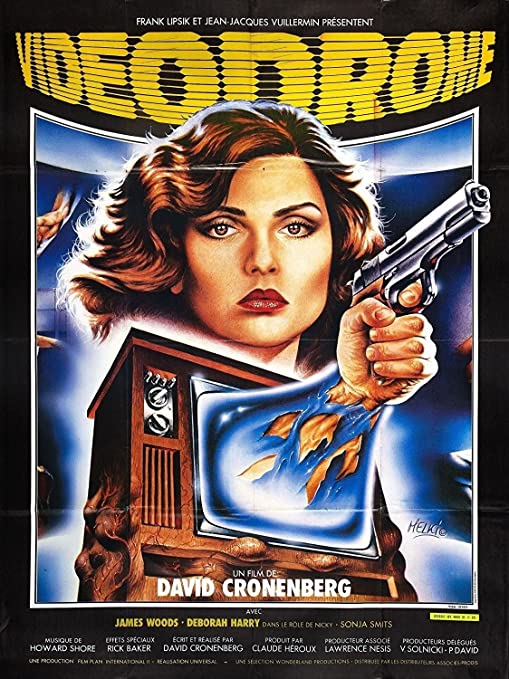
As a kid, David Cronenberg used to pick up American television from across the border and worried that he’d see something he wasn’t supposed to see. Videodrome’s CIVIC-TV was based on the Canadian television network Citytv, which had a show called The Baby Blue Movie that played stuff like Camille 2000 and Wild Honey. There’s also an urban legend that Cronenberg saw Emanuelle In America and wondered how anyone could enjoy a movie that combined sexuality with snuff footage. I don’t know — or care — if that story is true. I’d like to just have complete faith in it.
The director was between Scanners and The Dead Zone and got a bigger budget on this movie than he never had before. Of course, it barely made its money back yet became a classic film, which is usually the way of the world.
Max Renn (James Woods) is the president of CIVIC-TV, a Toronto UHF television station that shows footage on the absolute limit of what is allowed to be shown on TV. One of the satellite dish operators shows Max Videodrome, which is either coming from Malaysia or Pittsburgh — as a lifelong resident, I am pretty pleased with that — that shows people being tortured and murdered with no storyline to get in the way.
Max’s lover, Nikki Brand (Debbie Harry) is so turned on by Videodrome that she goes to try out and never returns. Max is now obsessed and learns that the channel is so much more than just a video show. It may also be the voice of a political movement.
Media theorist Brian O’Blivion is the only person who can guide Max further down the tunnel. At the homeless shelter where O’Blivion’s daughter Bianca (Sonja Smits, The Pit) conducts marathon TV watching experiments. He soon learns that O’Blivion was killed by his partners who created Videodrome but lives on in the hours of video footage he created. Oh yeah — Videodrome also creates brain tumors and hallucinations which are both the symptom and the cause.
Videodrome is really part of an ideological war between its sex and violence-obsessed viewers and Barry Convex (Leslie Carlson, Black Christmas) and the Spectacular Optical Corporation, a combination ophthalmology and arms company. They program Max — via videotapes inserted into a vaginal opening in his chest that causes his body to transform and even grow a gun in his hand — to murder anyone that gets in their way, which may or may not all be hallucinations, until Bianca reprograms him to start killing for her father’s cause, shouting “Death to Videodrome. Long live the new flesh.”
That new flesh means ascending outside of the bonds of our normal form, which for Max means suicide. Or does it? There were plenty of endings made for this movie, including one where Max, Bianca and Nicki appear on the set of Videodrome, all with slits in their chests filled with sex organs. As an atheist, Cronenberg cut this ending, as he felt it may make people think he believed in Heaven. He was also forced to cut all manner of berserk things from the script, like Max having a grenade for a hand, as well as him melting into Nicki as they kissed and a total of five more characters dying of cancer.
This sequence sums up why I love this movie so much:
Max Renn: Why do it for real? It’s easier and safer to fake it.
Masha: Because it has something that you don’t have, Max. It has a philosophy. And that is what makes it dangerous.
You can hear dialogue from this movie in tons of songs, including “Microphone Test” by Meat Beat Manifesto, “Master Hit” by Front 242, “Children” by EMF, “Draining Faces” by Skinny Puppy, “Scared to Live” by Psychic TV and so many more.
For a movie made in 1983, it really could have been made today. There’s so much to experience here and I will be going back for another experience. See you in Pittsburgh.
Yet sadly this would be the last movie for William Girdler, who died in a helicopter crash while scouting locations for his next movie.
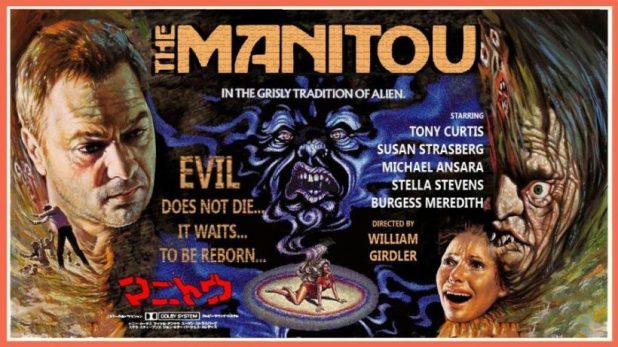
It’s a shame because Girdler had a talent for taking cheap movies with big ideas and making them beyond entertaining. This movie features a wild cast for him, including Tony Curtis as psychic Harry Erskine, Michael Ansara as shaman John Singing Rock and Susan Strasberg as our heroine Karen Tandy — who is suffering from a gigantic growth in her neck that ends up being the reincarnation of Misquamacus, a wonder worker of the Wampanoag tribe.
Misquamacus comes from the book of the same name by author Graham Masterton, who brought the villain back in his novels Revenge of the Manitou, Burial, Manitou Blood, Blind Panic and Plague of the Manitou, as well as the short story “Spirit Jump.”
Plus, there’s Stella Stevens, Burgess Meredith, the “First Lady of Radio” Lurene Tuttle, Ann Sothern and Jon Ceder on hand for this body horror by way of possession films by way of Native American hoodoo bit of lunacy. I also kind of dig how the posters would say, “In the grisly tradition of Alien” when it was made a year before that movie.
I’ve gone back and watched this again and I’m amazed by it. The image of Misquamacus coming out of Strasberg’s body is horrifying and the end battle, with Curtis yelling into the void of space, is the kind of movie magic I want more of.
David Seltzer was asked to write this movie but refused, as he didn’t believe in sequels. Producer Harvey Bernhard outlined the story himself and Stanley Mann was hired to write the screenplay. Mike Hodges — Flash Gordon‘s director! — started the film but was replaced with Don Taylor (The Final Countdown). It was decided that the music of Jerry Goldsmith was the one thing that could not change.
A week after Robert and Katherine Thorn are buried, an archaeologist tries to convince a colleague that Damien Thorn is the Antichrist and he wants to get the means to kill him to his new family. Taking the unbelieving man to a series of ruins that has Damien’s face on several murals, the two are soon buried alive and killed.
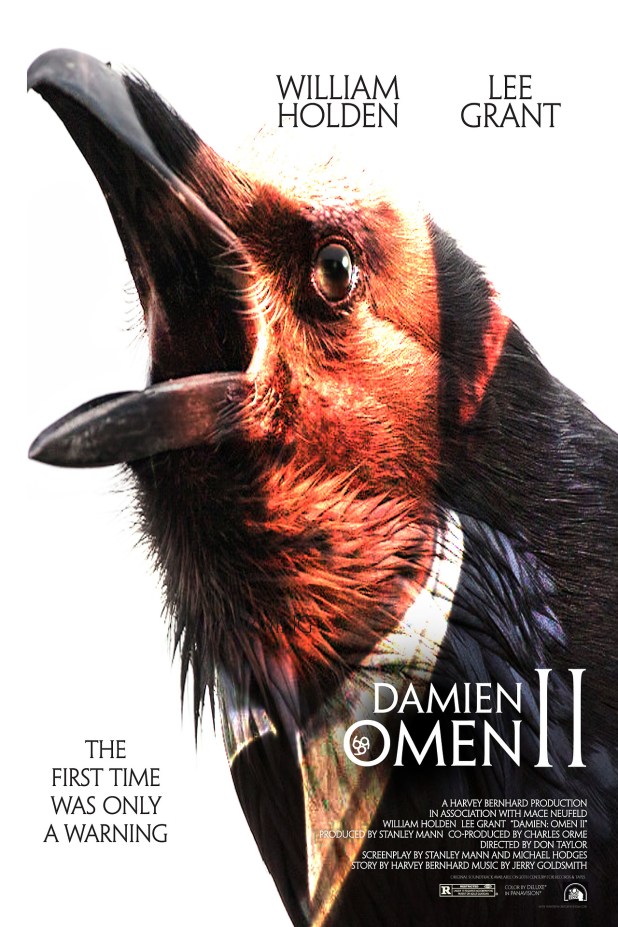
Fast-forward seven years and Damien is living in Chicago with his uncle Richard Thorn (William Holden, who passed on the first film because he didn’t want to be in a movie about the devil) and his wife Ann (Lee Grant). He gets along with his cousin Mark, his classmate in a military school. Basically, Damian’s life is awesome, except that his aunt Marion hates him. Well, the night after she makes that known, a raven shows up and she’s dead.
In this movie, if you see a raven*, someone is about to die horribly. Where the first film had some aspirations to art, this film has aspirations to being a supernatural slasher of sorts. And I am more than fine with that.
There are people who fall under the ice and drown, reporters whose eyes are pecked out before they’re run over by a truck, an entire class gets gassed, trains impaling folks and so much more outright decimation of human beings. This is a movie unafraid to wipe out every single person in its cast in abject glee.
I mean, when they analyze the bone marrow and blood of Damian, they figure out that he has jackal DNA. That’s the type of plot twist that I demand that more movies pull on me. The fact that it’s Meshach Taylor and that he’s soon torn in half makes it even better.
*In the novelization of the film, the raven is actually Damien’s subconscious and the murders that it carries out come from Damien’s id.
June 3: Junesploitation’s topic of the day — as suggested by F This Movie — is a movie with Henry Silva in it.
Henry Silva is 92 years old and if life works out the right way, he’ll outlive us all. He was so good as a student at the Actor’s Studio that when they did A Hatful of Rain, he made it to the Broadway play and the movie.
Yet amongst folks like you and me, we know Silva from showing up as mobsters, killers and general scumbags in all manner of movies from so many countries. He had his first lead in 1963’s Johnny Cool, killing off so many bigger actors, like Mort Sahl, Telly Savalas, Jim Backus, Joey Bishop and Sammy Davis, Jr. before Elizabeth Montgomery sells him out. But by November of that year, the President was dead and no one wanted to see a dark film noir.
In 1965, Italy came calling and Silva took a chance. He moved his entire family there and launched a career of playing, well, more horrible people. The next year, The Hills Run Red made him a star in Spain, Italy, Germany and France. And by 1977, he’d been in twenty-five movies. Stuff like Almost Human, gritty gangster versus cops films that audiences loved.
Silva made movies in Hong Kong (Operation: Foxbat), Japan (Virus), Australia (Thirst), Spain (Day of the Assassin), Canada (Trapped), France (La Marginal) and for TV (Buck Rogers in the 25th Century). He’s the kind of guy who can be in Ghost Dog: The Way of the Samurai just as easily as L’ultima Meta or Megaforce.
It’s hard to pick just one Henry Silva movie, but I picked perhaps one of his most brutal.
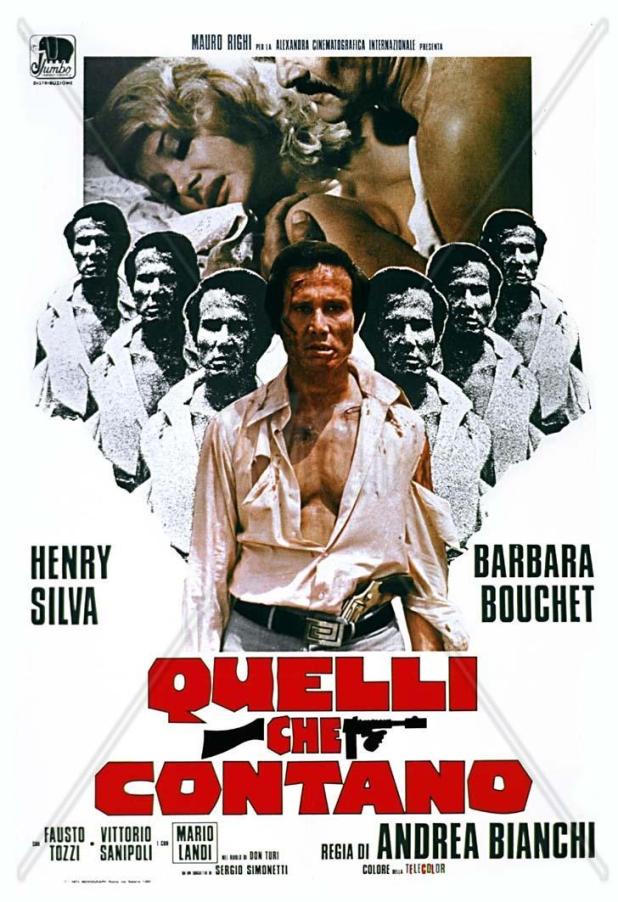
Playing as Quelli Che Contano (Those Who Matter) in Italy, as well as Love Kills and Guns of the Big Shots, this Andrea Bianchi-directed film is made of everything mean you can imagine. What else would you expect from the maker of Strip Nude for Your Killer and Burial Ground? A meditation on the value of mindfulness?
When the Italian mob families of Don Ricuzzo Cantimo and Don Turi Scannapieco keep their battles and crimes going to such a degree that they’re smuggling heroin in the body of a dead child — yes, this is how the movie begins — the big bosses leave the decision as to how to handle business in the hands of Don Cascemi.
He calls in an expert — Tony Aniante (Silva) — and tells him to kill everyone, which he does with no small amount of Yojimbo/A Fistful of Dollars influence. There’s a lot to deal with, like the fact that Scannapieco has it in for Cantimo because he killed his son-in-law and made his daughter go off the deep end while also crippled her son. And oh yeah, Ricuzzo’s week (Barbara Bouchet, more on her in a minute) decides that she’s got to get some Silva stirring up in her guts. If that doesn’t get confusing enough. Ricuzzo’s youngest son and Scannapieco’s younger daughter are also ready to play an eternal game of hide the cannoli.
Hey wait — didn’t you say this movie was brutal and potentially deranged?
Why yes, I did.
Before it’s over, we have heads exploding as they’re shot, a child’s body on an autopsy table, a head goes flying out a windshield, multiple dead bodies smashed by a steamroller, a bandsaw go clean through someone’s head and Silva drag Bouchet around a barn, beat her with a belt, then beat her in the face with the belt buckle, then have violent bloody sex with her in a grimy barn. Earlier in the film — because this is an Italian film where women come to enjoy all manner of upsetting couplings, our hero shoves her head into a bloody pig carcass while they make love — well, not really, right? — in the kitchen. To make things worse, Bouchet is totally turned on by this experience. Then she tells her husband all about it, because that’s the only way they can make love. Yes, this movie is the scumbag movie that scumbag movies warned you about.
Tony is brutally efficient, whistling his signature song before quickly blasting guys in the head with his Luger, like some unholy Italian western character combined with his Johnny Cool role. He’s death itself, as a scene of him walking into a Sicilian town has everyone closing their windows rather than even seeing him show up. Stick around for the end of the film, which neatly explains exactly why Tony whistles that tune as he murders everyone around him.
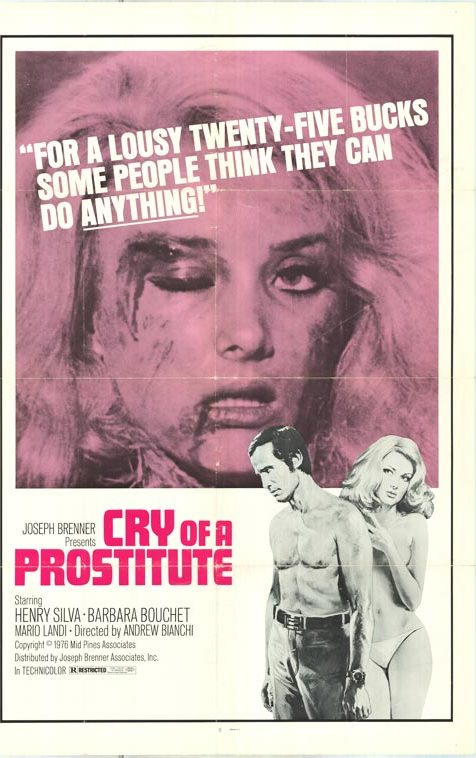
Released in the US with that garish poster above by Joseph Brenner Associates — the people who brought you Eyeball, The Devil’s Rain!, The Girl in Room 2A and many more — Cry of a Prostitute was sold with the tagline, “For a lousy twenty-five bucks, some people think they can do anything!” along with Bouchet’s abused face.
Bouchet would tell House of Freudstein, “That was unpleasant I didn’t remember it being that unpleasant when we made it. In fact I prefer not to remember too much about that one. When Quentin Tarantino arranged a screening of some of my movies in LA he opened with that one and I wish he hadn’t…” However, in Eurocrime! The Italian Cop and Gangster Films That Ruled the ’70s, Silva claims that Bouchet was tougher than nearly any of the men he met in those movies and intimidated him.
Join us Saturday on the Groovy Doom Facebook page starting at 8 PM East Coast Time. Just a reminder — we introduce the films, give you drink recipes, show you ads for the films and then discuss the movies when we come back!
Our first movie is The Bride, AKA Last House on Massacre Street and The House That Cried Murder. You can check it out on Tubi.
Here’s a drink to go with the film.
The Cocktail That Cried Massacre
1 oz. whiskey
.5 oz. cherry vodka
.25 oz. lemon juice
4 oz. cherry soda
Maraschino cherries
Muddle cherries in the bottom of a glass with the lemon juice.
Pour ice into your glass, then add whiskey, cherry vodka and cherry soda. Stir and enjoy.
After that, let’s enjoy some Nightbeast! You can watch it on YouTube.
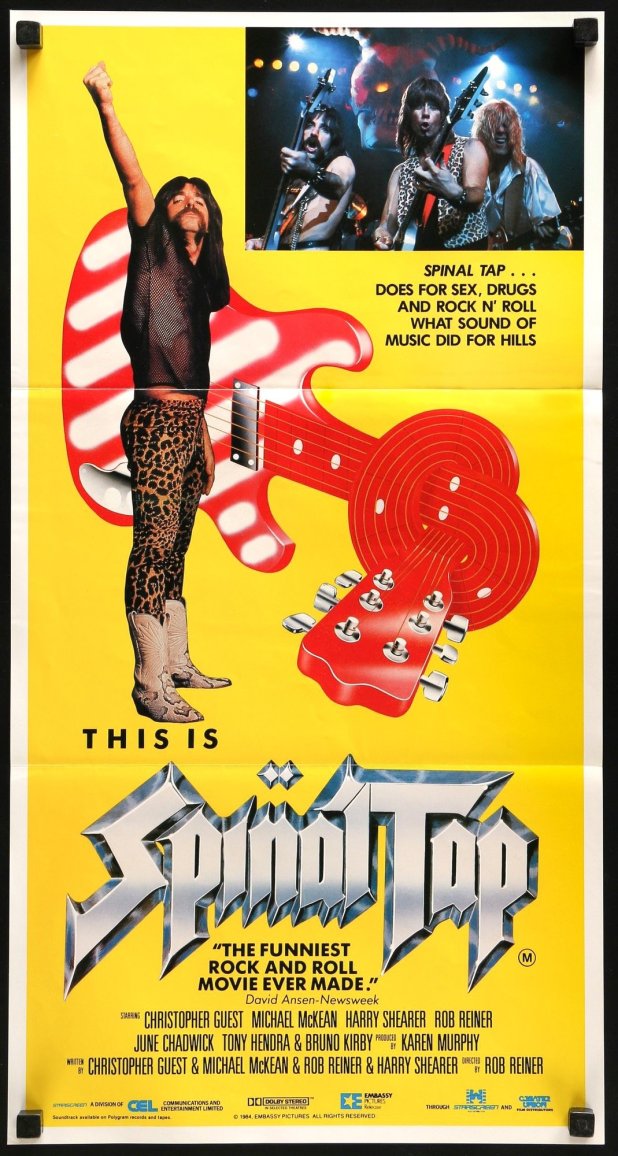
There is nothing I can say about this movie that can add or distract from it. It is a force of nature and in my opinion, the most perfect of movies. I’ve debated adding it to the site numerous times, but my worry was that it’s so ingrained in my heart that there was no way I could do it justice. So instead, let me share my favorite scene from the movie and explain why it means so much to me and then you can just watch the damn thing yourself.
As limo driver Tommy Pischedda (Bruno Kirby) drives Spinal Tap through New York City and all seems bright and the future wide open, he makes the faux pas of thinking that he can directly interact with rock gods. He looks in the back of his car and addresses one of their female admirers: “Excuse me… are you reading “Yes I Can”?”
Tommy may not understand this heavy metal, but he does know the Rat Pack. That’s the kind of celebrity culture that he understands. People that deserve to be there. People that have given blood and sweat and sacrificed. But maybe, just maybe, these longhaired kids are trying.
“You know what the title of that book should be? “Yes, I Can If Frank Sinatra Says It’s OK,”” shares Tommy. “‘Cause Frank calls the shots for all of those guys. Did you get to the part yet where uh…Sammy is coming out of the Copa…it’s about 3 o’clock in the morning and, uh, he sees Frank? Frank’s walking down Broadway by himself…”
At this point, Nigel Tufnel, the guitarist of the band, rolls up the window that separates the celebrity from the hired help. It’s a bracing and truth-packed moment, as the look on Tommy’s face shows that he should have never opened himself to such scorn.
Rockumentarian and Tap fan Marti DiBergi tries to deal with the chill in the air, offering, “Well, you know, they’re not, uh, used to that world. You know, Frank Sinatra, it’s a different world that they’re in.”
The sheer exhaustion in Tommy’s speech that follows, as well as his know-it-all feeling on the world of celebrity follows. “You know, it’s just that people like this…you know…they get all they want so they really don’t understand, you know…about a life-like Frank’s. I mean, when you’ve loved and lost the way Frank has, then you, uh, you know what life’s about.”
But what sums it all up is when he says, “Fuckin’ limeys.”
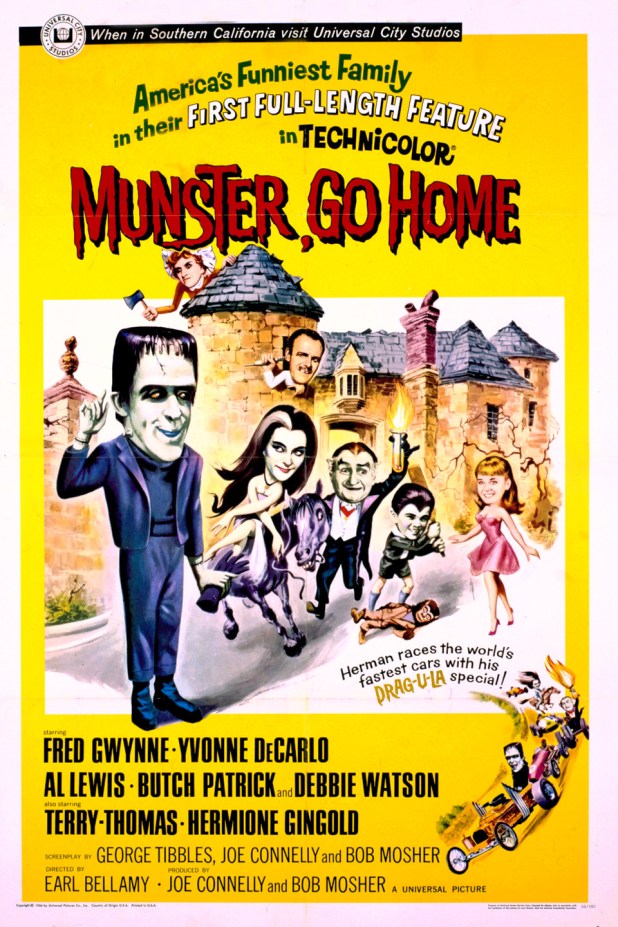
Right after The Munsters finished up on TV, this movie was released. Everyone from the show but Pat Priest came back, with Marilyn now played by Debbie Watson. Even its director, Earl Bellamy, had worked on the show before.
The other major change in this movie is that it’s in color. The decision to make the movie — after the show ended, which isn’t how this usually works — is because this movie was made to introduce the characters and concept to foreign audiences, with the syndicated episodes following in its wake.
Herman (Fred Gwynne) and Lily Munster (Yvonne De Carlo) have inherited Munster Hall in Shroudshire, England, which makes Herman now Lord Munster to the rage of Herman’s British relatives Grace (Jeanne Arnold) and Freddie (Terry-Thomas, perfectly cast in this role). Also, somehow Grandpa has taken some wolf pills and is now a werewolf.
I always ask myself, when a horror-related movie comes out in the 60s, where is John Carradine? Well, he’s right here, playing the evil butler. Whew — I was worried he’d miss out on the paycheck.
This is also the movie with Drag-U-La in it, built by George Barris. It was the second car he made for The Munsters, with the other being the Munster Coach. Ironically, that’s the car in Rob Zombie’s video for “Dragula.” The sample at the open of that song — “superstition, fear and jealousy” — is Christopher Lee from Horror Hotel.

 B&S About Movies
You must be logged in to post a comment.