The Death of Richie (1977)

Editor’s Note, January 2023: Lance Kerwin passed away on January 24, 2023, at the age of 62. Lance got his start in acting by way of his mother, who worked as a booking agent, and his father, who worked as an acting coach. Kerwin, who came to prominence for his work in the Michael Landon TV movie The Loneliest Runner (1976), the NBC-TV series James at 16 (1978), and the Stephen King adaptation, Salem’s Lot (1979), left Hollywood in the late ’90s to serve the Lord as a Christian youth minister.

Thank you for the films, Lance. You were loved and you will be missed.


We’ve talked a lot about the prolific career of director Paul Wendkos at B&S About Movies. While Wendkos got his start directing Jayne Mansfield in the since forgotten rom-com The Burglar (1957) and directed a lot of Gidget movies, he built up pretty cool horror movie oeuvre with the theatrical feature The Mephisto Waltz, and the TV movies Good Against Evil, Haunts of the Very Rich, the 1985 remake of TV remake of The Bad Seed, and the legendary 1975 TV movie The Legend of Lizzie Borden.

In 1976 Wendkos was hired by NBC-TV to direct this, the second of two U.S. TV movies Robby Benson shot at the height of his teen idoldom, just before experiencing his first taste of international fame with his back-to-back theatrical hits of Ode to Billy Joe (1976) and One on One (1977). Benson’s first TV movie was ABC-TV’s Death Be Not Proud (1975).

Here, Benson stars in this true story based on the grim article and non-fiction book by Thomas Thompson regarding a father forced to kill his drug-crazed teenage son who came at him with an ice pick after one of their arguments about his litany of drug-induced troubles and his less-than-desirable friends (Charles Fleischer of A Nightmare on Elm Street and the voice of Roger Rabbit in Who Framed Roger Rabbit and Clint Howard of Ice Cream Man and Tango & Cash fame).

Keen eyes of ‘70s TV will notice “Capt. Nicole Davidoff,” Susan Pratt from the Saturday Morning “Star Wars,” Jason of Star Command, (one of my favorite ‘70s actors) John Friedrich (Thank God It’s Friday, Almost Summer, The Wanderers, and The Final Terror), and Cindy Eilbacher (TV movie Bad Ronald and Slumber Party Massacre II) as Richie’s friends. Lance Kerwin (of the TV movies The Loneliest Runner and James at 15; “Wooster” in Enemy Mine), Ben Gazzara (The Neptune Factor and Inchon; “Brad Wesley” in Road House), and Eileen Brennan (FM) star as Richie’s put-upon family.

Critics have written this off as an Afterschool Special (we’re reviewing a few of those this week) with violence added. I disagree. This is an intense, emotionally sad story; one that, unlike most book-to-film transitions, is very faithful to the book. And even though you know the outcome, you remain gripped to the screen because you wonder just how much worse things will digress.

Since this was a ratings juggernaut that everyone in middle school watched, most of us went out and bought the book ($1.25 new!). Our school’s library even carried it. And we watched the film in civics class more than once. The subsequent VHS release dropped “The Death of” prefix and released this under the book’s original title of Richie—even toning down some of the violence from the original TV print, which is forever lost. Beware of the DVDs marketed as “digitally remastered”; there’s no official DVDs and all are grey market rips of varying quality.

This spins frequency as part of EPIX’s cable catalog (their print is rife with sound and visual issues). While you can also stream it on Amazon Prime, we found two free rips on You Tube HERE and HERE—and those same prints air on EPIX. You can read the scans of Thompson’s Life Magazine article HERE and HERE. Here’s the network TV trailer. You can also watch The Death of Richie as part of Mill Creek’s “The Swingin’ Seventies” 50-film pack box set, which also includes The Young Graduates, itself on Mill Creek’s “B-Movie Blast” 50 film pack.

Join us tomorrow—Wednesday, and Thursday at 9 PM—as we take a look at two more “ripped from the headlines” troubled-teen TV movies with The Killing of Randy Webster and Angel Dusted.

About the Author: You can read the music and film reviews of R.D Francis on Medium and learn more about his work on Facebook. He also writes for B&S About Movies.
Deceptions (1985)

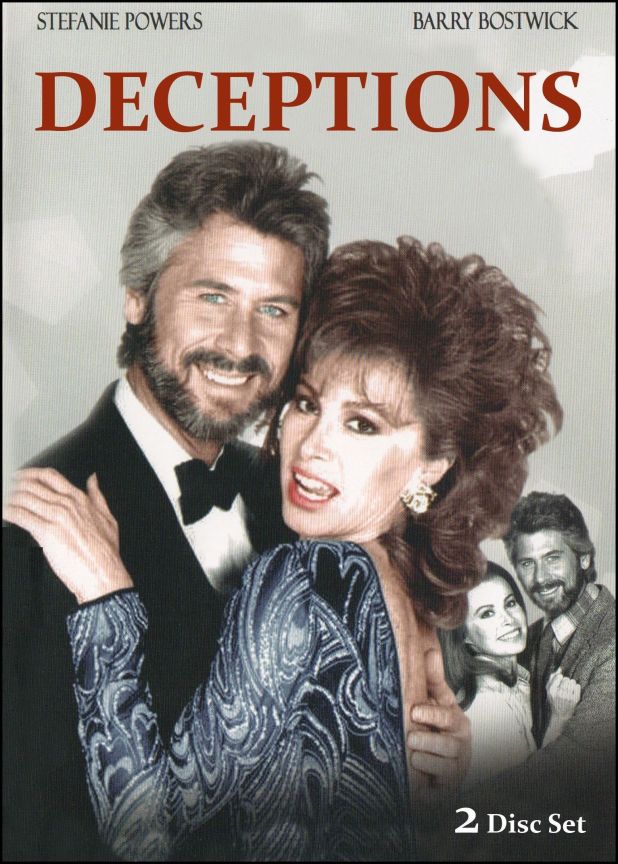
Twin sisters (both roles played by Stefanie Powers, which was 100% my reason for watching this movie) — one a European jet-setter, the other a housewife in need of adventure — decide to swap lives and identities for a week. What could go wrong? Oh, you know. Everything.

Made while Powers was on Hart to Hart — and also starring in three miniseries all at the same time — this movie was based on the best-selling novel by Judith Michael.

Originally airing on the NBC network, this movie has a blockbuster cast, with Barry Bostwick as the U.S. based husband. And look out! That’s Fabio Testi, who you may remember from What Have You Done to Solange?Contraband and The Four of the Apocalypse, as the European beau to Powers.

While the American hausfrau is shaking her tailfeather to the smitten Testi on a yacht — to the Pointer Sisters’ “I’m So Excited,” years before that ditty reduced Jessie Spano to tears — the boat blows up real good, making this movie less about allowing your twin sister to have Biblical knowledge of your hubs and more about murder, baby. And if anyone knows murder in 1985 prime time, Stephanie Powers is the lady for the job.

So yeah. Barry Bostwick reacts to this news by realizing that he’s really in love with the rich girl sister because sex is dirty when it’s a secret and this never really gets explored and man, who doesn’t love run-on sentences?

Toss in Gina Lollobrigida, Brenda Vaccaro, a young Fairuza Balk and a pre-Ben Seaver Jeremy Miller and you have a cast ready for a paperback that ladies bring to the beach back when people still read trashy novels.

You can watch this on Amazon Prime.

Death at Love House (1976)

Why did I watch this movie?

Was it my love of TV movies? Sure.

The fact that Robert Wagner was in it? Yes.

My enduring crush for Kate Jackson, whose looks, voices and demeanor made pre-pubescent me question why every other boy thought girls were gross? Of course.

The simple knowledge that I’ll watch just about anything, no matter how bad it may be? Undoubtedly.

Because John Carradine was in it? Come on. John Carradine is in everything.

Or that it was directed by E. W. Swackhamer, who made the insane Lookwell with Conan O’Brien and Robert Smigel, as well as the TV movie Vampire?

Come on. Just reading the synopsis and learning that Marianna Hill plays a famous sex symbol actress murdered in the 1930’s? That’s exactly why, dear reader.

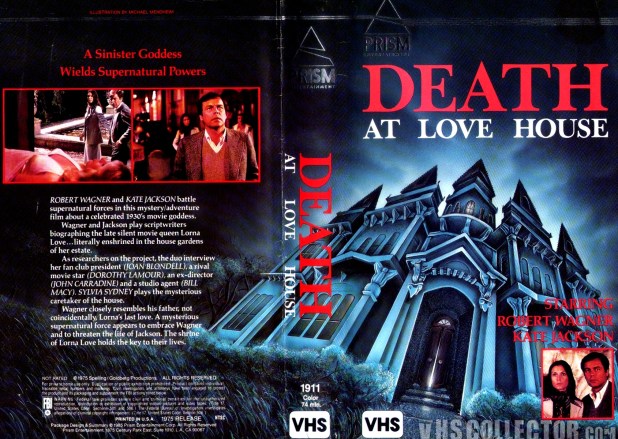
Joel and Donna Gregory (Wagner and Jackson) are investigating the death of Lorna Love (Hill). This leads them to her house, where they meet with housekeeper Clara Josephs (Sylvia Sidney, the caseworker from Beetlejuice) and agent Oscar Payne (Bill Macy, who isn’t William H. Macy, but the husband of Maude).

Joel wants to know more because it turns out that his father was one of Lorna’s many lovers. So they decide to stay at Love House, where John Carradine shows up as a director who Lorna ruined. He claims that Joel’s dad was the only man to escape her before a mysterious creature attacks him, he has a heart attack and is then drowned in the garden’s fountain. If you can say anything about this movie, you should say that it’s pretty through with the brutal efficiency that it wipes out the seventy-year-old star of pretty much every horror movie made.

It’s at this point that any normal person would leave. Donna then finds an occult blade and one of her photos ruined, but she still stays. At this point, obviously she and Joel are in it to win it.

Joel and Donna then visit Denise Christian (Dorothy Lamour, who owned Old Chief Woodenhead in Creepshow 2 and played herself in The Phynx), a former rival of Lorna who — surprise! — also used to have a bit of “how’s your father” with Joel’s father. Is this whole movie about Robert Wagner’s dad engaging in adult congress with hot actresses? Yes, pretty much.

But really, this is where we learn the secret of Lorna: she asked for eternal beauty and youth. She got it and never slept again, so Joel Sr. smashed all the windows of her house — why? — and left. Afterward, she was obsessed with a healer named Father Eternal Fire.

Of course, being the son of his philandering papa, Joel starts fantasizing about Lorna. At the same time, someone tries to kill Donna by carbon monoxide poisoning. She survives and finally wants to leave, but Joel begs her to stay so they can figure out the secret.

That’s when they meet another follower of Father Eternal Fire, Marcella Geffenhart (Joan Blondell, who is also in The Phynx and, like everyone else in Hollywood pre-1950, Won Ton Ton, the Dog Who Saved Hollywood). She claims to be Lorna’s best friend and when Donna wants to know more, Joel goes AWOL and starts yelling about how Lorna deserves her secrets. So why are you writing a book about her?

I’m not going to spoil the rest, but it’s as ridiculous as you’d hope.

This ABC Movie of the Week originally aired on September 3, 1976. It was produced by Aaron Spelling, as were the occult-themed films How Awful About AllanThe House That Would Not DieCrowhaven FarmA Taste of EvilHome for the HolidaysSatan’s School for Girls (which also stars Jackson), Cruise Into Terror and Don’t Go to Sleep.

You can watch this on Amazon Prime or YouTube:

The Jericho Mile (1979)

Peter Strauss is bad ass in this Michael Mann production that aired on ABC-TV on March 18, 1979. Like Sam Elliot bad assery. And in what the hell ever happened to scribe Patrick J. Nolan? How is this bad assery of script — which walked away with five awards, including three Emmys, and was the seventh-highest rating show of the week (the six higher ones were TV series; so this was the #1 rated TV movie for the week) — his only feature film writing credit?

More importantly: Why was this a TV movie? The quality across all the film disciplines is so high, this should have been a theatrical feature — and swept the Oscars.

Well, as it turns out, Patrick J. Nolan was a college English professor and the script languished on the shelf, as most optioned screenplays by unknown writers usually do (been there, done that). Then Peter Strauss, then a huge star courtesy of ABC-TV’s Rich Man, Poor Man (and commanding $200,000 per TV movie), was in the market do something “completely different.” And he discovered this script. (And he did the Star Wars-cum-Mad Max romp for Charles Band: Spacehunter: Adventures in the Forbidden Zone. I dig it, but opinions vary.)

ABC-TV brought on a young Michael Mann*, who worked on commercials in England alongside Ridley Scott of Alien fame, and cut his teeth with episodes of the U.S. TV series Hawaii Five-O and Starsky and Hutch. And Mann was already up-to-speed on prison life courtesy of his uncredited re-writes alongside Dustin Hoffman for 1978’s Straight Time (it’s never about the on-screen credit: it’s about the work).

And, with that, Mann “punched up” Nolan’s script about Larry Murphy, a loner convicted of first degree murder serving a life sentence at Folsom Prison (where this was filmed) for shooting his father, which Murphy felt was a justifiable homicide because his father was raping his stepsister.

Now we’ve all seen our share of prison movies (we’ll mention the gold standards Escape from Alcatraz and The Shawshank Redemption) and know how inmates “do their hard time.” But Murphy, that the inmates nickname “Lickity Split,” loses himself by running. All day. Every day. All the time. And the prison psychologist (Geoffrey Lewis!) and warden (Billy Green Bush!) come to realize that Murphy’s obsession has resulted in his running at the Olympic level, thanks to the insights of the state’s award-winning track and field coach (Ed Lauter!).

What makes this all so special is that Nolan and Mann’s script eschews the usual sensationalism of prison movies (e.g., prison rape, riots, thuggery, stabbings, abusive guards, crooked wardens) and is, instead, a psychological study; a study of man at the lowest point in his life finding the strength to carry on, and how the compassion of others, can lift a man back up. It’s also a tale of how others can find their own victories — abet, vicariously — through others in the same predicament, who are not as strong to succeed beyond their surroundings. Success isn’t about money, prestige, power, or promotion: it’s about how you use your spirit and deal with the negativity of others . . . and “win.”

To say anymore would be plot-spoiling (okay, well, the late Brian Dennehy is the “yards” dickhead in this), but we will tell you this is the film that The Rolling Stones allowed Michael Mann to license an instrumental re-arrangement of “Sympathy for the Devil” for the film, which is used as the film’s theme song.

Watch his movie. Period. For it is bas-ass . . . and a bag o’ chips.

There’s several rips of varying quality on You Tube. But with the way uploads come and go, we’ll give you all three to choose from HERE, HERE, and HERE.

* We wax nostalgic over Michael Mann’s work with Tangerine Dream in our “Exploring: 10 Tangerine Dream Film Soundtracks,” where we discuss Mann’s Thief and The Keep.

There are more TV movies to be had with our “Week of Made for TV Movies,” “Lost TV Week,” “Son of Made for TV Movie Week” and “Grandson of Made for TV Movie Week” tribute spotlights to those films that, in many cases, are even better than the movies that played in theatres.

About the Author: You can read the music and film reviews of R.D Francis on Medium and learn more about his work on Facebook. He also writes for B&S About Movies.

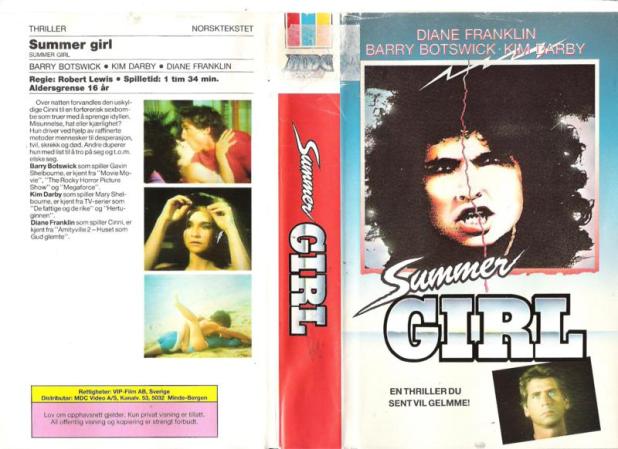
Summer Girl (1983)

This movie is pure junk. In the words of Nicolas Cage, “That’s high praise.”

Gavin and Mary Shelburn (made for TV movie power couple Barry Bostwick and Kim Darby) don’t have a great marriage when the movie begins. It doesn’t get much better. They have two kids already — David Faustino from Married with Children is the boy and Laura Jacoby, Scott’s sister who was in Rad, is the girl — and now another one on the way. The pregnancy has been troublesome and Gavin already feels trapped.

Enter Cinni (Diane Franklin, who we may have mentioned on this site, fired the flames of teenage lust in movies like Better Off DeadThe Last American Virgin and gave weird feelings to us in the bleak scumfest Amityville II: The Possession), a young girl with a mysterious past that is the au pair that will help Mary with the kids. If I’ve learned anything from my decades of TV movie watching, it’s never ever hire an employee hotter than your spouse. Sure, she shows up dressed beyond conservatively for her first interview, but just seeing a photo of daddy Gavin sends her ladyparts into overdrive.

Of course, by the time the family goes to the beach for the summer — I refuse to feel badly for any family that can afford two houses — she’s ditched the dowdy look for a sundress that makes me remember, “Oh yeah, that’s Diane Franklin.”

Mary’s pregnancy means that she slowly grows dowdier as Cindi somehow gets even hotter, treating every man around her as a plaything. In fact, even Gavin’s mom can’t help but comment on her “hot little body.” Nearly everyone feels highly sexualized, except of course poor Mary.

Two years later, Franklin and Darby would be in much different roles in the aforementioned Better Off Dead, which is pretty amazing when you think about it. Franklin’s work here is great, as she’s all at once commanding of men, worried about growing as a woman and a devious planner who takes over an entire family. Oh yeah — she also killed her best friend and later takes care of that woman’s man, who she also stole. She’s a force of nature.

It’s also a movie that dares bring Murray Hamilton, as a philandering neighbor, back to the beach.

Toss in some occult, Bostwick falling for our villainess and as much skin as network TV would allow in 1983 and you have a movie that I’ll keep talking about as long as you’ll let me. It’s as if the makers of The Hand That Rocks the Cradle watched and said, “Can we just make this again with an actual budget?”

Honestly, Gavin is a complete jerk, but this was made in a time when men were not responsible for their penises. Hold on, I’m checking with the judges…and yes, it’s the same way now. Me, I’m on the side of Cinni. If this family and everyone around her is dumb enough to be seduced like this, they deserve it.

You can watch this on YouTube. And you should. Like right now.

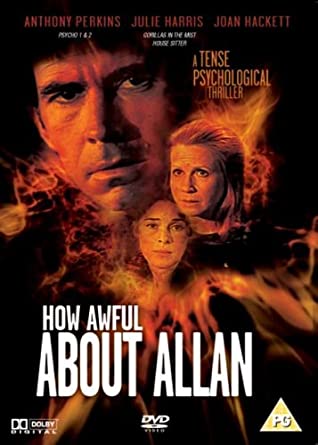
How Awful About Allan (1970)

Along with What’s the Matter With Helen?, this movie is one of the two collaborations between writer Henry Farrell and director Curtis Harrington.  It was the ABC Movie of the Week on September 22, 1970 and has stood the test of time as one of the better TV movies. And there’s some stiff competition for that.

Shot in just 12 days, it stars Anthony Perkins as Allan Colleigh, who has psychosomatic blindness after an accident — he left paint cans too close to a fire — that killed his abusive father and scarred his sister Katharine (Julie Harris from the 1963 version of The Haunting).

After Allan returns to their home after time in a mental hospital, he’s convinced that everyone is out to get him, including a new boarder with speaks in a hoarse whisper and one of his sister’s ex-boyfriends on the phone.

Joan Hackett — who was in two great TV movies, Dead of Night and The Possessed — appears as Allan’s former girlfriend. She gets caught up in his mania as rooms of the house explode into flames and he’s kidnapped by that mysterious ex.

How Awful About Allan has plenty of actors as comfortable on the stage as they were on the big or small screen. Perkins agreed to wear special contacts that completely made him blind so that his performance would be more realistic.

This didn’t get great reviews when it came out, but do the movie we love ever do?

You can download this on the Internet Archive, watch it on Amazon Prime or just use this YouTube link:

Dying Room Only (1973)

Phillip Leacock also directed When Michael Calls and Baffled!,two other TV movies of note, in addition to this taunt little thriller.

It was written by Richard Matheson, who wrote the scripts for House of UsherThe Legend of Hell HouseSomewhere in Time and some great TV, like “Nightmare at 20,000 Feet” and “Steel” for The Twilight ZoneThe Night StalkerThe Night StranglerScream of the WolfTrilogy of Terror and so much more.

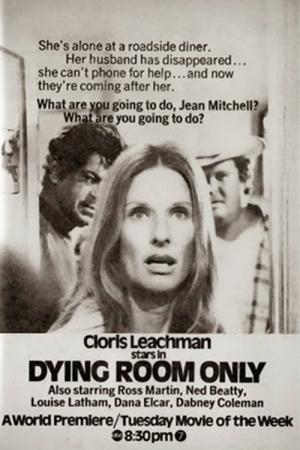
Bob Mitchell and his wife Jean (Dabney Coleman and Cloris Leachman) are on their way to Los Angeles when a detour takes them to the nearly deserted Arroyo Motel, which only has two people there: cook Jim Cutler (Ross Martin, Artemus Gordon from The Wild Wild West) and a customer named Tom King (Ned Beatty). Both of them are beyond rude and Jean feels like something is wrong.

She’s right. When she comes back from using the phone, Bob is gone and soon, someone is driving off in their station wagon, leaving her trapped between the diner and a hotel, which is manned by another untrustworthy local named Vi (Louise Latham, Marnie).

Dana Eclar (Condorman) plays a lawman and Ron Feinberg (Fellini from A Boy and His Dog) is another shady character. A tiny cast for a big feeling movie that honestly escapes the small screen and could have played theaters, Dying Room Only fits neatly into the early 70’s genre of films where city folk using the new highways and byways of America run smack dab into small town backwoods menace.

Originally airing on September 18, 1973, the film faced criticism for how Leachman’s character is nearly destroyed by the loss of her husband, feeling that the movie had no aspiration toward feminism. There were also other reviews that it embodied the worst aspects of regional and cultural prejudice, which is pretty much what every movie in this genre does.

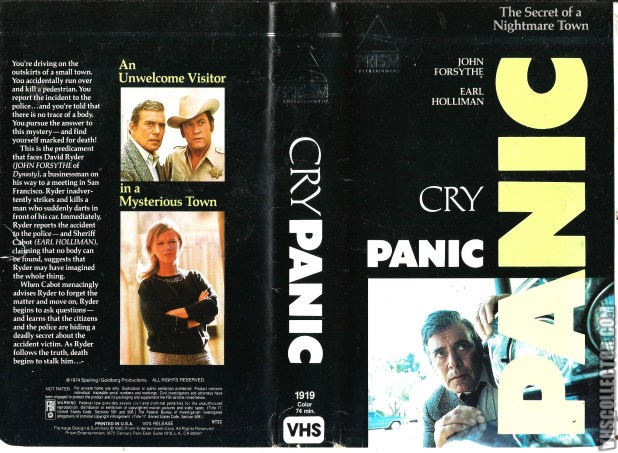
Cry Panic (1974)

Jack B. Sowards created perhaps one of the most interesting parts of Star Trek: the Kobayashi Maru, a no-win scenario for new Starfleet captains that was first brought up in Star Trek II: The Wrath of Khan. He also wrote this TV movie which was directed by James Gladstone, whose tie to Star Trek is directing the classic episode “Where No Man Has Gone Before.” He also was behind the films Rollercoaster and When Time Ran Out…

Dennis Ryder (John Forsythe, who is astounding in this movie) is driving to San Francisco for a job interview when he hits a man who no one will admit is dead. No one — the sheriff (Earl Holliman from Police Woman), Ralph Meeker from The Alpha Incident, the town doctor (Noman Alden, Kansas City Bomber) and certainly not Anne Francis.

Jason Wingreen, who is in this, was also the voice of Boba Fett.

Seriously, this entire town is against Ryder. It’s a taunt 74 minutes and gets more out of that time than three movies today. I’ve heard people say it has a David Lynch vibe, which I can see. It’s intriguing when a man knows that he’s killed somebody and begs the police to charge him.

You can watch this on YouTube:

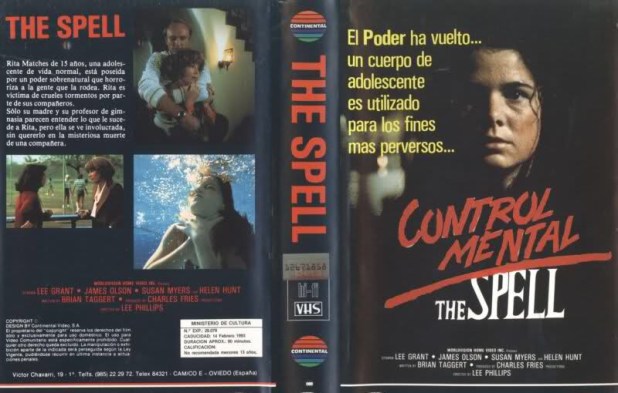
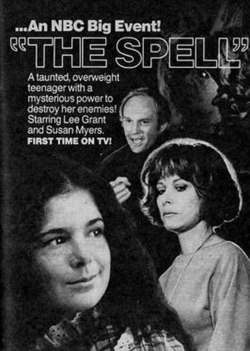
The Spell (1977)

This Brian Taggert (Visiting HoursPoltergeist III and Omen IV: The Awakening) film was originally aired on NBC on February 20, 1977. It was supposedly written before Stephen King’s Carrie. Although it was supposed to be a theatrical film, it was relegated to movie of the week because De Palma’s filmed version got on screen first.

Rita Matchett, a shy, overweight 15-year-old girl, is the central character who, like Carrie, is subjected to bullying. However, her powers manifest much quicker. In a shocking turn of events, as one of the mean girls climbs the rope in gym class, Rita uses her powers to make her fall to her death, setting the stage for a unique and unexpected plot twist.

While Rita comes from a wealthy family, she isn’t close with her sister (Helen Hunt) or her father (James Olson, Father Adamsky from Amityville II: The Possession). Her mother (Lee Grant, who reviewers said deserved better than this movie, but I love this kind of ridiculous TV movie, occult magic, so screw those people) tries to understand her, but once she starts speaking in tongues, all bets are off.

This is the kind of movie where an old woman spontaneously combusts, where the gym teacher (Lelia Goldoni, who, if I was artistic, I’d tell you that she was in Cassavetes’ Shadows, but we all know that she was in the 70’s Invasion of the Body Snatchers and The Unseen) teaches sad teens how to find Satan and the mom ends up having powers too, throwing knives at her daughter in a scene that again has nothing to do with Carrie at all.

Jack Colvin, who plagued David Bruce Banner on the TV version of The Incredible Hulk, and Wright King (Invasion of the Bee Girls) show up. So do some audio cues from the classic Star Trek.

Directed by Lee Phillips, known for his work on The Girl Most Likely to…, this film may be derivative, but it’s a lot of fun.

This is one of the few made-for-TV movies that have come out on DVD. Thank Shout! Factory for that and beg them to release more!

The Vegas Strip War (1984)

So, did you hear the one about Police Commissioner Stewart “Mac” McMillan, Darth Vader, Mr. Miyagi, and a future Golden Globe winner who probably doesn’t want anyone to know she got her start in the biz with a role in Police Academy 4: Citizens on Patrol, and the ex-husband of Cloris Leachman (Mel Brooke’s Young Frankenstein and High Anxiety) walking into an NBC-TV gin joint?

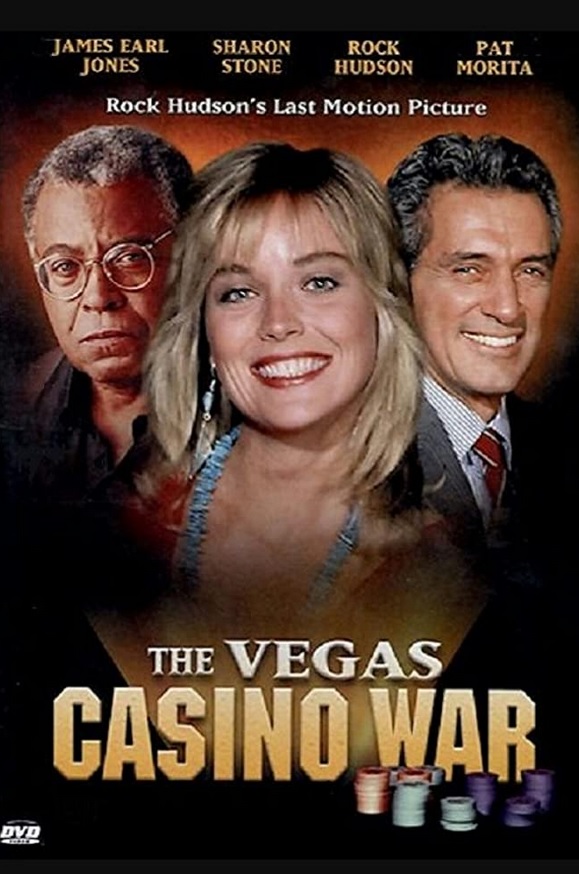
Could the VHS sleeve be any cheaper?

Yes, today The Vegas Strip War is remembered as Rock Hudson’s last movie: he died less than a year later (remember when Rock went “sci-fi” with Embryo?). Ah, but we, the TV movie lovin’ dorks of B&S About Movies, remember this as the final film directed by Leachman’s ex and Jack Albertson’s nephew (Grandpa Joe in Willy Wonka and the Chocolate Factory), George Englund — who brought us the world’s first “electric western,” the 1971 counterculture classic (read: dud), Zachariah, starring, off all people: Joe Walsh of the Eagles (then with the James Gang), San Francisco hippy-rockers Country Joe and the Fish, and Don Johnson (A Boy and His Dog).

Englund, who was best buds with Marlon Brando, made his directing and producing debut with Brando as his star in the 1963 political adventure, The Ugly American, which he followed up with one of the lesser known, but well-made film noirs, 1965’s Signpost to Murder (written by Sally Benson of Alfred Hitchcock’s Shadow of a Doubt (1943) fame). After the critical and financial failure of (the previously linked) Zachariah, Englund’s career cooled, but the 1972 snow-based Italian crime caper, Snow Job, was a pretty darn cool UHF-TV movie favorite of yesteryear (not bad for starring an Italian Olympic skier who couldn’t act). Englund ended his career producing the series Blossom and The Golden Girls for NBC-TV and publishing the 2004 memoir about his friendship with Brandon: Marlon Brando: The Way It’s Never Been Done Before.

Ah, I see what you’re doing, there, Mr. Distributor.

The Vegas Strip War is another one of those films that, even thought it was released on VHS, is hard to find. And it would have been lost forever if not for Martin Scorsese’s back-to-back box-office hits Goodfellas (1990) and Casino (1995). And as you can tell from the original VHS and its DVD reboot, Sharon Stone’s supporting role, which wasn’t even mentioned on the VHS, is front and center on the DVD, which got a title change to tie it to the 1995 Scorsese film.

Rock is Neil Chaine, a character not far removed from Robert DeNiro’s Sam “Ace” Rothstein, who’s fired in a coup d’etat from The Desert Inn, the hotel-casino he operates. In an act of subtle revenge, Chaine purchases a decaying casino next door, The Tropicana, with the goal of crushing his old employer. Helping him along the way are Sarah (Sharon Stone), a casino hostess who uses her “connections” (i.e, she sidelines as a prostitute) to get Chaine a gambling license, and Jack Madrid, a sports promoter (no, that’s not Don King-meta, that’s James Earl Jones in a fright-wig doing Don King!) that’ll set up a prize-winning boxing match at the new hotel.

Of course, Madrid’s got other plans . . . and Chaine’s nefarious short cuts lead him to a stint on Alcatraz — and prison sex with Sharon Stone. Oh, I almost forgot about Pat Morita: He’s the offensively named Yip Tak (hey, it was the ’80s), a high rolling Chinese gambler from the Desert Inn days; he makes a deal with Chaine to bring rich Asian businessman to the Tropicana. Yep, it’s all a double cross as Tak and his friends bankrupt the casino in a gambling scam.

There’s no trailer, but you can watch this clip of the film’s opening credits. And if you like what you see, then you can watch a pretty clean rip of the full movie on You Tube.

Oh, yes! That spinning ITC logo is the same production company behind U.F.O., Space: 1999 and the Kirk Douglas Star Wars dropping, Saturn 3. And if you’ve been, or your parents have been to Vegas (and you saw the pictures), you’ll notice this was all shot on location inside the late-famed The Desert Inn and still standing (but totally revamped) The Tropicana. And after the failure of Saturn 3 and Raise the Titanic, ITC was on verge of bankruptcy and had no choice but to shoot-on-location-on-the-cheap (they went under shortly thereafter). Is this as great as the Scorsese flick? No, but for a TV movie production on a budget, George Englund delivered an entertaining mob flick.

There are more TV movies to be had with our “Week of Made for TV Movies,” “Lost TV Week,” “Son of Made for TV Movie Week” and “Grandson of Made for TV Movie Week” tribute spotlights to those films that, in many cases, are even better than the movies that played in theatres.

Oh, yeah. More mob flicks!

About the Author: You can read the music and film reviews of R.D Francis on Medium and learn more about his work on Facebook. He also writes for B&S About Movies.