Fulvio Lucisano, the head of Italian International Film, wanted a sequel to his film. American-International Pictures wanted a sequel to theirs. They got their chocolate into one another’s peanut butter and co-financed this movie.
That disparity continues the whole way through the two different versions. In America, the main story is about Vincent Price’s Dr. Goldfoot battling against Fabian. Yet in Italy, the film has a different title (Le Spie Vengono dal Semifreddo, which means The Spies Who Came In from the Cool, a parody of 1965’s The Spy Who Came in from the Cold). It also concentrates more on the antics of Franco Franchi and Ciccio Ingrassia. Together, they appeared in 116 films, usually as the main characters, and are the most famous Italian comedy team of all time.
Despite being blown up real good at the end of the last movie, Dr. Goldfoot is working alongside the Chinese, making exploding female robots — Mike Myers owes this movie money — when he’s not impersonating a NATO general. Our hero is Security Intelligence Command agent Bill Dexter (Fabian!) who is too busy chasing women to save the world most of the time.
One of his conquests, Roseanna, is played by Laura Antonelli, who was Wanda in Venus In Furs. George Wang, who came to Italy by way of Shanghai to star in plenty of spaghetti westerns, is also here, as is former boxer Ennio Antonelli who is also in the spy films Danger: Diabolik, Matchless and Agent 3S3: Massacre in the Sun.
Amazingly, this movie is directed by Mario Bava. He had no interest in the film, but he had a contract with Lucisano. The script changed nine times, people argued over the right women for each shot and even Price would say that this movie was “the most dreadful movie I’ve ever been in. Just about everything that could go wrong, did.”
That’s right. The only time Bava would work with Price and we ended up with…this. Oh well. What can you do?
Gerd Oswald is known for his TV directing and some of his film noir work, like A Kiss Before Dying and Crime of Passion. He directed this thinking it’d be the pilot for a TV series and then, with the spy craze, it ended up being a theatrical release.
Adam Chance (Peter Mark Richman, Dr. Charles McCulloch from Friday the 13th Part VIII: Jason Takes Manhattan and Chrissie’s religious father on Three’s Company) works for the American spy agency H.A.R.M. (Human Aetiological Relations Machine). That may be the most ridiculous acronym ever. I mean what is aetiology? Research tells us that it’s the British spelling of etiology or the study of the causes and origins of diseases.
In this adventure, Chance has to protect a Russian defector who has created a skin-eating weapon. Complicating matters is a double agent — the defector’s niece Ava Vestok, who is played by one of the first ladies of giallo, Barbara Bouchet. Yes, that’s reason enough to suffer through this silly little spy film!
Martin Kosleck is in this as a villain. He was a German actor that hated the Nazis and Hitler so much that he set out to play them in every film to show how horrible they were. In fact, he played Joseph Goebbels five times. He’s a Russian here, though.
Vincent Price’s least favorite actor — Count Yorga himself — Robert Quarry, is also on hand, as are Rafael Campos (The Astro-Zombies), Robert Donner (Exidor on Mork and Mindy) and Playboy Playmate of the Month for December 1963 and 1964 Playmate of the Year Donna Michelle. She’s also in the two theatrical movies made from episodes of The Man From U.N.C.L.E., One Spy Too Many and The Spy With My Face.
Looking for someone to blame for all this? It was written and created by Blair Robertson, who wrote The Slime People. She’s also Mrs. Castillo in that movie.
At one’s first read of the film’s logline: A suicidal man in a remote cabin is suddenly faced with protecting a kidnapped woman from three sexual deviants and their sadistic games,” you think you’re getting a by-the-numbers extreme horror film of the New French Extremity variety. (See the recently reviewed (and very good) German radio-horror flick, Radio Silence, as an example.)
Ah, but what you’re really getting is a loose film noir—a very violent film noir of a double-crossed victim and a reluctant anti-hero trapped in a downward spiral, bowtied in a home invasion-siege picture that updates Ingmar Bergman’s granddaddy of rape-invasion-revenge movies: 1960’s The Virgin Spring.
Lulu (the great in her film debut Drew Lindsey Mitchell) is one of those sweet girls with self-esteem issues that goes for the bad boy. And her controlling boyfriend Shane blows a gasket when she decides to go back to college to finish her degree. Then, when she heads off in a rideshare to a Halloween party hosted by her (closeted pervert that pines for her) Uncle Chad, she’s besieged again by a clown-costumed, masturbating pervert. . . .
That leads to Lulu dragging her bruised and bloodied body onto the front porch of a remote forest cabin, where she interrupts the suicidal owner, Dylan (Kelcey Waston), who was just about to eat a bullet for breakfast. Then the portly-businessman Uncle Chad shows up at the cabin with his ex-cellmate Neil—and a bogus story that Lulu is an autistic that ran away from their car accident. And why is that Goth-chick sneaking around the cabin?
Dylan soon discovers Uncle Chad, Neil, and Neil’s leather-clad squeeze, Snack, gang raped and beat Lulu at the Halloween party—a party set up for that sole purpose. And based on that can of gasoline and the remote location: they were planning to depose of Lulu. So begins the night-long siege. Can a man depleted of the will to live for himself, find the will to protect the life of a stranger? Will Dylan and Lulu be . . . dead by dawn? Not if those booby-traps Dylan and Lulu tinkered based on the zombie defense guide written by Dylan’s deceased young daughter—who was the catalyst for his wanting to commit suicide in the first place.
I appreciate the skilled, creative choices writer-director Sean Cain made with Dead by Dawn.
While the title, in conjunction with its theatrical one-sheet, is a tip o’ the hat to the Sam Raimi sequel, the film doesn’t follow that expected cabin-in-the-woods route. Cain could have easily cheapened the film’s suspense by having Lulu’s obviously violent kidnap-torture-rape and her terrifying bound n’ gagged trip in the SUV on-camera; he keeps it expositional. There also seems to be a loose homage to Night of the Living in Lulu’s character—not the 1968 George Romero version, but the 1990 Tom Savini remake: Lulu is analogous to that film’s stronger-determined Barbara portrayed by Patricia Tallman. Lulu not turning into a catatonic or hysterical mess—and discovering her inner strength—is a bonus.
In addition, Dylan’s daughter saving his life “from the beyond,” not as a supernatural deus ex machina zombie or J-Horror yūrei, but via her zombie-hobby, is a refreshing, appreciated twist-of-the-script by Sean Cain’s bright pen (well, laptop keyboard). Lastly, Cain opted to not to take the put-a-star-name-on-the box-to-encourage-rental route; he allowed his unknown cast—featuring the effective Bo Burroughs as the ski-capped psycho Neil, Timothy Muskatell as the squishy-sleazy Uncle Chad, and Bobby Slaski as the abusive hubby, Shane—illuminate the dark, foreboding woods.
This is my first exposure to the acting career of Kelcey Waston. He’s worked on a wide variety of shorts, indie films and web series since the early 2000s. But you may have seen him on the SyFy Channel with Sean Cain’s previous effort, Jurassic City (2015), the Eric Roberts-starring Cowboys vs. Dinosaurs (2015), and the post-apocalypse romp, Road Wars (2015)—so, as you can see, Watson’s a busy actor.
And solid actor. He turns in a major-studio level performance. I also appreciate the fact that his race had no bearing on his casting. There’s no racial subtext to the story; writer-director Sean Cain cast Waston simply because he’s a good actor and was the best actor to convey the character—and that’s what its all about: the acting. And Waston throws those acting cards down on the table and cleans up the chips.
Equally excellent in her co-starring role is Jamie Bernadette (TV’s NCIS: New Orleans), who admirably held her own against Camille Keaton in 2019’s I Spit on Your Grave: Deja Vu, as the crazy, leather-clad morbid-bitch, Snack. You’ve also seen her on your Lifetime Channel excursions with 2018’s The Wrong Teacher. She has a whopping fifteen other films in various states of production. You don’t get cast that often if you’re bad at your job. She really delivers the goods.
Writer and director Sean Cain has an intense, extensive resume. While Dead by Dawn is his tenth film in those dual-disciplines (you may have, along with Jurassic City, stumbled into one of those films on the SyFy Channel), he tuned his Steenbeck chops with the Lifetime Channel’s endless catalog of prefixed “Killer,” “Nightmare,” “Perfect,” and “Pscyho,” and “Wrong” damsel-in-distress potboilers, along with editing a slew of documentary vignettes for Blu-ray reboots of popular films.
Dead by Dawn is available from Uncork’d Entertainment on all online streaming and PPV platforms and DVD in the U.S on April 7. Currently, you can purchase DVDs at Amazon and Family Video (both as a rental and purchase) and stream it on iTunes and Vudu. Plans are in place to also offer Dead by Dawn on Comcast, DirectTV, Dish, Fandango Now, GooglePlay, Spectrum, and Xbox. Visit Uncork’d on Facebook for the latest news on their releases. You can learn more about Sean Cain’s Velvet Hammer Films on their Facebook page.
Disclaimer: This movie was sent to us by its PR department. As always: you know that has nothing to do with our feelings on the movie.
About the Author: You can read the music and film reviews of R.D Francis on Medium and learn more about his work on Facebook.He also writes forB&S About Movies.
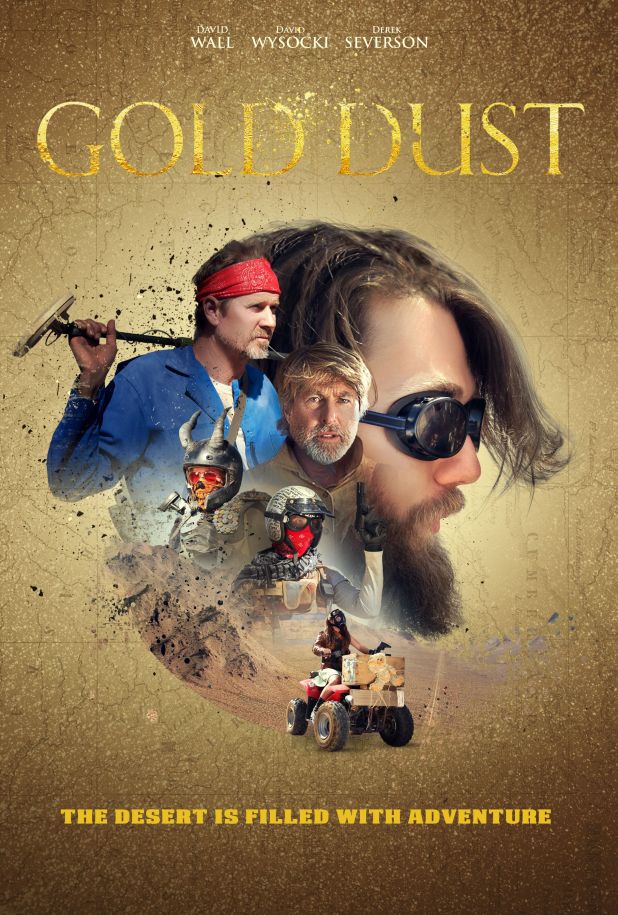
They sold me with this sell copy (which is a good thing for sell copy to do): “Classical music. Thundering opera. Rattlesnakes and precious gems. Mansions and gold mines. Friendship and despair. Treasure beyond imagination that vanishes in the desert wind. In the desert there is no limit to the adventures at hand!”
If you like the band Cage the Elephant, that’s another bonus, as they did some of the music for this movie.
Somewhere in Mexico, two lifelong friends are searching for a ghost ship that is rumored to be beneath the shifting desert sands. Today, drug lords use this land for their own gain, creating their own private army of kids in gliders armed to the teeth with semi-automatic weapons. Now, the guys have to decide whether or not to keep their dreams of finding $6 million dollars worth of gold dust or save some of the children.
This film was written and directed by David Wall. Its leads, Darin Brooks and Chris Romano, starred as best friends on the TV show Blue Mountain State.
Gold Dust is available on demand and on DVD April 7 from High Octane Pictures.
DISCLAIMER: This movie was sent to us by its PR team.
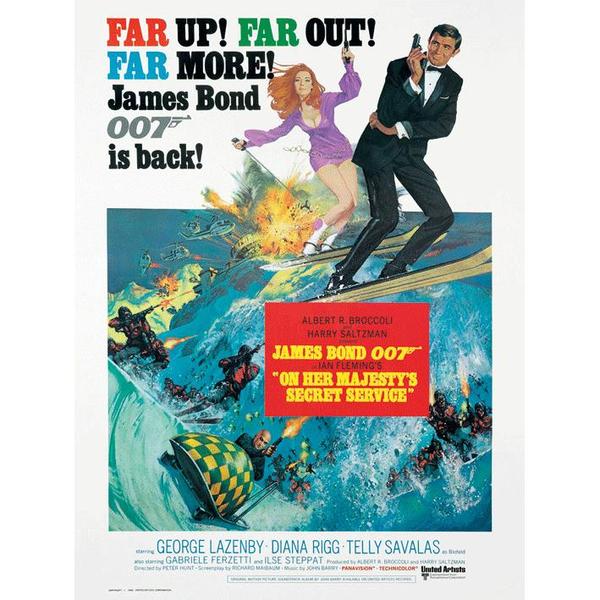
After five films, the unthinkable happened. Sean Connery was no longer James Bond. In fact, during the filming of You Only Live Twice, he wasn’t even on speaking terms with producer Albert Broccoli.
Who would be James Bond? In a field of contenders that included John Richardson, Hans De Vries, Adam West, Robert Campbell and Anthony Rogers, an unknown Australian named George Lazenby got the part after the producers saw him in a Fry’s Chocolate Cream advertisement.
For his audition, Lazenby pretty much showed up as Bond, wearing a Rolex Submariner wristwatch and a Savile Row suit that had been ordered for, but not picked up by Connery. He even went to Connery’s barber at the Dorchester Hotel. What sealed the deal was a fight test where Lazenby broke the nose of stuntman Yuri Borienko (who was once British pro wrestler Red Staranoff).
There’s also the perhaps urban legend George Lazenby talked his way into meeting director Peter R. Hunt and producers Albert “Cubby” Broccoli and Harry Saltzman. After lying about his acting roles, he got a screen test. Lazenby then confessed to Hunt that he had made it all up and that he wasn’t really an actor. Hunt laughed and told him, “You just strolled in here and managed to fool two of the most ruthless bastards in the business. You’re an actor.”
Lazenby was offered a contract for seven films. A combination of him wanting to be part of the swinging 60’s and an agent that convinced him that secret agents would be out of favor soon. I hope he fired that guy.
Believe it or not, this is probably my favorite Bond movie. It’s one of the few where Bond’s character makes forward emotional progress. And it’s full of amazing set pieces and Telly Savalas.
Bond saves a woman on the beach from committing suicide by drowning. She disappears afterward, but he runs into her later at a casino and learns that she is Contessa Teresa “Tracy” di Vicenzo (Diana Rigg, who was also on The Avengers).
Before she can thank him, Bond is attacked. The next morning, he’s kidnapped and taken to Marc-Ange Draco (Gabriele Ferzetti, The Night Porter). Draco — the head of a crime syndicate — informs him that Tracy is his daughter and offers Bond a million pounds to marry his daughter. 007 refuses, but agrees to keep dating her if Draco reveals where Blofeld is.
Bond threatens to resign from MI6 before heading back to romance Terry anew and that leads him to an allergy clinic high in the Swiss Alps, run by Blofeld and his twelve Angels of Death, female patients who he has cured of all allergies.
It all leads to Blofeld putting the entire world at hostage, MI6 forbidding Bond to stop him and our hero enlisting the European crime families to battle Blofeld (who has somehow become the much more attractive Savalas).
The end of this movie shocked me as a child and still impacts me today. After Bond marries Tracy in Portugal, they pull over to remove flowers from their car. Blofeld and his henchwoman Irma Bunt drive by and murder Bond’s wife. And that’s how the film ends.
Blofeld’s Angels of Death, who have been hypnotized to spread his Virus Omega, are played by Angela Scoular (Buttercup from Casino Royale), Catherine Schell (Madame Sin), Julie Ege (The Legend of the 7 Golden Vampires), Jenny Hanley (Scars of Dracula), Anouska Hempel (Tiffany Jones), Mona Chong (The 2nd Best Secret Agent in the Whole World), Sylvana Henriques (who was the fan dancer in the title sequence for You Only Live Twice), Dani Sheridan, Ingrid Back, Zaheera and Helena Ronee (Five Dolls for an August Moon).
Saltzman had planned to adapt The Man with the Golden Gun in Cambodia and use Roger Moore as the next Bond, but that region was politically unstable. Moore then signed up for another season of The Saint.
Peter Hunt, who had edited the first five Bond movies, finally convinced Broccoli and Saltzman that he deserved a chance to direct. He said, “I wanted it to be different than any other Bond film would be. It was my film, not anyone else’s.” It would be the last Bond film that he worked on.
This is a film full of plenty of references to the past films, starting with Bond saying, “This never happened to the other fellow.” The credits reference the past five movies and Bond’s office has souvenirs from Dr. No, From Russia with Love and Thunderball.
Lazenby had difficulty learning how to act and dealing with the star power of his co-stars. I feel bad for him, but I love the story of how the crew was paid in cash for the entire films per diems. Seeing Lazenby with a suitcase full of cash, Telly Savalas invited him to a late-night poker game and the famous Player’s Club member cleaned him out. Producer Harry Saltzman was so upset, he joined the game and won back the money for Lazenby.
I share the belief that if Connery had been Bond in this movie, it would be everyone’s favorite. It would have been the perfect ending for him in the series, but instead, he would return for the next film, Diamonds Are Forever.
As for Lazenby, his career has taken him from giallo like Who Saw Her Die?and Bond-like appearances, like him playing “J.B.” in the 1983 TV movie The Return of the Man from U.N.C.L.E.: The Fifteen Years Later Affair, where he helped Napoleon Solo and Illya Nickovitch Kuryakin, showing up with his tuxedo, Walther PPK and Aston Martin. He’s also Drew Stargrove, the Bond-style character in Never Too Young To Die. There’s also the documentary Becoming Bond, where he discusses how he got the role and what happened next.
As I said before, this is my favorite Bond movie because of how it moves the character forward. Other than Skyfall, it’s the only movie where he cries. It’s also the only film in the series in which the main villain (Blofeld), and his sidekick (Irma Bunt), survive, and are not arrested or killed. Bunt was to return for Diamonds Are Forever, but sadly Ilse Steppat, the actress playing her, died from a heart attack a week after this movie premiered.
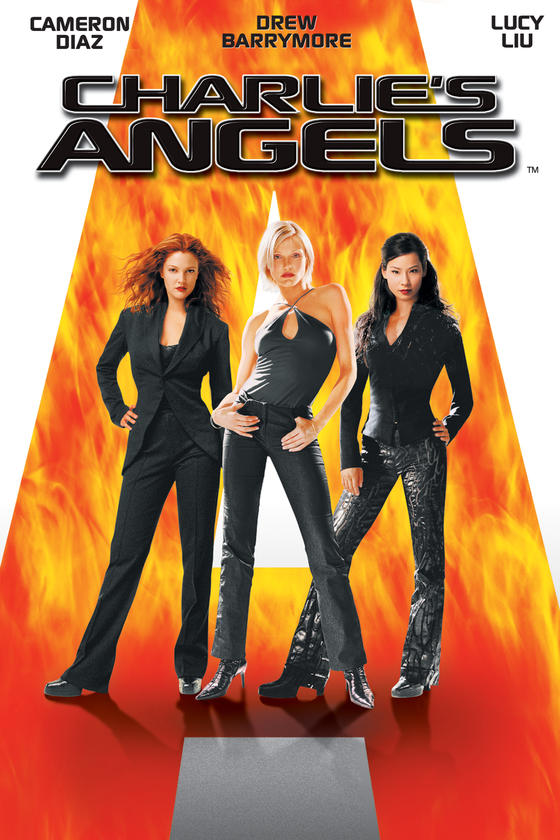
The director of Charlie’s Angels began his show biz career by producing Sugar Ray’s first album, co-writing their earworm song “Fly” on their second and directing videos and documentaries for Smash Mouth, The Offspring and Korn. This led to ads and finally, to this remake of the 1970’s TV series, moving it a more spy-friendly direction.
After Terminator Salvation, We Are Marshall, the Chuck TV series and several abortive attempts to direct bigger studio films, he has seemed to settle into directing Netflix films like Rim of the World and The Sitter.
But man, for a while, he was the toast of the town.
This movie combines everything late 90’s into one tidy little time capsule for you. Cameron Diaz, producer Drew Barrymore and Lucy Liu are the Angels for this generation, not jiggling and definitely more aware of their sex appeal. They work for Bosley — Bill Murray, who famously treated Liu like offal to the point that she physically attacked him — and the always unseen Charlie (voiced by John Forsythe, just like the series).
For that matter, McG has always claimed that Murray beat him up on the set. I’m sure he had his reasons.
The Angels’ mission? Find and rescue a software genius (Sam Rockwell) from an evil communication magnate (Tim Curry). Along the way, they encounter a hair-sniffing lunatic that continually gets the best of them in fights. As played by Crispin Glover, this movie represents the actor’s return to the mainstream while remaining a complete maniac, which is always appreciated. After all, he was supposed to have speaking parts, but Glover refused to voice them, wanting his character to be even more mysterious.
Of course, Rockwell is really evil and tries to kill the Angels and Charlie, who he blames for killing his father in Vietnam. And oh yeah — Tom Green, Matt LeBlanc and Luke Wilson all show up as boyfriends.
The real heroine of the film? Barrymore, who bought the movie rights to the show and pocketed $40 million on this movie and $80 million on the sequel. Seeing as how she had to read through thirty versions of the script, I’d say it was all worth it in the end.
“Michael, you are a dirty boy. You are just a giant, sad, dirty man-baby.” — Sebastian, producer and agent from L.A.’s underbelly
To this day I still get the business for making my friends watch Adam Rifkin’s The Dark Backward. I’ll never live down the “movie with the arm coming out of Judd Nelson’s back.” I’m the guy who walks out of a movie theatre after a showing of David Cronenberg’s Videodrome, only to have my date tell me, “you pick the shittiest movies.” Chicks.
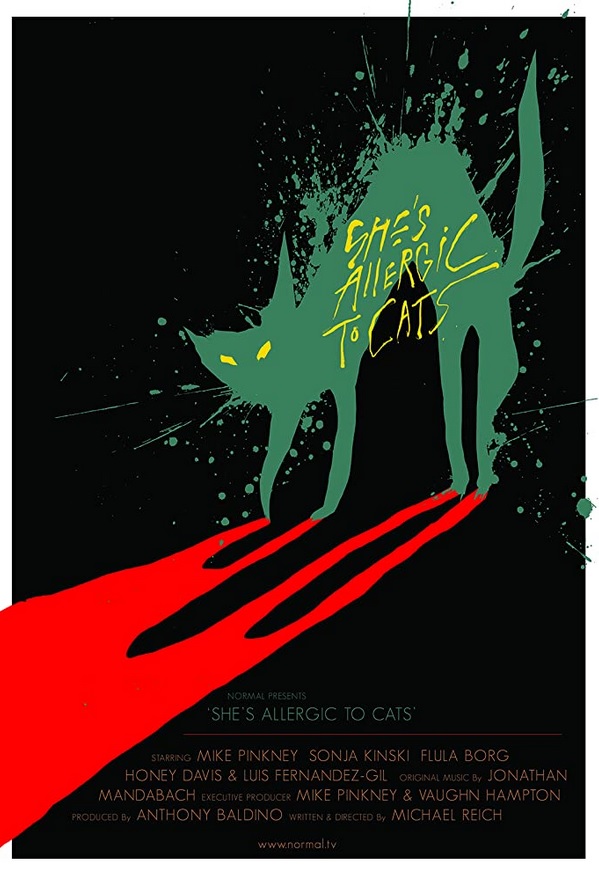
So I can imagine your reaction when I show you this teaser that opens with bananas falling on a man’s head . . . alongside images of cats . . . and a voiceover about a naked duck lady with duck boobs . . .
. . . and there’s a cat carrier in flames . . . and 1976-era John Travolta from The Boy in the Plastic Bubble keeps showing up, with musical backing by the obscure, late ’70s teen-pop duo sounds of Donnie and Joe Emerson and the new wave synth-pop drone of Cowboys International. And the fact that I can’t recall any other film that, through ambient sounds and jerky-visual collages, reaches out of the screen like a J-Horror yūrei and induces an uneasy queasiness.
Yeah, this is going to be one weird movie.
Like David Lynch experimental and Andy Warhol avant-garde (bananas?). Like Jim Jarmusch ’80s indie-expressionistic. Like a John Waters Pink Flamingos joint. Like MTV Liquid Television-retro crossed with a USA Night Flight analog bong-hit and a snort of Takashi Miike’s scent for the bizarre (The Happiness of the Katakuris or Visitor Q, anyone?). And that means music video director Michael Reich’s (Ryan Adams, Bad Religion, and My Chemical Romance) feature film debut will be an intelligent cult classic that only a film freak like me will love—and mainstream flick lubbers who pine for Judd Nelson in The Breakfast Club, will hate.
I’m all in, kittie cat.
For we are in a land-world somewhere Under the Silver Lake, a movie that, like Sam, the boss at B&S says, “. . . unlike the vast majority of the world,” we loved. And like that Andrew Garfield starrer, She’s Allergic to Cats is impossible to spoil and difficult to explain. But I’ll sure as hell try—and my critical attempt to make sense of it won’t spoil one frame of it for you.
Mike Pinkney (played by meta-Mike Pinkney, who’s Michael Reich 2.0) is another one of those aspiring, emo-nerdy filmmakers who arrives in Tinseltown—and is rejected by the industry. Yeah, pitching an all-talking cat version of Stephen King’s Carrie . . . and embracing ‘80s analog technology in your work . . . has a way of stymieing a career. So he has to settle for a job as animal groomer—but not of cats, but of dogs. And he sucks at his job because, well, he hates his job. And cats.
And he hates his dick of a German agent, Sebastian (the funny-as-hell Flula Borg; he’ll appear as “Javelin” in James Gunn’s upcoming Suicide Squad). And he hates the down-and-out club musician landlord of his rat-infested rental home. But Mike loves his endless tapes of retro ‘80s video art that nobody wants to watch. Yeah, videos of falling bananas and dancing cats have that effect on people.
And by way of his dog-grooming gig, he meets his femme fatale, Cora. And she looks like Nastassja Kinski—because she the real-life daughter (Sonja Kinski) of Nastassja—who starred in Paul Schrader’s Cat People (1982). And Cora hates cats. And she takes Mike on a quasi-horror, acid-trip rom-com that goes meta-film noir—if there is such a genre. If not, Michael Reich just created it.
Giant Pictures debuts this surrealist dark comedy across all VOD platforms on April 7. You can learn more about Michael Reich’s feature film writing and directing debut by visiting sheallergictocats.com and NormalTV. As of December 2020, can now watch it as free-with-ads stream on Tubi.
About the Author: You can read the music and film reviews of R.D Francis on Medium and learn more about his work on Facebook. He also writes for B&S About Movies.
Disclaimer: This movie was sent to us by its PR company and, as you know, that has no bearing on our review. However, based on the teaser and the trailer, we would have rented the VOD anyway.
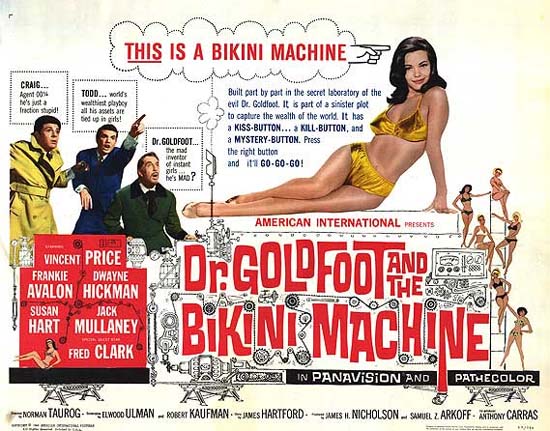
I don’t know if much media was considered meta in 1965, but this film definitely fits the bill. Somehow it combines everything American-International Pictures did best — Edgar Allan Poe movies, beach films and movies that appealed to the teenage zeitgeist — and mashes and mixes them up into one overall satisfying piece of ridiculousness.
It all started with AIP president James H. Nicholson looking for a way to show off contract player Susan Hart, who would become his wife. It went through plenty of drafts before Norman Taurog (who had made movies with Martin and Lewis, Elvis Presley and was the youngest director to win an Oscar when hs film Skippy was honored in 1931; Damien Chazelle has since beaten him out when La La Land won in 2017) came on board. While most AIP films had slender budgets, this one had over a million dollars to spend. That said, it also recycled plenty of their famous props and sets, but to great effect.
Originally, the film was to be a musical, but the script got rewritten to the displeasure of Price. Susan Hart would say, “One of the best scenes I’ve seen on film was Vincent Prince singing about the bikini machine – it was excellent. And I was told it was taken out because Sam Arkoff thought that Vincent Price looked too fey. But his character was fey! By taking that particular scene out, I believe they took the explanation and the meat out of that picture.”
Honestly, there isn’t much story. Price plays Dr. Goldfoot, who has an army of female robots who seduce, marry and murder men — after taking their money, of course. The femme fatales include Deanna Lund (Land of the Giants, Elves and nearly the wife of Larry King), China Lee (Mort Sahl’s wife who had been a Playboy Playmate for the month of August 1964 ; she also shows up in What’s Up Tiger Lily?), Sue Hamilton (Playboy Playmate of the Month for April 1965; also the first Playmate to have breast implants, as well as be under five foot tall), Marianna Gaba (Playboy Playmate of the Month September 1959), Nicholson’s daughter’s Luree and Laura and Alberta Nelson (who often played a motorcycle girl named Puss in the AIP beach movies).
Speaking of that motorcycle gang, their leader Eric Von Zipper (Harvey Lembeck) shows up. And so does Annette Funicello for the briefest of moments. And Frankie Avalon and Dwayne Hickman just switch their names from Ski Party and play the same parts. Other beach party cameos include one-time Gidget Deborah Walley and Aron Kincaid.
The movie also boasts a Claymation title sequence by Gumby creator Art Clokey, a title song by The Supremes and a reappearance of the set from The Pit and the Pendulum.
There’s also a scene where Goldfoot shows off his ancestor’s portraits, which include Price AIP roles like Verden Fell from The Tomb of Ligeia and Roderick Usher from House of Usher. And the missles that supposedly wipe out the evil doctor at the end were lifted from Mothra vs. Godzilla, which AIP had released as Godzilla vs. The Thing. Due to a lawsuit by Eon Productions, this movie was titled Dr G. and the Bikini Machine in England. It did modest business everywhere but Italy, where it was a major success. That would lead to a sequel, Dr. Goldfoot and the Girl Bombs, which would be directed by Mario Bava.
There was also a TV special that aired in the place of Shindig! on November 18, 1965 on ABC. The Wild Weird World of Dr. Goldfoot featured Vincent Price, Tommy Kirk and Susan Hart, along with the songs that were cut from this film’s release. Through the magic of the internet, you can watch it right now.
For Kurt Cobain: February 20, 1967 – April 5, 1994
Before Nirvana, the Spin Doctors, the Red Hot Chilli Peppers and Pearl Jam, no one knew the meaning of grunge, or even cared where Seattle was: flannel was a fashion no-no. Do you remember the days of post-modern and cutting-edge rock, when everyone wore black and they were always depressed? Remember the days when Gen-X’ers were confused, unable to decide if they were “alternative” or “progressive,” so they stumbled through the X-decade, trying to be both?
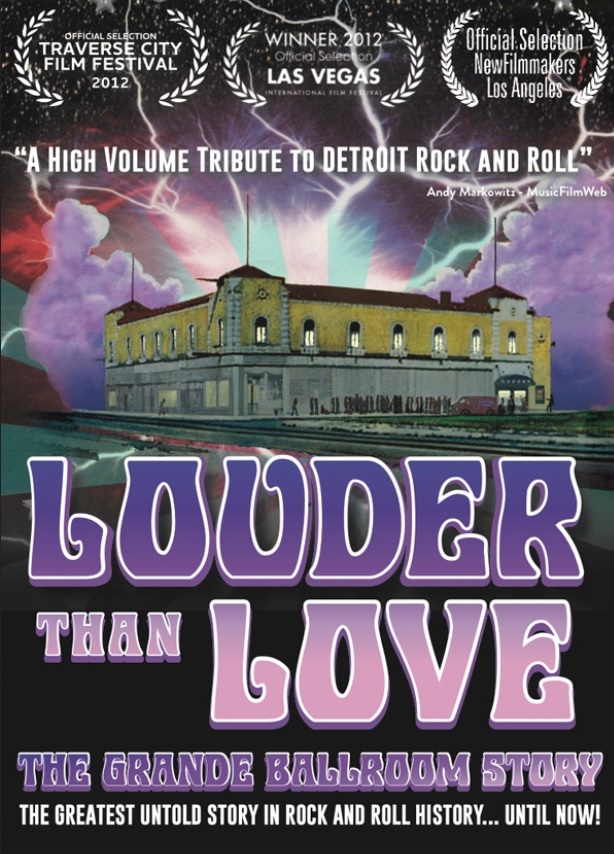
Well before those incoherent flannel days of Seattle, when a muddy, grunge wave swept across America—and while the West Coast was frolicking in the Fillmore to the sounds of the Summer of Love in 1967—Detroit was rippin’ out a hard-driving, gritty and raw sound from the four walls of the scene’s epicenter: The Grande Ballroom.
The Grande is where the likes of the MC5, Iggy & the Stooges, and Ted Nugent & the Amboy Dukes got their start. The Grande also served as the main-Midwest concert stop for legendary acts such as B.B King, Cream, Janis Joplin, Led Zeppelin, Pink Floyd, and the Who. Then there’s the local Detroit bands that made it to the biggest stage in town—some signing record deals, that you may have never heard of—such Dick Wagner’s the Frost, Frigid Pink, Dave Gilbert’s of the Rockets precursor Shakey Jake, SRC, and Arthur Pendragon’s Walpurgis (aka Phantom’s Divine Comedy).
The Grande is the dance hall that started it all. Some of the world’s best bands came from Detroit from 1967 to 1980 and Louder Than Love is the story of those times—of The Grande—as told through the artists who graced her stage.
Filmmaker and music historian Tony D’Annunzio is currently offering a free stream of the U.S. PBS-TV broadcast version of the film (60-minute running time) on his You Tube page. While there’s no online streams of the feature-length version (80-minutes/1 hour and twenty minutes), you can purchase DVDs of that theatrical/direct-to-video version—released in 2016—at various brick-and-mortar and online retailers such as Walmart, Target, and Amazon.
And since this is Kurt’s special day . . . take a moment to remember him with the Seattle documents 1991: The Year Punk Broke on Daily Motion and Hype! on TubiTv. And, while you may not know him, could you take a moment to remember the unsung career of Detroit’s Arthur Pendragon with his lone album.
About the Author: You can read the music and film reviews of R.D Francis on Medium and learn more about his work on Facebook.
In tribute to Kurt Cobain: February 20, 1967 – April 5, 1994
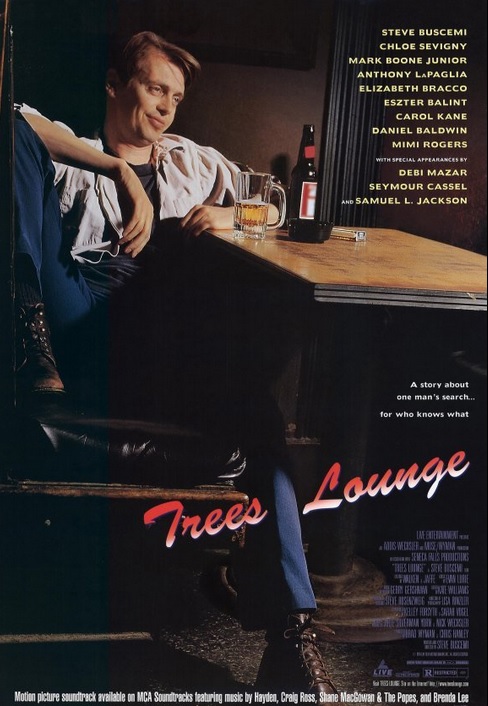
There are two reasons (of many) why I love Trees Lounge: First: It serves as the screenwriting and directing debut by one of my favorite actors: Steve Buscemi. He’s the type of actor who appears in huge, major studio tent poles—like Armageddon and Con Air—and he leaves you clamoring for another film that centers on his character’s backstories. Second: Trees Lounge has an incredible (nostalgic for me), ‘90s college rock radio gem with a theme song from Hayden. If you love Chris Whitley (who? here, listen to this), if you love the alt-country of Uncle Tupelo (who? listen here), or the indie-sounds of California’s Pavement (listen here), Britain’s Placebo (listen here), or the crowded-kings of college rock, Dinosaur, Jr. (listen here), you’ll love Hayden.
Yep. I love Hayden and the college rock era . . .
And Steve Buscemi also loves his rock ‘n’ roll.
“The Stealer” from Paul Rogers and Free (you know, the “All Right Now” guys) receiving a well-deserved soundtrack position? And we’re not hatin’ on Argent’s “Hold Your Head Up,” John Mayall’s “Light the Fuse,” Bachman Turner Overdrive’s “You Ain’t Seen Nuthin’ Yet” and “Roll On Down the Highway,” and Earl Hooker’s blues chops with “Off the Hook,” either. And tunes from The Ink Spots? Just wow.
It’s an incredible soundtrack replicating just what you’d expect in the jukebox at a decrepit, little bar in small-town America. And we have Evan Lurie, who, with his brother John Lurie (John consulted-scored John Travolta’s Get Shorty), founded the ‘80s jazz collective, the Lounge Lizards, to thank. You know Evan though his music consulting and scoring on a wide array of films, such as the Oscar winners Silver Linings Playbook and American Hustle, along with the rest of Steve Buscemi’s writing and directing credits: Animal Factory (2000), Lonesome Jim (2005), and Interview (2007).
Check out the rock video single of “Trees Lounge” . . . featuring Seymour Cassel on drums and Rockets Redglare on guitar?
As for Trees Lounge, the movie . . .
It’s of a time and place. It’s of the ‘90s when indie record labels, such as Homestead, Dutch East, SST, and Caroline, cultivated the college rock scene. Meanwhile, on the big screen, studio imprints, such as Miramax (shameless plug: check out our “8 Films of Quentin Tarantino’s Rolling Thunder Pictures”) and Orion Classics (which distributed Trees Lounge), filled the rising alt-nation’s screens with all manner of indie art-house and foreign films. It was the era that entertained us non-mainstream swimmers with the likes of Greg Araki’s The Doom Generation, Eric Bogosians’s SurbUria, Larry Clark’s Kids, Tom DiCillo’s Living in Oblivion, Richard Linklater’s Slacker and Dazed and Confused, Kevin Smith’s Clerks and Mallrats, Gus Van Sant’s Drugstore Cowboy, Hal Hartley’s Simple Men and Amateur, and Wayne Wang’s Smoke, along with the films Bandwagon, Floundering, Gas Food Lodging, The Low Life, Roadside Prophets, and S.F.W.
Yeah, the ‘90s were my music and film heaven.
I know, I know. “Geeze, Marie, enough with the trip down memory lane. When are you going to review the movie?”
Well, that’s just the point: Trees Lounge is Steve Buscemi’s trip down memory lane.
Long before he became an actor, Buscemi served as a New York firefighter in the early ‘80s at Engine Company 55 in Manhattan’s Little Italy. So, if you’re from the five Burroughs, keep your eyes open: you’ll see your old streets of The Bronx, Brooklyn, Queens, and Long Island.
Rob’s Body Shop doubled as “Nick’s Service Center” (where Steve’s character is fired from). Scenes were shot at Stobierksi’s Lucas Gardenview Funeral Home and Firemen’s Memorial Field (where Steve’s character is attacked-by-baseball bat). The Assembly Bar on Cooper Avenue, in Glendale, Queens, doubles as “Trees Lounge” (where Steve’s character drinks away his troubles). And Trees Lounge was a real place: after the original bar shut down, Steve purchased the sign and restored it for the movie, but he was ultimately not allowed to use it. (So he gifted it to his friend: a waitress-bartender who worked at Trees Lounge for over forty years.) Another autobiographical element of the film: before becoming a fireman, Steve, as his character, drove an ice cream truck on the movie’s same streets.
Influenced by the buck-the-studio system indie flicks of John Cassavetes (1958’s Shadows, 1968’s Faces, 1970’s Husbands, and 1974’s A Woman Under the Influence), by the writings of poet-author Charles Bukowski (whose work was translated as the 1987 Mickey Rourke-starring Barfly), and Jack Kerouac’s novels On the Road (1957) and The Dharma Bums, Buscemi brings his tales of the lonely, lost denizens of Trees Lounge.
It’s the story of Tommy Basilio, an unemployed car mechanic who, even when he was employed, spent most of his time drinking his life away at a blue collar watering hole where he lives alone in an apartment above. And, as with the tragic-heroes of Cassavetes and Bukowksi: Tommy is a self-destructive, Type D personality who blames everyone but himself for his troubles. (In fact, if you salt Tommy with more violent tendencies, you’d get Buscemi’s Carl Showalter in Fargo.)
In quick succession: Tommy loses his job after borrowing money (i.e. he stole it and got caught) from the auto repair shop where he worked; in turn, he loses Theresa (Lorraine “Goodfellas” Bracco’s sister, Elizabeth), his girlfriend of eight years to his boss, Rob (Anthony LaPaglia)—and now she’s pregnant. And Tommy believes he’s the father. To make ends meet, Tommy reluctantly takes over his late Uncle Al’s (Seymour Cassel) ice cream truck route.
Tommy’s logical response to his ever mounting problems: making them worse. And he accomplishes that goal by having an affair with Theresa’s flirtatious seventeen-year-old niece, Debbie (Chloe Sevigny). Then Jerry (Daniel Baldwin), the husband of Patty (Mimi Rogers), Theresa’s sister, takes him to task with a baseball bat and trashes the ice cream truck.
Yeah, it’s only a matter of time before Tommy takes over the stool of longtime barfly, Bill (Bronson Dudley; the “bass player” in the Hayden video) . . . and stares down into the errs of his ways . . . in the bottom of a glass on the bar at Trees Lounge.
The bottom line: Steve Buscemi’s debut as a screenwriter and director is pure magic in a bottle. Not a bad for a film shot for just over a million dollars in 24 days.
And the rest of the supporting cast of Trees Lounge’s outcasts: wow. Rockets Redglare (an actor in over 30 films, he roadied for Billy Joel’s The Hassels and was the Sex Pistol’s Sid Vicious’s drug dealer), Carol Kane (Fred Walton’s When a Stranger Calls), Mark Boone Junior (American Satan), Kevin Corrigan (Ray Liotta’s little brother in Goodfellas; also of the aforementioned Bandwagon), and Michael Imperioli (TV’s Law and Order, The Sopranos; got his start in A Matter of Degrees) are each excellent in their roles. Co-stars Anthony LaPaglia and Debi Mazar (Ray Liotta’s coke-snorting hussy in Goodfellas) also starred in Empire Records. And watch out for Samuel L. Jackson.
So spend a day in Trees Lounge—with movie and the soundtrack. You’ll be drunk-in-amazement on how awesome it all is. You can enjoy this soundtrack re-creation (below) that I cooked up on You Tube. And you can watch the movie for free—with limited commercials—on TubiTv.





 B&S About Movies
You must be logged in to post a comment.