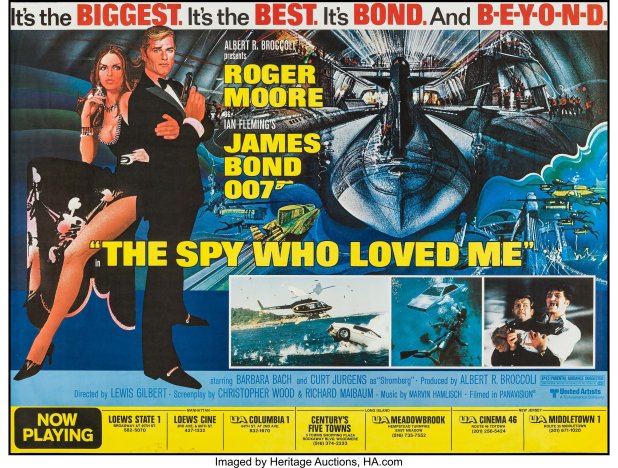
The Spy Who Loved Me (1977)

There had not been a James Bond movie for three years.

Seeing as how The Man with the Golden Gun did so poorly with audiences and critics, this movie would be very important to the franchise.

After all, it would be the first since the departure of producer Harry Saltzman, who was sold his half of the franchise in 1975, as the result of some bad investments, the loss of his wife and his own clinical depression.

One of the first issues the film faced was its director. Steven Spielberg wanted to make it, but was still in post-production on Jaws. Guy Hamilton, who had directed the past three films, decided to direct Superman instead (he was eventually replaced by Richard Donner). Lewis Gilbert ended up being the director, as thanks to You Only Live Twice, he had experience in the world of Bond.

The next issue? Who would be the villain? It couldn’t be Ernst Stavro Blofeld, as Kevin McClory, who owned the film rights to Thunderball, had a legal order that kept the producers from using Blofeld. To make things even more difficult, Fleming had requested that no elements from his original book be used and only the name of the novel could be used. This is why this is the first film that doesn’t have the author’s possessive name before the title.

Writer Christopher Wood was brought in by Gilbert to fix what he saw as a major issue with the Roger Moore Bond films. The writers were forcing the actor to be Sean Connery instead of being himself. He also added a henchman who would capture the attention of the fanbase, Jaws, who would be one of the few villains to return for another film and to redeem himself.

The result of all this work? Probably one of the best-regarded Bond movies ever, definitely the greatest of the Moore era. I probably watched this one more than any other as a kid, thanks to HBO, where it ran in heavy rotation. The Lotus Espirit sub scene, Jaws, Barbara Bach, the Carly Simon theme song — it is all things Bond.

Eon executive Charles Juroe said during a premiere screening — attended by Prince Charles — that when the Union Jack-parachute scene happened, “I have never seen a reaction in the cinema as there was that night. You couldn’t help it. You could not help but stand up. Even Prince Charles stood up.”

This scene, originally suggested by George Lazenby, changed the way that England felt about Bond. He went from just being a character who happened to be British to an iconic hero like King Arthur, Sherlock Holmes or Robin Hood.

The idea of two countries missiles being used against one another is recycled from You Only Live Twice, but that’s the only downside I can think of in this film.

Curd Jurgens (The Mephisto WaltzOSS 117 – Double Agent) plays Karl Stromberg, a grand villain who wants to destroy the world with nukes and then begin a new civilization underwater. Richard Kiel plays his henchman, the aforementioned Jaws, who has metal teeth and superhuman strength. Playing his personal pilot? Only one of the most attractive people to ever live, Caroline Munro.

So who is the spy who loved Bond? Anya Amasova, who is KGB Agent Triple X. Played by Barbara Bach (Black Belly of the TarantulaShort Night of Glass DollsScreamersThe Unseen), she’s no shrinking violet. She’s as capable and deadly as 007 and ready to kill our hero after she learns that he’s the man who assassinated her lover Sergei Barsov.

Here’s a great secret in this spy film: Stanely Kubrick worked on it. As the eyesight of cinematographer Claude Renoir was failing, he was having trouble finishing the film. Ken Adam turned to his friend Kubrick, who asked for complete secrecy if he would help with the lighting, using floodlights to make the supertanker scene more dramatic. His stepdaughter Katharina also worked on the movie, making the dentures that Richard Kiel used to become Jaws.

This is also the first film in which Bond kills a female henchperson, as he takes care of Naomi. Wondering why Caroline Munro looks so angry in all her scenes? She sat on a bee right before some of them and that’s her actually in pain and using it for the role. Also: Sylvia Kristel auditioned for this role. Can you imagine that horrible choice between picking Munro or Kristel?
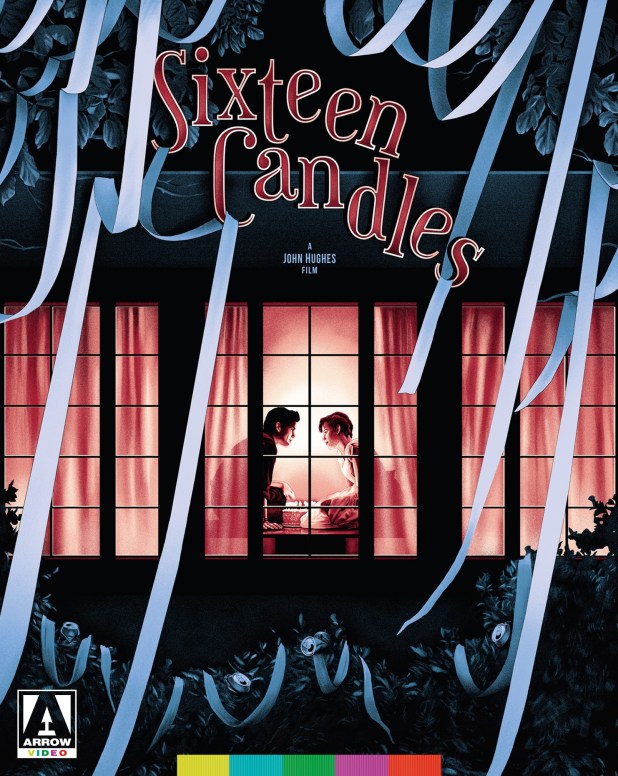
Sixteen Candles (1984)

Sixteen Candles was the directing debut of John Hughes. He wrote this film after asking his agent for headshots of young actresses and was so inspired by Molly Ringwald’s photo that he put it over his desk and wrote this movie over a weekend just for her.

Filmed primarily in and around the Chicago North Shore suburban communities of Evanston, Skokie, and Highland Park, Illinois — where Hughes spent his teen years — with fifteen-year-old leads Ringwald and Anthony Michael Hall, this movie would go on to start the Brat Pack, who dominated the theaters, hearts and minds of the mid 1980’s.

Samantha “Sam” Baker wants her sixteenth birthday to be the start of her amazing new life, but everyone has forgotten it. Her sister Ginny is getting married, her grandparents have taken over the house and her dream man, Jake Ryan has no interest she exists.

To make things worse, she must deal with Ted (Hall), the geek of all geeks, who is so in love with her that he tries to take her panties to win floppy disks in a bet.

The actual story of the movie is pretty simple. There’s a dance, a party and the hijinks that ensue as the result. Along the way, Sam and Jake find love, Ted finds Jake’s ex-girlfriend (Haviland Morris, Gremlins 2: The New Batch) and there’s the introduction of one of the most racist Asian carictures of all time, Long Duk Dong.

This movie was also one of the first films for Jami Gertz and John and Joan Cusack. Plus, there are cameos by Zelda Rubenstein (Poltergeist) and Brian Doyle-Murray, which please me to no end.

Much like Revenge of the Nerds, the Caroline/Ted scenes can be seen as rape today. Then again, some think that she’s an example of the upper class being taken down and re-educated by the lower class. Your mileage and upsetness by this scene may vary.

Does this movie exist in the same universe as the other Hughes movies? You bet. My evidence? The same moving shot of the exterior of the high school at the opening of the movie was refilmed — with the same motions — for the end of Weird Science.

If John Hughes was alive, I’d ask him how damaged he was by having his extended family stay in his house. Between the Home Alone films, National Lampoon’s Christmas Vacation and this film, it keeps coming up in his work.

This movie came out when I was 12. As such, I fell in love with Molly Ringwald and wondered why no girls like her existed in my town. The truth was, this perfect person only lived in one place: the Shermer, IL inside John Hughes’ mind.

The new Arrow Video release of this movie is packed with everything you expect from the label. Aside from a new restoration from a 4K scan of the original negative, there are multiple ways to see the movie, like the theatrical and extended versions, as well as the alternated VHS/laserdisc track that had different audio.

It’s also packed with extras, interviewing everyone from the casting and music director of the film to all-new interviews with Gedde Watanabe, Deborah Pollack, John Kapelos, filmmaker Adam Rifkin (who was an extra on the film and shadowed Hughes), camera operator Gary Kibbe and composer Ira Newborn.

There’s also A Very Eighties Fairytale, a video essay written and narrated by writer Soraya Roberts that explores the feminist perspective of the film and an archival documentary, Celebrating Sixteen Candles. Plus, of course, there are trailers, TV and radio ads, new artwork and a collectors’ book on the first printing of this release.

You can order it here.

DISCLAIMER: This movie was sent to us by Arrow Video.

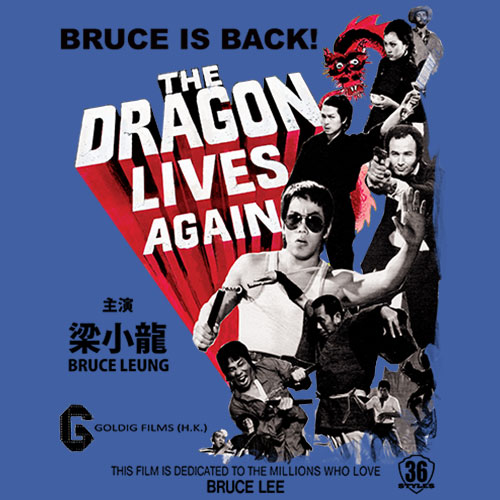
REPOST: The Dragon Lives Again (1977)

AUTHOR’S NOTE: I just had to include this movie in James Bond month, because it’s the only film I’ve seen where Bruce Lee fights 007 in Hell. It originally appeared on our site in April of 2019.

You’ve got to love the balls of the people who made this movie, starting it with the words, “This film is dedicated to millions who love Bruce Lee.” Then, they have a fake Bruce Lee literally go to Hell.

Bruce (Bruce Leung Siu-lung, The Beast from a movie that’s just as crazy as this, Kung-Fu Hustle) wakes up from being dead and faces the lord of the underworld, who threatens him with an earthquake. Then, Bruce goes to a restaurant where he meets three new friends: Caine from TV’s Kung Fu, Fang Kang the One-Armed Swordsman and of all people, Popeye. Yes, really.

To Bruce’s surprise, there’s been a gang terrorizing hell, made up of Dracula, James Bond (yes, in this universe, Bond is a villain), Zatoichi the Blind Swordsman and Clint Eastwood. Our hero does what you or I would do were we in hell: he starts a martial arts school.

Meanwhile, the Godfather Vito Corleone, Regan from The Exorcist and Emmanuelle (played by Jenny, Emmanuelle of N. Europe, blowing my mind that if there can be a Black Emmanuelle and an Emanuelle with only one m, there can be honorary Emmanuelles from different regions of the globe) decide to take over the King of the Underworld’s throne.

Bruce ends up becoming the King’s bodyguard before he finally battles the leader of the Underworld, wins and goes back to Earth. So is Bruce alive again? The mind boggles.

THere’s also an extended part of the film where the “third leg of Bruce” is discussed. Yes, his real power is in his penis. I can’t believe that this movie exists and that it’s taken me so long to find it.

You should just watch this whole movie. It’s on Amazon Prime. Or watch the link below.

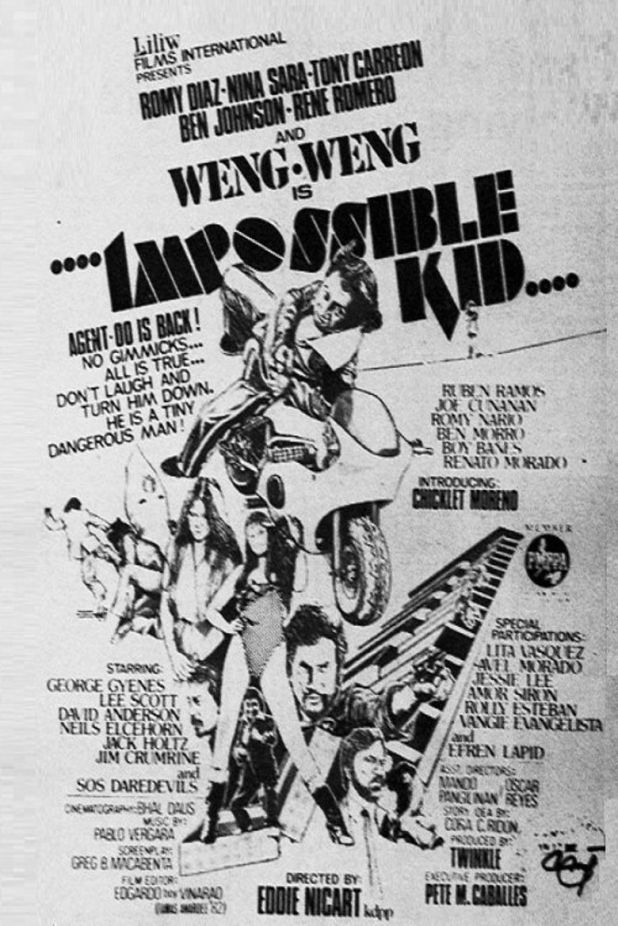
The Impossible Kid (1982)

After For Your Height Only, Weng Weng had another James Bond movie in him. He’s Agent 00, working for INTERPOL and battling extortionists. The main villain? Mr. X, who kind of looks like a Klansman, if Klansmen wore socks on their heads.

For some reason, Weng Weng wears a white Saturday Night Fever suit through most of this movie, which has nothing to do with James Bond. I have no idea why either.

Mr. X sends killers after Agent 00 and even tries to drown him at one point, but you can’t keep a spy down who can hide inside a briefcase.

My favorite part of this movie involves Agent 00 escaping from the bad guys by using beds sheets — never mind the naked woman in the bed — to jump out of a window into a hotel swimming pool. Then, a very large hairy man discovers our hero and picks him up as if he were an infant before exclaiming, “Hey everybody look. I can’t believe what happened. It’s a boy! Where did he come from? Pretty boy, pretty boy!”

There are also numerous punches to the ballbags of many villains.

At the end of this film, there’s the promise of License Expired as a sequel. Sadly, that movie was never made.

You can watch this on Amazon Prime or download it from The Internet Archive.

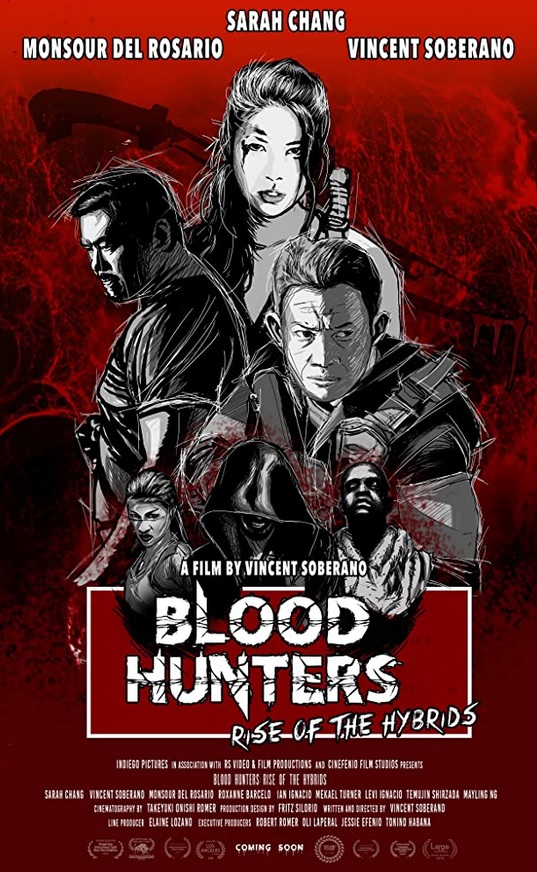
Blood Hunters: Rise of the Hybrids (2020)

If you’re a regular surfer at B&S About Movies, you’re familiar with our perpetual droning about Philippine cinema—especially post-apocalyptic Philippine movies. Oh, how we’ve gone on and one, ad nauseam, about the films of Eddie Romero (Mad Doctor of Blood Island), Willy Milan (W is War), and Cirio H. Santiago (The Sisterhood). Yeah, we may poke a joke or two at their expense in our reviews, but that in no way diminishes our affections for their work.

So when you offer us a film that opens with a sharp graphic novel prologue featuring blood-sucking, shape-shifting aswangs in a Philippine martial arts fantasy film exhibiting the fighting flare of John Wick (which pinched its chops from Asian cinema; but that’s the homage-point) colliding with Quentin Tarantino’s From Dusk till Dawn, it’s a given we’re clicking the click bait.

However, unlike those Asian-action VHS gems of our analog youth, Blood Hunters: Rise of the Hybrids is a Romero-Milan-Santiago 10.0 upgrade—a modern day, jet-fueled Philippine action film of yore, featuring the exquisitely choreographed fight scenes we expect from today’s Asian digital-cinema, complete with rich, vibrantly flowing cinematography. Even more amazing: It’s all at the cost of $5 million. The John Wick films cost $30 to $40 million a pop. And we are loving the battle camp scene that takes us back to the martial arts gold standard: Enter the Dragon.

Now if you know your post-apoc (shameless plug: if you don’t, brush up with our two-part Atomic Dustbin roundup on those films), you’re up to speed and know we’re in an undiscovered time and place beyond yesterday. And as with all apoc-films, we’re in an acid-trip western—but all American westerns ripped off Akira Kurosawa’s Yojimbo or Seijun Suzuki’s Man with a Shotgun, so we’re home.

Gabriella (Sarah Chang) is our “girl with no name” as she embarks on a scored-earth mission to avenge the supernatural-monster slaughter of her family. Her skills lead to an alliance with Bolo (Vincent Soberano), who recruits her into a secret society of warriors, the Slayers (international action film aficionados will notice Filipino taekwondo champion Monsour del Rosario as Monte, the leader of the Slayers). Then the pseudo-Magnificent Seven trek into the wastelands to wipe out the Hybrid, a new mutation of supernatural witch-vampires. Led by the demon warlords Naga and Gundra, the Hybrid will protect the Monster Queen at all costs. But never trust the threat of a Hybrid, for all is not as it seems.

Now, while we’re not exactly getting a John Wick or a Tarantino joint here, we’re also not getting a SyFy Channel when-animals-and-zombies-attack mockbuster-romp, either. (Although we’d love to see Soberano’s work receive wider exposure in the U.S via the cable channel). The production value and costuming is well-done, the fight chorography excels, and there’s lots of blood and bone-breaking. While the acting is a bit dodgy in places, everyone is affable; the character development in the first act—with the occasional action burst—is appreciated. We love the backended action: when the film starts moving, it cooks. The CGI—the demon morphings—is convincing, while Soberano knows his way around a camera and takes Final Cut Pro through its editing paces with aplomb.

Blood Hunters: Rise of the Hybrids is derived from writer and director Vince Soberano’s short film, Blood Hunters, which won two “Best Short Film” awards at the Cinemax HBO Action Film Competition and the Urban Action Showcase and Expo. After following with a short-sequel, 2018’s Blood Hunters: Aswang, Soberano expanded the Slayers vs. Hybrid concept into the Rise of the Hybrids feature-length film, which won the “Best Feature” award at the NYCA Film Fest.

This film seriously cooks, so our incisors drip in anticipation for Sarah Chang and Vincent Sorberano’s next film. Currently in post-production, Circle of Bones is the story of an FBI agent investigating an international terrorist cell in the Philippines that’s actually a cult of demon-worship fanatics led by an ancient evil spirit that feeds on human souls. It sounds like Tarantino doing a remake of Stallone’s Cobra—and we ain’t hatin’.

Bottom line: Philippine cinema is still alive and well in the skilled hands of Vincent Sorberano—and Blood Hunters: Rise of the Hybrids needs to be your click bait for the week. TriCoast Entertainment and Dark Coast released the film on the Amazon, Vimeo on Demand, FlixFling, Vudu, and FANDANGO digital platforms on March 17. You can learn more about Sorberano’s work on Facebook.

Here’s the rest of the great films released under the Rock Salt Releasing/TriCoast Worldwide co-banner we’ve reviewed:

Agatha Christine: Spy Next Door
Bombshells and Dollies
Case 347
Dollhouse
It All Begins with a Song
Lone Star Deception
My Hindu Friend
Nona
Revival
The Soul Collector
Tombstone Rashomon

Disclaimer: We were provided a screener by the film’s P.R firm. That has no bearing on our review.

About the Author: You can learn more about the writings of R.D Francis on Facebook. He also writes for B&S About Movies and publishes on Medium.

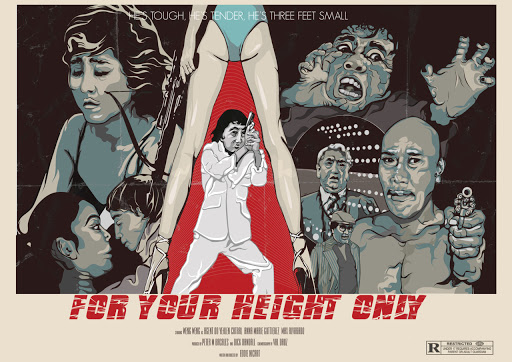
For Your Height Only (1981)

Ernesto dela Cruz was born in poverty and with primordial dwarfism and underdeveloped intellectual capacities. However, despite his start, he fell in love with martial arts. As he was working with a stunt team, he was noticed by actor and producer Peter Caballes. Working with his wife Cora, they would play the roles of his guardians, agents, producers and writers of some of his greatest roles. Weng Weng was born, but outside of his native Philippines, he wouldn’t become famous until after his early death.

Weng Weng plays Agent 00, who is pretty much James Bond. Equipped with gadgets, his job is to stop Mr. Giant and rescue Dr. Kohlet before the N-Bomb is set off.

From an anti-poison ring to a bladed remote control hat, a miniature machine gun and even a jetpack, Agent 00 romances women, kills henchmen and gets into Hidden Island, Mr. Giant’s base — just like Bond.

Mr. Giant is revealed to be a dwarf himself, which has some poetic meaning, one assumes.

With the tagline “Bigger than Goldfinger’s Finger – Bigger Than Thunderball’s …” this is a movie that has no interest in being subtle or politically correct. It does, however, reference past Filipino Eurospy films, as Agent OO’s commanding officer is played by Filipino actor Tony Ferrer, who played Agent X44 in the 1960’s.

At 2’9″, Weng Weng is considered to be the shortest man to star in an action movie. The world is sadder that he is no longer in it. Any movie where the lead spy is referred to as being “cute as a potato” is one for me.

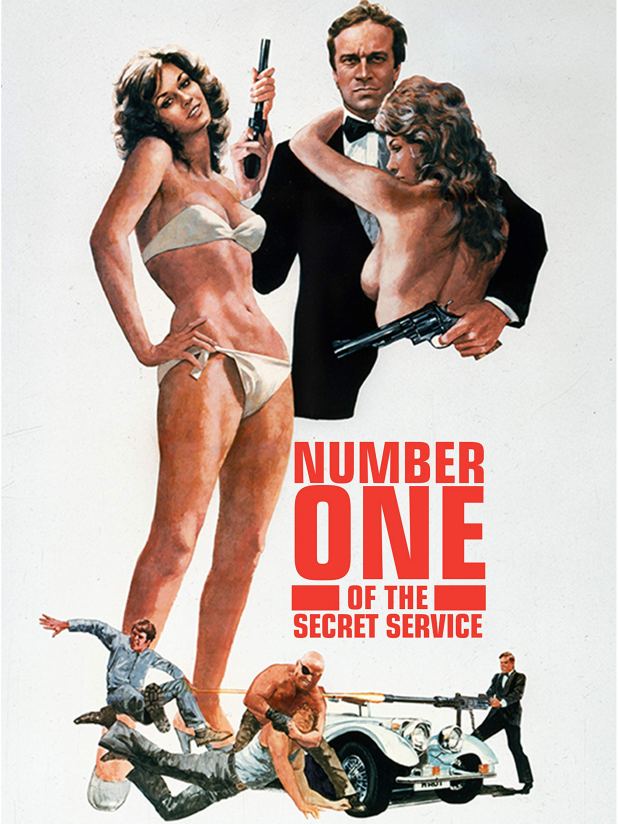
No. 1 of the Secret Service (1977)

In 1977, there hadn’t been a James Bond film since 1974’s The Man with the Golden Gun. After the film’s release, producers Saltzman and Broccoli dissolved their relationship, with Saltzman selling his stake in Eon Productions’s parent company, Danjaq, LLC, to United Artists.

There was also the possibility that there would be two different Bond franchises, with Broccoli’s 1977 effort being The Spy Who Loved Me and Kevin McClory using his lawsuit to perhaps make James Bond of the Secret Service.

Lindsay Shonteff decided to fill the void.

Sure, he’d made The 2nd Best Secret Agent in the Whole Wide WorldThe Million Eyes of Sumuru and Spy Story, but now he was going to make his very own Bold movie.

Instead of James Bond, Charles Bind (Nickey Henson, Psychomania) has the license to kill.

He’s up against K.R.A.S.H. (Killing Rape Arson Slaughter and Hit), their leader and a weirdo named Arthur Loveday (Richard Todd, Asylum) who is killing off rich financiers.

If you think the Roger Moore-era films are too silly, you’d best avoid this movie. I mean, what did you expect? The name Charles Bind comes from Carry On Spying, after all.

This was followed by two sequels that had different actors play 008: Licensed to Love and Kill with Gareth Hunt and Number One Gun, which has Michael Howe in the lead role.

If the theme song “Givin’ It Plenty” is familiar, well, you may have seen Tintorera as many times as I have. It’s in that movie too.

People to keep an eye out for include former Dr. Who Jon Pertwee, Katya Wyeth (Hands of the Ripper), Geoffrey Keen (Minister of Defence Frederick Gray in six Bond films), former pro wrestler Milton Reed (who is in all manner of spy films, from Dr. No and Casino Royale to The Spy Who Loved Me and Deadlier Than the Male) and Oliver MacGreevy (The Ipcress File).

Bond never would use a .357 Magnum Smith & Wesson Model 66 revolver, much less the 50 calibre Browning machine gun.

You can watch this on Amazon Prime.

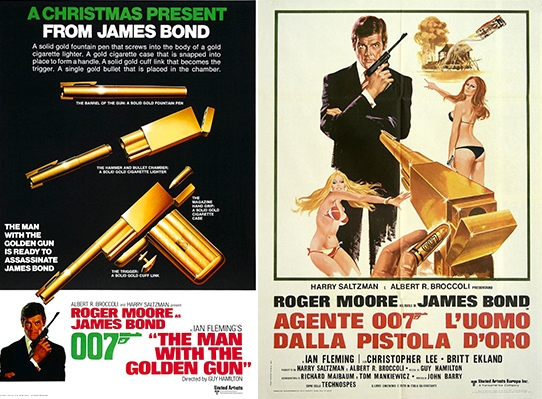
The Man with the Golden Gun (1974)

The fourth and final Bond film directed by Guy Hamilton, The Man with the Golden Gun is everything that was 1974: oil crisises and martial arts films. It was seen by some — at the time — as a low point in the series. And it also marks the last Bond film co-produced by Albert R. Broccoli and Harry Saltzman, as Saltzman would sell his half of Danjaq, LLC, the parent company of Eon Productions, after the release of the film. As a result, this would be the last Bond film for three years until The Spy Who Loved Me.

The part of Scaramanga, the killer other side of the coin to Bond, was offered to Jack Palance, but he turned it down. Christopher Lee, Ian Fleming’s step-cousin (Fleming had suggested him for the role of Dr. No), would be the man to take the role.

He’s a killer paid $1 million dollars per hit. Supposedly, he’s coming after Bond, but only to throw him off the trail of a MacGuffin called the Solex Agitator. Along the way, Herve Villechaize show up as Scaramanga’s miniature henchman Nick Nack, Maud Adams makes her first Bond girl appearance as the villain’s mistress Andrea Anders, Britt Eklund shows up as Mary Goodnight and Sheriff J.W. Pepper comes back.

When I saw this as a kid, I always thought that Bond defeated his nemesis way too easily. I still feel that way. It’s filled with ridiculousness, a low body count and plenty of moments that Moore didn’t agree with, like pushing the kid into the water and threatening to nreak Anders’ arms.

The theme song by Lulu is alright, but I kind of love that Alice Cooper wanted to do it. His Bond theme is on his album Muscle of Love.

Kansas City (1996)

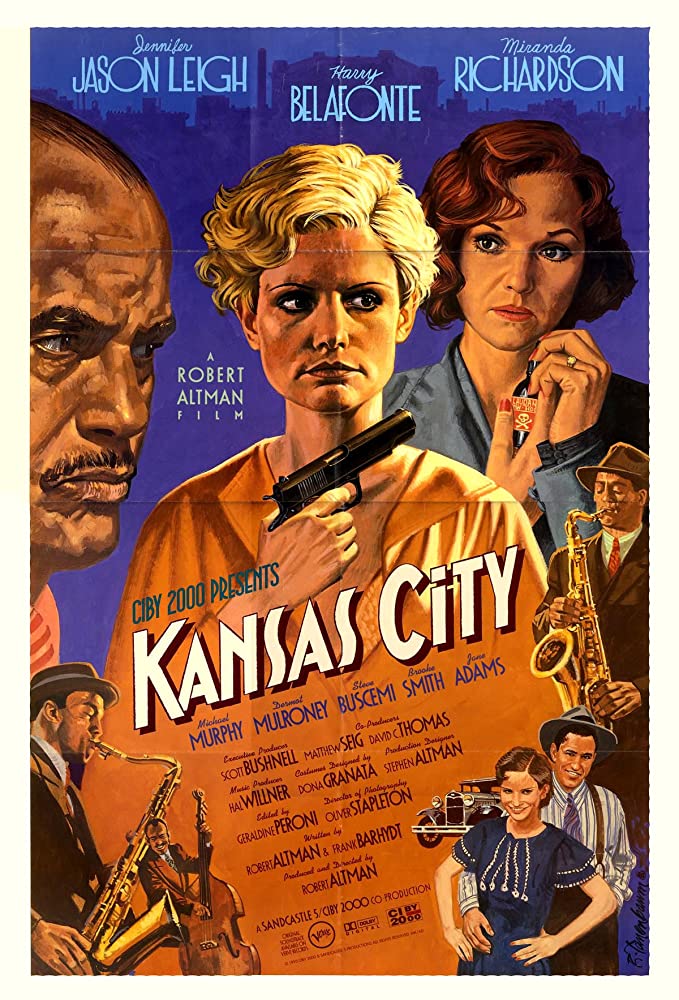
Returning to the city of his birthplace, Robert Altman directed this tribute to the music and movies of his youth. Blondie O’Hara (Jennifer Jason Leigh) and her low-level hood husband Johnny (Dermot Mulroney) get caught trying to steal from Seldom Seen (Harry Belafonte), a crime boss who works out of The Hey-Hey Club. To escape, she kidnaps socialite Carolyn (Miranda Richardson) and plans on using her political connections to save her husband’s life.

This story is based on a real story. In 1933, Mary McElroy, the opium-addicted daughter of Henry McElroy, the city manager of Kansas City, was kidnapped. After the $30,000 ransom was paid, she was released unharmed while her four kidnappers were caught and sentenced to life in prison.

Beyond all that intrigue, a political fixer named Johnny Flynn (Steve Buscemi) is gathering the homeless and drug addicted to swing the outcome of a major vote.

The soundtrack was recorded live and features contemporary musicians playing the roles of jazz musicians from the 1930s. They also appear in the movie, with Craig Handy as Coleman Hawkins, Geri Allen playing Mary Lou Williams and James Carter in the role of Ben Webster.

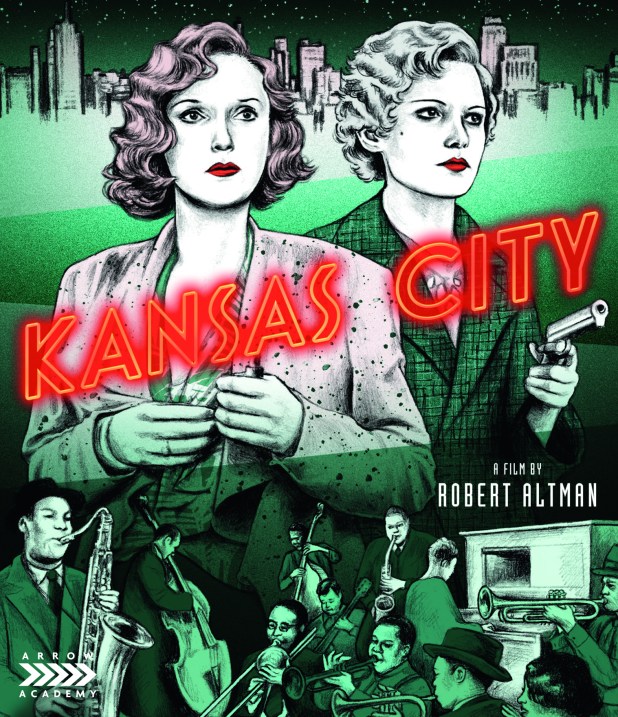
This Arrow Video release is the first time that this movie has ever appeared on blu-ray. It features audio commentary by director Robert Altman, a newly filmed appreciation by critic Geoff Andrew, a visual essay by critic Luc Lagier, plus short introduction to the film narrated by Lagier, two promotional features from the films original release, the press kit, trailers, TV ads and an illustrated booklet for the first printing.

You can get Kansas City right here.

DISCLAIMER: This was sent to us by Arrow Video.