Remember Lucio Fulci’s House by the Cemetery with the basement experiments of Dr. Freudstein getting loose and tormenting the new residents of a New England home? Now, instead of the real estate horror of 1979’s The Amityville Horror, think the home invasion horror of 1971’s Straw Dogs, or the more recent, You’re Next, or the Wes Craven classic, The Last House on the Left (that got ripped by things such as The Last House on the Beach and The Last House on a Dead End Street).
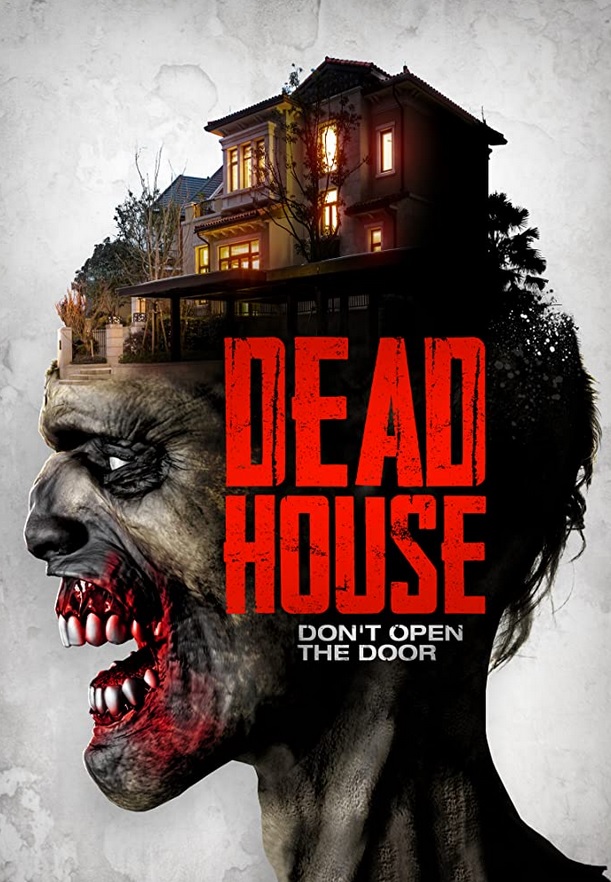
So goes the English-language, but Italian made Dead House: The story of three masked thieves who invade the remote country mansion of a god-playing scientist — and they come to discover his deadly viral experiments in a basement lab that mutates the infected into psychopaths. The film questions how far will men will go into their depravity — which is evident as the invaders force the doctor’s teenaged daughter to watch him and his wife have sex and play other deadly games.
Dead House is the debut film of Brini Amerigo, a writer-director who embraces old school practical effects, which is refreshing in this digital age. The U.S reviews on this haven’t been kind, but as you can see from the trailer, it’s competently shot and above the fray of most direct-to-video streamers.
Originally release as a 2014 European theatrical known as Beautiful People, Wide Eye Releasing rebooted the film for U.S audiences — with a new title and artwork — for its U.S. PPV and VOD debut in 2018. They’re now offering it as free-with-ads stream on their TubiTv channel.
Disclaimer: This was sent to us by the film’s PR firm.
About the Author: You can learn more about the writings of R.D Francis on Facebook.He also writes for B&S About Movies.
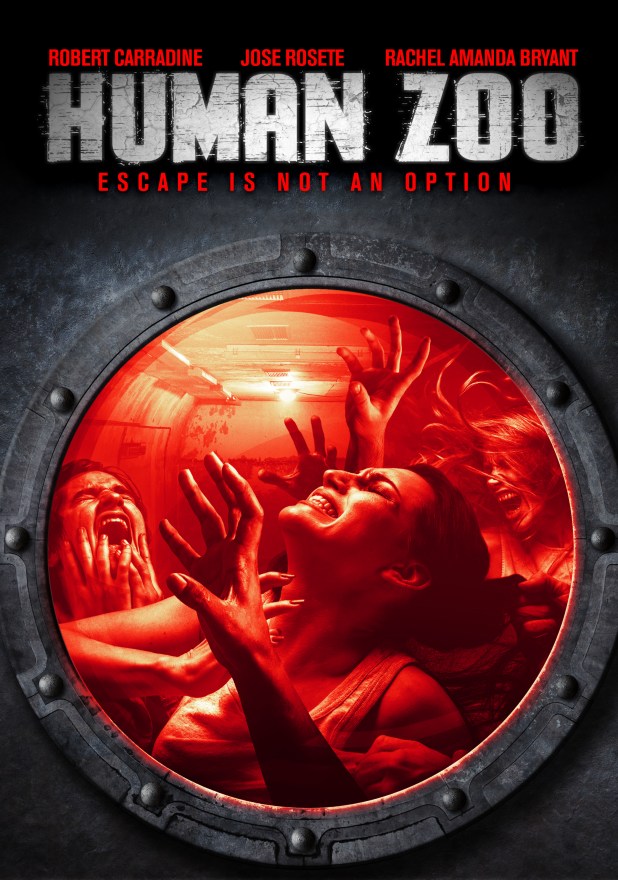
Oh reality shows. And movies about them. It’s kind of hard to shock us now, because so many shows do just about anything possible. That said, Human Zoo tries. It tells the story of a show broadcast on the interwebs where contestants see how long they can stay in solitary confinement to win a million dollar prize.
Robert Carradine is in this as The Producer. He’s finally taking a page out of his dad’s book, showing up in movies for a few moments just so they can put his name on the poster. Here’s hoping we see more of this soon.
If you like seeing people be degraded in prison cells, then this film is for you. After seeing Japanese reality shows like Prize Contest Life on Susunu! Denpa Shonen, where a man named Nasubi was quarantined by himself with no clothes and forced to enter contests to survive for 15 months while 17 million fans watched, this seems like a normal day.
You can learn more at the official site. Human Zoo is now available On Demand and DVD from Wild Eye Releasing.
Disclaimer: This movie was sent to us by its PR company.
Dario Argento’s Demons meets The Blair Witch Project as the movie about a real life haunted hotel (ala The Overlook Hotel from The Shining) turns into a “real movie” via its behind-the-scenes documentary footage.
As Darkness Reigns unfolds, we meet documentary filmmaker Daniel Whitaker (filming himself via smartphone, of course) on the way to host the premiere of his documentary Darkness Reigns — his movie about the failure of Defantus Soul, a Casper Van Diem-starring horror film shot in a real haunted hotel. The original intent of Whitaker’s documentary was to include it as a behind-the-scene vignette-extra on the eventual DVD/Blu-ray of Defantus Soul.
But since the director sold his soul to The Devil to be a successful filmmaker, the demon haunting the hotel seals it off, and kills Casper with a push off the mezzanine. The “deal” was to spook everyone and Daniel would film “real ghosts.” Of course The Devil reneges on the deal and kills everyone. And Daniel got what he wanted: he’s famous and Darkness Reigns is the most-talked about movie in the world. And now a documentary is being filmed about him and his movie.
Yeah, The Devil’s a dick when he needs to be.
Now, the caveat: If you learned your lesson from your steady diet of Nicolas Cage (Arsenal), Eric Roberts (Lone Star Deception), and Tom Sizemore (Zyzzyx Road) movies, you know you get a little bit o’ Casper and a whole lot of everybody else. But what little Casper we do get, he’s a real sport playing up himself as possessed by a demon.
Darkness Reigns is the third feature film by longtime documentary and reality TV purveyor Andrew P. Jones, who made his fictional film debut with the urban drama Kings of the Evening (2008) and Haunting of Cellblock 11 (2014). So, based on his experience, you go in knowing he brings a level of quality to the table that’s a head above most of the direct-to-video horrors in the streaming marketplace.
Wild Eye Releasing now offers Darkness Reigns as a free-with-ads stream on TubiTv.
Disclaimer: The was sent to us by the film’s PR firm.
About the Author: You can learn more about the writings of R.D Francis on Facebook.He also writes for B&S About Movies.
There’s no stopping low-budget auteur Brett Kelly: He’s 40 credits deep on his 20 year resume — and he’s back in 2020 with his soon-to-be-released meshing of the Ouija board and monster shark franchises with . . . Ouija Shark. Yes, a witchboard that summons an evil shark. The premise is so whacked that you’ll stream it to see what’s rattling around Kelly’s brain.
However, with this offering, he’s meshed the serial killer and human death sport genres (which we explore in our review of The 10th Victim).
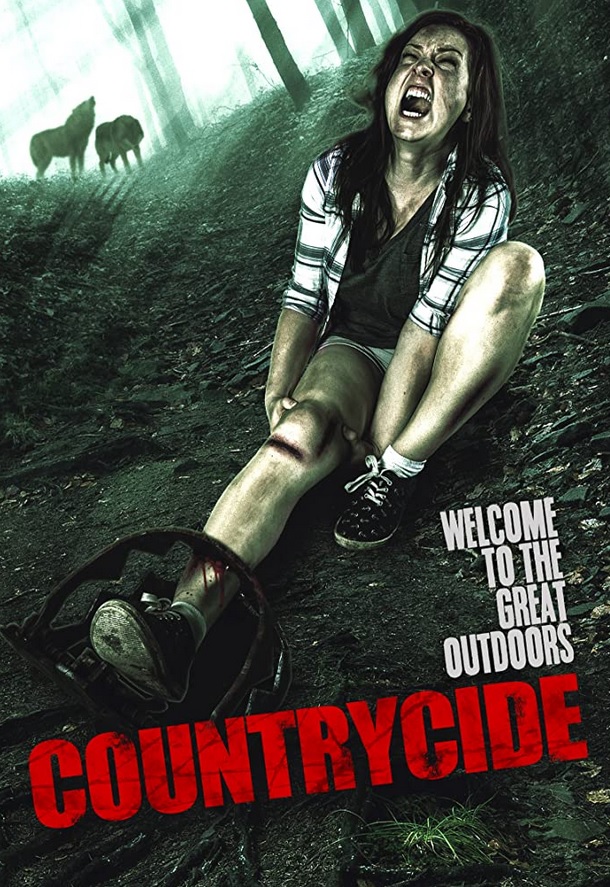
Abby needs to get to her sister’s wedding cross-country, but can’t afford the plane fare and she doesn’t know how to drive. Basically, she’s useless. So she ride-shares with her “he’s-not-my-boyfriend,” Mike. Traveling on-the-bone (sorry), they decide that, instead of staying in a hotel, they’ll camp in the woods. And they “hook up.” And Mike disappears. And Abby can’t find the car. And she wonders through the woods and gets caught in a bear trap — and a hungry wolf is on her trail.
She comes to find sanctuary — she thinks — courtesy of three kind hunters who take her to their isolated cabin. Then she discovers that she’s inadvertently become the perfect “contestant”: these hunters fancy hunting humans. And Mike was their last prey. And she finally finds her inner “girl power.”
If you’re a fan of Kelly’s oeuvre and enjoying binging the various low-budget mockbuster hybrids of the streaming universe, such as Raiders of the Lost Shark and Jesse James: Lawman, then you’ll recognize a lot of the dependable, working actors in Countrycide. If your into hicksploitation flicks*, but are burnt out from re-watching all the classics from the ‘70s and ‘80s, such as Hunter’s Blood or Baker County, U.S.A, then this Kelly romp fills that redneck psychos gap.
Yes, We reviewed all of these Wild Eye/Tubi releases! Search for our reviewsvia our search box, upper left.
Wild Eye Releasing is now offering Countrycide as a free-with-ads stream as part of their TubiTv channel.
* For more hicksploitation flicks, be sure to check out our “The Top 70 Good Ol’ Boys Film List” that explores down home films from 1972 to 1986.
Disclaimer: This was sent to us by the film’s PR company.
About the Author: You can learn more about the writings of R.D Francis on Facebook.He also writes for B&S About Movies.
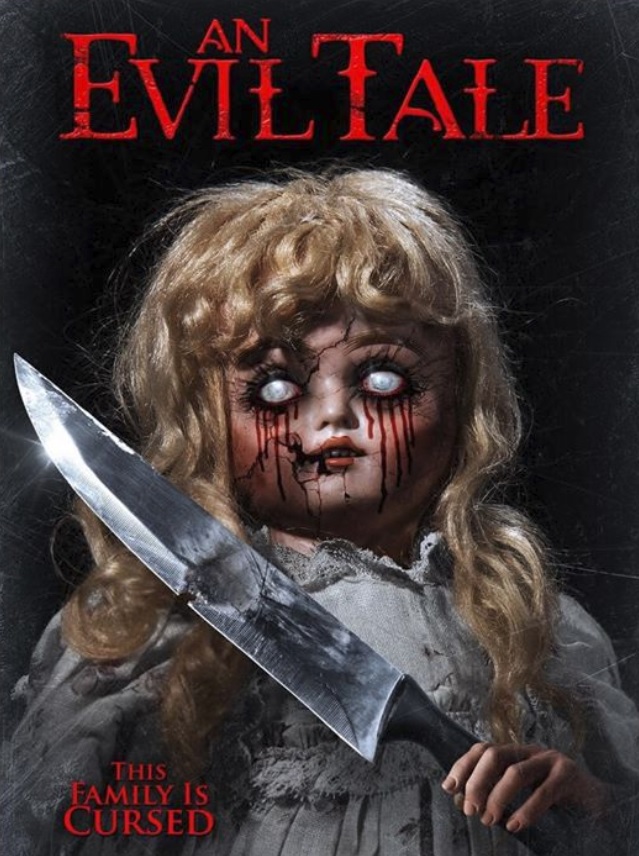
Florida filmmakers Sam and Cheryl Siragusa (2017’s Carnival Chronicles, 2018’s E.V.I.E; both sci-fi tales) take on horror in their third feature film with this tale steeped in Scottish folklore . . . about a creepy doll.
A family of the Amityville* variety comes to discover they’re the victims of a centuries-old curse when a rare doll starts wrecking havoc. They’ve obviously never read the handbook: never, ever go into any antique stores or second hand shops and buy old trucks. And that those dolls were wrapped up in black plastic for a reason.
As you can tell by the trailer, below, the production values on this low-budget indie are pretty high. So, if you’re into creepy doll movies — and who isn’t — there’s something for you to stream on a Friday night. To tell more, would plot spoil the fun.
What’s exciting is the Siragusa’s have contracted Caroline Munro and ’80s B-Movie scream queen Linnea Quigley for their fourth feature, the currently-in-production 1315 Wickey Way. Considering Munro was in the ’80s VHS classic Maniac and Quigley was recently in Clownado, you know what that film is shooting for: and we love it. Yes, I am digging on the Siragusas. Good stuff!
You can learn more about An Evil Tale on its Facebook page and watch it courtesy of Wild Eye Releasing across all VOD and PPV platforms, as well as DVD.
* Oh, us and Amityville . . . you have no idea. We review ’em all, with our ever-expanding Exploring: Amityville feature.
Disclaimer: This was sent to us by the film’s PR company. That has no bearing on our review.
About the Author: You can read the music and film reviews of R.D Francis on Medium and learn more about his work on Facebook. He also writes for B&S About Movies.
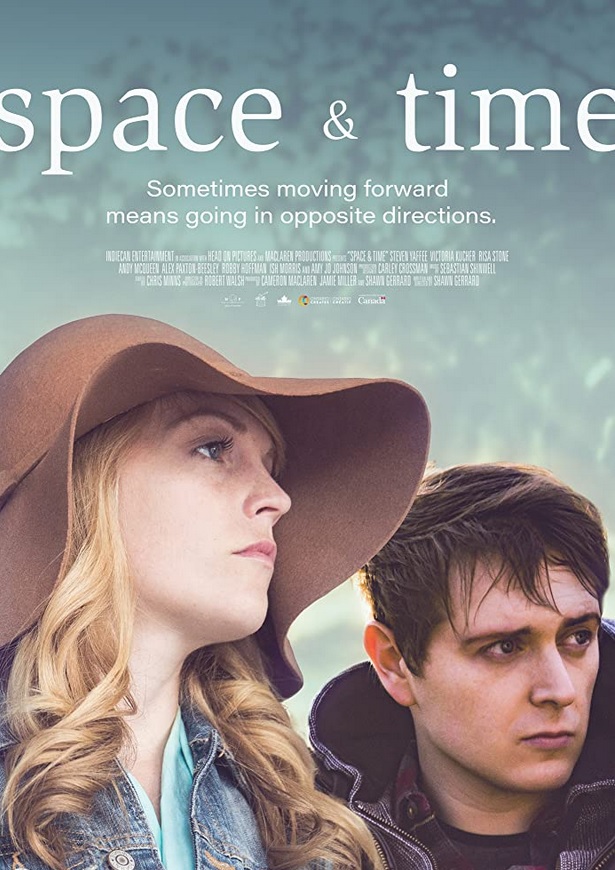
Think Kaley Cuoco’s Penny from CBS-TV’s The Big Bang Theory with common sense and intelligence — and an emotionally secure boyfriend — and you’ve met University of Toronto particle physicist Siobhan (Victoria Kucher). And unlike the constant “I have a girlfriend” bragging and the “Why can’t I have a girlfriend” whining of her BBT insecure counterparts, Siobhan is in a comfortable, mature relationship with her photographer-boyfriend Sean (Steven Yaffee).
Unfortunately, as with her fellow Big Bangers, she’s a bit self-righteous and passive-aggressive (think Howard Wolowitz’s “I’m an astronaut,” bragging at every opportunity, only less nebbish) and comes to realize she’s outgrown Sean and his free-spirited artschool friends. When she’s offered a physics fellowship at Switzerland’s CERN lab in Geneva and Sean has as an opportunity to attend grad school in Paris, Siobhan feels trapped. They break up, sort of; Siobhan goes off with her more-in-common-in-mind, geeky co-work, Alvin; Sean goes off with DeeDee from his circle of friends.
There are lots of analogies about “particles colliding” and “alternate universes” and “realities,” not just in the scientific sense, but in the relationship sense; that we’re all just particles bouncing around in space and time, always questioning our personal identities and how others determine our identity. This is a movie about how one finds their “voice” in life. And this isn’t a sappy Sandra Bullock time travel romp about a magical mailbox, either.
Skills abound in this feature film writing debut from Sean Gerrard, a graduate from York University’s film program (he’s produced five shorts and worked on several Canadian TV series); he writes with a level of intelligence you don’t see in the low-budget indies we normally review at B&S About Movies. If you’re a fan of human interest dramas like NBC’s This Is Us or ABC-TV’s A Million Little Things — only with a very light, sci-fi twist, there’s something here for you to watch.
The most interesting aspect of the film: Unlike most indies, which shoot it fast, cheap and quick in less than a month — or shorter, Gerrard chose to shoot Space & Time over the course of 11 months to show the “real time” progression of the break up and evolving of Siobhan and Sean’s journey through “space and time.” This is a well-made, intelligent film worthy of your streaming time.
Space & Time is currently available on all the usual VOD and PPV platforms.
Note: That is the clever design of the theatrical one-sheet: we didn’t edit the artwork with the edges cut off.
Disclaimer: This was sent to us by the film’s PR company.
About the Author: You can read the music and film reviews of R.D Francis on Medium and learn more about his work on Facebook. He also writes for B&S About Movies.
The tagline on the box “A grin from fear to fear” sums up this sarcastic horror comedy, which serves as the feature film writing and directing debut by visual effects artist Torey Haas (V/H/S Viral). His resume in that field is pretty extensive, so you know you’re getting decent, cost-effective practical effects in this E.C Comics-styled horror tale that wears its Romero-Creepshow influence on its sleeve—well, slimy arm. Think of the Canadian (American syndicated) kids horror anthology Goosebumps seeping into The Walking Dead, and you’re in the Atlanta “neighborhood” (where this was shot).
The original theatrical one-sheets for the film, back when it was known as Invasion of the Dead, carried the subtitle: “Starring Desmond and Jake: Paranormal Exterminators,” so it seems there’s an intended franchise afoot. They’re Ghostbusters-styled supernatural enthusiasts who day-job at a Kevin Smith-inspired video store-quickie mart combo. And an unemployed college graduate discovers her remote country home suffers from a (comical) zombie infestation.
So who you gonna call . . . when you’re afraid of zombies?
This brings back the VHS ’80s memories of its similar brethren in Hard Rock Zombies and Rock ‘n’ Roll Nightmare, only with a superior level of quality courtesy of Haas’s effective zombie puppets. And the actors are giving it their all and having fun. And the new Neon Dead title fits: this film has a very festive and colorful production design. I had a lot of fun with his retro-romp!
Wild Eye Releasing has given this a DVD reboot along with a free-with-ads streaming debut on TubiTv.
Disclaimer: This was sent to us by the film’s PR firm. That has no bearing on our review.
About the Author: You can learn more about the writings of R.D Francis on Facebook.He also writes for B&S About Movies.
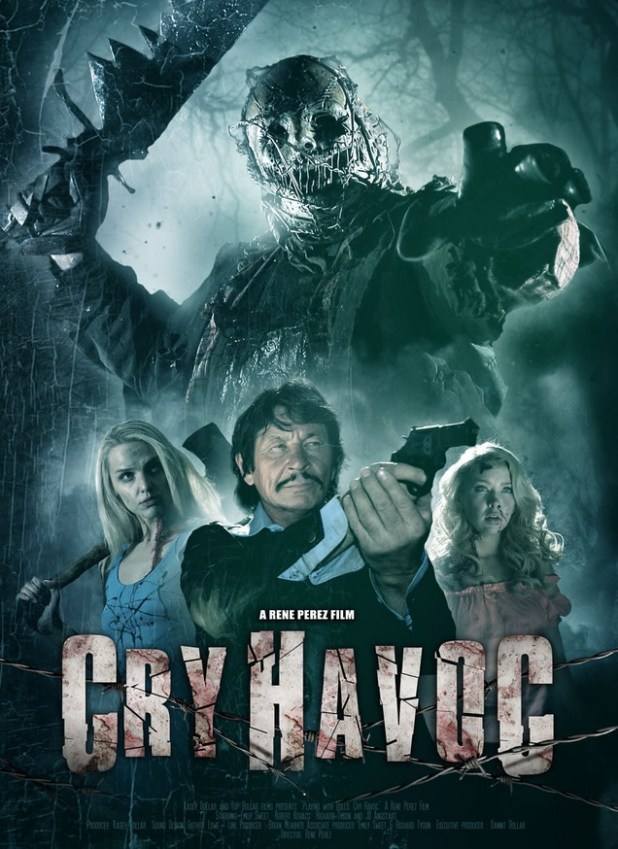
An ambitious young reporter is granted an interview with one of the FBI’s most wanted (the always welcomed Richard Tyson of Eternal Code, Death Kiss, The League of Legend Keepers, and the awesome Three O’Clock High). Upon entering his compound she discovers one of his prized possessions, a serial killer who murders-on-call: HAVOC. Her only hope to stop the bloodshed is a rogue detective (Robert Bronzi, Death Kiss and Once Upon a Deadwood) searching for his daughter. Oh, and there’s a reality TV series subplot about of group of greedy city kids who trek up “Terror Mountain” for a million bucks cash prize that sets off the mayhem . . . and probably deserve a little bit o’ havoc in their lives to wise them up.
If Charles Bronson lookalike Bronzi’s work in Death Kiss was meant to evoke Death Wish and if Once a Time in Deadwood was to evoke a spagetti western Death Wish, then Cry Havoc — with its Bronson vs. Leatherface vibe — is meant to evoke Bronson’s Leo Kessler character in J. Lee Thompson’s From 10 to Midnight. If you ever wanted to see a masked serial killer in a balls-out, woodsy battle royal with a take-no-prisoners cop, then this is your movie.
Do you feel lucky, Jason?
Cry Havoc was released across all PPV and VOD platforms, as well as DVD, on May 5th.
Disclaimer: This was sent to us by the film’s PR firm.
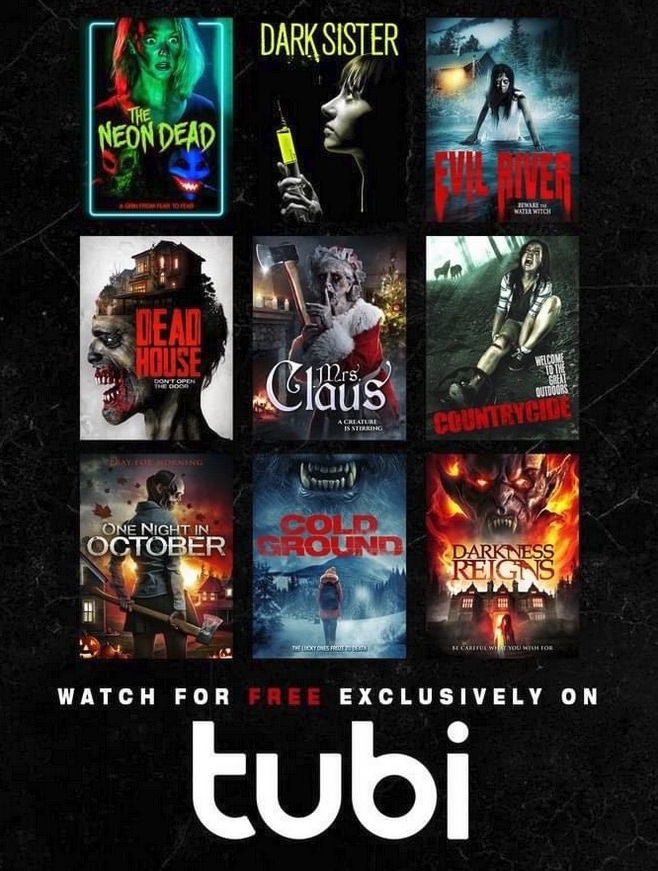
Wild Eye Releasing recently started their own Tubi channel and they’re now offering their previous DVD and VOD titles as free-with-ads streams. Surfing through their digital library has turned into quite the enjoyable retro-ride—one that takes me back to my 5 videos-5 bucks-5-days days when, at those prices, you’d gamble on anything and everything stocked on those VHS sci-fi and horror shelves. And lately, Wild Eye has been importing some pretty impressive foreign horrors—such as our recently reviewed Australian and Italian neo-giallos Dark Sister and Evil River—as well as this French-made horror.
The new U.S theatrical one-sheet
At first, since we’re dealing with a Euro-horror set piece that uses the admittedly overdone found footage narrative, I figured this micro-budgeted feature film debut from Fabien Delage would go back to the genre’s Ruggero Deodato roots and homage his found footage granddaddy, 1980’s Cannibal Holocaust. In that film, the footage is found and watched—and then a second crew goes out to find the people on the reels. And the story flips from a found footage to a traditional narrative. Rabid Bigfoots instead of cannibals, I assumed; a white inferno instead of a green one, if you will.
What we do get is, instead of an Italian homage, is an inversion of The Blair Witch Project meeting Neil Marshall’s The Descent (who recently gave us the very good Wales-shot supernatural-slasher Dark Signal) that’s seasoned with a soupcon Robert Rodriquez’s digitally-aged retro romp, Grindhouse. So, instead of witches, it’s Yetis (or werewolves or some type of hairy-humanoid) chasing our snowy campers.
The original, oh-so-’80s VHS retro Euro one-sheet
As with the recently (very good) reviewed Case 347 that dealt with found footage extraterrestrials, this is another case of “you just roll with it,” as it is explained the footage we’re about to watch was shot by two journalists (Melissa and David; an interviewer and camera man) who traveled to the French-Swiss border in January 1976 with the intention of shooting a documentary for French television. Those recordings were discovered 40 years later, in December 2016—and we’re watching the digitized and edited version of that 8 mm footage. (The retro Super 8 logos and ‘70s-style Motion Picture Rating Code title cards that open the film are a nice touch.) So, along with a med-tech/guide, a British biologist, and an American forensicist, the journalists are off to investigate what’s causing a series of cattle mutilations—and it turns into a search and rescue mission when they learn the scientific team they intended to meet in the mountains has gone missing.
Does this all work? Yes. Better than most micro-found footage romps? Oh, yeah. And even better than most of the Hollywood ones.
Personally, I’m not a fan of A-List directors and major studios jumping into the found footage and smartphone frays to capitalize on genres developed by indie-filmmakers out of financial necessity to tell stories against limited resources. I wasn’t a fan of the major record labels pillaging the ‘80s indie-rock scene to find instant “Nirvana”—so if I’m going to do a found footage romp, I’m rollin’ the streaming dice on the likes of For Jennifer and micro-indies like Case 347—and this indie-feature film debut by Fabien Delage.
It’s been 21 years since The Blair Witch Project re-ignited the found footage genre sparked by Ruggero Deodato—and we’re about five or six dozen films neck deep in the genre. Cold Ground is one of the better ones and worthy of your streaming excavation. It’s an effective calling card that proves Delage is adept at working a limited budget, develops smart characters, and builds suspense and dread with his scripts. And most importantly: he discovers skilled, professional actors who are willing to work below the going rates to trek through the ice and snow to tell his stories against their limited budgets.
So here’s to hoping a major European studio takes notice and gives Fabien Delage the budget and resources he deserves for this next movie. So check him out, won’t you? You can stream Cold Ground for free on Tubi and you can learn more about the Wild Eye catalog at their official website and Facebook pages. And if you’re a found footage fan, well, B&S About Movies is your one-stop shop. Just visit our homepage and enter “found footage” in the search box and search our stuffed digital VHS shelves.
About the Author: You can learn more about the work of R.D Francis on Facebook.He also writes for B&S About Movies.
Disclaimer: This movie was sent to us by its PR department. As always: you know that has nothing to do with our feelings on the movie.
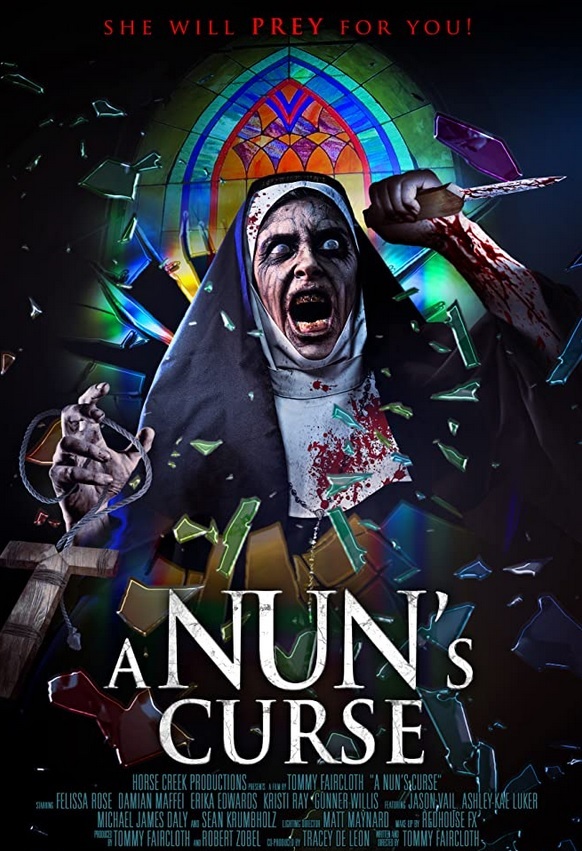
South Carolina screenwriter and director Tommy Faircloth’s fifth feature is an expertly staged and richly-shot double-homage to the ‘70s European Nunsploitation cycle (Santanico Pandemonium, The Other Hell) and Spain’s Amando de Ossorio’s* early-‘70s “Blind Dead” quartet of films (that ended with Night of the Seagulls). In Ossorio’s universe: sexually promiscuous, road weary travelers are always stumbling into some piece of abandoned, local architecture connected to an urban legend.
Accordingly, we have four requisite dumb travelers—two sisters: one bitchy, one a pseudo-creepy bookworm, and two guys: one a piggish boyfriend and one a hapless dork who wishes he was—who do all the things we expect: losing car keys, looking for shelter from a storm, always having sex on their minds, telling bad dick jokes, toilet humor and, since this is the 21st century: their cellphones have no signals.
Of course, one person in the group—in this case, Ashley-Kae the bookroom (Erika Edwards, an accomplished cinematographer and editor in her own right; she runs Honey Head Films with actress Kristi Ray; who plays her sister Gabby)—knows all the local history about the abandoned brick church they’ve taken a detour at on their way to her family’s vacation home. And she’s haunted-fascinated by her childhood nightmares of nuns—the infamous Sister Monday (Felissa Rose of Sleepaway Camp fame) in particular, who had a penchant for killing inmates of the neighboring prison . . . just on the other side of those woods.
Yep. Just like the de Ossorio films of old, these dumb travelers resurrect the ghost of Sister Monday—complete with a nice, sharp dagger sheathed inside that large, wooden crucifix she hip slings. (And that testicle-removal-by-holy dagger is a pisser!) (I would have enjoyed some prisoner or priest zoms digging themselves out of the church and prison graveyard—but that’s not a problem with the film, just my sick, twisted nostalgia getting in the way.)
Award-winning indie-horror craftsman Tommy Faircloth got his start in the business like most writer/directors (such as Frank Darabont of The Green Mile and The Mist): as a production assistant on mainstream Hollywood films; Faircloth worked on Die Hard 2, the Danny DeVito-starring Renaissance Man, and the James Caan-starring football drama, The Program.
He made his debut proper with the 1996 horror-parody Crinoline Head and followed up with the direct-to-video efforts Generation Ax (2001), the serious-sequel to Crinoline Head: Dollface (2014), and Family Possession (2016; which also stars Felissa Rose and Erika Edwards). A testament to Faircloth’s ever-improving career: A Nun’s Curse won the “Best Writing in a Feature” at last October’s Nightmare Film Festival and Reedy Reels Film Festival for Faircloth’s Horsecreek Productions.
A Nun’s Curse proves Faircloth has a very promising career as a new voice in horror that’s on par with the horror works of the bigger-budgeted studios A24 and Blumhouse. He knows how to move a camera with an Argentoesque atmospheric ease through the dilapidated corridors. I look forward to his next work, will go back to his earlier works, and hope for a sequel on the exploits of Sister Monday.
A Nun’s Curse is available from Uncork’d Entertainment on all online streaming and PPV platforms in the U.S on May 12. If you’d like a DVD copy: all North American Walmart locations will have it in stores on May 19. You can also visit Uncork’d on Facebook for the latest news on their releases and find more specific information about A Nun’s Curse on Facebook.
And we are diggin’ on the end credits’ nu-metal tune by The Lumberjacks!
* Did you hear the story about the debut picture from de Ossorio’s “Blind Dead” series, Tombs of the Blind Dead, being re-edited into a bogus Planet of the Apes sequel? It ran in U.S Drive-Ins in 1978. True story. We reviewed it as part of our “Ape Week.”
Disclaimer: This movie was sent to us by its PR department. As always: you know that has nothing to do with our feelings on the movie.
About the Author: You can read the music and film reviews of R.D Francis on Medium and learn more about his work on Facebook.He also writes forB&S About Movies.




 B&S About Movies
You must be logged in to post a comment.