Dark Sister is the (very welcomed) U.S. reboot of Sororal, an Australian neo-giallo that weaves the psychosexual tale of the ratty loft shut-in Cassie (well played by Amanda Woodhams in her leading lady debut; ironically looking like Dakota Johnson’s sister). An artist traumatized by the murder of her mother, Cassie comes to realize the nightmares and daytime hallucinations of brutal slayings she commits to canvas (The Paints of Laura Mars, if you will) are the chronicles of a real life serial killer crisscrossing the continent down under. The “dark sister” of the title (the better title of “soraral” means “of or like a sister or sisters”) is a hooded, rainslicker-esque lookalike who totes around a creepy, deteriorating doll that’s connected to a Satanic cult who needs Cassie to give birth to the Anti-Christ.
The reviews on this mixture of giallo and the supernatural haven’t been kind, with critical insight that state this third film—from what I feel is an impressive, developing resume—by writer-director Sam Bennett is merely “style over substance” and his work is “amateurish” and “unrealistic.”
Huh?
Since when did an Italian Giallo—or any of its Spanish knockoffs—of the ‘70s ever put “realism” or “substance” over what were always the main priorities of the giallo genre: art and surrealism rooted in Impressionism and Renaissance art.
The giallo resume of Dario Argento, the leader of the genre, is the cinematic equivalent of Salvador Dali’s melting clocks and M.C Esher’s impossible objects and staircases to nowhere. Giallo is all about the utilization of oozing color palates and oddball light sources, nonsensical supernatural red-herrings to nowhere, psychic links to killers hidden in POV, whispered poetic passages, hyper-sexual oddball red-herring characters, rape and murdered moms, junk science (about sunspots, Y chromosomes, eye-memories, love-chemicals), pedophile fathers, doctors and detectives riddled with kinks and ulterior motives, and a general, overall incoherence set to a soundtrack of jazz-rock noodling and chanting choirs.
And if that makes me a giallo snob, then dip me in yellow paint, feather me in crystal plumage, and dump me in the town square and let me enjoy my Stendhal syndrome episode so I can shed my tears for my mother.
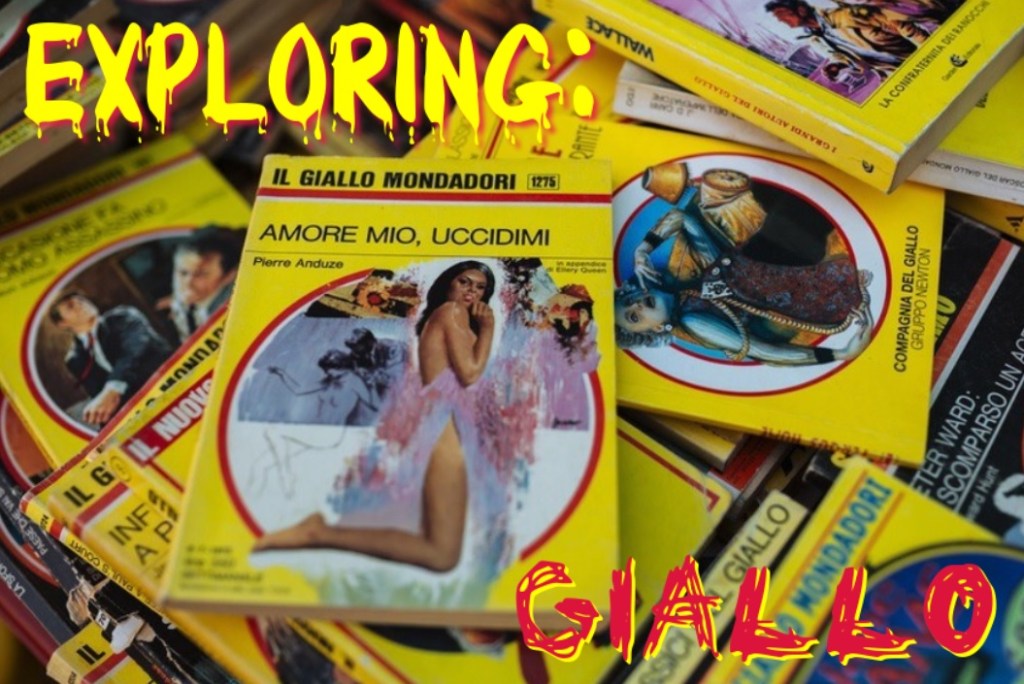
The more giallo, overseas theatrical one-sheet.
Yes, I’ve watched Paolo Cavara’s Black Belly of the Tarantula and Sergio Martino’s The Case of the Scorpion’s Tale—and every bloody tale concerned with insects and animals—more times than any one person should. I accept Dario Argento’s what-the-fuck plot twists of an intelligent chimp wielding a straight razor and cute girls with psychic links to insects with glee. And regardless of how much I enjoy the films of Riccardo Freda, Umberto Lenzi, and Ruggero Deodato: I’m burnt out on them. But I love the era and adore the genre and I want more . . . but my yellow has turned to brown. And while I know they’re box office hits, I pine for the giallo era over the endless cycle of The Conjuring sequels and the Blumhouse universe’s jump scares.
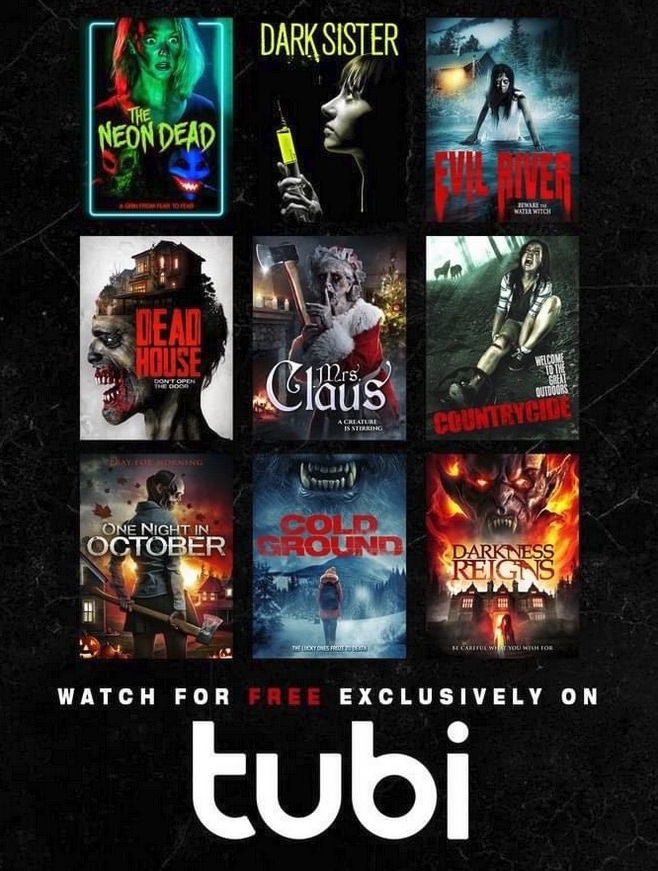
And that’s how films like The Editor and Dark Sister become part of my beloved giallo library. Bravo, Mr. Bennett. It feels like home to me. (I suggest you pair the Italian-made Evil River with Dark Sister for your double feature this evening.)
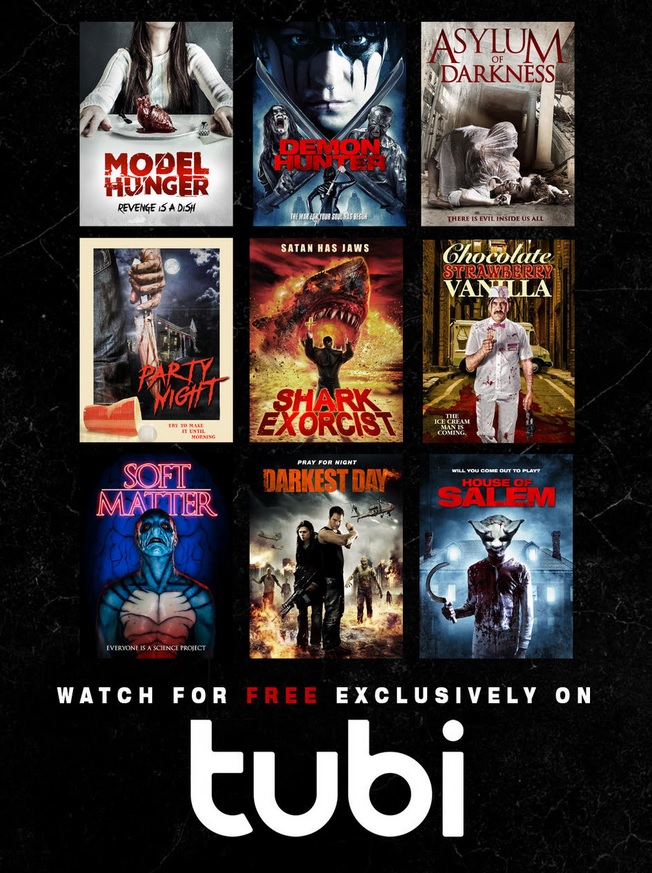
Theatrically released in its homeland in 2014, Wild Eye Releasing acquired Sororal—giving it a new title and artwork—for a U.S. streaming and DVD release in 2018. They’re now offering it in 2020 as a free-with-ads stream on TubiTV along with several other films from their catalog.
And here we are, in 2022, with this review still receivinga lot of hits, as horror fans continue to discover this great flick by way of it currently appearing on various Smart TV streaming platforms. Seriously, we love this movie!
Disclaimer: This movie was sent to us by its PR department. As always: you know that has nothing to do with our feelings on the movie.
About the Author: You can read the music and film reviews of R.D Francis on Medium and learn more about his work on Facebook.He also writes for B&S About Movies.
“It’s not going to work, you know. We’re almost dead.” — Grandma Mona
When Marcy (Fayelyn Bilodeau) loses her job as a flautist with the Chicago Philharmonic, her girlfriend, and apartment in one fell swoop, she does what most of us have done in the midst of our twenty-something failures: we return to our childhood home.
In Marcy’s case, she’s not only lying low to figure out her next move, but to help her grandfather Archie (Richard Riehle) take care of Mona (Helen Slayton-Hughes), her dementia-suffering grandmother. When Marcy begins to experience the same visions and voices as her grandmother, she realizes a spirit attached to a box of antique tchotchkes has invaded the suburban clapboard home. Helping Marcy in the supernatural battle is Coco, the neighborhood’s Barbie Doll-cum-Tangina Barrons-wannabe (Kiersten Warren), a mysterious phone psychic, and an ice cream truck-based weed dealer with a penchant for the supernatural and horror films.
Now, while that synopsis sounds conventional—like Blumhouse “shock scares” conventional—there’s nothing in the recent haunted house, possession, and supernatural forces-at-play CGI universes of the Paranormal Activity, Insidious, or The Conjuring franchises (or American J-Horror reboots) that will prepare you for phantasmagoric feast that is The Invisible Mother. For you are entering the The Twilight Zone on acid: A world where M.C Escher and Salvador Dali are your overlords: a surrealistic world where you run up a set of ouroboros stairs from a melting world to nowhere. This is a film where you will experience the same excitement the first time you watched the out-of-left field insanity of Don Coscarelli’s Phantasm and Sam Raimi’s The Evil Dead. It will become the new “classic” that horror aficionados will slide onto their shelf next to those films for perpetual, over-the-years viewings. It’s a film, like David Robert Mitchell’s amazing Under the Silver Lake that, after your first viewing, you immediately hit the start button to suck on mother’s teat a second time to drink in all the details you missed the first time. Toss the recent pseudo-yellow oozers of Omar Jacobo’s Blood Freaks and David Fowler’s Welcome to the Circle on that list.
Those who’ve had an opportunity to see The Invisible Mother on the festival circuit call it a “modern day giallo.” And there’s certainly a giallo influence in the swirling cameras, odd cinematography angles, and vibrant color schemes of the Maestros Mario Bava and Dario Argento—along with Paul Naschy’s penchant for out-of-left-field Spanish red herrings and plot twists, and Spain’s giallo purveyors Claudio Guerin’s and Bigas Luna’s corkscrews for the bizarre.
But there’s also a taste of giallo’s black-and-white noir roots: Is Glorianna (Debra Wilson) a faux-witch with an agenda? Is Coco giving the ol’ Henry James turn-of-the-screw on the old folks? Is Archie gaslighting Mona and did he call Marcy home to twist her into his plan? Are Archie and Coco in consort? Do Glorianna and Coco need Marcy for a sinister, Argentoesque purpose? Is the house on a hellish portal and Marcy is the key? Is Mona really suffering from Alzheimer’s? Is Wyatt’s (Kale Clauson) weed, in fact, laced and causing Marcy’s oneiric state? What is going on in this Dashiell Hammett and James M. Cain-inspired world where even Sigmund Freud would question his own sanity?
But then there are the elements of David Lynch’s taste for the oneiric experimental (The Elephant Man, Lost Highway), Andy Warhol’s palate for the perverse avant-garde (Flesh for Frankenstein), the celluloid hyperbole of John Waters (Pink Flamingos, Polyester), and Todd Solondz’s oeuvre of offbeat plots and kinked characters (Happiness and Welcome to the Dollhouse).
And while the VHS centers of my celluloid cortex loaded up copies of the bloody, Neapolitan delights of Dario Argento, Mario Bava, Paolo Cavara, Ruggero Deodato, Riccardo Freda, Lucio Fulci, Umberto Lenzi, and Sergio Martino, I also got my analog buzz on with the J-Horror static of Takashi Miike (Gozu, Visitor Q), Takashi Shimizu (Ju-On, Reincarnation), and Lee Soo-yeon (Uninvited). And while impressionist Alejandro Jodoroswky (El Topo, Holy Mountain, and Santa Sangre) is justifiably named dropped when reviewing The Invisible Mother, I shall trek one step deeper into the underworld: I got some serious supernatural phantasmagoria vibes of the José Mojica Marins variety with his Coffin Joe romps At Midnight I’ll Take Your Soul and This Night I’ll Possess Your Corpse.
“For years you were like a snail. Happy, hiding. Happy, hiding.” —Wyatt, the Ice Cream Man
And even after all of that critically rambling, I still haven’t spoiled The Invisible Mother; for this feature film debut by co-writers and directors Matthew Diebler and Jacob Gillman may be difficult to explain, but it’s impossible to spoil. And while I may have led you to believe this film is incoherent, these two neo-giallo enthusiasts, who cut their teeth in the reality television (Matthew Diebler; Catfish, Ice Love Coco) and special effects fields (Jacob Gillman; Sucker Punch), weave a cohesive narrative.
And that’s the intrinsic beauty of The Invisible Mother. It defies convention. It’s an ambiguity open to your interpretation. It’s a film noir riddle falling down an out-of-control Alice in Wonderland “rabbit hole” puzzle wrapped in an Italian murder enigma. Diebler and Gillman crawled inside our bodies to wear us like a Jame Gumb skin suit: they made a film for us, the cinematically nostalgic orphans enamored with ‘70s films reissued on the ‘80s VHS video fringe.
The Invisible Mother is a giallo—yet it’s bloodless. It’s Argentoesque—without the blunt force trauma. It’s fear and dread—with a soupçon of Naschy’s taste for the humorous dark. It’s a psychedelic whirling dervish of primary colors; a realm rife with intricately detailed sets, practical in-camera effects, and stop-motion and reverse photography (by co-writer/co-director Gillman). It’s a film that never shocks or startles. It’s a film where your eyes blaze wide-open at an endless series of unsettling “WTF” moments set to a pseudo-progressive jazz soundtrack (like a Dario Argento film co-scored by Bauhaus and The Normal) that induces nausea. It’s a film rife with all these little moments (of copper fishes, kitschy salt n’ pepper shakers, licorice cookies, pin cushions, 1940s Royal Victorian phones, 1970s oil lamps, and 1980s VHS-era video art from the beyond). It’s a masterpiece of “giallo impressionism” that I want to expose in-a-catch-all-schizophrenic-run-on-sentence-of-hysterical-amazement.
In case you haven’t figured it out: I bow at this movie’s yellow-soaked altar.
The most heartwarming highlight of The Invisible Mother is seeing the long-in-the-business “I don’t know their names, but I know their faces” of Richard Riehle (I just saw him on a re-run of TV’s Roseanne) and Helen Slayton-Hughes (who I just watched in a binge of HBO’s True Blood) given the opportunity to carry a feature film—and both are award-winning fantastic. Reihle’s 400-plus resume since the late ‘80s features his work on Fox-TV’s Grounded for Life and CBS-TV’s NCIS, along with the films Bridesmaids, Bruce Bigalow: Male Gigolo, Casino, and Office Space. Slayton-Hughes was Ethel Beavers on NBC-TV’s Parks and Recreation and appeared in the Metallica romp, Hesher.
You know Fayelyn Bilodeau from her recent appearances on Showtime’s hit series Shameless and TV Land’s American Woman. You’ve seen Keirsten Warren in a wide variety of film and TV appearances since the early ‘90s, such as her feature film debut in Independence Day (Tiffany the Stripper who greeted the aliens on the building roof that got zapped), and her recurring roles in Desperate Housewives and Saved by the Bell: The College Years. And it’s nice to see animated voice artist Debra Wilson, a cast member of my beloved FOX-TV’s Mad TV and Reno 911!, on the big screen. Kale Clauson most recently appeared on TV’s S.W.A.T and Good Girls.
“I am not sure what you’re trying to convey. I simply sell frozen confections. Perhaps I can interest you in some Necco Wafers?” —Wyatt, the Ice Cream Man
We’re also digging on “Dracula,” the film’s theme song by Geneva Jacuzzi and Bubonic Plague. You can learn more about Geneva’s music at her official website. Then there’s the ambient music of Matt Hill & Umberto serving as the soundtrack. You can listen to all four albums by Umberto on their You Tube page. The embedded playlist, below, will get you to those songs, and more, from The Invisible Mother.
Recently completing a successful, multi-award winning film festival run, Freestyle Digital Mediaacquired the North American VOD rights. You’ll be able to rent and own copies of The Invisible Mother on digital HD internet, cable, and satellite platforms starting on October 12, 2021. Other films we’ve reviewed through Freestyle Digital Media include The Capture, The Control, Dead Air, Goodbye Honey, Hawk & Rev: Vampire Slayers, and Shedding.
Disclaimer: We discovered this movie via social media, were intrigued by the trailer, and reached out to the filmmakers to provide us with a screener copy.
About the Author: You can read the music and film reviews of R.D Francis on Medium and learn more about his work on Facebook.He also writes forB&S About Movies.
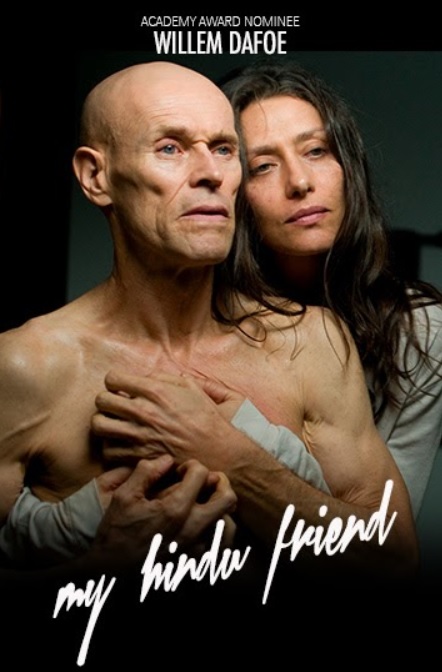
You had us at Willem Dafoe. You know the roles: Raven Shaddock in the rock ‘ n’ roll noir Streets of Fire and lost rocker Johnny Harte in one of my personal favorites, Roadhouse 66. Then there’s the diabolical forger Eric “Rick” Masters in To Live and Die in L.A. and Sergeant Elias Gordon in Platoon. We can go on and on . . . yes, ye film youngins, you know him as The Green Goblin in Sam Raimi’s Spider-Man franchise.
The always amazing and never disappointing Argentinian director Hector Babenco — who you know through his multiple award-winning works with Tom Berenger and John Lithgow in At Play in the Fields of the Lord (1991), Kiss of the Spiderwoman (1985) with William Hurt, and Ironweed (1987) with Jack Nicholson and Meryl Streep — returns, sadly, with his final film: an autobiographical examination about life and death through a film director’s bout with cancer.
Willem Dafoe is Diego Fairman, a talented, but acidic, filmmaker who is as adept at social alienation as he is with film — and his decade-long bout with cancer only amplifies his curmudgeonly outlook on life. With his new wife, Livia (award-winning Brazilian actress Maria Fernada Candido), he leaves Brazil for a new round of treatments in Seattle. And the only man who can save him, via a bone marrow transplant, is his brother, Antonio, who haven’t spoken to each other in ten years. While in treatment, Diego comes to find solace in the friendship of a young Hindu boy also dealing with cancer.
The philosophical question asked in this, the final masterpiece of the then dying Babenco (he passed in July 2016), asks: Does someone, who went out of their way to make the lives of others miserable and never took responsibility for said actions, deserve a free pass because they’re dying? Or do they deserve to die alone — with their soul in agony as much as their body? Will others forgive . . . to release the sinner from their guilt?
And when Death arrives to take him, Diego asks from his death bed, for one more chance to make one more film. And he makes that film within his soul — with the help of his Hindu friend. And the fact that My Hindu Friend is the film that Death granted Hector Babenco to make — makes this film all the more powerful.
Yeah, I cried. I’m man enough to admit that.
In an overseas rollout since 2015, My Hindu Friend is finally available in the U.S on May 1 through Rock Salt Releasing on DVD, Blu-Ray and all digital streaming platforms (Amazon, AT&T, DirectTV, FANDANGO, FlixFling, Google Play, Hoopla, inDemand, iTunes, inDemand, DirecTV, Vudu, Google Play, FANDANGO, Sling/Dish, Sony, Vimeo on Demand, You Tube Movies, and Xbox).
Disclaimer: We were provided a screener by the film’s P.R firm. That has no bearing on our review. Besides, with Dafoe, and the fact that it’s Babenco’s final film, we would have bought our own copy.
About the Author: You can learn more about the writings of R.D Francis on Facebook.He also writes for B&S About Moviesand publishes on Medium.
Documentaries are always a hit and miss that depends on the subject matter’s appeal to the viewer. For example, last night I watched The Kids Stays in the Picture — a second time. Why? Because I’m a film dork and the life of film producer Robert Evans (Love Story, The Godfather, Popeye) fascinates me (I read the book several times, as well). I also recently watched and reviewed It All Begins with a Song. Now, unless your a songwriter and enamored with all things Nashville, that “talking head” documentary is most likely a hard pass.
So, with title and theatrical one-sheet in hand, you pretty much know the subject matter with this documentary, which is all about the girls in the wake of bondage model Betty Page and Burlesque artist Gypsy Rose Lee. If you dig the style of Danielle Colby-Cushman from The History Channel’s American Pickers and Kat Von D from TLC’s L.A. Ink, this is your movie (they’re not in the movie). If you’re facinated by Maxim pin-up model and Marilyn Manson’s ex-wife Dita Von Tesse (who is in the movie ), then this feature-length chronicle on today’s Pinup Girls — as they compete in The Miss Viva Las Vegas Pinup Contest held at the Viva Las Vegas Rockabilly Weekend festival — is your movie. In fact, if you’re into classic ’50s cars and retro 1940’s fashions, the art of tattooing, rockabilly tunes, and all things Las Vegas, then this is your movie.
Ah, but this isn’t about the objectification of women. This is about the celebration of a woman’s power. Bombshells and Dollies is noted music video director Daniel Halperin’s (Styx Dennis DeYoung’s “Desert Moon“; back in the days when videos were expertly crafted as short films that told an actual story) homage that celebrates a woman’s right to accept their bodies, to be self-confident, and to be gorgeous. Even if this is a world you’re not interested in and a world you’re unfamilar with, Halperin’s flick in an affable introduction.
Bombshells and Dollies is available on May 1 through Rock Salt Releasing on DVD, Blu-Ray and all digital streaming platforms (Amazon, AT&T, DirectTV, FANDANGO, FlixFling, Google Play, Hoopla, inDemand, iTunes, inDemand, DirecTV, Vudu, Google Play, FANDANGO, Sling/Dish, Sony, Vimeo on Demand, You Tube Movies, and Xbox).
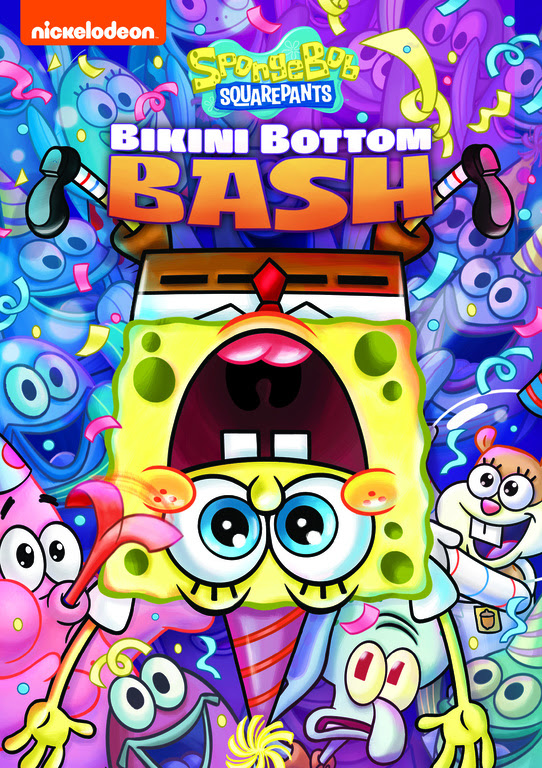
Thanks to our friends at Nickelodeon, Paramount Home Entertainment and Click Communications, we have one FREE copy of this new Spongebob DVD! Read through and find out how below!
SpongeBob SquarePants was created by the late marine science educator and animator Stephen Hillenburg for Nickelodeon. After the cancelation of Rocko’s Modern Life, he had been working on a book called The Intertidal Zone, that he hoped would teach his students about the undersea world. It’s also inspired by Ween’s 1997 album The Mollusk.
Tom Kenny was asked to be the voice for a character originally called SpongeBoy, which was changed as that name was already trademarked. Since then, it’s gone on to make over $13 billion — that’s right, billion — dollars worth of merchandise revenue for Nickelodeon.
The fifth-longest-running American animated series, it remains the highest-rated series to air on Nickelodeon and is ViacomCBS Domestic Media Networks’ most distributed property.
The series chronicles the adventures and endeavors of the title character and his aquatic friends in the fictional underwater city of Bikini Bottom. Beyond Sponge Bob, there’s his snail Gary, his goofy friend Patrick Star, co-worker Squidward Tentacles and Sandy Cheeks.
Bikini Bottom Bash is a compilation of party-themed Sponge Bob episodes, containing the episodes SpongeBob’s Big Birthday Blowout, Sun Bleached, The Slumber Party, Party Pooper Pants and Truth or Square. Other than containing the aforementioned Party Pooper Pants, this has nothing to do with the VHS compilation of the same name that was released in 2003.
While the Bikini Bottom gang was born years past my expiration date for watching Nickelodeon, I have to admit that it’s a lot of fun. Even David Hasselhoff, Eddie Deezen, Triumph the Insult Comic Dog and Gilbert Gottfried show up! I kind of love that a Peter Lorre-looking fish shows up, as if kids would have any idea of who that is. I loved the mix of live-action and animation, like seeing the real actors playing their roles. Plus, the tribute to Hillenburg was a nice touch.
You can grab this DVD today from Paramount Home Entertainment and Nickelodeon Home Entertainment at this Amazon link. It’s got a really great price and I think it’d be a great way to keep the kids inside and occupied while making sure that grown-up kids are entertained, too.
DISCLAIMER: Thanks to Paramount Home Entertainment and Nickelodeon Home Entertainment for sending this our way. Of course, our review is not impacted by their generosity.
To win: Just share this article on Facebook or Twitter, then enter a comment below! One random winner will get a copy sent to them absolutely free! As a reminder, the shipment of product and giveaway prizes may be delayed due to current world events. Good luck!
This feature film debut by writer-director Peter Andrew Lee is an intimate love story from the streets of New York with the same heart and soul that we experience with Spike Lee’s and Matty Rich’s respective feature film debuts of She’s Gotta Have It (1986) and Straight Out of Brooklyn (1991). Think of Angelfish as a grittier version of the love-on-the-wrong-side-of-the-tracks tales of John Hughes with Pretty in Pink (1986) and Some Kind of Wonderful (1987), as made by Spike or Rich, and you’re in the 1993 Bronx neighborhood where Angelfish takes place.
Eva is a Puerto Rican girl from a proud, hardworking family who aspires to study acting, but is pressured by her family to take up accounting so the family can better provide for her special needs brother. Brendan is white and from a broken home where he’s the breadwinner who takes care of his alcoholic, racist mother and his always-in-trouble teen brother.
They meet when Eva enters the Bronx deli where Brendan works and he saves her from overly amorous suitor. A romance soon blossoms against the insecurities of racism and jealousy of others, along with the pressures of family loyalty and responsibilities. This is a kind, gentle film that weaves an authentic tale of frowned upon interracial and interclass love that, sadly, still exists in society.
The leads of Jimi Stanton (from the Netflix web series The Punisher) and American rap artist Princess Nokia (in her acting debut) both shine in their mutual debuts as lead actors. Great things are on the way for both of them.
In this emotionally rewarding, scruffy London-based crime drama, ex-mob thug Tony Ward (the excellent Anthony Mark Streeter) finds himself a free man after a decade-long prison stretch. He soon discovers the incarceration the outside world offers is as difficult as the inside kind when his well-intentioned efforts to reconnect with his estranged wife and now adult son unravels as the temptations of his criminal past catches up with him.
The opening of the film is smartly nuanced—and quite stunning. It opens on black with the sound effect of a roller-slamming gate. Then we see Tony standing outside of a prison. He looks around. You can hear him say, “Now what the fuck do I do?”—without saying it. Meanwhile, his wife and son clean their home and prepare for his arrival. And that’s how the first nine minutes unrolls—without dialog: dialog that’s not needed. And it’s beautiful because this is a film that realizes images and body language speak louder than physical words.
Now, at first mention of a “British crime drama,” your mind calls up Guy Ritchie’s Lock, Stock, and Two Smoking Barrels (1998), Layer Cake (2004), and In Bruges (2008). And if you’re looking for the violence of those films, you’ll be disappointed. Writer-director Anthony Z. James knows we’ve been down this road before and we know hard-ass guys like Tony. This isn’t about the crime caper that put Tony in prison or the crime that’ll put him back in there. It’s not about revenge. Even at their most violent, criminals have families. They experience love. And self-loathing when they disappoint the ones they love. That’s this movie. This is a movie that goes behind the violence.
If the pioneering, independent spirit of John Cassavetes was still with us (he’d be 91 this year), and still spry enough to shoot films, he would have utilized smartphone technology and made Ghost. (Why not: Asian action-stars Leo Fong and Chun-Ku Lu are still making films at the incredible, respective ages of age of 91 and 74.) So keep that in mind, as I know the modestly budgeted tales by Cassavetes that focus on characters and story, shot with handheld cameras, available lighting and spontaneous improvisation isn’t easily digested by a mass audience. (And it’s interesting to point out: Unlike James, Cassavetes was unable to find an American distributor for his debut film, 1960’s Shadows.)
I have to admit that, at first, the concept of making movies via smartphones didn’t sound too promising. I’ve worked on my share of shorts as an actor where my directors couldn’t even handle professional cameras and editing suites with aplomb (or finish their masterpieces 50 percent of the time), so the use of phones and MacBooks to make movies sounded like amateur hour.
Then James Cullen Bressack proved us all wrong with 2013’s To Jennifer: the first commercially released film shot and edited entirely on an iPhone 5. Then Steven Soderbergh (Erin Brockovich, Ocean’s Eleven, Magic Mike) upped the game with his smartphone-shot feature, 2018’s Unsane.
Since then, Apple has gone through three upgrades and now we have this impressive feature film debut by British filmmaker Anthony Z. James shot on a pair of iPhone 8s and edited on a MacBook Pro equipped with a freeware version of DaVinci Resolve editing software. And if you didn’t tell me Ghost was shot smartphone DIY guerilla-style, I would have thought it was shot “more professionally” via permits, a Canon EOS C200, and Final Cut Pro.
Which just goes to show you: It’s not the technology. It’s not the “cost” of the filmmaking tool. It’s the person behind the technology that creates great film.
And I am glad that Anthony Z. James is the man behind the technology. If he accomplishes this with a minimal crew and budget on smartphones, then what can he do with an $80,000 Red Digital and a seven-figure budget?
Amazing things.
And Ghost is only his beginning.
After a limited theatrical release in the UK this April, Ghost is now available in the U.S on Amazon Prime and Vimeo-On-Demand. You can find more info on the film at ghost-movie.com.
About the Author: You can read the music and film reviews of R.D Francis on Medium and learn more about his work on Facebook.He also writes forB&S About Movies.
Disclaimer: This movie was sent to us by its PR company. As always: you know that has no bearing on our review of the film.
“Please don’t make this another metaphor for your body.“ “If the clothes fit. . . .” — Mads and Junior
What do you get when you take a 65-page screenplay written over a weekend that’s tossed into a car (okay, two cars) with four people traveling 4500 miles for 14 days from Los Angeles to Las Vegas to South Dakota to Portland?
You get the instantly engaging industry calling card The In-Between, an indie road movie that, we hope, will do for the multitalented Mindy Bledsoe what She’s Gotta Have It, Clerks, and Flywheel did for Spike Lee, Kevin Smith, and Alex Kendrick.
Now, before you’re turned off by the “road movie” aspect of The In-Between, take note: this isn’t a Melissa McCarthy or Tim Allen slapstick comedy rife with oddball characters. And if you’re in the market for a Todd Phillips road comedy, keep on truckin’—and zip right on by the Judd Apatow comedy exit.
A film, at its core, should entertain. And the films by those A-List La-La Landers, in their own way, certainly do. And The In-Between definitely does. However, at its best, a film should give the viewer a new perspective on the lives of others. And most films—a lot of films—don’t. Why? Because they’re product made to fill seats; they’re not personal. The In-Between is that personal film. It’s the one that shakes the viewer out their little I-Me-Mine world. For Bledsoe’s film possesses a depth and warmth that Jennifer Aniston’s corporate chronic pain romp, 2014’s Cake, lacked. Aniston researched and acted (for Oscar gold). Bledsoe, as well as her co-writer and co-star, Jennifer Stone, live it—everyday.
While The In-Between is a brave journey into the world of everyday people dealing with their “invisible chronic illness”—the illness, takes a back seat courtesy of an intelligent screenplay (filled with natural, realistic dialog). Most of us never think twice of eating a pizza; a person with Type 1 diabetes, does (which afflicts actress Jennifer Stone). Washing our hands is a pain-free experience; not for a person with Complex Regional Pain Syndrome Type 2 (which afflicts Mindy Bledsoe). The monitors. The needles. The compression sleeves. The pills. The schedules. It’s those we-take-for-granted moments that provide an insight to the lives of Mads (Jennifer Stone, of Disney Channel’s The Wizards of Waverly Place) and Junior (writer, director, producer Mindy Bledsoe) that serve to elevate the script to its true purpose: not as an Oscar violin about dealing with illness, but as an examination on the importance of friendship, and the spiritual and emotional voids a bond of trust between friends, fills.
In addition to its exquisite cinematography, screenwriting, and acting, there’s the soundtrack. In so many films, a soundtrack’s creation is solely for the purposes of mood; most times, the soundtrack is nothing more than a record company’s product placement. In the case of The In-Between, the music serves as a third character that drives the plot and develops the other characters. We come to learn the reason for the cross-country trip is to visit the place where Junior’s musician-sister, Veronica, was killed in a car-crash and caused Junior’s chronic pain. Veronica’s “voice” is beautifully portrayed by the music of the common-bands Super Water Symphony/Hydrogen Child, which plays via car-based CDs and vinyl albums on a portable, battery-powered record player.
Everything about this movies works. And the festival crowds agree. The In-Between recently came off a successful film festival run, where it won multiple awards at the Austin Revolution, Toronto Female Eye, Twister Alley International, and Women Texas film festivals. It’s currently in the market for distribution and we hope it finds a deserving home in the PPV and VOD universe, soon. You can keep up to date with film’s success at its official Facebook page.
You can also visit Louisiana’s Hydrogen Child on Facebook and Twitter, and listen to their music on You Tube.
About the Author: You can read the music and film reviews of R.D Francis on Medium and learn more about his work on Facebook. He also writes for B&S About Movies.
Disclaimer: We discovered this movie via social media, were intrigued by the trailer, and reached out to the filmmakers to provide us with a screener copy.
“Algorithm and reality may not end up coinciding.” — Eva
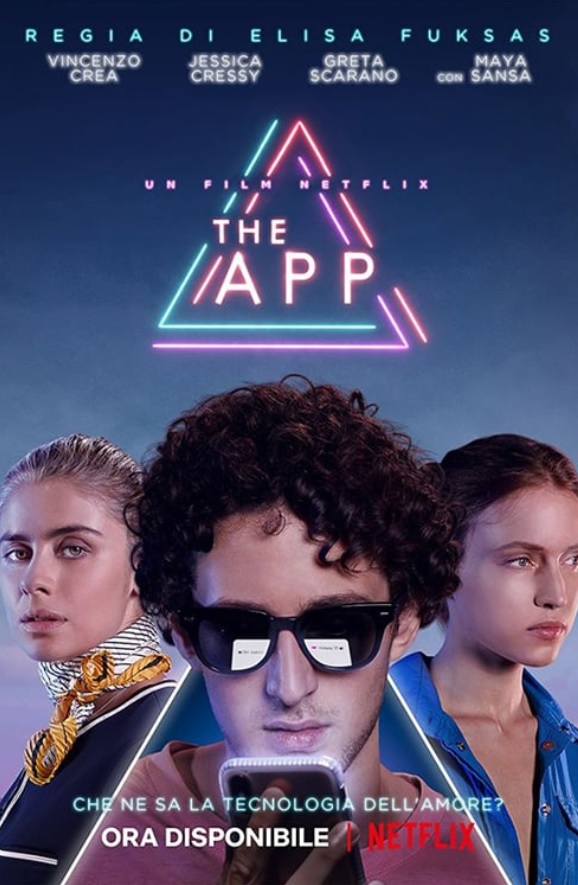
The App is a relevant-for-the-times techno-noir about loneliness and alienation brought on by one’s addiction to social media. It’s a tale about not trusting another’s digital identity; a philosophical exploration that makes us aware that, regardless of how much one achieves in life, they’ll always be riddled with self-loathing, never finding true happiness in their moments; for man is a creature always pining for something more, something different.
And that “more” comes in the form of the mysterious Maria, a digital femme fatale who takes over young Nick’s life.
Nick Melfi (Vincenzo Crea) is “Italy’s most famous heir” and an up-and-coming Hollywood actor (think actor-oil scion Armie Hammer or actress-sport scion Kate Mara) who defies his father’s wishes to be part of the family’s industrial empire alongside his brother and sister. His father even goes as far as to send the company’s attorney to Rome whilst Nick prepares for his first leading man role.
To fill his loneliness while away on location, and to help his girlfriend, Eva (Jessica Cressy), with her college thesis, Nick agrees to help her test a new dating app. “US, is the future of self,” she tells Nick. “It’s for people already in relationships, but curious.” And they each sign up under the aliases of “Lorenzo” and “Sara.” And you know what they say about “adventure. . . .”
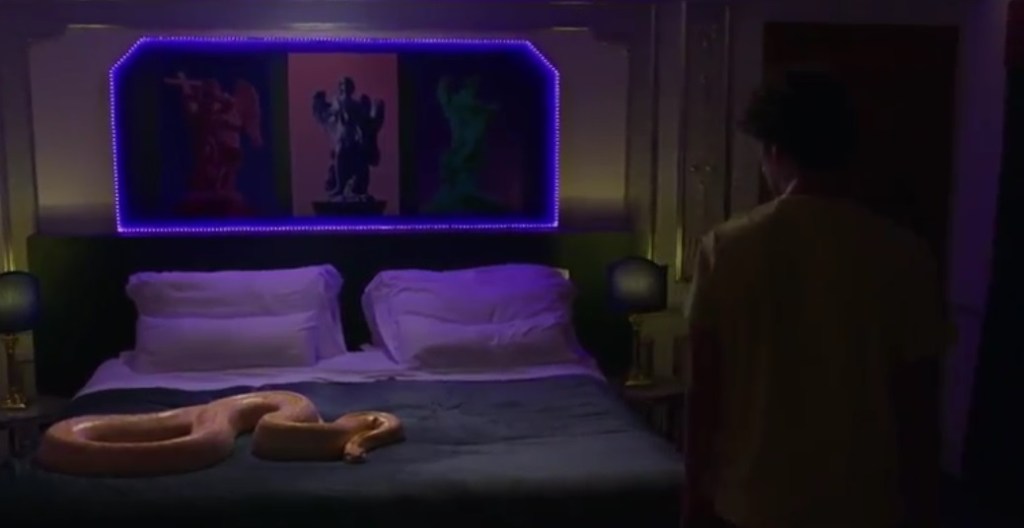
Keep in mind that Nick is portraying Jesus Christ in an Italian production The Life of Jesus (directed by the acting-cameo Abel Ferrara as Paolo; yes, he of the U.K. Section 1 video nasty Driller Killer), and that Eva is Nick’s “Eve,” the phone app is the “apple,” Maria is the “serpent,” and Ofelia, the attractive, Catholic-practicing hotel concierge (Greta Scarano), is “Mary Magdalene.” And that, as Eva reminds Nick, “. . . a lot of actors have gone a little mad playing Jesus.” So Nick has ventured into the isolated, digital wilderness of the New Testament’s parable of the “Temptation of Christ.”
Will Nick experience a reboot-resurrection and be upgraded-reborn in spirit?
As the unconventional narrative of The App streamed (ironically) on my laptop, I was reminded of Italian filmmaker Michelangelo Antonioni’s L’Avventura (1960), La Notte (1961), and L’Eclisse (1962), his trilogy-statement regarding the alienation of man in the modern world; each dealt with the failure of the self and their relationships—his first color film, Il deserto rosso (1964), in particular. As with that film’s Giuliana, writer-director Elisa Fuksas’s Nick desires to end his spiritual conflicts (with his father), and while Giuliana resists her “lover” Corrado’s advances, Nick also resists, then accepts, Maria’s advances. And while Fuksas’s Maria is a cloud-based entity, Nick still makes “love” to her. For, as Antonioni said in the past, “When sexuality fails as a means of communication and provides only physical relief, then Eros is sick.”
And Antonioni was right.
Why do we, as humans, eschew physical contact for technical contact? Why will we stare for hours on end into plasma, but not into the eyes and hearts of the other? Why does one gratify the self by the “idea” of another self—a fantasy? It was Antonioni’s belief that man’s technological development did not cause his alienation, but his failure to adapt to his changing environs caused his neuroses. And here we are today, with man’s current state of illness: an illness caused by our multi-media environs. The new and most dangerous “pandemic” we face isn’t an organic disease, but an inorganic sickness. And the inorganic sickness exacerbates our (current) organic pandemic through rumor and falsehoods. For Antonioni was right: “. . . it is the men who don’t function properly—not the machines.”
Considering writer-director Elisa Fuksas’s father, Massimiliano, is an award-winning Italian architect who oversees the Euro-renown Studio Fuksas with his wife, it seems there’s a biographical element in Elisa’s work: she eschewed the family business for filmmaking. And while Antonioni’s incorporation of modern landscapes in his works shines in Fuksas’s, there’s no doubt her work serves as homage to her father and mother’s architectural influences. Her visually pleasing, mood-driven plotting in The App can be best described as a 21st century meeting of the Baroque/Rococo-infused fantasies of Federico Fellini, the sweeping color palates of Dario Argento, and the neo-noir storytelling of Abel Ferrera (look over Ferrera’s ever-evolving resume; he’s come a long way since Ms. 45).
Elisa Fuksas made her feature film debut in 2013 with the multiple-nominated and award-winning drama, Nina. Based on The App, it’s a film that I’ll seek out as I look forward to her future works. You can watch The App on Netflix in Italian with English subtitles or dubbed into English (the dub is well done).
Disclaimer: We didn’t receive a screener copy of The App from the film’s PA firm or distributor. We discovered this movie all on our own and genuinely loved the film.
About the Author: You can read the music and film reviews of R.D Francis on Medium and learn more about his work on Facebook.He also writes for B&S About Movies.
“It’s time for your upgrade. It’s not gonna hurt.” —the Man in Black
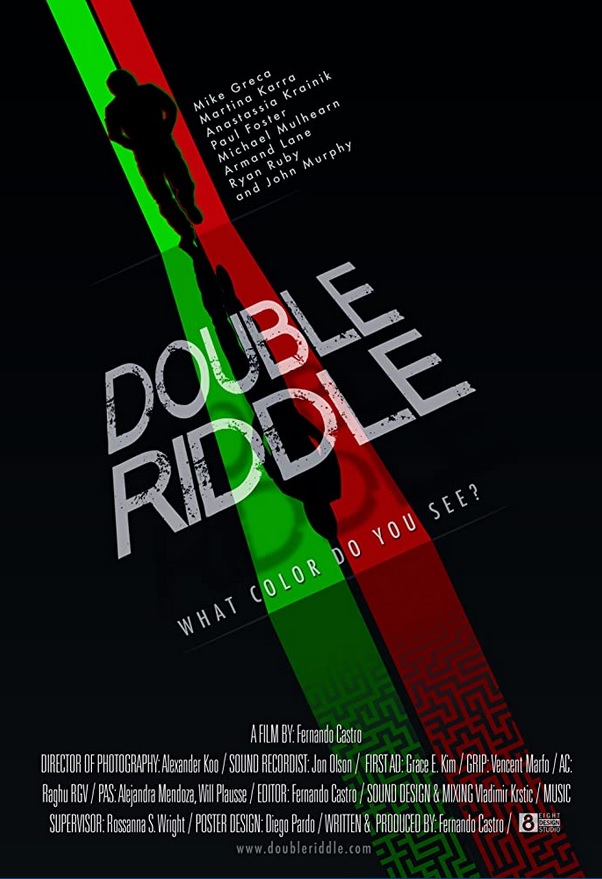
Frank, a burnt out architect, quits his job to become a filmmaker and create a star-making role for Sara, his actress-girlfriend. Of course, she leaves him. Or did she? He did fantasize he killed his boss, after all.
Frank’s subsequent web searchers to prepare for his film (e.g., Egyptian hieroglyphs, atomic testing, surveillance) place him on the radar of a dark government project in need of a test subject for their new device—a device that results in his inner demons to physically manifest. Or have they? Is he being followed? Is the mysterious woman he met through a dating app part of the conspiracy? Is she even real? Why can Frank perceive the primary colors of red and green, but not blue?
Ambiguity and interpretation is afoot in this indie writing and directing debut by Fernando Castro Sanguino, which reminds of the low budget sci-fi introductions to the works of Darren Aronofsky with Pi and Shane Carruth with Primer, as well as the late Anthony Anderson’s VHS-obscure, Interface (1984).
Astute film lovers will notice Sanguino’s homages to Bernardo Bertolucci’s Last Tango in Paris and Martin Scorsese’s Taxi Driver in the disillusioned, downward spiral of his trouble architect-cum-filmmaker, along with the ugly-truth revelations of the Coen Brother’s Barton Fink. To classify Double Riddle as a sci-fi version of the Christian Bale-starring The Machinist isn’t far off the mark, either. Personally, I’d go as far as to say Sanguino has crafted a low-budget version of David Cronenberg’s Videodrome—using the internet instead of cable television.
This hour-long experimental film is a debut that fires on all the cylinder-disciplines of writing, directing, cinematography, and acting—and worth the psychological trip. Yeah, this rates alongside and inspires me to re-watch Elisa Fuksas’s really fine The App (2020), as well as Jason Lester’s High Resolution (2019).
After a successful film festival run, Fernando Castro Sanguino released Double Riddle as a free-with-limited-ads stream on Tubi via Indie Rights Movies.
Disclaimer: We didn’t receive a screener copy of Double Riddlefrom the film’s PA firm or distributor. We discovered this movie all on our own and genuinely enjoyed the film.
About the Author: You can read the music and film reviews of R.D Francis on Medium and learn more about his work on Facebook.He also writes for B&S About Movies.







 B&S About Movies
You must be logged in to post a comment.