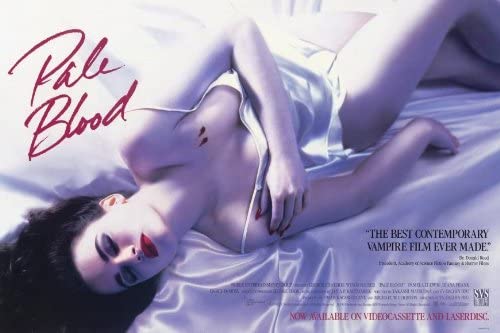
A direct-to-video film shot in Hong Kong, Pale Blood tells the story of Michael Fury (George Chakiris, West Side Story), who is a vampire out to preserve the honor of being a bloodsucker by stopping whoever is killing people and draining them of their blood. He’s helped by occult-obsessed investigator Lori (Pamela Ludwig, City Limits).
This has a cast of people who will delight those of us who rented way too many videos in 1990, including Wings Hauser and Darcy DeMoss (Vice Academy 3, Hardbodies).
It was written and directed by female director V.V. Dachin Hsu, who was also the second unit director of a movie that was often discussed in my home, Phat Beach. Her co-director was Michael W. Leighton, who also made 1989’s Rush Week and wrote the Hauser and Sybil Danning-starring L.A. Bounty. He also acted in Carter Stevens’ 1979 adult film Punk Rock (which also has Robert Kerman from Cannibal Holocaust).
Speaking of punk rock, Agent Orange appears in this movie. It has plenty of on-location images of the Sunset Strip to make you think that more of this movie was made in the U.S.
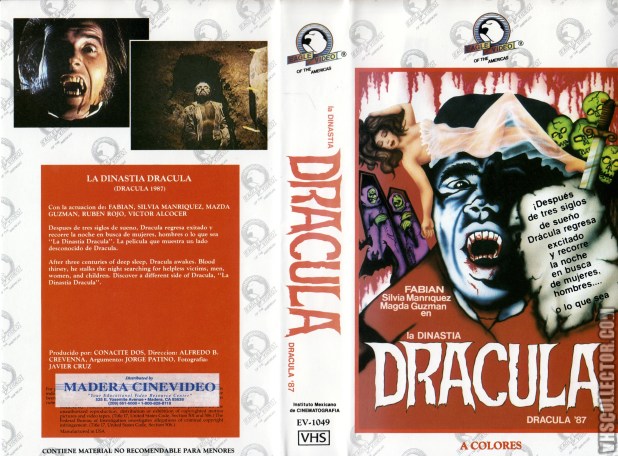
Here, he tells the story of Duke Antonio de Orloff, who starts the film as a dog before Holy Water is thrown on him. He’s led through the streets by a priest, who then stakes him and buries him. Luckily for our vampire — and this movie — he’s rescued 300 years later by Madame Kostoff (Erika Carlsson, The Devil’s Rain!, Demonoid, Muerte Infernal), who attempts to take the land that he is buried on.
If you can imagine a Hammer film made in 1980 in Mexico, then you understand the movie that is The Dracula Dynasty. Also, these vampires have a healthy command of the occult arts, having given their souls over to Satan. Oh yeah — in addition to wanting to bring back Orloff, Kostoff has brought Dracula himself — using the name Baron Von Helsing! — to town to drink all the victims that he’d like.
The main reason why I sought this out was that some sources list the male lead as Fabian. However, it’s not Fabian Forte, but Mexican actor Fabian Aranza. The idea that crooner Fabian was battling South of the Border blooddrinkers is way too much for my mind to bear.
As Dracula and Kostoff attempt to bring Orloff back to the land of the living on Walpurgis Night — paging Paul Naschy! — Mexican Fabian and a priest suddenly decide to turn the last part of this movie into The Exorcist.
God bless Eagle Video, whose pendant logo fills the screen. It appears that you only released the best in junk.
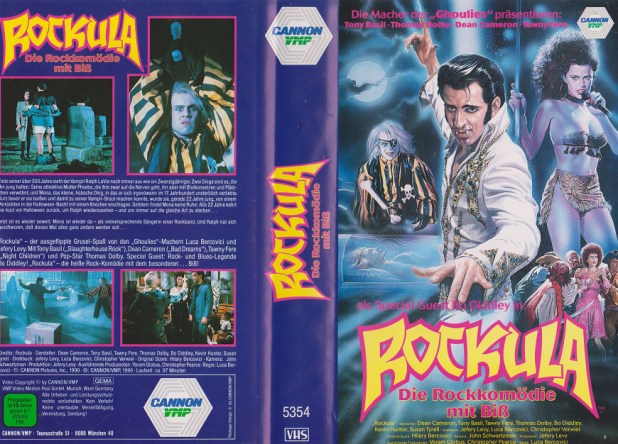
Luca Bercovici was behind The Ghoulies and The Granny as well as this movie, where a 400-year-old vampire named Ralph Lavie (Dean Cameron). He lives alone with his mother Phoebe (Toni Basil!) and is suffering from a curse. It turns out that every time he falls for Mona, she’s killed on Halloween by a pirate with a giant hambone. Now, he plans to stay locked up in his room so that his heart doesn’t get broken again.
Our hero is somehow friends with Bo Diddley and survives getting hit by a car driven by Mona (Tawny Fere), who in this lifetime is a singer managed by her ex-boyfriend Stanley (Thomas Dolby!). Ralph starts a band, called Rockula, falls in love again and has to save his love.
Susan Tyrell shows up as a bartender, which should really be all the reason you need to see this movie. Well, that and the end, where an Elvis-dressed Ralph busts out of a mirror and performs. The song are pretty silly, the story is kind of dumb, but I still found myself enjoying this.
“I’m gonna give you an engine low to the ground . . . an extra thick oil pan to cut the wind from underneath you. It’ll give you thirty or forty more horsepower. I’m gonna give you a fuel line that’ll hold an extra gallon of gas. I’m gonna shave half an inch off you and shape you like a bullet. I’ll get you primed, painted and weighed, and you’ll be ready to go out on that racetrack. Hear me? You’re gonna be perfect.” — Harry Hogge, crew chief and car builder
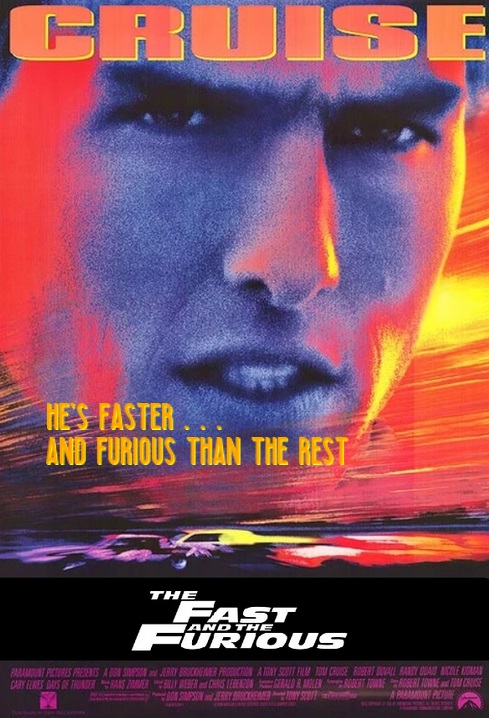
If only Harry had said, instead of, “You’re gonna be perfect,” said, “You’ll be fast and furious.”
What might have been . . .
Mock poster by R.D Francis/F&F logo property of Universal/typeface overlay via Pic Font
Tom Cruise gets respect in this neck of the Allegheny woods. He wanted to be the next Paul Newman. He wanted to become Steve McQueen. And unlike Quentin Tarantino’s Rick Dalton in Once Upon a Time in Hollywood, by golly, Tom Cruise became our generation’s Paul Newman and Steve McQueen. And, as with his idols—car racing enthusiasts who wanted to make their own race car movies—that kid adorned in a pair of Wayfarers that slid across the floor in his socks and into our hearts, wanted to run with the fast and the furious: he wanted to make his own version of Winning and Le Mans. And, and by golly, he did it.
Luckily, for the ticketing-going masses, Tom Cruise reined his “need for speed” (of the four-wheeled variety, anyway) until he broke through and became an official, A-List movie star. For if Cruise would have followed up Risky Business or (to keep it in a “sports” context) All the Right Moves—during the period when he was developing his career and not choosing roles but being cast in roles, like the burgeoning careers of James Caan and James Garner—with a race car flick, he would have been cast in the likes of the lower-budgeted road rallies that were Red Line 7000 and Grand Prix.
And Cruise’s racing endeavors could have been worse.
What if Cruise made a racing flick directly after his first leading man role in Losin’ It (remember in 1983: he made a movie with Shelley Long and Jackie Earle Haley)? We would have gotten the process-shot, rubber burning fiestas that were Fabian and Frankie Avalon’s Fireball 500, The Wild Racers, and Thunder Alley. And thank the celluloid gods of the analog ethers that Cruise didn’t aspire to be a “double threat” and a be singer—and only lip-synched to Bob Seger’s “Old Time Rock ‘n’ Roll”—or we would have ended up with Elvis Presley’s process-shot racing n’ singing extravaganzas Viva Las Vegas, Spinout, and Speedway*. (Oh, man. What if Eddie Murphy—considering his skills as a singer and Elvis mimic—did a remake of Richard Pryor’s 1977 NASCAR race car flick, Greased Lightning?)
“We gotta win this race.”
What might have been . . .
When reflecting on how Cruise turned Mission: Impossible into a franchise: If The Fast and the Furious—the franchise we’re paying tribute to this week—had been developed at Paramount Pictures instead of Universal Studios, would we have laid down our coin for Tom Cruise as an illegal road racer?
And if not that ticket, would we have bought a ticket to see him as Frankenstein?
No, not the Universal monster one. The New World Studios one: Tom Cruise optioned Roger Corman to set up a big-budgeted remake of 1975’s Death Race 2000 at Paramount. Sadly, amid scripting problems and the usual executorial testosterone splashing, the deal fell apart and ended up on the Universal lot. Then end result: Instead of (finally!) a dark, brooding tale about a futuristic transcontinental road race—one that jettisoned Paul Bartel’s hokey-satire of the original—that adhered to the serious, sociopolitical insights of Ib Melchoir’s short story . . . we ended up with a bunch of check-the-screenwriting-boxes trope-prisoners racing around in a circle on an island. And who in the hell let Joan Allen on Terminal Island?
. . . And now the Death Race franchise is four films deep—with a different “Frank” (and actors as Frank) for each subsequent (direct-to-video) film that carries an addendum that the film is a prequel, sidequal, etc. to the first film (and that the first film was actually “prequel,” ugh, to the ’75 original, argh!), as it races further and further and further away from Melchoir’s initial vision. The end result—at least for those of us weaned on the video fringes off the teats of Norman Jewison and Roger Corman: Death Race ‘08 was Rollerball ’02 all over again. Neither were Lays emulsified-potato chips like their superior forefathers: once was enough. And thank the analog lords that the Rollerball reboot wasn’t turned into a direct-to-video franchise. (Can you believe that director John McTiernan went to federal prison for making a false statement to an FBI investigator over illegally wiretapping Rollerball’s producers? He went to prison for Rollerball?)
And that brings us back to the film we’re supposed to be reviewing: Days of Thunder. (I know, Sam. I know. At least there won’t be a Seinfeld reference.)
Come, on now. You’ve seen it. We’ve all seen it. (Yes, even you: the underground, VHS-loving indie purveyor who Facebook-hangs with the B&S About Movies crew on Saturday Nights (at 8 P.M on Groovy Doom: shameless plug) to watch double features about worms and Linda Blair being abused.) And even if you didn’t hit the multiplex, you caught Cruise’s race epic via one of Ted Turner’s endless TNT replays as you couch-surfed and channel-grazed on a lazy, Cheetos-dusted Sunday afternoon. And, if you’re financially well-to-do, you watched Days of Thunder on yer fancy, upper-tiered Showtime or HBO subscriptions—as you couch-surfed and channel-grazed on a lazy, Doritos-crumbed Sunday afternoon. So don’t deny it: you embraced the Cruise like the mainstream-everybody else.
While this Tony Scott-directed and Tom Cruise-produced racing epic is vastly superior to the Caan and Garner romps and the bigger-budgeted Newman and McQueen films in all of its related film disciplines, we basically have the same film: a spunky racer with talent, but too much attitude, aspires for NASCAR fame—and finds romance and competition on the asphalted, gladiatorial oval. (For isn’t this all just Charlton Heston in Ben Hur with cars instead of horse-drawn chariots?)
So, speaking of testosterone splashing: Producers Don Simpson (wrote Aloha, Bobby and Rose, Cannonball) and Jerry Bruckheimer (The Rock, Bad Boys) along with director Tony Scott (Tarantino’s True Romance), and sometimes screenwriter Robert Towne, all went Alpha-male over how to set up shots. Fully-built and ready-to-roll sets were torn down and rebuilt because they “weren’t right.” The hormone and anabolic steroid-stew flowed so deep that the long-idling (sorry) crew members accumulated enough overtime pay to go on vacation for a full four months after filming was completed.
What was the end result?
Crtics pounced on the film for its stock plot, two-dimensional characters, and poorly written dialogue and called it out for being a Top Gun clone, sans planes and sky and lots of cars and asphalt. Roger Ebert, while giving the film three out of four stars, still took the film to task, calling it the Tom Cruise Picture, since it resembled the “10 Point Formula” employed in his previous films The Color of Money and Cocktail (it’s actually “9 Points,” but he came to revise it to include the “Dying Friend” trope). Mind you now, we are talking about Robert Towne here: the guy who wrote The Last Detail, Marathon Man, and friggin’ Chinatown. There’s whole chapters in screenwriting books dedicated to Towne’s brilliance. That’s Ebert for you: he takes no prisoners. (Sigh, I miss you Gene and Roger: you and Dr. Who and The Star Hustler made PBS worthwhile.)
And what did “The Q” think: “Days of Thunder is the movie Grand Prix and Le Mans should have been . . . it has the fun of those early AIP movies.”
And will we ever get a Quentin Tarantino racing epic starring a back-on-top Rick Dalton? We wait with Cheetos-stench bated breath.
Uh, oh.
Sorry, Sam. Actress Kathleen McClellan, aka “Good Naked, Bad Naked” girl from Seinfeld (“The Apology”) kissed Tom Cruise in Days of Thunder. (In the “winner’s circle,” I think; she was once the Skyy Vodka Girl <ahem>, Sam.)
It always comes back to Seinfeld. And Vodka-spiked movie-theme drinks. One Thunder Cruise Lemon Squeeze, comin’ up!
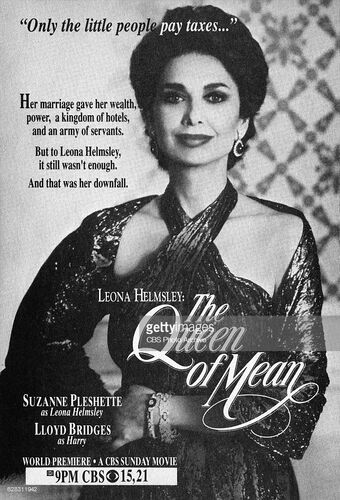
When I think of Leona Helmsley, who I remember from WOR commercials, I think of Suzanne Pleshette as her. This film is from that near-exploration sub-genre of made-for-TV films: the ripped from the headlines takedown of the fallen.
Somehow, they talked Lloyd Bridges into being in this movie. Don’t ask me how, but man, when he’s all out of it and can barely shave? Magic.
Director Richard Michaels did 55 episodes of Bewitched, which seems to me like the perfect start for a career of making TV movies just like this. It’s filled with so much sleaze
Somehow, no one on Letterboxd has reviewed this except me. This either makes me happy or makes me realize that I will watch anything and everything, then try and tell an uncaring world how the movies make me feel.
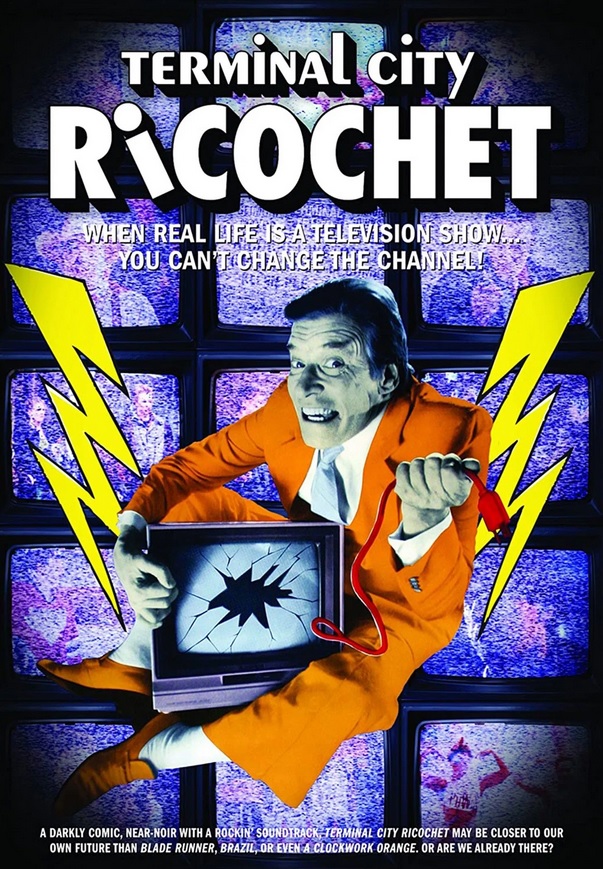
Jello Biafra of the Dead Kennedy’s goes Repo Man in this post-apoc sci-fi romp that reminds of Death Race 2000‘s political-parody intrigue — and it’s backed by the music of DOA, Keith LeBlanc, and Nomeansno, along with Biafra himself fronting DOA and Nomeansno for a pair of tunes.
Canadian acting mainstay Peter Breck (appeared in a wide array of U.S cop and western dramas in the ’60s and ’70, as well as starring as Nick Barclay in ABC-TV’s The Big Valley; you’ve also seen Breck in 1958’s Thunder Road, 1960’s The Beatniks, and 1963’s Shock Corridor by Samuel Fuller) stars as Ross Glimore, a media entrepreneur who serves as the corrupt, evil mayor of Terminal City, a decaying dystopia that manipulates the masses through television — and bans things such as rock & roll and meat — that renders the citizens addicted to consumerism that financially benefits the government.
When Alex Stevens, a punk-youth newspaper delivery boy, witnesses Glimore commit a hit-and-run accident, Glimore dispatches Bruce Coddle (Biafra, in a pisser of a role), a maniacal agent of Terminal City’s Social Peace Enforcement Unit, and his lackeys (DOA’s Joe Keithley and pro-wrestling legend Gene Kiniski) to silence Stevens until after Glimore steals yet another election.
Terminal City Ricochet was never officially available on VHS and rarely shown outside of its native Canadian TV broadcasts, along with an occasional U.S film festival or art house showing hosted by Biafra himself. Alas, there’s no freebie uploads or PPV streams online — you can, however, listen to the soundtrack on You Tube. (I rented a bootleg rip in the early ’90s from a local comic book store that carried VHS obscurities, such as the previously reviewed Hangin’ Out starring Nena; I also picked up the 1993 documentary Hated: GG Allin and the Murder Junkies and Toshiharu Ikeda’s Evil Dead Trap around the same time.)
Alternative Tentacles first issued the film to DVD in 2010, but as of April 2020, they now offer the film and soundtrack as a DVD/CD combo at the reasonable price of $12.00 via their website. If you loved Allan Arkush’s Get Crazy, Alex Cox’s Repo Man, Penelope Spheeris’s Suburbia, Michael Nesmith’s Tapeheads, and Allan Moyle’s Times Square, then you’ll dig the low-budget indie shenanigans of Terminal City Ricochet.
Get this . . . the scribe behind this, Phil Savath, also wrote the David Cronenberg drag-racing epic Fast Company and . . . the sci-fi horror musical Big Meat Eater. Yeah, really. All this, and the Dead Kennedys, too.
And be sure to join us for our “Phil Savath Night” as part of our weekly Drive-In Friday featurette.
About the Author: You can learn more about the writings of R.D Francis on Facebook. He also writes for B&S About Movies.
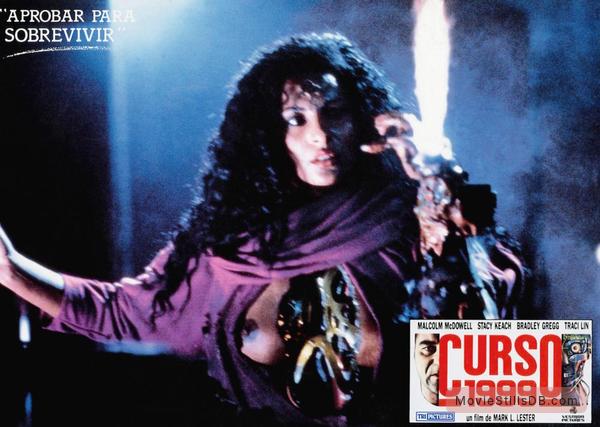
The beginning of this movie takes on an Escape from New York feel, informing the audience that violence in American high schools is out of control. With most major cities being controlled by gangs, schools have shut down or become basically military camps.
Yes, Class of 1999 does something few movies have ever done. It takes a mostly realistic first movie and then goes completely off the rails, placing the sequel in a near-post apocalyptic future.
Seattle’s Kennedy High School is in the middle of a free fire zone, a place that the police don’t dare to intervene. So the Department of Education Defense (D.E.D.) and MegaTech head Dr. Bob Forrest (Stacy Keach, magnificent) have decided to use the school to test their new breed of teachers: Coach Bryles, Mr. Hardin and Ms. Connors (Pam Grier!). With delinquents being allowed back into the school, these android teachers are fully prepared and willing to use deadly force to keep horseplay to a minimum.
This is the story that hero Cody Culp (Bradley Gregg, Fire In the Sky) must conquer. Or at least survive. His love interest is played by Traci Lind, who was also in Fright Night Part 2. She retired from acting at a young age and made claims that was abused by her ex-boyfriend Dodi Fayed. Yes, the same man who died with Princess Di.
Between the Razorheads and Blackhearts gang war, robotic teachers unleashing flamethrowers and trying to protect his old friends, Cody has a lot of work on his hands. I mean, his kid brother Angel (Joshua John Miller, Homer from Near Dark) gets killed and there’s a letter in blood written on his trademark basketball.
Every single person in this movie is ridiculous and I say that in absolutely the kindest way. This movie is entertaining from the moment it starts. Punk rock future gang wars? A Terminator version of Pam Grier? Malcolm McDowell as a school principal? An albino mad scientist Stacy Keach? Yes. This movie has that and so much more.
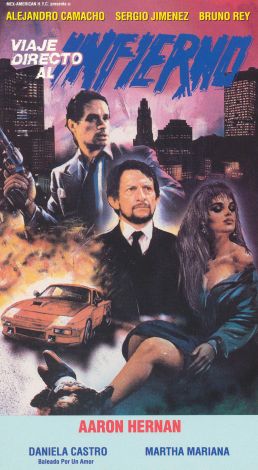
The title of this movie translates as Direct Trip to Hell, which is probably a good description of 90 some-odd minutes of an evil uncle abusing his niece (Daniela Castro) while also being obsessed by death.
He’s also upset because she has feelings for his limo driver, which is kind of a queasy thing, but not as bad as the fact that he has a basement filled with dead people that he makes her hang out in and touch corpses.
The uncle believes that he will soon die, so he asks Castro to bury him in a shallow grave and to keep his body above ground for two days so that he doesn’t wake up in a grave. She refuses, so he locks her in that basement I mentioned above and all the corpses begin to come to life.
I fear that I’ve made this movie sound way more exciting than it is. Because trust me, it was so memorable that I had to job my memory by watching it again before writing this and it wasn’t any better the second time around.
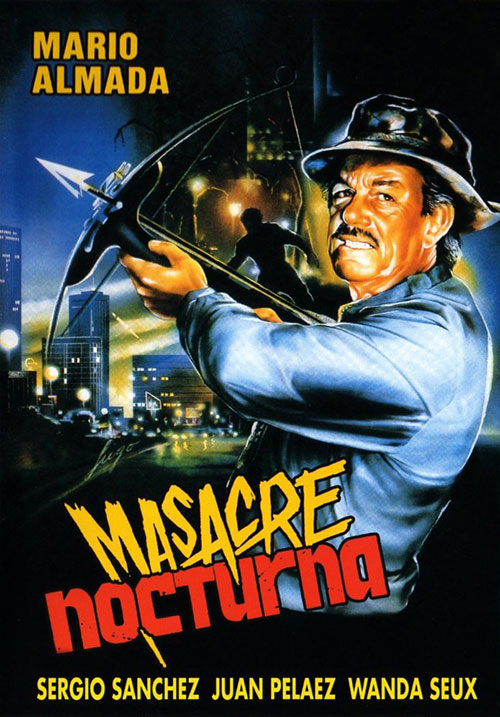
Slaughter Night is a portmanteau written and directed by Gilberto de Anda. It features three stories that aren’t really connected, but the astounding ending of the last story more than makes up for that. I’d never seen a Mexican Bigfoot before and now that I have, I feel like my life is closer to finally nearing completion. Don’t feel sad. I feel fulfilled.
In the first story, a young actor wants to get ahead and learns that his elder rival uses black magic. So he kills the man and steals his book of spells, which seems like the worst idea ever. Or perhaps that’s the second story, where some punk rockers try to rob a family of vampires.
The last story, well, that’s why you’ll want to watch this. Mexican action movie star Mario Almada — who looks like someone’s dad and not who we in America would think of as someone who should be in those types of films and we really need to get over our prejudices in so many ways, but particularly against elder Mexican actors not being able to patear el culo.
Anyways, Mario plays a hunter who has been after a Yeti for his entire life, before having to join forces with El Squatcho and fight a bunch of thugs who are about to assault Mario’s annoying comedy relief wife. Much like the creature in Night of the Demon, this Bigfoot’s fight style is to knock people’s heads clean off. It’s everything I wanted this movie to be, but it takes a while to get there.
So this isn’t really a giallo. But then again, Near Dark really isn’t a gothic horror movie, but it does a damn good job of updating that genre too. That’s due to Kathryn Bigelow, the only woman to ever win a Best Director Academy Award.
From Point Break to Strange Days and the film that won her that honor, The Hurt Locker, she’s able to take the conventions of film, remix them and come up with her own unique take. She also doesn’t shy from the ballet of violence, either.
Back when Vestron Pictures tried to go legit, this movie was almost released under their auspices. Metro-Goldwyn-Mayer got the rights and the film died in theaters.
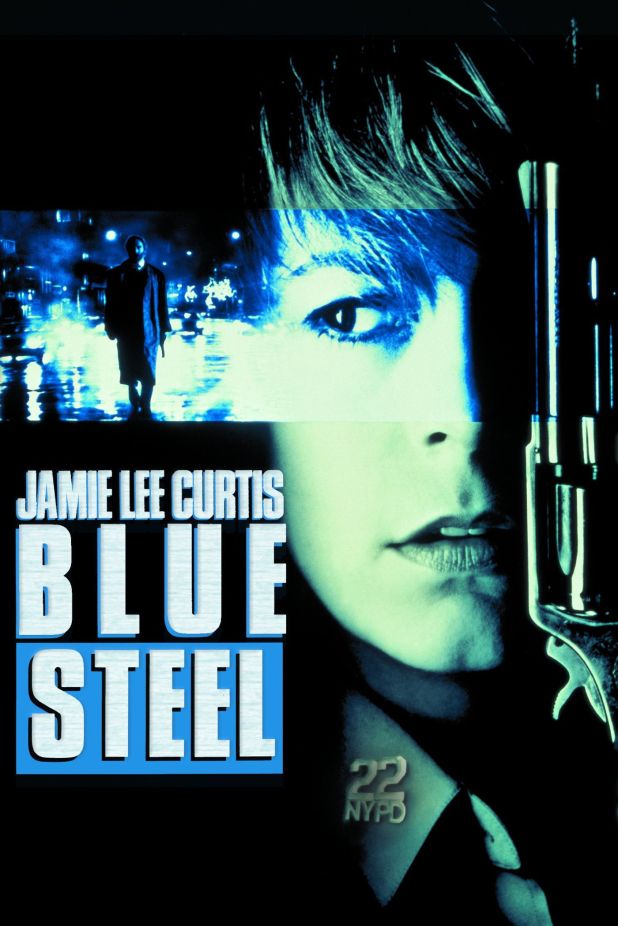
Interestingly enough, Roger Ebert saw this movie as a sequel of sorts to Halloween, while remaking that it was more interesting than just another replaying of the Michael Myers formula because “the filmmakers have fleshed out the formula with intriguing characters and a few angry ideas.”
Ron Silver, one of cinema’s greatest assholes, plays Eugene Hunt, a mystery man who falls for rookie cop Megan Turner (Curtis) the moment she blows gigantic bloody holes into a young Tom Sizemore. He takes the criminal’s gun away, which in effect makes Turner a criminal instead of a cop, shooting an unarmed man with such deadly force over and over again.
Turner finds herself torn between Hunt and the man investigating her, Detective Nick Mann (Clancy Brown, the Kurgan in Highlander). It’s an intriguing idea, as nearly every male relationship in her life is abusive, from her father to even the way that Mann speaks to her upon their first meeting. She’s trying to achieve in a male-dominated field as well and the only positive relationship — with her friend Tracy (Elizabeth Pena) — is also brutally torn away.
I’d be remiss if I didn’t mention that Louise Fletcher plays her mother. And also doubly guilty if I didn’t remark that she is also in Exorcist II: The Heretic. But I digress.
The end of this film plays nearly as a parody of action movie cliches. There are no people in Times Square, usually the most crowded of spaces and each character has too many bullets in their guns. That said, we’ve come too far, Turner has given up too much and Hunt must pay in blood. So much blood.



 B&S About Movies
You must be logged in to post a comment.