B-Movie Blast: Deathrow Gameshow (1987)

We’ve been jammin’ on this movie at B&S About Movies for quite some time, as we included it on August 19, 2019, as part of our “Deadly Game Shows Week” of film reviews. Leave it to the fine film folks at Mill Creek to finally give it a slot on a Mill Creek box set. And it’s a part of their B-Movie Blast 50-film box set. And guess what? As is par for the Mill Creek course, it’s coming at us again on Mill Creek’s Excellent Eighties 50-film set — which guest writer Sean Mittus covered for us (on February 28, 2021).
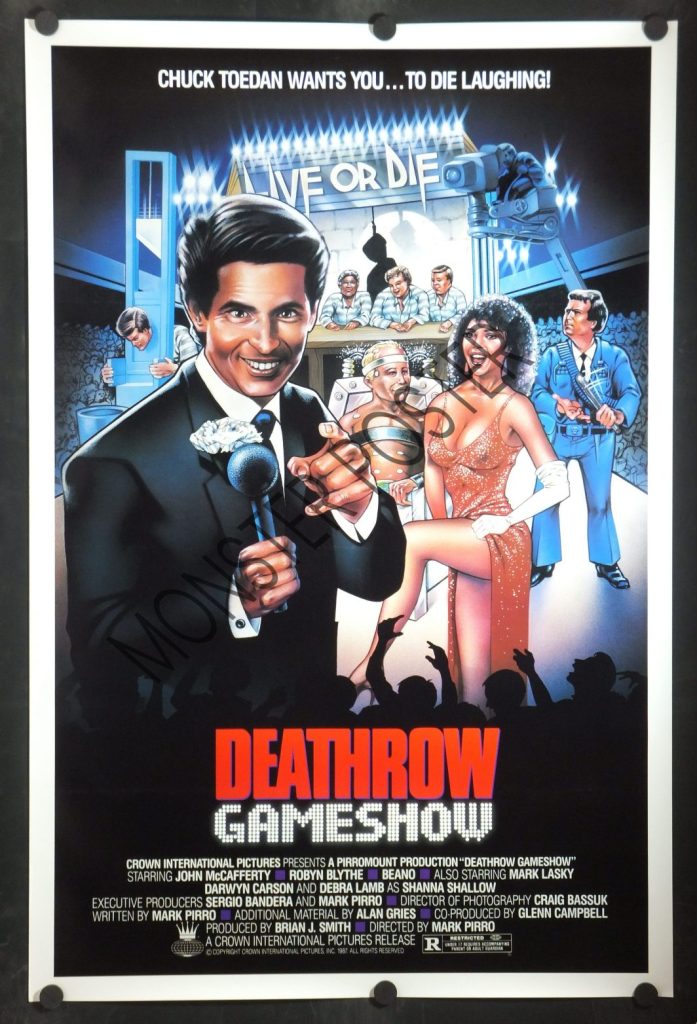
Yes. The poster is better than the movie.

Well, Sam, even though he knows I hate Troma movies more so than him, he asked me to give this another take, so as to keep the site fresh and repeat free. Whatever, boss.

Lord help me. I guess I’ll be sharing some of Sam pissy hate-mails love for not liking Troma movies. But I pride myself on my “delusional hipster” and “edgy commentary” skill sets. Look, I just don’t like movies that are bad on purpose. Well, scratch that. Writer and director Eric Eichelberger, of the comedic horror Ghoul Scout Zombie Massacre, purposely made his movie “bad.” But it’s not bad from incompetence or campy due to lack of skill (as is the case, here), for it is a well-produced and shot film and acted film (by skilled actors that understand their material) that is in homage to the ’80s SOV films before it.

That same can’t be said for this . . . celluloid thing. It’s exists. That’s the nicest thing I can say. It’s not a real movie, like Ghoul Scout Zombie Massacre. I know, I know. It’s “over my head” and this . . . thing . . . and Redneck Zombies has fans. I am not one of them. Maybe The Toxic Adventure and Surf Nazis Must Die — and that’s only because of the nostalgic USA Network Friday-Saturday weekend connection. Yeah, yeah. I know this isn’t a Troma movie. But it dumps #2s — among other things — like one.

There, now that’s two rips on Troma. Deal with it, dear reader-cum-troll.

Yeah, this movie is more “deadly” that you realize. Where’s Ralphie’s Red Rider?

So, in an f’d up Los Angeles communications outlet of the KLST variety of the Zoo Radio variety (only that’s radio; this is TV) and just down the dial from “Weird Al” Yankovic’s Channel 62 in UHF, is the bottom-of-the-barrel KSIK — with the top-rated show hosted by John McCafferty: Live or Die. And McCafferty (played by Chuck Toedan) ain’t no Damon Killan. Now, do you remember when Chuck Barris went meta with The Gong Show Movie? That’s how you do a game show parody: Deathrow Gameshow is a “how to” on how not do to them.

Now, before you start with the “hypocrite” love: Yes, I liked Mark Pirro’s My Mom’s a Werewolf. But he only wrote that and didn’t direct it: the great Michael Fischa, did. And Fischa had John Saxon and Susan Blakely to carry the film. And McCafferty and his co-star, Robin Blythe ain’t no Saxon or Blakely.

So, if you haven’t figured it out: Condemned death row prisoners are given one last chance to entertain the masses before they get executed, as well as the chance to win prizes for their families. What you don’t know, in the “plot” of it all: It all goes off the rails when the Spumoni family’s boss is executed playing the game — by electro-shocked wires on his penis as a stripper dances before him. Comedy. You gotta love it.

Now the family send Luigi Pappalardo to kill the host. And this is where I am allowed by B&S About Movies’ hipster and edgy editorial policy to use the word “ensues” because to say more is a lesson in QWERTY futility. Okay, I’ll say this:

This is a film that thinks naming the love interest damsel-in-distress Gloria Sternvirgin, a member of Woman Against Anything Men Are For organization, is funny. It’s not. This is a film that can’t pull of its too-ambitious over talent and budget mock-parody TV commercials and promos for other shows at the station. Again, “Weird Al” does it so much better in UHF. This is a cheap, talentless crap bag that’s an insult to crap bags the world over that also served as a waste of my hand muscles. Do not do this to me again, Sam, or I’ll scrape up my couch coins and Auntie and Gram’s X-Mas and Birthday money and send a hitman to kill you — which is greater than the budget wasted on this “existing” crap bag that stinks to Troma high heaven.

I can’t recommend this. You’ll have to find your own freebie streams and online shopping links for DVDs.

R.D out. See you in the comments box.

About the Author: You can learn more about the writings of R.D Francis on Facebook. He also writes for B&S About Movies.

B-MOVIE BLAST: Hunk (1987)

In the Mill Creek B-Movie Blast box set, you will encounter the only two movies that writer director Lawrence Bassoff made, Weekend Pass and this film. It’s not often that you can say that you’ve seen every movie a director has made, so this is a real opportunity. Or perhaps I tell myself that to get through these films.

Where Bedazzled had the devil as Peter Cooke ready to give Dudley Moore seven wishes for his soul — or Elizabeth Hurley and Brendan Fraser in the 2000 remake — in Hunk we have James Coco — he died days before this was released — as Dr. D, the man who tempts this film’s hero with just one wish.

That wish? Well, to be a hunk. What else did you expect?

Bradley Brinkman (Steve Levitt, Last Resort) is a computer programmer who doesn’t yet know that all of the geeks will get rich and he’ll never have to worry about his fiancee who ran off with an aerobics instructor. But hey, it’s 1987 and those years are far away.

Bradley says something about selling his soul to finish a computer program, which means that his next creation, The Yuppie Program, is a huge success. He moves in next door to Chachka (Cynthia Szigeti, who may have appeared in a few films but is best known for her work running The Groundlings and starting the ACME Comedy Theater; she taught plenty of folks, with a short list being Will Forte, Joel McHale, Conan O’Brien, Cheri Oteri, Julia Sweeney and Lisa Kudrow) and immediately all of the yuppies hate him because he doesn’t fit in.

By the way, if you’re reading this and wondering what a yuppie is in the year of 2021, it stood for young urban professional. It went from a demographic term to a pejorative pretty quickly, to the point that my father-in-law uses the term interchangably with socialists and liberals, which isn’t what yuppie means, but I’d need an entire second website to discuss some of these conversations.

The truth is that the program that made Bradley rich was really made by the devil’s agent O’Rourke (Deborah Shelton, who was Miss USA 1970 and runner-up to Miss Universe that year; she was on Dallas and in Bloodtide, as well as DePalma’s Body Double, where he disliked her voice enough to have her redubbed; her second husband was Shuki Levy who wrote the theme songs for Mighty Morphin Power Rangers, the Mister T cartoon, M.A.S.K. and many, many others, in addition to directing several episodes of the series he helped produce with Saban Entertainment). She makes him a deal that if he wants a new body, he can have it for the summer and he agrees (or else this movie would end about seven minutes or so in to its running time).

He becomes Hunk Golden (John Allen Nelson, Deathstalker from Deathstalker and the Warriors from Hell and Dave from Killer Klowns from Outer Space), the ultimate man, a person whose teeth never break, who can eat all the junk food he wants and who is also a martial arts master. I mean, sure, he’s going to burn for all eternity, but the next few years will look pretty great what with all the women he’s sleeping with and fashion trends he’s setting.

The whole reason for this demonic soul bargain is that there’s a shortage of demons, so Dr. D plans on Hunk and O’Brien going through time along with Ivan the Terrible, Jack the Ripper and Benito Mussolini. That’s pretty imaginative, as is the idea that the therapist who has been working with Hunk — Dr. Sunny Graves (Rebecca Bush, who played Florence Henderson in Growing Up Brady) — is really O’Reilly too.

Somewhere in the midst of all of this, a drunk television host named Garrison Gaylord (Robert Morse, who was in How to Succeed in Business Without Really Trying as well as playing Bertram Cooper on Mad Men; here he is in an 80’s sex comedy which seems like a step down but work is work) nearluy hits them on the beach and Hunk stops the car with just his strenngth. He becomes an instant celebrity while Dr. D worries that Sunny/O’Brien has fallen in love with another client. If she fails again, he promises to return her to her original form.

Instead of helping Dr. D start World War III, Bradley and O’Brien end up cancelling their contracts, with her going back to being a 10th Century princess who sold her soul to avoid an arranged marriage. I mean, now she has centuries of experience and is a great programmer, so I think she’ll be fine.

You’ll also see some familiar faces here. And by familiar faces, I mean the kind of people that maniacs like me shout out loud when they see them, like Avery Schreiber, who was in the Doritos commercials when I was a kid and shows up in Airport ’79 and Silent Scream. He also taught the master improvisation classes at Chicago’s Second City, so the fact that both he and Szigeti are in this is kind of a big deal for comedy nerds. If only Del Close had been in town that day!

Hilary Shepherd, who was in the band American Girls and played Divatox in Power Rangers: Turbo — maybe she met the Saban guys through Shelton? — is in this too. She’s also in Weekend PassScanner CopRadioactive Dreams and Theodore Rex, all movies again that none out of a hundred people have seen, but all ones that get obsessed over here.

You’ll also find Melanie Vincz (The Lost Empire), Page Mosely (Edge of the Axe), John Barrett (who did the stunts for Gymkata and Steel Dawn) and Andrea Patrick, who plays a mermaid and was a beauty queen from the town of Uniontown, Pennsylvania, just a half an hour from my home. Her name may not mean much to you, but she’s married to Fabian Forte and we all know just how much Fabian and his films get coverage here.

Yet perhaps the biggest name in this movie barely is in it. Brad Pitt was an extra in this film, making it his very first screen appearance.

Can you write over a thousand words on a forgotten 1980’s sex comedy? Yes. You sure can.

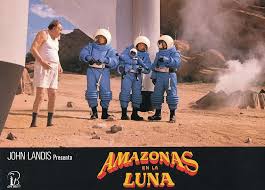
REPOST: Amazon Women on the Moon (1987)

EDITOR’S NOTE: We’ve already posted two articles about this beloved film on February 23, 2019 and November 3, 2020, but what kind of female society week would we have if this one didn’t make the cut? 

To be perfectly honest, I could watch this movie every single day. Directed by five different people — Joe Dante, Carl Gottlieb, Peter Horton, John Landis and Robert K. Weiss — and starring tons of folks that I love, it’s the most perfect of all cinematic junk food.

Rather than give you a breakdown of everything that airs on WIDB-TV (channel 8) during its broadcasting day, I’ll just touch on the fact that this movie unites so many of my favorite people in one place.

There’s Russ Meyer as, well, Russ Meyer the video store owner, because what other place would have giant movie posters all over it for Supervixens? An assortment of comedians enacting a roast in the place of a funeral, with Charlie Callas, Rip Tayor, Jackie Vernon, Slappy White, Henny Youngman and Steve Allen being upstaged by Joe Dante favorite Belinda Balaski, who goes from sadness to anger to comedic force in one incredible performance. Ed Begley, Jr. as the Invisible Man. William “Blackula” Marshall as the leader of the Video Pirates. Henry Silva appearing in Unsolved Mysteries years before that show was a thing (it debuted in 1987, most of this film was shot in 1985). David Alan Grier as Don “No Soul” Simmons, something that never fails to make me smile. Andrew “Dice” Clay before anyone knew who he was, shooting Ken Wahl’s wife and getting Jimmy Olsen in trouble. And oh yeah — the main segment has Steve Forrest (the star of S.W.A.T. and Mommie Dearest‘s Greg Savitt), John Travolta’s older brother Joey, Lana Clarkson (Barbarian Queen and, sadly, a future Phil Spector victim), Sybil Danning and Forrest J. Ackerman as the President of the United States in a movie that should star Zsa Zsa Gabor. Stick around after the credits or you’ll miss a picture-perfect Kroger Babb riff starring Carrie Fisher and one of my favorite movie people to ever exist, Paul Bartel. Oh! I almost forgot Monique Gabrielle as Taryn Steele!

I have no idea who this movie was for other than for me. It’s a movie that speaks the language of the movie geek long before the internet existed and was doomed to bomb (or play HBO forever and find worshippers).

I’m so happy to have the new Kino Lorber blu ray of this. Beyond featuring a documentary with interviews with nearly everyone involved, it also has the deleted segments Peter Pan Theater, The Unknown Soldier and The French Ventriloquist’s Dummy. Plus, there are outtakes of every single routine from the roast of Harvey Pitnik and audio commentary from Kat Ellinger and Mike McPadden.

You can get the new blu ray from Kino Lorber, who were nice enough to send us a copy. This is one of those movies that I feel that everyone should have in their collection. There is no way that I can be unbiased on this one.

Profumo (1987)

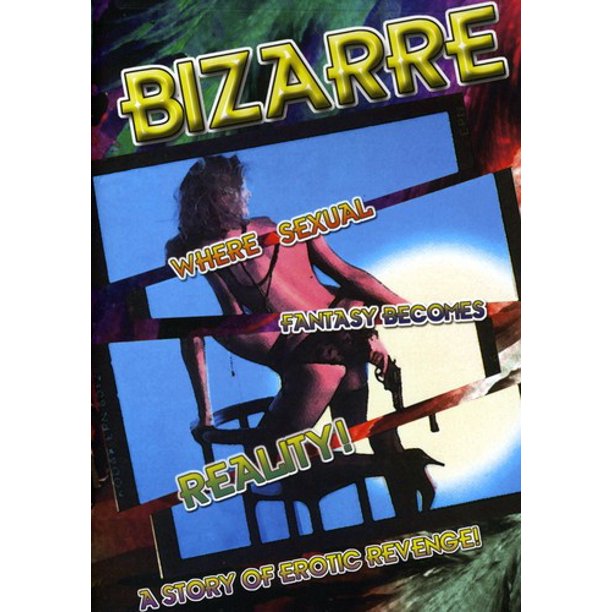
Man, I don’t know if this is strictly a giallo or just plain sleaze. But hey, I watched it, you’re going to read it and then we’ll all go about our way. Seriously, I always thought The Devil’s Honey had the most ridiculous sex scenes in a quasi-giallo and here we are with Profumo, which has nothing to do with the British sex and politics scandal, and was also known as Bizarre.

Florence Guérin (Top ModelFacelessToo Beautiful to DieThe Black Cat) plays Laurie, a woman who is pretty much haunted by a violent lover named Corbi. No matter how far away from him she gets, he always pulls her back in.

Yet now she’s found a new lover named Edward (Robert Egon, the only actor I can think of who is in a Marvel movie*, My Own Private Idaho and two Fulci films**, Massacro and Sodoma’s Ghost), who she feminizes and sodomizes when she isn’t pouring Coca-Cola all over his pubes and licking it off. Yes, this is that kind of movie.

Corbi is never far behind, sending men to attack Laurie and Edward before she decides to take matters into her own hands. But is she strong enough to leave him? Even sixteen years after The Strange Vice of Mrs. Wardh, giallo heroines are still having trouble dumping the abusive men who give them the kink they need. Oh Laurie. Your vice is a locked door.

Frankly, I’m shocked Severin has put this out yet, but this may be because not that many people know about it. Maybe we can do something about that. I’ve honestly never seen Russian roulette used as foreplay before, so I guess that late model giallo has wonderful things to teach us all.

*To be fair, it’s just the 21st Centurt post-Cannon Captain America.

**You could say three, as he also shows up in the mashup of these movies, Cat in the Brain.

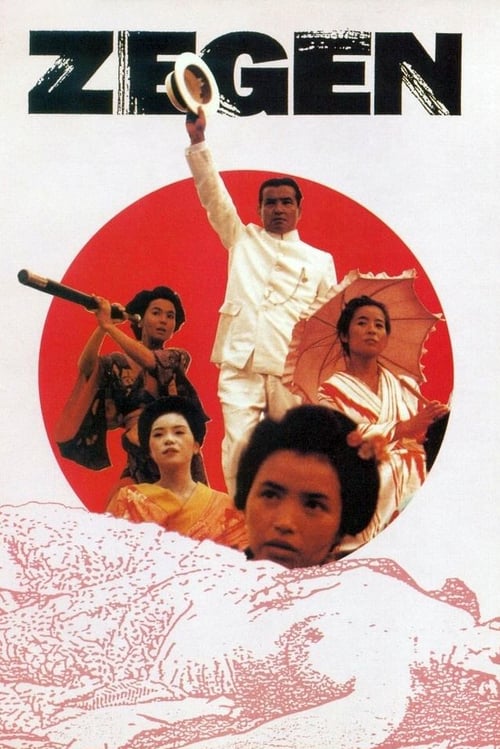
Zegen (1987)

Iheiji Muraoka (Ken Ogata) had plans to be a shopkeeper. However, as he begins to learn that the Japanese armed forces will soon advance across Asia, he instead goes into business as a brothel owner. After all, an army moves on its stomach, but it often stays ready to fight based on its desire.

This is one of Shôhei Imamura’s later movies, but still rich with the black humor and desire to explore the hidden castes and stories of Japan.

Muraoka became Zegen, quite literally the most powerful seller of women in modern Japanese history, known as “The Boss of the South Seas.” Yet beyond the monetary and carnal rewards of this vice, he saw the business of turning out women as an almost patriotic duty.

At the close of this film, as the Japanese forces return to Malaysia, Muraoka rushes to greet them, seeing them as the children of the men that he had worked with to keep Japan strong. He is shoved down by a commanding officer who does not even recognize the old man’s attempts at speaking Japanese. In the end, despite his fanatic devotion and the ruin of so many lives, he himself has been rendered meaningless.

Zegen is one of the three films on Arrow Films’ new Survivor Ballads: Three Films By Shohei Imamura set. I’ve learned something new from each of these movies as we covered them this week and this set has my complete seal of approval. You can get yours from MVD.

Salvation! (1987)

Okay, so we’re cheating with this review. It doesn’t star John Doe, the subject of our week-long film tribute.

This parody on organized religion and the mass communication medium of television directed by New York No Wave artist Beth B stars Doe’s ex-wife Exene Cervenka, who meet her second husband Viggo Mortensen on the set of this, her only acting role. Beth B made her feature film debut with the 16-mm black & white film Vortex (1981) starring Lydia Lunch (Blank Generation, Mondo New York) and a young James Russo (later a go-to heavy in films such as Beverly Hills Cop and Donnie Brasco).

Stepthen McHattie (Theodore Rex) stars in this black comedic statement on the televangelist craze of the ’80s (think Jim and Tammy Bakker) as Reverend Randall, a flock-bilking preacher who likes to compose and rehearse his sermons while watching pornography. His religious empire begins to crumble when the unemployed Jerome Stample (Viggo Mortensen), who grows tired his wife Rhonda (Cervenka) donating to Randall’s church, devises a blackmail plot with his sister-in-law (the singular Dominique) to ensnare the reverend in a sex scandal.

Surprisingly, the film’s soundtrack doesn’t feature the music of Cervenka or director Beth B’s frequent collaborator Lydia Lunch; it instead spins the popular college radio and new wave club hits “Sputnik,” “Touched by the Hand of God,” and “Skullcrusher” by New Order, and “Jesus Saves” and “Twanky Party” by Cabaret Voltaire — along with a few tunes by co-star Dominique (Davalos), who would form the Delphines with former Go-Go Kathy Valentine in the late ’90s.

While it was released on VHS and appeared on HBO, Salvation! has never been released on DVD; however, we’ve learned the vinyl soundtrack was, in fact, released on CD in 1988 (thanks, Fabio, for pointing that out!). The film was previously offered as a VOD stream on Amazon Prime, but has since been pulled from release. You can, however, watch the film through a series of clips uploaded to a playlist by a You Tuber known as “McHattie Fan.”

About the Author: You can learn more about the writings of R.D Francis on Facebook. He also writes for B&S About Movies and publishes on Medium.

Border Radio (1987): John Doe Week

Editor’s Desk: This review originally ran on September 26, 2020, as part of our “Rock ‘n’ Roll Week II.” We’ve brought it back for “John Doe Week.


Was it worth waiting a few years before finding a copy of this poorly-distributed VHS in a cut-out bin at an old Sound Warehouse?

Oh, yeah.

Fans of the cult film existentialism of Easy Rider, Vanishing Point, and Two-Lane Blacktop — or any art film that finds a reissue on the Criterion Collection — will enjoy this grim, black and white film noir homage (shot on Super 16mm) to the French new-wave films of old; to that end, the film employs a disjointed, non-linear narrative. Do you enjoy the films of Jim Jarmusch’s Stranger Than Paradise (1984), Down by Law (1986), and Mystery Train (1989)? Did you enjoy the later Clerks (1994) by Kevin Smith? Do the “mood pieces” of Italian filmmaker Michelangelo Antonioni — such as 1975’s The Passenger — appeal to you?

Then you’ll enjoy Border Radio — although this UCLA student film by Allison Anders and Kurt Voss (Down and Out with the Dolls) doesn’t possess the “slickness” of those films, as you can see from the trailer.

Border Radio is a noirish tale of three southern California punk rockers — two musicians and a roadie (Chris D. and John Doe) — who decided a club stiffed them on a gig, so they rob the club. Chris D. subsequently abandons his rock journalist wife and crosses the border into Mexico with his split of the caper, leaving her holding the bag in repaying the debt of their robbery; she sends John Doe into Mexico to find him.

The caveat of Border Radio: this is not a punk film.

U.S.-issued VHS by Michael Nesmith’s Pacific Arts Video courtesy of 112 Video/Paul Zamarelli of VHS Collector.com.

There are punk rockers cast in the film as actors, but the music and punk aesthetic is void from its frames. The film’s stars, Chris D. of the Flesh Eaters and the Divine Horsemen, and John Doe of X, do not perform any of their music in the film. At the time Allison Anders (1992’s Gas Food Lodging, 1999’s Sugar Town, 2001’s Things Behind the Sun) completed the four-years-shot film begun in 1983, L.A.’s punk scene — with the musicians she cast as actors — was over.

The Flesh Eaters disbanded and the Divine Horsemen (lead singer Julie Christensen stars in the film) were set to release their first recordings; Billy Zoom left X; Phil and Dave Alvin (Dave co-stars in the film) disbanded the Blasters, and Texacala Jones (who also appears in du-Beat-eo) split from Tex and the Horseheads. Green on Red (they appear on stage at the Hong Kong Cafe), who got their start on Slash Records with Gravity Talks (1983) and wrote the soundtrack for Anders’s Gas Food Lodging (1985), also folded up the tents after their three, pre-grunge albums for Mercury: The Killer Inside Me (1987), Here Come the Snakes (1988), and This Time Around (1989) failed to expand beyond college rock airplay and connect with the burgeoning, commercial alternative rock scene. The film’s theme song, “Border Radio,” is performed by The Tonys, aka L.A.’s the Dils, aka Rank n’ File, led by Chip and Tony Kinman; by the time of the film’s release, they formed the synth-based Blackbird project.

You can learn more about the out-of–print Enigma Records soundtrack — never released on compact disc — on Discogs.com. The film is not currently available on PPV and VOD platforms, but DVDs can be purchased direct from Criterion. Here’s the trailer and the full soundtrack to enjoy.

About the Author: You can learn more about the writings of R.D Francis on Facebook. He also writes for B&S About Movies.
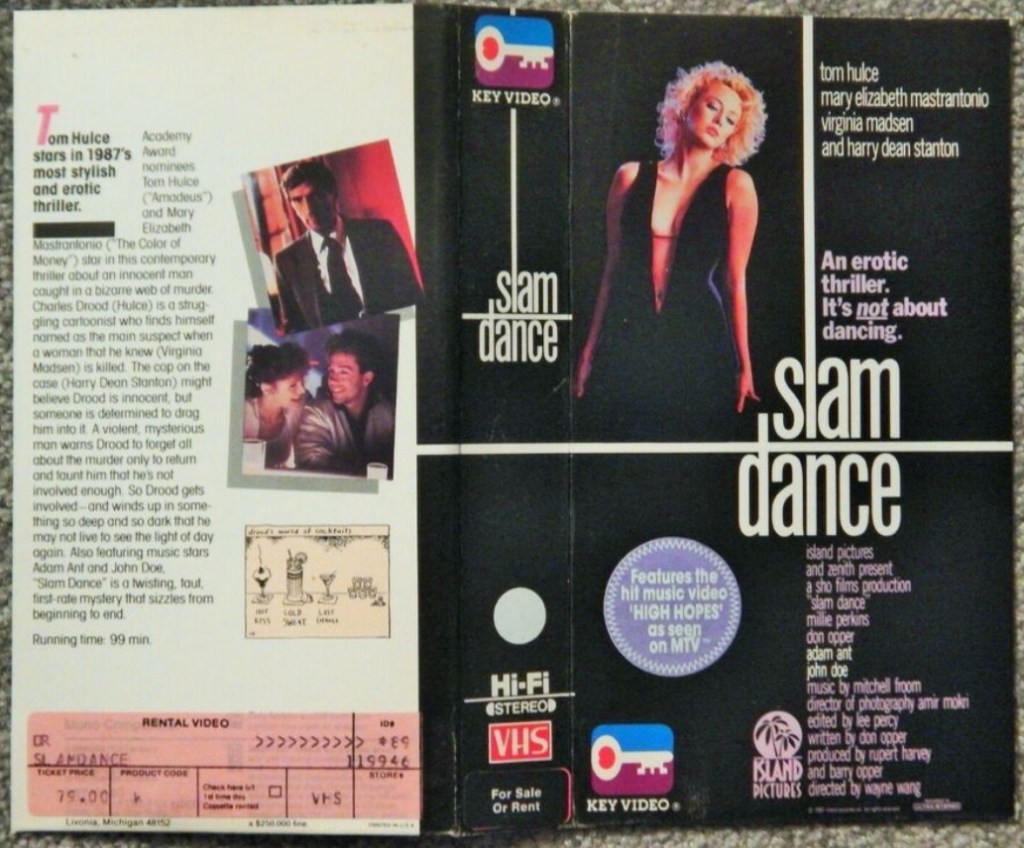
Slam Dance (1987)

John Doe made his first big screen appearances in the 1981 music documentaries The Decline of Western Civilization and Urgh! A Music War. While he made his big screen debut as an actor in Oliver Stone’s Salvador (1986; reviewed this week), he actually made his first foray into acting with Allison Anders’s Border Radio (1987), which began shooting in 1983. After scoring his first mainstream acting gig in Salvador, Doe found himself on another hot ticket, this time with much-ballyhooed Chinese director Wayne Wang.

Ah, the VHS sleeve we remember/courtesy of rtsrarities/eBay via pinterest

Born in British Hong Kong and trained at California College of the Arts, Wang made his debut with the 1972-shot — for $16,000 — and released in 1975 gangster drama A Man, A Woman, and a Killer. The film was poorly reviewed and it wasn’t until his next film, Chan is Missing (1982), that Hollywood stood up and took notice; the film is recognized as the first Asian-American feature film to gain theatrical distribution and acclaim outside of the Asian marketplace place. Gene Siskel and Roger Ebert of PBS-TV’s Sneak Previews loved him. Courtesy of Wang’s choice to shoot in black & white to carry through the film’s mystery-noir narrative, he was hailed as the next “John Cassavetes.” Wang’s next feature, another Asian-centric narrative cast with Asian actors, Dim Sum: A Little Bit of Heart, repeated the box office and critical acclaim of Chan is Missing.

And, with that, Hollywood was ready for Wang to take on an American feature film. Island Pictures, a subsidiary of Island Music, fronted Wang the $4.5 million to shoot the Don Opper-penned (Android and City Limits; rewrites on Critters) film noir Slam Dance. The film was a critical and box office bomb that cleared less than a half million in American box office receipts. Wang himself was so displeased with the end product — which he blamed on producer interference — he tried to have his name removed from the film.

And since it was the first “mainstream movie” for both Opper and Wang, it killed off their mainstream hopes in Hollywood. Opper didn’t write another movie until the Hallmark Channel (!?) disaster film Supernova (2005), an Australian-produced feature film that starred Luke Perry, Peter Fonda, and Tia Carrere. While Wang directed three more indie, low-budget films, he returned to mainstream critical good graces with The Joy Luck Club (1993) and Miramax-distributed Smoke (1995).

Tom Hulce, who was never able to consolidate his Oscar tour de force in Amadeus (1984) into a leading-man career of distinction, stars as C.C. Drood. Drood is a married cartoonist involved noirish intrigue after his lover, Yolanda (a very hot Virginia Madsen), who makes her living as a call girl, is found murdered. In addition to having John Gilbert (John Doe), a corrupt cop looking to pin the murder on Drood, Yolanda’s lesbian lover, Bobby, has hired a hit man (Don Opper) to kill Drood. Of course, Gilbert and Bobby, were in on the murder all along. Another wrench in the noir works is new wave star Adam Ant as Drood’s agent. And the musician connections of the film carries through with keyboardist Mitchell Froom, who got his start with the bands Montrose and Gamma led by Ronnie Montrose, composing the film score.

As for the actor that led to us reviewing this film: John Doe followed up his smaller support role in Salvador with class and style; he should have made a much greater leap into feature films after turning in equally stellar (in larger roles) performances in the much-aired cable cult favorites of Road House (1989) and Great Balls of Fire (1989) (reviews for both this week!). Unfortunately, Doe’s next two films, Liquid Dreams and A Matter of Degrees (both 1991) failed at the box office. Doe fared better with his next work — going thes-for-thesp — as professional gambler Tommy “Behind-the-Deuce” O’Rourke in the Kevin Costner and Dennis Quaid-starring Wyatt Earp (1994; reviewed this week, look for it).

While it’s available as a rental on Vudu, we found a free-with-ads steam on TubiTV — denied! — it’s been pulled. But you can stream it over on Amazon Prime. Oh, and regardless of the pretense of Doe and Ant — and its title — this is not a “punk film.” You’ve been caveated. You can watch the trailer and opening seven minute from the VHS, via You Tube.

About the Author: You can learn more about the writings of R.D Francis on Facebook. He also writes for B&S About Movies.
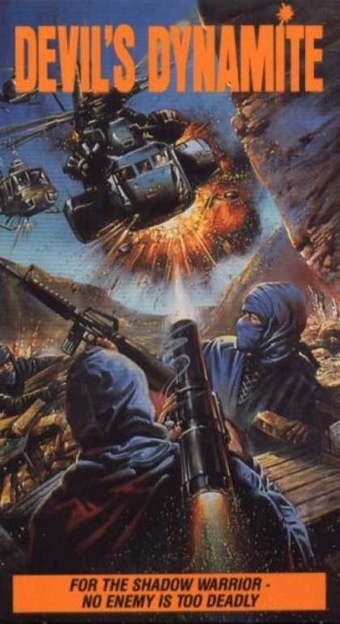
Devil’s Dynamite (1987)

Look, there’s no such person as Joe Livingstone, the director of this movie. Or William Palmer, its writer. They’re both Godfrey Ho, the Hong Kong Ed Wood who made at least eighty movies from 1980 to 1990 and may have used over forty screen names, making him the Asian Aristide Massaccesi.

Ho is the master of a cut and paste style of filmmaking that challenges the notions of art and copyright clearances — or he’s a hack out to make a quick buck. He’s also famous for dropping footage of ninjas into movies even if the plot doesn’t call for it. I take issue with this: movies always call for more ninjas.

His love of the word ninjas also led to making movies that have titles like The Ninja Force, Ninja The Protector, Full Metal NinjaThe Ninja SquadThunder Ninja Kids: The Hunt for the Devil BoxerNinja Terminator, Zombie vs. Ninja, Thunder Ninja Kids in the Golden AdventureNinja Force of AssassinsNinja Knight Brothers of Blood, Ninja of the Magnificence, Ninja Powerforce, Ninja Strike ForceThe Ninja ShowdownPower of NinjitsuNinja’s Extreme WeaponsNinja’s Demon MassacreCobra vs. NinjaDeath Code: NinjaGolden Ninja InvasionRage of NinjaNinja: The BattalionEmpire of the Spiritual NinjaNinja Operation 7: Royal WarriorsNinja CommandmentsNinja In ActionNinja: American WarriorNinja Operation: Licensed to Terminate, Ninja Operation 6: Champion on Fire, Ninja Phantom Heroes, Bionic NinjaTough Ninja the Shadow WarriorTwinkle Ninja Fantasy (that’s one I gotta track down), The Blazing Ninja and probably ten movie ninja movies. Seriously, those guys are like cockroaches.

He would film footage for one movie, then re-use those shots over and over, which kind of makes him the Asian Roger Corman, but then he’d also find obscure Thai, Filipino and other Asian films, then graft them onto his movies — making him the Asian Bruno Mattei? — and then have several movies made with the budget of one, except no one can even tell where his footage begins and where the other films end.

Ho didn’t stop with stealing footage. He has no idea that music is a copyrightable thing either, so his movies are filled with all manner of sonic thievery, including songs from Miami Vice, Star TrekStar Wars, anime and even music from Wendy Carlos, Chris & Cosey, Tangerine Dream, Clan of Xymox, Vangelis and Pink Floyd.

Other than some rich musicians and the gullible film public, who gets hurt, right? Well, Richard Harrison, for one. He’d worked with Ho in the past at Shaw Brothers and made a deal to be in a few of his films. A few movies ended up being, well, a veritable onslaught of low-level ninjas films with his name above the title, which did damage to his career. Harrison was the unwilling feature actor in almost a dozen different movies, which sent him back to the United States. Yes, a guy who worked for everyone from Alfonso Brescia, Antonio Margheriti and Alberto De Martino to appearing in Bruce Lee ripoffs and Eurospy films had finally had enough.

And then, out of nowhere, Ho was making mainstream movies. Well, as mainstream as a Cynthia Rothrock film would be. After directing her in Honor and Glory and Undefeatable, he also made Laboratory of the Devil, a remake/remix/ripoff/ unauthorized sequel of The Man Behind the Sun. And then, he went back to his old tricks and used all the same footage to make a sequel to that movie, Maruta 3 … Destroy all Evidence. And then…

Somehow, this movie is 81 minutes and feels like nine hours. It’s all about Alex, who we also find out is the Shadow Warrior*, and now, he has to fight a smuggling ring who are all vampires, which as we all know, hop in China. No one at all is surprised that vampires exist. It is just matter of fact. There’s also a gambler looking to get even with the mob boss who sent him to jail, in case you get bored.

This is also somehow a sequel to Robo Vampire. Trust me, you have no reason to watch that. Or this. I mean, this movie has a silver lame suited superhero moonwalking against vampires, so really you can do whatever you want. Also, this movie makes so little sense that Robo Vampire could very well be the sequel, for all we know.

The poster is pretty awesome, though. And to be perfectly honest, I love these movies.

If you decide you can handle a director who makes Jess Franco look like Fellini, this is on Tubi.

*Shadow Warrior has the kind of costume that’s so horrible, Rat Fink A Boo Boo are both laughing at him.

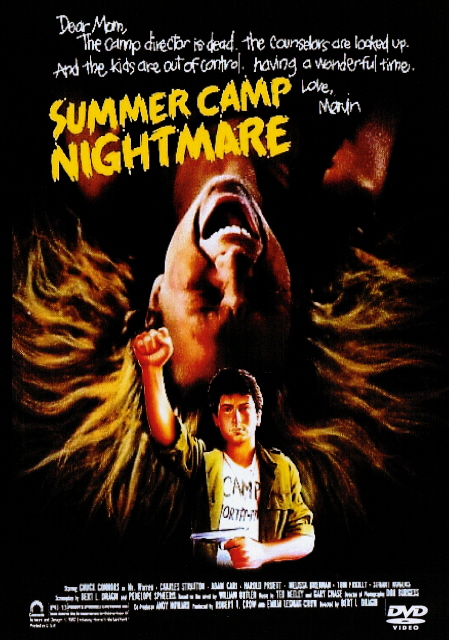
Summer Camp Nightmare (1987)

Based on the novel The Butterfly Revolution by William Butler, Summer Camp Massacre is not the slasher that you’d be led to believe it is from the title and poster. It is, however, one of the few movies that’s never even come out on DVD.

Donald Poultry is a sensitive young man given to writing a diary in his tape recorder. A summer at camp is supposed to make him come out of his shell, but the arrival of Mr. Warren (Chuck Connors) means that this summer will not be like any he’s ever had before.

That’s where the story seems to be going until the kids go all Lord of the Flies and take the camp over themselves, getting single digit kids drunk and watching satellite TV all night. Honestly, it sounds like a dream summer, but so does smoking a whole pack of cigarettes until you’re actually forced to do it.

Penelope Spheeris was one of the writers of this and it has themes from her film Suburbia throughout. It was directed by Bert L. Dragin, who also wrote and directed Twice Dead.