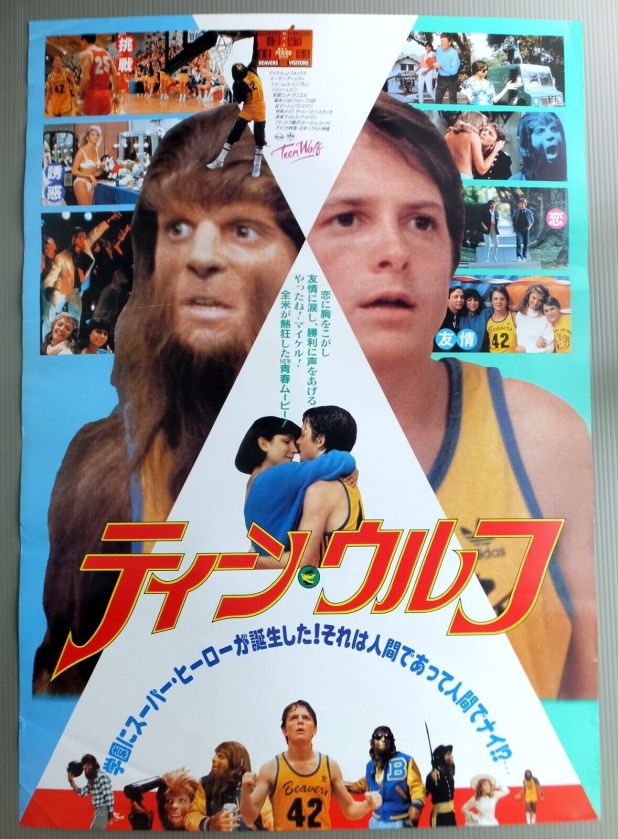
EDITOR’S NOTE: Teen Wolf was on USA Up All Night so many times: January 28 and September 8, 1995 and June 29, 1996.
After the surprising success of Valley Girl, the producers of this film realized that they could make an easy-to-shoot and cheap-to-make movie. As fate would happen, Michael J. Fox’s Family Ties co-star Meredith Baxter-Birney was pregnant and the show went on hiatus, so he was available. They got with Jeph Loeb — who went on to make Commando and write comics — and hired director Rod Daniel (Beethoven’s 2nd, Home Alone 4) to make this movie happen.
It’s so exciting that one of the extras gets so into it that they pull out their penis and begins to furiously masturbate at the conclusion of the film’s basketball game.
Scott Howard (Michael J. Fox) is an unremarkable high school basketball played who wishes he had the love of Pamela Wells (Lorie Griffin), who is instead dating his bully on the court, Mick (Mark Arnold). He should really be paying attention to his best friend, the nerdy girl Boof (Susan Ursitti, Funland, Zapped!) but you know how 80s teen comedies are.
At a party, Scott and Boof are forced into a closet in one of those teen makeout games. He loses it and starts clawing her up because, well, if you didn’t know by the title of this movie, Scott is a werewolf, just like his father Harold (James Hampton). Unlike every other movie ever made about lycanthropy, everyone just accepts that Scott can turn into a wolf and they even allow him to play basketball. His friend Stiles (Jerry Levine) even makes money off it, selling merch that Scott doesn’t know about until it’s already for sale. Also: Coach Finstock (Jay Tarses) is the worst coach whose entire strategy is “pass it to the wolf.”
This is the kind of movie that has a school administrator urinate all over himself in fear and ends with the stuck up girl being told to drop dead and we all laughed. How we laughed. And we learned nothing, except that if you make this movie about boxing and switch out Michael J. Fox for Jason Bateman, I will watch it again.
Beyond that sequel, there was a cartoon and a planned female version that would star Alyssa Milano. There was a second female version planned that was eventually turned into Teen Witch. And then, of course, there was the MTV series that got six seasons and a movie.
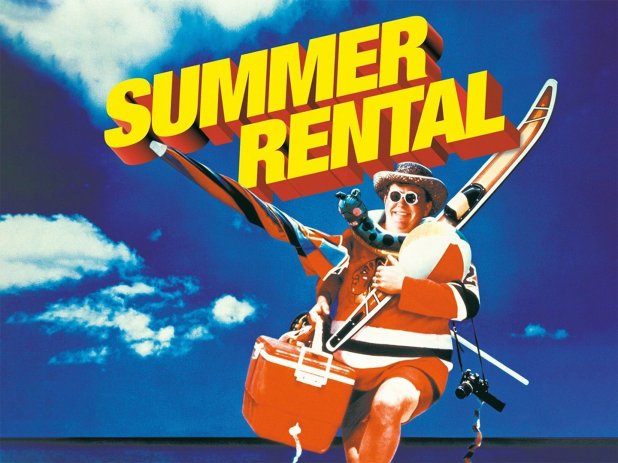
EDITOR’S NOTE: Summer Rental was on USA Up All Night on July 15, 1995 and April 12, 1996.
I never related to the teens in John Candy movies. Even when I was a kid, I knew how his characters felt, beat down by life, hangdog in expression. I get how his air traffic controller character Jack Chester feels, overwhelmed by his job yet doing it because he has to and always on the edge of everything flaming out.
Given five weeks off to chill out, Jack and his family — Sandy (Karen Austin) and children Jennifer (Kerri Green), Bobby (Joey Lawrence) and Laurie (Aubrey Jene) — leave Atlanta for Citrus Cove, Florida. They’re barely there when Jack makes an enemy of rich man and sailing champion Al Pellet (Richard Crenna), who forces the entire family out of a fancy restaurant and into the pirate-themed diner of Richard Scully (Rip Torn). The fight gets so bad between them — well, Jack does smash Pellet’s boat — that he buys their vacation home and tries to send them home.
As you can imagine, this ends with a snobs vs. slobs boat race at the Citrus Cove Regatta.
Directed by Carl Reiner and written by Mark Reisman and Jeremy Stevens, Candy felt that the movie was shot too fast. It’s funny but owes so much to National Lampoon’s Vacation. Yet every time I see Candy’s face, it makes me sad. Can you miss someone you never knew?
This was all based on a real vacation that producer Bernie Brillstein took to a beach house. According to Army Archerd, “He returned one night to find the house crawling with uninvited guests-invited by his client John Belushi, who, in soaking wet and sand-filled trunks, was sleeping in Brillstein’s bed.”
Brillstein himself said, “I have five children and I weigh 240 pounds. Being heavy in California is not a terrific thing. Being heavy on the beach is worse. The house on the left was occupied by two elderly sisters, one of whom had a 6-foot-4 inch mentally challenged son who was out of Arsenic and Old Lace. The house on the right was out of Death in Venice, occupied by a chic group of homosexuals who had 28-inch waists and wore peach sweaters.”
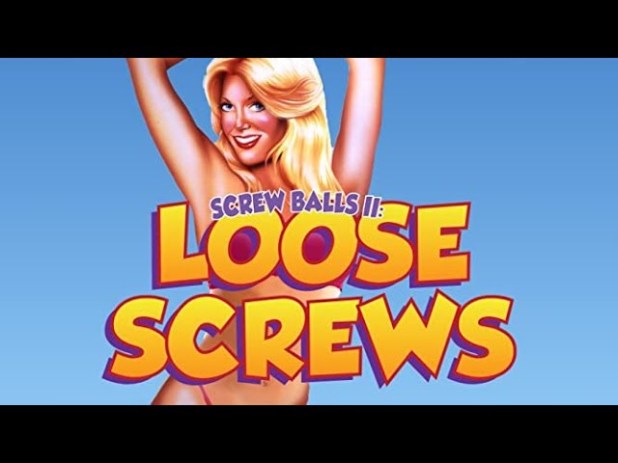
EDITOR’S NOTE: Screwballs II was on USA Up All Night on January 10 and September 20, 1997.
The protagonists of this movie are Brad Lovett (Bryan Genesse), Marvin Eatmore (Jason Warren), Steve Hardman (Lance Van Der Kolk) and Hugh G. Rection (Alan Deveau) have been sent to Cockswell Academy with the hope that Principal Arsenault (Mike MacDonald) can calm them down.
They’re also misogynistic jerks who have a point score for each woman they sleep with. The ultimate girl for them is Mona Lott (Cynthia Belliveau, Blue Monkey) and they all keep failing. And there’s pretty much the movie.
Also called Loose Screws, this movie was directed by Rafal Zielinski (Hangman’s Curse,Spellcaster and the other Screwballs movies) and written by Michael Cory. Beyond stealing from itself — Screwballs is a ripoff of Porky’s so it’s like when you keep Xeroxing the same Xerox — it has the absolute, well, balls to have a strip club called The Pig Pen that looks just like, you guessed it, Porky’s.
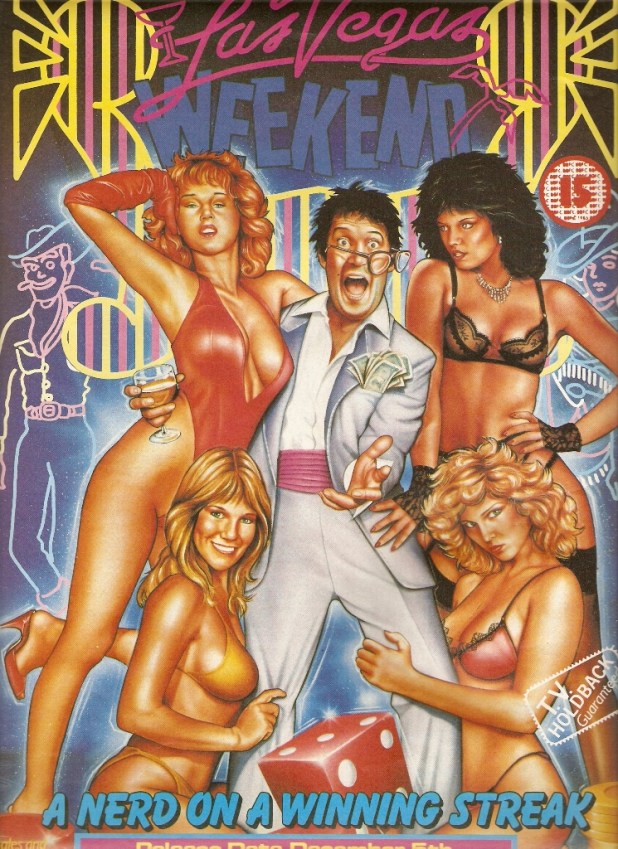
EDITOR’S NOTE: Las Vegas Weekendwas on USA Up All Night on April 1 and September 18, 1989 and February 17 and September 7, 1990.
Dale Trevillion wrote They Call Me Bruce and directed a whole bunch of erotic thrillers with titles like Heart of Stone, Timeless Obsession and Play Time. He was once married to Sharon Farrell and looks a lot like Michael “PS” Hayes.
This is all about Percy Doolittle (Barry Hickey), a nerd who comes to Vegas with a card-counting system. Then, as the tagline says, “When the dice are hot and the women sizzle you’re in for a wild … Las Vegas Weekend.” Anyways, Ray Dennis Steckler kicks Percy out of college and he heads out for adventure and acting like Eddie Deezen. I mean, they should have just hired Eddie Deezen.
Do you think when Joseph Campbell put together his thoughts on the Hero’s Journey that he knew that I’d be applying it to this movie? Because all the money changes Percy and he loses the kind of sort of crush that he had and all his money and then has to get it back together in the last act.
Man. even the poster for this movie makes me angry. I struggled through this one, I have to be honest. Just look at that poster and how smug that guy is.
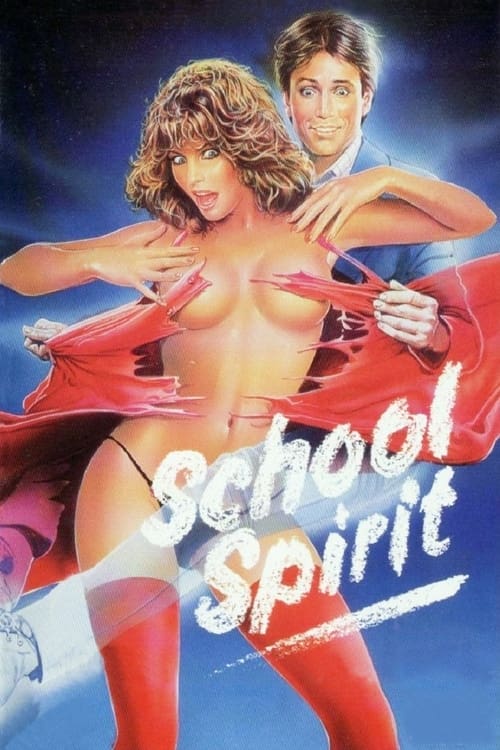
EDITOR’S NOTE: School Spirit was on USA Up All Night on September 9, 1989; January 12, June 22 and 23 and September 28, 1990; January 5 and September 20, 1991 and January 24 and March 13, 1992.
Roger Corman sold New World Pictures and started making movies again. The new owners refused to distribute Wheels of Fireand this movie and that’s how we got Concorde Pictures.
Geoffrey Baere wrote a script for College Ghost, all about a college cocksmith who comes back as a ghost because it was 1985. It didn’t get bought, but Allan Holleb (Candy Strip Nurses, Wizards of the Lost Kingdom) worked on the script with inspiration from the Italian movie Il Sorpasso. Yes, a classy bit of filmmaking to get a teen sex comedy going.
Billy Batson is not Captain Marvel or Shazam. He’s the college student played by Tom Nolan who dies while coming back from buying a condom so that he can finally sleep with his dream girl Judith Hightower (Elizabeth Foxx). Beyond being a 31-year-old teenager, Batson is now a ghost. His Uncle Pinky (John Finnegan) tries to take him to Heaven but he escapes.
Meanwhile, Lavatoire College President Grimshaw (Larry Linville, who should be getting pretty good residuals for all the USA Up All Night appearances he’d made) is celebrating major school contributor Madeleine Lavatoire at the same time that the fraternities are celebrating Hog Day, a day during which naked people go down oily Slip ‘N Slides. He’s concerned that his daughter Ursula (Marta Kober) will get involved in these shenanigans and he’s definitely correct.
Also: He’s married to Helen and is batting way out of his league because she’s played by Roberta Collins.
Also also: Lavatoire sends up being a young girl, played by Danièle Arnaud, who was in Down On Us and played one of the Eliminator girls in the ZZ Top videos for “Gimme All Your Lovin’,” “Sharp Dressed Man” and “Legs.” In case you wondered, the other two girls were Playboy Playmate of the Month for March 1981 Kymberly Herrin (who was the ghost who, well, blew Dan Aykroyd in Ghostbusters) and the Playboy Playmate of the Month for November 1980, Jeana Keough, who was also in The Beach Girls, Lovely but Deadly, 10 to Midnight and is now on The Real Housewives of Orange County.
Anyways, Billy has to help Ursula somehow but most of the movie is the typical drinking and debauchery. Cast members participating include Leslee Bremmer (Hardbodies, Reform School Girls), Pamela Ward (Hellhole), Toni Hudson (Just One of the Guys), Miss Pennsylvania Teen USA 1983 Diane Hoyes, Playboy Playmate of the Month for November 1982 Marlene Janssen, Theresa Mesquita (whose only other movie appearance is Hot Chili), Linda Carol (Back to the Beach, Reform School Girls and the Filmrage Henry and June ripoff La stanza delle parole) and the nearly always nude Becky LeBeau who is in the hot tub with Rodney in Back to School.
Oh yeah, I forgot that Jim Wynorski is in this as Man in Car with Cigarette Pack Under Sleeve.
This movie is actually pretty scummy because both Billy and Pinky use their ghost powers to look at women naked, get in bed with them and nearly assault them. Sure, it’s all fun loving, but it is not anything to do with the idea of consent. Times have changed since 1985 and I realize that this is a USA Up All Night movie, but when you watch these movies, sometimes you’re shocked by these things.
Also also also: The Gleaming Spires, the band in this movie, is the band that sings “Are You Ready for the Sex Girls?” Originally known as Bates Motel, members Leslie Bohem and David Kendrick also played in the 1981-1985 version of Sparks. In fact, the Mael brothers wrote the liner notes for their first album, Songs of the Spires.
The year School Spirit was released, Tom Nolan got a job teaching at Crossroads School, a private school in Santa Monica. He’s remained there for decades, eventually gaining the position of dean of students and then the dean of faculty.
This movie has a lot of continuing education amongst its cast, as Arnaud went on to be a French professor at MiraCosta College and Frishman has taught drama at high schools in Los Angeles, Reno and Sacramento.
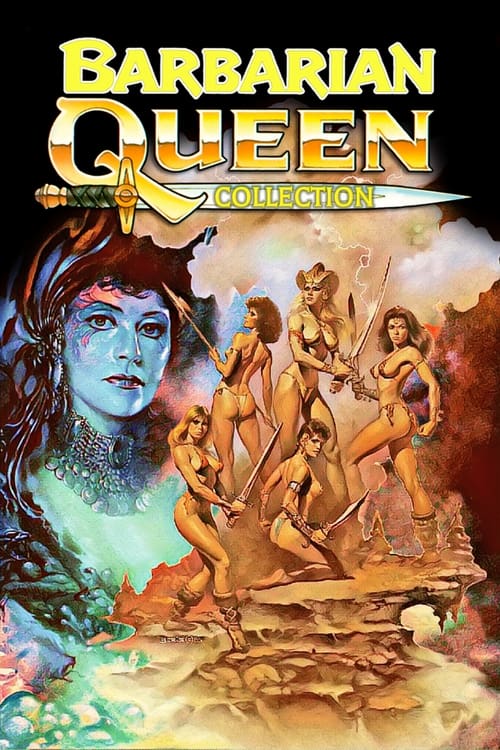
EDITOR’S NOTE: Barbarian Queen was on USA Up All Night on February 1 and 2, September 27 and December 28, 1991; April 27, 1992; August 20, 1993; March 5 and October 8, 1994.
After co-starring in the first Deathstalker film, Lana Clarkson would return to star in this Roger Corman-produced schlockfest. Sadly, despite comedic turns in films like Fast Times at Ridgemont High(she’s Vincent Schiavelli’s wife in a quick scene) and Amazon Women on the Moon, as well as other action films like Vice Girls. Her career stalled by the early 2000’s. Sure, she did comic conventions and sold autographed memorabilia on her web site, but she was subsidizing her nascent stand-up career — her dream was to be a comedic actress — with a part-time job at the West Hollywood House of Blues.
A month later, she followed famous music producer and noted lunatic Phil Spector back to his mansion and “kissed his gun” in his words. A major trial ended with 19 years of jail time for the creator of the Wall of Sound. But let’s not dwell on the sadness of Clarkson’s end. Let’s celebrate her starring role in a movie that somehow is at once a feminist adventure epic and a misogynistic wallow in the muck.
A peaceful barbarian village — is there any other kind — is all in a tizzy about the wedding of Queen Amethea (Clarkson) to Prince Argan (Frank Zagarino, Tan Zan: The Ultimate Mission). But look out! Lord Aarkur and his men attack, taking Argan and Taramis (Dawn Dunlap, Forbidden World) captive.
You may be thinking — oh cool, this movie is woke and the man is the captive in peril, not the woman, who is the hero — but this is a Roger Corman sword and sorcery movie. So even through Amethea, Estrild (Katt Shea, who went on to direct Stripped to Kill, Poison Ivy and The Rage: Carrie 2) and Tiniara are going to fight and kill lots of evil creatures and baddies, they’re also going to get naked, tortured and me too’d for pretty much the entire film.
I was going to write, “I don’t know the audience for a movie that wants to see barbarian women get raped,” but I totally know the audience.
Let’s try and get past it. Actually, you can’t get past it. But maybe you can get revenge.
By the end of the movie, Estrild is a harem girl, Tiniara has been killed, Taramis becomes Arrakur’s concubine and our main heroine, Amethea, has been tortured repeatedly but comes out on top, tossing the interrogator into a pit of acid after using “her feminine strength to squeeze his manhood painfully” as per Wikipedia. Yes, this is a woman where a woman literally kills with her vagina.
So there’s that, I guess.
Amethea, Argan and the rebels join with a bunch of gladiators in the attack to fight Arrakur’s army. Man, that’s a lot of alliteration. Anyways, our hero fights the big bad and is disarmed and nearly killed before Taramis stabs him in the back and kills him. So even in her moment of triumph, a Corman film reveals that women need treachery to win, not outright skill.
The first film from Corman’s Concorde company, Barbarian Queen was directed by Héctor Olivera as part of a nine-picture deal. Corman wanted low-budget sword-and-sorcery films. Olivera wanted to create more personal film projects. This union led to this film, as well as Cocaine Wars, Wizards of the Lost Kingdom, Two to Tango and Play Murder for Me. I think Corman’s vision won out, sadly.
There’s an in-name-only sequel and Clarkson played a character called Amethea in Wizards of the Lost Kingdom II who has nothing to do with this character. There was also a third film planned.
In later years, Corman has claimed that this movie inspired Xena: Warrior Princess. I must have missed all those episodes where Xena was tied up for most of the story and repeatedly diddled. Seriously, Corman’s movies are more and more troublesome the further we get away from them. I’m all for sleaze and shock, but not when they’re presented to me as empowerment.
EDITOR’S NOTE: Tomboy was on USA Up All Night on February 4 and September 11, 1994; March 3 and November 4, 1995; May 10 and December 21, 1996 and July 18, 1997.
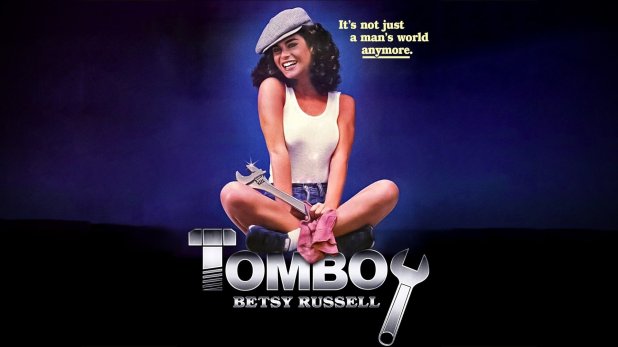
Tomasina “Tommy” Boyd isn’t like the other girls. No, she’s not sneaking into school and switching her gender like Terri/Terry Griffith. But unlike all her friends, she’s more into fixing and racing cars than boys. This is presented as something completely out of the sphere of reality, as if she were some mutant.
Herb Freed, who directed Tomboy, has a pretty fun resume, with movies like Beyond Evil, Haunts and Graduation Dayto his credit.
For some reason, this confident woman has a crush on a total jerk, racecar driver and male chauvinist Randy Starr (Gerard Christopher, Superboy), who doesn’t take her seriously because, you know, she’s a girl.
Certainly, the main reason to see this is because Betsy Russell has the lead. Modern folks may know her from the Saw movies, but for my generation, she was much better known for starring as Molly “Angel” Stewart in Avenging Angel, as well as appearances in Private School, Cheerleader Camp and Camp Fear, which steals its poster art from Body Count.
I love that someone once asked about Russell how the trailer for this movie positions Tomasina as a strong woman and then cuts to her in the shower. The actress replied, “I’ve never really paid attention to that. I guess strong females still have to take showers. They still like to feel sexy, so I don’t think there’s one thing that should stop someone from feeling sexy and showing their body if that’s what they choose to do. I don’t think it makes any difference in the world.”
Kristi Summers from Savage Streets and Hell Comes to Frogtown plays our heroine’s friends, who cares more about boys than cars and she’s normal, of course. Plus, Cynthia Thompson — Cavegirl! — and scream queen Michelle Bauer also show up.
If this movie came out in 2020, it would be decimated on social media and rightly so. I mean, can you imagine a movie that purports to being female empowerment coming out today where the main character only proves herself by repeatedly showing off her breasts?
EDITOR’S NOTE: Basic Training was on USA Up All Night on March 4, August 5 and December 8, 1989; June 29 and 30, 1990; January 4 and August 31, 1991 and May 15, 1992.
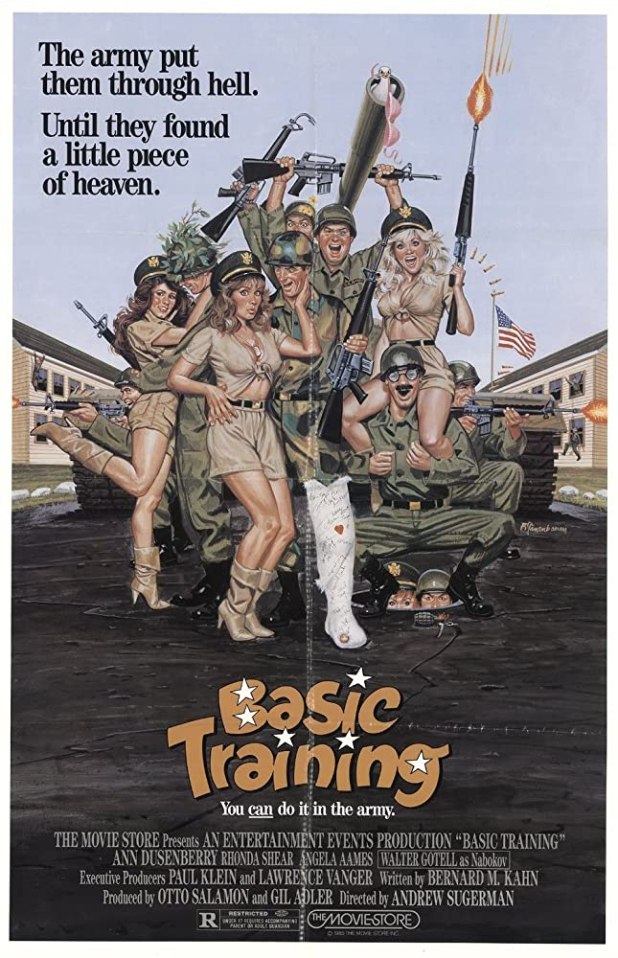
I love that this movie had the working title Up the Pentagon, like the abortive 1980 Mad Magazine movie Up the Academy. It’s the only movie ever directed by Andrew Sugerman, who has executive produced movies like Shopgirl, Death Sentence and Ballistic: Ecks vs. Sever.
Ann Dusenberry, Tina — the beauty queen from Jaws 2 — is Melinda, a newcomer to the Pentagon who is shocked by the way that they sexually harass her. For a few minutes, I was thinking that this 1985 comedy was incredibly woke and ahead of its time.
Then I realized that I was watching a 1985 sex comedy and that Melinda will instead use her sexual wiles to get back at everyone via a campaign of her own harassment and making old men think she’s going to sleep with them.
Angela Aames from Fairy Tales and Chopping Mall— she was also Linda “Boom-Boom” Bangs in H.O.T.S. — and Rhonda Shear of USA’s Up All Night are also in this.
EDITOR’S NOTE: Rambo: First Blood Part II was on USA Up All Night on February 10 and 23, 1996.
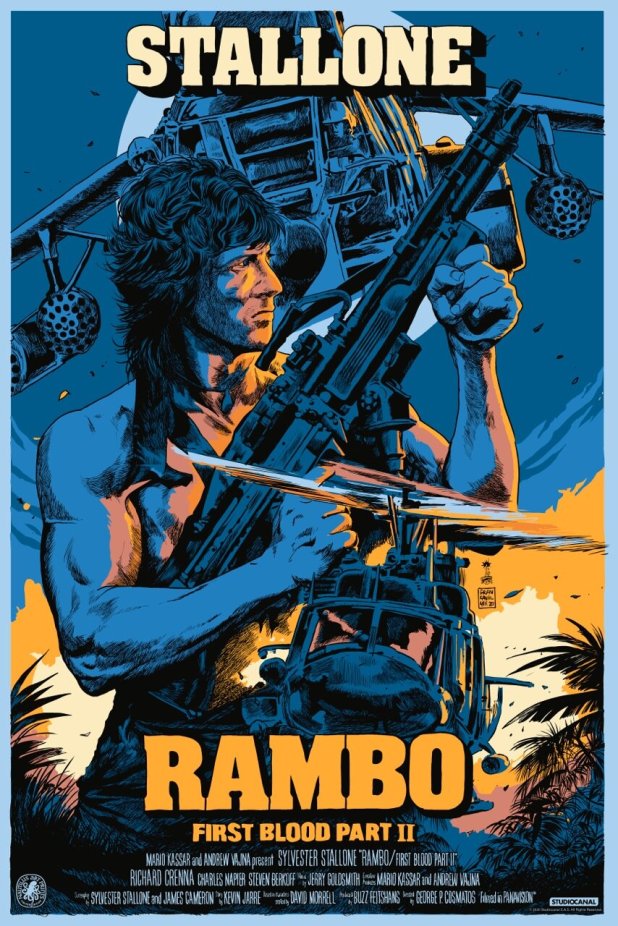
When it came time to do a sequel to First Blood, there was a thought that Rambo needed a partner.
Producers wanted John Travolta, but Stallone vetoed the idea. Lee Marvin (who almost played Colonel Trautman in the first film) was offered the role of Marshall Murdock, but declined.
In fact, that sidekick character is in the first draft James Cameron wrote for this film. Stallone said of what he wrote, “In his original draft it took nearly 30-40 pages to have any action initiated and Rambo was partnered with a tech-y sidekick.”
What ended up on screen was very different.
“Rambo, John J., born 7/6/47 Bowie, Arizona of Indian-German descent. Joined army 8/6/64. Accepted, Special Forces specialization, light weapons, cross-trained as medic. Helicopter and language qualified, 59 confirmed kills, two Silver Stars, four Bronze, four Purple Hearts, Distinguished Service Cross, Medal of Honor.”
Yep — that’s our hero. Given that he kills 74 people in just two days in this film, he’s somehow more successful in Vietnam the second time. But we’ll get to that.
For now, it’s been three years and Rambo is paying for his actions in the original movie when he’s visited by Colonel Sam Trautman. Even though the Vietnam War is over, people remain convinced that POWs have been left behind. The government has authorized a solo mission to confirm if any are alive and Rambo is one of only three men suited for such a mission (who the other two are, I leave up to you, dear viewer, but if one of them isn’t Thunder, I don’t want to know about it).
Marshall Murdock (Charles Napier) is the suit in charge that tells Rambo that all he has to do is take photos, not rescue anyone or engage the enemy. As Rambo drops into enemy territory, his parachute becomes tangled, leaving him with only a knife and a bow. He doesn’t need all those guns, trust me.
A young intelligence agent named Co-Bao (Julia Nickson) and some pirates take Rambo up river, where he saves an American POW who has been crucified and left to die. The Vietnamese troops attack and the pirates betray Rambo, so he kills everyone. Rambo’s extraction is canceled, as Murdock says that Rambo has violated his orders and tells Trautman that he never intended for there to be any rescue — it would be too expensive and no one wants another war.
Rambo is turned over to the Soviet troops who are training the Vietnamese, Lieutenant Colonel Podovsky and Sergeant Yushin. They demand that he read the US government a message to stay away from future missions. Instead, he warns Murdock that he’s coming for him. He escapes thanks to Co and they kiss, only for her to die seconds later.
Rambo then becomes a slasher villain that we cheer for as he wipes out every single enemy one by one. He even steals a helicopter and uses it to destroy Murdock’s office before demanding that the rest of the POWs get rescued.
Trautman then confronts Rambo and tries to convince him to return home, but our protagonist angrily replies that he only wants his country to love its soldiers as much as its soldiers love it.
James Cameron claims that he only wrote the first draft of the script and that Sylvester Stallone made many changes to it. He claims that the star didn’t like that the sidekick got all the cool dialogue and scrapped most of the POWs’ backstories.
When the film was released, the political content of the movie was controversial, with many critics not ready to see any heroism in the Vietnam War. For his part, Cameron commented that he wrote the action and Stallone the politics.
That said — at the time of the making of this film, there were 2,500 soldiers missing in action, so you can see where the sentiments were coming from. There were even reports that Delta Force operatives were in training to try and find those prisoners.
Stallone explained the ending of the film quite passionately: “I think that James Cameron is a brilliant talent, but I thought the politics were important, such as a right-wing stance coming from Trautman and his nemesis, Murdock, contrasted by Rambo’s obvious neutrality, which I believe is explained in Rambo’s final speech. I realize his speech at the end may have caused millions of viewers to burst veins in their eyeballs by rolling them excessively, but the sentiment stated was conveyed to me by many veterans.”
This film was beloved by audiences worldwide just as much as it was savaged by critics. It won Worst Picture, Worst Actor, Worst Screenplay and Worst Song (“Peace In Our Time” by Frank Stallone) in the Razzie Awards. It doesn’t matter — it started an entire genre of military revenge pictures.
Director George P. Cosmatos would go on to work with Stallone again on Cobra, as well as direct the films Leviathan and Tombstone. He was recommended for the film by Stallone’s son Sage, who liked his movie Of Unknown Origin. Of course, Cosmatos’ son Panos would grow up to be the director of Mandy and Beyond the Black Rainbow.
This movie marks a true change from the way American audiences would view Vietnam and its veterans. It could have only been made in 1985, to be honest, and exists within that time to remind us of a completely different era.
EDITOR’S NOTE: Cavegirl was on USA Up All Night on July 14 and 15 and December 15 and 16, 1989; April 6 and May 19, 1990; March 15 and 16, 1991; January 3, March 7 and June 27, 1992; April 23 and August 21, 1993; February 18 and May 21, 1994; July 12, 1996 and November 1, 1997.
As you stared across the shelves of Prime Time Video — or whatever the mom and pop in your town was called — as closing time grew near, you knew that you had to pick a movie. Cavegirl feels like one of those movies that was always there when you needed a rental.
Take it from someone who has seen enough cave and jungle girl movies to do nearly an entire week of them — this is no Caveman* with Ringo Starr. It is no 10,000 B.C. with Raquel Welch. Hell, it’s not even George Eastman in Ironmaster.
Daniel Roebuck, who always gets parts on Rob Zombie and Don Coscarelli movies, is our hero, such as it is. His name is Rex and he goes back in time “25,000 ago to the Stone Age” even though the Paleolithic period really was 3.3 million years ago. But that’s a minor quibble when this movie has a magic crystal that sends him back to the past. And when he gets there, all he wants to do is aardvark with Eba (Cynthia Thompson, Tomboy, Body Count), the Ayla of our story.
Seriously, that’s it. Instead of worrying about screwing up the history of the world, Rex is trying to teach her how to say, “I want you to sit on my face.” He may be evolved, but his definition of consent isn’t. Also, at this stage of evolution, Rex and Eba bam-bamming in the ham is pretty much bestiality.
Stacey Q is in this movie. Yes, the girl who sang “Two of Hearts.” She contributes a song to the soundtrack, “Synthicide,” which is probably the best reason to watch this, unless you’re a fan of direct to video actresses like Ms. Thompson. Actually, that’s a good reason to watch this, I guess.
Director David Oliver Pfeil made the music video for Steely Dan’s “Aja,” the credits for Knight Rider and made the titles for movies like Star Trek VI, Innerspace and Footloose. This was his one and only full movie and he went all out, writing, producing, doing the cinematography and even the aerial camera work for it. He should have realized he was making a movie for Crown International Pictures, who demanded that he insert the locker room scene in the beginning to ensure that his passion project had enough bare breasts.
*That said, in Spain, this movie is known as Cavegirl: Cavernicola 2, making it seem as if it were a sequel to Caveman.


 B&S About Movies
You must be logged in to post a comment.