EDITOR’S NOTE: Hollywood Hot Tubs aired on USA Up All Night on May 18 and September 15, 1993; October 7, 1993 and September 22, 1995.
Chuck Vincent made a lot of residuals off USA Up All Night. So many of his films played so often on the show that it’s an even bigger shame that he died in 1991 from AIDS. He also had a deal with the Playboy Channel, so he was definitely doing well before leaving this planet way too soon.
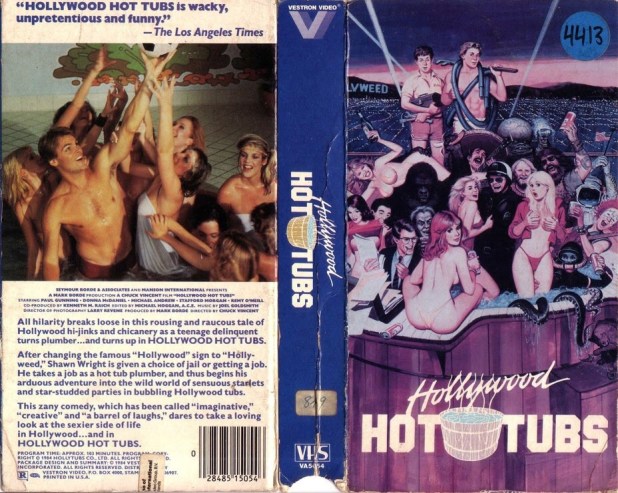
Vincent started in the adult industry and a lot of the things he learned there would serve him well as he made softcore comedies like this movie. Working from a script by Mark Borde (who also wrote Vincent’s Summer Camp and would go on to produce 47 Meters Down and Replicas) and Craig Horrall (Bad Blood, Thrilled to Death), this is the tale of Shawn Wright (Paul Gunning), who has defaced the Hollywood sign so that it now reads Hollyweed. He’s forced to choose between work and jail, so he’s soon working as a hot tub plumber for his Uncle Al (Stafford Morgan) along with Jeff (Michael Andrew).
The guys end up working for all sorts of weird clients, like an aging movie starlet with a hot tub inside her limousine, a theme park run by organized crime and a porn star. Then they get the chance to work with Pam (Remy O’Neill), who is opening a huge apartment complex. Uncle Al is nervous because he’s always just been on the wrong side of going out of business. Success frightens him more than failure.
Shawn falls for co-worker Leslie (Donna McDaniel), but you know how the third act works. She catches him in the hot tub all alone with several nude women. Now her brother Jesse (Rex Ryon) wants to kill him. And his probation officer thinks that Uncle Al can’t be a legal business owner, so he wants to send Shawn to jail.
The best part of this movie is Crystal Shepard as Pam’s valley girl daughter Crystal who, for some reason, has stars in her eyes for Uncle Al. Never doubt the power of daddy talk, I guess.
Just the title is good enough, you know? That may be why there was a sequel, Hollywood Hot Tubs 2: Educating Crystal. That was directed by Kenneth Raich — the co-producer of this movie — and luckily had Shepherd return to the role.
EDITOR’S NOTE: Night Patrol aired on USA Up All Night on August 25 and 26, 1989; January 5, June 30 and December 14, 1990; July 6, 1991; April 25 and July 18, 1992.
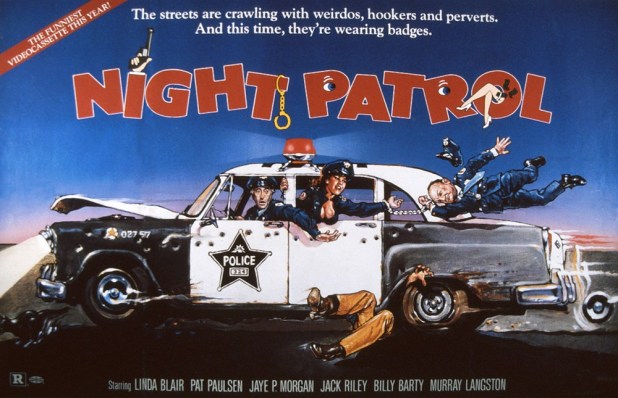
If you learn anything today, know that Linda Blair and Murray Langston, AKA The Unknown Comic, made two movies together: the romantic comedy Up Your Alley and this film, which takes Police Academy to an even filthier and more ridiculous level.
Jackie Kong directed four movies: The Being, The Underachievers, Blood Diner and this one, all with Bill Osco. Osco started his career producing adult films and would go on to star in The Being under the name Rexx Coltrane before starting to direct his own projects, starting with the comedy special The Unknown Comedy Show, a vehicle for Langston. Seeing as how two of his directing efforts are The Art of Nude Bowling and Cat Fight Wrestling, you’ll get an idea of where this film is heading.
Officer Melvin White (Langston) wants to be a stand-up comic, so to hide from his boss Captain Lewis (Billy Barty!), he becomes The Unknown Comic. At the very same time, a man with a paper bag over his head — and here I am assuming anyone in 2019 knows who The Unknown Comic is or what he looks like — is committing crimes.
Linda Blair comes in as Officer Sue Perman, who operates the switchboard for the police. Then there’s comedian and perennial Presidential candidate Pat Paulsen as Melvin’s partner, Officer Kent Lane. Pat Morita also shows up as a sexual assault victim and there’s an ongoing joke with Sydney Lassick (Charlie from One Flew Over the Cuckoo’s Nest) as a peeping tom.
Jack Riley, who played Bob Newhart’s patient Elliot Carlin has graduated from patient to doctor, here playing Murray’s therapist Dr. Zieglar. Throw in comedians Johnny Dark, Bill Kirchenbauer and Vic Dunlop, as well as Jaye P. Morgan, disc jockey Machine Gun Kelly (who is also in Roller Boogie and Voyage of the Rock Aliens) and an incredibly young Andrew Dice Clay.
There really isn’t any story here, but you do get Billy Barty farting throughout the film and the heroes donning blackface to solve a crime. There’s also a gay copy team, so this movie goes out of its way to offend nearly everyone. That said, it does have Linda punching a really obnoxious rich girl, which makes the movie.
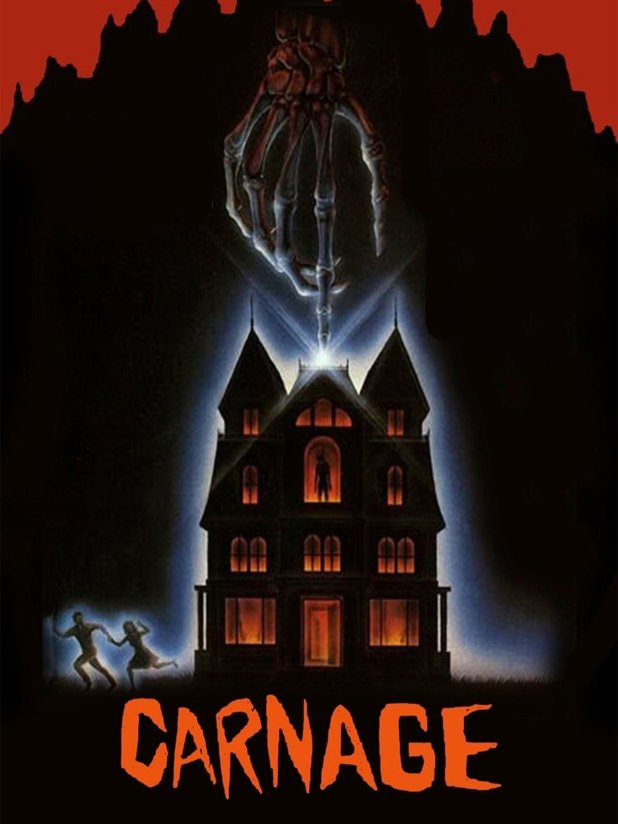
Starting with a murder/suicide, Carnage is about love. Three years later in the same house as that tragedy, Carol (Leslie Den Dooven) and Jonathan Henderson (Michael Chiodo) move in. They got the house for cheap and they even threw in the furniture. There’s even a photo of the last occupants, which is yanked somehow out of Jonathan’s hands.
I’m excited to report that while this can be seen as an Amityville Horrorrip-off, it’s still an Andy Milligan movie because the main theme is that every single married couple is a mess. Walter (John Garrit) and Caol’s sister Susan (Deeann Veeder) only argue more than Susan and her mother (Che Moody) who also wants to sleep with Walter. Meanwhile, we learn that the house is haunted by the couple from the beginning, but again, that’s just second place to the fact that no two human beings can be in a relationship without screaming at one another.
There are so many people in this movie to the point that you’ll wonder why there just keep adding people. That’s because this will eventually have a body count and if you were also asking yourself or God or whoever you ask things about, maybe the ghost of Milligan, “Will there be a pitchfork impalement?” Yes, why wouldn’t there be? That’s like going to see a band that refuses to play its greatest hit.
This is a movie that feels like no one cared in front of or behind the camera. It goes on and on, talking and talking, and yet there’s something to admire that this is a haunted house movie more devoted to long toasts or dialogue between people who don’t matter to the main story. It’s like if some college filmmaker got hired to make Poltergeistand Spielberg didn’t interfere and that student didn’t show up but sent their girlfriend who hates horror movies and she just wanted to be done with the whole thing.
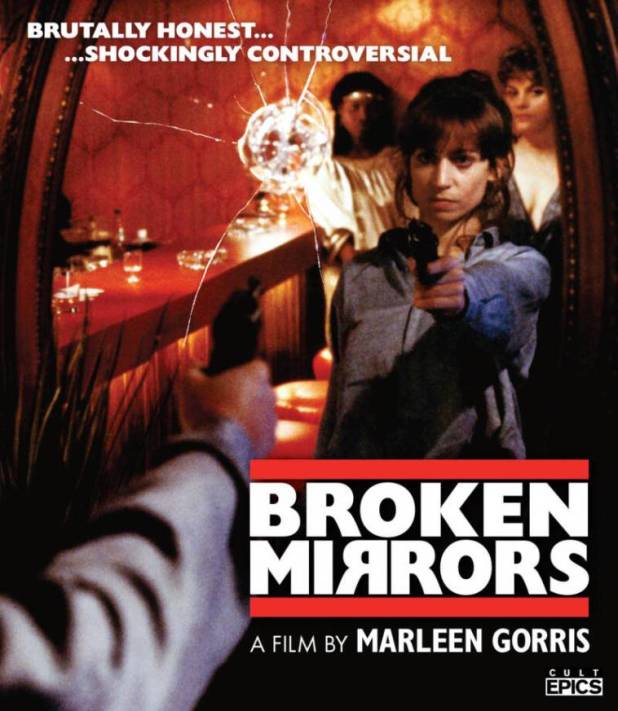
Known in Holland as Gebroken Spiegels, Broken Mirrors is split between two stories. In one, Diane (Lineke Ripman) and Dora (Henriette Tol) are Amsterdam brothel workers at the Happy House Club who begin to tire of their lives. And in the other, a housewife named Bea (Edda Barends) is kidnapped by one of the johns and is slowly starved to death while her captor takes photographic evidence.
Directed and written by Marleen Gorris (A Question of Silence), this film sets forth the belief that all women are captives of men, whether that means that the patriarchy that they’ve created or quite literally the situation in the second story.
Dora explains to Diane that these men rent their bodies, not who they are, so they don’t need to give them anything more than seconds of fumbling sex. They’re supported by the lady of the house, Ellen (Coby Stunnenberg), who allows them to turn down customers and gives them a line to call for help.
Bea is in a strikingly similar situation and knows that she’s going to die. But if she does, she will only give the killer brief moments and none of the emotion that he craves. He only has her body as well, not who she is.
It’s also worth noting that we see the women’s faces, learn their emotions and become sympathetic to them, but never really see many of the men, even the killer. They are near-silent and almost always anonymous.
The Cult Epics blu ray release of this movie has a new 4K HD transfer from the original 35mm negative, commentary by film scholar Peter Verstraten and an interview with American sex worker Margo St. James. You can get it from MVD.
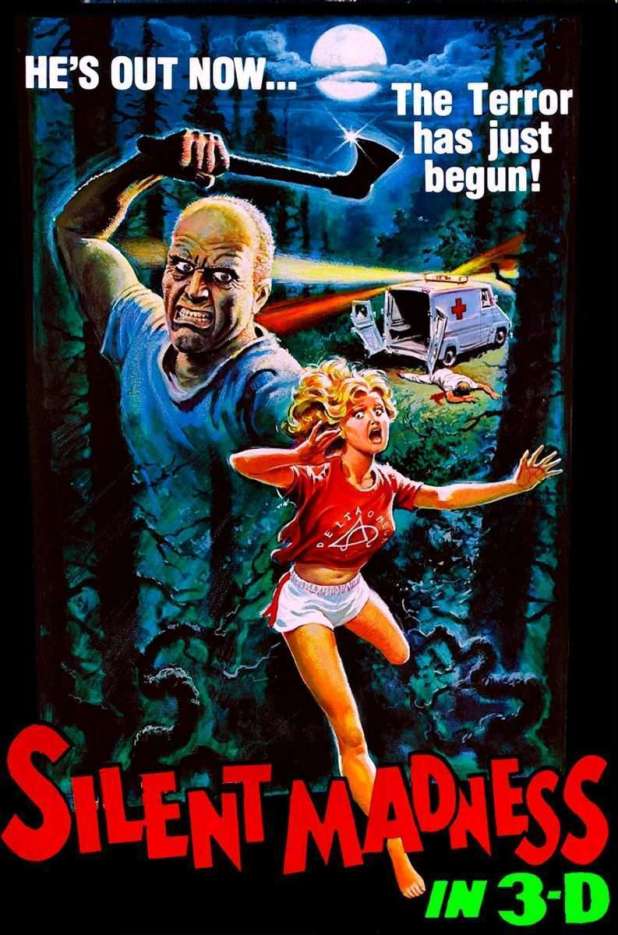
Shot with the ArriVision 3-D camera system, Silent Madness wasn’t just late to the 80’s 3D revival, it was late to the slasher madness too. It was directed by Simon Nuchtern, president of August Films. He brought over plenty of foreign films and had them re-edited for American tastes, like the film that the Findlays shot in Argentina called TheSlaughter, which was released as Snuff. He also brought Karate Kiba to U.S. theaters with a new open and called it The Bodyguard and that’s why we call marijuana chiba, as well as directing New York Nights and Savage Dawn.
You have to love how Wikipedia has the writer of this movie, Bob Zimmerman, linked to Bob Dylan. Nope. This Bob was part of the camera crew for Don’t Go in the House and Nightmare. His co-writer was Bill Milling, who may be better known as an adult director using the names Philip Drexler Jr. (A Scent of Heather) and G.W. Hunter (Heart Throbs), Craig Ashwood (All American Girls), William J. Haddington Jr. (When A Woman Calls), Chiang (The Vixens of Kung Fu (A Tale of Yin Yang), Jim Hunter (Up Up and Away), Luis F. Antonero (Temptations) and Bill or Dexter Eagle (Virgin Snow). Some of the dialogue was written by Nelson DeMille, who would go on to write the book The General’s Daughter. They were all working from a story by Nuchtern.
The Cresthaven Mental Institute is, charitably, a mess. It’s also packed with patients, so they decide to just declare several of the patients cured, which means that Howard Johns (Solly Marx, Honcho from Savage Dawn, the Samurai from Neon Maniacs and plenty of stunt work too) is let go instead of John Howard. Years ago, after peeping on some sorority sisters, they had decided to strip for him — because that’s how we dealt with Me Too moments back then, kind of like giving someone a whole carton of cigarettes to smoke when all they wanted was one, and that’s a bad euphemism and I don’t condone this kind of behavior — and he lost it and killed them all. So to prove that the nature vs. nurture argument is a joke and the seventeen years of treatment did nothing, the very first thing John does when he gets released is kill an aardvarking couple in their van with a hatchet and a sledgehammer.
Dr. Joan Gilmore (Belinda Montgomery, who has been the love interest for The Man from Atlantis, Crockett’s ex-wife on Miami Vice and Doogie Howser, M.D.‘s mother) realizes that something smells bad in Denmark — or Cresthaven — and starts looking into this, only to learn that Howard Johns was already dead when the computer snafu happened. She teams up with a reporter and goes undercover as a legacy at the sorority where everything when wrong all those years ago, because she obviously realizes that she’s in a slasher movie and the killer always comes back to the scene of the crime.
There are so many plot threads going on here. There’s also the conspiracy at the mental hospital and the cyborg experiments being done on the patients that goes nowhere. Additionally two killers hired by Dr. Kruger* (Roderick Cook, who shows up in two of Becca’s favorite childhood films, 9 1/2 Weeksand Spellbinder, movies no seven-year-old should be watching and that’s why I love her) are on hand to kill off our protagonists. And there’s the killer coming back to the sorority house.
I’ve gotten this far and forgotten to inform you that Sydney Lassick (sure, he was Mr. Fromm in Carrie, but he’s also in Skatetown U.S.A.; 1941; Alligator; The Unseen and shows up as Mr. Lowry in Lady In White) plays the law in this and the house mother is Viveca Lindfors (The Bell from Hell, Creepshow). And two of the teens — Janes and Paul — are played by Katherine Kamhi and Paul DeAngelo, who we all know better as Meg and Ronnie from Sleepaway Camp.
Shot under the title DarkSunday, with alternate names thrown about like Beautiful Screamers, The Omega Factor” and The Nightkillers, I have really no idea why this is called Silent Madness.
Teens are killed by vice, by steam, by nailgun and by aerobicide, while drills and crowbars and broken mirrors take out some of the antagonists. You’ll wonder, when we knew that toxic masculinity and the health care system were both the biggest issues we’d be facing as a society way back in 1984, why did we just concentrate on making sure the slasher killer was dead instead of working on the root cause? And that’s why we are where we are, except you know, there’s no real Jason Vorhees. Or Howard Johnson. Or John Howard.
*Seeing as how this was really shot in 1983, it’s prescient that the bad guy has that name and works out of a boiler room.
Here’s a drink to go with the movie.
Watermelon Madness
1 1/2 oz. vodka
1/2 oz. Watermelon Pucker
1/4 oz. triple sec
4 oz. cranberry
Really easy. Just pour alcohol together over ice, then top with cranberry juice.
Silent Madness played in actually 3D at the Popcorn Frights Film Festival. You can get a virtual pass to watch the festival from August 10 to 20. To learn more, visit the official site. To keep track of what movies I’ve watched from this Popcorn Frights, check out this Letterboxd list.
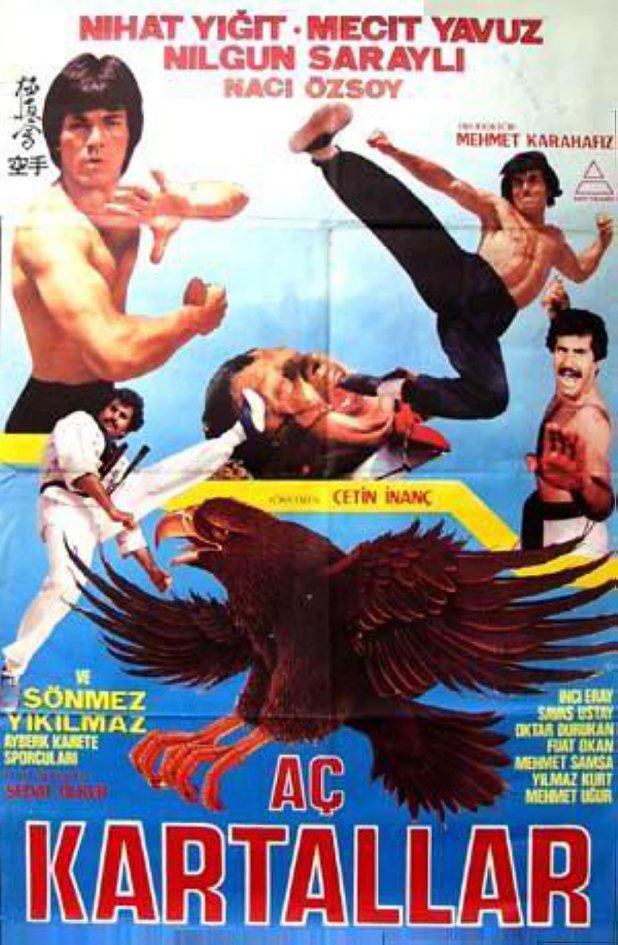
Aç Kartallar (Hungry Eagles) was directed and written by Çetin Inanç, the man who also brought us Kara Simsek, Kizil maske, Vahsi Kan and 150 or so other films from 1967 to 2002. He’s best known in America for Dünyayı Kurtaran Adam (The Man Who Saved the World) which is also called Turkish Star Wars.
Nihat Yigit plays our stand-in for Bruce Lee, as this is Brucesploitation of the highest order. He was a huge fan of Lee, taking up martial arts after the star’s death in 1973. He fought in karate tournaments all over Europe before Inanc discovered him and cast him as a villain opposite his greatest star, Cuneyt Arkin.
This has the most basic of all martial arts plots: When their martial arts master is murdered by a rival clan, that man’s top three students vow to get revenge.
Inanc can’t help but make his fight scenes work harder than anyone else’s and by that, I mean he speeds them up to Benny Hill on amphetamines level. There’s something he does that I’ve never seen in another director’s style: you feel like you are in the middle of the fights, as if your neck snaps with the punches. They can be exhausting and I mean that in the best sense of the word.
Beyond seeing a Turkish Bruce Lee, this also proves that Turkish filmmakers care about copyright about as much as Godfrey Ho. This has music from Raiders of the Lost Ark, Star Wars, Enter the Dragon and, perhaps most incredibly, Suspiria.
Nearly every country in the world has created their own Bruce Lee. Yes, it took Turkey way longer than nearly every other place in the world, but let’s give them credit for this, a movie where a man throws what appears to be actual dynamite at other people while the camera keeps rolling.
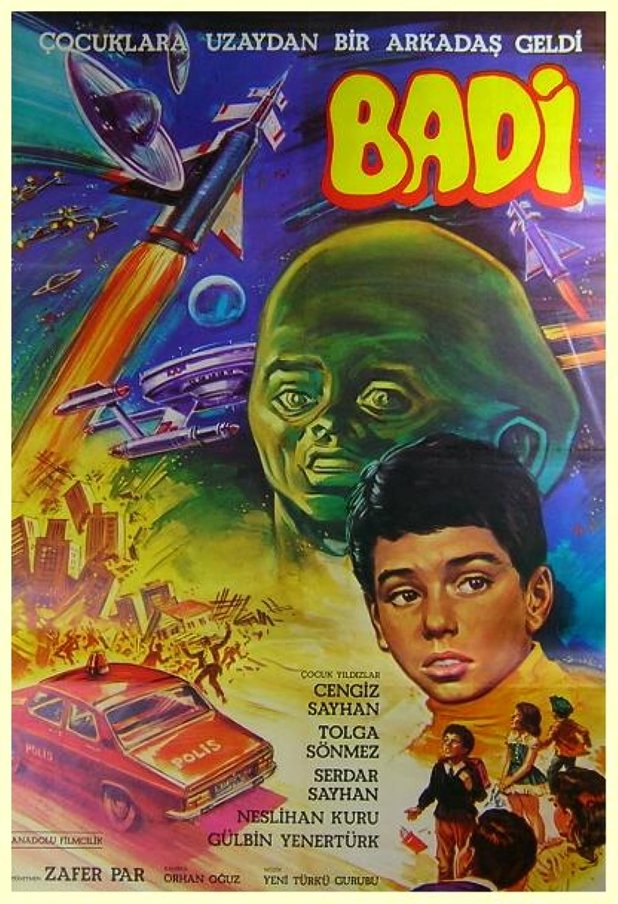
Bülent has an abusive dad and Ali just has a mom and a dog. Well, he had a dog until a policeman shoots and kills it. They’re in the same school and become friends and bond over the alien that they meet, Badi, who completely seriously shoots smoke out of his penis at one point.
In a kids’ movie.
He also eats Turkish Treat instead of Reese’s Pieces and looks through a porn mag, so…I wonder how much of E.T. that director Zafer Par and writer Baris Pirhasan saw before they made this. Probably just as much as Müjdat Gezen when he directed and wrote Homoti.
The craziest. thing is that Badi gives multiple heart attacks to humans both good and bad who are so overwhelmed by his appearance that their hearts literally stop working. The scene where he causes a teacher to have cardiac arrest is played for comedy, just after his appearance upsets a janitor so much that he falls down the steps to possibly his death.
Bülent and Ali give inflammatory speeches to the local kids, who take over an amusement park so Badi can use a Ferris wheel as an antenna to, well, phone home. When the villagers come with torches, along with cops, the kids put on masks and start throwing smoke bombs at adults — this movie is absolutely wild as it has kids rioting in the streets — and help Bodi get back home.
Christopher Gans has made some great movies and gets little credit. His better-than-the-game Silent Hill, Crying Freeman, his segments in Necronomicon and the incredible Brotherhood of the Wolf are among his many accomplishments.
As a student, he made this film, which pays tribute to Bava, complete with a dedication at the end. And you know, in just around 15 minutes, Gans gets it. He understands how giallo works, and instead of making the kind of modern Giallo that everyone tries these days, he crafts a film that looks bad with love and then goes forward, taking what works and creating a near-lunatic energy that feels like where you’d hoped Argento would have kept going after Tenebre and Opera.
Only two actors are credited: Aissa Djabri as Le témoin (the witness) and Isabelle Wendling as La victim (the victim). Like all Giallo directors of ill repute, one must assume that Gans is the killer or at least their hands.
Phillipe Gans and Jean-François Torrès created the music for this, and much like the visuals, it takes the sound of the form and makes it more hard-driving and powerful, while Jérôme Robert has gone on to plenty of work in the French film industry.
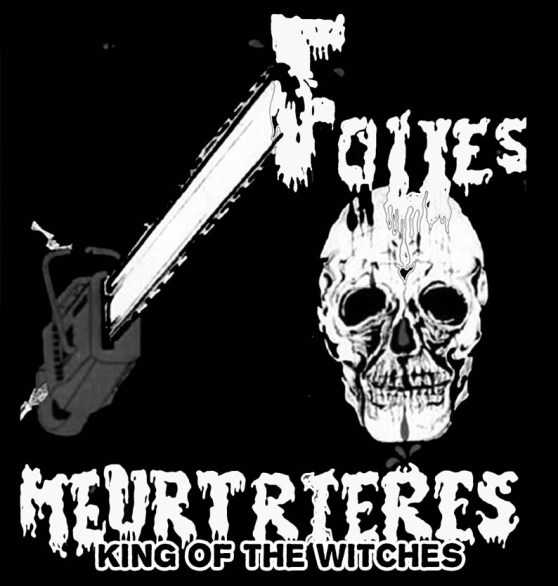
Folies Meurtrières (Killing Spree) (1984): Shot on Super 8 at some time in the early 80s in France, this film is 52 minutes of a killer aimlessly killing, killing and killing some more while a fuzzed-out synth soundtrack plays, the kind of music that those that say their films are “inspired by John Carpenter” but just have a neon color palette and a few keyboard songs on the soundtrack dream and wish and hope and pray that they could achieve.
Then everything changes.
And by changes, I mean the end of Maniac gets ripped off.
Look, I get it, this is a cheap knockoff of a slasher that may be bright enough to make fun of the things we accept in these films. But man, I love these lo-fi movies that want nothing more than to make their own effects and do their best to entertain you. They’re not significant movies — they were never intended to be — but they were a lot of fun to make.
I’ve heard that this movie is in the genre Murderdrone, in which “90% of the movie is people wandering around and getting murdered set to shitty lo-fi bedroom synths, and it’s increasingly hard to pay attention, but you can’t look away, and you’re stuck in a murdertrance.” This Letterboxd list has some more of those…
As for the man who made this, Antoine Pellissier, he’s a doctor now.
Possibly In Michigan (1983): Made with funding from the National Endowment for the Arts and the Ohio Arts Council, video artist Cecelia Condit’s nightmarish short has had many lives: as an art project to help her heal from her past, as a scare tactic shown on the 700 Club and as a viral video that got shared without context and was rumored to be a cursed film.
Starting with her film Beneath the Skin, Condit uses her video work to attempt to deal with the cycles of violence that she felt were all around her and so close to her. That’s because, for a year, she dated Ira Einhorn, the Unicorn Killer, who was also one reason we had Earth Day. The entire time that they dated, the rotting body of his ex-girlfriend, Holly Maddux, was in a trunk. A trunk that Condit constantly walked past, one assumes.
It made it onto religious television because, in addition to examiningt the self-destructive behaviors of men toward women, it alsoexaminest female friendships and love.The lead characters, Sharon and Janice, may be a couple, or they may just be supportive women. Or both. Who are we to put any bounds on their relationship?
It’s become a viral sensation several times, as teens try to copy its strange musical numbers and send it to one another as a curse straight out of The Ring.
Our ladies are just trying to shop for perfume — this was shot at Beachwood Place in Beachwood, Ohio, where Condit sat outside the building manager’s office until she was allowed to shoot there; she was given twenty-minute blocks of time, which was a challenge — when Arthur begins to stalk them, a man whose face changes with a series of latex masks.
Arthur is the kind of Prince Charming who shows his love to women by hacking them to pieces; his always-changing face is a way of showing the roles that abusive men have taken in their relationships. We also discover that Sharon is attracted to violent men but also likes making them think that violence is their idea. Regardless, love should never cost an arm and a leg.
The songs, written and performed by Karen Skladany (who also plays Janice), are insidious in the way that they worm their way into your brain. This is the kind of weirdness that is completely authentic in a way that today’s manufactured social media creepypasta weirdness cannot even hope to be a faint echo of.
As frightening as this can be, it’s also a film about absorbing — eating a cannibal is one way, right? — and getting past the worst moments of life without being destroyed by them. This also lives up to so much of what I love about SOV in that while we’ve been taught that the 80s looked neon and sounded like a Carpenter movie, the truth is that the entire decade was beige and sounded like the demo on a Casio keyboard. This doesn’t nail an aesthetic as much as document the actual 1983 that I lived within, minus the shape-changing cannibal and singsong happy tale of a dog in the microwave.
Consider this absolutely essential and one of the most critical SOV movies ever.
The Chattanooga Film Festival is happening now through June 29. To get your in-person or virtual badge to see any of these movies, click here. For more information, visit chattfilmfest.org and follow us on Facebook,Twitterand Instagram.
EDITOR’S NOTE: This was originally on the site on .
“I do not do animal acts. I do not do S&M or any variations of that particular bent, no water sports either. I will not shave my pussy, no fistfucking and absolutely no coming in my face. I get $2000 a day and I do not work without a contract.”
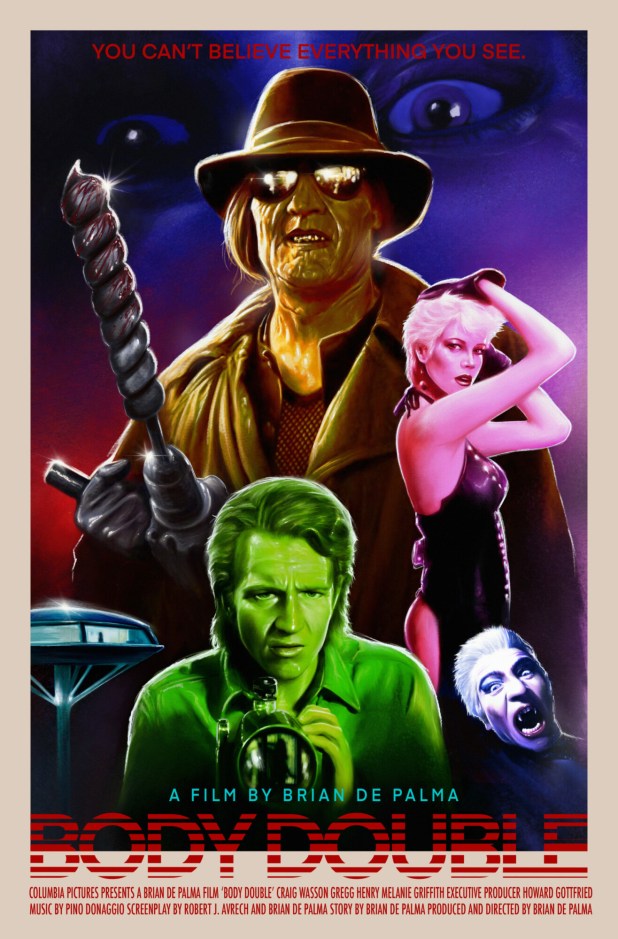
I’ve said it before. Everything I find attractive in the opposite sex is Melanie Griffith: the toughness of Edith Johnson in Cherry 2000, the smarts of Tess McGill in Working Girl, the dangerous edge of Audrey Hankel in Something Wild and, well, Holly Body in this movie wearing a fringed jacket, smoking with short blonde hair? Have you seen my wife?
Wikipedia states that this is a “homage to the 1950s films of Alfred Hitchcock, specifically Rear Window, Vertigo and Dial M for Murder,” but this is a giallo thanks to the main character being implicated in the murder, misdirection as to what the real crime is and who the killer may be, and the fact that murder and sex have come together most horrifyingly as a drill penetrates a woman and the floor beneath her, dripping hot blood all over the protagonist.
Jake Scully (Craig Wasson) has lost his home, his lover and his last role, all because of the childhood phobias that have made him claustrophobia — hey another giallo moment — yet after taking a method acting class, he’s found a place in the astounding home of actor Sam Bouchard (Gregg Henry), who before he leaves for Europe takes time to show him a woman — Gloria Revelle (Deborah Shelton, Miss USA 1970, who was also in Bloodtide) — who strips down every night for whoever watches her.
That home is the Chemosphere house which is also in Charlie’s Angels.
Obsessed by this woman, Jake starts following her and even watches her be attacked by a mystery man. That same “Indian” steals her purse as Jake follows her to a rendezvous at a hotel where she’s about to meet another man who stands her up. He gets her purse back before his phobia traps him in a tunnel. She helps him escape his fear. They embrace. They kiss. That night, the “Indian” returns and kills her with a gigantic drill as Jake fails to save her; a huge white dog has stopped him. When he calls the police, Detective Jim McLean (Guy Boyd) tells him that his need to watch and not involve the police earlier led to Gloria’s death.
Later that evening, unable to sleep, Jake notices a woman dancing on a cable channel whose movements are the same as his mystery woman. Those movies and those curves belong to Holly Body (Griffith), an adult star who he works his way into meeting and then frightens away, just in time for the “Indian,” who ends up being Alex Revelle, the husband of Gloria, but also Sam Bouchard, to knock out Holly, who he paid to dance for Jake so that he’d keep watching and see his wife get killed, giving him the alibi that he was in Europe and the “Indian” was the real killer.
That reveal is so giallo it should make the screen turn yellow.
Director Brian DePalma was recovering from dealing with the censors over Scarface and women’s groups after Dressed to Kill. Much like Argento, who made Tenebre his most violent film yet after similar criticism — they both also tend to answer yes to the question “Do you like Hitchcock?” — DePalma decided to go hard instead of giving up.
He told the Philadelphia Inquirer “If this one doesn’t get an X, nothing I ever do is going to. This is going to be the most erotic and surprising and thrilling movie I know how to make… I’m going to give them everything they hate and more of it than they’ve ever seen. They think Scarface was violent? They think my other movies were erotic? Wait until they see Body Double.”
Originally, DePalma was going to have Annette Haven play Holly, but the studio bristled at an actual hardcore actress being in their movie. She stayed on to consult and explain what the world of adult was like. DePalma also wanted Sylvia Kristel for the role of Gloria and man, if that happened, this movie would have been too much for 12 year old me.
DePalma ended up ending his three picture deal with Columbia after this movie, which nearly got an X rating, saying “The only people crazier than the people who criticize me for violence are the people at the studios. I can’t stand that sort of cowardice.” As for critics, Ebert loved it, Siskel hated it and said it was splatter and everyone kept saying he hated women. Years later, the director would explain to The Guardian, “Body Double was reviled when it came out. Reviled. It really hurt. I got slaughtered by the press right at the height of the women’s liberation movement… I thought it was completely unjustified. It was a suspense thriller, and I was always interested in finding new ways to kill people.”
So yeah. It bombed at the box office. But it has a great rental store scene, the twist from the coffin scene to the real fate that Jake finds himself in is astounding and even the way the credits come in is absolutely genius. Throw in the wild notion that this movie briefly becomes a Frankie Goes to Hollywood video — man, DePalma loves that spinning dance camera and that scene is such a wow, look, there’s Brink Stevens, Annette Haven, Cara Lott and Lindsay Freeman moment — and you have a movie that I’ve thought about since I first saw it as a teen. Watching it again as an old man, I see the sadness creep through the sin, the voyeur being when he starts watching and gets to actually making it.
Also: that same dance set was reused for Fright Night.
It’s funny because Argento and DePalma always get compared to one another. DePalma said in an interview “Actually the only film I’ve seen of Argento’s is The Bird with the Crystal Plumage. That is the only film of his I remember ever seeing. I know I get compared to him a lot, and people think I took this or that from there or here. But, I actually only remember ever seeing that one film of his. I’m not a student of giallo films at all. I know Martin Scorsese showed me some Mario Bava films back in like the 70s or something.”
Sure, alright. Maybe we should compare the shot for shot moments in Tenebre and Raising Cain.
I digress.
Both are extremely talented and have dealt with the same criticism. Both made poorly advised movies late in their career. Both even married actresses from their films. Both used Pino Donaggio to compose their movies, Argento with Trauma and DePalma more than once.
They should just get together and have some wine and be friends.
Looking back at Body Double, I am astounded by how much DePalma got away with and how much art he still worked into this. It’s sleazy and hard to defend, but that just makes me enjoy it beyond what I should.
June 20: Junesploitation’s topic of the day — as suggested by F This Movie— is Free Space! We’re excited to tackle a different genre every day, so check back and see what’s next.
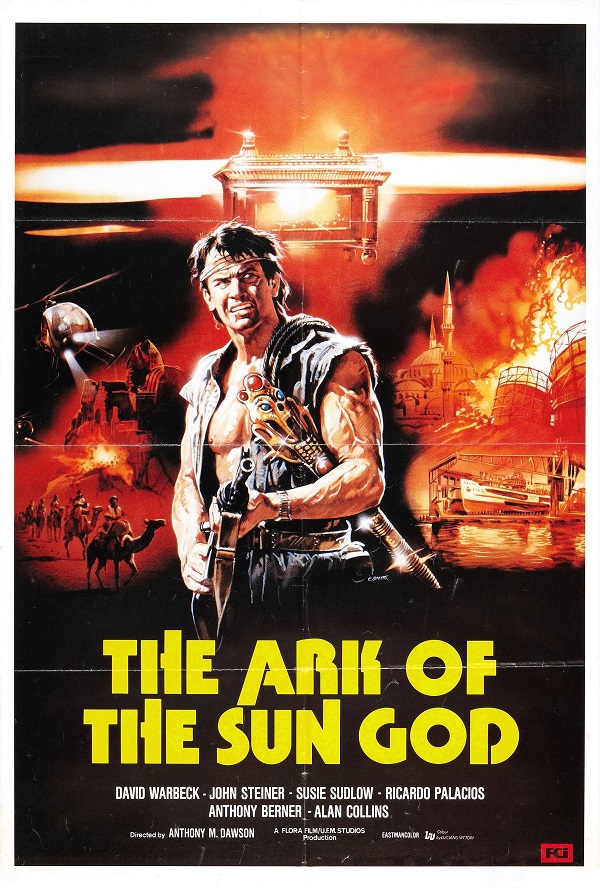
Also known as Sopravvissuti della città morta (Survivors of the Dead City), this was directed by Antonio Margheriti and written by Giovanni Paolucci (who worked with Bruno Mattei* on his late career movies like The Tomb and Island of the Living Dead) and Giovanni Simonelli (Hansel e Gretel, Jungle Raiders).
Instead of Indiana Jones, we get Rick Spear (David Warbeck), a safecracker who travels to Istanbul to steal the spear of Gilgamesh from a cult. He brings along his girlfriend Carol, who he calls “Pussycat,” (Susie Sudlow in her only movie) and his buddies Mohammed (Ricardo Palacios) and Bettle (Luciano Pigozzi) to accomplish the impossible — breaking into the tomb and getting away in one piece — for the man who hired him, Lord Dean (John Steiner).
The miniatures are the real stars of this movie, as Margheriti somehow gets you to believe that Rick is driving a Trans Am around these ancient structures and that he’s not just shooting toy cars on miniature sets.
Rick also says, “Why didn’t you tell me this job called for Roger Moore!” at one point, which is funny, as at one point Warbeck was considered to play James Bond.
Nearly everyone in front of and behind the camera — Margheriti, Warbeck, Steiner, Pigozzi, cinematographer Sandro Mancori, editor Alberto Moriani, assistant director Edoardo Margheriti and voice/dubbing editor Nick Alexander — had already made another Raiders of the Lost Ark movie, 1982s The Hunters of the Golden Cobra. As far as I’m concerned, they could have just kept making them because I’d watch them all.
That set at the end, with all the red light and shaking camera and dry ice? That’s why I keep coming back to Italian movies.
*Speaking of Bruno Mattei, he totally stole scenes from this movie and used them in his 1988 Namsploitation movie Cop Game.






 B&S About Movies
You must be logged in to post a comment.