Junesploitation: Wavelength (1983)

ABOUT THE AUTHOR: Exploitation-film historian A.C. Nicholas, who has a sketchy background and hails from parts unknown in Western Pennsylvania, was once a drive-in theater projectionist and disk jockey. In addition to being a writer, editor, podcaster, and voice-over artist, he’s a regular guest co-host on the streaming Drive-In Asylum Double Feature and has been a guest on the Making Tarantino podcast. He also contributes to the Drive-In Asylum fanzine. His most recent essay, “Of Punks and Stains and Student Films: A Tribute to Night Flight, the 80s Late-Night Cult Sensation,” appeared in Drive-In Asylum #26.

EDITOR’S NOTE: Thanks to A.C. for sending this. It would fit Junesploitation on June 12, which was New World day. This was also covered in “Exploring: 10 Tangerine Dream soundtracks.”

These days, we live lives of great convenience. Just about any movie we want to watch is only a few clicks of the remote control or keyboard away. Yet, even with this luxury, I yearn for the days of old when I used to scour the catalogs of mail-order businesses like Video Search of Miami and Sinister Cinema or the dealers’ tables at cons in search of elusive films. Those treasure hunts were thrilling when you unearthed a gem that had never been released on home media in the United States, such as Death Line a/k/a Raw Meat (my blurry VHS dupe bore the title Tren de la Mort and had Spanish subtitles) or Jess Franco’s The Bloody Judge a/k/a Night of the Blood Beast (my copy was
entitled The Throne of Fire and was in French with no English subtitles).

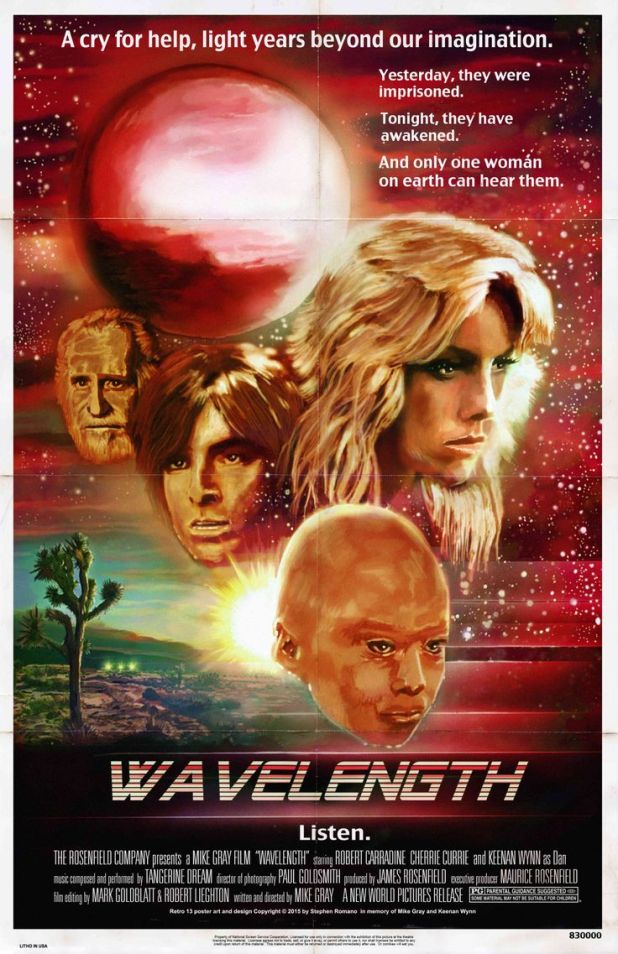
But I realized those fun times were over when even Franco’s Vampyros Lesbos, a film never released theatrically in the United States, got a special edition DVD. For years, I’d stared at the same three stills from that film in books on horror films. But now, it was mine to own. Today, everything, no matter how obscure, gets an official home-media release. Well, almost everything. Wavelength, a science-fiction film from 1983, still has never been released to DVD or streaming in this country.

Robert Carradine is a down-on-his-luck musician. One day, when things are looking bleak, he meets an attractive young woman in a bar. She’s played by the estimable Cherie Currie of the groundbreaking rock band The Runaways. They quickly hit it off, hook up, and become a couple. He soon learns that his new girlfriend is psychic. She starts hearing strange voices, leading them to an underground bunker in the desert where the evil government is experimenting on three captured aliens. With the help of a drunken old coot played by Keenan Wynn (of course), they work to free the child-like aliens so that they can return to their mothership and go home. In other words, it’s the same plot as E.T. the Extra-Terrestrial with bigger ambitions, but on a fraction of the budget. The beautiful special effects shot in the finale delayed the film’s release until after E.T. had become a box-office behemoth. Perhaps in an alternate universe, Wavelength came first. One can only imagine.

Sincerely written and directed by Mike Gray, a former documentary filmmaker who wrote The China Syndrome and Chuck Norris’s Code of Silence, charmingly acted by Carradine and Currie, with a typically great score by Tangerine Dream, Wavelength was once a staple of HBO. Now it’s fallen into the black hole of forgotten films. (A soft-looking rip from an old VHS tape is available on YouTube.) It’s not a world-beater, but it’s a well-done B-movie, which was released theatrically by New World Pictures with little fanfare and even less box-office success. (I saw it in an empty theater during its original run.) Here’s to Wavelength’s rediscovery. Like an artifact from a film grail quest in the good old days, it’s a tiny gem.

VISUAL VENGEANCE ON TUBI: American Taboo (1983)

EDITOR’S NOTE: Did you know that Visual Vengeance has a ton of movies on Tubi? It’s true. Check out this Letterboxd list and look for reviews as new movies get added. You can find this movie on Tubi.

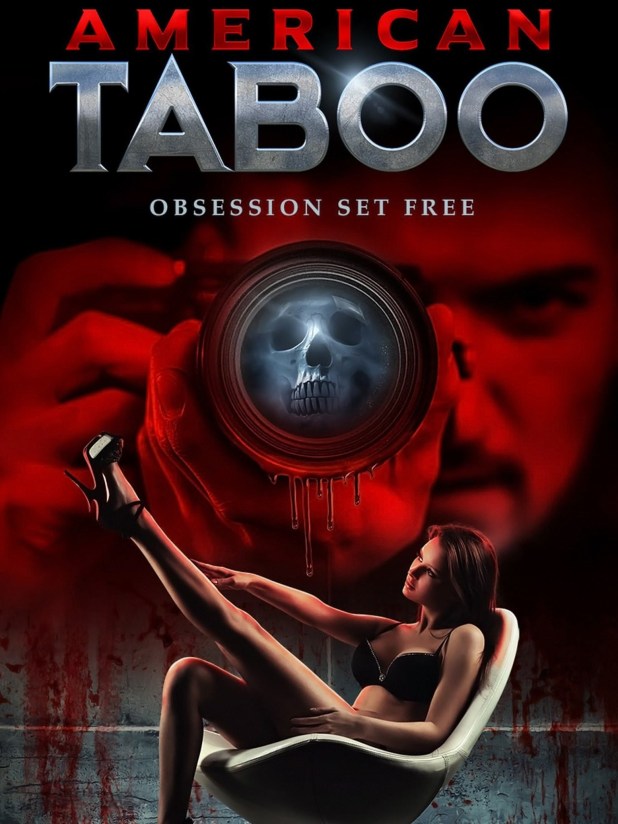
This was directed by Steve Lustgarten, who won the 1983 Academy Award for Best Student Film. When you read the plot — “Unstable thirty-something introvert, who works as a photographer’s assistant, becomes obsessed with his underage female neighbor” — you might think that this is going to be exploitative. It’s not. Instead it comes across as completely real even if we’d never make the decisions that the characters live through.

Written by Lustgarten and his leads, Jay Horenstein (who plays Paul) and Nicole Harrison (who plays Lisa), this movie feels like we’re looking at actual lives. Sadly, American Taboo was the only movie Harrison made during a time that she said that she was “a poet from the Northwest who joyously misspent her youth in Hollywood.” Even more depressing is the fact that she died in 2011 from brain cancer. She feels like someone who could have broken through in some way to be a star.

You can see this as troublesome and wish fulfillment because the young girl is the aggressor in this movie, but it’s also so well made that I didn’t come away feeling strange or grossed out by it. Paul seems like someone who can’t connect with anyone and so when he does feel something with Lisa, it does seem like something that is only happening in his head even if it is the reality within the movie. He feels regret because he sees this as something that he could have kept from doing but Lisa is more of a realistic person, knowing that she wanted it and that it seemed like it was happening regardless of whatever front of morality Paul had erected.

What a strange film to be in the Visual Vengeance library of movies.

FVI WEEK: Pod People (1983)

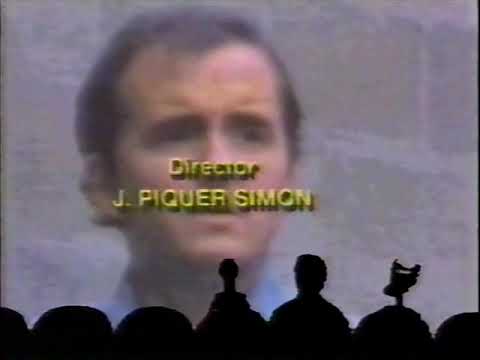
This movie is, of course, Juan Piquer Simón’s Extra Terrestrial Visitors. The opening and end credits use footage from The Galaxy Invader by director Don Dohler.

Simón also made Pieces and Slugs, so we can forgive him for Supersonic ManThe Rift and Cthulhu Mansion (which I like for some reason). With this movie, he’s challenging us a bit.

Los nuevos extraterrestres was meant to be a frightening movie about an alien on a murderous Earth rampage, but then E.T. came out and who better than the man who made Pieces to create a clone of Spielberg’s family classic?

It starts with poachers trying to get to the alien eggs that they find in the woods and being killed in the process, as well as a rock band getting involved. Then Tommy (Óscar Martín), our child protagonist, brings one of the eggs home and ends up helping it hatch, at which point he gets a new telekinetic friend he calls Trumpy.

Maybe that name hasn’t aged well.

Meanwhile, the band — Rick (Ian Sera, Kendall from Pieces and obviously his genitals have healed well as he has a roving eye), his girlfriend Lara (Susana Bequer, who shows up in Hostel: Part II), Kathy (Sara Palmer) and Tracy (Maria Albert), along with a hitchhiker named Sharon (Nina Ferrer) they found on the way — show up at Tommy’s house and Lara soon dies with a Big Dipper symbol on her forehead, which happens after she’s attacked by Trumpy’s mother and falls off a cliff.

This movie alternates between sweet moments between alien and child versus angry alien mother killing people left and right before being shot tons of times by Rick after she kills Tommy’s angry Uncle Bill (Manuel Pereiro). The boy and alien say their goodbyes and you’re like, well, didn’t we just watch Bambi’s murderous mother get killed? Has anyone learned anything in this? Is Trumpy going to grow up and murder us all?

By the way, if Tommy’s room feels familiar, it’s the same room where Timmy was working on his dirty puzzle in Pieces

I have no idea who this movie is for, but I have to respect the lengths it takes to make us think that it was shot in America, as Tommy’s bedroom has tons of Boston sports pennants to the point that you question why there are so many of them and start to realize that no, this didn’t come from the colonies and no, in no way is this a sequel or in the same world as E.T., no matter what they want to tell you.

The chocolate of alien murder in the woods and peanut butter of human and alien childhood friendship does not taste that great when smashed together, but it sure is fascinating and man, Trumpy looks legitimately like an alien to the point where if you told me that he was an escapee from Groom Lake, I’d believe you.

This is being released on blu ray from Severin. It has a 4K scan from the 35mm negative, plus extras such as The Simon’s Jigsaw — A Journey Into the Universe of Juan Piquer Simon, interviews with Emilio Linder and composer Librado Pastor, a private concert with Pastor, the Pod People credits and a CD soundtrack single. You can get it from Severin.

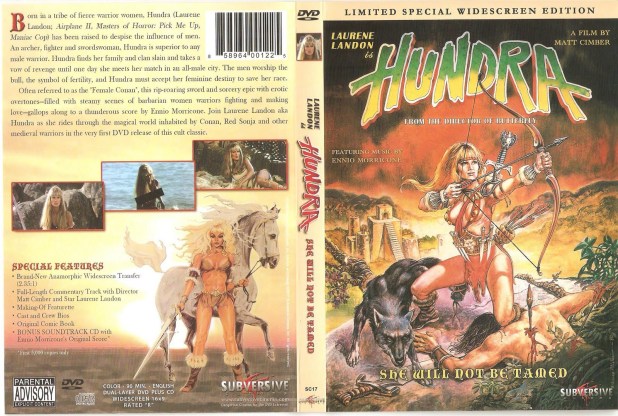
FVI WEEK: Hundra (1983)

Who has had a crazier life than Matt Cimber? Born Thomas Vitale Ottavian, he met his first wife Jayne Mansfield when he directed her on Broadway in Bus Stop. Just think about how his other two wives felt, competing with Jayne Mansfield. Come on.

He’s directed everything from Mansfield’s last movie Single Room Furnished to The Sexually Liberated Female, a cycle of three Blaxploitation films (The Black Six, which featured six currently playing football stars in Gene Washington, a San Francisco 49er Gene Washington, Pittsburgh Steeler Joe Greene,  Miami Dolphins’ running back Mercury Morris, Detroit Lions cornerback Lem Barney, Kansas City Chiefs linebacker Willie Lanier and Minnesota Vikings defense end Carl Eller;  as well as Lady Cocoa and the Candy Tangerine Man), The Witch Who Came from the Sea and two Pia Zadora films, Fake-Out and Butterfly. He also created and directed the original Gorgeous Ladies of Wrestling TV show (he’s played by Marc Maron and named Sam Sylvia in the Netflix series).

Today, we’re here to discuss Hundra, one of the two films he made with Laurene Landon (the other is Yellow Hair and the Fortress of Gold). 

Hundra is the only youngster in her tribe of Amazons who hasn’t been with a man and she has no problem letting the other ladies know. Sadly, every member of her tribe soon gets killed by barbarians and the old wise woman wants her to have kids rather than get revenge. And that means she needs a baby daddy.

One dude has bad manners and tries to kill her. Another is a thief who only wants to kill her. The other is a gay pimp. Finally, she meets a healer, but other ladies have to teach her how to seduce him. Obviously, they teach her well, because she’s soon with child until a sorcerer takes her baby and forces her into a humiliating ritual, but she soon escapes and takes everyone out.

Luckily, as the narrator tells us, the spirit of Hundra lives within women from then until now. Also, somehow, someway, Ennio Morricone was conned into doing the soundtrack for this film, which is way under his legendary talent.

Star Laurene Landon also shows up in the recently released Terror Tales, as well as The StuffIt’s Alive III: Island of the AliveManiac Cop, Wicked Stepmother and many others. She’s the best part of this movie, totally devoted to the action sequences and doing every stunt except for one fall off a 180-foot building.

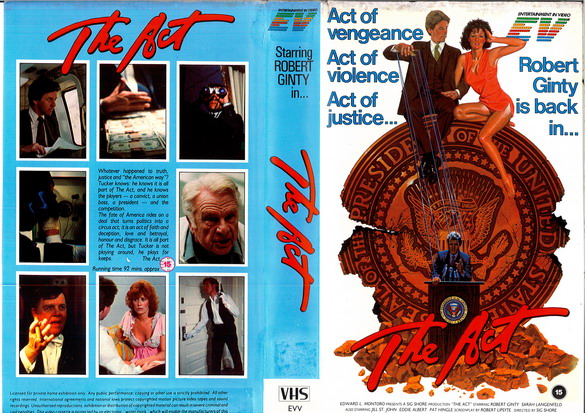
FVI WEEK: The Act (1983)

Directed by Sig Shore (Sudden Death) and written by Robert Lipsyte (who wrote another Shore movie, That’s the Way of the World), The Act is a political thriller and comedy smooshed together. Or, as the sell copy says, “Blackmail, a complex heist, and political snakery collide into a complicated caper full of disguises and surprises, where it’s never clear who’s really working for whom.”

Filmed as Bless ‘Em All, this stars Robert Ginty as Don Tucker, a union lawyer pressed into service as a presidential assistant. He helps get labor boss Harry Kruger (Eddie Albert) out of jail to save him from a hunger strike as long as Krugers successor Frank Boda (Pat Hingle) pays the President of the U.S. (John Cullum) $2 million dollars toward his re-election campaign.

Meanwhile, Boda doesn’t want to pay and gets his man Mickey (James Andronica) to get the payoff back, which has Mickey hiring Julian (Nick Surovy) all while Don and Elise (Jill St. John) are taking advantage of a hotel room. And John Sebastian did the soundtrack, if that brings you in.

There isn’t a single critic review of this on IMDB and 32 views on Letterboxd. Sometimes that means that a movie is an uncovered treasure. This is not one of those times.

You can watch this on Tubi.

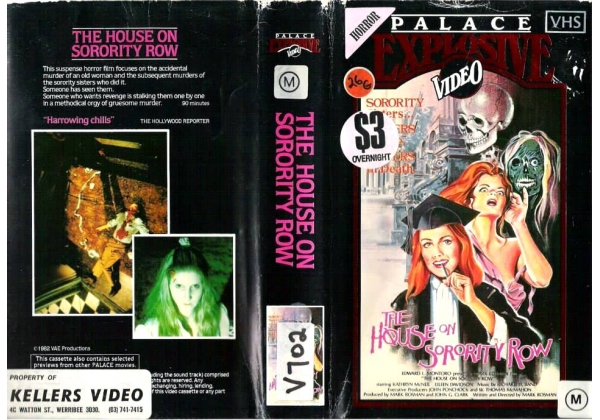
FVI WEEK: The House On Sorority Row (1983)

This film was inspired by the 1955 French film Les Diaboliques and was originally titled  Screamer and Seven Sisters by its writer and director Mark Rosman. It also has the alternate title House of Evil, but none of those are as evocative and interesting as The House On Sorority Road.

Vincent Perronio, who often works with John Waters, was the film’s production designer. It was shot in Pikesville, Maryland and used the University of Maryland for its establishing shots. The crew used a house that was being foreclosed on for shooting and discovered two squatters living there, who were hired to be video assistants on the film.

The movie opens with a flashback sequence that was requested by its distributor, Film Ventures. It was shot in black and white, then tinted blue. We see a baby being delivered via c-section, but the mother is told that the child died.

Fast forward to today, as seven sorority sisters are drinking up at their own small graduation party. Katey (Kathryn McNeil, Monkey Shines), Vicki (Eileen Davidson, who went from acting on soap operas to appearing in the real-life soap opera The Real Housewives of Beverly Hills), Liz, Jeanie (Pittsburgh’s own Robin Meloy Goldsby, who is now a piano player in Germany), Diane (Harley Jane Kozak, Parenthood) Morgan  and Stevie want to spend a few more weeks in their sorority house before heading out into the real world, but their house mother Mrs. Slater isn’t having any of their shenanigans.

Seriously, Mrs. Slater is a real pip. For example, when Vicki is batter dipping the corn dog on a water bed with her boyfriend, Slater bursts in and stabs the bed with her walking cane. So that leads to the girls playing a prank — making the old woman jump into the swimming pool to get her cane at gunpoint. There’s a stumble, the gun goes off and the old woman dies. The seven sisters all decide to hide her body in the pool until after their big blowout.

Of course, that’s when the killer shows up, who is Slater’s deformed son Eric. Turns out that doctor from the beginning had given her an illegal fertility drug that led to him turning out like this. So the doctor drugs Katey — our final girl — and tries to kill Eric to cover up his crimes, but Eric easily dispatches him. This leads to a showdown between a clown-costumed maniac — who has even decapitated one of the other girls and left her head in the toilet — and Katey which ends inconclusively.

Film Ventures also asked for the ending, where Katherine is discovered floating dead in the pool, dead at the hands of Eric. They felt like that the ending was too downbeat, so that’s why we got the ending we did, where Katey stabs Eric but his eyes open right before the final credits.

This is a movie filled with not just plenty of murder, but lots of party scenes too. The Washington, DC-based power pop band 4 Out of 5 Doctors shows up to play five of their songs. If you’ve ever seen The Boogeyman, they’re in that too.

Ronin Flix was selling a limited edition blu ray of this film earlier this year, but it’s currently sold out. It’s definitely worth a watch, as it predates films like I Know What You Did Last Summer where the teenagers are as much victimizers as victims.

You can watch this on Tubi.

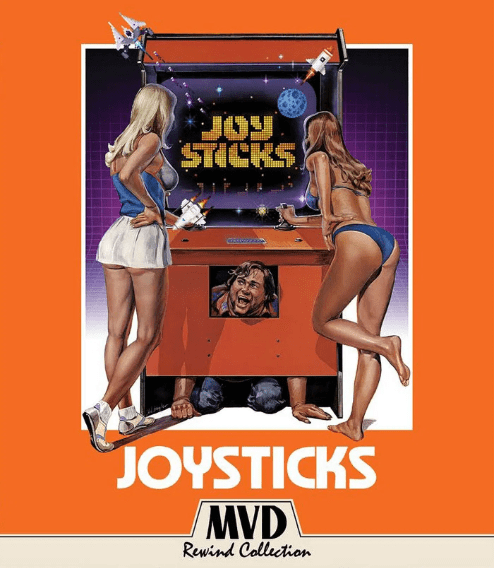
MVD REWIND COLLECTION BLU RAY: Joysticks (1983)

Jefferson Bailey (Scott McGinnis, Star Trek III: The Search for Spock) owns the hottest of all businesses in 1983: a video arcade. It’s driving local business tycoon Joseph Rutter (Joe Don Baker, a man whose name I screamed into the ear of a sleeping girlfriend once, which is a long story I should really get to sometime) nuts, so he gets his two nephews and plans on shutting down the arcade. Mean! Unfair! No!

Bailey’s too smart for Rutter and has two pals named Eugene Groebe (Leif Green, Davey Jaworski from the legendary bomb Grease 2) — who is molested by swimsuit girls before he even gets to the arcade — and McDorfus who are ready to deal with this affront.

This movie was such a big deal that Midway allowed the image of Pac-Man to be used as well as their new game Satan’s Hollow and the as-yet-unreleased Super Pac-Man during the big showdown at the movie’s end.

Corinne Bohrer, who is pretty much teen movie royalty thanks to appearances in films like Surf IIZapped! and Stewardess School shows up, as does John Voldstad who played “my other brother Daryl” on TV’s Newhart.

There are two real reasons to watch this movie. One is the theme song, which has beeps, boops and promises “video to the max” and “totally awesome video games!” This song will infiltrate your mind and not leave, trust me.

The other big reason is John Gries, who completely owns every scene he appears in as King Vidiot, a punk rock maniac surrounded by punker girls who only communicate in video game noises when they’re not all riding around on miniature motorcycles. In a more perfect world, King Vidiot would be the star of the film. Every other person pales in comparison to his greatness. Gries would go on to steal the show in plenty of other films like Real GeniusNapoleon DynamiteFright NightThe Monster Squad and TerrorVision.

This all comes from Greydon Clark, who directed The Uninvited — a movie where George Kennedy does battle with a house cat — Without Warning and Wacko, as well as appearing in movies like Satan’s Sadists.

The saddest part of this movie was that even though the good guys win, arcades would be dead by the mid-1980’s. So really, the bad guys did win. King Vidiot? Well, no one knows what happened to him.

The MVD Rewind Collection release of Joysticks has a 2K scan and restoration from 35mm film elements, new fan commentary featuring MVD Rewind Collection’s Eric D. Wilkinson, Cereal at Midnight host Heath Holland and Diabolik DVD‘s Jesse Nelson, audio commentary by director Greydon Clark, an interview with Clark and a fake trailer for a movie called Coin Slots directed and written aby Newt Wallen and starring Mr. Lobo and Eric D. Wilkinson.  It all comes in incredible retro packaging, as well as reversible artwork, a collectible 2-sided mini-poster and more.

You can get it from MVD.

Cinematic Void January Giallo 2024: A Blade in the Dark (1983)

EDITOR’S NOTE: Cinematic Void will be playing this movie on January 6 at 7:00 PM MT at Sie FilmCenter in Denver, CO. You can get tickets here. For more information, visit Cinematic Void.

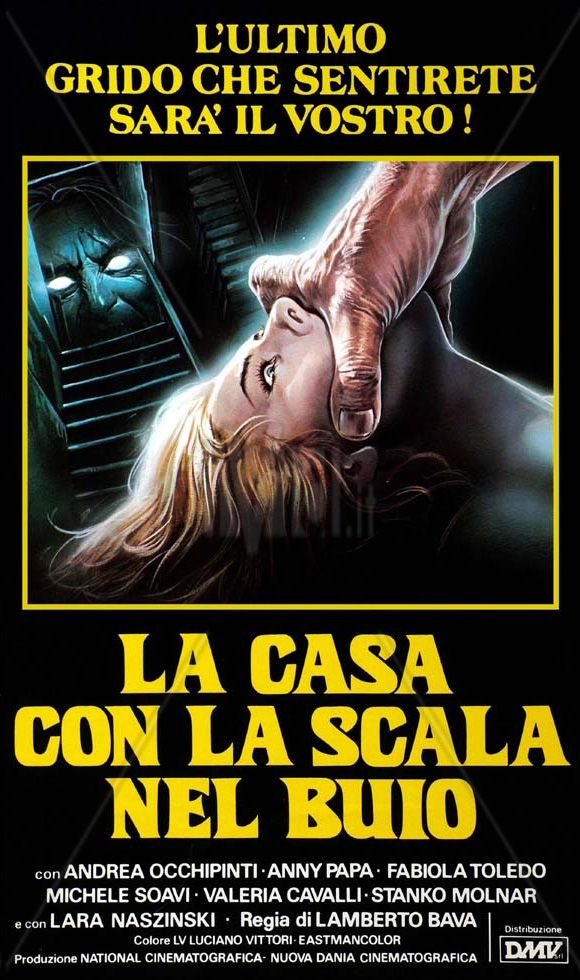
Known in Italy as La Casa con la Scala nel Buio (The House with the Dark Staircase), Lamberto Bava’s A Blade in the Dark was originally intended to be a four-part TV mini-series, with each segment ending with a murder. However, it was too gory for regular audiences, so it was released as a film. It was written by the husband and wife team of Dardano Sacchetti and Elisa Briganti, whose script was often at odds with what Bava wanted to put in his film.

Bruno (Andrea Occhipinti, The New York Ripper) is a composer hired to create the soundtrack for a horror movie. He’s been having trouble concentrating on the job, so he rents a house to sequester himself. He meets two women who used to know his rented villa’s former tenant, but when they disappear, he’s forced to watch the movie he’s scoring closer, as there’s a clue to the razor-wielding killer’s identity hidden within.

Bava worked as Dario Argento’s assistant for the movie Tenebre two years before this movie was made, so that has a big influence on this work. This is a movie unafraid to wallow in gore, feeling closer to the American slasher than the giallo. Then again, Lamberto was an assistant on the movie that predates the slasher, his father’s A Bay of Blood.

For the killer, he had difficulty finding someone who could convincingly appear to be a man and a woman. He turned to his assistant, Michele Soavi, who went on to direct plenty of great horror on his own.

For those that care about these matters like me — Giovanni Frezza, forever Bob from The House by the Cemetery — shows up in the movie within a movie that Bruno is writing the music to. He’s taunted by voices that chant “You are a female! You are a female!”

Also, in the true spirit of giallo and what the word means, every victim — and then the killer him or herself — is called out by the color yellow.

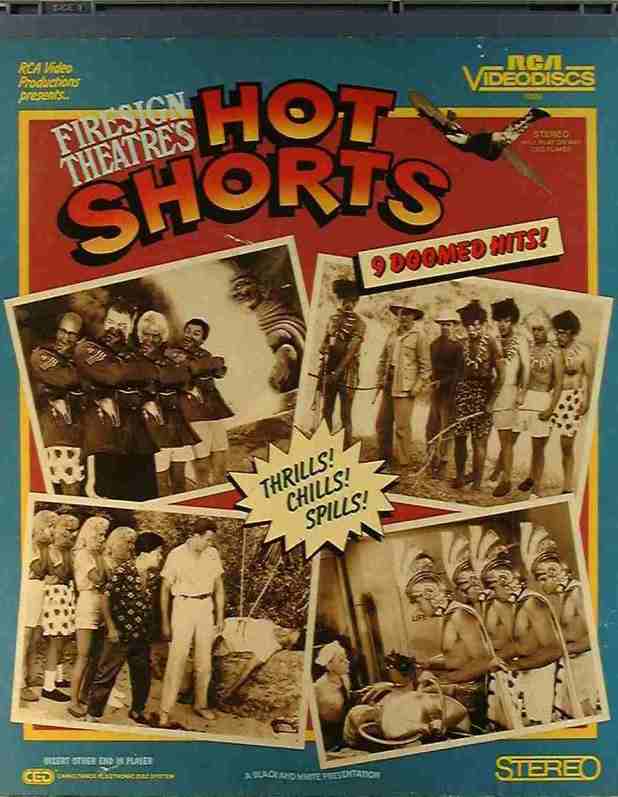
SUPPORTER DAY: Firesign Theatre Presents Hot Shorts (1983)

EDITOR’S NOTE: Today’s movie is brought to you by AC Nicholas, who has graciously become a Big B&S’er, a monthly supporter of the site and got to pick an entire week of movies. His idea this time was for a series on movies that started as one film and were dubbed into something else.

Would you like to have me write about the movies of your choice? It’s simple!

  1. Go to our Ko-Fi site and donate. There’s no set amount and I won’t tell you what to do. In fact, if you just keep reading for free, we can still be friends.
  2. Join as a monthly member for just $1. That makes you a Little B&S’er.
  3. As a Medium B&S’er at just $3 a month, if you pick a movie or a director, I’ll write about them for you. In fact, I’ll do one for each month you subscribe and even dedicate the post to you.
  4. For $5 a month, you basically get some major power. As a Big B&S’er, I’ll write an entire week on any subject you’d like. How awesome would that be? In fact, I’ll do it for every month you’re a member. Do you think any of your other movie sites will do that for you?

The Firesign Theatre was an American surreal comedy group that first appeared on November 17, 1966, in a live performance on Radio Free Oz on station KPFK FM in Los Angeles. In their career, they produced fifteen record albums and one single and had three nationally syndicated radio programs, The Firesign Theatre Radio Hour HourDear Friends and Let’s Eat!

Created by Peter Bergman, all of their material was conceived, written and performed by Bergman, Philip Proctor, Phil Austin and David Ossman. They have the name as all four were born under the three fire signs of astrology, with Austin being an Aries, Proctor a Leo and Bergman and Ossman both Sagittarius.

The comedy of the group was based on fooling people. Proctor said, “We each independently created our own material and characters and brought them together, not knowing what the others were going to pull. And it was all based on put-ons; that is, we were assuming characters that were assumed to be real by the listeners. No matter how far out we would carry a premise, if we were tied to the phones we discovered the audience would go far ahead of us. We could be as outrageous as we wanted to be and they believed us—which was astonishingly funny and interesting and terrifying to us, because it showed the power of the medium and the gullibility and vulnerability of most people.”

With titles like How Can You Be in Two Places at Once When You’re Not Anywhere at All and Don’t Crush That Dwarf, Hand Me the Pliers, their concept albums could be about nothing. Or also about people growing old as they watched TV. They were unlike anything else at the time or since, to be perfectly truthful.

After a break in 1973, the group reformed and went after new targets. Everything You Know Is Wrong attacked the New Age before some people even knew what it was. Ossman referred to it as a “complicated and cinematic record, we were trying to write a radio movie.” Working with Allen Daviau, who would later be the cinematographer of so many Spielberg movies, they used the album as a soundtrack for a film that was released in 1993.

For most of the 70s, the Firesigns were quiet. Norman Lear and Bud Yorkin’s Tandem Productions bought the rights to their character Nick Danger for a TV series that would star George Hamilton and New Line wanted to make a movie from the same stories with Chevy Chase. The group did make five episodes of a show called Nick Danger: The Case of the Missing Shoe for radio, which was pretty much a dying format, and when it wasn’t sold, they released it on an EP.

Proctor and Bergman made J-Men Forever and then Austin and Bergman finally reunited to start performing again. However, when Reagan was in office, the political waters were not safe for the group. They faded, only to reappear later in the 80s. As Bergman said, “I dreamed it back. Sure enough, when we kicked the fascists out of office it was time for the Firesign Theatre to come back.” They lasted until the 2010s and claimed to be the longest surviving group from the classic rock era to still be intact with the original members. Sadly, Bergman would die in 2012 and his memorial would be their last performance. Austin died in 2015.

As for the movies that they worked on, the Western musical Zachariah is one. They were also involved with Tunnel VisionAmericathon and Nick Danger in The Case of the Missing Yolk, which was an interactive video game that became a movie and was shown — just like J-Men Forever — on USA’s Night Flight.

Just like the aforementioned — twice — J-Men Forever, this is a series of old movie serials redubbed into entirely new stories by the Firesigns. Daughters of the Canadian Mounties becomes The Mounties Catch Herpes. Panther Girls of the Congo transforms into Claws IISpy Smasher presents a world where no one lights up anymore in Revenge of the Non-SmokersSperm Bank Hold-Up is The Black WidowNazi Diet Doctors is Darkest Africa. Toy Wars has turned into Manhunt of Mystery IslandOlympic Confidential transforms into Undersea KingdomThe Last Handgun On Earth is Radar Men from the Moon. Heaven Is Hell is dubbed and turned into She Demons.

Luckily, we live in a world where you can find this on the internet. The humor is silly but you can see that Mystery Science Theater 3000 was influenced by how the Firesigns dubbed these movies. As someone who loves both serials and stupidity, I loved every moment of this.

You can watch this on Tubi.

THE MOVIES OF AL ADAMSON: Doctor Dracula (1983)

Al Adamson loved remixes more than any DJ. Doctor Dracula is a re-edited version of Paul Aratow’s Lucifer’s Women with new footage that was shot, re-edited it into the film and released to TV. Want to know how goofy this movie is? Anton LaVey is listed as a consultant.

Dr. John Wainright (Larry Hankin) was once an academic but now is an illusionist who believes that he is the reincarnation of Svengali. His publisher, Sir Stephen Phillips (Norman Pierce) tells him that he is also reincarnated and the leader of a Satanic cult known as the Society of the Bleeding Rose. Stephen explains to John that he must refill the cult’s psychic energy through human sacrifice. He must place his soul into someone else’s during a murder/suicide during a simultaneous orgasm.

This sounds like a lot of work.

Well, that was the story of Lucifer’s Women, a film packed with sex, violence and nudity. I mean, Paul Thomas was in it. How does it get to air on TV?

Enter Sam Sherman and Al Adamson.

Now, Svengali is battling the reincarnation of Dracula, Dr. Gregorio (Geoffrey Lund) and we have another Satanic cultist, Hadley Radcliff (John Carradine!) also in the plot. Dracula has a victim, who you knew had to be played by Regina Carrol. Love interest Trilby (Jane Brunel-Cohen) from the original film is nearly gone and they even got Hankin back to do voice-overs to try and explain it.

It’s exactly the mess you knew it had to be, but come on. You should know what you’re in for by now.