CANNON MONTH 2: Fake-Out (1982)

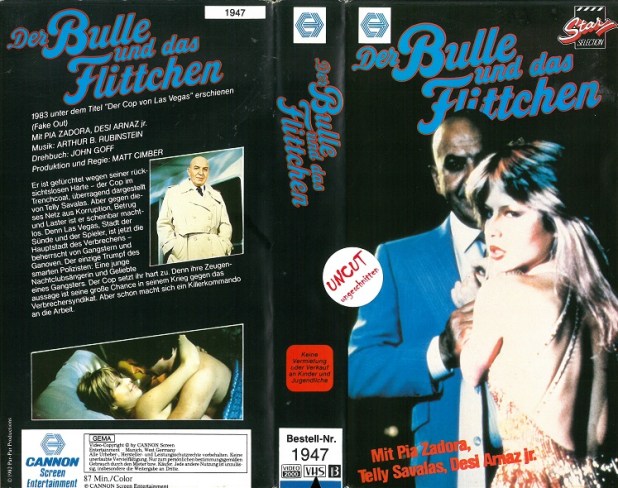
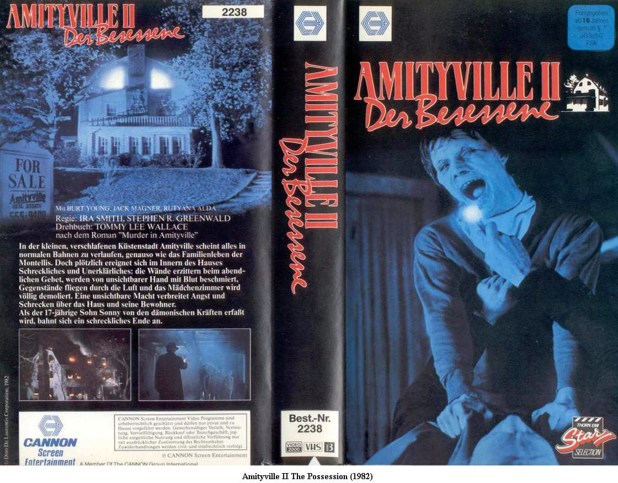
EDITOR’S NOTE: Fake-Out was not produced by Cannon. It was, however, released on video in Germany by Cannon Screen Entertainment.

Did Matt Cimber make this movie just for me?

First off, Cimber has led a crazy life. He went from doing plays in Vermont to Broadway, where he directed the revival of Bus Stop and met his future wife, Jayne Mansfield, who he made Single Room Furnished with. Under the names Gary Harper and Rinehart Segway he directed Man and Wife, Sex and Astrology and The Sexually Liberated Female then made The Black SixLady CocoaThe Candy Tangerine Man and The Witch Who Came from the Sea.

Cimber also teamed with actress Laurene Landon to make Hundra and Yellow Hair and the Fortress of Gold. He also was one of the co-creators behind the Gorgeous Ladies of Wrestling, serving as executive producer and director of the syndicated television program — Mark Maron played him on the Netflix series — and his career is often a mix of exploitation and female empowerment, but it can get kind of murky. Seventies murky, you know? It has to be sexy, but women are still dangerous but yet need to be naked a lot of the time.

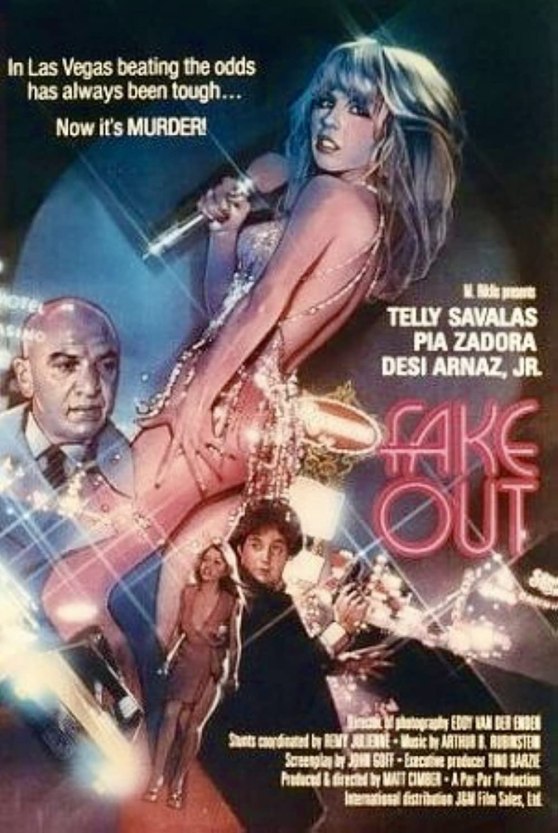
Another actor that Cimber teamed with twice was Pia Zadora. Have I not revealed how much I love Ms. Zadora in these digital pages? Well, Cimber made Butterfly and this movie with her. Financed by Pia’s then-husband Meshulam Riklis — he also paid for The Lonely Lady and perhaps her Golden Globe Award as New Star of the Year — it’s the tale Bobbie Warren (Zadora), a gangster’s moll who everyone thinks is going to snitch, so they plan her demise.

Written by John F. Goff (Drive-In MassacreC.B. HustlersThe Capture of Bigfoot) and Cimber, this movie was also called Nevada Heat and places Pia into the Lola Falana role from Cimber’s Lady Cocoa. She’s been arrested and doesn’t want to deal with jail — I mean, she does teach an aerobics class but then she has to deal with a sapphic shower assault — so she turns state’s evidence and is protected by a cop named Clint Morgan (Desi Arnaz, Jr., who once teamed with four of horror’s greatest stars in Cannon’s House of Long Shadows) and Lt. Thurston (Telly Savalas), a boss officer with a gambling habit and the need to end every sentence with the word baby.

I honestly believe that Telly is playing himself.

My favorite Telly story: He lived for twenty years in the Sheraton-Universal Hotel and would just come down to the hotel bar — which was renamed Telly’s — in his slippers and watch games and shoot pool with normal non-celebrity folk. One of his friends said, “He could be eating a sandwich, you know, putting something in his mouth and someone would come over and slap him on the back and say, “How ya doin?” He’d say, “Delightful.””

Delightful.

Man, I love Telly. I love that he’s in this movie.

This whole thing is set at the Riveria Hotel in Vegas, which Riklis owned at the time and one imagines that he forgave Telly’s debts if he just showed up for a few minutes in his wife’s movie. It even ends with an ad for the casino, saying “The production is indebted to the Riviera Hotel for its many considerations and extends you a cordial invitation to visit and enjoy its newly remodeled facilities.”

How’s the movie? Pia once said, “I threatened to commit suicide if Fake-Out was released.”

But it’s not horrible as long as you’re the kind of person who loves to see Larry Storch and George “Buck” Flower — who made Takin’ It Off Out West with screenwriter Goff, Taylor St. Clair and Julie Strain — show up in films.

You will also love it if you’re also like me and give Pia a pass no matter what she does. You can also enjoy her work in Santa Claus Conquers the MartiansVoyage of the Rock AliensHairspray Troop Beverly HillsNaked Gun 33 1/3: The Final Insult and of course Butterfly and the The Lonely Lady.

CANNON MONTH 2: Evil Under the Sun (1982)

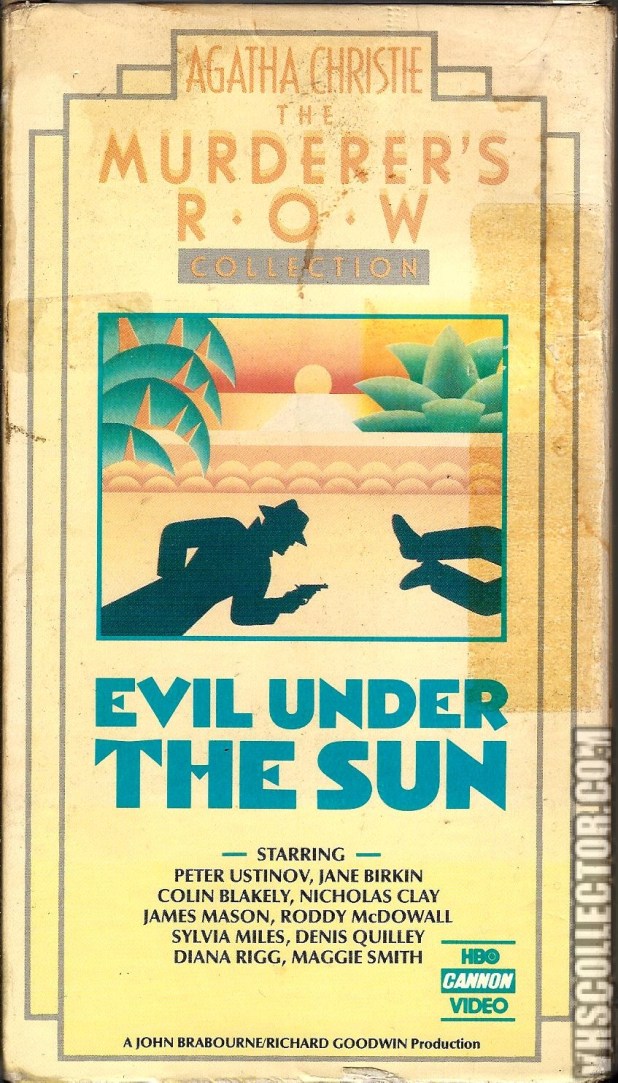
EDITOR’S NOTE: Evil Under the Sun was not produced by Cannon but was sold on videotape by HBO/Cannon Video. 

Guy Hamilton is probably best known for directing four Bond movies — Goldfinger, Diamonds Are Forever, Live and Let Die and The Man with the Golden Gun — but he also directed two Agatha Christie adaptions (this one and The Mirror Crack’d) and Remo Williams.

Screenwriter Anthony Shaffer worked on most of the 70s and 80s Christie adaptions like Murder on the Orient ExpressDeath On the Nile and Appointment with Death, as well as Hitchcock’s FrenzyAbsolution and The Wicker Man.

Peter Ustinov would become the defining Hercule Poirot and this was the second time he’d play the role.

A dead woman strangled on the moors, a missing diamond ring and a trip to the summer palace of the King of Tyrania to confront the woman that may have stolen it — Arlena Stuart Marshall (Diana Rigg) — start the mystery.

That’s where Arlena is on holiday with her husband Kenneth (Denis Quilley) and her daughter Linda (Emily Hone). But they aren’t alone. She’s been flirting with Patrick Redfern (Nicholas Clay) to the displeasure of his wife Christine (Jane Birkin). Her husband is sick of her as well and has been confiding in the owner of the palace, Daphne Castle (Maggie Smith). If that’s not bad enough, the villainess has ruined the financial affairs of Odell and Myra Gardener (James Mason and Sylvia Miles) by walking out of the play they produced. And speaking of plays, playwright Rex Brewster (Roddy McDowall) had been hired to also write a tell-all on Arelena’s life, but she refuses to allow him to use the interview she gave him. Then there’s the man whose heart she broke — and potentially stole his diamond — Sir Horace Blatt (Colin Blakely).

Is it any wonder when she ends up strangled on a beach?

“The sky is blue, the sun is shining, and yet you forget that everywhere, there is evil under the sun.” I love movies that have a scene that reveals the title. And I have found that I am pretty into these Christie films. While this one doesn’t boast the big celebrity cast as others, it’s still entertaining and who doesn’t enjoy seeing Poirot gather everyone to work out the solution?

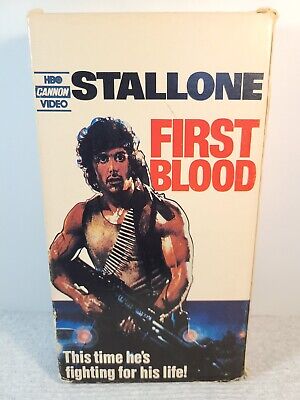
CANNON MONTH 2: First Blood (1982)

EDITOR’S NOTE: This was originally on the site on August 16, 2019First Blood was not produced by Cannon but was released on video by HBO/Cannon Video.

The first of the Rambo films has an interesting pedigree. It comes from director Ted Kotcheff (the original Fun With Dick and JaneNorth Dallas FortyUncommon ValorWeekend at Bernie’s) and was based on a downbeat 1972 book by David Morrell. When Stephen King taught creative writing at the University of Maine, he used First Blood as a textbook. Ten years, eighteen screenplays and three studios later, the film finally got made.

Back in 1982 when the film rights were first sold, producers considered Steve McQueen for the lead. Sheriff Teasle was offered to both Gene Hackman and Robert Duvall, but they turned the part down. Lee Marvin turned down playing Colonel Trautman, but Kirk Douglas eventually took the role. He quit just before shooting began, as he wanted the movie to end like the book, where Rambo and the sheriff fatally would one another, Trautman kills Rambo and sits with the dying lawman. Rock Hudson also signed up to be in the film, but he had to undergo heart surgery, leaving Brian Dennehy to play Sheriff William Teasle and Richard Crenna to play Colonel Samuel Trautman in what would become the character actor’s most iconic role.

Seven years after his discharge, he left Vietnam, John Rambo (Sylvester Stallone) is wandering America. A visit to Hope, Washington to see an old friend is cut short when he learns that his former military brother has died from cancer that was caused by Agent Orange.

As he wanders the highway, Sheriff Teasle begins to harass him, finally driving him to the outskirts of town and telling him not to come back. When he does, he’s arrested for vagrancy, resisting arrest and possession of a knife. The police are brutal to the former war hero, as Deputy Art Galt (Jack Starrett, Nam’s Angels, Race with the Devil) and the other cops spray him down with a hose and even attempt to dry shave his face. Rambo snaps and decimates the outmatched lawmen; he;s a former Green Beret who won the Medal of Honor.

Galt chases him from a helicopter, taking shots at him even though he’s been warned not to, which leads to his death. Rambo informs the police that the man’s death was his own fault, but the rest of the police come in shooting. Our hero, such as it is, dispatches each of them with non-lethal traps until only Teasle remains.

Even more officials — state police and national guard — come in, along with Rambo’s mentor and former commanding officer Colonel Sam Trautman, who advises that Rambo just be allowed to leave town. All hell breaks loose with Rambo nearly killed in an abandoned mine before escaping and destroying much of the small town. As he prepares to kill the sheriff, Trautman convinces him to surrender and Rambo collapses in tears, screaming “Nothing is over! Nothing! You just don’t turn it off! It wasn’t my war! You asked me, I didn’t ask you! And I did what I had to do to win! But somebody wouldn’t let us win!”

The first rough cut of this movie lasted three and a half hours long and was so bad that Stallone wanted to buy it and destroy it before it ruined his career. After heavy re-editing and a second ending, where Rambo doesn’t commit suicide, the film became a great success. The character itself would change as America moved from a country unsure of how to deal with the war in Vietnam to one that embraced its status as the world’s policeman; the next Rambo film would present the character in a completely new way.

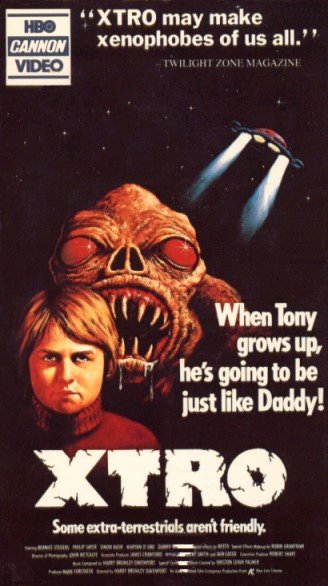
CANNON MONTH 2: Xtro (1982)

EDITOR’S NOTE: This was on the site for the first time on June 30, 2017. Xtro was not produced by Cannon but was released on video by HBO/Cannon Video.

Alien is a haunted house movie in space that has begat a slew of imitators, copycats and outright rip-offs. 1982’s Xtro, on the other hand, is truly a movie that has something for everyone, if everyone includes folks who want to see movie about a father reconnecting with his son, as well as a film where Maryam d’Abo is repeatedly naked, a kid discovers his psychic powers with a weird clown, an Alien-style birth scene of a fully-grown man being born out of a pregnant woman (“What is it with all the alien rape and birth scenes in these movies? What is wrong with people?” asked my wife), toys coming to life, a child hunting down people like The Omen…truly Xtro is about ten movies worth of ideas in one scuzzy, scummy exploitation fever dream.

I’ll do my best to summarize the plot, but at any point, you may declare, “You’re just making this shit up now,” I assure you that what follows is as close to the filmed truth as possible. It truly is such a weird film that it surprised even a jaded viewer such as myself.

Tony and his dad Sam (Phillip Sayer, The Hunger) are playing fetch with their dog. On the last stick though, much like 2001: A Space Odyssey, Sam tossed the stick high into the air and the screen goes white as he gets abducted.

Three years later, the light appears in the sky again and an alien creature scurries across a British countryside road. It gets hit by a car, yet survives to kill the driver and his passenger, then find his way to a cottage where it impregnates the lady who resides there. Moments later, Sam is reborn, clawing his way out of the woman, even biting into a bloody umbilical cord before he leaves. This is ten minutes into the movie. And if you think this is the end of the craziness, read on….

Sam wants to find his son, who lives with his mother Rachel (Bernice Stegers, Macabre), her new boyfriend Joe (Sinon Nash, Brazil) and a French babysitter named Analise (the aforementioned d’Abo, The Living Daylights) whose sole job seems to be getting naked every time she is on screen. Sam has nightmares about his dad every single night, waking up soaked in blood. Oddly, it turns out that the blood isn’t his.

Sam finds Tony’s school and follows him home, where he ends up moving in. He can’t remember anything of the last three years. Joe hates this, as he’s due to marry Rachel and doesn’t want her ex around. It’d all be weird enough if Sam wasn’t eating Tony’s snake’s eggs and drinking his son’s blood — an act that teaches him how to use his alien powers, which include the ability to grow his toys and send them to kill people, like a human-sized Action Man soldier and a teddy bear clown that becomes a horrifying little person clown.

Joe and Rachel continue to grow apart as she takes old husband Sam to see their old house. Meanwhile, Analise should be watching Tony, but she’s naked. Again. And having sex. Again. Tony retaliates by getting the clown to knock her out and impregnates her with eggs, sealing her in a nest of spiderwebs. As her boyfriend comes in searching for her, he’s chased by a toy tank and then killed by a leaping black panther! No — really, this actually happens in the film, like they just had a black panther lying about and figured, well, why not? Tony then kills the building supervisor with a spinning toy, which elicits a shower of blood.

So where’s mom and now alien dad? Reconnecting, horizontally, at the bar. They make the alien/human love until Sam’s skin starts to come off, but he literally stays on top of her as his face decomposes. Good news — this is when her new boyfriend shows up! Sam reacts by screaming until the boyfriend’s ears explode and taking Tony to, well, somewhere, as they disappear in a flash of light.

Whew — got all that? Well, it gets crazier. The entire apartment is cast in white light as Rachel finds the eggs in a cooler. The black panther shows up again and if I’d have seen this in a theater, this would be the exact moment when I would stand up and cheer. Rachel lovingly holds the eggs and plays with it until the alien from the beginning kills her.

But that’s not the original ending! Director Harry Bromley Davenport wanted the film to end with Rachel coming back to a home filled with clones of Tony, but the effects didn’t look all that great. Too bad — that’s a much better ending than what we got!

Xtro is truly something else, filled with a lunatic synth score by Tok and Tok, made up of nightmare images and is a film that doesn’t seem to make any narrative sense, much like Phantasm. It also inverts Alien’s radical attack on men, having them be the ones impregnated, and having women be the target. Where Sam has gone to is up for interpretation — is it a Lovecraftian dimension above interests such as human morality or simply a trip to an alien world? Life in Xtro is cheap — merely a tool for Sam to be reborn and spread his seed. Future sequels did nothing to explain, as they have nothing to do with this film.

Roger Ebert referred to the film as “a completely depressing, nihilistic film, an exercise in sadness” and “it’s movies like this that give movies a bad name.” I didn’t see that at all — I see a film pushing itself to new limits of weirdness. There’s certainly no other film like Xtro and it slimily climbs, gnaws and bites its way out of the ripoff framework that inspired it, becoming a whole new form of film life.

Originally posted at http://www.thatsnotcurrent.com/xeroxenomorphs-xtro-1982/

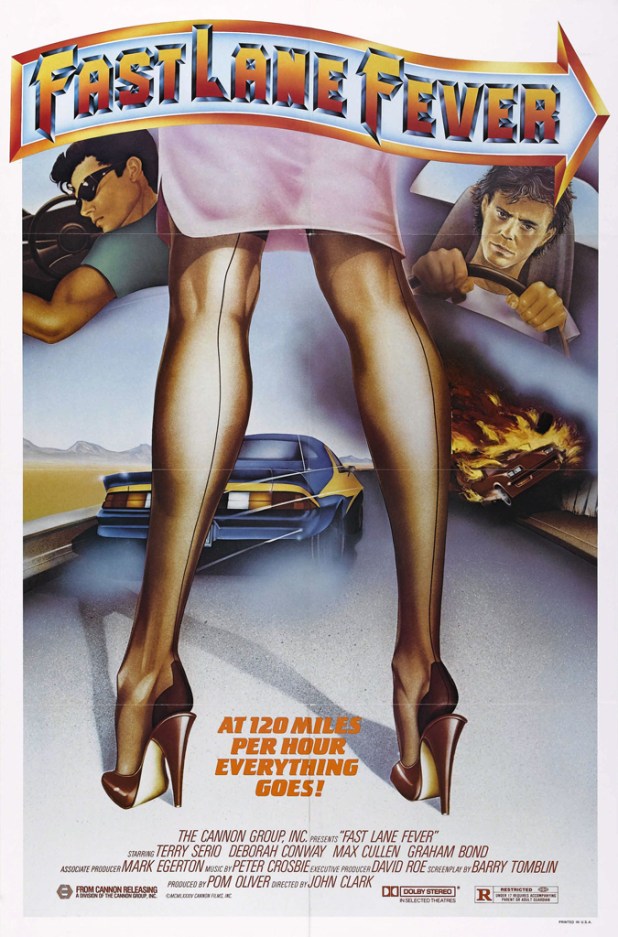
CANNON MONTH 2: Fast Lane Fever (1982)

EDITOR’S NOTE: Fast Lane Fever was not produced by Cannon but was theatrically distributed by Cannon Releasing Corporation.

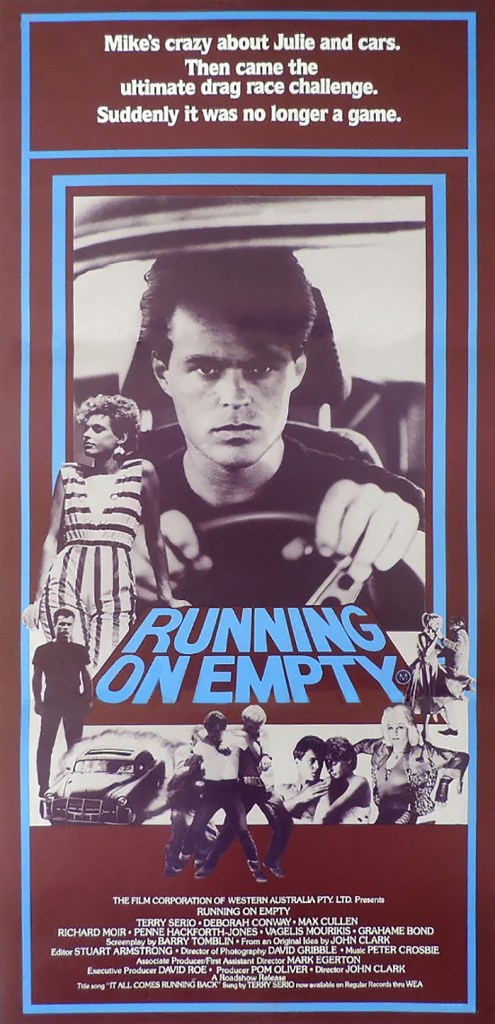
Also known as Running On Empty, this Australian film is all about two steelworkers named Mike (Terry Serio, who was in the band The Elks) and Tony (John Agius) who dream of racing and the Ford Falcon GT-HO Phase III they drive and keep in one piece.

Fox (Richard Moir) is a street racer with his own gang and a problem: no one wants to race him after the last challenge ended up with his opponent dead by car-assisted rage suicide. But Fox is smart; he knows that he can get Mike to race by telling him he can have his girl Julie (Deborah Conway, singer for the band Do Re Mi) and maybe even his Dodge Challenger if he wins.

Director John Clark came up with the idea for this movie and even wrote its songs. He didn’t make anything else until 1992’s Kideo. Scriptwriter Barry Tomblin helped him get the story on screen.

Somehow, this Ozploitation film combines a new wave look with the 50s racing movies of the past — I do so love a good car gang — and it’s a lot of fun. Here’s to Cannon for bringing to America.

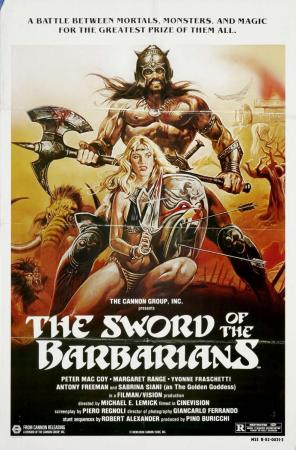
CANNON MONTH 2: The Sword of the Barbarians (1982)

EDITOR’S NOTE: This was on the site for the first time on December 3, 2020Sword of the Barbarians was not produced by Cannon but was theatrically distributed by Cannon Releasing Corporation.

Known in Italy as Sangraal, la spada di fuoco (Sangraal, the Sword of Fire), this is the first of two barbarian movies that Michele Massimo Tarantini made. For a director better known for his commedia sexy all’italiana films, this is pretty decent. By that, I mean that you have to have an affinity for Italian sword and sorcery. If you haven’t figured out that I do, well, now you do.

This also has the alternate name, Barbarian Master, which is a very metal movie name.

Sangraal (Pietro Torrisi, who started his career in peblum movies like The Ten Gladiators and ended it in sword and sorcery movies like Gunan, King of the Barbarians) is Sangraal, whose father’s kingdom has been decimated by the evil warlord Nantuk (Mario Novelli, Warriors of the Year 2072Amok TrainEyes Behind the Stars). He leads his people to a new land which is ruled by Belem (Luciano Rossi, whose career hits all of the Italian trends, from westerns like Django to the Eurospy Killer 77, Alive or Dead to giallo sich as Death Carries a Cane and Death Smiles at a Murderer and poliziotteschi, war films and exploitation in Salon Kitty).

Nantuk has become a king, yet the Goddess of Fire and Death* (Xiomara Rodriguez) demands more. Sangraal must die or Nantuk will lose everything. So he does what any madman usually does and crucifies our hero — hello, Conan the Barbarian — and forcing him to watch everyone in the village be killed**, including the Goddess personally murdering his wife. He’s saved by the archer Li Wo Twan (Haruhiko Yamanouchi, the only actor I know who has been in both Joe D’Amato and Wes Anderson movies) and Belem’s daughter Ati (Yvonne Fraschetti, Demons 2).

This movie actually has something to say about love, loss and grief, as a wizard tells Sangraal that he must give up on the memory of his dead wife and keep on living if he wants to defeat Nantuk, who is devoted to killing him. Then again, as you deal with these issues in your life, I doubt you will ever battle an evil king. That said, perhaps you’ll find something in this to help you.

You have to give it to the servants of Nantuk. When Sangraal challenges our antagonist to a duel to the death by the traditional rules — with no interference — they refuse to help, even when their leader demands they kill our hero. And then, they just let Ati go at the end.

This movie has taught me that goddesses can be killed, if you have a magic crystal crossbow.

Also — and perhaps most importantly — Sabrina Siani (who is pretty much the queen of these movies, thanks to appearances in The Throne of Fire, Ator the Fighting Eagle and, most importantly, her turn as Ocron in Conquest) is in this as the Goddess of Gold and Life.

This is why I watch movies, to be battered into happiness by Italian barbarians battling half-naked and fully naked evil beings.

You can get this from Revok.

*If you’re watching this and wonder, “Have I seen this village get destroyed before?” You’re right. It’s the exact same footage that is in The Throne of Fire.

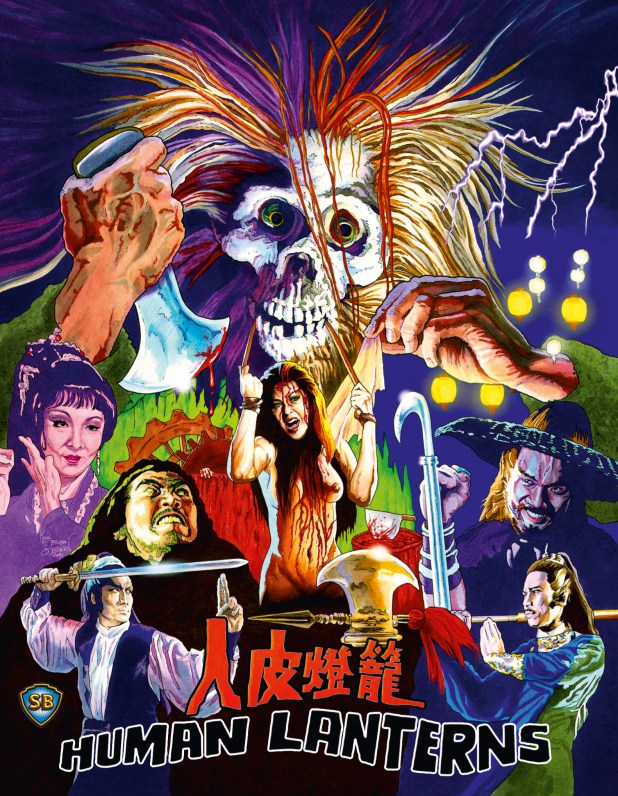
88 FILMS BLU RAY RELEASE: Human Lanterns (1982)

Master Lung Shu Ai (Tony Liu, The Way of the Dragon as well as two other Bruce Lee movies: The Big BossFist of Fury) and Master Tan (Kuan Tai Chen, Crippled Avengers) are battling one another in every way possible, including Tan introducing Lung’s wife Jin (Ni Tien, who was in several other Hong Kong horror hybrids like Corpse Mania, Black Magic and Hex) to Yen-chu (Linda Chu, Return of the Sentimental Swordsman), the prostitute that Long has just been with. Obviously, the only way they can settle their problems is by winning the village’s lantern-making contest.

Lung needs help creating a lantern, so he turns to Chao Chun-fang (Lo Lieh, The 36th Chamber of Shaolin) for help, the man whose face he once scarred and turned into a pariah. Lung promises great fame and money to Chao Chun-fang for his help and in return, the artist asks one thing: Never inquire as to when the lantern will be finished.

Lung and Tan continue sparring with one another as a series of murders begins in the village. Soon, the two men realize that they must join forces to stop the killer whose spree they have set in motion.

Beyond what you expect from Shaw Brothers — although this film has the sumptuous sets, high-flying martial arts and gorgeous visual look that they are known for — this film possesses scenes of great horror, like the stalk and slash scene at the beginning, with its visuals of skin being graphically removed with a hatchet in a slow, grueling moment of gore. Chao Chun-fang’s dungeon studio is filled with even more frightening imagery, such as piles of bloody organs and body parts, as well as more stretched out and drying skin that he will soon place onto those aesthetically above-average artistic lanterns.

It’s also amazing that this movie takes inspiration from slashers — perhaps in a collective unconsciousness way than outright theft — by having a near-invulnerable giggling killer with an incredibly awesome skull face. There’s also a hint of Mario Bava amongst the martial arts and it’s a cocktail of mixed influence that tastes absolutely refreshing.

Director and co-writer (with Kuang Ni) Sun Chung also made The Master Strikes BackNotorious Eight and Old Man and the Kid. I loved this movie and am now hunting down his other films.

Beyond an HD transfers from the original negative, the 88 Films release of Human Lanterns has commentary by Kenneth Brorsson and Phil Gillon of the Podcast On Fire Network, an interview with Susan Shaw by Fred Ambroisine and an interview with Linda Chu by Arnaud Lanuque, a featurette on Lau Wing, the original trailer and a reversible sleeve with the original artwork and new art by R.P. “Kung Fu Bob” O’Brien. You can get it from MVD.

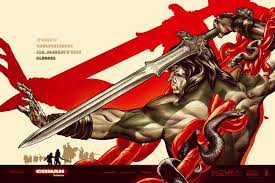
Arnold Week: Conan the Barbarian (1982)

EDITOR’S NOTE: This was originally on the site way back in January 28, 2019. It’s one of my favorite movies and the reason why so many other great sword and sorcery movies got made.

When Robert E. Howard created Conan, it was popular for its time as a pulp character. By the time of his creator’s suicide in 1936, Conan had appeared in 21 complete stories, 17 of which had been published, as well as a number of unfinished tales. After years of the copyright to the character passing around, Lancer released a series of paperbacks with dynamic Frank Frazetta covers that introduced the Cimmerian barbarian to an entirely new audience.

In 1970, Marvel Comics began adapting the Howard tales, arguably increasing the reach of the character even further than the original books. Then, in 1975, Edward R. Pressman (who also produced Christmas Evil) and Edward Summer started working on getting the books onto the silver screen. They had Oliver Stone writing it and Arnold Schwarzenegger for the lead, but couldn’t get major studios interested.

However, in 1979, they sold the project to Dino De Laurentiis and John Milius was picked as the director. Combining several Howard stories, the filming took place in Spain and the entire film was based on Frazetta’s artwork. After a year of editing — and plenty of gore being cut out — the film was released to $100 million dollars of box office, which increased thanks to home video and cable. Some don’t consider it a blockbuster, but how else would there so many ripoffs released in its wake?

The film begins with a sword being forged by a blacksmith who shows it to his son, the young Conan, and tells him the Riddle of Steel. To sum it up, “Flesh grows weak. Steel becomes brittle. But the will is indomitable”. He tells his son that everyone will fail him, but he can always count on steel.

The Cimmerians are soon murdered by a band of warriors led by Thulsa Doom (James Earl Jones). This villain is a combination of several Howard characters. While his name comes from one of Kull of Atlantis’ villains, he is similar to Thoth-Amon, leading an army of suicidal warriors devoted to their king.

Conan’s father is killed by dogs and his sword is given to Doom, who hypnotizes and then beheads Conan’s mom (Nadiuska, who was also in Guyana: Cult of the Damned) in front of him. Our hero is then sold into slavery, chained to a mill stone known as the Wheel of Pain. While other children die, Conan lives to become a monster of a man, consigned to the gladiator pits and used as a stud to create more soldiers. Yet Conan becomes a favorite of the men he has been sold to and is educated in the East before being freed.

Conan wanders the world as a free man, finding an ancient sword and meeting a witch who gives him a prophecy of his future. This scene kinda blows my mind, because Conan is so good at having sex that he turns the witch into a demon and then throws her into the fire. That’s how good Conan is in the sack.

Conan befriends Subotai (surfing legend Gerry Lopez), a Hyrkanian thief, and Valeria, a female mercenary. Her name comes from Conan’s companion in the story “Red Nails”, while her personality and fate are based on Bêlit, the pirate queen of “Queen of the Black Coast.” She’s played by Sandahl Bergman, who is also in She, a totally ridiculous movie that I want more people to love as much as me.

In the city of Zamora, the trio steal from the Tower of Serpents and Valeria and Conan seal their union by making love. Soon, they’re captured by the soldiers of King Osrić (Max von Sydow), who only ask that three bring back his daughter. Subotai and Valeria refuse, but Conan’s hatred of Doom sends him to the Temple of Set.

There, he’s captured and tortured, as Doom insults his family and crucifies him on the Tree of Woe. Before our hero dies, Subotai rescues him and brings him to Akiro, the Wizard of the Mounds. He’s played by Mako, who was also the voice of Master Splinter in 2007’s Teenage Mutant Ninja Turtles. The wizard summons demons that heal our hero but extract a heavy toll that Valeria agrees to pay.

Finally, our heroes go back to Doom’s temple and unleash their full vengeance. However, Doom himself becomes a giant snake and slithers away, because this movie is both insane and awesome. As the trio rides away, Doom shoots Valeria with a snake arrow and she dies in Conan’s arms, paying the toll that the wizard warned her about.

She is burned at the Mounds. As Conan stares at the fire, having lost the love of his life, Subotai cries for his friend, explaining that “A Cimmerian won’t cry, so I cry for him.” How is a film so testosterone and gore filled so poetic at times?

Our hero lays waste to Doom’s troops and when Rexor (former Oakland Raider Ben Davidson, who also played the bouncer in Behind the Green Door), one of the largest of them, almost kills him Valeria reappears as a valkyrie to save him for the briefest of seconds. Subotai saves the princess and Conan finds his father’s sword and breaks it in combat. Look for Sven Ole Thorsen in this too as Thorgrim. Sven has dated Grace Jones since 1990, but has been in an open relationship with her since 2007. He’s also in Conan the Destroyer and The Running Man.

That night, Conan comes back to the Temple and is greeted with open arms by Doom, who tries to mentally stop him. Conan resists and beheads his enemy with his father’s broken sword. He has solved the Riddle of Steel: you must become the steel and only rely upon yourself.

Conan burns down the Temple of Set and returns the princess to her father. The movie then shows us Conan on the throne of an empire, letting us know that one day he will rule the entire land.

No one could play Conan but Arnold, who started growing his hair in 1979 for this part. He trained for this movie like he did for his bodybuilding competitions: weapons training, martial arts training, horse riding lessons, even sword fighting with an 11-pound broadsword two hours a day for three months, as well as how to fall and roll from 15-foot drops. He also got 5% of the movie’s profits, a pretty hefty sum.

I love this movie. I adore the fact that Conan doesn’t speak until 20 minutes into the film and doesn’t speak for the last 20 minutes either. It’s awesome that Valeria is just as strong of a fighter — and maybe even stronger in spirit — as Conan. Every 80’s sword and sorcery movie is in debt to this, as much as Arnold claims that his performance is owed to peplum star Steve Reeves.

Black Candles (1982)

This movie is also called Los ritos sexuales del diablo (The Sexual Rites of the Devil) and in no way is it lying. This is José Ramón Larraz having 84 minutes to gio absolutely berserk, fusing his softcore films of the last few years with his occult and mental disorder efforts of the early to mid 70s. Supposedly he was embarrassed by this movie, but even with that in mind, there are so many wild things in this that you can’t help but stare at it.

This has other titles like Hot Fantasies and Naked Dreams and the film also does all it can to make those titles true. There’s literally non-stop sex in display here, lots of weird early 80s licking kissing and even a young girl laying with a goat in the most diabolical of all Biblical ways (and simulated, so don’t get too worried but still, the fact that I have to call out that the bestiality is fake should tell you exactly what kind of Satan majesties show up in here; that scene was also shot in a historical religious building to add even more sleaze to this).

I’m happy to see Larraz return to the foggy homes in London that are filled within and without with ethereal dread. I wish just as much attention was paid to the supernatural as the sex. But the story — Carol (Vanessa Hidalgo) and her husband Robert (Jeffrey Healy) should have never come to that ancient family manor filled with devils on the walls and Fiona (Helga Liné, Horror Rises From the Tomb) ready to sexually corrupt anyone and everyone. I mean, how could Robert resist? Does he want to get a sword up the backside like that other cultist who screwed this up?

It’s got a great title — actually it has more than one — and an incredible poster and it’s about sex, Satan, sin and sacrifices. I really loved reading other reviews that say, “It gets a little slow,” as if to gloss over that this is a movie filled with drug use, incest, an evil priest and — one more time — that horny goat. Have our lives become so staid that we can’t be shocked by things?

This is the kind of movie that churches salivate over burning.

You can get this from Severin.

Messo comunale praticamente spione (1982)

Better known as Emanuelle in the Country — because Laura Gemser is in it — this movie has Emanuelle (Gemser) arriving to be a doctor in a small Italian village. Italian men are complete libido-driven pigs — I can say that, I know — and they start acting like Tex Avery characters when they’re near her.

I realize that this is not connected to the other Gemser Black Emanuelle films because nobody watches snuff footage or eats a nurse. Mario Bianchi may have made Nightmare In Venice and The Murder Secret, but he’s no Joe D’Amato. I mean, that’s not fair to even make that comparison because my love for D’Amato is nearly infinite. But still. You have Laura Gemser and you put her in a sad small town and this is the best you can do?

Because if either Laura Gemser or Joe asked me to loan them a lot of money, I would do it. Especially Joe, because he’d be a ghost and I wish I could hang out with his sleazy specter.