REPOST: Condorman (1981)

AUTHOR’S NOTE: This movie originally ran on the site a year ago, but it’s so related to James Bond week — and such an unappreciated film — I decided to bring it back.

The last time I saw this movie, I was 7 years old and watching it under the stars at the Spotlight 88 drive-in theater in Beaver Falls, PA. Sadly, that theater was destroyed by a freak tornado that tore through the Pittsburgh/Southwestern PA area on May 31, 1985. This was a seminal location for my childhood, a place where I saw tons of double features and built memories that would provide the foundation for the movie love that I still hold dear today.

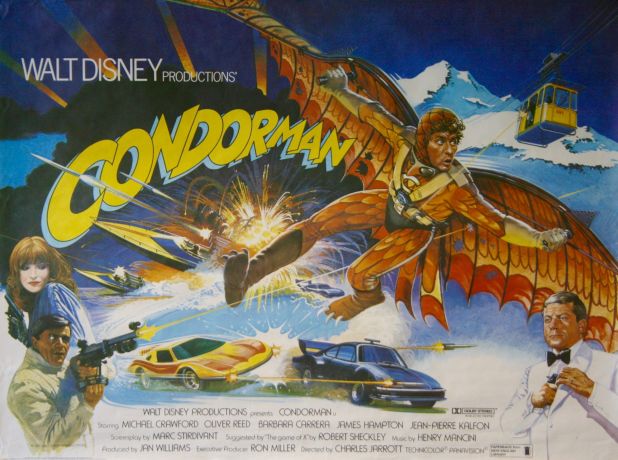
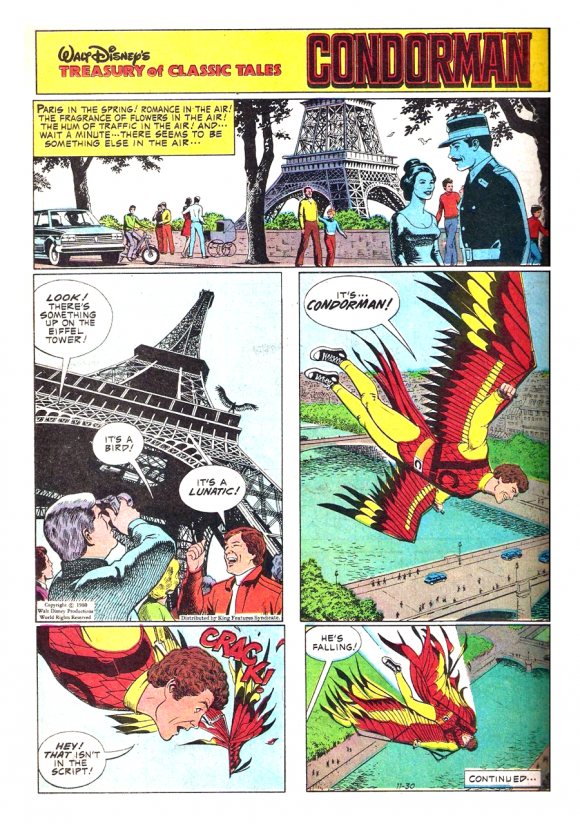
Woodrow “Woody” Wilkins (future Andrew Lloyd Webber Phantom Michael Crawford) is a comic book artist whose devotion to realism extends to creating his own Condorman suit and attempting to fly off the Eiffel Tower. Instead of arresting him, his friend Harry (James Hampton, Uncle Harry the werewolf from the Teen Wolf movies), a CIA file clerk, asks him to exchange papers with someone in Istanbul.

Woody finds KGB spy Natalia Rambova (Barbara Carrera, Wicked Stepmother), who he tells that he is really Condorman. Impressed by how he protects her and how poorly she’s treated by her KGB boss Krokov (Oliver Reed!), she defects to the U.S., but only if Condorman helps her.

Woody’s already in love — he’s added Natalia to his comic as Laser Lady. When he’s asked to help her defect, he only agrees if the CIA designs him gear like his comic. Amazingly, they agree and the adventure is on.

Imagine James Bond crossed over with the Adam West-era Batman and you have an idea of how Condorman plays. For a Disney movie, Carrera is really sultry, which probably had an effect on my nine-year-old mind.

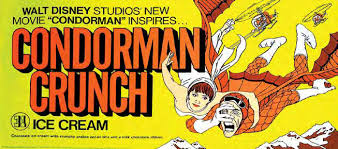
Before the days of licensing, Condorman had two cool tie-ins. A daily strip by Russ Heath and an ice cream flavor at Baskin-Robbins!


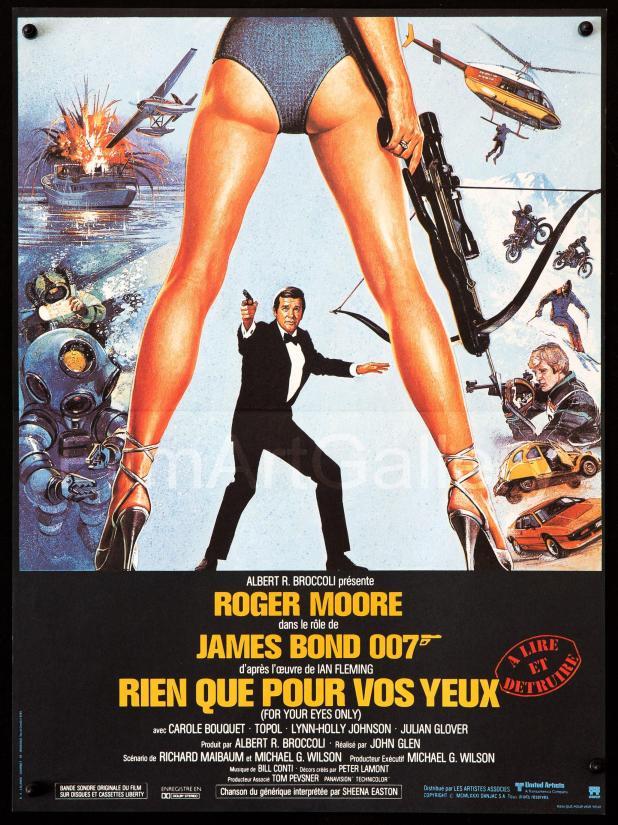
For Your Eyes Only (1981)

For Your Eyes Only was inspired by not just one Ian Fleming book. It has parts of Live and Let Die, Goldfinger and On Her Majesty’s Secret Service, as well as the short stories For Your Eyes Only and Risico. It was an attempt to move away from the silliness of Moonraker and get Bond quite literally back down to Earth.

John Glen was promoted from editor to director. His plan? “We had gone as far as we could into space. We needed a change of some sort, back to the grass roots of Bond. We wanted to make the new film more of a thriller than a romp, without losing sight of what made Bond famous – its humour.”

The movie begins with Bond laying flowers at the grave of his wife Tracy, whose inscription is her last words: “We have all the time in the world.” Soon, he’s attacked by a bald man in a wheelchair holding a cat. Is it Blofeld? Glen said, “We just let people use their imaginations and draw their own conclusions … It’s a legal thing”. After all, Kevin McClory owned the film rights to Ernst Stavro Blofeld, the organization SPECTRE and other material associated with the development of Thunderball. Bond bests his arch-nemesis and dumps his wheelchair down a giant factory chimney. Consider this scene a middle finger to McClory, as producer Albert Broccoli wanted the world to know that he had no use for Blofeld ever again.

This time, Bond must take an ATAC system that could be misused for controlling British military submarines back from Aristotle Kristatos (Julian Glover, who was almost Bond before Roger Moore was selected). Assisting our hero is Milos Columbo (Topol, Flash Gordon) and complicating matters are ice skater Bibi Dahl (Lynn Holly-Johnson, Ice Castles) and Melina Havelock (Carole Bouquet).

This is the only Bond movie not to feature M, as Bernard Lee was dying of stomach cancer during filming. Q has an expanded role as a result.

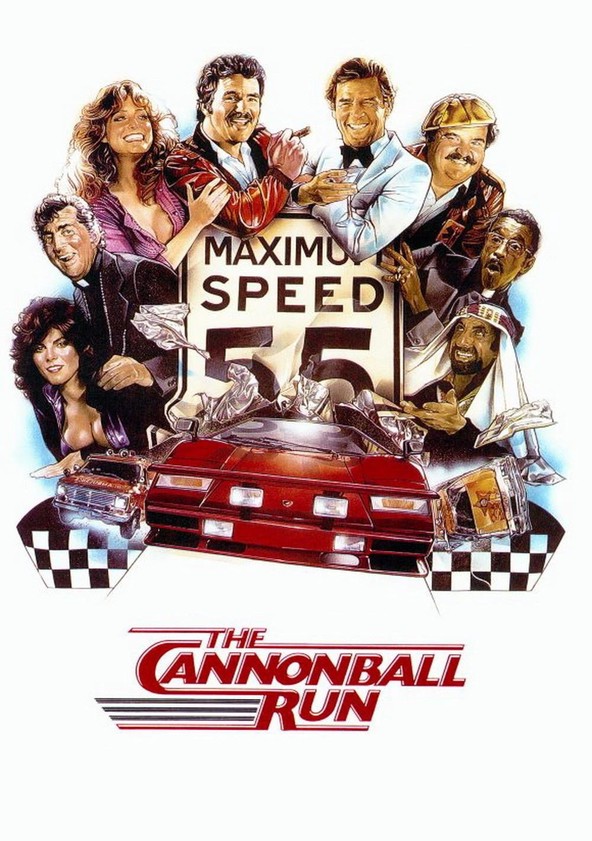
Cannonball Run (1981)

Directed by Hal Needham (MegaforceSmokey and the Bandit), this movie was based on the 1979 running of an actual cross-country outlaw road race — the Cannonball Baker Sea-To-Shining-Sea Memorial Trophy Dash — which began in Connecticut and ended in California. Or, you know, Cannonball, the 1976 Roger Corman produced film that tells the exact same story. Or The Gumball Rally.

That said, screenwriter Brock Yates came up with the actual race while writing for Car and Driver. The race had only one rule: “All competitors will drive any vehicle of their choosing, over any route, at any speed they judge practical, between the starting point and destination. The competitor finishing with the lowest elapsed time is the winner.”

Yates’ team was the only participant in the original 1971 running, which was named after Ernest “Cannonball” Baker, who in 1927 drove across the country in just 60 hours.

This is pretty much my dream idea of what a movie should be.

A very simple premise: a cross-country race for lots of money.

Add in plenty of actors you love.

Let hijinks ensue.

The players:

The ambulance: JJ McClure (Burt Reynolds) and Victor Prinzi (Dom DeLuise) are driving a souped-up Dodge Tradesman ambulance, the very same vehicle Needham and Yates used in the 1979 race.

The Ferrari 308 GTS: Driven by drunken former race star Jamie Blake (Dean Martin) and his gambler Morris Fenderbaum (Sammy Davis Jr.), who are both dressed as Catholic priests.

The Lamborghini Countach: Driven by Jill Rivers (Tara Buckman) and Marcie Thatcher (Adrienne Barbeau), who are using their looks to get ahead. This is pretty much the horror genre car, as Buckman would go on to appear in Silent Night, Deadly Night, Xtro II: The Second Encounter and, of course, Night Killer. Barbeau would live on in our hearts thanks to appearances in CreepshowThe Fog and Escape from New York.

The Subaru GL 4WD: Producers Golden Harvest demanded some Asian stars in the film. They got Jackie Chan in his second American film — after The Big Brawl — and Michael Hui.

The Laguna/Monte Carlo: This Hawaiian Tropic NASCAR car somehow switches makes throughout the film. It keeps the same drivers: Terry Bradshaw and Mel Tillis.

The Aston Martin DB5: Driven by Roger Moore, who is really James Bond, who is really Seymour Goldfarb, Jr., the potentially crazy heir to the Goldfarb Girdles fortune.

The Rolls-Royce Silver Shadow: Driven by rich old sheik Jamie Farr.

There’s so much more — DeLuise is also a superhero named Captain Chaos, Farrah Fawcett hooks up with Burt, Dr. Van Helsing (Jack Elam) wants to inject everyone with his medicine, Bert Convy gets into a fistfight with bikers led by Peter Fonda, Valerie Perrine shows up as a state trooper, stuntman Robert Tessler (Chief Thor from Starcrash, Verdugo from The Sword and the Sorcerer) fights Jackie Chan, all of the Bond girls are dubbed just like the real films and all manner of car stunts take up much of the running time.

Burt Reynolds did this movie for $5 million, a percentage of the profits and a promise he’d only work 14 days. He later said, “I did that film for all the wrong reasons. I never liked it. I did it to help out a friend of mine, Hal Needham. And I also felt it was immoral to turn down that kind of money. I suppose I sold out so I couldn’t really object to what people wrote about me.”

This movie is also the reason why seatbelts are required on all stunts now.

24-year-old German American stuntwoman Heidi von Beltz, who was a former championship skier and aspiring actor, was critically injured driving the Aston Martin car during a stunt. She had no previous stunt driving experience and was behind the wheel of a car with defective steering, clutch, and speedometer. Even worse, it had bald tires.

Her vehicle collided head-on with a van and made her a quadriplegic. Her personal injury lawsuit exceeded all available primary insurance coverage, so the production’s excess insurer, Interstate Fire sued von Beltz and her employer, Stuntman Inc., claiming that the lawsuit was not covered under its policy.

After years of court cases, she was eventually awarded $7 million although the judge later reduced that amount to $3.2 million or just enough to pay her medical and legal bills. She died in 2015.

Here’s something good out of this movie: It inspired Jackie Chan to always include bloopers at the end of his films. Hopefully that makes up for the fact that Needham didn’t know the difference between Asian races and cast Chan as a Japanese racer.

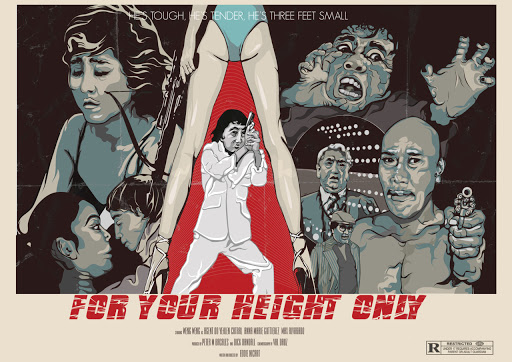
For Your Height Only (1981)

Ernesto dela Cruz was born in poverty and with primordial dwarfism and underdeveloped intellectual capacities. However, despite his start, he fell in love with martial arts. As he was working with a stunt team, he was noticed by actor and producer Peter Caballes. Working with his wife Cora, they would play the roles of his guardians, agents, producers and writers of some of his greatest roles. Weng Weng was born, but outside of his native Philippines, he wouldn’t become famous until after his early death.

Weng Weng plays Agent 00, who is pretty much James Bond. Equipped with gadgets, his job is to stop Mr. Giant and rescue Dr. Kohlet before the N-Bomb is set off.

From an anti-poison ring to a bladed remote control hat, a miniature machine gun and even a jetpack, Agent 00 romances women, kills henchmen and gets into Hidden Island, Mr. Giant’s base — just like Bond.

Mr. Giant is revealed to be a dwarf himself, which has some poetic meaning, one assumes.

With the tagline “Bigger than Goldfinger’s Finger – Bigger Than Thunderball’s …” this is a movie that has no interest in being subtle or politically correct. It does, however, reference past Filipino Eurospy films, as Agent OO’s commanding officer is played by Filipino actor Tony Ferrer, who played Agent X44 in the 1960’s.

At 2’9″, Weng Weng is considered to be the shortest man to star in an action movie. The world is sadder that he is no longer in it. Any movie where the lead spy is referred to as being “cute as a potato” is one for me.

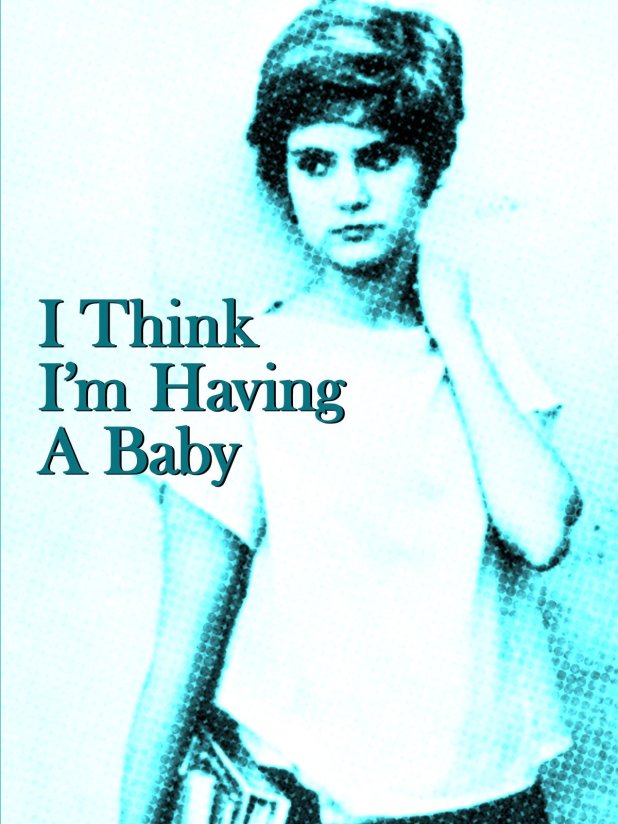
I Think I’m Having a Baby (1981)

While not produced or directed by Dan Curtis, this made for TV movie was produced by his company. It was produced by former actor Joseph Stern, Eda Godel Hallinan and Keetje Van Benschoten.

Directed by Arthur Allan Seidelman — yes, the same man who made Hercules In New York — and written by teen fiction writer Blossom Elfman, this is a movie filled with nascent Hollywood talent.

Jennifer Jason Leigh, Helen Hunt, Tracey Gold and Ally Sheedy are all on hand for about 28-minutes in the hopes that you’ll learn to talk out sex before you have it. As Becca told me that she learned, stop fooling around with boys and just get a bunny instead.

You can watch this on Amazon Prime or the YouTube link below.

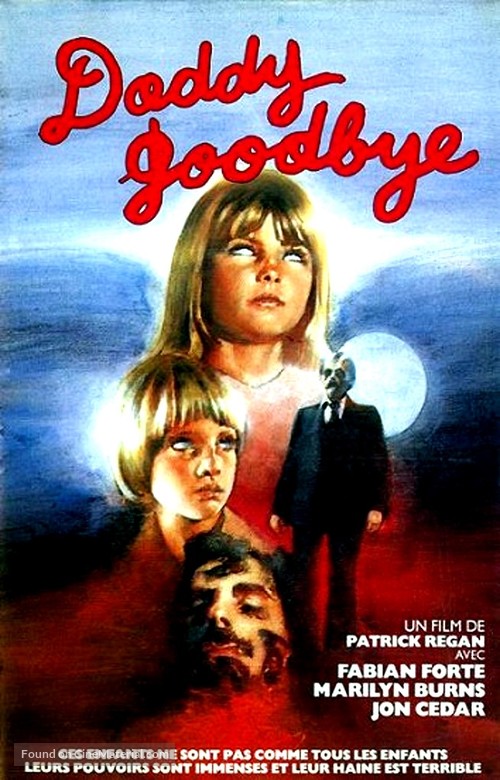
Kiss Daddy Goodbye (1981)

This is why I have insomnia. Because I try to sleep, but then I start worrying about being able to pay the bills and what will I do next and how am I going to take care of my wife and then I realize, “Hey! Fabian made a movie with Marilyn Burns from The Texas Chainsaw Massacre and Marvin Miller, who was the voice of Robbie the Robot…”

And now I’m awake.

Otherwise known as Revenge of the Zombie, this movie was directed by Patrick Regan, who also wrote the lost slasher movie — seriously, someone help me find it, The Farmer. This is his only directing credit, though he did second unit on a bunch of movies, like The Phantom.

It starts his kids — Nell and Patrick — as Beth and Michael Nicholas, psychic kids who have been homeschooled by their dad, Guy. He runs afoul of some bikers, who kill him, so the kids keep him alive Weekend At Bernie’s style so that the Board of Education employee Nora Dennis (Burns) doesn’t put them in an orphanage. Also — Fabian plays a local sheriff, outdoing his work in Disco Fever

Chester Grimes plays the leader of the bikers and if you wanted a biker in the 1980’s, you called Chester. From CHiPs to Electra Glide in BlueThe Rockford FilesPee-wee’s Big AdventureBosom BuddiesThe Garbage Pail Kids Movie and Dragnet, there he is.

And look out! There’s Robert Dryer, who if you watched lots of movies like I do at 4 AM, you’d recognize as Jake from Savage Streets, the titular character in The Borrower and Lord Barak from The Sisterhood.

Is that Jon Cedar from The Manitou as a shady land owner? Yes it is.

Kids that raise dad from the dead, so that he can kill bikers and bury himself in the sand, while Fabian and Sally Hardesty make eyes at one another. Yeah! This movie makes no sense, so I advise you to see it as I did: on a VHS tape uploaded to YouTube with obtrusive Spanish subtitles. Trust me — it makes it all so much better.

We included a second look at Kiss Daddy Goodbye as part of our weekly “Drive-In Friday” featurette with a “Musician Slashers Night.”

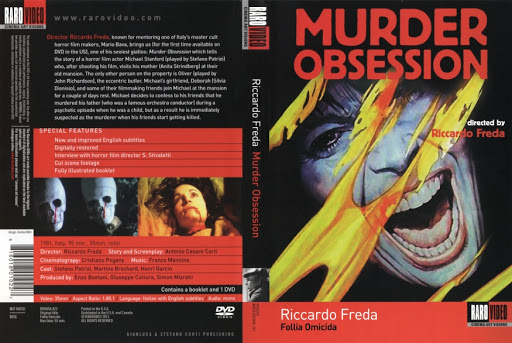
Murder Obsession (1981)

Riccardo Freda was the first director of an Italian horror movie, 1956’s I Vampiri. He left the production midway to have it completed by Mario Bava, which he would also do on the film Caltiki – The Immortal Monster. He’s also known for Iguana with the Tongue of FireThe Horrible Dr. Hichcock and The Ghost.

Before Michael became an actor — when he was but a child — he stabbed his father to death. Today, he’s visiting his mother for the weekend and has brought along his girlfriend Deborah (Silvia Dionisio, Live Like a Cop, Die Like a Man) and the crew of his latest movie. The sins of the past, however, are waiting for all of them.

Martine Brochard (Mannaja), John Richardson (The ChurchFrankenstein ’80), Anita Stringberg (who is in everything from A Lizard in a Woman’s Skin to The Case of the Scorpion’s TailWho Saw Her Die?The AntichristAlmost Human and Your Vice Is a Locked Room and Only I Have the Key) and the always welcome Laura Gemser (Black Emanuelle herself!), who is menaced by some of the largest and most fake spiders this side of Fulci.

In the early 70’s, this film’s writer, Fabio Piccioni, wrote a comic book story called The Cry of the Capricorn, which he sold to Dario Argento. Elements of that story would appear in The Bird with the Crystal Plumage and Deep Red.

Piccioni would reuse elements of this story again years later, along with scriptwriters Antonio Cesare Corti and Riccardo Freda, to help create this film, which is also known as Fear and The Wailing.

For what it’s worth, none of the actors recall this picture very fondly. Gemser referred to it as a nightmare and said that Strindberg almost stabbed her with a real knife, while the chainsaw that decapitates Brochard’s character nearly killed the actress.

While this isn’t the best giallo you’ll find, there’s still plenty to enjoy here, even if it’s just ogling Ms. Gemser. There’s also the best reason why the cops don’t get involved — a character says that they meant to call them, but forgot.

This is available from Raro Video and on Amazon Prime.

ANOTHER TAKE ON: The House by the Cemetery (1981)

Have I ever told you how much I love Lucio Fulci?

Oh, I have? Like, thousands of times?

Like when I talked about this movie a few years ago?

And when I talked about Don’t Torture a Duckling?

Or when I talked about his deeper cuts, like ConquestMurder Rock and The Devil’s HoneyAenigmaContraband and Perversion Story?

Yeah, I love me some Fulci.

So this review isn’t going to objective.

You have no idea how happy I am to own the 4K version of Fulci’s classic Quella Villa Accanto al Cimitero. Blue Underground has been releasing some astounding versions of Fulci’s masterworks this year, such as Zombie and The New York Ripper. Now, they’re giving the same high quality treatment to Dr. Freudstein and, of course, little Bob.

Norman and Lucy Boyle (Paolo Malco, Thunder and Catriona MacColl, who is also in Fulci’s City of the Living Dead and The Beyond) have just left New York City behind to live in the country, which Norman will work on the same research that his friend Dr. Peterson was undertaking — you know, before he went nuts and killed his mistress and himself.

Why should Norman tell his family that they’re moving into such a frightening house? He can just scream at his wife and demand that she start taking her pills again when he isn’t exchanging sex eyes with Ann the babysitter (Ania Pieroni, Mater Lachrymarum!).

70’s scream queen Dagmar Lassender (The Iguana with the Tongue of FireHatchet for the Honeymoon) shows up as a real estate agent, Fulci himself appears as a professor and Giovanni Frezza owns the film as the female-voice child Bob Boyle. You’re either going to hate Bob or love him. I belong to the latter camp. Frezza also shows up in Warriors of the WastelandDemons and Manhattan Baby.

Hey Blue Underground — I’m the only one asking for it, but where’s the 4K Manhattan Baby?!?

I adore this movie because it’s really all over the place. It’s kind of, sort of The Amityville Horror by way of The Shining while also being a zombie picture and at other times, becoming a slasher. Dr. Freudstein is a mess, falling apart, losing his hand and killing everyone Bob loves for reasons that are left up to you — the viewer — to define.

It also ends up a great quote — “No one will ever know whether the children are monsters or the monsters are children” — that is attributed to Henry James but really came from Fulci. I have no idea how it ties to this movie at all and I’ve watched this film potentially hundreds of times.

I’ll be honest — I first discovered this movie at an all-night drive-in series of zombie films. I wondered why it was part of the show and thought that it surely would suffer compared to the other movies shown that evening. I was completely wrong.

You can watch this on Amazon Prime, but really, you owe it to yourself to purchase the Blue Underground set. Beyond the best that this movie has ever looked — and will probably ever look, until they figure out how to beam it directly into your skull — you get an entire disc full of extras, such as new audio commentary by Troy Howarth, author of Splintered Visions: Lucio Fulci and His Films, interviews with MacColl, Marco,  Lassander, Carlo De Mejo, Giovanni De Nava and child stars Giovanni Frezza and Silvia Collatina.

But this set goes even further, spending time with co-writers Dardano Sacchetti , Giorgio Mariuzzo and Elisa Briganti, as well as interviews with cinematographer Sergio Salvati, effects artists Maurizio Trani and Gino De Rossi. There’s also a new Q&A with MacColl and an interview regarding the film with Stephen Thrower, author of Beyond Terror: The Films of Lucio Fulci.

Is that enough? No. It’s not. Blue Underground also throws in a lovely book — which has much better printing than the one inside The New York Ripper set — and a CD of the film’s soundtrack.

Now, do you aleady own this film? Are you someone like me who has purchased it more than twice? Do you really need another copy? Do you need the good doctor to come to your house and seep maggots all over your hardwood floor to convince you?

Take one look at the lenticular cover of this gorgeous set and try and say no. It’s impossible.

DISCLAIMER: This movie was sent to us by Blue Underground, but we were going to buy it regardless. I love this movie so much that there’s no way I wans’t going to love this. Sorry guys. I promise to be more objective in my non-Fulci reviews.

Play Dead (1981)

Made in 1981, this movie didn’t come out until 1986, when Troma would pick it up for distribution. Don’t worry — this odd little film has none of their horrific in a bad way hackwork infesting it.

Yvonne Decarlo plays Hester, a wealthy heiress who was jilted years ago when her boyfriend married her sister. Now, she’s out to not only get them, but their children too. And she has a 200 pound Rottweiler ready to make it happen.

Just imagine — Yvonne Decarlo electrocuting, stranging, crushing skulls and poisoning people when she’s not letting a dog bite and main everyone in its path. There’s also a scene where the detective on her trail gets drain cleaner dumped into his seltzer water. What a way to go!

Somehow, this came from the same director as 1984’s sex comedy Ellie, Peter Wittman. It has Stephanie Dunnam (Silent Rage) in it, in case you were all into that Chuck Norris vs. a slasher film and wanted to see more of her work. It’s also known as Satan’s Dog, which is not a better title.

Spoiler: I didn’t like how Hester gets rid of her dog. I mean, I’m totally into a movie that has dogs repeatedly killing humans, but leave the dog alone!

You can watch this on Amazon Prime.

Ape Week: Planet of the Apes: The Five Telefilms from the 1974 Series (1981)

B&S Movies’ readers are already up to speed on everything ape, with the franchise’s production minutiae readily available—if you want it.

But here are the basics that led to the post-Star Wars POTA movies: As result of the first four films’ box office returns—it was the Star Wars of its day—Arthur P. Jacobs, the producer of the films through his APJAC Productions for distributor 20th Century Fox, decided to capitalize on the theatrical success with an hour-long live action series. It was to start (and take place after the events in) after Conquest, which was believed to be the fourth and final film. Then Fox decided that, instead of a series, they wanted another movie, which became 1973’s Battle.

Apes DVD

Sadly, Jacobs died in June 1973 before his vision of the TV series could be realized. CBS-TV then purchased the broadcast rights to the first three films: each ran as a “Movie of the Week” during the month of September 1973 to, not surprising, high ratings. And result of Jacobs’s death, Fox was in full control of the decisions regarding the franchise.

So while the ape movies were breaking TV ratings records, Gene Roddenberry developed his Star Trek follow-up, Genesis II (1973), through Warner Bros. for CBS-TV—and the movie-series pilot garnered high ratings. Plans were made to go to series, with Roddenberry scripting a 20-episode season arc.

But the ratings for the Apes reruns rivaled Genesis II, which resulted in CBS turning their focus away from other contenders (what those series were, is unknown) for a new weekly science-fiction series—including Roddenberry’s. And with that, the network ran with Apes TV series idea and added it to the schedule for their 1974 autumn programming. Fox ordered 14 episodes.

The series started from scratch, with actors Ron Harper and James Naughton as Alan Virdon and Peter Burke, two astronauts who pass through a time warp while approaching Alpha Centauri on August 19, 1980, which results in a crash on June 14, 3085. They’re rescued by a human (for the sake of adding “drama” to the series, unlike the films, the humans can speak) who takes them to a bomb shelter and opens a book containing historical text and pictures of Earth circa 2500; the space explorers are convinced they are on a future Earth. A later check of their ship’s chronometer confirms their fears: they’re on Earth 1000 years in the future.

They’re soon befriended by a friendly chimpanzee, Galen, portrayed by Roddy McDowall—the only actor to return to the franchise. Booth Coleman (the 1956 post-apoc flick World Without End; pick a ‘60s or ‘70s TV series) took over the role of the orangutan Zaius from his friend, and former Dr. Zaius, Maurice Evans. In another Star Trek connection: Mark Lenard (Spock’s father Sarek in Star Trek: TOS, TAS, TNG) starred as gorilla General Urko.

The series, which ran during the highly-coveted ratings sweet spot from 8 to 9 p.m on Fridays in September 1974, was a ratings disaster. The failure was attributed to the high production costs against the low ratings, ratings that resulted from repetitive stories (boring stories) that relied too much on human philosophical dilemmas and not enough ape action—which is what everyone came for in the first place: the apes. After 14 episodes, which ran from September 13, 1974 to December 20, 1974, the series was cancelled. (Sounds like Battlestar Galactica‘s dilemma to catch some “Star Wars” success.)

In 1981, in the wake of the Star Wars-inspired sci-fi boom on theatre screens and television (check out B&S Movies’ “Ten Star Wars Rip Offs” and “Attack of the Clones” tribute weeks as proof), Fox reedited ten of the fourteen episodes—two episodes stitched together—into five international TV movies (that also played as theatrical features in some overseas markets). To achieve continuity and flow, new prologue and epilog segments were filmed starring McDowall as an aged Galen telling the “past” tale of the Earth astronauts. Those five films were:

  • Back to the Planet of the Apes
  • Forgotten City of the Planet of the Apes
  • Treachery and Greed on the Planet of the Apes
  • Life, Liberty and Pursuit on the Planet of the Apes
  • Farewell to the Planet of the Apes

(In addition to the Planet of the Apes series, CBS-TV also recut episodes of The Amazing Spider-Man (Spider-Man Strikes Back and The Dragon’s Challenge) and their two ‘70s pilots for Captain America (Captain America and Death Too Soon) into overseas theatrical features (which became box-office hits) and telefilms. Other TV series recut into theatrical/telefilms in the wake of Star Wars’ success included Sylvia and Gerry Anderson’s syndicated UFO and Space: 1999, the 1973 Keir Dullea Canadian series The Starlost, and Universal’s Buck Rogers in the 25th Century for NBC-TV and Battlestar Galactica for ABC-TV (BSG’s “Commander Cain” story-arc was cut into a successful foreign theatrical: Mission Galactica: The Cylon Attack; trailer); even story-arcs of The Six Million Dollar Man (The Secret of Bigfoot) received theatrical cuts. Even the early ‘70s pilot-movies for Earth II, The Questor Tapes, and Genesis II found new life via new edits and new titles. You can learn more about those telefilms with the Medium article, “In Space No One Can Hear the Pasta Over-Boiling: The ’80s Italian Spacesploitation Invasion.”)

However, before Fox edited those ape movies, the studio teamed with NBC-TV and created Return to the Planet of the Apes, a 1975 Saturday morning animated series (as was Star Trek) produced by the team behind the popular Jonny Quest. The series went back to the beginning, once again, as three American astronauts—including Jeff Allen (voiced by Austin Stoker, who played MacDonald in Battle; John Carpenter’s Assault on Precinct 13)—time jump into Earth’s future. The storylines closely mirrored Pierre Boulle’s Monkey Planet source novel and the Vietnam War and Cold War themes of first two ape movies. In addition, the series featured characters that originated in both of the Fox films and the CBS live action series. NBC broadcast 13 episodes between September 6 and November 29, 1975. As with the live action CBS-TV series, the kids stayed away in droves, as the show’s message was too complex and heavy-handed for children. NBC cancelled the series.

In addition to Marvel Comics’ longer-running Adventures of the Planet of the Apes series published from August 1974 to February 1977, Power Records issued a 1974 comic book-audio series, Planet of the Apes (which can be enjoyed on You Tube).

And that was the end of the Apes franchise—until Tim Burton’s 2001 reboot.

Numerous episodes of CBS’s live action and NBC’s animated series are uploaded on You Tube. You can sample the first episode of the hour-long live action series (Part 1 and Part 2) and the half hour animated series. The fan-made clip, seen above, is based on deleted, lost footage shot for the opening of the third Apes theatrical film, Escape. Based on the original shooting script, the segment featured the apenauts inside the space ship, seeing the Earth destroyed, and encountering the time continuum. The scene was ultimately scrapped and the film began with the ship already crash landed on Earth.

Wanna play?
As part of our May 2023 tribute to Roger Avery and Quentin Tarantino’s weekly podcast tribute to their days at Manhattan Beach’s Video Archives, here’s the link to their take on the home video version of The Apes TV series.

The two, above paperbacks are adapted from the series episodes that
comprise the third Apes telefilm — learn more with our individual review of
Quentin’s favorite of the series, Treachery and Greed on the Planet of the Apes.

About the Author: You can read the music and film reviews of R.D Francis on Medium and learn more about his work on Facebook. He also writes for B&S Movies.