Firecracker (1981)

Have we ever mentioned how much we love Cirio H. Santiago?

Oh yeah. We have.

If you watch that quick clip of this movie and don’t fall in love with this movie, there’s no hope for you.

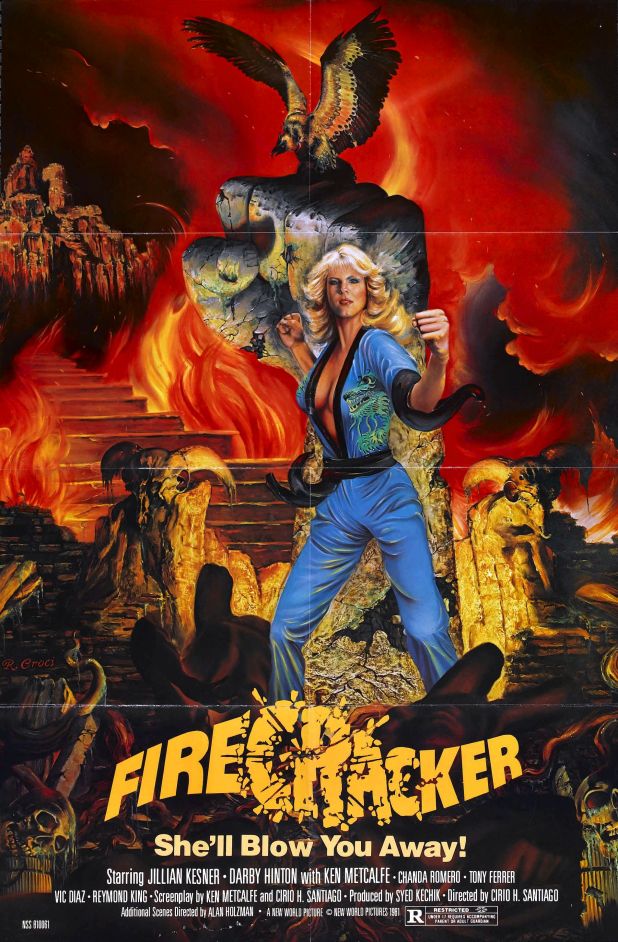
Firecracker, also known as Naked Fist, is everything you want in a mindless action movie.

Did you like seeing Cookie (Jillian Kesner) kick ass in Raw Force? Of course you did.

Did you love watching Cody Abilene (Darby Hinton) make love to the ladies and being sauve in Malibu Express? You know you did.

What if we put them both in the same movie, had them fight a lot and then throw in a love making scene where they use scissors to cut one another’s clothes off?

And what if it was gory and had dinner theater that featured martial arts battles to the death?

Kesner is Susanne, a karate instructor who travels to the Philippines — where life is cheap — looking for her missing sister. That’s when she meets the mustache that she must ride on the face of Chuck, played by Hinton. This movie has enough sexual tension to burn down the internet, intercut with all manner of ridiculous fisticuffs.

People get impaled. People get killed with snakes. People act sleazy. People eat dinner while other people fight to the death.

Some movies, you wonder, can it live up to the poster? Firecracker is the kind of movie where you wonder, “Can the poster be good enough for how awesome this movie is?”

You can watch this on Tubi.

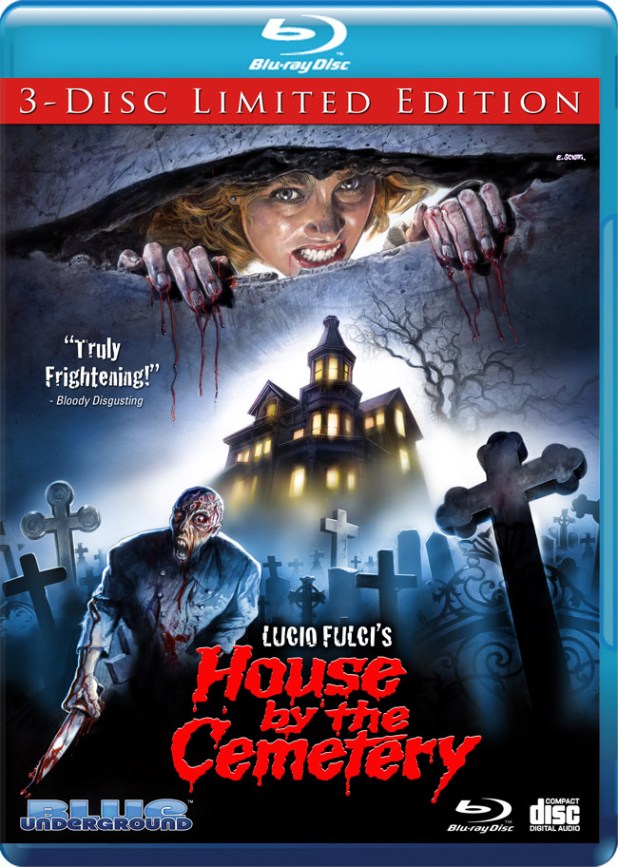
PURE TERROR MONTH: The House by the Cemetery (1981)

About the Author: Paul Andolina is one of my favorite people to talk movies with. If you like his stuff, check out his site Wrestling with Film

The House by the Cemetery is an Italian horror film directed by Lucio Fulci from 1981. Fulci has been a favorite director of mine since I first started watching Italian horror films back in 2007. His film Zombi was one of my first forays into the milieu of Italian horror and I was hooked when I saw a zombie fight a shark.

The House by the Cemetery is about Norman Boyle and his family who move from New York to Boston. Norman is moving into Oak Mansion also known as the Freudstein house to research old houses. His colleague who was the previous tenant of the house committed suicide under unusual circumstances. Norman and his wife Lucy, have a son named Bob who sees a girl in a photo at his house in NY that tells him not to go to the house but his mom won’t listen. The house just so happened to a deranged doctor.

This film takes a while to get insane but it is so worth sticking through. If Bob’s hilarious dubbing doesn’t get you fully invested from the opening scene by the end of the film you’ll surely have witnessed something that really grabbed your attention. There is a scene where Norman listens to the ramblings of his colleague Dr. Peterson on a tape recorder that seems like the rambling of a tortured protagonist from a Lovecraft story, that is excellent.

The soundtrack is perfect for the movie and the imagery is haunting and beautiful. This film also heavily influenced Ted Geoghegan’s We Are Still Here. In fact Ted made an entire thread on Twitter on how it influenced him. If you have somehow managed to not see The House By The Cemetery yet, you should check it out. It’s pretty crazy. 

The Burning (1981)

Back in the days of VHS rental, The Burning was my holy grail. That’s because its effects were featured in Tom Savini’s book Grande Illusions, his how-to guide to creating the gore he’d so expertly brought to the screen. Like any good little gorehound, I had an autographed, dog-earned, karo-syrup sticky copy (I still have it, barely held together and hidden away in my library) that I paged through nearly every day, wishing I could see The Burning, a movie that had to be completely and utterly awesome.

I built this movie up to the kind of hype that today’s always-on social media Hollywood can only dream of, so it could only be a letdown. And I’m sorry to say that every few years, I try and go back to this movie in the hopes that this will be the viewing that makes me fall in love with the actual film. It’s never really happened. I’m not alone in this — my wife has watched the 2018 Halloween in the double digits, hoping she’ll find the same love for it that she has even for the fifth and sixth installments.

Other than the Savini effects, which live up to every bit of their promise on the black and white pages of his aforementioned book, The Burning is probably most notable for its translation of the Cropsey mythos and for featuring early appearances of Fisher Stevens (Short Circuit and Eugene “The Plague” Belford from Hackers), Jason Alexander (Seinfeld) and Holly Hunter (who went on to become an accomplished Academy Award-winning actress in Coen Brothers movies like Blood Simple and Raising Arizona).

The film comes from people who would go on to become Hollywood power players. The screenplay was written by Bob Weinstein (along with Peter Lawrence, who would write for the cartoons Silverhawks and Thundercats), working from a story by producer Harvey Weinstein (yes, the very same), Tony Maylam (who also directed) and Brad Grey (who would go on to be the chairman and CEO for Paramount).

It all came about because Harvey was looking for some way, any way to break into movies. Along with his producing partner Michael Cohl, he knew that low budget horror was a great way to do that. Swapping old horror stories, Weinstein brought the legend of Cropsey that he had heard while camping as a teenager in upstate New York and they kicked off production in 1979 with a five-page treatment called The Cropsey Maniac that predated Friday the 13th. There must have been something in the water in 1980, as while both of these films were in their various stages of production, Joseph Ellison was finishing a film he wanted to call The Burning, yet retitled to be Don’t Go in the House.  Keep in mind that this was the very start of the slasher boom, before films began self-referencing one another to death. It’s just that the archetype of young campers being menaced by a maniac was, believe it or not, an untapped well at one point in time.

That also explains Madman, which was in casting when an actress told that film’s producers that her boyfriend was acting in another movie with the same story called The Burning. As a result, that film was delayed until 1982, when the slasher wave had already started to see lesser returns.

To fund the movie, the Weinsteins formed Miramax, named for their parents. They were able to get around $1.5 million, although the movie did go over budget. Ironically, while the film depicts a monster, perhaps Harvey ended up being the biggest one of them all.

I say this because this film’s production assistant Paula Wachowiak alleged that his predatory ways were already happening on this film. One night when Wachowiak needed Weinstein to sign checks for the accounting department, he answered the door wearing only a towel, which he dropped to reveal himself to her. When she refused his attentions, he allegedly continued to harass her throughout the film’s production.

The one thing you have to give the Miramax guys credit for is that they knew talent. Getting Savini meant an audience of Fangoria nerds — like me — would line up for this film. The special effects auteur had already turned down the second go-round for Jason Vorhees, unable to understand how the character would be able to survive for so long alone in the woods, and spent just three days creating the burn makeup for the villain of this film, basing his look on a homeless burn victim he’d seen walking the streets of his native Pittsburgh.

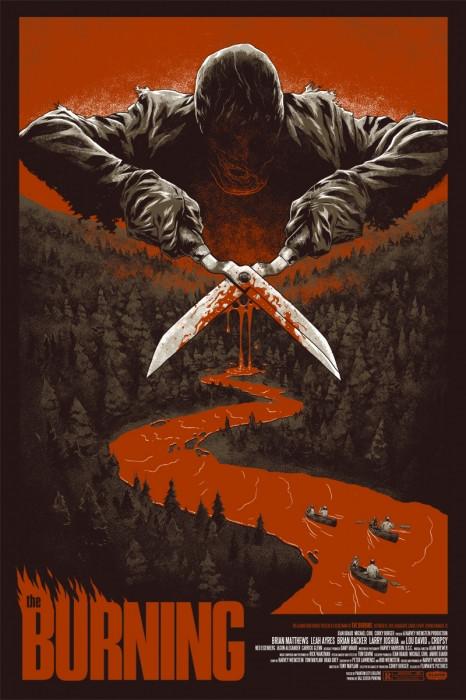
The story starts at Camp Blackfoot, where campers once pranked the caretaker Cropsey by placing a worm-festooned skull in his bed. This starts a massive fire that engulfs the man, who emerges with third-degree burns over most of his body. According to director Tony Maylam, who also helmed the Rutger Hauer versus Aliens film Split Second, he played this antagonist for most of the film to ensure that his trademark garden shears reflected the light in the right way.

Five years — and many failed skin grafts — later, Cropsey is released from the hospital. One wonders how insurance worked in the 1970’s, because a half-decade of hospital care would cost an astronomical sum today. He hides his scars in a long coat and hat as he walks the streets, ending up in the apartment of a hooker that he dispatches with a pair of Fiskars®.

Grabbing a shiny new set of garden shears, he heads over to Camp Stonewater where he soon makes short work of an entire crew of campers. There’s Sally, Alfred (Brian Backer, Mark “Rat” Ratner from Fast Times at Ridgemont High), Michelle (Leah Ayers from Bloodsport and the second Marcia Brady for the 1990’s The Bradys series, which took that happy family and placed them into a drama that went face to face with hot button issues with unintentionally hilarious results), Todd (Brian Matthews, who acted in plenty of soap operas before becoming a therapist and running for office in Texas), Tiger, Karen, Fish, Woodstock (Fisher Stevens) and Eddy (Ned Eisenberg, who is Roger Kressler on the Law & Order shows). I nearly forgot Barbara, Dave, Marnie and Sophie.

Actually, take it from me, there are way too many campers here. Luckily, Cropsey is around to wipe them out with his garden shears, which he jams into throats and uses to cut off fingers. The real star of the show here are the Savini effects, as gleaming blades are pushed into teenage flesh, resulting in showers of blood and gore.

Sure, it takes an axe to the face and a flamethrower to kill Cropsey, but his legend continues at the close, as a new group of campers tells his story. There were plans to make a sequel, but the film didn’t do well in its original theater run. After all, it was up against not just Friday the 13th Part 2, but also Happy Birthday to MeFinal ExamGraduation Day and a re-released The Texas Chainsaw Massacre.

It was distributed by Filmways, which wanted to rename it to Tales Around the Campfire, which is a pretty decent title, but not as great as The Burning.

There was also some great talent behind the scenes. The soundtrack comes from Yes keyboardist Rick Wakeman who in addition to being a Freemason and Knight Templar also composed the scores for Crimes of Passion and She. Plus, it was edited by Jack Sholder, who would go on to direct Alone in the Dark, A Nightmare on Elm Street 2: Freddy’s Revenge and The Hidden.

You can get The Burning from Shout! Factory.

You can watch Joshua Zeman and Barbara Brancaccio’s Cropsey, their 2009 documentary about the New York City urban legend, as a free-stream courtesy of Gravitas Ventures You Tube and Tubi Tv.

Strange Behavior (1981)

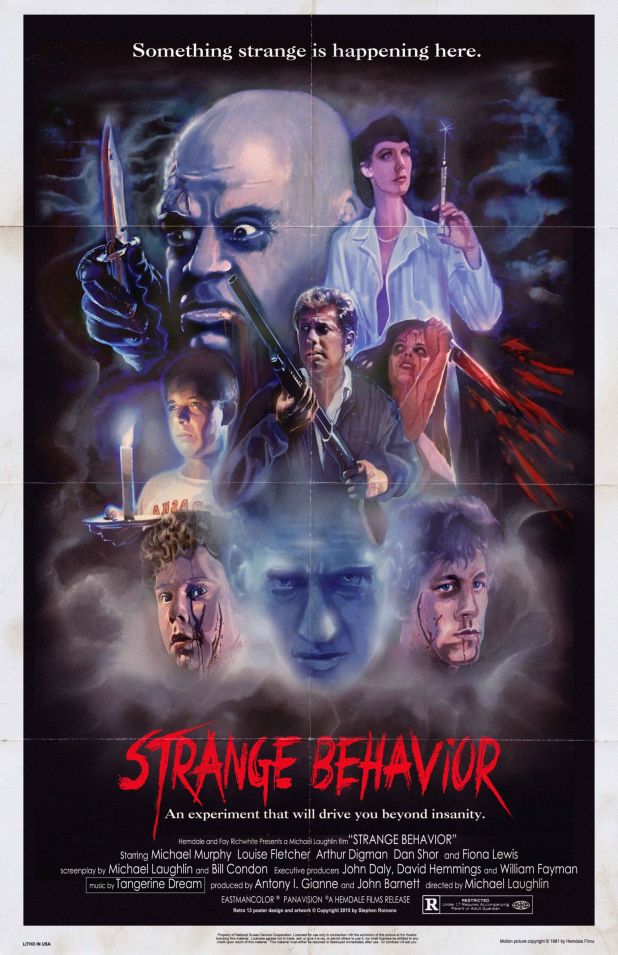
Also known by its much more in your face title Dead KidsStrange Behavior holds a place in New Zealand film history as the first horror movie made in the country. A homage to American horror films of the 1950s, it was intended to be part of a trilogy. However, after this movie and Strange Invaders underperformed at the box office, that was not to be.

It was relased in the UK as Small Town Massacre and ran afoul of the video nasty controversy, ending up on the Section 3 list of films.

This — and Strange Invaders — were both directed by Michael Laughlin (Two-Lane Blacktop), who co-wrote the film with Bill Condon, who would go on to direct Candyman 2: Farewell to the Flesh, both parts Twilight: Breaking Dawn and write 2002’s Chicago and The Greatest Showman.

Speaking of the word strange, perhaps the strangest thing in this movie is that while it’s supposedly based in Galesburg, Illinois, it couldn’t be geographically further from America if it tried. That’s because the movie was lensed in Auckland, New Zealand.

It all starts with the murder of Bryan (co-writer Condon), which ends with his body getting stuffed into a scarecrow.

Local cop John Brady (Michael Murphy, who has been in plenty of Robert Altman’s films) is on the case. And his son Pete (Dan Shor, who was in Wise Blood) and his friend Oliver (Marc McClure, who you’d know as 1970’s Jimmy Olsen) are learning all about the work of Dr. Le Sange from Professor Parkinson (Fiona Lewis, who was in plenty of films, but around here, we celebrate her for her work in the seminal — and semenal, really — Tintorera…Tiger Shark). Oh yeah — his dead mom (and John’s lost wife) once worked for Le Sange.

Pete wants to go to college and doesn’t have the money to apply, so he signs up to be part of the professor’s experiments. After all, Oliver did it and it wasn’t a big deal.

Or was it? Because later that night, a maniac in a Tor Johnson mask attacks and kills a boy at a party before being unmasked as — you got it — Oliver. He can’t remember anything, not even the bizarre surgical cuts that he did near his victim’s eye. That said — whoever killed Bryan and the kid at the party couldn’t have been the same person.

Despite all that, Pete stil undergoes one of the professor’s tests, swallowing pills and repeating key phrases. He also begins a romance with Caroline (Dey Young, Kate Rambeau from Rock ‘n’ Roll High School), a fellow student.

The murders only ramp up in intensity, with one woman finding her son chopped to bits in the bathroom before her throat is slashed. John, being a good cop, starts to feel that perhaps the professor has something to do with all of this, questioning her while being unaware that she’s about to inject his son in the eyeball with a concoction of mind-altering drugs.

That’s when we get the exposition — during John’s date with his girlfriend Barbara (Louise Fletcher, who everyone else will tell you was in One Flew Over the Cuckoo’s Nest, but I’ll confide that she was Dr. Gene Tuskin in Exorcist II: The Heretic) — where we learn that everyone who has died — including his wife — was tied to the unethical experiments of Le Sange. Even worse, Le Sange is probably still alive, because when the lovey-dovey twosome break into his crypt — talk about a romantic date! — his casket is empty.

The end of this movie is a mix of mind control madness, a mistaken case of paternity, doctors ordering their patients to kill themselves and even a happy close. It all lives up to the title — strange — in the best of ways.

You have to love when a movie totally stops to give you a synchronized dance scene, like a slasher film variant of the same kind of stuff that used to happen in 1950’s films like I Was a Teenage Werewolf. That song — Lou Christie’s “Lightnin’ Strikes” — was also covered by Klaus Nomi.

Speaking of music, Strange Behavior also benefits from a score by Tangerine Dream. I really need to get on to writing a list of movies that thier music made even better. They rival Goblin for how many cult films they scored.

You can still grab this under its alternate title Dead Kids at Vinegar Syndrome, who have the out of print Severin blu ray. Or watch it on Shudder.

Ghostkeeper (1981)

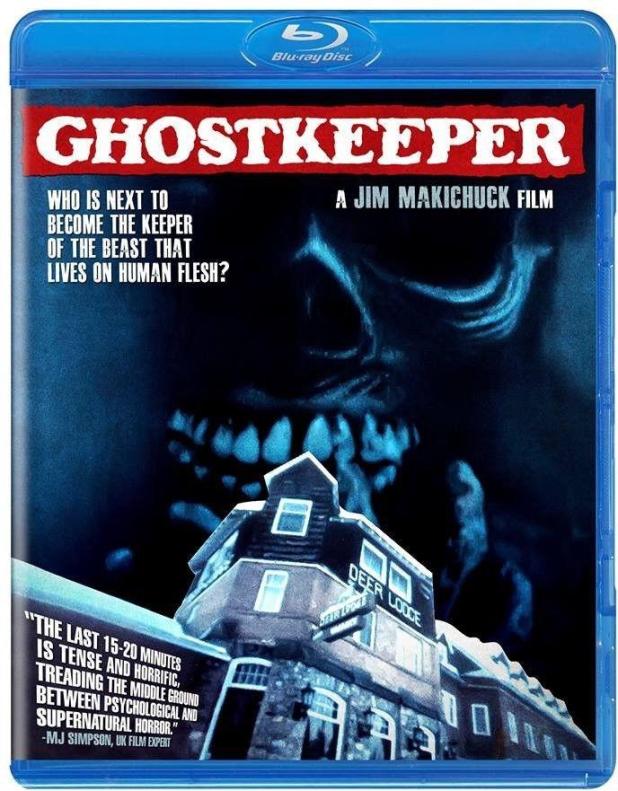
Filmed in Banff, Alberta and using the Canadian tax shelter rules that have produced so many of our favorite films, Ghostkeeper rises above its unstable finances and near-unseen theatrical run to become a fun piece of somewhat forgotten slasher fun.

This one is all about the Wendigo, even if it spells the monster’s name Windigo. It’s a monster that lives off human flesh and is one of Canada’s few unique monsters, but the movie doesn’t spend all that much time discussing it.

Basically — if you wanted another snowmobile slasher after The Chill Factor, here it is.

Jenny, Marty, and Chrissy spend New Year’s Eve in the Rocky Mountains but end up seeking shelter from a blizzard in an abandoned hotel. There’s an older woman who claims to live there with her two sons.

Of course, one of the sons named Danny ends up drowning Chrissy, slitting her throat and putting her in a freezer. That’s also where the Wendigo lives in the body of her other son.

By the end, Jenny has shotgun blasted the old woman and assumed her mantle of the Ghostkeeper, which takes hours to happen and plenty of darkness to wade through. But the end is really effective, so if you have the patience to take it this far, the movie is totally going to reward you.

The music for this comes from Paul Zaza, who also composed music for My Bloody Valentine, Curtains and Prom Night. In fact, most of the music in that Jamie Lee Curtis disco dancing slasher was recycled from this film.

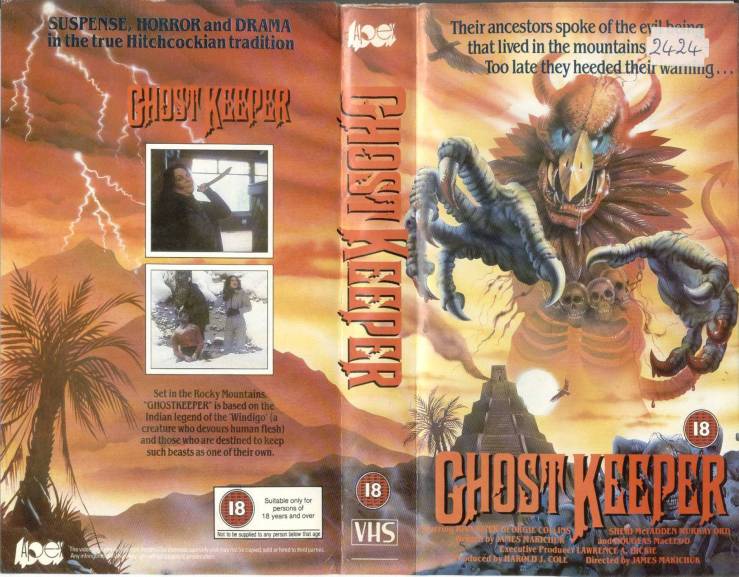
I just want someone to explain to me why the UK VHS of this movie has a mutant chicken rising from an Incan temple under the hot sun. Because…I kind of want to watch that movie, too.

You can watch this for free on Tubi or order it from RoninFlix.

Bloody Moon (1981)

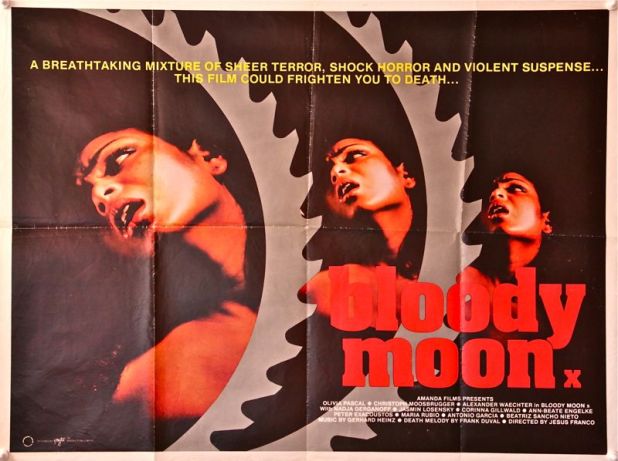
If you’ve watched enough slashers, you’ve reached that point where you say, “There’s no way they’re going to show a bandsaw tear a woman’s head off her body.” But when you really title a movie Die Sage des Todes, or The Saw of Death, and you’re Jess Franco, you go for it.

Seriously — turn back now all that aren’t ready for an incestual slasher that takes no prisoners.

Miguel has a disfigured face, a horrible secret and just got out of being in a mental asylum for five years after stabbing a woman. Now, he’s been released into the loving arms — too loving, hence that secret — of his sister Manuela, who operates Europe’s International Youth-Club Boarding School of Languages. Now, Miguel has his eye on Angela, an attractive student at his sister’s school.

We full-on learn Miguel and his sister’s secret shame, as when the two begin to kiss, she reminds him that the last time they went this far, people died. No one can ever understand them and it can never happen again.

Between the disco dancing and constant murders, this European resort town stays hopping. Perhaps the best sequence is the aforementioned bandsaw murder, which ends with its lone witness, a kid who has to be less than ten years old, getting run over by the killer too. Life is cheap — and in this movie, it’s cheaper than it ever has been before.

I kind of adore that the producers told Franco that Pink Floyd was going to do the music for this. In what universe would that happen?

Of course, this didn’t just end up on any video nasty list. It’s one of the category 1 films that was actually prosecuted for obscenity. If any movie on that list deserves it, it’s this one.

Severin has re-released this on blu ray, selling it with this line: “just when you thought you’d seen it all, Franco shocked the world by delivering surprising style, genuine suspense and a cavalcade of depravity that includes incest, voyeurism and roller disco.” If you aren’t ordering this right now, what’s wrong with you?

The Fan (1981)

Today, Ed Bianchi is famous for his work on TV series like Deadwood and Boardwalk Empire, but he also has two movies to his credit. This one and the bizarre 1991 movie Off and Running, where Cyndi Lauper plays a mermaid-themed lounge singer whose boyfriend is murdered in front of her before she hooks up with a professional golfer.

It’s produced by Robert Stigwood, who in addition to managing the Bee Gees and Cream, produced the films Jesus Christ Superstar, GreaseTommySaturday Night Fever, Bugsy MaloneMoment by MomentGrease 2 and Sgt. Pepper’s Lonely Hearts Club Band. As you can tell, the success of these films gradually declined as time moved on.

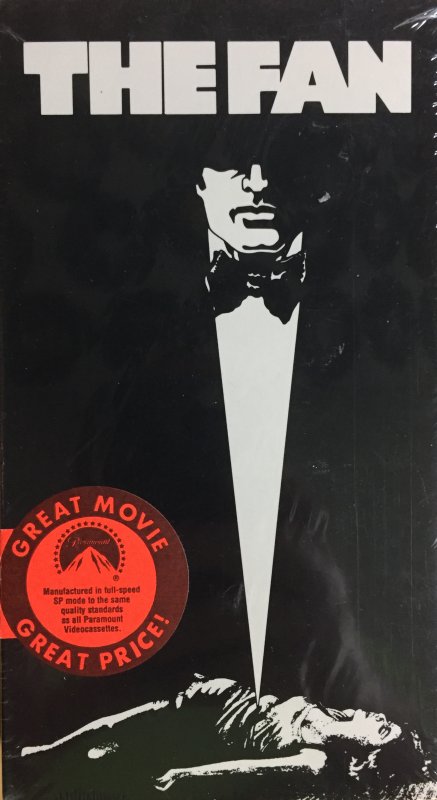
The Fan received plenty of negative media attention, due to being released a few months after the murder of John Lennon, who lived in The Dakota, the same building where legendary actress and star of this film Lauren Bacall had been living for many years. She wasn’t pleased with the final film, however.

The Fan is much more graphic and violent than when I read the script. The movie I wanted to make had more to do with what happens to the life of the woman–and less blood and gore.”

You have to admire the audacity of people who will take a legend like Lauren Bacall — someone who had only made one Robert Altman movie since last appearing in the Duke’s last movie, The Shootist — and put her in a slasher.

Douglas Breen (Michael Biehn!) is obsessed — and that’s putting it mildly — with star of stage and film Sally Ross (Bacall). No matter how many autographs he gets or curt replies or even outright silence, it’s never enough. He must have her, he must own her, he must consume her.

Sally doesn’t even know he exists. She’s acting in a Bob Fosse-like musical and reconnecting with her ex-husband Jake Berman (James Garner!). But after the letters become more carnal — yes, this is how we sexted in the 1980s, I was 9 when this was made, so I know — her assistant Belle (Maureen Stapleton!) starts to worry. She should — Douglas is stalking her every single move. And when he figures out that Belle is the reason why his letter didn’t get through, he slices her up with a straight razor.

She survives, but Elsa the maid doesn’t. Soon, Sally is under protection courtesy of Inspector Raphael Andrews (Hector Elizondo) and being asked if she’s like to have conjugal relations with a meat cleaver. Of note, the 2002 Paramount DVD release of this film re-edited this line to be much less profane.

Our heroine leaves town but that’s when Douglas gets smart. He gets cruised in a gay bar and when in the midst of some oral delight, murders the man and sets him ablaze, faking that the body was his. Oh, the 1980’s, when DNA didn’t exist and these things happened all the time.

Finally, Sally comes back for opening night, but despite how amazing her performance is and even getting to reconcile with her ex, Douglas is waiting. He kills her costume designer and a guard before coming after her. But finally, he offers her an embrace and she responds by stabbing him in the neck before presumably leaving for the cast party at Sardi’s.

Look for Anna Maria Horsford from the Friday films as a female cop, Reed Jones (the original Skimbleshanks in Cats), a young Dana Delaney working in the record store alongside Douglas, Dwight Schultz as the director, Griffin Dunne as his production assistant and Liz Smith as herself.

The Golden Raspberry Awards nominated the song “Hearts, Not Diamonds” for Worst Song the year this came out. My ire for these awards and the wonderful films that they deride knows no bounds. Who are they to scoff at the abilities of Marvin Hamlisch and Tim Rice? How dare you insult Ms. Bacall! Why, why, why — I should write a letter just like Douglas did! That turned out alright!

There’s a rumor that this film was originally intended to be a straightforward thriller starring Elizabeth Taylor and directed by Jeff Lieberman. Yes, America’s favorite actress in the twilight of her career, being directed by the maker of Blue Sunshine. How did this not happen? How can we get to the parallel Earth where it did?

Much respect to Shout! Factory for finally releasing this insane blast of end of the last century star power-driven slasher on blu ray. It’s going to sit in a place of honor, right next to the other movies that I’m so happy they finally released, like The Lonely Lady.

Eyes of a Stranger (1981)

I read a review of this movie that really talked down on it, describing it as a “sleazy TV movie-of-the-week punctuated with gory murder scenes.” That’s positive ink in my neck of the woods, so of course I hunted this down. It’s the first movie that Jennifer Jason Lee — the daughter of Vic Morrow — was ever in.

It’s also a Ken Wiederhorn film, the guy who brought you stand-outs like Shock Waves, Return of the Living Dead Part II and Meatballs II, not to mention the never on DVD movie Dark Tower.

A rapist and murderer has the modus operati of stalking and calling his victims before he takes them out. Now, TV reporter Jane is on the case, feeling like the killer could be a next-door neighbor. She’s played by Braddock, PA’s (the adoptive home of Martin, of course) Lauren Tewes, who was Julie McCoy on The Love Boat.

The film was planned as a straight-forward mystery before the slasher boom took off. So to get to the blood and gore quotient required, they hired Tom Savini to do the special effects. However, the grisly visions he conjured could never get an R rating, so most of his work was exorcised from the film. That said — the 2007 DVD release of the film has an uncut version.

While it’s never explained, Jennifer Jason Leigh’s character is deaf, blind and mute, perhaps the result of a past assault. When the killer targets her in the last ten minutes, the film really picks up the pace.

If you’re wondering how Siskel and Ebert felt…

Scream (1981)

Wait — am I finally stooping to reviewing the film that single-handledly led to every bastardized MTV slasher wanna-be that littered the shelves of video stores as they died a sad death and even now enraged me as I scan past them on my streaming services?

No. Nope. Not at all.

Instead, we’re talking about 1981’s Scream, also released as The Outing.

It was the auteur project for Byron Quisenberry, which sounds like the name of one of the suitors for the Little Women, but he was also the director of 2004’s Hollywood, It’s a Dog’s Life and did stunts for movies like 1972’s Enter the DevilMannequin on the Move and Return of the Living Dead.

Beyond writing, producing, directing and doing stunts for this movie, his wife C.L. Huff was the costume designer, nurse, caterer and make-up artist.

I’ll tell you the story of Scream short and sweet: twelve people go camping on the Rio Grande, make the dumb decision to spend the night in an old ghost town, then have to deal with an unseen killer that takes them all out one by one.

To wit: Allen is hung, Rod and John are hacked with a cleaver, Andy gets hit in the face with an axe, would-be leader Bob gets his head chopped off, throws a bunch of dirt bike kids through a door, and Jerry is just found dead.

In between all that, a mysterious cowboy named Charlie Winters (Woody Strode, in addition to being in SpartacusJaguar Lives!Keoma and many more films, was also a pro wrestler from 1949 to 1962) arrives and claims to have been hunting the killer — the ghost of an old sea captain — for forty years.

Woody Strode wasn’t the only pro wrestler in this movie. Pepper Martin plays Bob and he had a long career mainly in the Pacific Northwest. At one point in his career, Strode invited Pepper to Hollywood where they and Lee Marvin ended up screaming in director John Ford’s lawn at 3 in the morning. Somehow, he became friends with the legendary Ford after this.

Another John Ford regular, Hank Worden, also shows up here. You may know him as a senile waiter from the Twin Peaks series or from being in The Searchers. And another actor from that film — John Wayne’s son Ethan — is in this film, too.

Alvy Moore — Hank Kimball from Green Acres — also shows up, making this the fourth slasher I’ve seen him in (for those playing trivia, the others would be IntruderMortuary and The Horror Show).

Quisenberry was influenced by Agatha Christie’s Ten Little Indians and was really loose with the story while shooting, not even telling the cast who the killer was.

The results are a movie that isn’t well-considered thanks to its plodding pace, lack of good kills, bad acting and a killer that never shows up, not to mention a hero who runs away after he shoots the villain.

If you can say anything nice about the movie, it’s that the location — the Paramount Movie Ranch — looks great. It’s also where the original Westworld and parts of Bone Tomahawk were also shot there.

2019 Scarecrow Psychotronic Challenge Day 10: An American Werewolf In London (1981)

DAY 10: ANALOGUE MANIPULATORS: Practical effects are the truth. No CGI will be tolerated.

There must have been something in the waters of the Los Angeles River in 1981, as The HowlingWolfenFull Moon High and this film all came out in those same twelve months. While all three are interesting films for different reasons, An American Werewolf In London astounded audiences with its special effects.

Rick Baker’s vision was to have the main transformation — set to Sam Cookie’s “Blue Moon” — happen in real-time, with no cutaways or dissolves. Director John Landis compounded the difficulty of this sequence by insisting that it be shot in bright light. This all led to six ten-hour days of prosthetic make-up, but the results were an Oscar — the first of its kind — for special effects make-up and Baker became a household name. Well, in the house of kids who subscribed to Fangoria.

While he was a production assistant in Yugoslavia on the film Kelly’s Heroes, he witnessed an elaborate gypsy funeral where a criminal was wrapped in garlic and buried feet first in the middle of a crossroads so that he would never rise again. This moment of real-life horror stayed with him for over a decade as he built his career in Hollywood.

The money people thought that this movie was too funny to be scary and too frightening to be hilarious. Time has proven them wrong.

David Kessler and Jack Goodman (David Naughton from March Madness and Griffin Dunne from After Hours) are backpacking through Europe. As they make their way across the moors, they stop at a local club called the Slaughtered Lamb. In the midst of all the fun they’re having, they innocently inquire about the star on the wall and are asked to leave. Seriously — the bar just shuts down and forces them into the night, knowing that they’ll die out there.

Look for Rik Mayall in this scene, playing chess with former pro wrestler Brian Glover. Adrian Edmonson had been invited to be at the shoot but blew it off.

As they walk into the night, the pub owners can only say, “Keep to the road, stay clear of the moors and beware of the full moon.” Of course, that means that our heroes wander off the path and are surrounded by a creature that howls at the full moon. Jack is milled and David barely survives when the pub’s patrons come out to save him. As he passes out, he sees that it wasn’t an animal that attacked, but a nude man.

Three weeks later, David wakes up in a hospital where Inspector Villiers tells him that he and his friend were attacked by a lunatic, while our hero insists that it was a wolf. That’s when things get even weirder — Jack appears, even though he’s dead, and demands that David kill himself before the next full moon. As long as the bloodline of the werewolf continues, Jack will be undead, forced to haunt the world.

As David heals up, he moves in with Alex Price (Jenny Agutter, Logan’s Run), a nurse who helped him get back on his feet. Instead of being able to celebrate young love, Jack’s warnings — and decay — grow more insistent as we get closer to that epic transformation scene.

The rest of the film is a rollercoaster of werewolf attacks and David trying to reason with Jack, who is joined by all of David’s victims inside an adult movie theater. Finally, the police — and Alex — close in.

Today, Landis regrets some of his choices as he made the film, such as cutting certain sequences to earn an R rating. For example, the sex scene when Alex and David finally consummate their relationship was a lot more explicit and there was an action sequence where David as a werewolf would wipe out the homeless along the Thames.  The director also felt that he spent too much time on the transformation scene sequence because he was so fascinated by Baker’s effects.

That said, Landis and Baker were never on the same terms after this film. It took eight years to make the movie and Baker decided to use all of the work he’d created so far for The Howling. Right around the same time, Landis finally got the movie greenlit and called Baker, who had to tell him he was already lining up a werewolf project. After getting screamed at over the phone, Baker left the project in the hands of his assistant Rob Bottin and only consulted on that film.

Special effects would never be the same after this film. Today, the entire transformation would be computer rendered, with those amazing monsters only truly existing on the screen. This film’s effects were so upsetting to even the actors that it caused depression when they first saw how damaged their faces were.

Arrow Video’s release of this film — which you can order from Diabolik DVD — is packed with everything you’ve come to expect from this label. There’s a new 2018 4K restoration from the original camera negative supervised by Landis, as well as two commentaries — one from filmmaker Paul Davis and another with actors David Naughton and Griffin Dunne. There’s also Mark of The Beast: The Legacy of the Universal Werewolf, a newly produced and feature-length documentary by filmmaker Daniel Griffith, Beware the Moon (Paul Davis’s feature-length exploration of the film complete with extensive cast and crew interviews), a new interview with Landis entitled An American Filmmaker in London, and a video essay by Jon Spira (who made Elstree 1976, a movie about ten extras who were in Star Wars) called I Think He’s a Jew: The Werewolf’s Secret. There are also discussions on how the movie impacted today’s filmmakers, special effects artists and archival making-of features. If it sounds like Arrow went above and beyond, well — they do this on just about every movie they release.

PS — Please, by all means, avoid An American Werewolf In Paris (starring Tom Everett Scott of Tom Hank’s That Thing You Do!), a movie made by none of these people that has extreme bungie jumping in it. That’s probably the only reason to watch it, actually.

DISCLAIMER: We were sent this movie by Arrow Video, but we’ve alreayd bought it several times and were planning on purchasing this new version anyway. This has no bearing on our review.