SEVERIN BLU RAY RELEASE: Scala!!! shorts disc one (1968. 1971, 1978, 1984, 1986, 1989, 1991)

On the bonus discs of Severin’s new Scala!!! Or, the Incredibly Strange Rise and Fall of the World’s Wildest Cinema and How It Influenced a Mixed-up Generation of Weirdos and Misfits release, you’ll find examples of several shorts that played at the theater. You can buy this from Severin.
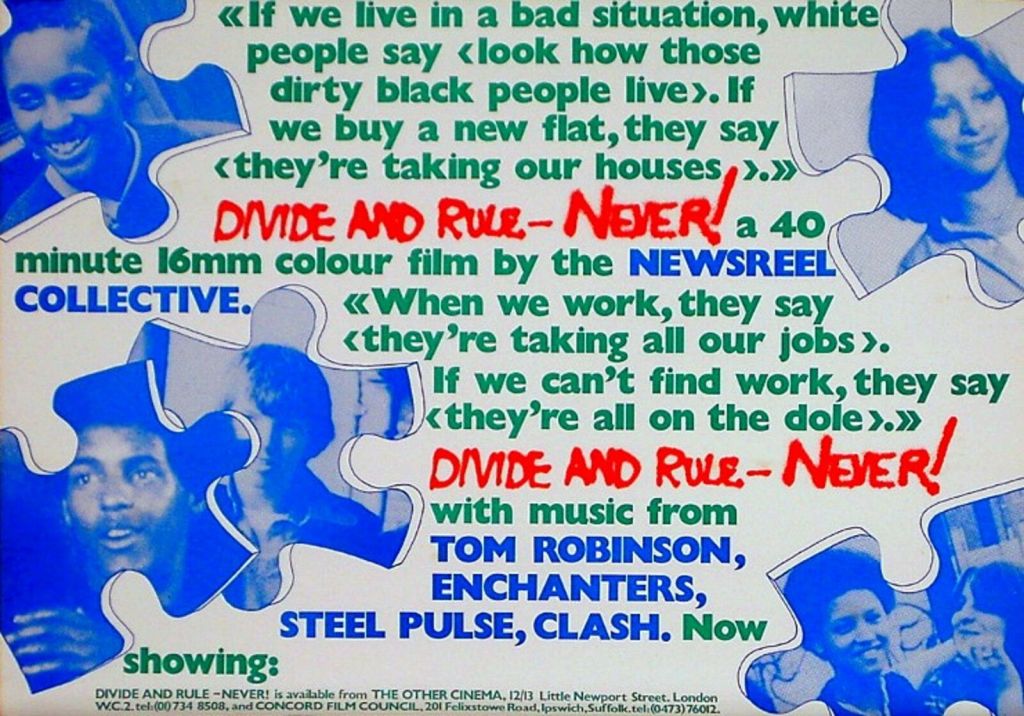
Divide and Rule – Never! (1978): Made for and by young people, this forty-minute or so film looks at race and how it is viewed in school, at work and by the law. There are also some historic sequences of British imperialism and a discussion of how Germany got to the point that it was pre-World War II, plus plenty of punk rock and reggae. This has many sides represented, from Black and Asian immigrants to ex-National Front members.

Divide and Rule — Never! was distributed by The Other Cinema, a non-profit-making, independent film distribution company in London.

Sadly, so much of this movie — made 45 years ago — are just as relevant today in America. This is movie that doesn’t shy away from incendiary material, but that’s what makes it so powerful. In addition to the interviews, it has some interesting animation and a soundtrack with Steel Pulse, TRB, X-Ray Specs and The Clash.
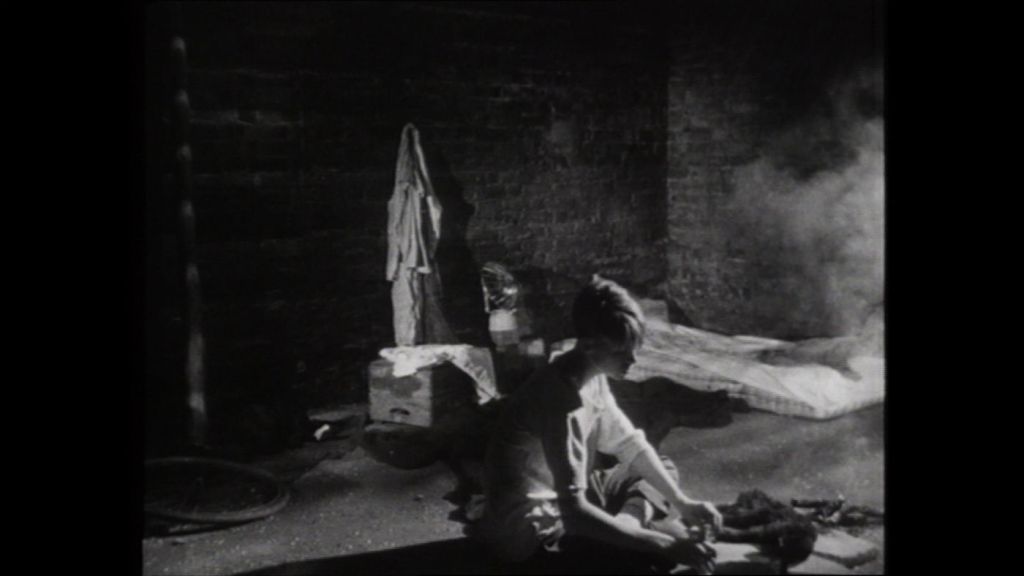
Dead Cat (1989): Directed and written by Davis Lewis, this has Genesis P-Orridge in the cast and a soundtrack by Psychic TV, which has been released as Kondole/Dead Cat.

A boy (Nick Patrick) has a cat that dies and his grief deposits him into a psychosexual nightmare, including a medicine man (Derek Jarman) and several unhoused people (P-Orridge, Andrew Tiernan).

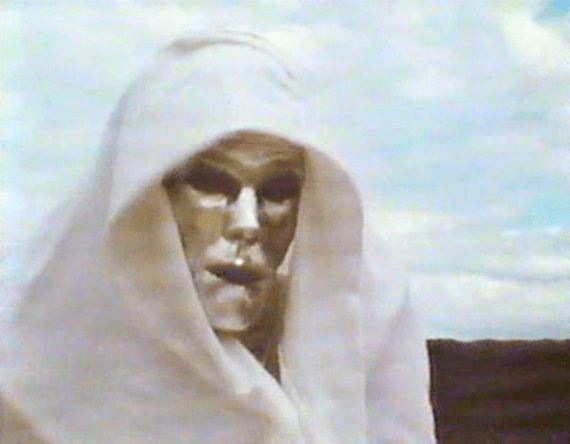
This was shown at only a few theaters the year it was release — including Scala Cinema — before fading away and almost being lost before Lewis found it. In the program for this film, Scala said “The torture that occurs at the transition of sexuality.” If you liked videos for bands liek Skinny Puppy and Nine Inch Nails, this feels like the inspiration.
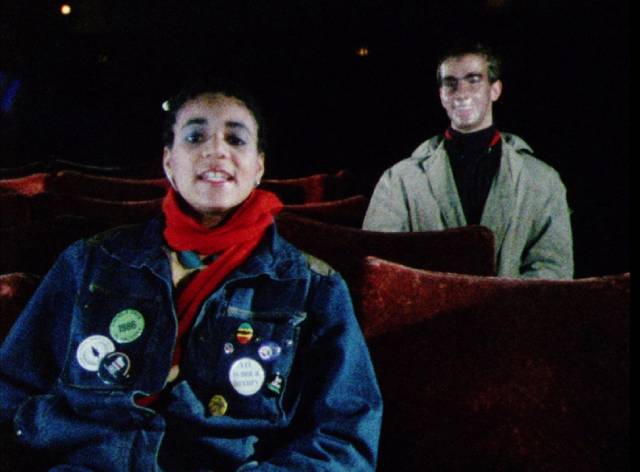
The Mark of Lilith (1986): Directed by Bruna Fionda, Polly Gladwin and Zachary Nataf as a project at The London College of Printing, this is all about Zena (Pamela Lofton), who is researching monstrous women. She meets Lillia (Susan Franklyn) a vampire, at a horror movie and the two start a relationship. 

Liliana, trapped with an abusive male partner by the name of Luke (Jeremy Peters) who is what vampires probably would be, scavengers who feed on the weak, dreams of movies in which she is the victim of just such a vampire. She’s often fed on human beings, but has been careful not to be caught or make a mess, unlike her partner. As for Zena, she’s been studying how female gods were once worshipped but now only appear in horror fiction as monstrous creatures.

So much of this movie is as right on now as when it was made, like the speech that Zena gives when Liliana tracks her down: “Have you noticed that horror can be the most progressive popular genre? It brings up everything that our society represses, how the oppressed are turned into a source of fear and anxiety. The horror genre dramatizes the repressed as “the other” in the figure of the monster and normal life is threatened by the monster, by the return of the repressed consciously perceived as ugly, terrible, obscene.”

Her argument is that we can subvert the very notions of horror, making the monsters into heroes that destroy the rules that hold us down.

However, this being a student film, it’s very overly earnest and instead of working these ideas into the narrative as subtext, they take over the entire movie. If you’re willing to overlook this, it’s a pretty fascinating effort.
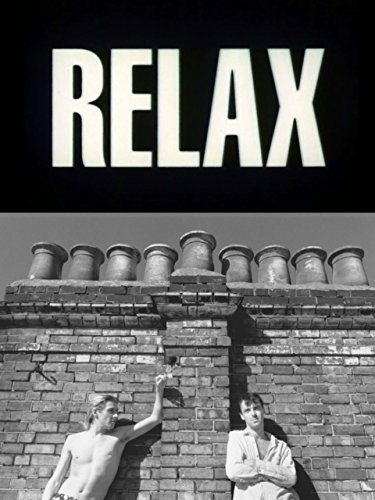
Relax (1991):  Steve (Philip Rosch) lives with his lover Ned (Grant Oatley), but as he starts to engage in a more domestic relationship, he starts to worry about all of the partners he’s had. After all, the AIDS crisis is happening and he’s never been tested. Ned tells him to relax, but there’s no way that he can.

The wait for the test is just five days but it may as well be forever. This also makes a tie between sex and death, as Steve strips for both Ned and his doctor. And in the middle of this endless period of limbo, he dreams of death and fights with Ned, who just smiles and keeps telling him to relax. But how could anyone during the time of AIDS?

I remember my first blood test and the doctor lecturing me after he gave it, telling me that I should have been a virgin until I married and whatever happened, I brought it on myself. The funny thing was, I had been a virgin, I thought I was getting married and I had no knowledge that my fiance was unfaithful to a level you only see in films. That night, my parents came to visit, leaving their small town to come to the big city and my mother asked, “What is that bandage on your arm?” I could have lied, but I told her it was for a blood test, and I dealt with yet someone else upset with me. My problems were miniscule in the face of the recriminations that gay people had to deal with, a time of Silence=Death, a place seemingly forgotten today other than by the ones who fought the war.

Directed and written by Chris Newby, this is a stark reminder of that time.

Boobs a Lot (1968): Directed by Aggy Read, this is quite simple: many shots of female breasts, all set to The Fugs’ song of the same name. Banned in Australia, this has around three thousand sets of mammaries all in three minutes, the male gaze presented over and over and, yes, over again until it goes past just being sophomoric and becomes mesmerizing in the way that breasts are when you’re starting puberty. I’m ascribing artistic meaning to this but really, at the end of the day, it’s just a lot of sweater meat. Fun bags. Cans, dirty pillows, babylons, what have you. My wife is always amazed at how many dumb names I can come up with for anatomy and I blame years of John Waters and reading Hustler as a kid and yeah, I’m not as proud of the latter than the former. That said, there are a lot of headlights in this one.

Kama Sutra Rides Again (1971): Stanley (Bob Godfrey, who also directed and write this) and Ethel are a married couple looking to keep their love life interesting, so they have been trying out new positions. Things start somewhat simple, but by the end, Ethel is being dropped through trap doors and out of an airplane onto her husband. A trapeze love making attempt ends in injury, leading Ethel to chase Stanley while all wrapped up.

Stanley Kubrick personally selected this film to play before A Clockwork Orange in theaters in the UK. I wonder if this played at Scala before the screening that shut down the theater. More than just a dirty cartoon, this was nominated for an Oscar. Despite being about lovemaking, it’s all rather innocent and remains funny years after it was made.
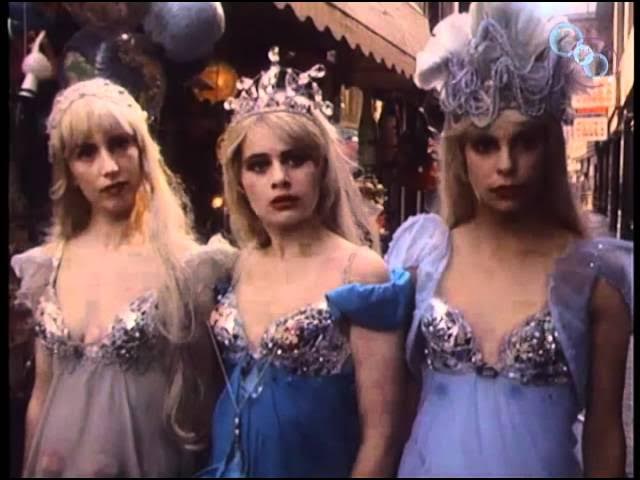
Coping With Cupid (1991): Directed and co-written by former Slits guitarist Viv Albertine, this finds three blonde alien women — played by Yolande Brener, Fiona Dennison and Melissa Milo — who have come to Earth to learn what love is, under the command of Captain Trulove (the voice of Lorelei King). They meet a man named Peter (Sean Pertwee), who hasn’t found anyone, as well as interview people on the street to try and learn exactly how one person can become enamored of another.

Richard Jobson from Skids and Don Letts from Big Audio Dynamite appear, as does feminist sexologist Shere Hite, at least on a TV set. I love that the three aliens are the ideal of male perfection yet they are lonely, trying to figure out what it takes to make the heart beat. It’s kind of like so many other films that I adore where space women try to understand men, a genre that really needs a better title. See Cat-Women of the Moon, Missile to the Moon, Queen of Outer Space, Fire Maidens from Outer SpaceAmazon Women On the Moon, Abbott and Costello Go to Mars, El Planeta De Las Mujeres Invasoras and Uçan Daireler Istanbulda.

On Guard (1984): Sydney: Four women — Diana (Jan Cornall), Amelia (Liddy Clark),  Adrienne (Kerry Dwyer) and Georgia (Mystery Carnage) — juggle their lives, careers and even families to destroy the research of the company Utero, who are creating new ways of reproductive engineering. Or, as the sales material says, “Not only are the protagonists politically active women, but the frank depiction of their sexual and emotional lives and the complexity of their domestic responsibilities add new dimensions to the thriller format. The film also raises as a central issue the ethical debate over biotechnology as a potential threat to women and their rights to self-determination.”

One of the women loses the diary that has all of the information on their mission, which leads to everyone getting tense over what they’re about to do. Directed by Susan Lambert, who wrote it with Sarah Gibson, this allows the women to be heroes and not someone to be saved. I like that the advertising promised that this was “A Girls’ Own Adventure” and a heist film, hiding the fact that it has plenty of big ideas inside it.

Today, in vitro fertilisation (IVF) is an accepted way of having children, yet here, it’s presented as something that will take away one of the primary roles of women. Juxtapose that with IVF being one of the women-centric voting topics of the last U.S. election.

MOVIES THAT PLAYED SCALA: Jubilee (1978)

Thanks to the British Film Institute, there’s a list of films that played Scala. To celebrate the release of Severin’s new documentary, I’ll share a few of these movies every day. You can see the whole list on Letterboxd

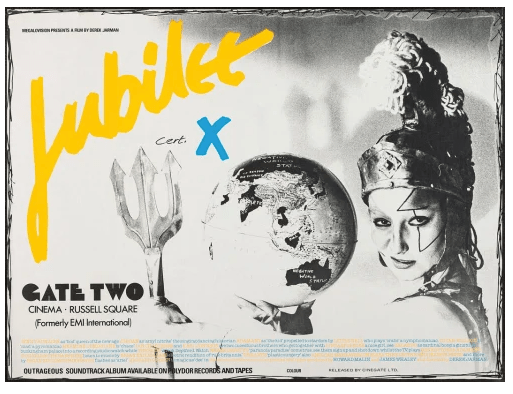
Queen Elizabeth I (Jenny Runacre, Son of DraculaThe Witches) asks her occultist John Dee (Richard O’Brien of Rocky Horror fame) — an advocate of British imperialism that spent the last thirty years of his life learning the secret language of angels — and Ariel from Shakespeare’s The Tempest (David Brandon, DeliriumStagefright) to show her the future.

That future? The no future of the punk rock era, a place where Queen Elizabeth II was killed in a mugging and a gang of punk rock survivors, including Amyl Nitrate (Jordan, the model who was of the creators of W10 London punk look), Bod (Runacre in a second role), Chaos (French singer, writer and tightrope walker Hermine Demoriane), Mad (singer Toyah Willcox) and Crabs (Little Nell from Rocky Horror, who even gets in the line “Don’t dream it, be it.”). When they’re not talking about boys or music, they’re talking about how history can be manipulated. And then Amyl Nitrite says that her heroine has always been Myra Hindley (Hindley and Ian Brady were responsible for the Moors Murders, which occurred in and around Manchester between mid-1963 and late-1965, claiming five child victims and inspiring the song “Suffer Little Children” by The Smiths).

Things making too much sense? There’s also Borgia Ginz, who shares a house with Hitler, runs the world and has transformed Buckingham Palace into a recording studio and Westminster Cathedral into a disco where Jesus performs.

Beyond the nihilism and lack of hope in this film, there’s also plenty of punk rock stars, like Adam Ant and Wayne County along for the ride and gamely performing songs, as well as blink and you miss it moments for Siouxsie and the Banshees and the Slits. And hey — the music is by Ol’ Sourpuss himself, Brian Eno.

Director Derek Jarman may have based this movie in punk rock, but he was against the scene’s fascism fetish, as well as its love of stupidity and violence. Many punks weren’t pleased with the film, such as fashion designer Vivienne Westwood, who created an open letter T-shirt that denounced the film because of how she felt it misrepresented punk.

Jubilee is definitely a time capsule of Thatcher-era England. It’s loud, obnoxious and strange, which are all wonderful things to be. I’m glad that I didn’t watch something easy like Cy-Warrior and chose this movie.

Born a Ninja (some year between 1978 and 1988)

Ninjas. “Life means nothing to them,” says Mister Tanaka, a man who shows up in this wearing an outfit like my dad in the mid 80s, a striped red polo and short shorts.

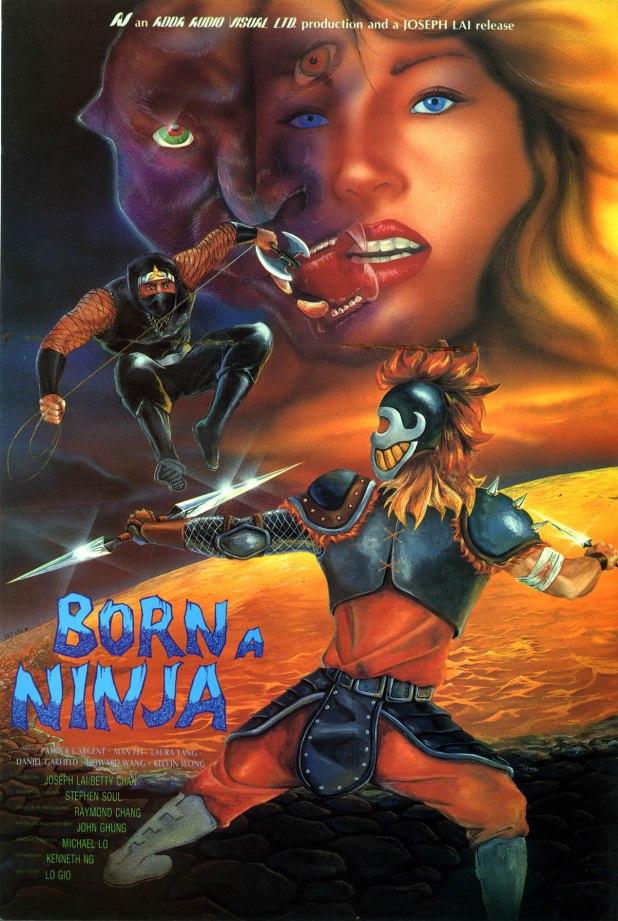
If you ask IFD what this Joe Law directed and written movie is about, they’d say, “A Japanese scientist tries to conceal a deadly formula, but an undead ace and his ninja devils are determined to use it to cause mischief and mayhem. It is up to Lung, a master of the lost art of Hocus Pocus, to keep evil at bay and prevent mass destruction on a global scale.”

Sure, maybe.

IMDB lists the director as Chi Lo, who used the name Joe Law to make Crippled Masters and Lo Ke to direct Deadly Hands of Kung Fu.  Seeing as how this was produced by Joseph Lai and Betty Chan, all bets are off.

Or maybe this is the same movie as American Commando Ninja and combines a Taiwanese TV show, another movie called Born a Ninja and the kind of dialogue that only can come from a 1980s dubbed into incomprehension ninja movie can give you. Or it’s Silent Killers. It could have so many titles and it would still be hard to tell you what happened.

Let me try.

Mister Tanaka has a secret formula from World War II that just could destroy the world. That much is true. Two women want the formula and they are Becky, who wears a yellow vest and Confederate flag shorts, but I think that means she’s into late 70s and early 80s redneck trends in America a little too late as they move across the globe and isn’t racist like my neighbor who wears short shorts and throws away all his kids toys after his wife took them and also has a huge Southern Cross up on his garage wall despite being an Italian man in Southwestern Pennsylvania. Did I go on a tangent? Becky is joined by Brenda, who loves denim so much she’s wearing it on the top and bottom. They’re joined by master of the hocus pocus style, Larry, which involves your everyday kung fu but also the ability to shoot fire out of his fingertips.

As for the bad guy ninja, that’s Meng Fei, who was also in the Ninja Death trilogy, Night Orchid, Everlasting ChivalryThe Sun Moon Legend and Middle Kingdom’s Mark of Blood. He’s pretty amazing in the last fight scene.

Anyways, Mister Tanaka keeps dreaming of dead people that were killed by this secret back in the war and the secret is a mirrored mustache that you put on a devil mask. There’s also a white ninja named David who battles Larry before they decide to be friends, get a room and drink beer and eat fried cabbage.

Or maybe that was the last movie? Have years of drinking, substances and Godfrey Ho movies dulled my reason and when confronted by this synth-scored shot on video wonder my mind just wanders in between different martial worlds, unsure of all the things I’ve seen, all the ninja deaths I’ve felt as if they were my own? In truth, the only important thing is that ninjas can become straw men and that you can swallow a sword in the middle of a fight and live.

I do know one thing. When David sees Larry hanging out with the two ladies, he says, “Two chicks? You one animal!” That’s exactly how I felt.

You can watch this on Tubi.

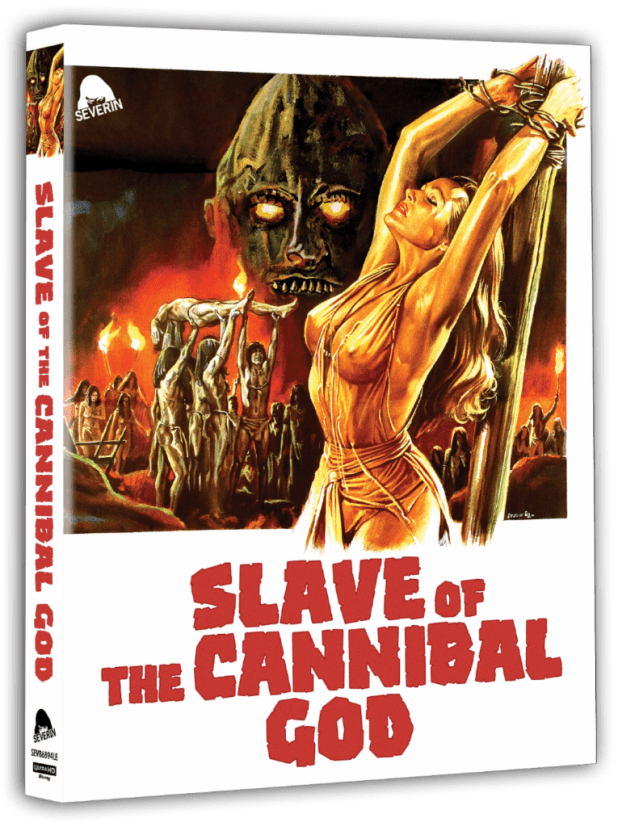
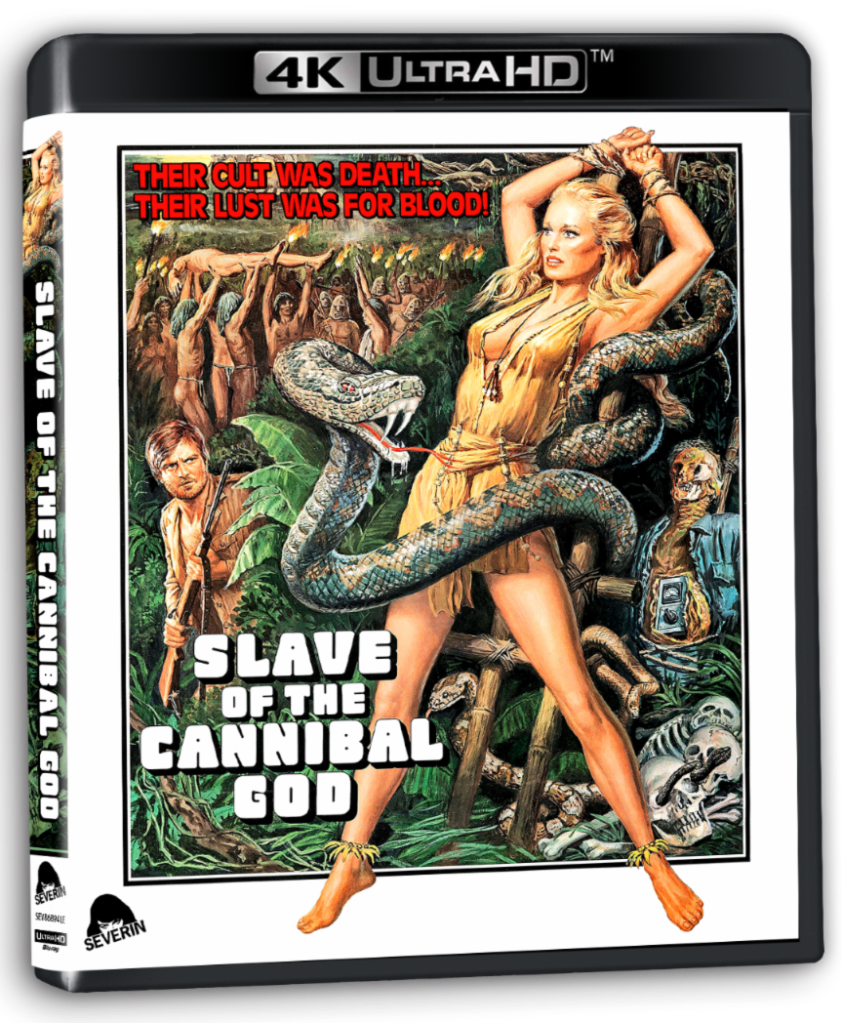
SEVERIN BLACK FRIDAY: Slave of Cannibal God (1978)

After creating some of the best gialli of the ‘70s, director Sergio Martino entered the cannibal cycle here. When a British scientist disappears in the jungles of New Guinea, his wife hires an American anthropologist lead her deep into a green inferno of graphic violence, steamy nudity and several of the most notorious scenes in the entire genre. Scanned in 4K from the original camera negative with over 3 hours of special features, this has a new interview with Martino, audio commentary by Claire Donner of the Miskatonic Institute Of Horror Studies and more.

The sale will take place from 12:01am EST on 11/29 to 11:59pm PST on 12/2 at Severin’s site.

Also known as La Montagna del Dio CannibaleSlave of the Cannibal Godand Prisoner of the Cannibal God, don’t be fooled by the pedigree of having big stars like Ursula Andress and Stacy Keach. This film may seem restrained at first, but it goes absolutely insane by the final ten minutes. I mean, when has Sergio Martino (All the Colors of the DarkYour Vice is a Locked Room and Only I Have the Key) ever steered us wrong?

Susan Stevenson (Andress, the original Bond girl) is looking for her husband Henry, an anthropologist who has gone missing in the jungles of New Guinea. Along with her brother Arthur and Professor Edward Foster (Keach), they travel to the mountain Ra Ra Me, a cursed place where the authorities will not allow expeditions.

Of course, they go there. What did you expect? They’re stupid white people. The jungle thanks them with attacks from spiders, snakes and alligators. And then Manolo (Claudio Cassinelli, What Have They Done to Your Daughters?), a jungle guide, joins their party.

Bad idea. Arthur has sex with one of the native girls, who is already married, but a cannibal attacks and kills both the husband and wife. A missionary makes them leave, as they have brought nothing but sin, adultery and death to his village. Don’t fuck in the woods. And don’t bring your Western values to the jungle.

It turns out that none of their reasons for coming to the island are altruistic. Susan and Arthur have no interest in finding her husband, but are instead looking for uranium deposits. Foster is there just to find the tribe of cannibals who had taken him captive in the past so he can wipe them off the face of the earth.

On the way, a waterfall takes Foster after Arthur doesn’t save him. And they reach the mountain, which isn’t just a uranium mine. It’s made from uranium. And how do we know that? Well, Susan’s husband’s body is being worshipped as a god because the Geiger counter he had keeps ticking, like a heartbeat.

At this point, the film rewards you by going completely off the rails, descending into chaos. A native attacks Susan, but is stopped by the tribe and castrated, then his penis is cooked and eaten. Another villager has sex with a giant pig. Meanwhile, the drums build in a hypnotic rhythm as another female villager masturbates (this is from the “director’s special selection” version, there are several cuts of the film). As this happens, Susan is stripped and smeared with orange honey by two naked female cannibals before being fed her own brother. Manolo is tortured. It feels like a nightmare you can’t wake up from, one of the only moments where the Martino who delivered a quick succession of giallo a decade or so before rears his artistic head.

Then, it’s over, with Manolo and Susan escaping. I mean, one would think that there would be years of therapy after this. But I don’t know. Perhaps she can get over this easier than most.

This isn’t a great movie. It might not even be good. It is entertaining for the last section, but there’s also the problematic issue of animal torture in the film — a monkey is slowly eaten by a snake and lizard being cut apart. Martino claims he tacked on these scenes at the distributor’s insistence. I guess the cannibal audience — an outgrowth of the audience for mondo films — needed more than just Ursula’s breasts and a dummy of Keach getting killed for their kicks.

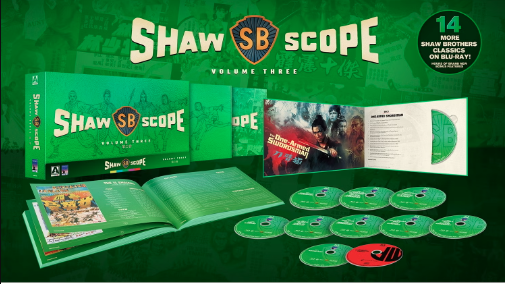
ARROW VIDEO SHAW SCOPE VOLUME 3 BOX SET: The Avenging Eagle (1978)

Eagle Chief Yoh Xi-Hung (Ku Feng) leads Iron Boat Clan, a gang made up of orphans that he has raised to be his personal army — Eagles — of killers. His toughest “son” is Chik Ming-sing (Ti Lung), who loves combat. After being injured by Golden Spear Tao De-biu, he nearly dies and is nursed back to health by the family of lawman Wang An. Now, Chik Ming-sing sees that the life he has known since he was a child is a lie. He deserves love and to have a family.

Of course, the Iron Boat Clan then kills Wang An and Chik Ming-sing is targeted by them. As he wanders, he meets wrist knife fighting master Cheuk Yi-fan (Alexander Fu), who wants to destroy the Iron Boat Clan for killing his wife and children. He suspects Chik Ming-sing, but they make a good team as they both starts to fight back against the gang. Things take a turn when Chik Ming-sing reveals that he killed a man’s wife years ago — guess who? — and wants to be killed by that man to atone for his crime.

Of course our heroes get their revenge, even if Yoh Xi-Hung attempts to turn them against one another. The end, however, is still surprising and poignant, as our heroes are honor bound and have a path that they must follow. The last fight is astounding and both lead characters are so worthy of a movie on their own. Together, this is perfect.

Directed by Chung Sun, this movie knocked me out. Everyone’s weapons, from Yoh Xi-Hung’s claws and Chik Ming-sing’s staff to Cheuk Yi-fan’s wrist blades are so unique to each character and perfectly used. I can’t wait to watch this again.

This was remade in 1993 as The 13 Cold-Blooded Eagles.

The Arrow Video Shaw Scope Volume Three box set has a brand new 2K restoration of The Avenging Eagle as well as commentary by Frank Djeng, an English title sequence and a trailer.

You can get this set from MVD.

Bruce Lee the Invincible (1978)

I love the description for Nan yang tang ren jie on IMDB: “Fantastic fighting sequences mark this kung fu action film.”

No shit.

That said, despite its title, this has nothing to do with Bruce Lee at all.

Bruce Li is in it, sure, but he’s the sidekick!

Oh man, I love that this was released under a misleading name that caused me to watch it nearly half a century later.

Cheng (Michael Chan Wai Man) is kicked out of a martial arts school and sent back home to Malaysia where he claims he will change his ways. By change his ways, he means to become a crime lord and cuck every man he meets. The fighting teachers send their best fighers — including Bruce Li — to teach him how to behave and somehow, that involves fighting men dressed as apes and Native Americans. I have no idea what it means but who cares? Sometimes nothing has to make sense any more.

I do know that this has a karate man hit a gorilla so hard that its eyeball pops right out. That’s enough, in my world, to give this all the Oscars and cancel future awards shows.

All of them.

Cheng has taken a liking to Wai Sin and when he isn’t running a casino and yes, also sleeping with all of his men’s wives, he’s kidnapped her. That’s another reason for the Shaolin Temple fighters to visit, with one being her cousin and I guess cousins doesn’t mean anything to martial arts masters, unless incest is the 37th chamber of the Wu Tang.

I love — again — that this is a Bruce Lee ripoff with Bruce Lee but the credits don’t even hide the true fact that his name is really Ho Chung-Dao. This also has the title Bruce Li the Invincible Chinatown Connection but come on, Bruce Lee the Invincible is shorter, sweeter and a better lie.

You can watch this on Tubi.

SEVERIN BOX SET RELEASE: All the Haunts Be Ours: A Compendium Of Folk Horror Vol. 2: Beauty and the Beast (1978)

Known in its native Czech language as Panna a netvor (The Virgin and the Monster), this was directed by Juraj Herz, who also made The Cremator, Morgiana, The Ninth Heart and Ferat Vampire.

Julie (Zdena Studenková) is the youngest of three daughters born to a widower (Václav Voska). Riding by horseback and looking for a flower for her, he falls asleep and awakens in front of the horrific castle of Netvor (Vlastimil Harapes), a half-man, half-falcon creature that condemns him to death for picking one of his flowers unless one of his daughter’s sacrifices herself to live forever with him. He should be worried. After all, his horse has already died, forcing him to walk and he’s also found the body of a dead woman. So when he asks his daughters to save him, the already married and wealthy Gábinka (Jana Brejchová) and Málinka (Zuzana Kocúriková) refuse, but Julie saves her father just as her beauty will soon rescue the beast.

Yes, just like a Disney film, this is based on La Belle et la Bête by Jeanne-Marie Leprince de Beaumont. Unlike that animated tale, this has no dancing table service. Instead, it’s a gothic and frightening movie, a film that Herz didn’t want to make as he saw the Jean Cocteau film as unapproachable in its perfection. Yet he does the same here, turning nearly every frame into a painting and having an otherworldly beast that is at once terrifying and sexual, with human eyes calling out from behind a bird’s face.

Beauty and the Beast is part of the new Severin box set, All the Haunts Be Ours Volume 2. It has extras including commentary with film historian Michael Brooke, archival interviews with director Juraj Herz and actors Vlastimil Harapes And Zdena Studenková and a short film, František Hrubín.

You can order this set from Severin.

Mirrors (1978)

Noel Black made his name with a short entitled Skaterdater and he made Pretty Poison, which is an incredible movie but died at the box office. Then, his career fell apart. He said, “The gold-plated nail in my career coffin was pounded when, after the box-office failure of Pretty Poison, I accepted a dreadful project, Cover Me Babe, that never should have been made. I reckoned that it was better to stay active than to wait for a project I believed in. That was a mistake. It was followed by another mistake, Jennifer on My Mind, one of the dozens of unsuccessful drug pictures at the time.”

After working in TV, he came back to the big screen — or tried to — with this film, which was originally called Marianne. It took six years to come out on video under the title Mirrors.

He also directed Mischief and Private School, two teen sex comedies that are way better than that genre may lead one to believe.

Marianne Whitman (Kitty Wynn, Sharon Spencer from The Exorcist) and her husband Gary (William Paul Burns) are on their honeymoon in New Orleans where she’s soon the concern of a voodoo group who want to put another soul into her. To get what they want, they’ll murder dogs and even her husband in a dust-delivered asthma attack which is really the wildest way someone dies in a 70s occult movie outside of The Omen‘s gore Rube Goldberg destructions of humanity.

Dr. Godard (Peter Donat) tries to help, but Marianne is trapped in a slow burn 70s possession film with an ambiguous ending. Visually, this is a great film. As for the story, well, it’s a mess. It does have a great party scene — every 70s occult movie should — with Willie Tee And The Wild Magnolias funking it out.

I love this in spite of its problems.

You can watch this on YouTube.

Here’s a drink.

Voodoo

  • 1 oz. curacao
  • 1 oz. 99 Bananas
  • 1 oz. Midori
  • 1.5 oz. Malibu
  • 3 oz. orange juice
  1. Mix all ingredients in a shaker with ice.
  2. Pour over crushed ice and stay out of New Orleans.


UNSUNG HORRORS HORROR GIVES BACK 2024: Stryx (1978)

Each October, the Unsung Horrors podcast does a month of themed movies. This year they will once again be setting up a fundraiser to benefit Best Friends, which is working to save the lives of cats and dogs all across America, giving pets second chances and happy homes.

Today’s theme: Series episode

For six Sunday evenings in 1978, Radiotelevisione Italiana (Rai) TV in Italy aired a series which was a marked break from a channel that until now had only shown conservative Christian Democrat programming. By establishing a secular channel, Rai 2, the network was hoping to encourage experimentation and “a marked exploration of new languages ​​of communication.” These were the national channels of Italy and somehow, Stryx made it on the air, if only for a very short — and thematically perfectly numbered — length of time.

Named for a combination of the legendary vampire owl of legend and the Italian term for witch, strega, this was created by Enzo Trapani, Alberto Testa and Carla Vistarini. In interviews, Trapani said that he was inspired by a meal of salami and figs, saying “Begone milquetoast rhythms and family-friendly songstresses with round cheeks and heart-shaped mouths,” as he sought to change TV.

Or, as he also claimed, he got a phone call from the devil.

With the words, “Ladies and Gentlemen, the Devil,” an entire salon of demons, goblins, singers, dancers, human sacrifice victims and people willing to get naked and weird emerged into the psychedelic and smoke-filled cave in which this show is set. By the end of the first episode, the switchboards had lit up. Even if Italians are used to nudity and some level of violence, they weren’t ready for the dependable Rai to send outright Satanic imagery into their homes.

I can’t even begin to imagine what people thought — Italy is a country that has Vatican City, the heart of the Roman Catholic empire, directly inside it and a population that is 75% Catholic — when “Lucifer, Emperor” and “Beelzebub, Prince” were introduced and walked out on screen, presiding over the inquisition, women dressed as cats, live animals including a lion, cats, hawks, dogs and a chimpanzee as well as more women, some half-naked, many fully nude and quite a few being tortured and even mock burned alive.

That said, Stryx still has the trappings of the variety show. There are continuing characters, such as a witch named Ludmilla (Ombretta Colli, a singer, future senator and actress in the Fulci film Getting Away with It the Italian Way and Antonio Margheriti’s War Between The Planets), who keeps trying to transform a toad named Franz into a prince and always having him become into boring accountants played by Walter Valdi; a mime played by Hal Yamanouchi (EndgameWarriors of the Year 2072) and Gianni Cajafa, playing a magician named Furcas who teaches the audience how to read their fortunes and banish the malocchio or evil eye.

Do you love strobing? How do you feel about dry ice and fog? How about liberal use of chromakey? This has all of that and so much more. Money was spent — lots of lira — to make it feel like this show exists inside its own world. I mean, let’s be honest, this is the Hell of the dreams of metal kids who smoke skunk weed in the high school parking lot and say, “Man, it’s going to be a party.”

Well, it was a party.

The first episode aired on October 15, 1978. Just take a look at the music guests:

Gal Costa “Sea Rain:” Gal Costa was a Brazilian pop superstar who had a fifty-year career in which she released more than five hundred songs. She’s the only singer from Brazil to be in the Carnegie Hall Hall of Fame.

Angelo Branduardi “Dance in F sharp minor:” Known as The Minstrel, Branduardi created a new musical genre that combines medieval and Renaissance music with Celtic, Germanic, British and French folk music. He plays the devil’s instrument — the violin — as Death itself dances with villagers.

Amanda Lear “Enigma (Give a Bit of Mmm To Me!):” Amanda Lear is a source of fascination to me. At once the muse of Bowie and Dali, now a disco queen who famously played with the question of whether she was even a she. This song features the lyrics “Are you devil or angel? Are you question or answer?” Lear also appears in the movie Crazy Nights for Joe D’Amato and is on the cover of Roxy Music’s For Your Pleasure. In the 2024 reality where people are still regularly losing their minds over sexual gender, Lear was breaking ground nearly fifty years ago and looking incredible every step of the way. This short article can’t contain her majesty.

Patty Pravo “Handsome:” This sentence alone should explain to you why she was on this program: “Her peculiar low and sensual timbre, her provocations and excesses have made her an icon of transgression.” Along with Mina, Ornella Vanoni , Iva Zanicchi and Milva, Pravo is considered one of the five major protagonists of Italian song. She’s also the first mainstream artists in the country to embrace funk and new wave with her 1976 album Biafra. At this stage of her career, she embraced the androgynous look of Bowie. Future performances would see her carried by goblins as a human sacrifice and another where she was given shock treatment while performing.

Grace Jones “Hunger:” Do I even have to write of how incredible Grace Jones is? How vital? Or how perfect Jones was for this show, a feral force of nature stalking the stage and somehow being the most supernatural thing in a world teaming with demons and devils?

Rockets “On the Road Again:” A French Space Rock band, Rockets used to land on stages filled with smoke and lasers, emerging with metallic faces and spacesuits, looking like Destro meets KISS. They were super dangerous, too, as they used to shoot a “fireworks bazooka” into the audience, more than once hitting audience members and setting their clothing ablaze.

The other episodes — not many of which survive — also feature Mia Martini, Asha Puthli, Area and Anna Oxa.

As the calls continued from angry viewers, the show only averaged nine million viewers, not enough to continue airing. Trapani followed up with another controversial show, C’era Due Volte (Twice Upon a Time), during which adult film star and future senator Ilona “Cicciolina” Staller retold fairy tales in ribald ways. It was delayed by a year and remained too controversial to live.

Sadly, in 1989, frustrated by the idea of aging and unable to get his visions on TV, Trapani would shoot himself in the mouth, languishing in the hospital for over a week.

There’s is supposedly a seventh episode, which never aired. I dream of seeing it.

Resources

Wikipedia Italy: Stryx.

Atlas Obscura: Stryx.

CHILLER THEATER MONTH: Blue Sunshine (1978)

EDITOR’S NOTE: Blue Sunshine was on Chiller Theater on Saturday, February 12, 1983 at 2:00 a.m.

You know why I’ve never done acid? This movie right here. After all, it has an “inspired by true events” square up in the end credits.

After a series of seemingly unconnected murders in Los Angeles, only one link keeps coming up — every single person took the same strain of LSD called Blue Sunshine.

Yep — the sins of the past decade are ready to come back and destroy the “Me” decade.

Zalman King — yes, the same man who got your mom all tingly after you went to bed with Showtime’s Red Shoe Diaries — plays Jerry Zipkin, a man accused of the murders who — in true giallo-style — must clear his name. That’s because he was at a party where the murders may have started, complete with a screaming Brion James and Billy Crystal’s brother singing Frank Sinatra songs before he starts throwing women into the fireplace.

If turns out that if you took Blue Sunshine, chances are that you’re about to lose all your hair, go crazy and start killing everyone in your path. Of course, no one knew this ten years ago when they were all dosing on it back in college. Chromosomal damage can be a real b, you know?

How can you not love a movie whose title is spoken by a parrot? One that has a climactic disco shootout? Or is so 1970’s that it ends up speaking for pretty much the entire decade?

Between the self-medicating Dr. David Blume, the hard-drinking and hair losing John O’Malley and Ed Flemming (Mark Goddard, Major Don West from Lost In Space) are all caught up in the grip of the bad trip. The effects pretty much sum up Flemming’s political campaign: “In the 1960s, Ed Flemming and his generation shook up the system. Now he’s working within it.” He has become the system. It’s as if the children in Manson’s famous quote — “These children that come at you with knives–they are your children. You taught them. I didn’t teach them. I just tried to help them stand up.” — are even more dangerous when fully grown.

Goddard isn’t the only TV star that shows up, as Alice Ghostly (Esmerelda from Bewitched) makes an appearance.

Writer and director Jeff Lieberman would lend his strange style to other films like SquirmRemote Control, Just Before Dawn and the odd true crime TV show Love You to Death that starred John Waters as a Grim Reaper attending weddings of partners that would soon kill one another.

The director claims that two major TV networks expressed interest in purchasing the film as a “movie of the week.” The opportunity to get double the budget was appealing, but after seeing the edits that the movie would need to be able to play on network TV, Lieberman decided to produce this for theaters.