CANNON MONTH 3: The Student Body (1976)

EDITOR’S NOTE: As the journey through Cannon continues, this week we’re exploring the films of 21st Century Film Corporation, which would be the company that Menahem Golan would take over after Cannon. Formed by Tom Ward and Art Schweitzer in 1971 (or 1976, there are some disputed expert opinions), 21st Century had a great logo and released some wild stuff.

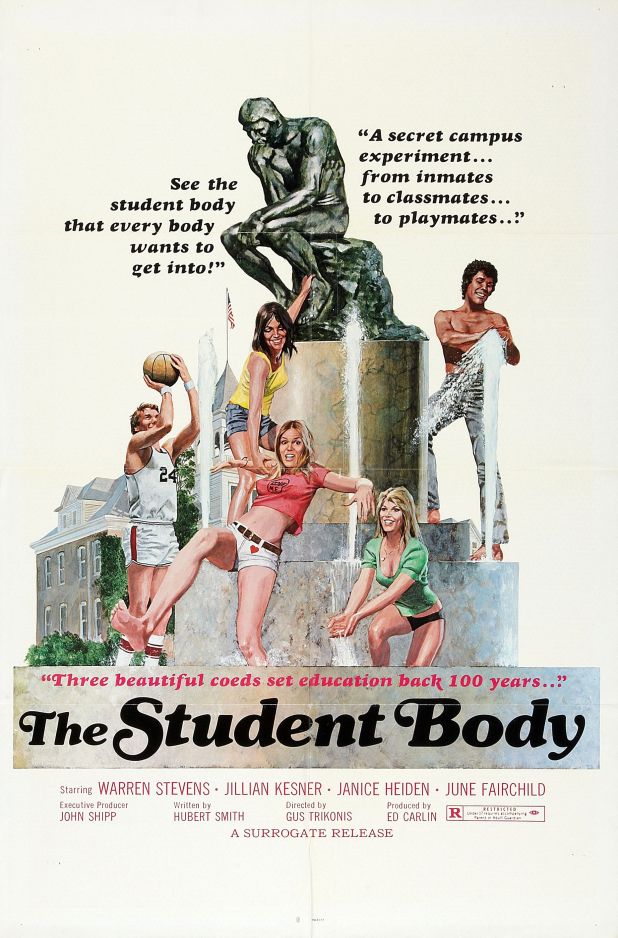
Carrie (Jillian Kesner, Firecracker), Chicago (Janice Heiden) and Mitzi (June Fairchild, the jumper in Head) are going to be in prison forever after they take part in a riot. Then they get volunteered into a program being researched by Dr. Blalock (Warren Stevens). He believes that his methods can reduce how socially unredeemable criminals are by using observation, therapy, drugs and a nurturing environment. But mostly drugs.

Each of the girls is supposed to be with a set group of boys, but Carrie is fascinated by the doctor’s violent alpha male son Carter (Peter Hooten, proving that his demented line readings in Night Killer are no accident; he talks the same way here). We soon learn that the Blalocks are getting poor, so Mrs. Blalock (the girl across the hall in Eraserhead) has talked him into this study, where the girls will live in their house and be given drugs by a shady government organization in an MK Ultra’s style conspiracy. The drugs don’t calm the girls down at all. It makes them want to have sex nonstop, get into brawls and, for some reason, stay in public fountains.

Some of the therapy works. Mitzi is constantly laughing and hard to understand, sure, but she also decorates her room with penguins and wears a tuxedo t-shirt. Dr. Blalock learns that she’s obsessed with them because they remind her of the man who abused her as a child, a Catholic priest. She has this revelation that basically a penguin raped her just in time for a boy to come over that has a crush on her and knows that she loves penguins. He dresses up as one and she loses her mind and smashes his head in.

Gus Trikonis knew how to make a drive-in movie. The Evil, Nashville Girl, The SidehackersMoonshine County Express, Supercock and The Swinging Barmaids aren’t great movies. But they’re good drive-in movies and there’s a difference. These movies are better when you’re half awake, drinking or smoking, and maybe even making out and catching moments of them. When you pay attention to them, they fall apart. When watched when distracted, they’re exactly what they should be. You can say the same for the films that Hugh Smith wrote, like Black Oak ConspiracyNight Creature and The Glove.

I love that Jillian Kesner’s character is so matter of fact. If anything, the drugs sharpen her and allow her to navigate the world in a way that she never has before. When the doctor comes on to her, she doesn’t react in shock or shame; she just tells him that in no uncertain terms will they ever have a relationship beyond doctor and patient. She’s the one who figures all of this out and has the tools to escape the place that fate has trapped her in.

There are a lot of people who’ve reviewed this online and really were let down by it. I have no clue what movie they saw. A science fiction conspiracy version or a Corman nurse cycle movie with fistfights, car races and a penguin-based freakout? How can you not enjoy that?

This was re-released by 21st Century as part of a double feature that had The Swinging Barmaids renamed Eager Beavers and this movie titled The Classroom Teasers.

You can watch this on YouTube.

CANNON MONTH 3: Death Journey (1976)

EDITOR’S NOTE: As the journey through Cannon continues, this week we’re exploring the films of 21st Century Film Corporation, which would be the company that Menahem Golan would take over after Cannon. Formed by Tom Ward and Art Schweitzer in 1971 (or 1976, there are some disputed expert opinions), 21st Century had a great logo and released some wild stuff.

This is the first movie that Fred Williamson would make as Jesse Crowder. He named the character for someone he knew in high school and looked up to, as he wasn’t to be messed with. After playing the role in this, No Way Back, Blind Rage and The Last Fight, the real Crowder threatened to sue. Williamson’s lawyer showed him some phone books and asked him which Crowder he was.

In this film, NYC district attorney Riley (Art Meier) hires our hero to transport mob accountant Finley (Bernard Kuby) to Los Angeles while Crowder both battles killers and sleeps with every woman he meets. I am not even kidding, I have no idea how he’s learned how to fight like he has as all he does is get horizontal.

This is an hour long, has no budget, scenes seem to stretch on forever unless there’s a fight or lovemaking and who cares? Fred is incredible and it has a vibe based on his swagger. If you like him, you’ll like it. He has that kind of magnetic cool that few action heroes do today.

One of four movies directed by Williamson in 1976, this was originally released by Atlas Films and re-released by 21st Century.

You can watch this on Tubi.

CANNON MONTH 3: Exit the Dragon, Enter the Tiger (1976)

EDITOR’S NOTE: As the journey through Cannon continues, this week we’re exploring the films of 21st Century Film Corporation, which would be the company that Menahem Golan would take over after Cannon. Formed by Tom Ward and Art Schweitzer in 1971 (or 1976, there are some disputed expert opinions), 21st Century had a great logo and released some wild stuff.

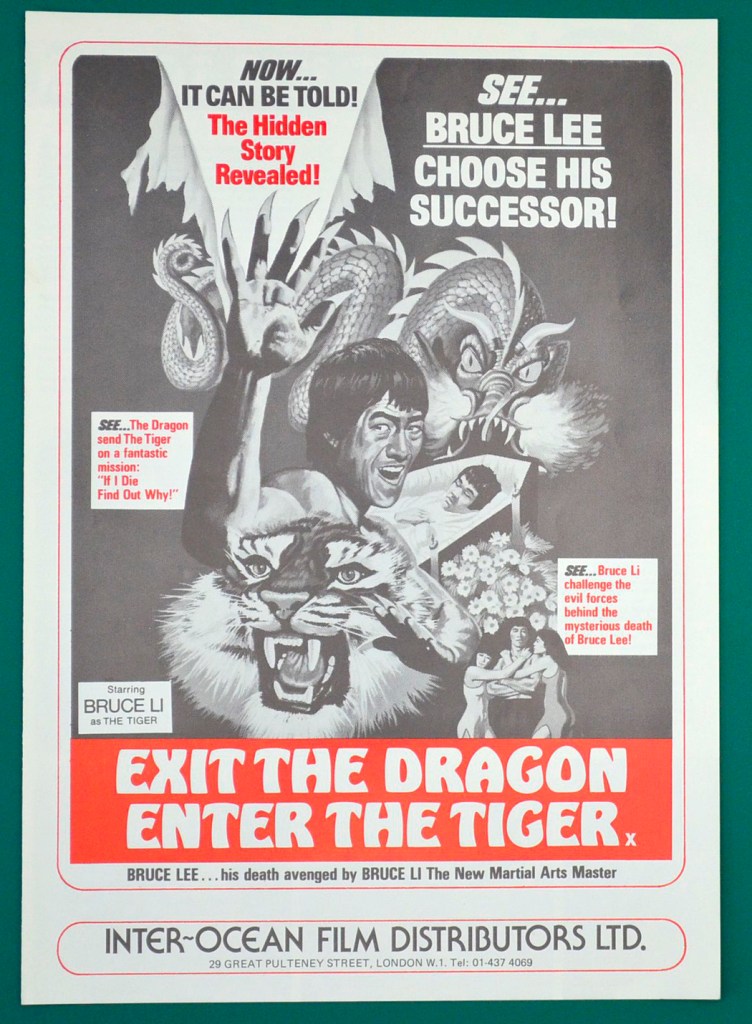
David “The Tiger” Lee (Bruce Li) was a student, protégé, worshipper and now the successor of Bruce “The Dragon” Lee. He’s having a tough time dealing with Bruce being dead, so he comes to Hong Kong to get the answers that will allow his mind to be set at ease. I mean, this movie starts with Bruce, also played by Bruce Li, telling David that if he ever dies, that he will be the next great martial artist. Then he dies three days later and we get to see the actual funeral footage that was also in Bruce Lee: The Man and The Legend.

David soon meets Susie Yung (Chang Sing Yee) — who is supposed to be Bruce’s mistress Betty Ting Pei, the woman whose apartment he died in — and is targeted by the Hong Kong mafia, led by The Baron (Yin Chang). That guy had the weirdest plan, using Bruce to move drugs, because no one would put a martial arts hero through customs. Susie was supposed to ask and one assumes that Bruce said no, which led to his death.

Also known as Bruce Lee – The Star of All Stars, this has a moment where David’s girlfriend Tia says, “If I can mean as much to you as Bruce Lee did, I’ll be very happy.”

This has a whole bunch of awesome people for David to fight, including a gigantic dude, numerous triads, a female gymnast and finally The Baron, who seems like a Eurospy villain. It also steals the music from The Man with the Golden Gun, Pink Floyd’s “Shine On You Crazy Diamond”, Isaac Hayes’ theme to Three Tough Guys and even has a cover of “Gimme Some Lovin” by Spencer Davis Group.

This is shameless and I loved every single moment of it, at once a tribute to Bruce, an exploitation of him and an attempt to solve the murder through straight up BS.

This was rerelease by 21st Century.

Original Cinema Exhibitor’s Campgain Book – Press Book

You can watch this on Tubi.

CANNON MONTH 3: Werewolf Woman (1976)

EDITOR’S NOTE: As the journey through Cannon continues, this week we’re exploring the films of 21st Century Film Corporation, which would be the company that Menahem Golan would take over after Cannon. Formed by Tom Ward and Art Schweitzer in 1971 (or 1976, there are some disputed expert opinions), 21st Century had a great logo and released some wild stuff.

A section 3 video nasty, this movie was made by Rino Di Silvestro, who claimed that he wanted to make a serious werewolf movie. We should take the director of Deported Women of the SS Special Section at his word, I guess.

Daniella Neseri (Annik Borel, Weekend with the Babysitter, Truck TurnerBlood Orgy of the She-Devils) was assaulted when she was just a child, which has made her emotionally and sexually stunted and unable to have any relationships with men. Then she learns that she comes from a lineage of werewolf women, at which point she begins to have very involved dreams about being a wolf woman that manifest themselves when she gets all bothered watching her sister Elena (Dagmar Lassander, The House by the CemeteryHatchet for the Honeymoon) making sweet love to her man, so she responds by killing the dude, then throwing his body off a cliff because that’s how they did therapy in 1976.

Found near the body, Daniella is institutionalized before breaking away and continuing her murder spree before she finds love and respect — after killing a potential rapist — in the arms of Luca (Howard Ross, whose real name is Renato Rossini, and whose career stretched through nearly every genre of Italian exploitation, from Hercules Against the Mongols and The Man Called Noon to MartaNaked Girl Killed in the Park and The Pyjama Girl Case to The New York Ripper and Warriors of the Year 2072).

Of course, this is an Italian horror movie and there’s no way that Luca and the werewolf woman can be happy just making love on the beach. Three men break in and assault her before killing him, so she hunts them all down before the cops arrest her. To ensure that no one learns any lessons, she’s institutionalized and dies, then her dad kills herself, then her sister, who has lost everything, just lives whatever life is left after all this.

Man, I don’t know if they knew what they had with this movie, a film that shows the institutions of men failing women on every level, including the male-directed movie that tells this story. That said, a movie where a woman equates sexual desire to being a werewolf and also she maybe is a werewolf and the knowledge that I’ve spent more time considering the psychosexual implications of this movie than the people who made it? That’s why I keep writing about films like this.

Also known as Daughter of a Werewolf, Naked Werewolf Woman, She-Wolf, Terror of the She-Wolf and Legend of the Wolf Woman, this film is something else. 21st Century, like many companies, released this.

The Sizzlin’ Something Weird Summer Challenge 2024: Domination Blue (1976)

Dragon Art Theatre Week (September 8 – 14) Pssst. Hey…buddy… you wanna see some naked movies with your mom in em? This stuff here is premium split tail in action, my friend, straight from the vaults at Something Weird Video. It’s all the HARD X stuff on the SWV site that I could find on Letterboxd and let me tell you, when I say HARD X I mean it! These movies show it all baby, whatever sort of freaky shit you’re into, these movies have got it. Nipple clamps, ice cubes on the balls, lesbos, homos, cumshots, whips, leather, you name it! Plus we got air conditioning and the cleanest bathrooms on the deuce. Just step inside … and if you need some luudes or a lid talk to my man Shifty over at the popcorn counter. Tell him Klon sent you.

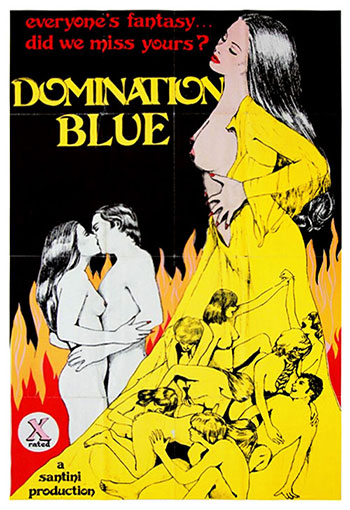
Directed by Joe Davian and star Vanessa del Rio, this is a women in prison movie that goes beyond the teases of mainstream films in the genre. I mean that, as this is an Avon release, as rough as it gets.

A new warden (John Buch) allows his head guard (Holly Bush) to abuse all of the inmates, but specifically destroy Trixie (del Rio), Wanda (Sharon Mitchell), Bernice (Paula Morton) and Rose (Solange Shannon). Just like the WIP movies you have come to love, the women all have their own reasons for being here, like Wanda being a junkie who was assaulted before being caught shooting up in a bathroom (that scene is a rough watch, as Mitchell had a history of addiction, just watch Kamikaze Hearts), another killing someone, another who is doing the time for a crime her man committed and a prostitute.

When the warden isn’t being abused by his favorite guard, he’s having her decimate the girls. Also: one of them uses a Barbie doll for reasons it should never be used for.

How wild is the soundtrack? It’s all early Pink Floyd, like “Astronomy Domine,” “The Grand Vizier’s Garden Party (Entrance),” “Careful with That Axe, Eugene,” “Set the Controls for the Heart of the Sun” and more.

This is a dark and scummy movie with a brutal ending. I have no idea who could get off to this, but man, Avon really knew how to make these.

CANNON MONTH 3: The River Niger (1976)

EDITOR’S NOTE: As the journey through Cannon continues, this week we’re exploring the films of 21st Century Film Corporation, which would be the company that Menahem Golan would take over after Cannon. Formed by Tom Ward and Art Schweitzer in 1971 (or 1976, there are some disputed expert opinions), 21st Century had a great logo and released some wild stuff.

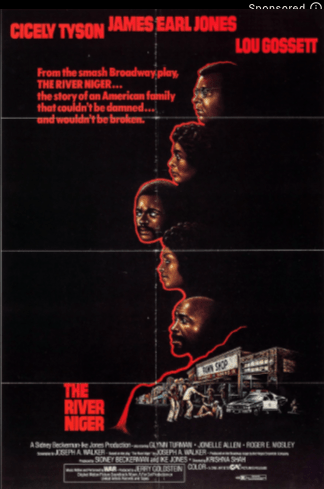
Directed by Krishna Shah and written by Joseph A. Walker, this has an incredible soundtrack by the band War. It’s based on Walker’s 1972 play.

Johnny Williams (James Earl Jones) is a house painter and poet who has raised his family in Watts. His son Jeff (Glynn Turman) is home after failing out of the U.S. Air Force flight school and his wife wife Mattie (Cicely Tyson) is dying, but Johnny tries to remain positive. Yet when Jeff kills a rival gang member and a police officer gets killed, there’s a standoff with the cops that doesn’t end well for anyone.

The cast also includes Roger E. Mosley as Big Moe Hayes and Louis Gossett Jr. as Dr. Dudley Stanton.

This is shot in an all over the place style, sometimes in striking POV shots, other times in your face African masks dominating the entire shot. There seems to be so much crammed into this movie — Vietnam, alcoholism, racism, dealing with loss, Afrocentrism, the militarism of the Black Panthers — that it doesn’t have a solid focus, but these are the kinds of movies that had to be made and stories that had to be told.

Originally released in 1976, this was picked up by 21st Century.

You can watch this on Tubi.

CANNON MONTH 3: Black Shampoo (1976)

EDITOR’S NOTE: As the journey through Cannon continues, this week we’re exploring the films of 21st Century Film Corporation, which would be the company that Menahem Golan would take over after Cannon. Formed by Tom Ward and Art Schweitzer in 1971 (or 1976, there are some disputed expert opinions), 21st Century had a great logo and released some wild stuff.

Director and writer Greydon Clark had $50,000 and the idea to take Shampoo and make a black version, subverting blacksploitation by having its hero — Jonathan (John Daniels) — be a business owner instead of the expected criminal. The director of photography had a car accident and still said he would show up. He didn’t and the film’s gaffer, Dean Cundey, took over.

Mr. Jonathan’s is the most successful hair salon for women on the Sunset Strip and that’s because, well, every old and rich white woman in town is coming to get dicked down by Mr. Jonathan. There’s no other polite way to say it. Backed up by hairdressers Artie (Skip E. Lowe, the inspiration for Jiminy Glick) and Richard (Gary Allen), he lives the kind of life that Machete would later imitate.

He soon falls in love with his receptionist, Brenda (Tanya Boyd), who breaks his heart when she disappears. That’s because she’s been kidnapped by her ex, a white mobster, and Jonathan loses his mind after they tear up his shop and even sexually abuse his hairdressers. So he does what any of us would. He gets a chainsaw and kills everyone.

This is the kind of movie where a white woman looks at a nude black man and says, “Oh my God! Mr. Jonathan, it IS bigger and better!” Perhaps you will not be surprised by just how bad the depiction of its gay characters is. This was made in 1976 and that’s in my lifetime. Also: nearly everyone used stage names as it was non-union, so William Bonner is billed as Jack Meoff. That’s kind of the name you’d expect from a porn, but this feels like an adult movie for the first section — there’s a scene in which two young women in a pool seduce Mr. Johnathan before their mother mounts him and makes them watch — and then it becomes a romance before someone is sodomized with a curling iron and revenge comes with a pool cue, an axe and finally, that chainsaw in a gory climax no one saw coming.

This was released by Dimension Pictures in 1976 and rereleased by 21st Century.

You can watch this on Tubi.

CANNON MONTH 3: Chesty Anderson, USN (1976)

EDITOR’S NOTE: As the journey through Cannon continues, this week we’re exploring the films of 21st Century Film Corporation, which would be the company that Menahem Golan would take over after Cannon. Formed by Tom Ward and Art Schweitzer in 1971 (or 1976, there are some disputed expert opinions), 21st Century had a great logo and released some wild stuff.

Chesty Anderson is a WAVE (Woman Accepted for Volunteer Emergency Service) in the U.S. Navy and the lead character in a movie that promises that you will see bare breasts. That’s 1976, I guess, and Shari Eubank is the right actress for this. A former cheerleader and homecoming queen at Farmer City High School in Illinois, she only was in one other movie and what a movie: Russ Meyer’s Supervixens. After this movie, she quit acting and moved back home where she became a drama teacher. And she’s a way better actress than most people would be in sexploitation film, but man, Supervixen is your drama teacher? The world is fascinating.

While this movie is a snooze — how can a movie named Chesty Anderson, USN be boring? — it does have a fun cast. It left Scatman Crothers ill-prepared for dealing with Kubrick, as one can only assume every scene is done in one take; I’ll bet there were fewer takes in this all put together than in one scene of The Shining. Timothy Carey is devouring scenery and being a lunatic as a mobster, while Ilsa herself Dyanne Thorne is in this as a fellow WAVE, while Joyce Mandel (Wham Bam Thank You Space Man), Uschi Digard (so many mammary-based movies), Rosanne Katon (Bachelor Party), Marcie Barkin (Fade to Black), Connie Hoffman (Naughty Stewardesses), Dorrie Thomson (Policewoman) and even Betty Thomas show up. Fred Willard too, as Chesty’s square boyfriend.

Chesty’s sister has been killed after taking photos of Senator Dexter (George Dexter) in drag, which gets organized crime involved. And a man-eating plant is part of the story.

Yet through all this — a movie with all of these people — it’s very PG. And look, I’m not demanding sin, but in a movie with this cast, even the shower scenes could be watched on regular television. It promises you vice and gives you virtue. Well, not much, but you get the point.

Director Ed Forsyth also made SuperchickCaged MenThe Ramrodder and more, while writer Paul Pumpian mostly worked in animation after this and this is the only film for his co-writer H.F. Green.

This was originally released by Atlas Films in 1975, then rereleased by Flora Releasing and Coast Films. Thanks to Temple of Schlock for that, as well as the knowledge that this aired on TV as Anderson’s Angels. How much did they cut? It was also rereleased by 21st Century.

CANNON MONTH 3: Mysteries of the Gods (1976)

EDITOR’S NOTE: As the journey through Cannon continues, this week we’re exploring the films of 21st Century Film Corporation, which would be the company that Menahem Golan would take over after Cannon. Formed by Tom Ward and Art Schweitzer in 1971 (or 1976, there are some disputed expert opinions), 21st Century had a great logo and released some wild stuff.

In 1976, William Shatner was seven years away from the end of Star Trek and three years from the theatrical movie, so he was taking whatever work he could get, which meant The Tenth LevelA Whale of a Tale and the TV series Barbary Coast.

And oh yeah — Mysteries of the Gods.

Let me tell you, the seventies were a weird time to be alive. People had biofeedback machines in their plants so they could talk to them, everyone was recovering from Vietnam and Watergate, and aliens were everywhere.

Harald Reinl (who also directed The Return of Dr. MabuseThe Torture Chamber of Dr. Sadism and Chariots of the Gods) directed the German version of this movie, with the American parts directed by Charles Romine (Behind Locked Doors). This is based on the work of Erich von Däniken, whose ancient astronaut theories now form the basis of so much of basic cable alien shows while he himself has been seen as a charlatan for some time.

Shatner wears some astounding clothes that have huge collars and often bare his chest, like some lusty Doc Savage flying all over the world to interview old women about crystal skulls and debate with scientists. Man, for that reason alone, this movie is worth a watch, plus there’s plenty of synth music and a short running time. This is a good start if you’ve just getting into 20th century carny paranormal documentaries.

And if you did grow up at that time, you’re like me and you’re freaking out the Jeane Dixon is in it.

This was originally distributed in the U.S. by Hemisphere Pictures but 21st Century got it a few years later. I love that some places got this movie as William Shatner’s Mysteries of the Gods. Captain Kirk will prove it to you!

You can watch this on YouTube.

CANNON MONTH 3: Dr. Black, Mr. Hyde (1976)

EDITOR’S NOTE: As the journey through Cannon continues, this week we’re exploring the films of 21st Century Film Corporation, which would be the company that Menahem Golan would take over after Cannon. Formed by Tom Ward and Art Schweitzer in 1971 (or 1976, there are some disputed expert opinions), 21st Century had a great logo and released some wild stuff.

American-International Pictures’ Blacula was a big success. Its director, William Crain, and AIP wanted to make more black films that were classic stories retold for a new audience. What’s interesting here that while adapting Strange Case of Dr. Jekyll and Mr. Hyde by Robert Louis Stevenson, the evil side of Dr. Henry Pride (Bernie Casey) appears to be a mix of King Kong, Frankenstein’s Monster and an evil white man.

Pride may be a celebrated and wealthy African American medical doctor, but as he fails to discover a cure for cirrhosis of the liver — along with his colleague Dr. Billie Worth (Rosalind Cash) — he begins to experiment on himself and others. Coming just a few years after the way our government treated the Tuskegee airmen with their syphilis experiments, this feels like not only a crime against nature, but a black man attacking his very race.

By the end, he’s killing sex workers and their pimps, leading the police to Watts Towers, where he climbs upward — again, like King Kong — before being shot and falling to his death.

This also had the working titles The Watts MonsterHydeSerum and Decision for Doom. Along with the aforementioned BlaculaScream Blacula ScreamSugar HillBlackensteinJD’s RevengeAbbyGanja and Hess and Petey Wheatstraw, there are some other black-themed horror films from this era but not enough. Later films in the genre that I would recommend are BonesDef by Temptation and Tales from the Hood.

How incredible is it that the South Korean VHS release of this had the Iron Maiden artwork from Killers on its back cover?

21st Century rereleased this as The Watts Monster.

You can watch this on Tubi.