The Fury of the Wolfman (1973)

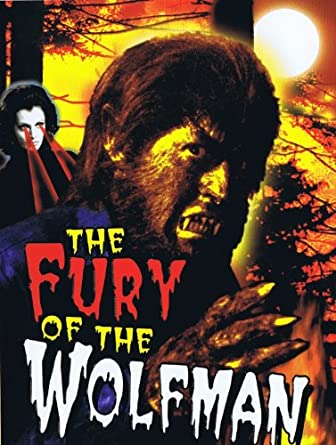
La Furia del Hombre Lobo is a 1970 Spanish horror film that is the fourth in the saga of werewolf Count Waldemar Daninsky, played as always by Paul Naschy. It was not theatrically released in Europe until 1975, yet an edited U.S. version played on television as early as 1974 as part of the Avco-Embassy’s “Nightmare Theater” package, along with Naschy’s Horror Rises from the Tomb and The Mummy’s Revenge.

For those that care about these things — like me — the other films were MartaDeath Smiles on a MurdererNight of the Sorcerers, Hatchet for the HoneymoonDear Dead DelilahDoomwatchBell from HellWitches MountainManiac Mansion and The Witch.

This time, Daninsky is a professor who travels to Tibet, only to be bitten by a yeti which seems like not the werewolf origin that you’d expect. He then catches his wife cheating on him, so in a fit of passion, he murders them both before being killed himself. But this being a Spanish horror movie, that’s just the start of the trials that El Hombre Lobo must struggle through.

Daninsky is revived by Dr. Ilona Ellmann (Perla Cristal, The Corruption of Chris Miller), who wants to use him for mind control experiments. Soon, however, our hero learns that she has a basement filled with the corpses of her failed experiments. To make matters even worse, she brings back his ex-wife from the dead and turns her into a werewolf too!

There’s a great alternate title to this movie: Wolfman Never Sleeps. How evocative! That’s the Swedish version that has all of the sex that Franco’s Spain would never allow.

Naschy claimed that director José María Zabalza was a drunk, which may explain how this movie wound up padded with repeat footage from Frankenstein’s Bloody Terror and some stunt double continuity antics that nearly derail this furry film.

You can watch this on Amazon Prime. It’s also coming out on blu ray from Ronin Flix.

The Fighting Fists of Shanghai Joe (1973)

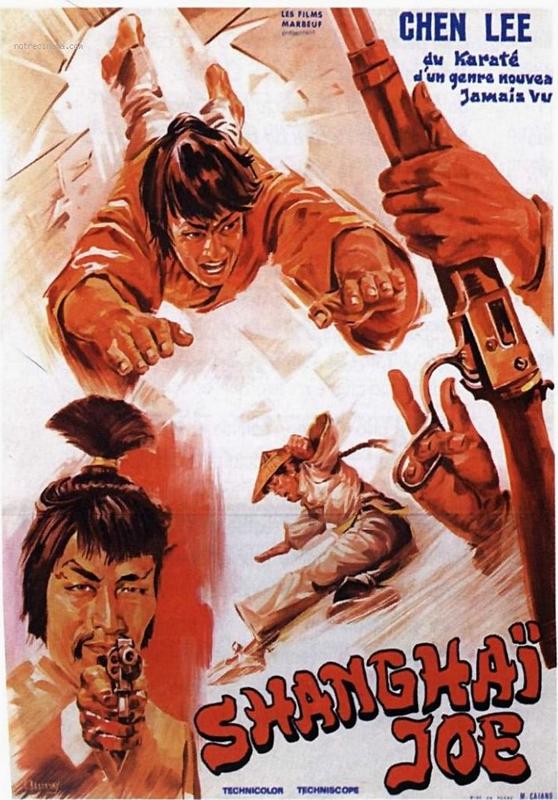
According to the Spaghetti Western Database, lead actor Chen Lee may have been a Japanese karate instructor, but according to director Mario Caiano (Eye In the Labyrinth), he worked in a laundry, not in a dojo, and was picked because he looked like a young Dustin Hoffman. Some think his real name was Mioshini Hayakawa, which is Japanese, not Chinese. That said, if that being racist — not knowing the difference between two countries nearly 1,900 miles away from one another — then this movie is not for you.

Seriously, nearly every race gets denigrated in this movie audibly and physically. Luckily, Shanghai Joe ends up killing every single offender.

Also — the Bruno Nicolai music — recycled from Have a Good Funeral, My Friend… Sartana Will Pay — is so good you’ll want to stick around for the whole movie.

Shanghai — or Chin Hao — has come to this country and instead of finding whatever it is he’s looking for — he has tattoos much like Kwai Chang Caine — he’s found that aforementioned racism and a love interest in Cristina (Carla Romanelli, Fenomenal and the Treasure of TutankamenThe Lonely Lady).

Our hero’s skills as a fighting man make their way to cattle rancher Stanley Spencer (Piero Lulli, Kill, Baby…Kill!), who is really enslaving Mexicans to do his work. That means that the bad guys decide to kill him, but none of them can get it done.

Spencer ends up hiring four different killers, much like video game bosses, to do his work for him. There’s Tricky the Gambler (Giacomo Rossi Stuart, The Night Evelyn Came Out of the Grave), Pedro the Cannibal (Robert Hundar, Sabata), Buryin’ Sam (Gordon Mitchell, who improvised and sang the song “Chin-Chin Chinaman” while carrying a shovel to try to kill Shanghai) and Scalper Jack (an astonishing Klaus Kinski, who is obsessed with hair and you genuinely fear for the life of Romanelli in their scene).

Finally, Mikuja, the only person who has the same martial arts technique and tattoo as our hero, is hired to kill him. Their battle may not be a fight on the order of a Shaw Brothers technical battle, but it’s still fun.

This movie is incredibly strange, because every time I thought it was going to be normal, it would go from slapstick to our hero plucking out a bad guy’s eye and blood spraying all over the place. It’s closer to a horror film set in the West with martial arts than a straight-up Italian Western, but it’s better for that difference.

Totally recommended.

You can watch this on Amazon Prime and Tubi.

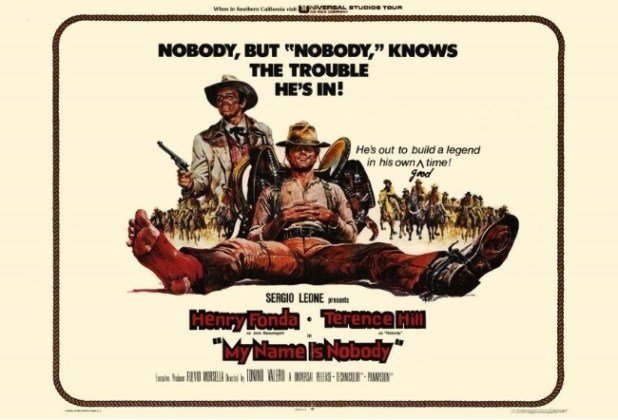
My Name Is Nobody (1973)

Jack Beauregard (Henry Fonda) is an aging gunslinger who wants to retire. After quickly shooting three gunmen who attempt to ambush him in a barbershop — he has no chance to rest ever, constantly being challenged by people to prove themselves — the barber’s son asks if there is anyone in the world faster. The reply? “Faster than him? Nobody!”

There is a man named Nobody (Terence Hill), who dreams of being better than Beauregard. But instead of challenging the gunslinger, he plans on taking out all 150 members of the Wild Bunch — no relation — on his own. They’re led by Geoffrey Lewis, who was a character actor par excellence.

While this movie is a comedy, the idea at the end, where Nobody is now as chased and tested as Beauregard, speaks to the violent life of the Italian Western hero, who is continually threatened by not only death, but by the advent of the technological twentieth century, which will end his way of life.

Tonino Valerii, who was Leone’s assistant director on A Fistful of Dollars, directed this film. He also wrote The Long Hair of Death and directed films like My Dear Killer and Day of Anger.

There’s some dispute that Leone directed much of this film, which was made mostly in the United States. It arose when Henry Ford’s costumes were stolen, which would have delayed the movie by more than a week. Leone, who came up with the idea for the film, offered to shoot second unit to keep the movie moving.

Neil Summers, who played Squirrel, and John Landis, who claims to have been an extra, stated that Leone directed most of their scenes, often on horseback. However, screenwriter Ernesto Gastaldi (TorsoAlmost HumanAll the Colors of the DarkOnce Upon A Time In America) told Robert Curti, the writer of Tonino Valerii: The Films, that “Tonino shot the whole film, absolutely ON HIS OWN” and that Leone “organized a second unit crew and shot a couple of sequences, which in my opinion are the weakest in the film…Nothing else.”

Sergio Donati expanded on this, stating that some photographers were sent to America and they asked Leone, on his lone set day, to sit behind the camera in a director’s pose. Donati said, “Inevitably, from that moment on, everyone, in and outside the movie business started saying “Yeah, actually the real director of the film was Leone, who saved it from the disaster of an incapable director”.”

Tobe Hooper and Tonino Valerii would have had a lot to talk about.

For anyone that thinks that Italian Westerns are dumb, I’d just like to raise one point. The title refers to The Odyssey, as Odysseus tricks Polyphemus into believing his name is “nobody.”

You can watch this on Daily Motion.

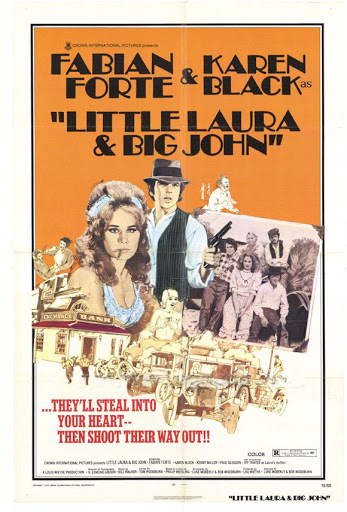
SAVAGE CINEMA: Little Laura and Big John (1973)

I have no idea why this is on the Savage Cinema set from Mill Creek, but man, when has anything these box sets have on them make any narrative sense? “We have all these Crown International movies and some maniac, somewhere, someday, is making a Letterboxd list about these movies no one other than he cares about!” I love you, Mill Creek. I do.

Back in 1929, John Ashley murdered a Seminole trapper named Desoto Tiger and dumped him in the site of what would someday be the Hoover Dike. Days later, in Miami, he sold some of those furs and got caught, but was repeatedly allowed to escape custody. So yeah, he was the first white man jailed for killing a Native American. But no one took it seriously and, go figure, he did a whole bunch of others crimes, including piracy on a British colony in the 1920’s, of all things. He also joined with Laura Upthegrove to become white trash heroes, defying banks and the government until he was jailed.

Their story gets even crazier, as Upthegrove married a member of Ashley’s gang named Joe Tracy in order to avoid testifying in his trial for murdering a taxi driver. Ashley then planned to rush the jail, act like he was saving Tracy and then planned to kill him in a fit of jealousy. So she todl the law, who killed everyone involved after handcuffing them and pretty much executing them in a move that was completely against the law.

Upthegrove hid out for a few years until she got in an argument with a man trying to buy moonshine from her. She ended up drinking Lysol and dying. Her mother decided that she was better off dead, so she never called for help.

Fabian Forte plays John and Karen Black plays Laura, so whoever casted this movie knows my heart. Ross Kananga, who is also Seminole, plays Tiger. Kanaga is the man who did the stunt where James Bond jumps over the alligators in Live and Let Die, getting 193 stitches before filing was done. He’s also where Yaphet Kotto’s character gets his name from. Also, Paul Gleason from The Breakfast Club, one of film’s greatest jerks, is the sheriff.

Luke Moberly, who was in the art department for Sometimes Aunt Martha Does Dreadful Things, wrote and directed this. It was the only film he’d ever direct. It was made in 1969 and didn’t come out for four years. It also has a debt to 1967’s Bonnie and Clyde, but you probably figured on that. Fabian’s other gangster flick inspired by Bonnie and Clyde’s success was A Bullet for Pretty Boy, about Charles Arthur “Pretty Boy” Floyd.

There’s no free or pay streams, but you can view the sign-in trailer on You Tube.

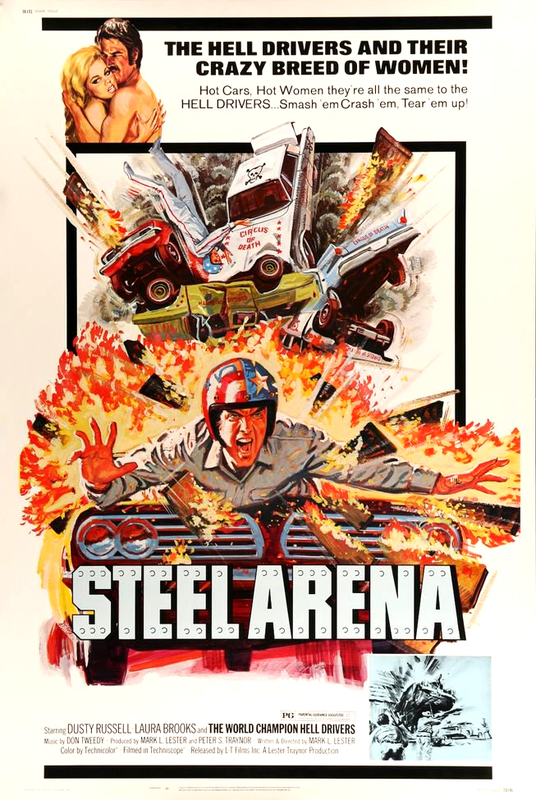
Steel Arena (1973)

Thanks again to my friend Hoss for finding this one — early Mark Lester is not easy at all to track down!

Lester was able to get a bunch of stunt drivers — Dusty Russell, Buddy Love, Gene Drew, Dutch Schnitzer, Speed Stearns, Ed Ryan, Big Tim Welch and Dan Carter — and instead of making just a clip collection of stunts, he created a narrative around all the car damage.

Lester told The Pink Smoke, “I was at the Sacramento River on vacation, just river rafting. I ran into a group of guys there who looked like Hell’s Angels. And I said ‘What do you do?’ They said “We’re the Circus of Death.” They traveled the circuit putting on shows. So I went to some of those and just thought, “Wow.” Originally I wanted to make it as a documentary, then I realized “I know all the real people, I’ll just write a narrative around it.””

He also called this movie a post-Vietnam parable, with gladiators in cars. Kind of like Knightriders, except eight years earlier and no one holds Lester in the same esteem as George Romero. Well, you know. Except me.

I really dug the rambling nature of this film, as well as the open ending. If you can find it, take the time to enjoy it.

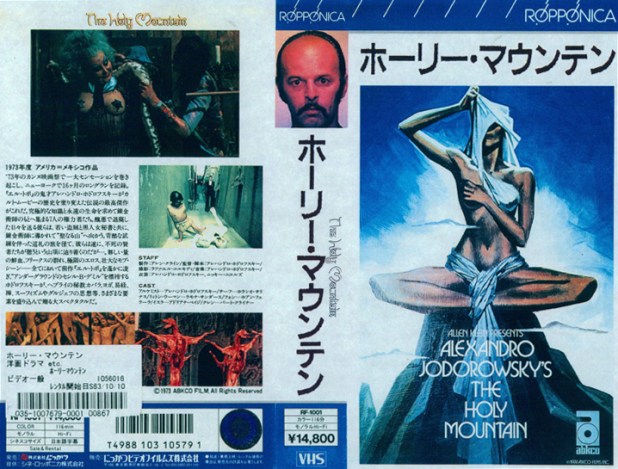
The Holy Mountain (1973)

I have no idea how to properly convey how important this movie is to me.

Directed, written, produced, co-scored, co-edited, set designed, costumed and starring Alejandro Jodorowsky, this is a film that reduces me to tears at times if I even think about it.

Words will fail to explain what this means. This is an absolute movie, one that can only be explained by those that have experienced it, meditated on it and have been changed by it.

The story comes from Ascent of Mount Carmel by John of the Cross and Mount Analogue by Rene Daumal, an unfinished book that is nearly all allegory. The end — which is not an end but a beginning — is what Jodorowsky felt was the proper way to finish the story.

I find it hard to watch all of this film in one sitting, as the bursts of images unlock such deep emotions within me that I can only fully explain months after the watch is over.

Last year, I went through a professional divorce. In an attempt at trying to mend fences and rebuild the relationship, I gave away my blu ray of this film. It was, quite honestly, my most prized possession. It was an attempt to divest myself of material objects and destroy my ego, to lay myself bare and show that I was ready to continue the journey that we had started together. “I want you to have this,” I barely choked out. “This is my heart.”

I don’t know if my former co-founder ever watched this film. The fact that it never came up again told me what I needed to know. I’ve grown past this pain, which nearly ruined my love of film.

Instead, I have decided to move on, to take my own journey. The loss of this film was just the loss of a blu ray. Its lessons have not disappeared, the power that it has over me has not grown dim. If anything, I have reflected on my own path up and down the mountain and found that I have not regretted a step.

Please find this movie for yourself.

REPOST: Dr. Tarr’s Horror Dungeon (1973)

EDITOR’S NOTE: As we dive into all things Mexican horror this week, we brought back this completely wonderful and strange film, which would be a perfect one for you to discover or watch again. 

If all Juan López Moctezuma directed was Alucarda, he’d still be celebrated. Throw in the fact that he was behind the camera for El Topo and also created this little piece of strangeness and you can see that he’s someone to be celebrated.

A journalist has traveled to Dr. Maillard’s (Claudio Brook, AlucardaThe Devil’s Rain!) remote mental institution to write a story about the progressive treatment the doctor offers: patients are free to roam and fully live out their fantasies. However, when he gets there, the reporter learns from the doctor’s daughter Eugenie that he hasn’t met the real doctor, just one of the inmates that is quite literally running the asylum and randomly quoting Aleister Crowley. Even better — Susana Kamini, Justine from Alucarda, shows up as a cult priestess!

Imagine if Hammer or Amicus made a movie in Mexico, with all of the dialogue in English, and fed massive amounts of drugs to everyone involved. That’s pretty much how I imagine that this film was made. It’s also an Edgar Allan Poe story (The System of Dr. Tarr and Prof. Fether), but really, it’s also a costume drama with more powdered wigs than a British courthouse. And man, has there ever been so sensationalistic a title?

Will you like it? Not if you’re expecting a horror movie. Again, the Chilling Classics set confounds expectations, seeming like it will only feature the worst schlock and somehow embracing Mexican art cinema. I can only imagine that there’s a basement in the Mill Creek offices where the maniac that chose the films for this set signed off on it with a feather pen and a giant flourish, exclaiming, “I hope this makes someone’s brain melt!”

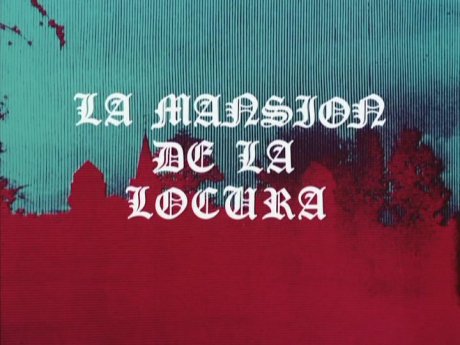
Beyond watching this on the Chilling Classics box set, you can also find it on Amazon Prime. If you want a much better looking copy of this film, Mondo Macabro released it as The Mansion of Madness, complete with a brand new digital transfer and Guillermo dl Toro discussing the director.1973

El Castillo de la Pureza (1973)

In the book Customs and Cultures of Mexico by Peter Standish and Steven M. Bell, the authors refer to the films of director Arturo Ripstein’s films as ones that “highlighted characters beset by futile compulsions to escape (their) destinies.” As such, many of his films feature bleak colors and pathetic characters who struggle to retain any scrap of dignity. The Harvard Film Archive referred to him as the link between “Mexico’s studio-era and the new generation of auteur directors.”

The title of this film was given to Ripstein by Mexican surrealist Octavio Paz by way of a seminal essay on Marcel Duchamp. In it, Gabriel Lima (Claudio Brook, Simon of the DesertLicence to Kill) imprisons his family from the temptations of the rest of the world, dominating them and subjugating them in the same way that a totalitarian government would hold them against their will. Meanwhile, the family struggles to subsist with their homemade rat poison business. It was based on a real life story.

The father is the ultimate in evil, as despite him abusing his sons for not memorizing passages about how a man should be, he does not follow them. In the outside world that he has forbidden them from ever seeing, he is a continual debaser of virgins while in his own domain, he continually attacks his wife for knowing any man before him.

The film was nominated for ten Arial Awards, winning Best Picture (in a tie with Mecanica Nacional and Reed, Mexico Insurgente), as well as awards for Arturo Beristain for Best Suppoting Actor, Diana Bracho for Best Supporting Actress, Ripstein and José Emilio Pacheco for Best Original Screenplay and Manuel Fontanals for Best Scenography.

In 2009, the film Dogtooth was a critical and commercial success for Greek director Giorgos Lanthimos, but to many, it seemed that it outright stole the story and several key moments from Ripstein’s film. The director’s response? He considered sending him a message that said, “I hope we win” when the film was nominated for an Oscar. Such is life, as many Mexican films are truly lost on the world stage and unacknowledged at best.

It’s hard to call this a horror film. It exists in its own strange universe, beyond the world of normal man while at the same time it struggles to inform us in a parable-like way of what happens when pride comes before the fall.

Tango 2001 (1973)

As I started watching this movie, I thought, “This is the exact kind of movie Mondo Macabro would put out.” Which makes sense, because it was volume one in their Greek Collection.

The Tango Club is where the swinging characters of this movie spend their tome. There’s Rosita (Dorothy Moore, who is one other movie, another Greek giallo Death Kiss), who uses drugs and her womanly wiles to get Joanna (Erika Raffael, Four Dimensions of Greta) into bed. Stathis (Lakis Komninos, using the boring Western name Larry Daniels) reacts to this as no man before or since has. He flips out and beats both of them, killing Rosita. Things are just starting, trust me.

Meanwhile, rich voyeur Joachim is filming the killer while he brings home other women from the club. And then there’s Joachim, who was impotent until he discovered the dead body of Rosita and now, he’s in love.

We covered Dangerous Cargo, another Kostas Karagiannis movie, a few weeks ago. Needless to say, this movie makes that one look tame by comparison. Drugs, fuzzy psychedelic music, rampant nudity, sex, murder, gratuitous dance numbers and all manner of perversion, including romantic fantasies between the living and the dead abound. Yep, this one has something for every member of the family.

You can order this from Mondo Macabro.

Ricco the Mean Machine (1973)

I get it. This movie isn’t a giallo. But what is it, really? It was sold under so many titles, from the more horror-centric Cauldron of Death (complete with completely insane poster) to the more crime-oriented Gangland, the great Italian title Un Tipo Con una Faccia Strana ti Cerca per Ucciderti (A Guy With a Strange Face Is Looking for You to Kill You), The Dirty MobMean Machine and even O Exolothreftis (The Terminator) in Greece.

It was written by Jose Gutierrez Maesso, who wrote Django and was an uncredited writer for the magical Pensione Paura. He’s joined by Santiago Moncada, who wrote A Bell from HellHatchet for the Honeymoon and The Corruption of Chris Miller, along with Mario di Nardo (The Fifth CordFive Dolls for an August Moon). Directing all of this mayhem is Tulio Demichelli, who made the utterly insane Assignment Terror, as well as The Two Faces of Fear Espionage in Lisbon and the well-named There Is Someone Behind the Door.

Make no mistake — this is a movie awash with exploitation, gore, aberrant behavior and no real heroes. In short, it’s exactly the kind of movie you come to this site to read about.

Rico Aversi (Chris Mitchum) has just got out of jail, two years after Don Vito (Arthur Kennedy, the inspector from The Living Dead at Manchester Morgue) killed his father. Everyone wants Rico — notice that his named is spelled completely unlike the title of the movie — to kill the boss off, but Rico just wants to enjoy life outside of prison.

Malisa Longo (Cat in the Brain) plays his girlfriend — and who used to love Rico’s woman — and she enjoys sleeping with the hired help, which gets one unlucky member of the workstaff castrated in shocking detail. Then, his John Thomas gets shoved in his mouth and he’s dipped into acid and turned into soap. This movie is not interested in being unoffensive. Plus, you get Paola Senatore (Eaten Alive!) as Rico’s sister, whose death sets him finally on the path to revenge.

Robert Mitchum is one of my favorite actors ever, so it kind of pains me to admit this his son kind of slumbers through this leading role. But then again, everyone else in this movie is going to seem boring next to Barbara Bouchet, who pretty much sets the screen on fire, dances on the flames and sets it ablaze all over again in this movie. Anyone could show some leg to get the attention of some criminals. Bouchet goes all in, dancing nude on the roof of a car, covered in fog, giving her all no matter how grimy this scumfest gets. Without her, this movie would be passable. With her, it’s transcendent.

So yeah. It’s not a giallo. But man, if you’re coming in looking for bad behavior, gorgeous women and great clothes, it has all of that covered.