Terror House (1972)

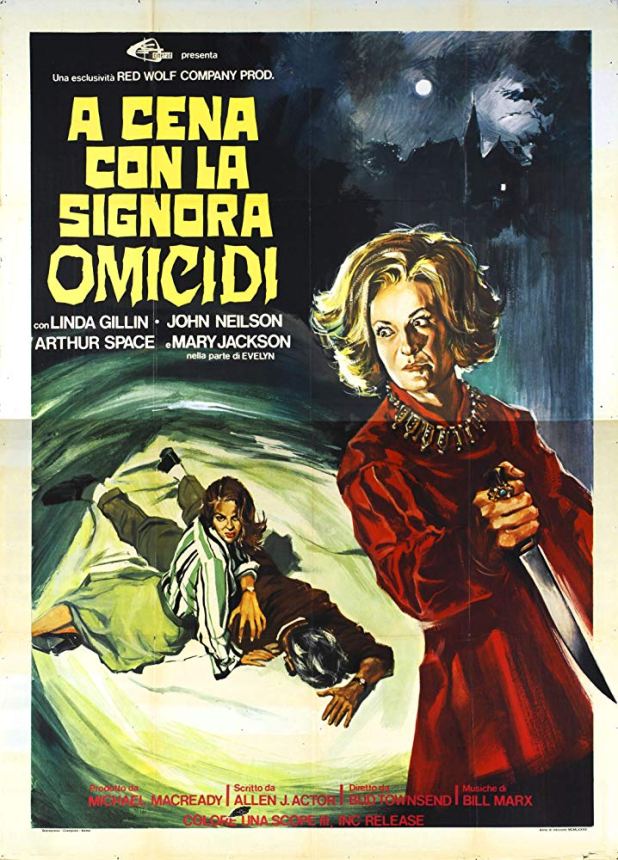
Whatever you call it — Terror House, Terror at Red Wolf Inn or Folks at Red Wolf Inn — this 1972 horror comedy is one strange film. It makes a nice double or triple feature companion for a few other movies from the early 70’s like The Baby and Messiah of Evil. They’re horror, sure, but they also all feel like they’ve come from some other planet, somewhere beyond the walls of our normal plane of existence.

Regina (Linda Gillen) is a young college student with no money, friends or plans as the rest of her class leaves for spring break. That said — her luck is about to change, as she gets a letter informing her that she’s won a free vacation to the Red Wolf Inn.

She even has a plane ready for her and a handsome young man named Baby John Smith to pick her up when she arrives. Their ride to the inn is wild, as he races the police, but instead of reacting with fear, she enjoys the ride.

Once they arrive, Regina meets the owners of the inn, Henry (Arthur Space, who played veterinarian Doc Weaver on TV’s Lassie) and Evelyn (Mary Jackson, Sister Felice in Airport and Emily Baldwin on TV’s The Waltons), who are also Baby John’s grandparents. Plus, there are two other contest winners, Pamela (Janet Wood, Angels Hard as They Come) and Edwina (Margaret Avery, who years later woud be nominated for a Best Supporting Actress Oscar for her work as Shug Avery in The Color Purple; she’s also in the made for TV movie Something Evil that Steven Spielberg directed before Jaws).

That night, everyone sits down to an extravagant meal where they’re encouraged to indulge themselves. The next morning, Pamela has gone, but her dress has stayed behind.

Baby John and Regina’s feelings for one another are noticed by everyone in the house. This leads to my favorite scene in the movie, where they share a moment on the beach, flirting with one another before they embrace and kiss. Then, Baby John catches a small shark and loses his mind, smashing it over and over again before punching it, all the while screaming “Shark!” before confessing that he loves Regina. It’s incredibly disconcerting, like the way that beings from another dimension would act thinking that they were fitting in with humanity.

Before you know it, it’s time for another party, this time celebrating Edwina’s last night. After everyone goes to bed, the Smiths go to her room, knock her out with chloroform and then slices her to ribbons inside the refrigerated meat locker. After Regina worries that Edwina left without saying goodbye, she tries to run away, but even the police are members of the Smith family.

A prisoner inside the Red Wolf Inn, she soon discovers that she’s been eating human flesh the entire time there. She tries to run one more time, but is caught and finally admits that she’s in love with Baby John. Despite the fact that she believes that his grandparents want to kill and eat her, she thinks that they’ll come to accept her. There’s a test later that night where they try to get her to eat human flesh, now that she knows what she’s been devouring, but she runs away.

Baby John is smitten, but will he save the woman he’s fallen for? Will he eventually eat her too? Or is there an even stranger ending poised to blow your mind?

If you want to know every single thing there is to know about this film, I heartily recommend the zine Drive-in Asylum. In issue eight, there’s an interview with Linda Gillen that goes in-depth into every facet of the film and its production, as well as a great article by Terry Thome that dissects the film’s mixture of romance, horror and comedy. In fact, if you check out the Drive-In Asylum etsy store, you’ll find everything from signed VHS copies of the film, promotional photos and even a cookbook inspired by the film! I’m proud to say that I illustrated this unique souvenir of this film, which as a real honor (and I even have one signed by Linda).

BONUS: We spent two full episodes of our podcast discussing this movie with Bill from Drive-In Asylum, which will give you even more insight into the sheer craziness at the heart of this film.

Space Is the Place (1972)

For years, very little was known about Sun Ra’s early life, and he contributed to that with evasive, contradictory or even nonsensical answers to questions of his origin.

Sure, he may have been born Herman Poole Blount in Alabama, named for the popular vaudeville stage magician Black Herman, who had deeply impressed his mother, but he didn’t become Sun Ra at birth.

He already had some powers and skills, such as being able to transcribe big band songs from memory after only hearing them once. But the real Sun Ra was born sometime between 1936 and 1940. Or at the very least, before 1952. That’s when Herman had a vision.

.His biographer, John F. Szwed, said that Sun Ra was “both prophesizing his future and explaining his past with a single act of personal mythology,” a moment where the musician claimed that he was visited by space brothers: “My whole body changed into something else. I could see through myself. And I went up… I wasn’t in human form… I landed on a planet that I identified as Saturn… they teleported me and I was down on [a] stage with them. They wanted to talk with me. They had one little antenna on each ear. A little antenna over each eye. They talked to me. They told me to stop [attending college] because there was going to be great trouble in schools… the world was going into complete chaos… I would speak [through music], and the world would listen. That’s what they told me.”

This experience led to Sun Ra leaving college, giving up sleep to devote himself to music and the study of the Bible. However, in 1942, he was drafted and was rejected as a conscientious objector. He was approved for alternate service at a Civilian Public Service camp but never showed up. When taken to court, he debated the judge on matters of the law and Bible. The judge listened to him and threatened to draft him to the military. Ra responded that if this happened, he would kill the first high-ranking military official he met. Sentenced to jail, the judge said, “I’ve never seen a (ethnic slur) like you before.” Ra answered, “No, and you never will again.”

After some time in an Alabama jail, Ra then went to that work camp, where he did forestry work by day and played piano at night. He was finally classified 4-F due to his chronic hernia and he returned home. After the death of his great-aunt Ida, who he provided for, he left home for Chicago.

Surrounded by ancient Egyptian-styled buildings and monuments, as well as the cities activism, Ra began to believe that the accomplishments and history of black people had been co-opted, suppressed and denied by the white man. In 1952, much like how Nation of Islam members removed their slave names, he legally changed his to Le Sony’r Ra.

Chicago is also where Ra met Alton Abraham, who shared his interests but also balanced his shortcomings (Ra was notoriously withdrawn and bad at business). Together, they expanded his Arkestra of musicians and published pamphlets that they distributed on the streets.

Sun Ra and his Arkestra would live communally, traveling to New York City and Philadelphia. He’d call compulsory band practice at any hour of the day or night. Their residences would gain famous fans like Thelonious Monk and Dizzy Gillespie. And their Philly neighbors would soon love having them around, as they were drug-free, friendly with the kids and very friendly, if a bit loud.

Soon, the Arkestra was touring the world with up to thirty dancers, singers, fire eaters and a light show that would often leave hippies confused, as they were used to bands just playing and not having a stage show. Ra was also appointed as artist-in-residence at University of California, Berkeley, teaching a course called The Black Man In the Cosmos.

This class sounds amazing. There was a half an hour of lecture time; reading lists that included Madame Blavatsky, Henry Dumas, the Tibetan Book of the Dead, Alexander Hislop’s The Two Babylons, African American folklore and Egyptology; and then a half hour performance of the Arkestra.

This brings us to 1972, when San Francisco public TV station KQED producer John Coney, producer Jim Newman, and screenwriter Joshua Smith came together with Sun Ra to produce an 85-minute feature film that would bring his philosophy to the masses.

What is that message? In short — and this article is scant space to really get into Ra’s full message — he sought to “elevate humanity beyond their current earthbound state, tied to outmoded conceptions of life and death when the potential future of immortality awaits them.”

Sun Ra used a mixture of the Freemasonry (he had studied at a Masonic Lodge as a child, the only place that allowed black men to read books), Ancient Egyptian Mysticism, the Kabbalah, Rosicrucianism, channeling, numerology, black nationalism, Gnosticism and more. Ra even argued that the monotheistic God of organized religion was not the Creator or ultimate God, but a lesser evil being out to enslaved mankind. He was also not a fan of the Bible, as it had been used to endorse slavery.

He was a master of reworking phrases and names, often changing Biblical passages to suit his ends or change the real names of Arkestra members. He’d often use Zen koans or nonsense statements that suddenly took on entirely new meanings when looked back on days later. Often, they would cause people to make paradigm shifts in how they looked at the world.

While closely identified with Afrofuturism, Sun Ra felt that he wasn’t close to any one race. Eventually, he came to believe that some outside force was manipulating both blacks and whites to hate one another.

Space is the Place emerged from Dilexi, an experimental art series of films produced by the aforementioned Newman and director by Coney. After filming some performances of the Arkestra, they created a story with Smith that tied it all together.

Sun Ra has been lost in space since June 1969, but he finds a new planet that he wants to colonize with African Americans. His music will lead them there. His mission starts by traveling back in time to the Chicago of his past, where he and the Overseer will play a game of cards for the fate of the human race.

Who is this Overseer? Is he the evil inside the black community? He appears to be a community leader and a man of great charity who seems to mean well, but he’s been overtaken by the status quo of white capitalism.

There’s also a theory that Sun Ra saw his teachings went directly against the Black Panthers, believing that “only the band’s use of technology and music will liberate the people by changing consciousness.”

In present time, Ra opens an Outer Space Employment Agency to recruit people ready to move to his new planet. The only trouble is that many are suspicious of Sun Ra, thinking he’s a gimmick or selling out to the Overseer. He’s even kidnapped by three white NASA scientists who want his space travel secrets before he’s saved by three teenagers just in time to play a major concert.

During the show, the scientists return and attempt to murder Ra, but a teenager takes a bullet for him. Ra, the teens and then black people all over the city begin to beam up to Ra’s ship. Sun Ra has defeated the Overseer and even taken his henchman Jimmy Fey’s blackness with him, leaving Earth behind to die.

The sheer otherworldliness of this film is only increased when you realize that it shared sets with The Mitchell Brothers’ Beyond the Green Door. I guess as Sun Ra sought to open peoples’ minds, that movie was blowing another set of people’s minds by featuring Johnnie Keyes coupling with Marilyn Chambers.

Of all the movies I’ve covered for this week of musicals, Space Is the Place is perhaps the strangest I’ve watched. Sun Ra wasn’t from Alabama. He had to really be from Saturn. There’s no other way that this makes sense otherwise. Sun Ra didn’t seek to conquer, instead to inspire humanity to transcend this insignificant physical life and aspire to greatness in the stars.

“In some far off place, many light years in space, I’ll wait for you. Where human feet have never trod, where human eyes have never seen. I’ll build a world of abstract dreams and wait for you.” – Sun Ra

Private Parts (1972)

Paul Bartel is a bonafide hero here at B & S About Movies. From his cameos in movies like Gremlins 2: The New Batch and Chopping Mall to the films he directed like Death Race 2000 and Eating Raoul, every time he turns out on the screen it makes us happy.

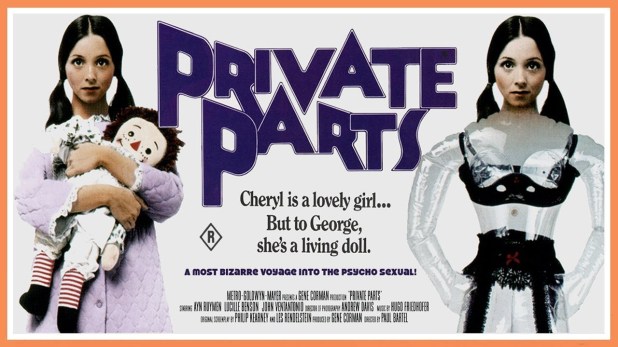
Cheryl and her roommate get in a fight, so instead of going back home, she decides to move into her aunt’s run down hotel in downtown Los Angeles. Suffice to say that shenanigans ensue.

Aunt Martha is a strange lady, played by Lucille Benson, who was on TV’s Bosom Buddies and played Mrs. Elrod in Halloween 2, as well as time on Broadway. She’s obsessed with funerals and given to moralizing. Her hotel is packed with maniacs and there are also a series of murders going on, with Cheryl as the best chance to be the next victim.

Get this — the role of Aunt Martha was originally written for Mary Astor (The Maltese FalconHush…Hush, Sweet Charlotte)!

Cheryl wants to be a woman and experience her sexuality, which leads her into George’s orbit. He’s a photographer who longs for love, but also sleeps with a water inflated doll that he often injects with human blood and covers with a photo of Cheryl’s face. He’s somehow not the strangest person in the hotel. And oh yeah, to add to the whiff of perversion in the air, he’s her cousin.

Stanley Livingston, Chip Douglas from TV’s My Three Sons, also is in this movie, playing Jeff, another tenant. He would be a better mate for Cheryl, but she’s already too deep. And it’s pretty crazy to see Laurie Main, who hosted and narrated Disney’s Welcome to Pooh Corner, as a gay priest. That said, he also shows up in some other strange places, like Larry Cohen’s Wicked Stepmother and as the narrator of Cheech & Chong’s The Corsican Brothers.

There was also a model named Alice that once lived in Cheryl’s room that nobody wants to talk about. And a whole bunch of keys that open other rooms so that our voyeuristic heroine can spy on all of them.

Private Parts began with the working title Blood Relations, but its new title was rough on the film, as some newspapers wouldn’t promote it with that name, some even calling it Private Arts. Some ads even said that the title was too shocking to print and asked people to call the theater to learn the name of the film!

It really was shot in a skid row hotel, the King Edwards Hotel in downtown L.A and all of the people in it were based on people that writers Philip Kearney and Les Rendelstein met in LA in the 1960s. It’s still around, having been purchased in 2018 with plans to convert it into low-cost single-occupancy transitional housing.

This is a movie that fits in well with other blasts of 70’s odd like The Baby. Like that movie, Private Parts may not explicitly have sex and violence, but it just feels off and as if it came from another universe that might appear to be ours, but has scum and strangeness in every corner.

Leonard Maltin said this about Private Parts: “If Andy Warhol’s Chelsea Girls had co-directed by Alfred Hitchcock and John Waters, it would come close to this directorial debut by Paul Bartel.” That sums this up quite well.

The Satanic nature of this film ties in well with Anton LaVey’s 1988 Pentagonal Revisionism. George’s preference for his doll ties in well with the Church’s realization of the need for the development and production of artificial human companions, which LaVey referred to as “the forbidden industry.”

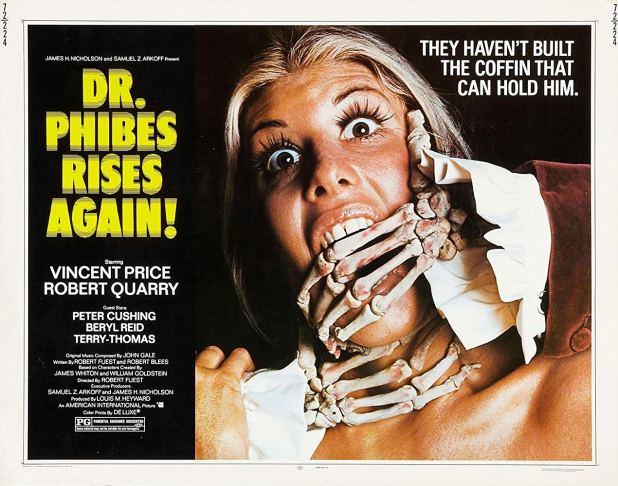
Dr. Phibes Rises Again (1972)

The fact that this movie exists gives me hope. There are moments when life gets me down, when I wonder about my place in this world and if humanity is essentially horrible. Then I remember that great films like this exist and it makes me feel a lot better. You should do the same thing if you’re ever in an existential crisis.

Dr. Phibes is back, three years after he laid down in the darkness next to the corpse of his beloved wife. Now, however, he has learned that the secret of eternal life — held by a centuries-old man — are in Egypt. I don’t care why he’s back. I’d watch Dr. Phibes go grocery shopping!

Dr. Anton Phibes (Vincent Price) has in suspended animation in a sarcophagus alongside his wife Victoria Regina Phibes (Caroline Munro). When the moon aligns with the planets in a way not seen for two millennia, he returns, summoning the silent Vulnavia (thus confirming to me, at least, that she’s really one of his robots as she died in the last film; furthermore, she’s played by Valli Kemp, who took over for the pregnant Virginia North) to his side.

Phibes plans on taking his wife’s body with him to Egypt, where the River of Life promises her resurrection. As he emerges from his tomb, his house has been demolished and the safe that contained the map to the river lies empty. That’s because the map has been stolen by Darius Biederbeck, a man who is hundreds of years old thanks to a special elixir. He may also be every bit Phibes’ equal.

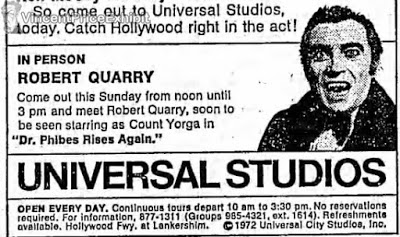
Darius is played by Robert Quarry, who American International Pictures was grooming to be Price’s replacement. There were tensions between the two on set, including a moment where Quarry was singing in his dressing room and challenged Price by saying, “You didn’t know I could sing did you?” Ever the wit, Vincent Price replied, “Well, I knew you couldn’t act.” Quarry would had already played Count Yorga in two films for AIP and would go on to be in The Deathmaster, where he played hippie vampire Khorda, but the AIP style had already fallen out of style. He’s also in tons of Fred Olen Ray films, like Evil Toons where he’s the uncredited voice of the demon.

Biederbeck wants eternal life for himself and his lover Diana (Fiona Lewis, Tintorera…Tiger Shark). Phibes and Vulnavia are on his trail, immediately entering his home, murdering his butler and stealing back the map. Everyone connected with Biederbeck comes to an ill end — Phibes places one inside a giant bottle and throws him overboard. That murder brings Inspector Trout back on the case, as he instantly recognizes that only one man could do something like that.

The rest of the film’s murders are based on Egyptian mythology versus Biblical plagues. Hawks and scorpions become his weapons, along with gusts of wind and bursts of sand. Phibes has also brought an army of clockwork men with him the desert to do his bidding.

Phibes finally exchanges Diana’s life for the key to the River of Life. As he floats the coffin containing his wife down the water, he beckons Vulnavia to join them. As his lover tries to comfort him, Biederbeck begs Phibes to take him with them. He begins to rapidly age and dies as Phibes loudly sings “Over the Rainbow,” which might be the best ending of any movie ever made.

There were plans for a whole bunch more of these films and the fact that they were never made saddens me to this day. I’ve heard that a third film would Phibes fighting Nazis. I’ve also heard that it’d be about the key to Olympus. Or Phibes going up against  Dr. Vesalius’ son. Or Victoria Phibes herself coming back, just as sinister as her husband. There have been titles thrown around like Phibes Resurrectus, The Seven Fates of Dr. Phibes and The Brides of Dr. Phibes. There was even thought of Count Yorga facing off with Dr. Phibes, a fact which delights me to no end.

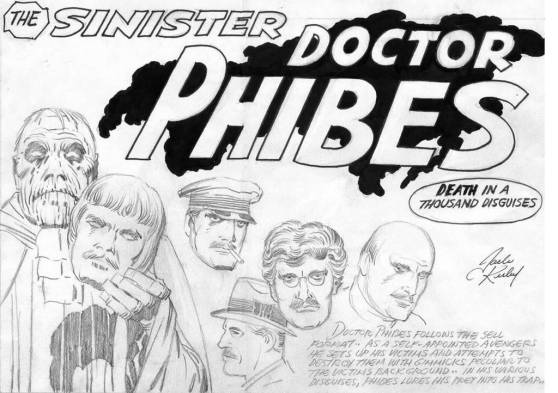
There was also a pitch for a TV series and what looked like an animated version, with Jack Kirby himself providing the pitch artwork!

Other ideas included Dr. Phibes in the Holy LandThe Son of Dr. Phibes (which would have pitted the doctor and his son against ecological terrorists), Phibes Resurrectus (which would have David Carradine as Phibes battling against Paul Williams, Orson Welles, Roddy McDowall, John Carradine and Donald Pleasence. The mind boggles at the thought, let me tell you!), a 1981 Dr. Phibes film where the WormwooInstitutete would have destroyed his wife’s body and then their strange members, including transvestite twins obsessed with economics and nuclear weaponry, fail to match wits with Phibes) and finally, Phibes was almost a role for Peter Sellers in a Pink Panther film where hed also play Clouseau and Fu Manchu. You can learn more about these at the Vincent Price Exhibit site.

There was also a story in 2013 that Johnny Depp was going to star in a Tim Burton directed remake. That obviously didn’t happen.

So much of this film fits into the same Satanic themes as the original. However, you can add in a few new wrinkles. One of the Eleven Satanic Rules of the Earth states “When walking in open territory, bother no one. If someone bothers you, ask him to stop. If he does not stop, destroy him.” All Phibes wished to do was take his wife to Egypt and bring her back to life. Once Biederbeck stole from him, his fate was sealed.

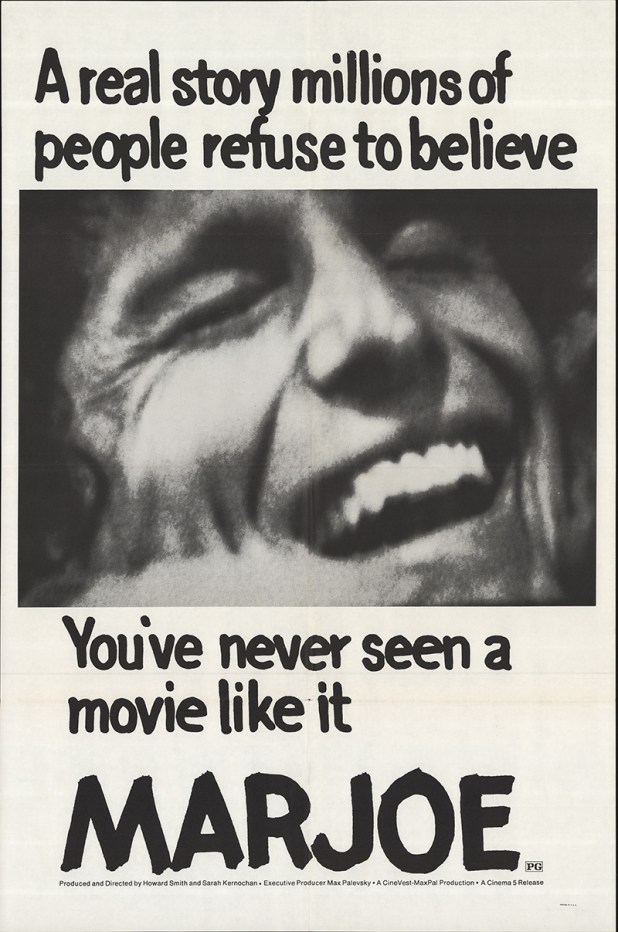
Marjoe (1972)

Hugh Marjoe Ross Gortner first became known — way back in the late 1940’s — as the youngest person to be ordained as a preacher. Just four years old, he possessed an innate ability to speak sermons and lead revival meetings. By the time he was sixteen, the Gortner family had taken around three million dollars from the faithful, money that Marjoe’s father would run away with. From then on, Marjoe was a beatnik until he needed money in his early 20’s and went back to preaching, basing his style on being a rock star like Mick Jagger.

He became famous for a different reason when he starred in this film, a behind-the-scenes documentary about Pentecostal preaching made just as Marjoe planned on leaving the faith for an acting career.

While this won the 1972 Academy Award for Best Documentary Film, it was a lost film for several years. That’s because due to the fears of bad reactions to the film in the Bible Belt, it was not shown widely in theaters any farther south than Des Moines, Iowa.

https://www.dailymotion.com/video/x58m473

The film finds Marjoe in what he claims are his final months of touring the tent revival circuit. That’s why he offered the documentary film crew full and unrestricted access to his 1971 tour. The crew includes Howard Smith, who also directed the documentary Gizmo!, appears as a TV commentator in the original Dawn of the Dead and was also a famous DJ who conducted long-format interviews with stars like John Lennon and Yoko Ono, Lou Reed, Eric Clapton and Jim Morrison; his co-director was Sarah Kernochan, who would go on to write 9 1/2 Weeks and What Lies Beneath.

The film juxtaposes Gortner preaching, praying and even healing people in Los Angeles, Fort Worth, Detroit, and Anaheim while revealing to the crew backstage that he is a non-believer, while also showing them the tricks of the evangelist trade. Even more damning are the moments where preachers pull bills out of buckets, fold them and make huge stacks of the money they’ve taken from those that only want to be saved.

In an interview with Vice, Kernochan said, “I didn’t warm to Marjoe. He was difficult to work with, very paranoid, and mistrustful, and tense. I’m not sure we were very good at relaxing him; maybe nobody could. I was concerned about him being likable. There was no point in making a film about someone who you never heard of that was portrayed as despicable. But when I saw the scrapbook, I realized that as long as people knew about his childhood, they would forgive him for anything because of what was done to him.”

She also added that one of the great ironies of the film was that one of the camera operators, Richard Pearce, objected to how the movie made many of the worshippers look dumb. How is that ironic? Well, he went on to direct Leap of Faith with Steve Martin. She said, “After putting the film down for making religious people look stupid, he ripped off some things…I thought that was really hypocritical.”

There’s also a scene that she said was cut from the film, where an artist asked Marjoe if he was being used by Jesus Christ, even if he didn’t believe in Him. The question disarmed him and twisted his already conflicted feelings.

Did they find any positive religious figures in all the time they filmed? Kernochan confessed, “I wish we had found a preacher that I felt was genuine, but we just never found one. They must be out there. But we didn’t go out of our way to find crooks.”

Even the release of the film only benefitted Marjoe, leading to a career as a rock star and releasing one album called Bad, But Not Evil, as well as being a correspondent for Oui magazine and starting his acting career. He appeared in the pilot for TV’s Kojak, as well as Earthquake, The Food of the Gods and Starcrash.

After appearing on Speak Up, America!, an 80’s reality show and Circus of the Stars, Gortner worked for charity organizations until he retired in 2010. He was married to Candy Clark (Q, the remake of The BlobCat’s Eye and Buffy’s mom in the original Buffy the Vampire Slayer) for about a year in the late 70’s.

In the Nine Satanic Statements, LaVey put forth: “Satan represents undefiled wisdom instead of hypocritical self-deceit!” You can argue that the people at these revivals didn’t know they were being lied to. Or perhaps the lie allows the psychosomatic mind to heal pain. Regardless, Marjoe and the men in this movie are profiting from them. 

That said, Stupidity is at the top of the list of the Nine Satanic Sins. “It’s too bad that stupidity isn’t painful. Ignorance is one thing, but our society thrives increasingly on stupidity. It depends on people going along with whatever they are told. The media promotes a cultivated stupidity as a posture that is not only acceptable but laudable. Satanists must learn to see through the tricks and cannot afford to be stupid.”

I think it’s intriguing that right on the Church’s Bunco Sheet, they encourage members to “develop the cold-reading abilities of a Carney, rather than the naïveté of the mark.” Their biggest warning about getting involved with other groups outrightly states: “When someone claims to have a direct line of communication with Satan, watch out. Selling that kind of mysticism is exactly how Christianity has kept people enslaved in ignorance for centuries. It’s one of the things we’re fighting against.”

You can watch this movie on Tubi or Vudu for free.

Who Saw Her Die? (1972)

If you see one movie where a father has sex instead of watching his daughter and spends the rest of the movie hunting her killing through the canals of Venice, you should probably watch Don’t Look Now. In fact, you may not even realize there’s another movie with the same plot. Actually, there is and to be honest, it’s really good. And believe it or not, this movie came out a year before Roeg’s. I’ve also heard this film compared to 1978’s The Bloodstained Shadow.

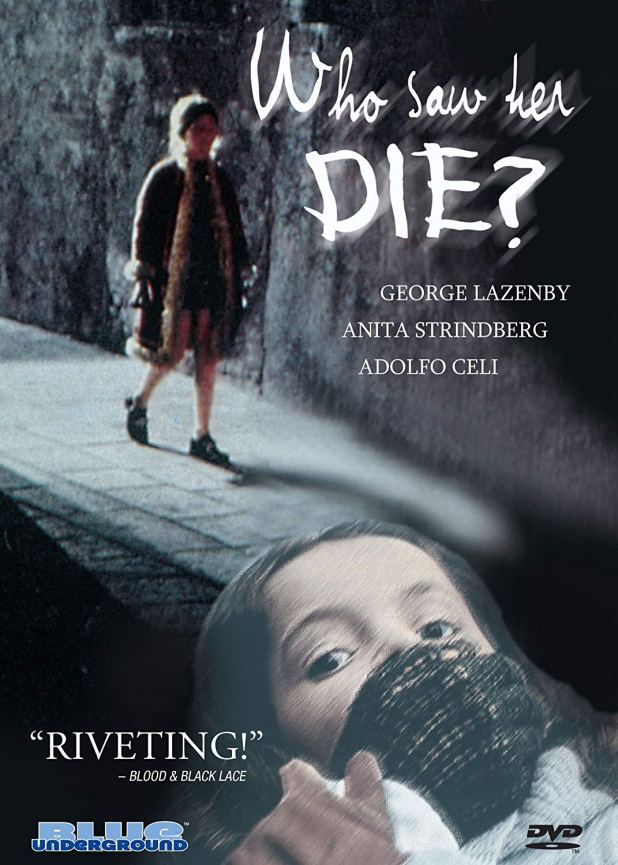
While at a French ski resort, a young girl wanders off and is murdered by a woman in a black veil, who then buries her body in the snow. Years later, the same thing happens in Venice, as Roberta (Nicoletta Elmi, DemonsA Bay of BloodFootprints on the Moon, The Night Child, Deep Red — when you needed a child actor in Italian horror films, she was the one you hired) is abducted and found drowned in the waters of that famous Italy town.

Now, her divorced parents — sculptor Franco (former James Bond George Lazenby) and Elizabeth (Anita Strindberg, The Antichrist) — must work together to discover who killed their daughter. That journey will take them into a world of darkness, sexual depravity and murder. And anyone that learns too much pays for those secrets with death.

The ending of this movie is astounding, with the killer set ablaze — to the apparent delight of Elizabeth — before they are launched out a window. And not to make a horrible pun, but it’s nearly a broken record to say that Morricone’s soundtrack may be the best part of this movie.

Director Aldo Lado is also responsible for Short Night of Glass Dolls and The Humanoid, two other movies well worth your time.

You can watch this movie on Amazon Prime.

Seven Blood Stained Orchids (1972)

Umberto Lenzi made the first Italian cannibal film, The Man from Deep River and followed that up with Eaten Alive! and Cannibal Ferox. When he followed a trend, his movies always stand out. Zombies? Lenzi’s Nightmare City outgrosses and out-insanes them all. Horror? He made the utterly bizarre Ghosthouse, which was shot in the same house as The House by the Cemetery. Sword and sorcery? Lenzi made Iron Master, another out there film with George Eastman wearing a lionhead and murdering people left and right.

And when it comes to giallo, Lenzi broke the mold and brought out films like EyeballSpasmo, OrgasmoSo Sweet…So PerverseA Quiet Place to Kill and this movie.

This film comes after Lenzi had tired of the giallo and started to move toward more poliziotteschi or Euro-Crime films.

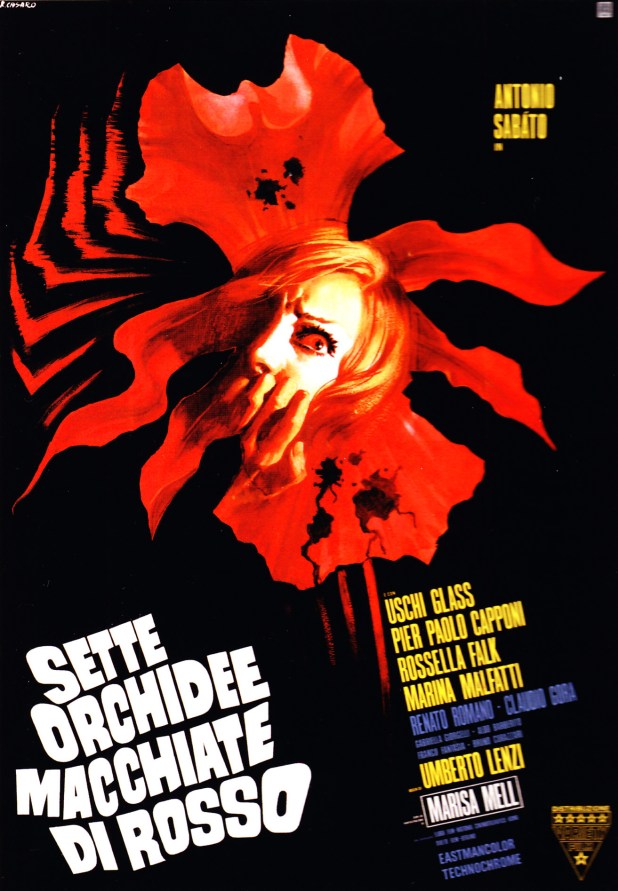
A serial killer is on the loose and he’s only murdering women. One of the potential victims is Giulia, the newly married bride of Mario (Antonio Sabato), on the night of their honeymoon. The killer escapes and the police accuse Mario of being the killer.

To protect his wife, the police decide to act like she’s died. Meanwhile, Mario sets out to prove that he isn’t the killer and attempts to solve the Puzzle of the Silver Half Moons.

Lenzi isn’t afraid to push the violence in this one. The black gloved killer stabs a woman in her bed, bashes in another’s head, strangles another, drowns one more and even uses a power drill in a scene that features nearly neon red blood.

This is more a combination of German-style krimi film with the giallo, but it’s still pretty fun. A good part of that fun comes from the actresses here, like Marisa Mell (Danger: Diabolik‘s Eva Kant) and Uschi Glas, a German actress with the nickname of Schatzchen, or baby, from her first film Zur Sache, Schatzchen or Go for It, Baby.

Lenzi isn’t celebrated in the same way as Argento and Bava, but I’m always entertained by his films. This one was no different.

You can grab this one on blu ray from Kino Lorber.

Female Convict Scorpion: Jailhouse 41 (1972)

“You’re a beautiful flower” – his words flatter you today

But once you’re in full bloom, he’ll just toss you away.

Foolish, foolish, foolish woman’s song.

Her song of vengeance.

“Sorrow is my fate.”

So you’ve given up on men.

Show him your tears and he’ll bring you grief again.

Tearful, tearful, tearful woman’s song.

Her song of vengeance.

A bright red rose has thorns that you might not see.

I don’t want to pierce you, but how else will I get free?

Burning, burning, burning woman’s song.

Her song of vengeance. 

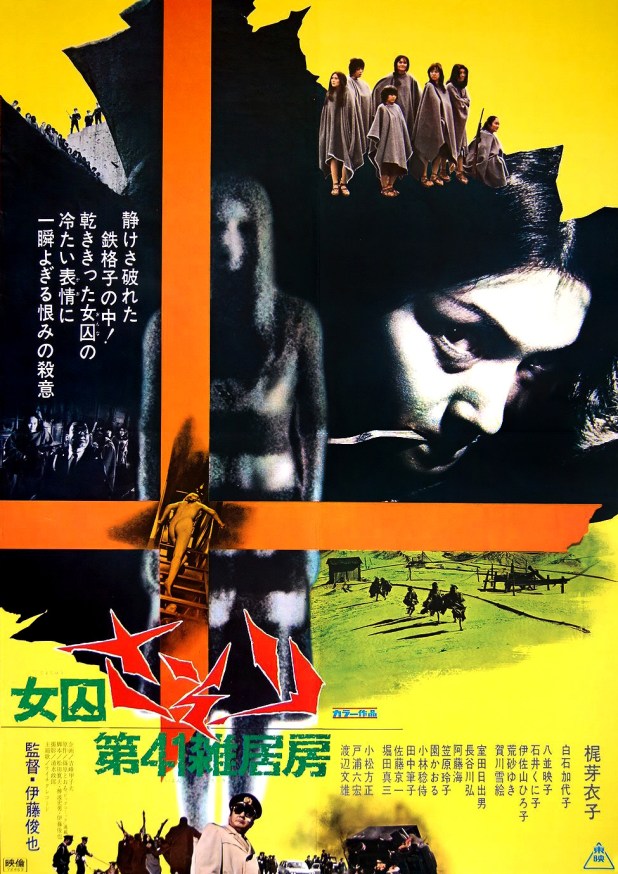
With these words, we have returned to the world of Female Prisoner #701 Scorpion. When we first see our heroine, Nami Matsushima (Meiko Kaji, truly the queen of all revenge movies), she is bound and stuck in solitary confinement, but her eye stares directly at us, the viewer. It is not a look of sadness or fear. It is a look that this jail is temporary, as are all things, and as we hear the scraping of metal against concrete, we notice the spoon between her teeth being turned into a shiv.

Inspector Goda, the warden of the prison that Matsushima, or Matsu the Scorpion, walked back into in the last film is due to be promoted to a higher position. As another inspector comes to the jail, he brings Matsu out of confinement so that she may be inspected. Of course, this is when our heroine attacks, scratching his face and inciting a riot.

The punishment? Four guards are sent to brutally assault Matsu and then she and six other inmates are sent to a labor camp. On the way, the six women beat Matsu mercilessly. The guards are told that she may be dead, so when they stop the van, they’re shocked. She’s still alive and the women murder the guards and blow the van up.

As the women escape, they reveal their crimes to one another. Oba discovered that her husband was unfaithful, so she drowned their son and stabbed herself, which led to her killing their unborn child.

Then, an old woman with a dagger shows up and the further crimes of the gang are shown as the old woman gives Scorpion her blade before dying and turning into leaves that blow away in the wind! I love that the Scorpion films can seemingly be based in reality in one moment and then become strange art films with no warning at all.

After stealing clothes and hiding in an abandoned home, the prisoners wait for nightfall. One of them, Haru, finds her own home and son, but is found by two of the jailers. They offer her freedom if she reveals where the others are. Matsu kills one of the guards, but one of the convicts is also killed and the other guard makes his way back to Inspector Goda.

A tour bus passes through the same area and everyone is warned that the convicts are on the loose. That doesn’t make three of the men on the bus any less leering and lecherous. They end up finding one of the convicts, who they assault and throw into the river for dead. The other girls find her body and attack the bus, holding everyone hostage while taking their revenge on the three men.

As they approach a police checkpoint, the de facto gang leader Oba throws Scorpion out of the bus. The roadblock also has Haru’s son on it, so she runs toward him and is killed by a sniper. Oba and the convicts kill the bus driver and plow through the roadblock. However, the police soon corner them and Goda sends Scorpion to learn of the hostages’ status.

She lies and states that everyone is dead, so the police attack. The women throw the three evil men outside, who are all killed by police bullets. Everyone except Oba is killed. As the police capture both her and Scorpion, they plan to kill our heroine on the way back to the prison. Oba saves her and gives up her life, finally freeing Scorpion.

Inspector Goda has been promoted and is now in the city, where Scorpion finally tracks him down. She repeatedly stabs him and her dagger is passed to the ghosts of all the convicts, who pass it back and forth as they run wild through the streets.

Made just months after the original, this film posits that Scorpion spent an entire year in solitary confinement, just waiting for her revenge. Well, she gets it. She might have to go through hell, but she gets it.

Meiko Kaji is, of course, beyond amazing in this film. She made 26 movies between 1970 and 1972, which is some feat of endurance that I don’t see many capable of doing these days. In each of these, she often faced excruciating scenes of torture and emotional pain, yet she never loses her dignity nor willingness to come back and decimate all in her path. In 1973, she’d make two more Scorpion films and Lady Snowblood, so it wasn’t like she was about to slow down any time soon.

I love that despite the antics of the gang of women, Scorpion remains separate from them. Her goal throughout is her own solitary revenge and whatever it takes to get it.

The final scenes, where we go from Scorpion staying with Oba as she dies in a garbage dump to her finally tracking down Doga in the city are beyond amazing. Her vengeance is such that even the screen can’t contain it, as she slices through the fourth wall and splits it asunder. The once powerful man has become weakness in Scorpion’s arms, as she has assumed her true form, the black-clad destroyer of worlds, as she repeatedly stabs him without expression. Only when his false eye falls out and we see inside it do we get to watch her laugh and smile as she leads the women’s spirits out of death and through the streets. It brought tears of joy to my eyes. Such a pure moment of cinema!

You can watch this on Shudder or order the beyond impeccable Arrow Video box set at Diabolik DVD.

Asylum (1972)

My real job is to write copy for marketing. I’ve been at it for over twenty years, and no matter how many great taglines I see in commercials, nothing moves me more than the copy that has sold my favorite movies. The words that sell Asylum are very special to me:

“Come to the Asylum…to get killed!”

The best lines make you say, “And then?” Or even better, “Why?” Why would I come to the Asylum? Why would I want to get killed? I need to know more. I need to watch this movie.

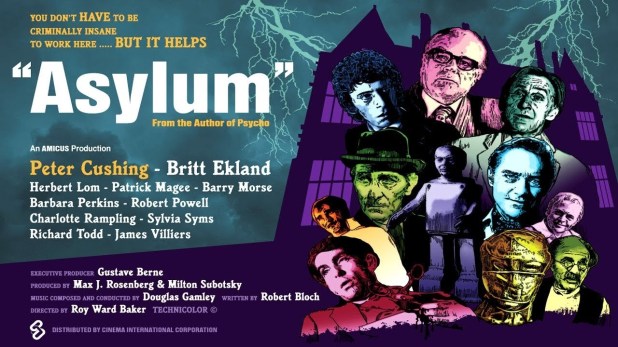
Asylum is a movie of pedigree. It comes from Amicus, the studio that made portmanteau horror their toast and baked beans. It’s written by Psycho author Robert Bloch, who based the script on several short stories. And it’s directed by Roy Ward Baker, whose films Quatermass and the Pit, The Vampire Lovers and The Vault of Horror belong in every media collection.

You know the narrative structure if you’ve seen an Amicus anthology film. Generally, unrelated people come together, tell their stories and realize that they’re either dead, in hell, or dead and in hell. Then, the narrator points to the camera and says something to the effect of “You’re next!”

Asylum breaks the mold by presenting its tales within a secluded home for the incurably insane. Dr. Martin arrives to interview for a position when he’s met by Dr. Lionel Rutherford, who is in a wheelchair thanks to an attack by inmate Dr. Starr, who was once the head of the place! If Dr. Martin can deduce exactly who Starr is from a series of patients, the job is his.

The first tale, “Frozen Fear,” is a very by-the-numbers EC Comics affair, with butcher paper-wrapped body parts suddenly finding a life of their own.

Yet, “The Weird Tailor” is when Asylum picks up speed and runs toward brilliance. A tailor, on the cusp of losing his shop, accepts a strange job from an even stranger man, played by Peter Cushing. There’s a feeling I get when Peter Wilton Cushing, OBE, appears on screen. It’s a return to childhood, remembering afternoons and late evenings watching endless Hammer movies with no adult cares and that moment of excitement when I recognized him in Star Wars. Here, as a man who has lost his son — Cushing was no stranger to loss, never getting over the death of his wife — he implores the tailor to create a suit for him, one with instructions that must be followed without question. The denouement of this episode still gets me every single time. This is pre-CGI practical magic creating sorcery on celluloid, an utter moment of strange beauty mixed with otherworldly dread.

The ending of “Lucy Comes to Stay” can be defined in the first few moments, but when you have Britt Ekland and Charlotte Rampling on screen together, something so trivial as an easy-to-divine twist is simple to get over.

“Mannikins of Horror” is a masterclass in unexpected twists. Soul transference and eerie toys converge to create a nightmare within the asylum’s four walls. And just when you think you’ve seen it all, the reveal of Dr. Starr will leave even the most seasoned fright fans stunned. Remember – nobody gets out of the Asylum unscathed. The unexpected twists in this tale will keep you guessing and gasping until the very end.

Despite owning thousands of DVDs and Blu-rays, Asylum always finds its way into our home’s player at least once a month. Why? Because it never loses its unique edge. How many films do you know that feature small robots filled with noodle-like guts stabbing doctors with scalpels, while glowing suit-wearing mannequins stalk the screen? And how many manage to combine these frightening moments with an ongoing theme of mankind’s tenuous grasp on sanity and identity? Asylum is a rare gem that accomplishes both, and it’s a film you won’t want to miss.

NOTE: This article originally ran on Horror and Sons.

BONUS: You can listen to the podcast we made about this film!

Enter the Devil (1972)

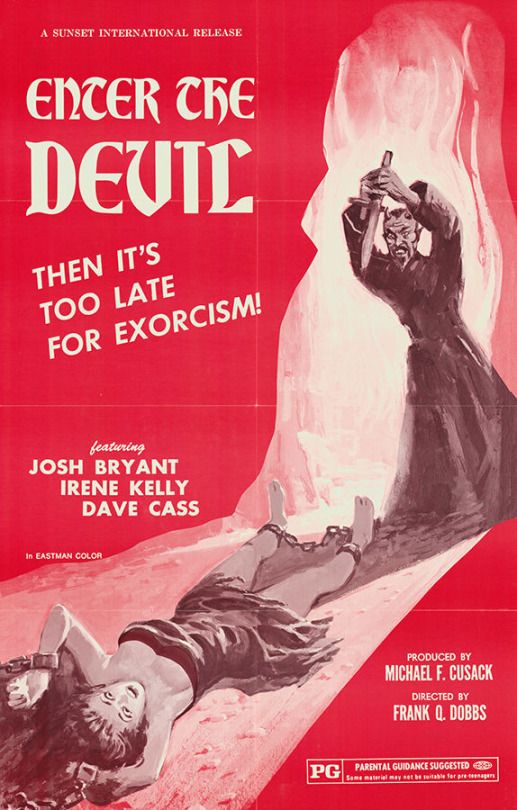
This regional oddity was written and directed by Houston native Frank Q. Dobbs. It has nothing to do with the other film that uses this title, which is better known as The Eerie Midnight Horror Show. Instead, it’s all about a woman who is doing a reference book on cults of the world, which leads her to the dust bowl of the American Southwest, a place where extremist Christians sacrifice human beings.

https://www.dailymotion.com/video/x54w6nj

Of course, it takes 40 minutes of languid screentime before the heroine shows up in Terlingua, Texas. But until then, there’s plenty of beer drinking, innuendo and red robed cultists, who are known as The Penitentes, a centuries-old fraternal — and fanatical — brotherhood.

The pace seems so slow that when things actually start happening, it’s really shocking. Nothing happens in this film at an expected pace and nothing is cliche. It’s all unexpected.

This was lost for a long time before Something Weird released one of the most scratched up prints ever.  Luckily, Massacre Video has cleaned this all up and released a proper version that you can get from Diabolik DVD.