Una Ragione Per Vivere E Una Per Morire (1972)

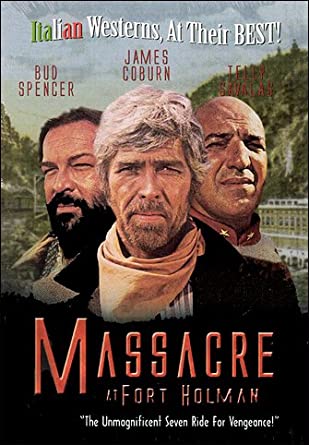
A Reason to Live, a Reason to Die is also known as Massacre at Fort Holman. At the time that it was made, Italian westerns had begun to copy themselves, as this was shot on the same set as The Deserter, in the same Almería, Spain locations as Leone’s films — you can see the homestead from Once Upon a Time In the West and the fort in this film was also used in El Condor — and even takes songs directly from Day of Anger.

It goes even further into Xerox territory by doing what several other Italian westerns had done: take an existing property and make it a cowboy film. This time, that movie is The Dirty Dozen.

Is it any wonder this was released by K-Tel?

What it has over most of its competitors is star power with James Coburn, Telly Savalas and Bud Spencer in the cast.

Disgraced Union Colonel Pembroke (Coburn) — reduced to looting a church — is arrested and tries to commute his sentence by saying that he has a plan to recapture Fort Holman, which he had previously surrendered to Major Ward (Savalas) and the Confederate army without firing a shot. He assembles the army which will help him take it back out of prisoners, including a deserter named McIver (Guy Mairesse, a murderer — of his commanding officer — and rapist — of his commanding officer’s wife — named Pickett (Benito Stefanelli), Fred the horse thief Fred (Ugo Fangareggi), medicine thief and black marketeer Will (Adolfo Lastretti), half Native American — and killer of his fellow soldiers for selling alcohol to the Apache — Jeremy (Joe Pollini, who was also the assistant director), Sergeant Brent (Reinhard Kolldehoff) — who somehow is wearing the cross of Pembroke’s dead wife — and a looter named Eli Sampson (Spencer). Only one of the group refuses, a religious pacifist agitator, who doesn’t want this strange opportunity for freedom and would rather the certainty of the gallows.

Pembroke tells them that there’s gold inside and that he’s a convict just like them. The truth is that he only gave up the fort because Ward had taken his son and promised he’d be returned if he complied. He did and his son was killed.

By the end, everyone — save Pembroke and Sampson — is dead. War is bloody and ruthless and unforgiving, but so is revenge. Blake lies dead, killed with his own sword. Probably the same sword that killed Pembroke’s son. But even if he has vengeance, he’ll never have his boy back.

Director Tonino Valerii also made Day of AngerMy Dear KillerMy Name Is Nobody and the JFK assassination in the west film Price of Power. He’s pretty good, even if his name doesn’t come up much in the conversation on Italian directors. This was written by Rafael Azcona and Ernesto Gastadi, whose list of credits could fill our entire site.

You can watch this on Tubi.

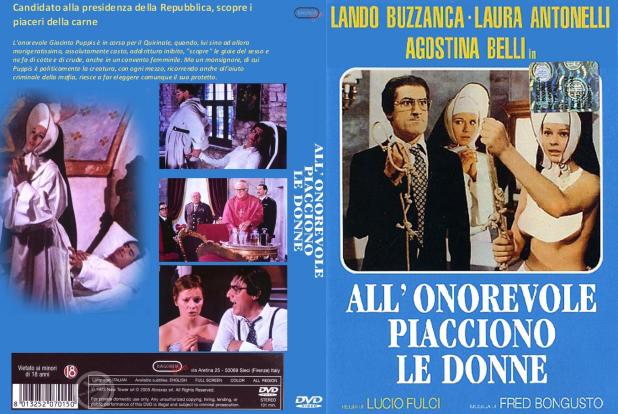
Junesploitation 2022: Nonostante le apparenze… e purchè la nazione non lo sappia… all’onorevole piacciono le donne (1972)

June 17: Junesploitation’s topic of the day — as suggested by F This Movie— is Lucio Fulci! We’re excited to tackle a different genre every day, so check back and see what’s next. 

As you watch the films of Lucio Fulci, it’s important to realize that made comedies, peplum and westerns long before he became known as the Godfather of Gore. Even his first forays into giallo, both before Argento (Perversion Story) and after (A Lizard in a Woman’s Skin, Don’t Torture a Duckling) may have bursts of violence and disquieting bloodshed, but Fulci was primarily a journeyman when Enzo G. Castellari dropped out of directing Zombi and Fulci stepped in.

An example of commedia sexy all’italiana, or sex comedy Italian style, this film remembers to include the requisite nudity and sexual situations while keeping the social criticism front and center, unlike other films in this subgenre of commedia all’italiana. Sure, so many of those movies are about the rich, but this film takes aim at those in power and how they still have very basic sexual lusts. Or, in the instance of this film’s lead, Senator Gianni Puppis (Lando Buzzanca, who was in a lot of movies much the same as this), abundant and near-insane levels of libido-enraged fervor.

Puppis is next in line to be President of the Senate, yet he starts the film by grasping the rear end of the female president of the Republic of Urania. No one notices, as they were inside a huge crowd, but he’s devastated by the fact that he can’t control his need to touch her.

Someone did notice. Father Lucian (Renzo Palmer) somehow gets photographic evidence and begins to blackmail Puppis, yet he refuses to pay as there’s no way that he could have done this. And then, that night, he dreams of a nude woman (Eva Czamerys, who between this, Our Lady of Lust and The Weapon, the Hour, the Motive had to have really upset the Roman Catholic church)  beckoning him from the circular plaza of St. Peter’s Basilica and the Vatican.

But wait — isn’t Puppis gay — an editor at a TV station confirms this — and dating his personal chauffeur Carmelino (Aldo Puglisi)? Then why is he blacking out and getting back to reality just in time to learn that he has his hands on a keister?

After paying off Father Lucian, Puppis is sent to a German psychologist and a spiritual retreat that will keep his Roman hands away from the culo of the assembled ladies who not vote for him if they know what’s going on inside his head. After an encounter where Puppis rubs the bahootie of a Scottish man in a kilt, he gets so drunk that he must be waited on at the monastery by a series of nurses who are nuns, which trust me as an Italian male is the absolute double whammy of fantasy.

Meanwhile, the other senators are trying to learn just where Puppis has gone off to and the Italian Army is planning a coup because the Days of Lead don’t stop for sex comedies. The Senate is bugging Puppis, but the army is bugging the senate and a secret Vatican cabal — the Masonic P2? — led by Cardinal Maravigili (Lionel Stander) — is bugging everyone.

Puppis owes any political success to he has made deals with both the Vatican and the army and Maravigili has been manipulating him to the most powerful office in the country, tolerating his homosexuality as that is less of a scandal than what’s happening now. The sociopathic holy man then decides that Puppis must be killed.

That night, Puppis has a dream about the nuns and the Garden of Eden where he goes wild, like  Howard Stern in the 1980s or John Stagliano in Brazil. He then tries to assault Father Schirer (Francis Blanche) in his sleep, yet when he awakes he claims he’s cured. He’s not: he really did get to know all of those nuns as Biblically as he could.

All Hell has broken loose. Father Schirer has a heart attack when he’s convinced Maravigili knows that he’s failed. Puppis goes to a party with that very same holy leader and ends up s‘envoyer en l’air — I apologize for my conjugation, I never took the language — with the French ambassador’s wife (Anita Strindberg, who was also in Your Vice Is a Locked Room and Only I Have the Key amongst many others) and engaging in an erotic mutual flagellation session with the only nun that he hasn’t yet gone heels to Jesus with, Sister Hildergardt (Laura Antonelli). As the secret church police arrive, they high tail it the hell out of there.

Finally, in a moment much like I imagine all U.S. Presidents go through when they show them who really committed every assassination and get to see inside the real Area 51, Don Gesualdo (Corrado Gaipa) shows Puppis statues of all the future saints — all people who have been killed to get him into a position of power given the kind of treatment that Vincent Price did when he played Professor Henry Jarrod. As the new President kneels in front of a statue of Sister Hildegarde and accepts his new role — his closest competitor dies in a plane crash — someone turns the channel to a game show.

That long title translates to The Senator Likes Women… Despite Appearances and Provided the Nation Doesn’t Know and that’s why The Eroticist was also called The Senator Likes Women. It’s a wild movie — not all of the comedy may translate, but Fulci’s bile against religion sure does. He came up with the story with Sandro Continenza (The Living Dead at Manchester Morgue) and the script was by Ottavio Jemma. Plus, it looks pretty great — Sergio D’Offizi who did Cannibal Holocaust and House at the Edge of the Park, not to mention The Washing Machine and Thunder 2 and 3 was the cinematographer.

Obviously, this movie was banned and censored beyond belief.

Want to see more Fulci? Check out my Ten Fulci films article or the Fulci Letterboxd list.
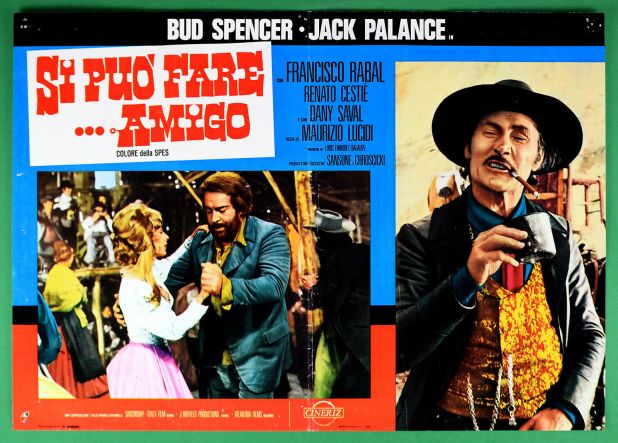
Si può fare… amigo (1972)

A Spanish, French and Italian co-production, It Can Be Done Amigo was also called Saddle Tramps, which is a wonderful nom de plume for a movie. It also was called Bulldozer is Back AmigoHallelujah Amigo and The Big and the Bad.

Bud Spencer is Hiram Coburn and he’s very similar to the Bambino character that he became known for in the Trinity series. He’s being pursued by Sonny (Jack Palance), a gunfighter and procurer of women of ill repute who is upset that Coburn took his sister Mary’s (Davy Saval, Moon Pilot) virginity without marrying her. As part of their constant battles, the two meet an orphan named Chip who is soon fighting off the offers to buy the house he inherited from his uncle by a priest called Franciscus (Francisco Rabal), who soon brings in Sonny and Mary, then marries off Coburn to the pregnant young girl. Sonny tells Coburn that when his son becomes 21, he will finally shoot him. Hijinks, as they say, ensue.

How self-referential had Italian westerns become by 1972? This movie was shot on McBain ranch set from Sergio Leone’s Once Upon A Time In The West. Bud Spencer’s character says, “So this is the famous well” in reference to the well that caused the railroad to be built so close to that farm.

This is a movie that has a farm with mud people like to eat and where Bud Spencer puts on glasses every time he has to fight someone. If you haven’t gotten into the silly side of Italian westerns, your enjoyment of this may or may not occur.

It Can Be Done, Amigo was directed by Maurizio Lucidi (The Designated Victim) and written by Rafael Azcona from a story by Ernesto Gastaldi.

You can watch this on Tubi.

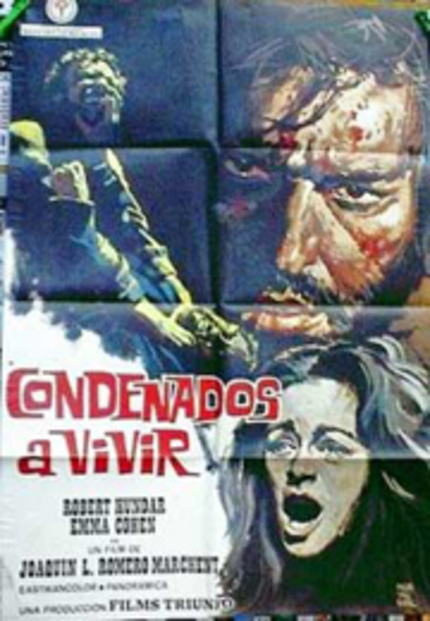
Condenados a vivir (1972)

Cut-Throats Nine arrives at a time when Italian westerns were struggling to stand out. This film does so by being as mean as it gets and filled with shocking levels of blood and gore. There was even a William Castle-style promo item, a Terror Mask, made so audiences could hide their eyes during the bloodshed and mayhem.

A remake of the original posted on The Daily Grindhouse.

Sergeant Brown (Robert Hundar) and his daughter Sarah (Emma Cohen) are taking a chain gang of seven convicts to the other side of a mountain range and the prison of Fort Green. Bandits attacks, looking for gold, not realizing that the chains that hold the men are made from it. Then, things get worse. Much worse.

A throat is slashed, the daughter is assaulted, a man is stabbed so many times that his entrails are visible, someone is shot through the eye and a man is burned alive. Brown is also convinced that one of the men killed his wife, so perhaps he doesn’t see the need to get them to their destination alive. But who knows if anyone will get there.

Director Joaquín Luis Romero Marchent made movies until 1995 but the main films of his career were made in the early 70s and the western cycle. It’s also bleak beyond hope, as even the one character that cares for Sarah beyond her father, Dean, may be the absolute worst of all of the convicts who are being used simply to transport wealth, their lives meaningless.

You can watch this on Tubi.

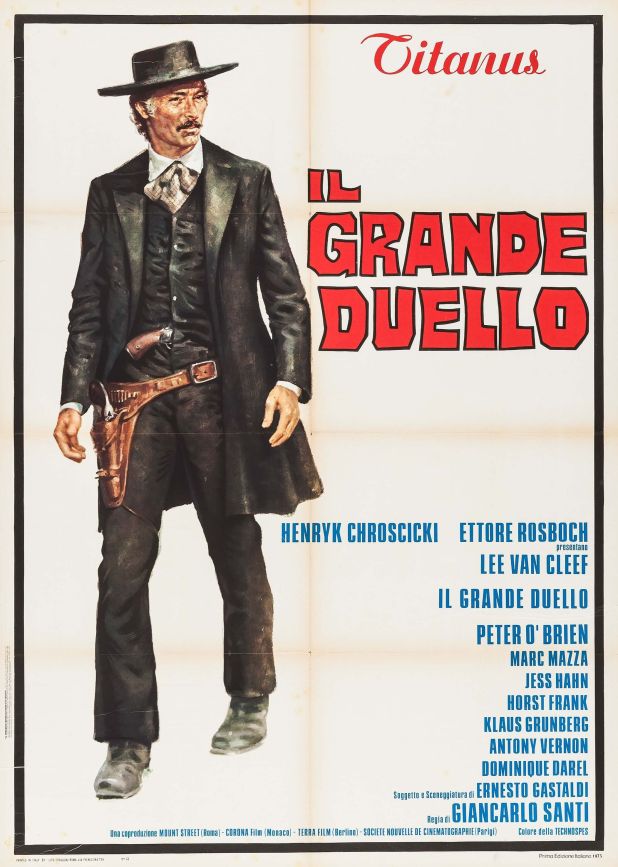
Il Grande duello (1972)

The Grand Duel was directed by Giancarlo Santi, who was Sergio Leone’s second unit director. He only directed two other movies on his own, Quando c’era lui… caro lei! and Con la voce del cuore, although he assistant directed on films like Death Rides a Horse and both of Luigi Cozzi’s Hercules movies. It was written by the man behind so many giallo films, Ernesto Gastaldi.

Philip Wermeer (Alberto Dentice) has been convicted of killing Ebenezer Saxon, the patriarch of Saxon City and also the man who killed his father. He escapes from prison and heads off to Gila Bend, a small town where he’s soon trapped by several bounty hunters all after the reward posted by Saxon’s sons. Sheriff Clayton (Lee Van Cleef) comes to town to take him back to jail, which means battling everyone after the price on Wermeer’s head.

Even after Wermeer’s innocence is shown and the Saxons are shown to be horrible people — massacring an entire silver mine worth of people, including their own men — they still want revenge. They even strip Clayton of his star and disgrace him.

By the end, Clayton must duel all three Saxon brothers and as a gentleman, he refuses to draw first. Like the best of Italian western heroes, he’s putting his life on the line to keep true to his beliefs.

You can watch this on Tubi.

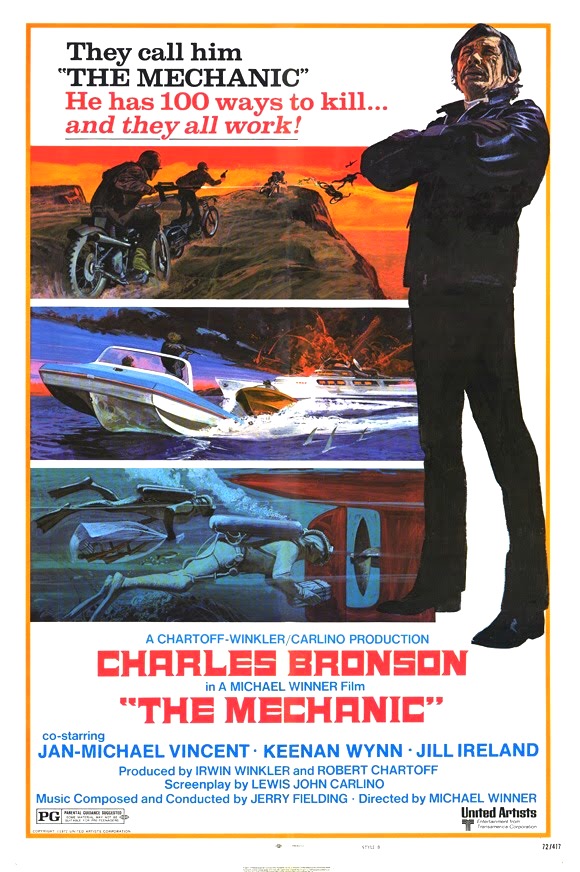
The Mechanic (1972)

Arthur Bishop (Charles Bronson) is an artist. He listens to classical music, he loves the finest in artwork and knows the best wines. Yet he can’t trust anyone. He can’t have any emotions. Because his art is murder and that puts him under so much stress that he passes out at times. The only love in his life is paid for, as a call girl (Jill Ireland) writes letters and meets him for a girlfriend experience that ultimately is meaningless.

For the first sixteen minutes of The Mechanic, he moves in absolute quiet to make his kill.

After completing the job of killing a high ranking official in his own group, “Big Harry” McKenna (Keenan Wynn), he meets the man’s son Steve (Jan-Michael Vincent). He has the same aptitude for murder, so Bishop begins training him against the wishes of his superiors, which makes them doubt the older killer. And when Bishop finds notes on himself in Steve’s papers, has he let the wrong person into his life?

The second movie that Bronson would make with Michael Winner, but it was originally intended to be Monte Hellman (Two-Lane Blacktop) making the movie. The script was also altered, as it was about the sexual relationship between the two men and there’s no way that Bronson was going to make that film.

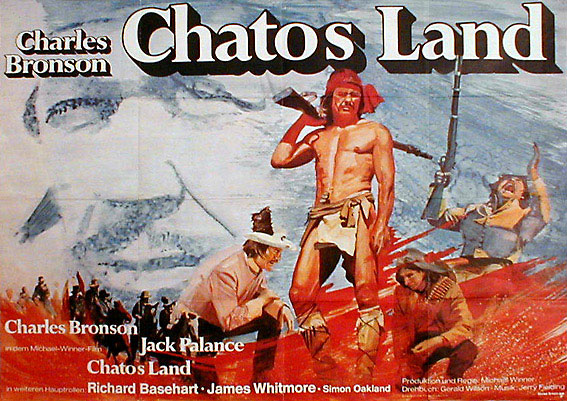
Chato’s Land (1972)

EDITOR’S NOTE: Chato’s Land first was on the site on November 10, 2021. You can get the blu ray from Kino Lorber. It has a brand new 2K master of the film, as well as new audio commentary by film historians Howard S. Berger and Steve Mitchell, an interview with screenwriter Gerald Wilson and reversible cover art. You can order it from Kino Lorber.

After shooting the racist sheriff in self-defense, Apache Chato (Charles Bronson) heads back home, far away from the affairs of the white men. However, former Confederate Captain Quincey Whitmore (Jack Palance) has put back on his uniform and brought together former soldiers demoralized by the end of the war — look at what year this movie came out and you can see what this movie really is saying — and begins hunting down Chato, who much like the Vietcong knows the land better and is fighting for his family, not for pride or because he’s been peer pressured.

That means he kills every single one of them.

Also, this is when you realize that Michael Winner directed this movie, because not only do four of the posse — Elias (Ralph Waite), Earl (Richard Jordan), Hall (Victor French) and Lansing (William Watson) — gang rape and leave Chato’s wife for dead, they also string up his best friend and set him on fire.

Yes, Michael Winner, the man who brings you the patriarch of The Waltons assaulting a woman.

The first victim afterward is Earl, who is obsessed with Chato’s wife. Like a slasher villain, Bronson’s character dispatches the men one after the other and leaves their bodies to be found. He’s gone full Apache, no longer wearing the clothes of the Europeans and the men begin to turn on one another, even killing Whitmore, who has long become disgusted by their actions.

Still, the odds are against Bronson. Then again, that’s usually how it is.

The first of six movies that Winner would make with Bronson, this was shot on some of the same Spanish sets as Once Upon a Time in the West. Winter would say, in the book Bronson’s Loose, that this was the only of their films that Bronson enjoyed watching.

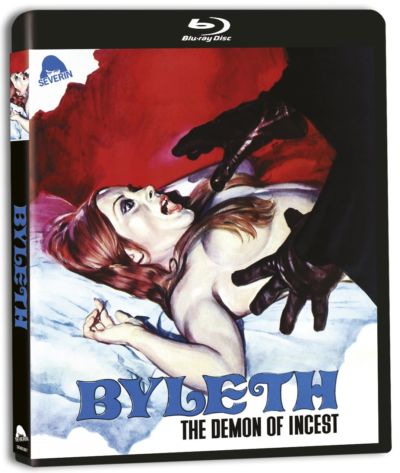
Byleth: The Demon of Incest (1972)

Leopoldo Savano also made Death Falls Lightly so he had experience with the giallo. This movie may be set in the 19th century yet seeing as how it’s about a series of murders and the investigation mentions a strange three-bladed weapon, it most definitely has strains of the giallo mixed in with the gothic.

Savona based the demonic part of the film on the demon Beleth, which he read about in the book Pseudomonarchia Daemonum. Beleth or Byleth is a king of Hell who has eighty-five legions of demons under his command. When he appears, he is usually riding a pale horse and his physical form is proceeded by music. He was first invoked by Noah’s son Ham, who wrote a math book with the help of this demon. Beleth appears as a fearsome demon and will test the magician who has invoked him, demanding respect and potentially even killing them if they can’t gain control over him. When they do, he will reveal his — its? — true form of a beautiful woman who can seduce anyone and bring them into the bed of its conjurer.

Lionello Shandell (Mark Damon, The Devil’s Wedding Night) has been in love with his sister Barbara (Claudia Gravy, Two Undercover Angels) since they were children. After a year away, he returns to find her married to Giordano (Aldo Bufi Landi).

Each night, he watches them make love and then takes off for the countryside, killing a series of women who have the same red tresses as his sister. Once the maid Gisella and Giordano’s cousin Floriana are killed in the same way, Lionello becomes the main suspect. We all know he’s found his warlock father’s occult library, we know he’s the killer but we’re still surprised by the end of this film.

Byleth is the kind of Eurohorror sleaze that I love to have on in the background to remind myself that life is more than just sitting in a room writing all day, never seeing the outside world. 1972 was a wild time to be making movies in Italy and I love that this film exists.

You can get this from Severin.

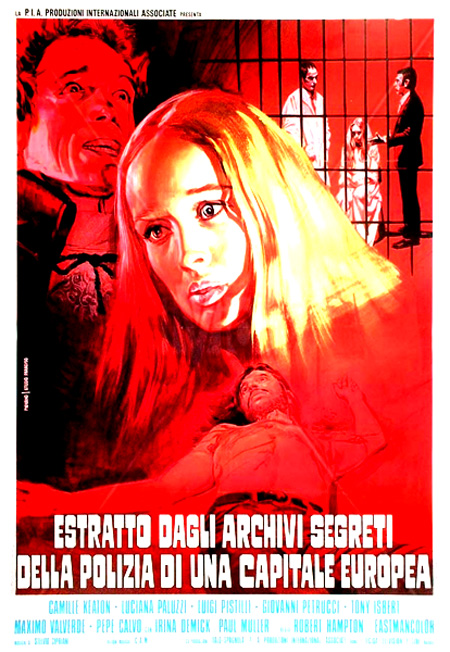
Estratto dagli archivi segreti della polizia di una capitale europea (1972)

Extracted from the Secret Police Archives of a European Capital is a long title for a movie, so let’s just go with Tragic Ceremony.

After sailing all day, Jane (Camille Keaton), Bill (Tony Isbert), Joe (Máximo Valverde) and Fred (Giovanni Petrucci) have run out of gas somewhere near that old Frankenstein place — no, but seriously, somewhere in England — and end up at the mansion of Lord and Lady Alexander (Luigi Pistilli, never to be trusted, and Luciana Paluzzi from A Black Veil for Lisa and The Green Slime) and are invited to stay.

That night, Jane interrupts the Satanic ceremony in the basement and gets saved by Joe, who stabbed Lady Alexander and the cultists all kill one another. This gets reported on the news like a Manson Family copycat murder and the evidence points to the four of them as the ones who did it.

Then, the movie shifts into slasher mode, as perhaps that’s not Jane at all. Perhaps.

Directed by Riccardo Freda (The Iguana with the Tongue of Fire) — maybe, Fillipo Walter Ratti has also been credited with some directing — and written by Mario Bianchi (he also wrote another movie that Freda directed, The Murder Secret).

Vinegar Syndrome included this movie in the box set Camille Keaton In Italy along with Madelaine and Sex of the Witch.

L’arma, l’ora, il movent (1972)

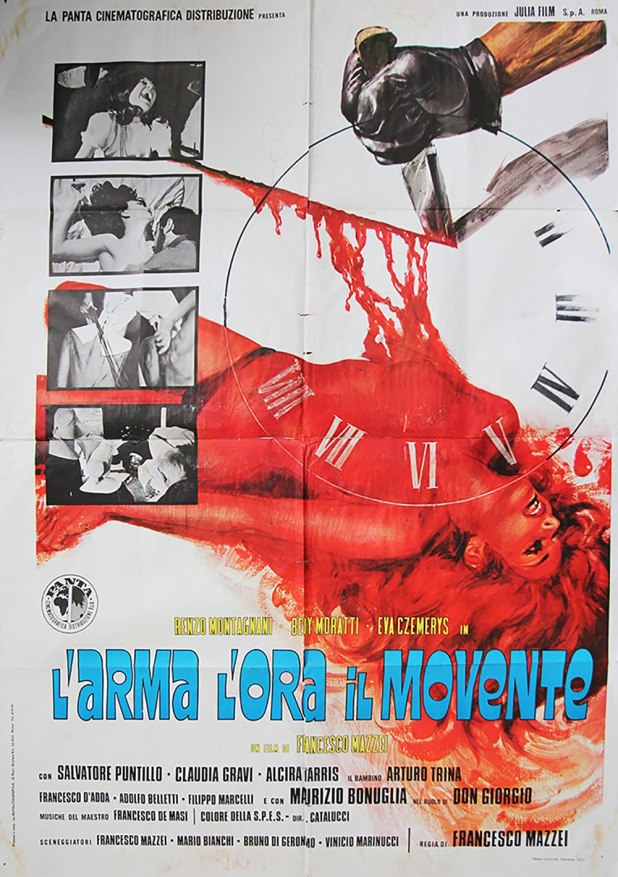
The Weapon, the Hour & the Motive examines not only murder but the idea that a Catholic priest — Don Giorgio — is having an affair with two different women — Orchidea (Bedy Moratti,  — Women in Cell Block 7) and Giulia Pisani (Eva Czemerys, The Killer Reserved Nine Seats) — and tries to break things off with both of them before he’s killed. Since Inspector Boito (Renzo Montagnani) has already fallen for Orchidea — whose husband has just committed suicide — what’s the hope for a fair inspection of who the killer could be?

The only person who may know is a young orphan who lives in the church named Ferruccio, who once watched while Don Giorgio self-flagellated, and who now is kept drugged and quiet. There’s also the matter of a skeleton-filled catacomb under the church in addition to nuns taking baths fully clothed and whipping one another fully nude.

This is the only film that Francesco Mazzei directed, while he also wrote This Shocking WorldSergeant KremsConvoy of Women and A Girl Called Jules. He co-wrote the story with Marcello Aliprandi, who would direct a similar movie, Vatican Conspiracy, in 1982. Mazzi also wrote the screenplay along with Mario Bianchi, The Murder Secret), Bruno Di Geronimo (who wrote A Quiet Place to KillWhat Have You Done to Solange? and Puzzle) and Vinicio Marinucci (SS Experiment Love Camp). 

I can’t even imagine the reaction this movie had when it came out. Fulci had been abused by the way audiences, critics and social critics treated him after Don’t Torture a Duckling.