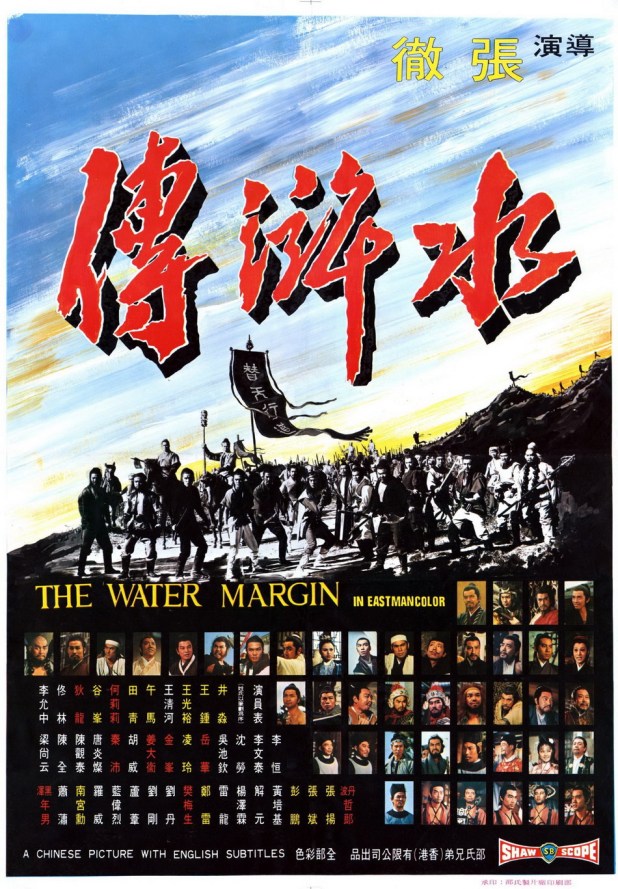
Also known as Outlaws of the Marsh and Seven Blows Of The Dragon, this Shaw Brothers movie was directed by Chang Cheh and tells the story of the 108 Heroes. The book that it is based on is considered one of the masterpieces of Chinese literature, containing many of its most beloved characters like Wu Song, Lin Chong, Pan Jinlian, Song Jiang and Lu Zhishen. It even has an influence on Japanese literature.
This movie starts by introducing nearly every single member of the Honorable 108, a group of mountain bandits who live by a code of honor and who have also pledged to return freedom to the people. This movie is just a few chapters of the overall story, so of course it can get confusing and who could remember all of those names, unless they were super invested in the source material?
This part of the story — chapters 64 to 68 of the one hundred chapters in the novel — is about Yen Ching the Wanderer and how the 108 Heroes — still the Outlaws of Mount Liangshan — comes to join and also how his mentor Lu Jun-yi gets framed by sinister fighting machine Shi Wen-gong, who is working for the Chinese government.
Two years later — it was filmed at the same time but censorship reared its head and it took some time to get all the gore past the government — the sequel All Men Are Brothers has the Imperial Court offering to erase all of the crimes of the 108 if they stop an invading army from taking over China.
Speaking of gore, Yen Ching gets revenge against his mentor’s traitorous wife Lady Chia by punching her through the stomach. After all, she got bored because her husband was such a good person and she set him up to add some excitement to her life.
The music in this movie is incredible, like some kind of prog rock organ jam out which doesn’t match the period time of this film, but when it’s this good, who cares? The opening introduction of each character is the kind of thing I watch again and again.
New World Pictures brought this to the U.S., but not before cutting a third of the movie, having the Shaw Brothers shoot an additional sex scene and recording a new narration.
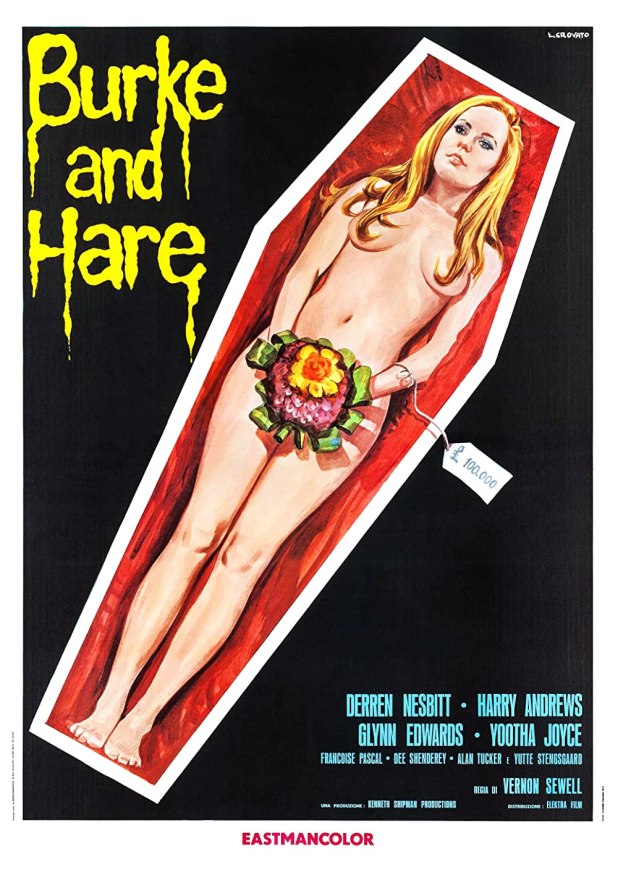
William Burke and William Hare killed sixteen people over ten months, scandalizing Scotland when it was discovered that they had sold the corpses to anatomist and ethnologist Robert Knox for dissection during his anatomy lectures. Their story of these “resurrection men” inspired so many movies, including The Body Snatcher, Horror Maniacs, The Flesh and the Fiends, The Doctor and the Devils and 2010s Burke and Hare.
Where this movie differs is that director Vernon Sewell (Curse of the Crimson Altar, The Blood Beast Terror) tries to combine comedy, horror and lots of sex in his attempt to be different than what came before, including having nearly a sitcom theme song for the antics, which was written by Roger Webb with lyrics by Norman Newell, and performed by English comedy/musical trio The Scaffold (with uncredited vocal assistance by Vivian Stanshall).
Burke (Derren Nesbitt) and Hare(Glynn Edwards) live in filth, drinking away their days while rich doctors do the same, yet live in comfort. What they have in common are the brothels, places where they can escape duty and wives and just have no strings sex. Dr. Knox (Harry Andrews) is in need of hanging victims for his students to experiment on and for him to slice apart while he lectures. He hires the two to get these bodies and the authorities kind of let it pass, as after all society needs doctors.
When fresh bodies in their graves start to run out, the two start killing poor people that will never be missed and many of whom are already close to death. Yet the demand still is more than the supply, which means that they start killing people who just might be missed, like sex worker Marie (Françoise Pascal from Rollin’s The Iron Rose!). As if Pascal isn’t enough, Yutte Stensgaard (Carmilla herself from Lust for a Vampire) appears.
It’s not the definitive story of these grave robbers, but it’s still kind of bawdy fun. The sets look nice and man, that theme song!
EDITOR’S NOTE: This was originally on the site on January 10, 2020.
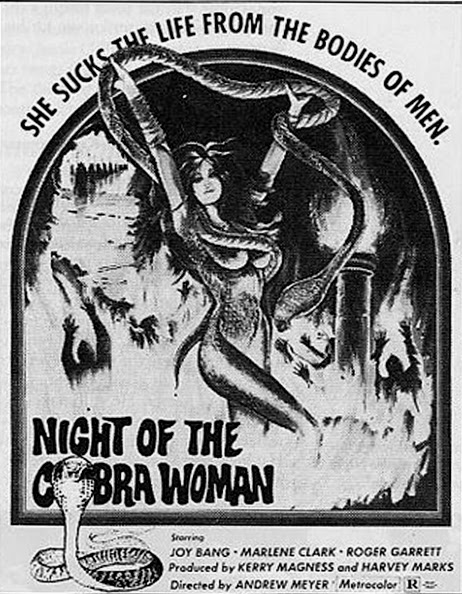
Roger Corman wasn’t happy with the end results of this film, which was shot in the Philippines, but man, he has no idea. This is my kind of insane movie, where a movie leaves his woman for, well, a cobra woman who keeps him alive by pimping out his native lover who draws venom from the men that she kills.
Andrew Meyer only wrote and directed one other film, The Sky Pirate, which is a shame because this movie is pretty much insane. It has snake murders, an air of filth and women ruining lives. Is there anything else you can put in a movie?
How about Joy Bang? You know and love her from Messiah of Evil and she’s here, looking gorgeous. She’s the former girlfriend of Stan Duff (Roger Garrett, who got a poultry infection while making this movie!), who has now found love in the arms of Lena (Marlene Clark from Ganja & Hess, Beware the Blob and Switchblade Sisters), the cobra woman herself.
Vic Diaz, who was Satan in Beast of the Yellow Night, also shows up. Quentin Tarantino would refer to Vic as the Peter Lorre of the Philippines, a title he earned in appearances in movies like Beyond Atlantis, Black Mama White Mama, Superbeast, Daughters of Satan and Raw Force.
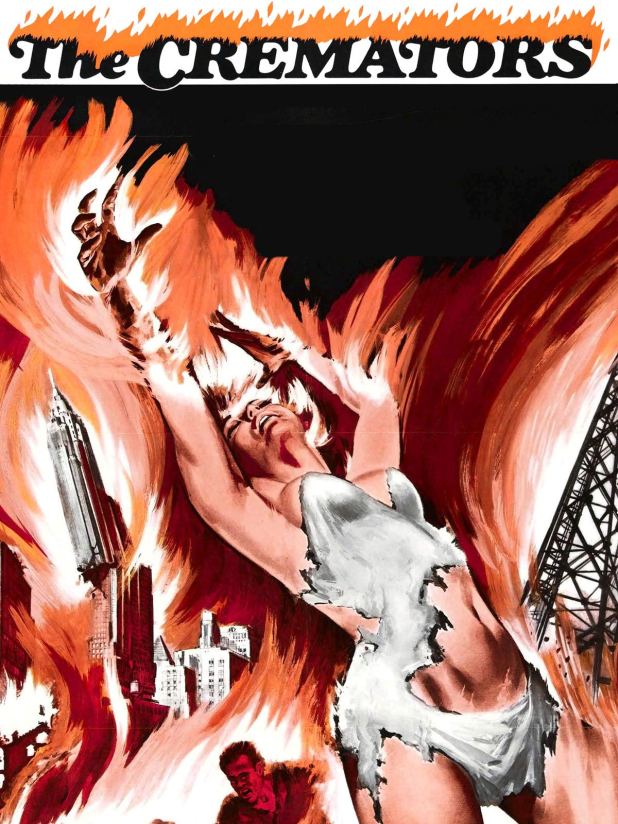
Julian May sold her first professional fiction, a short story called “Dune Roller,” to Astounding Science Fiction where appeared in 1951. The name J. C. May was listed as the author and it was accompanied by her original illustrations. May was unique in that not many women participated in science fiction fandom; she was also the first woman to chair a worldcon, the Tenth World Science Fiction Convention in Chicago in 1952. Over her lifetime, she wrote thousands of science encyclopedia articles and more than 250 books for children and young adults. These non-fiction, under her own name and a variety of pen names covered the worlds of history, science and pop culture.
One of her pseudonyms changed my life. As Ian Thorne, she was responsible for writing ten orange hardcovered books for Crestwood. Once you see these covers, if you read them, you will be transported back in time.
Under her married name Judy Dikty — they spelled it incorrectly in the credits as Ditky — she is credited for the story in this movie. The good news is that after years of writing as a job, she got back into science fiction by attending a convention after moving to the west coast. After creating an alien costume for a con party, she got so many ideas of what that creature would be like she started her Galactic Milieu Series, which was a series of eight books published between 1981 and 1996.
Harry Essex is credited as the director and writer of this movie. He’s probably better known for writing It Came from Outer Space, The Creature from the Black Lagoon and The Sons of Katie Elder, but by this time in his career, he was directing. I, The Jury; Mad at the World and, yes, Octaman are the other three that he helmed.
Originally released as The Dune Rollers, what emerges is a movie that’s, well, disjointed at best. A giant ball of fire has dropped from space and it slowly, ever so slowly rolls over people and gets bigger, kind of like Katamari Damacy. Except nowhere near as interesting, as Dr. Iane Thorne (Marvin Howard) sleepwalks though solving this. Is that where May got her pen name from?
His love interest Jeanne doesn’t get much to do either. She’s played by Maria De Aragon who shows up in plenty of 70s exploitation like Wonder Women, Teenager and Blood Mania. Perhaps her best known role is one that she was not credited for: she was Greedo in Star Wars.
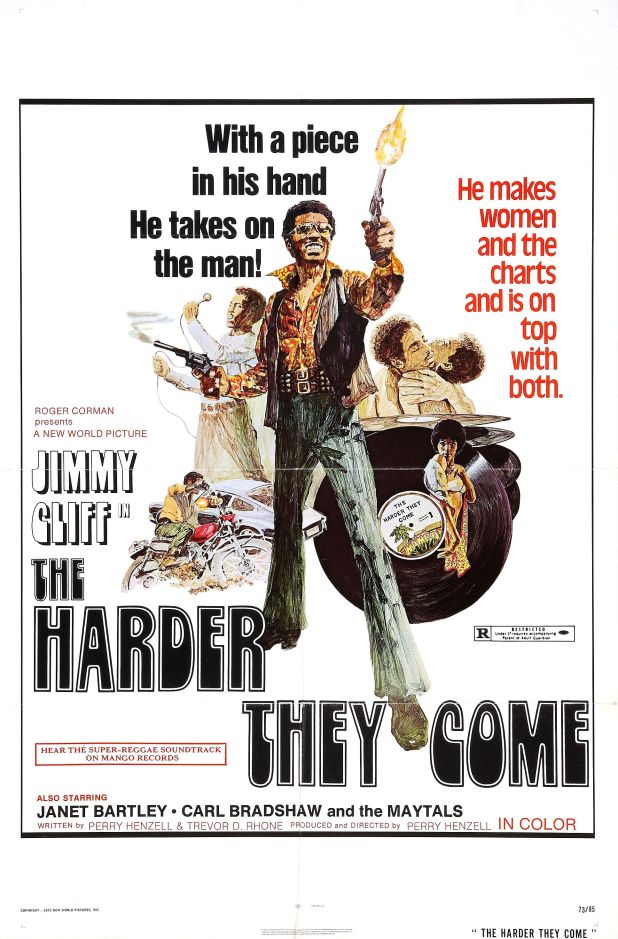
Reggae singer Jimmy Cliff plays Ivanhoe Martin, who was based on the real-life Jamaican criminal Rhyging, who may not have been a musician or a drug dealer but was the “original rude boy” and a folk hero in that country. Cliff said, “Rhygin was very much on the side of the people; he was a kind of Robin Hood, I guess you could call him.”
Director Perry Henzell believed that this movie was a success in Jamaica because people there had never seen themselves on the screen nor heard their native dialect, which may be English but still needs subtitles.
Cliff’s character moves to the big city, where he’s wowed by a screening of Django and just wants to make music, like the song which gives this movie its name. But the record producer he records it for controls the world of Jamaica’s music and even if it is a hit, he’ll probably never see the money. After falling into a life of crime, he becomes the kind of Hollywood gangster of his young dreams, sending photos to the press holding machine guns like some kind of Jamaican Dillinger. He’s doomed to die in the streets, riddled with bullets, but he’s going to grab every moment of glory that he can before the inevitable strikes him down.
New Line released this in February 1973 in the U.S. but it took over a year before midnight showings started building an audience. The soundtrack would introduce reggae to American listeners while Ivan was referenced in The Clash’s “Guns of Brixton” with the lyrics, “You see he feels like Ivan, born under the Brixton sun. His game is called surviving, at the end of The Harder They Come.”
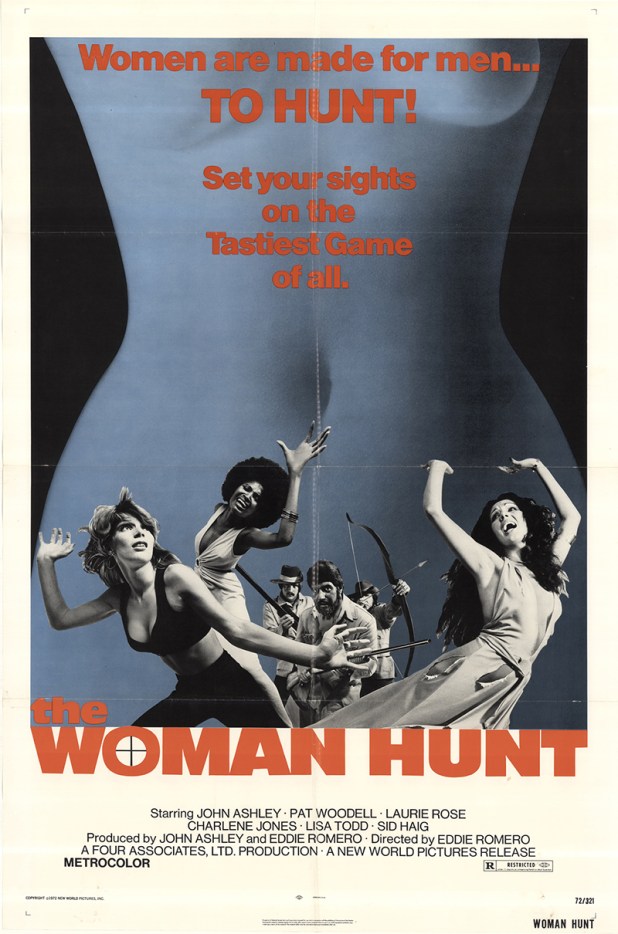
After the success of The Big Doll House, Roger Corman and John Ashley would have to work together again. However, this would be the last movie Eddie Romero would make for the producer. It’s a Jack Hill-written remake, remix and ripoff of The Most Dangerous Game with mercenaries Tony (John Ashley), Silas (Sid Haig) and Karp (Ken Metcalfe) kidnapping gorgeous women for the pleasure of Spyros (Eddie Garcia), who places them on his island and conducts hunting parties.
When Tony finds a conscience — more to the point he gets turned on by one of the women he’s taken, McGee (Pat Woodell, The Twilight People) — and decides to help her and her friends Billie (Charlene Jones, Unholy Rollers) and Lori (Laurie Rose, Policewomen) to escape Spyros and his brutal henchwoman Madga (Lisa Todd, Wonder Women and Sunshine Cornsilk from Hee-Haw).
All of the Corman Philippines-shot films seem like they’re setting up sex and the hint of violence until they realize their running time is getting close, so they go all Shakespeare and by that, I mean they kill nearly everyone off. This is no different, but I kind of like how — spoilers for a fifty year old movie — Spyros could kill the survivors but misses Magda so much he blows his brains out. Who said love is dead?
How important is this movie to Quentin Tarantino? Well, it’s the movie his character is watching in Planet Terror and he referred to it as “harsh, harsh, harsh.” He also took the name of Pam Grier’s character Alabama for his first published script, True Romance.
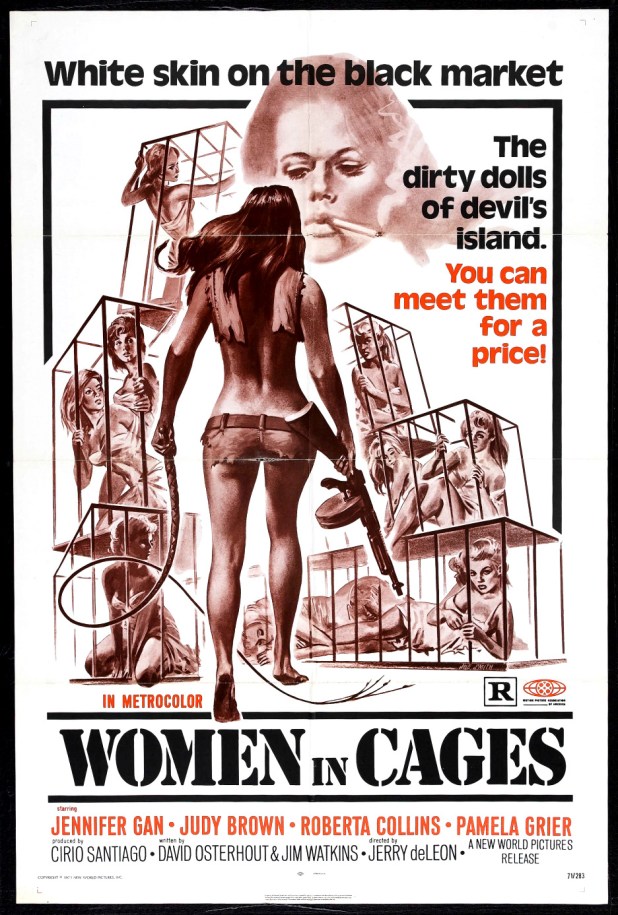
Director Gerry de Leon is a force of exploitation nature, making movies like The Blood Drinkers, Curse of the Vampires and the two efforts he co-directed with Eddie Romero, Brides of Blood and The Mad Doctor of Blood Island. They’re not fancy efforts but they’re sure entertaining.
Carol “Jeff” Jeffries (Jennifer Gan) is in love with Rudy (Charlie Davao), but little does she know that her lover is running an empire of sex, drugs and gambling on the seas. Once he realizes the cops are closing in, he uses her to stash his drugs and she takes the heat.
In the horrifying prison where most of this movie takes place, Jeff finds herself at odds with, well, everyone.
There’s Pam Grier moving beyond prisoner victim to guard abuser as Alabama, spouting off incendiary dialogue like this as she tortures Jeff inside a room she calls The Playpen:
Jeff: “What kind of hell did you crawl out of?”
Alabama: “It was called Harlem, baby. I learned to survive, never have pity. This game is called survival. Let’s see how well you can play it. I was strung-out behind smack at ten and worked in the streets when I was twelve. You’ve got a long way to go.”
Even the other prisoners can’t get along with her, like Alabama’s claimed woman Theresa (Sofia Moran), Sandy (Judy Brown, already a veteran of The Big Doll House) and heroin-loving Stoke (Roberta Collins, who also spent time in The Big Doll Houseand Caged Heat) who thinks she can get more heroin from Jeff’s man Rudy.
After taking abuse the entire movie, Jeff decides to head out into the jungles, which is filled with even more horrible people than inside the prison. Things get, well, horrifying for all concerned with an assault/drowning sequence that had to be really uncomfortable for viewers. Or maybe they whooped it up at the grindhouses during that sequence. Who can say?
As for me, I loved Collins in this. She wants her next fix so badly that she’ll poison a sandwich, unleash a snake on someone and then throw acid in someone’s face. Most girls will just ruin your life. She’ll kill everyone you know. Marriage material.
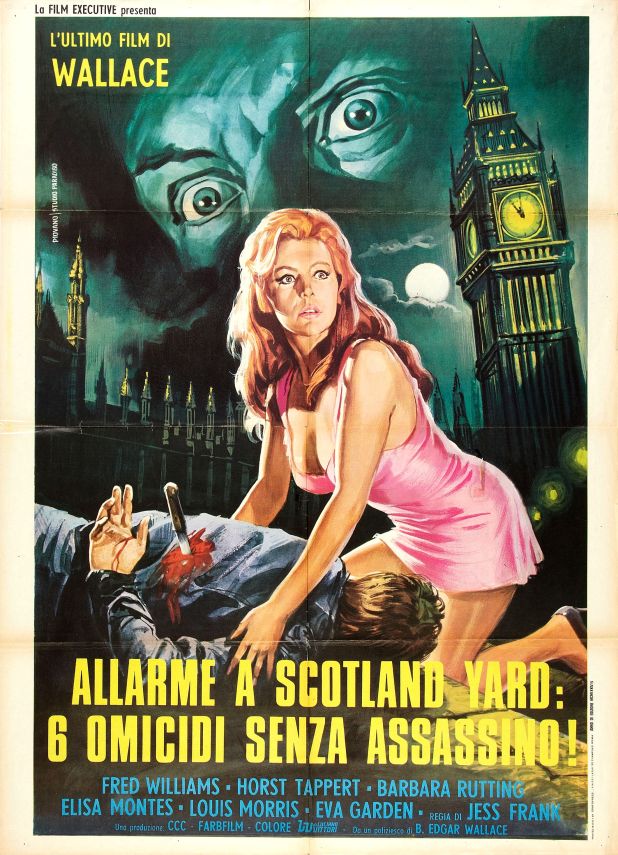
By 1972, the krimi had given way — for the most part — to the giallo. Both offshoots of the work of author Edgar Wallace — this is an adaption of his book Secret of the Black Suitcases which had already been filmed by Werner Klinger eleven years before — with this one being about a series of killings by knife throwing, followed by the corpse having a suitcase packed for them.
Also: While set in London, this was shot in Spain and yes, it’s a Jess Franco movie. He even shows up as a knife-throwing expert with a fancy hat.
Scotland Yard Inspector Ruppert Redford (Fred Williams) is on the case, along with crime novelist Charles Barton (Horst Tappert), which leads to organized crime running mescaline through the Flamingo Club and if you thought gorgeous women and jazz weren’t going to be part of a Franco movie you really need to brush up on what he loves most.
This is the last in the long series of krimi made by CCC and seeing as how they had reached the point where they were remaking past films, they probably were ready to move on. As for Franco, he’s subdued but still figures out some interesting places to place his camera. I kind of adore the late 60s and early 70s films he made, which still have a budget and weren’t yet the same movie being remade and remixed.
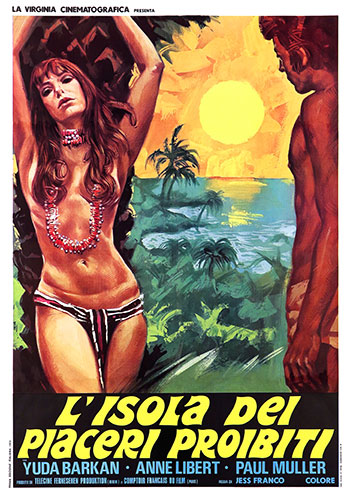
Mr. Robinson (I just had a mental breakdown because I reconized Yehuda Barkan, the Israeli-born comedian and director of a Cannon film that never came to America, The Big Tease, is in the movie!) is tired of the married life with kids. He thinks that he’s a descendent of that book character and not just a simple phamarcist and ends up on a jungle island with three women: Samantha (Anne Libert, The Queen of the Night, not to quote Dio, but from A Virgin Among the Living Dead), Linda (oh man, my world’s collide again because that’s Andrea Rau, Ilona from Daughters of Darkness!) and Peper (Ingeborg Steinbach from the Schoolgirl Report movies and if you read that and paused and say, “Ah yes, Schoolgirl Report, you’re a pervert.” and then we will laughing with one another and not at like old friends should). He gets there, because this is a Jess Franco movie, thanks to a rich porn star jewel thief which is like, being President of the Jess Franco Cinematic Universe (also, friend, if you thought, “Oh yes, the JFCU.” thank you, I am writing this while high and maybe we are speaking through time, who can say, other than this 10mg of hard THC candy that just kicked in).
There’s also a talking chimp, Howard Vernon as a comical cannibal, a Franco cameo as a director, a triggering ending where the mean wife comes to the island and discovers what Trent Renzor really meant about “Happiness In Slavery,” a script by Ken Globus (another Cannon connection, he did second unit on Menahem’s Operation Thunderbolt and the pre-Golan and Globus Cannon release The Passover Plot and man, writing this movie is like Jim Garrison level connections because he also wrote the English language translations for the Lemon Popsicle sequel Going Steady) and Artur Brauner (who produced tons of Franco’s films and also wrote…man, make it stop! He wrote Cannon’s The Rose Garden, as well as Death Occurred Last Night, The Vengeance of Doctor Mabuse and X312: Flight to Hell).
Really, this movie kind of blew my mind. Thanks for reading and being there.
Oh yeah and it’s really not good. It’s not set in a real jungle, everything is very lad’s mag humor and Jess feels just there for it. But whatever. I’m still glad it exists.
I’ve gone on record saying that I hold Sergio Martino in the same esteem as Dario Argento and feel that his giallo films are if not as good, often really close to being better. In fact, I’d compare his five-picture run from The Strange Vice of Mrs. Wardhto Torso to any giallo creator there ever is, was or will be.
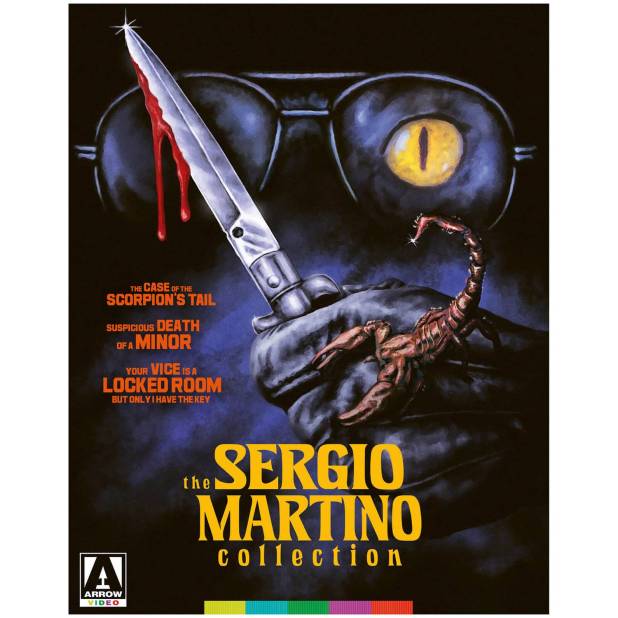
Arrow Video has brought together three of his giallo in one impressive looking box set.
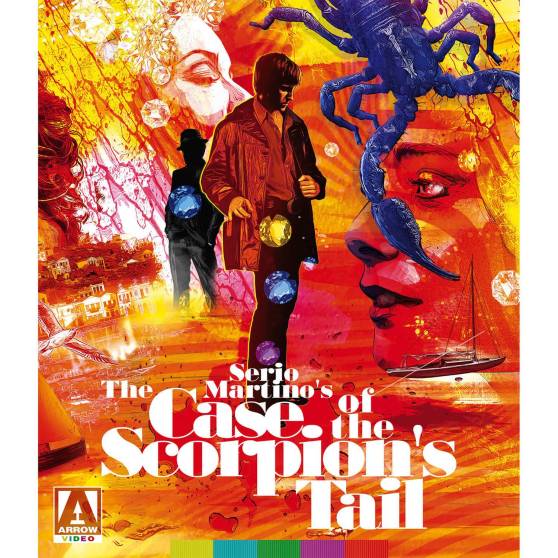
The Case of the Scorpion’s Tail (1971): While she makes love to someone else, Lisa’s husband dies in a jet crash. She stands to inherit all of his money, despite them being basically separated. An ex-lover has a confrontation with her, threatening her with blackmail. She pays up — some money now, then some when she gets the letter where she wished that her husband was dead. But a gloved hand finds the letter and kills the ex-lover!
Lisa has to go to Athens to collect the money, but runs into one of her husband’s ex-lovers, Lara Florakis (Janine Reynaud, Succubus) and a knife-wielding maniac. Peter Lynch (George Hilton from All the Colors of the Dark) saves her and takes her to the hotel. She asks for all of the money in cash, despite warnings to how dangerous that is.
That same maniac tries to kill Peter, then comes back to kill Lisa, sharp jazz wails staccato punctuating each stab of the knife, each rip across her body. Jump cuts and flashes and the room is covered by the police, who question him.
An INTERPOL agent, Inspector Stavros (Luigi Pistilli, The Good, the Bad and The Ugly, Your Vice is a Locked Door and Only I Have the Key), offers to help Peter with the case and the moment he goes to talk to Lara, he’s attacked by the gloved man.
That brings in Cléo Dupont(Anita Strindberg, Who Saw Her Die?), a journalist who pretty much instantly falls in love with our hero. They go up to his room, but it’s been turned over by the police, with even the bed sliced open looking for the million dollars that went missing when Lisa was killed.
Turns out the gloved man wasn’t on Lara’s side — he or she slits her throat, then runs up a spiral staircase as a guard gives chase. This reveals a room full of one-eyed baby dolls and a strange oil painting. Between the woman’s face against the glass with blood spraying everywhere and these reveals, this film is really tipping its hat toward Argento.
The bodyguard chases after the killer, but is knocked off the roof. One slash across the fingers and we have another dead body. It’s 45 minutes in…and most of the IMDB cast is already dead!
That said — there’s a stewardess that gets the gift of scorpion earrings from an unseen lover. So there’s that.
Meanwhile, Peter and Cléo make love on an orange shag couch while a peeping tom watches from the window. You know how Bruce Banner always has on purple slacks and you wonder, “Who wears purple slacks?” Peter does.
The peeping tom wants him to move his car, which is blocking the garage. That said — he’s awfully creepy about it. Peter moves the car and then gets back to business time. PS — if you’re into late 60’s/early 70’s patterns and fashions, you may fall in love with this movie.
While George was out, the killer snuck in. Good thing he forgot his keys! He stumbles in at the last second, but Cléo has already been sliced up. The cops suspect Peter — but they also find a scorpion cufflink that looks just like the earrings we saw earlier.
Oh yeah — about that stewartress’s boyfriend? Yeah fights the killer, only to get his eye hacked out. Somewhere, Fulci was smiling.
Cléo is out swimming off Peter’s yacht and finds the money buried in a cave. Like a Republic serial villain, he reveals his entire plot. He worked for years to make money and saw rich people just throw it away. He put everyone against one another and even had a partner who would do the killings while he was in the room. It’s all rather simple as the police find and kill him before he can hurt her.
The Arrow Video release of this movie has an audio commentary with writer Ernesto Gastaldi, moderated by filmmaker Federico Caddeo (in Italian with English subtitles); interviews with Hilton and Martino; an analysis of Martino’s films by Mikel J. Koven, author of La Dolce Morte: Vernacular Cinema and the Italian Giallo Film; a video essay by Troy Howarth, author of So Deadly, So Perverse: 50 Years of Italian Giallo Films; a trailer; an image gallery and a reversible sleeve featuring original and newly commissioned artwork by Chris Malbon.
Your Vice Is a Locked Room and Only I Have the Key (1972): Has a movie ever had a better title? Nope. Sergio Martino’s fourth entry into the giallo genre, following The Strange Vice of Mrs. Wardh,The Case of the Scorpion’s Tail and the previously reviewed All the Colors of the Dark, it refers to the note that the killer leaves to Edwige Fenech’s character in Mrs. Wardh. And the title is way better than the alternate ones this film has — Gently Before She Dies,Eye of the Black Cat and Excite Me!
Martino wastes no time at all getting into the crazy in this one — Oliviero Rouvigny (Luigi Pistilli from A Bay of Blood, Iguana with the Tongue of Fire, Death Rides a Horse) is a dark, sinister man, a failed writer and alcoholic who lives in a mansion that’s falling apart (If this all feels like a modernized version of a Poe story like The Fall of the House of Usher, it’s no accident. There’s even an acknowledgment that the film is inspired by The Black Cat in the opening credits.). His wife, Irina (Anita Strindberg from A Lizard in a Woman’s Skin and Who Saw Her Die?), suffers his abuses, but never more so than when he gathers hippies together for confrontational parties. He makes everyone pour all of their wine into a bowl and forces her to drink it, then humiliates their black servant Brenda until one of the partygoers starts singing and everyone joins in, then gets naked. This scene is beyond strange and must be experienced.
The only person that Oliviero seems to love is Satan, the cat that belonged to his dead mother. A black cat that talks throughout every scene he’s in, his constant meows led to my cats communicating with the TV. God only knows what a 1970s giallo cat said, but it seems like his words spoke directly to their hearts.
One of Oliviero’s mistresses is found dead near the house, but he hides her body. The police suspect him, as does his wife. Adding to the tension is the fact that Irina hates Satan, who only seems to care about messing with her beloved birds.
Remember that servant? Well, she’s dead now, but not before she walks around half-naked in Oliviero’s mother’s dress while he watches from the other room. She barely makes it to Irina’s room before she collapses, covered in blood. Blood that Satan the cat has no problem walking through! He refuses to call the police, as he doesn’t want any more suspicion. He asks his wife to help him get rid of the body.
Oliviero’s niece Floriana (Edwige Fenech, pretty much the queen of the giallo) is in town for a visit, learning how Oliviero hasn’t been able to write one sentence over and over again for three years, stuck in writer’s block (and predating The Shining by 5 years in book form and 8 years away from Kubrick’s film). Unlike everyone else who tolerates Oliviero’s behavior or ignores it, Floriana sees right through the bullshit. The writer is used to seducing every woman he meets and she initially rebuffs him, even asking if it’s true that Oliviero used to sleep with his mother. He angrily asks if it’s true that she’s a two-bit whore. “Those would be two bits worth spending,” is her caustic reply.
Irina confides all of her pain to Floriana as the two become lovers. And another girl gets murdered — perhaps by Oliviero. Then, a dirt bike racer comes to drop off milk and hit on Floriana. Whew — I was wondering when this film would get hard to follow and start piling on the red herrings!
After being questioned by the police, Oliviero comes home to choke his wife. He stops at the last second…then we’re off to the races! The motorbike races! The milkman loses when his bike breaks down, but he’s the real winner — taking Floriana back to the abandoned house that he lives in. And oh look — there’s creepy Oliviero watching the action.
Meanwhile, Satan has gotten into the coop and chowed down on several of the birds. Irina catches him and they have quite the battle. He scratches her numerous times before she stabs him in the eye with a pair of scissors. An old woman watches and is chased away by Irina’s yelling.
She’s afraid that her husband will kill her once he learns that she killed Satan. And Oliviero keeps wondering where the cat is, especially after he buys the cat his favorite meal from the store — sheep eyes. That said — Satan might not be so dead, as we can hear his screaming and see him with a missing eye.
Floriana puts on Oliviero’s mother’s dress, asking if this is what the maid looked like before she died. Whether it’s the dress or the forbidden family love or just her beauty, he rips off her dress — at her urging, mind you — and begins making love to his niece. We cut to Idrina, caressing her pet birds, when Oliviero confronts her with scissors and questions about Satan. He almost stabs her before he ends up raping her inside the coop, while Floriana looks on. She playing them off the other, even telling Idrina that she’s slept with her husband. She also tells her that Oliviero wants to kill her, so she should kill him first.
Idrina wakes up to the sound of Satan, but can’t find him anywhere. What she does find is her husband in bed with Floriana, who is belittling him. With every sinister meow, there’s a zoom of the cat’s damaged eye. Finally, Oliviero attacks her for spying on him, slapping her around before he leaves to write. She walks the grounds of the mansion, seeing the motorcycle rider make a date with Floriana and catching sight of Satan, who runs from her. In the basement, she finds scissors and the hidden bodies of her husband’s lover and the murdered maid. In a moment of clarity — or madness — she stabs her husband while he sleeps. The sequence is breathtaking — a giallo POV shot of the murder weapon intercut with the same sentence being typed over and over interspersed with all of the abuses that Oliviero had wrought upon her. She stabs again and again before Floriana interrupts, asking her if it was easy. The sentence that the author had written again and again was him claiming that he would kill her and there was a space in the wall for her, so obviously, she had to kill him.
As for Floriana, all she wanted was the family jewels, which were hidden in the house. They seal Oliviero’s corpse within the wall while Walter watches from afar. He’s played by Ivan Rassimov, who does creeping staring dudes better than anyone else — witness his work in All the Colors of the Dark. And it turns out that he’s the real killer! He’s been typing “vendetta” over and over again. Floriana asks if Idrina was planning to kill her before she runs off into the night, then Walter appears to kiss Idrina. Turns out they were working together all along — she tells him where to find Floriana the next morning. Holy shit — Idrina reveals her whole plot, revealing how she drove her husband crazy, making him believe that he could have been a murderer! She wishes that there was an afterlife so Oliviero’s mother — who she killed! — could tell him how great her revenge was. She ends by wishing that her husband was still alive so that he could suffer for eternity.
Walter sets up an accident that takes out Floriana and her boyfriend, as their motorcycle crashes, sending blood across the white heart of a billboard and out of her lips. He tosses a match on the gasoline-soaked highway, burning both of their corpses. He collects the jewelry and gives it to Idrina, who responds by shoving him off a cliff!
When she returns to the mansion, the police are there, as there were alerted to her stabbing Satan by the old woman. They come inside the house to write a statement, but hear the sound of Satan’s meows. Following the sound, they find him inside a wall — with the corpse of her husband!
Your Vice is a Locked Room and Only I Have the Key is superb. An intriguing story — only a few derailing giallo moments (like the killing of the girl in the room with the dolls and the B roll motocross scenes) — with great acting, eye-catching camerawork and some genuine surprises, it’s well worth seeking out and savoring.
The Arrow Video blu ray of this movie has an interview with Martino; a making of with interviews with Martino, Fenech and Gastaldi; a visual essay by Michael Mackenzie exploring Martino’s contributions to the giallo genre; a feature by film historian Justin Harries on Fenech’s career; Eli Roth speaking on the film and a reversible sleeve featuring original and newly commissioned artwork by Matthew Griffin.
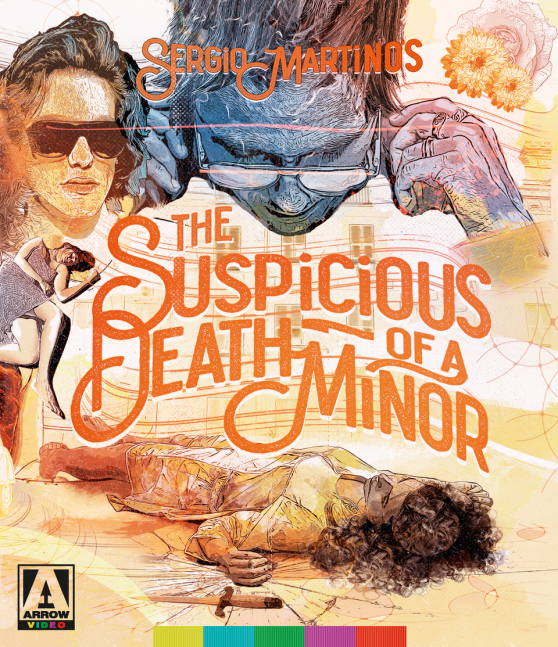
This is the last of Martino’s giallo and doesn’t feature his usual cast, like Edwige Fenech or Ivan Rassimov. It does, however, have Claudio Cassinelli, who was in Murder Rock and What Have They Done to Your Daughters?
Cassinelli plays police detective Paolo Germi, who meets a girl named Marisa (Patrizia Castaldi, in her only acting role before becoming a costume designer) who is soon murdered. She was a prostitute and now, Germi is haunted by her death and wants to find the killers. Unfortunately, Marisa was in way over her head and getting the answers won’t be simple. After all, there’s a man with mirrored shades killing everyone that gets close to the truth.
While this film doesn’t reach the lunatic heights of Martino’s finest works, it’s still a gleaming example of how great 1970’s Italian genre film can be.
The Arrow Video release of this film also has extras like audio commentary by Troy Howarth, author of So Deadly, So Perverse: 50 Years of Italian Giallo Films; an interview with Martino and a reversible sleeve featuring original and newly commissioned artwork by Chris Malbon.
You can purchase this Arrow Video box set from MVD.





 B&S About Movies
You must be logged in to post a comment.