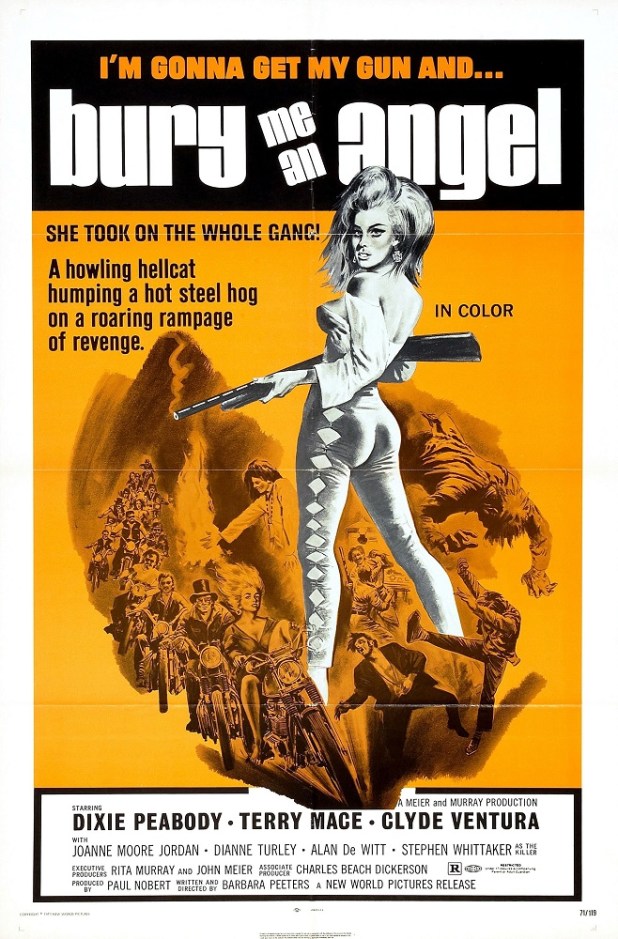
NEW WORLD PICTURES MONTH: Bury Me an Angel (1971)

Barbara Peeters, who would go on to direct Summer School TeachersStarhops and Humanoids from the Deep, came up with the idea for this movie while working as a script supervisor on Angels Die Hard. Once actress Rita Murray told her she was looking to produce, Peeters pitched and wrote this film in days. This would make Peeters the first female biker film director.

The six foot tall Dixie Peabody had been in Angels Die Hard in a small part and wouldn’t make many movies past this starring role (she’s also in Night Call Nurses and was a production assistant on Peeters’ Summer School Teachers). She plays Dag, who isn’t just a girl riding the back of the bike, but instead someone who rides for revenge on her own cycle.

As the film begins, we see her brother Dennis (Dixie’s real-life-brother Dan) get shot in the fact with a shotgun blast by a stranger (Stephen Whittaker), an event we see replayed in Dag’s head throughout the film. She grabs Jonsie (Terry Mace), Bernie (Clyde Ventura) and a gun of her own and they all head out north to kill that man, a fact lamented by her mother who realizes there’s no way she can stop her daughter. Maybe no one can.

Yet this isn’t the expected revenge film. The trio meet a witch in the desert who reveals to Dag that the revenge isn’t going to take away her grief and pain. An encounter with a hippie art teacher (Dan Haggerty) that turns into a red lit lovemaking scene which causes Dag to run rather than face up to the emotions she’s running from shows that our heroine maybe has some demons of her own. This is confirmed by the drug trip flashback she has and the ending, which drops some gasoline on the fire of this film and confirms the real reason why Dag’s brother’s death destroyed her.

Top it all off with some great songs by East-West Pipeline — their “Let It Be” isn’t The Beatles’ song but it’s super hot — and this film stands out from the rest of the biker pack. I wonder why Dixie Peabody didn’t do more, because she had the charisma to be somebody big and by that, I mean she’d be the villain torturing Cheryl “Rainbeaux” Smith or Claudia Jennings in some dank prison somewhere in the jungle, which I see as making it big.

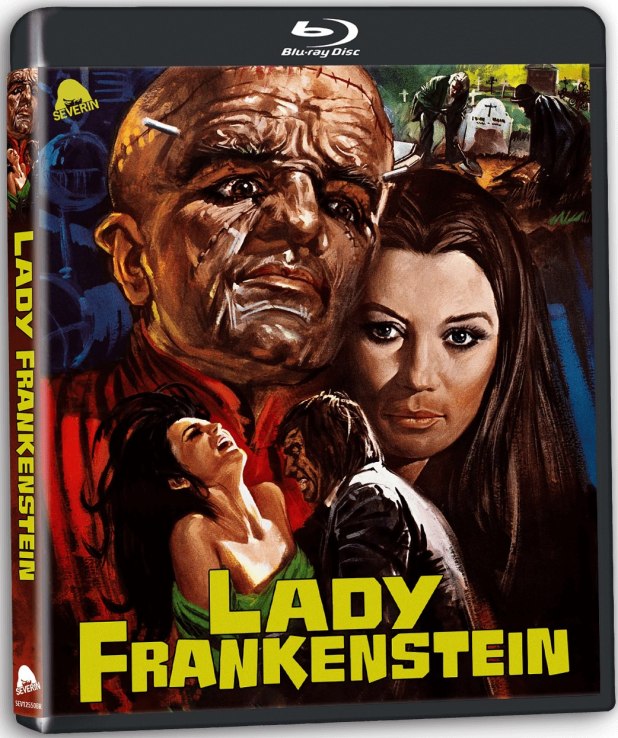
NEW WORLD PICTURES MONTH: Lady Frankenstein (1971)

EDITOR’S NOTE: This was originally on the site on November 12, 2018.

Imagine a Hammer movie where instead of implied nudity and strange sexuality, everything is laid, well, bare. It’s not hardcore, but compared to where horror was pre-1971, Lady Frankenstein is a somewhat audacious concept: the man is no longer in charge and it turns out that the heroine (or villain, there’s no real hero in this movie though) is even more warped and insatiable than those that have come before. If you listen to Rob Zombie, you may know the sample from the trailer for this film: “Who is this irresistible creature who has an insatiable love for the dead?”

Three graverobbers deliver a body to Baron Frankenstein (Joseph Cotten!) and his assistant Dr. Marshall (Paul Muller, Barbed Wire Dolls) to bring back to life. The twist is that Tania Frankenstein (Rosalba Neri, Lucifera: Demon Lover, Amuck!) has completed her studies in medicine and is eager to help her father with his secret work.

The next day, the Frankensteins and Marshall watch a criminal be hung and run into Captain Harris (Mickey Hargitay, the former husband of Jayne Mansfield and father of actress Mariska Hargitay, who was played by Arnold Schwarzenegger in the 1980 made-for-TV movie The Jayne Mansfield Story), who already suspects them of graverobbing.

That night, Frankenstein brings the man back to life — a scarred, weird headed, giant-eyed beast — who pretty much instantly hugs the Baron to death. Tania and Marshall report the murder as a burglar, but Harris calls their facts into question.

If you thought that killers going after people as they have sex was something that was invented in 1980’s slashers, the creature in Lady Frankenstein is here to show you the error of your ways as he comes upon (no, not like that, get your mind out of the gutter) numerous frolicking couples and eviscerates them.

Meanwhile, Tania makes Marshall confess that he’s always loved her, but his old body can’t satisfy her. This is a polite way to say that the dude has erectile dysfunction and if Viagra had existed in the 1800s, there would be no need for the movie to continue the way that it does. Tania does find the mildly mentally challenged servant Thomas (Marino Masé, The Red Queen Kills Seven Times) attractive, so she has sex with him while Marshall watches. Thus cuckolded, he snuffs the young man out with a pillow.

Things get better for him, as she puts his brain in the young man’s body, making him superhumanly strong for some reason. While all that’s going on, the creature keeps on terrorizing people until they remember that they’re supposed to pick up pitchforks and torches and take him out.

The monster makes its way back to the castle, where it attacks Marshall, who rips off its arm, allowing Tania to stab it before he smashes its head open. As the castle burns down around them, Marshall and Tania make love as Harris and Thomas’ sister Julia (Renate Kasché, Devil in the Flesh) watches. The flames consume them as Marshall begins to choke out Tania.

Lady Frankenstein has a great lead who can do anything a man can do, if a man wants to bring the dead back to life and have sex with their reanimated corpses. That’s progress, I think.

Further progress is that every time I watch this movie, I love it more and more. I’m so excited that it’s part of Severin‘s Danza Macabra box set along with The Monster of the OperaThe Seventh Grave and Scream of the Demon Lover.

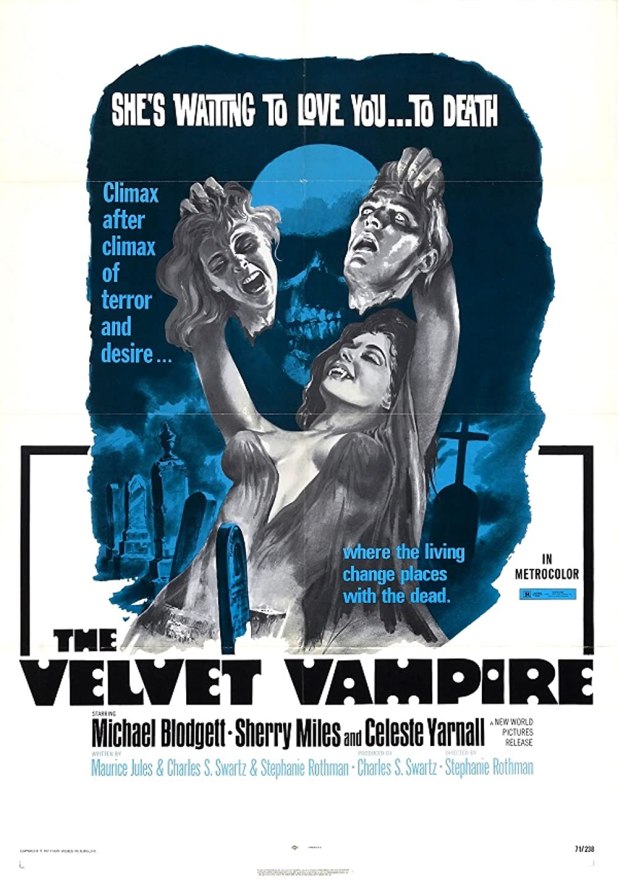
NEW WORLD PICTURES MONTH: The Velvet Vampire (1971)

At some point in the late 60s, female vampires started to rival their traditional male ancestors. Sure, Dracula’s Daughter and Brides of Dracula were unleashed in 1936 and 1960, but they were tied to a man. The world of female vampires first rose in Carmilla-influenced movies like Blood and Roses and Daughters of Darkness, as well as Eurohorror like the films of Jean Rollin (Rape of the VampireThe Shiver of the Vampires, Requiem for a Vampire), Jess Franco (Vampyros LesbosFemale Vampire) and Jose Larraz (Vampyres), not to mention the ever-growing female desire within the world of Hammer (Twins of EvilLust for a Vampire, The Vampire LoversCountess Dracula), Crypt of the Vampire and strange regional and world cinema like Let’s Scare Jessica to DeathValerie and Her Week of WondersLemora and The Blood Spattered Bride.

Carmilla was first filmed all the way back in 1932 as Vampyr and that story — beyond inspiring so many of the films in the last paragraph — informs The Velvet Vampire. Never think that Carmilla was inspired by Bram Stoker’s better known novel; it predates Dracula by 26 years.

Director Stephanie Rothman was seeking a movie to make after The Student Nurses and the first thought was The Student Teachers, which she wrote with her husband Charles Swartz. Then producer Larry Woolner wanted to make a movie a lot like Daughters of Darkness and Rothman and Swartz wrote this modern day tale of a female vampire.

The vampire at the center of this movie, Diane Le Fanu, is played by Celeste Yarnall, who was in Henry Alan Towers and Jess Franco’s Eve and Beast of Blood; before retiring from acting to be successful in real estate, writing books on holistic pet care, teaching nutrition and breeding of Tonkinese cats, she had Elvis sing “A Little Less Conversation” to her in Live a Little, Love A Little and acted opposite David Soul in the Star Trek episode “The Apple.” Before this film, she turned down rules that had nudity. But when she got divorced and had a young daughter, she decided to do this movie to pay her mortgage.

She told Alex Ander On Film, “I had just had my daughter on July 4th 1970 and was still breastfeeding when I did the movie, so I brought my daughter with me and everyone was very accommodating, just a joy to work with. It was my first experience having a female director and it was remarkable especially concerning the sexual scenes. Stephanie was very sensitive. She closed the set during the more explicit shots, and there was often just Michael and I and the cameraman. We had a skeletal crew that made sure everything was in place. And then of course, the robes came off…”

Her role is named after author Sheridan Le Fanu, the author of Carmilla — Carl Stoker (Gene Shane), the author fanged character in this movie, gets his name from the Dracula author — and she lives in the desert, luring people into her embrace while never leaving behind the preserved corpse of her husband.

She’s invited Lee Ritter (Michael Blodgett, Beyond the Valley of the Dolls) and his wife Susan (Sherry Miles, The Pack) into the desert, where she rides around in her dune buggy and eventually seduces them both. But Lee’s just a means to an end; Susan is who she really needs. But is she a vampire? Sure, she sucks the venom — and blood — of Susan, but she mainly just eats bloody pieces of chicken livers, has a reflection and walks by day. Yet place a crucifix in her way…

There are moments — like the dream sequence where the young couple makes love in the midst of the sand dunes as Diane emerges through a window to attack them — that feels like the sunbaked California remix of Jean Rollin’s artistic blooddrinkers. It’s also the exact opposite of the kind of film that you’d think it was, an exploitative lesbian sex and blood movie. It has all those things. It just feels classier than it should.

That may be why Dave Kehr of the Chicago Reader said, “Given the genre (horror) and the budget (extremely low), it may seem perverse to say that Stephanie Rothman’s 1971 film is among the best women’s films ever made, but so it is.”

When she appeared at a screening of this film at the UCLA Center for the Study of Women in 2008, she told Ben Sher, “The freedom that existed was the freedom to take what were the genre expectations and do unexpected things with them. Do things that would make them seem relevant to a wider audience than the usual fans of exploitation films. So we included political opinions and we tried to make the stories have more psychological depth. We tried, given the restrictions of the genre, to address some ideas that were ignored by Hollywood and by most other films made at that time. As long as we met the sub-distributors expectations, they didn’t mind if we exceeded them in other ways. In fact, they were happy if we did things that were controversial, because that would give them publicity in the papers. That’s not why we did them, but that was certainly why they accepted these things. As long as the theater wasn’t burned down, it was all right if we exceeded the conventional expectations for this kind of film.”

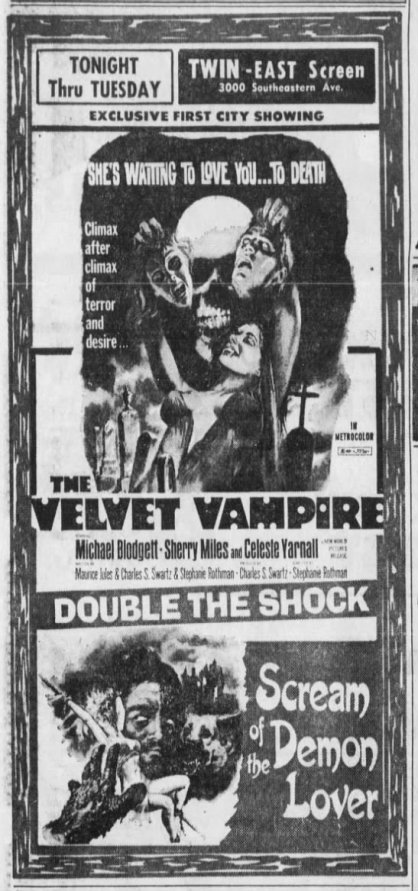
The Velvet Vampire played with Scream of the Demon Lover, which is exactly the kind of sex and horror you expect, not that that’s a bad thing. Rothman never really got the respect she deserved by Hollywood when she was working within it. Indeed, in that earlier referenced interview she claims that MGM brought her in for an interview to discuss this movie when they were making The Hunger with Tony Scott and wanted it to feel like her movie. She replied to them, “Well, if you want a film like The Velvet Vampire, why don’t you get Stephanie Rothman to make it?”
I’ve seen this movie described as stylish trash. While that sounds like the kind of movie I love, I continue to rail against the idea of so bad it’s good and guilty pleasures. This film is gorgeous, steamy and looks and plays way better than it should given its budget and origins. We should celebrate it as a success, not place it into a ghetto of film so that we can feel better about having to celebrate a movie with more humble or commercial origins.

You can watch this on Tubi.
NEW WORLD PICTURES MONTH: Angels Hard as They Come (1971)

EDITOR’S NOTE: This was originally posted on July 27, 2018.

Jonathan Demme (Married to the MobSilence of the Lambs) impressed Roger Corman with his writing ability and was asked if he wanted to try a motorcycle movie. His idea? Rashomon on motorcycles. He turned to his friend Joe Viola, a commercial director, and created this film.

Long John (Scott Glenn, Silence of the Lambs), Juicer and Monk (James Inglehart, Randy Black from Beyond the Valley of the Dolls!) get caught up in a busted drug deal before meeting up with the Dragons gang and heading to a ghost town. There, they meet a hippie commune, where Long John falls for Astrid. They argue over the bikers being evil because of Altamont while he counters that hippies have been tainted by Manson.

The Dragons do, too. A fight ensues and Long John’s girl gets raped and stabbed, with the Dragons framing the Angels. Their leader, the General (Charles Dierkop, the gas station attendant in Messiah of Evil) sentences them to fun and games, which means they all get dragged behind motorcycles. Monk escapes and organizes the rest of the gang, leading to a violent battle to end all biker battles.

This movie is packed with long bike riding montages, sex, drugs, debauchery, mayhem and a young Gary Busey. It’s talky, though and if you’re not super into biker movies, this is probably not the one to start with.

You can watch this on Tubi.
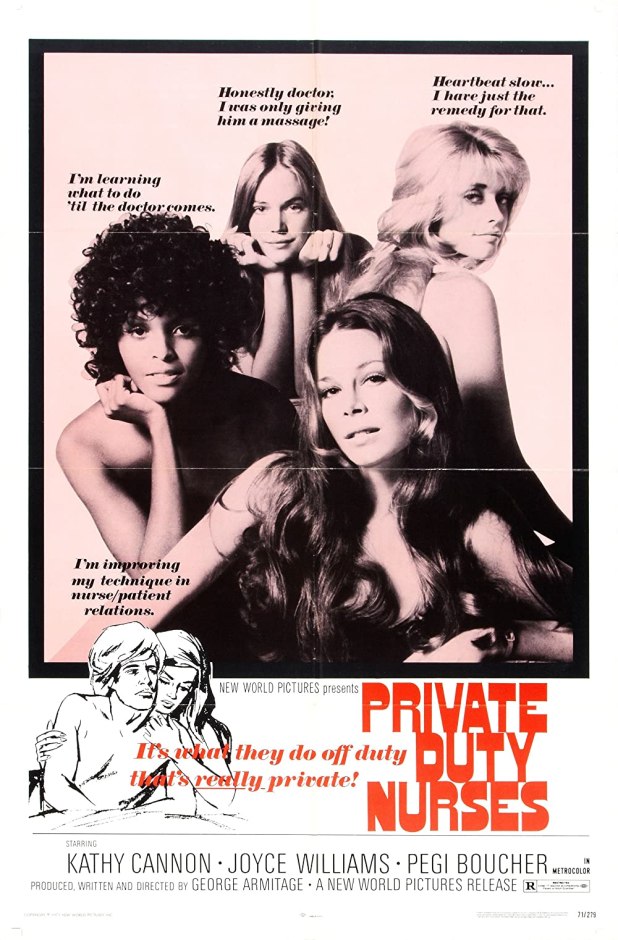
NEW WORLD PICTURES MONTH: Private Duty Nurses (1971)

Roger Corman got the idea for this movie — a sequel of sorts to The Student Nurses — after being sent a letter of complaint about that movie from the Private Duty Nurses Association. It’s written and directed by George Armitage, who wrote Gas-s-s-sHot Rod, Vigilante Force and Darktown Strutters. He’d go on to direct and write Grosse Point Blank.

It’s a really similar story to the first Corman nurses film as, you knew it, a group of nurses deal with the issues of the day. There’s Spring (Katherine Cannon, later Donna’s mom on Beverly Hills 90210) who falls for Vietnam vet and bike rider Domino (Dennis Redfield). Lynn (Pegi Boucher) has a water pollution storyline. And Lola (Joyce Williams) has to take a backseat to her black doctor boyfriend who is trying to change the status quo, but just for black men. Women will have to wait or so he states.

The social issues here feel tacked on, the women feel less interesting than the men they’re with — they often take a backseat to them and it feels wrong — and it just seems like we miss the deft touch that Stephanie Rothman brought to the first of New World’s female job movies. That said, the music is by a band called Sky and I kind of liked it; I’m amazed that Doug Fieger in that band was also in The Knack.

Armitage would go on to write the next film in this series, Night Call Nurses, which is a perfect exploitation title that suggests something illicit without ever saying it.

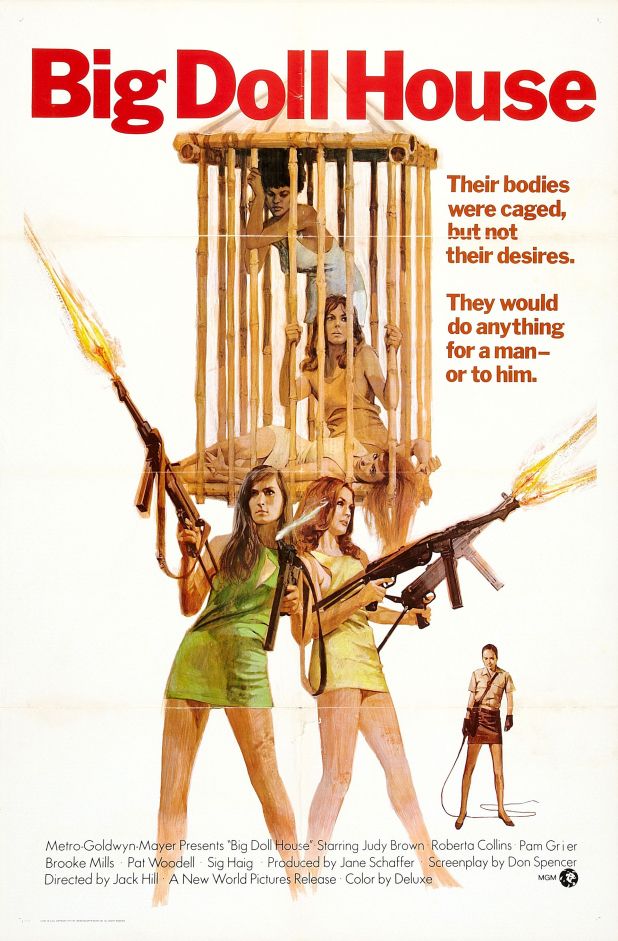
NEW WORLD PICTURES MONTH: The Big Doll House (1971)

According to Stephanie Rothman, Roger Corman started this film by having James Gordon White write it, but he didn’t like the results. She, her husband Charles S. Swartz and Frances Doel plotted the idea and had Don Spencer write the actual script. Corman wanted her to direct it, but she turned it down. Enter Jack Hill and enter the Philippines, where John Ashley and his partners put up a chunk of the money, leading to this movie getting its unique look.

Collier (Judy Brown, The Manhandlers) is the new girl in prison, there for murdering her old man. That’s Pam Grier singing as we meet the girls on the block: tough lesbian Grear (yeah, Grier), her dominated girl Harrad (Brooke Mills, The Student Teachers), blonde badass Alcott (Roberta Collins, who dominated the screen in Caged HeatDeath Race 2000Wonder Women and Unholy Rollers), Ferina (Gina Stuart) and her cat, and political dissident Bodine (Pat Woodell, a long way from Petticoat Junction). They’re all under the watchful and brutal eye of Miss Dietrich (Christiane Schmitdmer, The Giant Spider Invasion) and head girl in charge Lucian (Kathryn Loder, an out of control lunatic in this; she was the daughter of a theologian and nearly died of undiagnosed diabetes during the filming of the movie; she’s also in Foxy Brown). 

Nearly everything the women in prison genre is known for comes from this movie and the Caged Heat. This also throws in Sid Haig — more movies could use him — and Roberta Collins assaulting a man, snarling “You’ll either get it up or I’ll cut it off!” in a scene that had to titillate as much as it terrified men more than fifty years ago. She also has a movie stealing mud fight with Grier and then you also have Woodell double firing submachine guns and realism be damned, it looks incredible.

When this was cast, Grier was working as the receptionist at the American-International Pictures front desk. Can you imagine coming in for a meeting and Pam Grier is just sitting there? Two years later and she’d be perhaps the biggest non-major studio actress of the 70s. While many of the actresses in this film had to be convinced to do nude scenes, she asked for them. She’d later tell Rolling Stone, “I call it the Brown Nipple Revolution. We weren’t the epitome of sexual attraction for the male audience, in movies, magazines, anything. We were told our brown nipples weren’t attractive. I was trying to break that line of what was acceptable in society.”

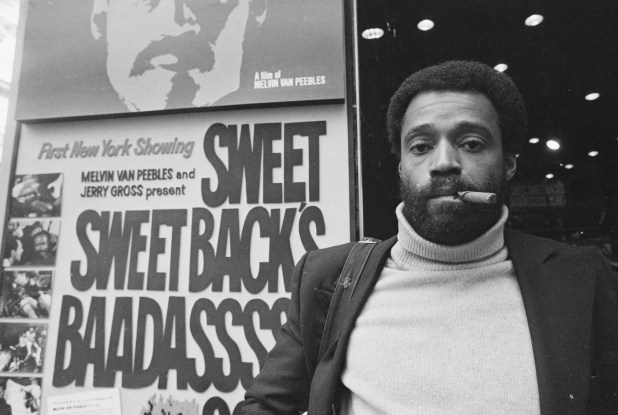
NEW WORLD PICTURES MONTH: Sweet Sweetback’s Baadasssss Song (1971)

Sweet Sweetback’s Baadasssss Song is incendiary, 51 years after it was made, so I have no idea what it was like when it played theaters in 1971. Melvin Van Peebles started making it as part of his three-picture deal with Columbia Pictures, but at the end of the day, no studio would finance this.

Van Peebles did it all himself, directing, raising the money, writing, scoring, starring, doing his own stunts and even had unsimulated sex that led to this movie being “rated X by an all-white jury” and if that’s not a tagline, tell me a better one.

Not only did he do the stunts, he jumped off a bridge nine times to get the perfect shot. And he got gonorrhea shooting all the sex scenes, then got workers’ comp from the Directors Guild for getting hurt while working, using the money to finish this movie.

He came up with the idea by driving his car into the Mojave desert and driving off the highay and then sitting and staring at the sun, which gave him a revelation. He was going to make a movie “about a brother getting the Man’s foot out of his ass.”

Sweetback grew up in a brothel, learned how to have sex when he was just a kid (that’s Mario Van Peebles, Melvin’s son, between a sex workers thighs in the opening) and has taken his lovemaking skills and big cock to the professional arena, performing every night in the live sex show in the house where he grew up.

His boss Beetle agrees to a deal from two cops. Sweetback looks like a killer they’re looking for and to keep the white public happy, they’re going to arrest him and then release him a day or so later. But then they handcuff him to Mu-Mu, a Black Panther, and when the cops beat the man into oblivion in the middle of nowhere, Sweetback turns his handcuffs into weapons, imposing his will on the Man.

On the run, no one will help our hero. A woman just wants sex for taking off his chains. His boss doesn’t want any trouble. A preacher just wants to keep things as they’ve always been. His episodic journey to freedom leads to drinking water in the desert, using his sex as his greatest weapon and hiding amongst others as dogs are turned on him and black men are attacked by the fuzz at every turn.

It’s mind numbing with quick cuts that seem of today and not older than I am. It was required viewing for members of the Black Panther Party. It was a movie that some black writers thought was as false as blacksploitation. But Spike Lee would one day say, “Sweet Sweetback’s Baadasssss Song gave us all the answers we needed. This was an example of how to make a film a real movie, distribute it yourself, and most important, get paid. Without Sweetback who knows if there could have been a She’s Gotta Have It, Hollywood Shuffle or House Party?”

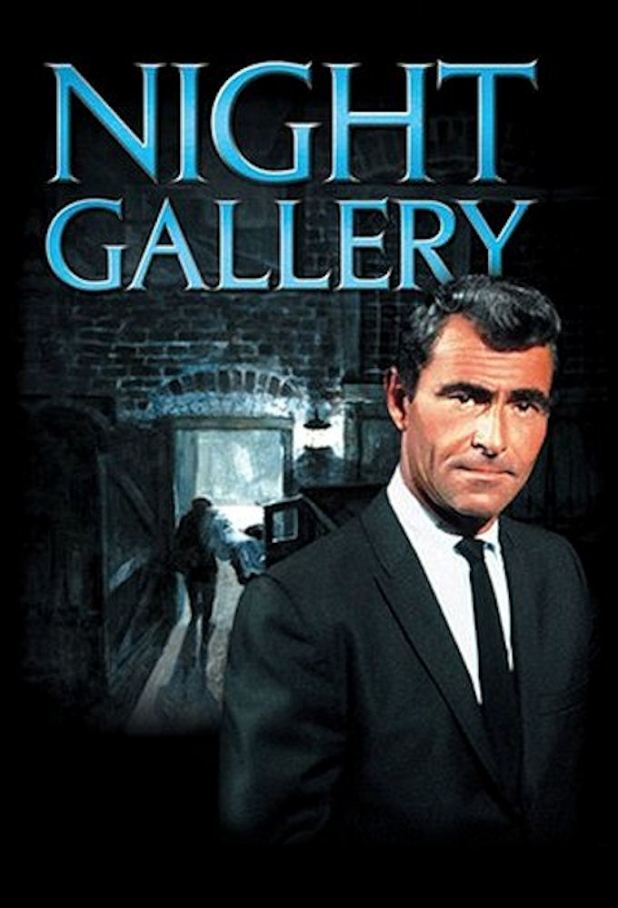
Night Gallery season 2 episode 8: The Diary/A Matter of Semantics/Big Surprise/Professor Peabody’s Last Lecture

When I see four stories on a Night Gallery, I get worried. It means that Jack Laird is messing up the dark doom that Rod Serling is bringing and I despise that.

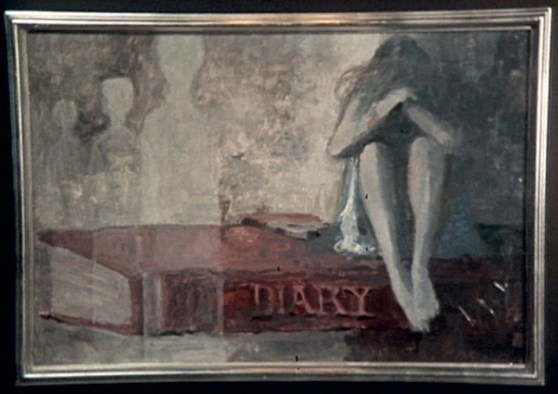
In “The Diary,” Holly Schaeffer (Patty Duke, who was pregnant with Sean Astin during filming) brutalizes an aging and disgraced Hollywood legend named Carrie Crane (Virginia Mayo). Before she dies, Crane gives her a diary where everything comes true. It’s simple, yet it works. Director William Hale and writer Serling create a short and sweet story here; it also has some of the most amazing early 70s furniture — and a Lindsay Wagner cameo — that makes it even more watchable.

“A Matter of Semantics” is Laird directing from a Gene R. Kearney script. Count Dracula (Cesar Romero) goes to a blood bank. Another one note Laird joke that ruins the momentum of the show.

“Big Surprise” has Chris (Vincent Van Patten), Jason (Marc Vahanian) and Dan (Eric Chase) seeking whatever Mr. Hawkins (John Carradine) has buried. Again, it’s simple and quick, but this time effective. Then again, I’m someone that Carradine always works for. Director Jeannot Szwarc does a good job on the Richard Matheson script, which is just the right level of strange.

“Professor Peabody’s Last Lecture” may be silly and over the top, but this Jerrold Freedman-directed (he also was the man who made VictimsThe Boy Who Drank Too MuchA Cold Night’s Death and Kansas City Bomber) effort from a Laird script is the first time that many may have heard the name H.P. Lovecraft. Professor Peabody (Carl Reiner) makes light of primitive cultures without realizing that those that live beyond the wall of the endless are always listening.

It mentions writers associated with Lovecraft as well, like Robert Bloch and August Derleth, who added Catholicism’s views of right and wrong to Lovecraft’s mythos, which take them away from their never to be understood cosmic horrors and turn Cthulu into more space kaiju, which I feel mean saying sounds like something right in the perfect headspace for Jack Laird. While this segment has a dumb ending, it has a great race toward doom.

All in all, even with Laird creating more on this episode, there’s enough that’s on the good side for once. If you can make it through his segments, there’s plenty to like here.

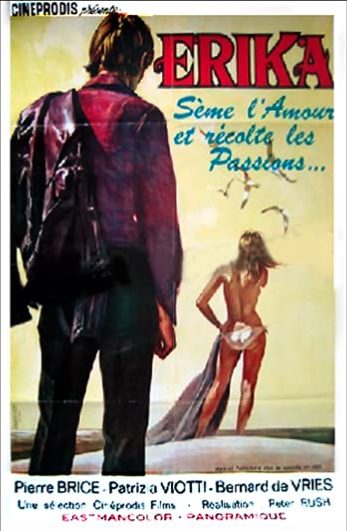
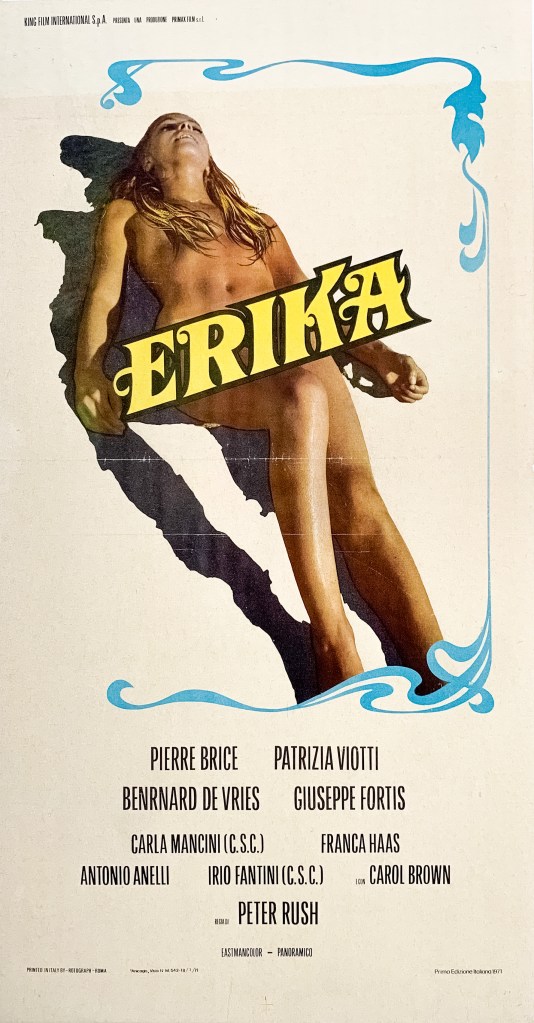
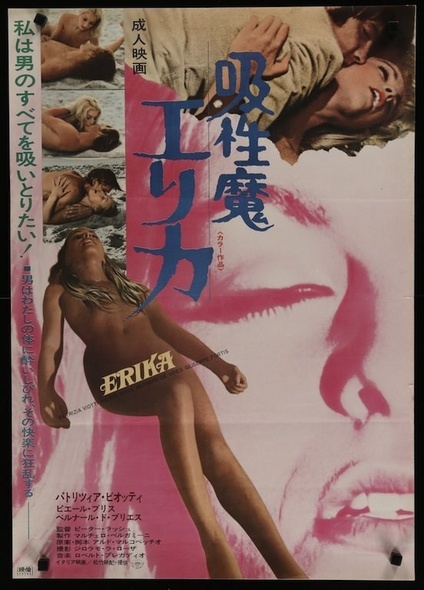
NEW WORLD PICTURES MONTH: Erika (1971)

Filippo Walter Ratti made some classy movies in his life. There’s the biographical Eleonora Duse, the Zorro ripoff The Black Mask (which made over a hundred million lire), the Christmas Carol remix It’s Never Too Late and a story of the 1944 Ardeatine massacre titled Ten Italians for One German. In 1966, he made Operation White Shark, a Eurospy film and then didn’t make anything for five years.

Then he made Erika.

Ratti used the name Peter Rush for this and his next three movies, the last of his career. Night of the Damned has a witch killing people to stay young. Mondo Erotico is, you know, a mondo. Crazy Desires of a Murderer is a giallo by way of gothic castles and eyeballs being torn out of the heads of gorgeous women.

Then there’s Erika.

I can’t believe that Erika played the U.S. and even more, I can’t believe that a hardcore version was supposed played Cannes in 1971.

It feels more like a movie that Joe D’Amato would have made — well, did make — with Patrizia Votti (AmuckLa morte scende leggera) as the twenty-year-old Erika who makes her way from Germany to the home of her mother’s acquaintance Baron Giovanni Laurana (Giuseppe Fortis, War of the Planets). Dropped a gorgeous young blonde into a house full of Italian men is a bad idea, as you can guess, as she instantly hooks up with the Baron’s son Renato (Pierre Brice, who is also in Ratti’s Night of the Damned, as is much of the cast, which makes me think both of these movies were shot at the same time*), despite the fact that he’s due to be married to Concettina (Carla Mancini, who was chained up in The Girl In Room 2A). There’s also the younger brother Luca (Bernard De Vries), who Erika also falls for, and the film gradually goes from frothy sex comedy to near gothic tragedy by the end. Erika is gorgeous and seems unattainable, yet she destroys everyone she touches.

Erika supposedly made 300 million lire but was banned for how sexy it all is. This seems kind of ridiculous, as it’s nowhere near as dirty as Italian movies can be. But who knows, 1971 was sort of early. It has a really provocative soundtrack by Roberto Pregadio, too. He also did the scores for Smile Before Death, Death Carries a CaneSS Experiment Camp and The Last House on the Beach.

*They even share the same screenwriter, Aldo Marcovecchio, and that film also had an adult version — Night of the Sexual Demons — that screened in Cannes. They were both made at Elios Studios in Rome, so I think this has gone from theory to close enough to truth. To be fair, everything from Phenomena to Play MotelKeoma and Shanghai Joe were made there. Also, not that it’s infallible, but Wikipedia says that both films were made one after the other on the same sets.

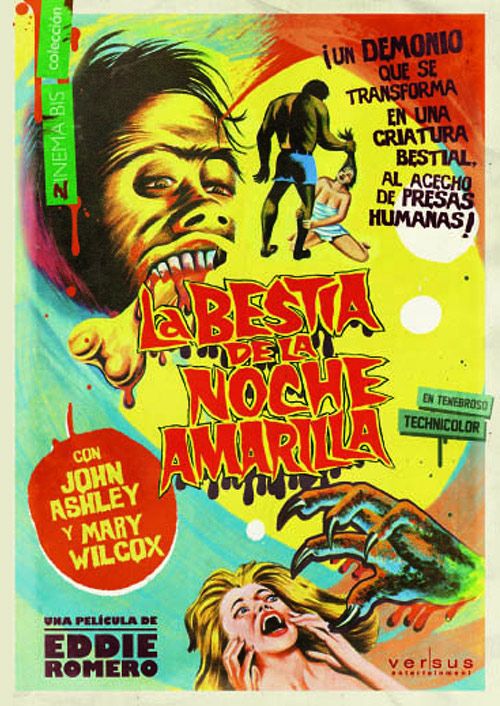
NEW WORLD PICTURES MONTH: Beast of the Yellow Night (1971)

EDITOR’S NOTE: This was originally on the site on January 17, 2020.

Eddie Romero directing and John Ashley starring? That was all I really needed to know. Man, anything remotely connected with these two — like the Blood Island films — and I’m ready to go.

This was also the first release for Roger Corman’s distribution company New World Pictures. After successfully distributing Beast of Blood in 1970, Kane W. Lynn’s Hemisphere Pictures tried to get the distribution rights to this, but got cut out of the deal.

Ashley’s new company, Four Associates Ltd. went on to produce The Twilight People, The Woman Hunt and Ebony, Ivory & Jade. As for Lynn, he worked with Sam Sherman to make Brain of Blood. Me? I’m happy all around at whatever these maniacs decided to make.

While Ashley would say that this was the most cerebral of the Philippines-based horror movies he made — and its success led to Corman making more movies there like The Big Doll House — Eddie Romero would say, “We really tried for quality. I don’t think it did very well. They prefer out and out gore.”

As World War II ends, Satan himself — Vic Diaz from Night of the Cobra Woman — spares Joseph Landgon’s (Ashley) life if he becomes his disciple. So over the next 25 years, Langdon possessed people and forces them to do the bidding of his dark master.

However, he wants to free himself from the Lord of the Flies, but instead becomes a hairy monster who could pretty much be a werewolf. He’s in the body of Phillip Rogers now and that man’s wife tries to save him. An old blind bandit named Sabasas finally saves him, asking him to pray for his soul just as an inspector catches up to him and shoots our — well, I guess he isn’t the hero — turning him into an ancient corpse.

Mary Charlotte Wilcox, who plays the wife, is also in the absolutely bonkers film, Love Me Deadly, which I love me dearly. She also shows up in Psychic KillerBlack Oak ConspiracyStrange Brew and was a cast member of SCTV and Maniac Mansion.

Once he moved back to America, Ashley produced The A-Team. In one episode, he plays a movie producer trying to get a movie made. That movie? Beast of the Yellow Night.

You can watch this on Tubi.